
Pennsylvania · York service planning
Full Packing and Unpacking in York, PA
Sterling Oakbridge prepares agreed household contents in York, Pennsylvania, from selected fragile groups to full packing.
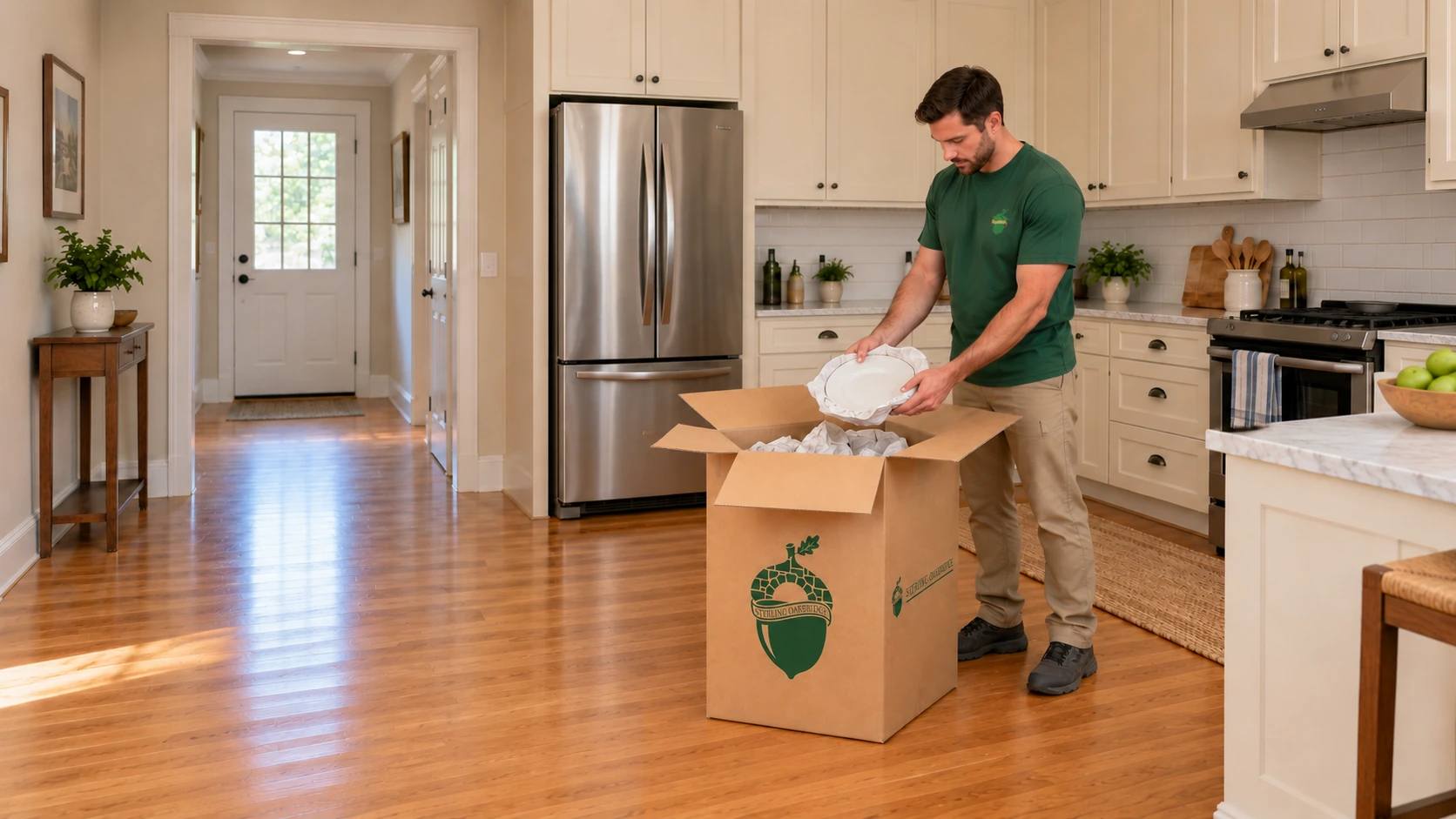
Decide what the crew will pack, what must stay available until departure and which receiving tasks you want afterward.
Explore packing, costs and local examples
Choose the work you want to hand over
Packing can give evenings back to the household, but it still needs decisions about what belongs in the shipment. A couple of weeks of spare evenings can disappear into opening cupboards, sorting papers and finding a place for prepared cartons. Start with the work you want completed rather than a request for an unspecified number of boxes.
Full packing covers the retained contents and preparation tasks in the agreed scope. Partial packing assigns particular rooms, cupboards or groups to the crew while you prepare the rest. Fragile-only work can concentrate on ordinary dishes, glassware or selected delicate contents. Identify exclusions and unfinished owner packing before the visit, so neither side expects the other to have completed the same task.
Show open cupboards, drawers, closets and stored groups. Twenty cartons in your initial plan can become sixty or more when an unreviewed collection is included; that is an illustration of missed inventory, not a prediction for a York home. The item list, selected materials and preparation method determine the estimate. Bedrooms, floor area and a city's housing statistics cannot reveal the contents of your cupboards.
Plan around the actual York home
This page concerns York City in York County, Pennsylvania. North York, West York and nearby townships are separate municipalities. Send the complete address and unit, with the entrance and property rules that apply to the work. The York relocation guide covers choosing and preparing the home; the City moving page covers the wider moving arrangement.
The 2020–2024 ACS housing data describe dwelling types, not the contents in your cupboards. An attached home, an upstairs converted apartment and a larger residential building can need different preparation footprints. Show stairs, landings, door swings, shared halls and the route from the work area to the vehicle. Identify suitable existing work surfaces and a permitted place for completed cartons. A cleared cupboard is not useful if its packed contents then occupy the only walking route.
Agree property access for an earlier packing visit as well as move day. Management may control a working entrance, elevator period or certificate deadline. Identify who requests each booking and who can confirm acceptance. Opening a lobby door does not establish permission to use the building for the whole operation.
Consider: an upstairs apartment with a working room still in use
Imagine a York apartment where one person needs the spare-room desk for a final evening of work. The household will prepare its books and private papers, while the crew handles selected kitchen breakables and hanging clothes. The useful boundary is a list of released groups and a small group that must remain accessible, rather than calling the whole apartment ready.
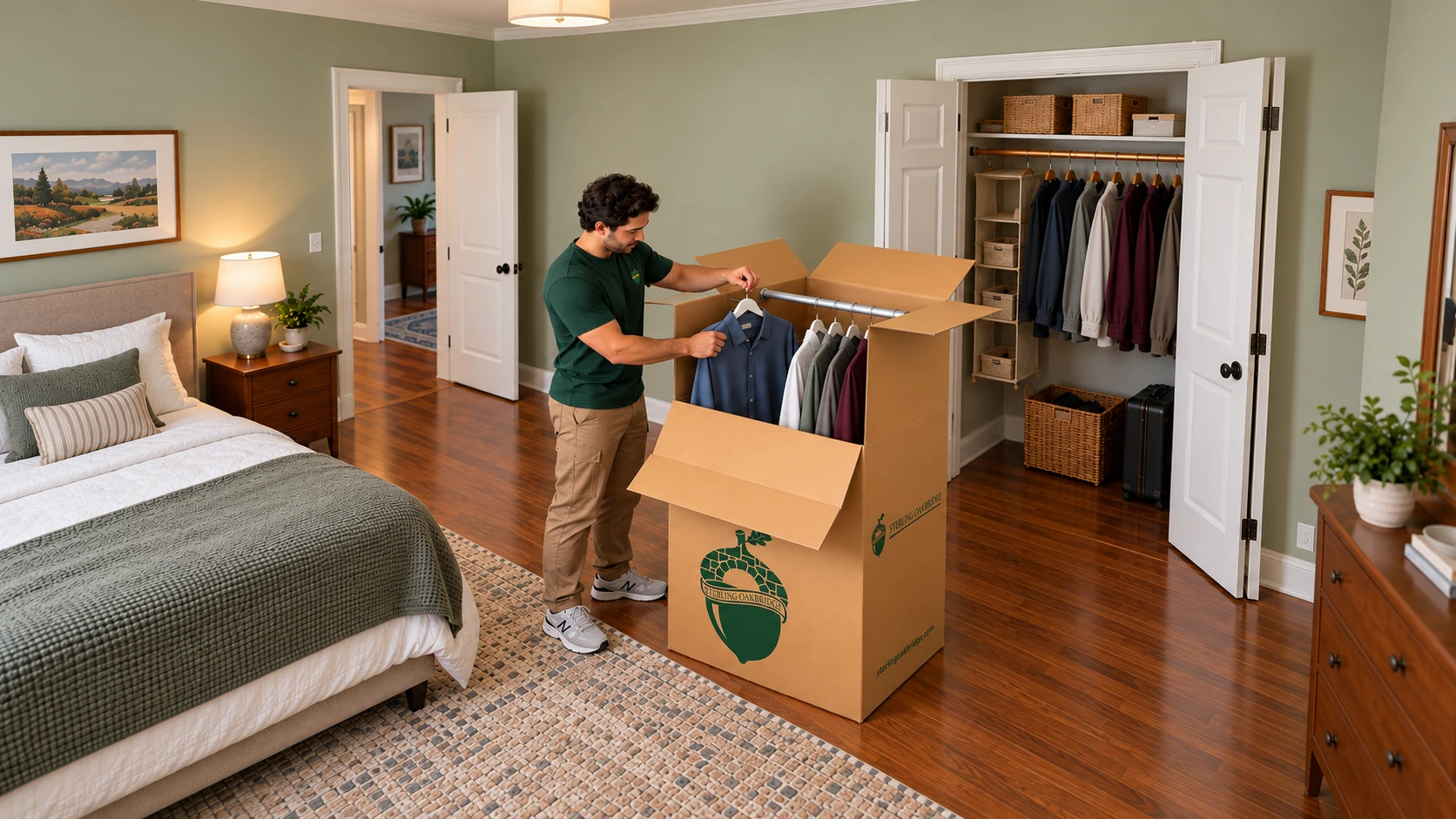
Photograph the closet and kitchen contents, the preparation space and the stair landing. Agree which clothes can move into suitable wardrobe cartons early and which stay with the household. Leave the closet doors and the shared passage usable. A carton that fits in the bedroom still has to leave through the actual route.
Retain the last meal, breakfast, medicines, chargers and essential work items until their agreed release time. Keep the personal travel group clearly outside the shipment. Label completed cartons so you can identify them without repeatedly reopening them, then arrange who finishes the final group after the room and kitchen are released.
Decide whether preparation needs its own visit
Some reviewed studio or one-bedroom inventories can allow packing and a local move in one day. A larger quantity, many fragile objects or restricted working hours can call for preparation earlier. Room count alone cannot settle the sequence. An additional visit also needs access, materials and a place for the prepared contents to wait.
An earlier visit need not close every room. Release infrequently used cupboards first and agree when beds, work equipment and the last kitchen group can be prepared. The plan should leave the household able to sleep, eat and work until the relevant stage is finished.
Staffing follows the inventory and permitted work period. A larger project might use a packing team on one day and a different moving team later; that is a sequence to review, not a standard crew size included with every booking. If your own preparation falls behind, report what remains while the coordinator can still revise the plan.
Protect the contents through the whole journey
A carton needs support inside as well as protection outside. The selected method should account for lifting, carrying, stacking and vehicle movement. Paper around an ordinary plate does not compensate for a weak carton or contents that can move freely inside it. Use suitable cushioning, keep the closing area clear and disclose unusual or valuable pieces before the method is accepted.
Furniture and fragile contents have different preparation needs. Empty ordinary drawers and normally retain them secured in the complete protected piece. Removable shelves, safely removable long legs and their hardware need their own identified preparation. Integral construction does not become detachable because a smaller shape would be easier to carry.
Glass doors, framed works, collections and specialist items need item-specific review. Send useful photographs, dimensions and condition details. The fine-art service explains specialist handling; ordinary fragile packing does not promise every crate, mounting task or coverage arrangement. Review the actual valuation or protection terms separately.
Identify the next destination before closing a carton
Separate belongings that stay, travel with you, enter the moving shipment, go to another receiver or need approved removal. The household decides ownership and retention. An online donation listing or a relative's tentative offer does not establish a receiving appointment.
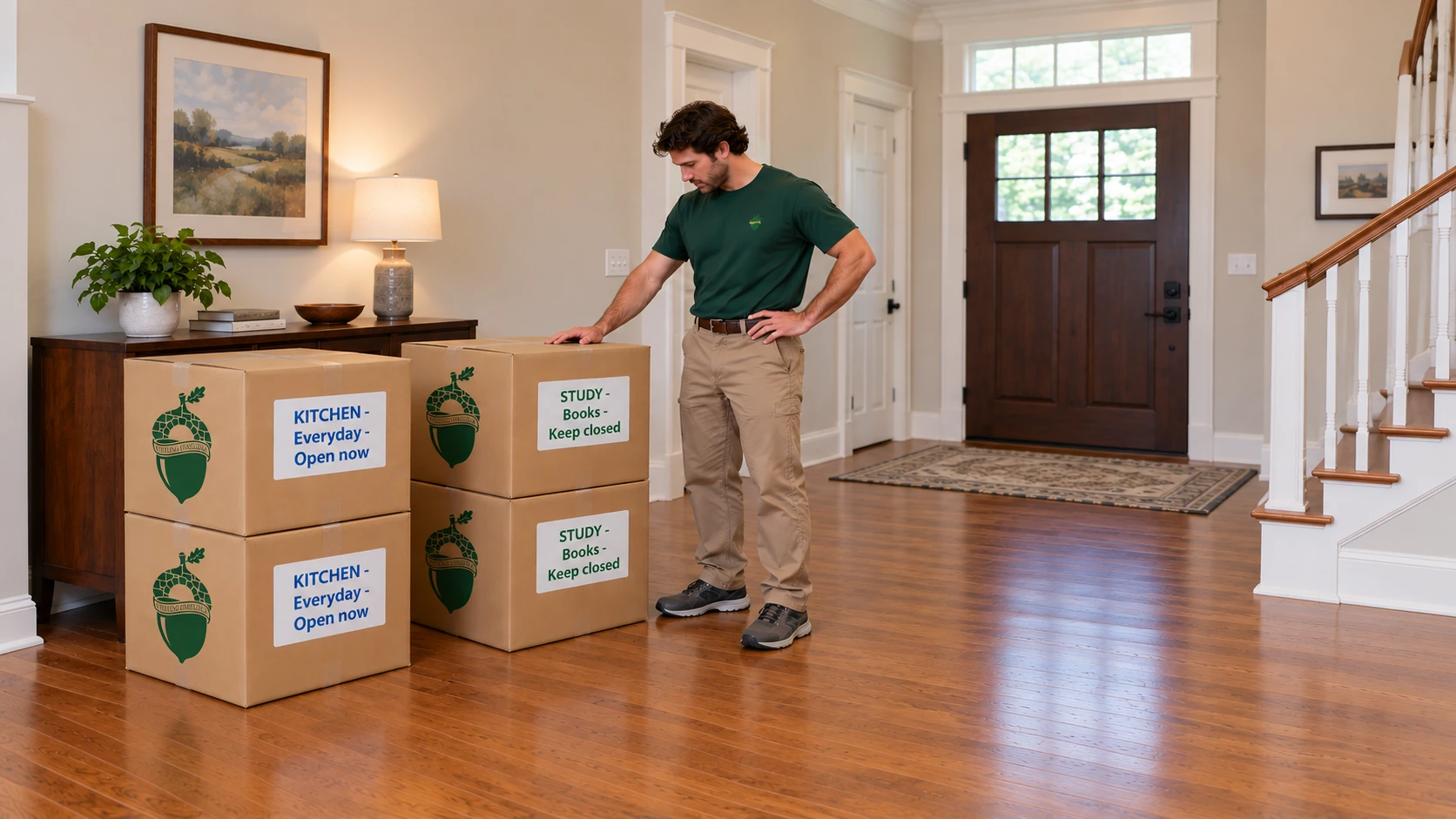
Write the actual next destination, room, useful contents and opening priority on each carton. Color can reinforce that information but cannot replace it. Keep storage groups and later-opening contents distinguishable from the goods needed immediately. A storage arrangement needs an accepted inventory, dates, intake, retrieval and later handling plan, with the charges agreed.
Consider: the kitchen is ready before the study
Suppose the next home has a usable kitchen, while a contractor has not released the study. The household wants everyday kitchen contents opened on arrival but its books and study supplies kept protected. Decide that order while packing, before identical closed cartons fill the receiving rooms.
Mark the kitchen group for agreed priority opening and the study group to remain closed. Confirm who controls release of the study and where the closed contents may wait without blocking another room or route. Do not treat a hallway or shared landing as an assumed holding area.
If no suitable authorized space is available, compare a confirmed later receiving sequence with separately agreed available storage and delivery. Include the actual goods, dates, handling and cost before an option expires. The storage service owns that further stage; a label saying storage does not reserve it.
Choose the receiving result: unwrapping, unpacking or organizing
Furniture is unwrapped as part of delivery. Basic box unpacking opens the agreed cartons and places their contents on suitable available surfaces. Select the groups and prepare those surfaces first. It can make everyday dishes or clothing accessible without claiming that every cupboard and drawer is arranged.
Home organizing adds final placement under your directions. Agree the shelves, drawers, priorities, scope and price, and name the person available to make choices. A smaller team can be easier to direct through those decisions. Private papers, valuables and personal retention choices remain under household control.
Handyman finishing is another selected stage. Identify the particular assembly, hanging or mounting task, the item, wall, fixings, permissions and intended result. Agree the executor and any technical work separately. Basic moving assembly does not include an unlimited set of installations, electrical connections, repair or restoration.
Consider: return to unpack after the household has settled in
Imagine a York receiving home where the family has already opened the first-night goods and returned to work or school. Several kitchen and linen cartons remain, but the room is now occupied. A later visit should preserve the progress already made, rather than empty every remaining carton onto the surfaces the household is using.
Show the unopened groups, available counter space and passages. Choose the cupboards or everyday groups to address first, identify retained personal items and agree where opened contents can be placed. Make final cupboard placement explicit if that is wanted. A later unpacking or organizing visit depends on separately agreed availability, scope and price.
For a large selected unpacking project, another three or four hours can be a useful planning illustration; some jobs need a separate visit instead. Neither is a standard duration. The remaining contents, surfaces, directions and property hours determine the work. Keep small fittings, keys and cables out of the empty-paper group as each carton is opened.

Plan the empty materials before the handover
Gathering used packaging indoors and taking it away are different tasks. Removal has its own agreed scope and price. Identify flattened cartons, paper, plastic wrap and other materials, their condition and quantity. Check folds and cushioning for retained belongings before releasing the group. Agree an accepting route and collection date instead of assuming that empty means ready for any bin.
York's current recycling notice places recycling on the second weekly collection day, Thursday or Friday. Flatten corrugated cardboard for the container or a twine bundle beside or on it; the separate cardboard instructions limit bundles to 3 × 3 feet and 40 pounds. Recyclables must not be put in plastic bags. Green containers remain with the property. The curbside trash instructions also distinguish proper trash containers from cardboard boxes and storage tubs. Confirm the actual property service, collection point and current instructions before set-out.
Consider: the keys are due back before recycling day
Suppose a household must hand over its York rental on a Tuesday while its applicable recycling day is later in the week. Finished packing does not solve the remaining empty-carton problem. Establish who controls the property after handover and whether any agreed indoor holding arrangement can remain accessible.
If the timing does not fit, arrange an available separately priced material collection or another authorized solution before returning the keys. Keep retained possessions separate from used packaging and leave walking routes usable. Do not pack the property's green recycling container into the household shipment or assume that a paid transporter can use every resident collection program.
The removal and disposal service explains material groups and accepting routes. If you later decide that furniture should leave as well, approve and quote that item separately. Used packaging and unwanted furniture are different inventories; neither is removed merely because the crew has opened the cartons.

Compare the complete preparation and receiving cost
Packing labor is charged for working time, and company-supplied cartons are separate. Basic moving blankets, shrink wrap and tape have no separate material charge. Suitable basic furniture disassembly and reassembly use moving labor time without a separate basic assembly surcharge. Specialist protection and complex furniture work need individual review.
Optional box unpacking uses working time. Organizing, handyman finishing, packaging collection, storage, transport and return visits need the selected scope and charges identified. For substantial preparation, packing plus moving can approach two budgets for the same already-packed move. That is a conditional comparison, not a rate, multiplier, ceiling or promise of savings. Compare the same inventory, access and receiving result on both sides.
Where packing is part of a Pennsylvania-only household move, Pennsylvania PUC guidance uses hourly charges at 40 miles or less and weight and mileage above 40 miles. The written-estimate rule generally requires 48 hours unless a shorter period is agreed in writing. An interstate flat-rate description does not automatically govern that job. The York long-distance plan explains those qualifications alongside transport models and delivery windows.
Connect preparation with the right next service
For a longer journey, agree the actual receiver, keys, complete access route and usable rooms before relying on a delivery window. The clock starts after pickup and loading are complete; it does not book an unpacking appointment. Confirm optional receiving work and availability, and resolve an accepted alternative before dispatch if the destination cannot receive the goods.
A new purchase has a separate release address and collection appointment: use furniture delivery and placement. Rearranging belongings already at the property belongs in in-home and in-building moving. Those plans review their own carries and finishing work; a packing booking does not automatically include them.
Send both complete addresses, dates, photographs of open storage and the full carrying routes. Identify retained and excluded contents, what you will pack, last-night needs, destinations and opening priorities. Add the unpacking, directed placement, individual finishing and material collection you want. The estimate can then cover a useful sequence from preparation to the receiving result.
York packing and unpacking questions
What can full packing include in York?
It covers the retained household contents and preparation tasks listed in the agreed scope. Show open storage, fragile groups and special pieces, then identify what stays or is excluded. Choose any later unpacking, final placement, finishing and material collection separately so the estimate describes the receiving result you want.
Can the crew pack only fragile contents?
Yes. Identify the dishes, glassware, cupboards or other selected groups and show their contents. State what you will prepare yourself and when it will be ready. Unusual, valuable or structurally complicated objects need their own method review; ordinary fragile packing is not a promise of every specialist crate or installation.
What should we decide before the packing visit?
Separate what stays, travels with you, enters the shipment, goes to another receiver or needs approved removal. Identify private papers and personal decisions that the household will handle. Make one authorized person available to clarify exclusions and release instructions, and show any preparation you have not completed.
Can room count tell us the carton quantity?
No. Open cupboards, closets, drawers and stored groups for the inventory review. An initial twenty-carton idea can overlook a substantial collection; it is not a reliable measurement. The actual contents, chosen protection and packing responsibility determine suitable materials. York housing statistics or a bedroom count cannot predict the boxes in your home.
Can a workroom stay usable until the last evening?
Yes, when its release time is part of the agreed sequence. Complete other released groups first and keep the required computer, documents, chargers and everyday essentials apart. Identify who prepares the last group after work ends. The crew needs to know that the room is still in use rather than assume the entire home is ready.
Does a York postal address establish the local procedure?
No. This page concerns York City, York County, Pennsylvania. North York, West York and surrounding townships are separate municipalities. Send the complete address, unit and actual entrance, plus the property rules for preparation and moving. A postal label does not establish the municipal collection arrangement or permission to use a shared space.
Can packing and moving happen on the same day?
They can for some reviewed inventories and access periods. More contents, fragile work or restricted hours can require an earlier preparation visit. Agree the contents, staffing, materials and release of essential groups before relying on a one-day sequence. An estimated duration is not a promise that every stage will fit.
Must every room be closed during an earlier visit?
No. Agree the cupboards and contents that can be completed early, then the release of beds, the last kitchen group and work equipment. Keep prepared cartons identifiable and outside the household route. Retain the travel essentials with their users so an earlier visit leaves the home usable until departure.
How should hanging clothes be prepared?
Hanging clothes can remain on hangers in a suitable wardrobe carton with a supported clothes rail. Keep fabric inside and clear of the closing panels. Review the closet opening and the route out, then identify which clothes can be prepared early. Keep the carton outside the door swing and walking route. Shoes and loose accessories may need a different container or method.
What protects ordinary dishes inside a carton?
A suitable carton, individual protection and cushioning must support the contents through lifting, carrying, stacking and transport. Keep the closing area clear so the flaps do not press on the pieces. Disclose unusual, valuable or damaged items before the method is accepted rather than treat all glass or collections alike.
Should we remove drawers and furniture legs?
Empty ordinary drawers and normally retain them secured in the complete protected piece. Review removable shelves and matching parts separately. Safely removable long legs may need separate protection with identified hardware; integral construction needs another method. Send construction and access photographs before agreeing what comes apart.
How do we label contents for rooms that are not ready together?
Write the next destination, room, useful contents and opening priority. Distinguish the group to open now from contents that must remain closed until the property controller releases the room. Confirm an authorized holding place and route. Color can reinforce written information but cannot explain the destination by itself.
Does a storage label reserve storage?
No. Confirm the affected inventory, available intake, dates, access, retrieval, handling and later delivery, with the price agreed. If suitable on-site holding is unavailable, accept an actual available alternative before relying on it. A request awaiting a reply does not reserve space for the shipment.
What does basic box unpacking leave ready?
The agreed cartons are opened and their contents placed on suitable available surfaces. Choose the groups and prepare receiving space first. Final cupboard or drawer placement is directed organizing, and removal of empty materials is separately agreed. Basic unpacking can make selected everyday contents accessible without finishing the entire home.
Can we book help after starting to unpack ourselves?
Yes. Show the remaining closed contents, the progress already made, occupied rooms and available surfaces, then ask about a later agreed visit. Prioritize the groups needed for the next routine. Scope, availability and price need confirmation; the visit should preserve usable rooms and retained belongings.
Who decides final cupboard and drawer placement?
Home organizing follows your instructions. Agree the shelves, drawers, priorities, scope and price and name the person who can direct choices during the visit. A smaller team may be easier to guide. Private papers, valuables and personal retention decisions remain under household control.
Can mounting or other finishing work be added?
Request the particular task and show the item, wall, fixings, permissions and intended result. Agree the executor and any technical work separately. Suitable basic moving assembly uses working time without a separate basic assembly surcharge; it does not include unlimited installations, electrical connections, repair or restoration.
Does unpacking include taking the empty packaging away?
Removal needs its own agreed scope and price. Identify the materials, quantity, condition, accepting route and collection date. Check paper and folds for fittings, keys or cables before releasing them. An indoor empty-material group does not establish a collection booking or permission to use a resident program.
Can we put York recyclables in plastic bags?
No. City instructions prohibit bagging recyclables or lining the recycling container with a plastic bag. Keep flattened cardboard separate and follow the current permitted set-out arrangement. The dated contract notice places recycling on Thursday or Friday, the second weekly collection day; confirm the actual property service and holiday notices.
Should the green recycling container travel with our belongings?
No. The City says recycling containers remain with the property. Exclude it from the household shipment and confirm the collection arrangements before handover. A private building hauler may have different instructions; ask the person responsible for the actual property rather than infer them from its York postal address.
What if the keys must be returned before recycling day?
Agree who controls the property afterward and whether an authorized accessible holding arrangement is available. If the dates do not fit, confirm a separately priced material collection or another accepted solution before returning the keys. Keep the route clear and retained belongings separate; an empty room is not proof that the packaging has been removed.
Are cartons and packing labor included with blankets and wrap?
Packing labor is charged for working time, and company-supplied cartons are separate. Basic moving blankets, shrink wrap and tape have no separate material charge. Furniture is unwrapped at delivery. Identify specialist protection and any optional unpacking, organizing, collection, storage or finishing work in the written scope.
Can packing and moving approach two already-packed moving budgets?
For substantial preparation, that can be a useful comparison for the same inventory and access. It is not a rate, multiplier, ceiling or guarantee; the difference can be lower or higher. Compare labor, cartons, specialist work, destinations, receiving tasks and return visits rather than one headline total.
What changes when the household move stays in Pennsylvania?
The applicable intrastate process governs that move. PUC guidance uses hourly charges at 40 miles or less and weight and mileage above 40 miles. The estimate rule generally requires at least 48 hours unless a shorter period is agreed in writing. An interstate flat-rate description does not automatically govern a Pennsylvania-only job.
Does a long-distance delivery window book our unpacking appointment?
No. The transport window starts after pickup and loading are complete and does not reserve a separate unpacking visit. Confirm the actual receiver, keys, route and usable rooms, then agree any optional receiving work and availability. If access fails, accept a workable available alternative with dates, goods, responsibility and cost before dispatch.
What should we send for a useful packing estimate?
Send both complete addresses and dates, photographs of open storage and the full carrying routes, and the retained and excluded contents. Specify full, partial or fragile-only work, your own preparation, last-night needs and destinations. Add opening priorities, directed placement, individual finishing tasks and material collection so the estimate covers the complete sequence.