
Vermont · Burlington service planning
Long Distance Movers in Burlington, VT
Sterling Oakbridge arranges long-distance household moves from Burlington, Vermont, throughout the United States and Canada. Choose direct delivery for a dedicated truck and the same moving crew at pickup and delivery, or ask about consolidation for a suitable smaller shipment with a wider receiving window. We review the belongings, preparation, access and dates at both properties before setting out the work and price in writing.

Choose the delivery model around the receiving plan
Direct delivery suits a household that wants the agreed shipment to travel together and can provide workable receiving access. Its dedicated truck and same moving crew connect the pickup and delivery work. The estimator has a separate planning role; the person reviewing your inventory is not necessarily on the moving crew.
Consolidation combines a suitable smaller shipment with other freight. Around 300–400 cubic feet describes the smaller shipments that can suit this option; it is not a minimum order. A few selected pieces and closed cartons may fit the model better than a whole furnished home. Item size, preparation, handling and the actual inventory still matter.
Begin with when someone can receive, rather than choosing a model from a hoped-for price. A short building reservation or a fixed first night can make a broad delivery window impractical. Compare the household's travel and temporary living costs alongside the proposed shipment arrangement. Consolidation does not itself include free storage, a particular discount or the same crew at both ends.
Identify additional pickups, a storage interval or a second delivery before the estimate is prepared. Write down what stays accessible and who can authorize a change. The useful plan connects belongings, people and property access across the entire period.
Count the delivery period after loading is complete
The delivery window starts after pickup and loading are complete. Packing, protecting furniture, carrying down stairs and loading the truck happen before that clock begins. A road journey measured from central Burlington is only one part of the move.
Swipe the table to compare both delivery options.
| Illustrative destination | Direct planning window | Consolidated window |
|---|---|---|
| New York City, New York | 1–2 days | Up to 30 days |
| Charlotte, North Carolina | 2–3 days | Window agreed individually |
| Toronto, Ontario | 1–2 days | Up to 60 days |
| Salt Lake City, Utah | 4–5 days | Window agreed individually |
The table uses checked municipal driving references for illustrative planning. It does not certify a truck route, predict current traffic or reserve an appointment. The selected vehicle, lawful roads, actual entrances and any border requirements need their own review.
Consolidated windows can be up to 30 days for an eligible shorter domestic route, up to 60 days for Florida or Canada, and up to 90 days for California. Other distant destinations require an individually agreed period. Salt Lake City is in Utah and does not inherit California's allowance; Toronto uses the Canada rule.
A reviewed nearby direct move may allow same-day or next-day delivery when the loading work, lawful journey and receiving appointment fit. Obtain that agreement before booking the household's travel around it. Keep enough personal belongings available for the accepted receiving period and any separately planned gap.

Trace the Burlington route from truck to room
This page concerns Burlington city in Chittenden County, Vermont. South Burlington is a separate municipality. Send the complete address and unit so the road owner, property contact and actual entrance can be identified. The Burlington relocation guide handles neighborhood comparisons and the local administrative work alongside the shipment.
For an Old North End apartment or a townhouse, show the route beyond the front facade. Include the shared entrance, porch steps, internal flights, landing turns and the distance from the lawful truck position. A parking place assigned to one household may be too small for the moving vehicle or controlled by an association. Obtain the permission for the proposed use.
For a downtown apartment, connect the service entrance with every lift, corridor and door on the route. Ask management for the permitted moving hours, elevator reservation, protection requirements and any COI instructions. A street reservation and a building reservation solve different parts of the job; neither supplies the other automatically.
At a detached home, include the basement, garage, shed and any separate storage group in the inventory. Check the driveway slope, working area and route back to the street for the actual vehicle. A deep setback can add a substantial carry even when the street approach looks straightforward.
The City identifies private and unaccepted streets outside its formally accepted network. Establish who controls access at the actual address. The current City explanation says existing maintenance continues during its review; do not assume that the classification means immediate loss of plowing or that utility maintenance proves City ownership.
Separate lawful placement from reserved working space
Burlington's moving-pod and trailer guide allows pods and trailers up to 8 feet wide in designated public on-street parking stalls for three days or less without an obstruction permit, subject to the parking restrictions. Longer street placement or a position outside those stalls uses the obstruction-permit route for pods, trucks and trailers. DPW supplies reservation signs for nonmetered spaces; the guide lists meter bags at $30 per day per space. Confirm the current charge and instructions for the actual equipment with DPW at 802-863-9094. Ordinary meter payment does not reserve an exclusive loading area.
Give DPW the equipment, footprint, location and hours and obtain the applicable approval and posting instructions. Keep sidewalks, driveways, hydrants, accessible spaces and restricted uses clear. The right-of-way page supplies the obstruction application route. Confirm the current submission requirements with the office rather than applying a construction checklist to every moving stop.
Check the City's Winter Parking page and actual declaration before leaving equipment on the street. A declared snow ban runs from 10 p.m. to 7 a.m. citywide, with midnight to 6 a.m. in the defined downtown zone. Check the City parking lights, VT-Alert or 802-658-SNOW for the declaration. Some streets have separate seasonal restrictions. A previously arranged position still needs to work under the applicable restriction; arrange a lawful alternative before losing the building's loading window.
Prepare an inventory that distinguishes what travels
Walk every space and identify what moves, what stays and what needs separately quoted removal. Give furniture dimensions and photographs of limiting turns. A bookcase that fits comfortably in a room may not turn through the vestibule intact; construction-specific preparation should be decided before carrying starts.
Empty ordinary drawers and secure them within their protected furniture unless the construction requires another method. Remove or secure shelves and fragile panels as appropriate. For a table or desk with safely removable long legs, protect the body and keep the complete matching leg set and hardware together. Basic furniture disassembly and reassembly use moving labor time without a separate basic assembly fee. Complex furniture and specialist preparation receive individual quotes.
Choose full packing or selected help. State which cartons you will finish and what the crew should prepare. Use small cartons for dense books and suitable larger cartons for lighter belongings. Label destination room and contents without putting private personal information on the outside. Keep the final container count with the furniture inventory.
Artwork, mirrors, glass and unusual pieces need preparation matched to their construction and value. An opaque protected parcel should still have a useful inventory identity. Photograph and describe high-value items for the review; a generic fragile label cannot establish that the packing method is suitable.
Keep identification, medication, keys, original documents, chargers and immediate work or school items with the household. Put personal travel bags apart from the shipment before pickup. If access to furniture may be delayed, pack for that accepted interval rather than the shortest reference journey.
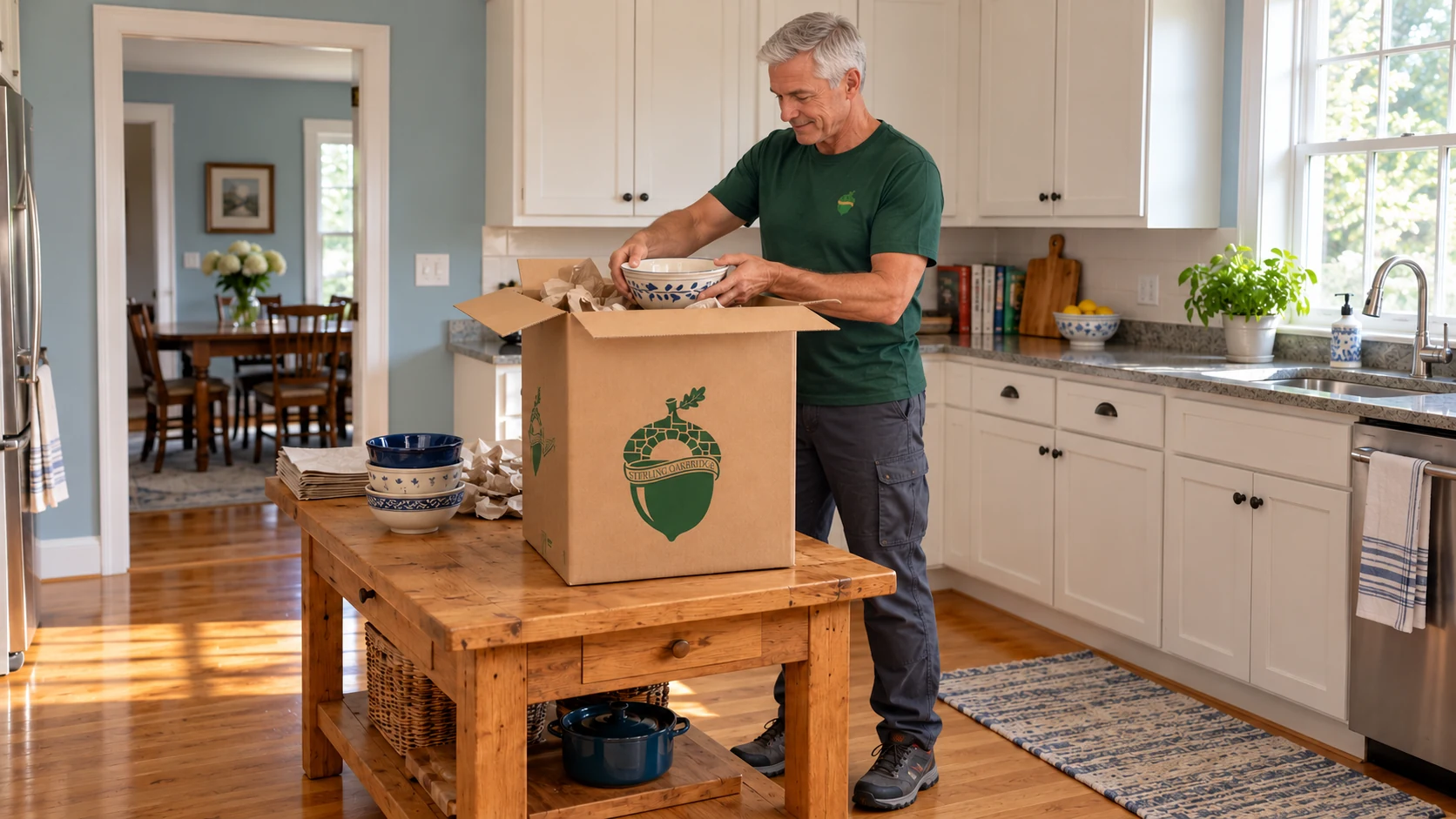
Four examples of choices before the truck loads
The following situations are hypothetical. They illustrate different decisions, rather than reporting completed customer moves, destination popularity or promised schedules.
Example: New York City with a bookcase and two access windows
A Burlington townhouse household is sending its principal furniture, kitchen cartons and a tall bookcase to New York City. The origin has an interior stair turn; the destination has a reserved service lift. Direct delivery keeps the agreed shipment together, but first establish whether the bookcase can follow both routes after the appropriate preparation.
Send the limiting dimensions and construction photographs with the inventory. Identify removable shelves, the permitted entrance and the person who can release each property. Basic reassembly and an agreed room destination belong in the work plan. Do not rely on an unapproved railing alteration or an assumed alternative doorway to make the piece fit.
Coordinate the Burlington truck position, completion of loading and New York receiving slot in sequence. A vehicle route needs review independently of a passenger navigation estimate. If unloading cannot fit the authorized slot, agree the later appointment and any waiting or storage before pickup. Keep essentials with the household so the reference journey does not become an assumed first-night promise.
Example: Charlotte while only part of the new home is ready
A household retains most of its Burlington furniture and sends selected heirlooms, a small bedroom group and identified cartons to Charlotte. The destination renovation has released only certain rooms. Start with the actual selected inventory and the rooms that can legally and practically receive it, rather than describing an entire home as ready.
Consolidation may work if the selected shipment is suitable and a receiver can accept the agreed wider period. The delivery model does not make unfinished rooms usable or provide automatic storage. Establish where the protected pieces will be placed and keep them away from active building work and blocked exits.
Before collection, set a decision time for any failed renovation handoff. Compare a genuinely available storage stage with a later receiving window, including intake, access, onward handling and charges. Do not dispatch on the assumption that a contractor's target date is a confirmed delivery appointment. Charlotte's actual consolidation period follows the reviewed route and agreed terms, not Florida's separate rule.
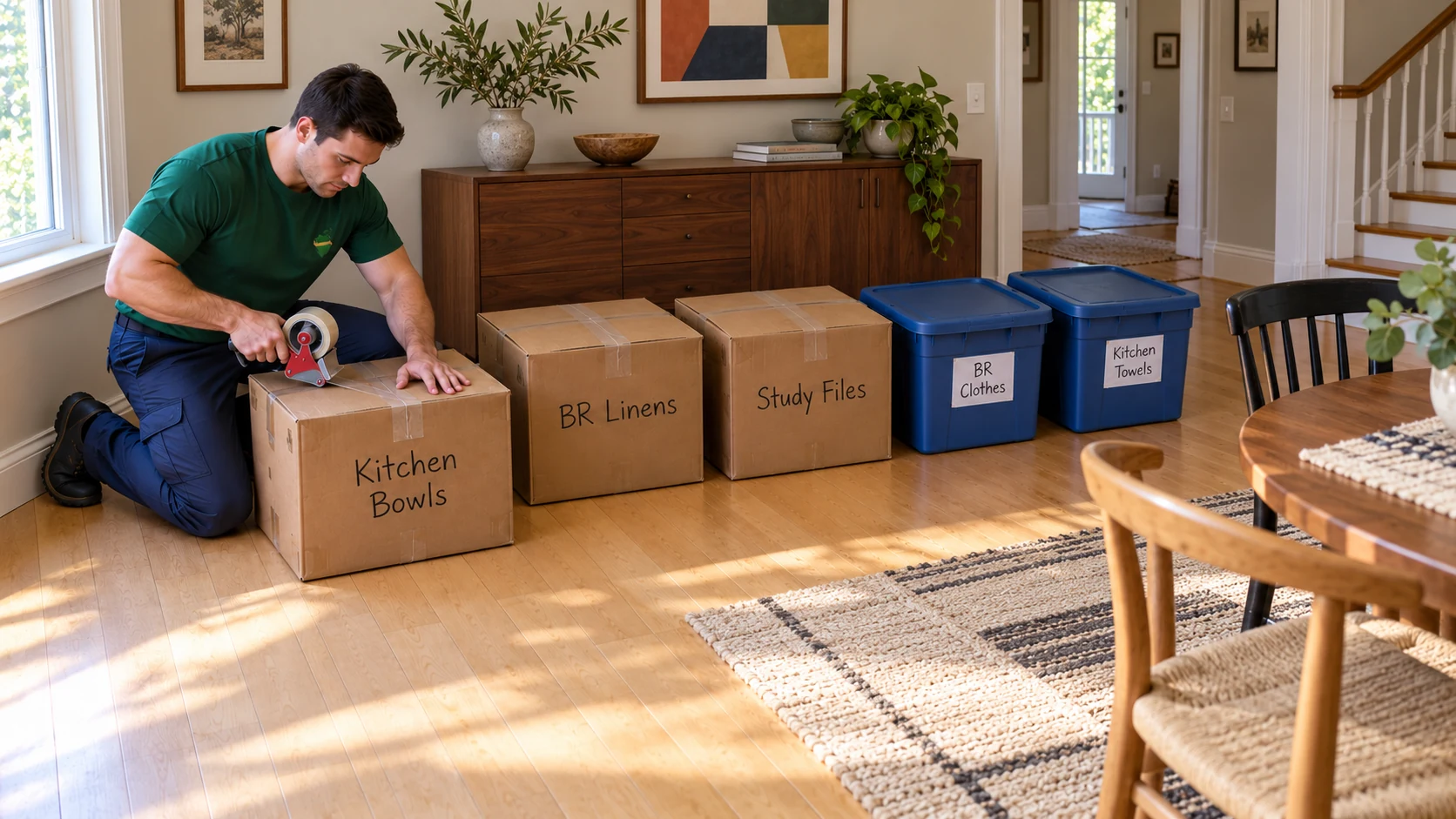
Example: Toronto when the household arrives before its shipment
A Burlington household travels to Toronto with personal luggage, while a named relative may receive the furniture later. Resolve the importer category, accompanying belongings and goods-to-follow documents before collection. A receiving relative and a Canadian address do not by themselves establish customs eligibility or complete the import process.
For qualifying settlers and former residents, CBSA's moving guidance calls for two copies of the detailed inventory, separating accompanying goods from goods to follow and including values and identifying details where applicable. Present the lists at first entry even when no goods accompany you. Include later arrivals on that original goods-to-follow list and retain the resulting accounting papers for the later shipment. Review restricted goods separately; a mover's room inventory supports planning without replacing customs accounting.
Agree who supplies the shipment documents and who is authorized to receive. Direct service uses a dedicated truck and the same moving crew, with the border and property arrangements reviewed. Canada's consolidated window can be up to 60 days after loading, even when the road reference is shorter than a distant domestic trip. Avoid building a first workday around a guessed customs duration.
Example: Salt Lake City with a firm lease end and a bedroom priority
A Burlington household has a firm outgoing lease deadline and is moving to Salt Lake City. The destination will release keys later than the household first hoped, and the bed and everyday clothing are needed before the study is unpacked. First decide whether pickup and possession can be connected directly or require an agreed storage interval.
Record the real receiving date, any storage intake and access, later handling and redelivery charges. Nominate a person who can approve a change before the outgoing access ends. Keep work equipment, clothing and documents with the household while the study shipment is unavailable. An unanswered inquiry to a warehouse is not a confirmed alternative.
Give the receiver a room plan that prioritizes the sleeping room and keeps the carrying path open. Place and unwrap the major pieces and complete the agreed basic reassembly before filling their positions with cartons. Optional study-box unpacking can follow as separately agreed work. Utah consolidation needs an individual window; California's 90-day rule is not a Utah schedule. If keys slip again, use the agreed checkpoint and confirmed alternative.
Keep the written price attached to the agreed work
For a long-distance move quoted at a flat rate, the same inventory, access and services keep the same agreed price. A longer journey or delivery period does not itself change it. Extra belongings, omitted preparation, a different carrying route or an added storage stage can change the scope. Resolve known changes and any revised interstate written estimate before loading. The original estimate cannot be rewritten after loading begins; later additional services require their applicable agreement and charges before they are performed.
Boxes supplied for the move are charged separately. Moving blankets, shrink wrap and tape have no separate material charge. Packing uses working time. Furniture unwrapping is part of delivery; emptying cartons is optional work charged for time, and packaging removal is separately charged. Record specialist work, municipal charges and building charges distinctly, with the responsible payer.
An interstate household-goods estimate must follow the applicable written estimate and survey process, rather than relying on a road-rate quote. Complete the required survey or a separate written waiver before loading, and keep the waiver with the bill of lading; a list or photographs alone do not waive the survey. A survey waiver does not waive the written estimate. See 49 CFR 375.401. Review the protection choice before pickup: Full Value Protection applies unless Released Value is selected through the required written waiver. Released Value limits liability to 60 cents per pound per article rather than replacement cost. Valuation describes the mover's liability and differs from a separate insurance policy. Disclose high-value items and read the applicable limits and claims terms.
For two Vermont addresses, ask for the terms applicable to that in-state shipment. Crossing a state border and moving wholly within a state have different regulatory contexts. Supply both full addresses before assuming the interstate documents apply.
Receive into usable rooms and close the handoff
Before loading, confirm possession, keys, the authorized receiver, street position and building window at the destination. Recheck the private carrying route close to the date. Snow, ice, wind or heavy rain can affect steps, slopes and staging even when the public road remains open. Assign clearing and access decisions to named contacts.
At delivery, keep exits and the planned circulation route clear. Place principal furniture in its agreed room before putting cartons where those pieces belong. Check the shipment against the inventory and record concerns while the relevant item can be inspected. Keep closed containers identified so optional unpacking can happen without searching through unrelated rooms.
If possession or access fails, contact the property access controller and moving coordinator by the agreed decision deadline, before departure and before alternatives expire. Confirm an available later receiving window or another authorized method. If storage is needed, establish a facility that can accept the load: capacity, receiving hours, protection, handling, price, payer and retrieval or onward-delivery date. Arrange household accommodation and essentials separately. If no destination can receive the goods, revise departure. Resume when possession, the authorized receiver and the complete carrying route are ready, with changed work and charges agreed in writing. Keep that adjustment with the original moving documents.

Arrange the actual Burlington pickup
We arrange long-distance household pickup from Burlington city, Vermont, with both addresses, inventory, preparation and dates reviewed. Include shared stairs or a townhouse entrance, the lawful vehicle position and the complete carry to the rooms. South Burlington and nearby communities have separate municipal owners; send the exact address for the applicable access plan.
Explore long-distance destinations from Burlington
These examples organize possible household moves across the United States and Canada. They are a planning directory, not customer-demand rankings or confirmed appointments. Start the estimate with both addresses, the actual belongings and your receiving constraints.
Northeast and Mid-Atlantic
- Philadelphia, Pennsylvania
- New York City, New York
- Boston, Massachusetts
- Baltimore, Maryland
- Buffalo, New York
Southeast and Florida
- Charleston, South Carolina
- Orlando, Florida
- Charlotte, North Carolina
- Raleigh, North Carolina
- Jacksonville, Florida
Great Lakes and Midwest
- Chicago, Illinois
- Cleveland, Ohio
- Columbus, Ohio
Pacific states
- Seattle, Washington
- Portland, Oregon
- San Diego, California
- Sacramento, California
Mountain West and Southwest
- Phoenix, Arizona
- Las Vegas, Nevada
- Salt Lake City, Utah
- Denver, Colorado
Canada
- Toronto, Ontario
- Ottawa, Ontario
- Montreal, Quebec
- Quebec City, Quebec
Long-distance moving questions
What is included in direct long-distance delivery?
Direct service gives the agreed shipment a dedicated truck and the same moving crew at pickup and delivery. The estimate identifies the belongings, preparation, carrying routes, transport, room placement and agreed basic reassembly. Additional stops, storage, specialist work and optional unpacking need their own stated scope.
Can consolidation suit a few pieces rather than a whole house?
Yes. A suitable selected group of furniture and cartons can suit consolidation when a wider receiving window works for you. Around 300–400 cubic feet describes the smaller shipments that may fit this model; it is not a minimum order. Send the actual inventory, item dimensions and preparation needs for review.
When does the delivery window begin?
It begins after pickup and loading are complete. Packing, furniture preparation, stairs and the carry to the truck come first. The table gives illustrative planning periods; the actual vehicle route, receiving appointment and any border arrangements must be reviewed separately.
Can my furniture arrive the same day on a nearby move?
A reviewed nearby direct move may allow same-day or next-day delivery when loading, lawful travel and the receiving slot fit. It needs a specific agreement. A short road reference alone does not confirm that loading and unloading can happen within both properties’ permitted hours.
Does a Burlington address include South Burlington?
South Burlington is a separate municipality. Send the complete street address and unit so the responsible road office, building contact and carrying route can be identified. Nearby addresses can be reviewed for service without treating their municipal rules as Burlington city rules.
Does paying a meter reserve the moving truck’s space?
No. Ordinary meter payment does not reserve exclusive working space. Burlington DPW supplies signs for nonmetered reservations; its moving guide lists meter bags at $30 per day per space. Confirm current charges and placement instructions with DPW at 802-863-9094. Provide the actual vehicle or container footprint and dates, and arrange building access separately.
What if a truck or container needs a position outside public parking stalls?
Use Burlington DPW’s obstruction-permit route for a proposed position outside designated public parking stalls or street placement longer than three days. The guide’s short-placement exception is for pods and trailers up to 8 feet wide in designated stalls for three days or less, still subject to parking restrictions. Approval must cover the actual setup; keep sidewalks, hydrants, driveways and restricted spaces clear.
Can a winter reservation be used during a snow ban?
Check the actual declaration and the permitted position. A declared Burlington snow ban runs from 10 p.m. to 7 a.m. citywide, with midnight to 6 a.m. in the defined downtown zone. Check City parking lights, VT-Alert or 802-658-SNOW. Some streets have additional seasonal restrictions. An earlier reservation does not override a later ban; agree a lawful alternative and coordinate the building window.
What should I send for stairs and a tight entrance?
Send the full curb-to-room route, every flight and landing turn, limiting opening dimensions and photographs of the largest pieces. Include building hours and any alternative entrance that the owner actually permits. We can review preparation and carrying before treating a roomy interior as proof the furniture will fit.
How are ordinary drawers and removable furniture parts prepared?
Empty ordinary drawers and secure them within their protected furniture unless its construction needs another method. Identify removable shelves, glass and long legs for construction-specific preparation. Keep a complete matching leg set and hardware together, and agree the reassembly work before pickup.
Is basic furniture assembly charged separately?
Basic disassembly and reassembly use moving labor time without a separate basic assembly fee. Complex furniture, specialist mechanisms and unusual preparation receive individual quotes. Send construction photographs or the make and model when they affect the method.
Are cartons and packing materials included?
Moving blankets, shrink wrap and tape have no separate material charge. Boxes supplied for the move are charged separately, and packing uses working time. State whether you need full packing, selected-item help or only the carrying and transport of belongings you have prepared.
What should travel with the household?
Keep identification, medication, keys, original documents, chargers and immediate clothing, work or school essentials with the person who needs them. Separate those bags from the shipment before carrying begins and prepare for the accepted delivery period, including any accommodation or storage gap.
Can you move a mirror or other fragile piece?
Yes, with preparation reviewed for the actual piece. Send photographs, dimensions, construction and any declared value or special requirement. Agree the protective method and handling; keep an opaque protected parcel identified in the inventory so the receiver can place and check it correctly.
Does the agreed flat rate rise if travel takes longer?
The same inventory, access and services keep the agreed long-distance flat rate; extra travel or delivery time alone does not increase it. Resolve known scope changes and any revised interstate written estimate before loading. The original estimate cannot be rewritten after loading begins; later additional services need their applicable agreement and charges before they are performed.
Can storage cover a gap between the two homes?
Yes, when an actual facility can accept the load. By the agreed decision deadline, confirm capacity, intake hours, protection, handling, price, payer, access to possessions and retrieval or onward-delivery date with the coordinator. Arrange household accommodation and essentials separately. If no destination can receive the goods, revise departure. Resume when possession, the authorized receiver and the carrying route are ready, with changed work and charges agreed in writing. A tentative inquiry does not reserve storage.
What needs attention for a move to Toronto?
Resolve your importer category and customs documents before collection. For qualifying settlers and former residents, prepare two copies of the detailed inventory, separating accompanying goods from goods to follow, with values and identifying details where applicable. Present the lists at first entry even when no goods accompany you. Include later arrivals on that original goods-to-follow list and retain the accounting papers. Confirm the authorized receiver and applicable restrictions; a mover’s inventory or address alone does not establish duty-free eligibility. Canada’s consolidation window can be up to 60 days after loading.
What protection applies to an interstate household move?
Full Value Protection applies unless Released Value is selected through the required written waiver. Released Value limits liability to 60 cents per pound per article rather than replacement cost. Valuation is the mover’s liability level and differs from a separate insurance policy. Review the available choice, cost, limits and claims process before pickup, and disclose high-value items for the actual shipment.
Do interstate documents automatically apply between two Vermont addresses?
No. A move wholly within Vermont needs the terms applicable to that in-state work. Give both full addresses so the route and regulatory context can be identified. Do not choose documents solely because the journey is long or the company also performs interstate moves.
Can you unpack and remove the packing waste at delivery?
Furniture unwrapping is part of delivery. Opening and emptying cartons is optional work charged for time, and packaging removal is charged separately. Agree the rooms, priorities and amount of help beforehand so principal furniture can be placed while the carrying route stays clear.
Can photographs replace the interstate survey and written estimate?
Photographs and an inventory help identify the work but do not automatically waive the survey. A shipper may elect a separate written survey waiver, signed before loading and retained with the bill-of-lading records. That waiver does not waive the written estimate. Arrange the applicable survey or election with the actual mover so the estimate describes the shipment, access and services.