
Virginia · Mechanicsville service planning
Packing and Unpacking Services in Mechanicsville, VA
Hand over the household packing you want help with, while keeping the last evening and the first rooms at the next home usable.
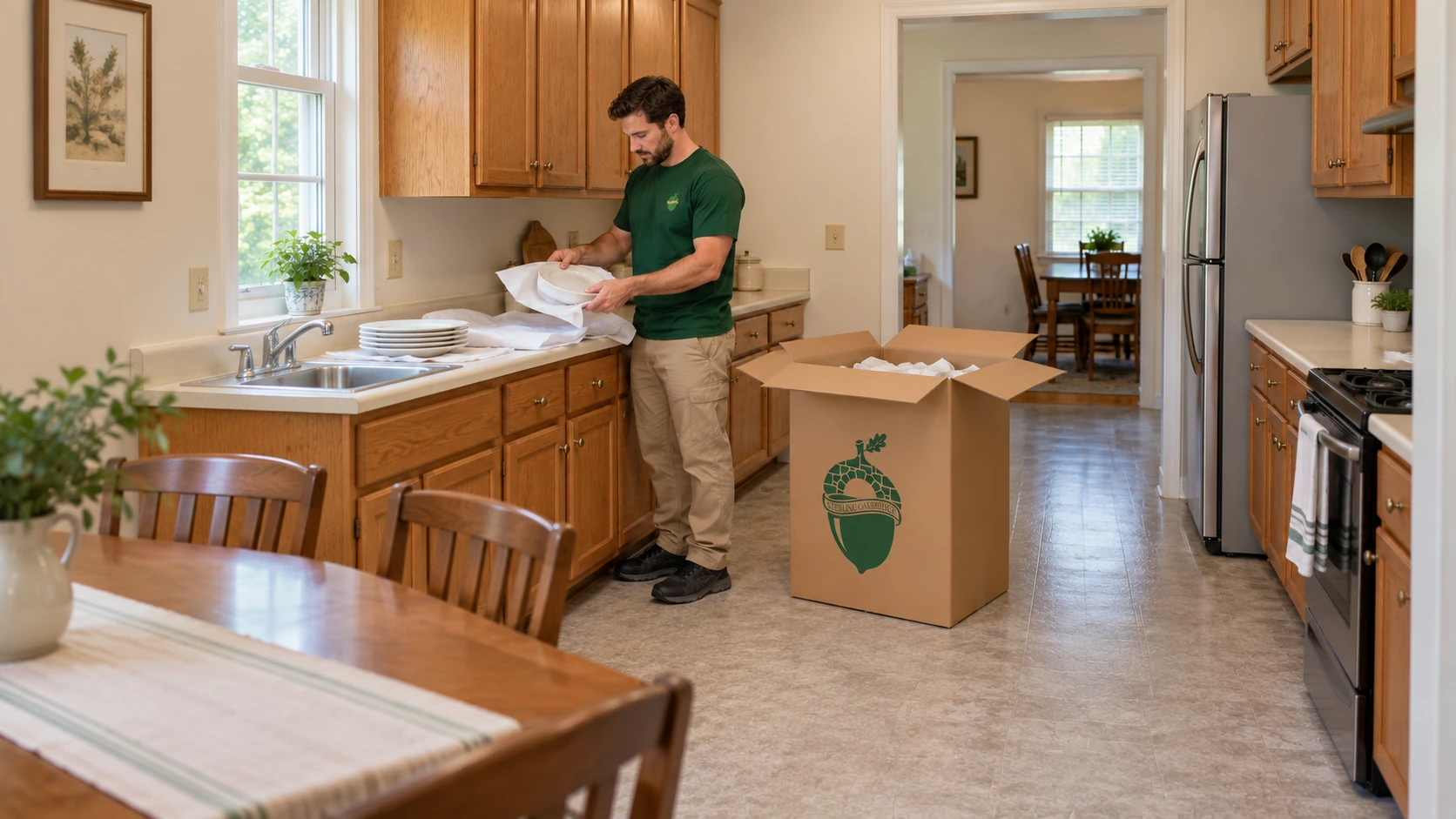
Sterling Oakbridge offers full, partial and fragile-only packing in Mechanicsville, with optional box unpacking, customer-directed organizing and separately agreed finishing or materials removal.
Explore packing, costs and local examples
Choose the work you want to hand over
Full packing covers the retained household contents in the agreed inventory. Partial packing assigns selected rooms or groups to the crew while you prepare the rest. Fragile-only work can cover ordinary breakables that need individual protection and suitable cartons. Name those groups and the division of work before choosing a visit; a request for “some packing” can leave the busiest cupboards unassigned.
You may want evenings back before moving, or help with the final rooms after making a start yourself. Decide which sorting decisions you will keep and which physical preparation you want the crew to complete. The benefit is a useful amount of work taken off your list, with its time and price reviewed. There is no assumption that a household cannot pack its own belongings or that every home needs the same team.
Mechanicsville is a census-designated place in Hanover County, distinct from the wider postal name. Bell Creek's association describes detached homes, townhomes and age-restricted condominiums. Those different spaces can involve upstairs storage, managed entrances or a smaller receiving room, but a community description does not grant access to a particular unit. Give the actual address and the person who controls the preparation and receiving visits.
Build the inventory from the contents
Show the inside of cupboards, wardrobes, drawers and bookcases, together with the furniture. Include retained belongings in a garage, attic, shed, basement if present and any separate storage address. Identify collections, fragile contents, hanging clothes and items that should stay accessible. Bedroom count and closed cupboard doors do not reveal the packing work or establish a carton allowance.
Decide what is going to the next home, what has an agreed storage destination and what will leave by a separate donation or removal route. Make those decisions before the crew protects and packs everything in reach. If an item changes group later, tell the coordinator so the preparation, transport and price describe the new work. An unconfirmed donation plan is not an accepted receiving destination.
Show customer-packed cartons too. Their condition, contents, weight and closure determine whether they can be used as they are or need replacement or repacking. Company-supplied cartons are separate from packing labor. Agree which supplies the crew will provide and where they can be delivered and kept without blocking the household or the carrying route.
Plan the visits around the last night
A separate visit can leave fewer packing tasks for moving day. A smaller reviewed inventory may fit packing and local moving into one day when the work, access and permitted hours allow it. A larger house, full cupboards, delicate preparation or a short building window may call for an earlier packing visit. A preferred sequence is not a confirmed crew or building appointment.
Confirm access for each visit, including any management work hours, materials delivery, insurance-certificate instructions and permitted holding area. A moving-day elevator reservation does not automatically admit the crew to pack a day earlier. Show stairs, narrow turns, door swings, the route to the loading position and the largest items that must follow it. Keep the prepared groups somewhere useful and authorized rather than filling the hallway.
Keep agreed bedding, toiletries, simple meal items, the next day's clothes and familiar child belongings usable until their scheduled packing time. Separate the final-night group from the cartons that are ready to leave. Medicines, keys, identity papers, valuables and essential travel documents stay with the household. Before a return visit, identify what must happen for work to resume: keys, a released room, a cleared surface or an accepted receiving appointment.
Four ways to plan a useful amount of help
These are conditional situations showing different choices, not completed customer jobs or measures of demand. The actual contents, property access and requested result decide the work.
Consider: kitchen breakables without giving up every evening
Suppose a working household in an established Mechanicsville detached home has already sorted clothes and books but still has kitchen cupboards, serving dishes and a display cabinet to prepare. Fragile-only packing may be more useful than handing over every room. Name the dishes and ordinary breakables assigned to the crew, show the cupboard contents and identify the customer-packed groups that will join the shipment.
Keep a small meal set separate until the last evening, then agree when it will be packed. Show any glass shelves, framed pieces or unusual collections separately. The method for ordinary dishes does not decide how a glass furniture component or valuable collection should be protected. Those pieces need their real construction, size and specialist requirements reviewed.
The useful result is a protected selected group and a clear remaining list for the household. Ask the estimate to distinguish packing time, cartons and any specialist preparation. If the task will exceed the permitted work period, agree an earlier visit or another workable sequence instead of expecting the building or the crew to extend the appointment automatically.
Consider: a school-week family and hanging clothes
Imagine a family preparing a townhome while ordinary work and school routines continue. Start with off-season clothing, spare linen and storage contents, leaving the agreed beds, toiletries and next-day clothes usable. Wardrobe cartons may suit selected hanging clothes; folded clothing and other contents need their own suitable cartons. Show the closet opening and working space so the box can stand outside its recess and door swing.
For a family also enrolling a new student in Hanover, keep the appointment information and required records with the household. HCPS's 2026–27 enrollment process follows the online form and welcome email, or a completed paper packet, with a registrar appointment and the required documents. Those records should not disappear into the shipment when they are needed for the appointment. The school assignment and enrollment process remain separate from a packing booking.
Agree which clothing and bedroom groups can be prepared first and which must wait. Management instructions apply to the actual townhome or unit, not to every address with the same neighborhood name. The result should be fewer unassigned cupboards and a usable final night, with the next morning's essentials and documents still in the household's hands.

Consider: a smaller next home and a separate storage group
Suppose a household is downsizing and will send some retained belongings to the next home and others to an accepted storage location. Start with the contents of every included space, including seldom-used cupboards, a garage and any separate storage pickup. Check the furniture footprint and the whole receiving route at the smaller home before paying to prepare a piece that has no agreed place to go.
Write the next destination, receiving room and useful contents on each carton. “HOME — Study Files” and “STORAGE — Guest Linens” explain more than a color alone. A number or opening priority can help, but the words need to remain useful to the person receiving. Keep the two retained groups physically distinct and outside the walking route. Do not mix an unwanted-furniture list or an outgoing materials pile into either group.
Confirm the storage intake, hours, authorized receiving person, later release conditions and stop sequence. Storage and later delivery have their own handling and price. Packing earlier does not establish free storage or a reserved later delivery. The useful result is a set of groups with clear next instructions, rather than cartons that all have to be opened to discover their destination.

Consider: selected unpacking before the rest of the rooms are ready
Now imagine an incoming household whose kitchen and one bedroom are usable while another room remains unavailable. Choose the first-use cartons and suitable surfaces for that visit. Keep the remaining groups closed in an agreed area outside the furniture footprint and carrying route. Do not spread everything across the available room just because the truck has finished unloading.
Basic box unpacking opens the agreed cartons and places their contents on suitable designated surfaces. A usable section of the kitchen counter can make mugs, dishes and a few meal items accessible; a prepared bed can provide a suitable surface for selected bedroom linens. That result is different from choosing the final cupboard position of every item. Used paper remains a separate material group, with small fittings and retained belongings checked before anything is discarded.
If you want final placement, have someone available to direct it and agree customer-directed organizing separately. If you prefer to try the rest yourself and request help later, show the remaining groups, surfaces and priorities for the return. Confirm the appointment, access and paid scope. The result is usable selected contents now and an explicit plan for the remaining work, without a promise that the whole home will be finished in one visit.

Protect the contents through the whole journey
Protection must support the contents inside the carton through carrying, stacking and the journey. Ordinary dishes need individual protection, adequate cushioning and an appropriate carton; loose items should not move against one another. Books, textiles, framed pieces, glass furniture parts and collections have different weight, shape and fragility. Show unusual items so the method and any art or collection preparation can be agreed before the visit.
Furniture preparation is related but distinct. Empty ordinary drawers and normally keep them secured in the protected whole piece. Identify loose shelves and contents separately. Safely removable long table or desk legs need a construction-specific method, protected parts and identifiable hardware. Integral supports should not be treated as detachable simply because another table was dismantled.
Basic furniture disassembly and reassembly use moving labor time without a separate basic assembly surcharge. Complex furniture and specialist tasks need review. Furniture delivery addresses a selected purchase and its receiving route; in-home moving addresses belongings already within the property. Packing the cupboard contents does not automatically include every separate furniture or installation operation.
Add organizing or finishing when it has a clear result
Home organizing adds final placement according to the customer's instructions. Identify the cupboards, shelves, contents and intended positions, and decide who will direct the choices. A smaller team can be easier to guide when each next placement depends on the resident's decision. Agree the work and price rather than assuming that opening cartons includes a completed storage system.
Furniture is unwrapped as part of delivery. Optional unpacking of box contents is a different paid stage. If you want mounting or other handyman finishing, provide the actual item, intended position, wall or fixing details and permission requirements. The method, executor, technical scope and price must be agreed for that task. A request to mount something does not establish that electrical work, appliance connections or general repair is included.
Separate used packaging from retained belongings
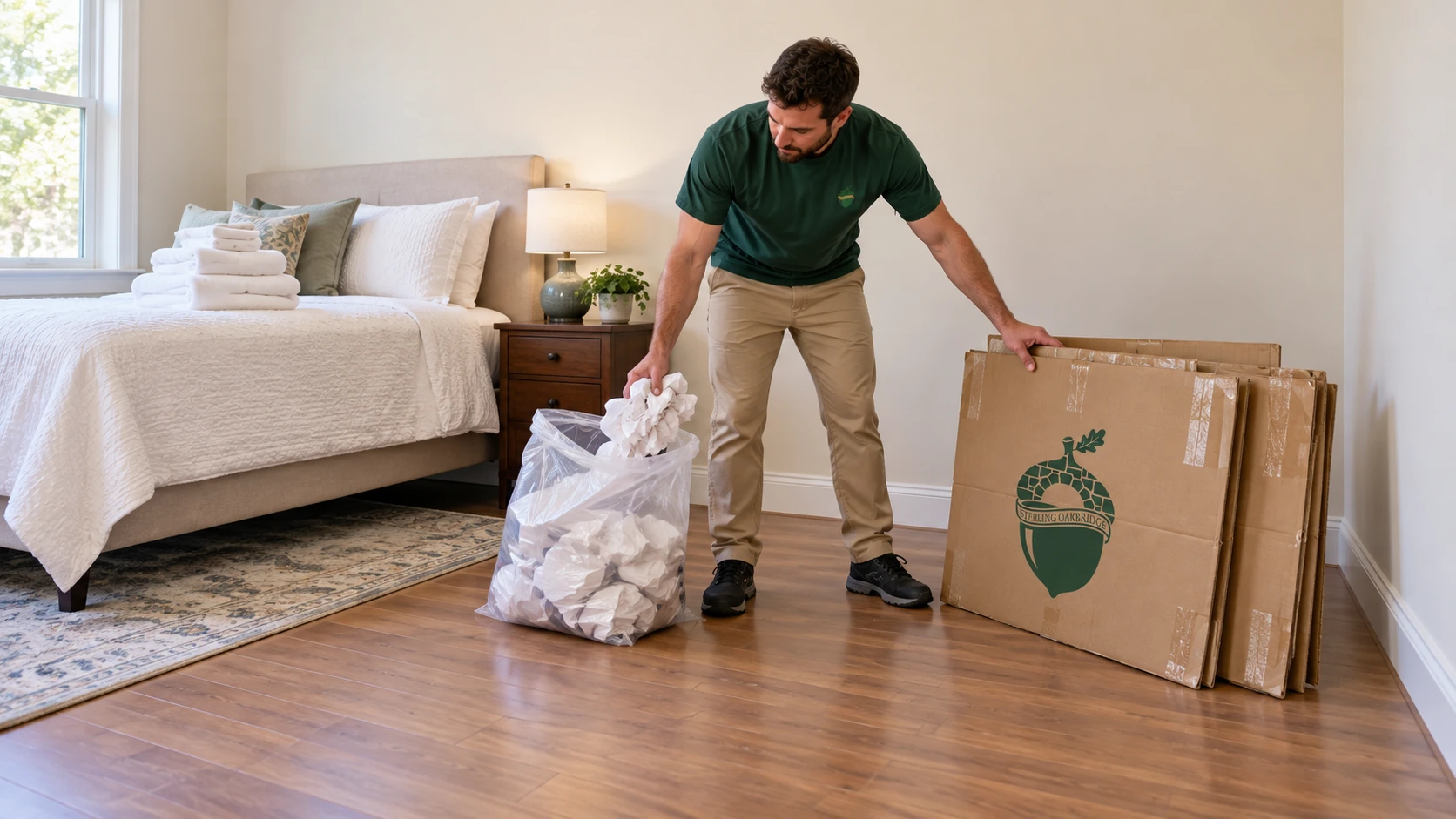
Gather used paper and empty cartons in the agreed indoor area as the selected cartons are unpacked. Check folds of paper for fittings, small belongings and the instructions that must stay. Keep sealed retained-content cartons distinct from empty collapsed material. Indoor gathering does not by itself include transporting it away.
Removal needs its own agreed scope and price. Identify the amount, separated material types, carrying route, collecting party and accepted destination. An unwanted chair or appliance is a different group from empty packaging; put it on a specific removal and disposal request. Do not leave it in the outgoing material pile and assume it has been priced or accepted.
Hanover's recycling guidance requires flattened corrugated cardboard without glossy finish or coating in the designated marked container. Plastic bags and Styrofoam stay out of the listed recycling streams. CVWMA's Hanover guidance also excludes plastic bags, bagged recyclables and Styrofoam from its curbside program. A mixed bag of packing leftovers is not the same as correctly separated cardboard.
County curbside recycling serves select formally joined subdivisions, rather than every Hanover address. Check the actual property arrangement and collection day; participating residents can use CVWMA or call (804) 340-0900. Managed premises may have their own instructions. The resident-only center rules exclude commercial vehicles, U-Hauls and box trucks, with businesses directed to the Transfer Station. Those resident facilities are not an assumed destination for a contractor's load.
Compare the complete paid scope
Packing labor is charged for working time, and company-supplied cartons are separate. Optional box unpacking also uses working time. Basic moving blankets, shrink wrap and tape have no separate protection-material charge. Review unusual preparation, specialist work, organizing, handyman tasks, additional visits, storage and transport or removal charges separately as applicable.
Compare the same retained inventory and access with and without packing help. Include what you would still prepare yourself and the evenings or return visits involved. In a substantial conditional example, packing plus moving can approach twice the budget of moving belongings that are already prepared. That is an illustration of additional work, not a standard multiplier, saving claim or quote for a Mechanicsville home.
A later unpacking visit can be useful when the household is ready to direct the work. The contents, surfaces, travel and access determine the paid plan; a bedroom count or minimum-hours reference is not a fixed completion cap. Choose the result you need first, then ask for the inventory and visits behind the estimate so you can see what the price actually covers.
Connect packing to the accepted delivery plan
For an interstate or Canadian move, use the actual Mechanicsville long-distance delivery plan. The delivery window starts after pickup and loading are complete; packing earlier does not start that delivery clock. The receiving person, keys, usable rooms and any separate unpacking visit need to fit the accepted window.
Travel or delivery taking longer does not itself change an agreed long-distance flat rate for the same reviewed inventory, access and services. Added belongings, changed access, extra packing, storage or another requested stage changes the work and needs separate written agreement. If the receiving home is unavailable, agree the alternative date or authorized intake, release conditions and costs, while keeping household accommodation and essentials workable.
For a household moving shipment, arrange the survey, written estimate and terms applicable to the actual route. A list and photographs start that review; they do not automatically replace a required survey. Confirm a standalone packing visit's scope separately. The Mechanicsville moving-services page explains the wider service choices, and the local guide covers settlement questions beyond the shipment.
Information to send for the estimate
Send the complete addresses, firm dates and photographs of the cupboard and storage contents, large pieces and full carrying routes. Identify full, partial or fragile-only work, what the household will prepare, separate destinations and the first-use rooms. Add the access contacts and any requested unpacking, directed placement, finishing or materials removal.
State what must stay usable and when the crew can enter each property. If a room, permission or receiving appointment is uncertain, name that condition and agree the next workable stage. This turns a general request for packing help into a defined amount of preparation and receiving work, with its materials, visits and price reviewed.
Mechanicsville packing and unpacking questions
Can I choose only part of the packing work?
Yes. Choose full-household, partial or fragile-only packing, then name the contents assigned to the crew and those you will prepare yourself. Include cupboards, clothing, storage and any unusual pieces. Agree the materials, visits and receiving help you want. A specific division of belongings lets the estimate describe the work you are handing over.
What should the inventory show beyond the furniture?
Show inside cupboards, closets, drawers and bookcases, plus retained belongings in the basement, attic, garage and separate storage. Decide what will travel and what stays or uses another accepted route. Closed cabinet photographs and bedroom counts can hide substantial packing work; they do not establish a carton allowance or a local average.
Can packing and moving happen on the same day?
They can sometimes share a day when the reviewed contents, carrying work and permitted hours fit. A smaller prepared inventory may suit that sequence; full cupboards, fragile preparation or a short building window can justify an earlier visit. Review the actual work, access and receiving arrangement before accepting the schedule.
Who needs to approve a separate preparation visit?
Confirm the person who controls property access, along with any manager's work hours, materials-delivery rules and insurance-certificate instructions. Include the complete route and the area where prepared items may remain. A moving-day lift or carrying reservation does not automatically admit the crew for an earlier visit. Agree another accepted period if the work cannot fit.
What should stay usable through the last night?
Keep agreed bedding, toiletries, a simple meal set, the next day's clothes and familiar child belongings accessible until their packing time. Mark that final group separately. Keys, medicines, private documents, valuables and travel essentials stay with the household, including the instructions and contacts it will need before delivery.
Can suitable clothes travel on hangers?
Suitable hanging clothes can be reviewed for wardrobe-carton preparation, while other clothes are folded and packed in appropriate cartons. Show the garments, closet opening and working space. The actual carton opening, supported rail and access need to suit the clothes; keep the closet doors and room route usable during the transfer.
How do kitchen breakables differ from glass furniture or art?
Ordinary dishes may use individual wrapping, cushioning and suitable cartons for the handling ahead. Glass doors, removable shelves, framed pieces and collections need their own construction and fragility review. Identify specialist methods and their price while planning. An agreement to pack dishes does not specify the method for every unusual fragile object.
Can the crew use cartons I already own?
Show their condition, sizes, contents, weight and closure so suitable use, replacement or repacking can be agreed. A carton that is available is not necessarily ready for the carrying, stacking and journey. Include any already packed groups that will join the shipment rather than assume their preparation needs no review.
Should drawers and all furniture legs be taken out?
No. Empty ordinary drawers and normally retain them secured in the protected whole piece. Identify removable shelves and fittings. Safely detachable long table or desk legs need a construction-specific method and an identifiable protected parts set. Integral supports are different; show the piece and restricted turn before choosing how to prepare it.
What should labels say when some belongings go to storage?
Write the next destination, receiving room and useful contents on each carton. Add a number or opening priority where useful; color can support the words. Keep the home and storage groups distinct. Confirm both receiving arrangements and the stop sequence, including accepted storage intake, later release and any separate transport or handling charges.
How can I separate belongings for a smaller home and storage?
Decide the retained new-home, storage, donation and removal groups before packing. Review every included cupboard and storage space, and check the complete furniture route and footprint at the smaller home. Give cartons a written next destination, room and useful contents. Confirm storage intake, later release, receiver and handling or transport charges separately; a preferred stop is not an accepted receiving arrangement.
What does basic box unpacking leave ready?
It opens the agreed cartons and places selected contents on suitable designated surfaces, with used materials gathered in the agreed work area. Choose priorities and clear stable surfaces first. Final cupboard placement and transport of packaging away are separately selected tasks; opening cartons does not imply an entirely organized home.
How is home organizing different from opening cartons?
Home organizing adds final placement according to your instructions. Identify the cupboards, shelves, belongings and intended positions, and have someone available to direct decisions. Agree the scope, working period and price separately. A smaller team can be easier to guide when the next placement depends on your choice.
Can I request unpacking after trying some of it myself?
Yes. Show the remaining unopened groups, useful surfaces, room priorities and access when requesting a return. The coordinator can review the work and availability, including any organizing or materials removal you want. The later visit has its own agreed paid scope and confirmed appointment; a preferred date is not automatically reserved.
How can I keep school-enrollment records accessible during packing?
Keep the actual enrollment and identity records, appointment information and essential school belongings with the household, outside the shipment. HCPS's 2026–27 process follows the online form and welcome email, or a completed paper packet, with a registrar appointment and required documents. Confirm the actual school process separately; a packing appointment does not enroll or assign a student.
Do all the rooms need to be unpacked together?
Choose the first-use rooms and contents that have usable surfaces and access. Keep other groups closed in an accepted area outside the carrying route. Agree any later unpacking or directed placement visit and its charge, and confirm the rooms can actually be used. This lets selected contents become accessible without spreading every carton through the home.
How are packing time, cartons and basic materials charged?
Packing and optional box unpacking use working time; company-supplied cartons are separate. Basic moving blankets, shrink wrap and tape have no separate material charge. Review unusual protection, specialist work, extra visits and removal individually. Estimated or minimum local hours help plan the work and are not a fixed completion cap.
How can I compare packing with preparing everything myself?
Compare the same retained inventory and access with and without preparation. Include labor, cartons, transport, selected unpacking, organizing, finishing, extra visits, storage and removal. Decide which evenings and tasks you will keep. A conditional comparison such as substantial packing approaching twice an already packed move's budget is not a standard multiplier or a quote.
Is furniture reassembly included in box unpacking?
They are different tasks. Basic furniture disassembly and reassembly use moving labor time without a separate basic assembly surcharge, while complex models need review. Furniture is unwrapped as part of delivery. Optional box unpacking opens the agreed carton contents onto surfaces. Identify the furniture, fittings and receiving space for the work you want.
Can you finish by mounting a television, pictures or curtains?
Those requests can be reviewed as separate handyman work. Provide the object, intended position, wall or fixing details and permission requirements. Agree the method, executor and price for the actual task. Physical mounting does not establish that electrical work, appliance connections or general repair is included.
Will the used cartons and paper leave with the crew?
Only when removal is separately agreed and priced. Gathering materials indoors during unpacking is different from transporting them away. Identify the quantity, separated materials, carrying route, collecting party and accepting destination. Check paper for retained belongings or small fittings, and keep any unwanted furniture on a separate authorized list.
Can mixed packing leftovers go into recycling anywhere in Mechanicsville?
No. Hanover requires flattened uncoated corrugated cardboard in the designated stream; plastic bags and Styrofoam stay out of the listed recycling streams. Curbside service applies to select joined subdivisions, not every address. Resident-only centers exclude commercial vehicles, U-Hauls and box trucks, so a contractor needs an accepted route. Agree the collecting party and destination instead of assuming a mixed pile will be taken.
How should unpacking connect to a long-distance delivery?
Use the accepted delivery model, receiving arrangement and separately requested unpacking scope. The delivery window starts after pickup and loading are complete, not at an earlier packing visit. Travel taking longer does not itself change an agreed interstate or cross-border flat rate for the same inventory, access and services; added work needs revised written agreement.
What can I send now for a packing estimate?
Send both addresses, firm dates, cupboard and storage photographs, the retained inventory and complete routes. Name full, partial or fragile-only work, what you will prepare, separate destinations and receiving priorities. Add access contacts and requested finishing or removal. Confirm a standalone packing visit's paid scope separately; a household moving shipment needs the survey, written estimate and terms applicable to its actual route.