
Virginia · Suffolk service planning
Long Distance Movers in Suffolk, VA
Sterling Oakbridge plans household moves from Suffolk, Virginia, across the United States and Canada. Direct delivery provides a dedicated truck and the same moving crew at pickup and delivery. Consolidation can suit a smaller agreed shipment when the receiver can accommodate a wider delivery window. We review the belongings, both properties, dates and requested work before agreeing the written long-distance flat rate.
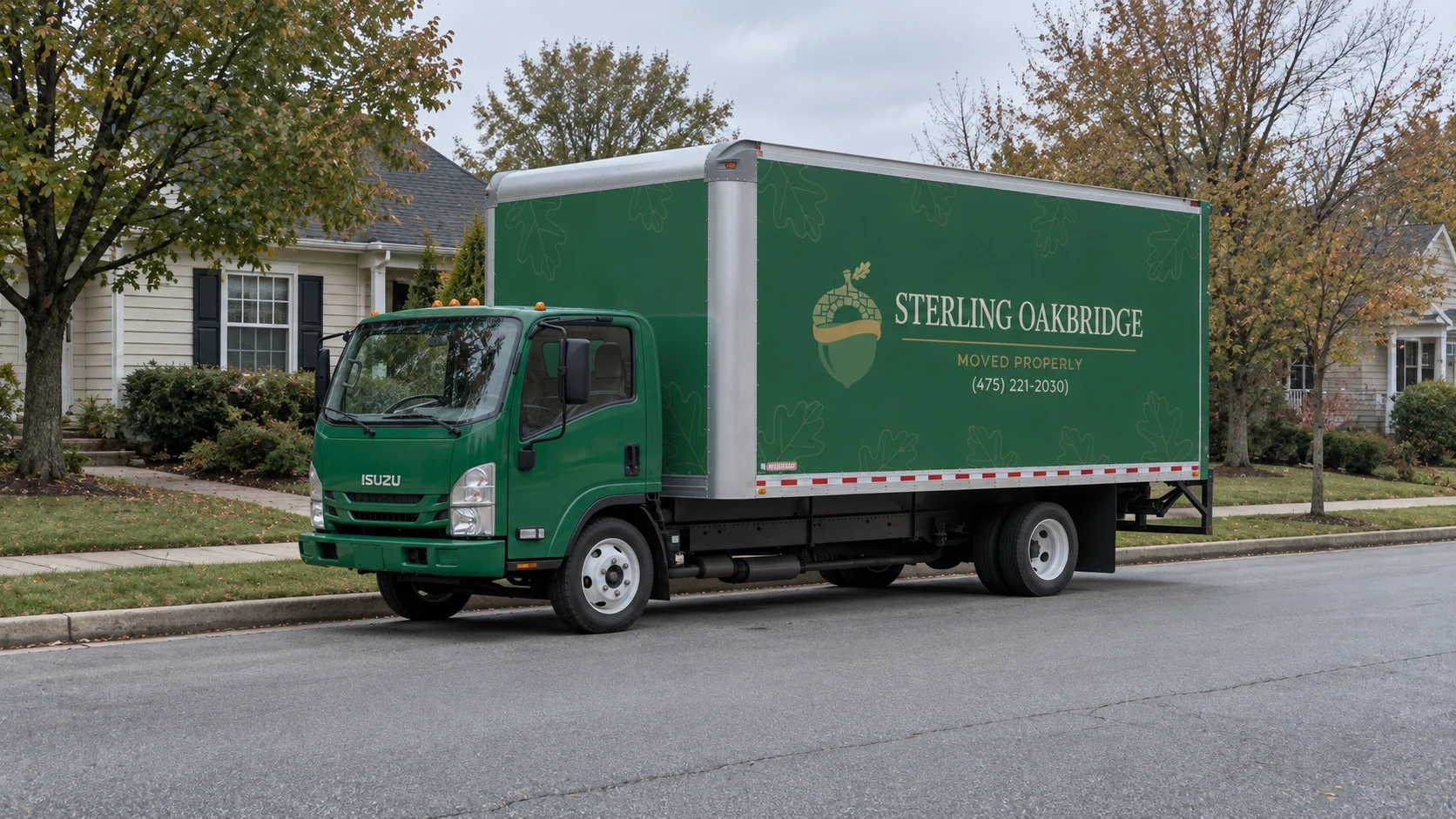
Choose direct or consolidated delivery
Put the household's dates beside the shipment's dates. When must the Suffolk home be empty? When will the next property actually admit the crew? Which belongings must be available for work, school, sleep or care before delivery? A lease start, closing date and usable unloading appointment can be three different events.
With direct delivery, the reviewed shipment has its own truck and the same crew at the two ends. This makes it possible to plan departure and receiving together, subject to the actual route, completed loading and property arrangements. The estimator's visit is a separate role; it does not promise that the person surveying the home will perform the move.
Consolidation is worth comparing for a defined smaller group when receiving can fit the broader agreed period. Approximately 300–400 cubic feet or less is small-shipment guidance, not a minimum or an automatic acceptance threshold. Send the actual pieces and containers. Two bulky pieces behind a stair turn can require more preparation than their volume suggests.
Compare the complete written arrangements, including the household's accommodation and access to essentials. Dedicated truck and same crew are direct-delivery conditions. Consolidation does not automatically include those conditions, free storage or a particular discount.
Plan the Suffolk departure from the actual address
This service page concerns Suffolk city, Virginia, an independent city. Suffolk County, New York, is a different place. Identify the full origin address, unit, loading entrance and any separate garage, outbuilding or upstairs group before applying local procedures.
A central house, a northern managed property and a rural approach near one of Suffolk's villages present different practical questions. Walk the entire route from each selected room to the proposed vehicle position. Show the doorway and its swing, internal turns, steps, landings and any lift. Outdoors, show the gate, surface, slope, overhead branches, turning room and the place where the vehicle can stand. A view of a wide front door does not establish that the protected furniture can reach it or that a truck can turn on the approach.
For proposed work affecting public space, resolve the actual footprint with the responsible authority. Suffolk's currently linked right-of-way closure application calls for submission at least 14 business days ahead and a traffic-control plan. At least seven calendar days before work starts, Engineering must receive the exact dates, closure extent and company contact information. The form says the permit will not be issued until that notice is received, so complete this step before relying on an approved closure. These are closure-procedure conditions, not a rule that every parked moving truck needs that permit. Keep private-property permission separate from street, lane or sidewalk approval.
Ask a managed property for its actual working hours, entrance, protection, lift arrangements and documents. If a building requires a certificate, obtain the wording, recipient and deadline. If it requires an operator or other authorized personnel, identify who supplies and books that role. Confirm any charge, payer and cancellation or refund terms before relying on the reservation. These are questions for the actual building, rather than requirements attributed to every Suffolk home.
The Suffolk moving services page covers the wider work and local estimate distinctions. The relocation guide helps with the home, household services and ordinary week that must be ready around the shipment.
Count delivery time after pickup and loading
The delivery clock begins after pickup and loading are complete. Packing, releasing the property and getting the goods to the vehicle happen before that point. A household leaving Suffolk in the morning has not necessarily completed loading in the morning.
Swipe the table to compare both delivery options.
| Illustrative destination | Direct planning window | Consolidated window |
|---|---|---|
| Philadelphia, Pennsylvania | 1–2 days | Up to 30 days |
| Jacksonville, Florida | 1–2 days | Up to 60 days |
| Ottawa, Ontario | 2–3 days | Up to 60 days |
| Seattle, Washington | 5–6 days | Window agreed individually |
These are ordinary illustrations from a central Suffolk city-point driving reference to destination city points. They are not directions for a particular commercial vehicle, live traffic forecasts or booked appointments. The actual address in northern or rural Suffolk, vehicle, lawful route, border readiness and receiving period still need review for the order.
Same-day or next-day delivery can be possible for a suitable closer shipment when the loading finish, journey and receiving arrangements support it. It requires confirmation. A short route does not reserve a curb, make keys available or extend a building's hours.
Suitable shorter domestic consolidated routes can use up to 30 days. Florida and Canada use up to 60 days; California uses up to 90. Other distant destinations need an individually agreed period. Canada takes priority over short distance. Plan personal travel, accommodation and receiving against the model actually chosen.
The following four situations show different decisions at the two ends. They are planning examples, not accounts of completed customer jobs.
Example: Philadelphia, Pennsylvania, with street space and an upstairs room to arrange
Suppose a household leaves a Suffolk house for a Philadelphia rowhouse with a bedroom upstairs. The ordinary direct illustration is 1–2 days after completed loading; suitable consolidation is illustrated as up to 30 days. Decide first whether the receiver can support that broader period or needs a closer connection between departure and arrival.
For space on a Philadelphia street, the City's Temporary No Parking process requires the exact address, vehicle length and start and end times. The application instructions require at least four full business days of notice. Use one address and one permit per address. The reviewer may change the requested position because of local restrictions; a space drawn beside the front door is not automatically the approved place.
Complete the review, invoice and final-permit stages. The published process then directs the permit holder to take the printed permit to a police district headquarters for the signs. The application page says to post them 24–48 hours before the move or as soon as possible after receiving the permit; the City service page specifies at least 24 hours. Plan the local person and posting time early, and follow the issued instructions. A submitted form or paid invoice is still different from a final permit and posted signs.
Connect that position to the upstairs furniture route. Show the stoop, entrance swing, landing, stair turn and bedroom door, together with the actual large pieces. Review removable components and the protected dimensions before deciding what can pass. If the permitted position changes, review the revised carry and work with the coordinator. The Suffolk closure procedure does not replace Philadelphia's street-space arrangement.
Keep immediate travel needs outside the shipment
Identify what stays with the people before packing closes the cupboards. Keep identification, keys, medicines, ordinary clothes, chargers and essential work or school belongings available. For Canada, retain the required travel and import records with the traveller. Avoid putting private documents or sensitive identifiers on outward-facing carton labels.
Give these bags a separate permitted place and tell everyone releasing the pickup which group stays. Label shipment containers by useful contents and receiving room. A carton called First Night cannot help during the first night if it is inside a shipment arriving later.

Example: Jacksonville, Florida, with a compact group moving before the household is ready to receive
Imagine selected study and bedroom belongings leaving a northern Suffolk home while the rest of the household remains there. Make one list of the group being collected and another of the furniture and contents that stay. Check both with the person releasing the goods. A container standing near the pickup group is not authorization to take it.
The ordinary direct illustration to Jacksonville is 1–2 days after completed loading. A suitable consolidated shipment uses up to 60 days, because Jacksonville is in Florida. Its relatively short reference journey does not turn the Florida consolidated allowance into the shorter domestic illustration.
The person arriving first should decide how they will work and sleep until delivery. Keep the necessary laptop, charger, clothes and personal papers with them; arrange a usable temporary living plan if the bedroom group will follow. A small load does not automatically make next-day delivery available.
At the receiving home, check the exact entrance, stair or lift and permitted work period even if the shipment is compact. Give the coordinator the individual furniture dimensions and construction, rather than relying on the label Small Move. If an interim address replaces the intended home, have the new access, carrying distance, receiver and charges agreed before the old plan becomes committed.

Include the preparation and finishing work you need
Show the contents as well as the visible furniture. Open-cupboard photographs, rugs, fragile groups, removable shelves and outbuilding contents help establish the actual work. Choose full packing, selected-room preparation or customer packing, with a clear release point for the last kitchen, bed and work equipment.
Packing uses working time. Company-supplied cartons are separate; moving blankets, shrink wrap and tape have no separate material charge. Basic furniture disassembly and reassembly use moving labor time without a separate basic assembly surcharge. Complex furniture and other specialist tasks require individual review. The packing service explains the preparation options.
Empty ordinary drawers and normally retain them secured in the complete protected piece. Review long table or desk legs that can safely be removed and removable shelves from photographs of the actual construction. Keep matching parts and hardware together and protected. Integral supports need a method suited to the piece. An emptied drawer before wrapping is a preparation stage, rather than a piece ready to load without protection.
At delivery, furniture unwrapping is part of the work. Opening the contents of boxes is optional unpacking and uses working time. Directed organizing, final cupboard or drawer placement, removal of materials and specialist finishing need their own scope and charges. Decide which rooms and groups should become usable first, and have suitable clear surfaces ready for any agreed unpacking.

Example: Ottawa, Ontario, when the traveller arrives before the household goods
Suppose a household member leaves Suffolk for Ottawa before the shipment. The ordinary direct illustration is 2–3 days after completed loading; consolidated delivery uses up to 60 days. The traveller's entry, the shipment's import readiness and the receiving home's availability are separate parts of the sequence.
For a newcomer settling in Canada, IRCC's arrival guidance calls for two copies of detailed lists separating accompanying belongings from goods arriving later. Include values and identifying details where applicable. Present the lists on first arrival even if the household goods are not travelling with you, and keep the documents with the traveller.
The CBSA Personal Effects Accounting Document distinguishes settler, former-resident, seasonal-resident and beneficiary classifications. A moving inventory supports identification of the shipment; it does not establish an exemption or choose a person's customs classification. Establish the applicable requirements with CBSA before pickup and retain the records needed for the later goods. This example does not promise an immigration or duty outcome.
The Ottawa receiver also needs keys, a permitted unloading position and the complete path to the rooms. If the household cannot receive the goods when the chosen model may deliver them, resolve an accepted alternative before dispatch. Border-document preparation does not book a lift, and an approved building slot does not complete the import process.
Example: Seattle, Washington, with a short building slot and the main furniture to place first
Consider a Suffolk household moving to a Seattle building where management offers a limited unloading period. The ordinary direct illustration is 5–6 days after completed loading. A consolidated Seattle shipment needs an individually agreed window. California's up-to-90-day rule does not become a standard allowance for Washington.
Before choosing the model, have management's actual entrance, lift capacity, booking period, required documents and any operator arrangements reviewed. Trace the corridor and turn beyond the lift to the room. Show the main bed or other large piece and the space needed to turn it in its protected state. Neither a street position nor a booked lift proves that the rest of the receiving route works.
Agree which preparation management permits earlier. Keep the route and required floor areas clear, identify the final position of the largest furniture, and prioritize what must reach the unit during the approved period. Basic furniture placement and unwrapping can leave the main piece usable while closed clothing cartons wait outside the passage. Opening those cartons or arranging their contents is a separate requested result.
If the reviewed work cannot fit the offered period, the customer, building contact and coordinator should accept another available slot or method before loading commits the shipment. Where storage and redelivery are the agreed alternative, record actual availability, goods, intake and release contacts, dates, access, extra handling, payer and charges. Keep accommodation and personal essentials workable for the household. A request to management or a storage inquiry is not a confirmed alternative.

Separate delivery, an overnight hold and storage
An agreed overnight truck hold is different from storage involving unloading, holding, retrieval, reloading and redelivery. Clarify which arrangement the estimate describes. A one-night plan does not settle an uncertain longer gap or grant permission to park on a Suffolk street or at a private property.
For moving and storage, identify the goods, expected dates, access needed during the interval, environmental requirements and later receiving address. Have availability, handling, release authority and charges accepted before relying on it. Do not replace that agreement with a contact name or an unanswered availability request.
If keys, an outside route or the receiver's plans change, set a decision deadline before departure or before the confirmed alternative expires. The property controller confirms usable access; the moving coordinator accepts the revised sequence. Choose a confirmed later slot, another reviewed arrangement or separately agreed available storage and redelivery. Record the revised responsibilities and costs, and arrange a place for the household to stay if the home is not usable.
Keep the written flat rate tied to the reviewed work
For the same reviewed shipment, access and services, the agreed long-distance flat rate stays the same when travel or delivery takes longer. A different inventory, another entrance, extra packing or a newly requested stage changes the work. Resolve known changes and any revised interstate written estimate before loading. The original estimate cannot be rewritten after loading begins; later additional services need their applicable agreement and charges before they are performed. Report changes while staffing, materials, receiving and alternatives can still be reviewed.
Specify packing responsibility, cartons, furniture work, optional unpacking, storage, material removal and any specialist tasks. A building charge or operator should have a named payer; a building certificate, mover valuation and an insurance policy serve different purposes. For a move entirely within Virginia, use the applicable intrastate tariff and estimate terms. The Virginia DMV household-moving guide explains that moves of 30 miles or less may use hourly charges, while longer moves require the applicable itemized estimate and bill of lading. Distinguish binding and nonbinding estimates. A binding price has its own legal conditions, including qualifying destination services that were not known before loading; do not apply that exception to changes already known at pickup or assume these interstate illustrations settle an in-state charge.
For US interstate household moves, FMCSA explains valuation choices. Full Value Protection applies unless you choose Released Value through the required signed waiver. Have its cost, limits and claim instructions explained in writing. Released Value requires a signed choice and is limited to 60 cents per pound per article, rather than replacement cost. Read the actual terms, valuable-item declarations and claim instructions before signing; do not treat a building certificate as the shipment's protection selection.
Send the details that make an estimate useful
Send both complete addresses, the furniture and container list, photographs of packing areas, large-piece dimensions and firm dates. Include every selected upstairs, basement, garage or outbuilding group. Show the entire carrying route and intended vehicle position at each end, together with building hours, documents, booked roles and the person who can authorize release and receiving.
Name what the crew prepares, what you will finish and what must stay with the household. Bring the requested delivery model together with the receiving period and any agreed alternative. For an interstate household shipment, obtain the required written estimate and complete the required survey unless you make the proper separate written survey waiver before loading. Retain that waiver with the bill of lading; it does not waive the written estimate. The estimate can then describe a complete sequence, with the relevant work, responsibilities and separately charged items visible.
Pickup in Suffolk city, Virginia
We arrange long-distance pickup in Suffolk city, Virginia, with the actual inventory, date and property access reviewed for the job. Show the complete address and any apartment, upstairs, basement, garage or outbuilding group. Downtown, Harbour View, Chuckatuck, Driver, Holland and Whaleyville are useful address-search settings within the independent city, not separate counties or fixed pickup zones. Review another municipality from its complete address. Suffolk County, New York, is a different place, and a company office or street-space permission is not implied.
Explore long-distance destinations from Suffolk, Virginia
These examples organize destinations for household moves from Suffolk, Virginia, across the United States and Canada. Compare the actual shipment, both properties and receiving period before choosing a delivery model. They are not customer-demand rankings or company offices.
Northeast
- Boston, Massachusetts
- Buffalo, New York
- Philadelphia, Pennsylvania
- Washington, DC
- Baltimore, Maryland
Southeast and Florida
- Charlotte, North Carolina
- Raleigh, North Carolina
- Miami, Florida
- Orlando, Florida
- Tampa, Florida
- Greenville, South Carolina
- Chattanooga, Tennessee
- Jacksonville, Florida
Great Lakes and Midwest
- Chicago, Illinois
- Cleveland, Ohio
- Columbus, Ohio
Pacific states
- Seattle, Washington
- Spokane, Washington
- Portland, Oregon
- San Francisco, California
- Los Angeles, California
Mountain West and Southwest
- Denver, Colorado
- Phoenix, Arizona
- Las Vegas, Nevada
- Salt Lake City, Utah
Canada
- Québec City, Quebec
- Vancouver, British Columbia
- Toronto, Ontario
- Ottawa, Ontario
- Montreal, Quebec
- Kingston, Ontario
- London, Ontario
- Brockville, Ontario
Long-distance moving questions in Suffolk
Which Suffolk does this long-distance page cover?
Suffolk city, Virginia, an independent city. Suffolk County, New York, is a different place. Give the full pickup address, unit, loading entrance and every selected garage, outbuilding or upstairs group so the actual property and street arrangements can be reviewed.
Should I choose direct or consolidated delivery?
Choose direct when a dedicated truck and the same crew at pickup and delivery fit the shipment and receiving dates. Compare consolidation for an agreed smaller group when the receiver can support the wider delivery period. Include accommodation and the belongings needed before arrival; direct delivery’s same-crew condition is not automatically included with consolidation.
When does the delivery window begin?
After pickup and loading are complete. Packing the Suffolk home, releasing the rooms and bringing the goods to the vehicle precede that point. The direct illustrations are Philadelphia and Jacksonville 1–2 days, Ottawa 2–3 days and Seattle 5–6 days. They are ordinary planning ranges from city-point driving references, not appointments or approved commercial-vehicle journeys.
Can a Philadelphia shipment arrive the same day or next day?
It can be possible for a suitable shipment when early enough completed loading, a lawful journey and confirmed receiving access support it. It is not automatic. The ordinary direct illustration is 1–2 days after loading. Philadelphia’s street-space and posting arrangements, keys and the full furniture route still need to be ready.
How do I arrange Philadelphia moving-truck signs?
Begin with the City’s Temporary No Parking process at least four full business days ahead. Apply for one exact address with the vehicle length and required period. After review, invoice and final permit, take the printed permit to a police district headquarters for signs. The portal says to post 24–48 hours before the move or promptly after issuance; the City service page specifies at least 24 hours. Name the local person who will complete that stage and follow the issued instructions.
Does every Suffolk pickup require a right-of-way closure permit?
No. Determine whether the actual work requires a street, lane or sidewalk closure rather than assuming a parked truck always does. The City’s current-linked closure form specifies 14 business days for application, a traffic-control plan and notice of the exact dates, closure extent and company contact at least seven calendar days before work starts. The form says the permit will not be issued until that notice is received. Private loading permission and public-space authority are different; have the actual address and footprint reviewed.
Is 300–400 cubic feet a minimum shipment?
No. It is approximate small-shipment guidance, not a minimum or automatic acceptance threshold. Send the actual furniture and containers, their preparation needs and access at both ends. A compact shipment can still include a large piece, upstairs turn or restricted receiving period. Those details determine whether consolidation suits the work.
How broad are consolidated delivery windows?
A suitable shorter domestic route can use up to 30 days. Florida and Canada use up to 60; California uses up to 90. Other distant destinations need an individually agreed window, and Canada takes priority over short distance. Confirm the actual model and period in writing and make the household’s travel, essentials and receiving plan workable for it. Free storage or a particular discount is not implied.
Does a small Jacksonville load guarantee next-day delivery?
No. The ordinary direct illustration is 1–2 days after completed loading with an accepted operational plan. Suitable consolidation uses up to 60 days because Jacksonville is in Florida. List the selected pickup group and what stays in Suffolk, then arrange how the person in Florida will work and sleep until that group arrives.
Does Seattle use California’s 90-day consolidated allowance?
No. Seattle is in Washington and needs an individually agreed consolidated window. Its direct illustration here is 5–6 days after pickup and loading are complete. Match the actual shipment, truck route and authorized receiving period before choosing the model; a western location alone does not establish California’s rule.
What should a newcomer whose goods will follow to Ottawa prepare?
Prepare two copies of detailed personal-effects lists, separating accompanying goods from later arrivals and including values and identifying details where applicable. IRCC directs newcomers to present the lists on first arrival even without accompanying household goods. Keep them with the traveller. Resolve the applicable CBSA classification and later-release records before pickup, then separately confirm the Ottawa receiving arrangement.
Does the mover’s inventory establish a Canadian duty exemption?
No. It supports identification of the shipment, but does not choose the person’s customs classification or establish an exemption. CBSA distinguishes settler, former-resident, seasonal-resident and beneficiary circumstances. Confirm the applicable requirements with CBSA, declare the goods as required and retain the resulting records. A building appointment and customs readiness are separate parts of the move.
Which belongings should travel with the household?
Keep identification, keys, medicines, clothes, chargers and essential work or school items with their users. Canada travel and import records should remain with the traveller. Give these bags a separate place and tell the person releasing the shipment which group stays. A First Night carton inside a shipment that has not arrived cannot support the household before delivery.
Can the crew pack selected rooms and unpack after delivery?
Yes, when those stages are agreed. Name the selected rooms or fragile groups, what you prepare and the receiving result wanted. Packing and optional box unpacking use working time; company cartons are separate. Blankets, shrink wrap and tape have no separate material charge. Furniture unwrapping is part of delivery. Organizing, materials removal, storage and specialist finishing require their own scope and charges.
How should drawers and removable furniture parts be prepared?
Empty ordinary drawers and normally retain them secured in the complete protected piece. Review removable shelves and safely removable long table or desk legs from the actual construction. Protect matching parts and keep their hardware together. Integral supports need a method suited to the piece. Basic furniture disassembly and reassembly use moving labor time without a separate basic assembly surcharge.
What building information should I obtain before receiving?
Obtain the actual entrance, work period, lift booking and capacity, protection requirements and any certificate wording, recipient and deadline. If an operator or other authorized personnel are required, establish who supplies and books that role. Confirm the charge, payer and cancellation or refund conditions. Review the entire route after the lift as well; these requirements are property-specific, not universal Suffolk or Seattle rules.
What if a building offers too short an unloading period?
Show the permitted period and complete route to the coordinator before booking. Identify preparation management allows earlier and prioritize the large pieces and essential groups that must reach the unit within the slot. If the work cannot fit, accept another available slot or method, or separately agreed available storage and redelivery, before the shipment loses a confirmed option. Record contacts, dates, receiver, access, handling, payer and charges.
What should happen if keys or destination access are delayed?
At the agreed decision deadline, contact the property controller and moving coordinator. Choose a confirmed later slot, a reviewed alternative or agreed available storage and redelivery before departure or before a confirmed option expires. Record goods, location, release authority, dates, access, extra handling and charges. Keep essentials and accommodation workable for the household. Resume when usable access is confirmed and the revised sequence is accepted.
Is an overnight truck hold the same as storage?
No. An agreed overnight hold differs from unloading, holding, retrieval, reloading and redelivery through storage. Identify the goods, dates, access to them, environmental needs and complete handling charges. A one-night plan does not cover an uncertain longer gap or grant parking permission at a street or private property. An availability inquiry is not a storage booking.
Will a longer journey increase the agreed flat rate?
The agreed long-distance flat rate stays the same for the same reviewed shipment, access and services when travel or delivery takes longer. Added inventory, another entrance, extra packing or a new requested stage change the work. Resolve known changes and any revised interstate written estimate before loading. The original estimate cannot be rewritten after loading begins; later additional services need their applicable agreement and charges before they are performed. Report changes early enough to review them. A move entirely within Virginia follows the applicable intrastate tariff and binding or nonbinding estimate terms. DMV guidance distinguishes moves of 30 miles or less that may use hourly charges from longer moves requiring the applicable itemized estimate and bill of lading.
Are the route references approved truck directions?
No. They are ordinary driving references between a central Suffolk public-address city point and destination city points. They do not establish the route from every northern or rural Suffolk property, live traffic, a lawful commercial-vehicle journey, Canadian import readiness or a booked receiving slot. Review the actual vehicle, addresses, restrictions and order before using a delivery illustration.
Are interstate valuation, insurance and a building certificate the same?
No. Valuation is mover liability, insurance is a separate policy and a building certificate addresses property requirements. For US interstate household moves, Full Value Protection applies unless Released Value is chosen through the required signed waiver. Have its cost, limits and claim instructions explained in writing. Released Value requires a signed choice and is limited to 60 cents per pound per article, rather than replacement cost. Review the actual terms, valuable-item declarations and claim instructions before signing.
Where in Suffolk can long-distance pickup be arranged?
We arrange long-distance pickup in Suffolk city, Virginia, with the actual inventory, date and property access reviewed for the job. Show the complete address and any apartment, upstairs, basement, garage or outbuilding group. Downtown, Harbour View, Chuckatuck, Driver, Holland and Whaleyville are useful address-search settings within the independent city, not separate counties or fixed pickup zones. Review another municipality from its complete address. Suffolk County, New York, is a different place, and a company office or street-space permission is not implied.
What should I send for a useful written estimate?
Send both complete addresses, the furniture and container list, packing-area photographs, large-piece dimensions and firm dates. Include every selected stair, landing, inner turn, lift, garage or outbuilding route and the proposed vehicle position at both ends. Name packing, cartons, optional unpacking, storage, specialist tasks and exclusions. Forward building documents, booked-role requirements and the authorized release and receiving contacts. For an interstate household shipment, obtain the required written estimate and complete the required survey or proper separate written survey waiver before loading. Retain the waiver with the bill of lading; waiving the survey does not waive the written estimate.