
Virginia · Tuckahoe service planning
Long Distance Movers in Tuckahoe, VA
Sterling Oakbridge moves household belongings from Tuckahoe, Virginia, throughout the United States and Canada. Choose direct delivery with a dedicated truck and the same moving crew, or consolidated delivery for a suitable smaller shipment with a wider receiving window. We agree the long-distance flat rate around your inventory, access and selected work.
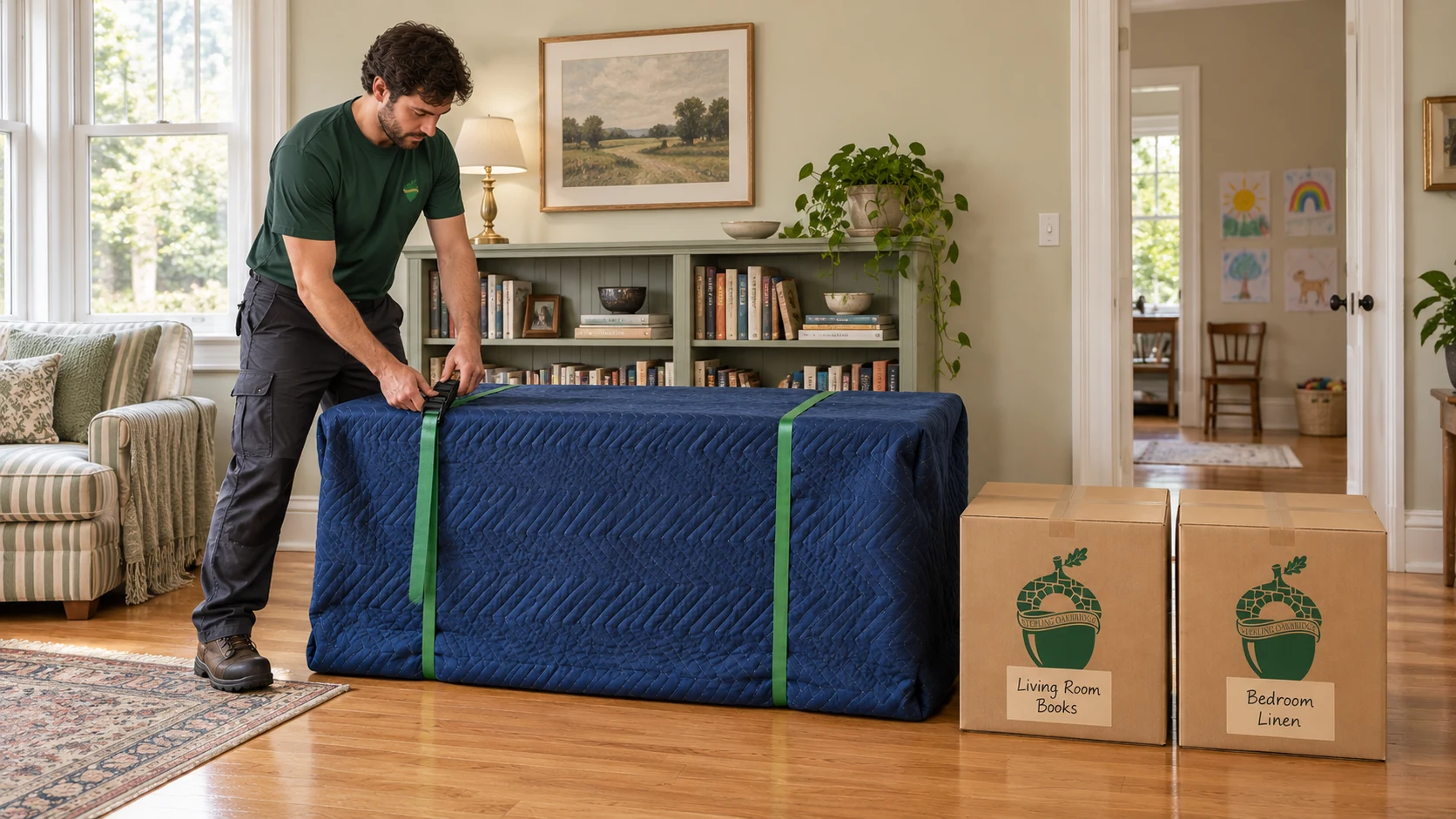
Choose direct or consolidated delivery
Direct delivery keeps the reviewed household shipment on a dedicated truck, with the same moving crew at pickup and delivery. It can suit a household that needs its principal furniture together and has a receiving home ready for that arrival. The person reviewing your inventory or planning the move performs a separate role and is not necessarily on the moving crew.
Consolidated delivery can suit a smaller selected group when you can receive within a broader period. A shipment around 300–400 cubic feet or less is a useful illustration of that scale, rather than a minimum volume or automatic acceptance limit. A dresser, several cartons and a few awkward pieces still need their actual access and preparation reviewed. Consolidated delivery does not carry the direct service’s same-crew description.
Begin with the result you need at the destination. If the household must sleep, work or care for someone immediately, identify which pieces it needs and what it will use while waiting. Compare the complete moving scope with the cost of that household arrangement. A flexible delivery option is useful only if the person receiving, the property and the household can work with its actual window.
Plan a Henrico pickup from the complete address
This page concerns Tuckahoe CDP in Henrico County, Virginia. It is a statistical community, rather than an incorporated town with a separate municipal moving-permit office. A Richmond postal address does not establish City of Richmond jurisdiction. The Tuckahoe moving page and relocation guide explain the local service and household context.
Show the whole route from the proposed truck position to the belongings: driveway or curb, path, exterior steps, entrance, hallway, stairs, landings and the final room. Include a garage, storage area or shared entrance if the shipment uses it. For a detached home, show the driveway width, slope, overhead clearance and turning space. A car’s normal parking place may not accommodate the selected moving vehicle.
At a managed apartment or attached home, obtain the property’s current move instructions. Confirm the usable entrance, loading time, elevator reservation where relevant, protection rules, required documents and person who can release access. Materials or packing may need an earlier visit; that visit needs its own permission and does not extend a later carrying window.
Henrico’s road guidance distinguishes County roads from VDOT segments, including Patterson Avenue/Route 6, Pemberton Road/Route 157 and Broad Street/Route 250. Identify the owner of the affected frontage. Describe the truck, ramp and any effect on a lane, sidewalk or other public space. The County’s Work in Right of Way procedure concerns its applicable approval process; it does not establish a universal permit or reserved curb for every ordinary parked moving vehicle.
The County vehicle rules include an exception for loading, unloading or working at or near the location within the restriction on trucks or commercial vehicles over 10,000 pounds gross weight in residential or agricultural districts, with farms excepted. That exception does not give exclusive use of the curb. Keep entrances and pedestrian access usable, and resolve the lawful position with the property contact and appropriate road owner before dispatch.
Read delivery windows from the end of loading
The clock below starts when pickup and loading are complete. Packing, collecting keys, the household’s journey and a building reservation can have separate dates. These city-point driving references support an illustrative comparison; they do not certify a commercial-vehicle route, customs release, dispatch plan or an appointment at your property. We review the actual journey and receiving conditions before confirming the move.
Swipe the table to compare both delivery options.
| Illustrative destination | Direct planning window | Consolidated window |
|---|---|---|
| Baltimore, Maryland | 1–2 days | Up to 30 days |
| Tampa, Florida | 2–3 days | Up to 60 days |
| Kingston, Ontario | 1–2 days | Up to 60 days |
| Sacramento, California | 4–5 days | Up to 90 days |
For suitable consolidated shipments, the shorter domestic window can be up to 30 days. Florida and Canada use up to 60 days, and California uses up to 90. The Canadian rule takes priority over proximity. Other distant states need their own agreed window; a western destination does not automatically receive California’s term. Storage and extra handling have separate scope and charges.
Same-day or next-day delivery can be possible for a suitable nearby shipment with early enough completed loading, lawful travel and confirmed receiving access. A short map journey does not establish that arrangement. Raise a narrow deadline before choosing the model, including who will open the property and how much usable unloading time remains.
Example: Baltimore, Maryland, with one usable receiving window
Consider a move from a managed Tuckahoe apartment to an upstairs Baltimore home. The traveling group includes a bed, low storage cabinet, small table and household cartons. Some furnishings belong to the landlord and stay. The resident marks those boundaries in the inventory, photographs the shared entrance and obtains the Henrico property’s move instructions before treating an available date as a workable departure.
The Baltimore receiver follows the approach into the actual rooms, including entrance steps, an interior turn and the upper landing. A street-facing door does not establish the clearance for the bed components or cabinet. The receiver sends measurements and photographs from both directions and identifies where the principal pieces should go.
For public street space, begin with the Baltimore Department of Transportation’s current Right of Way overview. It lists moving trucks among permit uses, directs Special Events and Temporary Right of Way applications to OpenGov, and gives a standard processing time of 15 days. Start that process early and obtain the instructions for the particular location, footprint and date. An old downloadable form or another city’s posting deadline does not establish the current Baltimore arrangement.
Direct delivery may suit bringing this household together. Its ordinary illustration is 1–2 days after completed loading; an actual same-day plan requires review of loading, travel and the permitted receiving period. A suitable consolidated selection can use up to 30 days. If the available arrival window is only part of one day, agree whether that window can actually be met before committing to the service. Name the person who will handle keys and access if the household’s own journey changes.
Keep travel essentials with their users
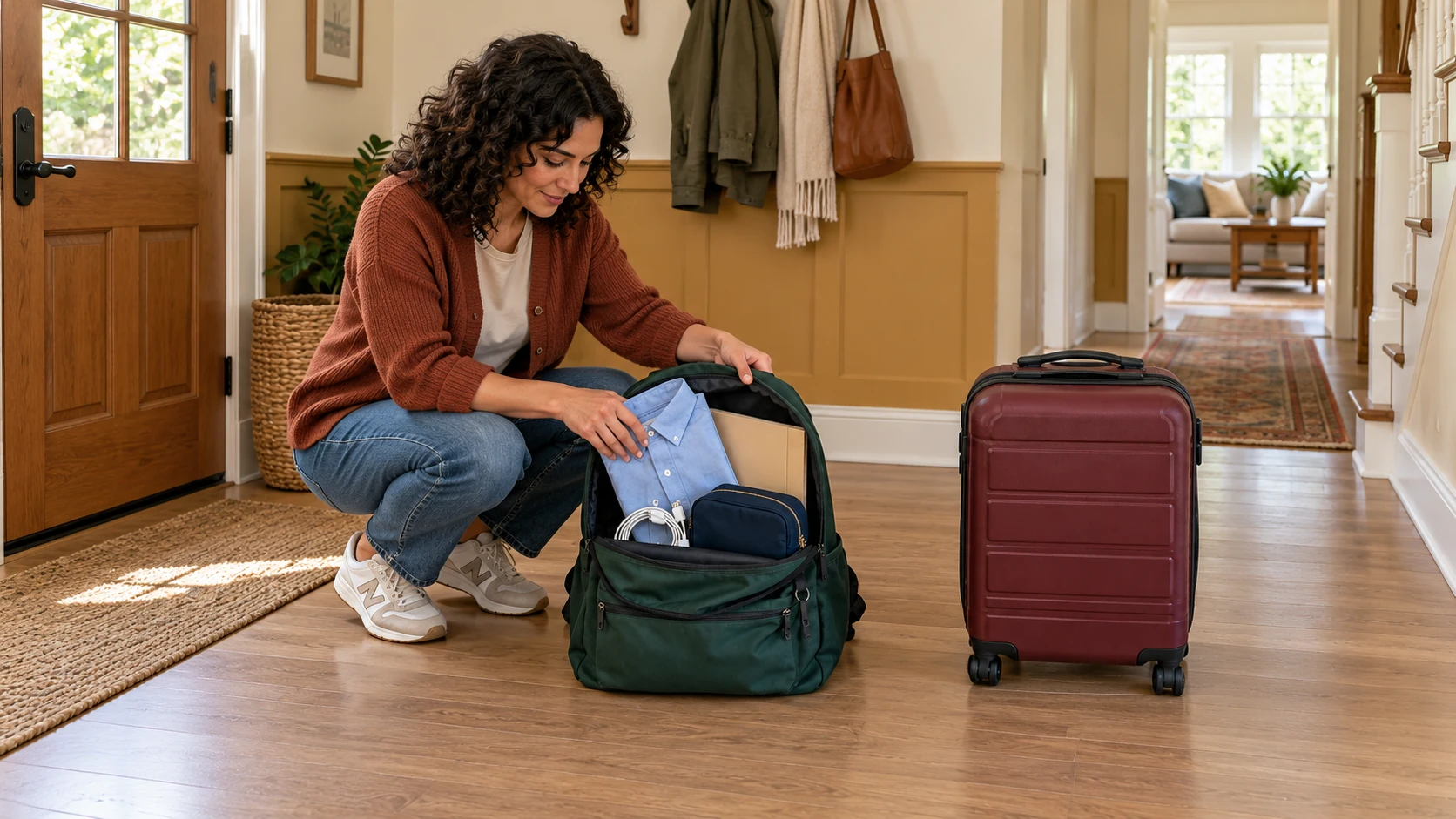
Separate what travels with the household from the shipment before packing starts. Keep medicines, keys, identification, important records, chargers and enough clothing and ordinary supplies for the journey and first usable days. Identify equipment or records that someone needs for work, school or care. Tell the packing contact which cupboard, bag or room must remain available until departure.
Use an actual written opening order at delivery: sleeping and bathroom essentials, the kitchen group, then the work or school items that cannot wait. Arrange the household’s passenger travel separately from the furniture. If a receiving home will be unavailable, establish accommodation and the journey to it before the shipment loses its permitted departure or holding options.
Example: Tampa, Florida, with a small selection arriving later
Consider someone leaving an established Tuckahoe house while other members of the household remain. The selected shipment is a work table, one storage piece, books, clothing and kitchen cartons. The packing review identifies exactly those pieces and their storage locations. Retained belongings remain distinct, including another person’s possessions in the same room.
The customer can prepare ordinary contents and request help with the difficult pieces, or include selected packing in the estimate. Dense books go into an appropriate smaller carton; lighter linens use a larger format. The actual construction of the table determines how its long legs can be removed and kept with the protected body. A small shipment does not remove the need to plan its largest turn or carrying restriction.
The Tampa resident first confirms the home’s possession, entrance and responsible receiver. If a building controls deliveries, obtain its accepted hours, loading arrangement, required documents and any elevator booking. An arriving passenger can collect keys before the shipment arrives, but must still have a way to sleep and work during the agreed period.
A suitable consolidated Florida shipment uses up to 60 days after pickup and loading are complete. It does not inherit the nearby domestic window. The direct illustration is 2–3 days for a reviewed journey, if receiving is ready and bringing the selection together is the better fit. Compare each complete plan, including selected packing, cartons, optional finishing work and any accepted storage. No particular discount or free holding period is implied by consolidation.
Prepare furniture, cartons and matching parts together
Build the inventory by room and storage area, with clear groups for shipment, retention and separately arranged removal. Show the inside of cupboards and the actual furniture construction. Identify large flat-pack wardrobes, complex sofa sections, unusually heavy items and anything needing a specialist method before the work is booked.
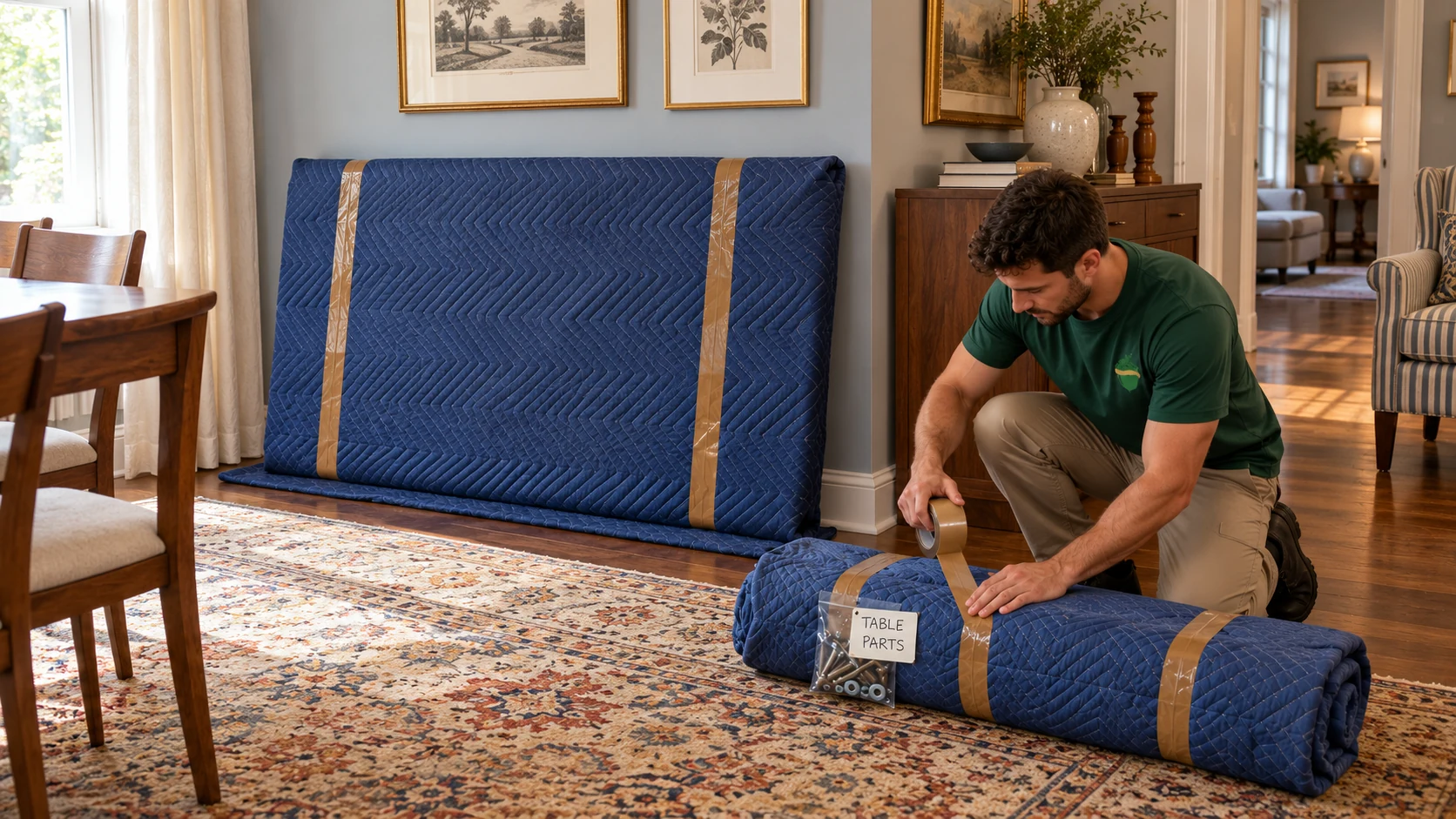
Ordinary dresser drawers should be emptied and normally retained in the body. Genuine loose shelves need separate protection; a fixed divider is not a removable shelf. Protect a table or console body before safely detaching long removable legs. Keep the complete protected matching set and hardware identified with that body. Construction that cannot safely be taken apart needs its own reviewed method.
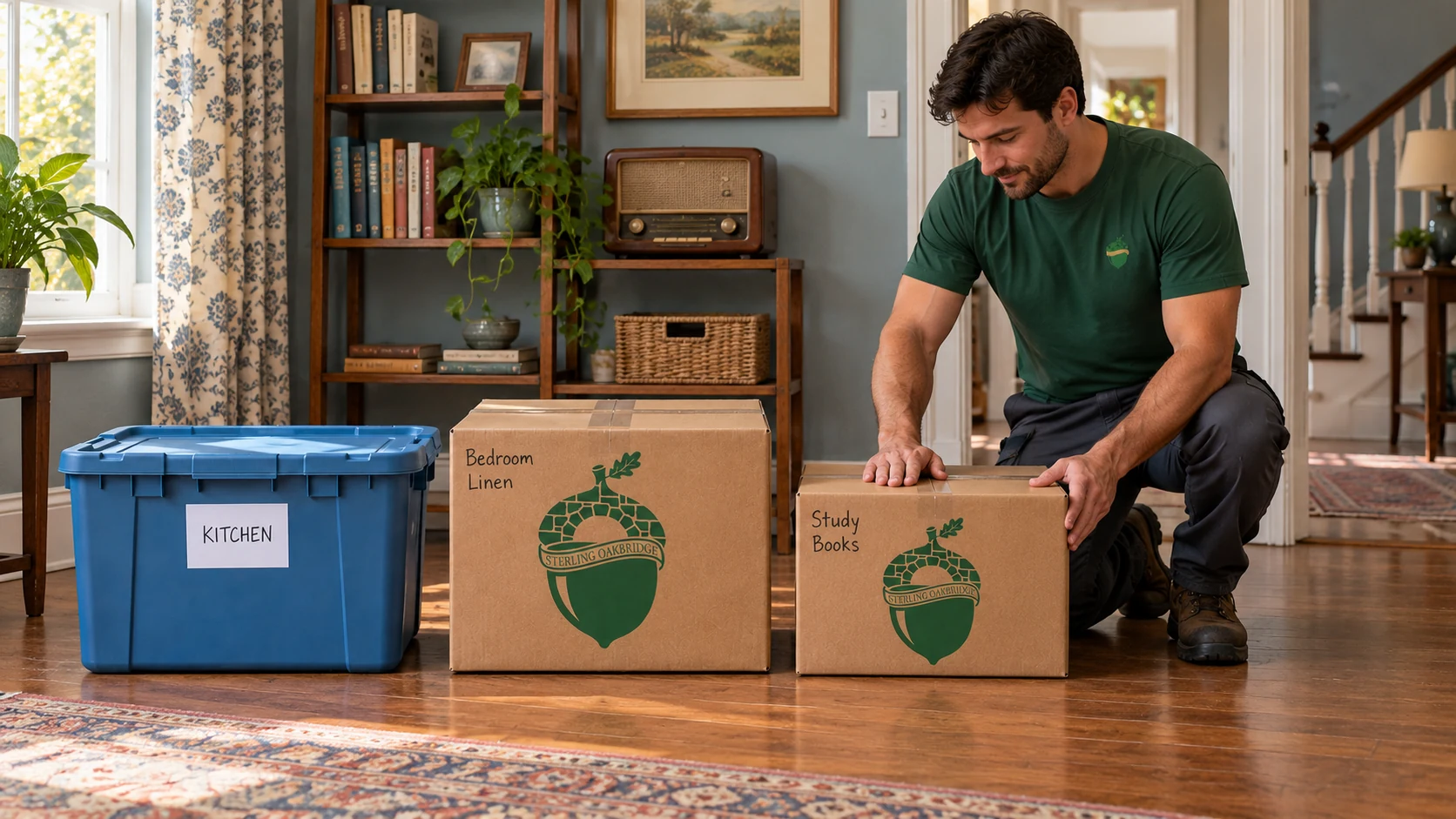
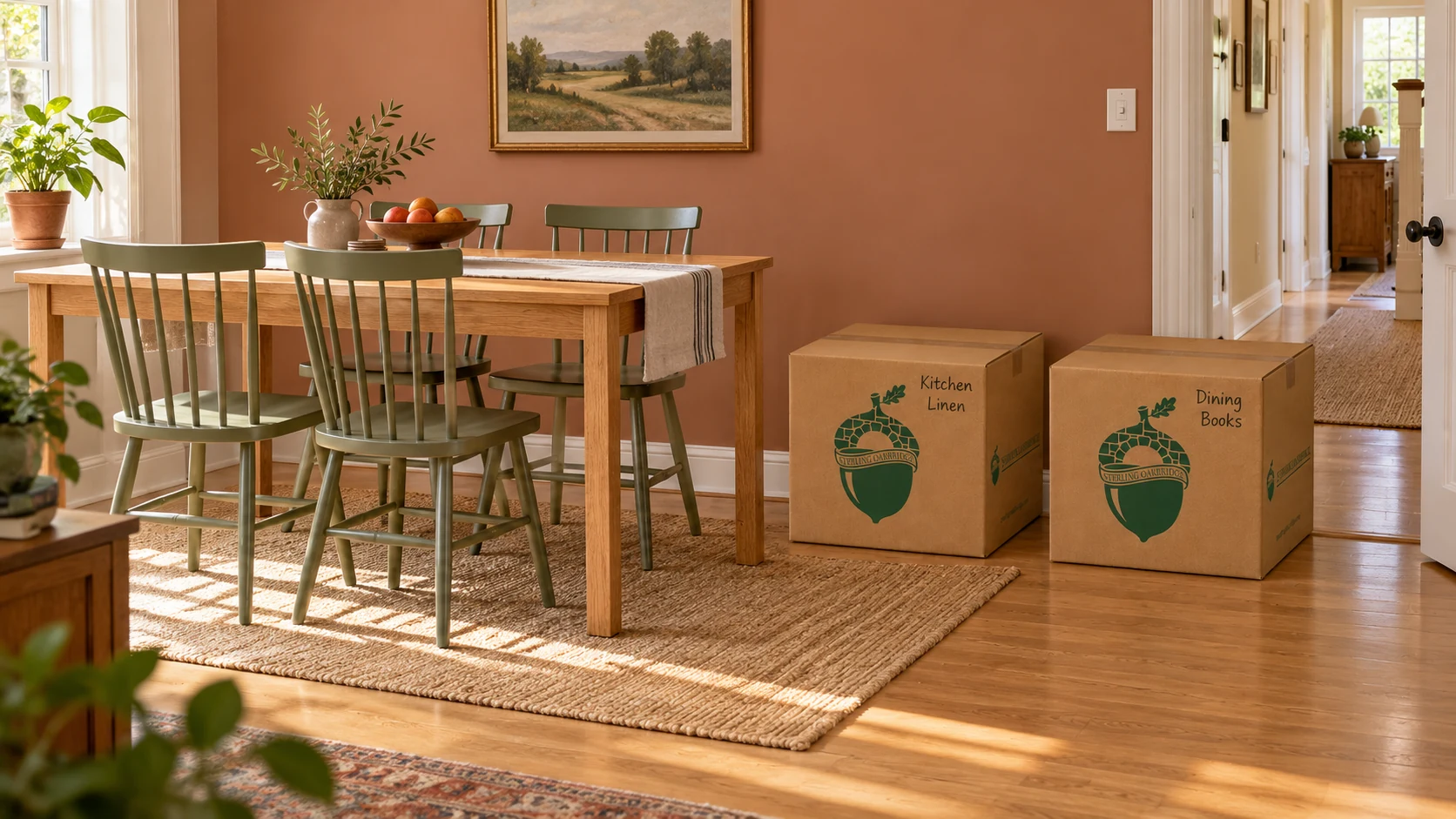
Write the destination room and useful contents directly on ordinary kraft cartons. Use an attached label on a customer tote. Close cartons before they join the shipment, and separate dense books from lighter textiles so the selected container suits the contents. Keep prohibited or uncertain items out of the load until their acceptance is resolved. An inventory label identifies a group; it does not establish that every material in it may cross a border.
Basic furniture disassembly and reassembly belong to moving labor without a separate basic assembly fee. Moving blankets, shrink wrap and tape have no separate basic protection-material charge; company-supplied cartons are separate. Agree packing labor, complex furniture and other specialist work, optional box unpacking and removal in the estimate. Furniture unwrapping at delivery is different from unpacking the contents of every box.
Example: Kingston, Ontario, when goods follow the traveler
Consider a household leaving Tuckahoe for a first settled home in Kingston, Ontario. The traveler will arrive before the furniture. The inventory separates the belongings accompanying the household from the protected furniture and cartons that will follow. Departure access, personal documents and the Canadian receiving arrangement are treated as separate requirements.
For a newcomer settling in Canada, IRCC’s border-preparation guidance calls for two copies of the personal-effects lists, distinguishing accompanying goods from later arrivals. Include values and applicable identifying details. Present the lists on first arrival even if no household goods accompany you, and retain the original goods-to-follow list, accounting document and completed BSF186 receipt with the traveler for the later shipment.
The CBSA personal-effects form distinguishes settler, former-resident, seasonal-resident and beneficiary classifications. The mover’s inventory supports identification of the goods; it does not establish which classification or duty treatment applies to the person. Resolve the applicable declaration, any item-specific restrictions and the records needed for later release with CBSA before dispatch.
Kingston is in Canada even though its reference journey here is shorter than the Florida example. Suitable consolidated delivery therefore uses up to 60 days, rather than the shorter domestic window. The direct comparison is 1–2 days after completed loading, subject to the actual cross-border and receiving plan; it is not a promise that documents or release will be completed within that period. Have an authorized receiver, usable entrance and accepted contingency if possession changes. Keep the household’s travel and essentials workable while those separate stages are completed.
Example: Sacramento, California, with the main pieces placed first
Consider a substantial Tuckahoe household move where the Sacramento building offers a short carrying period. The inventory includes upstairs furniture, a table with safely detachable long legs, a bed and cartons from several rooms. The origin survey traces the complete stairs and exit route and identifies preparation that can be completed before loading. The property must permit any earlier packing or materials visit.
The receiving contact confirms keys, the authorized vehicle position, entrance and any shared facilities. They send the actual route through the building, including intermediate landings or corridors, rather than only the apartment floor. The plan names who can keep each stage available after the first pieces have arrived. Municipal charges, building deposits and any applicable labor condition are identified before the work is committed.
Direct dedicated delivery can suit bringing the reviewed inventory together, with an ordinary illustration of 4–5 days after completed loading and a confirmed operational plan. A suitable consolidated California selection can use up to 90 days. Choose between them with the receiving flexibility and household arrangements in view; California’s term is not a default for every western state.
When time inside the building is limited, agree priorities before dispatch. Confirm the main furniture positions and basic reassembly that must be completed while the crew has access, then place identified cartons where they can be opened without blocking circulation. Optional box unpacking or organizing may need a separate agreed stage. If the original slot cannot take the planned work, the coordinator and building contact must confirm an available alternative and its charges before that option expires.
Decide a delay plan before the available option expires
Record the event that makes receiving uncertain: delayed keys, unfinished essential services, a lost elevator booking, a closure or an unavailable receiver. Set a decision time before the vehicle leaves the pickup or before an agreed alternative can no longer be used. The property contact establishes the next usable access time; the moving coordinator confirms which transport or receiving alternative is actually available.
An overnight hold, warehouse intake, storage stage and later redelivery are different arrangements. Confirm a facility that can accept the actual load, its capacity, receiving hours, protection, handling, access, price, payer and retrieval or onward-delivery date. A facility’s telephone number or a directory entry is not a booked receiving resource. For a Canadian shipment, a U.S. holding arrangement does not by itself settle the later customs and release steps.
Keep the household’s essentials outside the load and confirm where its members will stay and how they will get there. Name the person who can approve additional waiting, handling or redelivery and record the cutoff if the preferred option is lost. Resume when the keys, usable services, lawful unloading position and authorized receiver are ready. If no resource has accepted the shipment, postpone departure rather than assuming it can wait in a lobby or commuter lot.
Henrico’s Gaskins/Mayland, Glenside and Parham/Fordson commuter lots prohibit commercial vehicles and trailers. A residential portable container outside the construction-site exception is limited to one period of no more than ten consecutive days per six months. County rules exclude front yards, right-of-way, parking or loading areas, required parking spaces, drive aisles, sidewalks, pedestrian ways, fire lanes and required landscaping. Obtain a compliant actual position and the property’s permission before treating a container as a fallback.
Keep the written flat rate attached to the agreed work
For unchanged long-distance inventory, access and services, the agreed flat rate stays the same when the road journey or delivery takes longer. Added belongings, packing, stops or changed carrying and receiving requirements can change the scope. Resolve known changes and any revised interstate written estimate before loading. The original estimate cannot be rewritten after loading begins; later additional services need their applicable agreement and charges before they are performed.
Compare estimates against the same inventory, both property routes and the same preparation and finishing tasks. Identify cartons, specialist work, optional unpacking, removal, storage and third-party charges, with a stated payer. A lower starting figure may describe fewer belongings, customer packing or a driveway that the selected vehicle cannot use.
A move entirely within Virginia follows the applicable tariff and intrastate estimate terms. The Virginia DMV household-moving guide distinguishes moves of 30 miles or less that may use hourly charges from longer moves requiring the applicable itemized estimate and bill of lading. Review the actual binding or nonbinding terms rather than applying these interstate examples to every in-state job.
Choose protection before the move. For covered U.S. interstate household-goods moves, FMCSA describes Full Value Protection as replacement-value liability for covered loss or damage, with repair, replacement or a settlement under the applicable terms. It applies unless Released Value is selected through the required written waiver; Released Value is limited to 60 cents per pound per article. Discuss the applicable option, cost, limits and claims process, and identify high-value pieces early. At delivery, compare the shipment with the inventory, note visible concerns and retain photographs and records. Report concerns promptly. FMCSA describes nine months after delivery to file a written interstate household-goods loss or damage claim; follow the written procedure and read any receipt language releasing the mover from liability before signing. That interstate explanation does not establish Canadian customs treatment or a universal insurance policy for every move.
Send the details needed for a useful estimate
Send both complete addresses and units, the inventory, firm and flexible dates, and photographs of the entire carrying routes. Identify the proposed vehicle positions, property instructions, stairs, elevators and access contacts. Tell us what you will pack, the preparation you want handled and which groups need another destination.
Include the receiving priorities, any unresolved key or building dependency, and the person who can accept delivery and approve a changed plan. For an interstate household shipment, obtain the required written estimate and complete the required survey unless you sign the proper separate written survey waiver before loading. Retain that waiver with the bill of lading; waiving the survey does not waive the written estimate. We will review the inventory and both property routes, compare suitable delivery models and prepare the written estimate. You do not need to calculate the shipment volume or select the crew yourself before contacting us.
Pickup in Tuckahoe and the actual Henrico address
We arrange long-distance pickup in Tuckahoe CDP, Henrico County, Virginia, with the actual inventory, date and both property routes reviewed for the job. Regency/Quioccasin/Starling, Forest/Three Chopt, Patterson/Parham and western interior streets are useful address-search settings rather than separate municipalities or fixed pickup zones. Tuckahoe is a Census statistical community; a Richmond postal name does not establish City of Richmond jurisdiction. Give the complete unit and entrance for another nearby address so its municipality, property conditions and service scope can be reviewed. No local company office or street-space permission is implied.
Explore long-distance destinations from Tuckahoe, Virginia
These destinations are examples within our United States and Canada household-moving coverage. Compare the actual contents, both addresses and the receiving period before choosing a delivery model. They are not customer-demand rankings, company offices or invented route landing pages.
East Coast and nearby interstate examples
- Baltimore, Maryland
- Washington, DC
- Philadelphia, Pennsylvania
- New York City, New York
- Boston, Massachusetts
Florida and the Southeast
- Tampa, Florida
- Orlando, Florida
- Miami, Florida
- Raleigh, North Carolina
- Charleston, South Carolina
Midwest and Texas
- Chicago, Illinois
- Columbus, Ohio
- Detroit, Michigan
- Nashville, Tennessee
- Dallas, Texas
California and other western states
- Sacramento, California
- San Diego, California
- Los Angeles, California
- Portland, Oregon
- Seattle, Washington
- Salt Lake City, Utah
Canada
- Kingston, Ontario
- Brockville, Ontario
- Toronto, Ontario
- Hamilton, Ontario
- Ottawa, Ontario
- Montreal, Quebec
- London, Ontario
Long-distance moving questions in Tuckahoe
Where can I arrange long-distance pickup in Tuckahoe?
We arrange long-distance pickup in Tuckahoe CDP, Henrico County, Virginia, with the actual inventory, date and both property routes reviewed for the job. Regency/Quioccasin/Starling, Forest/Three Chopt, Patterson/Parham and western interior streets are useful address-search settings rather than separate municipalities or fixed pickup zones. Tuckahoe is a Census statistical community; a Richmond postal name does not establish City of Richmond jurisdiction. Give the complete unit and entrance for another nearby address so its municipality, property conditions and service scope can be reviewed. No local company office or street-space permission is implied.
What does direct dedicated delivery mean?
Direct delivery uses a dedicated truck for the reviewed household shipment and the same moving crew at pickup and delivery. Agree preparation, both property routes and the receiving sequence. The inventory survey and planning team performs a separate role and is not necessarily the crew on the truck.
Is 300–400 cubic feet a minimum for consolidated delivery?
No. It is approximate small-shipment guidance, rather than a minimum volume or automatic acceptance threshold. Send the actual furniture, cartons and preparation needs, then confirm access at both ends and a workable receiving window. Consolidation does not carry the direct service’s same-crew description.
When do the delivery windows begin?
After pickup and loading are complete. Packing, materials delivery, the household’s travel, keys and building reservations can have separate dates. The four city-point examples are illustrative comparisons, not appointments or commercial-vehicle route certification. Confirm the actual operating and receiving plan before relying on a date.
Can a nearby move to Baltimore arrive the same day?
It can be possible for a suitable shipment after early enough completed loading, lawful travel and confirmed receiving access. It is not automatic. The ordinary direct illustration is 1–2 days after loading. The Baltimore public-space arrangement, keys, complete carrying route and usable unloading time must support the actual plan.
How do I begin arranging Baltimore street space for the truck?
Use Baltimore DOT’s current Right of Way overview and its linked OpenGov application. The overview lists moving trucks among permit uses and states a standard processing time of 15 days. Obtain the location, date, footprint and issued conditions for the actual operation. Do not substitute an old form or another city’s posting timetable.
Does Henrico’s heavy-truck rule prevent loading at my home?
Loading and unloading are excepted from that parking restriction. Henrico restricts parking of trucks or commercial vehicles over 10,000 pounds gross weight in residential or agricultural districts, except on farms or while loading, unloading or working at or near the location. This does not reserve a curb. Confirm the lawful position, affected road owner and property permission, and keep pedestrian and neighboring access usable.
Does a small Tampa shipment use the nearby domestic window?
No. Tampa is in Florida, where suitable consolidated shipments use up to 60 days after pickup and loading are complete. The direct illustration is 2–3 days for a reviewed journey and ready receiving home. Compare the chosen inventory, preparation and household arrangements during the actual window; no discount or free storage is implied.
Why does Kingston use the Canadian consolidated window?
Kingston is in Ontario, Canada. Suitable consolidated Canadian shipments use up to 60 days after completed loading, even when the reference journey is relatively short. The country rule takes priority over the shorter domestic window. Customs readiness, the traveler’s documents and the accepted receiving arrangement remain separate requirements.
What should a newcomer prepare when goods follow to Canada?
Prepare two copies of the personal-effects lists, separating accompanying goods from later arrivals and including values and applicable identifying details. IRCC directs newcomers settling in Canada to present the lists on first arrival even if no household goods accompany them. Retain the original goods-to-follow list, accounting document and completed BSF186 receipt with the traveler for the later shipment, and confirm the applicable later-release process before dispatch.
Does the mover’s inventory establish a Canadian duty exemption?
No. It helps identify the shipment, but does not choose the person’s CBSA classification or duty treatment. Settler, former-resident, seasonal-resident and beneficiary situations have different conditions. Resolve the applicable declaration, item restrictions and records for later arrivals with CBSA before sending the load.
Does Sacramento’s 90-day consolidated term apply to every western state?
No. The confirmed consolidated window of up to 90 days applies to California, including Sacramento. Other distant states require their own agreed window. Sacramento’s direct illustration is 4–5 days after pickup and loading are complete, subject to the reviewed journey and receiving plan; neither comparison reserves a building appointment.
Will a longer journey increase our agreed flat price?
For unchanged long-distance inventory, access and services, the agreed flat rate stays the same when travel or delivery takes longer. Added belongings, packing, stops or changed receiving requirements can change the scope. Resolve known changes and any revised interstate written estimate before loading. The original estimate cannot be rewritten after loading begins; later additional services need their applicable agreement and charges before they are performed.
How should long table legs and ordinary dresser drawers be prepared?
Protect the furniture body before safely removing detachable long table or console legs. Keep the complete protected matching set and hardware identified with the body. Empty ordinary dresser drawers and normally retain them in place. Fixed dividers and constructions that cannot safely be detached need their actual handling method reviewed.
Which basic furniture and protection items have separate charges?
Basic furniture disassembly and reassembly belong to moving labor without a separate basic assembly fee. Moving blankets, shrink wrap and tape have no separate basic protection-material charge. Company-supplied cartons are separate. Agree packing labor, complex furniture, specialist handling and optional tasks in the written scope.
Does delivery include unpacking every box and removing the packaging?
Furniture unwrapping is part of delivery. Opening and unpacking box contents is optional work charged for working time; packaging or unwanted-item removal is separately charged. Specify what should be opened, placed or removed, its destination and the time available. A short building slot may need a separately agreed finishing stage.
What happens if keys or essential services are not ready?
Use the earlier of the property’s last-change deadline and the mover’s dispatch cutoff as the decision point, before departure and before alternatives expire. The property access contact establishes the next usable receiving period; the coordinator confirms an available new slot, another accepted receiving location or a facility that can accept the real load. For storage and redelivery, confirm capacity, receiving hours, protection, handling, access, price, payer and retrieval or onward-delivery date. Keep essentials with the household and arrange accommodation and passenger travel separately. Resume when possession, the authorized receiver, carrying route and any required import arrangements are ready. Revise departure if no resource accepts the load; an enquiry is not a confirmed booking. Storage and later delivery need their own agreement and are not automatically included or free.
Can we use a Henrico commuter lot or a front-yard container as a fallback?
The named Gaskins/Mayland, Glenside and Parham/Fordson commuter lots prohibit commercial vehicles and trailers. A residential container also has time and placement conditions, including no front-yard or right-of-way placement. Obtain a lawful accepted position and property permission before delivery. A road loading exception does not create a holding reservation.
What protection choice should I discuss before an interstate move?
For covered U.S. interstate moves, Full Value Protection provides replacement-value liability for covered loss or damage, with repair, replacement or a settlement under the applicable terms. It applies unless you select Released Value through the required written waiver. Released Value is limited to 60 cents per pound per article. Obtain the actual cost, limits, high-value-item conditions and claims process before choosing. These are liability options, not a Canadian customs decision or universal insurance policy.
Is a longer move within Virginia automatically an interstate flat-rate move?
No. A shipment remaining within Virginia follows its applicable tariff and intrastate estimate terms. Virginia DMV distinguishes moves of 30 miles or less that may use hourly charges from longer household moves requiring the applicable itemized estimate and bill of lading. Review the actual binding or nonbinding terms. Calling the job long-distance does not change its jurisdiction or make these interstate flat-rate examples apply.