
West Virginia · Clarksburg service planning
Full Packing & Unpacking Services in Clarksburg WV
A move can leave your evenings occupied long before the truck arrives. Behind the furniture are cupboards, closets, photographs, books and children's belongings that need decisions and careful preparation. Full packing in Clarksburg lets you hand over that additional work while keeping a practical plan for your last night at home.
Sterling Oakbridge reviews full or selected packing and optional work after delivery. You can ask for priority cartons opened, belongings organized to your instructions, used supplies collected and named handyman tasks completed. Define those stages together so the written estimate explains the labor, cartons and additional work needed for the home you want to receive.
What you recover when the team does the packing
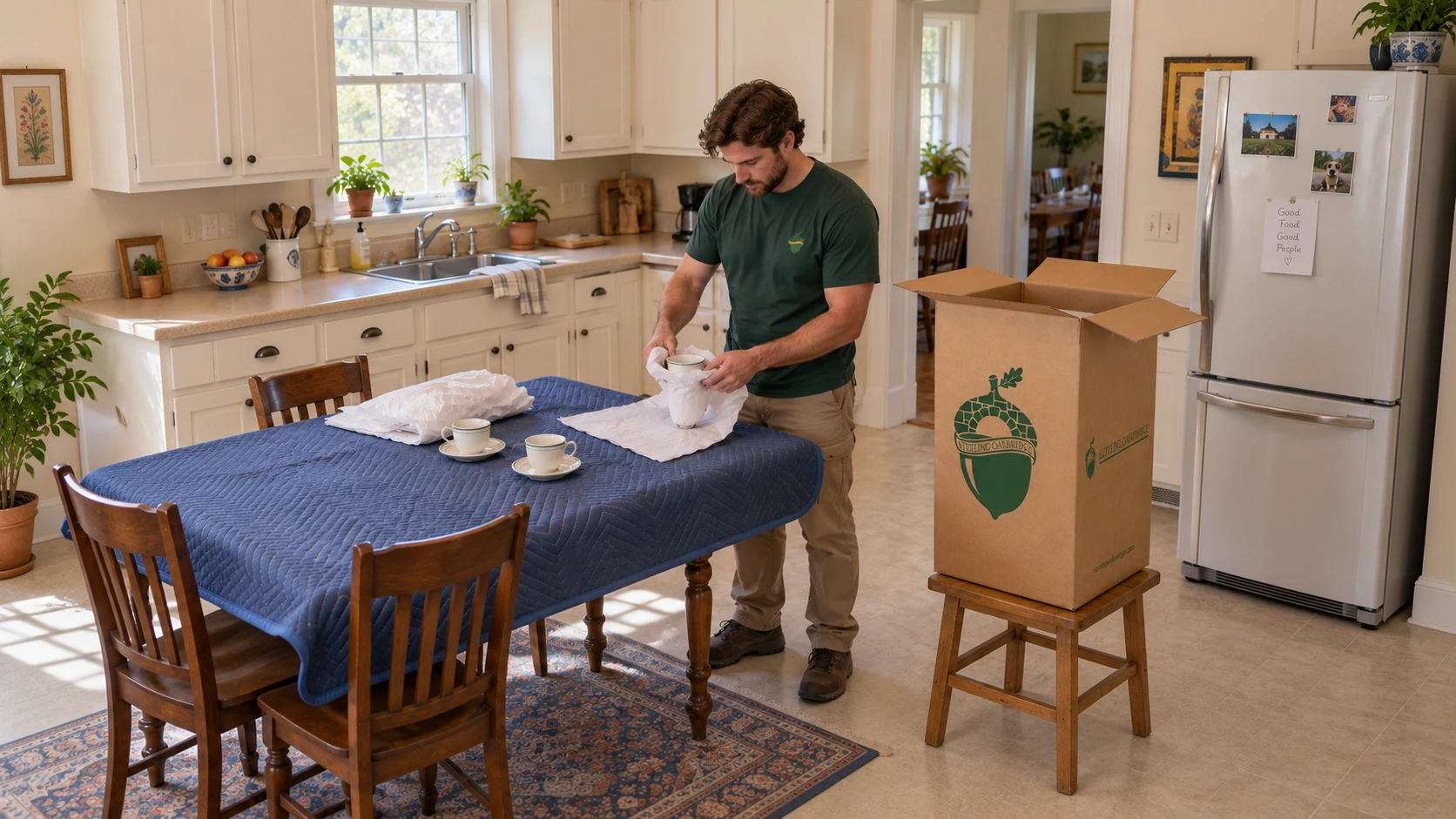
Packing is more than putting visible objects into boxes. A closet brings decisions about clothing, a kitchen brings rarely used dishes, and a shelf of photographs can turn a short task into a long sorting session. Every retained group then needs supplies, protection and a label that will make sense at the new address.
For two working adults, evening preparation can stretch over a couple of weeks. That is an illustration, not a measured Clarksburg average. Returning from work to several hours of packing uses the time you expected to rest. Children bring more belongings and routines that continue while the home is being prepared.
Professional packing suits someone who wants those hours back and is willing to pay for the work. A household that has moved before may understand the workload particularly well. Being able to do the task yourself does not establish that you have a workable place for it in this week's calendar.
The household still decides what stays, has a confirmed recipient or leaves. Sort those groups before the crew begins. Keep personal documents, medication, keys and sensitive valuables under your own control. A settled retained inventory lets the team prepare the shipment without waiting for a decision about every cupboard.
Give full packing a complete inventory
Full packing covers the contents agreed during review, including identified closets and storage areas. Show open cupboards, shelves, cabinets, basement, attic and garage contents as applicable. The furniture list and number of bedrooms do not reveal everything that needs cartons.
Name the smaller vulnerable pieces: cups and glassware, ornaments, glass shelves or doors within cabinets, framed photographs, mirrors and pictures on walls. Point out collections and unusually valuable or delicate objects. A cabinet listed as one furniture piece can contain many individually prepared belongings.
Partial packing assigns named rooms or groups to the team. You might prepare daily clothes and personal items while the crew packs the kitchen and glazed frames. Or you might hand over all the closets as well. Explain what you will complete yourself and report unfinished customer packing before the main move.
Carton supplies follow the contents. A person expecting twenty boxes may discover that sixty or a hundred are needed. Those numbers illustrate how far an initial guess can miss; they are not a local allowance or a quote for a particular bedroom count. Suitable types and quantities matter as well as the total.
Use small appropriate cartons for dense books, suitable medium cartons for lighter contents and wardrobe cartons where hanging clothes need them. Fragile kitchenware needs separation and cushioning rather than simply a larger container. Review the less visible contents early so repeated supply orders do not consume the remaining preparation time.
Match preparation days to the home and the route
Packing, loading and local delivery may fit one day for a studio or one-bedroom home when the contents, access and permitted hours allow it. A two-bedroom household makes that combined day more challenging. A substantial three-bedroom home, many collections or a demanding carrying route is a reason to discuss an earlier preparation visit.
The bedroom label is only a starting point. A compact home with a large library and full cupboards can require more packing than a larger home with fewer retained contents. Review the actual work before fixing the crew and visits. Estimated hours help with that planning; they are not a fixed total or completion cap.
The packing crew can be smaller than the main moving crew. Less-used dishes, books, spare linen and seasonal clothing can be prepared first. Keep beds, bathroom items, a breakfast set, a few outfits and children's familiar things accessible for the final evening. Mark that group and agree when the remaining daily-use items can be packed.
Keep the private travel group separate from the last items that will join the truck. The crew needs to know which clothes are remaining overnight and which medication or documents never enter the shipment. One person should be available to answer that question and approve changes.
Clarksburg's slopes and older entrances make the actual staging route useful to review. Completed cartons need an authorized place that leaves steps, landings, shared passages and exits clear. Packing access is a separate appointment from the loading arrangement. Our Clarksburg relocation guide owns the detailed municipal and property access questions.
Four Clarksburg plans with different stopping points
These are hypothetical planning examples, based on local settings and published context. They describe decisions to make, without claiming actual Sterling customers or the current interior of a named property.
A Quality Hill household separates collections before the first carton
Imagine a household leaving a long-held Quality Hill home. Books, dining-cabinet contents and small framed photographs are staying. Some spare-room belongings will go to a relative, while a seasonal group needs storage. The receiving home has different room names and fewer shelves.
The Quality Hill National Register nomination describes a primarily residential district along East Main Street, with many buildings dating from 1880–1910. Its description places the district on a rise and hillcrest above Elk Creek. That is historical context, not a report on this home's present condition, entrance or truck position.
Start by opening the cabinets and identifying the complete retained group. Removable glass shelves, glazed frames and ornaments need preparation beyond the cabinet's external wrapping. A clean protected surface gives the crew a workable place to prepare them while completed cartons stay out of the carrying route.
The household confirms what the relative will actually receive and when. A possible recipient is not a destination ready for loading. Label the new-home, recipient and stored groups separately, with the room names used at their next addresses. Our storage service owns the holding and later-delivery arrangement.
Organizing at the new home can then follow the household's selected shelf plan. The stored group remains unopened, and the relative's group follows its agreed handoff. The result is less repeated sorting and carrying after delivery, with specialist protection chosen for the actual objects.
A North View family keeps the evening routine usable
Consider working parents arranging a local move from a North View home. They want the team to pack the kitchen, children's room and closets, but the family will still sleep there. An ordinary school and work morning follows the preparation visit.
The local guide uses the North View playground and nearby daily connections as area context. Neither a park name nor a neighborhood label describes this house's storage or entrance. Show the real rooms, steps, approved working space and route before deciding how much can be completed in each visit.
Less-used toys, spare clothes and kitchen contents go first. The parents choose a small group of pajamas, a familiar blanket or toy, toiletries and breakfast items to leave accessible. Documents, medication and personal work essentials remain in their own private group. The crew should not guess which ordinary-looking object is essential to the child's evening.
For an inventory-heavy family home, a main moving day using six movers could need four packers on a separate preparation day. That illustrates additional labor, rather than staffing promised for every three-bedroom property. Cartons and specialist preparation still follow the actual retained contents.
At the new home, the family might request the everyday kitchen group and linen first. A usable first evening comes from those priorities and available surfaces, not necessarily from opening every box. Add detailed placement only for the cupboards or drawers the household is ready to direct.
A Stealey arrival leaves the unfinished room packed
Imagine a household receiving its belongings in a Stealey home while one room is still being finished. The bedroom, bathroom and everyday kitchen area are usable; the study cannot yet receive its books and cabinet contents. Opening everything would consume the available surfaces and create another handling problem.
The guide's Stealey comparison is anchored by the playground and named transit route. This scenario assumes no particular entrance or completion date from that area context. The property or contractor contact confirms which rooms are actually released for use and where the unopened group can wait.
Give the study cartons an explicit destination and hold instruction. Unpack the priority kitchen and bedroom contents onto suitable surfaces, then leave the study group sealed in an authorized area. If some contents must stay away longer, review storage and later delivery before adding those stages to the plan.
Once the room is ready, Clarksburg in-home moving can cover a separate internal placement task where needed. The remaining unpacking, customer-directed shelf placement and used-packaging collection can be reviewed together for that return. Opening and repacking the same contents early would use more work.
Coordinate any wardrobe or complex flat-pack assembly and agreed mounting with room readiness. A furniture purchase arriving separately needs its own release and receiving appointment through Clarksburg furniture delivery. A planned finish date is useful for scheduling, but actual permission to use the room still matters.
A Glen Elk apartment needs a later unpacking visit
Now imagine someone living in a Glen Elk apartment a few days after the move. Furniture is placed and the working week has resumed, but cartons occupy much of the usable space. Getting to one needed book or kitchen item means shifting several boxes.
The Clarksburg tourism bureau's historic-sites page identifies Glen Elk's rail and warehouse setting north of downtown. This is historical area context. The hypothetical apartment's current stairs, shared entrance, permissions and working surfaces need their own review.
Send photographs of the remaining stacks and the contents that should be accessible first. A smaller team can work through one room at a time, opening agreed groups onto clear surfaces. If the customer wants books placed on particular shelves, additional organizing follows their instructions; the basic unpacking stage does not invent that arrangement.
Used paper and cartons are gathered separately from film and foam. The chosen collection must fit the actual operator and property arrangements. The City page called Recycling concerns its yard-waste and compost service, so its name should not be treated as approval for a mixed unpacking pile.
A later visit can be reviewed after a few days or after the household's own unpacking attempt. Confirm availability and access for that appointment. The useful result is restored access and a defined list of remaining placement or finishing tasks, rather than another mixed pile the customer has to move around.
Prepare fragile contents for the full shipment
Protection needs to support carrying, stacking, restraint and road movement. A loosely bagged group that could survive a trip on a car seat is a different preparation from a household load in a truck. A short local drive still includes loading, carrying and unloading.
Cups, glassware, glass cabinet parts, ornaments, mirrors and glazed frames need a method suited to the object and its surfaces. Discuss removable parts and their dimensions. Appropriate paper, cushioning, cartons and preparation support the piece throughout the journey; a fragile label alone cannot provide that support.
Valuable or sensitive objects may need additional assessed protection. Use fine-art and antiques planning for item-specific preparation or a crate where warranted. A treadmill or another exercise machine needs its model, parts and route reviewed through gym-equipment moving. Neither task is settled by the ordinary box count.
Choose clean handling where it matters. Suitable gloves can protect selected surfaces and textiles, provided their material and grip fit the object. White gloves are not appropriate for every surface or load. Heavier carton preparation and clean work can be assigned separately when the actual task benefits from that arrangement.
Give every group a receiving instruction
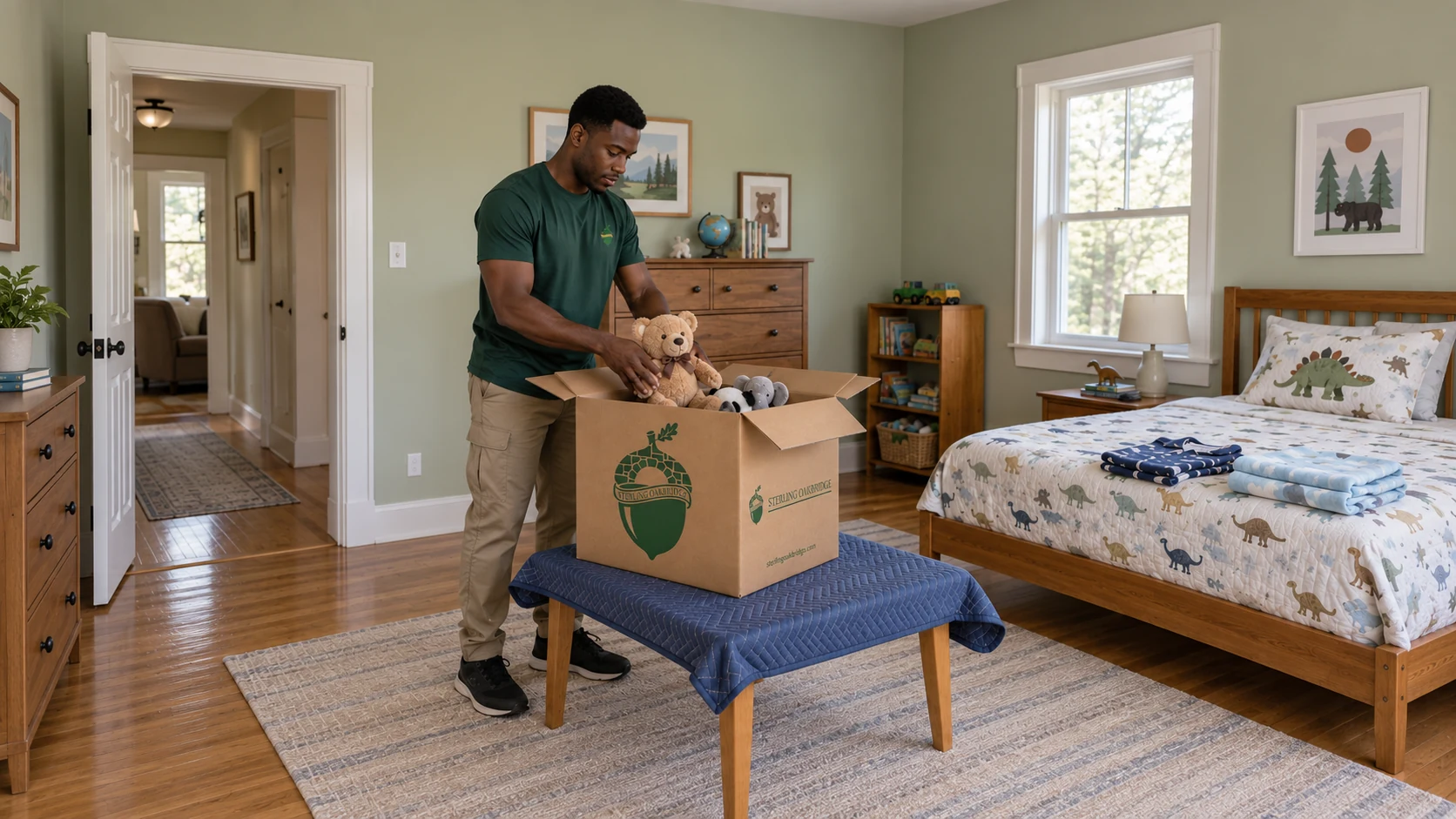
Label each carton with its written destination, receiving room and useful contents. Add a box number and an open-first instruction where helpful. Color labels can reinforce the groups, while readable written information remains available to the person receiving the shipment.
A new-home study box and a storage-bound study box require different handling. Separate their staging before loading and explain the unloading order. Share the same current plan with the packing crew, moving crew and authorized receiver. Old room names may need to change when the receiving home has a different layout.
If a stored group is mixed into the residence delivery, the crew can carry it into the wrong place and then move it again. That adds handling, paid time or another visit. A deliberate loading and destination plan reduces this repeated work.
Identify recipient-bound items, removal and anything staying behind separately. Confirm the recipient's permission and actual receiving arrangement. Do not expose confidential information on visible labels, and keep the personal travel group under the household's control. Labels carry decisions from one stage to the next; they cannot make those decisions for you.
Choose what unpacking should complete
Basic unpacking opens the agreed cartons and lays contents on suitable designated flat surfaces. It restores access to belongings and helps recover space occupied by full boxes. Before opening a large group, agree the priority rooms and enough safe working surfaces.
Furniture unwrapping is part of delivery. Opening box contents is optional paid unpacking. Detailed cupboard, shelf and drawer placement is additional home organizing. Empty packaging can be gathered during the work, while taking it away is separately charged removal.
For organizing, you direct the final positions. Supply a cupboard plan or have one authorized person available for placement questions. A smaller receiving team can be easier to guide through detailed decisions on a large project. More workers do not shorten the process when every person is waiting to learn where the household wants things.
For a substantial household, unpacking might add three or four hours to delivery day, or a two-person team could return the next day. These are planning examples, not a fixed duration, crew or guaranteed date. A later request after a pause is also possible to review, with appointment availability and building access confirmed.
Check paper and cartons for fittings, shelf pins, remotes and personal items before clearing supplies. Keep packaging needed for a return or unresolved damage process until the relevant party confirms it can be removed. Mark that retained group, along with any cartons that should stay sealed.
Include the finishing work you want to use the home
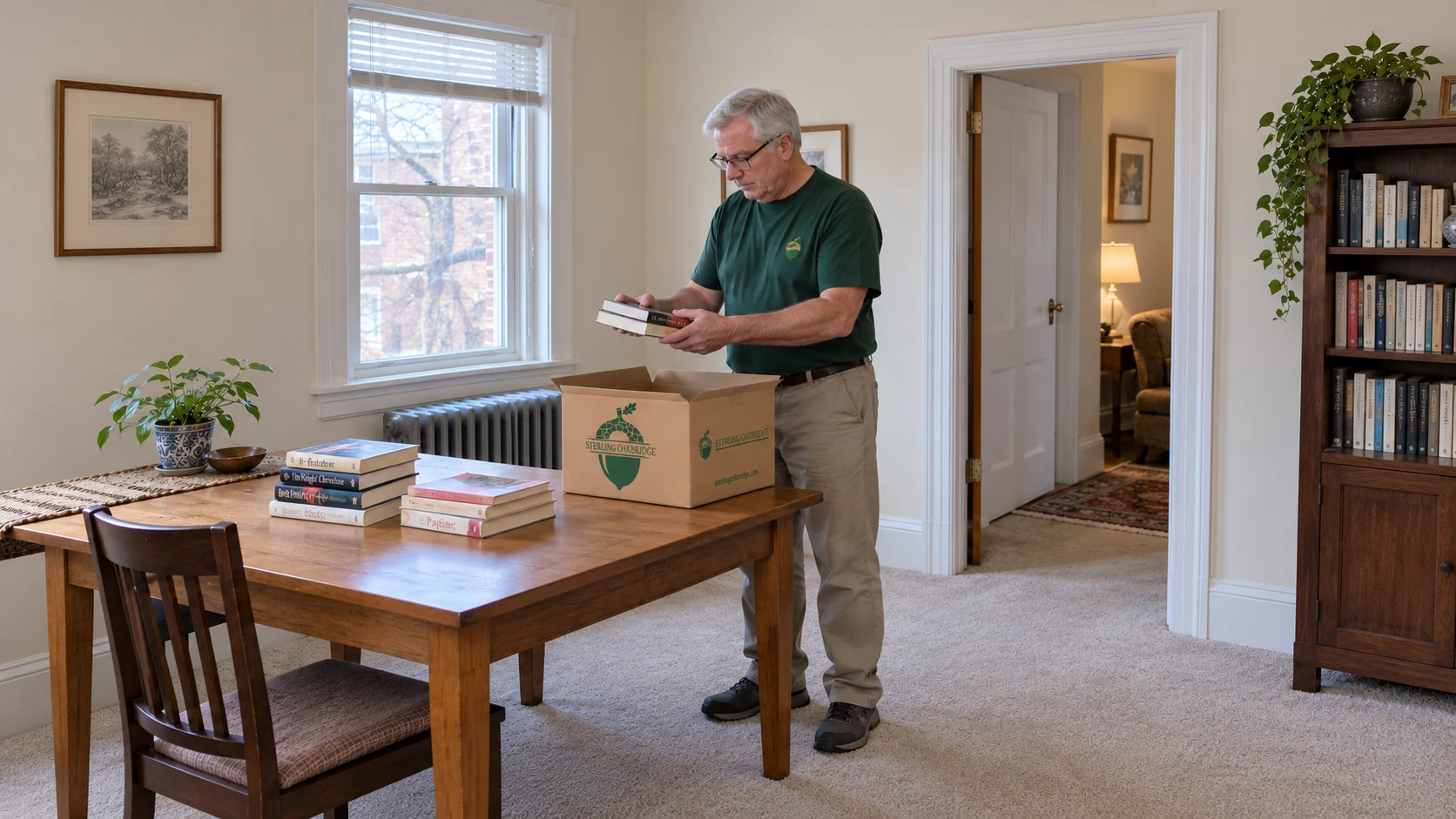
You can ask Sterling to review handyman finishing alongside packing and receiving. Requests can include TV mounting, curtain hardware, picture or mirror hanging and lighting-related work. Send the object or model, intended positions, wall or ceiling information and property permissions.
Agree the technical or electrical scope, appropriate executor, sequence and price individually. Those tasks are not automatically included in carton unpacking. Settling the main furniture arrangement first can avoid mounting around a layout that the household later changes.
Suitable basic furniture disassembly and reassembly consume moving labor time without a separate basic assembly surcharge. Complex wardrobes and new flat-pack work need individual model and instruction review and quotation. Include purchases arriving separately so their placement and assembly do not compete with the unpacking work area.
A useful completion plan names the actual jobs: essential contents accessible, selected cupboards organized, used supplies collected and agreed installations finished. The household's chosen placement and the confirmed work determine that result. The words full service alone do not establish every task or charge.
Give used supplies their own collection plan
Separately charged packaging removal can be reviewed during unpacking or for a later visit. Describe the quantity, material groups, authorized staging point and desired timing. Keep suitable dry paper and cartons separate from film, foam and any contaminated protection until the actual accepting routes are agreed.
The City's current Recycling page describes the Compost Department and vegetative yard material, including grass, leaves and branches. It does not establish a general receiving route for household packing supplies. A familiar recycling title is not sufficient evidence that the facility accepts every unpacking material.
WM's Clarksburg page provides address-based inquiries for its service options. Confirm the actual property account, accepted materials and preparation with the relevant collector. A resident's collection or drop-off arrangement does not automatically authorize a hired crew's larger load. These sources were checked October 10, 2026.
Our Clarksburg disposal page owns the fuller operator, public-collection and special-material questions. The annual bulky-item cleanup is a different program from clearing moving cartons. Do not assign a supplies pile to an event simply because unwanted furniture uses it.
A sofa, rug or cabinet that no longer fits after arrival is also a separate decision and removal list. Identify what stays, has a confirmed recipient or must leave. Unpacking and paper cleanup do not authorize the team to discard the household's possessions.
Why full preparation can substantially change the budget
Packing adds crew hours, supplies and sometimes another visit before the main move. Optional unpacking, organizing, collection and finishing add the receiving tasks you choose. Compare the complete paid work against the time the household can realistically provide.
For a substantial three-bedroom inventory, packing and moving together can approach twice the cost of moving those same belongings already packed. The actual total may be lower or higher. This illustrates the scale of additional work, rather than a standard multiplier or a Clarksburg price by bedroom count.
| Work or material | Charging basis |
|---|---|
| Packing and optional box unpacking | Paid working time for the agreed contents and visits |
| Company-supplied cartons | Charged separately; types and quantity follow the inventory |
| Moving blankets, shrink wrap and tape | No separate basic material charge |
| Furniture unwrapping | Part of delivery |
| Basic furniture disassembly and reassembly | Moving labor time, without a separate basic assembly surcharge |
| Specialist protection and complex assembly | Individual item, access and operation review and quote |
| Packaging and waste removal | Separately charged collection with an agreed receiving arrangement |
| Organizing and handyman finishing | Individually agreed tasks, sequence and price |
Local hourly estimates help plan the crew and visits; they are not maximum charges or completion promises. Unfinished customer packing, changed contents, waiting for access or new placement instructions can affect working time. Compare the same retained inventory, access and requested result.
For a long-distance move from Clarksburg, include packing and receiving work in the written order. The delivery window starts after pickup and loading are complete. Direct and consolidated delivery need their own receiving arrangements; the date the household travels does not automatically set an unpacking appointment.
A longer drive or delivery alone does not raise the unchanged agreed flat rate. Additional belongings, changed conditions or extra services need written agreement. Discuss a receiving gap or a room not ready for use before adding holding, storage or another visit. Our between-homes guide explains those separate stages.
Send the contents and the result you want completed
Start with both full addresses and municipalities, dates, possession or handover deadlines and receiving hours. Include photographs or video of open cupboards, shelves and storage areas, special items and the full route at both ends. Explain customer packing responsibilities, overnight essentials and other destinations.
Name the receiving priorities and the authorized person giving instructions. Include organizing, packaging collection, assembly and installations when wanted. Show the surfaces and rooms actually ready to use, and distinguish a contractor forecast from confirmation that the space is available.
The planning team recommends an item-list, video or in-person review appropriate to the work. Assessment and the moving crew perform separate roles. If you want help later, send the remaining carton list and present room conditions so that return can be reviewed from its actual starting point.
Clarksburg packing and unpacking questions
What does full packing cover?
The retained contents agreed during review, including identified cupboards, closets and storage areas. Show the contents as well as furniture, and name fragile objects, collections, removable glass and belongings travelling separately. A bedroom count does not reveal the complete carton inventory or preparation time.
Can I assign only the kitchen or fragile objects to your packers?
Yes. Partial packing can focus on specified rooms or contents while you prepare other groups. Explain the crew's responsibility and your own, and report unfinished customer packing before loading day. The actual contents, materials and time follow that boundary.
How can an initial box estimate be so far off?
Closets, cabinets and stored belongings are easy to omit from a furniture list. An initial guess of twenty boxes might become sixty or a hundred after the contents are reviewed. Those figures illustrate scale rather than a local quota. Carton type and a manageable load matter too, especially for books and fragile kitchenware.
Can packing and a small local move happen in one day?
A studio or one-bedroom home may fit a combined day after contents, access and permitted hours are reviewed. A compact home with many books or breakables may need more preparation. Packing, loading and delivery all need a feasible schedule; the bedroom label is not a completion guarantee.
When is an earlier packing visit useful?
A two-bedroom household can make the combined day demanding, while a substantial larger home or many collections is a useful reason to discuss earlier preparation. The actual inventory, working space and carrying route determine the visits. A separate day adds paid crew work and scheduling, rather than follow a fixed rule for every house.
Can the family keep beds and children's things usable overnight?
Agree the final-night group before packing: beds, bathroom items, breakfast supplies, outfits and familiar child belongings. Less-used contents can go first. Mark the private travel group separately and specify who can release the remaining daily-use items for packing.
Are cartons included with packing labor?
Company-supplied cartons are charged separately. Packing and optional box unpacking use paid working time. Moving blankets, shrink wrap and tape have no separate basic material charge. Review carton types and quantity, specialist preparation and other requested materials in the written estimate.
How are glass cabinet parts and small framed pictures prepared?
Review the object, construction, dimensions and any removable parts. Appropriate cushioning, cartons and item-specific protection need to support carrying, stacking and road movement. Particularly valuable or sensitive objects may need additional assessed preparation; a fragile label or loose bag cannot provide that support by itself.
Does delicate handling always use white gloves?
Use a clean working area and gloves appropriate to the selected object when needed. Their material must suit the surface and allow a secure grip. White gloves are not suitable for every material or load. Clean handling and heavier carton work can be assigned separately where useful.
How should I label the new-home, storage and recipient groups?
Give each carton a written destination, receiving room and useful contents, adding a box number and priority where helpful. Color can reinforce the groups. Separate staging and share the current plan with packers, the moving crew and authorized receiver. Confirm a recipient's actual acceptance; repeated carrying after a wrong delivery can add work and costs.
What does basic unpacking leave completed?
The agreed cartons are opened and contents laid on suitable designated flat surfaces, restoring access and helping recover room space. Furniture unwrapping is already part of delivery. Exact shelf, cupboard and drawer placement is additional organizing; taking away gathered used packaging is separately charged removal.
Can you organize the belongings into locations I choose?
Home organizing is available by individually agreed scope and price. You direct final placement with a cupboard plan or an authorized person answering questions. On a large project a smaller team working through priority rooms can be easier to guide; the crew cannot invent the household's preferred arrangement.
Can unpacking be requested after I return to work?
Yes, a later request can be reviewed from the remaining carton list, priority contents, room photographs and working surfaces. Confirm appointment availability and access. Extra delivery-day hours or a two-person return are planning examples, not fixed duration, crew or immediate-date promises.
What if the study or another receiving room is not ready?
Unpack priority groups in released rooms and keep the unfinished-room contents sealed in an authorized suitable area. Obtain readiness confirmation from the property or contractor contact. Internal placement, storage, later delivery and another unpacking visit are separate stages; opening everything early can create repeated work.
Can the project include TV mounting, curtains or lighting tasks?
Handyman finishing can be reviewed alongside the move. Send item or model details, intended positions, wall or ceiling information and permissions. Agree technical or electrical scope, appropriate executor, sequence and price individually. Ordinary box unpacking does not automatically include installations.
Is basic furniture reassembly charged as a separate fixed fee?
Suitable basic disassembly and reassembly use moving labor time without a separate basic assembly surcharge. Complex wardrobes and new flat-pack work need individual model, instruction and quotation review. A separate furniture purchase also needs its release and receiving arrangement planned.
Will used paper and boxes be removed?
Packaging removal is separately charged and needs agreed quantity, materials, staging and timing. Check wrapping for fittings and personal items, keep unopened belongings apart and retain packaging needed for a return or unresolved damage process. Gathering empty supplies and hauling them away are different tasks.
Does Clarksburg's Recycling page identify a moving-box drop-off?
The current City page describes the Compost Department and vegetative yard material. It does not establish general acceptance of household packing supplies. Confirm cardboard, paper, film, foam and excess quantities with the actual collector and property account. A resident option does not automatically cover a hired crew's collection.
Can the annual bulky cleanup take every unpacking material?
The annual household cleanup and used-packaging collection are separate programs. The local disposal plan describes the City's material and date conditions; do not assume a furniture event accepts moving cartons or every material. Arrange a current accepting route and separately priced collection for the actual supplies group.
Can unwanted furniture be removed after I see the new layout?
A named later removal group can be reviewed for access, carrying and suitable hauling and receiving arrangements. You decide what stays, has a confirmed recipient or leaves. Unpacking and paper cleanup do not authorize the team to discard possessions.
Why can the complete packing project cost much more?
It adds preparation hours, cartons and sometimes another visit to moving the same belongings already packed. For a substantial three-bedroom inventory, packing and moving together can approach twice that already-packed move, or be lower or higher. This illustrates scale rather than a standard multiplier or bedroom-based quote. Optional receiving and finishing work add their agreed scope.
How does packing fit the long-distance estimate and schedule?
Include preparation and selected receiving tasks in the written order. The delivery window starts after pickup and loading are complete, not when packing begins. Direct and consolidated service have different receiving arrangements. A longer journey alone does not raise an unchanged agreed flat rate; additional scope needs written agreement. Send both full addresses, contents, access, dates, firm deadlines and the desired receiving result. Local estimated hours are not a fixed total or completion cap.