
California · San Diego service planning
Long Distance Movers in San Diego, CA
Move your household from San Diego to another U.S. state or Canada with a shipment plan that covers collection, travel and the rooms where your belongings will be delivered. Sterling Oakbridge offers direct delivery with a dedicated truck and the same moving crew at both ends, or suitable consolidated delivery with a wider agreed window. Packing, furniture preparation and receiving work belong in the written scope for your move.
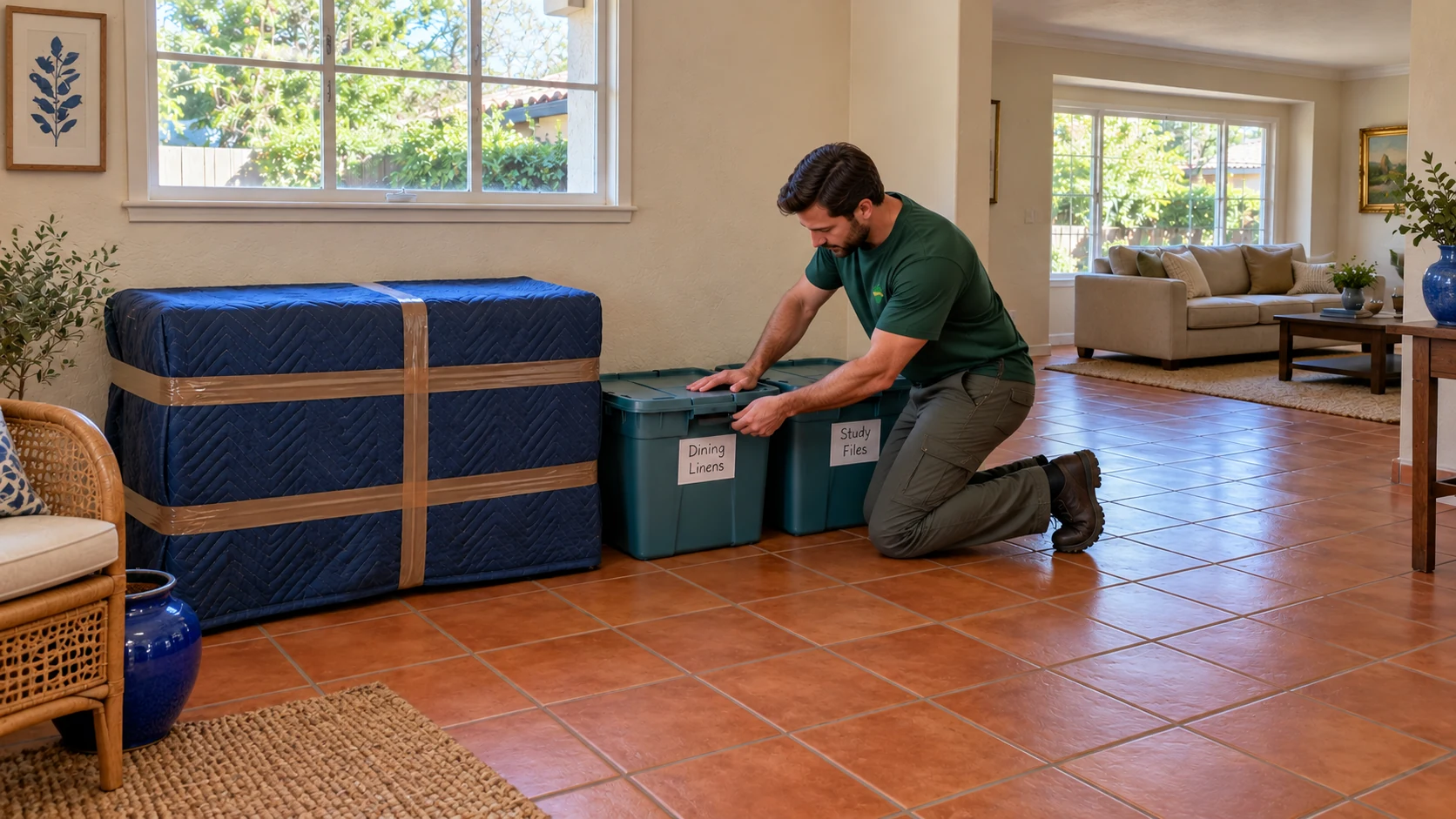
Choose direct or consolidated delivery
Direct delivery suits a household that needs its belongings to travel together and has a receiving property ready for the reviewed arrival window. The shipment has a dedicated truck, and the same moving crew handles pickup and delivery. This makes it possible to plan furniture preparation at departure and placement at the destination as one connected job. It does not turn a provisional delivery range into a booked appointment before the actual route and both properties have been reviewed.
Consolidated delivery can suit a smaller shipment when the receiver has flexibility. Around 300–400 cubic feet is approximate guidance for a small shipment, not a minimum volume or an automatic acceptance threshold. A few selected pieces may be worth collecting separately from the rest of a household, provided their preparation, identification and receiving arrangements are clear. The same-crew commitment belongs to direct delivery; it is not a promise for consolidation.
The delivery clock starts after pickup and loading are complete. A packing day, dismantling an approved bed or carrying cartons from an upper floor happens before that point. Lawful travel and rest, the final truck approach, customs readiness where applicable and the receiver's available hours all remain part of planning.
For suitable short domestic consolidated routes, the maximum can be up to 30 days after completed pickup and loading. Florida and Canada have an up-to-60-day maximum. Other long routes need an individually agreed window. The up-to-90-day California rule concerns a shipment whose destination is California; it does not become the default merely because this move leaves San Diego.
Start with the complete San Diego pickup
This page covers an interstate or Canadian shipment, with related work agreed as part of that move. It does not establish a standalone California-only moving service or a local Sterling office. A postal city name alone does not identify the authority for a particular loading position.
We arrange reviewed interstate and Canadian household pickups from the incorporated City of San Diego, including addresses in North Park, Hillcrest, Downtown, Mission Valley, La Jolla and Rancho Bernardo. Give the complete address, unit and separate garage or storage area. The City is not all of San Diego County, and another municipality requires its own service and access review. Pickup dates, preparation and the actual loading position are agreed for the shipment.
A North Park bungalow, a Downtown condominium and a La Jolla hillside home can present very different carrying routes. Those are useful planning contexts, not measurements of your property. For the bungalow, show the porch, gate and any step between the room and the street. For the condominium, include the unit entrance, corridor, service elevator, loading bay and any transfer between them. For a sloped approach, show the grade and the place where the vehicle can stand lawfully on a stable surface. An assigned underground car space does not establish moving-truck clearance.
Begin the inventory where the things actually live. Include closets, balcony furniture, wall-mounted items, a home office, packed storage and items you intend to leave behind. Photograph a tall piece from enough distance to show its whole outline and support, then add its dimensions and any known construction details. A narrow door may be only the first obstacle: a turn immediately after it, an elevator opening or a low ceiling on the stair landing can determine the workable preparation.
The person leaving the home and the person receiving the shipment may be different. Name both contacts and identify who can open each door, approve the building arrangements and respond if the agreed loading position is unavailable. A real alternative is more useful than a spare telephone number whose owner has no keys or authority.
Resolve curb and building access before dispatch
San Diego's parking guidance allows the specified heavy commercial vehicles in residential areas while loading, unloading or serving the immediate vicinity. That work-related allowance does not reserve a curb space, cancel posted restrictions or permit a truck to block a driveway, crosswalk, bus stop or pedestrian route. An ordinary parking space and a usable moving operation are different questions.
If the proposed operation occupies or encroaches on a street, sidewalk or parking lane, review it through the City's Traffic Control Permit process. The current intake warns that new permits and extensions can take about 15 business days to process. Information Bulletin 177 separately specifies a minimum five working days' notice and Tow-Away/No Parking signs at least 72 hours before work. The shorter notice is not a promise of permit issuance within that time. Agree who will submit the actual plan and obtain the required approval before relying on the space.
A storage container is a separate placement decision. Information Bulletin 718 covers containers or dumpsters encroaching into the public right of way, including sidewalks. It requires a plan, at least three working days’ notice and Tow-Away/No Parking signs 72 hours before placement. Storage-container permission lasts up to seven days; an extension needs City Engineer approval, additional fees and submission at least five working days before expiration. These minimums do not guarantee processing or replace the stated intake lead time. A container is not an automatic substitute for staffed loading when truck access has not been resolved.
Managed properties may also require an elevator reservation, protected common areas, a certificate of insurance in the building's requested form and an approved loading period. Send the written requirements early enough to assign the submitter and review the response. A submitted document is not the building's acceptance. The plan should also say what happens if the elevator is unavailable or the booked period ends before loading is complete.
Keep the first days' essentials with you
Pack the things you will need before the shipment arrives separately from the items being collected. That can include identification, travel documents, keys, chargers, medication you need, a change of clothes, bedding and the documents needed for the new home. For a Canadian move, keep your customs documents accessible rather than inside a sealed shipping carton.
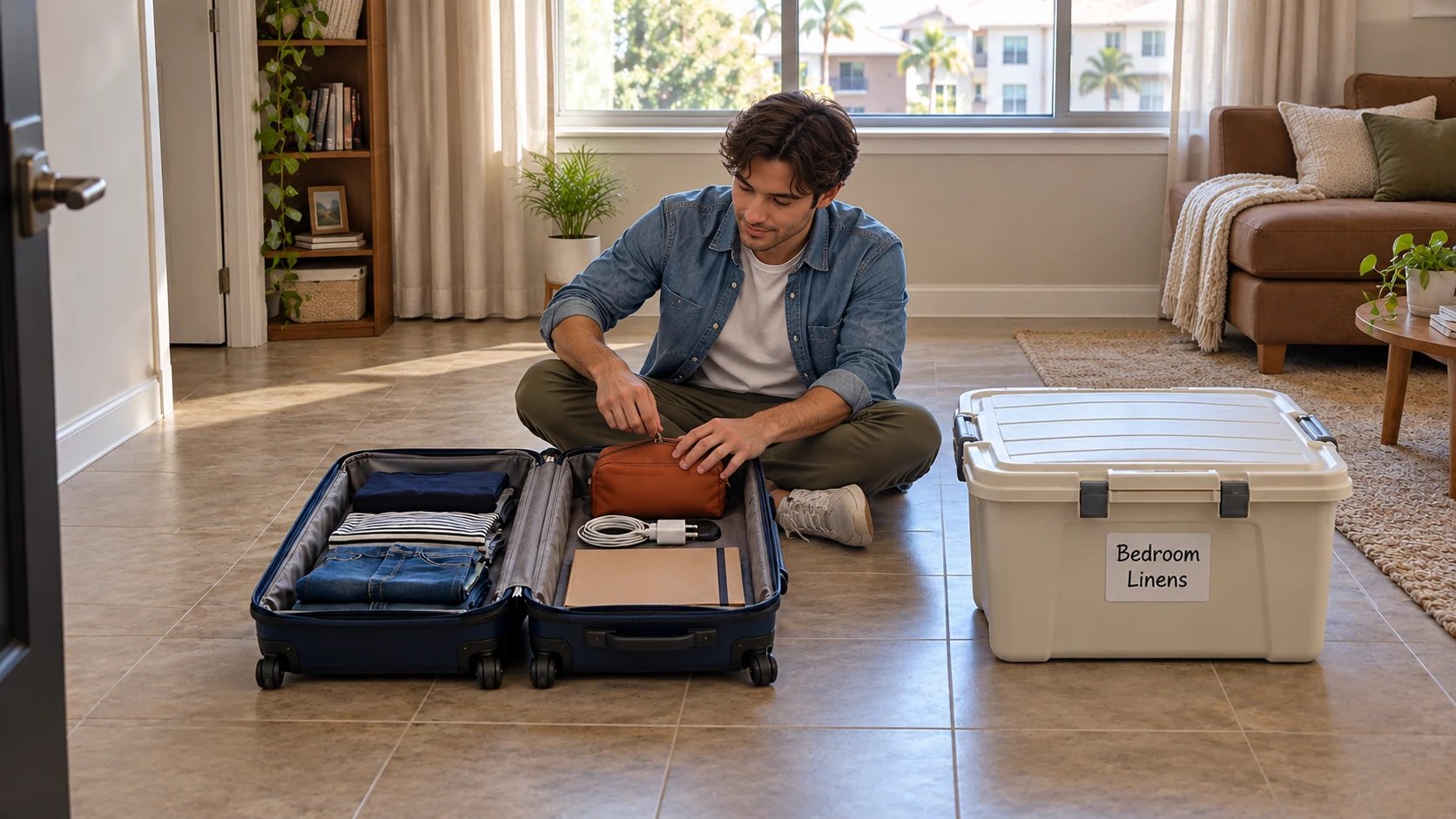
Choose those essentials to match the delivery model. A household meeting a direct shipment still needs a workable first night if access changes. Someone choosing consolidation needs a personal plan for the wider agreed window. Do not pack an item into the shipment merely because its destination room is called Bedroom if it is the item you will need while travelling or waiting for delivery.
Four ways to plan the receiving end
The following situations are conditional examples, not accounts of completed Sterling jobs. They use different destinations to show how shipment size, possession dates, customs and building access change a useful plan. The comparison table gives city-to-city driving references; it does not certify the route for a particular moving truck or confirm an arrival date.
Example: a small interstate move to Yuma
A household is leaving a San Diego apartment for a ground-floor home in Yuma, Arizona. The shipment contains selected furniture and closed cartons, and the customer will travel separately with essential belongings. This is an interstate move even though it is much closer than the other examples.
Start by coordinating the apartment's actual collection period with the Yuma receiver. If the shipment is small, loading finishes early and lawful travel, access and receiving time all work, same-day delivery may be possible after review. It is not an automatic result of short mileage. The ordinary direct range in the table leaves room for the reviewed travel plan; do not book a final inspection at the old home on an assumption that the truck will already be unloaded elsewhere.
Consolidation can be an alternative if the receiver can accept the suitable short-route window of up to 30 days. The choice is practical: a small flexible shipment can wait; the only bed and work desk for an immediately occupied home may need a different plan. Confirm who has the destination keys, where the furniture will be placed and how the receiver will acknowledge any condition concerns.
Example: a possession gap before Gainesville delivery
A family is moving from a San Diego bungalow to Gainesville, Florida, but the new home will not be available immediately after pickup. The important date is the date someone can actually receive the belongings, not just the customer's flight or a hoped-for closing date.
Prepare the bungalow's departure path from each room through the porch or side gate to the reviewed loading position. Protect the furniture for transport, identify the pieces that need ordinary disassembly and include garage contents in the inventory. Use the earlier of the property’s last-change deadline and the mover’s dispatch cutoff as the decision point, before departure and before alternatives expire. Contact the property’s access controller and moving coordinator to confirm an available later receiving period or another accepted receiving location. For storage and redelivery, confirm a facility that can accept the actual load, including capacity, receiving hours, protection, handling, access, price, payer and retrieval or onward-delivery date. Arrange accommodation and accessible essentials for the household separately. If no destination can receive the goods, revise departure. Resume when possession, the authorized receiver, carrying route and any required import arrangements are ready; an enquiry is not a confirmed alternative. Storage and later delivery need their own written agreement; waiting between homes does not imply free storage.
For suitable consolidation, Florida has an up-to-60-day maximum after completed pickup and loading. The customer must still have an agreed receiving plan; a broad delivery window is not permission to send a truck to an unavailable property. Keep enough personal belongings outside the shipment for the gap, and give the receiver a current room plan before the delivery is confirmed.
Prepare and identify a small consolidated shipment
Separate the items being shipped from belongings that will stay. A compact shipment needs clear identification because a household may be collecting only a few rooms or selected furniture. Closed cartons should carry a useful destination-room description, and furniture parts should remain connected to their parent item through a labelled hardware and preparation plan.
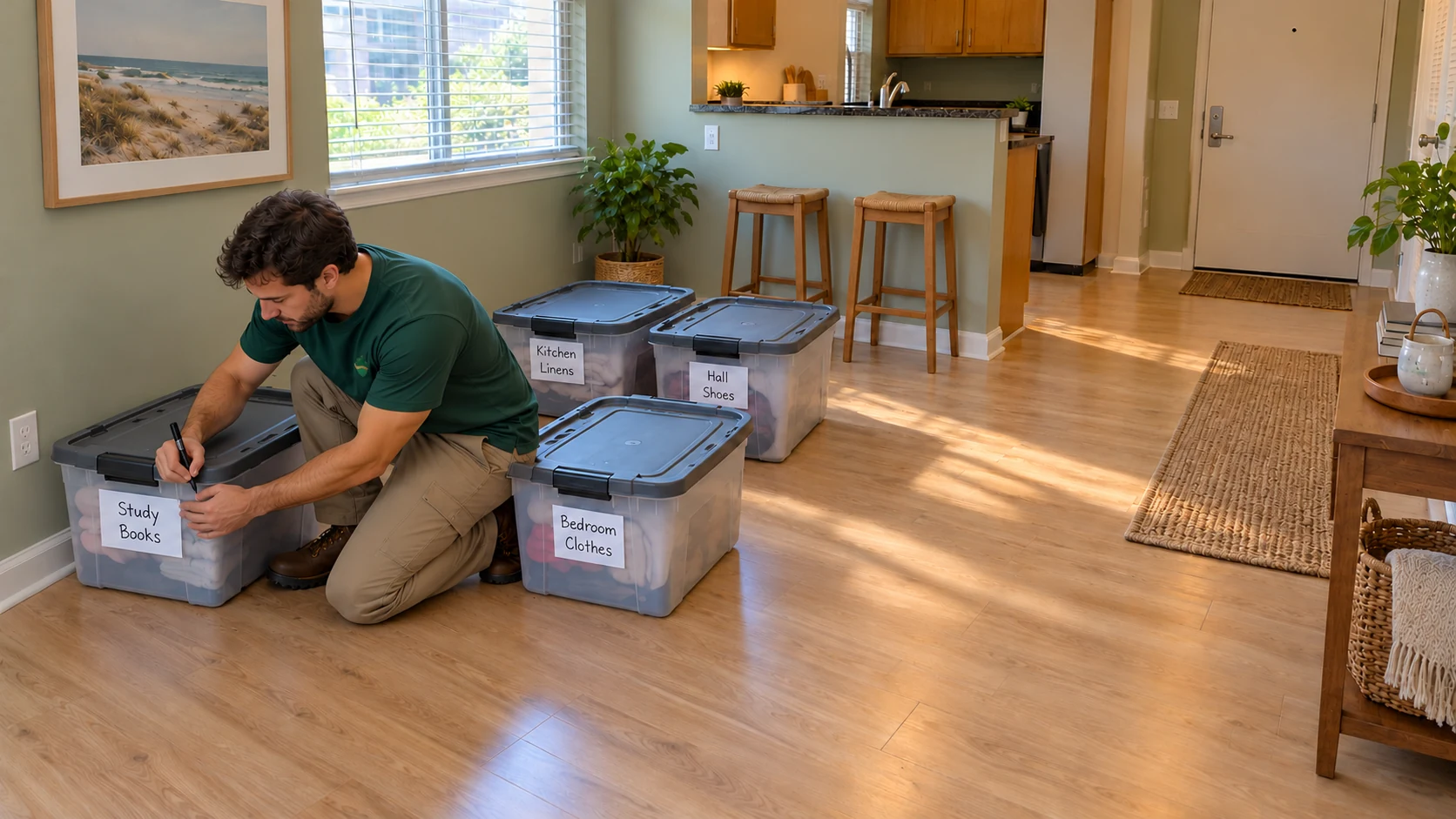
Packing can cover the whole shipment or selected contents. Agree who packs fragile items and what will be ready before collection. Company cartons are charged separately. Moving blankets, shrink wrap and tape have no separate basic protection-material charge. Ordinary basic furniture disassembly and assembly use moving labor without a separate basic assembly surcharge; a large wardrobe, missing fittings, wall attachment or specialist item needs its own review. Do not assume a tall flat-pack unit can safely be moved intact or reassembled simply because it once fitted in the room.
Long, safely removable furniture legs should be removed and kept together in a protected labelled set when that is the suitable transport method. Blankets should protect vulnerable surfaces as real cushioning, with securing material applied to the protection rather than bare finished wood. Empty ordinary dresser drawers and normally retain them in place for the move. Fixed dividers and parts that cannot safely detach need their actual handling method reviewed. The preparation depends on the piece: a photo of the entire object and details of joints or damage help determine the work before loading day.
Example: goods to follow to Chilliwack, British Columbia
A customer will establish a home in Chilliwack, British Columbia, before selected furniture and household effects arrive from San Diego. The shipment is small enough to consider consolidation, but its Canadian paperwork must be ready independently of how much space it occupies.
Before leaving, prepare two copies of the personal-effects inventory, divided into goods accompanying you and goods to follow. Include values and identifying details such as make, model and serial number where applicable. CBSA's moving guidance says to present the list at the first point of entry even if no household goods are travelling with you. Keep the original goods-to-follow list, accounting document and completed BSF186 receipt available for the later shipment and coordinate the applicable importer and clearance instructions before collection.
Duty- and tax-free treatment depends on the person's status, the goods and the applicable ownership, possession and use requirements. A mover's packing list does not by itself establish that entitlement. Identify restricted items before they enter the shipping pile, particularly anything that needs separate import review. The plan here concerns household effects; it does not promise vehicle importation, immigration advice or automatic clearance.
Direct delivery remains available for review, while suitable Canadian consolidation has an up-to-60-day maximum after completed pickup and loading. Do not apply the short domestic window to a Canadian shipment. Arrange a receiver who can open the actual Chilliwack property and coordinate any final instructions if the customer is still away completing their own move.
Example: a managed-building delivery in Salem
A household is leaving a Downtown San Diego condominium for an apartment in Salem, Oregon. At both ends, the usable path includes more than the apartment door: the loading position, service entrance, corridor turns, elevator opening and destination room need to work together.
Send both buildings' instructions before choosing the delivery model. Direct delivery can connect the reviewed departure and receiving arrangements, but a reserved elevator still has a finite period. Name a receiving contact who can be there for that window and can communicate with the building if arrival needs adjustment. A code that opens a lobby does not establish permission to use a loading bay or reserve the elevator.
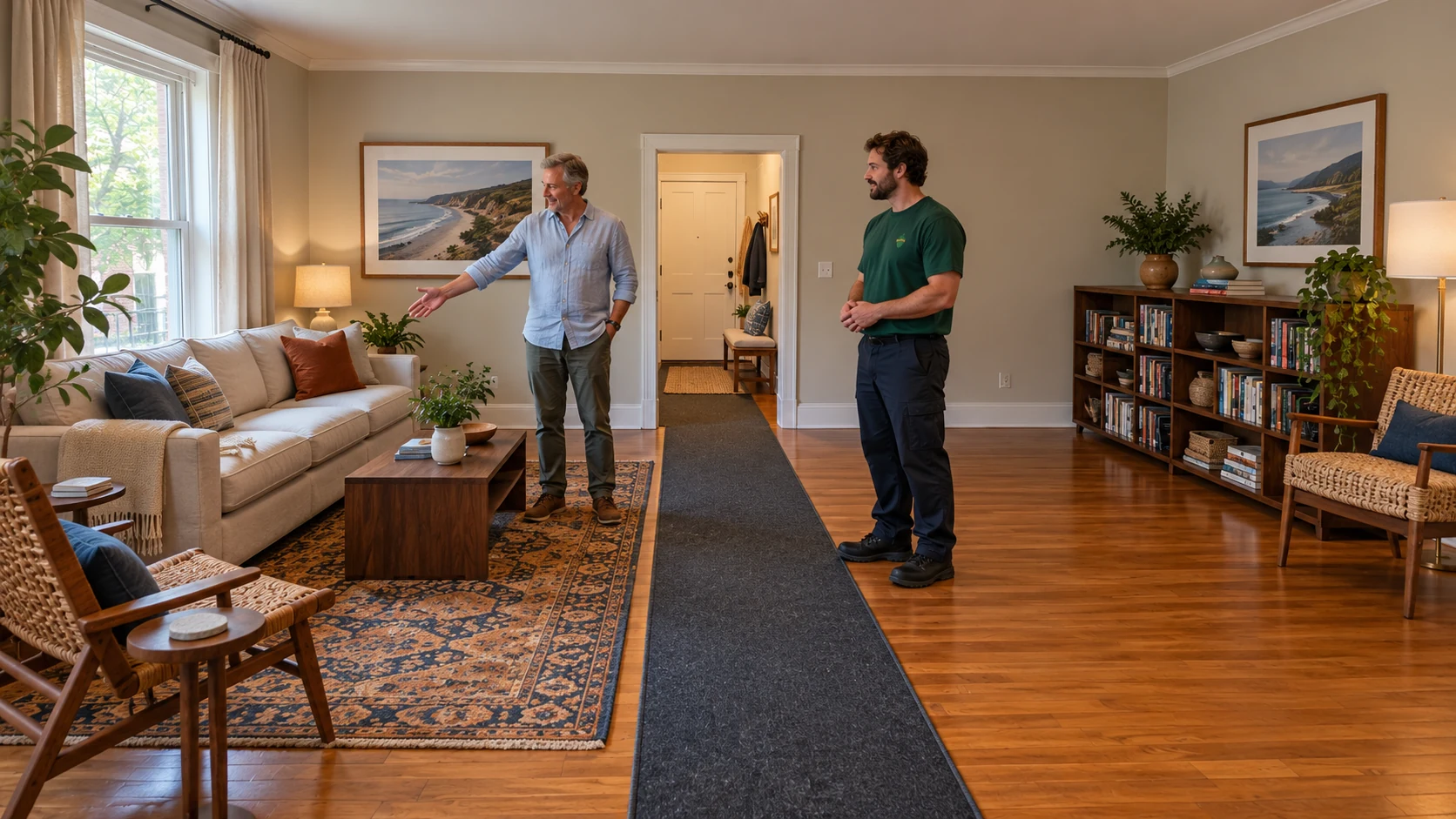
Check the largest pieces against the destination route before loading in San Diego. If a bed must be reassembled, identify its room and hardware set. If the route needs a different preparation or a long carry from the approved vehicle position, include it in the estimate. For a wet arrival day, agree suitable floor protection and keep unpacked cartons out of an exposed entrance; the example does not assume a particular day's weather.
Salem is a western-region destination north of San Diego. It is not a California delivery, so consolidation needs an individually agreed Oregon window rather than the California 90-day rule. If the receiver can attend only one narrow appointment, discuss a workable model before choosing consolidation for its smaller-shipment flexibility.
Compare illustrative delivery windows
Swipe the table to compare both delivery options.
| Illustrative destination | Direct planning window | Consolidated window |
|---|---|---|
| Yuma, Arizona | 1–2 days | Up to 30 days |
| Gainesville, Florida | 4–5 days | Up to 60 days |
| Chilliwack, British Columbia | 2–3 days | Up to 60 days |
| Salem, Oregon | 2–3 days | Window agreed individually |
These ranges begin after pickup and loading are complete. Ordinary city-to-city driving references were checked on October 24, 2026. The ranges are provisional comparisons, not promises based on a passenger-car route. The actual addresses, equipment, lawful travel, customs and receiving appointment require shipment review.
Agree the written scope and price
The agreed long-distance flat rate covers the reviewed inventory, access and services. Travel or delivery taking longer does not itself increase that price. Added belongings, a changed carrying route, additional preparation or a new storage and delivery arrangement can change the scope. Resolve known changes and any revised interstate written estimate before loading. The original estimate cannot be rewritten after loading begins; later additional services need their applicable agreement and charges before they are performed.
For an interstate household shipment, obtain the required written estimate and complete the required survey unless you sign the proper separate written survey waiver before loading. Retain that waiver with the bill of lading; waiving the survey does not waive the written estimate. An inventory and photographs help start planning. The estimate must identify whether it is binding or non-binding; discuss known elevator, long-carry and other access work before the bill of lading is prepared. Keep the dated signed documents and agreed payment instructions.
Review valuation protection as well. For a U.S. interstate shipment, Full Value Protection and Released Value are different levels of the mover's liability, not the same as buying separate insurance. Full Value Protection applies unless you choose Released Value through the required signed waiver. Released Value limits liability to 60 cents per pound per article rather than replacement cost. Disclose items needing special attention, ask for the applicable written terms and keep a copy of the choice rather than assuming every item has replacement-cost protection under every arrangement.
Finish delivery with a usable home
Give the receiver a room plan before the truck arrives. Identify the bed needed first, furniture that must be assembled before it can stand safely and cartons that can stay closed at an agreed wall. Keep the entrance and exits usable while placement proceeds. The goal is to put the agreed belongings where they can be used, with the next stage of unpacking clear.

Furniture unwrapping is part of delivery. Optional box unpacking uses working time and belongs in the requested scope. Packaging or waste removal is separately priced; it is not included merely because cartons have been opened. Decide which empty materials should leave, which cartons will remain packed and who is responsible for unwanted household items. Compare the delivered shipment with the inventory, note visible concerns, photograph and report them promptly, and retain the shipment documents. FMCSA describes nine months after delivery to file a written interstate household-goods loss or damage claim. Follow the written claims procedure and read any receipt language releasing the mover from liability before signing.
Explore interstate and Canadian destinations from San Diego
These examples organize different shipment plans; they are not a ranking of Sterling customer requests. The actual addresses, belongings, access and receiving dates determine the agreed work. This page does not establish California-only moving service.
Southwest
- Yuma, Arizona
- Phoenix, Arizona
- Tucson, Arizona
- Las Vegas, Nevada
Pacific Northwest and Mountain West
- Salem, Oregon
- Portland, Oregon
- Seattle, Washington
- Boise, Idaho
- Salt Lake City, Utah
- Denver, Colorado
Texas
- El Paso, Texas
- Austin, Texas
- Dallas, Texas
Southern states and Florida
- Gainesville, Florida
- Jacksonville, Florida
- Tampa, Florida
- Atlanta, Georgia
Great Lakes and Northeast
- Chicago, Illinois
- New York City, New York
Canada
- Chilliwack, British Columbia
- Vancouver, British Columbia
- Kelowna, British Columbia
- Calgary, Alberta
- Toronto, Ontario
- Montreal, Quebec
Sources and planning references
Local access guidance comes from the City of San Diego parking rules, Traffic Control Permit process, Information Bulletin 177 and container placement bulletin 718. These concern their stated public-road operations; building permission and the final loading position are separate.
For interstate consumer information, read FMCSA's consumer-rights guidance, valuation-protection explanation and the current federal estimate rule. For Canada, use CBSA's moving or returning guidance and BSF186. The companion San Diego relocation guide covers the city, household accounts and settlement in more detail.
Long-distance moving questions
What moves does this San Diego page cover?
Interstate household shipments from San Diego to another U.S. state and cross-border shipments to Canada. You can include agreed packing, furniture preparation and receiving work in that shipment. This does not establish a standalone California-only moving service or a local Sterling office.
Should I choose direct or consolidated delivery?
Choose reviewed direct delivery when the household needs a dedicated truck and the same moving crew at pickup and delivery. Suitable consolidation can work for a smaller shipment with a flexible receiver. Around 300–400 cubic feet is approximate small-shipment guidance, not a minimum or an automatic eligibility rule.
Will the same crew deliver my consolidated shipment?
The same-crew commitment applies to direct dedicated delivery. It is not confirmed for consolidation. The receiving contact, applicable delivery window and property access should be clear in the written plan for the selected service.
When does my delivery window begin?
After pickup and loading are complete. Packing, furniture preparation and carrying the shipment out of the home happen before that clock. The reviewed plan must also account for lawful travel, the actual route, customs where applicable and access at the destination.
Can a small San Diego to Yuma move arrive the same day?
It may be possible after review if the shipment is small, loading finishes early and lawful travel, access and the receiver’s available time all work. Short mileage alone does not guarantee it. The ordinary direct comparison is 1–2 days after completed pickup and loading; use the confirmed shipment plan for an actual appointment.
Which consolidated windows apply to the examples?
A suitable Yuma short domestic shipment can have an up-to-30-day maximum after completed pickup and loading. Gainesville, Florida, and Chilliwack, Canada, have up to 60 days. Salem, Oregon, needs an individually agreed window. California’s up-to-90-day rule concerns the destination, so it does not automatically apply to a shipment leaving San Diego.
Can the agreed price increase because the trip takes longer?
No. Travel or delivery taking longer does not itself increase the agreed long-distance flat rate for the reviewed inventory, access and services. Added items, changed access or additional work can change the scope. Resolve known changes and any revised interstate written estimate before loading. The original estimate cannot be rewritten after loading begins; later additional services need their applicable agreement and charges before they are performed.
Does a San Diego mailing address identify the pickup rules?
No. The incorporated City, the County and other municipalities are different jurisdictions. Provide the complete street, unit and any separate garage or storage location so the loading position and its authority can be identified. A postal name does not establish curb or building permission.
Where do you arrange San Diego pickups?
We arrange reviewed interstate and Canadian household pickups from the incorporated City of San Diego, including addresses in North Park, Hillcrest, Downtown, Mission Valley, La Jolla and Rancho Bernardo. Give the complete address, unit and separate garage or storage area. The City is not all of San Diego County, and another municipality requires its own service and access review. Pickup dates, preparation and the actual loading position are agreed for the shipment.
Can the moving truck use a residential street while loading?
San Diego’s guidance allows the specified heavy commercial vehicles in residential areas while loading, unloading or serving the immediate vicinity. That does not reserve the curb or override posted restrictions, driveway and crosswalk access, bus stops or pedestrian routes. Review the actual truck position and operation before relying on a space.
How early should I address a Traffic Control Permit?
Begin as soon as the proposed public-road occupation is known. The current intake warns that new permits and extensions can take about 15 business days to process. Bulletin 177 separately requires at least five working days’ notice and Tow-Away/No Parking signs 72 hours before work; those minimums are not a guaranteed issue date. Assign who submits the actual plan and obtains approval.
Can I place a storage container instead of arranging truck access?
A container needs its own review. City Bulletin 718 requires a plan, at least three working days’ notice and no-parking signs 72 hours before public-right-of-way placement, including sidewalks. Storage-container permission lasts up to seven days. Extensions need City Engineer approval, extra fees and submission at least five working days before expiration. These are minimums, not guaranteed processing times or an automatic curb entitlement.
What should I send for a Downtown condominium pickup?
Send the unit-to-truck route, service elevator opening and booking period, corridor turns, loading bay and any vehicle-height restriction. Include the building’s protection and certificate-of-insurance instructions and the person who can approve them. A submitted certificate or an assigned underground car space does not establish approval for the move.
What if my Gainesville home is not ready for delivery?
Use the earlier of the property’s last-change deadline and the mover’s dispatch cutoff as the decision point, before departure and before alternatives expire. Contact the property’s access controller and moving coordinator to confirm an available later receiving period or another accepted receiving location. For storage and redelivery, confirm a facility that can accept the actual load, including capacity, receiving hours, protection, handling, access, price, payer and retrieval or onward-delivery date. Arrange accommodation and accessible essentials for the household separately. If no destination can receive the goods, revise departure. Resume when possession, the authorized receiver, carrying route and any required import arrangements are ready; an enquiry is not a confirmed alternative. Storage and later delivery need their own written agreement and are not automatically included or free. A Florida consolidated window does not supply storage or authorize delivery to an unavailable property.
Which Canada documents should remain with me?
Keep identification, the original goods-to-follow list, accounting document and completed BSF186 receipt accessible. CBSA instructs people moving or returning to Canada to prepare two copies of the list, separate accompanying goods from goods to follow and present the list at the first point of entry, even if no household goods travel with them. Coordinate the applicable clearance instructions for the later shipment.
Will household effects automatically enter Canada duty free?
No. Entitlement depends on the importer’s status, the goods and the applicable ownership, possession and use conditions. A packing list alone does not establish it. Identify restricted goods before collection and follow CBSA’s instructions for the actual shipment; moving service does not decide immigration status or guarantee clearance.
Does the comparison route approve my truck or delivery date?
No. It is a dated city-to-city ordinary driving reference. The actual vehicle, final approach, legal route, clearances, travel and rest requirements, customs readiness and receiving appointment still need review for the order. A passenger car reaching the address does not establish a usable truck approach.
Can packing and furniture work be included?
Yes, as agreed work for the interstate or Canadian shipment. Choose full or selected packing and identify the actual furniture. Company cartons are separate. Moving blankets, shrink wrap and tape have no separate basic protection-material charge. Ordinary basic disassembly and assembly use moving labor without a separate basic assembly surcharge; large wardrobes, wall attachments, missing fittings and specialist work require their own review.
What is needed before an interstate written estimate?
For an interstate household shipment, obtain the required written estimate and complete the required survey unless you sign the proper separate written survey waiver before loading. Retain that waiver with the bill of lading; waiving the survey does not waive the written estimate. The dated estimate must identify its binding or nonbinding basis. Explain known elevator, long-carry and other access work before the bill of lading is prepared.
Is valuation protection the same as separate insurance?
No. For a U.S. interstate shipment, these are levels of the mover’s liability rather than separate insurance. Full Value Protection applies unless you choose Released Value through the required signed waiver. Released Value limits liability to 60 cents per pound per article rather than replacement cost. Review the actual written terms and identify unusually valuable items before choosing.
Are unpacking and packaging removal included automatically?
Furniture unwrapping is part of delivery. Optional box unpacking uses working time and belongs in the requested scope. Packaging or waste removal is separately priced. Decide which cartons will remain packed and which materials should leave, while keeping access to the rooms and exits clear.
How can someone receive the move while I travel separately?
Name a contact who has the keys, can attend the agreed window and can act on the property’s instructions. Give that person a room plan, shipment contact and any agreed furniture-assembly priorities. For a managed building, confirm access to the actual loading bay and elevator rather than relying only on a lobby code.