Virginia / City relocation guide

Moving to Chatham

Chatham is the Pittsylvania County seat — an incorporated town on US29 between Lynchburg and Danville. This guide helps you compare addresses, check housing, utilities, schools and daily journeys, and prepare the practical basics of arrival.

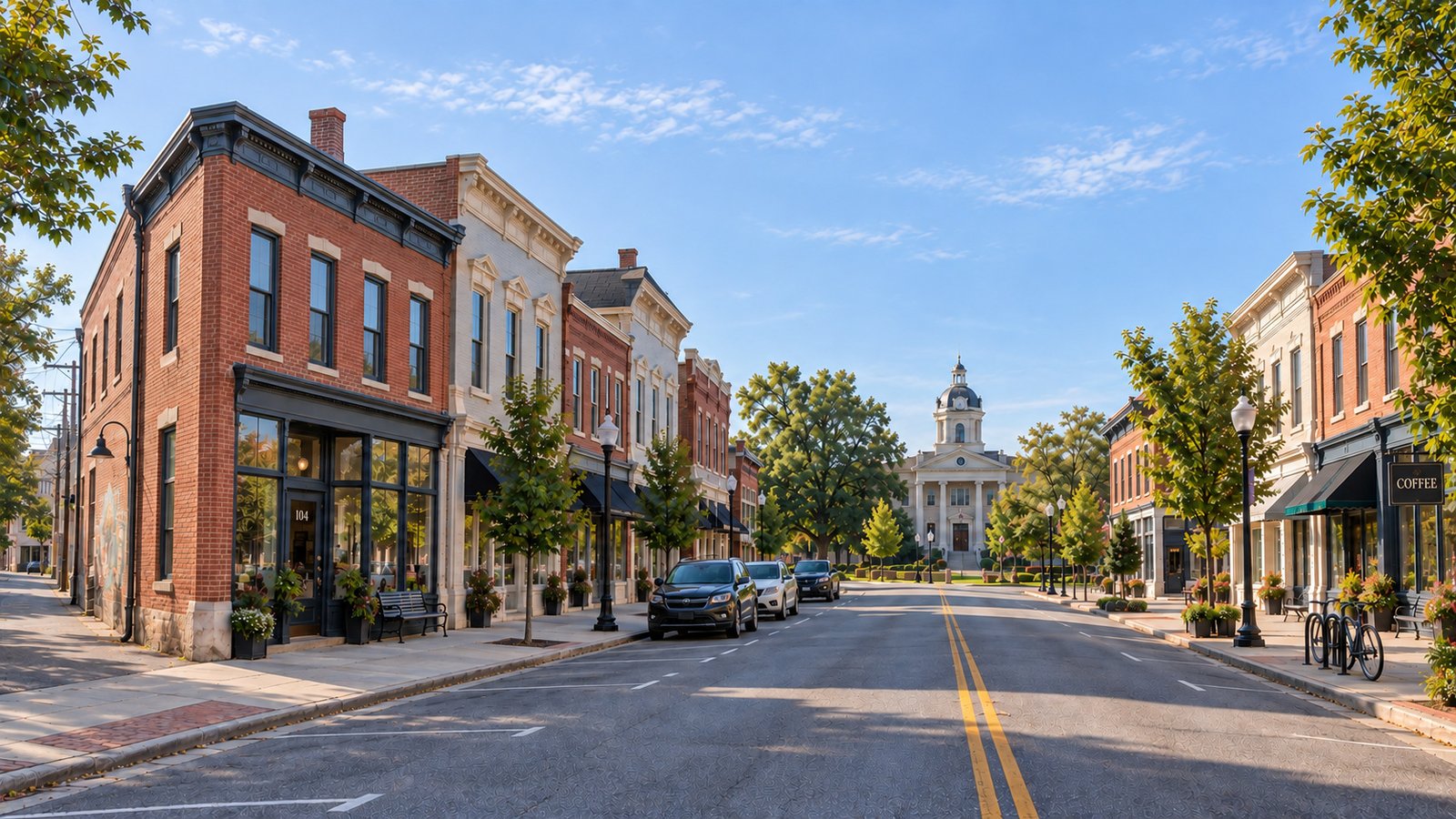
Brick storefronts and a modest civic building along a small-town street.
Visit the address and test everyday journeys.

01 /

Start with the decision in front of you

Three reading routes through this guide, depending on where you stand. If you are still choosing an address, read orientation, the area comparison and housing first — compare the actual addresses, building condition, entry route and everyday journeys rather than assuming a housing type from their location. If you have children, go next to schools — confirm the assigned schools for the exact address. If you already hold keys or a closing date, go to arrival and work backwards: the utility account, the collection days, and the truck plan.

When the address is settled and the move itself needs planning — dates, inventory, access and the estimate — the Chatham moving page is the working document.

02 /

Understand Chatham before comparing addresses

Chatham is the incorporated county seat of Pittsylvania County, on US 29 between Lynchburg and Danville. The Town of Chatham owns the procedures: Town Hall at 16 Court Place (434-432-9515, confirm current office hours before visiting), the water and sewer system, and the garbage route. The statistics describe a small county seat: about 1,400 people, 67% owner-occupied, the median owner value $174,300, and a mean commute under 18 minutes (ACS 2024 5-year).

Compare the journeys you will make from the address, including any errands on Main Street, near the courthouse or in Danville. Confirm the town limits, utility connections, current collection arrangements and account responsibilities for the property; a Chatham mailing address need not establish these.

The figures are ACS 2024 five-year estimates, not a current population count, listing price or route-time forecast. Small-town samples carry uncertainty: the owner-occupied estimate is 67.16% ± 19.67 percentage points; the median owner value is$174,300 ± $21,125.

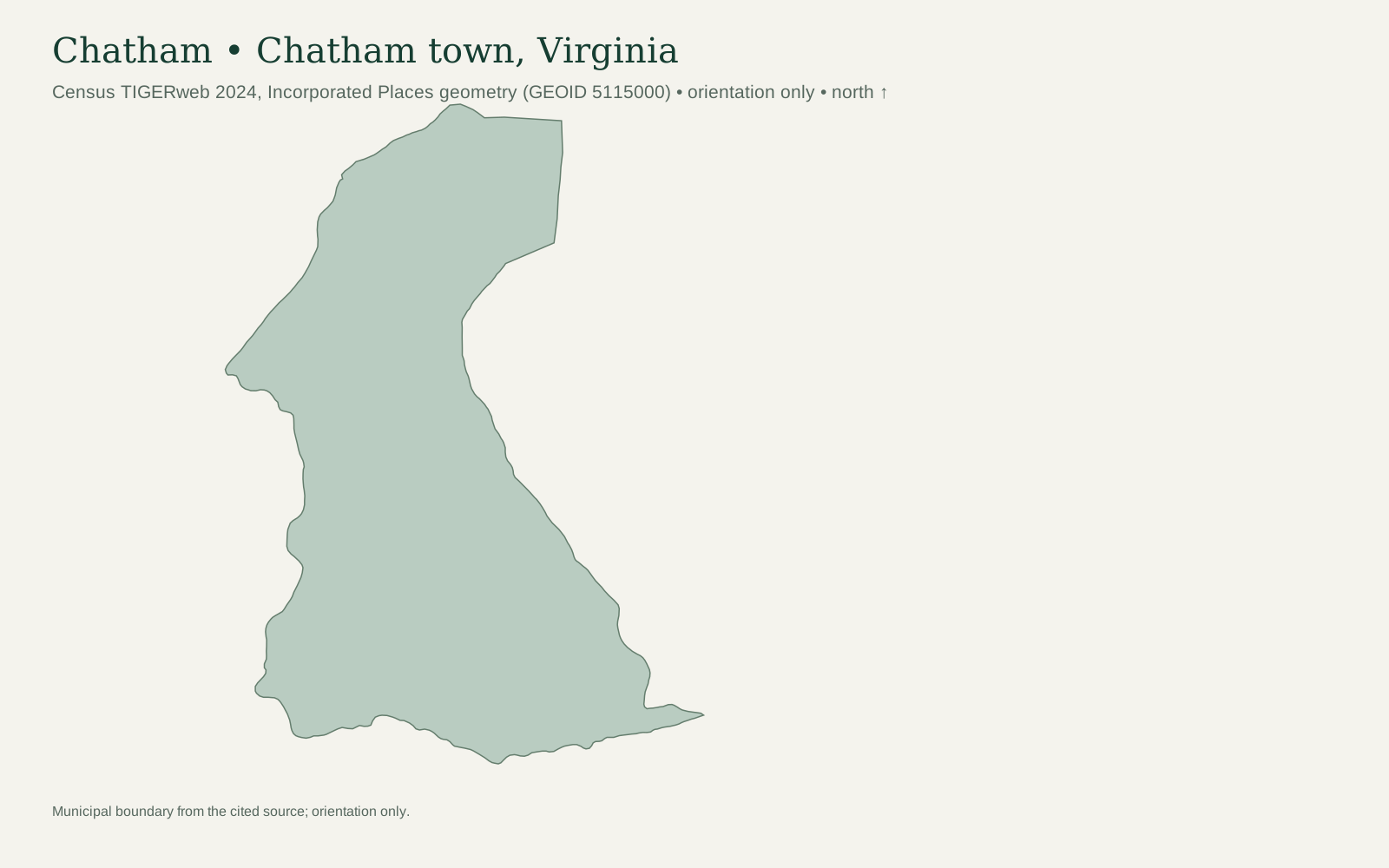
Map of the Chatham, Virginia town boundary
Census TIGERweb incorporated-place geometry for orientation; municipal procedures belong to the Town of Chatham. Not school assignments or approved truck routes. Open full-size map.

03 /

Find the area that fits your routine

Use these modules to inspect an address: the courthouse context, school questions, existing-home checks, garbage arrangements and utility accounts. They are practical orientations and service checklists, not mapped neighborhoods, school zones or service boundaries.

The courthouse & Main Street side

The civic and errand core: the courthouse blocks, Main Street's shops, and Town Hall at 16 Court Place — utilities, fees and the collection days in one office.

Fees and Taxes (Town of Chatham) ↗
Housing & setting
Compare the actual entry, parking and building condition near the center; proximity alone does not establish a housing type or a walkable route.
Daily travel
Test the route toward US 29 and your daily destination at the hours you will use.
Before choosing
Use the published Town Hall contact, 16 Court Place, 434-432-9515, to confirm current office hours and the account/fee steps before visiting.

The school-side streets

Compare an address with the school journey you need. Chatham Elementary, Middle and High are listed in the school directory; their names do not determine assignment.

Chatham Middle — address-zone check and enrollment steps ↗
Housing & setting
Compare the property, available rooms and school journey directly; there is no verified occupancy profile for this informal module.
Daily travel
The school run by car or bus; the district office answers route questions per street.
Before choosing
Ask Pittsylvania County Schools to confirm assignment and transport for the exact address, then obtain the receiving school’s current enrollment checklist.

The established town streets

Compare existing homes and rentals using the actual building and lot. The townwide ACS estimate is about 67% owner occupied, with substantial uncertainty; it does not describe this informal area.

Chatham town profile, ACS 2024 5-year (Census Reporter) ↗
Housing & setting
Check stairs, doors, storage spaces and outdoor access at the property instead of assuming a colonial, basement or shed.
Daily travel
Test the actual drive toward Danville or your other daily destination.
Before choosing
Count every storage space into the inventory; confirm the property’s water/sewer connections, account holder and transfer requirements.

The collection checklist

Confirm current collection days, set-out rules, annual charges and holiday changes for the address with Town Hall; the retained older Utilities page describes Tuesday and Friday pickup.

Town Utilities — retained historical schedule; confirm current arrangements ↗
Housing & setting
This is a disposal checklist, not a residential area or a statement that every address qualifies.
Daily travel
Keep the confirmed set-out and collection space accessible.
Before choosing
Ask before setting out furniture, moving cartons, yard waste or a whole-house cleanout; routine garbage service does not establish their eligibility.

The town utilities layer

The town operates water/sewer services. Confirm the property’s actual connections, current rates, deposit, billing and account-start requirements before relying on service.

Town Utilities — account questions; historical rates not current quotes ↗
Housing & setting
This is an account checklist, not a mapped water or sewer service territory.
Daily travel
Not a place but the account to start before closing week.
Before choosing
Confirm start/transfer dates, payment methods and emergency contacts with Town Hall before closing; inspect the current water report and service-line information.

04 /

Compare the whole property, not just the price

The townwide ACS estimate classifies about 82% of housing units as single-unit (81.63% ± 4.50 percentage points), with a median owner-occupied value of $174,300 against a median household income of $58,700 (ACS 2024 5-year, via Census Reporter). These townwide estimates do not establish architectural style, age or the conditions at a particular address. Review the actual building and route: if there is a tight stair or a long driveway carry, include it in the access plan.

Use a property-specific due-diligence list. For a house, review the roof and systems' ages, any basement and the actual utility setup — verify the actual connections, current rates and service-line information with the town. In rentals: the landlord's written move rules, and who pays the current garbage charge and what collection covers on the account.

For a purchase, compare the full monthly budget: insurance, repairs, energy, current utility charges and both town and county tax obligations. The retained town Fees page explains separate town and county taxes; ask the treasurers about the current parcel assessment and bills before relying on old published rates.

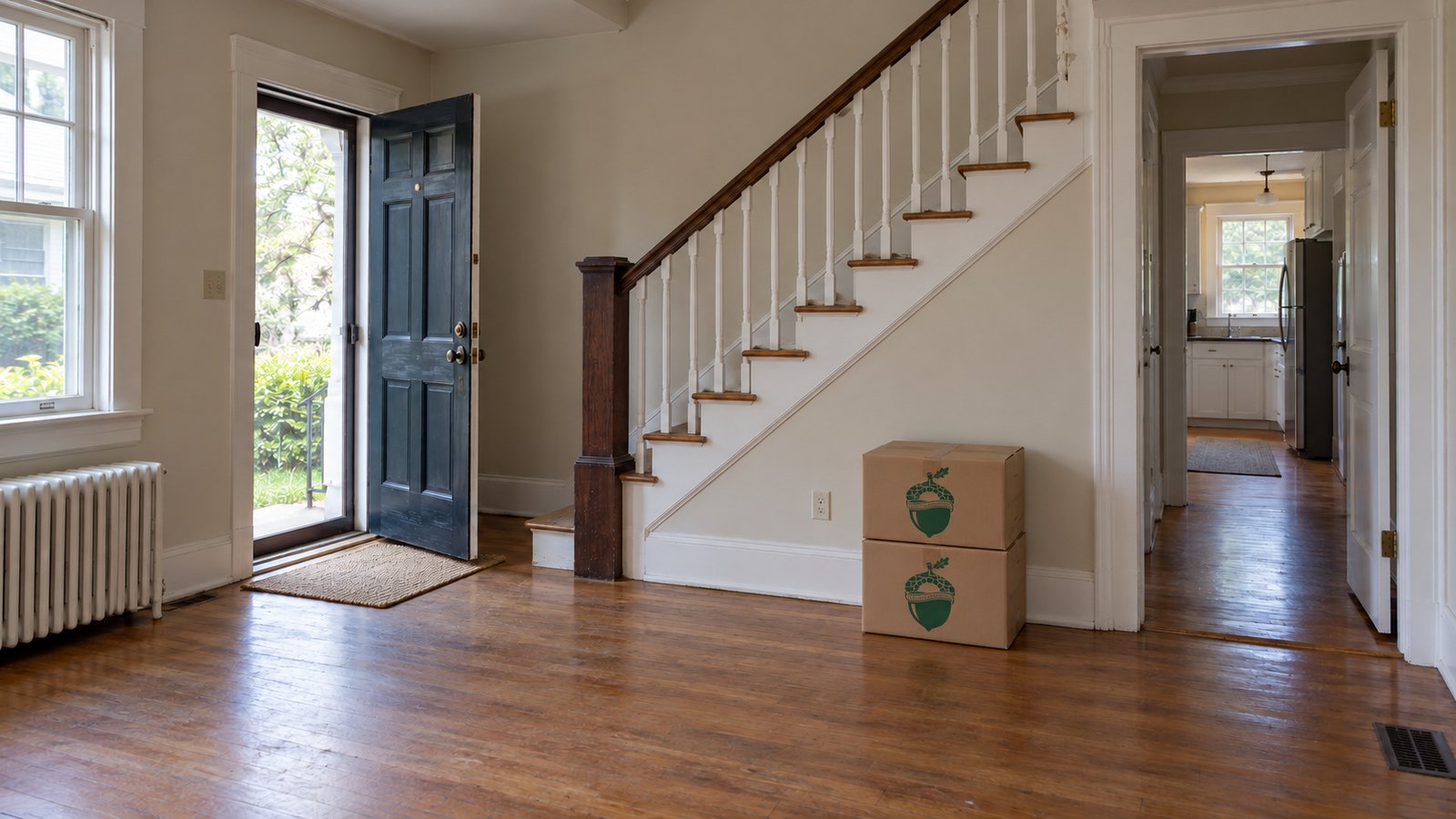
An entry hall and staircase with two closed kraft cartons stacked beside a wall and a clear passage to the kitchen.
Keep door swings and everyday passages usable.

05 /

A short county-seat commute — test yours anyway

The ACS 2024 five-year townwide mean for workers who did not work at home is 17.75 minutes (± 2.08 minutes), with Danville down US 29 and Lynchburg up it. That townwide mean is not the drive time to either city. Plan the journeys your household needs.

The practical test: drive your real route at your real hours, in the season you will actually keep. If anyone works from home, verify internet service at the address before closing. If you expect to use transit, check the actual route, stops, operating days and return journey that currently serve your address rather than planning around a schedule you have not confirmed.

A gray SUV approaching on a divided highway through low rolling terrain at dawn.
Check your actual route at the hours you will travel.

06 /

Confirm schools by address before enrollment

The saved NCES CCD 2023–24 directory lists Chatham Elementary (PK–5), Chatham Middle (6–8) and Chatham High (9–12) within Pittsylvania County Schools. These names and historic grade spans do not assign a child to a school. Confirm the exact address, grade and any program needs with the district before choosing housing.

Chatham Middle’s current enrollment page begins with the county address-zone lookup. For students assigned to CMS it lists three proofs of residency, a birth certificate and an immunization record, with original residency documents brought to the school for review/notarization. Registration and the school meeting follow record review. Obtain the receiving school’s own current checklist for other grades; confirm bus arrangements and start dates rather than extending the CMS process to every school.

The district registration hub links the 2026–27 student, kindergarten and preschool routes. Ask separately about special education, transfers and career/technical programs; the current district navigation names Pittsylvania Career & Technical Center.

07 /

Confirm connections, current rates and account steps

The town operates water and sewer services. Start with the property: ask the seller or landlord which connections are active and which accounts you must transfer, then confirm service and a start date with Town Hall at 434-432-9515. Request the current deposit, minimum charge, billing frequency, rates, payment methods and transfer documents in writing before budgeting.

The retained older Utilities page describes a deposit and quarterly minimum; its archived figures are not a current quote. The saved Public Works page carries a March 13,2026 draft notice, and the live town pages could not be read during this check on October 2,2026. Confirm current terms directly. Ask for the current drinking-water report and service-line information, and verify the current after-hours contact; the saved page lists county dispatch 434-432-7931.

Confirm electric, gas and internet availability at the exact address before closing. Where a property uses a well or septic system, review the records and condition with the appropriate professionals; the town boundary is not proof of a connection. Trash is a separate address check — see waste.

08 /

Confirm the current collection and disposal rules

The retained older town Utilities page describes Tuesday and Friday garbage pickup and annual fees. Its exact capture timestamp is not independently documented here, and the live page was unavailable on October 2,2026; those days and charges are historical information to verify, not the current schedule.

Before a move-out cleanout, ask Town Hall at 434-432-9515 about service eligibility, current collection and holiday changes, set-out time/location, containers and fees. Ask separately about furniture, appliances, moving cartons, yard waste and excess volume. Routine household collection does not establish acceptance of these items. Keep the confirmed curb space and truck route accessible.

09 /

The curb plan, and the collection mornings

The truck position is a survey decision from photos of the curb, driveway and complete carrying route. Confirm the property owner’s approval, surface capacity and applicable loading, parking or reservation requirements with the road authority before the date. Town Hall’s published contact is 434-432-9515; ask which office owns the proposed street position.

Coordinate the move with the current collection schedule rather than an unconfirmed archived timetable. The moving page’s parking section turns this into the day-of plan.

10 /

Walk the full route before moving day

If the property has a porch, a narrow front door, a stair with a landing turn or a basement stair, inspect each as a possible pinch point. Measure the largest pieces against the real route, and photograph the stairs and the parking situation for the estimate.

Outside, inspect any porch floor and uneven sidewalk slabs; identify surfaces that need protection or make the handling route unsuitable. In rentals, the landlord's written rules come before the day.

11 /

A courthouse square, a market, and Main Street

List the places your household will use, then check their location, hours and the journey from the address. For errands on Main Street, visits near the courthouse, park activities or a farmers market, confirm the actual destination and current schedule. Include any school, workplace or Danville journey in the same comparison.

The routine to test before you buy is the weekly loop at two hours: the morning version (school run, the commute) and the evening one (Main Street, the park). If meeting people through local activities matters to you, check which current events fit your schedule.

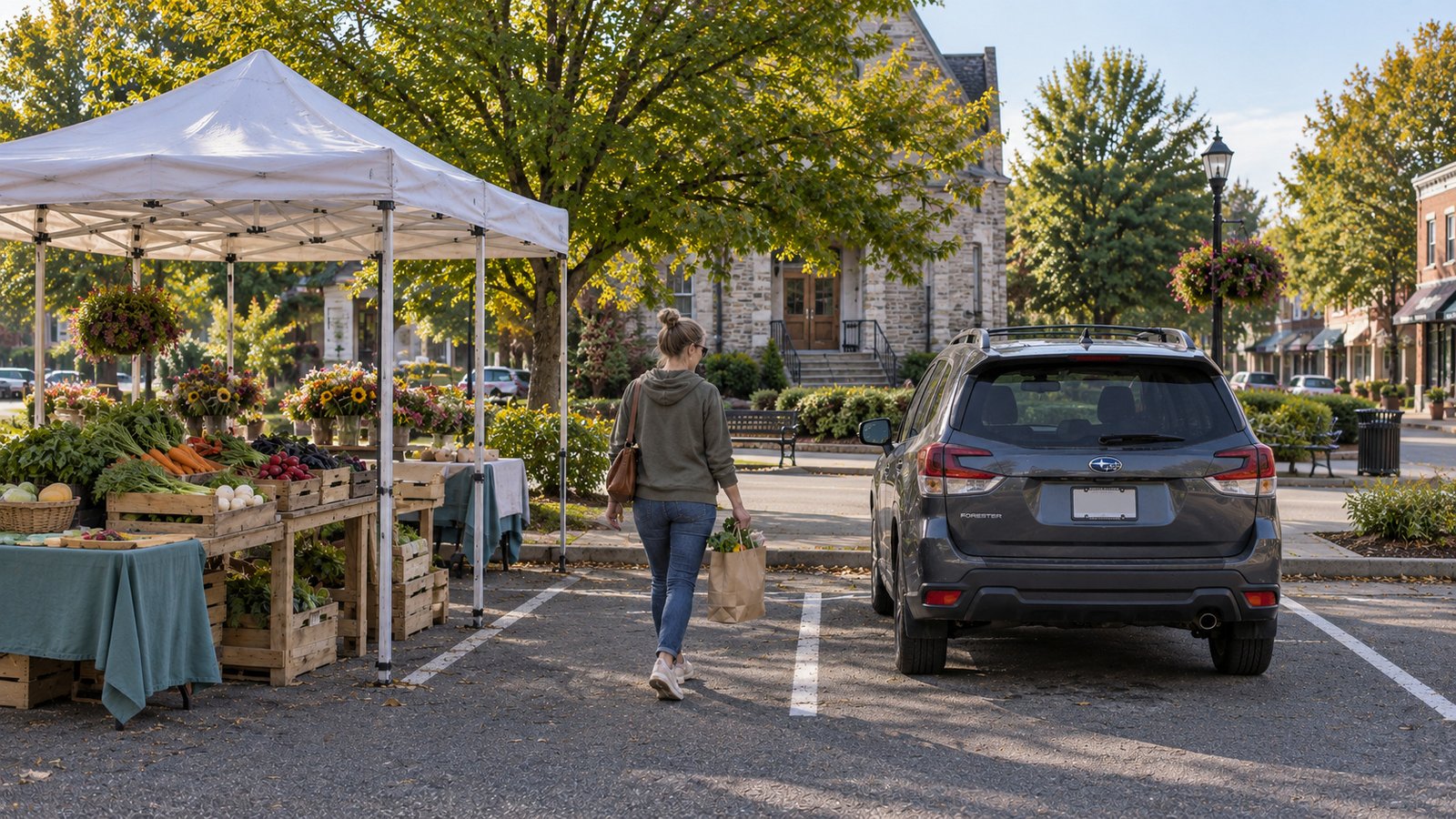
A woman carrying a grocery bag from a produce stall toward a parked SUV.
Confirm the shops and services your household will use.

12 /

The Southside calendar and your contingency plan

Confirm availability, book the agreed day and hold a backup. If storms, ice or another weather problem affects the route, follow the agreed contingency. Separately confirm the current collection schedule for the address with the town.

For your plan: agree the date early, hold a backup, and plan the cleanout against the collection days. The moving page converts the calendar into a date-and-backup plan.

A quiet residential street with houses, sidewalks and autumn foliage.
Check the approach and agree how a changed date will be handled.

13 /

Compare the address with your household’s plan

If you are arriving for work, test the actual workplace route and confirm internet reliability for remote days. With children, resolve school assignment and the school journey before making proximity the deciding factor. If downsizing or helping an older relative, compare steps, bathroom access, maintenance and the trip to regular appointments as well as the purchase price.

Renters should obtain the landlord’s move rules and a written division of utility/garbage responsibilities. Buyers should review the inspection, repair budget, parcel tax bills and the actual water/sewer or well/septic setup. A cheaper listing or a townwide ACS estimate cannot decide which property fits these needs.

14 /

Test the everyday services before you settle

Make an address-specific list of groceries, pharmacy, primary care, urgent needs and any regular specialist appointments. Confirm hours, new-patient availability, insurance acceptance and prescription transfer directly with the provider; proximity alone does not establish access. Check the trip with the transportation your household will actually have.

For local activities, use the town’s current calendar and county library information. The saved August 2026 town homepage lists a farmers market and Moore Park events, but those past dates are not an October schedule. Confirm current events, hours and access before planning around them. Verify broadband at the property rather than assuming a provider’s general coverage includes it.

15 /

Turn the closing date into an arrival plan

Work backwards from the day you get keys. Two weeks out: confirm property connections and arrange the required utility transfers using current account terms, set up electric and internet, and book the move through the Chatham moving page. One week out: confirm the truck plan and the backup date, plan the cleanout against the confirmed collection schedule, and set aside what travels with you. In the first days after arrival: follow the Virginia DMV newcomer steps if moving from another state, and update voter registration through the appropriate official process, learn the collection days at your address, and — with children — complete the receiving school’s enrollment steps before the child’s intended start date.

Keep a Plan B for the failures that matter here: a storm date (the backup moving day, agreed in advance) and a slipped closing (which items go to storage, which travel with you). The guide's sections hold the details; the moving page holds the estimate.

16 /

Questions before you arrive

What kind of town is Chatham?

The incorporated county seat of Pittsylvania County, Virginia — about 1,400 people on US 29 between Lynchburg and Danville. Town Hall at 16 Court Place (434-432-9515) owns the procedures, including the town's own water, sewer and garbage service. This is Chatham, Virginia — not the Massachusetts namesake.

How long is the commute from Chatham?

The ACS 2024 five-year mean is 17.75 minutes (± 2.08 minutes) for workers who did not work at home. It is a townwide estimate, not a Danville or Lynchburg travel-time promise. Test your route at the hours you will keep.

Where do Chatham children go to school?

Confirm each child’s assigned school by exact address and grade through Pittsylvania County Schools. Chatham Elementary, Middle and High appear in the historic directory, but their names do not establish zones. CMS enrollment begins with a zone check and lists residency, birth and immunization documents; other schools provide their own checklists.

How does trash work in Chatham?

Ask Town Hall at 434-432-9515 about current days, eligibility, set-out requirements and fees. The retained older Utilities page describes Tuesday/Friday pickup; this guide does not confirm it as today’s schedule or bulky-item acceptance.

Does Chatham have public water and sewer?

The town operates both services. Confirm the property’s actual connections and current rates, deposit, billing and transfer requirements directly. Request current water-quality/service-line information and verify the emergency contact; the boundary is not a service guarantee.

What should I know about a move to the county seat?

Check the exact property and town limits, current utility and collection arrangements, school assignment where relevant, and your everyday journeys. Agree the moving date and a backup instead of relying on an unconfirmed timetable.

How do I arrange the moving estimate?

Use the Chatham moving page to request an estimate: both addresses, dates plus an alternative, a room-by-room inventory (basement, garage and shed included), and photos of the entry and the curb. The more concrete the request, the more accurate the plan and price.

Your next step

Bring the plan together

Use the Chatham moving page to prepare the inventory, access details and questions for your estimate.

Sources & useful local resources

Official procedures and local resources are linked beside the answers above. Reopen the relevant page when arranging a date: fees, schedules and application requirements can change.