New York / City relocation guide

Moving to Hampton Bays, New York

The appeal of Hampton Bays may be the water, a particular home or being closer to the people you want around you. Use an address visit to test how that appeal fits an ordinary week, then make the practical arrangements for arrival.

A sandy shoreline with beach grass and two small sailboats moored on calm water
Take time to explore the surroundings of a possible new home.

01 /

Start with the right local authority

Hampton Bays is a hamlet in the Town of Southampton, in Suffolk County. The town and the separate Village of Southampton are different authorities. Use the actual address when checking which office, school district or service provider applies.

The town’s September 2024 Pattern Book describes the hamlet’s coastal setting and downtown planning area. It is useful for finding your bearings; proposed changes in a plan should not be mistaken for facilities already in place.

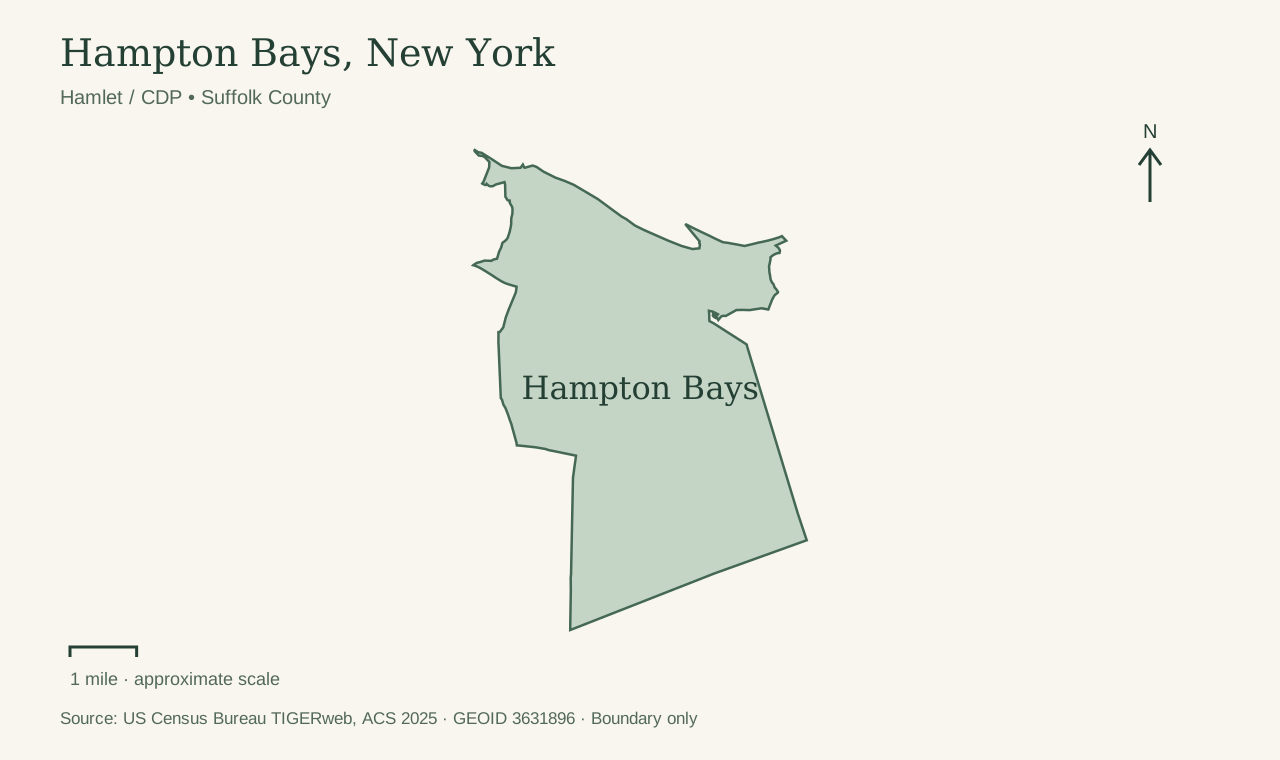
The map uses the Census Bureau’s Hampton Bays CDP outline. Postal ZIP 11946, a school district and a utility service area are different geographic references. None should be inferred solely from that outline.

Outline of the Hampton Bays Census-designated place in New York
US Census Bureau outline for orientation. Postal, school and utility boundaries differ. Open full-size map.

02 /

Find the area that fits your routine

Use these places to organize an address visit. You may care about the main street, the water or simply a home that works for your household. Check the route from the actual property before treating a nearby destination as part of daily life.

Main Street and the downtown core

The town’s Pattern Book describes a downtown planning area around Montauk Highway, between Springville Road and Ponquogue Road / Squiretown Road.

Town of Southampton ↗
Housing & setting
Notice usable rooms, storage and the conditions immediately outside the home. A planning boundary does not establish housing quality.
Daily travel
Try the actual walk or drive to the errands you expect to make.
Before choosing
Distinguish existing streets and facilities from improvements proposed in the plan.

Shinnecock Canal side

The canal is a geographic reference at the eastern side of Hampton Bays.

Town of Southampton ↗
Housing & setting
At a nearby property, ask about drainage, upkeep and which parts of the waterfront you may actually use.
Daily travel
Check the route to your destination rather than measuring only the distance across the water.
Before choosing
Look at the exact parcel and access arrangements; a water view does not include a dock or public path.

Ponquogue and the ocean side

Ponquogue Beach is one of the town beach destinations relevant to a Hampton Bays visit.

Town of Southampton ↗
Housing & setting
Compare the property’s practical needs as well as its appeal: storage, maintenance and the space you will use throughout the year.
Daily travel
Try the journey to the beach and check its parking arrangements for the visit you plan.
Before choosing
Eligibility and fees depend on the permit category; being a new resident does not settle every requirement.


03 /

Look for a home that fits the way you live

Walk through a normal day in the rooms you are considering. Where will wet shoes and coats go? Is there somewhere quiet to work? Can the furniture you intend to keep leave enough space to move around comfortably?

A sunroom, deck or water view may be part of the reason you want the home. Ask how that space can be used through the year and what maintenance it needs. Find out which furniture, outdoor items and storage areas are included in the sale or tenancy.

For a property near water, discuss drainage, previous water intrusion, storm preparation and relevant insurance questions with the owner and appropriate professionals. Check the exact parcel and building. The general reputation of an area cannot settle the condition or obligations of a particular home.

For a rental, confirm whether the agreement and occupancy dates support the length of stay you need. Record who looks after the grounds, systems and shared access. A pleasant first visit is more useful when you know what you will be responsible for afterward.

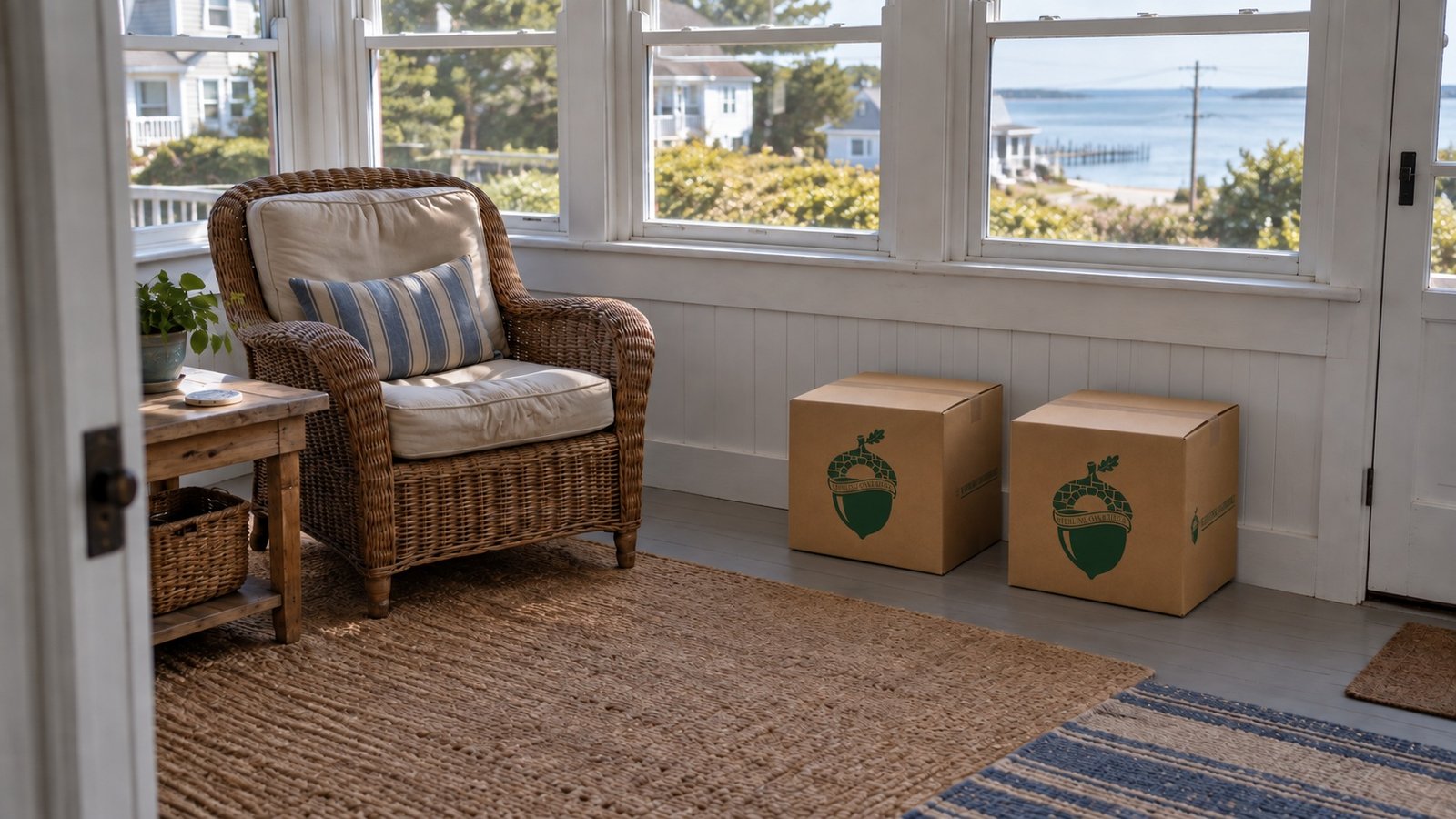
A wicker chair and two kraft Sterling Oakbridge cartons in a white sunroom overlooking water
Think about how each room will work once the furniture arrives.

04 /

Try the journey you will actually make

Test the trip from the property to work, school or a regular appointment at the hours you expect to travel. Include parking and the final walk. Do the return journey too if it changes the way your day would work.

MTA lists Hampton Bays on the LIRR Montauk line. The station page links timetables and TrainTime and describes its accessibility features. It lists no waiting room or ticket office, so plan the connection and waiting arrangements for your own trip.

Check the current outward and return services before relying on a rail journey. A station in the hamlet does not guarantee that its schedule fits every shift, evening appointment or family pickup.

If different household members need the car at the same time, try planning that day now. A second ride or a changed pickup arrangement may matter more than a small difference in the usual driving distance.

A blue compact car travelling along a two-lane road bordered by pine and deciduous trees
Try the routes you expect to use in an ordinary week.

05 /

Speak to the registrar before the first day

Hampton Bays Public Schools’ registration page provides English and Spanish packets, a district registrar and information for families in temporary housing. Start with the new address, the child’s grade and intended arrival date.

The linked registration packet explains proof of age and residence, health and school records, and acceptable alternatives for different household circumstances. Keep those documents outside the moving load. If a document is missing or housing is temporary, contact the registrar about the appropriate process rather than assuming the family cannot enroll.

Confirm the assigned school, start date and transportation directly. The district also publishes separate information for pre-K and kindergarten; a general registration inquiry does not reserve a place in a program with its own process.

06 /

Hand over the accounts and the property information

Ask what serves the exact home: water, sewer or septic, electricity, heating, internet and any shared systems. Record which accounts you open and what the landlord or owner continues to manage. A hamlet name alone does not establish a connection.

For a property served by the Hampton Bays Water District, its instructions call for a final meter reading when a property closes. Confirm the arrangement with the district and the people handling the closing. The listed customer address is 18B Ponquogue Avenue; check current office instructions before visiting.

Get the available maintenance records and service contacts for the building’s systems. Where a specialist needs to inspect or prepare something, schedule that work before it becomes an arrival-day problem.

Confirm the actual internet installation date. If someone must work online immediately, arrange a temporary option instead of treating coverage at the address as proof that a connection will be ready.

07 /

Choose collection or resident self-haul

The Town of Southampton waste department says the town does not provide curbside household collection. Ask what private collection is already arranged for the property, or check the resident self-haul option. For that option, ordinary non-recyclable household waste uses the town’s green bags, with recycling separated.

The 2026 fee schedule lists Hampton Bays at 30 Jackson Avenue. Its resident charges include $15 per cubic yard for small bulk below 3 × 3 × 3 feet, $30 per large item above that size, and $20 each for a mattress or box spring. Confirm the classification of your item and current facility instructions; other stations have different rules and charges.

These are town disposal fees, not a moving-company removal quote. Before moving day, choose a destination for unwanted furniture and confirm any donation or paid collection. Keep disposal items apart from the shipment and out of the handling route.

08 /

Make separate plans for delivery and leisure parking

Before booking a large delivery, show the provider the private entrance, gate, surface and unloading position. Find out whether an owner or manager needs to be present. On a shared drive, agree how others will get through.

Where the plan involves a public road, ask the relevant authority about what applies to that location and date. The town’s beach parking system serves a different purpose; it does not establish a right to stage a moving vehicle.

For the household move, our Hampton Bays moving page explains how to show the carrying route. Give the provider the property contact as well as the address, especially if the home is normally unoccupied.

09 /

Check how everyone will use the entrance

Try the everyday entrance with the needs of the people who will live there in mind. Steps, a heavy door or a narrow landing can affect groceries, visitors, a mobility aid or help from a carer. A “ground-floor” description does not settle the entire route.

Confirm the key handover and how visitors or contractors will reach you. For a shared building, ask about entry systems, delivery hours and the person who resolves an access problem. Save that contact before the household internet is working.

If you plan to alter the building or use it for a business, settle the intended use and applicable requirements with the owner and responsible department. An attractive spare room does not by itself establish permission for every activity you might put there.

10 /

Decide who looks after the home between visits

For a home that will sometimes be empty, make a short responsibility list. Who checks it, holds a key, deals with a service call and tells you about a problem? Record how that person can reach you and what decisions they may make.

Decide which outdoor furnishings and household items stay at the property, which move and which require separate care. Arrange any work on water, heating or other building systems with the appropriate provider. Covered furniture or a closed door does not show that the rest of the home is prepared.

Before a delivery, have someone check the route, entry and working space. Rain, leaves, snow or another contractor’s materials can change what is usable. Let the moving team know about a change while the plan can still be reviewed.

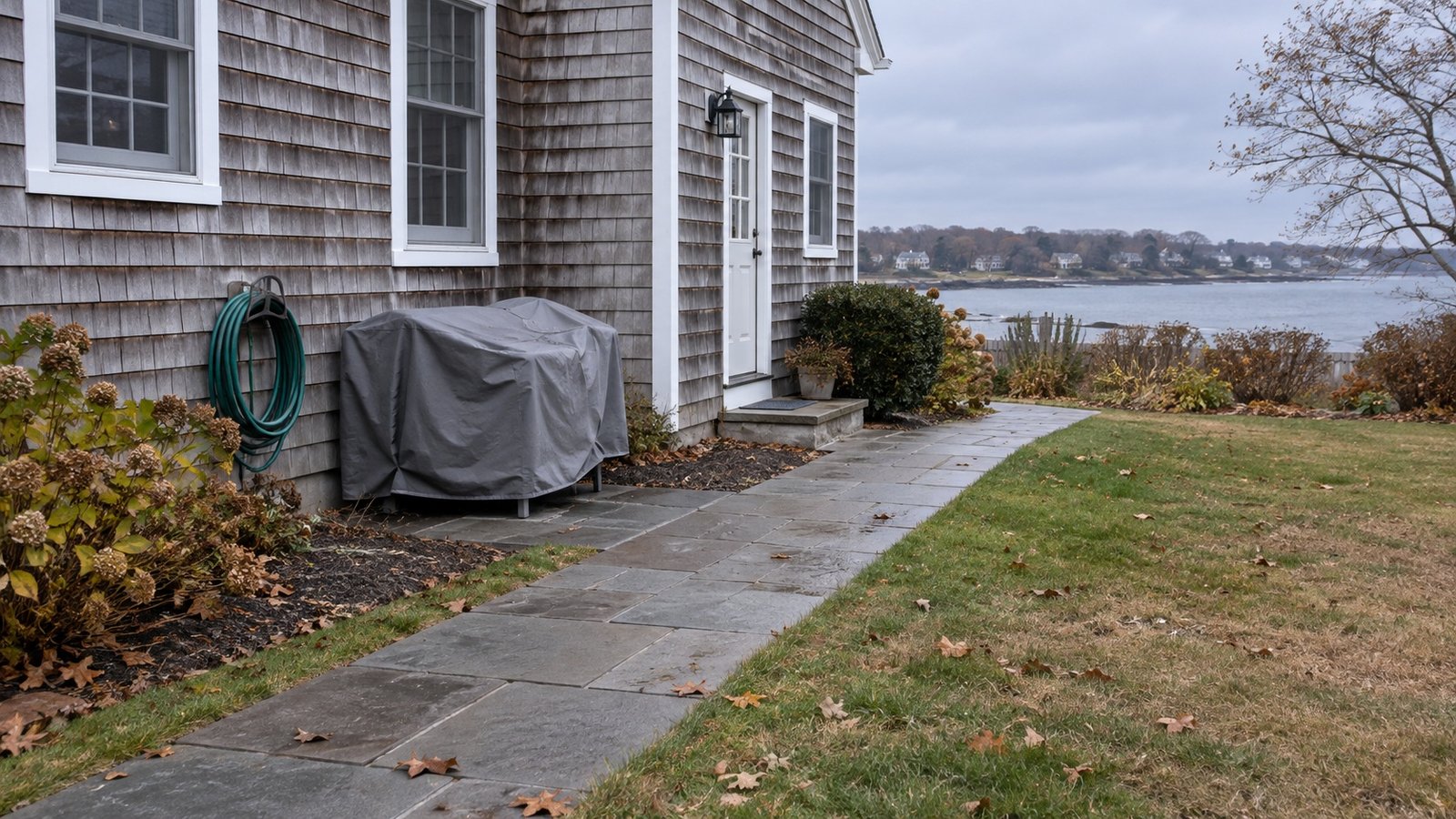
Covered patio furniture, a coiled hose and autumn leaves beside a shingled house near water
Decide what stays at the property and who will look after it.

11 /

Try one ordinary errand and one enjoyable outing

During an address visit, make time for something you would do in a normal week: buy groceries, take a short walk or stop somewhere you can sit for a while. Notice the journey home, not only the destination. Different households will find different things worth returning to.

For beach visits, use the town’s current permit information. Online and in-person options exist, with different documents and eligibility for homeowners, year-round renters and other categories. A new rental agreement does not automatically meet every resident-permit condition.

Ponquogue has a daily pay-by-app option; the town says to purchase on site only after finding an available space. Check which beach the permit covers. Town permits are not a universal pass for village or county beaches.

If a particular activity matters to your move, try it under the conditions you expect to use it. That is more revealing than treating every nearby attraction as equally convenient.

A woman reading at a small outdoor table beside a bookshop, with a cup in front of her
Look for everyday places you would enjoy returning to.

12 /

Leave room for different reasons to move

You may be trying to live closer to family, reduce the size of a home, work differently or spend more time outdoors. Write down the few things that would make the change worthwhile for your household. They need not match another buyer’s checklist.

When children, an older relative or someone needing regular assistance is moving too, plan their first week separately from the furniture. Confirm appointments, transport and who will be present while the home is being set up.

For pets, check the tenancy and the rules of places you expect to visit. Arrange a secure place during delivery and identify the care you would use locally. Set aside familiar essentials so the first evening does not depend on opening every carton.

13 /

Put the first week in a sensible order

Before the date, confirm entry, the receiving contact and essential service appointments. Keep one current list of the people responsible for the move, the property and any school or household arrangements.

On arrival, make the rooms you need first usable. Check that essential belongings have stayed with you and that larger pieces have reached their intended rooms. Deal with a service problem through its named contact rather than postponing it behind the unpacking.

During the following days, confirm the waste routine, finish the account and address changes that apply to you, and try the journeys you planned. Leave time to discover what works. A home can be usable before every box is empty.

14 /

Questions before you arrive

Is Hampton Bays governed by the Village of Southampton?

Hampton Bays is a hamlet in the Town of Southampton. The separate Village of Southampton is not the default authority for a Hampton Bays address.

Does ZIP 11946 establish my school or water district?

No. Use the full address with the relevant district or provider. Postal areas, the Census outline and service boundaries serve different purposes.

Where can I check the train journey?

Use MTA’s Hampton Bays station page, its linked Montauk line timetables and TrainTime. Check both outward and return travel for the actual day and schedule you need.

What if I do not yet have every school document?

Contact the district registrar about your circumstances and the accepted alternatives. The district publishes registration and temporary-housing information; do not infer ineligibility from a missing document.

Does the town collect household trash at the curb?

The town’s waste page directs residents to private collection or resident self-haul. Check the arrangement for the property and ask separately about bulky items.

Can I apply for a beach permit online?

The town provides an online route as well as in-person options. Check the category and required documents for your situation, including the conditions for year-round renters.

Does a beach permit cover the moving truck?

It does not establish a moving-truck loading reservation. Settle delivery access separately with the property owner, manager or relevant road authority.

How should I compare two possible homes?

Compare the rooms you will actually use, the complete daily journey, service and maintenance responsibilities, and the features that matter to your household. Check those details at each address.

Your next step

Bring the plan together

Once you have an address, plan the work needed to make the move.

Sources & useful local resources

Official procedures and local resources are linked beside the answers above. Reopen the relevant page when arranging a date: fees, schedules and application requirements can change.