Moving to Los Angeles, CA: choose an address and settle in
Los Angeles connects Valley neighborhoods, central destinations, the Westside and the harbor within one city. Start with the part of the city that supports your ordinary week. Compare the actual home and daily journeys, then turn possession, household services and receiving access into a plan you can carry out.
Compare the complete entrance route with the people and belongings that will use the home.
01 /
Choose the address around the week you want to live
Still choosing a home: compare the eight areas below against the same ordinary week. Put work or study, groceries, appointments, family visits and an evening out on the map. A larger room can lose its advantage if reaching those places consumes the time you hoped to gain.
Moving with children: establish the school district and address-based enrollment path while arranging the adult commute and care. A neighborhood name, a nearby campus and a school listing do not establish the child's placement. Keep student records with the family rather than in the shipment.
Already have an address: begin with possession, utility accounts, collection, the building's receiving rules and the arrival sequence. Give each unresolved item to someone who can act before dispatch. The Los Angeles moving page explains Sterling Oakbridge's interstate service and estimate process. This guide helps you choose the place and prepare the household.
02 /
Read the whole city, including the Valley and the harbor
This guide covers the City of Los Angeles in Los Angeles County, Census place 0644000. The city extends through the San Fernando Valley, central and western neighborhoods and the Harbor Gateway to San Pedro. Santa Monica, Beverly Hills, West Hollywood and Long Beach are separate municipalities. A Los Angeles postal address or a regional property search is not enough to establish which city administers the home.
The map retains the complete generalized municipal outline from Census cartographic geography, with mapped main roads and water. Its eight numbered markers are approximate starting points for the comparisons below. They do not draw neighborhood, school, parcel or service boundaries. The road network explains connections across the city; it does not establish a legal moving-truck route or a useful journey time.
Los Angeles City Planning maintains 34 community plans, alongside the separate LAX and Port planning arrangements. A community-plan area can contain several familiar neighborhoods. Downtown's current plan became effective in February 2025; older map layers may still show Central City and Central City North. Use the current plan page and address tools for a property decision rather than treating an old planning label as a new municipal boundary.
Keep a short comparison sheet for each home: exact address and municipality, complete entrance, everyday destinations, recurring cost and unresolved conditions. Visit the actual approach at a time when you expect to use it. A freeway connection, rail station or waterfront label can help orient the search while still leaving an awkward last part of the journey.
Use the numbered key to compare eight starting points within Los Angeles City. Markers are approximate; no school, parcel or neighborhood boundaries, station entrances or legal truck directions are shown. Explore the map.
03 /
Eight starting points for a practical address search
These are starting points, not ranked recommendations or a complete list of Los Angeles neighborhoods. Compare the actual rooms, costs, connections and responsibilities at each address. A planning area provides context without deciding school assignment, current housing availability or the route inside a building.
1 · Downtown
Downtown brings several central-city contexts into one search. Its current plan includes the Arts District, Chinatown, Civic Center, Little Tokyo, Historic Core and other distinct places. Start here when access to central destinations and rail connections matters more than having a private yard.
Compare the actual apartment or condominium layout, shared entrance and assigned storage. If considering a converted interior, inspect room separation, daylight and the complete lift route rather than assuming a loft label describes how the home will work.
Daily travel
The regional map shows several Downtown rail connections and Union Station. Choose the station serving the actual home and journey; Union Station and 7th Street/Metro Center are different places.
Before choosing
Walk the grocery and evening return route. Put building move windows, parking charges and controlled doors in the comparison before committing to the address.
2 · Hollywood
The official planning area includes Hollywood, East Hollywood, Los Feliz, Griffith Park and hillside communities. That range is a reason to narrow the search by daily destination and street approach rather than treating Hollywood as one uniform residential setting.
Compare an actual shared-building home with a house or other address farther from the main corridor. A hillside prospect needs its own stair, driveway and usable-outside-space review; the area name does not guarantee any of those features.
Daily travel
The B Line connects Hollywood stations with Downtown and North Hollywood. The complete walk from a particular home still determines whether that connection is useful every day.
Before choosing
Test the actual level changes and return route with bags. A broad planning area can contain a rail-oriented routine and a home whose practical trips depend on additional rides.
3 · Westwood
Westwood’s official area includes Westwood Village, North Westwood Village and UCLA. Use it as a starting comparison when the campus or nearby Westside commitments are central to the household week.
For an apartment or condominium, compare included services, parking, common rules and usable storage. If considering a house farther from the Village, include the actual school, shopping and campus journeys rather than transferring a nearby unit's convenience to it.
Daily travel
Metro lists bus connections through Westwood. The D Line UCLA and VA stations remain under construction; an address chosen now must work with currently operating transport.
Before choosing
Walk the current route around any construction and record the stop, direction and evening return. Future rail access cannot solve a present lease or daily attendance obligation.
4 · Venice
Venice provides a coastal comparison within the City. The current community plan dates from 2000 while an update is underway. Its coastal planning context is distinct from the neighboring separate City of Santa Monica.
Compare the actual home's private and shared outside areas, storage, parking and entrance. Choose the rooms and responsibilities that fit your household; a coastal label does not establish a particular dwelling form or available price.
Daily travel
Metro's directory identifies Line 33 via Venice Boulevard between Santa Monica and Downtown. That corridor is not a Metro Rail line, and the actual stop can be some distance from a home near the shore.
Before choosing
Test groceries, visits and the return from work as well as a pleasant coastal walk. Verify which municipality controls the exact address before arranging utilities or curb access.
5 · Silver Lake / Echo Park / Elysian Valley
The planning area includes Silver Lake, Echo Park, Angelino Heights, Elysian Heights, Elysian Park, Elysian Valley and Historic Filipinotown. It is a useful comparison for a household seeking a specific residential setting near central-city destinations, with substantial differences between individual approaches.
Compare a retained older interior, an actual shared-building unit and any house under consideration by room layout, stairs and storage. Exterior character is useful context; it cannot establish current condition or how your furniture will fit.
Daily travel
Do not assume a rail station sits beside every home carrying one of these names. Use the actual bus stop and direction, and add the walk or transfer needed for the destinations your week repeats.
Before choosing
Inspect slopes, steps and the path with shopping. Compare an evening or weekend journey before choosing a home solely for its relationship to a park or reservoir.
6 · North Hollywood / Valley Village
The official community-plan area also includes Valley Glen. Start here when a Valley routine or a useful connection through North Hollywood fits the household. The area extends beyond the station environment.
Compare the rooms and outside responsibilities of each candidate, including an apartment's shared route and any house's separate storage or garage. Establish cooling equipment, parking and the services included in the written terms.
Daily travel
North Hollywood connects the B Line subway and G busway. A home elsewhere in Valley Village or Valley Glen needs its own walk, bus or other connection to that interchange.
Before choosing
Try the full return with groceries and the weekend activity route. Do not apply the station-area travel pattern to the entire planning area.
7 · Sherman Oaks / Studio City / Toluca Lake
This southern Valley planning area also includes Cahuenga Pass. Compare it when several household destinations are in the Valley or when the actual cross-hill connection suits the week. Sherman Oaks, Studio City and Toluca Lake are not interchangeable addresses.
For each home, compare the useful floor plan, storage, cooling, outside upkeep and arrival route. A hillside house and a shared-building unit near an everyday corridor create different responsibilities even when their advertised space looks similar.
Daily travel
The Metro rail map places Universal City/Studio City on the B Line. That station name does not put every Studio City or Sherman Oaks home within a useful walk. Compare the actual connecting bus or driving approach.
Before choosing
Measure the time and cost of repeated cross-hill trips at your normal departure and return. Keep a nearby Valley grocery or activity in the same comparison rather than optimizing one distant commute alone.
8 · San Pedro
San Pedro provides the harbor comparison within Los Angeles. The City's plan identifies Point Fermin, the Palisades, Vinegar Hill and Rancho San Pedro and emphasizes its waterfront and Port relationship. Its separation from the central cluster is visible on the municipal map.
Compare the actual rooms, entry levels, parking and outside responsibilities. For a retained older home, follow all stairs and storage spaces; for a shared-building unit, establish the manager's receiving arrangement and assigned spaces.
Daily travel
The J Line connects San Pedro with Downtown through busway and street operation. Choose a trip that actually continues to the required destination, and include the local approach rather than treating the harbor as a Metro Rail station.
Before choosing
A harbor-based work or daily routine may fit this search well. A repeated central-city or Valley commitment needs its own full journey comparison; the shared City name does not make those distances disappear.
04 /
Compare the usable home and the full cost of keeping it
Los Angeles has a substantial mix of detached and attached homes and buildings of several sizes. The 2020–2024 ACS housing-structure table for the city estimates 1,554,332 housing units, including 560,632 detached units, about 36.1% of the total. The remainder includes attached houses, apartments and other forms; it is not an apartment-only category. These citywide figures describe housing stock, not current availability in an individual neighborhood.
The same survey's median gross rent was $1,933 for renter-occupied units paying cash rent. This is a historical survey measure, not an advertised rent, a budget for a particular bedroom count or a quote for a home available now. Compare current written offers with the same included services and responsibilities.
Put the same household costs beside each candidate address
Part of the comparison
What to establish
Why it changes the choice
Housing payment
Rent and required charges, or purchase and financing terms, taxes and insurance
A headline payment can leave substantial recurring obligations outside the comparison.
Shared services
Association charges, water, refuse, common upkeep, parking and assigned storage
An included service and a separately billed one need different monthly allowances.
Home operation
Electricity, gas where used, cooling, internet, repairs and outside maintenance
The actual equipment and division of responsibility matter more than an architectural label.
Travel
Transit, parking, necessary rides and the journeys the household repeats
A home can shift spending and time from housing to transport.
Initial setup
Deposits, account fees, accepted move-in charges, furniture fit and essential replacements
Money due at possession can arrive before the first normal month is established.
Walk through the home as a sequence of useful spaces. In an older house, inspect internal level changes, narrow doors, storage and the separate route from a garage. In a condominium, establish which parking bay and storage compartment belong to the unit and what the association controls. In an apartment, follow the route through every shared door and lift. Floor area cannot tell you whether a retained sofa can turn at the landing or whether a kitchen remains usable with your storage furniture.
For a rental, use LAHD's address-based RSO coverage process. Enter the address in its linked property tool, open the Housing tab and inspect the stated status. Coverage commonly concerns qualifying properties first built on or before October 1, 1978, with exclusions and replacement-unit rules. Age alone does not decide every unit's treatment. An uncovered unit may still fall under other tenant protections. Ask LAHD about an unclear result before relying on a landlord's short description or assuming a particular future increase.
Compare usable storage and the walking route before deciding what belongs in the kitchen.
05 /
Use the actual connection, direction and return journey
Rail is useful when the address and destination connect to it without an impractical walk or transfer. Metro's current line and bus schedule directory distinguishes the B Line between Union Station and North Hollywood, the E Line between East Los Angeles and Santa Monica and the G busway between Chatsworth and North Hollywood. Downtown offers several different stations and transfer opportunities; a general Downtown address does not identify which one serves the trip.
The D Line now reaches Wilshire/La Cienega, but its Westwood stations are still being built.Metro's extension status confirms that Section 1 opened May 8, 2026, adding Wilshire/La Brea, Wilshire/Fairfax and Wilshire/La Cienega. Sections 2 and 3 remain construction work, including the UCLA and VA Hospital stations. Do not sign for a Westwood home on the assumption that those future stations already provide a daily subway journey.
Bus connections can make an address useful beyond the rail corridor. The current directory identifies Line 2 via Sunset Boulevard, Line 20 via Wilshire Boulevard and Line 33 via Venice Boulevard. For San Pedro, the J Line is a busway and street service, not a Metro Rail line. Its directory description distinguishes Harbor Gateway and San Pedro; inspect the actual destination shown on the trip you intend to board rather than assuming every service continues to the harbor.
For each regular journey, record the stop and direction, the actual walk, departure, transfer and last useful return. Check the applicable weekday or weekend timetable and service alerts. Include reaching the far side of a large station or road, carrying groceries and any elevator you need. A normal line map shows connections, not live elevator operation or a guarantee against construction changes.
The Metro and regional rail map issued May 2026 also identifies Union Station's regional rail connections. For an out-of-town trip, choose the actual Metrolink or Amtrak service, operating day and return before making it part of a car-free plan. Being connected to Union Station is helpful; it does not make every regional destination a frequent urban-transit journey.
Include the walk to transit and the return with groceries when comparing an address.
06 /
A car-free household is more realistic around a complete daily routine
Living without a car is a practical option for some Los Angeles households, especially around useful Downtown or B Line connections with shopping and regular activities close to the home. It becomes much harder when work, school, food shopping and social visits are spread across the Valley, Westside and harbor. The useful choice is an address with a coherent daily routine, rather than a citywide yes or no.
Downtown is a sensible starting comparison for a household that values several rail connections and can find its ordinary shopping and appointments along usable walks. Hollywood and North Hollywood provide different B Line options. A Venice or Westwood address may fit a local routine and bus journey very well, while still requiring a longer transfer for a cross-city commitment. These are search strategies, not a claim that every block or home in those areas offers the same convenience.
Test the tasks that a commute-only search misses. Carry a realistic food shop along the actual sidewalk and crossing. Work out how children reach an activity, how an adult returns after an evening visit and what happens on Sunday. A shop across a wide road is not automatically a comfortable walk. A bicycle can extend a useful route when the junctions, riding conditions and secure storage suit you; proximity to a cycling line on a general map does not establish a continuous comfortable ride.
Keep necessary paid rides and deliveries in the household budget. If a late activity ends after the last useful connection, arrange an available taxi, ride service or agreed ride before relying on that outing. For longer trips, compare an actual regional train or coach and its last leg. Someone without a driver's license needs an option that does not require driving; a rental car is not their fallback.
Before committing to a home, try two ordinary weekdays and one evening or weekend sequence. Include the trip home with bags and the time between activities. If that trial repeatedly needs expensive or uncertain rides, either choose an address with more of the week nearby or include a car in the comparison. Do not treat the willingness to endure a single awkward journey as evidence that the whole routine will remain manageable.
07 /
Start with the district, then register through the correct address
Use the child's exact home address to establish the school district and enrollment path. For an LAUSD address, its enrollment FAQ allows enrollment in the assigned neighborhood school throughout the year. New TK–12 students can use One Enrollment online or obtain a paper packet at school. Prepare residence and age evidence, parent or guardian identification and immunization records; add prior grades, an IEP or 504 plan and custody documents when applicable. If a standard document other than the immunization record is missing, contact the school immediately about the affidavit process.
The Resident School Identifier support page explains the address-based search. Check the address returned by the system. If no result appears, verify the number, street direction, name, type and ZIP, then use the support route with the complete address. A failed search is not proof that a home has no assigned school. Choice programs have separate application arrangements; an address result does not grant a requested program place.
Have the responsible school confirm the next action, accepted registration, first attendance date and any transport arrangement. Build the adult commute and before- or after-school care around those confirmed times. Visit the actual entrance and pickup location with the family routine in mind. Keep essential student and health records accessible during travel and use the district's enrollment system for sensitive documents.
08 /
Build in ordinary places you will actually use
The library can provide a useful first connection to the city. The Los Angeles Public Library's card comparison and e-card instructions distinguish an online e-card for City residents from a regular card available to California residents. The regular card uses California identification or photo identification with address proof. An e-card receives mailed address-verification instructions and expires if that verification is not completed.
Choose a branch through the journey you will make, then inspect its current hours and program calendar. A reading-room image is not a record of a particular branch's facilities. Include the library, a recreation visit or another repeat activity in the same weekly trial as groceries and work. An appealing destination is less useful if its return trip conflicts with the school day or the last practical connection.
After choosing the address, make a small household directory: the property contact, utility providers, school, everyday healthcare arrangements and City service route. Store accepted appointments and reference numbers where the responsible adult can reach them without unpacking a computer. That is more useful on arrival than a long unsorted list of local attractions.
Check card documents and the current program calendar before building library visits into the week.
09 /
Arrange each account and the access needed to activate it
Begin with the lease, owner or closing team and the actual meters. Establish which services are individually billed, which are included and who controls access to the equipment. Separate electricity, water, gas where present, refuse and internet. A Los Angeles mailing address does not establish that every provider or service arrangement is the same.
For a home within its service territory, LADWP's residential start-service route covers electricity and/or water. Its multiple-unit route starts the services available for the individual unit. Give the complete unit address, responsible account holder and requested date through the provider's process; retain the accepted request rather than assuming an application means power and water are already active.
LADWP's service-request instructions distinguish a new account from transferring your own service between addresses. A transfer is handled by phone or in person. You cannot transfer the account to another person; the incoming person applies for service. Changes or cancellations require phone or in-person contact at least 24 hours before the requested date. Do not submit a duplicate request or email a cancellation.
Where the property uses SoCalGas, its service page offers start, transfer, stop and appointment-status routes. A meter must already be installed for the ordinary account process; installing a new connection has a separate application. A technician may need to enter the residence. Arrange the required access with management and keep the accepted appointment with the move plan. The provider currently lists a $25 one-time start or transfer fee; use the current provider terms when budgeting.
Arrange internet installation and return of old equipment separately. Confirm who can open a locked meter room, whether the technician needs an appointment and which date the old home can safely lose service. At handover, record accessible meter readings and keep confirmation numbers. If essential services or possession are unresolved, choose the household's temporary accommodation before dispatch and apply the arrival fallback below.
10 /
Give normal refuse, bulky contents and moving cardboard their own route
For routine waste, obtain the actual property's collection day, containers and separation instructions from the owner or service provider. A managed building's common bins and private-hauler arrangements can differ from a house's curbside service. Keep cardboard, ordinary refuse, bulky furniture and hazardous material separate while planning a clean-out.
LASAN's bulky-item procedure collects eligible large household items on the regular trash day when requested at least one business day before collection. Use the online service request, MyLA311 app or 1-800-773-2489. Prepare an itemized list, such as the mattress, chairs and desk actually being removed, so the request describes the load. A submitted request is not permission to obstruct the sidewalk indefinitely.
The accepted list includes furniture, mattresses and box springs. The page also identifies a separate electronic-waste stream in its collection information; identify electronics in the request rather than concealing them in ordinary refuse. Paints, solvents, chemicals, automotive parts, construction material and commercial appliances are excluded from this curbside route. Use the City's linked appropriate disposal process for excluded material.
Moving cardboard needs particular care: the bulky page excludes it unless a scheduled Move In/Move Out service applies. Ask for the arrangement that covers the actual cardboard volume, flatten material as directed and keep it out of a furniture-only request. Do not leave cartons beside a bin on the assumption that a bulky appointment automatically includes them.
Multi-family residents should use the multi-family bulky program explanation with the building manager. That program covers ratepayers served by a recycLA hauler who do not pay ordinary trash fees directly to LASAN, and supports on-demand bulky collection. An apartment's private routine hauler does not by itself mean City bulky service is unavailable. Establish the address's request and placement arrangement before setting anything out.
11 /
Remove a mattress before it becomes the arrival problem
An unwanted household mattress or box spring can use the eligible LASAN bulky route. First decide whether it is being retained, accepted by a recipient or discarded. If discarded, list each piece in the request and arrange the collection against the actual trash day, at least one business day ahead. Have LASAN or the property's authorized manager confirm the placement instructions and access for that address.
Keep the mattress in an agreed holding position until its permitted set-out time, without blocking another resident's exit or the moving route. If the scheduled pickup will occur after you lose access to the property, agree who can legally hold and release it or arrange another accepted disposal resource before leaving. A vague plan to return later is not a reliable move-out arrangement.
For a useful item, contact a prospective donation or recipient before counting on collection: acceptance, condition requirements and an appointment are separate matters. If neither acceptance nor the municipal date works, obtain a suitable paid removal arrangement with its actual charge and receiving conditions. Do not add the unwanted item to the household shipment simply because its disposal remains unresolved.
12 /
Prepare for the actual weather and address conditions
Plan arrival around possession and the current forecast. An October or winter date does not make weather irrelevant, and a summer date does not establish a lower price or available crew. Give the planner the dates that are firm because of a lease, travel or school arrangement, alongside the genuine alternatives.
The City's heat resource page directs residents to current local forecasts and cooling locations. Library branches and recreation facilities can provide cooling during their operating hours; dedicated centers have their own activation notices and hours. Do not treat a previous heat event's notice as proof that a specific extended-hours center is open today. For the household's arrival, confirm usable cooling, drinking water and somewhere appropriate to wait while essential rooms are prepared.
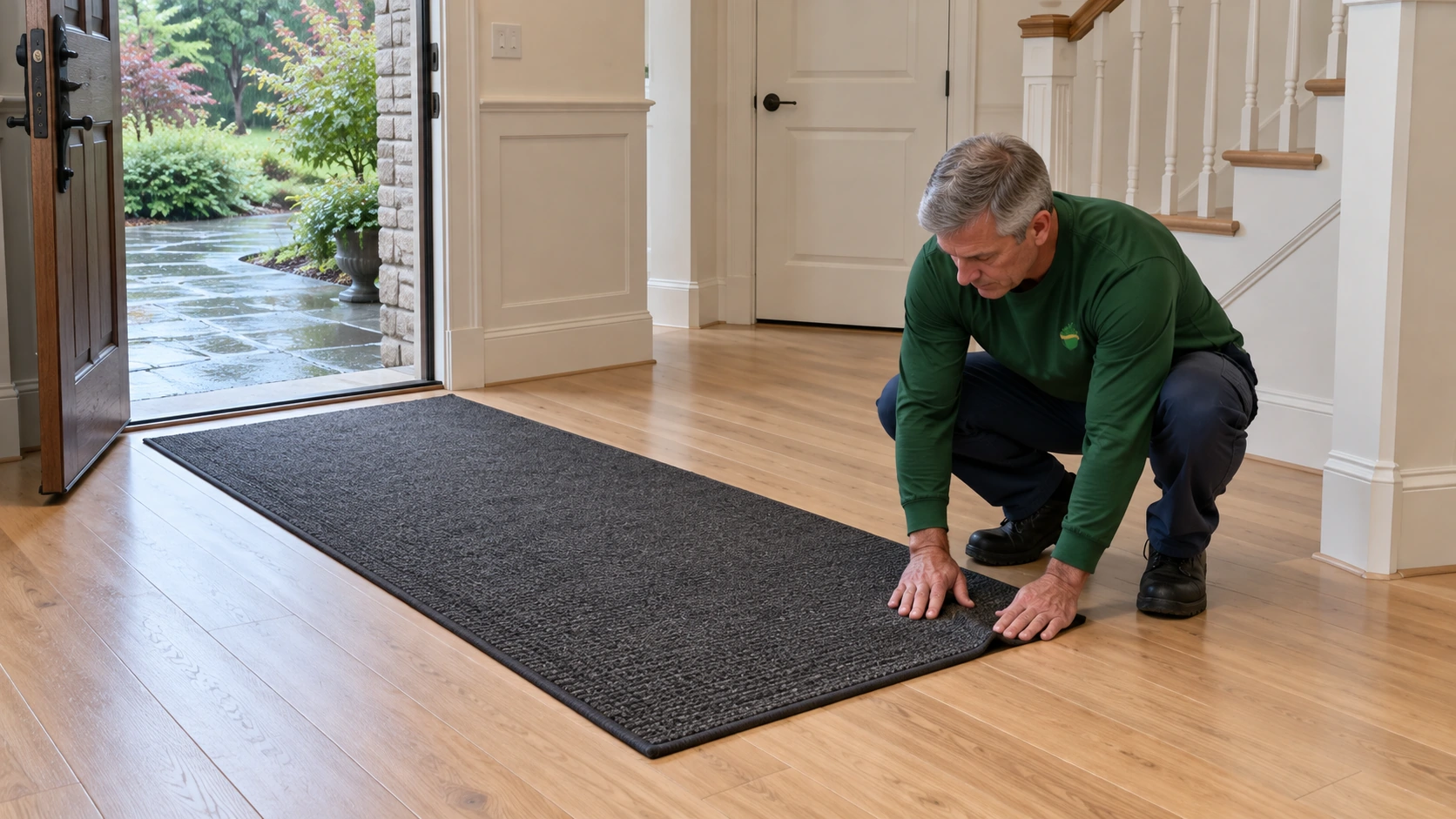
For rain, inspect the public approach, private path, steps, landing and threshold together. Have the property owner or manager resolve drainage, slippery surfaces and required repairs. Agree a protected indoor route that lies flat, leaves doors usable and keeps water outside. A protective runner is one preparation step; it does not establish that every outside surface or the entire building is ready.
ReadyLA provides household preparedness materials for the city's different hazards. Use the chosen address and the household's needs to prepare an accessible contact plan, essential supplies and any evacuation arrangements. Keep medicines, documents, chargers and necessary mobility equipment with their users. If an official restriction or unsafe approach prevents access, use an accepted later window or receiving alternative; do not make arrival depend on an unapproved shortcut.
Prepare a flat protected entry route before the shipment arrives and keep rainwater outside. Representative illustration.
13 /
Arrange lawful loading separately from resident parking
A private loading space that the property has authorized can simplify arrival, but it still needs to fit the selected vehicle and complete carrying route. For a public curb, photograph the frontage and every posted restriction. Identify the actual municipality and ask the responsible street authority about the operation, date and duration.
Under LADOT's colored-curb rules, a commercial-plate vehicle may actively load or unload freight in a yellow zone for a maximum of 30 minutes. Default yellow-zone hours are Monday through Saturday, 7 a.m. to 6 p.m., unless signs state otherwise. That is not a reserved moving bay. The separate five-minute allowance without commercial plates concerns passengers and baggage. A white curb is for passenger loading, with a five-minute maximum; a red curb prohibits stopping, standing and parking even when the driver remains present.
For temporary no-parking signs, LADOT's FAQ directs requests to Special Traffic Control at (213) 485-2298. Begin with the office, describe the address, vehicle and working time, then establish the required request, lead time, charges and posting arrangement. The fees page says an online payment does not process the initial service request. Temporary sign posting and traffic control are separate services.
Have the authorized household or building contact obtain the accepted arrangement before dispatch. If the usable position is farther from the entrance, show the longer carry and discuss it while there is time to adjust the plan. A resident parking permit, commercial-activity exemption or empty space does not reserve a whole move's working duration.
14 /
Follow every door, stair and lift to the receiving room
For an apartment or condominium, obtain the current moving instructions from the authorized manager. Record the receiving entrance, loading position, every controlled door, lift dimensions, corridor turns and accepted working window. Separate a submitted booking from a confirmed reservation and identify the person who can release access when the vehicle arrives.
For a house, inspect the outside approach and every internal level. A street-level garage can be separate from a raised front door. Include the complete stair, both landings and any lower-level room whose contents will move. Measure the large retained furniture and the narrow openings from both directions; the plan must allow the piece to turn as well as pass through the doorway.
Settle the receiving footprint before loading. Put the bed, table or other large pieces in agreed rooms while leaving routes clear for the rest of the contents. Mark storage and second-recipient groups so they are not mixed with first-night necessities. If the intended room cannot receive a piece, agree another suitable location or handling method before transport.
Keep building forms, insurance or staffing requirements and charges with the accepted move plan. State who submits, who approves and who pays each required fee. The moving-service page explains the company's interstate preparation and coordination; the property's manager remains the owner of permission to use the building.
15 /
Turn the chosen address into an arrival sequence and a usable fallback
Before committing to dispatch: confirm possession and keys, essential utilities, lawful loading, building access and the receiving person. Keep school and household travel arrangements on their separate accepted schedules.
Before leaving the first home: separate belongings staying, traveling with the family, going to storage and going to another recipient. Complete the unwanted-item and cardboard arrangements before access to the old home is lost.
Before the shipment arrives: have the authorized person inspect the full route and open the receiving rooms. Keep large-item footprints and the path back to the vehicle clear. Check a required lift or locked door while a problem can still be resolved.
During receiving: direct large furniture to its agreed position and cartons to their rooms without blocking reassembly. Keep medicines, documents, keys and overnight essentials with the household.
After the first rooms work: finish account and address confirmations, use the accepted waste arrangement, complete library verification and establish the first ordinary school, shopping and travel routines.
If keys, utilities or the building window are not ready
Set a decision deadline before dispatch or before an alternative receiving or storage slot is lost. The named household decision-maker contacts the property owner or manager and the moving planner when the trigger occurs. They choose a resource that is actually accepted: a later authorized window, another permitted receiving address or suitable reserved storage with confirmed intake, access and later release.
Agree the waiting, additional travel, handling, storage and rescheduling charges before choosing that option. State where the people will stay and where the goods will go; keep the family's essential belongings and documents separate. Notify both property contacts, the moving team and anyone waiting to receive. Resume only when possession, essential services, lawful vehicle access, the receiving person and the required building window are confirmed.
A phone number for a warehouse is not an accepted storage booking, and an apparently vacant curb is not a replacement loading arrangement. Keep the decision and confirmation in the shared move record so the next person acts on the same plan.
16 /
Questions before you arrive
Is this guide about the whole Los Angeles region?
It covers the City of Los Angeles, including the San Fernando Valley and San Pedro. Santa Monica, Beverly Hills, West Hollywood and Long Beach are separate municipalities. Establish the actual city and unit address before applying a utility, school or curb procedure; a regional search label or Los Angeles postal address does not decide those boundaries.
Where should I start comparing places to live?
Start with Downtown or a useful B Line connection when central trips and a car-free routine are priorities; compare Westwood for a UCLA-centered week, the southern Valley for Valley destinations and San Pedro for a harbor-based routine. Then compare the actual home, groceries, school and evening return. These are different starting strategies, not neighborhood rankings or current-listing recommendations.
Can I live in Los Angeles without a car or a driver's license?
Yes, some households can build a workable routine around Downtown or useful B Line connections with shopping and activities nearby. It is harder when regular destinations span the Valley, Westside and harbor. Include groceries, evenings, weekends and out-of-town trips in the trial, and budget necessary available rides or deliveries. Someone without a license needs a non-driving fallback.
Does the D Line already serve UCLA and the Westwood VA?
No. Section 1 opened May 8,2026 and reaches Wilshire/La Cienega, with new stations at La Brea, Fairfax and La Cienega. The UCLA and VA stations are in the later section still under construction. A Westwood home needs to work with current buses, walking and other available connections until the future service actually opens.
Is $1,933 a realistic asking rent for the home I want?
It is the city's median gross rent from the 2020–2024 ACS for renter-occupied units paying cash rent. It does not quote today's available home or a particular bedroom count. Compare actual written rent and mandatory charges, utilities, parking, insurance and travel on the same basis for each candidate.
Is every rental in an older building covered by the RSO?
No. Qualifying age is one part of coverage, and exclusions and replacement-unit rules matter. Use the actual address in LAHD's linked property tool, open the Housing tab and inspect the RSO status. Ask LAHD about an unclear result rather than assuming the construction year alone establishes the unit's rent treatment.
How do I begin school enrollment after moving?
Establish the district from the exact home address. For LAUSD, use the Resident School Identifier, then the assigned school or One Enrollment. Prepare residence, age, parent identification and immunization evidence. Contact the school about missing documents and the accepted next step; confirm the attendance date and transport separately.
What if the school finder does not recognize the address?
Check the address it returned and recheck the number, street direction, name, type and ZIP. If it still fails, use the official finder-support contact with the full address. The support page explains that records may not contain every residential address; no search result does not establish that the child has no school assignment.
Can the previous resident transfer their LADWP account to me?
No. LADWP does not transfer service to another person; the incoming person applies for service. Moving your own service between two LADWP addresses uses its transfer process by phone or in person. For a pending request, contact LADWP by phone or in person at least 24 hours before the requested date to change or cancel it.
What should I arrange before a gas-service appointment?
For a SoCalGas address, choose start or transfer as appropriate and check the accepted appointment. The ordinary process requires an installed meter; a new connection has a separate application. A technician may need to enter the residence, so arrange the person who can provide access to the home and any locked equipment area.
Can LASAN collect an unwanted mattress?
An eligible household mattress and box spring can use the bulky-item route. Request collection for the actual trash day at least one business day ahead and list the pieces. Confirm the address's placement instructions, keep the walking route clear and arrange who can release the item if collection follows your move-out date.
Does an apartment's private hauler rule out City bulky collection?
No. LASAN's multi-family bulky program specifically covers ratepayers served by a recycLA provider who do not pay routine trash fees directly to LASAN. Work with the manager and LASAN to establish the actual address's request and placement arrangement. Keep routine bins and bulky pickup as separate procedures.
Will a bulky furniture appointment also remove all moving cartons?
Do not assume it will. LASAN's bulky guidance excludes cardboard unless a scheduled Move In/Move Out service applies. Describe the cardboard volume and obtain the appropriate arrangement. Keep furniture, electronics, hazardous material and cartons in their accepted streams rather than leaving everything beside a bin.
Can a moving truck remain at a yellow curb for the whole delivery?
A yellow curb is not a reserved delivery bay. LADOT allows a commercial-plate vehicle actively handling freight up to 30 minutes, with default Monday–Saturday 7 a.m.–6 p.m. hours unless posted otherwise. For a longer operation, settle an authorized loading arrangement and any temporary-sign process before dispatch; preserve other curb and sidewalk restrictions.
How can I use the library soon after moving?
City residents can apply online for an LAPL e-card, then complete the mailed address verification. A regular card is available to California residents in person with accepted identification and address evidence. Choose the branch's actual hours and program before adding visits to the family routine; the two card routes have different verification steps.
What if keys, the lift or essential utilities are not ready?
Act at the agreed decision deadline before dispatch or loss of an alternative slot. The household decision-maker, property contact and move planner choose an accepted later window, permitted receiving address or reserved storage. Agree charges, people's accommodation, goods intake and notifications. Resume after possession, essential services, loading access and the receiving window are confirmed.
Choosing where to move from Los Angeles
Compare the useful parts of your current week, nearby alternatives and a wider change of region before choosing a home.
Bring the chosen address, retained belongings and accepted receiving arrangement into the move plan. The Los Angeles moving page explains interstate service and the estimate process.
Official procedures and local resources are linked beside the answers above. Reopen the relevant page when arranging a date: fees, schedules and application requirements can change.