Ohio / City relocation guide

Moving to New Lebanon

New Lebanon is a Montgomery County village west of Dayton: one monthly bill for water, sewer and trash, ordinance-written curb rules (cans by 6 a.m., off in 24 hours), a weekly free bulk item, and the Dixie schools. This guide helps you compare its areas, set up the practical basics and prepare the move itself.

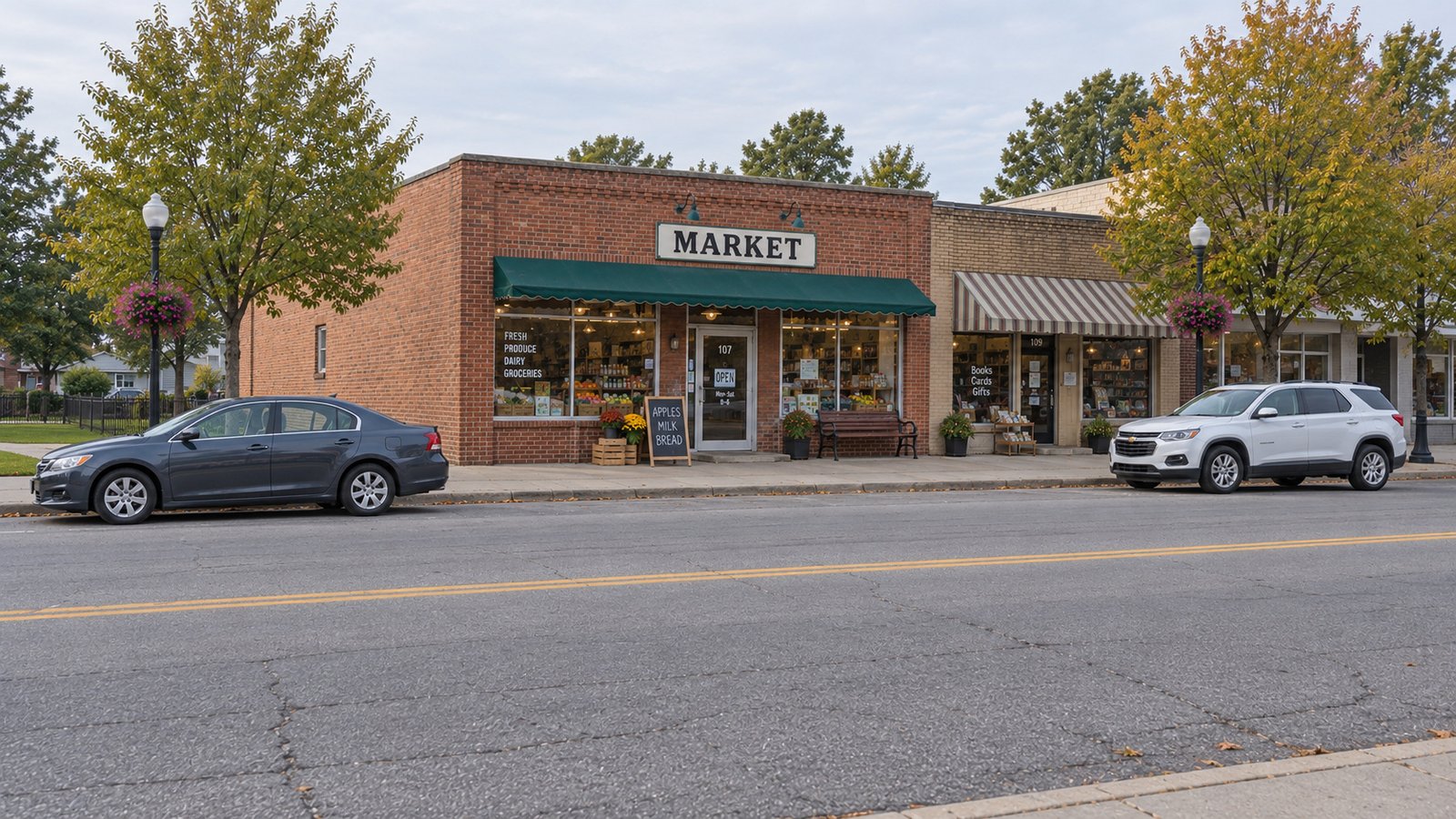
A complete brick market frontage and two whole parked cars beside a connected sidewalk and road.
Test the trips you need from the home you choose.

01 /

Start with the decision in front of you

Three reading routes through this guide, depending on where you stand. If you are still choosing an address, read orientation, the area comparison and housing first — the village's real differences are the older streets near the center versus the edges, and the curb versus the driveway. If you have children, go next to schools — the Dixie ladder. If you already hold keys or a closing date, go to arrival and work backwards: the village account, the collection day, and the truck plan.

When the address is settled and the move itself needs planning — dates, inventory, access and the estimate — the New Lebanon moving page is the working document.

02 /

Understand New Lebanon before comparing addresses

New Lebanon is an incorporated village in Montgomery County, on the western Dayton corridor. The Village of New Lebanon is the starting point for local procedures: the offices at 198 S. Clayton Road (937-687-1341), the one monthly bill for water,sewer and trash, and the curb rules. The ACS2024 five-year profile estimates about 77% owner occupancy and 87% single-unit housing across the village, with margins of about 9 and 8 percentage points. These estimates do not describe every street or the current homes for sale.

Compare the actual routes to Main Street errands, schools and village services. The village account and the curb rules are two things a newcomer settles before arrival.

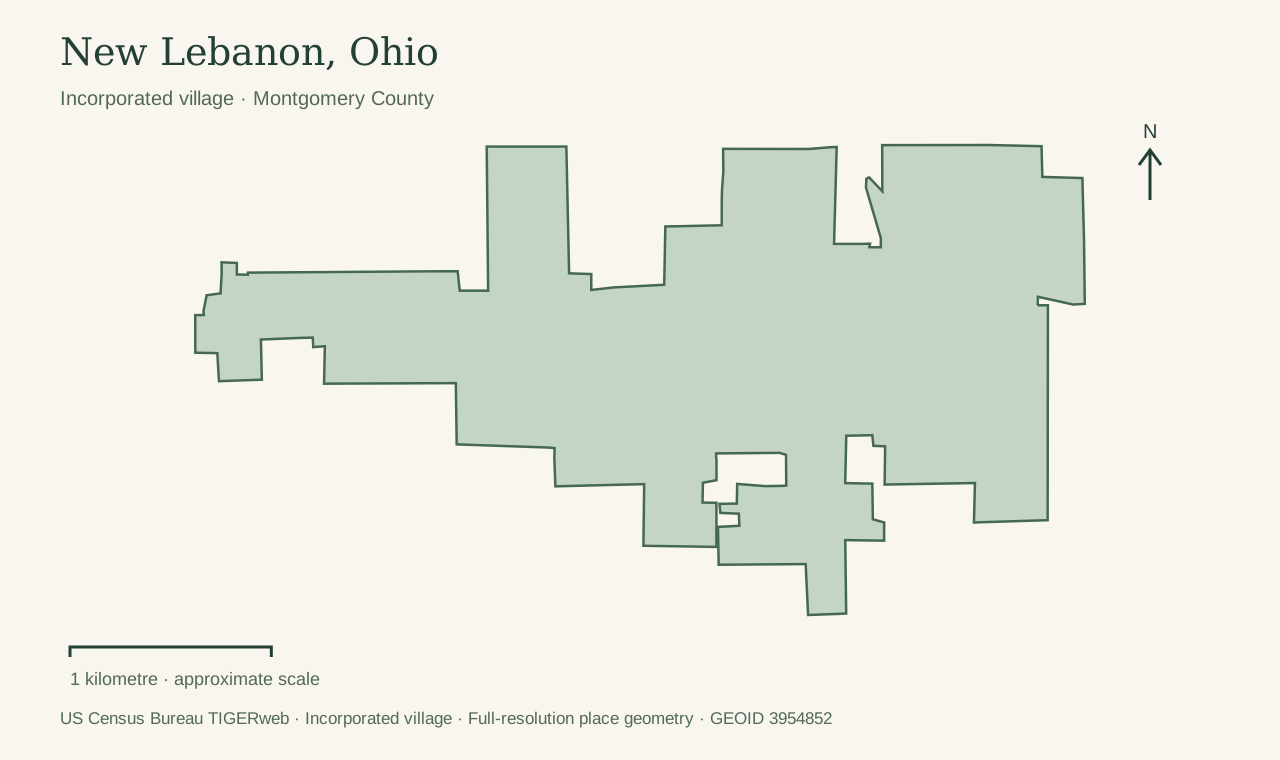
Map of the New Lebanon, Ohio village boundary
Census TIGERweb incorporated-place geometry for orientation; municipal procedures belong to the Village of New Lebanon. Not school assignments or approved truck routes. Open full-size map.

03 /

Find the area that fits your routine

The five modules below are practical ways to compare an address: the main street and village offices, the school-side streets, the established streets, utilities and curb rules. They do not establish official neighborhood, school or service boundaries.

The main street & village office side

Compare the route from the address to Main Street errands and the village offices on South Clayton Road.

Village of New Lebanon — contact and offices ↗
Housing & setting
Inspect the actual building and parking space; compare sidewalk continuity before relying on a walk.
Daily travel
Test the route to your workplace at the hours you will keep.
Before choosing
The village office (937-687-1341) answers the first month's questions — including the can-storage rule.

The school-side streets

Compare the school trip with the district before choosing an address.

New Lebanon Local Schools — building contacts ↗
Housing & setting
Check the rooms, entry and storage you need rather than inferring a housing type from a school location.
Daily travel
Ask the district to verify the assigned building and transport arrangement for the exact street.
Before choosing
Enrollment runs through New Lebanon Local with residency documents — start early for a fall arrival.

The established village streets

The ACS2024 five-year profile estimates about 77% owner occupancy village-wide; inspect each property rather than assigning that statistic to one block.

New Lebanon village profile, ACS 2024 5-year (Census Reporter) ↗
Housing & setting
If the house includes a garage or shed, inspect and inventory it along with the rooms.
Daily travel
Compare your work and errand routes from the actual address.
Before choosing
Count the garage and shed into the moving inventory — and learn the can-storage rule in week one.

The one-bill utilities layer

The village's own bundle: water, sewer and trash on one monthly bill — cash or check at the offices, drop box, or online.

Water — one monthly bill (Village of New Lebanon) ↗
Housing & setting
The same housing stock with the village account attached.
Daily travel
Not a place but the account to transfer before key day.
Before choosing
The account follows the address — settle it at closing or lease signing, and keep the water-meter area clear per the village's ask.

The curb-rules layer

The disposal rhythm: cans by 6 a.m., off within 24 hours, stored behind the house line — plus one bulk item per week free, scheduled 48 hours ahead.

Trash & Recycling (Village of New Lebanon) ↗
Housing & setting
Not a residential area but a checklist: the ordinances that follow every address.
Daily travel
The curb in front of the address, inside the windows.
Before choosing
Mattresses wrapped in plastic; $7 containment bags at the offices; the 48-hour call books the free bulk item.

04 /

Compare the whole property, not just the price

New Lebanon's ACS2024 five-year profile reports a median owner-occupied value of $115,600 (margin $10,713) and median household income of $69,906 (margin $18,212), via Census Reporter. Treat them as historical survey context; compare current asking prices, condition, total monthly cost and your budget separately. The building's age and condition decide the move logistics as much as the price.

The due-diligence list follows the type. In houses: the roof and systems' ages, the basement, and the village account — one bill covers water, sewer and trash, so the account's status is a closing item. In rentals: the landlord's written move rules.

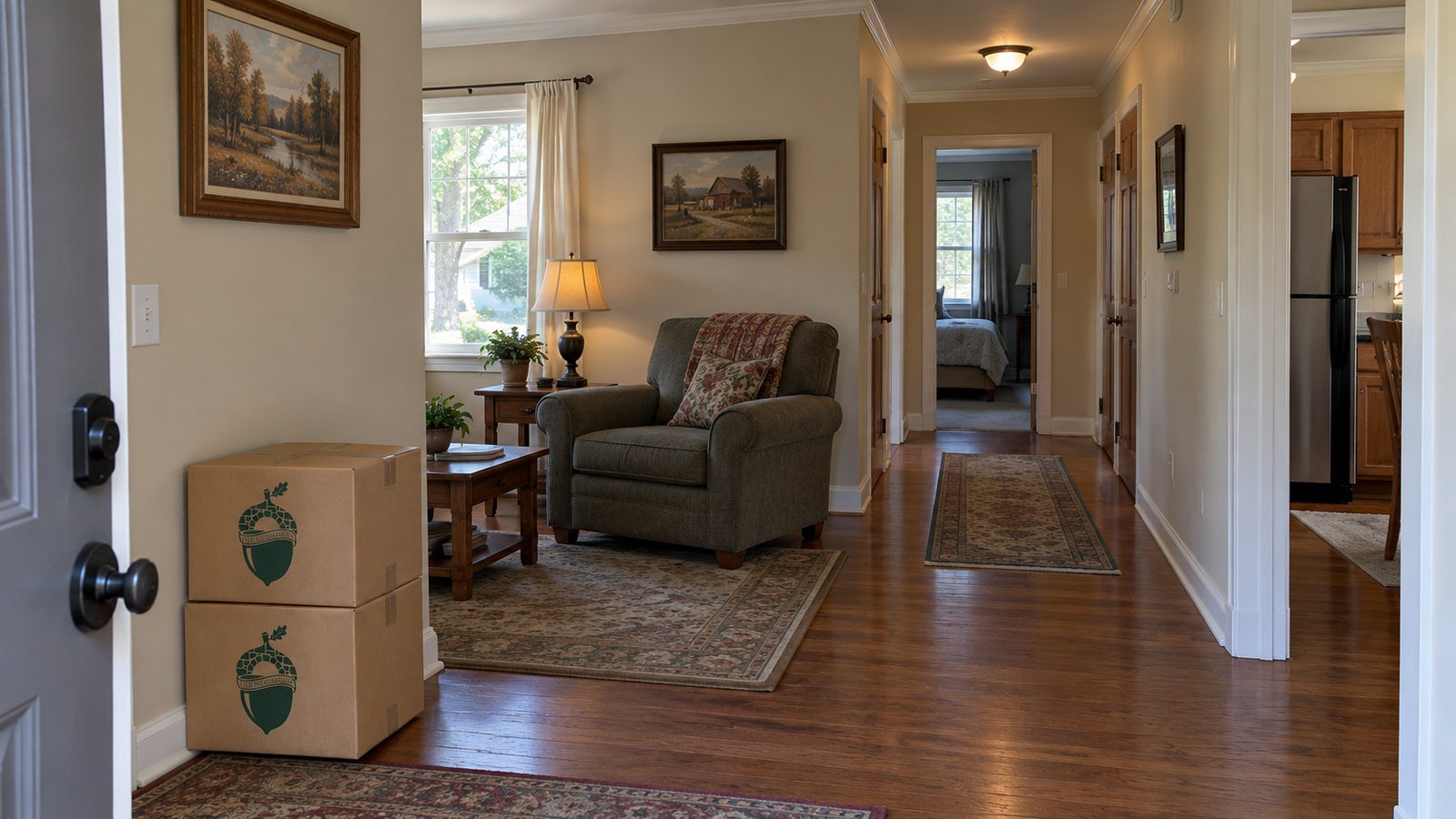
A receiving room with a clear hall, an armchair and two closed kraft cartons against the wall.
Place cartons clear of the entrance and walking route.

05 /

The Dayton commute — test yours anyway

The ACS2024 five-year village estimate is 26.6 minutes for mean travel to work, with a 9.3-minute margin. It covers workers' different destinations; it does not promise a 27-minute drive to Dayton.

Drive your real route at your real hours, and include parking at the destination. If you need public transport, use the Greater Dayton RTA planner with both addresses and the actual date, then confirm stops and any connection or on-demand eligibility with RTA. No journey or address coverage has been established by this guide. If anyone works from home, verify internet service at the address before signing.

A whole silver sedan with headlights on along a rural road in blue-hour light.
Check the outbound and return journeys at the hours you will use.

06 /

The Dixie ladder

New Lebanon Local Schools lists Dixie Elementary, Dixie Middle and Dixie High School. Confirm the building, grade placement and transport for your exact address with the district at 320 South Fuls Road, 937-687-1301; the village boundary is not an attendance map.

The district's Student and Parent resources links to enrollment instructions. Apply online and watch for the approval email that creates the family PowerSchool account, or enroll at the receiving school. The published checklist asks for two proofs of residency, birth/citizenship documentation, immunizations, your driver's license, completed forms and custody documents if applicable; it describes a residency affidavit when ordinary proofs are unavailable. Walk-in enrollment is listed8am–3pm without a required appointment, but call first to confirm current office availability and your documents. July applications are processed from the first business day of August. School-specific contact details are on the district contact page.

07 /

One bill: water, sewer, trash

The village bills water, sewer and trash together, monthly — cash or check at the Village offices, the office drop box, or online (allow two working days to post). The account's status follows the address: settle it at closing or lease signing. The village also asks residents to keep the area around their water meter clear so the meter reader can work quickly.

Electric and gas: confirm the providers for your address before closing from the current bill and account holder. Trash is on the village bill — see waste for the rules.

Call the village at937-687-1341 to confirm the start date, account holder and any transfer documents or balance. Online payments need two working days to post; the village says to contact the office rather than pay online when water has been shut off. Ask which electric and gas delivery utilities serve the exact address, whether gas is connected, and which accounts are included in the lease; a supplier choice is separate from the delivery utility.

08 /

The 6 a.m. route, the 24-hour rule, and the weekly bulk item

Trash rides the village bill, with ordinance-written curb rules, per the village's trash page: cans at the curb by 6 a.m. on your day, off the curb within 24 hours (Ordinance 50.11), and stored in the side or rear yard against a building — never in front (Ordinance 96.09). Recycling follows the hauler's accepted-items list.

The move-relevant part: one bulk/large item per week rides free, scheduled with Rumpke 48 hours ahead (1-800-828-8171), with mattresses and upholstered items wrapped or bagged in plastic; the village sells $7 containment bags at the offices. A move-out cleanout books the bulk items across the weeks and keeps the cans inside the rules.

09 /

The curb plan, inside the ordinances

The curb or driveway position is a survey decision from photos. Before booking, ask the village office (198 S. Clayton Road, 937-687-1341) which authority must approve your proposed truck position, any temporary obstruction and the loading window. Photos and a public road do not authorize a stop; keep traffic, footways and collection access clear.

One local note: on collection day the curb serves the 6 a.m. route — the move and the set-out are planned together. The moving page's parking section turns this into the day-of plan.

10 /

Walk the full route before moving day

Rancher access here is level but tight: the entry, the hall width, the basement stair. Older singles add the narrow stair. Measure the largest pieces against the real route, and photograph the stairs and the parking situation for the estimate.

Outside, watch cracked driveway slabs for the edges that eat dolly wheels. In rentals, the landlord's written rules come before the day.

11 /

A main street, a park, and the Dayton orbit

The New Lebanon Branch of Dayton Metro Library is at 715 W. Main Street; its Ask Me Line is 937-463-2665. It lists Wi-Fi, printing and meeting spaces. Check current opening hours, holiday closures and any booking rules before using it for an arrival errand.

Test the weekly loop from the address: food shopping, prescriptions, school trip and work. Confirm a local healthcare provider and how to transfer regular prescriptions before moving. The village Parks and Recreation page currently offers an update notice rather than a usable facility list; ask the village which park or program fits your household before assuming its opening hours or facilities.

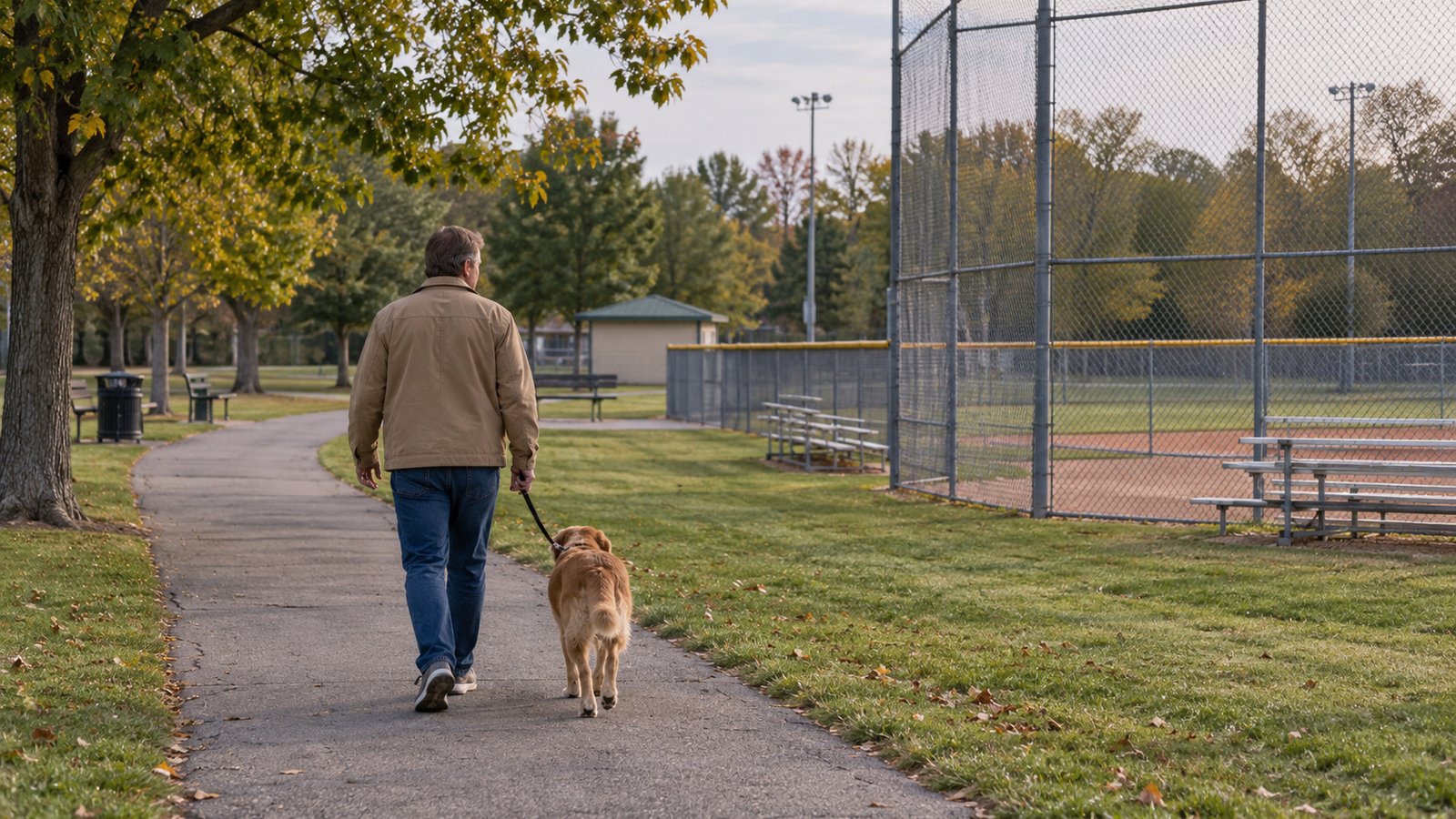
A man walking a golden dog on a leash beside a park path and baseball backstop.
Confirm the destinations, opening hours and journeys you will use.

12 /

The corridor calendar and the storm dates

New Lebanon's calendar has three beats. The school-year turn: confirm the school calendar and any enrollment deadlines, then agree a moving date and backup. The storm dates: winter weather moves any date on the calendar; the driveway and walks are cleared before the truck arrives. And the weekly beat: the 6 a.m. route, all year.

The steady discipline wins here: book the date early, hold a backup, and plan the cleanout across the weekly bulk items. The moving page converts the calendar into a date-and-backup plan.

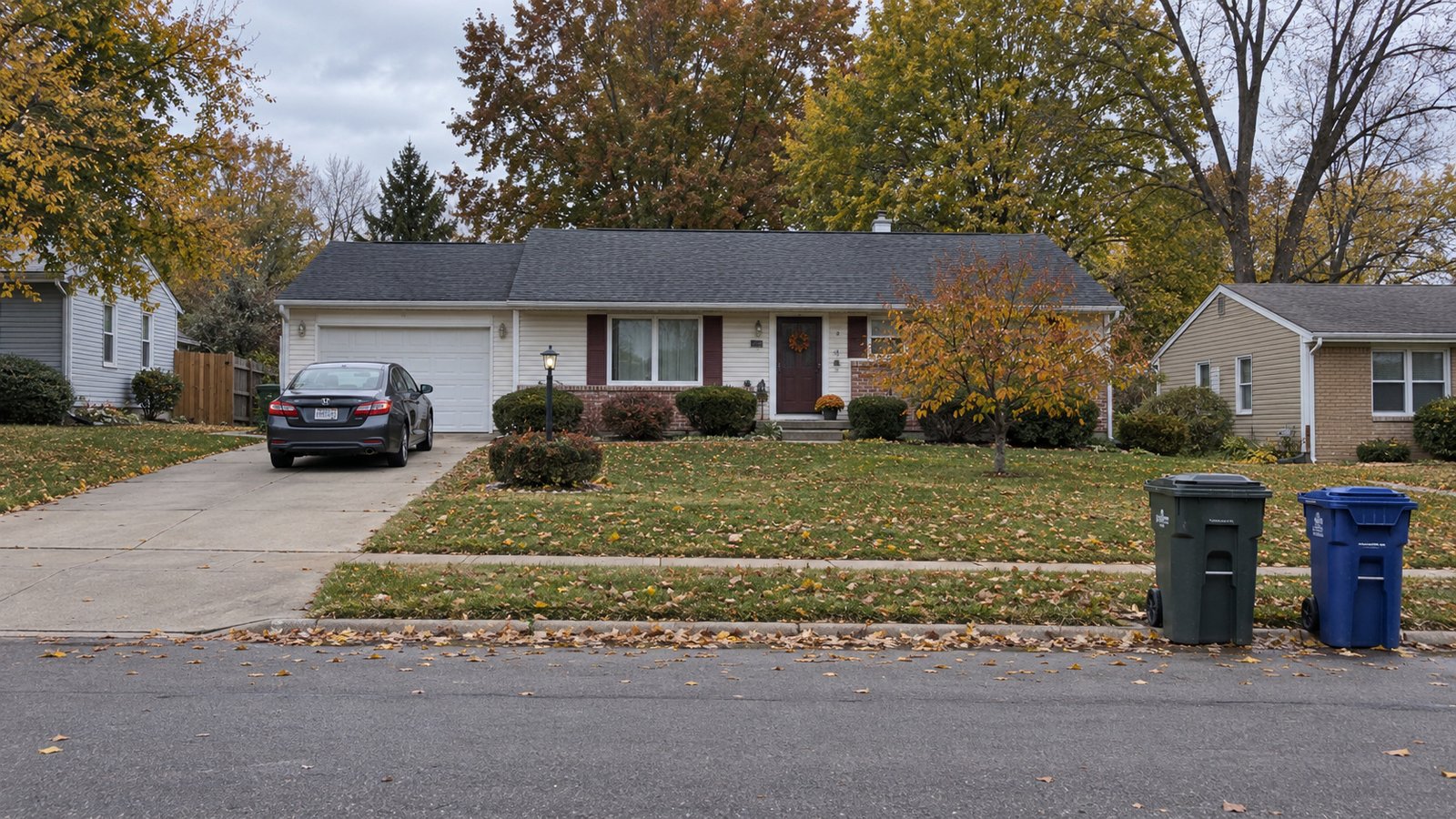
A complete cream ranch house, black sedan and two collection carts beside a driveway with fall foliage.
Check the forecast, collection arrangements and agreed entrance for the actual address.

13 /

Turn the closing date into an arrival plan

Work backwards from the day you get keys. Two weeks out: settle the village account (one bill covers water, sewer and trash), set up electric and internet, learn your collection day, and book the move through the New Lebanon moving page. One week out: confirm the truck plan and the backup date, schedule the first bulk item if furniture is leaving (48 hours ahead), and set aside what travels with you. In the first days after arrival: if you are moving from another state, follow the Ohio BMV instructions for transferring your license or ID, vehicle title and registration within 30 days of establishing residency; also update your voter-registration address, learn the can-storage rule, and — with children — enroll with the district using your residency documents.

Keep a Plan B for the failures that matter here: a storm date (the backup moving day, agreed in advance) and a slipped closing (which items go to storage, which travel with you). The guide's sections hold the details; the moving page holds the estimate.

Before buying or signing a lease, ask the village contact office which zoning, building or occupancy checks apply to this specific property and proposed work. A blank zoning webpage is not an exemption. Ask the seller or landlord for inspection records, check drainage and basement condition, and obtain an address-specific flood assessment through your insurer or FEMA map service; this guide has not assigned the property a flood zone.

14 /

Questions before you arrive

What kind of municipality is New Lebanon?

An incorporated village in Montgomery County, Ohio — about 4,200 people on the western Dayton corridor. The village offices at 198 S. Clayton Road (937-687-1341, weekdays to 4:30) own the procedures — including the one monthly bill for water, sewer and trash.

How long is the commute from New Lebanon?

The ACS2024 five-year estimate is 26.6 minutes across all village workers, with a 9.3-minute margin; it is not a Dayton route time. Test your exact trip at working hours, including destination parking, and check RTA for any public-transport option.

Where do New Lebanon children go to school?

The district lists Dixie Elementary, Dixie Middle and Dixie High School. Confirm the receiving building and transport for your address with New Lebanon Local Schools (937-687-1301), then follow its online or in-person enrollment instructions and document checklist.

How does trash work in New Lebanon?

On the village bill, with ordinance rules: cans at the curb by 6 a.m., off within 24 hours, stored behind the house line (in the side or rear yard against a building). One bulk/large item per week rides free — schedule with Rumpke 48 hours ahead; mattresses wrapped in plastic. The village sells $7 containment bags at the offices.

Who provides water and sewer in New Lebanon?

The village bills water, sewer and trash together on one monthly bill — cash or check at the offices, drop box, or online. The account's status follows the address: settle it at closing or lease signing.

What is the can-storage rule?

Ordinance 96.09: cans live in the side or rear yard up against a building — not in front of the house or garage. And Ordinance 50.11: off the curb within 24 hours after pickup. Newcomers learn these in the first week; HOAs and rentals may add their own.

How do I arrange the moving estimate?

Use the New Lebanon moving page to request an estimate: both addresses, dates plus an alternative, a room-by-room inventory (garage and shed included), and photos of the entry and the driveway. The more concrete the request, the more accurate the plan and price.

Your next step

Bring the plan together

Use the New Lebanon moving page to prepare the inventory, access details and questions for your estimate.

Sources & useful local resources

Official procedures and local resources are linked beside the answers above. Reopen the relevant page when arranging a date: fees, schedules and application requirements can change.

Housing & demographics

Utilities & trash

Schools

Village services

Arrival and everyday services