
Maryland · Baltimore service planning
Long-distance movers in Baltimore MD
A long-distance move from Baltimore starts with the actual property and finishes with a receiving plan that works. A rowhouse stoop, interior turn or shared building entrance can affect preparation before the road journey begins. Sterling Oakbridge reviews direct and consolidated household moves throughout the United States and Canada, with inventory, access and delivery arrangements agreed for the shipment.

We can review long-distance pickup in Baltimore City and nearby addresses, including Towson, Catonsville and Dundalk. Baltimore City is an independent city, separate from Baltimore County. Towson, Catonsville and Dundalk are census-designated communities in Baltimore County, rather than separate incorporated Cities. Confirm the actual address, jurisdiction, inventory and access before using a local permit or collection procedure.
Bring the complete property route into the first review
Send both full addresses, units, floors and the entrance used for moving. A Baltimore postal name does not establish the responsible jurisdiction. The Baltimore moving page and relocation guide separate the local procedures from the information needed for the moving estimate. Keep each question attached to its actual owner.
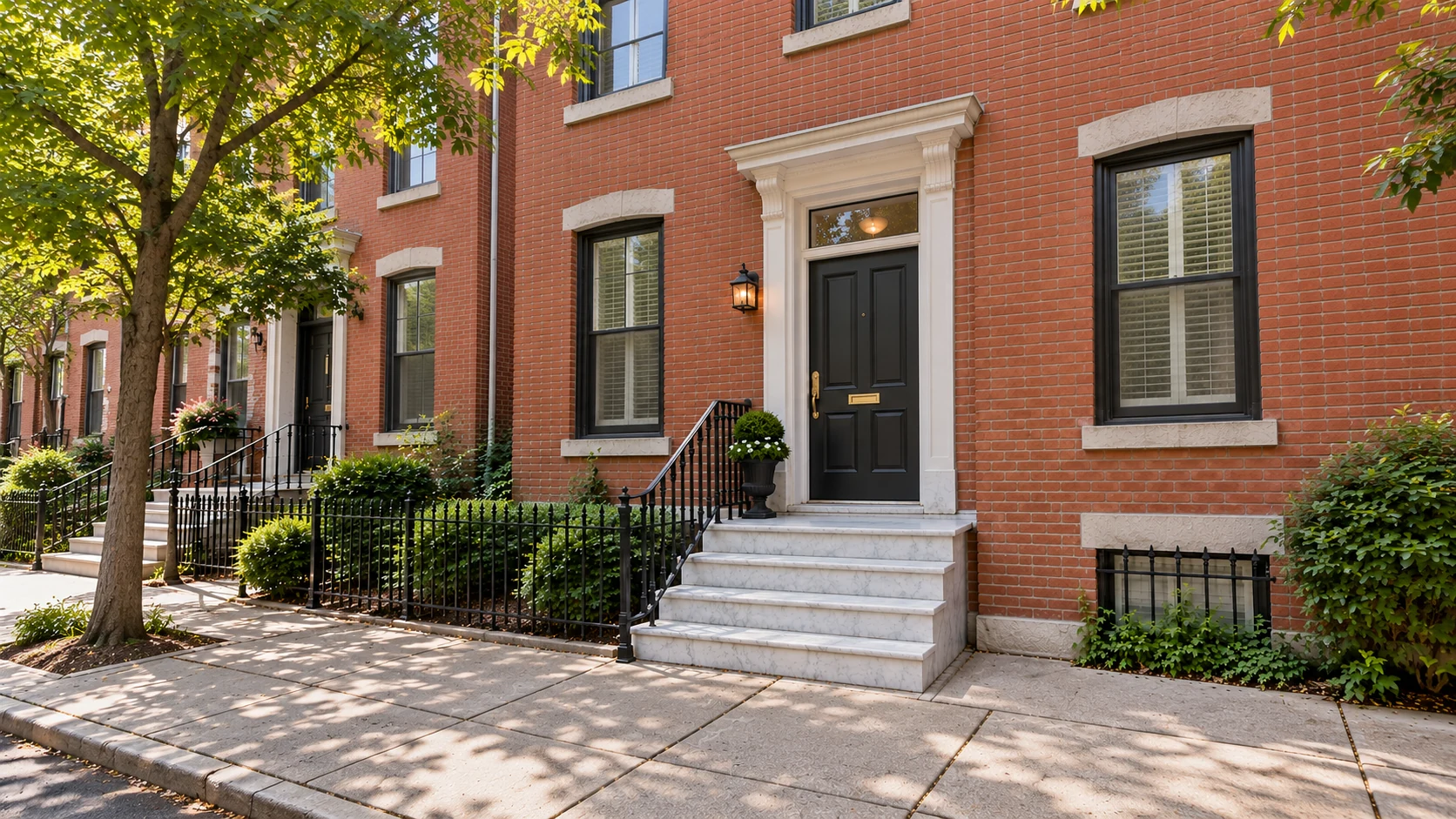
At a rowhouse, photograph the curb, sidewalk, stoop, landing and doorway together. Include the vestibule and stair turns inside. A wide front window does not establish that a sofa can reach an upper room. For a managed property, send the service-door and elevator dimensions, dock instructions, usable hours and management contact. Identify every shared facility between the truck and the final room.
Begin with a room-by-room inventory, including basement and upper-floor belongings. Separate pieces travelling, staying behind and awaiting a decision. State whether you want full packing, selected-item preparation, basic furniture work, optional carton unpacking or a storage stage. A bedroom count or floor area cannot establish the contents, route or required work by itself.
Confirm who controls possession, who opens the route and who may approve a change. If packing or protection needs earlier access, include that stage in the property discussion. Preparing before the carrying window can help a restricted route work; it still requires the building’s permission and an agreed inventory.
Choose the delivery model around what can be received
Direct dedicated delivery uses a dedicated truck for the reviewed shipment and the same moving crew at pickup and delivery. It can suit a substantial inventory or a household needing its belongings together. Establish preparation, loading and receipt separately. The person surveying or planning the move performs a separate role and is not necessarily on the carrying crew.
Consolidated delivery can suit a smaller selected shipment when receiving is flexible. The practical guide of around 300–400 cubic feet or less is not a minimum volume. Describe the actual furniture, cartons and totes, then agree the receiving window and contact. Storage, additional handling and delivery-crew arrangements need their own agreed scope.
The illustrative windows below start after pickup and loading are complete. They do not reserve an appointment. The actual vehicle, route, building access and household readiness still need review before the job is confirmed. A suitable small nearby move may allow same-day receipt with early completion and workable travel and access; mileage alone does not establish it.
| Illustrative destination | Direct planning window | Consolidated window |
|---|---|---|
| Richmond, Virginia | 1–2 days | Up to 30 days |
| Fort Myers, Florida | 2–3 days | Up to 60 days |
| Kingston, Ontario | 1–2 days | Up to 60 days |
| Tucson, Arizona | 4–5 days | Window agreed individually |
Suitable consolidated Florida and Canadian shipments use the confirmed up-to-60-day policy. A suitable nearby domestic route can use up to 30 days. California has its own up-to-90-day policy. Other distant destinations, including Arizona, require an individually agreed window. Coordinate the shipment with the household’s travel and the person receiving it.
Follow the Baltimore curb permission through to arrival
Baltimore City DOT lists moving trucks in its temporary right-of-way permit process. Applications use OpenGov, and the City states a standard processing time of fifteen days. Allow for review, requested changes, payment and issuance as well as the separate sign arrangements. Submission is one stage; it does not establish an approved truck space.
Describe the exact curb, dates and hours, vehicle and ramp footprint, meters and any effect on pedestrians or traffic. The public application entry requires a traffic-control plan for street, lane or alley closure and says a sidewalk closure may require a pedestrian-detour plan. Ask the reviewer which category and documents apply to the actual arrangement.
Resolve who obtains the authorized signs, how and when to post them, and what proof or verification is required. Confirm the enforcement contact for an occupied space. The guide’s truck-parking sequence keeps those questions together with fees and a workable alternative. A listed category charge is not automatically the complete cost of every moving-truck reservation.
Obtain the building permission separately and match its usable carrying period with the street authorization. Review the truck approach too: MDTA’s Key Bridge notice identifies the closed crossing and alternative harbor routes with vehicle and load restrictions. The actual truck dimensions and contents matter; a passenger-car navigation result does not settle permission for the shipment.
Example 1: Baltimore to Richmond, Virginia with first-night bedroom priorities
This hypothetical household is leaving a Baltimore rowhouse with beds, a dresser, a sofa and cartons from several rooms. The household wants the essential bedroom pieces usable at Richmond, while some lower-priority boxes can remain sealed until the following day. List the whole travelling inventory first, then distinguish receiving priorities from anything staying at the old home.
At pickup, review the stoop, narrow vestibule and inside stair turns before deciding how large pieces will pass. Empty ordinary dresser drawers and retain them in the body for the reviewed transport. Protect furniture according to its construction and identify genuine removable components. Obtain the required truck permission and keep the public pedestrian route usable.
At Richmond, confirm possession, the actual entrance and the rooms for the beds and dresser. Name the receiving person who can direct placement even if the household arrives separately. Agree basic reassembly and furniture unwrapping in the delivery plan; optional carton unpacking is a separate decision. Keep medicines, documents, bedding needed that night and chargers with the household.
The illustrative direct window is 1–2 days after loading. Same-day receipt may be possible for a suitable small job with early completion and confirmed access, but it should not be assumed merely because Richmond is relatively close. A suitable small consolidated shipment uses up to 30 days. Choose around when the essential pieces can actually be received and used.
Example 2: Baltimore to Fort Myers, Florida with packing before a stair-intensive carrying day
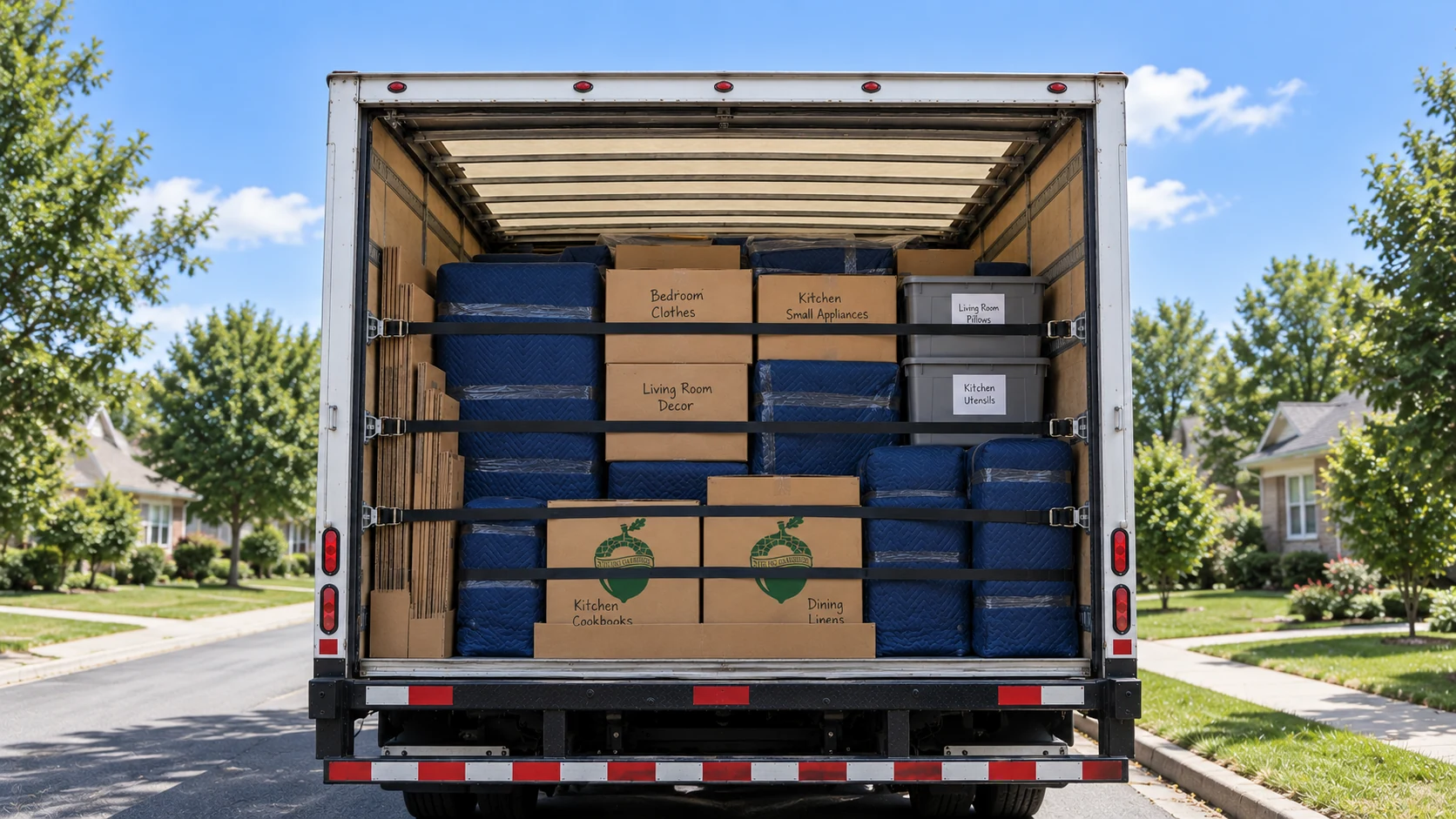
This hypothetical household is taking a substantial inventory from several floors of a Baltimore rowhouse: protected sofas and dressers, dining furniture, books, kitchen contents, linens and customer totes. Full packing is requested. The narrow route and different floor levels make preparation and the carrying sequence important before the truck arrives.
Review the inventory room by room and identify large or delicate pieces needing a particular method. Agree which earlier access is available for materials, packing and protection. Full packing means that the agreed work is ready to be performed; it does not unexpectedly require the customer to pack every room first. Keep personal essentials and belongings staying behind clearly separate.
Use suitable smaller cartons for dense books and larger formats for lighter linen. Write destination-room and contents identification directly on ordinary kraft and use attached paper labels on customer totes. Protect the body before safely removing long furniture legs, and keep each complete protected matching set and hardware together. Leave the carrying route clear as prepared rooms are completed.
At Fort Myers, confirm the actual possession date, furniture route and receiving contact. Do not assume a front entrance, garage or storage room is available simply because the household will arrive earlier. Agree final placement and any property booking before dispatch. The illustrative direct window is 2–3 days after pickup and loading are complete. Appropriate smaller consolidated shipments to Florida use up to 60 days, which may not fit a household needing this substantial inventory together.
Example 3: Baltimore to Kingston, Ontario with a receiver who did not pack the shipment
This hypothetical household is sending furniture, books, linens and kitchen cartons to Kingston in Ontario, Canada. A family member will receive the shipment while the people who packed it travel separately. Start with a complete inventory and a named contact who can admit the crew, answer placement questions and approve an agreed change during the receiving period.
Review the applicable CBSA moving or returning-to-Canada guidance for the household’s circumstances. Identify belongings travelling with the household and those arriving separately, and keep the required records accessible. The moving estimate does not establish customs eligibility, tax treatment or guaranteed clearance. Border arrangements belong in the plan before travel is fixed.
Give the receiving person a simple room plan and labels identifying both destination and contents. Keep safely removed legs or genuine loose shelves protected with their matching item, and distinguish them from fixed structural members. Check the final entrance and floor route before directing large pieces upstairs or filling a passage with cartons.
The illustrative direct window is 1–2 days after loading, subject to the actual border and receiving arrangements. Suitable consolidated Canadian shipments use up to 60 days. The nearer domestic window does not apply simply because the reference journey is comparatively short. City of Kingston resources offer a municipal starting point; the household’s precise address, building permissions and receiving contact need their own confirmation.
Example 4: Baltimore to Tucson, Arizona with a selected dining-table shipment
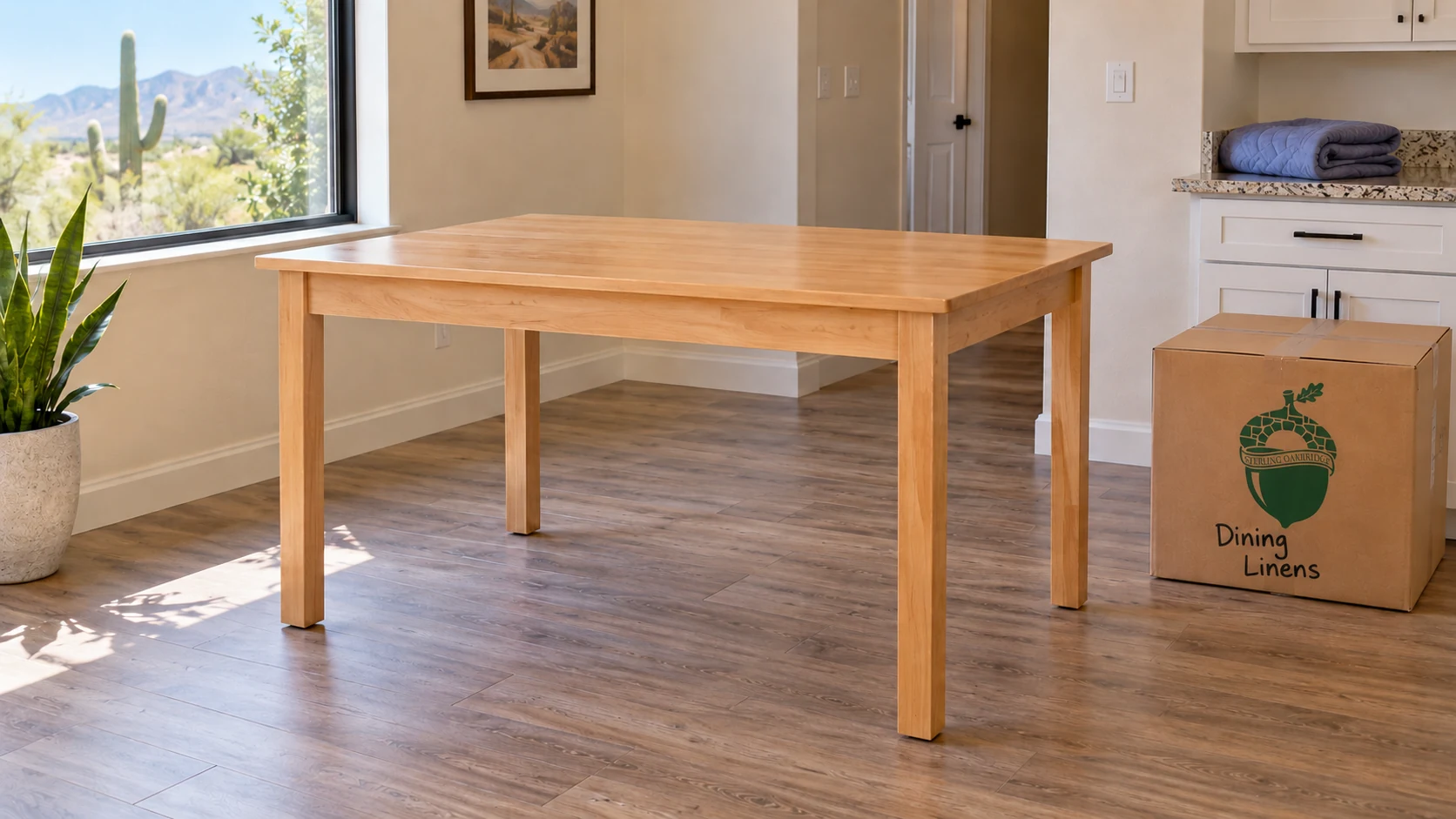
This hypothetical shipment contains an ordinary rectangular dining table, cookbooks, lighter linen cartons and a customer tote of selected kitchen belongings. The household is keeping useful pieces rather than sending every room’s contents. Identify the actual items and dimensions, construction and access, and mark what stays in Baltimore so it is not added on carrying day.
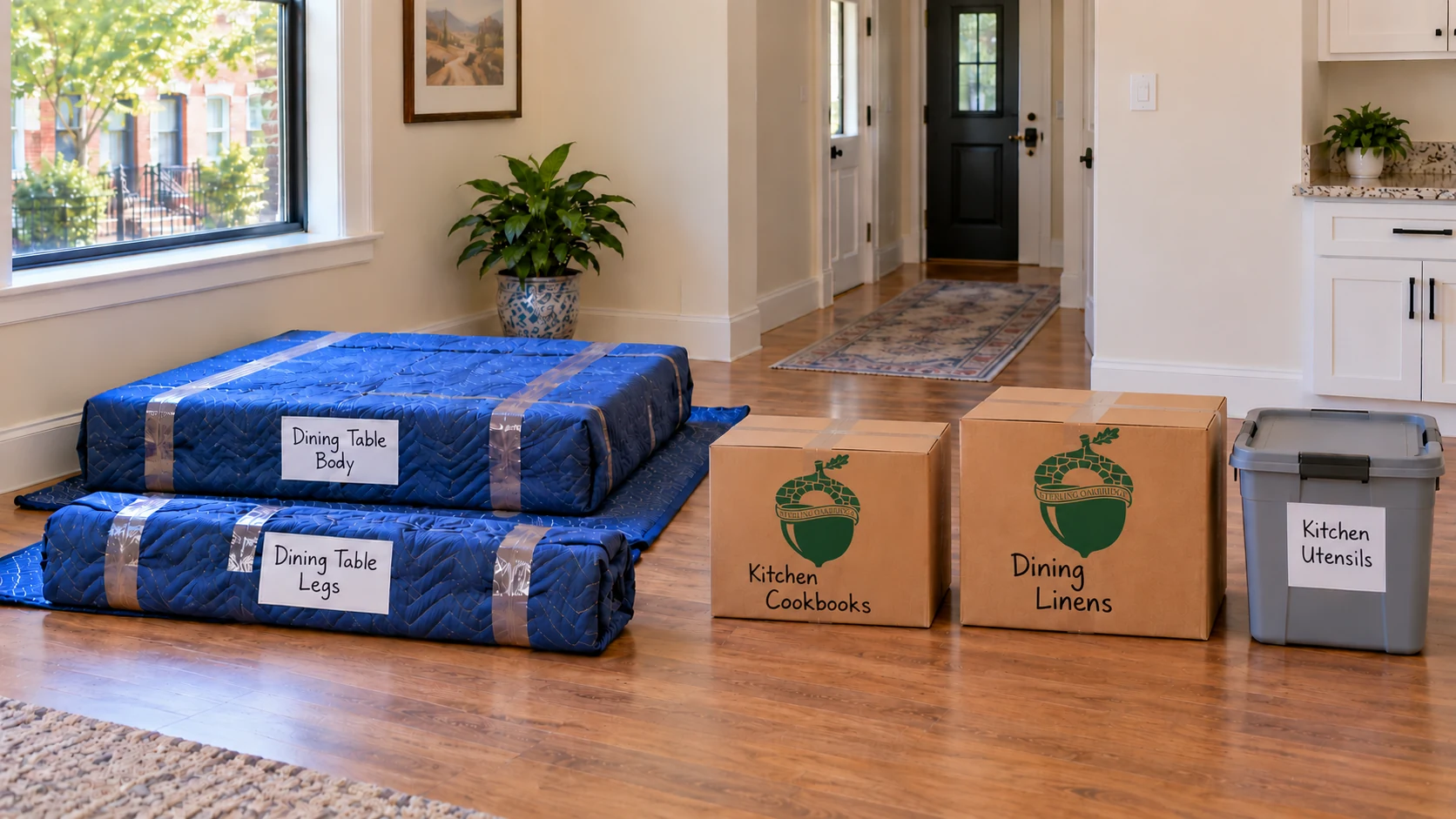
For safely removable long table legs, protect the body first, then keep the complete protected matching set and hardware together. Agree basic reassembly at receipt separately from any complex furniture work. Use a suitable book carton and a larger linen format with natural room-and-contents identification. The prepared body and part bundle should remain recognizable alongside the selected cartons.
At Tucson, nominate the person with keys and authority during the receiving window. Choose the table’s final position before carrying begins and confirm the usable entrance and property instructions. A smaller inventory can still have an awkward doorway or shared route. Send dimensions or route photographs where fit is unresolved, and keep a contact available if the household travels separately.
The illustrative direct window is 4–5 days after pickup and loading. Consolidated delivery may suit this selected inventory, but its Arizona window must be agreed individually. California’s policy should not be copied to Tucson. Compare the receipt flexibility, any storage and extra handling before choosing the plan; an unconfirmed garage or spare room is not an agreed receiving arrangement.
Keep the furniture preparation and quotation scope clear
Protection follows the actual piece and route. Safely removable long table or desk legs are normally taken off for transport after the body is protected, then protected together with matching hardware. A construction that cannot safely be detached needs its own method. Empty ordinary dresser drawers and retain them in the body; genuine loose shelves and fixed structural members need different treatment.
The agreed long-distance flat rate covers the reviewed inventory, access and services. It remains the same when travel or delivery takes longer and the scope is unchanged. Added furniture, packing, stops or changed access and other new work are reviewed and agreed separately in writing. Send changes before the affected work begins and keep one usable version of the plan.
| Work or material | What to establish |
|---|---|
| Basic furniture disassembly and reassembly | Part of moving labor without a separate basic assembly fee; review actual construction and access. |
| Moving blankets, shrink wrap and tape | No separate basic material charge; choose protection for the real pieces. |
| Company-supplied cartons | Charged separately; agree formats and quantities. |
| Packing work | Agree full or selected-item packing and the customer’s remaining preparation. |
| Furniture unwrapping | Part of delivery; distinguish it from unpacking carton contents. |
| Optional carton unpacking and packaging removal | Agree unpacking work and separately charged removal in advance. |
| Complex furniture, specialist work and storage | Review the item, route, operation and stages for an individual quote. |
Keep departure and receiving access workable
Arrange unwanted furniture before it can be confused with the travelling inventory. Baltimore City bulk collection uses an address-specific Saturday and permits up to three items per month, with a request four or more working days beforehand. Confirm the appointment and preparation through 311. The separate Quarantine Road mattress option accepts clean, dry units and requires resident unloading. Agree company removal separately if requested.
For winter dates, consult the Baltimore Snow Center and recheck the actual approach close to arrival. The City does not plow alleys. Assign responsibility for the private path, stoop, landing and shared entrance; a plowed street does not establish that those surfaces are ready. Rain and wet leaves can also change footing on marble steps or a sloping path.
At delivery, walk the route and room plan with the receiving contact before unloading. Confirm major-piece placement, furniture unwrapping and agreed basic reassembly while the crew is present. Keep shared passages usable during remaining carton unpacking. If keys, street space or the building window change, agree an actual alternative and any changed work with the responsible contacts before relying on it.
Long-distance moving questions
Where can I arrange long-distance pickup around Baltimore?
We can review long-distance pickup in Baltimore City and nearby addresses, including Towson, Catonsville and Dundalk. Baltimore City is an independent city, separate from Baltimore County. Towson, Catonsville and Dundalk are census-designated communities in Baltimore County, rather than separate incorporated Cities. Confirm the actual address, jurisdiction, inventory and access before using a local permit or collection procedure.
What does direct dedicated delivery include?
Direct delivery uses a dedicated truck for the reviewed shipment and the same moving crew at pickup and delivery. Agree preparation, both access routes and the receiving plan. The person surveying or planning the move performs a separate role and is not necessarily on that crew.
When can consolidated delivery suit my household?
It can suit a smaller selected shipment when receiving is flexible, illustratively around 300–400 cubic feet or less. That is not a minimum volume. Review the real pieces and cartons, then agree the delivery window, receiving contact and any storage or additional handling.
When do the illustrative delivery windows start?
They begin after pickup and loading are complete. Materials delivery, packing, a curb reservation, possession and household travel can have separate dates. Confirm how those stages fit before treating a proposed receiving date as ready.
Can a small Baltimore to Richmond move arrive the same day?
It may be possible with suitable early loading, lawful travel and confirmed receiving access. The short reference journey does not guarantee it. Discuss the finished inventory, entrance, key arrangements and usable receiving period before relying on a narrow appointment.
What consolidated window applies to Fort Myers?
For a suitable consolidated shipment to Florida, the confirmed policy allows delivery up to 60 days after pickup and loading are complete. A household needing its substantial inventory together may prefer direct delivery. Storage and extra handling need their own agreed scope.
Does Kingston use the nearby domestic consolidated window?
No. Kingston is in Ontario, Canada. Suitable consolidated Canadian shipments use up to 60 days after pickup and loading are complete. Review the household’s documentation, border arrangements and receiving contact separately.
Does Tucson use California’s consolidated window?
No. Tucson is in Arizona. Its actual consolidated window must be agreed individually; the confirmed up-to-90-day policy applies to California. Compare receiving flexibility and any extra handling before choosing the service.
Will a longer journey increase the agreed flat price?
For unchanged inventory, access and services, the agreed long-distance flat price stays the same when travel or delivery takes longer. Added belongings, packing, stops or changed access are reviewed and agreed separately in writing.
Are basic assembly and protection materials separate charges?
Basic furniture disassembly and reassembly are part of moving labor without a separate basic assembly fee. Moving blankets, shrink wrap and tape have no separate basic material charge. Company-supplied cartons are separate. Agree packing, complex furniture, optional carton unpacking, removal and storage in the scope.
How should long furniture legs, drawers and loose shelves be prepared?
Protect the body before safely removing detachable long table or desk legs. Keep the complete protected matching set and hardware together. Empty ordinary dresser drawers and retain them in the body. Genuine loose removable shelves are separately protected; fixed structural members and constructions that cannot safely be detached need their actual method reviewed.
How should cartons and customer totes be identified?
Write the destination room and contents directly on ordinary kraft cartons. Use an attached paper label on a customer tote. Use a suitable smaller format for dense books and a larger carton for lighter linen. Identify belongings staying behind and keep personal essentials separate.
What does DOT’s fifteen-day permit period mean?
Baltimore City DOT states a standard processing time of fifteen days for its permit types, including moving trucks. It is not a sign-posting deadline or guaranteed approval. Allow for review, changes, payment, issuing the permit and the separate sign arrangements before relying on a date.
Does the street permit also reserve my building entrance or elevator?
No. The street authority and property manager control different permissions. Obtain the building instructions and match the carrying window to the issued truck space. Include the actual service entrance, shared facilities, preparation and clearing time where required.
Can the truck use the Key Bridge or either harbor tunnel?
MDTA identifies the Key Bridge crossing as closed and names I-95 and I-895 as alternatives with vehicle and load restrictions. The coordinator must review the actual truck, dimensions and contents; a passenger-car route or generic tunnel suggestion does not establish permission for every shipment.
Who arranges and posts the moving signs?
Confirm the chain with the permit team for the issued permission: who supplies the signs, where they are obtained, when and how to post them, and what proof or verification is required. The public moving-truck material does not establish one current universal posting deadline. Private cones or homemade signs do not establish an authorized reservation.
What if another vehicle occupies the permitted curb?
Use the enforcement contact and procedure confirmed for the permit, and notify the moving coordinator. Resolution may take time. Review another lawful space, the remaining building hours and any longer carry or revised receiving time before unloading; permission alone does not guarantee an empty curb or immediate towing.
How should I arrange furniture or mattress disposal before departure?
Baltimore City bulk collection allows up to three items per month on the address’s scheduled Saturday, with a request four or more working days beforehand. Confirm eligible items, preparation and the appointment through 311. The separate Quarantine Road mattress option accepts clean, dry units and requires resident unloading. Agree company removal separately when requested.
What happens if keys or the receiving route are delayed?
Contact the planning and property contacts promptly. Agree an actual alternative time, authorized receiving person, storage or extra handling and its terms. Keep personal essentials with the household and identify who may approve a changed plan while the shipment is travelling.
Explore long-distance destinations from Baltimore
These destinations are examples within our United States and Canada household-moving coverage. Send the actual addresses, inventory and receiving conditions, then agree the appropriate shipment and delivery window.
East Coast and nearby interstate examples
- Richmond, Virginia
- Alexandria, Virginia
- Washington, District of Columbia
- Philadelphia, Pennsylvania
- New York City, New York
- Newark, New Jersey
- Albany, New York
- Harrisburg, Pennsylvania
Florida and the Southeast
- Fort Myers, Florida
- Tampa, Florida
- Sarasota, Florida
- Orlando, Florida
- Jacksonville, Florida
- Raleigh, North Carolina
- Charleston, South Carolina
- Savannah, Georgia
Midwest and Texas
- Cleveland, Ohio
- Columbus, Ohio
- Chicago, Illinois
- Detroit, Michigan
- Dallas, Texas
- Houston, Texas
Mountain West and Southwest
- Tucson, Arizona
- Phoenix, Arizona
- Las Vegas, Nevada
- Salt Lake City, Utah
- Denver, Colorado
- Albuquerque, New Mexico
Pacific Coast and Washington
- Sacramento, California
- Los Angeles, California
- Portland, Oregon
- Seattle, Washington
- Spokane, Washington
Canada
- Kingston, Ontario
- Ottawa, Ontario
- Toronto, Ontario
- Brockville, Ontario
- Peterborough, Ontario
- Montreal, Quebec
- London, Ontario