
Maryland · Gaithersburg service planning
Full packing and unpacking in Gaithersburg, MD
Hand over the packing that would otherwise fill your evenings.

Sterling Oakbridge offers full, partial and fragile-only preparation in Gaithersburg, with optional box unpacking, separately agreed organizing and a plan for the empty materials afterward.
Explore packing, costs and local examples
Decide which work to hand over
You can keep the decisions and hand over the wrapping, carton preparation and labeling. Full packing covers the household contents retained in the agreed scope. Partial packing selects rooms or groups; fragile-only packing selects the agreed breakables. For example, the crew might prepare kitchen glass and serving pieces while you finish clothes. The useful dividing line is a written list of contents and responsibilities.
A move can occupy several weeks of evenings when every drawer requires a keep-or-leave decision before anything is packed. Doing it yourself remains an option if the time and preparation fit. Paid help can preserve work time, rest or a family routine; it does not decide what the household wants to own. Identify donations, unwanted furniture and undecided groups before asking the crew to prepare the retained shipment.
We plan this work for the City of Gaithersburg in Montgomery County and review other complete addresses individually. The Census city boundary is different from a Gaithersburg mailing address. Neither establishes a company office or permission to use a particular building or container. The Gaithersburg moving page covers the carrying plan, and the relocation guide covers the wider household arrangements.
Show the contents behind the cupboard doors
Open kitchen cupboards, closets, drawers and bookcases for the inventory. Include retained things in lower rooms, garages, attics and separate storage where those spaces exist. A photograph of an orderly room can hide the dishes, books, pantry contents, hobby materials and collections that account for much of the preparation.
A household expecting about 20 cartons might discover 60–100 once stored contents are included. This is an illustration of possible underestimation, not a Gaithersburg average, a bedroom formula or a materials allowance. Show what actually travels and what condition it is in. A small home can need extensive packing; a larger household can prepare much of its own shipment with enough time and a clear plan.
Identify fragile, high-value or unusually shaped pieces separately. Tell the planner which cartons you already have and whether they are sound, clean and capable of closing over their contents. Agree the materials and their delivery date rather than assuming a carton count or supply drop from the size of the home. An item list, photographs, video or an in-person survey can establish the appropriate review.
Keep a usable last night
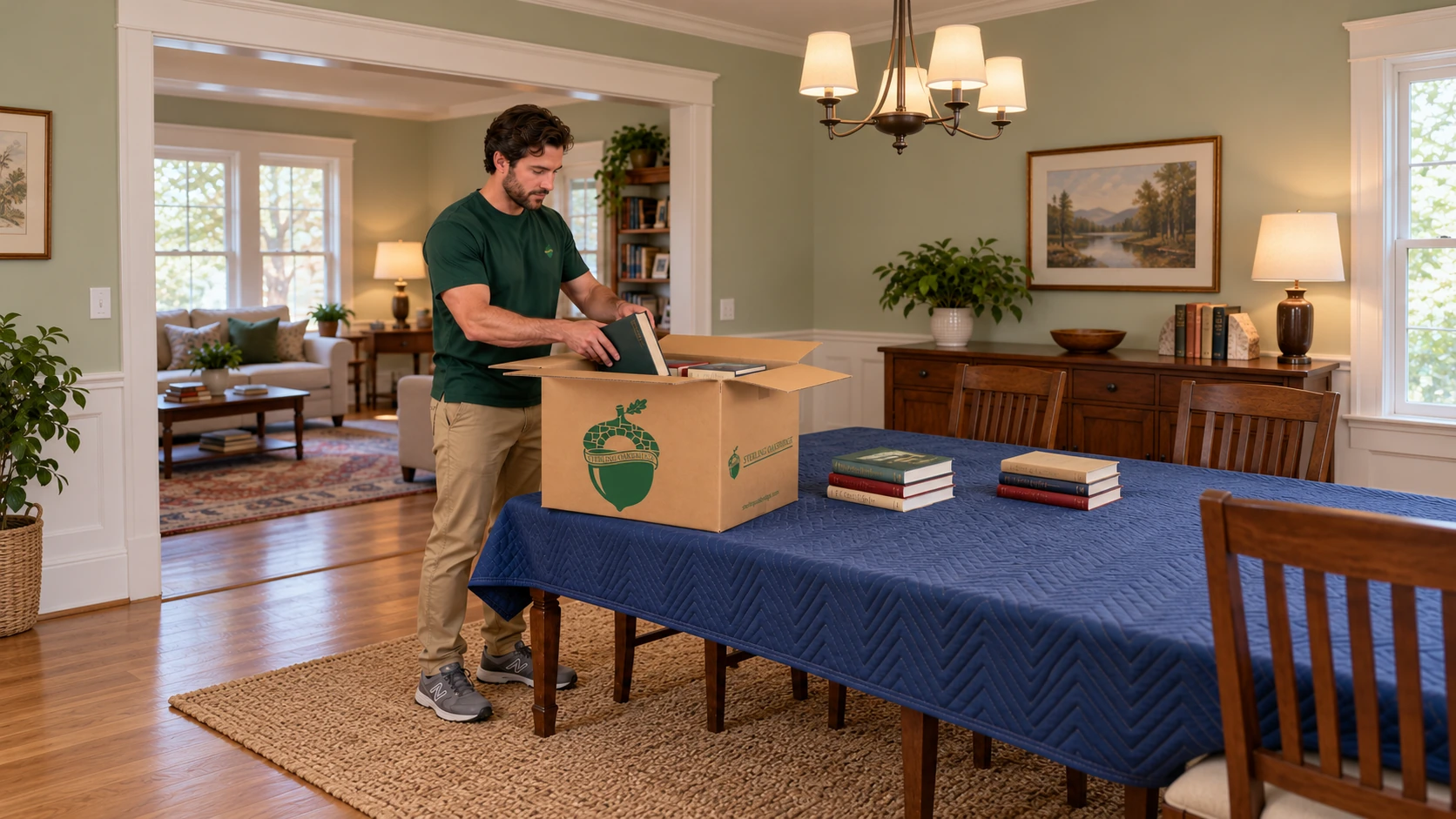
Divide preparation into things that can close early, a named pack-last group and personal items that stay with you throughout. Bedding, a simple breakfast set, toiletries and the next morning's clothes can remain useful until the agreed handover. Keep identification, medicine, valuables, keys, essential documents and journey supplies under your own control; they should not depend on finding a carton in a truck.
A reviewed studio or one-bedroom local move may fit packing and moving into one day. More contents, stairs, a limited building work period or a larger home can make an earlier preparation visit the better plan. These are scheduling choices, not rules that a particular number of bedrooms requires a fixed crew or makes household packing impossible.
Set entry, work hours, material delivery and the place for finished cartons for each visit. An earlier packing day still needs accepted access even if the moving vehicle arrives later. Keep beds, a useful preparation surface and the complete route to the door available. Prepared cartons should not occupy a shared landing, doorway or the space a person needs to turn with furniture.
The receiving visit needs its own accepted time and usable rooms. For long-distance work, packing does not start the delivery clock: it begins after pickup and loading are complete. Direct delivery has a dedicated truck and the same moving crew at both ends; suitable consolidated shipments use a wider agreed receiving window. Arrange unpacking around that actual commitment. The Gaithersburg long-distance page owns those delivery terms.
Choose preparation that survives the whole move
Protection needs to work during carrying, support, stacking, restraint and travel. A neatly taped exterior cannot compensate for loose contents inside. Ordinary dishes need suitable individual wrapping and cushioning; books need manageable cartons; hanging clothes need an appropriate wardrobe arrangement. The method follows the actual contents and construction.
Point out glass cabinet doors, removable shelves, frames, photographs, decorative objects and collections. Their surfaces and attachment points can require different preparation. A glass shelf that can be removed is different from an integral door; a framed photograph is different from a valuable large work. Use fine art and antiques planning for objects needing a specialist method. A clean surface and suitable gloves should support the particular material and a secure grip.
Empty ordinary furniture drawers and normally keep them secured in the protected whole piece. Review safely detachable long legs, shelves and fittings individually; keep matching hardware identified with its furniture. Basic disassembly and reassembly use moving labor time without a separate basic assembly surcharge. Complex furniture and specialist work receive individual quotes. A separately purchased piece belongs with furniture delivery, including its own release, access and assembly questions.
Moving blankets, shrink wrap and tape have no separate material charge. Boxes are charged separately. Agree how the packing labor and selected preparation enter your written estimate, including any special protection; the availability of basic materials does not make every preparation task free.
Give each group a real destination
Use written destination, room and useful-contents labels. Add a carton number and opening priority where helpful. Color can reinforce the words, but an unexplained colored sticker cannot tell a receiver whether something goes to storage or the kitchen. Match the labels to the actual inventory and the people receiving each group.
Separate home, storage and another recipient's belongings before carrying starts. Confirm the order of stops and the actual storage intake. A carton marked “Storage” does not establish availability, access to that carton later or a redelivery date. The storage service covers those arrangements and charges.
A room still being finished needs an accepted dry holding position and a later plan. Leave the cartons for that room closed if opening them would fill the available living space. Later movement of delivered furniture can be arranged through in-home moving; it is separate handling, rather than an included return visit created by a destination label.

Choose what unpacking should accomplish
Basic box unpacking opens the agreed cartons and brings their contents onto suitable surfaces. Decide which result matters first: dishes available on a counter, books on a stable table or linens on a clean surface. Keep doors, cupboard access and a walking route usable while the work continues. Identify unopened groups and a safe place to gather used wrapping.
Home organizing adds placement according to your instructions. You choose the cupboard, shelf and arrangement; agree the directing person, time and price separately. A smaller team can be easier to direct when each group needs a decision. Dishes set on the counter are a useful unpacking result, while a completely arranged kitchen is a different scope.
Optional unpacking uses working time. On a larger project, an illustrative extra 3–4 hours can affect the delivery day; a later visit by two people may fit the household's decisions better. Neither is a time allowance or a guaranteed available appointment. You can also request help after trying to unpack yourself: show what remains, the available surfaces and the rooms to make useful.
Furniture is unwrapped as part of delivery. More involved assembly, mounting and handyman finishing need their own reviewed work, permission, executor and price. Home organizing does not automatically include appliance hookup, electrical work or general repair. Resolve those separate requirements before treating a room as ready.

Four Gaithersburg household plans
These are imagined situations, not completed customer jobs. Association and operator sources establish a useful housing context; the household's actual rooms, inventory, access and permissions still determine the work.
A Lakelands townhouse keeps the last evening usable
Imagine a household leaving a townhouse while both adults still have work and a child needs an ordinary bedtime. Lakelands Community Association describes townhomes and single-family homes; the name does not establish this home's stair layout. Review the complete route and agree where prepared cartons can stand without closing off the bedrooms.
The crew can prepare retained serving dishes and less-used kitchen contents on an earlier visit. The household keeps one breakfast set, bedding and the next day's clothing available, with a definite time for packing that last group. Personal medicine, keys and travel papers stay separate throughout. A bowl can receive individual protection while the breakfast group remains untouched.
The useful result is a workable final evening and a named handover, rather than an early start that makes the home unusable. If the household has already finished some groups, remove that work from the crew's scope and show the remaining contents before the visit. A packing plan should follow the work still needed.
A Washingtonian Woods household sends different belongings to home and storage
Consider a household moving from a house to a smaller home while retaining a separate storage group. Washingtonian Woods HOA publishes house floorplans; its examples do not describe every resident's rooms or contents. Suppose this household keeps a book collection and selected serving dishes, but has duplicate kitchenware and furniture that will not go to either destination.
Make those decisions before paying to pack and handle everything. Books receive suitable small cartons; retained breakables get their own protection. Mark one completed group “Home / Kitchen / Everyday dishes” and another “Storage / Dining / Serving pieces.” The words identify destination, room and contents without requiring the receiver to interpret a color code. Confirm the actual storage acceptance and later release process.
Unwanted furniture needs a separately accepted route. A decision to exclude it can avoid paying for unnecessary preparation and repeated handling only if that alternative is actually arranged. It does not establish a free removal, a storage saving or a municipal right to leave the furniture outside. Keep undecided pieces visible in the planning file until the household makes a choice.
An Olde Towne apartment gets a working kitchen before every carton is opened
Imagine a household arriving at an apartment with enough usable counter space for its immediate dishes but a second room still awaiting finishing. The Crossings at Olde Towne operator offers apartments; no particular work hours, lift arrangement or unit layout follows from that offering. Obtain the actual property's instructions for the receiving and later-help visits.
Choose a small priority group that makes the first meals possible. Basic unpacking brings those dishes to the counter while the second-room cartons stay closed in an accepted holding area. Opening everything at once would move the storage problem from cartons onto the floor and furniture. Keep the route and the cupboard doors clear.
The household can then direct separately agreed organizing into the chosen cupboards. Any assembly or mounting remains a named additional task. If the shipment is arriving long-distance, book that help around the accepted delivery window and usable access, rather than around a day guessed from the distance. The result is an available kitchen and a controlled next stage, without promising an instantly completed apartment.
A Gateway Park household asks for help after trying to unpack
Consider a household that has opened the first few cartons but still has books, linens and used materials occupying useful space. A later unpacking request can focus on those remaining groups; it does not require repeating the original move. Show the current rooms and say which cartons should remain closed. Confirm an available team and a work period the property accepts.
Gateway Park's own FAQ lists Wednesday recycling and separate private trash arrangements. Those are community-specific instructions. They help explain why a visit finishing on a different day still needs a place for gathered materials and an actual collection plan; they do not authorize an immediate combined pile outside.
Keep empty cartons, used paper and plastic materials distinguishable. Check the paper for small fittings or belongings before discarding it. Gather materials indoors, then transfer them into the property's accepted streams or use separately booked removal. The visit should leave a useful route and a clear next owner for the materials, even if some household organizing remains.
Choose a destination for empty materials
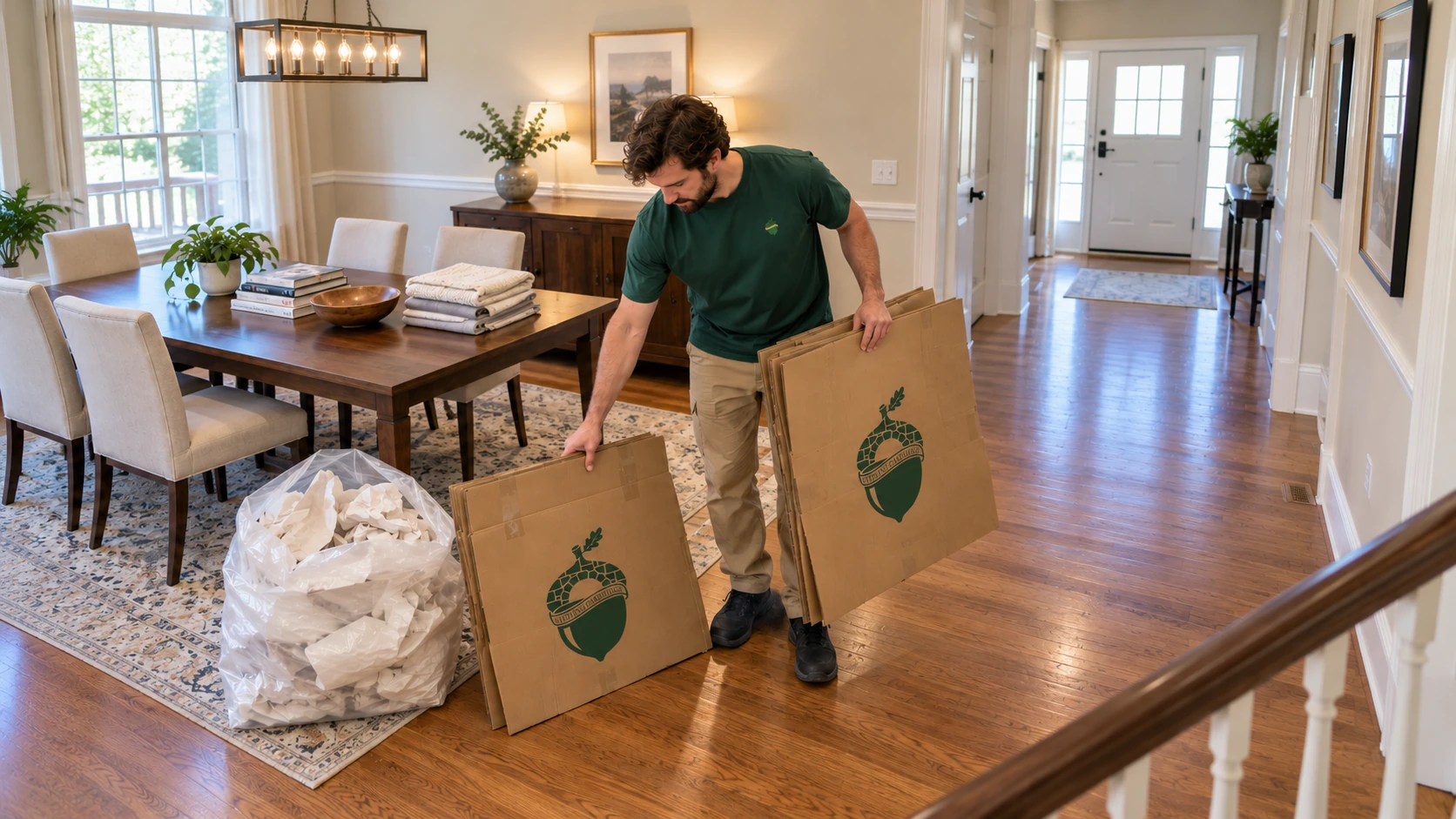
Unpacking and packaging removal are different paid tasks. Include removal in the request if you want the materials taken away, with their quantity, condition, access and intended receiving route reviewed. Late unwanted furniture, appliances or renovation debris must be identified separately; an empty-materials booking does not cover them by implication.
The City's published recycling flyer distinguishes cardboard and mixed paper from plastic bags, film and foam. Separate those categories before choosing the collection stream. An indoor gathering sack is not permission to put bagged paper into recycling. Confirm the actual property's service and container instructions; the flyer does not establish collection eligibility for every Gaithersburg mailing address.
City Chapter 18 assigns refuse storage and removal responsibilities to the relevant owner, occupant or multifamily owner/manager, and does not allow another party's container to be used without consent. Get the building's accepted storage and collection arrangement. A convenient dumpster is not an agreed receiving route.
If you keep reusable cartons, choose a dry place that leaves access and exits clear. If you want a later collection, identify who retains the materials until that appointment and how the team reaches them. Agree removal charges and actual acceptance before treating the task as finished.
Compare the complete paid scope
Compare the same retained contents and final result. Include packing labor, separately charged cartons, special protection, preparation on another day, moving, storage stages, optional unpacking, directed organizing, handyman work and separately charged material removal as applicable. A lower figure that omits a required return visit describes a different job.
For a substantial household, packing plus moving can approach twice the budget of moving the same already packed shipment. It can be below or above that illustration; it is not a rate, multiplier or spending cap. The decision is how much preparation and receiving work you want to do yourself, with the actual inventory and access held constant.
Most local moving work uses the written hourly basis and agreed terms. Estimated time helps plan the work; it does not replace applicable estimate protections. For a wholly Maryland household move, Commercial Law §14-3103 sets the written estimate requirements and voluntary, uncoerced waiver provision. A binding estimate limits charges for the described services to its stated total; a nonbinding estimate has a 125% limit plus only the statute's narrowly defined applicable excess charges.
For long-distance work quoted at a flat rate, longer travel alone does not raise the agreed price for unchanged contents, access and services. Added packing, containers, a different entrance or another requested stage can change the scope. Have changes reviewed and agreed in writing before the affected work. The planner and moving crew have separate roles; a survey does not promise that the surveyor will be one of the people carrying the shipment.
Send both addresses, date options, retained contents and the responsibilities you want to hand over. Add the last-night group, each destination, the receiving rooms and any pending building approvals. The planning team can recommend an item-list, video or in-person review and prepare the written scope around that information.
Gaithersburg packing and unpacking questions
Can I book only kitchen or fragile packing?
Yes. Partial packing can select the kitchen, books or another agreed group; fragile-only packing selects the breakables reviewed for preparation. Full packing covers the retained household contents in the written scope. Identify what you will finish, what the crew will prepare and what stays, so the two plans meet before moving day.
Do I have to decide what to keep before packing starts?
Make keep, leave, donation and removal decisions before the relevant group is packed. Set undecided belongings apart and identify who will decide. Packing labor prepares the agreed retained contents; it does not choose what you should own or automatically arrange a destination for unwanted furniture.
Can you estimate supplies from my bedroom count?
Bedroom count alone cannot count cupboard contents, collections or stored belongings. Show open cupboards and closets, retained books, dishes and any relevant garage, attic or lower-level contents. An initial expectation of 20 cartons could become 60–100 after inventory; that is an illustration, not an average or a supply allowance for your home.
Can packing and moving happen on one day?
Sometimes a reviewed studio or one-bedroom local move can fit both into one day. More contents, stairs or a restricted building work period may favor an earlier packing visit. The inventory and accepted access determine the schedule; the size label alone does not promise completion or require a fixed crew.
What can stay available for the final night?
Name a pack-last group such as bedding, breakfast dishes, toiletries and the next morning’s clothes, with an agreed location and handover time. Keep beds and the route usable. Medicine, keys, identification, valuables and essential travel documents should remain with you throughout, separate from any group that will eventually enter the shipment.
Does an earlier packing visit need its own access arrangements?
Yes. Confirm entry, work hours, material delivery, a real packing surface and safe space for prepared cartons for that visit. Send the complete route and building instructions, including the people submitting and accepting any request. A moving-day booking does not automatically cover earlier work, and submitted paperwork is not accepted access.
How are dishes, books and glass furniture prepared?
The contents and construction determine the method: individual wrapping and suitable cushioning for ordinary dishes, manageable cartons for books, and an item-specific plan for glass doors, shelves and frames. Show valuable or unusual pieces separately. The preparation must support carrying, stacking, restraint and travel; a neat outer carton alone does not protect loose contents.
Can you use cartons I already have?
They can be reviewed for the actual contents, condition, strength, size and ability to close. Show them before the materials plan is settled. A damaged or unsuitable carton may need replacement or another method. Existing cartons do not remove the need to agree packing labor and the quantities of additional materials.
Are boxes and protective materials included?
Boxes are charged separately. Moving blankets, shrink wrap and tape have no separate material charge. Packing labor and any specialist preparation still belong in the written scope. Basic furniture disassembly and reassembly use moving labor time without a separate basic assembly surcharge; complex furniture is individually reviewed and quoted.
Should every drawer and furniture part be removed?
No. Empty ordinary drawers and normally keep them secured within the protected whole piece. Review removable shelves, glass, safely detachable long legs and matching fittings for the actual construction and route. Integral supports should not be forced apart. Photograph repairs or unusual joints before deciding the preparation.
How should I label home and storage cartons?
Write the destination, room and useful contents, adding a carton number or opening priority where helpful. Color can reinforce those words. Separate the groups before carrying and confirm each receiver and stop sequence. A storage label does not reserve storage capacity, later access to a carton or redelivery.
What does basic unpacking leave me with?
The agreed cartons are opened and their contents placed on suitable surfaces, such as dishes on a clear counter. Choose the priority rooms and identify what stays closed. Keep routes and cupboard access usable. Final placement throughout cupboards is separately agreed organizing, and taking away packaging is a separate charged task.
Can you put everything away in cupboards?
Home organizing can place agreed belongings according to your instructions. Choose the shelves, arrangement and directing person, and agree time and price separately. A smaller team may be easier to direct. Basic unpacking onto a counter does not by itself promise a fully organized kitchen or a completed home.
Can I ask for unpacking after I have tried it myself?
Yes. Show the remaining cartons, current room conditions, available surfaces and priorities for a later request. Confirm an available team and accepted work period. On a larger project, 3–4 extra hours or a later two-person visit are possible illustrations, not an allowance or a guaranteed appointment.
What happens when one receiving room is unfinished?
Keep that room’s cartons closed in an accepted dry holding area, preserve a useful route and open the rooms that are ready first. Agree who releases the next room and any later visit. Repositioning furniture, storage or redelivery may add work and charges; none follows automatically from a room label.
Does packing start my long-distance delivery window?
No. The delivery clock starts after pickup and loading are complete. Book receiving help around the actual accepted window and property access. Direct delivery uses a dedicated truck and the same moving crew at both ends; suitable consolidated delivery has a wider agreed window. The Gaithersburg long-distance page explains the applicable terms.
Can you remove empty boxes and used wrapping?
Yes, with separately agreed removal and charges. Describe the materials, quantity, access and receiving arrangement. Furniture, appliances and renovation debris need separate identification. Check used paper for small fittings and belongings before discarding it, and distinguish empty materials from cartons still holding household contents.
Can I put all the packing materials into recycling together?
No. The City’s published flyer separates cardboard and mixed paper from plastic bags, film and foam. Keep them distinguishable and follow the actual property’s accepted streams. An indoor gathering sack is not permission for bagged curbside recycling. Do not use another party’s container without consent.
Does every Gaithersburg address use Gateway Park’s collection schedule?
No. Gateway Park’s FAQ lists Wednesday recycling and separate private trash arrangements for that community. Your property may use a different service and storage arrangement. Confirm the actual receiving stream or book separately charged removal; a Gaithersburg mailing address does not establish the same municipal or HOA rules.
Does organizing include assembly, mounting or electrical work?
Organizing places belongings according to your directions. Basic furniture reassembly uses moving labor under its own terms; complex assembly, mounting or handyman work needs an individually reviewed scope, permissions, executor and price. Organizing does not automatically include appliance hookup, electrical work or general repair.
How should I compare packing and moving estimates?
Compare the same retained contents and result, including packing labor, cartons, specialist work, separate visits, moving, optional unpacking, organizing and removal as applicable. For a wholly Maryland household move, §14-3103 sets written estimate terms, a voluntary uncoerced waiver provision, the binding stated total and the nonbinding 125% limit plus narrowly defined applicable excess charges.
What should I send for a Gaithersburg packing estimate?
Send both addresses, date options and the retained contents, with open cupboard and storage photographs where useful. Identify what you will pack, the last-night group, separate destinations and the receiving rooms to make useful first. Add pending property approvals. The planning team can recommend an item-list, video or in-person review for the actual scope.
Choose the packing and receiving help you need
Send both addresses, retained contents and date options. Identify the last-night essentials, destinations and the rooms you want to make useful first.