
Quincy, MA / Packing and unpacking
Full packing and unpacking in Quincy, MA
Hand over the packing work you want done, then choose how much help you need after delivery.

Choose full, partial or fragile-only packing, with optional unpacking on delivery day or a later visit.
Sterling Oakbridge packs an agreed household inventory, selected rooms or fragile contents in Quincy. We can also unpack selected cartons onto suitable surfaces, return for a later visit, or arrange customer-directed organizing. Those are different results: opening a box does not automatically include deciding where everything belongs or taking away the packaging.
Start with the contents, the rooms you need to keep usable and the date the receiving space will actually be ready. The Quincy moving page covers the move and carrying access; the local relocation guide covers the address and everyday arrangements.
Explore packing, costs and local examples
Choose the work you want to hand over
Full packing prepares the household contents included in the written plan. Partial packing can concentrate on a kitchen, a collection, selected cupboards or the rooms you cannot finish yourself. Fragile-only packing focuses on the identified objects that need reviewed protection. Name what is included and what you will still prepare; a request for “help with the difficult things” leaves too much undecided.
The benefit can be a usable evening rather than another session sorting and wrapping after work. If you prefer doing part of it yourself, give yourself a realistic sequence for the remaining contents. Preparation spread over a couple of weeks is one possible household plan, not a required lead time or a measured Quincy average.
Choose a packing result before comparing estimates
| Scope | What the crew takes over | What must be identified |
|---|---|---|
| Full packing | The agreed household contents, with reviewed supplies and protection. | Excluded possessions, essentials, special objects and both ends of the handling route. |
| Partial or fragile-only | Named rooms, cupboards or objects. | Your own finished cartons and everything that will remain unpacked when the crew arrives. |
| Box unpacking | Opening agreed cartons and placing contents on suitable surfaces. | Ready rooms, clear surfaces and the order of priority. |
| Organizing or finishing | Separately agreed placement or other finishing tasks. | Your instructions, ready cupboards or furniture, permissions and any specialist work. |
Count the contents, not the bedrooms
Photograph inside the cupboards and closets, not just the room from its doorway. Include books, dishes, collections, utility shelves and the contents of any basement, attic or garage that will travel. Tell us about contents that must remain at the property or go to another recipient.
A first guess of 20 cartons might become 60 or 100 once those contents are counted. That illustrates overlooked inventory; it is not a carton forecast for a Quincy two-bedroom home. A lightly furnished larger home and a smaller home full of books need different preparation.
Quincy’s 2022 housing plan describes detached houses, smaller multifamily forms and larger multifamily or mixed-use buildings. That variety is a reason to review the actual property, rather than infer stairs, elevators or packing volume from a neighborhood name. Show where the crew can work without filling the shared entrance or the carrying route.
Keep the last night and the packing visit workable
Choose the groups that can be packed early, then identify what must stay available until the final stage. Keep medicines, documents, chargers, work equipment, ordinary clothes and the household’s overnight needs outside the moving or stored shipment. Mark these as personal belongings, rather than trust somebody to recognize them among finished cartons.
A compact studio or one-bedroom inventory may allow packing and a local move in one day when access and working hours permit. A two-bedroom inventory can be more involved; a larger project may benefit from a separate preparation day. These are planning options, not bedroom-based promises.
For a substantial job, a plan could use four packers on a preparation day and six movers for the move. That is an illustration of separate stages, not a standard assignment for every home. Materials delivery, the recipient who lets the team in and any permitted indoor preparation must be arranged. A packing appointment does not itself reserve a truck position or an elevator for moving day.
The Quincy access plan explains the local handoff. Give the coordinator the actual entrance, stairs or elevator, management instructions, working windows and a contact who can open the property. Do not put a packing station or finished cartons in a shared escape or carrying route.
Match protection to the object and the journey
Sound cartons, suitable internal support and secure closures do different jobs. Dishes need separation and support inside the carton; books need manageable loads; hanging clothes need a suitable garment arrangement. Choose the container for the contents and its handling, rather than fill one large carton with everything left in a room.
List glass doors and removable shelves in furniture, framed items, lamps and collections before the quote. A blanket over a loaded cabinet does not secure loose contents inside it. The plan identifies any agreed removal of components, their protection and where the parts will be found for receiving work.
Protection has to work during carrying, stacking, securing and vehicle movement. The crew’s clean working area and suitable handling method matter as well as the outer covering. Gloves and contact materials must suit the object and the grip; one glove or wrapping material is not right for every surface.
Paintings, vulnerable finishes, unusual frames or valuable collections need an object-specific method. The fine art and antiques service can review suitable picture cartons, fitted soft packing and crating for the actual objects. A stronger-looking package is not automatically accepted by an additional insurance policy. Show any required specification before packing is selected.
These examples show possible plans, not completed customer jobs or standard crew assignments.

Example: sort a book and framed-print collection before packing
Imagine a household moving from a smaller multifamily home into fewer rooms. Its books and framed prints have accumulated over time. Packing every shelf first would also pack the decisions the household has not made.
Choose the retained collection and its receiving positions before the packing visit. Keep pieces promised to a named recipient separate, with actual acceptance and collection arranged. For books you will not keep, Quincy lists a collection box for books, CDs and DVDs at its resident DPW Yard. Establish an eligible handoff before assigning those cartons to removal; a collection box is not a guarantee of charitable donation.
The quote can then cover the retained books, reviewed frame protection and the actual carry. Any removal is a separate approved list. If an existing moving flat rate has already been agreed, removing items does not create an automatic credit: request a revised written scope before comparing costs.
Give every group a destination before sealing it
Use written destination, room and carton identifiers, with a brief contents description and an opening priority where useful. Color can help people sort a group quickly, but it should support readable words and numbers. Keep the same identifiers on the inventory and receiving instructions.
Separate the personal carry-with-you group from delivered contents, and separate anything intended for storage or a later room release. A carton marked only “bedroom” is not enough when one bedroom is ready and another is still unavailable. The label needs to tell the next person which stage it belongs to.
A storage request also needs the actual holding arrangement, notice for retrieval, any item needed early and the cost of handling and redelivery. Read the storage and staged-delivery plan before treating a stored carton as something you can walk in and retrieve at any moment.

Example: pack room contents while renovation areas remain closed
Consider a Quincy house preparing rooms for planned work. Two rooms will be cleared, while the household continues using the rest of the home. The contractor has not yet released the future receiving space.
Identify contents needed now and contents that can wait until the rooms reopen. Suitable on-site holding must be authorized, protected and clear of the route; it is not simply an empty corner beside the work. If no suitable space exists, compare separately quoted off-site storage and return handling.
Packing prepares the contents and labels. The in-home moving plan covers the furniture carry, holding and later return. Record who confirms that the rooms are ready, who can admit the returning team and which groups should open first. Confirm the new visit when the room release is dependable, rather than assume the original crew remains reserved through an uncertain delay.
Choose a useful receiving result
Basic box unpacking opens the agreed cartons and puts their contents on suitable surfaces. It does not automatically arrange every shelf, decide what the household should keep or remove the resulting paper and cartons. Give the crew clear surfaces and priorities so opening boxes does not replace one obstruction with another.
Home organizing follows your directions for final placement. Agree the rooms, cupboard or shelf positions and the person who can make decisions. A smaller team can be easier to direct when every group needs a choice. Keep personal papers and possessions you do not want handled outside that scope.
For a large project, an unpacking plan might add three or four hours to a delivery day, or use a later visit by two people. These are illustrations, not a completion promise or a standard booking. The contents, available surfaces, access, chosen work and actual crew schedule determine the plan. A later visit can also help when you began unpacking yourself and want assistance with the remainder.
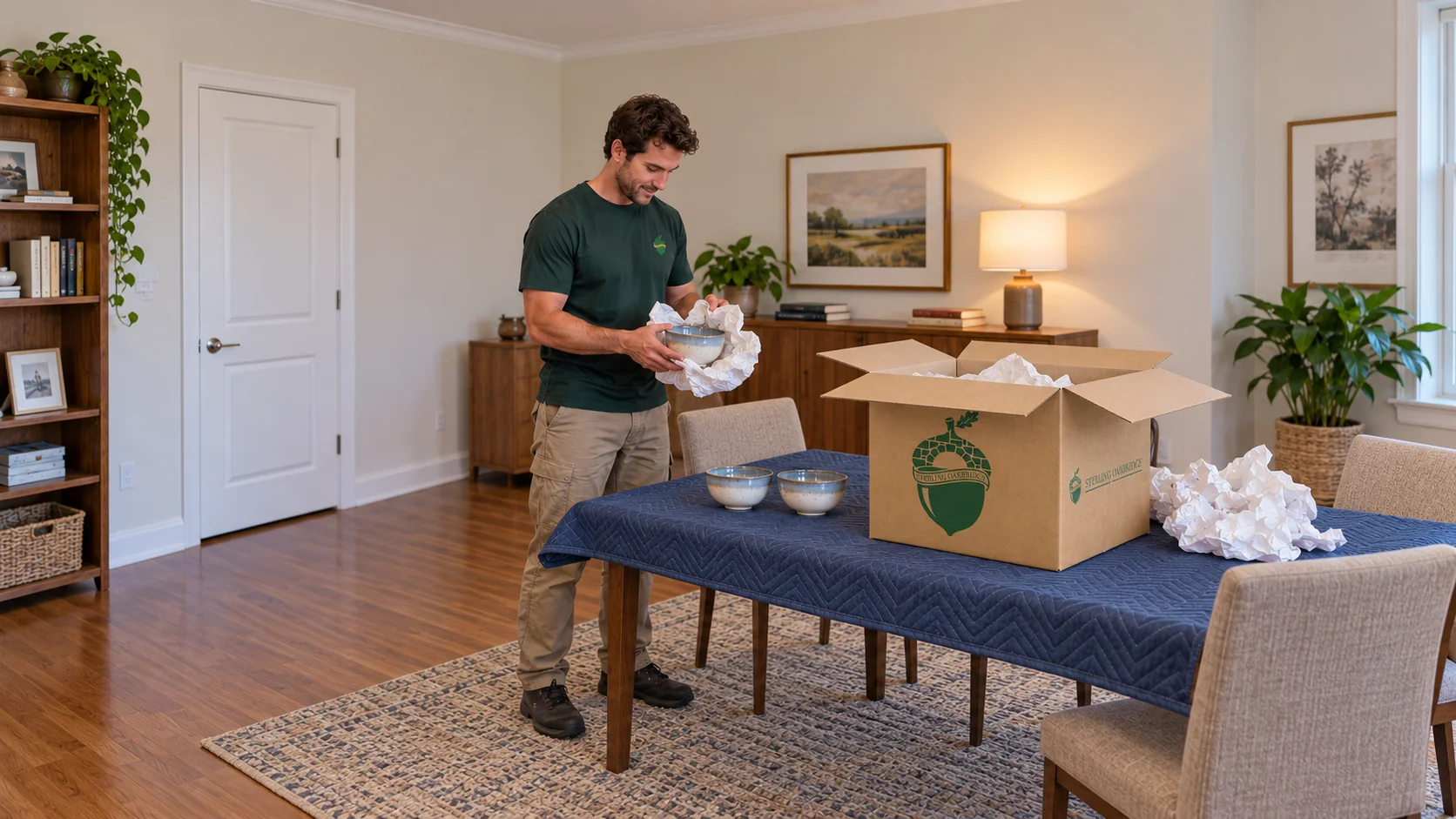
Example: return to an apartment study after self-unpacking stalls
Imagine an apartment where the living area is usable but study cartons and display contents remain partly opened. The resident wants access to papers and books, then selected items placed in the agreed bookcase or cabinet.
Start with a clear work surface and confirm that the furniture and shelves are ready. Basic unpacking brings the agreed contents out of cartons; arranging the shelves under the resident’s direction is a separate organizing choice. The useful result is accessible contents and a clear route, not a promise to reconnect computers or finish every room.
If this is an apartment building with more than eight units, Quincy requires private solid-waste arrangements. Decide what its collector will take and what a separately booked packaging collection should remove. Keep a decision-maker and entrance contact available, and check paper and carton folds for small fittings or personal items before release.
Separate packing from assembly and finishing
Furniture unwrapping is part of delivery. Suitable basic furniture disassembly and reassembly use moving labor time without a separate basic assembly surcharge. Complex flat-pack furniture, unusual construction, wall attachment and other specialist work need their actual model, condition and required operation reviewed.
Handyman finishing is individually scoped. Pictures, mirrors or other agreed mounting work need the wall, fixings, permission and person doing the work identified. Packing or organizing does not imply electrical work, utility connection, general repair or restoration.
For a new purchase, the furniture delivery and placement service connects seller release, the real pickup address, carrying and the receiving room. Furniture already at the property follows the in-home route. Neither is automatically included because someone booked cartons to be unpacked.
Give empty packaging a permitted route
Choose collection while planning the unpacking visit. Packaging removal is separately priced, whether it happens that day or on a later agreed visit. Identify the quantity, access and what the building’s own collector will handle. Inspect folds and paper for fittings, keys, cables and personal items before materials leave.

For an eligible property’s ordinary recycling, Quincy includes cardboard with other accepted single-stream materials on the regular trash day. The Recycle Smart MA guide linked by the City directs people to empty and flatten paper or cardboard, keep plastic bags and plastic wrap out, and avoid bagging recyclables. Keep different materials identifiable instead of leaving a mixed pile labeled “recycling.”
Move-out and clean-out trash is a different scope: Quincy says its contracted trash service does not cover that trash or debris and directs people to private vendors. This does not mean every empty moving carton is banned from an eligible recycling program. Agree the actual collection stream, quantity and date; do not assume a large clearance will be collected with routine household waste.
The DPW Yard is a resident facility with identification requirements. Commercial plates need prior written approval, and the yard does not take household trash or construction debris. Your resident eligibility is not permission for a moving company’s truck. The removal and disposal service can review the item list and accepting route when more than used packaging needs to leave.
Compare the whole paid plan
Packing and optional box unpacking are charged for working time. Company-supplied boxes used for the job are charged separately. Moving blankets, shrink wrap and tape have no separate material charge; this does not make the labor free or include every specialist enclosure. Other required materials and special protection belong in the written quotation.
Include every selected stage in the estimate
| Part of the plan | What to compare |
|---|---|
| Preparation | Packing labor, company boxes, required supplies, special objects and any separate materials or preparation visit. |
| Moving or holding | The actual transport and carry, authorized holding, storage handling and any later delivery. |
| Receiving | Box unpacking, customer-directed organizing, reviewed assembly or finishing and any return visit. |
| Packaging or unwanted items | Separately priced collection, an approved removal list, vehicle use and the accepting destination. |
Full packing and moving can approach twice the cost of moving the same shipment already packed. It can also be lower or higher: there is no standard multiplier. Compare the same inventory, access and receiving result, then decide which work you want to keep and which work you want the team to take over.
For local work, estimated or minimum hours are not a fixed total or a promise to finish within that period. For a long-distance flat-rate move, the agreed price stays the same for the same shipment, access and services; time alone does not change it. Added packing, new items or extra receiving work require a revised written scope and price.
Fit receiving help around the real delivery plan
The Quincy long-distance service explains direct and consolidated delivery windows. Same pickup and drop-off crew applies to the reviewed direct plan; do not assume it for consolidation. A receiving appointment for unpacking or specialist opening must fit the actual delivery arrangement.
If you can receive furniture but want cartons opened later, identify that later visit before the first job is finalized. If rooms are not ready, compare authorized suitable holding with the complete storage and return plan. Keep the goods you need during a delay outside storage and name a person for each receiving stage who can admit the crew and approve the work.
Sources for Quincy preparation and packaging
- Quincy Housing Production Plan 2022–2027, MAPC and City of Quincy: housing forms and broad local context.
- City of Quincy recycling instructions: single-stream materials and collection context.
- City of Quincy household waste instructions: apartment collection arrangements and move-out or clean-out limits.
- Quincy DPW Yard instructions: resident access, commercial-vehicle conditions, book collection and material exclusions.
- MassDEP’s Recycle Smart MA guide: paper and cardboard preparation and materials that do not belong in the recycling bin.
Quincy packing and unpacking questions
Can I book only the kitchen or fragile contents?
Yes. Partial packing can cover named cupboards, rooms or objects while you prepare the rest. List those groups and show dishes, glass parts, frames or collections before the estimate. Identify which cartons you will finish yourself and what will still be loose when the crew arrives; fragile-only packing is a defined inventory, not an instruction to discover every difficult item on moving day.
What is included in the packing price?
Packing labor is charged for working time, and company-supplied boxes used on the job are charged separately. Blankets, shrink wrap and tape have no separate material charge. That does not include every special enclosure or make the labor free. Ask for the required supplies, object-specific protection, preparation visits and any later receiving work in the written quote. A carton count or bedroom count alone cannot establish the total.
What should I show for a packing estimate?
Show inside cupboards, closets and storage areas, including books, dishes, collections and the contents of any basement, attic or garage included in the move. Send both addresses, dates, access conditions and any storage or separate destinations. Identify excluded possessions and the help you want after delivery. Room photographs taken only from the doorway can miss most of the packing work.
Can packing and moving happen on the same day?
Sometimes a compact inventory and usable access allow that plan. A larger or more involved inventory may need a separate preparation day. The decision depends on the contents, protection, crew availability and working windows at both properties. A studio or bedroom label is not a completion guarantee. Confirm the sequence, materials arrival and who admits the team before relying on a same-day plan.
What should stay available for the last night?
Keep medicines, documents, chargers, work equipment, overnight clothes and the household’s essential food and bathroom items outside the packed shipment. Mark a personal group and name who keeps it. If packing starts before moving day, agree the final rooms and contents to close. A carton marked “open first” is still unavailable while it is traveling or in storage.
Should I sort books and unwanted belongings before packing?
Yes, sorting first keeps unwanted items out of paid packing and handling. Separate what you will keep, what a named recipient has accepted and what has an approved removal route. Quincy lists a book, CD and DVD collection box at its resident DPW Yard, subject to the facility’s access conditions. That is not a guaranteed charitable donation. Ask for a revised written scope if you want an already agreed moving price reconsidered.
Can you pack glass cabinets, framed prints or valuable art?
These need review before a method is chosen. Identify removable shelves, glass doors, frames, vulnerable finishes and any required insurance packing specification. Loose cabinet contents must be secured separately; an outer blanket does not hold them in place. The fine-art service determines suitable picture cartons, fitted soft packing or crating for the actual object. No single wrapping material is right for every artwork or surface.
Can I use cartons I already have?
Show their size, condition and intended contents so suitability can be reviewed. A carton needs sound structure, a secure closure and appropriate internal protection for its load. An oversized carton filled with books or a damaged reused box can create a handling problem. Identify your finished cartons and any that need inspection or repacking in the agreed scope; do not assume every supplied carton or its contents will be accepted unchanged.
How many cartons does a Quincy two-bedroom home need?
There is no reliable bedroom-only count. Count cupboard contents, books, clothing, collections and stored possessions, then review suitable container sizes. The article’s 20, 60 and 100 carton figures illustrate how hidden inventory changes an early guess; they are not local averages or a quotation. The useful result is a materials and labor plan tied to the actual contents.
How should cartons be labeled?
Use readable destination, room and carton identifiers, with brief contents and an opening priority where useful. Keep those identifiers on the inventory and receiving instructions. Add a stage such as delivery now or storage when the same room name could mean different destinations. Color can help sorting, but it should supplement words and numbers rather than carry the whole instruction.
What changes if part of the shipment goes into storage?
Separate the storage group before sealing cartons and identify anything you will need earlier. Confirm the holding arrangement, retrieval notice, handling, return delivery and price. Do not assume that stored contents are available for walk-in access. Essential personal items should stay outside storage. Confirm the full staged-delivery plan with the storage service; packing prepares the contents and identifiers for it.
How are books, dishes and clothes prepared differently?
Books need manageable carton loads, dishes need suitable separation and internal support, and hanging clothes need a suitable garment arrangement. The container should fit both the contents and the carrying and stacking method. Show unusual shapes, fragile pieces and large collections in advance. These are different preparation tasks, so one large general-purpose carton is not a substitute for reviewing supplies.
Does box unpacking include arranging every cupboard?
Basic box unpacking opens agreed cartons and puts their contents on suitable surfaces. Customer-directed home organizing is a separate choice for final placement in shelves, cupboards or other agreed positions. Provide the instructions and a person who can make decisions. Packaging removal is separately priced. Agree the receiving result so open cartons do not simply turn into crowded surfaces and a blocked floor.
Can I book help after I have started unpacking myself?
Yes, a later visit can cover the selected contents that remain. List what is still boxed, what is partly open and which rooms or surfaces are ready. Decide whether you want basic unpacking, directed placement or separately priced packaging collection. Confirm access and the actual appointment; the original moving crew is not automatically reserved for an unspecified return date.
Who needs to be available during organizing?
A person authorized to choose the final locations needs to give clear instructions or leave an agreed placement plan. That person also resolves items that have no ready destination. Separate private papers and possessions outside the handling scope. If choices cannot be made, the useful alternative is agreed unpacking onto suitable surfaces, rather than crew members guessing what to keep or where personal belongings belong.
Can you finish unpacking the whole home in a few hours?
Only an inventory and receiving plan can establish a realistic booking. The article’s extra three or four hours or later two-person visit are illustrations, not a standard allowance. Choose a priority result, such as accessible study contents and a clear route, and confirm the ready surfaces, tasks and crew schedule. Basic unpacking, shelf arrangement, assembly and packaging collection take different work.
Is packaging removal included automatically?
No. Packaging collection is separately priced and must be agreed for that day or a later visit. Confirm quantity, access, the building collector’s role and the accepting route. Before release, check carton folds and paper for small fittings, keys, cables and personal items. Gathering empty material inside the home is different from loading it into a vehicle and taking it away.
Can empty moving cartons go in Quincy recycling?
For an eligible property’s ordinary collection, Quincy includes cardboard in its single-stream recycling. The City-linked Recycle Smart MA guide says to empty and flatten paper and cardboard, keep plastic bags and plastic wrap out, and leave recyclables unbagged. Confirm the actual stream, quantity and collection date for your property. A mixed move-out or clean-out load is a separate scope that the contracted trash service does not collect.
What if my apartment building has more than eight units?
Quincy says apartment buildings with more than eight units must privately contract solid-waste service. Ask management or the collector how your building handles empty cartons and other used packing material. Agree any separate packaging collection before unpacking creates the pile. Do not assume the resident DPW Yard rules authorize a moving company’s commercial vehicle; commercial plates need prior written approval.
Can you remove furniture I decide not to keep?
That is a separately reviewed removal scope. Name the items, confirm your authority to release them, and agree access, price and an accepting destination before loading. A recipient or donation route needs actual acceptance. Packaging collection does not automatically include unwanted furniture, and a late reduction in an agreed flat-rate shipment does not create an automatic credit.
Does unpacking include furniture assembly or hanging pictures?
Furniture unwrapping is part of delivery. Suitable basic furniture disassembly and reassembly use moving labor time without a separate basic assembly surcharge. Complex models and specialist operations need review. Handyman finishing such as agreed mounting is individually scoped around the wall, fixings, permissions and who will perform the work. Packing or organizing does not automatically include electrical work, utility connection or general repairs.
How should I book unpacking for a long-distance delivery?
Use the actual delivery arrangement before fixing the receiving appointment. The Quincy long-distance page explains direct and consolidated windows; same pickup and drop-off crew applies to the reviewed direct plan, not automatically to consolidation. Identify whether cartons open on delivery day or at a later confirmed visit, and whether rooms and surfaces will be ready when the goods arrive.
Is the estimate a fixed total for every selected service?
Local estimated or minimum hours are not a cap on the total working time. A long-distance agreed flat rate stays the same for the same shipment, access and services; time alone does not change it. Added contents, packing, storage handling or receiving tasks require a revised written scope and price. Compare the complete plan, including company boxes and separately priced packaging removal, before choosing which work to hand over.
What happens if renovation rooms are not ready?
Agree authorized, suitable on-site holding that stays protected and clear of the route, or compare separately quoted off-site storage with handling and return delivery. Identify which contents are needed now and which can wait. Name who confirms the contractor’s room release and who admits the returning team. Arrange the later visit when readiness is dependable; an uncertain delay does not reserve the original crew indefinitely.