
Massachusetts · Worcester service planning
Long-distance movers in Worcester MA
A long-distance move from Worcester connects two access plans as well as two addresses. Porch steps, an upper-floor stair turn or a controlled apartment entrance can affect preparation before road distance does. Sterling Oakbridge reviews the shipment, dates and work at both homes before agreeing direct or consolidated household delivery throughout the United States and Canada.
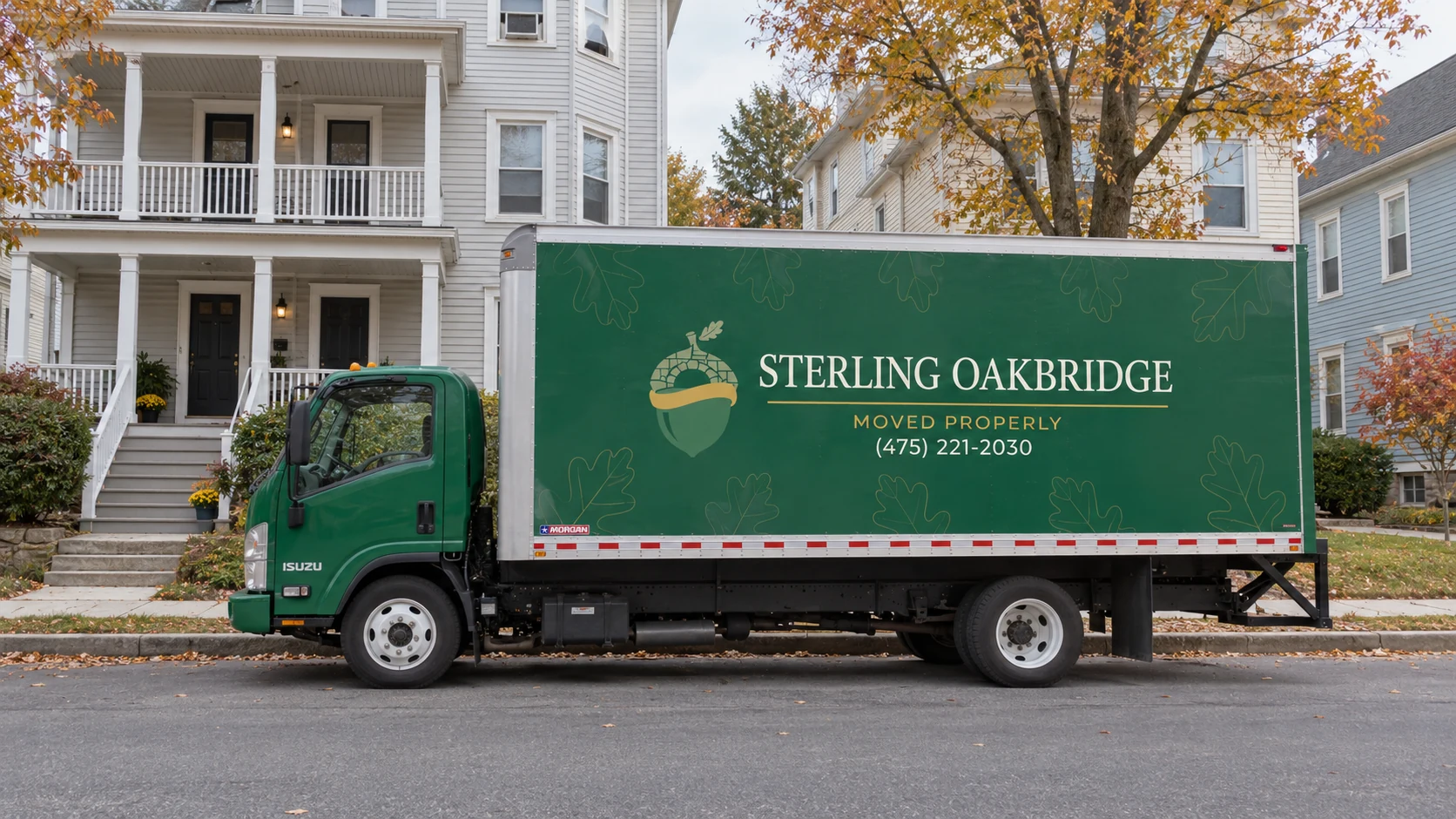
Begin with the actual property, shipment and municipality
We can review long-distance pickup in Worcester and nearby addresses, including Auburn, Shrewsbury and Leicester. Worcester is a City; Auburn, Shrewsbury and Leicester are separate Towns. All four are in Worcester County. Confirm the actual municipality, inventory, legal truck position, building route and dates before choosing the applicable local procedure.
Start at the proposed legal truck position and follow the complete carrying route into the rooms. For a wood-frame multifamily home, include the porch, vestibule, stair flights and landings. For a house on a rising street, show the driveway gradient and steps. At a managed building, obtain the actual entrance, lift and working-slot instructions. Associate every photograph and measurement with the correct unit.
List cellar, attic and outdoor belongings along with the rooms in ordinary use. Identify large or fragile pieces, carton quantities, customer totes and anything staying behind. Explain which rooms you will pack and which need help. A bedroom count describes a household loosely; the actual contents and route determine the work to review.
Use the Worcester moving page for estimate inputs and the local relocation guide for the detailed access checklist. Record pickup and delivery separately. A clear entrance at one home does not answer whether the same piece will turn on a landing at the other.
Choose the delivery model around the receiving arrangements
Direct dedicated delivery uses a truck for the reviewed shipment and the same moving crew at pickup and delivery. Discuss the actual volume, dimensions, route and building arrangements when selecting the vehicle. Full packing or a large book collection can change the preparation plan even when two households describe themselves by the same number of bedrooms.
Consolidated delivery can suit a smaller shipment when receipt is flexible, illustratively around 300–400 cubic feet or less. That is not a minimum. Describe every selected piece and agree the receiving window, crew arrangement and any additional handling or storage before comparing quotations. The suitable model follows the actual shipment and timing constraints.
The delivery clock starts after pickup and loading are complete. Keep the household’s travel, possession and building applications on their own timelines. The table gives normal planning illustrations with a reserve; the carrier still needs to review a legal commercial-vehicle route and the receiving appointment.
| Illustrative destination | Direct planning window | Consolidated window |
|---|---|---|
| Concord, New Hampshire | 1–2 days | Up to 30 days |
| Lakeland, Florida | 2–3 days | Up to 60 days |
| Granby, Quebec | 1–2 days | Up to 60 days |
| Santa Fe, New Mexico | 4–5 days | Window agreed individually |
A suitable close domestic move may be reviewed for same-day or next-day receipt when preparation, routing and both properties support it. Consolidated Canada and Florida delivery can have windows up to 60 days; a suitable close domestic shipment can have a window up to 30 days. California has its own policy. Other distant consolidated directions need an individually agreed window.
Example 1: Worcester to Concord, New Hampshire with a close key handoff
Suppose a household is leaving an upper-floor Worcester apartment for a home in Concord. Much of the inventory is packed, but the new keys will become available after the intended morning pickup. The close distance makes an early receiving appointment worth discussing. The practical questions are when loading can finish, who has the keys and whether both routes support the selected pieces. This is a hypothetical planning example.
First document the Worcester entrance and stair route. Count the exterior steps, each interior flight and the space at the turns. Show the largest sofa and the limiting landing together in the planning information. Review safe disassembly or a permitted alternative before the day; keep any proposed removal of a building fixture subject to the owner’s approval.
Reconcile the packing deadline with that route. State which cartons are sealed and which cupboards or personal belongings remain in use. Label destination rooms and contents, separate items staying behind and keep medication, keys and travel documents with the household. Materials or packing on an earlier day needs the property’s consent and an agreed scope.
Confirm a lawful place for the actual truck and enough operating space for the selected loading method. Provide the frontage, vehicle information, intended hours and any uncertainty to the relevant office and mover. A paid meter and an approved building entrance are different confirmations. Assign who will obtain the applicable instructions and inspect the space before arrival.
Direct delivery has a normal 1–2-day illustration after pickup and loading. Same-day or next-day receipt may be reviewed for a suitable close, ready shipment, but the afternoon key handoff must remain provisional until the appointment is agreed. The receiving contact in Concord should be reachable while the household is travelling and able to direct placement.
If the key date changes, discuss the available receiving resource and decision deadline early. Consolidated delivery can be another option for a suitable small shipment with flexible receipt, illustratively up to 30 days for this close domestic direction. Compare the agreed work and receiving conditions rather than assuming that either model guarantees the original afternoon preference.
Example 2: Worcester to Lakeland, Florida with a substantial household shipment
Consider a household leaving a Worcester house for Lakeland with its furniture, book collection, kitchen contents, linen and customer totes. The origin has a driveway and porch steps; the destination has a firm possession date and someone available to receive. A substantial inventory makes dedicated transport worth reviewing. This hypothetical example illustrates planning choices rather than a fixed vehicle capacity or price.
Begin with a room-by-room list that includes storage and outdoor belongings. Describe furniture dimensions and condition, the quantities and contents of cartons, and any item needing an individual handling method. Identify the packing division clearly. Dense books need suitable smaller cartons; linen and lighter contents use the corresponding formats without overloading them.
Review the gradient, turning room and safe standing position for the actual vehicle. A driveway that accommodates a passenger car may have a different load, width or approach limit for a moving truck. Include the porch landing, railings and overhead clearance. If the public street is the workable alternative, obtain the applicable parking and right-of-way direction before treating it as the plan.
Prepare furniture according to its construction. Empty ordinary dresser drawers and retain them in the body. Protect the body before safely removing long table or desk legs, then keep the complete matched set protected together with its hardware. Separately protect genuine loose removable shelves and account for their original positions. Complex furniture or special handling needs its own reviewed scope.
The prepared shipment brings furniture, different cartons and customer totes into a supported mixed load. Vulnerable retained feet stay under the main protection. The exposed load is secured at appropriate levels, with retaining panels and remaining flat cartons placed so they do not obstruct or move into the working route.
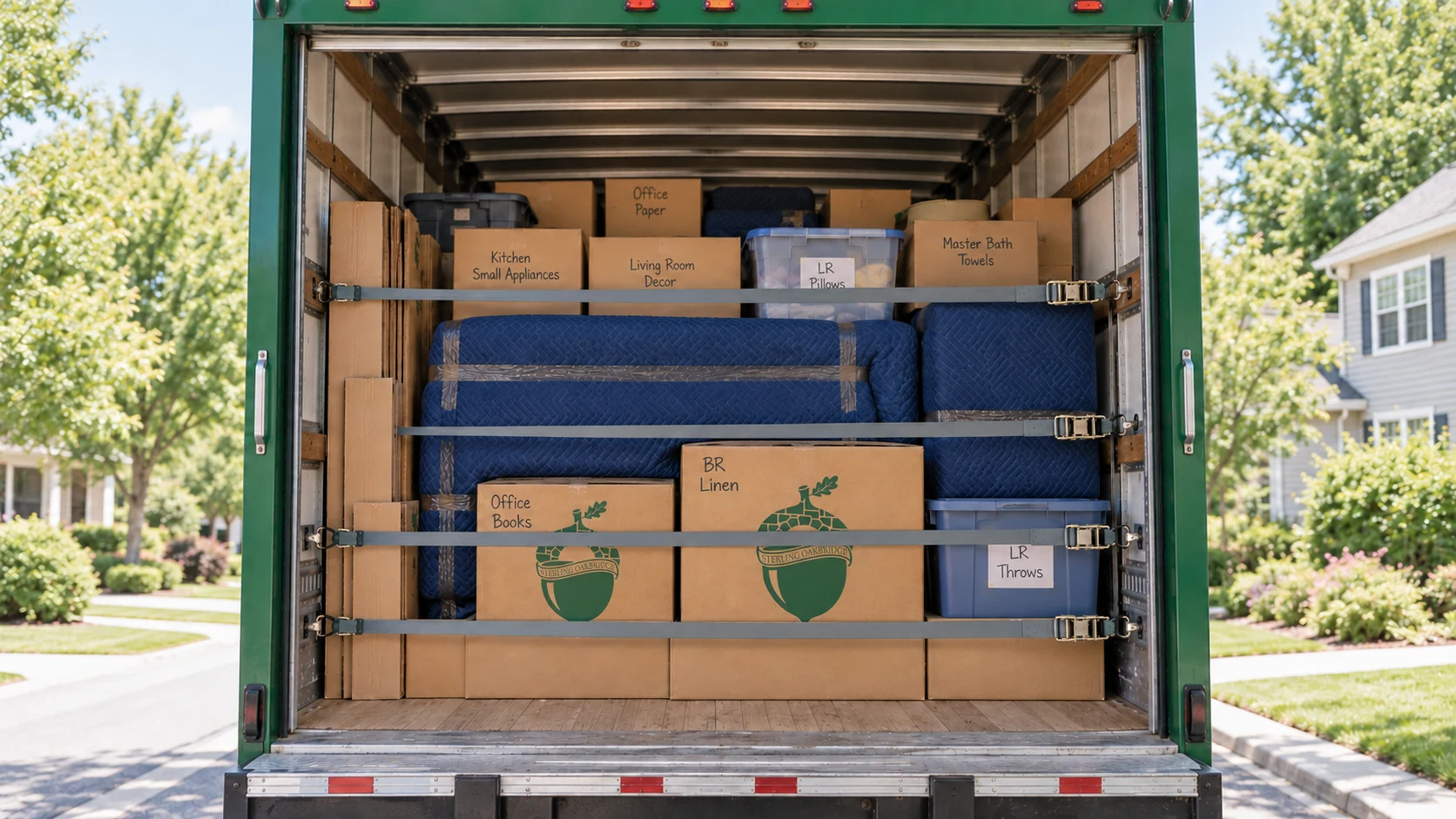
The normal Lakeland direct illustration is 2–3 days after pickup and loading. Consolidated Florida delivery can have an agreed window up to 60 days for a suitable smaller shipment. Confirm the actual inventory and receiving flexibility before comparing those arrangements. The dedicated truck and same crew belong to the direct model.
At Lakeland, establish possession, the usable entrance, destination rooms and the authorized receiving contact. The household may travel on another schedule. If the property or inventory changes, explain the difference and agree any new work in writing. A longer journey by itself does not increase the agreed flat price for unchanged inventory, access and services.
Example 3: Worcester to Granby, Quebec with shared stair access and separate travel
Suppose a household is moving from a Worcester multifamily apartment to Granby in Quebec. Its route passes through a shared porch entrance and interior stair. It has a dining table with safely detachable long legs, kitchen and book cartons, and personal documents needed during travel. The household will travel separately from the shipment. This is a hypothetical Canadian planning example.
Review the complete origin route before finalizing the preparation method. Start with the entrance and threshold, then document every flight, landing and turn beyond the first visible section. Confirm who may unlock and hold doors, where packing can occur and how the common route will remain available to other residents. The actual unit and building instructions matter throughout that sequence.
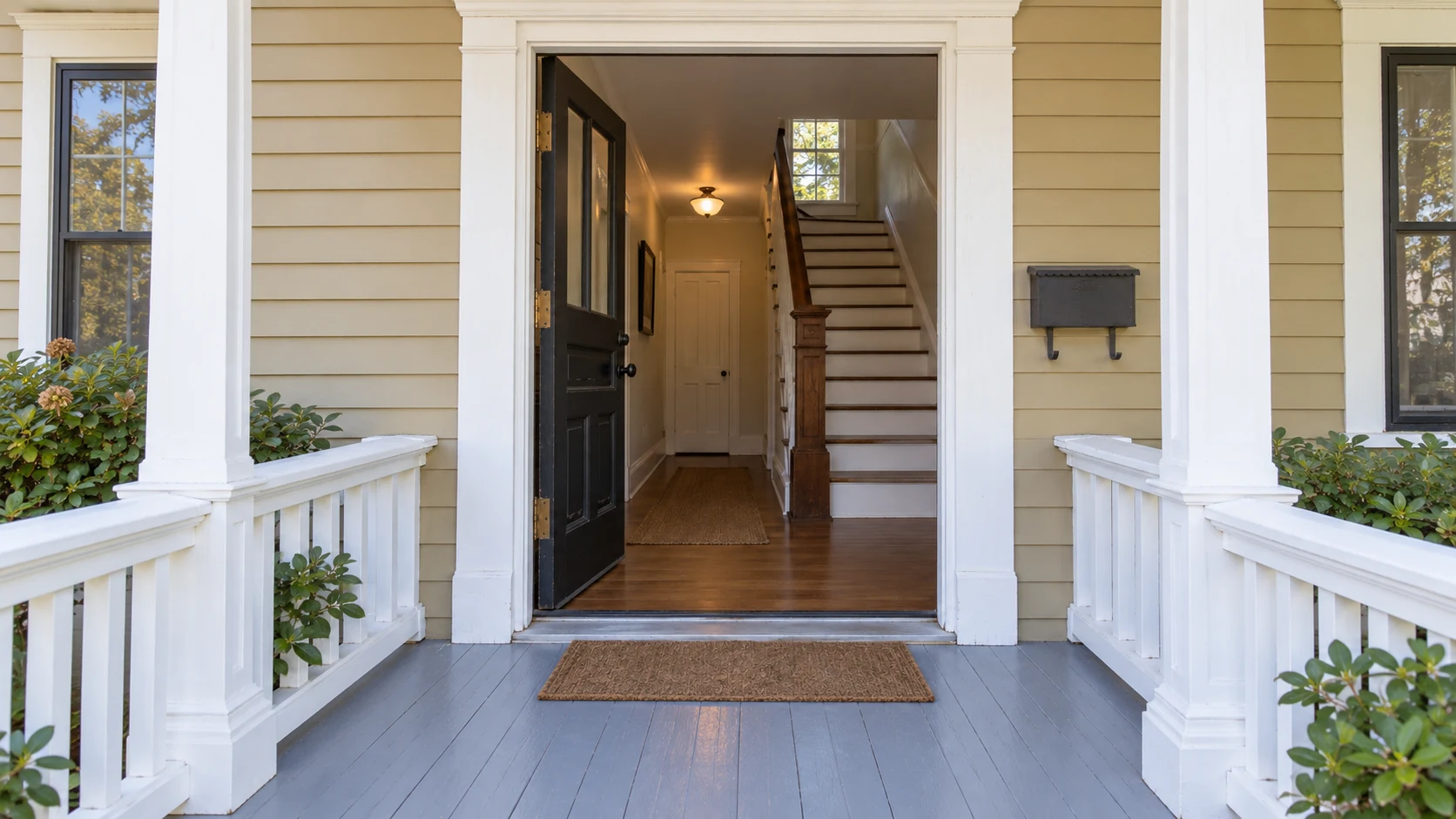
Match the largest pieces to the limiting geometry. Have the table’s actual joints and safe preparation method reviewed. Protect its body first, then protect the complete removed leg set together with the associated hardware. Retain genuine fixed construction and review another permitted method where needed. Agree any complex work separately before relying on it for the stair route.
Keep the packing record useful at both ends. Write room and contents directly on ordinary kraft cartons; use an attached paper label on a customer tote. Identify belongings staying behind. Keep travel essentials and the documents needed on arrival with the household instead of putting them inside cartons that will already be in the truck.
For the applicable situation, CBSA’s moving or returning guidance explains the personal-effects inventory and goods travelling with you versus goods to follow. Review the requirements for your status and controlled items with the appropriate authority and coordinator. The person’s entry, the shipment’s clearance and the receiving appointment are separate confirmations.
Granby’s normal direct illustration is 1–2 days after pickup and loading; consolidated Canada delivery can have a window up to 60 days. The Canadian window applies even when the driving reference is comparatively short. Confirm the accepted documentation, possession and receiving contact before tying delivery to a narrow appointment.
At the home, use the room plan and component labels to direct placement and basic reassembly. Retain the hardware with its matching piece until that work is complete. Check the selected positions and agreed tasks while the inventory and moving documents are available, and record any concern through the agreed process.
Example 4: Worcester to Santa Fe, New Mexico with a smaller selected inventory
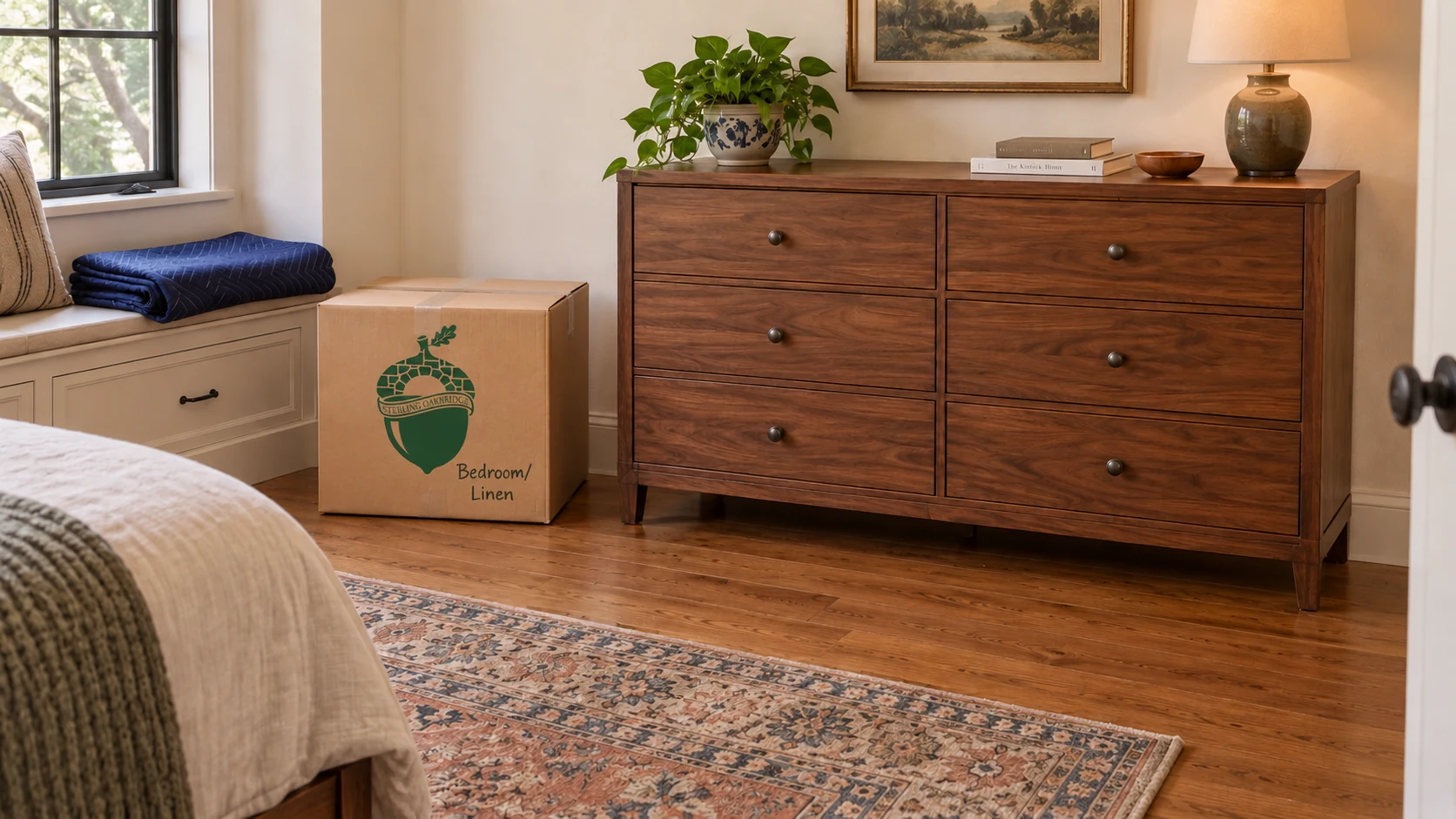
Consider a household sending a walnut dresser, books, linen and a few customer-packed containers to Santa Fe while other ordinary Worcester furnishings remain. The useful task is to identify exactly what will move and choose a receiving window that the household can accommodate. This hypothetical selection is distinct from a substantial whole-house shipment.
List the dresser and every carton or tote, with quantities, contents and any preparation needed. Identify what stays at the origin. Show the dresser’s route to the truck and the entrance at the receiving home. Empty its drawers for the reviewed transport and keep the ordinary drawer/body assembly together, with suitable protection for the body and retained supports.
Different contents call for different packaging. Put dense books into a suitable smaller book carton, linen into the appropriate medium format and customer belongings into identified totes where suitable. Mark receiving rooms and contents on the packaging and inventory. This information helps compare the actual shipment without making the rest of the home part of the order.
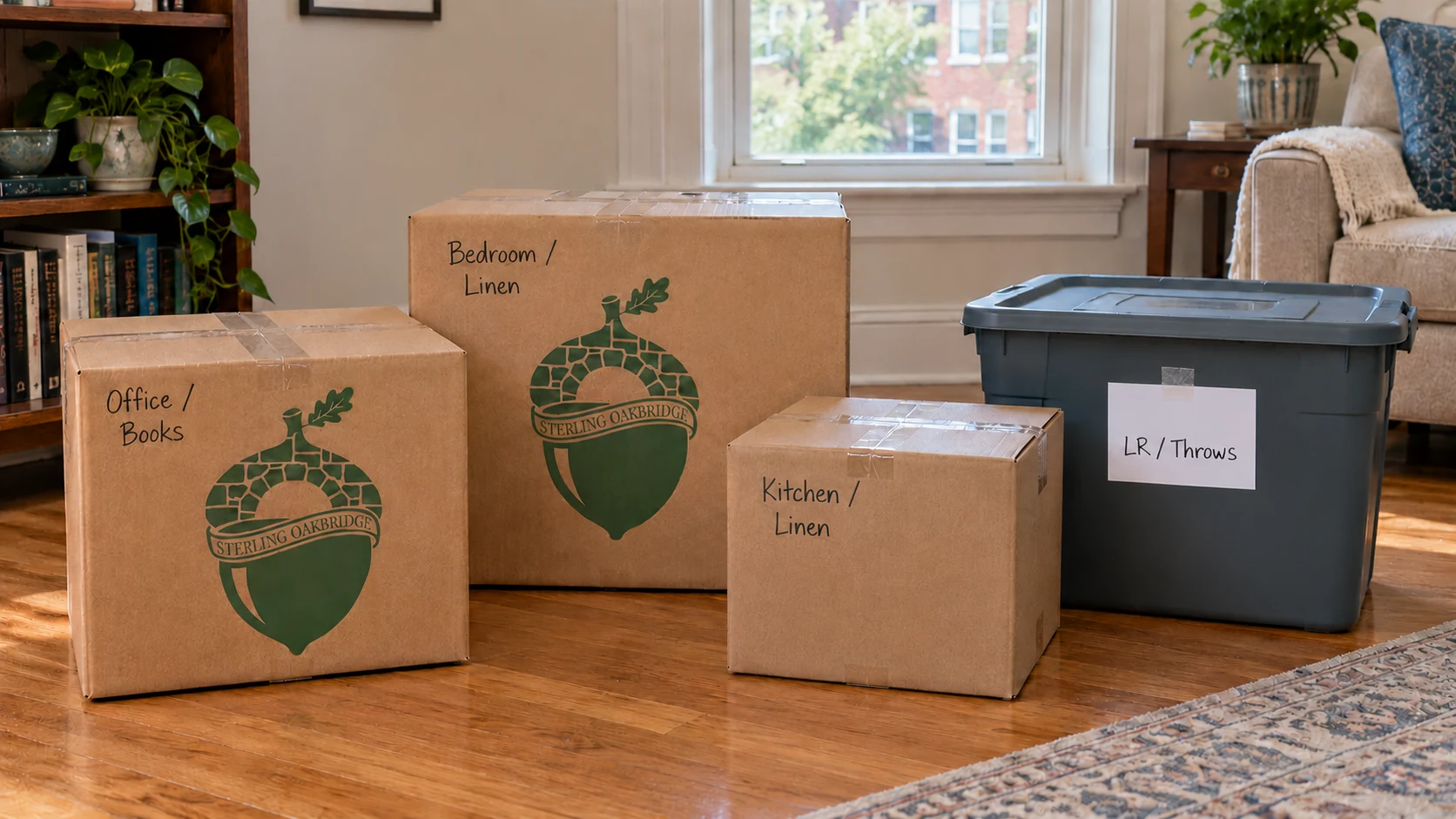
Agree which areas remain in use while the selected items are prepared. Packing a few pieces does not require every other room to be cleared. Keep the chosen route and staging area available, and report any added item while the estimate can still reflect the changed inventory.
Santa Fe has a normal direct illustration of 4–5 days after pickup and loading. Its consolidated window is agreed individually; the California figure is not a policy for New Mexico. Discuss the earliest confirmed receipt, the household’s travel and how much receiving flexibility is practical. Any storage or additional handling needs an actual resource and written terms.
At the receiving home, agree the dresser’s final position and keep its footprint and approach clear. Place the selected piece, remove its protection and retain access to the identified carton. Existing furnishings elsewhere can remain in ordinary use. Check the selected arrangement with the authorized receiving contact before the crew leaves.
Furniture unwrapping and unpacking every sealed carton are separate tasks. If carton unpacking or packaging removal is wanted, include it in the scope. Keep the paperwork associated with the delivery and record any issue while the piece, inventory and agreed conditions can still be compared.
Keep the flat rate tied to the reviewed scope
For unchanged long-distance inventory, access and services, the agreed flat price stays the same when travel or delivery takes longer. Added furniture, unfinished packing, another stop or changed building conditions can change the work. Have those changes reviewed and agreed separately in writing before the affected operation.
Send uncertainty with the initial estimate request: provisional dates, access awaiting approval, rooms still to pack and receiving arrangements not yet settled. Our planning team can recommend a list, video or in-person review according to the actual job. The person surveying the move performs a separate role from the crew carrying it out.
| Work or material | What to establish |
|---|---|
| Basic furniture disassembly and reassembly | Moving labor includes basic work without a separate basic assembly surcharge; review actual construction and access. |
| Moving blankets, shrink wrap and tape | No separate basic material charge; select protection for the actual pieces. |
| Company-supplied cartons | Charged separately; agree suitable formats and quantities. |
| Packing work | Define full or selected-room work and the preparation the household will complete. |
| Furniture unwrapping | Part of delivery; distinguish it from unpacking carton contents. |
| Optional carton unpacking and packaging removal | Agree unpacking work and separately charged removal before relying on them. |
| Complex furniture, specialist work and storage | Review the item, operation, access and stages individually. |
Resolve Worcester parking and public-space questions
Read the City’s on-street parking instructions for the actual frontage. General meter hours have district and event exceptions. Ask Transportation and Mobility about the proposed truck position, duration and operating space. The City describes long-term meter rental for construction workers; confirm whether it fits your particular move.
The linked Park Worcester meter-rental form describes review and contact within 1–2 business days, with payment instructions if approved. Assign the applicant and the person available locally for any required signs or checks. Obtain the instructions for the actual operation before relying on that space.
For a street or sidewalk obstruction, lane closure or container, ask Worcester 311 for DPW Engineering’s direction. Describe what will occupy the public space, for how long and how pedestrians and traffic will be accommodated. Confirm the applicant, approved signs, charges and any police detail separately from the moving quote. Match those permissions with property access and keys.
Prepare for weather, possession and unwanted belongings
Check the exact street and current announcement using Worcester’s winter-parking guidance. Permanent and declared bans differ. Recheck lawful truck access and the complete outdoor route before arrival, including snowbanks, private walks, porch steps and the landing.
The winter-weather page gives the ten-hour sidewalk-clearing rule after snow ends and a four-foot path in front and along all sides of a corner property. Assign clearing and treatment before the crew needs the route. Review the largest pieces against the actual approach; the pedestrian minimum does not establish their turning clearance.
Keep discarded goods outside the moving inventory while there is time for an accepted collection or donation route. Worcester’s bulk instructions distinguish resident drop-off from paid curbside collection and prohibit commercial vehicles at the resident facility. Confirm eligibility, appointment and item preparation separately.
After unpacking, follow the City’s recycling instructions: break corrugated cartons into pieces no larger than two feet by two feet and separate other packing waste. Establish the building’s actual collection arrangement and preserve usable shared exits while rooms are unpacked.
If possession or access may be delayed, agree the decision deadline, authorized receiving person and actual alternative resource before dispatch. Waiting, storage or a later delivery requires a reviewed scope. Keep essentials with the household and nominate who can approve a change while it is travelling.
Long-distance moving questions
Where can I arrange long-distance pickup around Worcester?
We can review long-distance pickup in Worcester and nearby addresses, including Auburn, Shrewsbury and Leicester. Worcester is a City; Auburn, Shrewsbury and Leicester are separate Towns. All four are in Worcester County. Confirm the actual municipality, inventory, legal truck position, building route and dates before choosing the applicable local procedure.
What does direct dedicated delivery include?
Direct delivery uses a dedicated truck for the reviewed shipment and the same moving crew at pickup and delivery. Agree both building routes, the inventory and actual dates in writing. The person surveying or planning the move performs a separate role and is not necessarily on that crew.
When is consolidated delivery useful?
A smaller shipment with flexible receipt can suit consolidated delivery, illustratively around 300–400 cubic feet or less. That is not a minimum volume. Describe the actual pieces, cartons and totes, then agree receiving conditions, crew arrangements and any additional handling or storage separately.
When does the delivery window start?
The clock starts after pickup and loading are complete. The household’s own travel, possession date and building applications are separate timelines. The route table gives normal planning illustrations; confirm the actual appointment for the inventory, vehicle, route and receiving home.
Could a Worcester-to-Concord move arrive the same or next day?
A suitable close domestic shipment can be reviewed for same-day or next-day receipt when preparation, routing and access at both properties support it. The normal Concord illustration is 1–2 days after pickup and loading. Confirm the actual appointment before tying it to an afternoon key handover.
What is the Lakeland delivery illustration?
Direct delivery for the illustrative Worcester-to-Lakeland direction is normally planned at 2–3 days after pickup and loading. Consolidated Florida delivery can have an agreed window up to 60 days. Arrange possession, the receiving contact and building access separately from the household’s journey.
Does a close Canadian destination get the domestic consolidated window?
No. Granby has a normal direct illustration of 1–2 days, while consolidated Canada delivery can have a window up to 60 days. The applicable border process, documents and receiving appointment need confirmation. Distance alone does not establish customs eligibility, clearance time or duty-free entitlement.
Does New Mexico use the California consolidated window?
No. Santa Fe has a normal direct illustration of 4–5 days after pickup and loading; its consolidated window is agreed individually. California has its own policy. Use the actual destination and receiving arrangements instead of transferring that window to every western state.
Does a longer journey increase the agreed flat rate?
For unchanged long-distance inventory, access and services, the agreed flat price holds when travel or delivery takes longer. A delay itself does not change the reviewed scope. Added belongings, different access or new services are reviewed and agreed separately in writing.
What should be reported after the estimate?
Report added or omitted items, packing still to be completed, a different floor or entrance, an extra stop, unavailable booked access or revised receiving requirements. Explain what has changed and have the affected scope and price agreed before the additional work.
Which materials and basic preparation are included?
Basic furniture disassembly and reassembly use moving labor without a separate basic assembly surcharge. Moving blankets, shrink wrap and tape have no separate basic material charge. Company-supplied cartons are separate. Agree packing work, complex furniture, optional carton unpacking, packaging removal and storage in the written scope.
How should removable furniture parts and drawers be prepared?
Review the actual construction. Safely detachable long table and desk legs are normally removed: protect the body first, then protect the complete removed set together with associated hardware. Empty ordinary dresser drawers and retain them in the body. Genuine loose removable shelves are separately protected; fixed structural shelves remain unless a specific reviewed method requires more work.
How should cartons and customer totes be labelled?
Identify the destination room and contents directly on ordinary kraft cartons. Attach a paper label to a customer tote. Keep dense books in a suitable smaller carton and lighter linen in the appropriate larger format. Identify anything staying behind and keep travel essentials accessible to the household.
Can paying a Worcester meter reserve the moving space?
Payment records a parking session; it does not by itself grant exclusive curb use for a household move. Read the actual signs and contact Transportation and Mobility about the proposed vehicle, frontage, duration and space required. Confirm the applicable arrangement before relying on it.
Is the Park Worcester review interval a moving-permit deadline?
The linked meter-rental form says applicants will be contacted within 1–2 business days after review and receive payment instructions if approved. The City describes long-term rental for construction workers. Ask whether it fits the actual move; that contact interval is not a universal moving deadline or approval guarantee.
Who should review a street or sidewalk obstruction?
Ask Worcester 311 for DPW Engineering’s direction. Describe the truck, ramp or liftgate, proposed frontage, duration and any lane, sidewalk or container use. Obtain the conditions for that actual operation, including applicant, signs, charges and any traffic control. Building permission and public-space permission have separate owners.
What changes for a winter pickup?
Recheck the exact street and Worcester 311’s current winter-parking information. Permanent and declared bans have different rules. The City requires sidewalk clearing within ten hours after snow ends, with a four-foot path in front and on all sides of a corner property. Review the private walk, steps and landing as well.
Can the moving truck use the resident bulk drop-off facility?
Worcester’s resident drop-off instructions prohibit commercial vehicles. Arrange an eligible disposal or donation route separately. The City lists paid Casella curbside service for eligible homes with up to six units, or another licensed hauler. Confirm the appointment, item preparation and charges before putting unwanted belongings outside.
What if the receiving home is not available?
Discuss the possession gap and decision deadline before dispatch. Waiting, storage or a later delivery needs an actual resource, authorized receiving person and agreed scope. Keep essentials with the household and identify who can approve a changed arrangement while the shipment is travelling.
Explore long-distance destinations from Worcester
These destinations illustrate household shipments from Worcester within Sterling’s reviewed United States and Canada coverage. Send both addresses, the inventory, access information and dates, then agree the actual shipment and receiving window.
Northeast and nearby interstate examples
- Concord, New Hampshire
- Portland, Maine
- Providence, Rhode Island
- Albany, New York
- New York City, New York
- Hartford, Connecticut
- Philadelphia, Pennsylvania
- Washington, District of Columbia
Southeast and Florida
- Lakeland, Florida
- Tampa, Florida
- Jacksonville, Florida
- Orlando, Florida
- Richmond, Virginia
- Raleigh, North Carolina
- Savannah, Georgia
- Charleston, South Carolina
Midwest and Texas
- Cleveland, Ohio
- Columbus, Ohio
- Chicago, Illinois
- Detroit, Michigan
- Minneapolis, Minnesota
- Dallas, Texas
- Houston, Texas
Mountain West and Southwest
- Santa Fe, New Mexico
- Albuquerque, New Mexico
- Denver, Colorado
- Phoenix, Arizona
- Salt Lake City, Utah
Washington, Oregon and California
- Seattle, Washington
- Spokane, Washington
- Portland, Oregon
- Sacramento, California
- Los Angeles, California
Canada
- Granby, Quebec
- Sherbrooke, Quebec
- Montreal, Quebec
- Ottawa, Ontario
- Kingston, Ontario
- Toronto, Ontario
- Vancouver, British Columbia