
New Jersey · Lakewood service planning
Packing and Unpacking Services in Lakewood, NJ
Keep the evenings you need and hand over the packing work you choose.
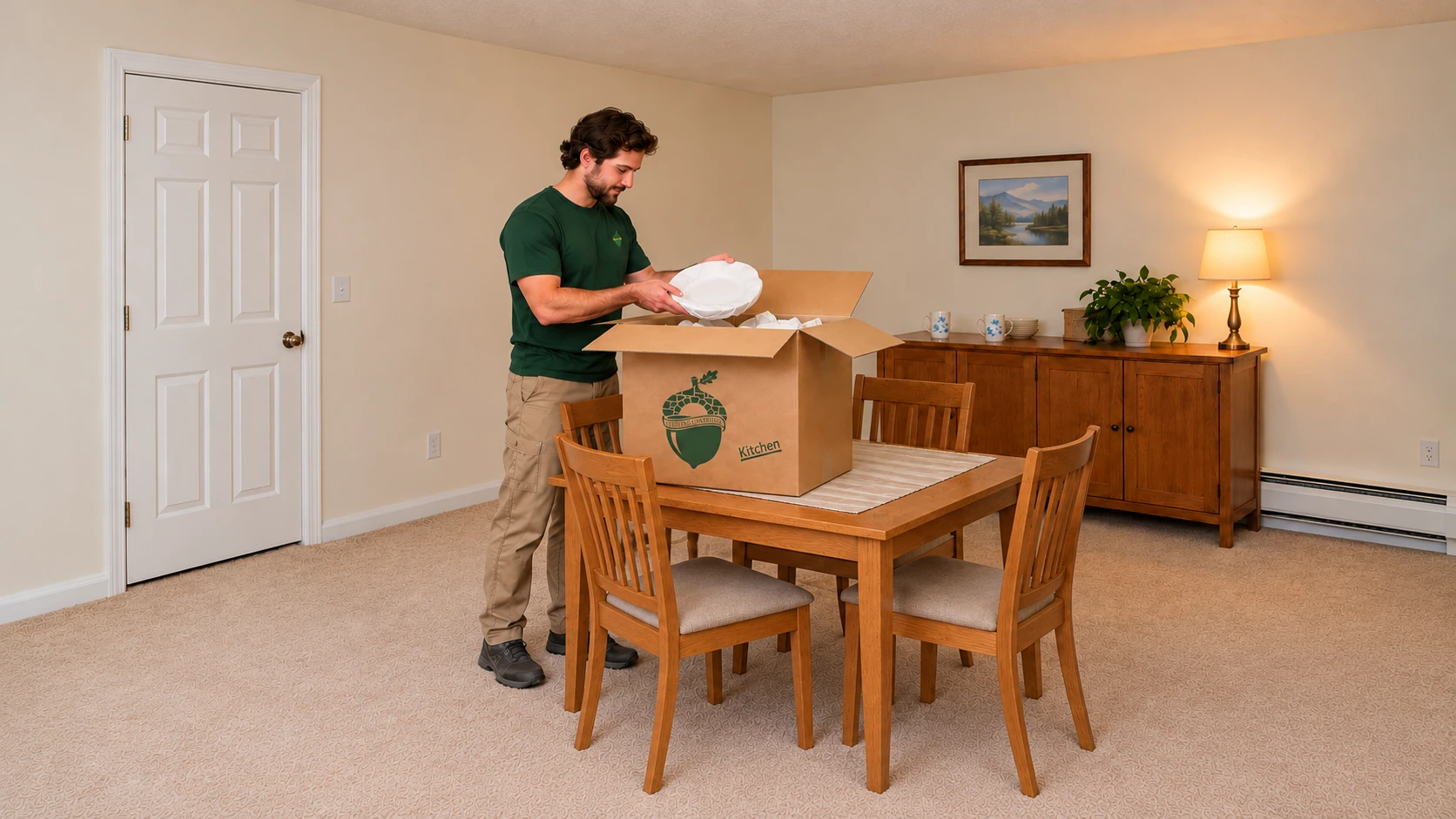
Sterling Oakbridge prepares agreed household contents in Lakewood, from a fragile kitchen group to full packing, with optional unpacking and separately arranged organizing after arrival.
Start with what should still work at home tonight and what you need to use after delivery. Those two lists help determine the preparation visit, materials, labels and receiving work. You can ask us to pack everything in the reviewed inventory, selected rooms or ordinary fragile contents while you complete the rest.
Explore packing, costs and local examples
Decide which work you want to hand over
A cupboard can look nearly finished while its contents still need sorting, wrapping, boxing and labelling. Add that work to meals, work hours and the belongings still in daily use. Choose the help that protects your remaining time rather than relying on the number of bedrooms.
Full packing covers the agreed retained inventory; it does not make decisions about somebody else's belongings or automatically include unpacking. Partial packing assigns named rooms, cupboards or categories to the crew and leaves an explicit household list. Fragile-only preparation can cover ordinary dishes and glassware after review. Unusual art, large glass and sensitive collections need their own object-specific assessment.
| Choice | What to identify | Useful result |
|---|---|---|
| Full packing | All contents travelling, items staying and release times | The reviewed household inventory is prepared for the agreed journey |
| Partial packing | The crew's groups and the groups you finish | Both sides know what must be ready before loading |
| Fragile-only | Actual ordinary fragile pieces and suitable protection | The named fragile group is prepared without assuming the rest is ready |
| Later unpacking | Remaining cartons, ready surfaces and priorities | The agreed contents become accessible in the occupied home |
Review the contents behind the doors
Open cupboards, closets and shelves during the inventory review. Include the selected contents upstairs, downstairs and in any storage space, as well as loose possessions outside the obvious rooms. Identify books, dishes, toys, hanging clothes and collections separately; their weight, shape and protection needs differ.
The 2020–2024 ACS housing table for Lakewood CDP estimates 5,293 housing units in detached single-unit structures and 4,705 in attached single-unit structures. Those are housing units, not buildings, customers or packing volumes. Lakewood CDP sits within Lakewood Township; the actual address and household determine the working plan.
A household expecting 20 cartons might discover enough retained contents for 60 or 100. This illustrates why opening the storage spaces matters; it is not a Lakewood average or a carton allowance. Confirm who supplies cartons and whether existing containers suit their proposed contents. Show uncertain, leaking, perishable or restricted items before assuming they can join the shipment.
Consider: fragile kitchen contents in a working apartment
Imagine a household in a modest garden apartment preparing to leave while both adults still have workdays to finish. Lakewood includes garden-apartment settings such as Clifton Arms. Confirm the actual stairs, common passage, management requirements and working period for your property.
The household chooses fragile-only packing for selected kitchen cupboards. It keeps two breakfast mugs, daily plates, a pan and the travel group accessible. The coordinator reviews the actual dish inventory, working table, carrying route and permitted period. If the remaining books and clothing will be packed by the household, list that responsibility and its ready time.
Pack the agreed fragile group before the final evening, leaving finished cartons away from the exit and common passage. The household gets protected kitchen contents without losing its last breakfast or assuming every room is finished. If the household cannot complete its assigned packing, tell the coordinator before loading relies on the original plan.
Match the preparation to the whole journey
Protection has to survive the carrying route, loading, restraint and travel. Ordinary small fragile contents need individual protection, cushioning and suitable cartons; heavy contents need manageable groups and sound containers. A sealed lid alone does not show that a carton is properly prepared.
Show furniture glass, removable shelves, drawers and fittings before the method is chosen. Drawers are normally emptied and secured with their furniture, with removable components and hardware kept matched. Basic furniture disassembly and reassembly use moving labor time without a separate basic assembly surcharge. Complex mechanisms and specialist pieces need a reviewed scope. Ask for an object-specific art and antiques plan for unusual pieces.
Decide what must remain usable before booking the preparation visit. An earlier packing day can take pressure off departure, but some smaller reviewed inventories can fit a same-day plan. The actual contents, access, staffing, materials and household release times decide. Keep medicine, identification, keys, chargers, private documents and necessary clothing with the people who need them. An open-first shipment carton is not the same as luggage that stays with you.
Keep different households and destinations distinguishable
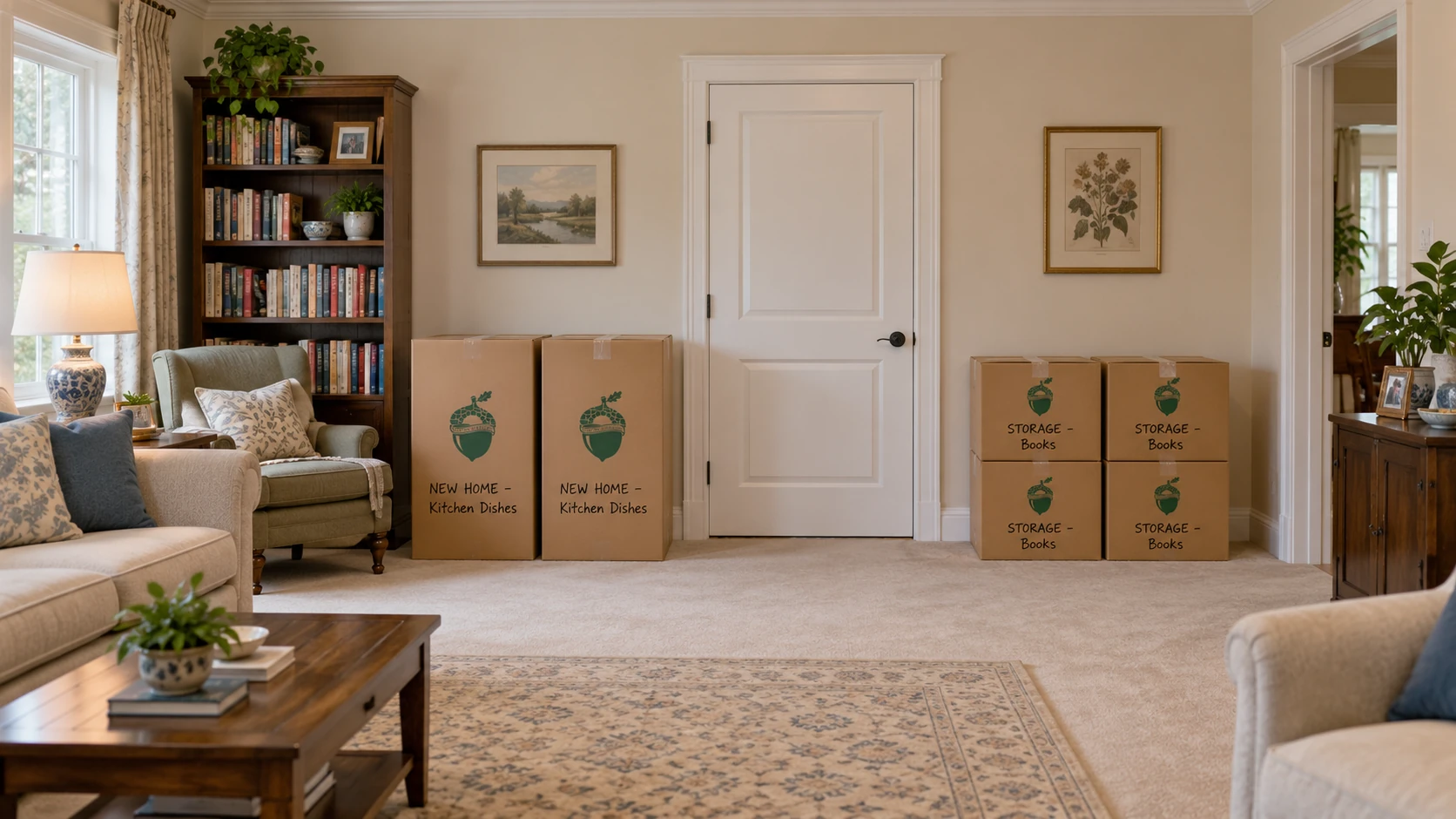
Write the household or recipient, next destination, receiving room and useful contents on each carton. Add a box number and opening priority where helpful. Color supports the written instructions; it cannot substitute for them when another person receives the load.
Separate the groups where the crew can work without narrowing the exit. Name what stays at the property, what goes to another address and what requires an agreed storage stage. Instructions need to remain consistent from packing through loading to the receiver. Confirm the storage and later-delivery arrangement before relying on it.
Consider: the attached home contains two households' belongings
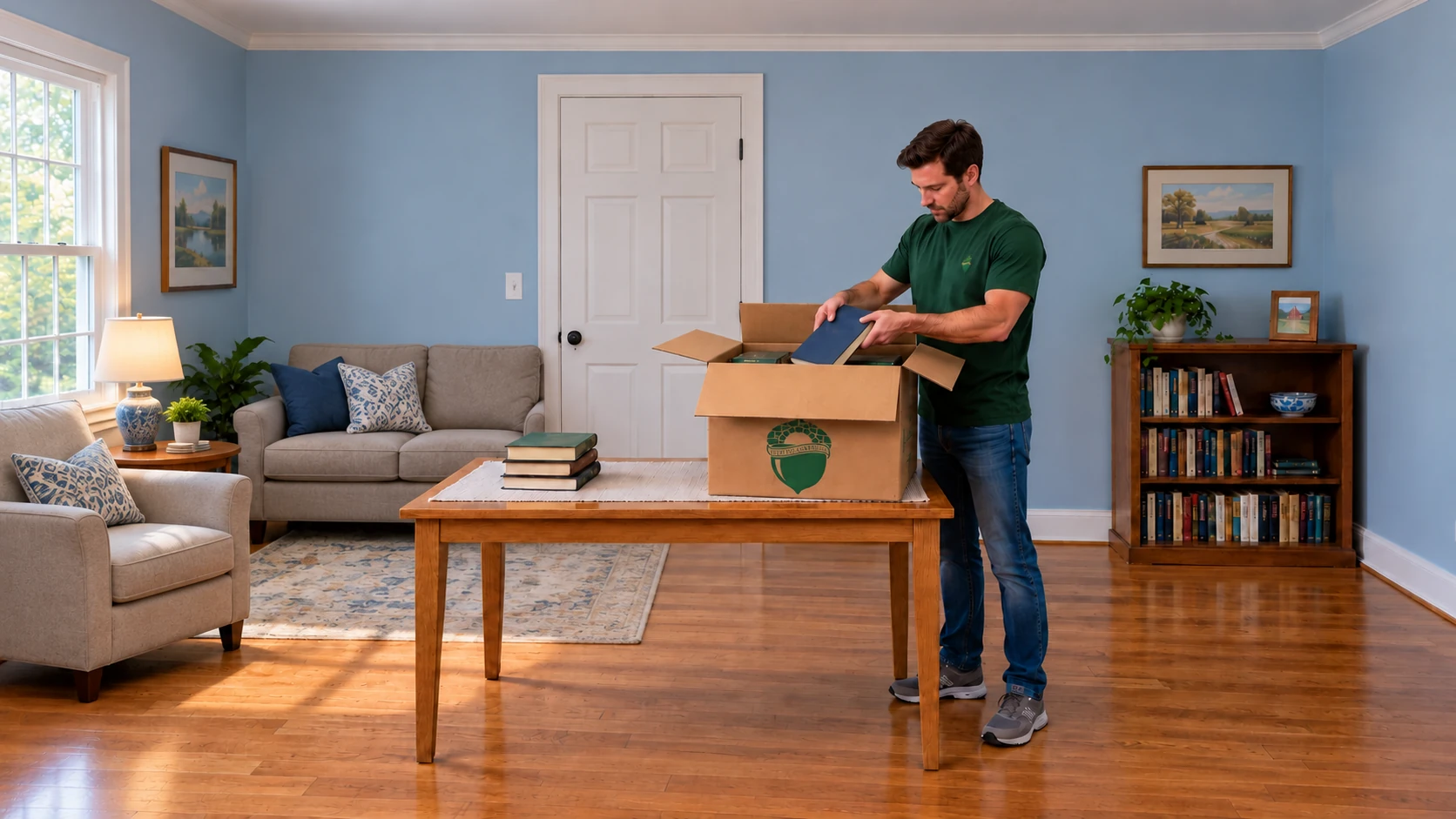
Imagine two households sharing an attached home, with one moving and the other remaining. Identify the actual households and the person who can authorize each release; an attached-home description does not identify who owns the contents or establish a separate entrance. Ask which cupboards, shelves and downstairs contents belong to each household before packing starts.
The moving household selects its books, games, tableware and spare linens. The staying household marks its possessions clearly. One selected group goes straight to the receiving home; a smaller agreed group goes to storage. Do not pack a neighbour's or relative's belongings simply because they share a room or shelf.
Use complete written destination labels for the two shipment groups and identify the keep-at-home contents separately. Review each actual stair, turn and exit, without inferring a separate entrance from the house type. Check who can release and receive each group, and what happens if storage or keys are delayed. The result is an accountable inventory for the departing household, with the remaining household's everyday space still usable.
Choose what unpacking should make useful first
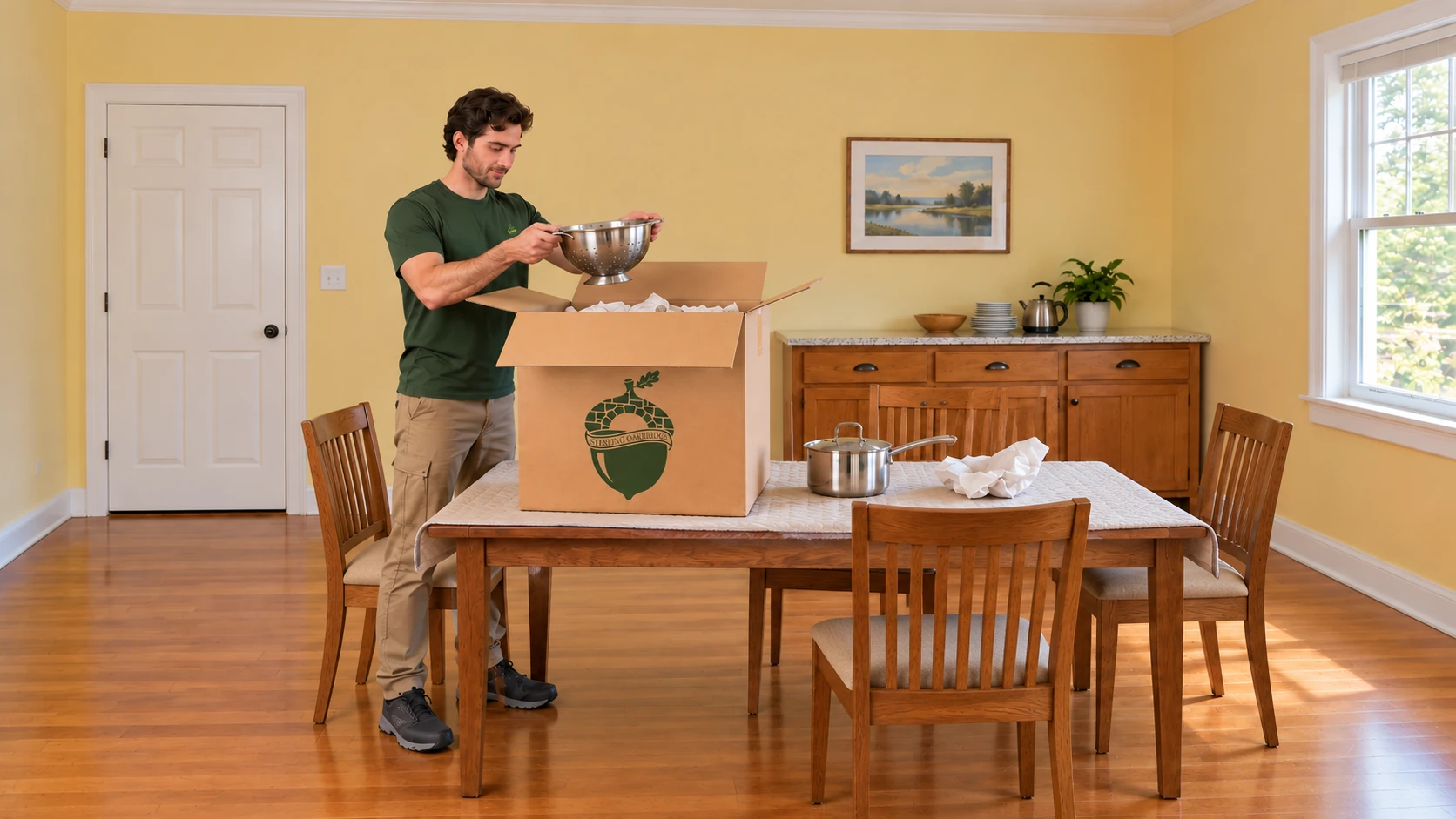
Basic unpacking opens the agreed cartons and places their contents on suitable available surfaces. Choose a practical first result: everyday dishes on a cleared table, accessible clothing or the contents needed for a working morning. Keep unopened cartons and the travel group distinguishable from checked empty packaging.
Unpacking does not automatically assign cupboard positions, connect appliances or finish the whole home. Furniture is unwrapped and placed as part of the delivery arrangement; opening packed contents is optional work. Identify priority rooms and the surfaces that will actually be ready before adding unpacking time.
You can also ask for help after moving in. Send the remaining carton groups, the occupied-room layout, useful clear surfaces and the desired stopping point. Three or four additional delivery-day hours or a later two-person visit are planning examples, not included time, a guaranteed staffing level or a reserved appointment. Availability and the reviewed scope determine the arrangement.
Consider: only part of the receiving kitchen is ready
Imagine the shipment has arrived in Lakewood but one cupboard area is still being finished. The household needs breakfast and school or work routines to function before every room is settled. Agree exactly which cupboards have been released for use before setting the unpacking scope.
Release a suitable cleared table for the agreed everyday dishes and utensils. Leave the cartons for unavailable cupboards closed in a location that preserves circulation. Basic unpacking makes the selected contents accessible; the household can use them without repeatedly emptying and repacking a room that has not been released.
If organizing is ordered too, the household can direct selected belongings into ready cupboards after unpacking. Keep the unavailable area out of that promise. Agree any later visit separately and check emptied paper and cartons for fittings before the material is gathered. This leaves a functioning daily group, with the remaining contents and any later visit clearly identified.
Separate final placement and finishing work
Home organizing places belongings in their final locations under your instructions. Identify the cupboards, shelves and priorities, and make the person choosing those positions available. A smaller agreed team can be easier to direct. Organizing has an individually agreed scope and price; it is a separate choice from making contents accessible on a table.
Moving existing furniture to another room belongs to the in-home moving plan, with its own pieces and carrying route. Collecting a newly purchased item from a seller belongs to furniture delivery, including release, transport and receiving arrangements. Neither is automatically added because unpacking reveals that the room needs a different layout.
Mounting, handyman work and technical setup need named tasks, a responsible executor, permissions and an individual price. Show the object, wall and fixings for mounting. Define backup, disconnection, reconnection and testing for technical equipment separately. General handyman availability does not establish electrical hookup or a completely operational home office.
Plan the empty material before it fills the room
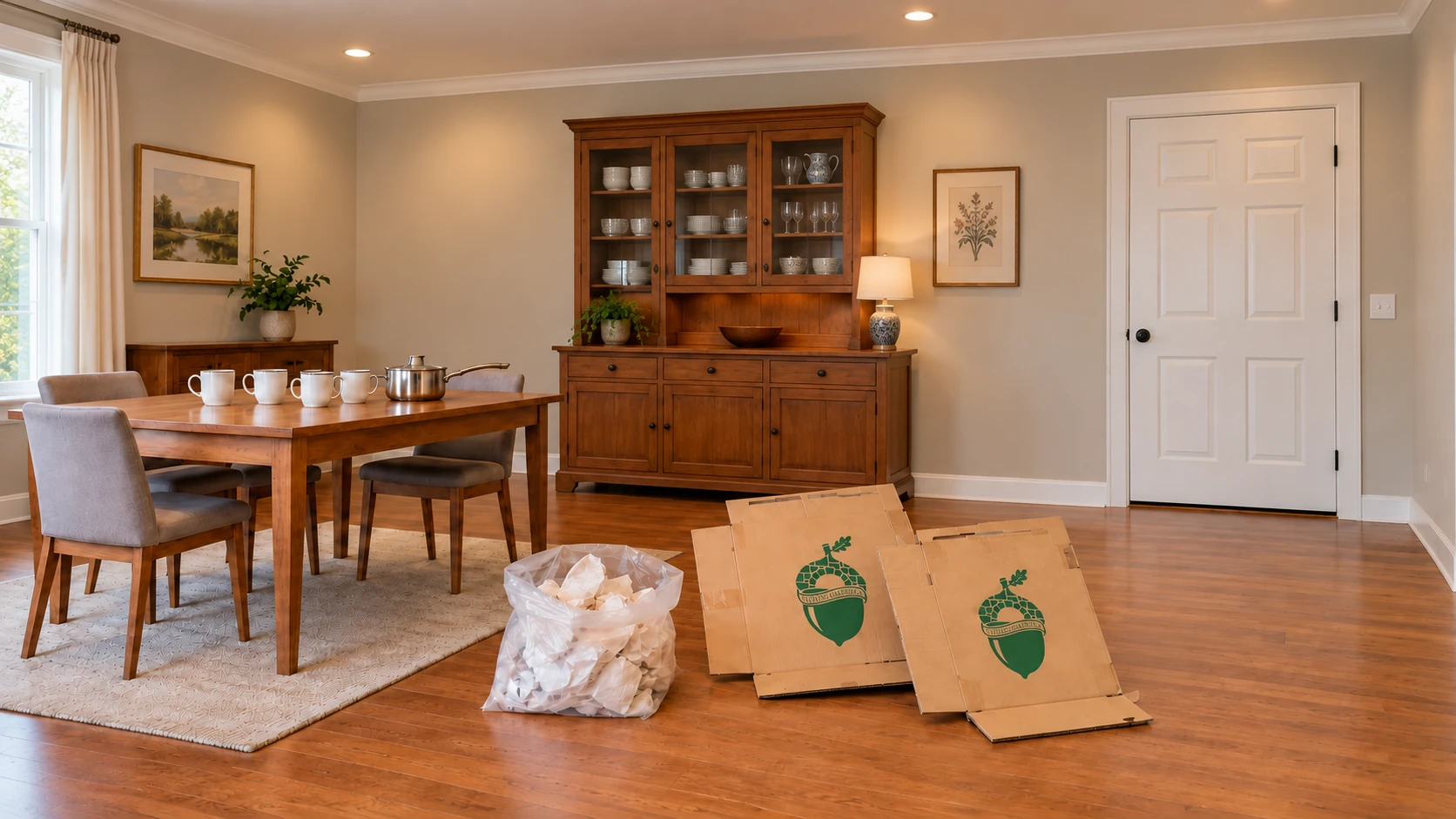
Check emptied paper and cartons for small belongings and matched fittings before gathering packaging. Keep full shipment cartons, reusable supplies and outgoing material distinguishable. Packaging removal is separately ordered and charged; agree materials, quantity, access and timing before relying on a collection.
For an eligible household collection, Lakewood Township's recycling brochure lists cardboard for the marked Township recycling container and excludes plastic bags. Do not put film, cushioning and everything inside a box into the same stream simply because the outer carton is cardboard. Confirm the actual material and the property's collection arrangement before setting it out.
The Public Works department, at (732) 905-3405, is the current contact for municipal collection questions. A household route does not establish that a contractor can use it. Unwanted furniture, electronics and construction debris are separate categories; the brochure excludes construction and demolition material from curbside pickup. A cabinet you decide to discard belongs in a separately reviewed removal and disposal plan, rather than the empty-carton group.
Connect receiving help to the delivery arrangement
For a Lakewood long-distance move, choose destination work alongside the actual receiving plan. Direct dedicated delivery uses the same moving crew at pickup and delivery. Consolidated delivery has a wider agreed window and separately agreed handling arrangements. Neither automatically reserves unpacking or an organizing team.
The delivery clock begins after pickup and loading are complete. Keep essentials with the household for the possible wait and identify an authorized receiver with keys and the room plan. Book unpacking around the confirmed arrangement and ready rooms; an intended installation date or a short property period cannot establish a transport appointment.
If the receiving home is unavailable, settle the alternative before dispatching the affected goods. Storage, additional handling, a later delivery or a return team have their own terms and costs. Use the local long-distance page to compare transport choices, and include the contents and receiving tasks you want in the written estimate.
Compare the full paid result
Packing uses working time, and company-supplied cartons are charged separately. Basic moving blankets, shrink wrap and tape have no separate basic material charge. Optional box unpacking uses working time; organizing, specialist preparation, storage, packaging removal and additional visits need their agreed scope and price.
Compare the same retained inventory, access and receiving result in each estimate. Packing and moving can approach twice the cost of moving the same already packed shipment, but the total can fall below or above that illustration. It is not a multiplier, rate or savings promise for a Lakewood home. A separate packing visit also needs its actual work and visit costs included in the comparison.
Send photos or video of the contents, both addresses, stairs and working routes, dates, property periods and destination groups. Name what stays usable, what you will finish and what you want available after arrival. Where the request includes household-goods moving within New Jersey, the required on-site or virtual goods survey comes before the written moving estimate; an initial list does not replace it. A standalone packing request has its own agreed scope.
Lakewood packing and unpacking questions
Can I hand over just the fragile kitchen group?
Yes. Identify the ordinary dishes and glassware to prepare, what you will pack and what stays available for meals. The crew reviews the actual contents and protection before confirming the scope. Large glass, unusual art and sensitive collections need separate object-specific review; fragile-only work does not make the rest of the household ready.
What does full packing cover?
The household contents listed in the agreed inventory, with the exclusions and release times recorded. Show cupboards, closets, shelves and selected storage spaces. Full packing does not decide ownership, include someone else’s possessions or automatically book unpacking, organizing and removal. Those choices belong in the written scope.
Is this Lakewood CDP or the whole Township?
The local setting is Lakewood CDP within Lakewood Township, Ocean County. The Township and Census place have different boundaries, and a postal name does not settle collection eligibility or property arrangements. Send the actual pickup and receiving addresses so the coordinator can review both places and their working routes.
How do we estimate cartons without using bedroom count?
Review the retained contents behind doors as well as visible furniture. Books, dishes, clothes and games need different containers and manageable packing groups. Expecting 20 cartons and discovering enough contents for 60 or 100 illustrates underestimation; it is not a volume prediction for a Lakewood bedroom count or housing type.
Can the apartment remain useful during packing?
Yes, when the retained groups are explicit. Keep a small breakfast group, sleeping needs and personal luggage accessible until the agreed release. Finished cartons need a location outside the exit and common passage. Confirm the actual property period and route with the property contact before booking.
Should we book a separate preparation day?
Discuss it when the inventory is substantial, contents remain in use or a shared route constrains the work. A smaller reviewed local inventory may fit the move day instead. Contents, materials, actual access and release times determine the plan. Ask the coordinator to confirm the time and team for your reviewed inventory.
What stays with the household?
Keep identification, medicine, keys, private papers, chargers and necessary clothing with the people who need them. Include anything needed throughout a possible storage or delivery wait. An open-first label gives a shipment carton priority after receipt; it does not make that carton accessible while the load is travelling.
Are cartons and labor priced together?
Packing uses working time; company-supplied cartons are charged separately. Basic moving blankets, shrink wrap and tape have no separate basic material charge. Review any specialist protection, separate visit, optional unpacking, organizing, storage or removal too. The estimate should identify the actual work and materials rather than imply that all related tasks share one allowance.
Can we supply some containers and finish part ourselves?
Yes, identify the proposed containers and assigned groups during review so suitability and readiness can be checked. Give the household’s part a clear completion time. If you cannot finish, tell the coordinator before the crew relies on the earlier inventory and schedule; an informal intention does not establish that the group will be ready.
How do you avoid mixing two households in one home?
Identify who owns each cupboard, shelf and selected storage group before preparation. Mark the possessions staying at the address, and make the person authorized to release the departing contents available. Separate written shipment labels then follow the actual recipients and destinations. Shared rooms or a shared entrance do not authorize packing everybody’s belongings.
What should the destination label say?
Write the household or recipient, next destination, receiving room and useful contents. Box numbers and opening priorities can help; color reinforces the words. Use consistent instructions through packing, loading and receipt, and keep the groups distinguishable without blocking circulation. A storage label still needs an accepted storage and later-delivery arrangement.
Do attached homes always have the same access plan?
No. Review the actual doors, stairs, turns, shared spaces and loading position for this property. The Census attached-unit category describes housing, not a carrying route or occupancy pattern. Do not infer a separate downstairs entrance, an available truck space or another household’s consent from the building type.
What happens to drawers, shelves and fittings?
Show the actual furniture so the crew can distinguish removable parts from integral supports. Drawers are normally emptied and secured with the piece; matched hardware stays identified. Basic disassembly and reassembly use moving labor time without a separate basic assembly surcharge. Complex furniture and mechanisms require their own reviewed work.
What does basic unpacking leave us with?
The agreed cartons are opened and their contents placed on suitable available surfaces. You might choose everyday dishes and utensils on a cleared table as the first useful result. Final cupboard positions, technical connections and packaging removal are separate choices; basic unpacking does not promise that every room will be finished.
Can you unpack after we have already moved in?
Yes. Send the remaining carton groups, occupied-room layout, available surfaces and desired stopping point. A later visit needs availability and agreed terms. Three or four extra hours or a later two-person visit are examples for discussing the work, not included time, a guaranteed team or an automatically reserved appointment.
What if some kitchen cupboards are still unavailable?
Choose the ready surfaces and contents that can be useful now. Keep the unavailable cupboard groups closed in an agreed location with circulation preserved. Organizing can address ready cupboards if separately ordered. Agree any later visit and its price separately; one functional daily group does not mean the unfinished kitchen is complete.
How is organizing different from unpacking?
Unpacking makes selected contents accessible on suitable surfaces. Organizing puts them into final cupboards or shelves under the household’s instructions. Agree priorities, a manageable team and the price, with the person choosing positions available. A worker setting belongings on a table has not necessarily completed organizing.
Can unpacking include mounting or technical setup?
Only through an explicit separately reviewed task with its executor, permissions and individual price. Mounting depends on the object, wall and fixings. Technical work needs its own shutdown, backup, reconnection and testing plan. General handyman availability does not establish electrical hookup or a fully working home office.
What if we need to move furniture or collect a purchase too?
Existing furniture repositioning uses an in-home moving plan with its actual pieces and carrying route. Collection of a purchase uses a furniture-delivery plan with seller release, transport and receipt. Describe either need when requesting the scope; neither is automatically included in opening cartons or choosing cupboard positions.
Is packaging collection included in unpacking?
It is separately ordered and charged. Agree the materials, amount, access and timing. Check emptied paper and cartons for belongings and fittings, and keep full cartons distinguishable from outgoing material. Gathering empties inside the home does not establish an accepted collection route or an automatic removal visit.
Can all the empty packing material go in Lakewood recycling?
No. The Township brochure lists cardboard for its marked recycling container and excludes plastic bags. Check the actual film, cushioning and other material separately, along with the property’s collection arrangement. A cardboard outer box does not make everything inside it suitable for the same stream. Public Works can clarify the eligible household route.
Does an unwanted cabinet count as packaging waste?
No. Name it as a separate removal item, with the actual carry, material, quantity and accepted destination reviewed. Electronics and construction debris also have their own categories; the Township brochure excludes construction and demolition material from curbside pickup. An empty-carton collection does not automatically cover them.
Does a long-distance shipment include a receiving team for unpacking?
Only if the selected destination work is agreed. Direct dedicated delivery uses the same moving crew at both ends; consolidation has separately agreed handling and a wider receiving window. Book optional unpacking around the confirmed delivery arrangement and ready rooms, with an authorized receiver and keys. Neither transport model automatically reserves organizing or a return visit.
What should we send to get the packing scope reviewed?
Send the contents, addresses, photos or video, stairs and working routes, dates, property periods, destination groups and desired receiving result. Identify the household’s own work and keep-available items. For household-goods moving within New Jersey, an on-site or virtual goods survey is required before the written moving estimate; standalone packing is scoped separately.