
New Jersey · Morristown service planning
Packing and Unpacking Services in Morristown, NJ
Sterling Oakbridge can prepare your household contents and help unpack the agreed cartons at the receiving home.
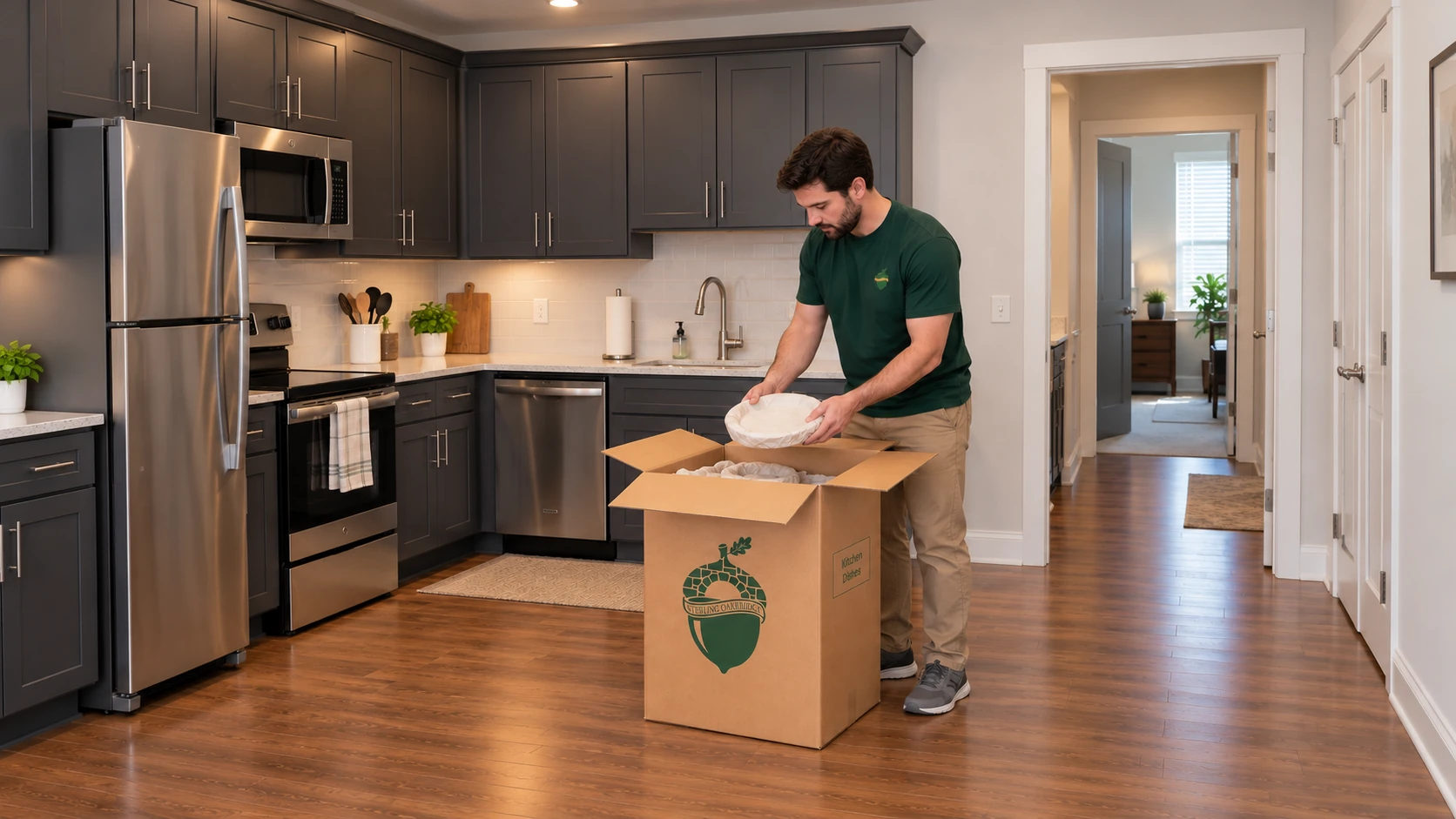
Choose full packing, selected rooms or fragile-only help, then identify what you will finish yourself and what must remain available until departure. We plan the work around the actual inventory, the route through each property and the result you want after delivery; organizing, finishing and empty-material removal need their own agreed scope.
Explore packing, costs and local examples
Decide which work you want to hand over
Packing is more than obtaining cartons. Someone must open the cupboards, decide what is retained, protect the contents, identify their next destination and leave the home usable while preparation continues. Doing that after work can occupy a couple of weeks of evenings for one household, while another has already sorted most belongings. That is an illustration of the task, rather than a local average or a reason everyone needs full packing.
Choose the division that gives you a useful result. Full packing covers the retained contents and preparation listed in the estimate. Partial packing might leave ordinary clothes and books with you while the crew prepares the kitchen. Fragile-only help names the selected ordinary breakables; unusual art, oversized glass and valuable collections need an item-specific review. Keep the agreed exclusions as clear as the included rooms.
A professional visit can preserve time for work, rest or family routines, but only when the decisions needed for that visit are available. Mark what belongs to another household, what is staying and what has not yet been released. The packing crew should not decide which personal papers to keep or whether an inherited cabinet is unwanted.
Consider: selected kitchen packing while the apartment stays in use
Imagine a household in a larger Morristown apartment building that wants to pack everyday clothing itself but hand over the dish cupboards. The household identifies the selected dishes, reserves breakfast supplies and releases one cupboard group at a time. The crew can prepare those agreed contents while the residents retain a usable final evening and morning.
The potential saving is less packing labor than handing over the same entire household. It depends on the owner-packed groups being ready and on a usable work area. Confirm whether the building accepts a separate preparation visit, which entrance it uses and where completed cartons can wait inside the home. A packing visit does not automatically reserve the later moving window.
Review the contents on every level
Show what is inside cupboards, drawers, bookcases and closets. Include the attic room, basement shelves and detached garage if their contents will move. Distinguish a packed wardrobe from a closet still full of clothes, and an empty cabinet from a cabinet containing glassware. Floor area and bedroom count describe the home; they do not reveal the work waiting inside it.
The 2020–2024 ACS housing data for Morristown town include 3,209 housing units in structures with at least 20 units and 2,310 detached single-unit homes, out of 9,360 units. These are units, rather than numbers of buildings or cartons. They support considering different property settings; your own contents and access still require their own review. Morris Township is a separate municipality, and a Morristown postal label does not settle which local rules apply.
A household expecting 20 cartons might find that its retained contents need 60 or 100 once the cupboards and stored groups are included. Those are conditional examples of underestimating an inventory, not a carton calculator or a forecast for your Morristown home. Send open-storage photographs and describe collections and unusual objects before materials and staffing are agreed.
Set aside identification, keys, medicine, chargers, the clothes you will wear and essential work or school items. Keep these with the people who need them. A carton marked “open first” can still be inaccessible while the moving load is traveling.
Protect the object and keep the route usable
Ordinary dishes need suitable cartons, individual protection and cushioning that supports them during carrying, stacking, restraint and travel. The method must suit the contents; a recognizable carton label alone does not establish protection. Glass shelves, cabinet doors, framed photographs and an unusual collection each deserve their own handling decision. Tell us about existing damage and loose or detachable components.
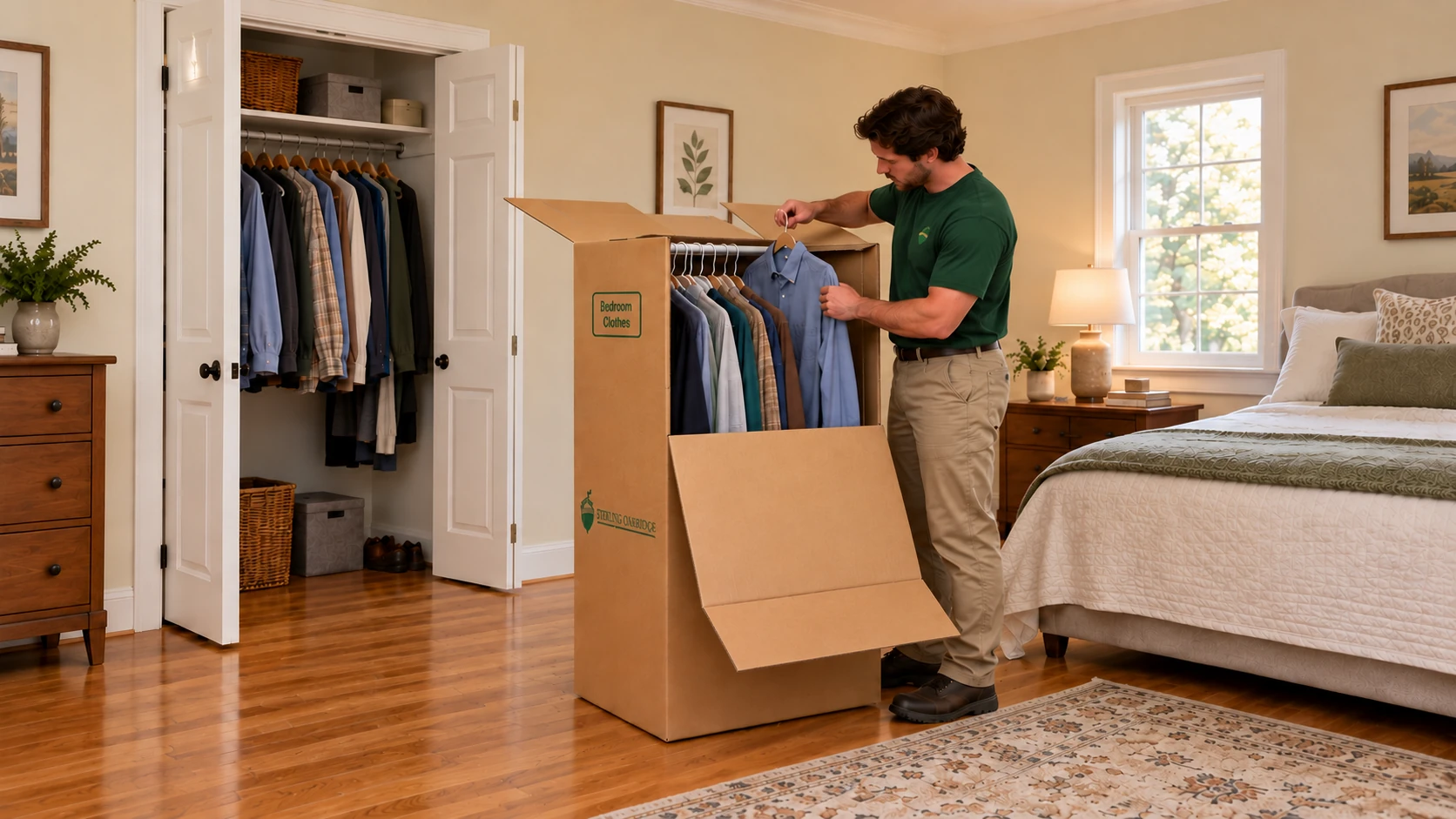
Hanging clothes can be prepared in suitable wardrobe cartons. Keep access to the closet available, separate clothing needed before departure and provide room to load the carton through its actual opening. Shoes, folded clothes and delicate accessories may need different containers. The wardrobe illustration shows one preparation operation, rather than a promise that every closet can be emptied in the same way.
Normally, empty ordinary furniture drawers and keep them secured within the complete protected piece. The construction determines whether a component can safely be removed. Describe the route before treating every leg, drawer or door as detachable. For fine art and specialist protection, show the actual object, dimensions, condition and intended receiving arrangement so the method can be quoted separately.
Clean handling includes choosing protection and, where appropriate, gloves that suit the material and grip. It does not mean using the same white cotton gloves for every object. Keep a clear route around the actual work area; prepared cartons should not occupy the stair landing or a shared entrance needed by another household.
Give preparation and move day their own sequence
Some reviewed studio or one-bedroom inventories can be packed and moved on one day. A two-bedroom home with full cupboards, difficult access or a restricted building period can need a different sequence. A larger retained inventory is often worth discussing with an earlier preparation visit. None of those property labels establishes the staffing or the duration by itself.
Agree what can be completed early and what stays in use. Keep beds, a small kitchen group and necessary work equipment available until their named release time. Identify who closes the remaining owner-packed cartons and who checks that every agreed space is ready. Packing everything early can create unnecessary disruption; leaving every cupboard for move day can make the accepted carrying period unusable.
Consider: a multilevel house with an attic room and a separate garage
Suppose a household is leaving a cared-for older house with retained belongings upstairs, an occupied walk-up room and garage storage. The first review includes those separate groups and their carrying routes. The household finishes its keep-or-remove decisions before an earlier preparation day, while naming the bedroom and kitchen items that must remain available overnight.
For a substantial reviewed inventory, one possible plan could use four packers on an earlier day and six movers on move day. Those numbers illustrate separating preparation from carrying; they are not a standard crew for a three-bedroom house. Compare the extra visit, materials and access with the work it removes from the final day. Confirm the actual team and accepted hours in the estimate.
The Morristown moving page explains the broader carrying and access plan. For this packing visit, confirm permission to bring materials into the property and to use the required rooms. A service-vehicle exception or residential parking sticker does not create a reserved working space. If the proposed position or time cannot work, the coordinator and property controller need an accepted alternative before the visit proceeds.
Label the next destination and the opening priority
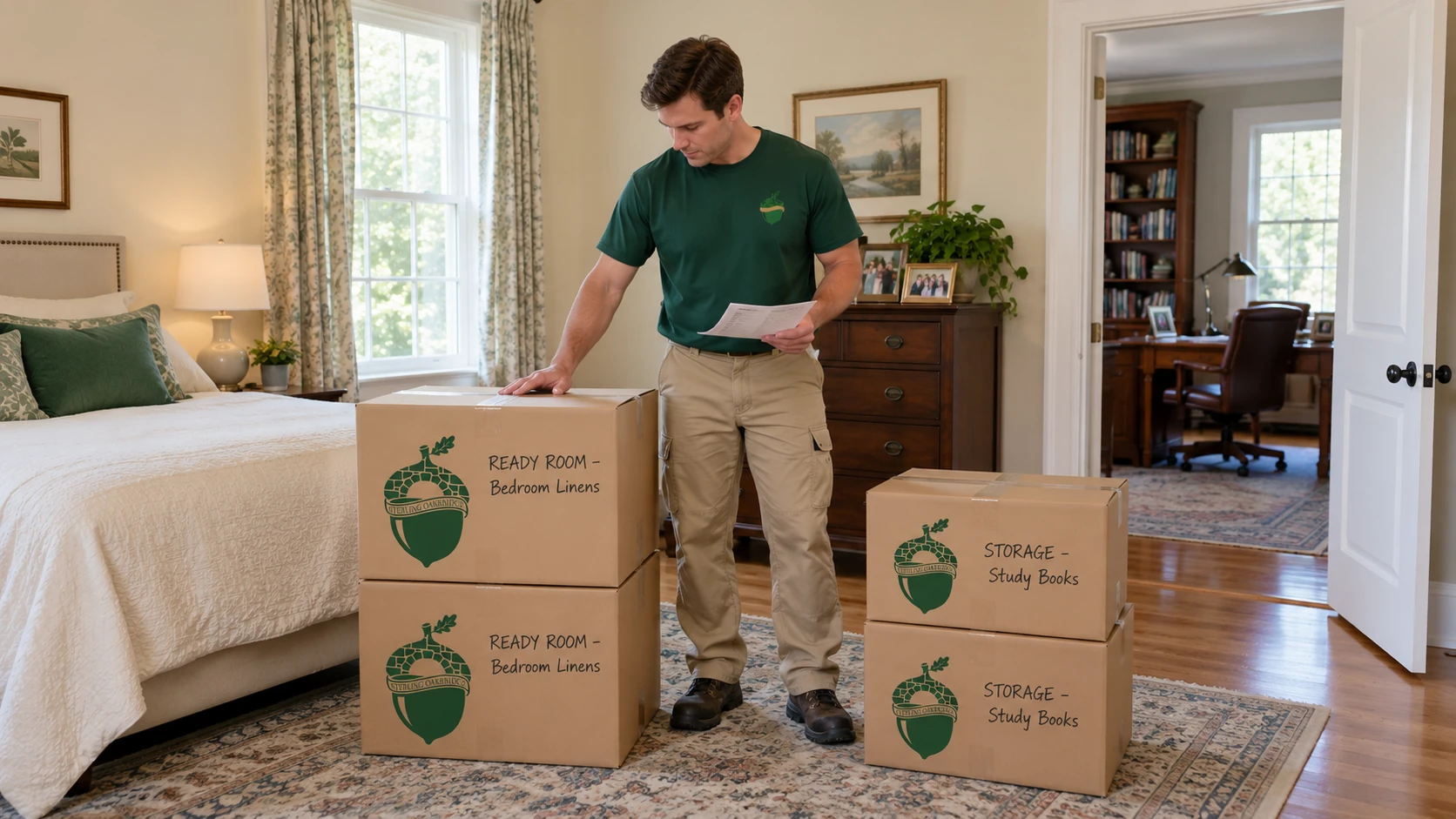
Use written instructions that follow the goods: the next address or receiving group, the room, useful contents and an opening priority where needed. Add a carton number when it helps match the inventory. Color can reinforce those words, but it should not be the only way the crew or receiver identifies the destination.
Separate “take to the new home” from “keep in storage” before loading. Match the labels to the receiving lists and confirm who can accept each group. Storage and later delivery need their own intake, access and release arrangements; labeling a carton for storage does not book space or make it freely accessible there. Keep anything needed during that interval outside the storage group.
Consider: receiving only the rooms released after renovation
Imagine the next home's bedroom is ready but the study remains under work. The household and property controller identify a clear receiving route and the exact rooms released for use. Bedroom necessities go to the accepted receiving area; selected study books and decor form a separately labeled storage group with confirmed intake and later delivery arrangements.
This can avoid unpacking belongings into a room that must soon be cleared again. It can also add storage, handling and a later visit. Compare those costs with another accepted delivery date or a different usable room. Do not fill a corridor or an unfinished work area merely because it is physically empty. Resume the affected unpacking when the room is released, surfaces are available and the coordinator accepts the new plan.
Choose a usable result for box unpacking
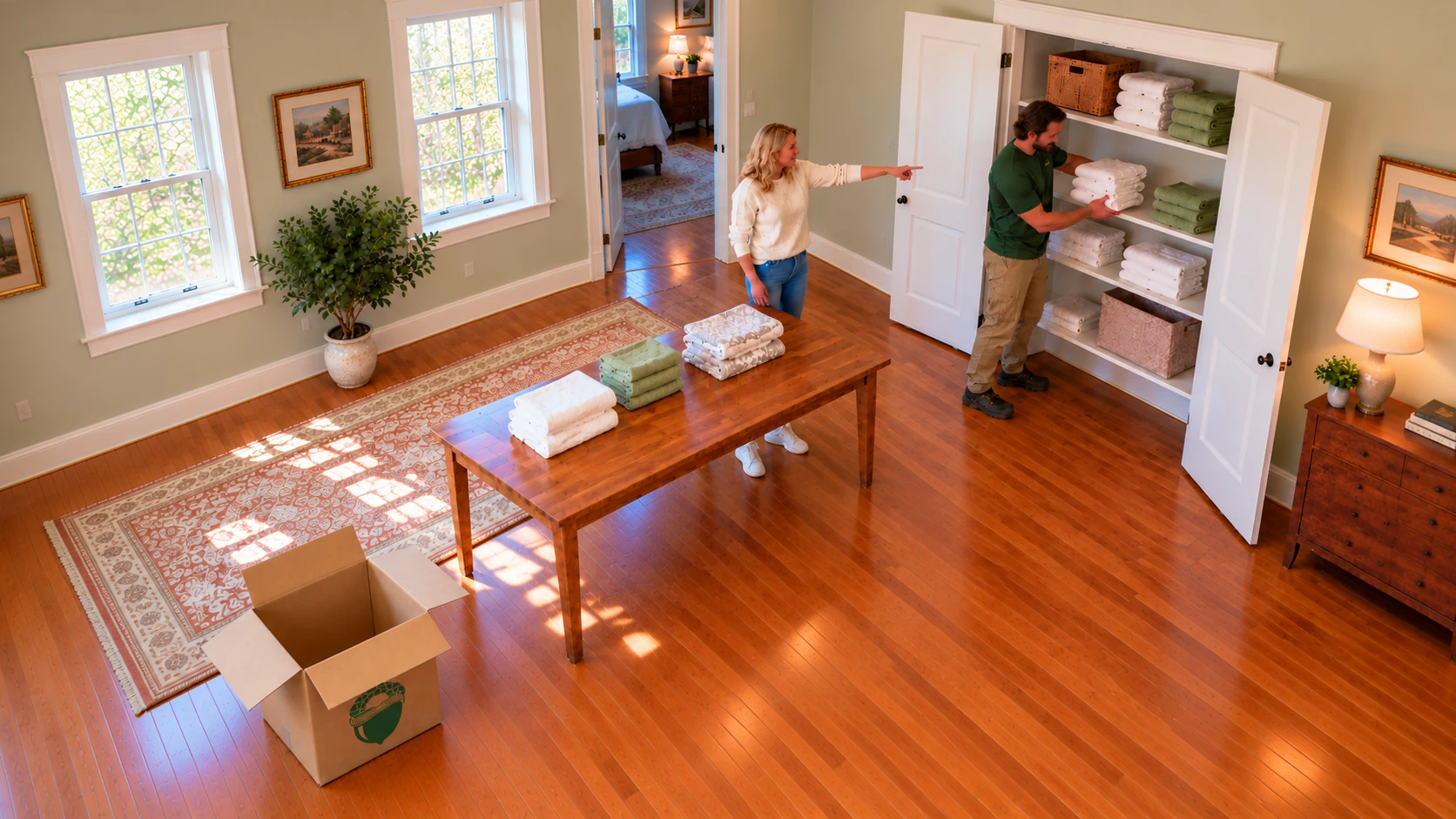
Basic box unpacking opens the agreed cartons and places their contents on suitable available surfaces. Decide which rooms and groups come first: everyday kitchen contents, the first bedroom or the materials needed to work the next morning. Clear those surfaces before the visit. Delivering cartons into a room and arranging their contents are different tasks.
Keep space for the empty cartons and used protection as the work proceeds. Check the paper and carton interiors for small retained parts before anything joins the outgoing materials. Personal papers, valuables and household decisions remain under your control. A usable kitchen worktop with selected contents does not mean every cupboard or the whole home is organized.
Consider: returning for help after the first unpacking attempt
Suppose the household has moved in and opened some cartons, but the kitchen and a work area remain difficult to use. Describe what is still boxed, the furniture already in place and the surfaces available. A later visit can concentrate on the agreed groups needed for the next routine, rather than reopening every room.
On a larger project, unpacking might add three or four delivery-day hours, or a later visit by two people could be worth considering. These are planning examples, not a fixed allowance or a promise of immediate availability. Agree the actual remaining inventory, access, labor and finish. If the resident wants contents put into particular cupboards, include that direction as organizing work.

Add organizing and finishing deliberately
Home organizing places belongings in their final locations under your instructions. Identify shelves, drawers, priorities and the person able to direct choices. A smaller team can be easier to guide through detailed placement. Agree scope and price, and keep private records and items requiring a personal decision separate from routine unpacking.
Request handyman or installation tasks individually. Show the item, fixings, wall or surface, permissions and desired result. Basic disassembly and reassembly associated with moving, specialist assembly and technical mounting are different scopes. A general finishing request does not automatically include electrical work, repairs or equipment reconnection; confirm the actual executor and accepted work.
A new furniture purchase and its delivery need a plan for that item and receiving address. Moving furniture within the home addresses a different task, such as repositioning an already delivered piece after a room becomes available. Identify that next operation rather than assuming box unpacking includes it.
Give empty materials and unwanted belongings separate routes
Gathering used packaging indoors does not arrange its removal. Confirm whether you will use an applicable collection arrangement or request separately priced material removal. Keep retained contents, empty corrugated cartons, used paper, film, foam and unwanted household objects identifiable. A sealed carton intended for the next room must not join an empty-material group.
The Town's 2026 North Zone collection brochure includes corrugated cardboard and mixed paper on the paper route, in suitable containers, bundles or secure paper bags. It excludes plastic bags and Styrofoam from that group. Do not put trash or the commingled glass, cans and plastic stream in cardboard boxes. Choose the actual property's North or South zone and current schedule through the Town collection page, rather than applying the North calendar to every address.
The same brochure identifies the Lake Road Recycling Center as open to Town residents and businesses, with proof and accepted-material conditions. That is not blanket approval for a particular mover, vehicle or load. Household garbage, construction debris and an unwanted cabinet do not become accepted mixed paper because they leave the property during unpacking. Arrange the actual material, collector, route, date and price before relying on removal for a handover.
If you decide late that furniture should not move, review removal and disposal separately. The Town brochure distinguishes small quantities of nonmetal household bulk from metals and contractor or construction debris. Packing owns identifying what is retained; the disposal plan must establish an accepted destination for what is not.
Match receiving help to the actual delivery
For a long-distance move, plan unpacking around the accepted delivery model and receiving window. The Morristown long-distance page explains direct delivery with a dedicated truck and the same pickup/delivery crew, and consolidation for suitable smaller shipments with broader agreed windows. The delivery clock starts after pickup and loading are complete. A packing visit is a separate stage. Optional receiving labor is quoted separately; it does not silently change an agreed transport flat rate.
Confirm the receiver, keys, building access, available rooms and the time that person can direct the work. If the keys or a room approval remain uncertain, name the decision deadline, the coordinator and the property controller. Accept an available alternative before other options expire: a different slot, a reviewed method, or confirmed storage and later delivery. Include costs and the conditions for restarting. A delivery window by itself does not book optional unpacking or a separate organizing visit.
Compare the complete paid work
Packing labor is charged for working time, and company-supplied cartons are separate. Basic moving blankets, shrink wrap and tape have no separate basic material charge. Furniture unwrapping is part of delivery; opening and emptying cartons is optional labor. Identify organizing, specialist preparation, extra visits and material removal as their own agreed work.
For a substantial inventory, adding packing to moving might bring the budget near twice the cost of moving that same shipment already prepared. It can be below or above that illustration. Compare the same retained contents, access and finish, including cartons, the earlier visit, storage handling, receiving labor and any return. There is no standard multiplier, automatic saving or price ceiling in those examples.
For a household move wholly within New Jersey, the Division of Consumer Affairs guidance requires an on-site or virtual survey of the goods before the written moving estimate, including a small job. Lists and photographs help begin that review; they do not replace it. The coordinator will identify the appropriate review for a separate service request. Keep interstate transport terms and intrastate moving requirements distinct.
Send the addresses, firm dates, contents on every level and complete routes. Specify the preparation you want, what you will pack, final-night essentials, different destinations and unusual pieces. Add the rooms needed first, desired organizing or finishing and your plan for empty materials. We can then review an estimate that describes the work and the usable result you are choosing.
Morristown packing and unpacking questions
What will a full packing visit cover?
It covers the retained contents and preparation tasks agreed for the visit. Show cupboards, closets, drawers and stored groups, and identify anything excluded or still in use. Unpacking, organizing, specialist preparation and taking materials away need their own accepted scope; the word full does not add every receiving or finishing task.
Can I leave only the kitchen or selected breakables to the crew?
Yes. Identify the cupboards or individual ordinary contents you want prepared and what you will pack yourself. Keep breakfast and other final-night necessities separate until their release time. Show unusual art or valuable collections for their own method review, rather than treating a fragile-only request as a universal specialist packing plan.
How do I decide between doing the packing myself and requesting help?
Compare the retained contents, time available after work, decisions still needed and the result you want before departure. Selected help can reduce the work you hand over if the other groups are actually ready. Compare the full written labor and material scope; neither a room count nor an assumed discount settles the choice.
Can the number of bedrooms tell you how many cartons I need?
No. Open cupboards, bookcases and closets, then include the attic, lower level and garage if their contents are moving. Explain fragile pieces, collections and separate destinations. Housing figures describe units, not their contents; the illustrative 20 versus 60 or 100 cartons is a reason to review the inventory, not a prediction for your home.
Does a Morristown mailing address determine which rules apply?
Use the full street address and actual municipality. Morristown town and Morris Township are separate, and a postal label does not establish jurisdiction. Confirm the property authority, building access and appropriate collection arrangements before relying on a Town permit condition or recycling schedule.
What should stay available for the last night and our own journey?
Keep the agreed sleeping and breakfast necessities available until their release time. Identification, keys, medicine, chargers and essential clothing or work and school items stay with the people who need them. Mark this group before preparation; an open-first carton in the shipment may still be unavailable during travel.
Can packing and the move share one day?
They can for some reviewed inventories and accepted access periods. Full cupboards, several carrying levels or a narrow building window can make earlier preparation more useful. Agree contents, staffing, materials and the release of essentials before relying on that sequence. A separate packing visit needs its own accepted property access.
Do I need to make keep-or-remove decisions first?
Identify what travels, what stays and what has another destination before those groups are packed. Mark belongings owned by the landlord or another household as excluded. Ask for separately agreed preparation help where needed, but retain control of ownership, personal papers and disposal decisions; the crew should not have to guess.
What do suitable wardrobe cartons do for hanging clothes?
They provide a reviewed way to prepare selected clothes on hangers. Keep the carton loading opening and closet access usable, with the carton outside the closet recess or door swing. Separate clothes needed before departure, and review folded items, shoes and accessories as their own contents instead of assuming one wardrobe solves the entire closet.
How are fragile contents and furniture components protected?
The method follows the object, its construction and the complete route. Ordinary dishes need individual protection and cushioning in suitable cartons; glass, art and unusual pieces need their own review. Normally empty ordinary drawers and retain them secured within the complete protected furniture. A removable part and an integral support require different decisions.
What is charged separately from basic moving protection?
Packing is charged for working time and company-supplied cartons are separate. Basic moving blankets, shrink wrap and tape have no separate basic material charge. Identify specialist protection, extra visits, organizing, technical work and empty-material removal in the estimate, including any preparation already agreed within a transport scope.
What should each carton label say?
Write the actual next destination or receiving group, room and useful contents. Add a carton number and opening priority when they help match the receiving list. Color can reinforce these words. Match any storage group to confirmed intake and later release arrangements, and keep essentials outside a group that will be inaccessible.
What if renovation leaves only some receiving rooms ready?
Identify the rooms actually released by the property controller, a clear route and available surfaces. Agree the alternative for other groups before delivery: another usable room, a later accepted slot or confirmed storage and later delivery. Include extra handling and cost, then resume the affected unpacking when the room is released and the coordinator accepts the plan.
What result does basic box unpacking provide?
The crew opens the agreed cartons and places their contents on suitable available surfaces. Name the rooms and priorities, and clear space for those contents and empty materials. Final cupboard placement follows separately agreed organizing instructions; basic unpacking alone does not make every room organized or arrange material collection.
Can I ask for a later unpacking visit after trying myself?
Yes. Describe the remaining cartons, occupied rooms, usable work surfaces and access. Ask about actual availability and agree the selected groups and finish. A later two-person visit or several extra delivery-day hours are conditional planning examples, not a fixed allowance or promise of an immediate return.
How do organizing and handyman work differ from unpacking?
Organizing places belongings in final positions under your instructions, with agreed priorities and price. Handyman or installation work needs the actual item, fixings, surface, permissions and accepted executor reviewed. Neither basic unpacking nor a general finishing request automatically includes electrical work, repairs or equipment reconnection.
How do we keep small parts out of discarded paper?
Keep a separate retained-items place and check used protection and carton interiors before they enter the outgoing group. Match small furniture parts or other retained pieces to their belongings. Keep private papers under household control and distinguish a closed carton for another room from visibly empty packaging.
Can all the empty materials go in cardboard boxes for recycling?
No. The 2026 Town brochure accepts corrugated cardboard with mixed paper in suitable containers, bundles or secure paper bags, and excludes plastic bags and Styrofoam from that group. It says not to put trash or the commingled glass, cans and plastic stream in cardboard boxes. Keep the materials separate and confirm the applicable arrangement.
Does the North Zone brochure give the collection date for every Morristown address?
No. The Town publishes North and South information and a zone map. Check the actual property zone and current schedule, together with the building instructions for where separated materials may wait. The North brochure supports the material distinctions described here; it does not establish a date for an unverified address.
Can our mover automatically use the Lake Road Recycling Center?
The 2026 brochure identifies the center for Town residents and businesses with proof and accepted-material conditions. Confirm the actual collector, vehicle and materials with the operator. That general eligibility does not approve a particular moving-company load, household garbage or construction debris; arrange another accepted route when the proposed one cannot take it.
Does unpacking include taking empty cartons and paper away?
Taking the materials away needs a separately selected scope and price. Confirm the material groups, collector, accepted route and date. Gathering packaging indoors is one stage; it does not establish a pickup booking, authorize leaving it in a common corridor or remove the need to keep retained contents apart.
What if I decide a piece of furniture should not move after packing starts?
Tell the coordinator before it joins the shipment and identify the retained versus unwanted groups. Review the removal method, accepted destination, timing and price separately. Town household-bulk provisions distinguish small nonmetal quantities from metals and contractor or construction debris; an unwanted cabinet is not mixed paper.
When should unpacking be booked around a long-distance delivery?
Use the actual accepted model and window, which starts after pickup and loading are complete. Confirm a receiver, keys, building access and usable rooms. Direct and consolidated transport have different terms, and neither delivery window automatically books optional unpacking or organizing. Keep that optional labor scope separate from the agreed transport flat rate. Resolve an available alternative before dispatch if access remains uncertain.
Can packing and moving approach twice the cost of moving prepared goods?
For a substantial inventory that can illustrate adding preparation to the same already-packed move. The comparison may be lower or higher; it is not a standard multiplier or ceiling. Compare labor, cartons, access, earlier preparation, storage handling, optional receiving work and return visits for the same retained contents.
What do you need for a useful written estimate?
Send full addresses, firm dates, open-cupboard and stored-content photographs, unusual pieces and the routes on every level. Specify selected preparation, your own packing, final-night essentials, destinations and receiving priorities. For an NJ intrastate household move, the required on-site or virtual survey precedes the written moving estimate; a list alone does not replace it.