
New Jersey · New Brunswick service planning
Long Distance Movers in New Brunswick, NJ
Move from New Brunswick, New Jersey, to destinations throughout the United States and Canada with a delivery plan that fits the household. Direct delivery provides a dedicated truck and the same moving crew at pickup and delivery. Consolidated delivery can suit a smaller shipment when you can accept a broader agreed receiving window. We review the belongings, both properties and requested services before agreeing the long-distance flat rate.
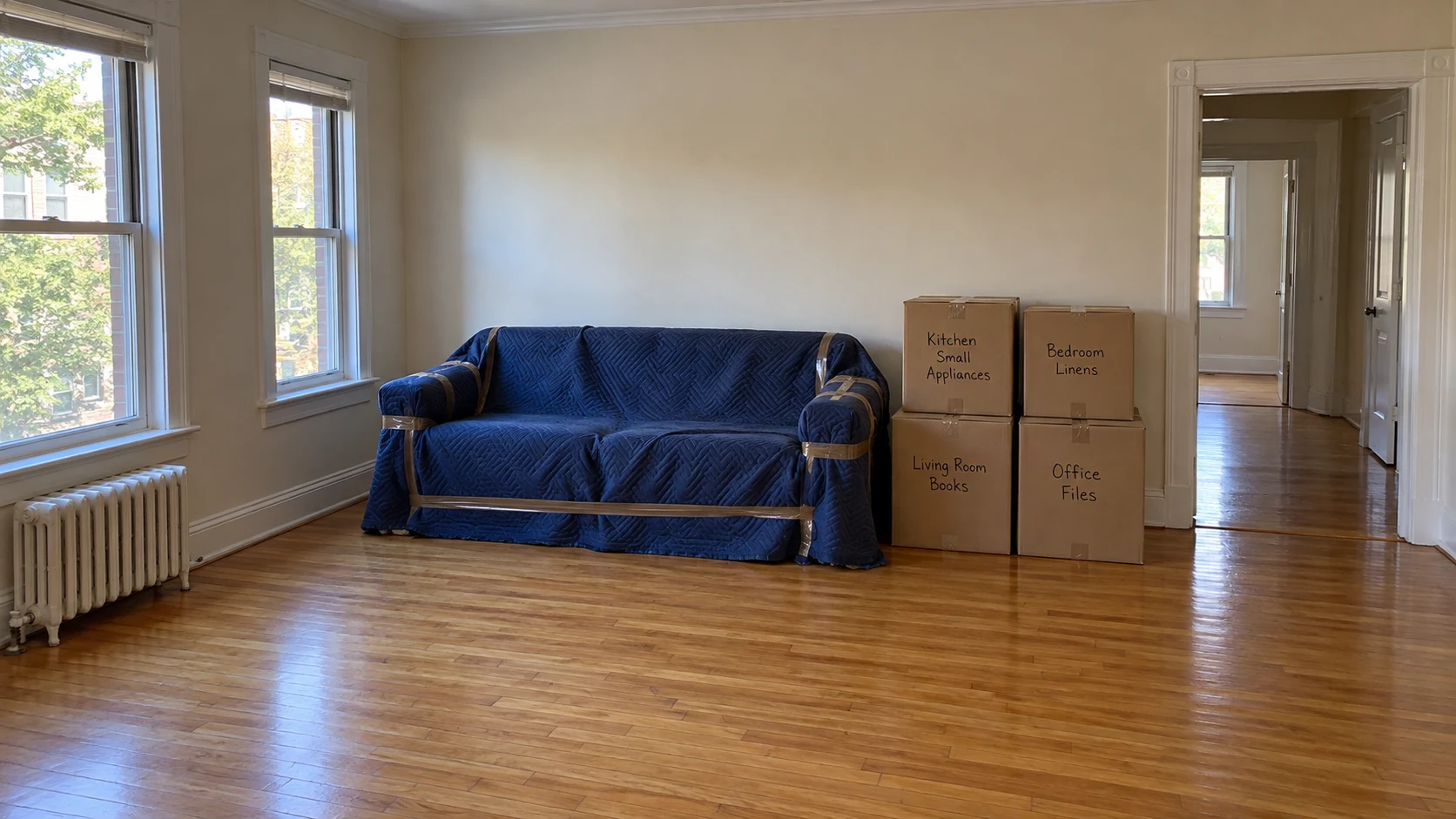
Connect the departure deadline with a usable receiving date
The day you must return the New Brunswick keys and the day your next home can receive furniture may be different. Establish both before choosing a truck schedule. Include the landlord or building representative who controls the exit, the person who can open the destination and any work period that limits the crew. A lease start date does not itself book an elevator or make a loading entrance available.
Give us the complete shipment: the upstairs bedroom, storage locker, garage shelf contents and furniture that will require preparation, as well as the main living rooms. Separate what is staying, being collected or traveling with you. A small omitted storage room can change the volume and the work even when the bedroom count stays the same.
New Brunswick includes apartments, homes with shared stairs, larger managed buildings and individual houses. Describe the actual route through your property: room door, turns, stairs or elevator, building exit, exterior steps and the path to the proposed truck position. A wide front lobby does not establish the width of the service corridor behind it. The city moving page covers local access in more detail; the relocation guide covers housing and everyday arrangements.
Choose direct or consolidated delivery
Direct delivery keeps the reviewed household shipment in a dedicated truck with the same moving crew at pickup and drop-off. It can make sense when a complete home is moving or when the household needs a more closely coordinated journey. The ordinary delivery illustrations below start after pickup and loading are complete. They do not include the time needed to pack rooms, prepare furniture or finish the carrying route in New Brunswick.
Consolidated delivery combines suitable shipments within an agreed wider window. It can work for selected furniture and cartons when the household has a workable place to live without them. Around 300–400 cubic feet is guidance for smaller shipments, not a minimum or automatic acceptance. The actual inventory, route and dates still need review. Do not assume the direct model’s same crew, free storage or a particular discount.
For a suitable shorter domestic route, the consolidated window can be up to 30 days. Florida and Canada have up to 60 days; California has up to 90. Other distant destinations need their own agreed window. Seattle is in Washington, so California’s 90-day category does not automatically apply. Canadian destinations retain their Canadian category even when the reference drive is shorter than a domestic example.
Four examples of planning the whole move
These are conditional examples, not accounts of completed customer jobs. Each connects the shipment with the people, access and living arrangements needed at the other end. Reference driving routes help illustrate delivery ranges; they do not certify a commercial truck route or reserve a receiving appointment.
Example: Washington, DC — coordinate two building work periods
Suppose a household is leaving an upstairs New Brunswick apartment for a managed building in Washington, DC. The shipment includes a bed, a low dresser, a small dining table and packed kitchen and bedroom cartons. At origin, the shared landing and exterior steps must remain usable. At destination, management controls the receiving entrance and a limited elevator period.
Direct delivery may fit this household’s need to reconnect the furniture with the new home. The ordinary illustration is 1–2 days after loading, rather than an automatic same-day arrival. Work backward from the destination’s accepted period: who has the keys, who can operate or release the elevator, and how long can unloading and placement actually take? The New Brunswick packing and carry happen before the delivery clock starts.
If a same-day plan is feasible for the reviewed shipment and journey, agree it specifically. If the destination cannot accept the shipment that day, a family member waiting in the lobby does not solve the access problem. Before departure, arrange an accepted later receiving period or another reviewed method. If storage and redelivery are needed, confirm availability, dates and charges; also decide where the household will sleep and keep its first-night belongings.
The useful preparation here is reducing avoidable work at both doors: pack the agreed owner-packed cartons in advance, identify the complete furniture and hardware sets, and send the building requirements early. A short distance between cities does not remove the stairs or create an elevator booking.
Prepare furniture and cartons for the selected service
Tell us which rooms the crew will pack and which you will finish. Keep the current inventory and cartons consistent: adding contents from a second household or an unlisted storage unit changes the reviewed shipment. Label cartons with the destination room and useful contents, and distinguish cartons that should remain accessible from those intended for later unpacking.
Basic furniture assembly and disassembly use moving labor time without a separate basic-assembly surcharge. Construction matters. Ordinary emptied drawers generally remain secured within the protected complete piece. Safely removable long legs, shelves and matching hardware need an identified preparation plan; integral supports are different. Show the largest pieces and narrow turns before deciding how to move them. A specialist operation, such as a wall-bed removal or hoist, requires its own review and quotation.
Protective moving blankets, shrink wrap and tape have no separate material charge. Company-supplied cartons are charged separately. Include packing work, optional box unpacking and any packaging removal in the written scope. Furniture unwrapping is part of delivery; emptying every carton or removing the resulting materials is a separate requested task.
For an interstate household move, review the applicable valuation choices and declare unusually valuable articles before signing. Valuation, a separate insurance policy and the building’s COI serve different purposes. The FMCSA explanation describes the federal choices; it does not establish a particular company policy or Canadian protection arrangement.
Example: Greenville, South Carolina — move selected belongings while a household waits
A household already has temporary furnished accommodation in Greenville but wants to keep a compact chair, a low cabinet, kitchen equipment and selected books from a private New Brunswick rental. The remaining furniture is staying with an authorized roommate or leaving through a separately arranged collection. This is a selected shipment, not a full apartment described as a few boxes.
Consolidation may suit the shipment if the household can receive it within the accepted up-to-30-day window. The direct illustration is 1–2 days after loading. Compare those options with the cost and practical limits of living without the selected belongings. Keep work equipment and everyday kitchen items with the household if they are needed before the shipment arrives; do not pack the only suitable work chair simply because the room is otherwise ready.
Identify the exact furniture and sealed cartons before the scope is agreed. Removing unwanted pieces from the shipment can reduce the volume and handling required, but collection or removal is not automatically free. New Brunswick’s 2026 special collection uses an appointment and a combined limit of six eligible bags, cans and bulk items per unit. Arrange the correct route early enough for the lease handover; do not leave rejected items for the moving crew to absorb into the long-distance shipment.
The receiver in Greenville should confirm the actual property, a place for the delivery and a contact who can accept it during the agreed window. If that accommodation will end first, choose another accepted receiving arrangement before pickup. A request for a storage quote is not a reserved unit, and a wider delivery window is not permission to leave the household without a usable plan.
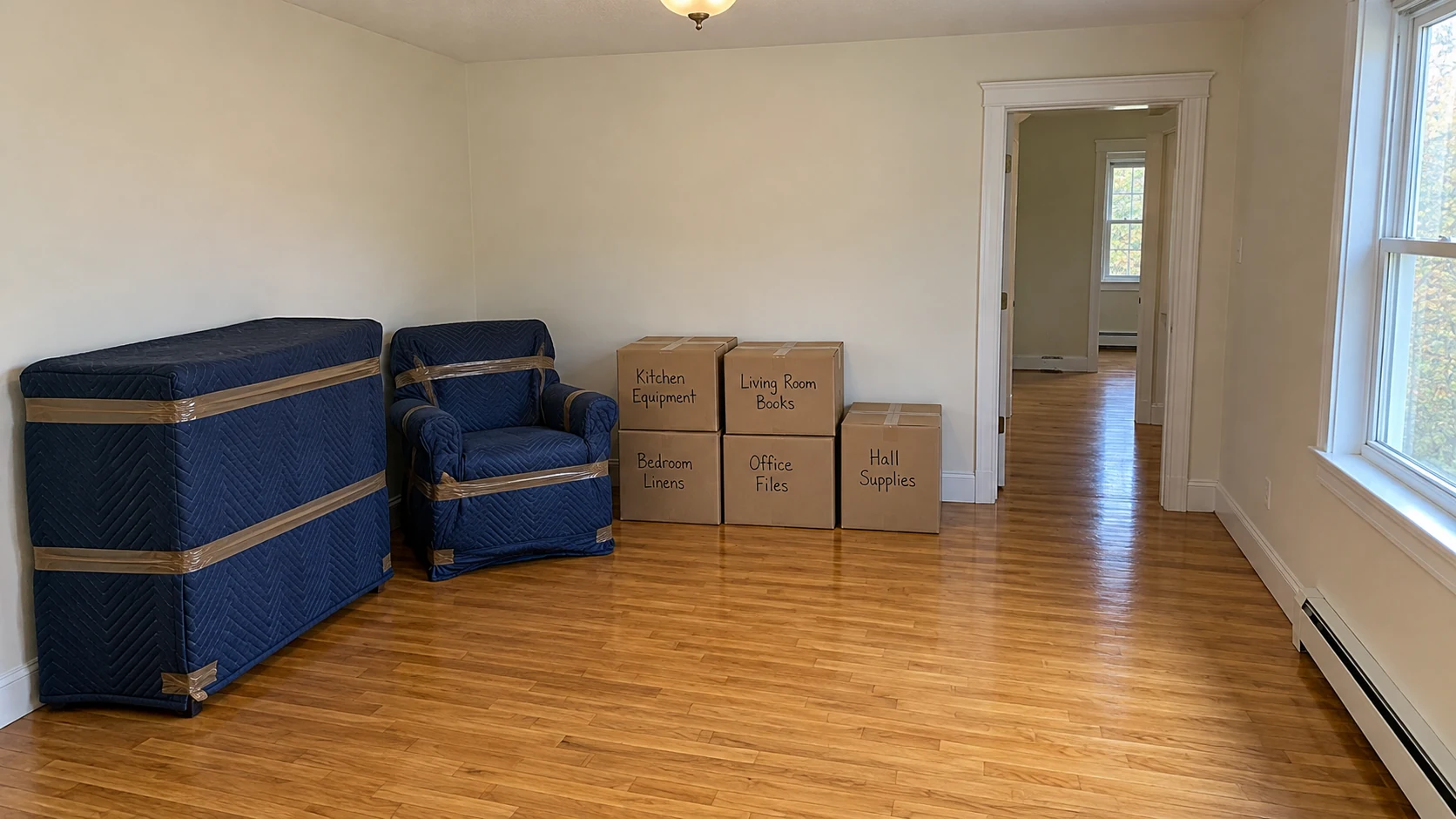
Plan the truck position in New Brunswick
New Brunswick’s residential permit rules contain a service-and-delivery exemption for qualifying vehicles bearing the commercial name and address while actually serving a residence. That exemption does not reserve frontage, approve a private driveway or override other parking and traffic rules. A resident permit is also not a reservation for the moving truck.
Loading-zone conditions differ by zone and operating hours. Section 10.12.070 limits commercial vehicles to 30 minutes, vehicles using a loading-zone permit to 15 minutes and special-use loading to 10 minutes. It also requires the applicable loading or delivery placard or permit facing outward on the dashboard or visor, and flashing warning lights throughout use. The separate ten-minute pick-up/drop-off zones are not general household-loading reservations. Do not turn a short loading allowance into a whole-home work period. Give the coordinator the frontage, actual vehicle and proposed hours so that a lawful arrangement for the complete operation can be established with the responsible authority. NBPA’s loading-permit information does not make every moving company automatically eligible for a business permit.
The truck-route provisions also contain different weight and length rules with different exceptions. A household-carrier exception to one provision is not an exemption from every restriction. The reviewed route must fit the actual vehicle, turns and clearances. The city’s overnight public-street restriction for trucks over 5,500 pounds gross between 11 p.m. and 6 a.m. makes an unattended street wait an unsuitable default response to delayed keys. Review the city code and parking authority guidance for the applicable arrangement.
For a Rutgers address, identify the actual campus, hall, assignment and authorized moving period. College Avenue and Cook–Douglass locations are distinct from Busch and Livingston in Piscataway. A privately rented student apartment follows its own lease and building arrangements. The fall move-in page is useful for the university’s process; its earlier dates do not book a future move.
Keep the household’s travel belongings accessible
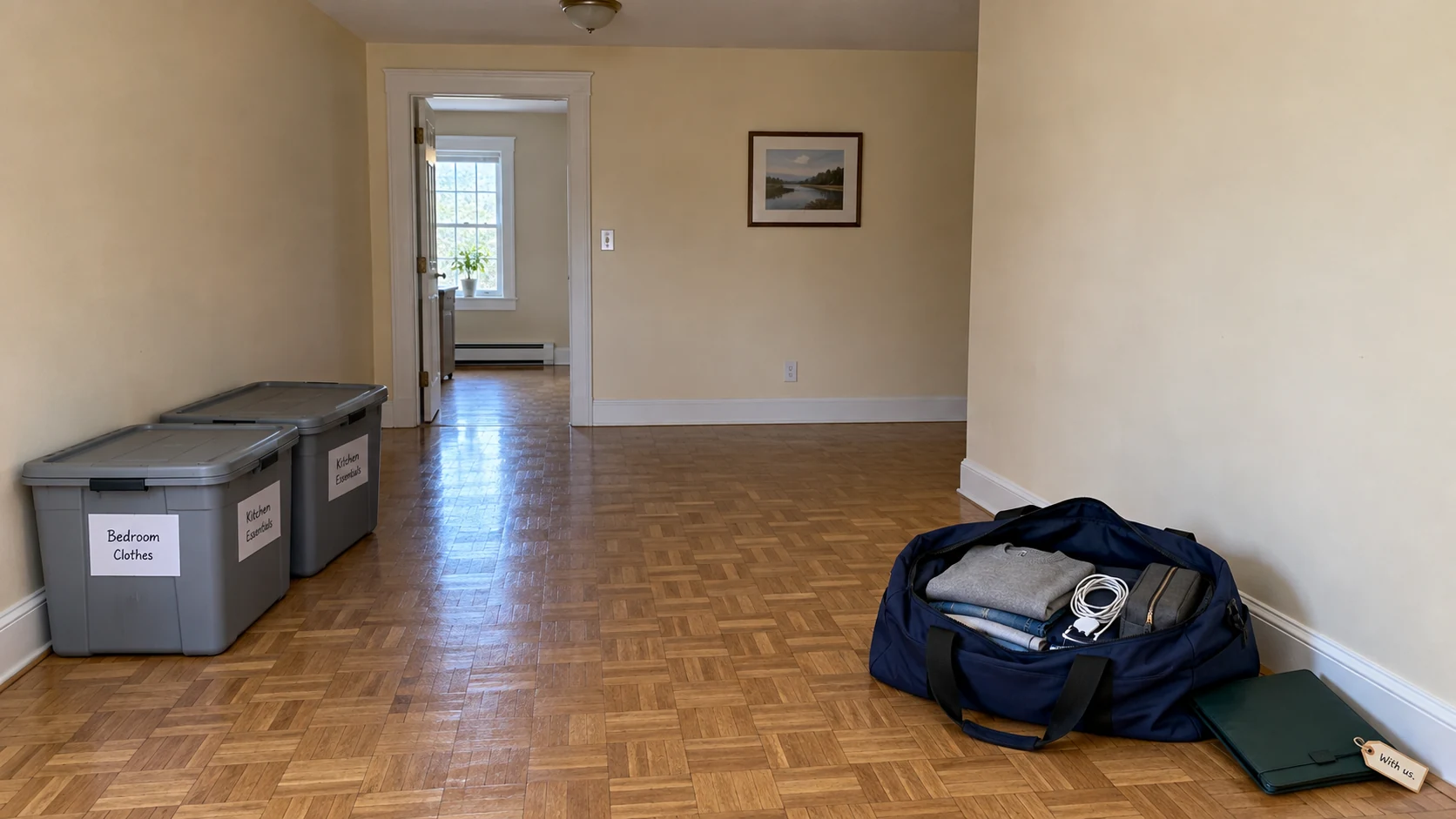
Keep identification, medication, keys, chargers, a change of clothes and work or school items needed before delivery with the household. Include receiving instructions and the contact who can approve a change. Canadian entry documents should remain accessible to the person handling the entry, rather than inside a sealed carton that will arrive later.
Decide how people will reach the next home independently of the truck. The household may travel on a different day and may need accommodation before the shipment arrives. A direct delivery illustration does not reserve transport for passengers. If someone else will receive the belongings, establish that person’s authority, access and availability before loading is completed.
Example: London, Ontario — arrange the personal-effects entry before goods follow
Consider a household leaving a private New Brunswick apartment for London, Ontario. It is moving a bedroom set, a desk and a selected library; the people plan to enter Canada before the truck. The university connection of a household member does not determine customs eligibility or convert the private rental into campus housing.
The ordinary direct illustration is 1–2 days after loading, subject to the actual journey and import arrangements. Consolidation uses the Canadian up-to-60-day category, not the shorter domestic one. Choose the model only after establishing when the household can receive its belongings and what it will use while waiting.
CBSA’s moving or returning guidance calls for an accompanying-goods list and a goods-to-follow list at the person’s first entry. Prepare two copies with values and identifying details, and retain the personal-effects record for the later shipment. The BSF186 form distinguishes classification types and supporting goods lists. Eligibility, restrictions and the person’s circumstances need their own review; neither the mover’s inventory nor a delivery estimate guarantees duty-free treatment or clearance.
Before pickup, agree who supplies the required records, who handles the relevant entry steps and how the receiver in London can be contacted. Keep the appropriate documents with the traveler. If paperwork or receiving access will not be ready, contact the coordinator at the agreed decision time to arrange a confirmed alternative. Do not dispatch on the assumption that an unresolved border issue can be fixed during a short unloading appointment.
Prepare large pieces for their receiving rooms
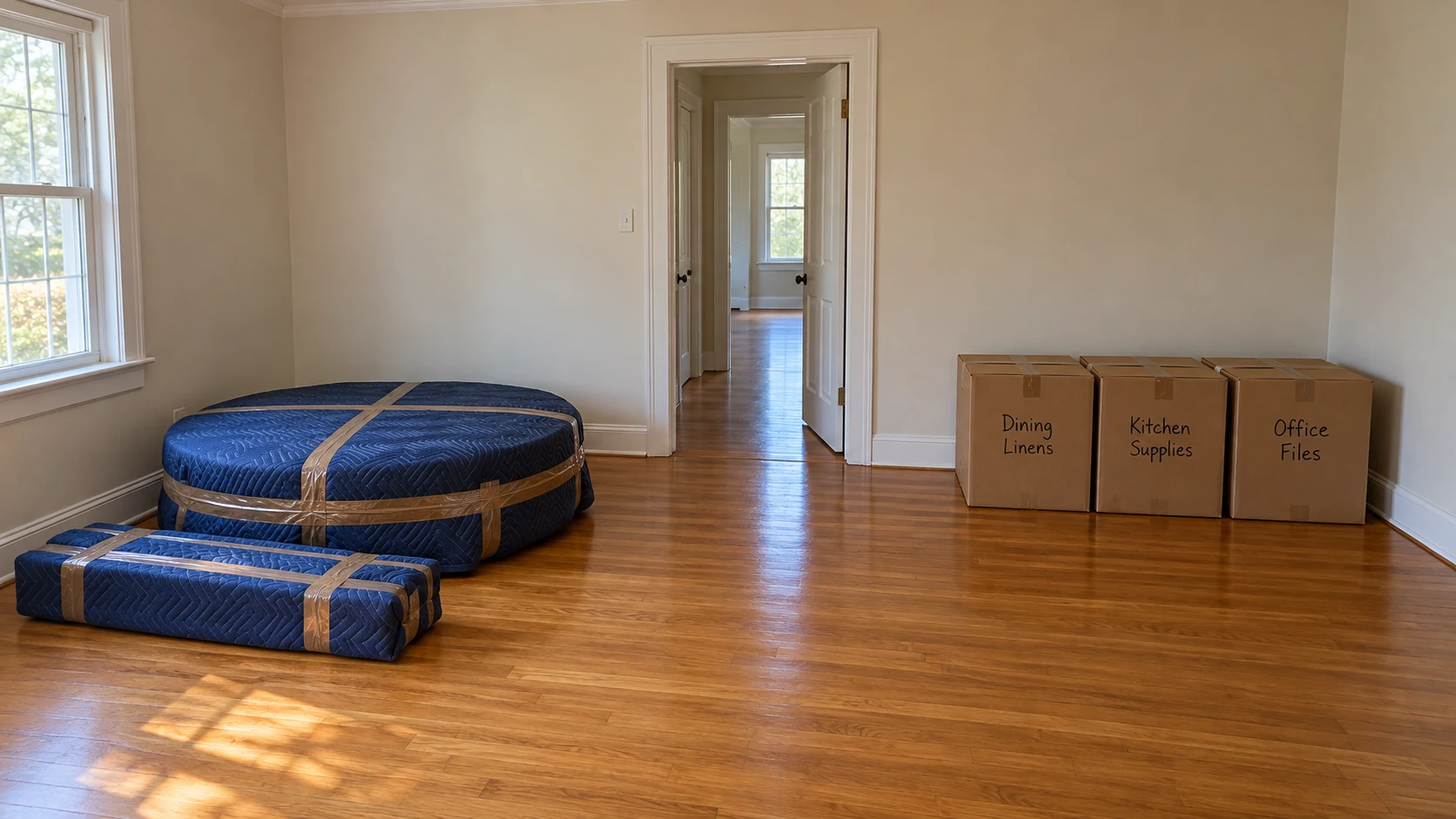
The shipment follows the reviewed inventory and preparation plan. A full-home move can include protected furniture, closed room cartons and grouped furniture parts. A safely detachable table should arrive as an accounted-for body and matching support-and-hardware set, ready for the agreed reassembly. Separating the household’s travel belongings before loading also avoids searching a secured shipment for documents or medication later. The illustration shows a representative finished preparation stage, not an unseen operation or a promised truck size.
Example: Seattle, Washington — connect the full home with the final room positions
A family is leaving a New Brunswick house for a Seattle home. The inventory includes the main rooms, a lower-level work area and selected garage belongings. The destination has a restricted turn on the way to the intended lower-level office. A writing table that fit the old room may need safely detachable legs removed before it can follow that route.
Direct delivery can suit this full-home shipment. Its ordinary illustration is 5–6 days after loading. Consolidation, if suitable for the actual shipment, needs an individually agreed distant-route window. Washington does not inherit California’s up-to-90-day limit. Neither model turns the family’s preferred arrival day into an accepted appointment.
Send the destination measurements and route photographs before the packing plan is settled. Identify where the table body, grouped matching legs and hardware will go; do the same for bed parts and removable shelves. Account for the garage and lower-level contents explicitly, including items requiring separate acceptance. A compact view of the living room does not show the complete shipment or establish that every garage item can travel.
The receiver should have keys, management approval where required and usable room positions. Before unloading, identify where the major furniture belongs so that later cartons do not block assembly and access. If a narrow route cannot accept a piece, stop that stage and agree a suitable alternative with the authorized receiver and coordinator. Do not assume an unreviewed hoist, additional crew or dismantling operation is already included.
Delivery, placement and the work after unwrapping

Agree the furniture placement and included basic reassembly as part of the move. Keep grouped hardware associated with its piece. Furniture unwrapping belongs to delivery; optional carton unpacking, organizing and packaging removal need their own agreed tasks and charges. If the household wants a usable kitchen or bedroom first, name that result so that the crew can review the sequence and time.
A building’s COI, elevator reservation, operator and other required personnel have separate owners. Management must provide the exact requirements, contact and deadline, and identify who supplies or authorizes a required operator. Sending a certificate is different from management accepting it. Pass the requirements to the coordinator early enough to connect the whole operation; do not assume building personnel are part of the moving crew.
If keys, a loading position or the receiving period changes, use an agreed decision time. The property controller confirms usable access; the coordinator reviews the revised journey and work. Options can include a confirmed later period, another accepted route or available storage and redelivery. Record the receiver, belongings, dates, charges and household accommodation before relying on an alternative. Resume the affected stage when access and the revised work are accepted. Avoid booking an unapproved change by inference.
Compare the delivery illustrations
Swipe the table to compare both delivery options.
| Illustrative destination | Direct planning window | Consolidated window |
|---|---|---|
| Washington, DC | 1–2 days | Up to 30 days |
| Greenville, South Carolina | 1–2 days | Up to 30 days |
| London, Ontario | 1–2 days | Up to 60 days |
| Seattle, Washington | 5–6 days | Window agreed individually |
These windows begin after pickup and loading are complete. They describe ordinary planning ranges, not exact delivery appointments. The reference driving route does not establish live traffic, a particular truck’s permissions, Canadian entry readiness or the destination’s available work period. Same-day or next-day arrangements need a specifically feasible schedule. Florida, Canada, California and other distant destinations retain the distinct consolidated rules described above.
Understand the written scope and price
For the same agreed long-distance shipment and services, the flat rate does not rise merely because travel or delivery takes longer. Added belongings, a different carrying route, more packing or requested storage change the work and need separate review and written agreement. Report those changes before relying on the earlier plan.
The estimate should distinguish preparation, company cartons, furniture work, optional unpacking, storage, specialist operations and removal. A surveyor and the moving crew have different roles; the person reviewing the home is not automatically promised as a mover on the day. Compare the actual written work and dates when comparing options, including the household’s costs while it waits.
If both addresses are within New Jersey, use the applicable in-state process. The New Jersey consumer regulator describes an on-site or virtual survey, a completed estimate and the required consumer brochure. An item list and still photographs begin planning; they do not replace that survey, including for a small household shipment. Interstate valuation terms do not automatically govern an in-state move.
Destinations and pickup scope
We arrange long-distance pickups in New Brunswick city, New Jersey, for the reviewed property, inventory and carrying route. Include the apartment, house, garage, locker and lower-level contents that are moving. For North Brunswick, East Brunswick, Highland Park, Piscataway or another Middlesex County address, send the exact municipality and street address for review. A New Brunswick postal label or Rutgers connection does not establish city street authority, campus permission or a reserved loading position.
Explore long-distance destinations from New Brunswick
These examples organize destinations for a household move from New Brunswick. We serve destinations throughout the United States and Canada. Compare the shipment, usable receiving dates and both properties before choosing direct or consolidated delivery.
Northeast
- Boston, Massachusetts
- Buffalo, New York
- Philadelphia, Pennsylvania
- Washington, DC
- Baltimore, Maryland
- New York City, New York
Southeast and Florida
- Charlotte, North Carolina
- Raleigh, North Carolina
- Miami, Florida
- Orlando, Florida
- Tampa, Florida
- Greenville, South Carolina
Great Lakes and Midwest
- Chicago, Illinois
- Cleveland, Ohio
- Columbus, Ohio
Pacific states
- Seattle, Washington
- Spokane, Washington
- Portland, Oregon
- San Francisco, California
- Los Angeles, California
- San Diego, California
Mountain West and Southwest
- Denver, Colorado
- Phoenix, Arizona
- Las Vegas, Nevada
- Salt Lake City, Utah
Canada
- Québec City, Quebec
- Vancouver, British Columbia
- Toronto, Ontario
- Ottawa, Ontario
- Montreal, Quebec
- Kingston, Ontario
- London, Ontario
Long-distance moving questions
How should I choose direct or consolidated delivery from New Brunswick?
Choose direct for a dedicated truck and the same moving crew at pickup and delivery. Consolidation can suit a smaller shipment if you can accept a broader agreed window and live without the belongings until they arrive. Compare the complete inventory, usable dates and access at both homes. The household’s accommodation and first-night needs belong in that choice, as well as the truck schedule.
When does the delivery window begin?
After pickup and loading are complete. Packing, furniture preparation, stairs, elevator use and the New Brunswick carry happen first. The ordinary direct illustrations here are Washington, DC 1–2 days, Greenville 1–2 days, London, Ontario 1–2 days and Seattle 5–6 days. They are planning ranges, not booked appointments, commercial-truck route approvals or Canadian clearance guarantees.
Can a Washington, DC shipment arrive the same day?
A specifically reviewed same-day schedule may be possible for a suitable shipment, journey and receiving arrangement. It is not automatic. The ordinary direct illustration remains 1–2 days after loading. Connect the origin work with the accepted destination entrance, elevator period, keys and authorized receiver before agreeing the schedule. Nearby cities can still have incompatible building work periods.
Is 300–400 cubic feet a minimum for a consolidated shipment?
No. It is approximate guidance for smaller shipments, not a minimum or automatic qualification. List the actual furniture and cartons, including belongings in a locker, lower level or garage. Review the route, access and dates. Keep essentials with the household and establish a usable receiving arrangement for the whole agreed window.
Which consolidated windows apply to Greenville, London and Seattle?
A suitable shorter domestic route, illustrated by Greenville, can have up to 30 days. Canada, including London, Ontario, has up to 60 days. Seattle requires an individually agreed distant-route window. Florida has up to 60 days and California up to 90; those categories do not automatically extend to every southern or western destination. Confirm the applicable window for the actual shipment.
Does Seattle use California’s 90-day consolidated limit?
No. Seattle is in Washington, so its applicable consolidated window must be agreed individually. The up-to-90-day category is for California. The direct Seattle illustration is 5–6 days after completed loading. Neither that range nor the preferred arrival day reserves the receiving property’s access or work period.
Does London, Ontario use the shorter domestic category?
No. London, Ontario is in Canada, so its consolidated category is up to 60 days. A relatively short reference drive does not substitute a domestic category. Its ordinary direct illustration is 1–2 days after loading, with the actual import arrangements, journey and receiving access separately accepted.
Will a longer journey change my agreed long-distance flat rate?
No, not merely because travel or delivery takes longer for the same agreed shipment and services. Added belongings, a changed carrying route, more packing or requested storage change the work and need separate review and written agreement. Report those changes before relying on the earlier plan. An ordinary delay and an additional service are different situations.
What if both addresses are within New Jersey?
Use the applicable New Jersey in-state process, including an on-site or virtual survey, a completed estimate and the required consumer brochure. A list and still photographs help begin planning but do not replace the survey, including for a small household shipment. Review the operator and applicable tariff and documents. Interstate valuation terms do not automatically apply to an in-state move.
Can I reserve a moving space with my resident parking permit?
No. A resident parking permit does not reserve frontage for the truck. New Brunswick has a service-and-delivery exemption for qualifying commercial-name-and-address-bearing vehicles actually serving a residence, but it does not override other parking rules or authorize private access. Establish a lawful position for the actual vehicle, date and complete work period with the responsible authority before dispatch.
Does a loading zone provide enough time for a whole-home move?
Not automatically. Section 10.12.070 limits commercial loading to 30 minutes, permit loading to 15 minutes and special-use loading to 10 minutes. The applicable placard or permit must face outward on the dashboard or visor, and warning lights must flash throughout use. Zone hours differ. Supply the frontage, truck and complete work period so the coordinator can establish a lawful arrangement with the responsible authority; a short allowance is not a whole-home reservation.
Can a household moving truck ignore the city’s route restrictions?
No. The code’s weight and length provisions have different exceptions; an exception to one does not remove every restriction. Review the actual vehicle, streets, turns, clearances and pickup or delivery purpose. A reference driving route used for the table does not establish truck permission or reserve a loading place.
Can the truck wait on a New Brunswick street overnight if keys are late?
Do not use that as the default plan. Section 10.16.130 prohibits public-street parking for trucks over 5,500 pounds gross between 11 p.m. and 6 a.m. Other parking conditions also apply. Contact the property controller and coordinator at the agreed decision time and activate an accepted later period, other lawful arrangement or available storage and redelivery with its dates and charges confirmed.
What should I arrange if my Canadian goods will arrive after me?
Prepare the applicable personal-effects entry before pickup. CBSA describes accompanying and goods-to-follow lists, with values and identifying details, and a personal-effects record retained for the later shipment. Establish who handles the required entry steps and keep the records accessible. Eligibility, restrictions and the person’s circumstances still need review; a moving inventory is not a customs clearance or tax-exemption guarantee.
Can you pack only selected rooms and unpack at the destination?
Yes, when those tasks are included in the agreed scope. Identify crew-packed and owner-packed contents, company cartons and the unpacking result requested. Blankets, shrink wrap and tape carry no separate material charge; company-supplied cartons are separate. Furniture unwrapping is part of delivery. Optional box unpacking and packaging removal need their own agreed work and charges.
Must every furniture drawer or leg be removed?
No. Ordinary emptied drawers generally stay secured in the protected complete piece. Safely detachable long legs, removable shelves and matching hardware need a construction-specific plan and identified grouped parts. Integral supports are different. Send photographs, dimensions and restrictive turns before deciding the method. Basic furniture labor has no separate basic-assembly surcharge; specialist work requires its own review and quotation.
Can a private student rental use Rutgers move-in permission?
A private rental follows its own lease and building arrangements. For a university assignment, identify the actual campus, hall, access and authorized period. College Avenue and Cook–Douglass are distinct from Busch and Livingston in Piscataway. An earlier fall move-in calendar or a student connection does not book a future crew, vehicle or work period.
What if a shared stair or lower-level turn restricts a large piece?
If suitable basic disassembly lets the piece follow the route, include that preparation in the plan. If it still cannot fit, agree a usable alternative entrance or separately reviewed specialist method before moving day. Send the piece’s construction and dimensions, every turn, stairs and exterior steps, and the route to the truck. Staffing, equipment and any changed work must be accepted; an unreviewed hoist or dismantling operation is not automatically included.
Who arranges the building COI and elevator operator?
Management must supply its exact certificate wording, contact, deadline and booking conditions, and identify who provides or authorizes any required operator. Forward those requirements to the coordinator. A submitted certificate is different from management accepting it. Building personnel, access services and their charges are not automatically part of the moving crew’s scope.
What happens if the destination cannot receive the shipment?
At the agreed decision time, contact the property controller and coordinator. Activate a confirmed later receiving period, another accepted method or available storage and redelivery. Agree the receiver, inventory, dates, access and charges, together with the household’s accommodation and essentials. Resume the affected stage when usable access and the revised work are accepted. An enquiry or preferred date is not a booking.
Which belongings should stay with the household?
Keep identification, keys, medication, chargers, clothes, necessary work or school items and applicable Canadian entry records accessible. Include receiving instructions and decision-maker contacts. Separate those bags during the inventory check. Belongings sealed inside the shipment cannot support the household during the agreed delivery window or a gap between homes.
Can I leave unwanted furniture for New Brunswick collection?
Arrange accepted collection before the lease handover. The 2026 special-collection limit is six combined eligible bags, cans and bulk items per unit, not six furniture pieces plus unlimited bags. Appointments and material-specific requirements apply. If collection will not fit the deadline, arrange an accepted alternative. Any company removal needs its destination, work and charge included separately.
Is valuation the same as insurance or the building’s COI?
No. For an interstate household move, valuation concerns the mover’s liability arrangement. Separate insurance and a building certificate have different purposes. Review applicable protection choices, valuable-item declarations and the claim process before signing. Identify unusually valuable or delicate pieces during the scope review; doing so does not itself establish a particular specialist method or insurance cover.
Where can long-distance pickup be arranged around New Brunswick?
We arrange long-distance pickups in New Brunswick city, New Jersey, for the reviewed property, inventory and carrying route. Include the apartment, house, garage, locker and lower-level contents that are moving. For North Brunswick, East Brunswick, Highland Park, Piscataway or another Middlesex County address, send the exact municipality and street address for review. A New Brunswick postal label or Rutgers connection does not establish city street authority, campus permission or a reserved loading position.
What information makes the estimate useful?
Send both street addresses, the complete item list, useful photographs, major furniture dimensions and firm dates. Include every carrying route, stairs, lifts, proposed truck positions, building work periods and the receiver. Identify packing, cartons, unpacking, storage, specialist tasks and exclusions. Forward COI and building-personnel requirements. For a household move within New Jersey, arrange the required on-site or virtual survey before the written estimate.