
New Jersey · Woodbridge service planning
Packing and unpacking in Woodbridge, NJ
Choose the contents you want prepared, the things you need until departure and the help that would make your next home usable.
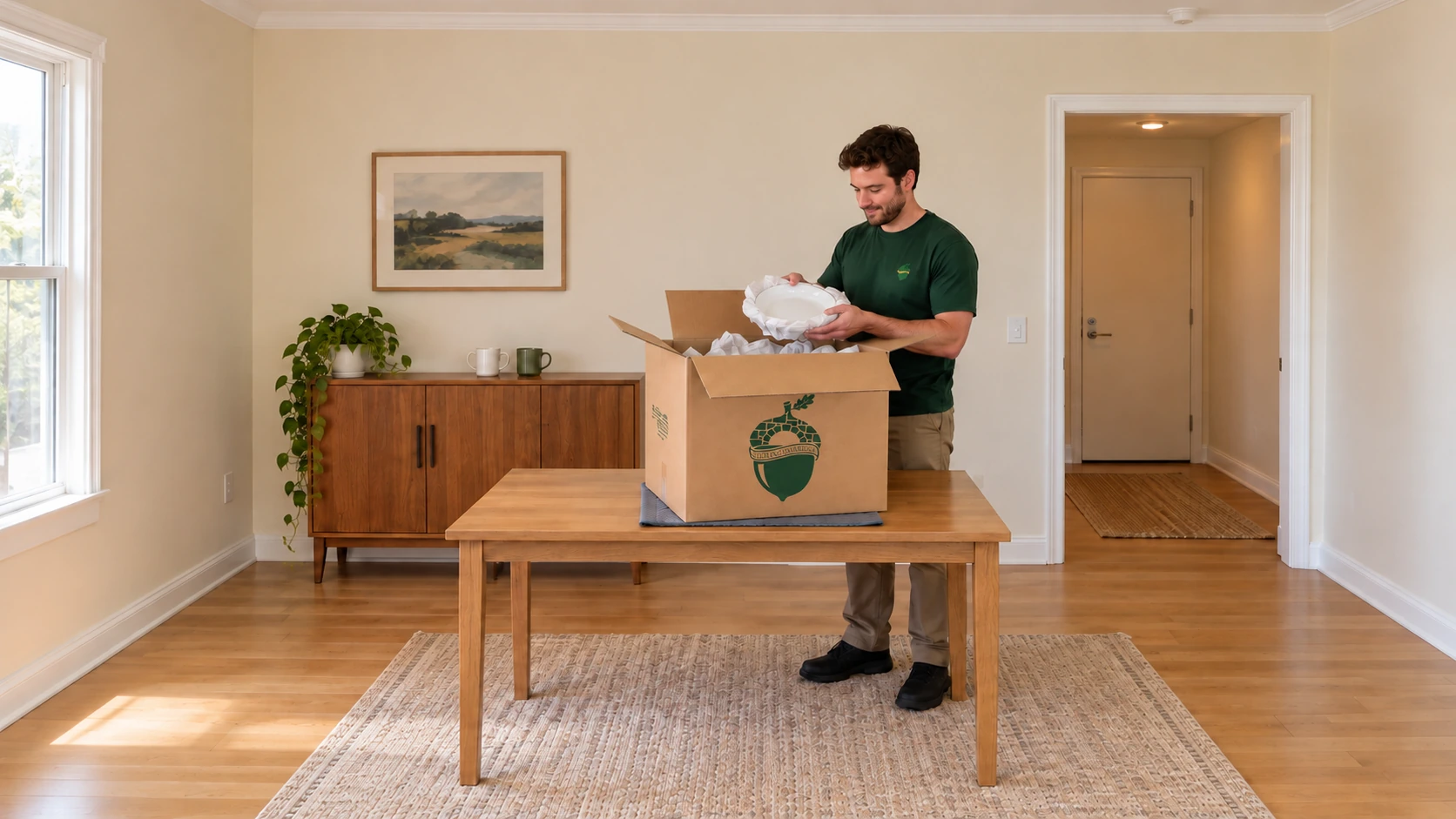
Sterling Oakbridge can pack the agreed household or selected groups, then arrange optional unpacking and separately scoped organizing.
Explore packing, costs and local examples
Start with the work that is taking your evenings
A kitchen can look almost ready while its cupboards still contain the hardest decisions. The same is true of a linen closet, a shelf of fragile keepsakes or boxes kept downstairs. Compare the unfinished work with your available evenings, work schedule and household routine. A couple of weeks of evening preparation is a possible experience, not a measured average or a requirement to hand everything over.
Choose full packing when you want the agreed inventory prepared by the crew. Choose partial packing when you can identify the cupboards, rooms or contents that need help and will complete the rest yourself. Fragile-only packing addresses a named ordinary fragile group. Show unusual art, collections and large glass separately; a dish-carton method does not answer every protection problem.
Make the split practical: list what the crew prepares, what you finish and what stays available. Assign a release time for the last group. Include later items in the inventory even when they are deliberately left out of the first packing visit.
Look inside the home before counting cartons
Open the cupboards and closets for the review. Show retained belongings in a basement, upstairs room or other storage area, including the route back to the exit. Distinguish things that travel from things to sell, donate, keep at the property or send to another recipient. Sorting changes the shipment; closing everything first can turn that decision into repeated handling later.
Woodbridge proper is a Census-designated place within the larger Woodbridge Township. Its 2020–2024 ACS housing table counts 3,530 housing units in detached single-unit structures and 1,545 in structures containing 10–19 units. These are housing units, not buildings, customers or carton requirements. They are a reason to ask about the actual home and shared route, rather than presume one layout from the place name.
An expectation of 20 cartons can change to 60 or 100 when the actual contents are reviewed. That illustrates underestimation; it is not a Woodbridge size calculator. Include dense books, dishes, hanging clothes, folded linen and loose shelves of small objects so the coordinator can select materials for the contents. Company-supplied cartons are charged separately from packing labor.
Consider: the apartment must still work on the last night
Imagine a household leaving a station-area apartment after one final evening at home. It wants selected kitchen cupboards and spare linen prepared first, while the bed, breakfast items and travel clothing remain usable. The Woodbridge living guide describes the station-area setting; a public apartment listing does not confirm this household's elevator reservation or working hours.
Agree the actual property period and a clear indoor place for completed cartons. Keep a small breakfast group separate from the protected dishes and identify when it can be released. The household handles its remaining selected contents unless the written scope changes. If the building period is unavailable, the coordinator and property controller need an accepted alternative before the visit is relied upon. The result is prepared kitchen and linen groups without accidentally packing the last night away.
Choose the preparation visit and keep the journey group with you

Some reviewed small inventories can support packing and a local move on the same day. Full cupboards, several levels or a room that must remain occupied can make an earlier preparation visit useful. Bedroom count alone cannot establish the time or crew. Discuss staffing against the contents and access: six movers on a move day and four packers on a separate day is one substantial-project example, not a prescription for every home.
Keep identification, medication, keys, chargers, necessary clothing and private papers with the people who need them. A labelled open-first carton remains part of the shipment. It may be inaccessible during transport, holding or storage, so it cannot replace the journey bag. Retain agreed sleeping, breakfast and work essentials until their release time, then check them against the final inventory.
The route matters during preparation too. Finished cartons should not take over a common landing or the household's exit. Tell the coordinator about the actual stairs, carrying path and available working position. The Woodbridge moving page covers truck access and curb planning; a resident permit or an open space does not by itself reserve frontage or every part of the building route.
Protect contents through carrying, stacking and travel
Protection needs to work through lifting, carrying, stacking, restraint and travel. Ordinary dishes need suitable cartons, individual protection and cushioning. Dense books call for manageable groups rather than a large carton filled only by available space. Folded linen needs a defined container and destination; it is not a reason to overfill a box or conceal something fragile underneath.
Show glass doors and shelves, loose removable parts, small frames and unusual keepsakes before the method is agreed. Ordinary drawers are normally emptied and secured with their furniture. Identify removable legs and fittings while preserving integral supports; the item's construction and route determine the work. Basic furniture assembly and disassembly use moving labor time without a separate basic assembly surcharge. Complex items need their own scope.
A clean working area and suitable gloves should fit the object and the grip. There is no one glove or wrapping method for every surface. For unusual art and sensitive collections, use the fine-art review to agree object-specific protection. Valuation choices, separate insurance and a building's COI are different subjects; ask for the applicable written terms before accepting the moving plan.
Consider: the house has two receiving destinations
Imagine a Woodbridge house with linen upstairs and retained household contents downstairs. Most belongings go to the new home, while a named spare-room group goes into storage.
Sort the retained groups before cartons are closed. The selected linen can be prepared while the occupied bedroom stays usable; downstairs contents need their own inventory and carrying path. Label the next destination, not just the old room. Check the storage terms and later delivery before the storage group leaves. If that arrangement falls through, settle a suitable accepted alternative instead of treating an unconfirmed space as booked. Review the storage and later-delivery plan as a separate agreed stage.
The useful result is a shipment divided for its next receivers. It does not include an automatic return visit, a guaranteed storage space or delivery to a second recipient who has not agreed to receive it.
Make labels useful to the next person handling the carton
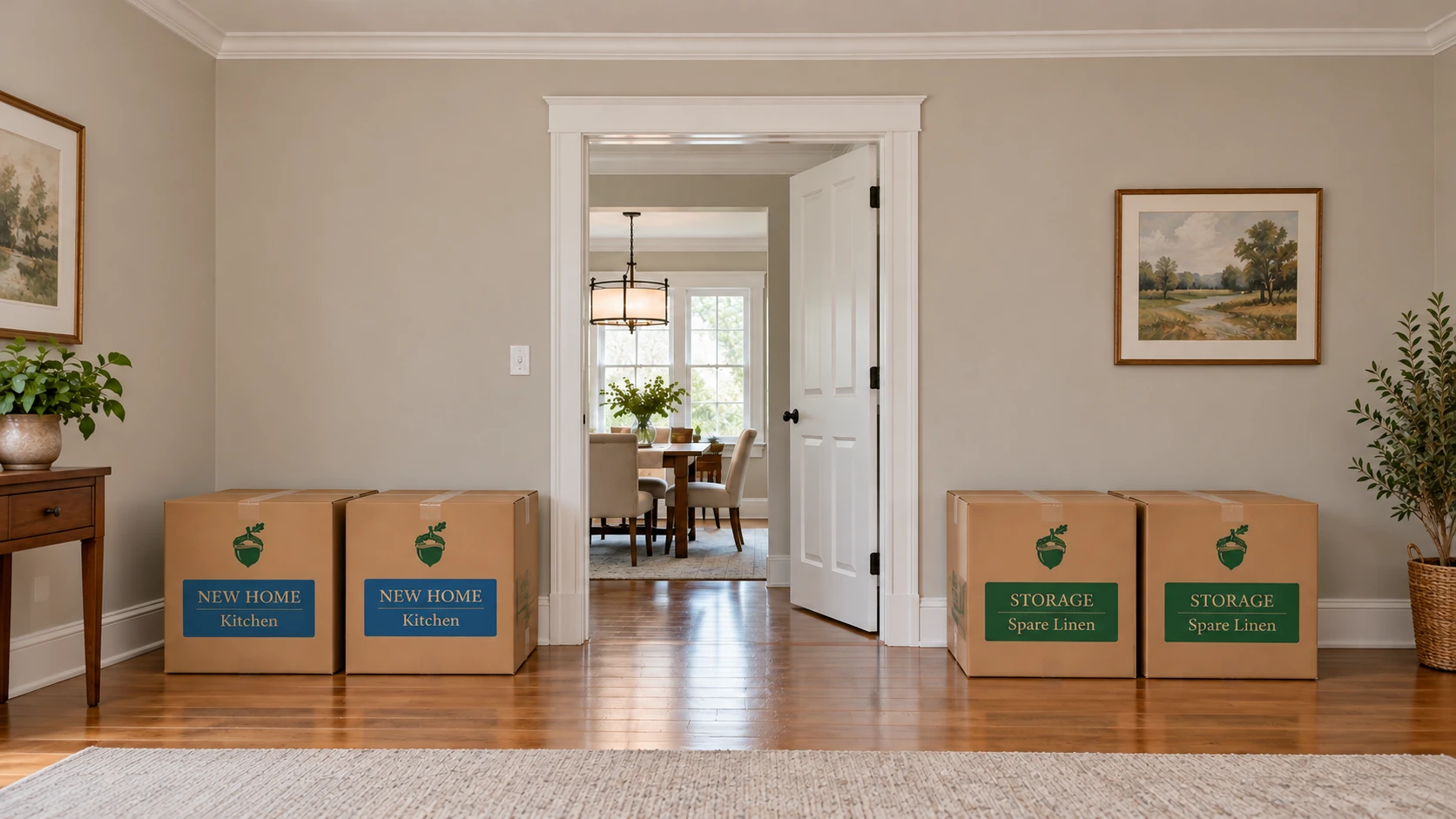
Write the next destination, room and useful contents on each carton. A box number and opening priority can connect it to the receiving list. Color helps people distinguish groups but should reinforce written information, especially when similar linen or kitchen cartons go to different places.
Keep the groups physically distinguishable in an agreed indoor location without blocking circulation. Identify who can release the keep-available group and who can answer a destination question. If a receiver, room or date changes, update the coordinator and the labels before the crew follows the earlier plan.
An inventory split describes retained belongings. Used empty packaging belongs in another group after its contents and small fittings have been checked. The two should never look interchangeable on the floor or in instructions.
Decide what unpacking should make usable
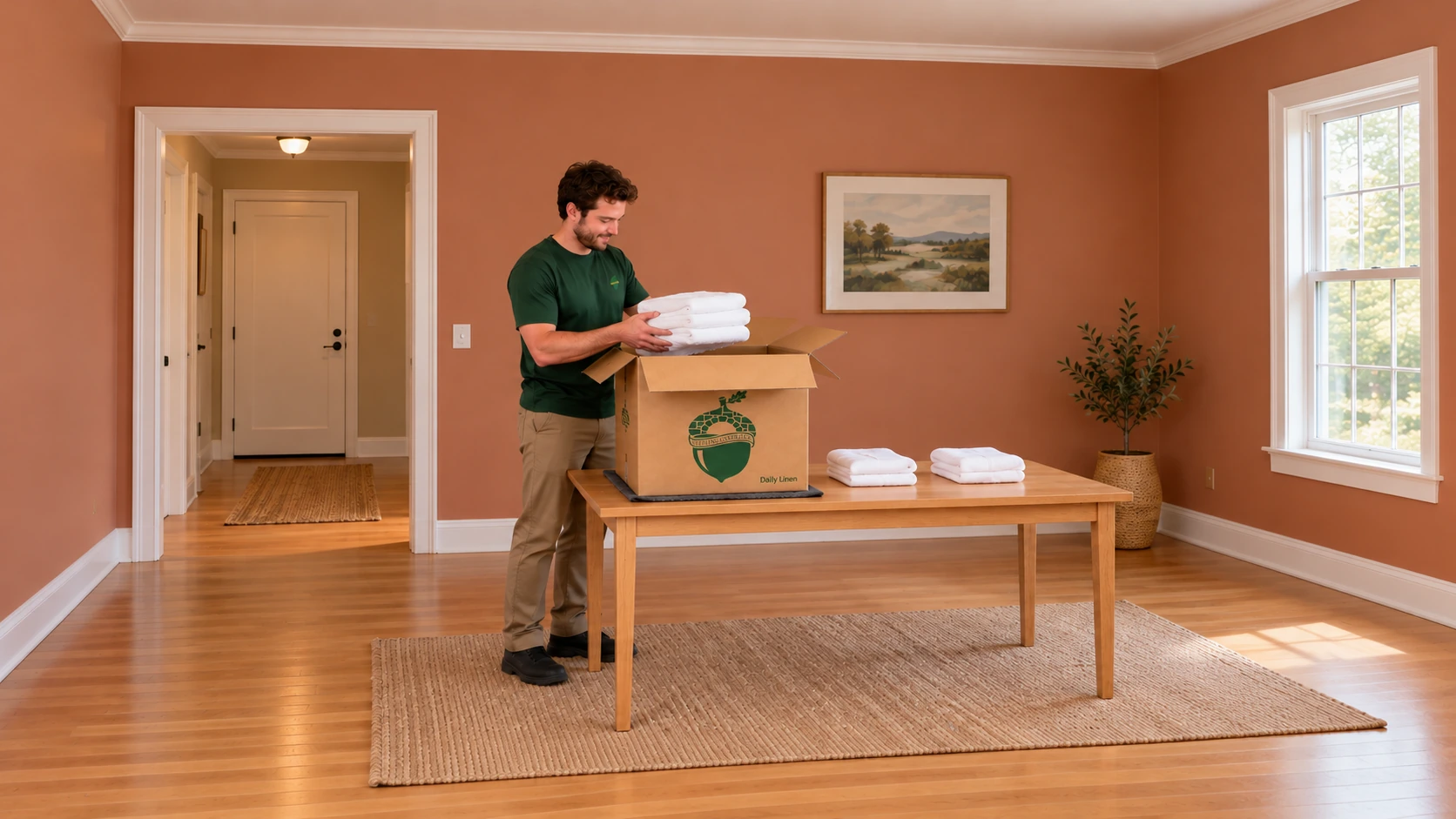
Basic unpacking opens the agreed cartons and places contents on suitable available surfaces. Choose the priority rooms and clear a counter or table first. It makes those contents accessible; it does not automatically decide final shelf positions, connect equipment or remove all packaging from the property.
Unpacking can be arranged for the delivery visit or later, subject to availability and an agreed scope and price. On a substantial project it might add three or four hours, or use a later two-person visit. Those are planning examples, not included hours, a staffing promise or an appointment already reserved.
Check paper and empty cartons for small objects before they join the packaging group. Keep remaining full cartons recognizably separate and preserve a usable route through the occupied home. A cleared priority room is a useful result even when the rest of the home still needs decisions.
Consider: you have moved in, but the daily linen is still boxed
Imagine returning to work after arriving in Woodbridge. The household has already unpacked some rooms, but spare towels and bedding are mixed among the remaining cartons. It wants help making those contents accessible, then placing selected towels where the household chooses.
Send the remaining carton groups, the occupied-room layout and a photo of a suitable clear surface. Agree the visit period and unpacking tasks. The crew can open the selected linen cartons onto the cleared table. Separately agreed organizing can then place selected towels on the shelf identified by the household's decision-maker. If the shelf or room is not ready, stop at the agreed accessible contents and resolve the remaining location before final placement.
The result is a defined daily-use group that can be found and, where ordered, placed. It is not a promise to finish every room or undo technical work performed by someone else.
Separate organizing, furniture placement and technical finishing

Organizing puts belongings in their final positions under your instructions. Agree the cupboards, shelves, priorities and price, and have the person who decides placement available. A smaller team can be easier to direct. Choosing that service is useful when the question is where things should live after they leave the carton.
For furniture already delivered that needs to move within the home, describe the pieces, path and desired positions through in-home moving. A separately purchased item arriving from a seller belongs in a furniture delivery plan. These are different jobs from unpacking household cartons.
Request handyman or mounting work for the actual item, surface, fixings and permissions. Agree the executor and price individually. Electrical or technical hookup is not implied by the word unpacking or by general handyman availability. Give computer shutdown, backup, reconnection and testing explicit owners when a home office is part of the move.
Choose the route for empty packaging before it fills the room
Gathering checked empty materials inside the home and taking them away are different tasks. Packaging removal is separately ordered and charged. Include the actual materials, quantity, access and collection timing; a pile left after unpacking is not an automatically booked removal visit.
For an eligible household using local recycling, the Township's What Can I Recycle table directs cardboard to the blue cart after boxes are broken down to fit, or to the Recycling Center. Plastic bags, film and shrink wrap have separate listed collection locations. Separate the materials before choosing their route; an empty carton does not make everything inside it suitable for the same collection.
The Convenience and Recycling Center, at 225 Smith Street in Keasbey, is for Township residents with proof of residency and check-in. Its published restrictions exclude commercial vehicles and plates, out-of-state plates, box trucks and rental vehicles, as well as construction or demolition material. Do not plan a moving-truck drop-off there. Confirm the material, eligible vehicle and current opening before a household trip. Resident eligibility does not establish permission for a contractor's load.
If furniture is rejected later because it will not fit or is no longer wanted, name it separately. The removal and disposal service can review that item group and arrange an accepted receiving route. Do not add a cabinet to the packaging job or assume that the household recycling calendar will remove it on departure day.
Match receiving work to the real long-distance delivery plan
For a long-distance move from Woodbridge, discuss receiving help with the delivery model, available rooms and actual receiving period. Direct transport uses a dedicated truck with the same crew; consolidated transport combines shipments and has a broader delivery window. Neither automatically books unpacking, organizing or a later return team.
A short building appointment must fit the accepted delivery plan. If it cannot, resolve a workable alternative, including any handling, storage, later transport and receiving costs, before relying on it. Keep travel essentials outside the shipment and avoid scheduling technical installations on an assumed exact arrival day.
Compare the complete paid work and send the review details
Packing labor is charged for working time; company-supplied cartons are separate. Basic moving blankets, shrink wrap and tape carry no separate basic material charge. Optional box unpacking also uses working time. Organizing, packaging removal, storage, specialist preparation and individually scoped technical work need their own agreed boundaries and price.
Compare the same retained inventory, access and finished result. Include preparation visits, supplies, moving work and chosen receiving services. Packing plus moving can, in one illustration, approach twice the budget for moving the same shipment already packed; it can also be lower or higher. That comparison is not a rate, multiplier or promise. Estimated or minimum hours on an hourly local job do not cap completion time. For an agreed long-distance flat rate, additional elapsed travel alone does not raise the price for the same shipment and service scope; changed work needs a revised written scope and price.
Send the addresses, actual contents, photos or video, stairs and building periods, proposed dates and selected destinations. Include what stays usable, who finishes the remaining packing, which rooms will be ready and the receiving tasks you want. For household-goods moving wholly within New Jersey, the NJ consumer guidance requires an on-site or virtual goods survey before the written moving estimate. A list starts the discussion; it does not replace that survey. A standalone packing request has its own defined scope.
Woodbridge packing and unpacking questions
Can I book only selected cupboards or rooms in Woodbridge?
Yes. Partial packing can cover named cupboards, shelves or rooms while you complete the rest. Full packing covers the agreed household inventory. Mark what travels and what stays available, include the later group and agree its release time. Ordinary fragile-only packing addresses a named fragile group; unusual art and large glass require their own review.
Does Woodbridge mean the whole Township?
No. Woodbridge proper is a Census-designated place within Woodbridge Township. This page addresses that local setting; other Township communities and nearby municipalities have their own geography. Send the actual addresses so the coordinator can review the route, property and applicable household collection arrangements rather than infer them from a postal name.
Can my bedroom count tell us how many cartons to order?
No. Review the actual retained contents of cupboards, closets, shelves and any downstairs or upstairs storage. Housing statistics describe units, not your belongings. The example of expecting 20 cartons and discovering enough contents for 60 or 100 explains underestimation; it is not a carton allowance or a size-based prediction.
Can we use the apartment on our last night?
Yes, if the retained groups and release times are agreed. Pack selected cupboards and spare linen first, while sleeping, breakfast and travel essentials remain available. Keep finished cartons out of the exit and common route. Confirm the actual property period; a public apartment description does not book a working slot.
Should packing happen before moving day?
An earlier visit can help when cupboards are full, contents are spread over several levels or a room must remain in use. Some reviewed smaller inventories support a same-day local plan. The coordinator needs the contents, access, materials and release times to choose; bedroom count alone does not settle staffing or duration.
What should travel with us instead of in the shipment?
Keep identification, medicine, keys, chargers, necessary clothing and private papers with the people who need them. An open-first carton still travels in the shipment and may be inaccessible in transit or storage. Retain the final-night essentials until their agreed release rather than assume that a priority label makes them immediately available.
Are labor, cartons and basic protection included together?
Packing is charged for working time, and company-supplied cartons are separate. Basic moving blankets, shrink wrap and tape have no separate basic material charge. Optional unpacking uses working time too; specialist preparation, organizing, storage, removal and extra visits need their own agreed scope and price.
Can you pack the contents we keep downstairs?
Yes, include the selected retained contents and the complete carrying route in the review. Show stairs, turns and the working exit, and separate things that will remain, go to another recipient or be removed. Packing downstairs does not by itself establish a clear route or reserve the truck position outside.
What happens to furniture drawers and removable parts?
Ordinary drawers are normally emptied and secured with their furniture. Show the actual piece so removable parts can be distinguished from integral supports, with fittings kept matched. Basic assembly and disassembly use moving labor time without a separate basic assembly surcharge; complex furniture has an individual scope.
Is fragile-only packing suitable for every collection?
No. A named ordinary dish or glassware group can use suitable cartons, individual protection and cushioning. Show unusual art, sensitive collections, large glass and furniture glass before the method is accepted. Their construction, support and route may need object-specific specialist preparation.
Can we finish the remaining packing ourselves?
Yes. Identify the groups you will complete and when they must be ready, including the later keep-available group. Show proposed containers or special contents during review so suitability can be assessed. If the household cannot finish its part, tell the coordinator before the crew relies on the earlier inventory and timetable.
How should we label a new-home and storage split?
Write the next destination, receiving room and useful contents, with a box number and opening priority where helpful. Color supports the words. Keep the two groups distinguishable without obstructing the route, and confirm storage and later-delivery arrangements before dispatch. An available-looking space or an intended recipient is not an accepted booking.
What does basic unpacking give us?
It opens the agreed cartons and puts contents on suitable available surfaces, such as a cleared table or counter. Choose priority rooms and keep remaining full cartons separate. It makes those contents accessible without automatically assigning final cupboard positions, connecting equipment or removing packaging from the property.
Can I ask for unpacking after already moving in?
Yes. Send the remaining carton groups, the occupied-room layout, useful clear surfaces and the work you want completed. A later visit depends on availability and an agreed scope and price. Three or four added hours or a two-person visit are planning examples, not included allowances or a promised return appointment.
How is organizing different from unpacking?
Organizing places belongings in their final locations under your instructions. Agree the shelves, cupboards, priorities and price, and have the placement decision-maker available. A smaller team can be easier to direct. Basic unpacking makes contents available on surfaces; it does not automatically include those final placement decisions.
What if a receiving room or cupboard is not ready?
Unpack the agreed contents for suitable ready areas and keep other groups closed in an agreed location that preserves circulation. If no workable receiving space exists, resolve a suitable accepted alternative and its costs before the affected goods leave. A useful priority room does not automatically book a second visit or complete an unavailable room.
Can unpacking include computer setup or mounting?
Technical work needs an explicit task, executor, permissions and price. Identify shutdown, backup, reconnection and testing separately. Mounting also requires review of the item, wall and fixings. General unpacking or handyman availability does not imply electrical hookup or a fully operational home office.
Can you reposition furniture that is already here?
Yes, describe the actual furniture, carrying path and desired positions for an in-home moving plan. That is separate from opening cartons or choosing shelf positions. Collection of a new purchase from a seller is a furniture-delivery job with its own release, transport and receiving arrangements.
Is taking empty packaging away part of unpacking?
It is separately ordered and charged. Agree the materials, quantity, access and timing before relying on a removal visit. Check paper and cartons for small belongings and fittings before they enter the empty-material group. Keep unopened shipment cartons and retained contents separate from the outgoing packaging.
Can all packing material go in the blue recycling cart?
No. Township guidance says to break down cardboard so it fits the blue cart; film, bags and shrink wrap have different listed collection locations. Check the actual material and current address arrangement before setting it out. Empty cardboard does not make cushioning, film or everything placed inside it suitable for the same route.
Can the moving truck drop packaging at the Keasbey center?
No. The published resident-center restrictions prohibit commercial-use vehicles or registrations, out-of-state plates, box trucks and rentals. A household trip needs resident eligibility, the required check-in and proof, an allowed vehicle and an accepted material. Agree a suitable contractor collection route separately; accompanying a crew does not establish an exemption.
What if we decide not to keep a cabinet after arrival?
Name that cabinet as a separate removal item. Its carry, material, quantity and accepted receiving route must be reviewed; it does not become packaging waste because the decision was made during unpacking. Do not assume household recycling or an earlier carton-removal booking covers it.
Does a long-distance delivery book unpacking automatically?
No. Agree the receiving tasks, availability and price against the actual delivery model and available rooms. Dedicated direct transport and consolidation have different scheduling implications. A short property slot or exact installation date needs a workable accepted plan; neither automatically reserves unpacking, organizing, storage or a later team.
What should I send for the Woodbridge estimate?
Send the actual contents, addresses, photos or video, stairs, building periods, proposed dates, destinations and chosen preparation and receiving tasks. Identify what stays usable and what you will finish. For household-goods moving within New Jersey, an on-site or virtual goods survey is required before the written moving estimate; a standalone packing request has its own scope.