
Albany, NY · Household preparation
Full Packing and Unpacking in Albany, NY
Give the wrapping and carton preparation to our crew while you keep the household decisions.
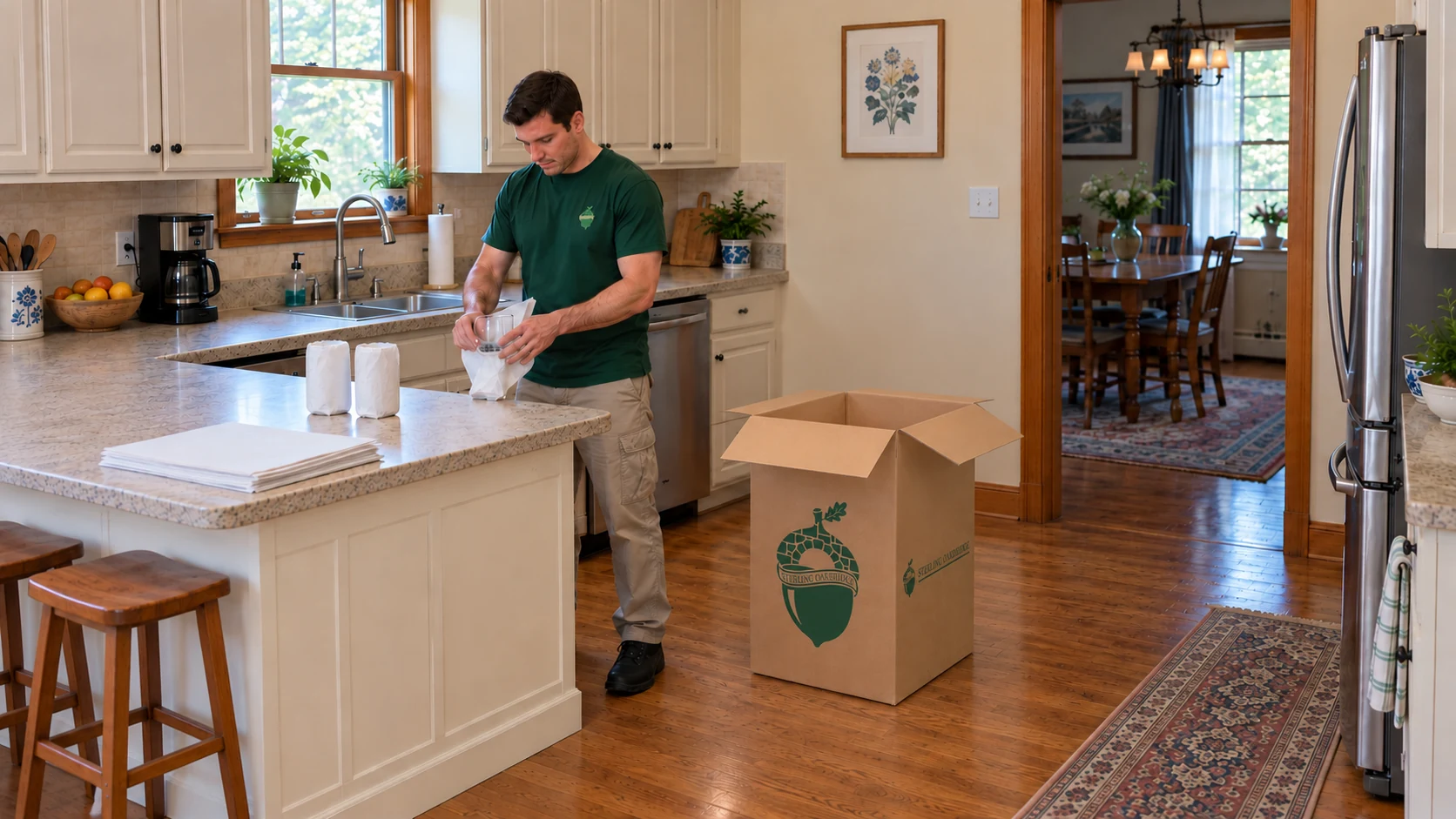
Choose full or selected packing in Albany, with preparation arranged around the actual building and optional unpacking or directed placement after arrival. The estimate separates working time, supplied cartons and receiving help.
Start with the contents you want prepared and the rooms you want usable after arrival. Books in an upper-floor flat, a small local move and a receiving home with one room unfinished need different sequences. Send the actual inventory and property instructions so we can plan the work with you.
Explore packing, costs and local examples
Choose the preparation you want to hand over
Packing after work can take evenings away from a household for a couple of weeks. You can hand that wrapping and carton work to our crew while keeping the choices about what travels. Choose full preparation of the agreed retained contents, selected rooms or cupboards, or an identified fragile group.
Write the division down: the crew prepares the kitchen collection and books, while you finish clothing and personal papers, for example. Name the daily dishes still in use and any glass stored elsewhere. Full packing does not decide ownership, settle a shared collection or choose which belongings to discard. Keep undecided items outside the approved groups.
Show the contents before estimating the cartons
Open cupboards, bookcases, wardrobes and the storage spaces that belong to the shipment. Include basement shelves and separately stored groups. Bedroom count describes the home but cannot show the amount of glass, books or accumulated kitchenware. Photographs or video of open storage let the planning team recommend the right review.
A household may initially imagine twenty cartons and discover enough contents for sixty to one hundred. That is an illustration of hidden inventory, not an Albany estimate or a carton allowance. Sound existing cartons can be reviewed for reuse; show their size, walls, bases and closures. Reusing a carton does not remove the work of correctly packing its contents.
Make each carton suitable for the carry and the journey
Glass and ceramics need individual protection and internal cushioning; a closed lid or fragile label cannot stop pieces striking each other. Dense books need manageable groups rather than the largest available carton. Bulky linen can use a larger carton without making it a container for heavy mixed contents. Show hanging clothes and unusual objects before the materials are chosen.
Protection works through lifting, carrying, stacking, restraint and transport. Identify delicate projections, glass shelves, repairs and loose fittings. Empty ordinary dresser contents as agreed; drawers can remain in the body when the reviewed handling permits it. Genuinely removable parts and unusual construction need their own method. Clean working surfaces and suitable hand protection follow the actual material and grip.
Art and collection handling explains specialist methods and crating. Send the object, condition and route for that review rather than assuming all fragile work uses one carton.
Agree the working period for preparation
Preparation and carrying can need different visits. Confirm the entrance, permitted working hours, material delivery, suitable surfaces and indoor staging for each visit. A later elevator or curb arrangement does not automatically admit an earlier packing team. Give the crew a contact who can open the home and resolve scope questions.
A larger inventory often benefits from its own preparation day and team. The actual contents, access and available time decide the sequence; a fixed bedroom count does not. Albany street arrangements and seasonal restrictions belong to the local truck-access procedure. Include preparation needs when agreeing the whole move.
Books and kitchen glass leave a rowhouse in manageable groups
Imagine a household leaving an upper-floor Center Square flat with a large book collection and delicate serving glass. The rooms look modest, but the contents need more preparation than the bedroom count suggests. The City describes the historic district as predominantly two-to-four-story brick rowhouses; the actual flat still needs its own stair and entry review.
Select earlier book and glass preparation where the property permits it. Agree a working surface and carton positions inside the home, while keeping the shared hall, landing and exit clear. Use suitable carton sizes and a written inventory rather than one large heavy box for each shelf. Complete the remaining daily dishes at the agreed handover.
The useful result is a prepared, traceable group ready for the carrying sequence. It does not prove a particular staircase is passable or create a truck reservation. The Albany guide explains the access review.
Keep the occupied home usable until the final handover
Set aside the bedding, toiletries, clothing, simple meal items and familiar belongings needed for the last evening. Keep medicines, keys, valuables, identification, personal documents and chargers with the household. If travel or possession dates leave a gap, prepare for that interval rather than only the first night.
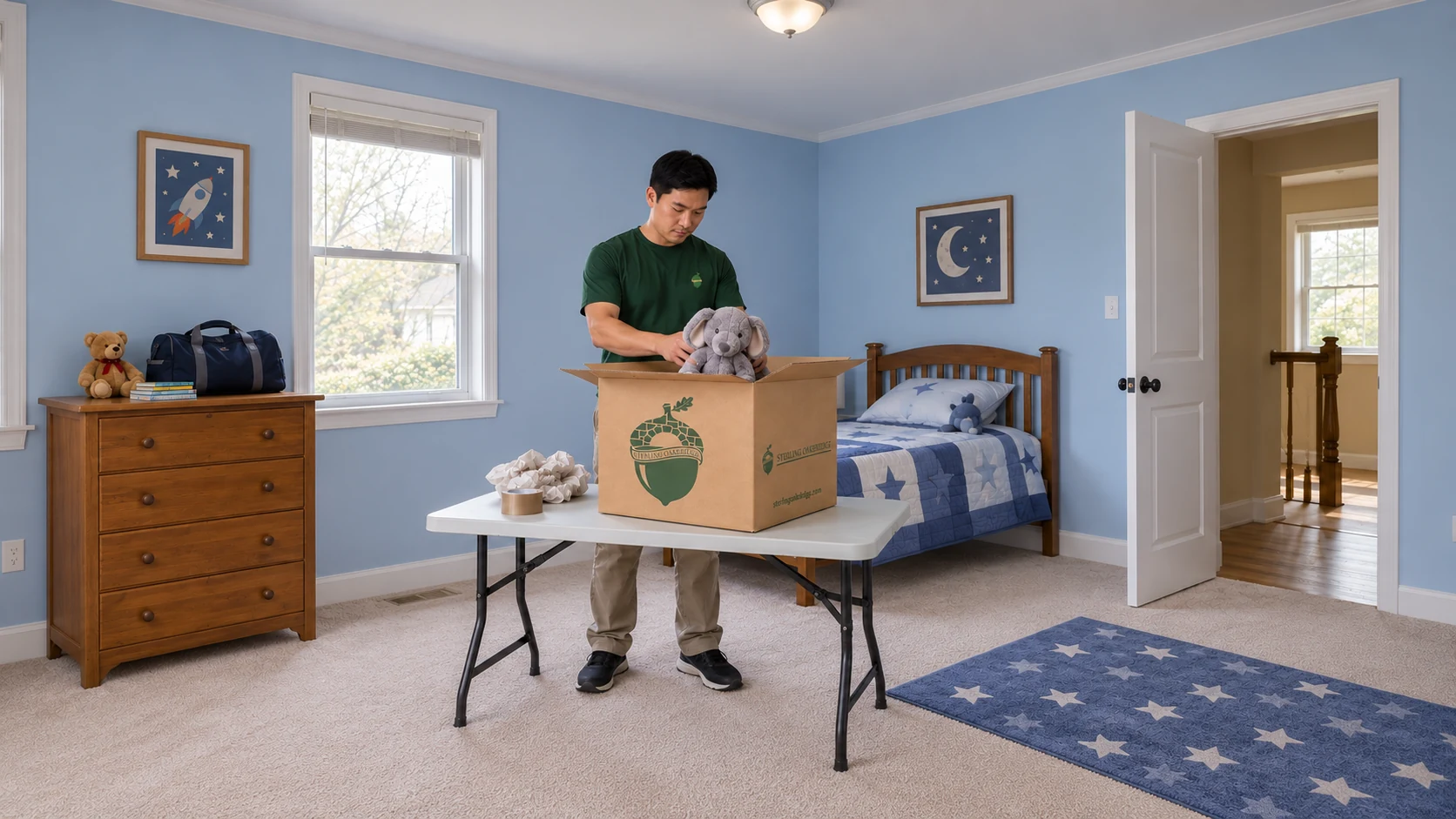
Agree when each remaining group becomes available to pack. Keep the personal travel bags visibly separate from shipment cartons, and label the first-opening shipment group without exposing private personal information.
A small local household reviews one combined day
Consider a one-bedroom household moving between two Albany addresses. Its owner has sorted the contents, packed ordinary clothing and left selected kitchen and fragile work to the crew. Both properties offer usable access and the retained inventory can be reviewed before the date.
Ask whether the actual packing and moving work fit the available day. Identify the final meal group, the time it will be released and who will finish any customer-packed cartons. If cupboards reveal more glass or the receiving window is too short, revise the sequence and discuss earlier preparation instead of relying on the one-bedroom description.
This example is a planning choice, not a promise of hours or availability. A two-bedroom home can have less fragile work than another smaller home; an accurately described inventory is more useful than a room-count rule.
Write the destination before closing the carton
Put the destination, receiving room, useful contents and inventory identifier on each carton. Add opening priority for everyday needs. Color can reinforce the groups, but words still explain them to someone who does not know the color system. Give the receiver the corresponding list.

Separate retained home contents, an agreed storage group, undecided items and approved removal. Before a smaller-home move, decide which collections remain useful and what storage has a defined future purpose. Avoid paying to prepare unwanted contents merely because they are already on a shelf.
Storage planning explains intake, access, release and later delivery. A storage label does not reserve those stages. Name the actual receiver for every address, and settle a donation or removal arrangement before treating unwanted items as accepted elsewhere.
Open the groups that can be used now
Basic unpacking opens the agreed cartons and puts contents onto suitable surfaces: dishes on a clear counter or linen on a designated table, for example. Choose priority cartons and ready rooms. Keep groups closed when there is nowhere suitable to put their contents.
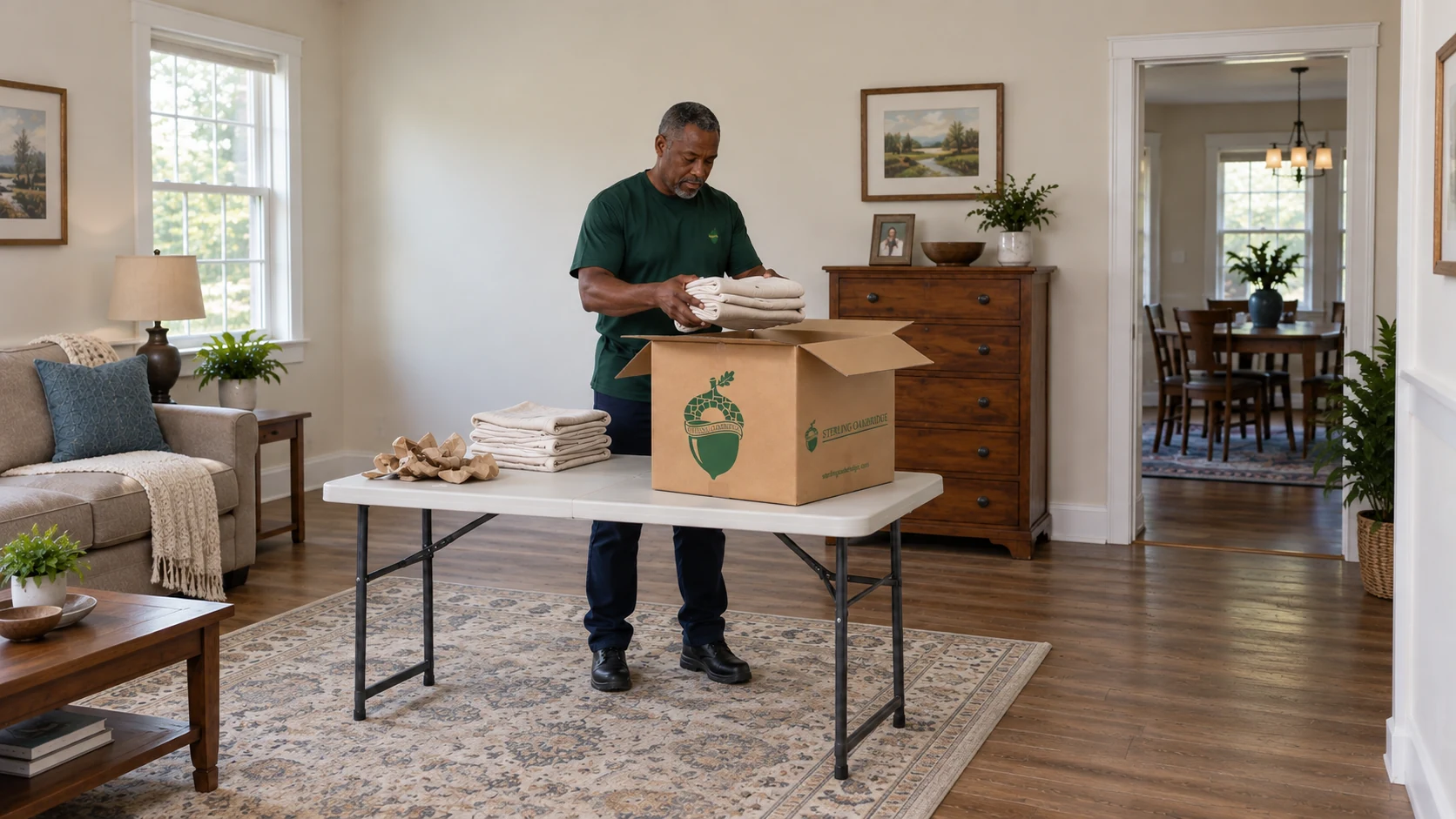
Furniture is unwrapped as part of delivery. Opening box contents is optional working time. Check used paper for fittings, documents and personal items before gathering it; final cupboard placement and taking packaging away are separate work.
One receiving room stays closed while daily life starts elsewhere
Imagine an Albany receiving home where the kitchen and bedroom are ready but work in the study is unfinished. The household wants a usable first week without opening every carton into the same room. Identify kitchen and linen priorities before delivery and keep the study collection closed in an agreed safe position.
Basic unpacking can open the selected daily groups onto clear surfaces. Once the study is ready and the household has chosen the shelving arrangement, a separately agreed return visit can handle the remaining contents under its direction. Confirm crew availability, access, working time and the person approving positions.
This avoids filling the temporary working rooms with contents that cannot yet be placed. Furniture that later changes rooms or floors needs its own carrying scope; putting books onto shelves does not cover moving the bookcase.
Choose the final arrangement before placing everything
Home organizing puts the agreed contents into cupboards, drawers and onto shelves under your direction. Identify the storage arrangement, the person deciding positions and the priorities for the visit. Agree the working time and price, and keep surfaces and shelves ready for the chosen work.
You can try unpacking yourself and arrange help for the remaining groups later, subject to availability and property access. A smaller team may be easier to direct than the whole moving crew. On a larger project, three or four extra hours or a later visit by two people illustrate options to review; they do not promise a duration or staffing level. A later furniture rearrangement belongs in a separate local carrying scope on the Albany moving page.
Describe furniture and finishing work separately
Basic furniture disassembly and reassembly use moving labor time, without a separate basic assembly fee. New flat-pack furniture may involve many panels, fittings and wall attachments rather than reconnecting suitable previously assembled parts. Send the exact model, instructions, condition and complete parts for review.
Agreed picture hanging, mounting and other handyman finishing need their own item, wall, hardware, permissions and appropriate executor. Packing and organizing do not establish electrical work or appliance hookup. Describe the completed result you want before the visit. A new furniture purchase also needs its actual seller release and collection arrangement; it is a different job from moving an already delivered piece.
Separate indoor gathering from the final collection route
Gathering empty packaging indoors restores working space. Taking it off the property is separately charged work that must be arranged for the actual material, quantity, access and stage. Separate paper and cartons from film, foam, dirty protection and unwanted furniture; check for useful contents before flattening or discarding anything.

Albany Recycles provides municipal recycling for residential properties with four or fewer units. Larger multi-residential complexes need privately arranged recycling through the owner or manager. Its residential stream accepts corrugated cardboard and loose paper, and excludes plastic bags, wrapping and foam. Empty the indoor gathering bag before presenting accepted loose material; the photograph is not a completed recycling setout.
The City cardboard guide includes corrugated shipping cartons and excludes wax-coated and foil-lined boxes. New York DEC keeps film out of household recycling; suitable clean, dry film can use a separate accepting return program. Confirm the actual material and receiver. A resident program is not blanket admission for a commercial load or permission to add furniture to packaging collection.
Connect receiving help to the delivery agreement
For long-distance work, the delivery clock begins after pickup and loading are complete. Earlier packing does not start it. Household travel, possession and the truck arrival can have different dates, so schedule optional unpacking against the actual direct or consolidated delivery arrangement and ready rooms.
The agreed long-distance flat rate stays the same when travel or delivery takes longer for the same agreed shipment and work. Added belongings, packing, storage, stops or receiving tasks need written review. The Albany long-distance page explains delivery models and windows. An Albany-to-New-York-City order stays within New York; its distance alone does not make it interstate.
Compare the complete result and the work you retain
Packing is charged for working time, with company-supplied boxes separate. Moving blankets, shrink wrap and tape have no separate basic-material charge. Optional box unpacking uses working time; organizing, specialist work, storage and packaging removal need their own agreed terms and price.
A complete packing-and-moving total can illustrate a budget approaching twice that for moving already prepared contents. This is not a multiplier or quotation for your home. Compare the same retained inventory, routes, materials and receiving result, including the work you or your household will still complete.
Send both addresses, dates, open-storage photographs or video, fragile details and the division of responsibilities. Add every visit’s property instructions, separate destinations, the last everyday group and ready receiving rooms. Our planning team will recommend the review needed to write the scope; a full packing request can justify closer review even in a small home.
Albany packing and unpacking questions
Can I book only the kitchen and glass?
Yes. Identify the cupboards, daily dishes and glass stored elsewhere, then agree which items you will finish. Partial or fragile-only preparation can focus the paid working time on those groups; full packing covers the agreed retained contents rather than every unresolved possession.
Does full packing decide what to keep?
You keep those decisions. Sort retained contents, shared belongings needing approval, undecided items and approved removal before preparation. Name the person who can resolve questions. A donation plan still needs an accepting receiver; packing does not make that decision or booking.
How do you review the number of cartons?
We review the contents, including open cupboards, books, wardrobes and separate storage. Twenty versus sixty to one hundred is an illustration of hidden inventory, not an allowance or estimate. Show fragile groups and existing cartons so the method follows the actual shipment.
Can my own cartons be reused?
Sound cartons can be reviewed for the contents they will hold. Show their size, walls, bases, damage and closures. A weak carton or a large box full of dense books can need another method. Packing labor remains paid work even when the carton is reused.
Can packing and a local move happen on the same day?
A reviewed smaller job may allow both when contents, access and available hours fit. Identify what you have already prepared and when the final daily group is released. Extensive fragile work or a short receiving slot can justify earlier preparation; bedroom count alone cannot settle the schedule.
May packing cartons wait on a shared rowhouse landing?
Use only a position the property permits that keeps the common route and exit clear. Agree indoor staging, material delivery and the entrance before preparation. A convenient landing is not automatically a permitted storage area, and a later carrying booking does not admit an earlier visit.
What belongs outside the shipment for the last night?
Keep personal documents, medicines, keys, valuables, chargers and journey supplies with the household. Leave bedding, clothing, meal items and familiar belongings accessible until the agreed final handover. Prepare for any gap before possession or delivery, not only one night.
How should cartons for home and storage be marked?
Use destination, receiving room, useful contents and inventory identifiers, with opening priority where needed. Keep corresponding lists and separate staging groups. Color supports the writing. Storage intake, access, release and later delivery still need their own confirmed arrangement.
Should we pack unwanted contents for now and decide later?
Decide retained groups first where possible, especially before moving into a smaller home. Keep useful collections and defined future storage, but separate undecided or unwanted contents from the packing plan. Confirm removal or donation acceptance rather than paying to prepare everything simply because it is present.
Do dresser drawers have to be removed?
Empty loose contents as agreed; ordinary drawers can remain in the body when the reviewed handling permits. Damage, glass, unusual construction and genuinely removable parts need individual attention. Keep the correct fittings with their piece instead of assuming every support is designed to detach.
Does a fragile sticker protect dishes?
It identifies a group but cannot replace suitable wrapping, cushioning and support. Protection must work through the carry, stacking, restraint and transport. Show repairs, projections and delicate parts for an object-specific method before closing the carton.
What does basic unpacking leave ready?
It opens the selected cartons and places contents on suitable surfaces, such as a clear counter or designated linen table. Choose priority groups and ready rooms; other cartons can stay closed. Cupboard placement and packaging removal are separate work.
Can a room stay packed while work continues there?
Yes, keep its agreed group closed in a safe permitted position while ready rooms receive their priority contents. Confirm the later room’s readiness, access and directing person before arranging final placement. Unpacking everything into a temporary room can obstruct the household’s first week.
Can you put contents into cupboards later?
Directed organizing can place the agreed contents into chosen cupboards, drawers and shelves. Identify the arrangement, ready storage, priorities and person approving positions, then agree time and price. A later visit depends on crew and property availability and can follow your own initial unpacking.
Does organizing include moving a bookcase upstairs?
Furniture carrying between rooms or floors needs its own reviewed local moving scope. Describe the piece, route, access and intended position. Placing books onto ready shelves does not itself include relocating or assembling the furniture that holds them.
Is a new flat-pack unit basic reassembly?
Not necessarily. Basic reassembly reconnects suitable previously assembled parts during moving labor. A new unit may need many panels, fittings and wall attachment. Send the exact model, instructions, condition and parts for an individual work review.
Can the visit include picture hanging?
Agreed hanging or mounting can be reviewed separately for the object, wall, hardware, permission and appropriate executor. Describe the finished result in advance. Packing and organizing do not establish electrical work or appliance hookup.
Will the empty cartons leave automatically?
No. Indoor gathering clears surfaces; taking packaging off the property is separately charged and must be arranged. Identify materials, quantity, access and collection stage. Keep unwanted furniture and special waste outside that group.
Does City recycling cover a larger Albany apartment complex?
City residential collection serves properties with four or fewer units. Larger multi-residential complexes need a private recycling arrangement through the owner or manager. Confirm the actual property’s provider and presentation point before planning the packaging handoff.
Can bags and foam go with paper cartons?
Keep them separate. Albany’s residential material list excludes plastic bags, wrapping and foam. Accepted loose paper and corrugated cartons use the appropriate recycling stream. Empty an indoor gathering bag first; the gathering photograph does not show final collection presentation.
Where does suitable plastic film go?
New York DEC directs acceptable film away from household recycling to a separate accepting film program. Keep it clean, dry and free of residue, and confirm the actual material and receiver. A recycling symbol or nearby store does not establish acceptance for every packaging product or commercial load.
Does the delivery window start on the packing day?
No. The long-distance delivery clock begins after pickup and loading are complete. Agree receiving help around the actual direct or consolidated delivery arrangement and room readiness. Household travel and possession can have different dates.
Can a longer journey raise the agreed flat rate?
Travel or delivery taking longer does not change the long-distance flat rate for the same agreed shipment and work. Added belongings, changed access or additional services need written review. Identify the changed work separately from ordinary travel delay.
What should I send for an Albany packing estimate?
Send both addresses, dates, retained inventory, open-storage photos or video, fragile details and what you will pack. Add every visit’s access instructions, destination groups, last-night needs and ready receiving rooms. The planning team will recommend the appropriate review for a written scope.
Plan your Albany packing and arrival
Send the retained contents, two addresses, dates and the help you want before and after transport.
Sources and local planning
- Albany moving services and the relocation guide connect access, possession and the whole move.
- City historic district description: rowhouse context, with each property individually reviewed.
- Albany recycling and cardboard guide: collection responsibility and material streams.
- New York DEC film guidance: a separate accepting film route.