
New York · New Rochelle service planning
Full Packing and Unpacking in New Rochelle, NY
Choose the packing work you want to hand over, from selected cupboards to the whole household.
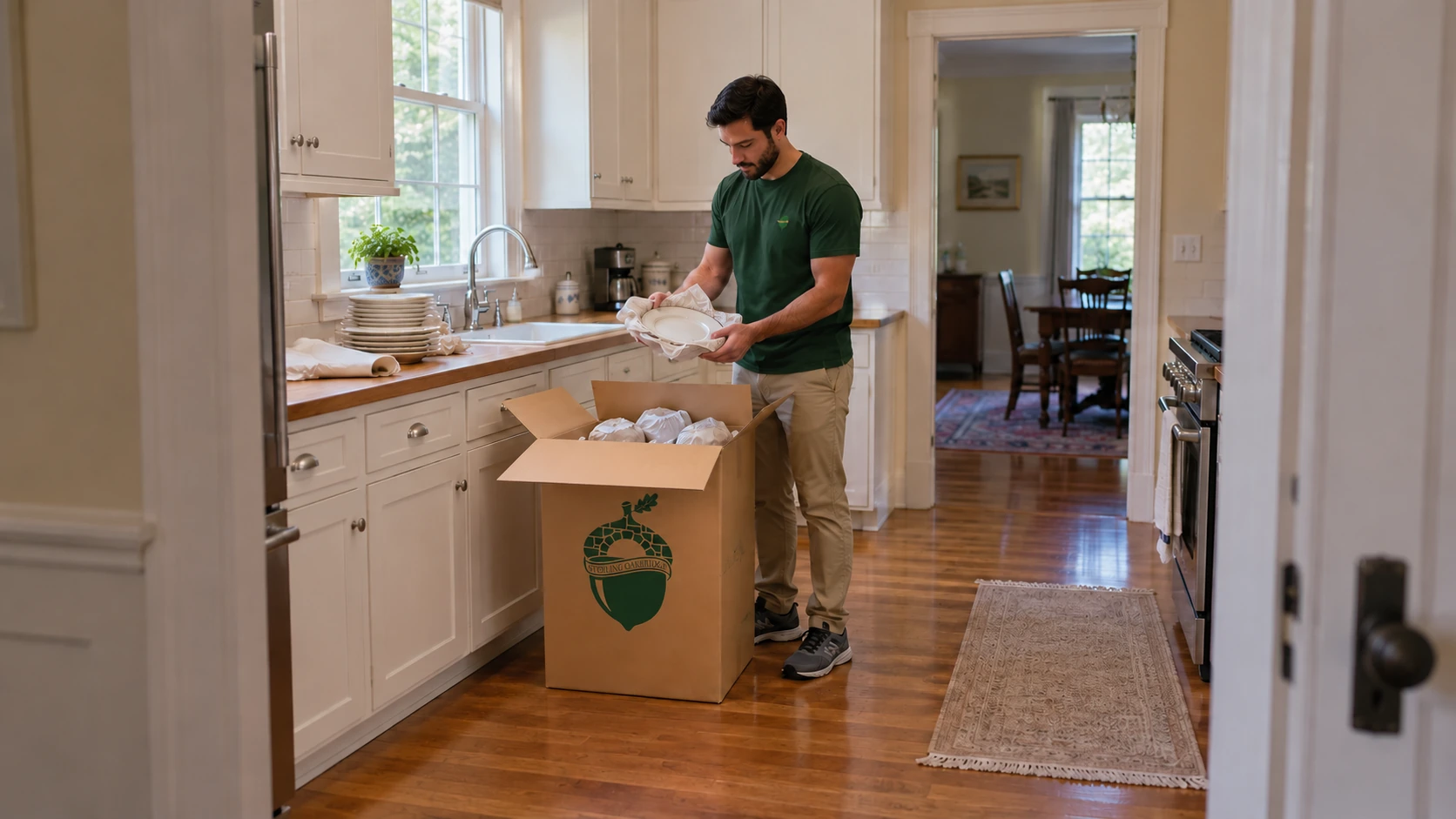
Sterling Oakbridge can prepare belongings before your New Rochelle move and provide optional box unpacking or separately agreed organizing at the receiving home. We review the contents, access, dates and paid stages so you know what will be ready when each visit ends.
Explore packing, costs and local examples
Choose the work that gives you back useful time
Full packing covers the agreed retained household contents. Partial packing can concentrate on the kitchen, a collection, clothing or another selected group; fragile-only work can prepare agreed breakable pieces while you finish the rest. Identify those boundaries in the estimate, including any cupboards or rooms that should remain untouched.
The choice is often about the evenings before the move as much as moving day. Sorting a household after work can occupy a couple of weeks of spare time, depending on the contents and your schedule. Decide whether you want to use those evenings for preparation or hand some of that work to the crew. That is a choice about time and effort, not an assumption that a particular household cannot pack for itself.
Write down what you will finish and when it will be ready. If your own cartons, sorting or furniture emptying falls behind, contact the coordinator before loading. Additional work needs its own time, materials and agreement; an unfinished room should not become a surprise addition to the carrying appointment.
Review cupboards and stored contents before counting cartons
Show open kitchen cupboards, bookcases, wardrobes, drawers and the belongings stored in the basement, garage or spare room. Include the fragile pieces you retain, the furniture that stays and anything going to a different address. A furniture list alone can miss much of the packing work.
For example, a household expecting about 20 cartons may discover 60–100 after reviewing books, full cupboards and stored contents. Those are illustrative possibilities, not an allowance or prediction for a New Rochelle apartment. The actual inventory determines the carton types, quantity, preparation time and working area. A bedroom count or a city housing average cannot do that job.
Choose cartons and protection for the contents and handling route. Small heavy groups, hanging clothes and ordinary dishes need different containers. If you want to reuse your own cartons, show their condition, intended contents and closure; agree any repacking that is needed rather than assuming every used box is ready to load.
Protect the contents for carrying, stacking and travel
Protection has to work beyond the room where it is applied. The contents must be supported inside the carton, the closed carton must suit handling and stacking, and the loaded shipment must be restrained for travel. A tidy outside surface alone does not establish that loose contents are ready.
Ordinary small household breakables can often use suitable cartons with individual wrapping and ample paper cushioning. Glass shelves, cabinet doors, framed pieces, decorations and collections need their own review of construction, fragility and handling. Identify removable parts and their matching fittings. Do not treat an outside furniture wrap as preparation of the objects still inside it.
Empty furniture before it is protected. Ordinary empty drawers normally stay installed and secured within the complete piece. A removable shelf, long detachable leg or complex furniture model needs a suitable preparation method and an identifiable set of parts. Specialist art or unusually delicate pieces belong in a separately reviewed scope, using art and antiques moving where appropriate.
Hanging clothes can be transferred to suitable wardrobe cartons while other clothing is folded and packed. Leave a real working area around the closet and keep its doors and the walking route usable. The point is to prepare the selected contents, rather than fill the room with cartons that obstruct the next task.

Plan preparation, moving and the final night together
Packing and moving may fit one day for a suitably reviewed smaller household when the inventory, carrying work and permitted hours allow. A studio or one-bedroom label does not guarantee that sequence. Full cupboards, fragile groups, several stair returns or a restricted working window can make a separate preparation visit more useful.
A larger home often benefits from discussing packing before moving day. A plan might use six movers for carrying and four packers on another day, for example; that is a possible division of work, not a standard crew promise. Agree the actual inventory, crew, visits and access for your project.
Keep a final-night group usable until its agreed packing time: bedding, toiletries, a simple meal set, work clothes and familiar items a child needs. Keep medication, keys, important documents, valuables and travel essentials under your own control throughout. Distinguish items packed last from items that never go on the moving shipment.
For an apartment, have management accept any preparation visit, materials delivery and carrying appointment separately where those activities are controlled. Send the service entrance, elevator arrangements, certificate-of-insurance instructions and working hours. An accepted visit does not reserve public curb space; use the New Rochelle moving page for the wider access discussion.
Consider: a Downtown couple protecting the evenings before departure
Imagine a couple leaving a Downtown apartment after several busy work weeks. They will pack books and everyday clothing but want the crew to prepare the kitchen and selected glass-fronted cabinet contents. The useful division is by actual contents, not by telling everyone to take half the apartment.
Review the cabinet, shelves, dishes and remaining kitchen groups before estimating the visit. If management permits preparation earlier, reserve a suitable work area and agree which small meal set remains available. The couple finishes its own labelled cartons by the agreed deadline while the crew prepares the selected fragile inventory.
At the end of preparation, the selected groups are protected, the exit route remains open and the household still has what it needs that night. If an earlier visit cannot be accepted, review the remaining work and the carrying window before confirming the moving-day sequence. A pending request is not yet access.
Consider: a house move with bedrooms needed on the last night
For a family leaving a New Rochelle house, include the garage, basement and cupboards in the survey alongside the main rooms. Decide what stays behind before packing begins. Set aside the bedding, breakfast group, school or work items and travel belongings needed through departure.
The preparation plan can complete the retained kitchen and less-used rooms first, then finish the agreed last-night groups at the right time. Keep the carrying route clear rather than stacking every completed carton in the hallway. At the new home, identify the bedrooms and basic kitchen contents that should become usable first.
Selected unpacking can open those priority cartons once furniture and safe surfaces are ready. It does not automatically arrange every drawer, collect every box or finish every mounting task. The useful result is a planned first evening at both addresses, with additional finishing work identified and priced.
Make the destination readable before the cartons leave
Write the next destination, receiving room and useful contents on each carton, with a box number and opening priority where helpful. Color can support those words, but should not replace them. Align the labels with the inventory, loading instructions and the person receiving the goods.
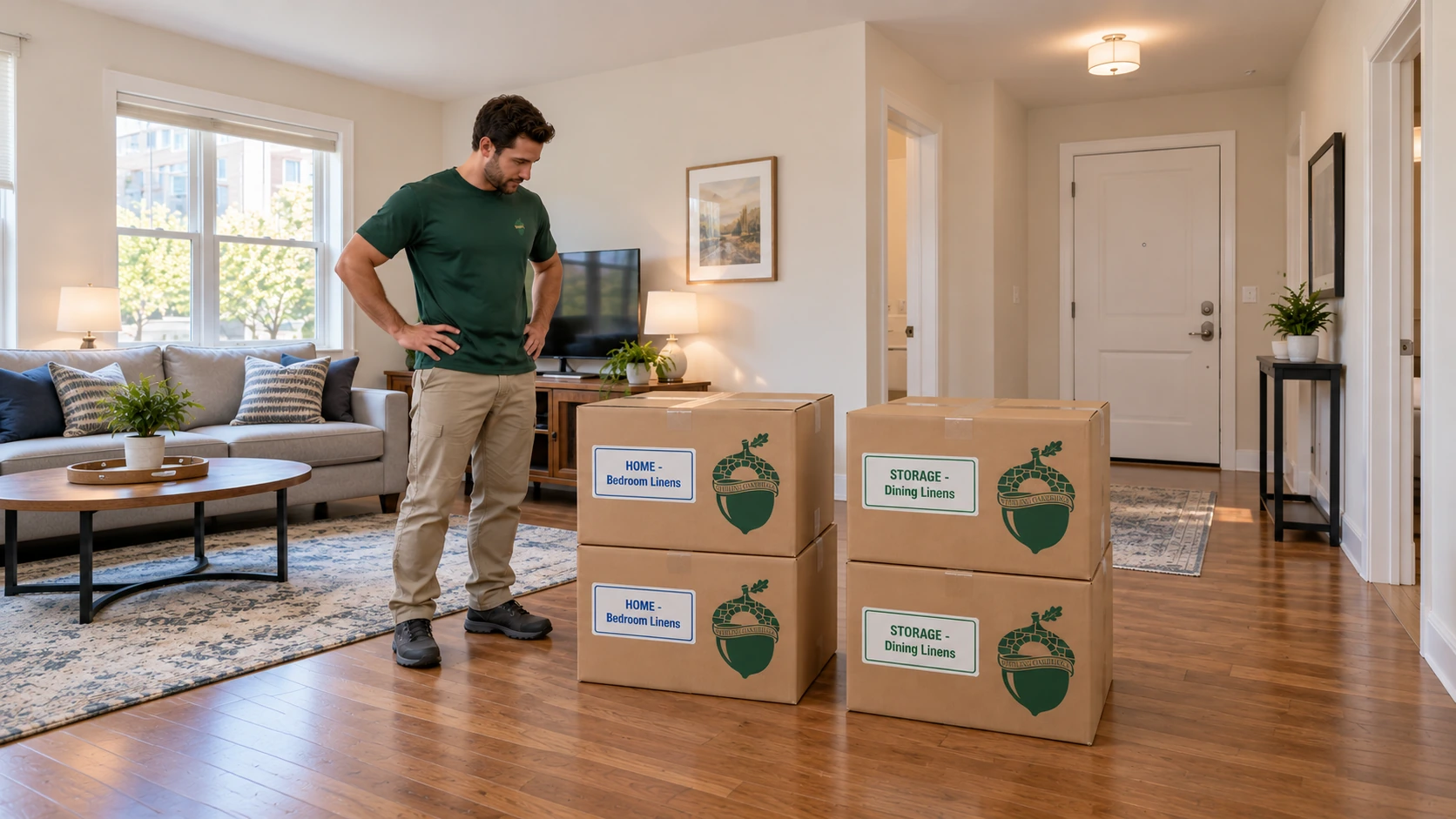
For more than one destination, group the cartons separately before loading. A carton for the new bedroom and a carton for storage need different instructions even if both contain linens. Confirm the receiver, access and stop sequence for each location. A storage label identifies a group; it does not reserve storage space or a later delivery.
Consider: keeping a smaller receiving apartment usable
A household moving into a smaller apartment may retain dining pieces and less-used linens for storage while taking everyday belongings to the new home. Decide those groups before preparation, with a separate authorized list for items no longer wanted. Do not pay to pack and deliver an unwanted piece merely because the decision was left until moving day.
Label each retained group by its next destination and room. Check that the furniture arriving at the apartment fits the actual access and intended layout. Confirm storage intake, who can authorize release and how the later delivery will be arranged through storage and staged delivery.
This sequence keeps storage cartons out of the immediate receiving rooms and prevents extra handling from replacing a missing decision. Compare the full costs of both destinations, including later access and transport. A smaller first load does not make the remaining belongings disappear from the project.
Basic unpacking makes selected contents accessible
Basic box unpacking opens the agreed cartons, removes their protection and places selected contents on suitable designated surfaces. It gathers used packaging in the agreed work area. Clear stable surfaces first and identify which kitchen, clothing or work groups you need opened before the rest.
Place the main furniture and keep the entry and working routes usable before spreading contents across the floor. Check the paper and carton folds for small fittings or possessions before anything is discarded. A room with unopened cartons can still work in stages; opening every box at once may remove the surfaces and space needed for the next task.
On a larger project, unpacking might add three or four hours or be arranged as a later visit by two people. These are illustrations of possible work sequences, not a time cap or a confirmed crew. The inventory, available surfaces, room readiness and selected tasks determine the actual estimate.
Organizing follows your decisions about final placement
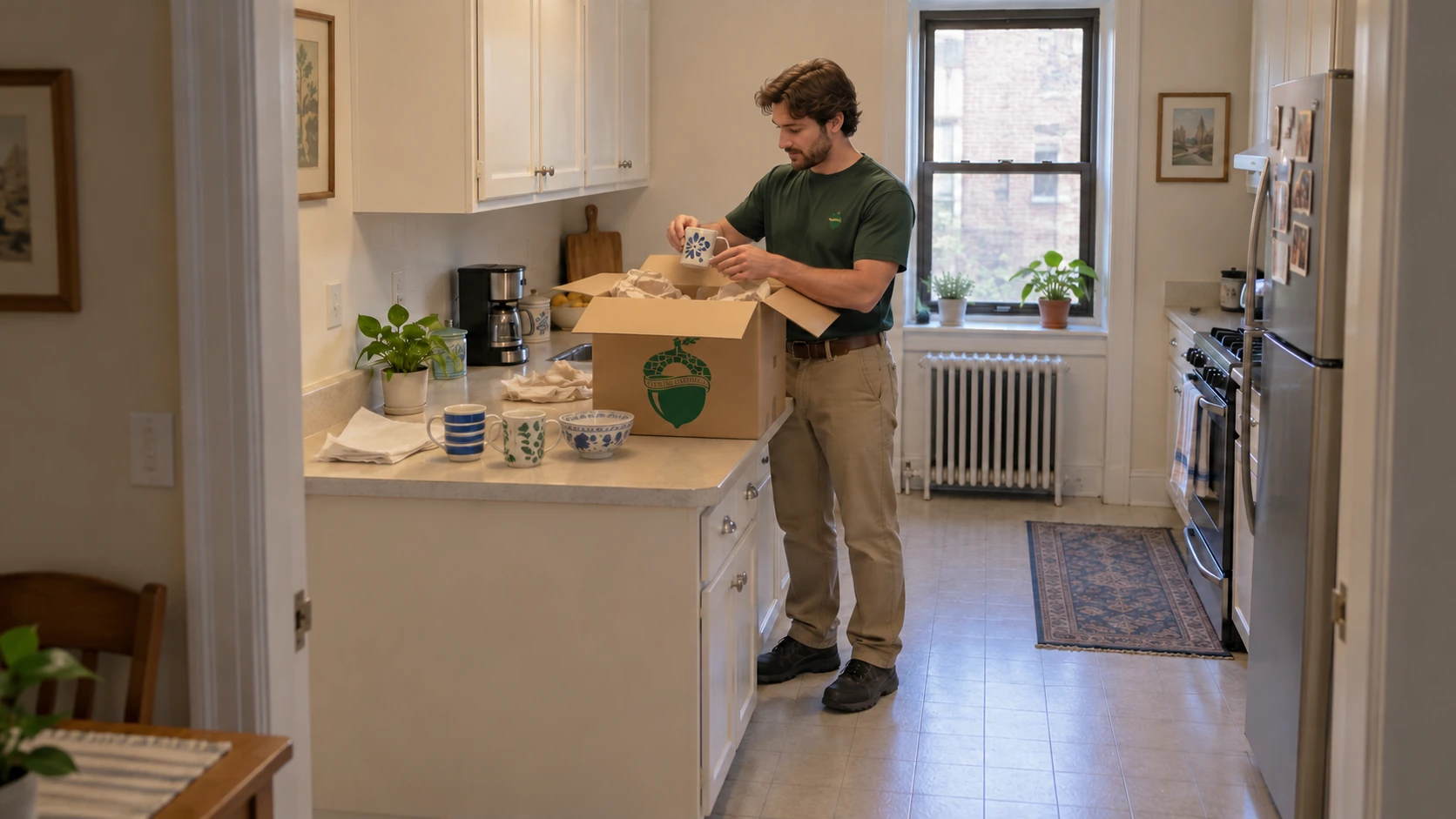
Home organizing adds the agreed placement of retained belongings into cupboards, shelves, drawers or closets according to your instructions. It is separate from basic unpacking onto surfaces. Decide what belongs where, who can make those choices and which rooms the visit should address.
A smaller team can be easier to direct when each next step depends on a placement decision. The aim is a manageable sequence with usable rooms, rather than a promise that more people will automatically finish every part of the home sooner. Keep private papers, valuables and unwanted-item decisions under your control.
You can request a return visit after trying some unpacking yourself. Send the remaining carton groups, priorities, available surfaces and building access times. The later visit has its own agreed paid scope and confirmed appointment; a preferred next day is not automatically available.
Consider: personal belongings for a furnished Iona room
Iona's residence amenities page describes provided beds, desks, chairs, dressers and closet space. Consider a student preparing personal clothing, books and permitted everyday belongings for an actual New Rochelle residence assignment. The institution-owned furnishings do not become part of the student's shipment merely because they stand in the room.
Check the actual assignment, allowed items and accepted access with Residential Life. Its FAQ directs room-change requests to the residence hall director when the process opens. Mail or parcel arrangements do not establish a moving crew's entry or unloading permission, and a Bronxville campus address is a different destination.
Agree which personal groups need packing, what travels with the student and whether paid unpacking or directed placement is useful after arrival. Keep the supplied bed usable and the route clear while selected cartons are opened. This is a planning example, with no claim that Sterling Oakbridge is affiliated with Iona or approved for a particular hall.

Keep furniture delivery, room carries and finishing distinct
Basic furniture disassembly and reassembly use moving labor time without a separate basic assembly surcharge. Complex models, missing fittings and specialist work need individual review. Send the actual model, instructions and access; opening cartons does not itself solve a difficult furniture construction.
A separate purchase follows a furniture delivery and placement plan from its actual release address. Rearranging furniture already on the property is in-home or in-building moving. Describe the real starting point and intended room so neither operation is hidden inside a general request to unpack.
Picture, curtain or television mounting can be reviewed as separate handyman work. Agree the object, position, wall, fixings, permissions, executor and price. Physical placement or mounting does not automatically include electrical work, appliance connections, repair or restoration. Optional organizing and finishing work should be listed as actual tasks.
Separate used packaging and agree who collects it
Basic unpacking gathers used materials in the agreed work area. Transporting them away is a separately selected and priced task. State the materials, quantity, carrying route, collecting party and accepting destination. Keep unwanted furniture and other possessions on a separate authorized removal list.
New Rochelle's recycling code requires source separation and directs clean corrugated cartons, with contamination removed, to be flattened and bundled. Keep film and foam separate from that carton stream; a mixed packaging pile should not be presented as accepted recycling.
Use DPW Online for the address-specific schedule and material guidance, and confirm the property manager's arrangements for a shared building. The Sanitation page lists commercial collection on a restricted basis. A residential schedule is not automatic permission for a contractor or institution to use the same route.
For unwanted furniture or another removal group, review junk removal and disposal separately. The accepted items, authority to release them and receiving route need to be usable before collection. A plan to donate is incomplete until the recipient accepts the goods and the handover is arranged.
Match receiving help to a long-distance delivery
For a shipment leaving the area, use the New Rochelle long-distance plan to choose direct or consolidated delivery and the receiving arrangement. The delivery window starts after pickup and loading are complete, rather than at an earlier packing visit. Direct delivery's dedicated truck and same crew should not be assumed for consolidated service.
Choose unpacking around the accepted delivery arrangement and actual room availability. Give the receiver the labels, priorities and authority to accept the shipment. If the receiving home is delayed, agree a usable alternative such as a different accepted window or separately quoted storage and later delivery before relying on another appointment.
For unchanged shipment, access and selected services, elapsed travel alone does not increase an agreed long-distance flat rate. Additional packing, changed access or added receiving work needs written agreement. A move that stays within one state still uses its applicable pricing rules; distance alone does not establish an interstate flat rate.
Compare the complete paid scope
Packing labor is charged for working time, and company-supplied cartons are separate. Basic moving blankets, shrink wrap and tape have no separate basic material charge. Add the selected unpacking, organizing, return visits, specialist preparation, storage, handyman work and packaging collection to the comparison.
On some projects, packing plus transport can approach the cost of two comparable moves whose contents were already packed by the customer. This is a budgeting illustration, not a standard markup, a quoted rate or a reason to assume every household costs twice as much. Compare the same inventory, access and requested result with and without preparation.
For local hourly work, estimated hours help plan the team and sequence; they are not a guaranteed final total or completion cap. Ask which work and materials are included and how a change is agreed. The useful comparison is the whole path to a usable receiving home, including the time and tasks you retain yourself.
Send both addresses, dates, floors, cupboard and storage photographs, the retained inventory and the complete carrying routes. Identify full, partial or fragile-only packing, your own preparation, separate destinations, opening priorities and any finishing or removal requested. Use the New Rochelle relocation guide for home and everyday arrangements while this page defines the work you want estimated.
New Rochelle packing and unpacking questions
Can you pack the whole home or only selected belongings?
Yes. We can review full-household, partial or fragile-only packing. Identify the retained contents the crew will prepare, the cupboards or rooms to leave alone and the work you will finish yourself. Include materials, any earlier visit and selected receiving help in the written scope.
How do I choose between packing help and doing it myself?
Choose the work you want to hand over and the time you can realistically give to the rest. You might pack everyday clothing and books yourself while the crew prepares the kitchen or a fragile collection. Compare the same inventory and access with and without preparation, including the evenings and finishing work you retain.
How many cartons will my New Rochelle home need?
The contents review determines the carton plan. Show open cupboards, books, clothes, stored belongings and fragile groups, not only furniture and bedroom count. Illustrations such as 20 cartons versus 60–100 show why a fuller inventory can change the work; they are not a local average or an allowance for your home.
Can packing and moving be completed on the same day?
Sometimes, when the reviewed contents, carrying work and permitted hours fit. A smaller studio or one-bedroom may suit that sequence, while full cupboards, fragile work or restricted access can justify earlier preparation. Agree the actual visits and work; room count alone does not guarantee one day.
What stays available through the final night?
Keep the agreed bedding, toiletries, simple meal set, work clothes and familiar child belongings usable until their packing time. Keep keys, medication, important documents, valuables and travel essentials under your own control throughout. Mark the last group to pack separately from belongings that never go on the shipment.
Does the building need to accept an earlier packing visit?
Where management controls entry or working hours, confirm the preparation visit and materials delivery as well as moving day. Provide its entrance, elevator and COI instructions. A carrying reservation does not automatically approve earlier work, and a building appointment does not reserve public curb space.
Can you use cartons I already have?
Include them in the review. Show condition, contents, weight and closure, and identify fragile groups. We can agree suitable use or any required repacking. Owning a carton does not establish that its size, strength, condition and packing are ready for the planned handling route.
Should I empty furniture and remove all its parts?
Empty the contents before protection. Ordinary empty drawers normally stay installed and secured in the complete piece. Review removable shelves, long detachable legs and matching fittings according to the actual construction and access. Integral parts should not be treated as detachable, and outside wrapping does not prepare loose contents inside.
Can hanging clothes travel on their hangers?
Suitable hanging clothes can be reviewed for wardrobe-carton packing. Show the closet contents, garments and access so the container and work fit. Other clothing can be folded and packed separately. Keep the carton outside the closet door swing and preserve a working route while the clothes are transferred.
How are dishes, glass shelves and small framed pieces prepared?
Ordinary small breakables may use suitable cartons with individual wrapping and paper cushioning. Glass furniture components, framed pieces and collections need review of construction, fragility and handling, with identifiable parts where removal is appropriate. Unusual art or specialist protection needs its own agreed scope.
How do we split belongings between the new home and storage?
Decide the retained groups before packing, then label each carton with its next destination, room and useful contents. Confirm receivers, access and the stop sequence. Storage intake, later release and redelivery are separate arrangements; a storage label identifies the group without booking those stages.
What does basic box unpacking include?
It opens the agreed cartons, removes protection, places selected contents on suitable designated surfaces and gathers used packaging in the agreed work area. Clear stable surfaces and choose opening priorities first. Final placement inside cupboards and transport of used materials away are separate selected tasks.
Can you organize cupboards and closets after unpacking?
Yes. Home organizing can add the agreed final placement of retained belongings according to your instructions. Agree rooms, contents, positions, time and price separately. Have someone available to direct decisions; a smaller team can be easier to guide when each next step depends on a placement choice.
Can I request unpacking after trying it myself for a few days?
Yes, you can request a later visit. Send the remaining carton groups, available surfaces, priorities and building access times so the work and availability can be reviewed. The return has its own paid scope and confirmed appointment; a preferred next day is not automatically available.
Are cartons and packing materials included?
Company-supplied cartons are charged separately, and packing labor uses working time. Basic moving blankets, shrink wrap and tape have no separate basic material charge. Unusual protection or specialist preparation needs individual review. The estimate should identify the actual work and materials rather than imply unlimited supplies.
Is furniture assembly included with box unpacking?
These are different tasks. Basic furniture disassembly and reassembly use moving labor time without a separate basic assembly surcharge; complex models need review. Optional box unpacking opens agreed contents. Identify the furniture, instructions, fittings and receiving space so each operation is part of the right scope.
Can the team mount pictures, curtains or a television?
These can be reviewed as separate handyman tasks. Send the object, intended position, wall or fixing details and permissions so the executor, work and price can be agreed. Physical mounting does not automatically include electrical work, appliance connections or general repair and restoration.
Will the team take away the used cartons and paper?
Only when collection is separately agreed and priced. Basic unpacking gathers used materials in the agreed area. Transport away needs the materials, quantity, carrying route, collecting party and accepting destination confirmed. Keep unwanted furniture and other possessions on a separate authorized removal list.
Can all used packaging go into New Rochelle recycling?
No. Separate clean corrugated cartons from film and foam, remove contamination and prepare the cartons for the accepted collection route. Use DPW address-specific guidance and the property arrangements. Do not treat one mixed packaging pile, every contractor or an institutional address as automatically eligible for the same municipal collection.
Should Iona residence furniture be included in a student packing request?
Do not include institution-owned furnishings automatically. Iona describes furnished residence rooms; identify the personal belongings retained for the actual assignment and confirm what may move with Residential Life. A campus mail address does not establish crew entry or unloading approval. New Rochelle and Bronxville are different destinations.
How much does full packing add to the move?
There is no fixed percentage for every household. Add reviewed packing labor and separate cartons to transport, plus selected unpacking, organizing, extra visits, specialist work, storage and collection. Compare the same inventory and access. Local estimated hours plan the work; they are not a guaranteed maximum charge.
When should unpacking be booked for a long-distance move?
Plan around the accepted delivery arrangement and actual room availability. The delivery window starts after pickup and loading, not at an earlier packing visit. Direct and consolidated services have different receiving terms. Confirm the receiver, access and selected destination work before treating an unpacking appointment as booked.
Does more travel time increase the agreed long-distance flat rate?
Travel taking longer does not itself increase an unchanged agreed flat-rate shipment and service scope. Added contents, changed access or extra work need written agreement. A move remaining within one state still uses its applicable pricing rules; long mileage alone does not establish an interstate flat rate.
What should I send for a packing estimate?
Send both addresses, dates, floors, cupboard and storage photographs, retained contents and complete carrying routes. Identify full, partial or fragile-only packing, your own preparation, separate destinations and fragile pieces. Add opening priorities, organizing or finishing tasks and the used-material arrangement you want.