
New York · Newburgh service planning
Long Distance Movers in Newburgh, NY
Sterling Oakbridge plans household moves from Newburgh, New York, across the United States and to Canada. Direct delivery uses a dedicated truck and the same moving crew at pickup and drop-off. Consolidated delivery offers another option for a suitable small shipment with a wider agreed receiving window. We review the belongings, preparation, both properties and dates before agreeing the written scope and flat rate for the applicable long-distance move.

Choose direct or consolidated delivery
Choose direct delivery when the shipment and receiving plan call for a dedicated truck. The same moving crew handles pickup and drop-off; the people preparing the estimate have a separate role. Tell us about a restrictive building appointment, a date when someone must leave Newburgh, or a home that cannot receive before keys are released. These constraints help establish a feasible plan before the truck is assigned.
Consider consolidated delivery for a suitable smaller group of belongings when you can accommodate a broader window. Shipments around or below 300–400 cubic feet are particularly relevant to that discussion. This is a useful size reference, not a minimum booking volume or a promise that every collection of that size qualifies. Send an actual item list and useful photographs, including furniture dimensions and the contents still to be packed.
The models have different receiving requirements. Direct includes the dedicated truck and same-crew arrangement. Consolidated needs its own accepted window and handling plan; do not assume those direct features carry over. If nobody can receive throughout the proposed period, resolve that gap before accepting the model. Choose the model using the actual written price, service scope and receiving capacity.
Compare date options around lease handover, school or work starts and travel. If the beginning, middle or end of a month could work, give those actual alternatives to the planning team. Ask which of those dates can be confirmed with the receiving arrangements your household needs.
Start the delivery clock after pickup and loading
The planning windows below begin after pickup and loading are complete. Packing before pickup, the time needed to prepare a protected furniture route, and a delayed release of the origin property are separate parts of the schedule. A road journey of a few hours does not establish a same-day delivery appointment.
Swipe the table to compare both delivery options.
| Illustrative destination | Direct planning window | Consolidated window |
|---|---|---|
| Washington, DC | 1–2 days | Up to 30 days |
| Greenville, South Carolina | 2–3 days | Window agreed individually |
| Hamilton, Ontario | 1–2 days | Up to 60 days |
| Spokane, Washington | 4–5 days | Window agreed individually |
The four rows use checked municipal driving references and the current delivery policy. They illustrate the relationship between destination and model. The actual pickup street, vehicle, receiving address, road restrictions and dates still need review before an appointment is agreed. Same-day or next-day arrangements require a suitable schedule; the table is not a booked arrival.
For an appropriate short domestic consolidated route, the published maximum is up to 30 days. Florida and Canada use up to 60 days; California uses up to 90. Other longer destinations need an individually agreed consolidated window. That is why Greenville and Spokane do not receive a copied Florida or California number, while Hamilton's Canadian status takes precedence over its comparatively short road reference.
Prepare the Newburgh stop and the entire carrying route
Plan the truck position with the property and the relevant street authority before dispatch. For a City of Newburgh stop, Parking Enforcement lists 845-569-7525. Give the exact block, side, date, arrival period and vehicle dimensions. Ask what authorization the proposed loading needs, who obtains it and which alternative can be used if that position is unavailable. Paying a meter does not reserve a truck space.
Newburgh's truck-route rules for vehicles over five tons gross weight and the separate Carter Street restriction between Dubois Street and City Terrace can affect the approach. Have the driver review the actual vehicle and route. A local-delivery connection to the nearest truck route does not make every street a through route or remove a separate prohibition. Supply current signs and the proposed stop rather than relying on an ordinary car-navigation screenshot.
Then follow the load from that stop into the home: sidewalk, stoop, entrance, vestibule, stairs, landing turns and final room. In an older Newburgh house or converted apartment, a broad front doorway may lead directly to a narrower turn or a different authorized entrance. Send photographs and useful measurements of the bottleneck, including the space on both sides. Establish which doors, gates or shared passages the crew may use and who opens them.
Protected exterior railings or trim cannot simply be removed to make a piece fit. The owner must resolve the property's status and any applicable historic-work approval. The practical alternatives are an approved entrance, an assessed item method or a different furniture plan. An estimate should reflect the accepted method and the person performing it before moving day.
The Newburgh moving page covers the broader service request. Use the local relocation guide for City versus Town identity, housing, household services, sanitation and the fuller local procedures. A Newburgh mailing address alone does not identify the municipality that controls a street.
Keep a usable travel kit with the people
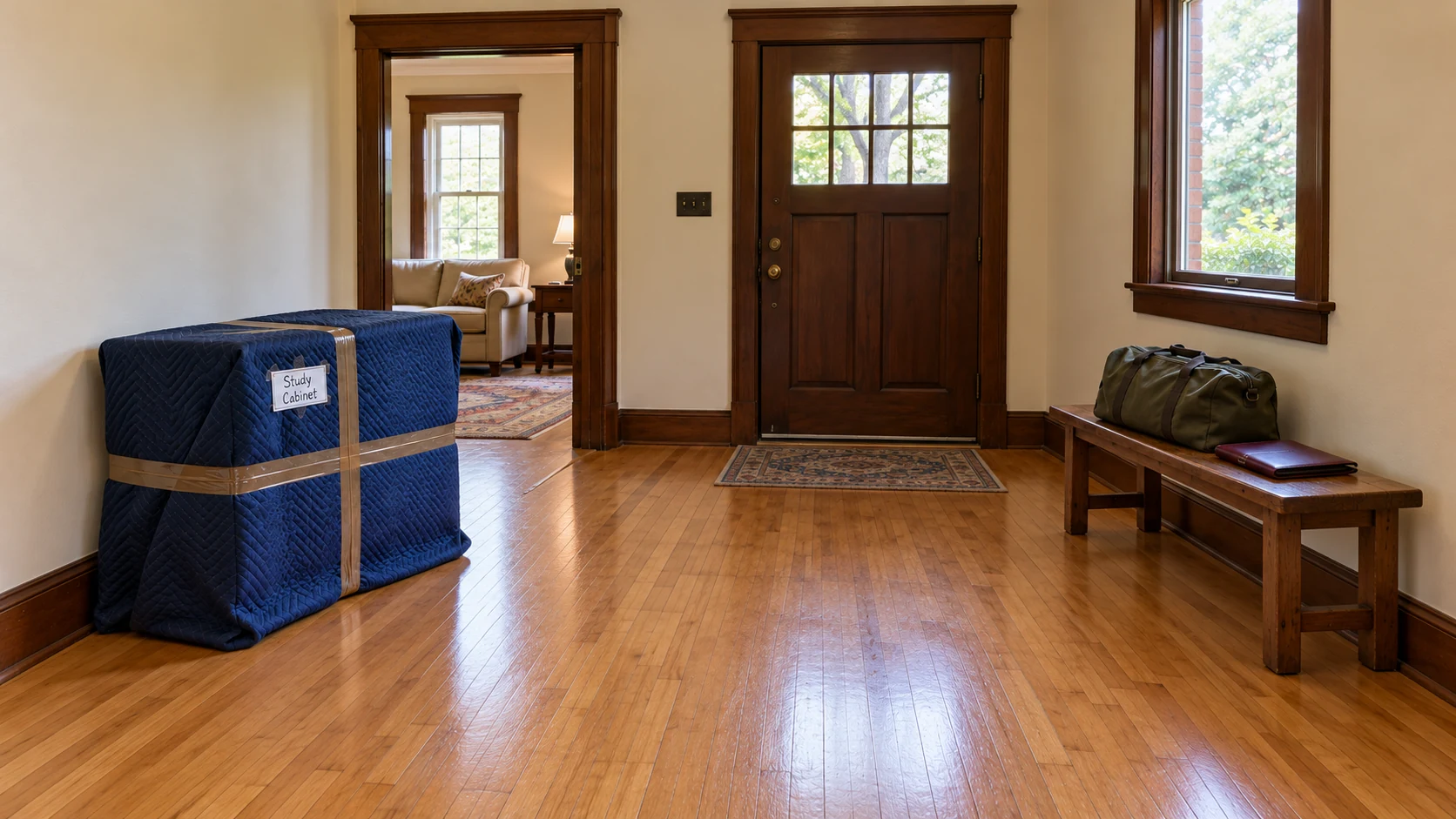
Carry travel and identity documents, medicines, chargers, keys and the things needed for the first night with your household. Add the school or work items you will need before general unpacking. Put that kit in a clearly separate place before the inventory is loaded; a bag described as personal luggage should not disappear among the moving cartons.
Match the kit to the receiving model. For a broader consolidated window, a single overnight change of clothes may be inadequate. Decide where people will stay, how they will travel there and what they can actually use until the shipment arrives. Keep the receiving contact and current delivery documents accessible even when your normal desk or filing cabinet is in transit.
Describe preparation as actual work
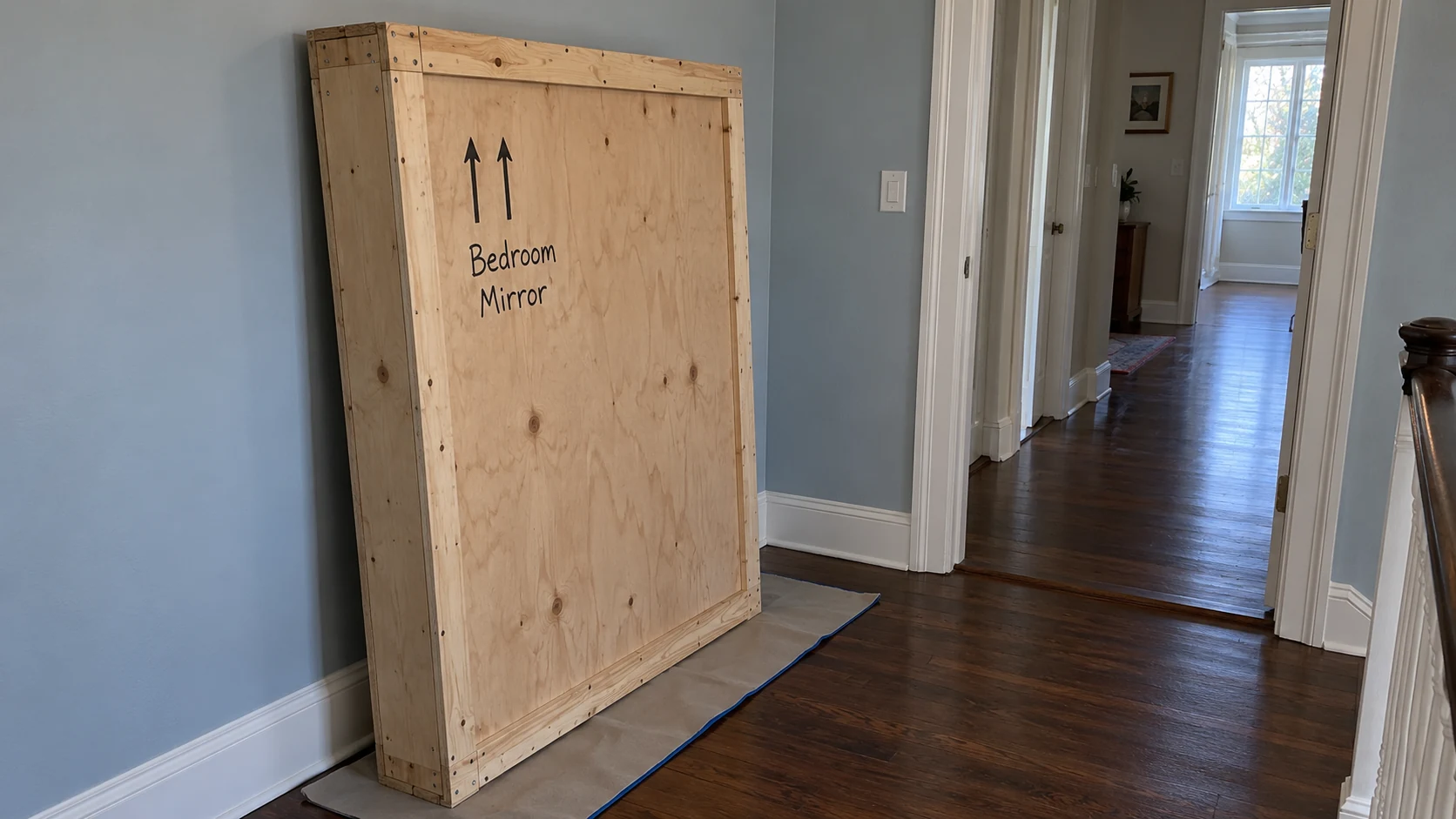
List the furniture and the contents that will travel, along with items going to another recipient, remaining at the property or requiring separate removal. For a large cabinet, give dimensions, construction and the route constraint. For a mirror or artwork, provide an image of the item and its frame, dimensions and any existing damage. The team can then assess protection, a crate or specialist handling for the actual object.
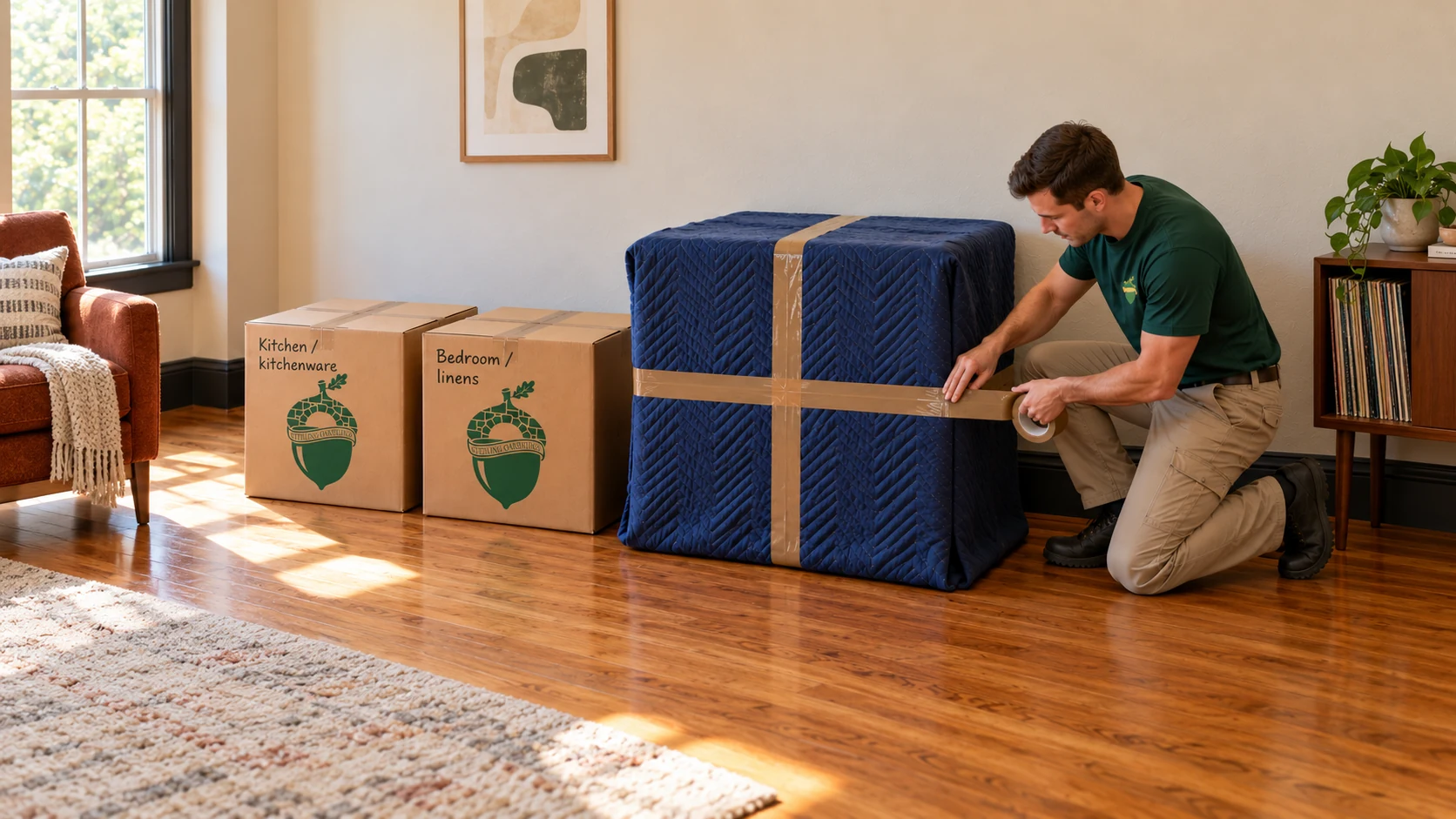
Packing can cover the whole home or selected rooms and items. An earlier preparation visit may be useful when cupboards and furniture cannot be made ready during the pickup appointment; request that arrangement with your dates. Company-supplied cartons are charged separately. Moving blankets, shrink wrap and tape carry no separate material charge, while packing is charged for working time and belongs in the agreed labor or service scope.
Basic furniture disassembly and reassembly use moving labor without a separate basic-assembly surcharge. A complex built-in, fragile construction or specialist operation needs its own review. Identify safely removable long legs, loose shelves and hardware before protection is finished. Protect matching detachable legs together, identify and secure the hardware, and keep the set with the right item. Empty ordinary drawers generally stay secured in the protected piece. A closed crate also needs to be identified so the receiver knows its contents and the agreed opening stage.
Four planning examples before pickup
These are hypothetical household situations showing different decisions. The destinations are examples, not accounts of completed customer jobs or a ranking of demand. Each starts with the actual inventory, Newburgh access and a receiving plan that can accept the goods.
Example: Washington, DC with a limited receiving appointment
Imagine a household leaving an older Newburgh apartment for a building in Washington, DC. A sofa clears the origin stair, but the destination photographs show a tight turn beyond the entrance. The building also requires a booked delivery appointment. Direct delivery can provide the dedicated truck and same moving crew, but it does not settle whether the sofa will reach the room.
Before loading, compare the sofa's construction and dimensions with the destination doorway, turn and available authorized alternatives. Ask management for the accepted entrance, lift or stair arrangement, protection requirements and the person admitting the crew. If an assessed disassembly method is needed, agree who performs it and include it in the scope. Do not leave removal of a railing or use of a service entrance as an unapproved assumption.
The illustrative direct window is useful for discussing the date, while the actual building slot needs separate confirmation. Work back from that slot to a feasible pickup and preparation schedule. If management cannot accept the proposed appointment, establish another accepted time and any resulting holding or later delivery arrangement before the truck leaves Newburgh.
The useful outcome is a receiving appointment supported by a furniture method and a complete route. The load should not arrive at a booked curb only to discover that the last turn remains unresolved.
Example: Greenville with a small consolidated shipment
Consider a household downsizing to Greenville, South Carolina, and taking only selected furniture, books and kitchen contents. The first decision is what travels. Mark the pieces staying in Newburgh or going to another recipient, then prepare a separate list of the actual shipment. Otherwise a small-load discussion can become a different job when cupboards are opened on pickup day.
Consolidated delivery may suit this selected group if its handling and receiving window work for the household. The table leaves Greenville's consolidated window to individual agreement. Its location in South Carolina does not establish the Florida maximum, and a small volume alone does not supply an arrival date.
Keep enough personal belongings with the people for the accepted period. At the receiving end, name someone who can accept the shipment during that whole window and describe the entrance, room plan and any building appointments. If the household has a trip planned, provide the dates and an authorized replacement receiver before the arrangement is accepted.
If the home cannot receive during part of the window, compare a revised delivery plan or separately arranged storage with actual capacity, access, charges and an onward delivery date. A general storage inquiry is not a booked place for these goods. Choosing a model should leave the household with a workable receiving arrangement and a clear written shipment list.
Example: Hamilton when goods follow the household into Canada
Imagine a household settling in Hamilton, Ontario. The people plan to enter Canada before the furniture arrives, while the new home's keys will be released later. The importer process and the receiving gap need separate decisions.
IRCC's newcomer instructions call for two copies of the goods list, divided into accompanying belongings and goods arriving later, with the requested item details and values. Present it at the first arrival even if no household goods accompany you. Keep the documents with the people; the instructions link to the BSF186 personal-effects form. Retain the original goods-to-follow list, accounting document and completed BSF186 receipt for the later shipment. Confirm the procedure for your actual immigration or returning-resident situation with the Canadian authorities.
Hamilton is a Canadian destination, so the consolidated planning maximum is up to 60 days even though the reference road journey is shorter than many domestic trips. That window does not provide customs clearance or permission to deliver to a locked home. Agree the model, importer readiness and actual receiving availability together.
Use the earlier of the property’s last-change deadline and the mover’s dispatch cutoff as the decision point, before departure and before alternatives expire. Contact the property’s access controller, authorized household contact and moving coordinator to confirm an available later receiving period or another accepted receiving location. For storage and redelivery, confirm a facility that can accept the actual load, including capacity, receiving hours, protection, handling, access, price, payer and retrieval or onward-delivery date. Arrange accommodation and accessible essentials for the household separately. If no destination can receive the goods, revise departure. Resume when possession, the authorized receiver, carrying route and any required import arrangements are ready; an enquiry is not a confirmed alternative. Immigration paperwork does not create receiving capacity.
Example: Spokane with a replacement receiver
Consider a direct move from Newburgh to Spokane, Washington. The household's work travel may change while the truck is on the road. Arrange a replacement receiver who has permission to accept the shipment, working keys, the building contact, an item list and a usable room plan. A telephone number alone does not open a locked entrance or authorize a building appointment.
The illustrative direct window starts after loading. For the same agreed shipment, access and services, a longer journey or delivery duration does not increase the agreed long-distance flat rate. Have a new address, additional items, a changed carrying route or optional unpacking reviewed before loading so the written estimate reflects the work.
If consolidated delivery is being considered instead, Spokane needs its own window. Washington is not California; the California maximum should not be copied onto this destination. Select a receiving period the household or its authorized representative can actually cover.
Before dispatch, send any revised receiver details and the accepted entrance instructions to the coordinator. Tell the receiver which pieces go where, which crates have an agreed opening procedure, and which cartons should remain closed until the household arrives. This lets furniture placement proceed without turning a change of person into an unplanned change of service.
Align the written price with the reviewed scope
For agreed long-distance flat-rate work, the written price is tied to the shipment and services, rather than a running charge for the duration of the road journey. Provide both addresses and units, inventory, packing needs, large-item details, the whole carry at each end and firm date constraints. For an interstate household shipment, obtain the required written estimate and complete the required survey unless you sign the proper separate written survey waiver before loading. Retain that waiver with the bill of lading; waiving the survey does not waive the written estimate.
A second stop, extra cartons, a different delivery entrance, waiting, storage or specialist work can change the scope. Resolve known changes and any revised interstate written estimate before loading. The original estimate cannot be rewritten after loading begins; later additional services need their applicable agreement and charges before they are performed. Keep customer-requested additions distinct from the same agreed job simply taking longer.
If the move remains within one state, the applicable in-state estimate and tariff requirements must be used for that route. Interstate valuation rules and an interstate flat-rate discussion do not automatically replace them. Send the actual origin and destination so the estimate can be prepared on the correct basis.
For U.S. interstate household-goods moves, review valuation protection before pickup. FMCSA explains that Full Value Protection applies unless Released Value is selected through the required written statement. Released Value limits liability to 60 cents per pound per article rather than replacement cost. These are liability options, distinct from a separate insurance policy. Identify articles of extraordinary value and ask for the actual written limits, any deductible and the applicable claim procedure; do not rely on an assumed blanket insurance promise.
Receive the shipment and record the handoff
Before unloading, confirm that the receiving person, agreed entrance, carrying route and rooms are ready. Establish which furniture is to be placed first so it does not block later deliveries. Keep shared exits and the route to the remaining rooms usable while the load is brought in.
Match delivered items to the inventory and record visible condition or exceptions clearly in the delivery paperwork. Keep useful photographs and notify the coordinator promptly about a concern. A general signature should not be used to hide a visible issue, and a practical condition record is different from deciding a claim on the spot. For an interstate household-goods loss or damage claim, FMCSA describes nine months after delivery to file a written claim. Follow the written procedure that applies to the job and read any receipt language releasing the mover from liability before signing.
Furniture unwrapping forms part of delivery. Optional removal of contents from boxes is additional labor; customer-directed home organizing and other finishing work need their own accepted scope. Packaging-waste removal is charged separately. Decide what will be unpacked, where contents should go and how empty materials will be handled before treating the home as fully set up.
Arrange the actual Newburgh pickup
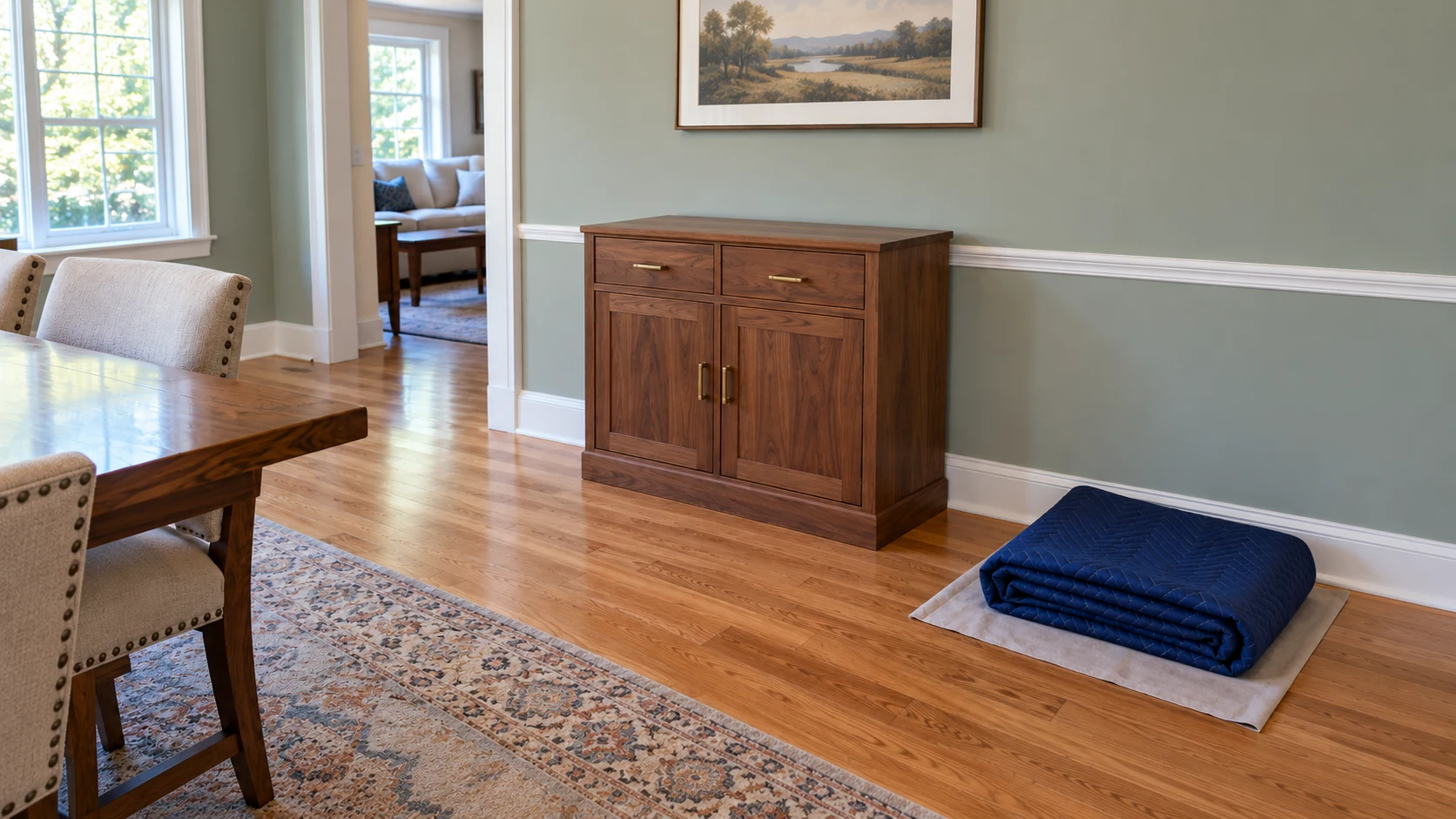
We arrange reviewed long-distance household pickup from the City of Newburgh, New York, including older houses and apartments. Send the full street address and unit, inventory, dates, complete carry and proposed truck position. City and Town of Newburgh are separate municipalities; a Newburgh mailing address does not establish which street or building authority applies. Confirm a Town or other regional address with the planning team before relying on City procedures.
Explore long-distance destinations from Newburgh
These examples organize possible household moves across the United States and Canada. They are a planning directory, not customer-demand rankings or confirmed appointments. Send both actual addresses, the belongings and your receiving constraints.
Northeast and Mid-Atlantic
- Harrisburg, Pennsylvania
- New York City, New York
- Boston, Massachusetts
- Baltimore, Maryland
- Buffalo, New York
- Washington, DC
Southeast and Florida
- Tampa, Florida
- Orlando, Florida
- Charlotte, North Carolina
- Raleigh, North Carolina
- Jacksonville, Florida
- Greenville, South Carolina
Great Lakes and Midwest
- Chicago, Illinois
- Cleveland, Ohio
- Columbus, Ohio
Pacific states
- Seattle, Washington
- Portland, Oregon
- San Diego, California
- Sacramento, California
- Spokane, Washington
Mountain West and Southwest
- Phoenix, Arizona
- Las Vegas, Nevada
- Salt Lake City, Utah
- Denver, Colorado
Canada
- Kingston, Ontario
- Ottawa, Ontario
- Montreal, Quebec
- Quebec City, Quebec
- Hamilton, Ontario
Long-distance moving questions
What long-distance delivery can you arrange from Newburgh?
We arrange reviewed household moves across the United States and to Canada. Direct delivery uses a dedicated truck and the same moving crew at pickup and drop-off. A suitable smaller shipment can use consolidated delivery with a wider agreed window. Both properties, the shipment, services and dates are reviewed before the applicable written estimate.
Which Newburgh pickup addresses does this page cover?
We arrange reviewed long-distance household pickup from the City of Newburgh, New York, including older houses and apartments. Send the full street address and unit, inventory, dates, complete carry and proposed truck position. City and Town of Newburgh are separate municipalities; a Newburgh mailing address does not establish which street or building authority applies. Confirm a Town or other regional address with the planning team before relying on City procedures.
Will the same crew collect and deliver my belongings?
Yes for direct delivery: it uses a dedicated truck and the same moving crew at pickup and drop-off. The estimating team has a separate role. Consolidated delivery has its own handling and receiving arrangement; do not assume the direct same-crew commitment applies to it.
Is 300 cubic feet a minimum shipment?
No. Around or below 300–400 cubic feet is a useful size reference for considering a suitable consolidated shipment, not a minimum booking requirement. Send the actual furniture and carton inventory; suitability also depends on handling, the route and an accepted receiving window.
When does the delivery window begin?
After pickup and loading are complete. Earlier packing, furniture preparation and origin access belong in the pickup plan. A delivery date still needs a feasible receiving arrangement and confirmation; the clock does not begin when you first request an estimate.
Does the delivery table book my arrival day?
No. It is an illustrative planning comparison using municipal driving references and current delivery policy. The actual addresses, truck, dates and receiving appointment are reviewed separately. Same-day or next-day service needs a suitable schedule; a reference journey alone does not promise it.
What if my move stays within New York?
Give the planning team both addresses so the applicable in-state estimate and tariff requirements can be used. Interstate valuation rules and an interstate flat-rate discussion do not automatically replace the rules for a move that remains within New York. The route and actual service scope determine the appropriate written estimate.
Will a longer journey increase my agreed long-distance flat rate?
No, when the shipment, access and services remain the same as the agreed scope. A longer road journey or delivery duration does not increase that agreed price. Resolve known changes and any revised interstate written estimate before loading. The original estimate cannot be rewritten after loading begins; later additional services need their applicable agreement and charges before they are performed.
What should I send for a useful written estimate?
Send both street addresses and units, the belongings, useful item dimensions, packing needs, photographs of each full carry and your firm date constraints. Identify a difficult turn, building appointment, protected feature or special item. For an interstate household shipment, obtain the required written estimate and complete the required survey unless you sign the proper separate written survey waiver before loading. Retain that waiver with the bill of lading; waiving the survey does not waive the written estimate. Floor area alone does not define the shipment.
Are cartons and packing materials included in the same way?
Company-supplied cartons used for the job are charged separately. Moving blankets, shrink wrap and tape carry no separate material charge. Packing is charged for working time and belongs in the agreed labor or service scope. Identify selected-item or full-home packing before the quote is accepted.
Can furniture preparation or packing happen before pickup day?
Yes, an earlier preparation visit can be requested and included in the accepted plan when it suits the work and available schedule. Describe the cupboards, furniture, crates or selected fragile items involved. Confirm the date, access, what remains usable and the work completed before pickup; an inquiry is not a booked visit.
Does paying a Newburgh meter reserve the moving-truck space?
No. Give City Parking Enforcement the precise block, side, date, vehicle and expected duration at 845-569-7525. Ask what authorization that proposed loading needs and who obtains it. Confirm a lawful alternative if the position cannot be used; a paid car-parking session does not reserve it.
Can the truck follow my usual car route through Newburgh?
Have the driver review the actual vehicle and approach. City truck-route rules for vehicles over five tons and the separate Carter Street restriction between Dubois Street and City Terrace can matter. A local-delivery connection does not authorize every through street or override a separate prohibition. Agree the legal stop as well as the approach.
Can we remove an old railing to get furniture through?
Only after the owner has resolved the property status and any required permission for the proposed alteration. Protected exterior features need the applicable City historic-work process. Assess an authorized alternative entrance or suitable item method before moving day; the moving crew cannot grant that approval.
What should travel with the household rather than in the load?
Keep travel and identity documents, medicines, keys, chargers and the work, school and first-night items you will need. Separate that kit before loading and make it sufficient for the accepted delivery period. Retain the receiving contacts and current delivery documents somewhere accessible while normal storage furniture is in transit.
What should a newcomer prepare when belongings follow into Canada?
IRCC describes two copies of an itemized goods list, divided into belongings accompanying you and goods arriving later, with the requested details and values. Present it at the first arrival even if no goods accompany you; the instructions link to BSF186. Retain the original goods-to-follow list, accounting document and completed BSF186 receipt for the later shipment. Keep documents with the people and confirm the process for your actual importer status.
Why does nearby Hamilton use the Canadian consolidated window?
Canada takes precedence over a short domestic road reference. The published consolidated maximum for Canada is up to 60 days after pickup and loading are complete. Agree customs readiness and an actual receiving arrangement separately; a delivery window does not clear goods or create access to the home.
What consolidated window applies to Greenville?
It is agreed individually for that shipment and route. Greenville is in South Carolina; the Florida maximum is not automatically its window. Review the selected inventory, handling and a receiving period the household or an authorized representative can cover before choosing consolidated delivery.
Does Spokane get the California consolidated maximum?
No. Spokane is in Washington. A consolidated move there needs an individually agreed window; the California maximum is not a general rule for all western destinations. The direct row is a separate planning comparison starting after loading, subject to an agreed receiving appointment.
What if I am away when the shipment can arrive?
Name an authorized receiver who has working keys, building permission, the inventory, room instructions and the agreed appointment information. Confirm that person can cover the actual delivery period. If nobody can receive, arrange a revised accepted delivery or a separately agreed holding and onward plan before dispatch.
What is a useful fallback if the new-home keys are delayed?
Use the earlier of the property’s last-change deadline and the mover’s dispatch cutoff as the decision point, before departure and before alternatives expire. Contact the property’s access controller, authorized household contact and moving coordinator to confirm an available later receiving period or another accepted receiving location. For storage and redelivery, confirm a facility that can accept the actual load, including capacity, receiving hours, protection, handling, access, price, payer and retrieval or onward-delivery date. Arrange accommodation and accessible essentials for the household separately. If no destination can receive the goods, revise departure. Resume when possession, the authorized receiver, carrying route and any required import arrangements are ready; an enquiry is not a confirmed alternative. Storage and later delivery need their own written agreement and are not automatically included or free.
Is valuation protection the same as full insurance?
No. For U.S. interstate household-goods moves, FMCSA describes Full Value Protection and Released Value as liability options. Full Value Protection applies unless Released Value is selected through the required written statement. Released Value limits liability to 60 cents per pound per article rather than replacement cost. Separate insurance is distinct. Ask for the applicable written limits, cost and deductible, and identify articles of extraordinary value before pickup.
What should the receiver do if an item appears damaged?
Record the visible condition or exception clearly with the delivery inventory, retain useful photographs and notify the coordinator promptly. Keep the relevant documents and follow the written procedure applying to the job. Do not assume a general signature or a conversation at the door settles the claim. FMCSA describes nine months after delivery to file a written interstate household-goods loss or damage claim. Read any receipt language releasing the mover from liability before signing.
Does delivery include unpacking every carton and taking the waste?
Furniture unwrapping is part of delivery. Removing contents from cartons is optional additional labor; home organizing or other finishing work needs its own agreed scope. Packaging-waste removal is charged separately. State which contents should be unpacked, their intended places and the accepted waste handoff before delivery.
Is storage automatically included while I wait for keys?
No. Any storage or holding arrangement needs an accepted provider, actual capacity, available period, access, charges and onward delivery. Ask about the relevant option with the shipment and dates; an inquiry or a general storage page is not confirmed space for your belongings.