


Start with what you want to change
You do not have to know your next city before you know what needs to change. Perhaps your home costs too much on one income. Perhaps your children need a different school program, your job no longer requires you to be nearby, or winter has become harder to manage. You may like Poughkeepsie and still want a different daily life. The useful first question is what a move would improve, and whether moving is the smallest workable way to make that improvement.
This guide starts from Poughkeepsie and compares twenty-seven places you can investigate. Some preserve Hudson Valley connections. Others change the job market, landscape, climate or country. They are conditional alternatives rather than a ranking. A place that works for a remote worker may be impractical for a nurse on rotating shifts; a village that suits an active retiree with a car may fail someone who needs frequent specialist appointments and independent transport.
Start with one leading reason and one constraint. If your leading reason is lower spending, the constraint might be retaining childcare help from a relative. If your reason is a new career, the constraint might be keeping your partner employed. If your reason is a warmer winter, the constraint might be avoiding a home that creates uncomfortable summer heat or expensive insurance. Keeping both visible stops the appealing part of a destination from hiding the cost of getting there.
The quick comparison below is a starting shortlist. It does not mean that every neighborhood in the named place meets your needs. Follow the destination discussion, compare an actual address and use the worksheet at the end to keep two to four workable candidates. A list of twenty-seven possibilities should become smaller as your evidence improves.
| What you want to change | Starting comparisons | The deciding check |
|---|---|---|
| Lower obligatory spending | Pittsburgh, Albany; compare a local rental too | Housing alone cannot settle childcare, transport and retained income. |
| New work or education | Albany, Boston, Raleigh, Pittsburgh | Keep only places with an actual role, program or transferable qualification. |
| Children and family support | Fishkill, Wappingers Falls, Hyde Park, Kingston | Verify school assignment and care at an actual address; preserve needed help. |
| Life on one income / moving alone | Beacon, Northampton, Toronto if eligible | Test a whole week, social connections and the housing budget on your income. |
| A smaller home or retirement | Rhinebeck, Red Hook, Albany | Match healthcare, home access, transport and visits to close people. |
| Mountains, woods, water or open land | New Paltz, Burlington, Denver, Wilmington | Investigate daily access and the difficult season, rather than a vacation view. |
| Different winter or summer | Wilmington, Orlando, Burlington, Denver | Compare the whole year; cooling, heating, humidity and risks may shift. |
| A possible international next step | Toronto, Montréal, Querétaro, Porto, Manchester | Residence, work and household status are the first gate. |
Ten questions before you choose a place
- What has stopped working in Poughkeepsie: the home, street, commute, work, spending, relationships or climate?
- Which three things about your current life would you want to keep?
- Who moves with you, and whose needs create a hard limit?
- Will household income stay the same, rise, fall or temporarily stop?
- Where must each adult work or study, and how often must you travel to New York City?
- What home do you need: rental or purchase, number of bedrooms, pets, stairs, outdoor space and accessible entry?
- Which services must be reachable regularly: childcare, school, doctors, groceries, help for relatives or public transport?
- Do you want daily access to a landscape or occasional weekend visits? Which seasons are hardest for you?
- How important are language, community connections and frequent visits to people you already know?
- How much can you spend on the transition, and how easy must it be to reverse the decision?
Answer in practical terms. "More nature" becomes "a maintained trail I can reach after work without driving an hour." "A better school" becomes a particular program, support need or course sequence. "Less expensive" becomes an amount left after essential monthly costs. You can revise an answer later, but a specific first version gives you something to test.
What would you miss about Poughkeepsie?
Before comparing places, write down the life you actually have. Your baseline is an address, household and weekly routine, not an average resident. Include where you work, who helps when plans change, which doctors you use, what the home costs to operate, how you reach the station and where you spend an ordinary Sunday. An existing arrangement that works deserves a place in the comparison even when you are frustrated with something else.
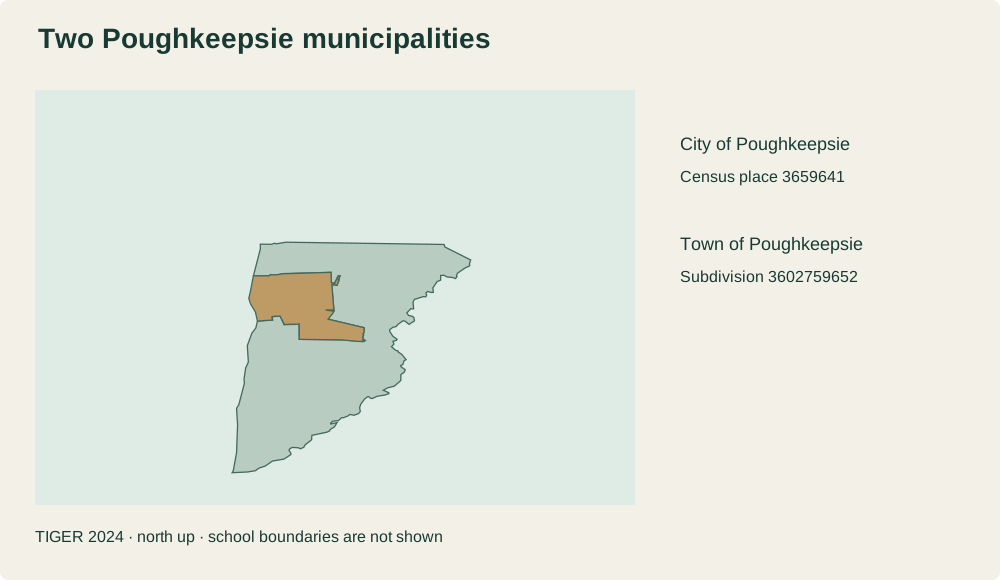
Be precise about geography. The City of Poughkeepsie and the Town of Poughkeepsie are distinct municipalities. A postal address containing Poughkeepsie does not, by itself, settle municipal services or school enrollment. Neighborhood names are useful orientation, but an address and the relevant district or municipal office must resolve a consequential question. The same care applies to villages inside towns elsewhere in this guide.
If your life uses Metro-North, distinguish train access from station proximity. Poughkeepsie and Beacon appear on the Hudson Line; the operator's current timetable is the reference for service. Your actual journey also includes walking or driving to the station, parking, the wait, the train and the final connection. A new home might improve one part while worsening another. Someone attending a Manhattan office twice a week faces a different tradeoff from someone commuting every weekday. Metro-North Hudson Line.
Community is another part of the baseline. An aunt who can collect a child, a neighbor who checks on an older parent, familiar clients and a regular social group have practical value. They do not make moving impossible. They do mean that a lower rent in another place may come with additional childcare, travel or service costs. Put those replacement needs beside the housing comparison rather than treating them as a vague emotional objection.
Record what you currently pay and what you currently receive. A small apartment near work can be more useful than a larger house that requires a second car. A house with a manageable mortgage may become demanding when maintenance and mobility change. Living with relatives may be affordable but leave too little privacy. The baseline should show the benefit and burden together; otherwise the destination gets compared against only the worst part of your present situation.
You can use the existing Poughkeepsie relocation guide to reconsider local areas, housing questions, school registration and everyday arrangements. Use it especially if the phrase "I need to leave" really means "this address no longer works." Local knowledge remains useful even when your final decision is to go farther away.
What the statistical comparison can tell you
The housing and income table later in this guide uses the same ACS five-year release where a matching Census place is available. It is background evidence, not a quotation for a home you can rent tomorrow. Median gross rent describes occupied cash-rent homes and includes relevant housing costs under the survey definition. It is not a current asking-rent survey. Median household income is a characteristic of households in the area, not a salary that an employer will offer you.
For each estimate we retain the geography, period and margin of error. A village, city or Census-designated place is not the same unit as a surrounding town or metropolitan job market. International places are left outside that US statistical table. That keeps a useful comparison from acquiring false precision through incompatible numbers. Your final budget still needs an actual home, actual work arrangement and the costs specific to your household.
Stay, change neighborhoods, or move away?
Consider three decisions before selecting a distant city. Staying in your current home may work after a change in work hours, a housing arrangement or a local service. Changing homes within the Poughkeepsie area may solve space, access, noise or a particular commute problem. Moving to another region may be necessary when the underlying opportunity or environment is elsewhere. The correct distance follows the problem; it should not be decided first.
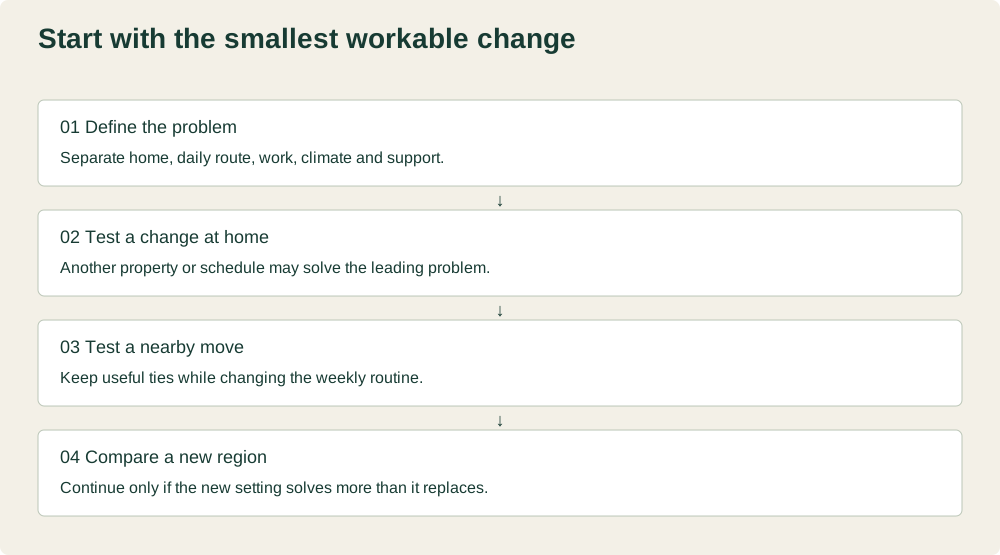
Suppose you want easier access because stairs are becoming difficult. You can compare a step-free home near familiar services before assuming that retirement requires another state. Suppose your employer has offered a role elsewhere. The decision changes: work location becomes a real constraint, and local housing cannot solve it. Suppose you feel isolated. A different city may help if it provides the activities and connections you will use, but moving without a plan to establish those routines can reproduce the same problem.
Set a local alternative beside each distant one. This is a useful control, not a demand that you stay. For a household needing another bedroom, compare a nearby suitable home with a similar distant home. For someone seeking outdoor time, compare a local address with easier access against a larger geographic change. For someone reducing expenditure, compare downsizing nearby against moving farther and rebuilding transport, care and support arrangements.
Signs that a nearby change deserves investigation
- Your work and support network already function well, while the home or street is the main problem.
- The desired service exists locally but is difficult to reach from the current address.
- A more suitable housing arrangement would remove the need for a major lifestyle change.
- Moving farther would create costs that cancel the housing benefit.
Signs that a regional change may be necessary
- The required job, training or specialist service is elsewhere.
- A sustainable budget cannot be achieved with realistic local options.
- A household member needs a different environment that nearby housing cannot provide.
- Your desired climate or landscape requires a genuine geographic change.
These are questions to investigate, not proof that every local option is available. A suitable rental may not be vacant when you need it. A service may have a waiting list. A house may be accessible at the entrance and difficult inside. Keeping the local option in the comparison means checking it with the same seriousness you give the distant one.
Agree on the decision horizon. A temporary job change, a school year and a retirement plan do not require the same commitment. Renting for a first year can be sensible when the place is unfamiliar, but include deposits, lease conditions, storage and the possibility of another move. A temporary arrangement is valuable when it buys evidence; it is expensive when it only postpones a decision you could have clarified beforehand.
Keep the Hudson Valley, change your daily life
Nearby moves can change your routine substantially while preserving work, friendships and family access. The eleven places below differ in their settlement pattern, transit arrangements, relationship to Poughkeepsie and the activities you could reach. They should not be collapsed into a general promise of quieter living or better schools. The useful unit remains a home, a route and the services attached to that address.
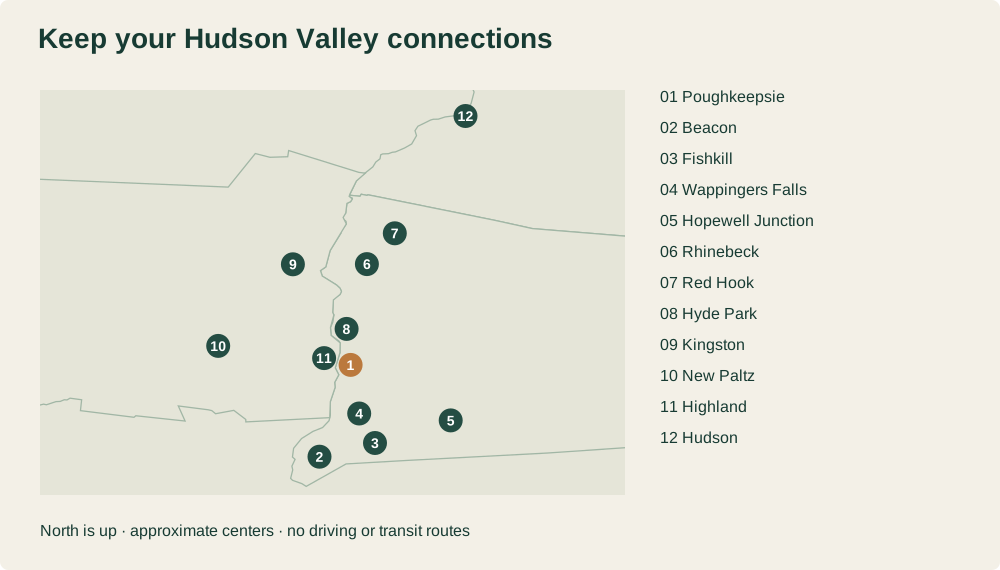
Read the values as a table
| Marker | Place | Latitude | Longitude |
|---|---|---|---|
| 1 | Poughkeepsie | 41.7058 | -73.9283 |
| 2 | Beacon | 41.5042 | -73.9656 |
| 3 | Fishkill | 41.5342 | -73.8992 |
| 4 | Wappingers Falls | 41.5992 | -73.9181 |
| 5 | Hopewell Junction | 41.5839 | -73.8086 |
| 6 | Rhinebeck | 41.9275 | -73.9089 |
| 7 | Red Hook | 41.995 | -73.8754 |
| 8 | Hyde Park | 41.785 | -73.9331 |
| 9 | Kingston | 41.927 | -73.9974 |
| 10 | New Paltz | 41.7476 | -74.0868 |
| 11 | Highland | 41.7209 | -73.9601 |
| 12 | Hudson | 42.2529 | -73.7909 |
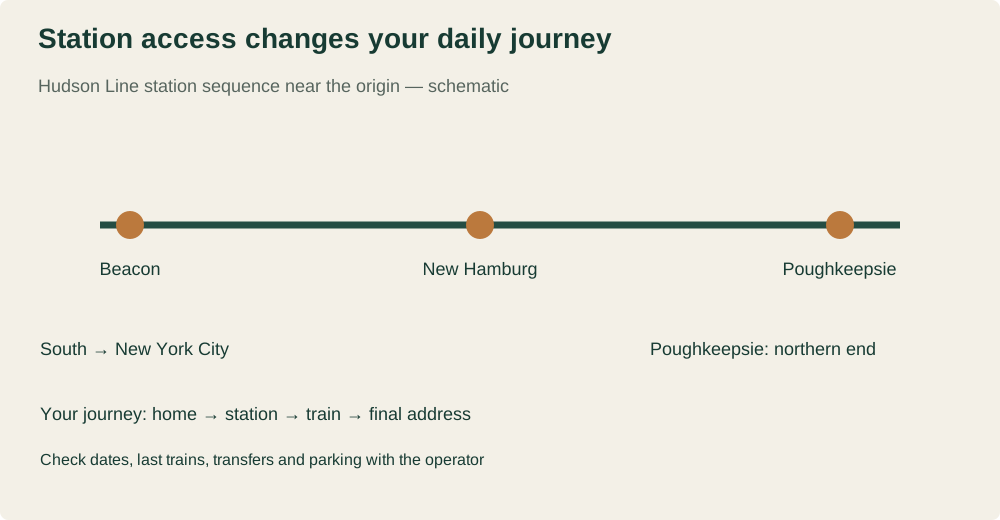
Think about your recurring crossings and journeys. Living on the other side of the Hudson changes a regular trip even when a place looks close on a map. Living north of Poughkeepsie can keep regional connections while changing the travel needed for work or the train. Living nearer Beacon or New Hamburg may change the station you use. Compare the full sequence at your working hours, not a pleasant drive during a weekend visit.
Regional public transport is worth investigating, but a route on a map does not guarantee that a shift, childcare pickup or evening activity is workable. Use Dutchess County Public Transit and Ulster County Area Transit where relevant. Check the direction, day, last departure, stop access and connection you need. Keep any uncertain connection marked uncertain until you have confirmed it. Dutchess County Public Transit.
Beacon


Beacon is a useful first comparison if you want to retain a Hudson Line connection while changing the relationship between your home, the center of town and your regular activities. It tests a specific possibility: can a smaller daily geography improve life without giving up the regional links that already work? Do not assume that every Beacon address delivers that arrangement.
The practical gain is strongest when the home, station and places you use form a workable route. Compare the walk, gradient, crossings, parking and evening return. If your Manhattan attendance is occasional, a station-oriented home may serve a different purpose from one chosen for a five-day commute. Check the current timetable rather than assigning one fixed journey time to the city.
Housing needs a current, like-for-like search. The ACS figure is a historical occupied-rent estimate, not a price for a available apartment. Include utilities, a car you would keep or remove, and the cost of traveling back to Poughkeepsie. For a family, confirm the school and childcare arrangements for the address; for someone living alone, identify activities they would attend regularly.
The compromise is that gaining a different center and station relationship may require a home or budget that does not suit your household. A pleasant Main Street visit is insufficient evidence. Beacon should leave the shortlist if the available home forces a journey that recreates the problem you wanted to solve.
Before deciding, rehearse one workday and one evening from a prospective address. Walk to the station if that is your plan, buy ordinary groceries and make the return trip after an activity. The evidence you need is a complete routine, not just an attractive town center. Hudson Line service.
Fishkill


Fishkill belongs on the shortlist when you want to investigate a different housing and services arrangement while keeping connections within the regional area. Be clear whether you mean the village, the surrounding town or a particular development. The statistical comparison here identifies the Census place used for the figure; it does not make the whole town one housing market or school assignment.
Start with an address that would solve your problem. A family might need another bedroom and a practical childcare journey. Someone reducing maintenance might want a smaller home with services nearby. A person changing work may value a route different from the one they currently make from Poughkeepsie. These needs can lead to different Fishkill addresses.
Calculate transport as part of the housing comparison. If you will use a train, investigate the actual station journey and parking arrangement. If you will drive, run the work, school and shopping sequence under the hours you expect. A home that appears close to several places on a regional map may still create several separate car trips every day.
The compromise is that a nearby move can retain family access without delivering the walkable or car-free life you imagined. It can also change administrative services in ways a familiar postal name conceals. Confirm municipal and school questions with the owner of those services.
Your visit should include the home area, groceries, childcare or school where relevant, and the trip back to someone you rely on in Poughkeepsie. Ask whether the home improves an actual week enough to justify the cost of moving. Keep the local alternative in the comparison until this improvement is demonstrated. Village of Fishkill.
Wappingers Falls
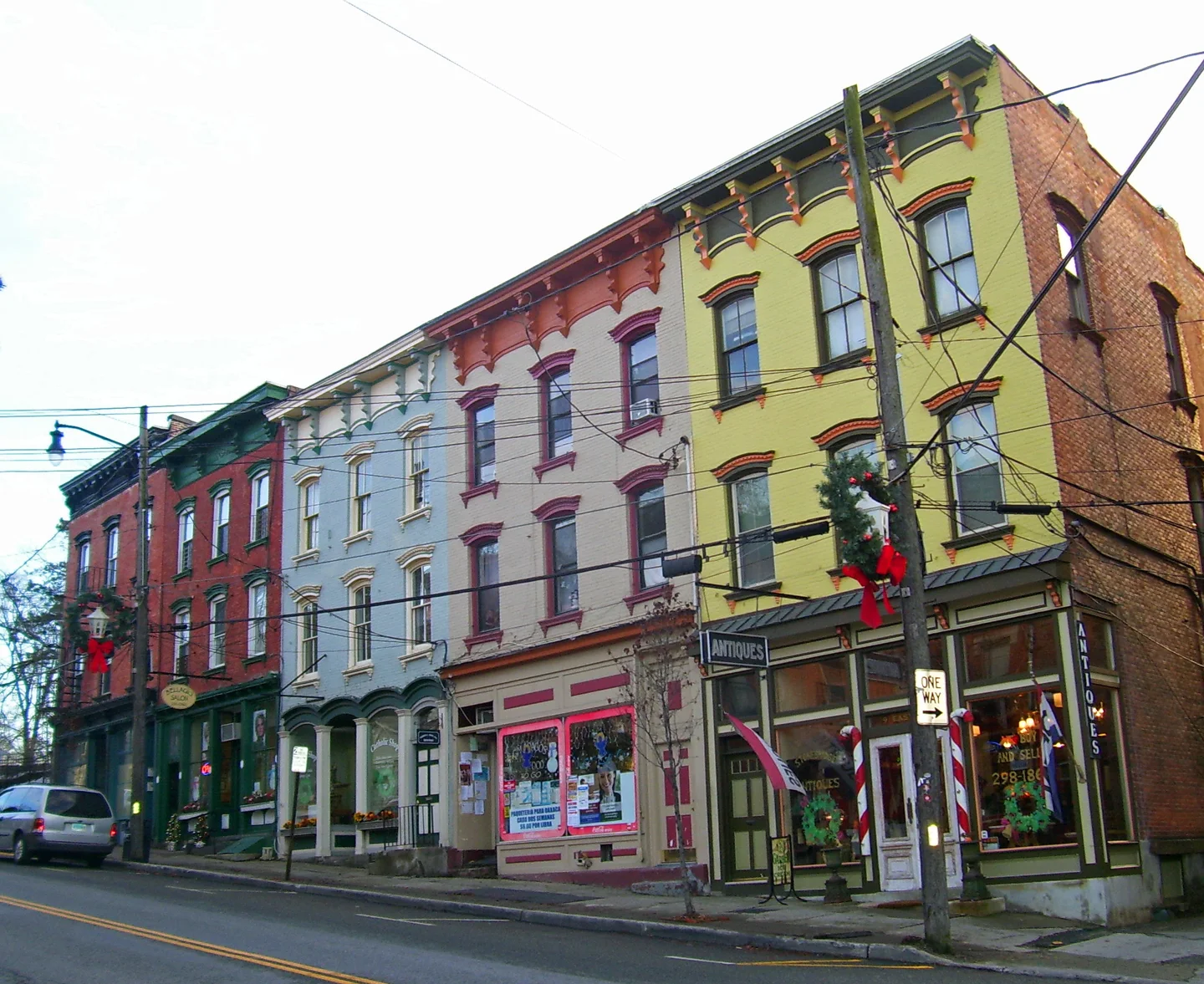

Wappingers Falls is worth investigating when a regional change could improve housing, a household route or access to a village setting while keeping many existing connections. The village name and wider Wappinger area must be distinguished. Choose the actual home first, then resolve municipality, services and school assignment rather than allowing a familiar area name to answer all three.
For a commuter, the important question is how the address relates to the station or workplace you will use. The Hudson Line serves New Hamburg, but living in a nearby area does not establish a simple station journey. Investigate the road or pedestrian approach, transport option, parking and the timetable that fits your working hours. Include the return when an evening runs late.
For a family or a household on one income, compare current available housing against the costs of the full routine. A modest housing improvement may be valuable if it preserves dependable care or support in the region. It may be less useful if another vehicle or paid childcare is required to make the new arrangement work.
The compromise is that a village-center impression does not describe every home offered under the area name. Walk the routes that matter and inspect the specific building. A larger property can carry costs and maintenance responsibilities that do not appear in the advertised payment.
Before committing, make a weekday trip from the home to your actual work or station, then complete groceries and the necessary household pickup. Compare that sequence with your current Poughkeepsie routine. If the improvement cannot be explained clearly, keep investigating rather than assuming a nearby move is automatically simpler. Village information.
Hopewell Junction


Hopewell Junction tests whether a change toward a different residential pattern would solve your housing or space problem while retaining regional ties. It is a Census-designated place associated with the wider East Fishkill area. Its name should not be used as a substitute for the municipality, district or property information attached to a specific address.
This comparison is especially useful when you want more usable space, a particular home arrangement or a routine different from your current one. That can apply to a family, remote worker or multigenerational household. The question is whether the available property serves the actual people and work pattern, not whether one settlement pattern is generally better for a demographic group.
Put transport, internet and maintenance beside the housing figure. If your plan requires driving to most tasks, account for those journeys and the cars needed by the household. If you work remotely, confirm broadband at the exact property and the space in which you will work. Check the home systems and responsibilities rather than treating more land as a cost-free benefit.
The compromise is that greater space or a different setting can reduce convenience for someone without a car, a teenager seeking independence or an older relative needing frequent services. A home can work well for one adult while making another person's daily life harder.
Use the visit to test a full household schedule. Inspect school or childcare arrangements where relevant, a regular appointment route, groceries and the journey back to existing support. Ask which person gains time and which person loses it. The destination is suitable only when the combined household arrangement is workable. Town of East Fishkill.
Rhinebeck
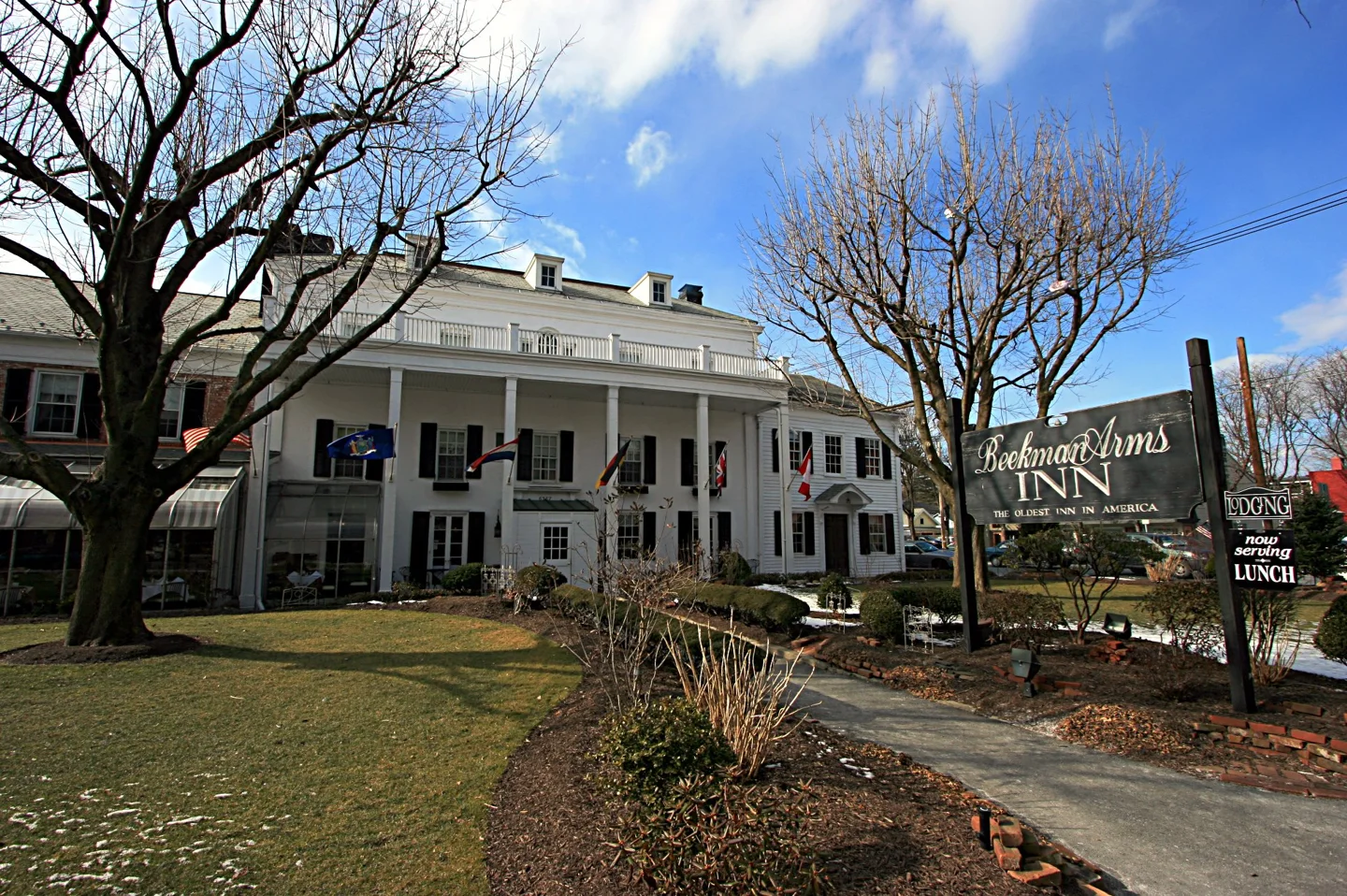

Rhinebeck is a conditional comparison for someone considering a smaller northern regional base, with village-center life or a different housing arrangement. Separate the village from the surrounding town in your search. A village visit and a property several miles away can produce very different daily routines even when both are described using the same place name.
Investigate the activities and services you would use repeatedly. An adult living alone might want a dependable class or volunteering opportunity. A retiree might prioritize groceries, appointments and a manageable home. A family might need a particular school program and childcare arrangement. These should lead you to actual addresses and services, rather than to a general recommendation that the village is right for all three groups.
For trips to New York City, research the actual station and service you would use. Do not treat every northern Hudson Valley place as a Hudson Line station. Include the journey to the station, reservation or ticket arrangements where applicable, and the cost and frequency of returning to Poughkeepsie.
The financial compromise must be established through current suitable listings and recurring property costs. A smaller settlement does not prove cheaper housing. The statistical rent comparison describes occupied homes for its defined place and period; it cannot settle the cost of the particular home you need now.
Spend part of the visit outside the most appealing shopping hours. Walk from a candidate address, investigate the necessary appointment trip and confirm an activity you would actually join. Reject the option if its attractive center is disconnected from the home or services your budget can support. Village of Rhinebeck.
Red Hook
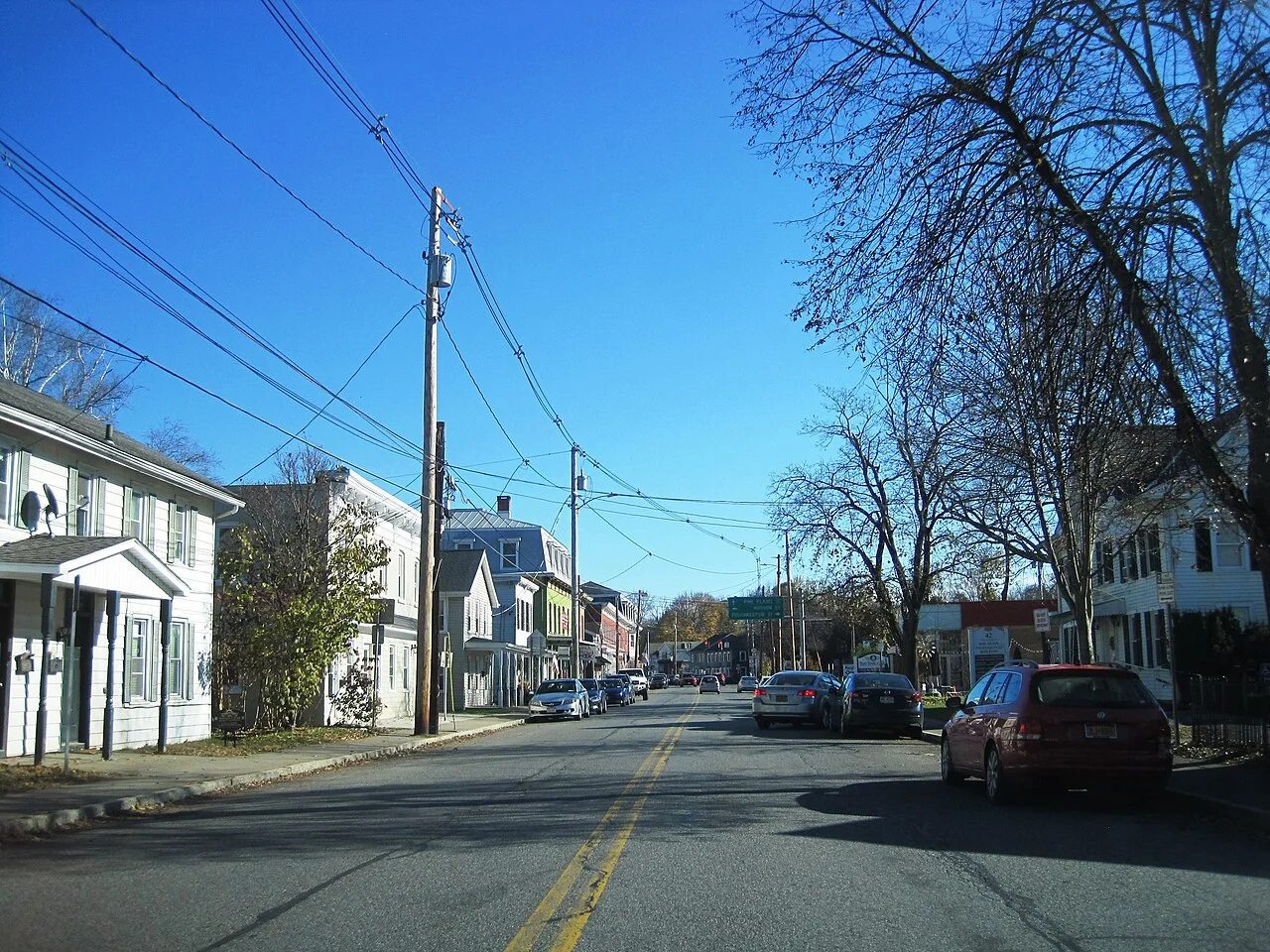

Red Hook deserves investigation when your preferred change involves a smaller community or the relationship between a village and surrounding open country. Distinguish the village, town and any specific Census place in the evidence. The ACS table here names the geography explicitly; it should not be used to describe every property advertised under Red Hook.
Choose whether your goal is village convenience or more rural space. The two can overlap, but they are not interchangeable. A household wanting accessible services may need a different address from a household prioritizing land or quiet. A student, remote worker or older adult can each value the setting for different reasons, with different transport needs.
Investigate work and education using a concrete institution or employer where relevant. Proximity to an educational environment does not establish admission, employment or housing availability. A self-employed person also needs a client and travel assessment. Preserve the connection to Poughkeepsie if it remains part of work or family life, and include the cost of making it regularly.
The compromise is the possibility that desired space increases driving and maintenance or reduces independent access for another household member. Internet, road access and services should be checked at the property. Do not assume that the landscape visible from a home is land you may use.
For the practical test, pair one village address with one more dispersed address if both interest you. Carry out groceries, a work or study journey and a regular appointment from each. That comparison can establish whether you want a smaller center, open country or simply a better home in your existing region. Town of Red Hook.
Hyde Park


Hyde Park can be a useful local-regional control for someone who wants a different home while preserving Poughkeepsie relationships and services. The town and the smaller Census place are different statistical units. This guide keeps the place estimate labeled and asks you to investigate the municipality and arrangements associated with the actual address.
The strongest reason to compare it is a specific home or routine: less maintenance, more appropriate space, access to family or a manageable route to familiar services. An older adult may value continuity; a family or remote worker may be investigating a different property pattern. None of those circumstances establishes that all Hyde Park homes suit the need.
History and visitor attractions can enrich a place without solving the housing decision. The Roosevelt site is an identifiable regional resource, but a move should be judged by ordinary access, work, care and social activities. Establish how often you would use an attraction rather than assigning it the same weight as groceries or a doctor you need regularly.
The compromise can be dependence on a car or a home whose layout and maintenance requirements undermine the intended improvement. An address described as close to Poughkeepsie still needs a tested journey. If independent living is the goal, investigate the routine without assuming that you will always drive.
Before deciding, visit a suitable property and make the trips you would repeat, including a medical appointment route or a family visit where relevant. Compare the result with a local downsizing alternative. This establishes whether you need a new region or a home that better supports life within the region you already know. Town of Hyde Park, Roosevelt historic site.
Kingston


Kingston tests a west-of-the-Hudson regional change. It may deserve a place on the shortlist when you want another urban base or neighborhood pattern while retaining Hudson Valley connections. The crossing and the specific destination within the city matter: an ordinary journey can change even when the points appear close on an orientation map.
Choose the part of Kingston around your routine. Someone prioritizing regular cultural or community activities should identify the actual venues and schedule. Someone prioritizing employment needs the actual work location. A family or multigenerational household needs housing, services and school arrangements for the address. The city's varied settings should be investigated rather than described as one uniform lifestyle.
Use Ulster's official transport information for relevant trips and check connections to the rest of your routine. Do not equate a regional bus network with a convenient daily New York City rail commute. If reaching Poughkeepsie remains important, run that journey at the hours you will use it and include the cost of the crossing or parking where applicable.
The compromise may be that a different regional center does not reduce expenditure or driving for the home you can actually obtain. Compare suitable listings and property responsibilities. A broad arts reputation or an enjoyable waterfront visit cannot establish that the weekly arrangement fits your budget.
Test a home area, an ordinary workday and one recurring social activity. Include the return to people you rely on across the river. The purpose is to establish whether Kingston changes the part of daily life you wanted to improve while preserving the connections you still need. Ulster County Area Transit.
New Paltz
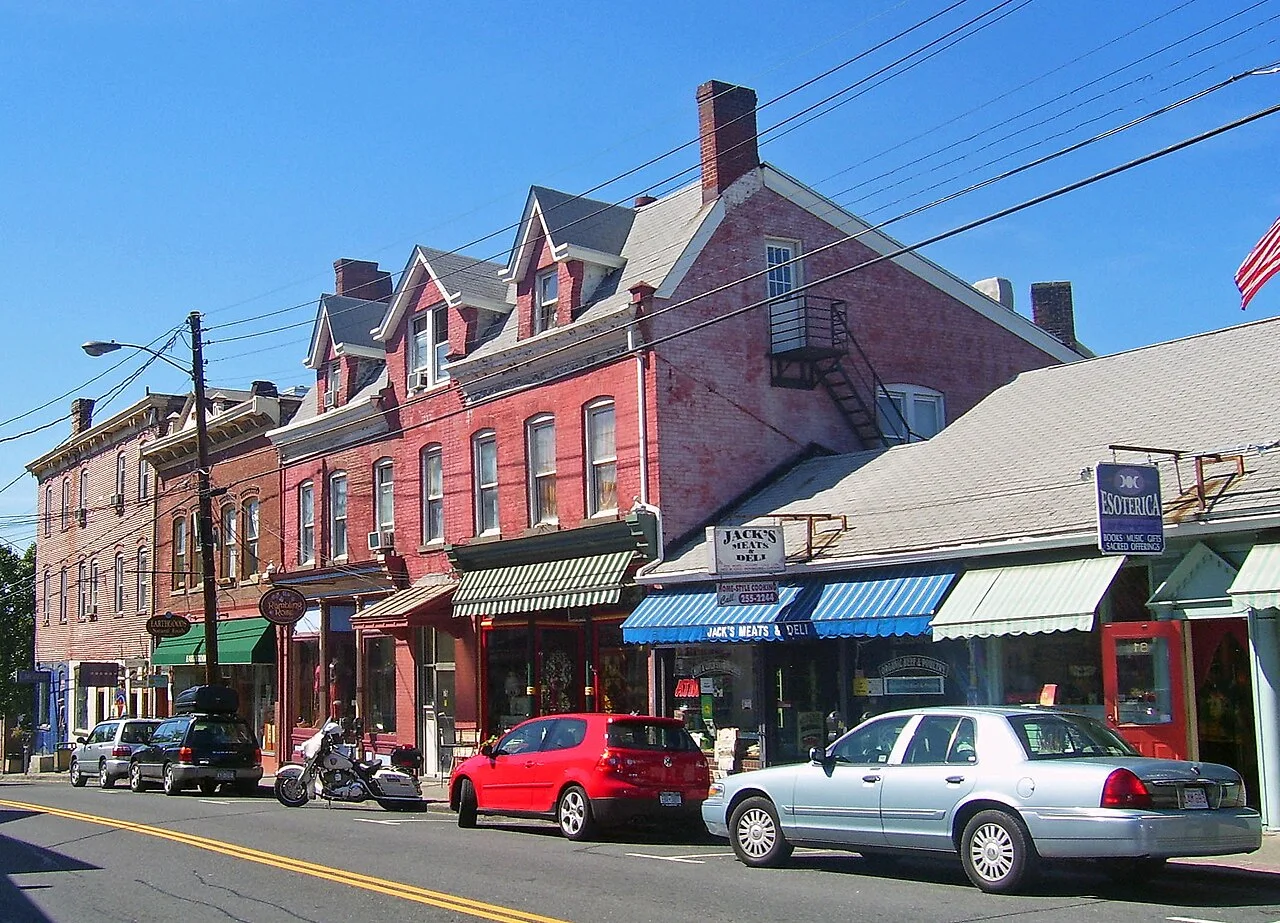

New Paltz is a useful comparison for someone who wants a different relationship to outdoor activity or an educational environment without immediately leaving the region. Distinguish the village and surrounding town. Housing linked to a particular campus or term can also have a different availability pattern from year-round housing for a household.
If outdoor access is the leading reason, identify the trail, park or activity you would use after work, not only a destination for occasional weekends. Check public access, season, transport and the time needed from a candidate home. Minnewaska is a named state park resource in the wider region; being interested in it does not mean every New Paltz address gives equally convenient access.
If study or education work is the reason, establish the actual program or offer and the full housing schedule. If you commute to Poughkeepsie, make that trip at the relevant time and test the reverse journey. A west-side address changes the crossing, and an attractive local routine does not remove that responsibility.
The compromise may be that the housing you can obtain does not support the year-round or car-free routine you imagined. A student-oriented setting can be useful to some readers without determining the right choice for every young person. Compare the requirements of your household directly.
Use the visit to combine an ordinary weekday, groceries and the outdoor activity you would repeat. Check the difficult part: a rainy evening, an appointment or a trip across the river. The place earns its shortlist position when those tasks work together, rather than when a single attractive feature dominates. Village information.
Highland
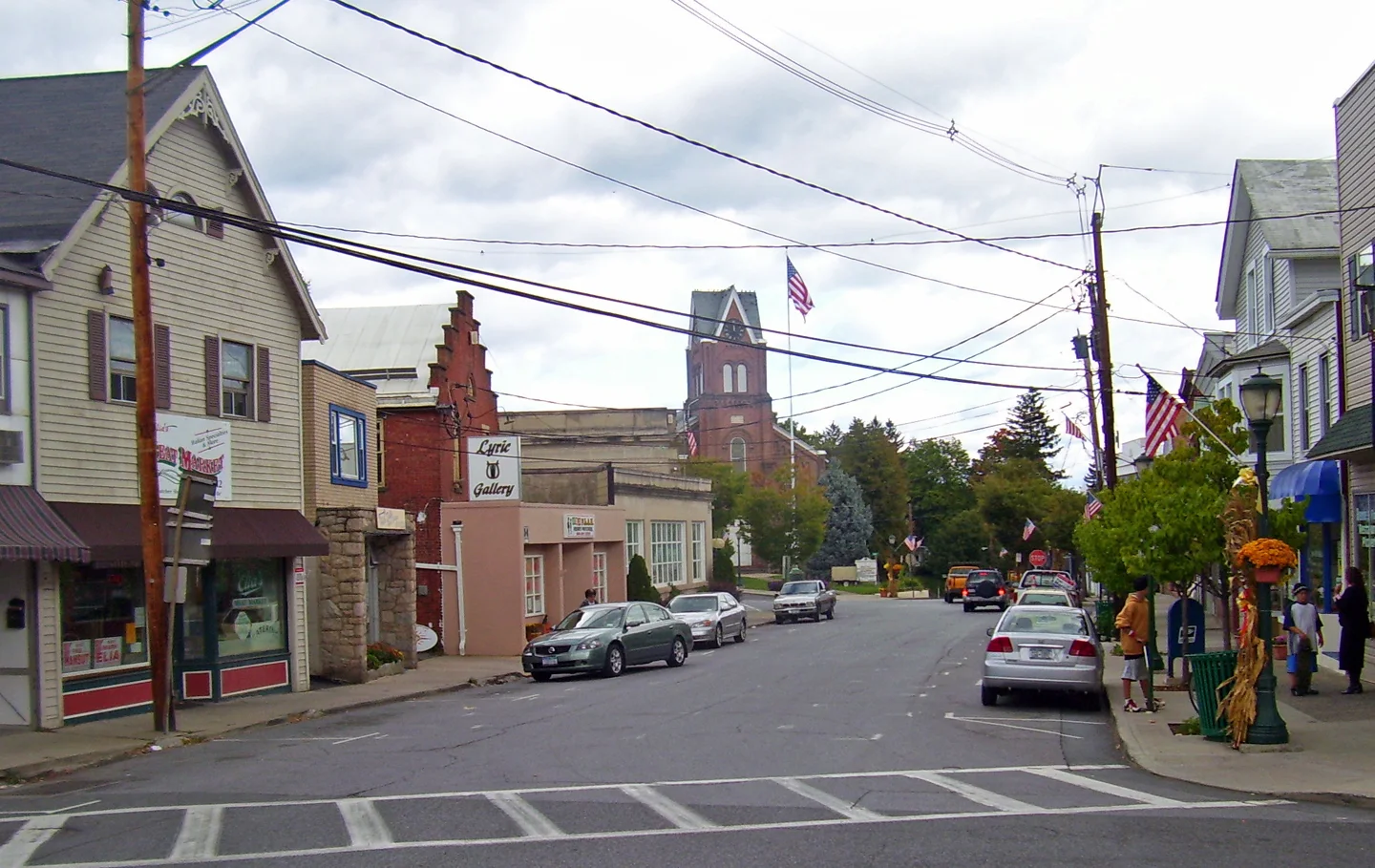

Highland offers a west-side comparison close to the Poughkeepsie part of the regional map. It can help you test whether a nearby change of home and setting is enough. The name refers to a Census-designated place within the Town of Lloyd; resolve municipal and address-specific questions through the appropriate owner rather than treating the postal description as a complete administrative answer.
Start with the crossing you would actually make. A household that retains work, healthcare or family in Poughkeepsie needs to include those journeys in its weekly plan. A person moving for outdoor access should identify the actual access point and the transport needed. Nearby scenery and a useful daily route are separate benefits.
For housing, compare the specific layout and operating costs. A home may offer space or a different environment while requiring more maintenance or a vehicle arrangement that changes the budget. If the goal is independent living, test groceries, appointments and evening trips with the transport you will have.
The compromise is that a short geographic move can leave the original problem unchanged. A different view will not solve an unsuitable work schedule, unaffordable home or unavailable care. State the intended improvement clearly and give it a test. That keeps Highland useful as a real alternative instead of a nearby name on a list.
Spend a weekday in the candidate home area and make your recurring Poughkeepsie journey. Add one activity or service that the new setting would improve. Compare the combined result with changing homes on the east side. The important question is whether the new arrangement fits your actual routine better. Town of Lloyd.
Hudson


Hudson tests a smaller northern city as a different base for everyday life and recurring cultural activities. Its rail comparison is important: Hudson has an Amtrak station and should not be represented as another Metro-North Hudson Line stop. Use the relevant operator, timetable and ticket conditions for the travel you plan to make.
Someone with occasional New York City visits faces a different decision from a daily commuter. Include reservation or fare questions, station access and the last useful return. If work remains in Poughkeepsie, investigate that regular journey separately. A rail connection between cities does not by itself make every employment pattern sensible.
Choose a home around the activities and services you would use repeatedly. A lively visitor-facing street can be enjoyable while the available housing lies farther from the routine you want. Someone moving alone should identify regular groups or activities; someone reducing maintenance should inspect the property and access rather than selecting on atmosphere.
The compromise can be the combination of housing cost, service access and travel back to existing relationships. A smaller city is not automatically less expensive. Compare the actual property, transport and visits with your present costs, using the statistical table only as historical background.
Before deciding, make a normal weekday visit and test the real train or road journey you expect. Investigate groceries and one recurring activity outside a special event. Hudson belongs on the shortlist when that ordinary pattern offers a meaningful improvement and the different rail arrangement remains workable. Amtrak Hudson station.
Move farther without losing what matters
A longer move is often a combination of gains and substitutions. You might gain access to another job market while losing routine visits with relatives. You might exchange winter management for summer cooling. A lower-priced home could require a longer commute, or a more expensive home could let you remove a car. Compare these substitutions explicitly so that the destination is judged by the life it creates.
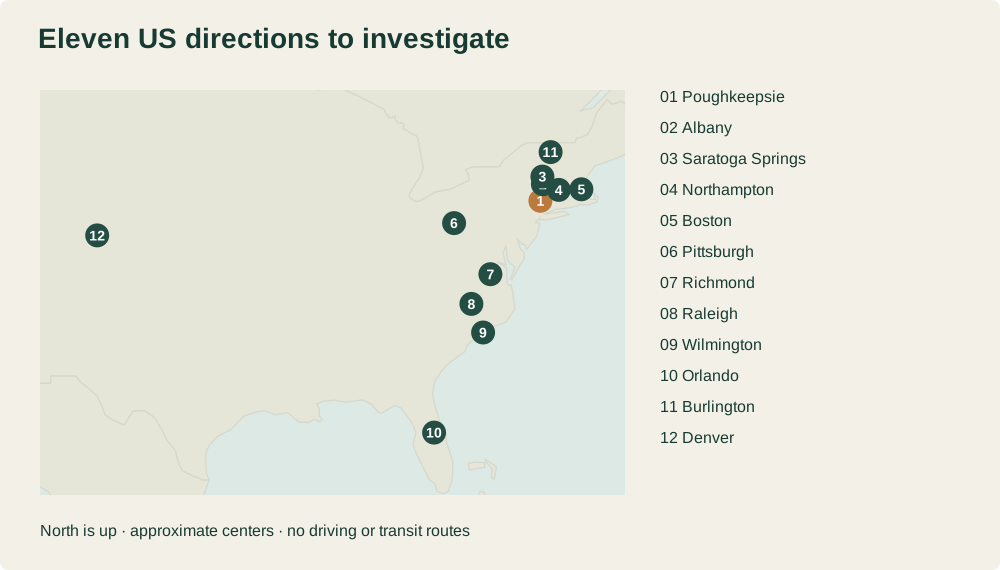
Read the values as a table
| Marker | Place | Latitude | Longitude |
|---|---|---|---|
| 1 | Poughkeepsie | 41.7058 | -73.9283 |
| 2 | Albany | 42.6525 | -73.7572 |
| 3 | Saratoga Springs | 43.0831 | -73.7858 |
| 4 | Northampton | 42.3251 | -72.6412 |
| 5 | Boston | 42.3601 | -71.0589 |
| 6 | Pittsburgh | 40.4397 | -79.9764 |
| 7 | Richmond | 37.5408 | -77.4367 |
| 8 | Raleigh | 35.8542 | -78.7619 |
| 9 | Wilmington | 34.2257 | -77.9447 |
| 10 | Orlando | 28.5422 | -81.3792 |
| 11 | Burlington | 44.4761 | -73.2131 |
| 12 | Denver | 39.74 | -104.99 |
The eleven US comparisons cover different questions. Albany and Saratoga Springs retain a New York setting while shifting the regional base. Northampton, Boston and Burlington test different versions of education, urban services and northern outdoor life. Pittsburgh, Richmond and Raleigh test larger changes in work and daily geography. Wilmington and Orlando test warmer-climate ideas. Denver tests the attraction of a western mountain setting with the responsibilities of a different metropolitan area.
None of these places is presented as a practical daily commute to a Poughkeepsie job. A nearby location can be tested as a commuting alternative. A distant location needs a different work arrangement, a genuinely occasional return schedule or a replacement job. That distinction is easy to miss when a guide describes every place as "accessible" without explaining accessible for which journey.
Albany


Albany is a useful comparison if you want a different New York regional base before making an interstate decision. It changes the employment and daily geography without requiring you to assume that leaving the state is the only way to improve life. Treat the city, its surrounding municipalities and the wider Capital Region as separate housing and work geographies.
Use a real job, training or service need to select a neighborhood. A public-sector or other institutional opportunity matters when it matches your role, qualification and timetable. The presence of employers does not establish a vacancy or an offer. Compare the actual compensation with a suitable home and the journey between them.
CDTA provides a starting point for the transport investigation. Look for the route and operating hours that serve your address and destination. Include transfers, the evening return and groceries. A household hoping to reduce car expenses should establish which trips work independently and which still require a vehicle or paid alternative.
The compromise can be a different urban routine while retaining winter conditions you wanted to escape. If warmer weather is your main objective, this candidate is serving another question. If budget is the objective, use current housing and property costs beside the historical ACS estimate instead of assuming that a different New York city must be cheaper.
Test the work route, necessary services and your return connection to Poughkeepsie. Keep Albany when it improves the particular employment, housing or service arrangement you need. Remove it when the move changes the address without improving the constraint that prompted the search. CDTA.
Saratoga Springs


Saratoga Springs tests a northern New York city setting with a different center and surrounding residential pattern. It may deserve investigation for someone seeking a change in activities, housing or regional access while retaining connections to New York. A pleasant visit does not establish that a home is available at the cost and location you need.
Select a candidate address around the routine. For an older adult, that might be a smaller home with groceries, appointments and social activities accessible. For a working household, it might be the actual employer journey. For someone living alone, investigate repeating activities rather than judging the opportunity by a single event or a busy visitor weekend.
Housing should be compared using current suitable properties and their recurring costs. Seasonal or event-related conditions may be worth asking about for the particular building or lease, but they should not be assumed to describe every home. If a rental is advertised for a limited period, establish whether it supports the year-round life you are planning.
The compromise is that a smaller-city attraction does not guarantee lower expenditure, independent transport or less winter management. An address outside the center may offer another housing pattern while changing access to everything you intended to use. The home and its location need to pass the same test together.
During the visit, use an ordinary day and investigate the difficult season for you where practical. Complete the route to work or care, groceries and a social activity. Compare the frequency and cost of returning to family in Poughkeepsie. The move makes sense when those ordinary tasks support the improvement you want. City information.
Northampton

.jpg)
Northampton offers a western Massachusetts comparison for someone considering an educational, cultural or smaller-city change. The relevant opportunity should be specific: a course, employer, activity or a home that supports the desired routine. A general reputation is a starting question, not evidence that every reader will find work, friends or suitable housing there.
If education is part of the reason, compare the actual program and access to it. Admission, funding, work and housing are separate requirements. An adult learner may need an evening schedule, while a full-time student may need housing through academic breaks. A person seeking employment needs the offer and commute rather than proximity to an institution alone.
PVTA is the official starting point for regional transit research. Establish the route, calendar and hours relevant to your home and destination. A route that works for daytime attendance may not support an evening class or shift. If a car-free plan is important, test groceries, healthcare and weekend activities as well as the main work or study trip.
The compromise may be distance from existing Poughkeepsie support without a large enough improvement in income or routine to justify it. Northern weather is also a separate question from the cultural or educational opportunity. Keep the reason for choosing Northampton distinct from the reasons you would choose a warmer or coastal destination.
Visit a likely home area during an ordinary week. Make the work or program journey, investigate one recurring activity and calculate returns to people in the Hudson Valley. The city belongs on the shortlist when the particular institution, network or housing arrangement gives you something you cannot obtain as effectively nearer home. PVTA.
Boston


Boston is a comparison for a reader considering a larger employment or education environment and a more extensive public-transport investigation. It can create a meaningful change when there is a particular job, program or set of services you need. It should not be sold as a simple affordability move or as a city where a higher salary automatically improves the household budget.
Choose work or study location before judging homes. A home in Boston and one in another municipality within the metropolitan area can have different costs, services and routes. Keep the housing geography separate from the broader labor-market statistics. An offer that seems attractive may lead to a difficult daily journey from the home your budget can support.
The MBTA lets you investigate several transport modes and their current operating conditions. Test the whole chain, including station access, transfers, evening travel and accessibility. A plan to remove a car can be valuable if the necessary routine works. A home described as "near transit" does not prove that the service reaches your actual workplace or supports a shift.
The compromise is the possibility that housing, care or commuting consumes the apparent income advantage. For two working adults, test both jobs. For a student, include funding and the full academic housing period. For an older adult, inspect the building and practical route rather than treating an extensive network as a guarantee of personal accessibility.
Before deciding, build a budget from a real offer and a real housing candidate, then rehearse an ordinary working day. Boston earns its place when a specific opportunity or transport-supported routine outweighs the costs and distance from your current connections. MBTA.
Pittsburgh


Pittsburgh is a useful comparison for someone testing a different metropolitan housing and work arrangement rather than merely looking for a nearby alternative. It gives you a way to ask whether a larger geographic change can support a more sustainable budget or a specific career opportunity. Current suitable housing and actual work remain necessary evidence.
Neighborhood choice matters to the daily route. Investigate the relationship between home, employer and services rather than treating the city as one connected flat area. Terrain can change pedestrian access and the usefulness of a stop. Someone with mobility limitations or a plan to walk frequently should test the gradient as well as the map distance.
Pittsburgh Regional Transit provides bus, light-rail and other service information. Check the mode and schedule that serve the candidate address; do not infer universal car-free access from the presence of the network. Include a late return and a grocery trip. A home that lowers rent but adds a second vehicle may produce a different financial result from the one you expected.
The compromise is rebuilding support farther from Poughkeepsie, with the travel and time that relationship maintenance requires. A move for a healthcare, education or other profession should start from the employer and licensing conditions. A move for lower expenditure should start from a same-household budget, not from a broad claim that the whole city is inexpensive.
Visit the actual home area, run the employer or study route and identify regular activities you would use. Put hills, crossings, transport and the return-to-family budget into the worksheet. Keep Pittsburgh when the complete arrangement demonstrates the financial or work improvement you sought. Pittsburgh Regional Transit.
Richmond


Richmond tests a move to a different regional city and a different annual climate pattern. It can be useful for someone combining an employment change with a new daily environment. Separate those objectives: a job offer may justify investigation even if the climate is not your first preference, while a climate preference alone still needs a workable household budget.
Choose a home around actual work, care and activities. City boundaries and surrounding localities are important for services and administration. A metropolitan employment statistic does not describe every address listed under a broad Richmond-area search. Confirm school assignment, housing responsibilities and the municipality for the property you are considering.
GRTC is the starting point for local transit research. Investigate the specific route, frequency, stop access and operating period that you need. If you are considering life without a car, test the complete ordinary week. If you will drive, include parking and travel rather than treating a larger road-based geography as automatically convenient.
The compromise can be losing nearby family support while also adapting to different seasonal conditions. Research summer as well as winter and investigate flood exposure and insurance for the property where relevant. Do not assign a risk level to every home from the city's name or a photograph of a river.
During a research visit, rehearse work and household tasks from one candidate address and attend an ordinary activity that would form part of your life. Price regular returns to the Hudson Valley. Richmond should remain when the job, home and desired environment fit together without an unresolved essential service or budget gap. GRTC.
Raleigh


Raleigh is a conditional comparison for someone considering another employment region or a different annual weather pattern. It is one city within a wider regional geography. Keep a Raleigh home, a workplace elsewhere in the region and metropolitan wage data distinct in the comparison; the shared regional label does not make the journeys or services interchangeable.
Begin with the actual employer or approved remote arrangement. A region associated with opportunity cannot guarantee work in your profession. A household with two working adults needs two plans, and a family needs childcare or school arrangements compatible with the working hours. Use the real address to build the schedule before deciding that a larger home resolves the move.
GoTriangle provides regional transport information, with the relevant local services needing their own route checks. Test whether the home and workplace are connected at the required hours. For a driving household, include the full recurring cost and the possibility of more than one car. A lower advertised housing payment may lose its advantage after the daily geography is accounted for.
The compromise may be a greater distance from established support and a summer pattern different from the winter problem you want to escape. Inspect the home and investigate cooling, insurance and local risks. These are property and household questions, not reasons to assume that every southern destination is either suitable or unsuitable.
Visit during an ordinary work period and, when climate is the main reason, investigate the season you find difficult. Run childcare, work and groceries together. Keep Raleigh when a confirmed opportunity or sustainable remote arrangement makes that routine feasible and the full budget improves or supports your chosen goal. GoTriangle.
Wilmington

.jpg)
Wilmington is a coastal-region comparison for someone whose goal involves ocean access and a different climate. The first question is how you want to use the coast: an occasional trip, a regular walk, a permitted water activity or a view from home. Those objectives can lead to different locations, budgets and responsibilities.
Distinguish a Wilmington address from a beach community or another surrounding locality. A home marketed within a coastal region is not necessarily near the public access point you intend to use. Check the journey, season, parking and rules for the actual activity. The photograph in this guide is a named-place view, not proof of daily beach access from available housing.
Investigate employment separately from the lifestyle goal. A remote worker needs approval and an address-level connection. A locally employed person needs the actual offer or a credible search plan. For transport, Wave Transit provides a starting point; the route and calendar must fit your home, work and care needs before a car-free assumption enters the budget.
The compromise includes property-specific flood and storm questions, insurance, maintenance and travel back to family. Obtain the relevant current information before choosing a home. A winter benefit may be meaningful while other seasonal or property conditions make a particular address unsuitable.
Use a research visit to test the ordinary household routine and the precise ocean activity that motivates the move. Inspect the home area beyond a holiday itinerary. Wilmington earns its shortlist position when the coastal access is real and repeatable, the work is feasible and the annual budget includes the costs of the setting. Wave Transit.
Orlando

.jpg)
Orlando tests a warmer-winter idea in an inland metropolitan setting. It serves a different question from moving to a coastal home. Someone wanting an ocean-centered daily routine should investigate that geography separately; an appealing Florida label does not establish that an inland address gives the access they imagined.
Choose the home around work, care and the ordinary trips you need. A visitor itinerary and a resident's week can be very different. Investigate the actual employer or remote-work arrangement, the daily transport and healthcare. A retiree needs provider and independent-living checks; a working family needs compatible employment and childcare schedules.
LYNX provides public-transport information for the area. Test the specific route and hours from your candidate address rather than assuming that a network map guarantees a workable car-free life. For a driving household, include vehicles, insurance, parking and the time spent on recurring journeys. A cheaper home farther from necessary services can change the result.
The compromise is that a preferred winter may come with a summer and property-risk pattern you need to investigate carefully. Compare the full year using climate evidence and inspect cooling, current insurance terms and the address's exposure. The guide's climate chart uses airport-station historical normals, not a promise of conditions at every home.
Visit in the season you are least sure about when practical and run the normal week. Confirm appointments, work and family visits. Keep Orlando when the winter benefit is paired with a sustainable annual routine and budget, rather than when a short leisure visit supplies all the evidence. LYNX.
Burlington


Burlington is a northern-city and lake-region comparison for someone seeking a different outdoor and community setting. It is not a candidate chosen to avoid northern winter. If less cold or snow is your leading requirement, identify that mismatch early rather than allowing the appeal of a lake or a summer visit to override it.
Investigate the everyday version of the lifestyle. Find the outdoor route or activity you would use, the program or employer relevant to work, and the housing arrangement your budget supports. A university or regional institution can be a useful reason to investigate only when the actual course, job or service matches your needs.
Green Mountain Transit is the source for local transport research. Test the home-to-work or study route, the return, groceries and services in the periods you will use them. If independent living or a car-free routine matters, investigate the difficult-weather version as well as the pleasant one. Access needs can change with season and mobility.
The compromise may involve housing availability, distance from Poughkeepsie support and winter management. Current listings, building costs and the actual address should resolve the financial question. The ACS figure gives historical context for the Census place and cannot certify that the home you require is available at a particular price.
Make a visit that combines an ordinary working day, a household service and the outdoor activity you expect to repeat. Compare the annual routine with your current one, including travel to family. Burlington should remain when the northern setting serves your priorities and its winter responsibilities are an accepted part of the choice. Green Mountain Transit.
Denver

.jpg)
Denver tests the idea of a western metropolitan base associated with access to mountain activities. It is important to separate the city home from the mountain destination you want to use. Living in the metropolitan area does not mean living at a trailhead or having an easy after-work trip to every outdoor place.
Start with an actual job, approved remote arrangement or educational plan. Compare it with suitable housing and the daily journey. A household wanting more outdoor time still needs work, groceries, care and social life to function. If your household includes someone with a relevant health or mobility concern, investigate the conditions that apply to them rather than relying on a general lifestyle description.
RTD provides regional bus and rail information. Test the route from the specific home to the required destination and include evening and weekend travel. A useful urban transit arrangement does not automatically provide the mountain access you want. Decide when a car or another transport option remains necessary and include its cost.
The compromise can be a long return journey to Poughkeepsie, a housing cost that does not support the expected budget improvement, and environmental questions that differ from your current setting. Research seasonal conditions, air-quality information and property risks where relevant. A sunny image does not settle the annual experience.
During a visit, carry out an ordinary working day and make the actual outdoor trip you would repeat. Then price family visits and the complete household routine. Denver belongs on the shortlist when both the metropolitan life and the mountain-related goal work under realistic time, income and transport assumptions. RTD.
Will the move improve your finances?
A financial improvement is money left after the life you need, not a lower figure in a housing advertisement. Compare take-home household income with housing, utilities, transport, insurance, childcare, healthcare and recurring visits to people you need to see. Include payments you will keep after moving. List one-time transition costs separately. This lets you distinguish a genuinely sustainable change from a place that looks inexpensive because important expenses have been omitted.
Start with three income paths: income is preserved, income increases, or income decreases. A remote worker whose employer approves the move may be able to preserve pay, although employer policy, tax arrangements and benefits still need confirmation. Someone accepting a new job needs the actual offer, benefits and working pattern. Someone facing redundancy, divorce, reduced hours or retirement needs a budget that works under the lower income rather than under the income they hope will return.
Use the same household on both sides
Compare a one-bedroom rental with a one-bedroom rental, or a home large enough for your actual family with another suitable home. Do not make one place appear cheaper by giving it a smaller property, a different ownership arrangement or fewer essential services. If downsizing is itself the plan, show it as a separate choice. That way the reader can see how much benefit comes from location and how much comes from using less space.
For renters, request the current rent, included utilities, application requirements, deposit, parking, pet conditions and lease terms. For buyers, add financing, property taxes, insurance, fees and a maintenance allowance based on the particular home. An attractive purchase price does not resolve recurring cost. Ask what the home needs now and what costs are likely within the period you expect to live there.
Six household models
The models below are arithmetic demonstrations. All input amounts are explicitly hypothetical US-dollar monthly values. They are not quotes, official local prices, eligibility thresholds or promises of savings in any named city. They show which costs need to be replaced with your own verified figures. Each model compares a current arrangement with a possible future arrangement for the same household and lists one-time transition cost separately.
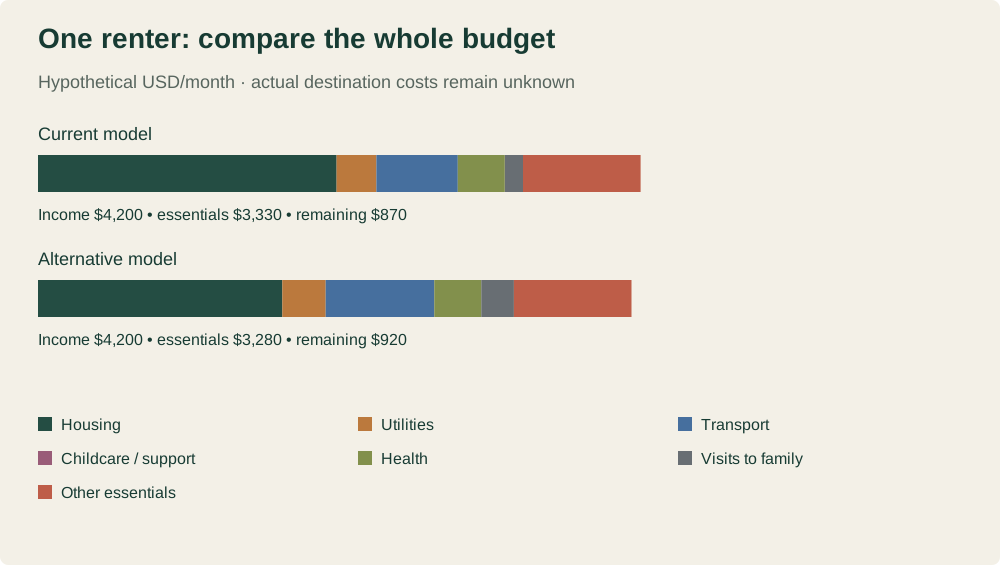
Read the values as a table
| USD/month | Current model | Alternative model |
|---|---|---|
| Housing | 1650 | 1350 |
| Utilities | 220 | 240 |
| Transport | 450 | 600 |
| Childcare / support | 0 | 0 |
| Health | 260 | 260 |
| Visits to family | 100 | 180 |
| Other essentials | 650 | 650 |
| Take-home income | 4200 | 4200 |
| Essential total | 3330 | 3280 |
| Remaining | 870 | 920 |
For the single renter, removing a car is a financial change only if the remaining transport can support work, shopping and evening life. Include the occasional trip that still requires a ride or rental. A car-free plan can fail even when the office is reachable, because another necessary journey is not. Test the whole week before recording the saving as dependable.
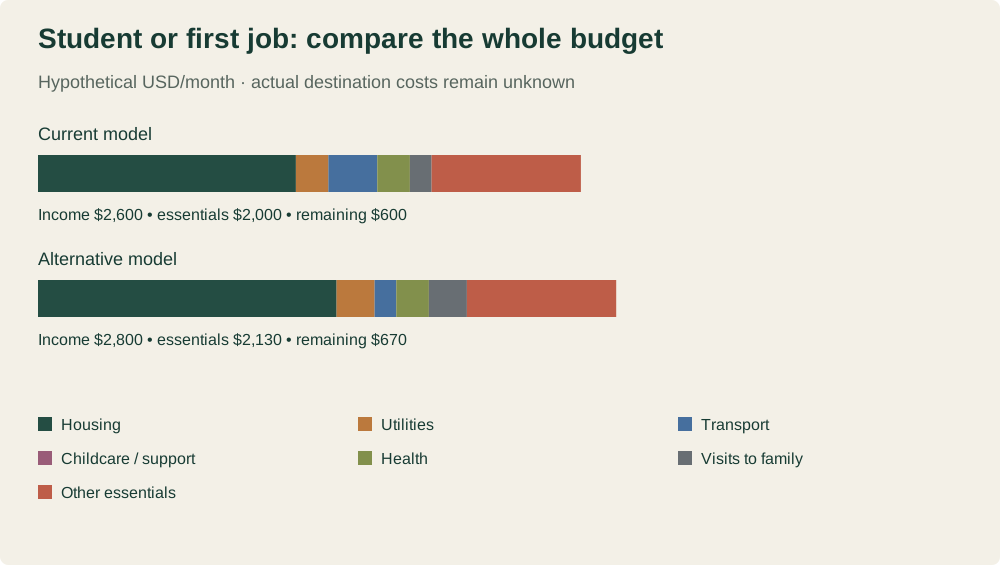
Read the values as a table
| USD/month | Current model | Alternative model |
|---|---|---|
| Housing | 950 | 1100 |
| Utilities | 120 | 140 |
| Transport | 180 | 80 |
| Childcare / support | 0 | 0 |
| Health | 120 | 120 |
| Visits to family | 80 | 140 |
| Other essentials | 550 | 550 |
| Take-home income | 2600 | 2800 |
| Essential total | 2000 | 2130 |
| Remaining | 600 | 670 |
For the student or starting worker, count irregular income cautiously. A scholarship, campus job or family contribution should be supported by a real arrangement. Education costs belong in the model if the move depends on education. A low rent far from the campus or workplace can add transport costs and hours that weaken the plan. Use the academic calendar to anticipate breaks in housing or work.
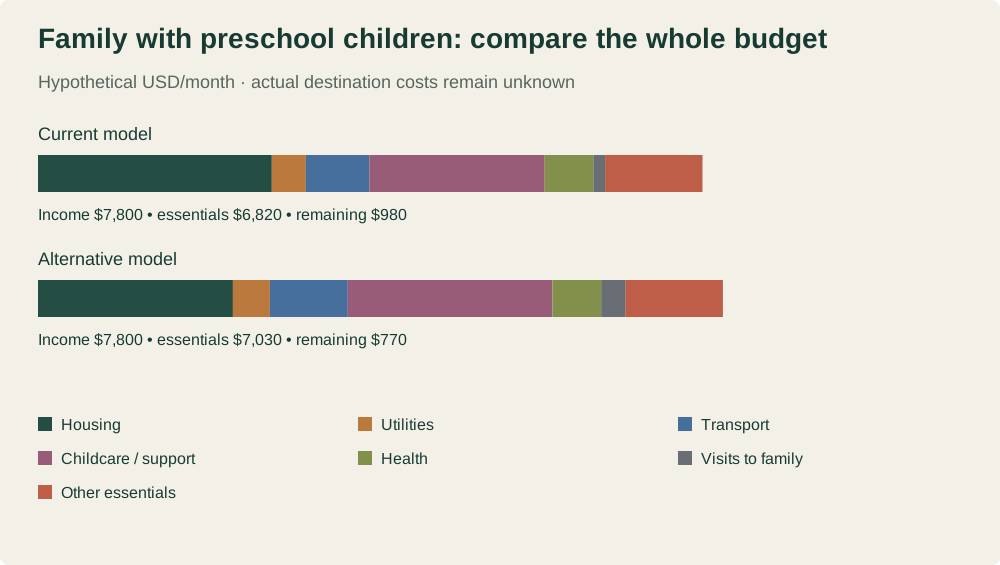
Read the values as a table
| USD/month | Current model | Alternative model |
|---|---|---|
| Housing | 2400 | 2000 |
| Utilities | 350 | 380 |
| Transport | 650 | 800 |
| Childcare / support | 1800 | 2100 |
| Health | 500 | 500 |
| Visits to family | 120 | 250 |
| Other essentials | 1000 | 1000 |
| Take-home income | 7800 | 7800 |
| Essential total | 6820 | 7030 |
| Remaining | 980 | 770 |
For a family with preschool children, losing informal care can matter more than a small housing difference. Ask about available places, hours, deposits and the timing of enrollment. Published fees are incomplete if no place is available when work begins. Include the transition period in which a parent may work fewer hours or pay for a temporary arrangement.
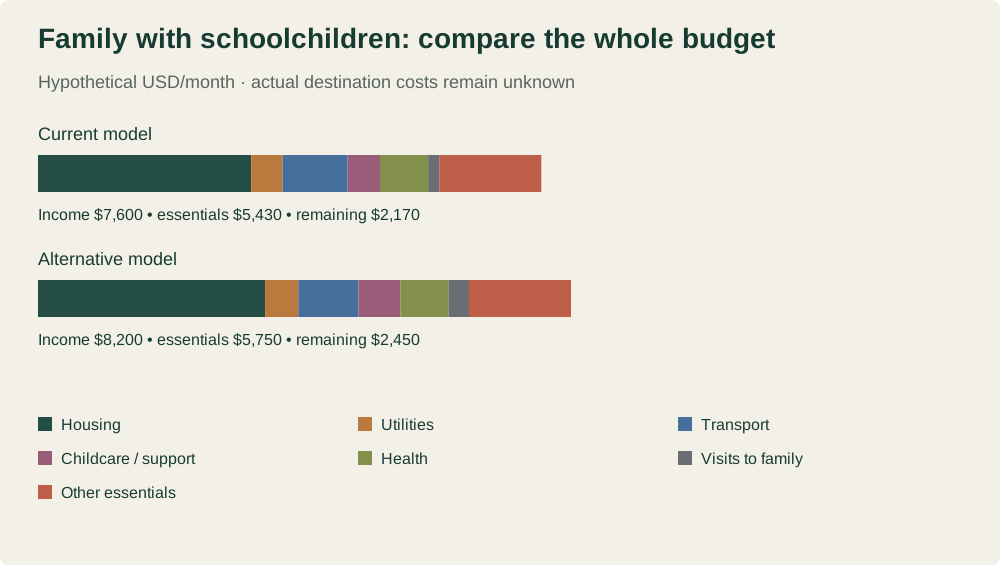
Read the values as a table
| USD/month | Current model | Alternative model |
|---|---|---|
| Housing | 2300 | 2450 |
| Utilities | 340 | 360 |
| Transport | 700 | 650 |
| Childcare / support | 350 | 450 |
| Health | 520 | 520 |
| Visits to family | 120 | 220 |
| Other essentials | 1100 | 1100 |
| Take-home income | 7600 | 8200 |
| Essential total | 5430 | 5750 |
| Remaining | 2170 | 2450 |
For a household with school-age children, transport, after-school arrangements and activities can shift the budget. A school-day schedule does not necessarily cover a working day. A child's established course or support needs may also change the acceptable set of addresses. Avoid assigning a monetary benefit to an educational arrangement until you have established that the child can actually use it.
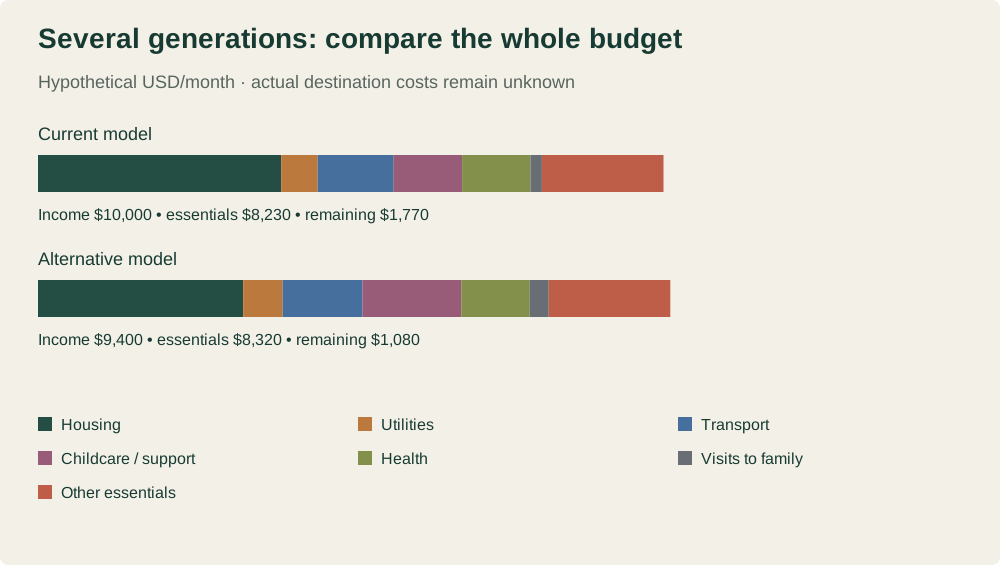
Read the values as a table
| USD/month | Current model | Alternative model |
|---|---|---|
| Housing | 3200 | 2700 |
| Utilities | 480 | 520 |
| Transport | 1000 | 1050 |
| Childcare / support | 900 | 1300 |
| Health | 900 | 900 |
| Visits to family | 150 | 250 |
| Other essentials | 1600 | 1600 |
| Take-home income | 10000 | 9400 |
| Essential total | 8230 | 8320 |
| Remaining | 1770 | 1080 |
For several generations, sharing housing can reduce duplicated expenses while creating requirements for privacy, accessibility and care. Compare the full home rather than assuming that any extra bedroom solves the problem. Ask who pays, who provides care, how decisions are made and what happens if someone's health or employment changes. Include paid help where unpaid care is not reliably available.
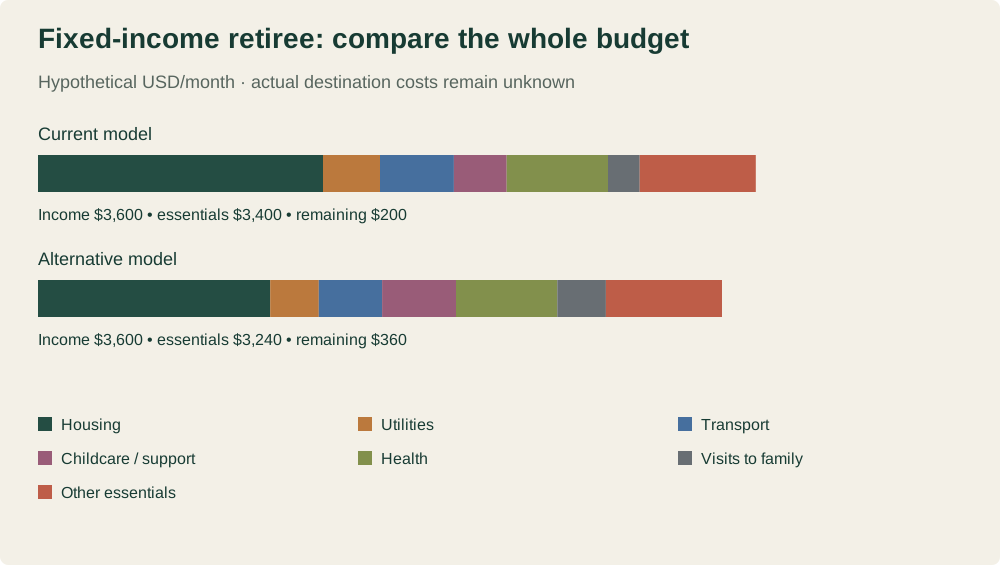
Read the values as a table
| USD/month | Current model | Alternative model |
|---|---|---|
| Housing | 1350 | 1100 |
| Utilities | 270 | 230 |
| Transport | 350 | 300 |
| Childcare / support | 250 | 350 |
| Health | 480 | 480 |
| Visits to family | 150 | 230 |
| Other essentials | 550 | 550 |
| Take-home income | 3600 | 3600 |
| Essential total | 3400 | 3240 |
| Remaining | 200 | 360 |
For a retiree, the useful saving must survive ordinary healthcare and transport needs. A smaller house can reduce maintenance but still be poorly located for independent living. A warmer place can introduce cooling, insurance or travel costs. A fixed income makes the recurring pattern particularly important; a move should not be justified solely by the first year's apparent saving.
Allow for the cost of getting there
Separate moving, packing, deposits, overlap between homes, travel, temporary accommodation, storage, utility setup, licensing and administrative costs. Some are certain; others remain estimates. Write a range for unresolved items instead of selecting an attractive low number. A deposit may be refundable eventually but still creates a cash requirement at the time of the move.
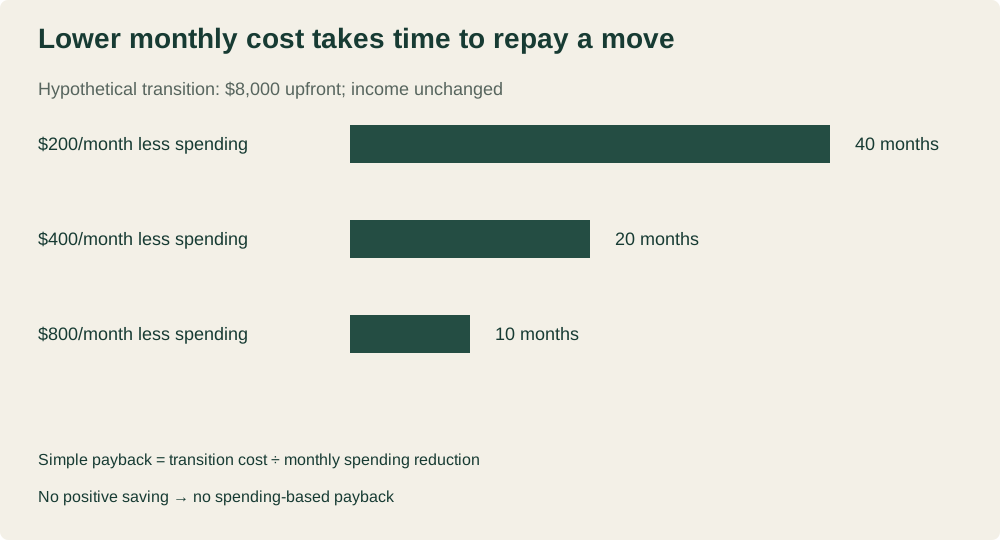
Read the values as a table
| Transition USD | Monthly saving USD | Simple payback months |
|---|---|---|
| 8000 | 200 | 40 |
| 8000 | 400 | 20 |
| 8000 | 800 | 10 |
If a model saves $400 each month after all recurring costs and requires $8,000 of nonrecoverable transition spending, simple recovery takes twenty months. That is arithmetic, not a forecast: the inputs may change, a deposit is not necessarily a permanent expense, and a job interruption can alter the result. When monthly cost increases, there is no savings break-even point. The move may still serve another objective, but the budget should state that honestly.
Set a reserve that reflects your uncertainty. Someone with a signed job offer and a confirmed home has a different transition from someone moving before either is secure. Do not use every available dollar to complete the move and leave no capacity to handle a delayed start, repair or return journey. The amount is personal; the worksheet asks you to choose and protect it rather than suggesting that one universal reserve fits everyone.
| Exact Census geography | Median monthly gross rent ± MOE | Median annual household income ± MOE |
|---|---|---|
| Poughkeepsie, NY | $1,400 ± $100 | $60,741 ± $5,784 |
| Beacon, NY | $1,658 ± $145 | $107,859 ± $21,401 |
| Fishkill, NY | $2,300 ± $196 | $97,045 ± $13,456 |
| Wappingers Falls, NY | $1,538 ± $151 | $65,040 ± $29,226 |
| Hopewell Junction, NY | $1,565 ± $296 | $111,296 ± $64,217 |
| Rhinebeck, NY | $1,655 ± $110 | $70,496 ± $10,298 |
| Red Hook, NY | $1,386 ± $237 | $107,411 ± $23,750 |
| Hyde Park, NY | $987 ± $253 | $86,250 ± $42,667 |
| Kingston, NY | $1,469 ± $91 | $68,186 ± $4,865 |
| New Paltz, NY | $1,672 ± $108 | $52,774 ± $20,626 |
| Highland, NY | $1,483 ± $169 | $101,917 ± $28,730 |
| Hudson, NY | $1,343 ± $138 | $54,139 ± $10,984 |
| Albany, NY | $1,216 ± $37 | $61,986 ± $2,652 |
| Saratoga Springs, NY | $1,470 ± $85 | $105,944 ± $8,538 |
| Northampton, MA | $1,439 ± $75 | $80,288 ± $6,084 |
| Boston, MA | $2,147 ± $25 | $97,344 ± $1,837 |
| Pittsburgh, PA | $1,261 ± $27 | $65,742 ± $1,484 |
| Richmond, VA | $1,372 ± $20 | $64,587 ± $1,911 |
| Raleigh, NC | $1,572 ± $23 | $85,395 ± $2,159 |
| Wilmington, NC | $1,395 ± $37 | $66,738 ± $2,914 |
| Orlando, FL | $1,747 ± $20 | $72,336 ± $2,211 |
| Burlington, VT | $1,649 ± $53 | $71,109 ± $4,193 |
| Denver, CO | $1,831 ± $17 | $94,718 ± $1,644 |
The ACS table is useful for generating questions. It does not replace a housing search. If two estimates are close relative to their margins of error, do not turn the difference into a confident affordability ranking. If you need a particular bedroom count, lease type or accessible home, investigate that segment directly. A broad median cannot tell you whether the housing you need is available.
Choose around work and education
Start with what must remain true about work. An employer's verbal enthusiasm for remote work is different from approval to work permanently in another state or country. Ask about permitted location, pay adjustment, payroll, required office visits, equipment, benefits and what happens if the arrangement changes. A move planned around remote work should include a fallback if the policy or job ends.

A job offer is more useful than a city reputation
If you are changing employment, compare a real offer with the full future budget. Review base pay, variable pay, working hours, shift pattern, benefits, leave, commute and start date. A higher salary can lose its advantage after housing, childcare or transport. A lower salary may be workable with lower recurring cost, but do not assume that the difference will work out without calculating it.
Use occupational wage data to identify questions and a plausible market range. BLS publishes occupational estimates for metropolitan and nonmetropolitan areas; those areas are not necessarily the municipal boundaries used in the housing table. Keep the geography visible. Vacancies on employer sites show specific opportunities at a point in time. Neither wage statistics nor a vacancy list guarantees employment. BLS occupational area data.
Different professions change the comparison
Healthcare workers should investigate the employer, shift locations, credential requirements and the commute when ordinary rush-hour assumptions do not apply. Teachers should examine certification, hiring and the school or district where they would actually work. Skilled trades may depend on licensing, tools, a vehicle and a practical service radius. Creative work may depend on clients, venues, workspace and transport rather than on a citywide arts reputation.

Office, technology and other knowledge work may offer remote or hybrid options, but those are employer-specific. Work tied to a facility, customer site, laboratory or production location needs an address-based commute. Self-employment needs a client and operating-cost assessment. Separate the ability to live somewhere from the ability to continue earning there under the particular legal and business arrangements that apply to you.
For regulated work, contact the licensing authority for the destination before treating qualifications as portable. The authority may need documents, examinations or a process that affects the starting date. Rules differ by profession and jurisdiction. An existing New York license is valuable evidence of training but does not, by itself, settle permission to practice elsewhere. New York professional licensing.
Two working adults need two workable plans
A move built around one adult's promotion can create an employment loss for another. Compare both work arrangements and the household total. Ask whether the second adult has local opportunities, approved remote work, training needs or a planned period away from paid work. Include their commute and the way both schedules interact with children or caring responsibilities. The move becomes a household decision when its effects are shared.
Student, graduate and adult learner are different situations
A full-time student needs admission, a funded plan, housing and access during the academic calendar. A graduate seeking a first job needs a wider search and a sustainable period before employment. An adult changing career may need part-time study around work and family. These can lead to different places even when all three people are the same age.

Compare the complete program: admission requirements, total cost, schedule, location, practical placements and the qualification it leads to. Investigate outcomes through the institution and relevant official education sources. A city with many colleges is not automatically the right place for a particular course. If the profession requires licensing, make sure the training supports that route. College Scorecard.
For students moving internationally, admission, student status, permission to work, family rights and later employment are separate questions. A course offer does not make every other part of the move available. Build the timeline from the actual program and official conditions. Keep current limits and costs linked to their owners rather than relying on stories from someone who moved under earlier rules.
Make internet and workspace part of the housing search
Check service for the exact address, then confirm installation and realistic performance with the provider. An area map is a starting point; the building may have a different connection or access requirement. Test mobile coverage and any backup arrangement you will actually use. The FCC map reports availability information and provides a challenge process, but reported availability is not a guarantee of the performance of your future connection. FCC National Broadband Map.
Workspace also matters. Consider noise, privacy, ventilation, temperature and the hours other household members use the home. A larger home can support work better, but a secluded location can make necessary meetings or customer visits harder. Include the total pattern. For an international remote move, obtain employer approval and verify immigration and tax arrangements before converting the appealing lifestyle into a commitment.
Choose around your household
A household is a set of people with intersecting schedules, needs and preferences. Age is useful context, but it does not tell you whether someone drives, works, studies, provides care or wants a quieter life. Begin with those functions. An energetic older adult, a student caring for a parent and a young family with a child needing specialist support can require very different homes and routes.

Families with preschool children
Investigate childcare before treating a job or rental as workable. Ask about available places for the child's age, actual opening hours, fees, closures, start dates and the process for enrollment. The central issue is whether care covers the adult's real working day, including transport. A center convenient for one parent's office may create an impossible collection trip for the other.
Compare the loss or preservation of informal help. Family support is valuable only when the relative can realistically provide it. Discuss frequency, notice and backup rather than relying on an assumption. If moving away removes that support, list the replacement cost and the schedule consequences. If moving nearer relatives increases support, make sure the expectation is welcome and sustainable for them.
The home should also support the daily routine: a safe way to reach childcare, practical storage, manageable stairs and places for ordinary activity. You can prioritize these without assuming that every young family wants a detached house. A suitable apartment close to work and services may solve more problems than a larger home that makes every task a drive.
School-age children and teenagers
Start with the child's current program and the next educational transition. Confirm district assignment for the actual address. Ask the receiving school about enrollment, relevant courses, support services and the timing of a transfer. If a child uses special education or language support, investigate the applicable process and the actual provision. A broad school score does not establish that a particular program will meet their needs.
Teenagers may value continuity in a course, activity or peer group that is not obvious in an adult housing comparison. Include them in the practical research where appropriate. Find out how they would travel to school, work, friends or activities as they become more independent. A place comfortable for adults with cars can provide limited independence for a teenager.
Keep claims about "better schools" specific. Official education data describe particular outcomes and periods; they do not substitute for the program, enrollment and experience relevant to your child. Compare like with like, and retain missing information as a question. In New York, use the state education data site alongside the receiving district's current information. NYSED data.
One parent, one income and shared parenting
A single-parent household needs a dependable combination of income, care and transport. Include the cost of occasional help and the time needed when a child is ill. Test the route under a late finish or missed connection, not just under the best working day. A smaller support network can make reliability more valuable than a small reduction in rent.
If parenting responsibilities are shared across households, the proposed location may affect existing agreements and travel. Establish the requirements applicable to your own arrangement before committing to an address or schedule. The guide cannot decide consent or legal terms from a household label. What it can do is make the unresolved question visible early, before money is spent on a plan that may not be feasible.
Several generations under one roof
Discuss who needs private space, who can use stairs, who drives and who provides care. Extra bedrooms alone do not create an appropriate multigenerational home. Entry, bathroom layout, circulation, heating and cooling, quiet work space and access to services all matter. Look for practical compatibility rather than treating everyone as an interchangeable occupant.

Agree on the financial arrangement and the exit plan. Which expenses are shared? Who owns or leases the home? What happens if a person moves out, becomes unable to work or needs more care? A move can improve family access and reduce duplicated spending, but those benefits need clear expectations. Write them before choosing a home around an arrangement nobody has fully discussed.
Accessibility is an address-level question
Inspect the whole route from arrival to ordinary use: entrance, door openings, thresholds, bathroom, bedroom, laundry and exit. Check access to groceries, healthcare and transport with the person's actual mobility. A photograph showing a level front door does not prove that the bathroom or daily journey is usable. An accessible vehicle arrangement also needs availability, booking and the ability to complete the trip when required.
Include changing needs in the horizon. A home that works today may become difficult over the period you expect to live there. This does not require predicting every possible event. It means asking which adaptations are feasible and which services would be available if needed. Retaining choice can be more useful than maximizing floor area.
Build a life when you move alone
Moving alone can give you flexibility, but it also concentrates cost and responsibility. There may be no second income to absorb a repair and no other household member to collect a delivery or help when you are ill. Include those arrangements in the decision. Independence is easier to maintain when the routine is deliberately supported.

Choose recurring contact, not a promise of instant community
Look for activities you would attend repeatedly: a library program, sport, class, volunteering, a professional group or a community garden. Confirm the schedule and how you would get there. A calendar full of events is less useful if all of them conflict with work or require transport you will not have. Two dependable weekly activities can be a stronger start than a long list of attractions.
Visit one ordinary session before making a commitment where practical. Observe whether the activity fits your interests and whether it is welcoming in the way you need. You are investigating an opportunity, not predicting that the move will create friendships automatically. Give yourself a plan for repeated participation and a realistic period to build connections.
Safety questions need a route and a time
Think about the trips you will make after dark, when tired or while carrying groceries. Inspect lighting, crossings, stop access, building entry and the availability of a backup trip. Official incident data can add context when coverage and definitions are clear, but a citywide rate does not certify a specific route as safe. A lack of reported incidents is not proof that every resident has the same experience.
Men and women moving alone may have different personal concerns or experiences. Ask which situations matter to the person instead of assigning a preference from gender. The same practical investigation can serve many readers: return from a late shift, reach an activity, enter the building and obtain help if a plan changes. More specific information belongs in the comparison when there is evidence for the question being asked.
Language, identity and belonging
Identify the services and connections you want to use: a language class, a cultural organization, a place of worship, a professional association or an activity where you feel comfortable. Verify that they exist, operate currently and are accessible from the prospective home. Do not choose an area solely because a broad demographic label seems to resemble you.
Nationality matters directly for immigration, documents and sometimes recognition of qualifications. Language matters for work and everyday administration. Cultural ties may matter personally. These are separate dimensions, and you can choose how much weight each receives. Someone may want familiar-language support at first while also wanting to build a wider network. Another person may prioritize a particular career or landscape and accept a longer adjustment.
A new chapter still needs continuity
After a separation, bereavement, graduation or a difficult period, a change of place can be appealing. Preserve a few dependable routines during the transition: regular contact with existing friends, exercise, healthcare and a sustainable work pattern. Decide what the move can realistically improve and which needs require additional support regardless of location.
Use the first ninety days as a practical plan. Identify essential services before arrival, establish one or two repeating activities in the first month, and review the budget and transport after a full working cycle. A trial lease or staged move can protect flexibility when uncertainty is high. Keep the return or alternative plan available until the new arrangement has demonstrated that it works.
Downsize or plan your next stage
Downsizing is not simply moving to fewer rooms. It changes what you maintain, store and do every day. Begin with the activities and relationships you want to preserve. A smaller home can reduce work while a poorly located smaller home can reduce independence. The comparison should include access, services, operating cost and the frequency of travel to people you want nearby.

An empty nest may change the home before the region
If children have moved out, consider whether unused space is the main burden. A nearby smaller home can preserve friends, work, doctors and familiar routes. A distant move may be attractive if it brings you closer to adult children or a desired environment. Put both versions on paper so that the benefit of downsizing is distinguishable from the benefit of changing region.
Discuss visits realistically. Living near family is different from expecting them to provide frequent care or company. Ask about their schedules and likely moves. If relatives live in several places, a transport base that supports visits may be more useful than proximity to only one person. Include guest arrangements, travel cost and whether you would still enjoy the destination if family circumstances changed.
Retirement does not describe one lifestyle
Some retirees continue paid work, volunteer extensively or travel. Others need frequent medical appointments, step-free housing or help with daily tasks. Investigate the routine you want and can sustain. Fixed income makes reliable recurring costs important, while healthcare and transport needs can narrow the feasible addresses.
Confirm provider availability and coverage under your own insurance arrangement. A hospital near the city center does not establish access to the specialist, primary care or appointment schedule you require. Use provider information and official comparison tools to investigate services, then verify the relevant network and enrollment rules. Medicare Care Compare.
Plan for independent transport
Ask how the routine works if driving becomes less convenient. A bus, paratransit or community transport option needs to serve the actual trip and the person must meet any applicable conditions. Establish booking, service area and timing rather than assuming that the presence of a program removes the problem. Groceries, social activities and appointments all deserve a route.
For housing, inspect entrance, bathroom, laundry and the place you would sleep. Check who maintains exterior areas, how snow or heat is managed and which costs you control. An attractive development may have fees or rules that change its suitability. Request current terms for the specific property; the general reputation of a place cannot settle them.
Make the belongings decision before the load decision
Measure the new home and decide what fits your future routine. Sort possessions by use, importance and destination. Allow time for selling, donating or disposing of items under the rules and availability that apply. Do not assume that moving everything into storage is the cheapest way to postpone decisions; compare storage cost, handling and the likelihood that the items will be used.
Keep a clearly described inventory for the moving estimate. If you need help with packing or temporary storage, discuss the specific work. A downsizing guide can explain choices without promising that a moving company will organize every part of a household's life. For practical preparation, use packing services and moving storage where relevant.
Mountains, ocean, woods, fields — and the climate between them
A landscape preference becomes useful when you describe how often you want to use it. Someone wanting an evening walk needs nearby access, while someone wanting occasional hiking can tolerate a longer journey. An ocean view, a public beach and a route to the coast are different benefits. Open fields may give space and quiet while increasing the travel needed for work, groceries and care.

Mountains and hills
New Paltz and the wider regional comparison let you investigate outdoor priorities while preserving some Hudson Valley connections. Burlington and Denver test more substantial changes. Keep the practical distinction between living in a city associated with mountains and living beside an accessible trail. Identify the exact place you would use, its operating conditions, parking or transport, and how often the journey fits your week.
Terrain also affects housing and movement. Hills can complicate a pedestrian route, a winter trip or access for someone with limited mobility. Inspect the gradient between the actual home and the destinations you need. A map distance can conceal an uphill walk that changes the usefulness of a transit stop. Local outdoor access should be tested with the people who will use it.
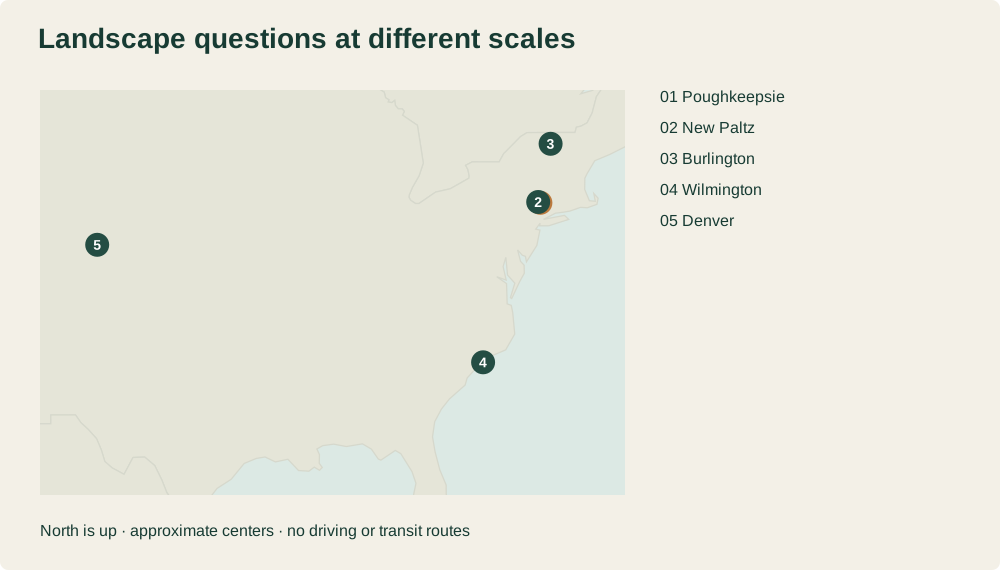
Read the values as a table
| Marker | Place | Latitude | Longitude |
|---|---|---|---|
| 1 | Poughkeepsie | 41.7058 | -73.9283 |
| 2 | New Paltz | 41.7476 | -74.0868 |
| 3 | Burlington | 44.4761 | -73.2131 |
| 4 | Wilmington | 34.2257 | -77.9447 |
| 5 | Denver | 39.74 | -104.99 |
Ocean and other water access
Wilmington provides a different coastal-region question from an inland warm-weather move to Orlando. Porto offers a separate international Atlantic-region question. In each case, inspect how you would reach the water and whether the activity you want is actually available. A city may be near a coast while an affordable home lies farther from the access point you intend to use.
Lake access in Burlington and river access in Hudson Valley places are distinct from living near the ocean. Compare the actual activity: a walk, kayaking, swimming where permitted, fishing, boating or simply a view. Public access, season, maintenance and rules matter. Avoid using a scenic photograph as evidence that an everyday activity is easy, permitted or accessible to your household.
Woods and open country
A rural or wooded setting can improve privacy and outdoor time, but investigate road access, services, internet and maintenance. For a particular property, determine whether water, waste, heating or other systems create responsibilities different from your current home. Open land may be beautiful without being land you can enter. Establish access and ownership rather than treating surrounding scenery as a public amenity.
Compare isolation at the times you will experience it. A quiet weekend visit can feel different during a working week, bad weather or a period without a car. Plan deliveries, waste collection, help and emergency access for the real address. Space is a benefit when the household can use and maintain it; it is a burden when it makes necessary tasks harder.
Choose seasons, not an annual adjective
"Warmer" can mean less winter cold, fewer icy trips, a longer gardening season or a need for more summer cooling. "Cooler" can mean relief from summer heat while retaining a winter you need to manage. Compare monthly conditions using climate normals for relevant stations, then investigate extremes and local exposure separately. Climate normals summarize a historical period; they are not a forecast for your next year.
The chart below uses NOAA 1991–2020 monthly mean temperature normals at the Poughkeepsie / Dutchess County, Orlando International, Burlington International and Denver International airport stations. It compares historical station observations; it does not forecast neighborhood conditions or measure humidity, daily extremes or property exposure. Different households experience the same weather differently depending on housing, work, health, transport and outdoor activities. Test the home in the season you find most demanding when possible. If you visit only in your favorite season, you have tested the appealing part of the year.
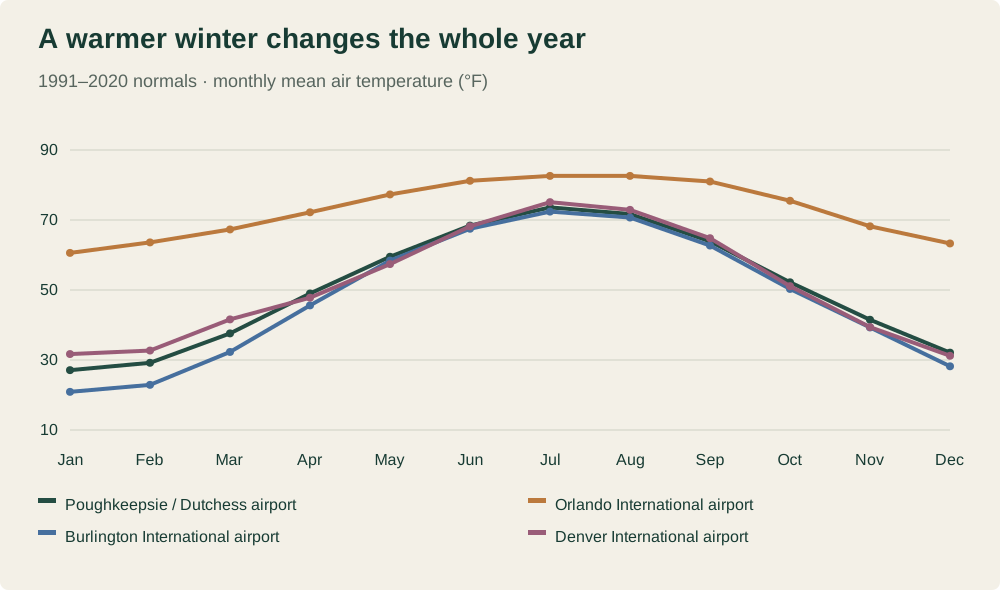
Read the values as a table
| Month | Poughkeepsie / Dutchess airport | Orlando International airport | Burlington International airport | Denver International airport |
|---|---|---|---|---|
| Jan | 27.1 | 60.6 | 20.9 | 31.7 |
| Feb | 29.2 | 63.6 | 22.9 | 32.7 |
| Mar | 37.6 | 67.3 | 32.3 | 41.6 |
| Apr | 49.0 | 72.2 | 45.6 | 47.8 |
| May | 59.5 | 77.3 | 58.4 | 57.4 |
| Jun | 68.4 | 81.2 | 67.5 | 68.2 |
| Jul | 73.6 | 82.6 | 72.4 | 75.1 |
| Aug | 71.7 | 82.6 | 70.7 | 72.9 |
| Sep | 63.9 | 81.0 | 62.7 | 64.8 |
| Oct | 52.2 | 75.5 | 50.3 | 51.1 |
| Nov | 41.5 | 68.2 | 39.3 | 39.4 |
| Dec | 32.1 | 63.3 | 28.2 | 31.2 |
Risk belongs beside the lifestyle benefit
Investigate flood exposure for the property, current insurance terms and the hazards relevant to its location. Coastal, inland, river-adjacent and mountain settings have different questions. Do not substitute a general city label for an address-level risk review. A home can offer the landscape you want and still be unsuitable because of its exposure or the cost of managing it. FEMA Flood Map Service Center.
Include the time and money required to use the landscape. Trail travel, parking, equipment, seasonal closures or a vehicle may change the comparison. If the goal is more ordinary outdoor time, a reliable nearby park can serve you better than a famous destination you rarely reach. Rank the activities you will repeat, then select places around that pattern.
Could another country fit your plans?
An international move changes the legal and administrative basis of your life as well as its geography. Start with permission to reside and work, then investigate income, housing, healthcare, family rights, tax obligations and the cost of returning to people in the United States. A destination that is appealing for a visit may not offer a suitable residence or work route for your circumstances.
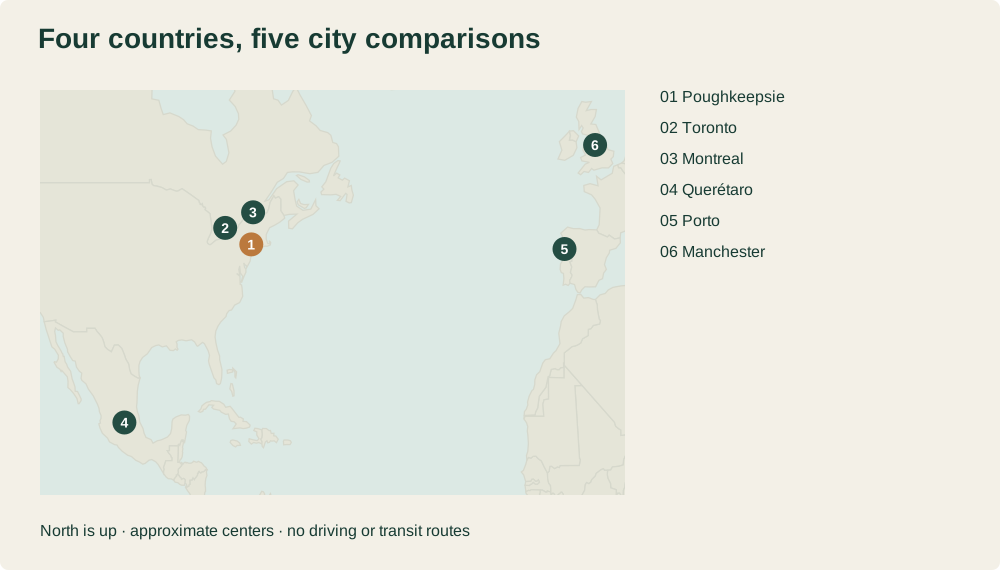
Read the values as a table
| Marker | Place | Latitude | Longitude |
|---|---|---|---|
| 1 | Poughkeepsie | 41.7058 | -73.9283 |
| 2 | Toronto | 43.6525 | -79.3817 |
| 3 | Montreal | 45.5019 | -73.5674 |
| 4 | Querétaro | 20.5888 | -100.3899 |
| 5 | Porto | 41.15 | -8.6108 |
| 6 | Manchester | 53.4794 | -2.2453 |
Canada receives a closer comparison because it is a distinct cross-border option in this guide. Toronto and Montréal create different language, housing and daily-life questions. Mexico, Portugal and the United Kingdom provide three additional research directions. They are not presented as equally easy moves or as countries that will admit every Poughkeepsie resident.
Citizenship and status come before lifestyle assumptions
Identify the citizenship and current immigration status of each household member. Investigate the route applicable to that person rather than assuming that living in the United States creates the same rights for everyone. Visitor entry, residence, employment, self-employment and remote work are separate issues. Rules can change, and an account of someone else's move may describe an earlier program or a different passport.
For Canada, use the federal immigration and work-permit information, and investigate Quebec-specific conditions when relevant. A job offer and a particular permit route have requirements; a city comparison cannot confirm eligibility. For the United Kingdom, the Skilled Worker route depends on an eligible job and approved employer, with additional conditions described by the government. Work in Canada, UK Skilled Worker route.
Portugal's immigration authority distinguishes forms of residence and work, including a route concerning remote activity for an entity outside Portugal. The existence of that route is not approval for your case or for an employer's payroll arrangement. In Mexico, use the responsible consulate and immigration authority for the route and documentation applicable to your residence and citizenship. Current requirements should be confirmed with the authority handling the application. AIMA work information, Mexican consular information.
Build an international budget in its own currency
Record local rent and recurring expenses in the currency in which they are paid. State the exchange-rate date when converting for comparison. Include fees, currency conversion, return journeys, temporary accommodation, document preparation and the time needed to establish services. A favorable conversion on one day does not guarantee the same future spending pattern.
Check tax and reporting obligations for your status with the relevant authorities and suitable professional advice when needed. US citizens and resident aliens may have US obligations while abroad; destination-country rules also need investigation. Do not infer a tax outcome from a residence label or a social-media description of a low-cost destination. IRS information for US citizens and resident aliens abroad.
Work, education and healthcare remain separate checks
An employer must approve the international work arrangement. A professional qualification may need recognition. A student needs the actual program and applicable status. A partner's or child's rights may differ from those of the principal applicant. Establish each part before committing the household to a timetable.
Determine when healthcare coverage begins, what you must arrange during any gap, and how ongoing prescriptions or specialist care will be handled. Public healthcare eligibility is not established by visiting a country or renting a home. Ask about the particular services and conditions relevant to the person. For children, include education language, enrollment and support; for older relatives, include care and accessible transport.
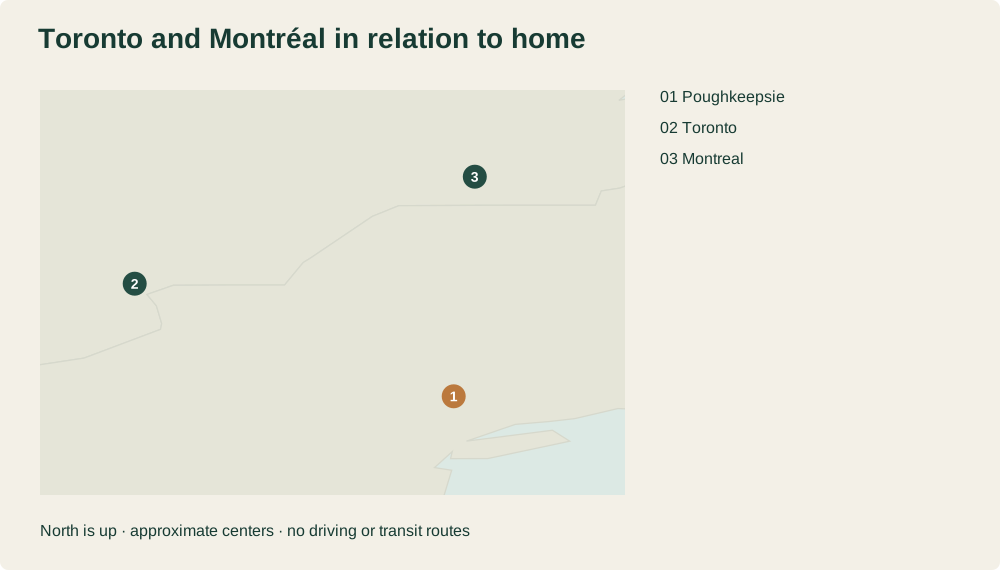
Read the values as a table
| Marker | Place | Latitude | Longitude |
|---|---|---|---|
| 1 | Poughkeepsie | 41.7058 | -73.9283 |
| 2 | Toronto | 43.6525 | -79.3817 |
| 3 | Montreal | 45.5019 | -73.5674 |
Toronto

.jpg)
Toronto is a Canadian metropolitan comparison for someone with a feasible immigration and work or study route. It can be useful when you want a larger employment, education or transit environment while investigating a cross-border rather than an overseas move. It is not a substitute for confirming eligibility, and it is not included as a promise of lower housing cost.
Begin with the status of every household member. Use Canada's official immigration and work information to establish the route, required documents and conditions. A job offer, admission or visitor entry answers only part of the question. A partner's work, a child's schooling and the timetable for healthcare need their own checks. US residence does not mean that every reader has the same passport or eligibility.
Choose housing around the actual job or institution and the transport you will use. Toronto and surrounding municipalities should be distinguished in the budget and administrative questions. TTC information is a starting point for city transport; journeys beyond the network or across regional fare arrangements require their own research. Inspect station access, transfers, evening travel and accessibility from the address.
Keep Canadian-dollar costs in a Canadian-dollar budget. If comparing against US income or savings, state the conversion date and include currency fees, return journeys and the uncertainty of future rates. Use current suitable listings and the actual work arrangement. The US ACS table deliberately does not mix Toronto into a ranking based on incompatible housing statistics.
The compromise can be a large-city budget, status administration and the time and cost of retaining Poughkeepsie connections. A different professional environment may justify those costs for a particular offer. A move mainly motivated by warmer weather needs a different climate comparison and should not assume that crossing the border solves it.
Before committing, confirm the legal route, employment or program, housing terms and the essential household services. Visit a likely home area and run an ordinary weekday. Include the real journey back to people in the United States. Keep Toronto when the cross-border arrangement is feasible and the metropolitan opportunity clearly serves your next stage. TTC, Canadian immigration information.
Montréal


Montréal is a distinct Canadian comparison rather than a second Toronto entry. It asks whether a Quebec urban setting, its language environment and a particular work or educational opportunity fit your household. The decision should include the language you will need for the role, administrative tasks and the programs your family will use.
Investigate the applicable federal and Quebec conditions for your route. Do not infer residence or work rights from a short visit or from someone else's experience. Establish the status, documents and timetable for each household member. If the move involves a profession, confirm recognition and any relevant language or licensing requirements with the actual authority.
Select a home in relation to the job, program and everyday services. STM provides official information on Montréal's metro and bus services. Check the specific journey and any relevant regional fare or connection conditions. A home convenient for one person may make another household member's school, care or work route difficult; include both in the rehearsal.
Build a Canadian-dollar budget using current housing and the services you need. Keep it separate from the US occupied-rent table. Include transitional expenses, return journeys, winter management and any period before work or healthcare arrangements are established. Language learning or additional professional preparation can also affect the time and financial plan.
The compromise is that cultural and urban appeal does not settle eligibility, employment or the adjustment your household will make. Some readers will welcome a different language environment; others need particular support immediately. Ask about those needs directly rather than selecting Montréal by nationality or assuming that all English-speaking newcomers share one experience.
Use a visit to rehearse an ordinary weekday and investigate a program, service or recurring activity you would actually use. Confirm the difficult parts in advance: status, employment, language, housing and healthcare. Montréal belongs on the shortlist when those conditions support the specific change you want and the whole household can function through the transition. STM, Quebec immigration.
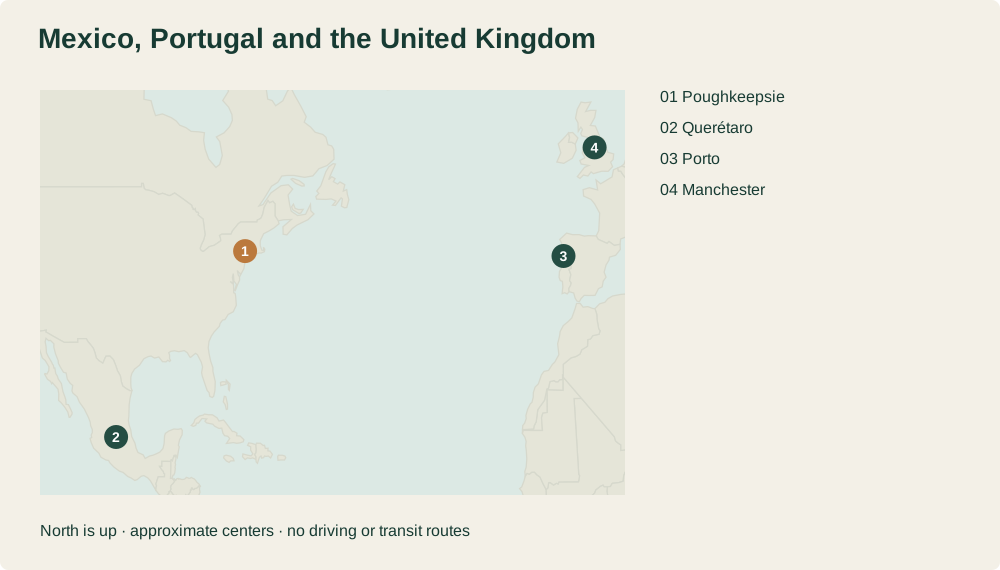
Read the values as a table
| Marker | Place | Latitude | Longitude |
|---|---|---|---|
| 1 | Poughkeepsie | 41.7058 | -73.9283 |
| 2 | Querétaro | 20.5888 | -100.3899 |
| 3 | Porto | 41.15 | -8.6108 |
| 4 | Manchester | 53.4794 | -2.2453 |
Querétaro, Mexico


Querétaro introduces an inland Mexican-city question rather than a general claim that moving to Mexico means inexpensive beach life. It can be a research direction for someone considering a different language environment, household budget or connection to the Americas. The actual city, legal route and income arrangement must be evaluated together.
Start with the responsible Mexican consulate and immigration authority. Investigate the residence route applicable to your citizenship, current residence and intended activity. Financial documentation, employment and family conditions depend on the route; current amounts and required evidence must come from the office handling the application. A visitor stay is not a general authorization to settle or work.
If you intend to retain remote income, obtain employer approval and investigate the relevant immigration, payroll and tax arrangements. If you need local employment, use a concrete employer and permission-to-work route. Compare costs in Mexican pesos and show a dated exchange conversion only when needed. Do not treat a favorable conversion as guaranteed future savings.
Research the specific neighborhood and services: housing terms, internet, medical care, schooling where relevant and the transport needed for ordinary tasks. Spanish-language needs should be investigated for actual work and administration. Identify useful support without assuming that an expatriate community replaces integration into the services you will use.
The compromise can be legal and administrative uncertainty, rebuilding support, language adjustment and return-travel cost. A climate preference must be checked for Querétaro itself rather than inferred from the country's name. Current property and neighborhood evidence is necessary; a historic-center photograph does not establish the living conditions at a prospective home.
Keep this option only after the residence and income route is feasible. Then make a visit centered on a normal working week, healthcare and the home area. The guide does not offer Sterling Oakbridge shipping to Mexico. Mexican consulate in New York.
Porto, Portugal


Porto tests a Portuguese urban and Atlantic-region idea for someone considering an international change supported by a feasible residence and income arrangement. It is not included as a promise of a particular tax benefit, affordable home or permission to work. The legal and employer arrangements must be resolved before the lifestyle comparison can become a commitment.
AIMA publishes residence and work information, including a route concerning remote professional activity for an entity outside Portugal. Investigate the current conditions and the route appropriate to your case. Its existence does not establish approval for you or agreement from an employer. A household must also resolve each member's rights and the practical timetable.
Choose housing in relation to work, services and the daily geography you want. Porto and surrounding municipalities should not be treated as one administrative address. Metro do Porto provides a starting point for transport research. Check the actual route, stop access, gradients and the return journey. An attractive old street or view can conceal access difficulties for a person with limited mobility.
Build the budget in euros. Use current suitable housing, utilities, healthcare arrangements, document costs and regular travel to the United States. Confirm address-level internet and the hours required by your work. A remote role tied to US business hours can change the daily lifestyle you thought you were selecting.
The compromise may include language learning, administrative timing, property access and a long journey back to existing family support. If ocean access motivates the move, identify the real place and activity you would use instead of assuming that every Porto home provides the same coastal routine.
Before deciding, confirm the residence route and income arrangement, then rehearse an ordinary workday from a likely home. Investigate healthcare and the difficult season or access question relevant to you. Overseas shipment is outside Sterling Oakbridge's confirmed US/Canada geography. AIMA, Metro do Porto.
Manchester, United Kingdom


Manchester is an English-language international comparison for someone investigating a concrete UK job, course or other feasible residence route. It provides a different question from a climate-led or low-cost remote move. Sharing a language with many US workplaces does not remove the need for immigration, qualification, housing and household checks.
For a Skilled Worker application, the UK government describes an eligible job with an approved employer and additional requirements. Establish the actual offer and route before treating the city as an employment plan. A student needs the relevant program and status conditions instead. A partner's or child's rights, costs and timetable require their own research.
Choose a home around the employer or institution. Manchester and the wider Greater Manchester area contain different municipal and housing arrangements. The Bee Network information from Transport for Greater Manchester is a starting point for buses, trams and other connections. Check the actual route, operating hours, transfers and current works rather than assuming that every address is equally connected.
Use a pounds-sterling budget with current housing terms, transport, utilities, the applicable immigration costs and healthcare arrangements. If comparing with US income, state the exchange date. For a professional role, confirm qualification recognition and the real compensation; English fluency alone does not establish permission or eligibility to practice.
The compromise is a different administrative system and a substantial return journey to Poughkeepsie, with the financial and emotional cost of less frequent visits. Weather should be assessed by the conditions you find difficult, not by assuming that a move overseas automatically gives a preferable climate.
Keep Manchester when the particular work, education or residence route is feasible and the resulting routine serves your household. Rehearse a weekday from a candidate home and inspect the required services. This is an informational comparison, not a Sterling Oakbridge UK shipping offer. UK Skilled Worker information, Bee Network.
Separate choosing a country from shipping belongings
Decide what you actually need to take once the residence and housing plan is feasible. Compare replacement, storage, sale and shipment with the destination's customs and receiving arrangements. An international housing choice is not proof that any particular carrier can handle the route or item. Obtain a route-specific scope before treating transport as settled.
Sterling Oakbridge's confirmed long-distance geography is the United States and Canada. The Mexico, Portugal and United Kingdom discussions are information for choosing a future home; they do not promise Sterling Oakbridge shipping services to those countries. For a US or Canadian move, discuss the actual origin, destination, inventory and access with the planning team.
Test the place before committing
A useful visit is a rehearsal for your ordinary week. Choose the prospective home area, the place of work or study and the services you need. Make the journeys at the hours you expect to use them. A weekend in the most attractive part of a city can tell you whether you enjoy visiting; it cannot by itself establish whether your daily routine works.
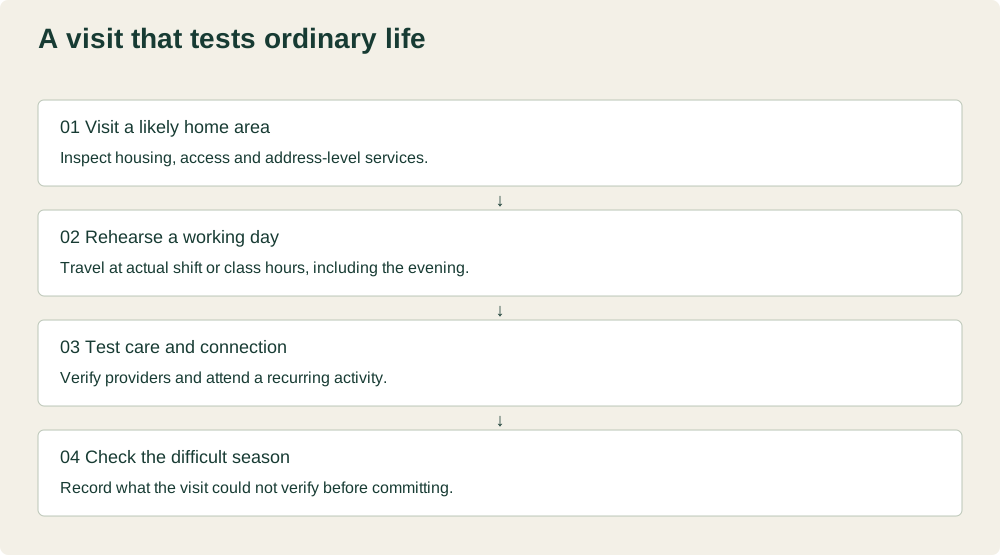
A practical three-day research visit
On the first day, investigate housing and the arrival route. Walk the approach to the building, inspect the interior, ask about costs and terms, and identify groceries and essential services. Record facts separately from impressions. An impression can be important, but it should not silently become a claim about every neighborhood in the city.
On the second day, run a working-day schedule. Travel to the actual or likely work location, investigate childcare or school where relevant, and make the return journey. Test a necessary evening trip. If you plan to be car-free, carry out the research without relying on a car for the difficult part. If you will drive, investigate parking and the route under realistic conditions.
On the third day, investigate the life you want to add. Attend an ordinary activity if access permits, use the park or trail you expect to visit, and look at the practical arrangements for seeing family. Then review the budget and identify which information is still missing. A successful visit can leave some questions open; the point is to know what they are before you commit.
Questions for a landlord or property manager
- What is the current total required at move-in, and which amounts are refundable?
- Which utilities, parking, pet arrangements and services are included or separate?
- What lease terms, renewal conditions and application documents apply to this home?
- Which repairs or access issues remain, and who handles maintenance?
- What arrangements are required for moving, delivery, elevators and loading?
Questions for an employer or program
- Is the work or admission offer confirmed, with a start date and written conditions?
- Where and when must attendance occur, including shifts or required visits?
- Which location, payroll, benefits or credential conditions change after the move?
- What happens if the arrangement is delayed or no longer available?
- For study, what does the complete program cost and what housing is available during breaks?
Write down reasons to reject a place
A shortlist is stronger when it includes disqualifying evidence. The rent may be manageable while childcare is unavailable. The neighborhood may appeal while the final bus connection fails. A profession may have opportunities while your qualification cannot be used on the proposed timeline. Keep that evidence; it prevents the same unsuitable option from returning simply because its photograph is attractive.
Where practical, repeat an important observation in the difficult season or time of day. You do not need endless trips, but you do need evidence for the part most likely to fail. A rainy commute, a late shift or a cold-weather walk may resolve a question that several pleasant visits cannot. Choose the test around the suspected problem.
Protect reversibility where uncertainty is high
Compare a staged move, temporary housing or an initial rental when they give you meaningful information. Account for their costs and conditions. Decide what you will keep accessible, what you will store and how you could return or choose another place. Reversibility does not remove risk, but a deliberate fallback can keep an uncertain first year from becoming an avoidable crisis.
Turn the shortlist into a move
Choose two to four candidates and one local alternative. For each, write the problem it would solve, the benefit it would preserve, the main compromise, the full recurring budget and the unresolved check. If an option has no clear reason to be on the list, remove it. If an essential condition fails, do not compensate by adding unrelated attractions.
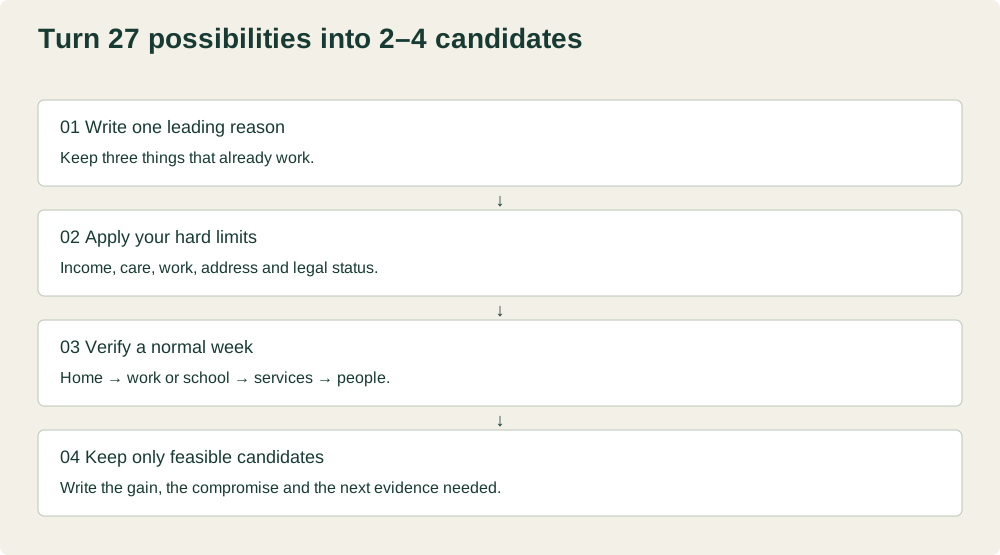
Where to Move — your comparison worksheet
Poughkeepsie origin · date: · household:
What must change?
Three things to keep:
Hard limits / reserve to protect:
| Compare the whole life | Candidate 1 | Candidate 2 | Candidate 3 | Candidate 4 |
|---|---|---|---|---|
| Candidate / exact address | ||||
| Leading benefit | ||||
| Hard limits met? | ||||
| Take-home income / month | ||||
| Essentials / month | ||||
| Remaining / month | ||||
| Transition + reserve | ||||
| Biggest compromise | ||||
| Unknown / source / date | ||||
| Next test / decision date |
Before committing: confirm home, income, essential care, daily routes and any legal status.
Fallback and review date:
The worksheet is available without entering personal information or creating an account. Print it and fill it in privately. It contains space for your priorities, four candidate places, costs, evidence and next actions. Values entered on paper are yours; the guide does not collect them. The print view contains the worksheet rather than printing the entire long article and all its images.
When you are ready to discuss moving
Provide the actual pickup and destination addresses, the inventory, dates, packing needs and access at both ends. Describe stairs, lifts, loading arrangements and any restrictions. A city name alone cannot establish the work. If the home is not ready, discuss storage and handling as a separate practical requirement.
For a nearby change, use Poughkeepsie moving services. For a US or Canadian destination, use long-distance moving from Poughkeepsie. Packing and storage can be discussed where needed. The agreed service scope and actual route determine the estimate; the household budget examples in this article are not moving-company prices.
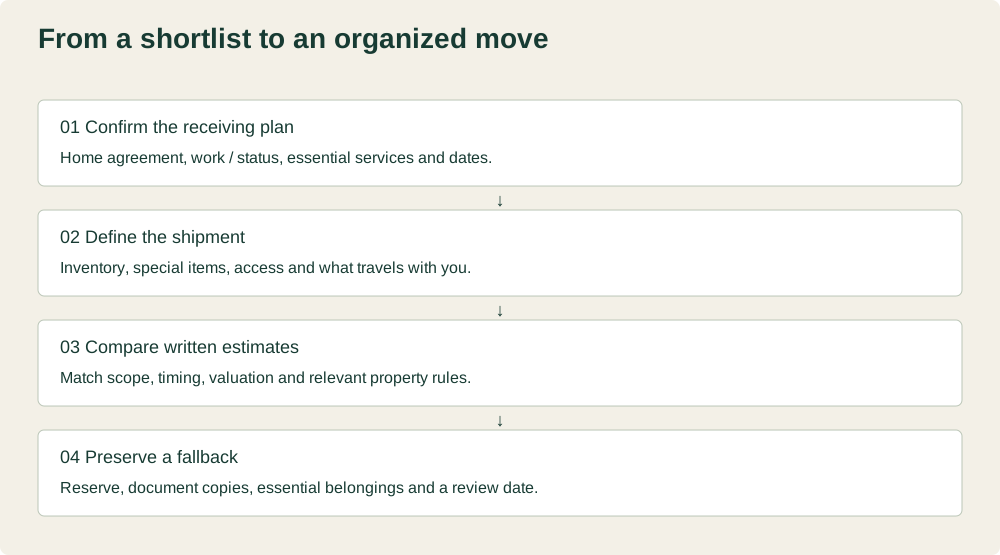
How this guide was assembled
The starting list was chosen to compare distinct life decisions, not to claim that these are the most common destinations of Poughkeepsie residents. Official municipal, transit, education, immigration and statistical sources supply factual starting points. Conditional comparisons explain how those facts affect a particular routine. Licensed documentary photographs show named places; generated lifestyle images are labeled illustrative scenarios.
ACS figures use a consistent release where a matching place is available. They retain their geographic scope and margins of error. IRS migration data concern tax-return address changes and the geography of the published files; Dutchess County information is not relabeled as City of Poughkeepsie information. These data do not, by themselves, tell us why a particular resident moved.
Household model inputs are hypothetical and clearly separated from published statistics. Maps show approximate orientation points, not commuting promises, political boundary certification or a moving-service coverage guarantee. Transit, admission, housing, insurance and immigration decisions need the current conditions attached to the actual person and address.
Sources and photo credits are linked below. The research record includes the date, scope and limitations of each important dataset or resource. Unavailable pages are retained as unavailable in the research package; their existence is not treated as verification of detailed claims. Costs and availability must be rechecked before commitment, even when a source was accessible when this guide was assembled.
Questions readers often ask
Should I leave Poughkeepsie just because another city looks cheaper? Compare the full recurring budget and the cost of transition first. A lower housing payment can be offset by transport, care, insurance or travel. Include a nearby downsizing option so that you can distinguish the benefit of a smaller home from the benefit of a different place.
Can I use the same list if I live in the Town of Poughkeepsie? The comparisons can still help, but your baseline must use your own address, services, school assignment and routine. City and town labels are not interchangeable, and a general postal address does not answer every administrative question.
Which option is best for a young person living alone? Start with work or study, one-income housing cost, transport and the recurring activities you would use. Beacon, a larger city or an education-focused destination can create different opportunities, but none is automatically right because of age. Investigate the actual arrangement that would support your first year.
Can moving improve my salary? A particular offer may improve it; a destination's average does not guarantee that result. Compare the actual pay, benefits, working pattern and future costs. Include the employment effect on any other working adult in the household.
What if my income has fallen? Build the plan on the lower dependable income, not on a hoped-for replacement. Protect essential services and a transition reserve. Investigate local housing changes alongside distant choices and include the cost of replacing any support you would lose.
Are the school comparisons rankings? No. School suitability depends on address assignment, program, enrollment and the child's needs. Official data support questions and context. They do not establish that every family should choose the same district or that a city's name guarantees admission.
Can I move without a car? Possibly, if the necessary weekly journeys work from the actual home. Test employment, groceries, care and evening travel. Transit presence is not the same as a route that fits your schedule. Include a realistic backup for the trips public transport cannot cover.
Is a warmer winter enough reason to choose Florida? It can be a meaningful goal, but compare the whole year, the property and the budget. Summer conditions, insurance, access and trips to family belong beside the winter benefit. A visit in your favorite season does not test the difficult season.
Does living in the United States make Canada or Europe an easy next step? No common rule covers every resident. Citizenship, status, residence route, work, family and healthcare must be checked separately with the relevant authorities. Visiting and settling are different questions.
Does Sterling Oakbridge move belongings to every country discussed here? The confirmed long-distance geography is the United States and Canada. The other-country comparisons are informational. Obtain route-specific information from an appropriate provider for any other destination.
Are the photographs real properties I can rent? The named-place photographs are licensed documentary views with credits. They are not listings or proof of current housing availability. The household scenes are generated illustrations and are labeled accordingly; they are not customer testimonials or photographs of completed moves.
How many places should remain on my shortlist? Two to four is usually a manageable research set for this worksheet. Keep one realistic local alternative and give every candidate a next action. Remove options when a hard condition fails, and revisit the list only when new evidence changes that condition.
Sources, data and image credits
Research checked October 11, 2026. Numerical data carry their geography, period and limitation beside the display. Authority links are starting points for case-specific checks, not individual eligibility findings. No current listing prices, migration popularity ranking or occupational job-offer estimates are asserted.
Housing and migration context
- ACS methodology
- ACS 2024 place estimates (Census Reporter)
- IRS county migration files — county, not city scope
Work, education, care and address checks
- BLS occupational wage data
- College Scorecard
- New York school report cards
- New York childcare search
- FCC Broadband Map
- Medicare Care Compare