
New York / Moving services
Movers in Warwick, NY
A sewing table, a wardrobe of clothes and the chair you want ready that evening all need a place in the plan. Sterling Oakbridge builds your Warwick move around what you are taking, the route through both properties and the work you want completed.
01 /
Describe the home you are moving, room by room
Start with the furniture and cartons, then add the things outside the main rooms: a workbench, garden furniture, a sewing machine, stored belongings or items at a second address. Mark what stays, what travels and what needs a separately arranged destination.
Send both complete addresses and the dates you are considering. Warwick village sits within a larger town, and the postal name alone does not describe the property or its access. Include photographs of anything that may be difficult to carry, dismantle or place.
If several people are combining households, settle the destination labels before packing. One clear inventory prevents a room intended for everyday use from becoming a holding area for undecided furniture.
02 /
Choose how much of the preparation to hand over
You may want help with a few awkward pieces, a full household pack or the packing left after you have prepared most rooms yourself. Say which tasks you want completed at pickup and which you want at delivery.
Sterling Oakbridge provides local and interstate household moves, commercial moving, packing and storage. Choose the work you need, then let us review the inventory, access and timing for your estimate.
| Moving help | What we can include | What to send |
|---|---|---|
| Local residential moving | Loading, transport, delivery and basic furniture disassembly and reassembly | Both addresses, inventory, dates and the route through each property |
| Interstate moving | Pickup, transport and delivery arrangements, with storage when needed | Destination, date constraints and the person receiving the shipment |
| Commercial moving | Office and business furniture, equipment and agreed preparation, including moves with building restrictions | Business type, equipment list, building rules and the work schedule to protect |
| Packing and unpacking | Selected-item or full packing, preparation before move day and optional box unpacking | What you will pack and what you want us to prepare |
| Storage and staged delivery | Storage between addresses and an agreed receiving and delivery plan | Expected dates, contents and anything you need to access during storage |
| Designer and hotel furniture receiving | Receiving, storage and delivery of furniture to an agreed plan | Expected shipments, delivery instructions and the final receiving site |
Specialist services by individual quote
| What needs attention | Work available for review |
|---|---|
| Complex furniture | Bunk beds, Murphy beds, large flat-pack wardrobes and specialist sofa disassembly and reassembly |
| Heavy items | Pianos and grand pianos, safes, gym equipment and pool tables |
| Art and collections | Fine-art handling, soft packing, custom crates and crating to an agreed museum or collection specification |
| Hanging and installation | Pictures, mirrors, wall-mounted TVs, curtain hardware and chandeliers, with the removal, installation and any technical work scoped separately |
| Business equipment | Office furniture systems, restaurant refrigerators and ranges, and industrial equipment assessed for the specific item and route |
Send photographs, dimensions, make or model where relevant, and the route through both properties. Describe exactly what needs to be taken apart, moved or installed. We review the method and required work before providing an individual quote.
For a move in stages, list the pickups and destinations separately. For a smaller shipment, an accurate item list is more useful than a room-count label. The planning team can match the preparation and handling to the actual job.
03 /
Understand what the estimate covers
Let the scope determine the survey
A clear item list may be enough for a small, straightforward job. More belongings, full packing, specialist items or restricted access can call for a video review or an in-person visit. Floor area helps describe the property, but the contents and work matter too.
Start by sending what you know. Our move-planning team will recommend the right level of review so the estimate reflects the job. You do not need to choose a survey method or work out every measurement before contacting us.
The survey helps us choose staffing, time and preparation for the actual job. The person reviewing your move is not necessarily part of the moving crew.
Local moves: estimated hours, not a fixed total
Most local moves are priced by working time. Your estimate sets out the hourly basis, any minimum hours and the work and materials to be charged separately. Estimated hours help us plan the crew and whether the work can fit the proposed day; they are not a maximum charge or a promise that the move will finish within that time.
A move estimated at six hours may take eight if traffic delays the truck, an elevator is shared rather than reserved, packing is unfinished or the inventory or plan changes. Tell us about changes early. If the work needs preparation on another day or a separate delivery stage, we will review those arrangements with you. Charging follows the written terms for the move.
Long-distance flat rates: the same scope, the same price
For a long-distance move quoted at a flat rate, the agreed price stays the same when the shipment and agreed work stay the same. Added belongings, omitted items, extra packing or changed access and delivery requirements can change the scope and price. Keep the inventory, packing responsibilities and pickup and delivery conditions in writing, and have additions reviewed before the affected work begins.
A compact room can contain a time-consuming pack, while a larger room may have only a few pieces. Access matters too: a garden gate, a stair turn, an upstairs landing or a long route from the vehicle can change the work.
Give each company the same inventory, access information and requested tasks when comparing estimates. Ask how waiting, an extra stop or added packing would affect the scope. Keep the written terms available when the final arrangements are confirmed.
04 /
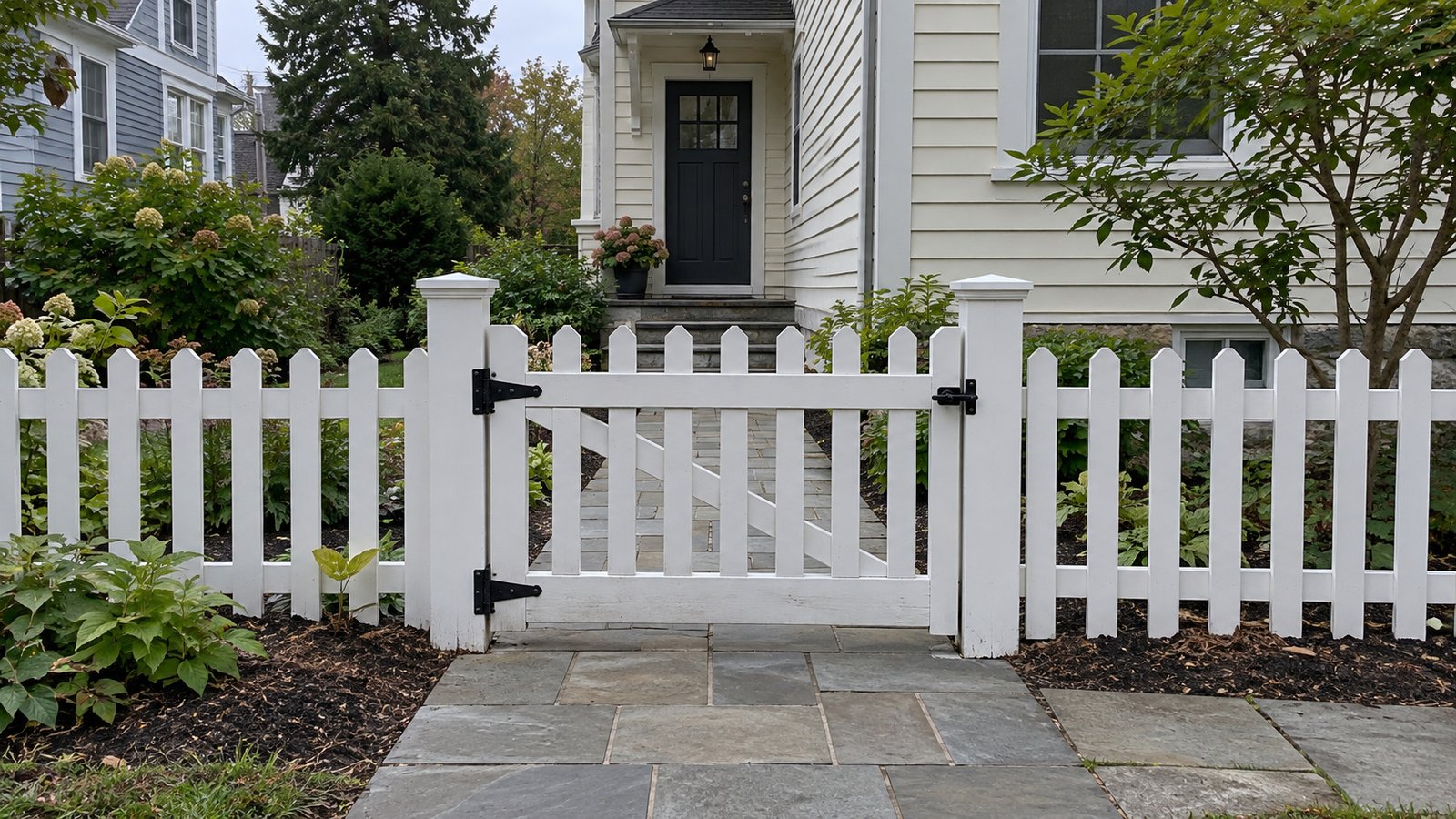
Include the gate in the carrying route
A side entrance can look convenient until a long table reaches the gate or the turn beside the house. Photograph the route from the proposed vehicle position all the way to the room. Include gates, steps, door swings, narrow passages and the space needed to turn.
Measure the largest pieces and the limiting openings. Confirm that a gate can open fully and stay clear while people work; vegetation, a loose latch or a stored bin may reduce the usable space. The front door is not automatically the best route, and an alternative needs the property owner’s agreement.
We can coordinate building COIs, moving-truck permit arrangements, elevator scheduling and moves that require union labor. Send the building instructions and management contact early. We can also arrange materials and packing before the carrying window when the property permits that access.
The agreed plan should identify who submits each request, who approves it and which municipal or building charges apply. An application is one step; the required access and time still need confirmation.
For an apartment or managed property, obtain the actual moving instructions and access contact. Shared entrances, stairs and any reserved time window need to be part of the estimate.
05 /
Plan the vehicle position before arrival
Show the street or drive, its approach, overhead clearance and the space needed to leave. Identify the owner or authority who can confirm use of the proposed position. A wide drive still needs a surface and clearance suitable for the vehicle.
The village publishes parking-permit information for Chase and First Street lots. That concerns those parking lots; it does not establish permission to load a moving truck at another curb. Ask about the exact location and activity you are proposing.
For a move near Main Street or Railroad Avenue, review the village’s road and parking-lot closure notices close to the date. Events can change the route or available space. Share the applicable restrictions with the planning team so the loading plan has a confirmed alternative.

06 /
Keep the last evening and first morning usable
Set aside keys, medication, documents, chargers and the clothes you will need immediately. Keep that small group with you. Label the remaining cartons by destination room, with a separate mark for anything going into storage.
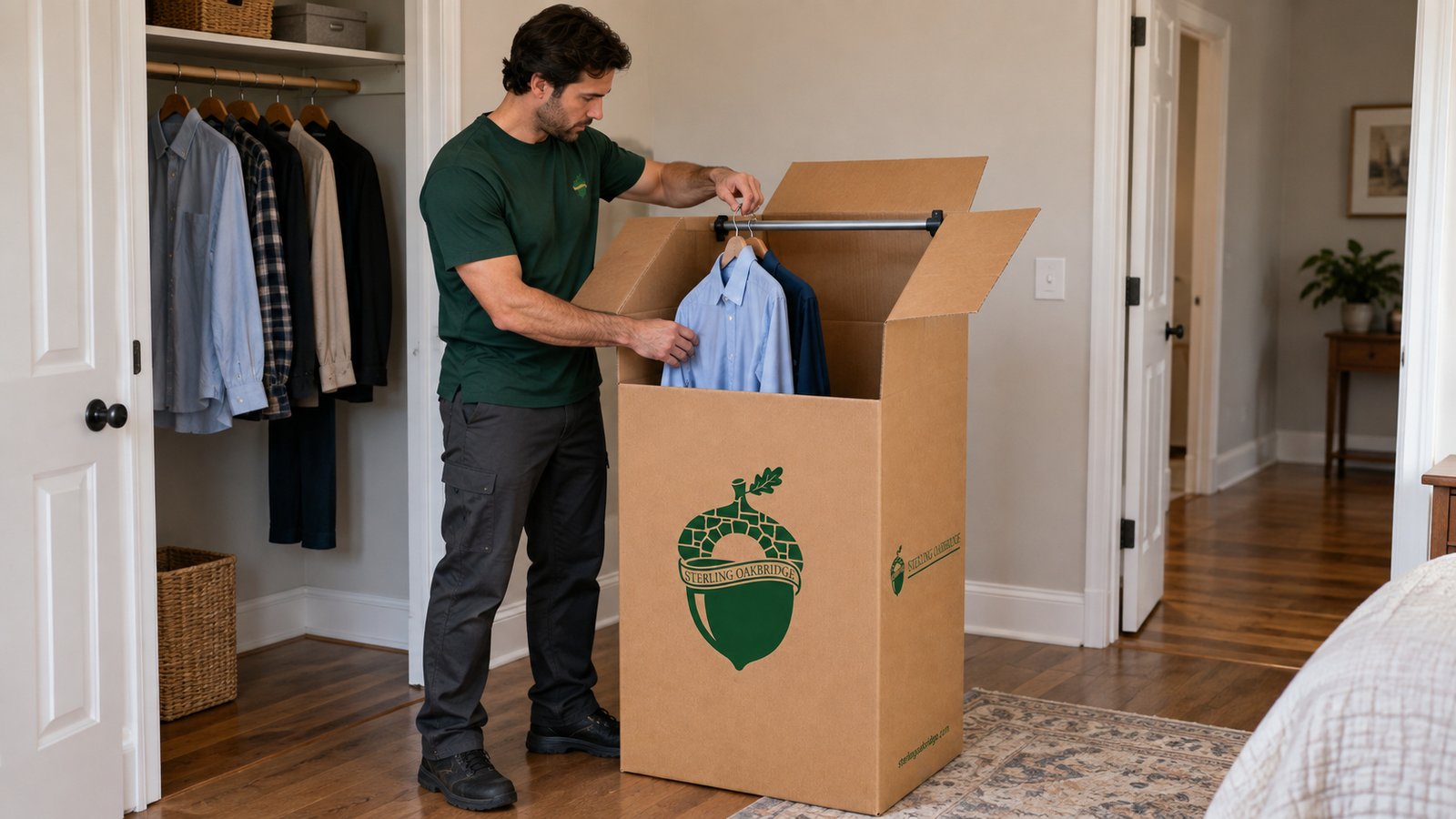
Hanging garments can be planned as a wardrobe-carton task; folded fabrics need a different pack from books or dishes. Books belong in small book cartons, and heavier contents should not fill a large linen box simply because there is space. Tell us about fragile or unusual equipment before it is packed.
A hobby room deserves its own inventory. Separate sharp tools and small components, identify unfinished projects and explain how the equipment should be handled. Keep the instructions or original packaging if they are useful for the item.
At delivery, distinguish opening cartons from putting furniture in place. Decide whether you want to unpack gradually or arrange help with the contents of selected rooms.
Labor, materials and optional work
| Item or task | How it is charged |
|---|---|
| Basic furniture disassembly and reassembly | Part of your moving labor time, without a separate basic assembly fee |
| Moving blankets, shrink wrap and tape | No separate charge for these basic protection materials |
| Boxes supplied for your move | Charged separately |
| Packing | Charged for working time; boxes are separate |
| Unwrapping furniture | Part of delivery |
| Unpacking the contents of boxes | Optional work, charged for working time |
| Packaging and waste removal | Charged separately |
| Complex furniture and other specialist work | Individually quoted after review |
Tell us which tasks you want completed and which materials you need. Your estimate should distinguish moving labor, boxes, specialist work and removal charges.
07 /
Set an order that works for the people moving
The room needed first may be a bedroom, a work area or a familiar place to sit. Put that priority into the placement plan. A household with a baby, pets, mobility needs or someone working from home will have different first-day requirements.
Arrange a responsible person for children and pets away from the carrying route. Keep essential personal items out of the general shipment, and make sure someone with authority over the move is reachable.
For a downsizing or shared-household move, label what stays as clearly as what goes. Make removal or donation arrangements early enough that unwanted items do not occupy the route or arrive at the wrong home.
08 /
Coordinate keys, packing and local activity
Confirm when the old property must be empty and when you can enter the receiving home. Include any packing day, building window and the person handing over keys. A date on a closing document does not by itself settle the delivery sequence.
Our experience across the service area is that summer and the end and beginning of the month are busier, with another rise around mid-month. This is a planning observation, not a promise about Warwick availability. Discuss dates early and keep a workable alternative where possible.
If a local event, weather change or delayed handover affects the plan, tell the planning team promptly. Agree who will receive the shipment and what happens if the original access time is lost.
09 /
Arrange a backup before you need it
Direct and consolidated long-distance moving
Our direct long-distance service uses a dedicated truck and the same moving crew at pickup and delivery. For a suitable small shipment, ask about consolidated delivery with a wider agreed receiving window. We serve destinations throughout the United States and Canada. Confirm pickup, delivery and any storage stages in the written move plan. The planning team performs a separate role from the moving crew.
When the two handovers do not line up, discuss a storage stage or another available delivery arrangement. Confirm handling, dates, access to stored belongings and charges before relying on that option.
Identify anything you may need during the gap. Work equipment, documents and daily essentials should not disappear into a stored shipment without a retrieval plan. Tell the team if different parts of the inventory have different delivery dates.
10 /
Give the business a practical reopening sequence
For a shop, office or other workplace, list stock, equipment, shelving and workstations. Decide what must function first after delivery and which person will approve placement. A clear sequence is useful even when the premises are small.
Review customer entrances, shared access and the time when loading can take place. Arrange sensitive records and essential business items with the people responsible. Confirm any technical or specialist tasks rather than assuming that moving equipment also reconnects it.
IT transport and disconnection are available; arrange reconnection and system startup with your IT team. Crane work is outside our service scope.
We can also quote island moves, recycling, move-out cleaning and car shipping. For an island destination, provide the exact address so the vehicle or freight crossing, receiving arrangements and final delivery can be reviewed together.
11 /
Prepare the route before protecting and carrying
Walk through with the crew lead before work starts. Point out anything that has changed since the estimate, the rooms receiving each group and the belongings that must stay. Check the gate, door access, lighting and the agreed vehicle position.
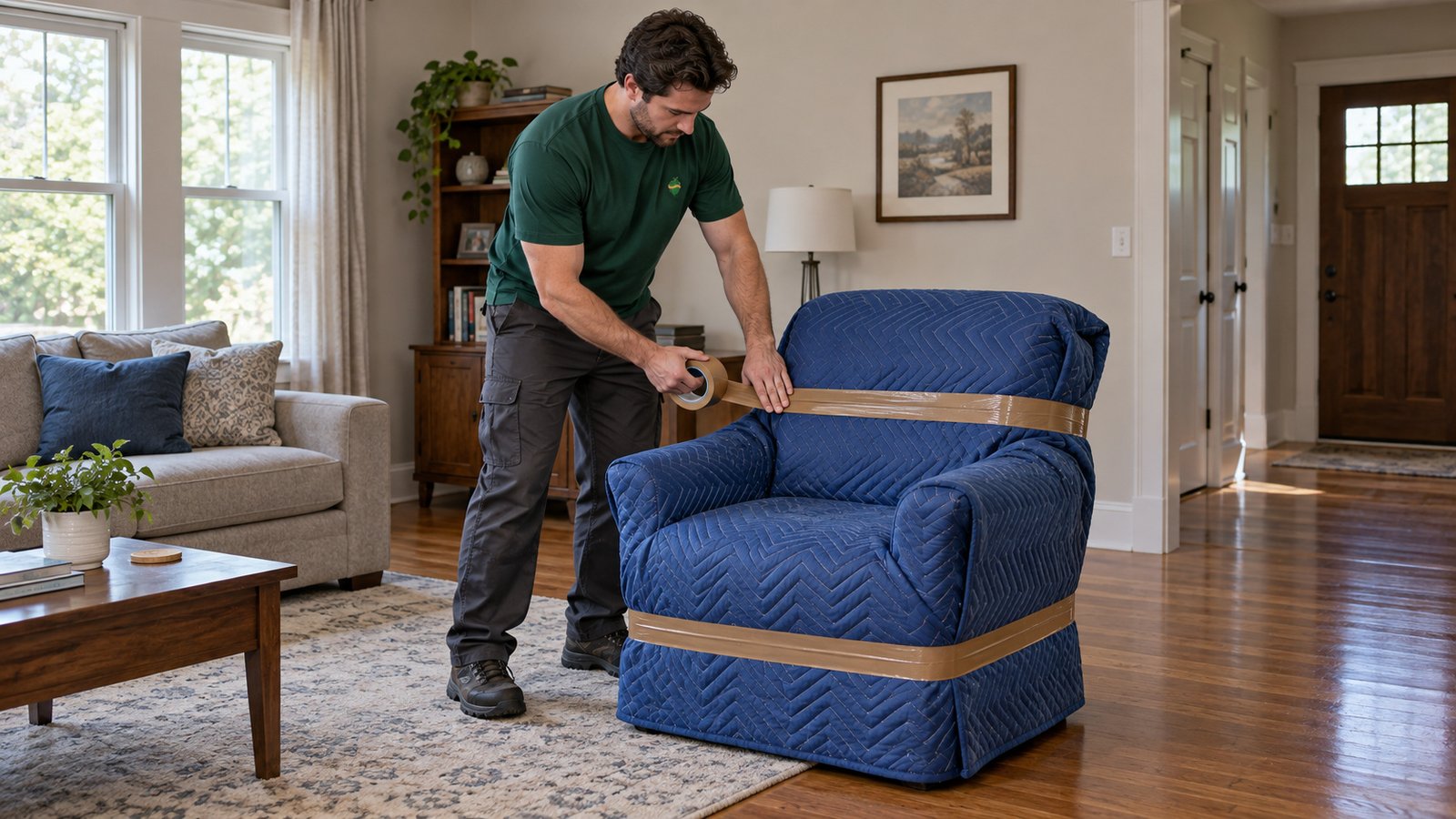
Furniture protection should be in place before carrying begins. Keep the working area clear while the crew wraps and handles each piece. Equipment and handling need to suit the item, surface and route; a changed step or obstruction requires another look.
Have one contact available to resolve placement or scope questions. Prompt decisions are easier when the room labels and first-use priorities are already clear.
12 /
Finish the agreed work before calling it a day
Walk through the rooms before the crew leaves. Review furniture placement, basic reassembly and access to the spaces you need that night. Record any concern while the relevant people and documents are available.
Furniture unwrapping, unpacking carton contents and removing packaging are different tasks. Confirm what you requested. If you will unpack gradually, keep the empty material out of doorways and arrange its collection through the property’s actual service.
Choose protection before the move
Discuss the basic liability option and higher protection available at an additional charge before moving day. Have the selected level, cost, limits and claims process recorded in your moving documents. Tell us about artwork and other high-value items in advance so their declared values and any special requirements can be reviewed.
For interstate household-goods moves, Full Value Protection applies unless you select Released Value through the required written waiver. Valuation is the mover’s level of liability; it is different from a separate insurance policy. Review the FMCSA explanation of liability and protection and the terms for your particular move.
13 /
Choosing where to live?
Use the Warwick guide to compare everyday journeys and housing needs, then arrange school registration, water accounts, collection and your first week in the village.
14 /
Questions before you move
Do you handle both local and interstate moves involving Warwick?
Yes. Sterling Oakbridge provides household moving, packing and storage for local and interstate moves. The plan depends on the shipment, requested tasks, dates and access at both ends.
What do you need to review a side entrance?
Send photographs from the vehicle position to the destination room, including gates, steps and turns. Measure the limiting openings and large furniture, and confirm who can authorise use of the route.
Can I use a village parking-lot permit as permission for truck loading?
Do not assume that it covers loading. The published permit information concerns Chase and First Street lots. Confirm the proposed truck position and activity with the responsible authority or property contact.
Can you pack clothes and a home hobby room?
Yes. Describe the contents and equipment so the packing can be planned. Hanging clothes, delicate tools and small project components need different preparation; identify anything you will keep with you.
Are cartons charged the same way as blankets and tape?
Basic furniture disassembly and reassembly use your moving labor time without a separate basic assembly fee. Moving blankets, shrink wrap and tape have no separate material charge. Boxes are charged separately. Complex furniture and specialist work receive individual quotes.
Can you unpack boxes and remove the packaging?
Furniture is unwrapped as part of delivery. We can also unpack the contents of boxes as optional work charged for time. Packaging and waste removal are charged separately; include the help you want in your request.
What if the new property is not available on the agreed day?
Contact the planning team as soon as you know. Discuss available storage or delivery alternatives and agree the handling, dates and charges before changing the plan.
Can a small business move outside its usual opening hours?
After-hours, weekend and phased work can be arranged within an agreed scope and available schedule. Confirm building access, staffing and the sequence with the planning team.
Your next step
Tell us about your Warwick move
Share both addresses, your dates and the items to be moved. We will review availability and the scope of the request.
Sources & useful local resources
Official procedures and local resources are linked beside the answers above. Reopen the relevant page when arranging a date: fees, schedules and application requirements can change.
Sources and practical contacts
- Parking permits for Chase and First Street lotsVillage of Warwick
- Road and parking-lot closure noticesVillage of Warwick
- Liability protection guidanceFederal Motor Carrier Safety Administration