
Ohio · Cincinnati service planning
Full packing and unpacking in Cincinnati, OH
Sterling Oakbridge packs household contents in Cincinnati, from a kitchen you would rather hand over to a full home prepared before moving day.

Choose the rooms and objects you want packed, keep a working first-night kit with you, and decide how much help you want after delivery. Optional box unpacking opens the agreed cartons and sets their contents on suitable surfaces; placing things inside cupboards under your direction and collecting the empty packaging are separate choices.
A useful packing plan starts with the contents and the route into each room. Tell us about the shelves, fragile objects, hanging clothes, stairs and receiving arrangements that a bedroom count leaves out. The Cincinnati moving page covers the move itself, and the local arrival guide helps you prepare the address and daily routine.
Explore packing, costs and local examples
Keep your evenings or keep part of the work
Full packing hands the agreed household preparation to the crew. Partial packing lets you finish straightforward possessions yourself while we prepare selected rooms or objects. Fragile-only work can concentrate on china, glass, framed pieces and other items needing individual handling. A mix is often useful: you might pack books and personal clothing while leaving the kitchen and display cabinet for the crew.
Choose that split before the visit. Empty cartons in the hallway do not tell the crew whether the objects on the kitchen shelves are staying, travelling or waiting for a relative. Walk through the home and identify the included cupboards, the furniture contents that need removing, and every item you will carry personally. Keep medications, identification, keys and essential records out of the packing stream.
An upstairs home with two work schedules
For example, two working adults in an upstairs Over-the-Rhine home could pack their clothes and book help for glassware, books and framed photographs. The city’s 2002 Over-the-Rhine plan describes homes above street-level shops or offices. That history prompts a check of the actual entrance, stairs and turns; it does not establish a lift or today’s building rules. Identify a staging area inside their unit so finished cartons do not take over a shared route. The useful result is a defined inventory ready for the agreed move window while some evenings remain their own.
Count what is inside the home
Inventory the cupboards, drawers, closets, shelves and stored possessions, including the basement and any separate storage space. Photograph an open cupboard as well as the room. The same size apartment can contain a modest kitchen or years of collected dishes and small appliances. The planning team can use an item list, a video review or an in-person survey to understand the work; full packing can justify a closer review even in a smaller home.
Separate what will travel now, enter storage, remain at the property, be donated through an agreed route or need a separately planned disposal service. Make the decisions before sealing cartons. If you remove furniture from the shipment at the last minute, tell the planning team; leaving it by the door does not arrange collection or establish a lawful curbside route.
Share fragile materials, unusual shapes, removable glass shelves and pieces whose parts must travel together. Packing a framed print differs from protecting a loose glass shelf or a cabinet with glass doors. The crew needs the object and its intended handling, rather than a general instruction to be careful with everything.
A carton estimate can change substantially once cupboards are opened. As an illustration, someone expecting 20 cartons might discover an inventory needing 60 or 100. Those figures are not a bedroom-based allowance or a quote. Review the actual contents and materials before choosing the crew and preparation day.
Choose a packing visit that leaves the home usable
Packing can take place as an agreed part of move day or during a separate preparation visit. The decision depends on the actual contents, the people doing the work and the access window. If there is a large kitchen, substantial storage or only a short loading appointment, preparing suitable possessions earlier can leave the moving visit focused on carrying and transport.
A preparation day has its own handover. Decide who can open the property, point out personal items and answer questions. Keep access to the bathroom, a sleeping space, food and the equipment needed for the final evening. Label the last-night and first-morning possessions clearly and keep the kit with you, including chargers, medication, toiletries and a change of clothes.
A family keeping the final evening usable
Imagine a family preparing a Northside house while the children still need dinner and bedtime. The 2014 Northside plan records houses, apartment buildings and larger houses divided into rental units; the actual home determines the preparation space. Here, the family chooses an earlier visit for books, display objects and most kitchen contents. A small everyday set and bedding stay available until an agreed final stage. The house remains usable for that last evening, and the extra preparation visit appears in the estimate. This is a planning example, not a completed customer job.
Use the carton and protection the contents need
Small, dense items need manageable cartons; fragile contents need support within the box as well as protection around each piece. A carton should close without pressure on the contents and remain suitable for the planned carrying and stacking. Hanging clothing may use an agreed wardrobe carton; identify unusually long or bulky garments when planning the materials.

For glass, china and framed objects, describe the actual shapes and materials. Loose components, shelves and hardware need an identifiable connection to their original piece. Photograph existing condition where useful and keep the location of essential small parts clear. An attractive wrapping surface is only one stage: the plan must also suit carrying through the home, loading, restraint in transit and delivery.
Packing is charged for working time, and company-supplied boxes used on the job are charged separately. Moving blankets, shrink wrap and tape have no separate material charge under the current company policy. Ask the written estimate to distinguish those categories and any individually quoted special work.
For a cabinet with glass doors, distinguish fixed glazing from removable shelves and identify how each vulnerable part will be protected. Small framed pieces need suitable face, edge and corner protection; unusual, valuable or delicate work belongs in an item-specific art-handling review. Clean hands or gloves should suit the surface and maintain a secure grip. Protection must remain useful through the route to the truck, loading, restraint and travel, not just while the object sits in a room.
Label for the receiving home and any storage stop
Use written room names that mean something at the new address, supported by a color system if helpful. A carton labelled bedroom may be ambiguous in a home with several bedrooms; guest bedroom, upstairs front can give the receiving person a usable instruction. Mark fragile contents and keep labels visible on the surfaces the crew can read after stacking. Include useful contents, a carton number and an opening priority, and match them to the receiving list. A color can support those written instructions, but should not be the only way to identify a destination.
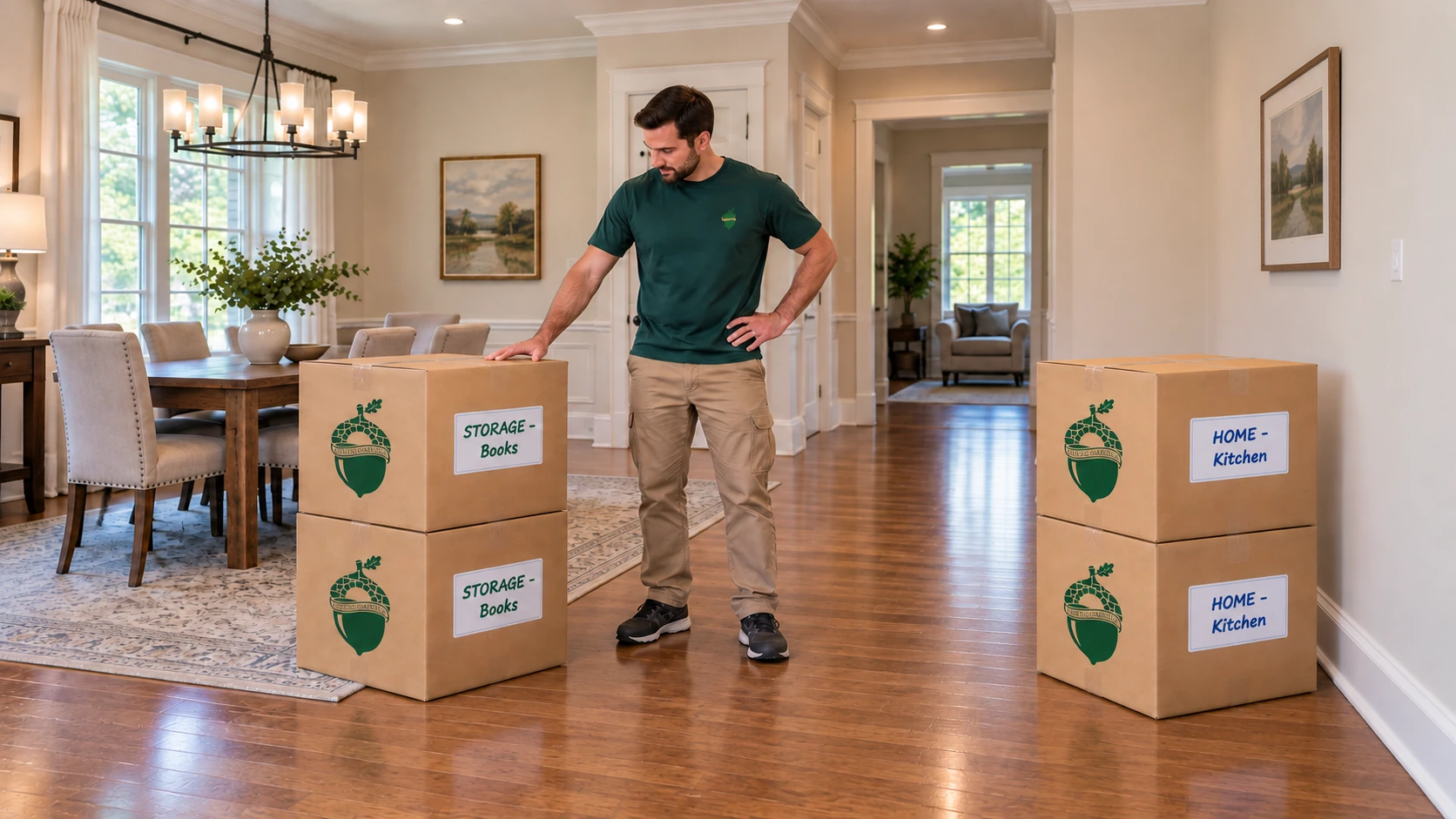
For a split shipment, distinguish deliver now from storage before loading. Put the first-night items outside both groups. If you need a particular document, school item or kitchen object during storage, keep it accessible with you instead of assuming a carton can be retrieved from the middle of the stored shipment.
A gap between homes with two receiving groups
Consider a household leaving a Northside rental before the next home is ready. In a divided house of the kind recorded in the neighborhood plan, a shared entrance leaves little useful staging space. They identify storage contents and a smaller group for temporary accommodation before packing, keep the doorway clear and agree the loading order. Each group has a named receiver or storage intake and written destination; first-night essentials stay with the household. Storage, retrieval, extra handling and later delivery need their own agreed scope and price. Confirm the actual unit and shared route rather than assuming every Northside property has this layout.
Plan the packing visit and the truck position separately
The packers need a usable work area and a clear carrying route. Check exterior steps, stair turns, shared doors, lift reservations where applicable and the room in which completed cartons can stand. A property manager controls the building arrangements; a nearby parking space does not establish permission to load there.
For a non-event residential loading restriction, Cincinnati DOTE directs applicants to the police restriction process. The police instructions require an issued qualifying permit before the district request and distinguish metered spaces from other legal parking. Arrange the relevant approvals before relying on that loading position. The Cincinnati moving page explains the detailed parking procedure; an interior packing appointment and later truck visit may need different arrangements.
Before dispatch, nominate the person who can approve a change if keys, the entrance or the agreed loading position fail. Set a decision deadline with the planning team. An alternative entrance, later appointment or storage stop must be usable, authorized and accepted, with extra time, handling and costs agreed before resuming. Do not send the crew to an unconfirmed alternative and hope the receiving arrangement will work.
Decide what you want open on the first evening
Box unpacking means opening the agreed cartons and placing their contents on suitable surfaces. It uses working time. Choose priorities such as an everyday kitchen set, clothing for the next few days or the home office supplies you need first. Give the crew usable surfaces and keep the route through the room clear.
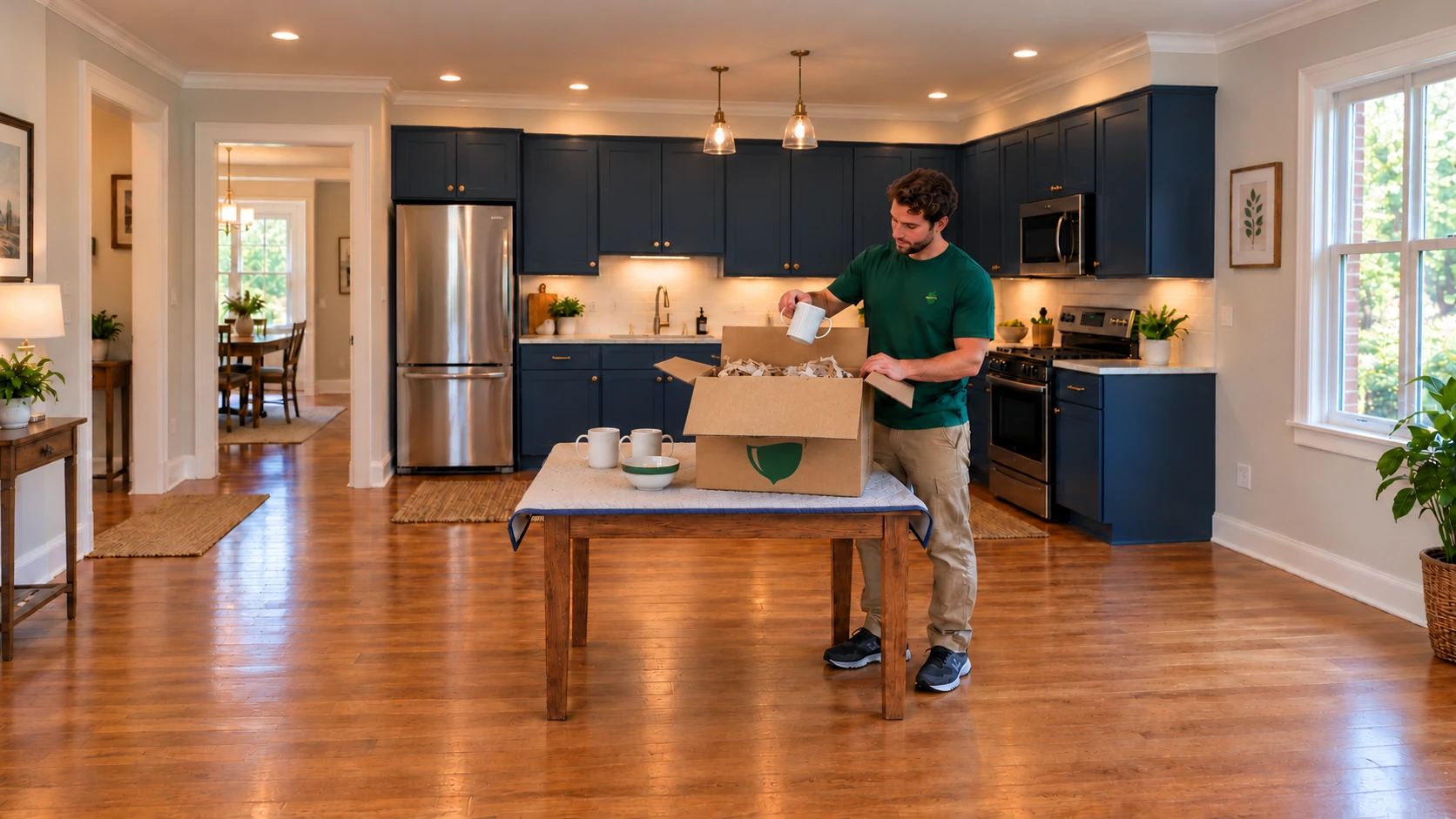
Unwrapping delivered furniture is part of delivery; opening every carton is an optional additional service. Decide how much unpacking to book and whether it belongs in the delivery visit or a separate appointment. The contents, available team, receiving space and your own availability determine a useful sequence.
Before wrapping is discarded, check it for small fittings, utensils, shelf supports and personal items. Keep incomplete sets and associated hardware together. If a room is still being painted or the cupboards are not ready, choose a safe agreed staging area or defer that part of unpacking instead of covering the floor with objects you cannot yet put away.
Book receiving help around the actual delivery window
For an interstate or other long-distance move, choose the transport arrangement before booking box unpacking or a separate receiving visit. Our direct service uses a dedicated truck and the same moving crew at pickup and delivery. A suitable smaller shipment may use consolidated delivery with a wider agreed receiving window. Do not arrange a single building slot or another crew on the assumption that the two models have the same arrival schedule.
The delivery window starts after pickup and loading are complete. Confirm the delivery model, receiving contact, building arrangements and the selected unpacking work in the written plan. Keep travel essentials with you throughout that interval. If the rooms or your availability require a later unpacking visit, agree its staffing, access, date and cost separately rather than assuming the delivery crew will return immediately.
Choose cupboard placement and finishing work explicitly
Home organizing puts belongings in the places you choose. It is separate from basic box unpacking and is individually scoped and priced. You might direct the team to a particular shelf for everyday dishes and a different cupboard for occasional glassware. Be present or provide a clear placement plan so the work finishes in a useful arrangement.
A kitchen ready for the return to work
For a household receiving into a Northside apartment with limited clear surfaces, opening every kitchen carton at once could make the room harder to use. They choose an everyday set first, book directed organizing for the agreed cupboards and leave books for a later weekend. The city plan’s mix of apartment buildings and divided houses is a reason to inspect the actual unit, cupboard readiness and working surface. A receiving person decides the final placement. The useful endpoint is the selected kitchen routine, with remaining cartons still identifiable; no fixed number of hours guarantees completion of every room.
Agreed handyman finishing work is another separate choice. Describe the object, wall or mounting arrangement, permissions and required result. Technical or electrical connections need specific review of the work and executor; the word handyman does not establish that every connection or repair is included.
A new furniture pickup and delivery is a distinct trip with its own item and route. If the furniture is already at the address and only needs moving to another room or floor, describe that in-home handling task instead. Identify existing furniture that must leave the final position before the incoming piece arrives.
Give the empty packaging a destination
Packaging collection is available when agreed and is separately charged. Decide whether to collect the materials opened during delivery or arrange a later visit after you finish more cartons. The material volume, access and timing belong in that plan. Keeping a few useful cartons for an upcoming storage or return shipment may reduce what you want collected.

If you manage the materials yourself, use the actual building collection arrangement and the applicable local program. A shared recycling area may have its own access and set-out rules. Separate packaging from furniture you have decided to discard: collecting cartons does not automatically include removing an unwanted sofa or arranging another recipient.
For your own household recycling, the City of Cincinnati’s recycling poster says to flatten cardboard and remove plastic packing material. Put empty, clean recyclables loose in the container, without plastic bags. This does not make foam or every wrapping product acceptable. Confirm the actual building program and collection arrangement before setting materials out; the poster does not authorize a moving company to use a resident-only route.
For unwanted furniture or household goods, request a separate removal and destination plan. If you are retaining items for later delivery, use an agreed storage arrangement and keep that inventory separate from materials being discarded.
Compare the whole job in the written estimate
Compare moving alone with the actual combination of preparation, transport and receiving work you want. Packing time, separately charged boxes, any extra preparation visit, storage, optional box unpacking, organizing, individually reviewed finishing work and packaging collection are different cost components. A lower starting figure is not a useful comparison if it leaves out the work you intend to order.
Local moving is usually charged by the hour. Estimated time and minimum hours are planning terms, not a fixed total or a promise that the home will be completed within that time. For a long-distance shipment quoted at a flat rate, the price is tied to the same agreed shipment and services; additional possessions or work require a revised written scope and price.
Ask which team and stages the estimate assumes, what you should complete beforehand, who pays any documented property or permit charges, and how changes will be authorized. Explain date constraints such as lease handover, possession and a booked entrance rather than assuming an available date or a particular seasonal discount.
Give each visit a useful handover
At the preparation visit, confirm the included contents, the possessions staying with you, the remaining everyday items and where completed cartons can stand. At loading, check destination groups and anything that has changed. At delivery, identify the receiving person, final rooms, unpacking priorities and safe surfaces.
Keep a reachable decision-maker available until the agreed work and exceptions are recorded. If an item cannot safely follow the planned route, pause that part of the handling and agree the next authorized action. A later return, different receiving address or revised service needs an accepted arrangement and the associated cost before the crew continues.
Tell us what you want handled in Cincinnati
Send both complete addresses, the dates you need, an inventory and photographs or video of the contents and access. Identify the rooms you want packed, special objects, any storage split, the possessions you will carry yourself and the receiving help you want. Include the building contact and loading arrangements already established.
The planning team can then assess the preparation, moving and receiving stages and provide the written estimate for that work. Choose the responsibilities you want to keep, and let the plan show clearly what the crew will take over.
Cincinnati packing and unpacking questions
Can you pack the whole home in Cincinnati?
Yes. Full packing covers the household contents agreed for the job. We review the inventory, fragile and special items, access and dates to plan the team and preparation. Rooms or possessions you want excluded must be identified before packing begins.
Can I pack some rooms myself?
Yes. Choose partial packing and identify the exact rooms, cupboards or objects you want the crew to handle. Keep your own packed cartons and personal carry-with-you items clearly identified, and tell the planning team what will remain unfinished.
Are boxes included in the packing charge?
Company-supplied boxes used for the job are charged separately. Packing uses working time. Moving blankets, shrink wrap and tape carry no separate material charge under the company policy; special work and any other materials need their own agreed treatment.
Should packing happen before moving day?
An earlier preparation visit can help when the contents or a restricted loading window would make move-day packing impractical. A smaller agreed inventory may fit into the moving visit. We review the contents, team and access before choosing the sequence; a separate visit must be included in the estimate.
Can we sleep in the home after the packing visit?
Yes, if that is part of the agreed preparation plan. Keep bedding, medication, toiletries, a small kitchen set and first-morning belongings available. Tell the crew which everyday items must remain usable and identify how they will be packed or carried at departure.
Do bedroom counts tell you how many boxes I need?
They provide context, but cupboard, closet, shelf and storage contents determine the packing work. An item list with photographs of open storage spaces is more useful than bedroom count alone. A video review or in-person survey may be appropriate for full packing.
Can you help just with china and fragile objects?
Yes. Fragile-only packing can focus on agreed objects such as china, glass and framed pieces. Describe each material, removable part and unusual shape so the protection and carton suit the actual object and its handling route.
Can the cartons go to more than one destination?
Yes, when the stops and groups are agreed in the shipment plan. Label the destination and final room before loading, and separate storage from deliver-now contents. Extra stops, storage and later delivery need their own scope and price.
What should stay with me rather than enter a carton?
Keep medication, identification, keys, essential records, chargers and the items you need during the move accessible with you. Also separate anything you will need before a storage shipment is delivered. Tell the crew where those possessions are so they stay out of the packing stream.
Does unpacking mean putting everything in the cupboards?
Basic box unpacking opens the agreed cartons and places the contents on suitable surfaces. Placing belongings in cupboards under your direction is home organizing, a separate individually scoped service. Choose the rooms, placement instructions and receiving person beforehand.
Is unwrapping furniture an extra unpacking service?
Furniture is unwrapped as part of delivery. Removing contents from cartons is optional box unpacking and uses working time. The written scope should distinguish the two so you know which receiving work you have ordered.
Can you take away the empty boxes and wrapping?
Yes, when packaging collection is agreed. It is separately charged. Decide whether you want collection after the booked unpacking work or a later visit after you finish more cartons, and include the expected materials, access and timing.
Can you remove furniture we decide not to take?
Furniture removal requires a separate agreed disposal or recipient plan. Packaging collection does not automatically include an unwanted sofa or other household goods. Identify those items before packing and loading so their handling and destination can be reviewed.
Do I need to arrange access for a packing-only visit?
Yes. The crew needs an available entrance, a safe route, usable working space and someone authorized to identify the contents and answer questions. Building access and later truck loading can be different appointments; confirm both where applicable.
Can unpacking wait until the rooms are ready?
Yes, if a later appointment is agreed. Decide which cartons to open at delivery and which should remain safely staged until cupboards, surfaces or rooms are ready. A later visit has its own staffing, access and cost arrangements.
Can you organize the kitchen while I work elsewhere?
Organizing follows your placement instructions. Agree a clear plan and a reachable person who can decide where things belong; if instructions are incomplete, the crew needs an authorized answer before choosing a new arrangement. Scope and price are agreed individually.
Can a handyman connect appliances after the move?
A technical or electrical connection needs specific review of the work, permissions and executor. The available individually scoped handyman service does not establish that every appliance connection is included. Describe the exact task when requesting the estimate.
Will the packing estimate be a fixed total?
Packing is charged for working time, with boxes separate. Local moves are usually hourly, so estimated or minimum hours are not a completion cap. A long-distance flat rate applies to the same agreed shipment and services; changes require a revised written scope and price.
What happens if the entrance or loading arrangement fails?
Contact the planning team before dispatch when possible. The authorized decision-maker must agree a usable alternative, such as a different approved entrance or later visit, together with extra time, handling and costs. The affected work resumes once that alternative is confirmed and accepted.
What do you need for a Cincinnati packing estimate?
Send complete addresses, dates, the contents to pack, special items and the access route. Include your own preparation, any storage or separate stops, and whether you want box unpacking, organizing or packaging collection. Photographs, a video review or an in-person survey can help establish the actual work.
How should I book unpacking after a long-distance move?
First confirm the actual delivery model and receiving window, which starts after pickup and loading are complete. Direct service uses a dedicated truck and the same moving crew at both ends; a suitable smaller consolidated shipment has a wider agreed window. Match the receiver, building access and selected unpacking work to that arrangement. A later unpacking visit needs a separate accepted booking.
How should I prepare empty cardboard for Cincinnati recycling?
The City recycling poster says to flatten cardboard and remove plastic packing material. Put accepted empty, clean recyclables loose in the container without plastic bags. Check the actual property program and collection arrangement; this does not establish that foam or every wrapping product is accepted, or that a contractor may use the household route.