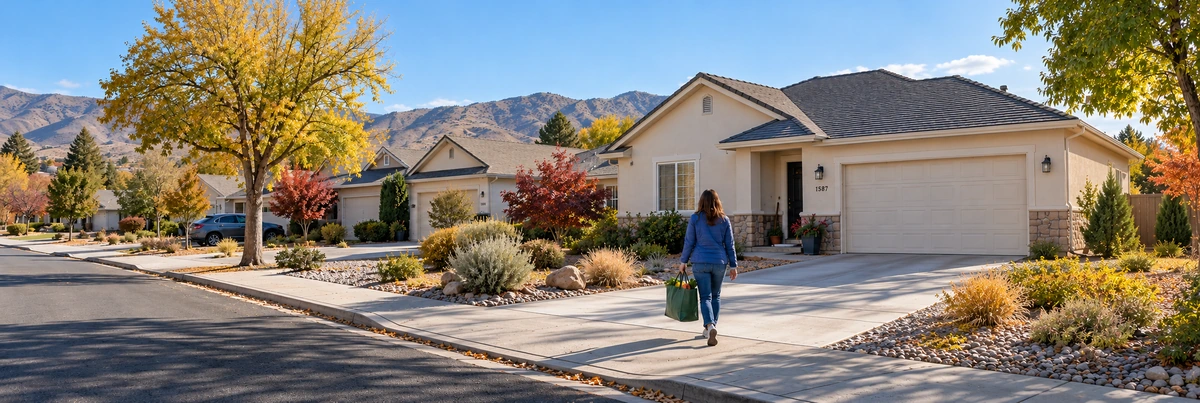
A woman carries a grocery basket along a sidewalk beside Oregon bungalow homes and autumn trees

State moving guide

Moving to Oregon: A Practical Guide

Explore Oregon’s valley cities, high desert, southern communities and coast. Compare places to live, understand the moving arrangements and prepare the household for both ends of the journey.

Oregon planning

Choose the Oregon setting before choosing the moving plan

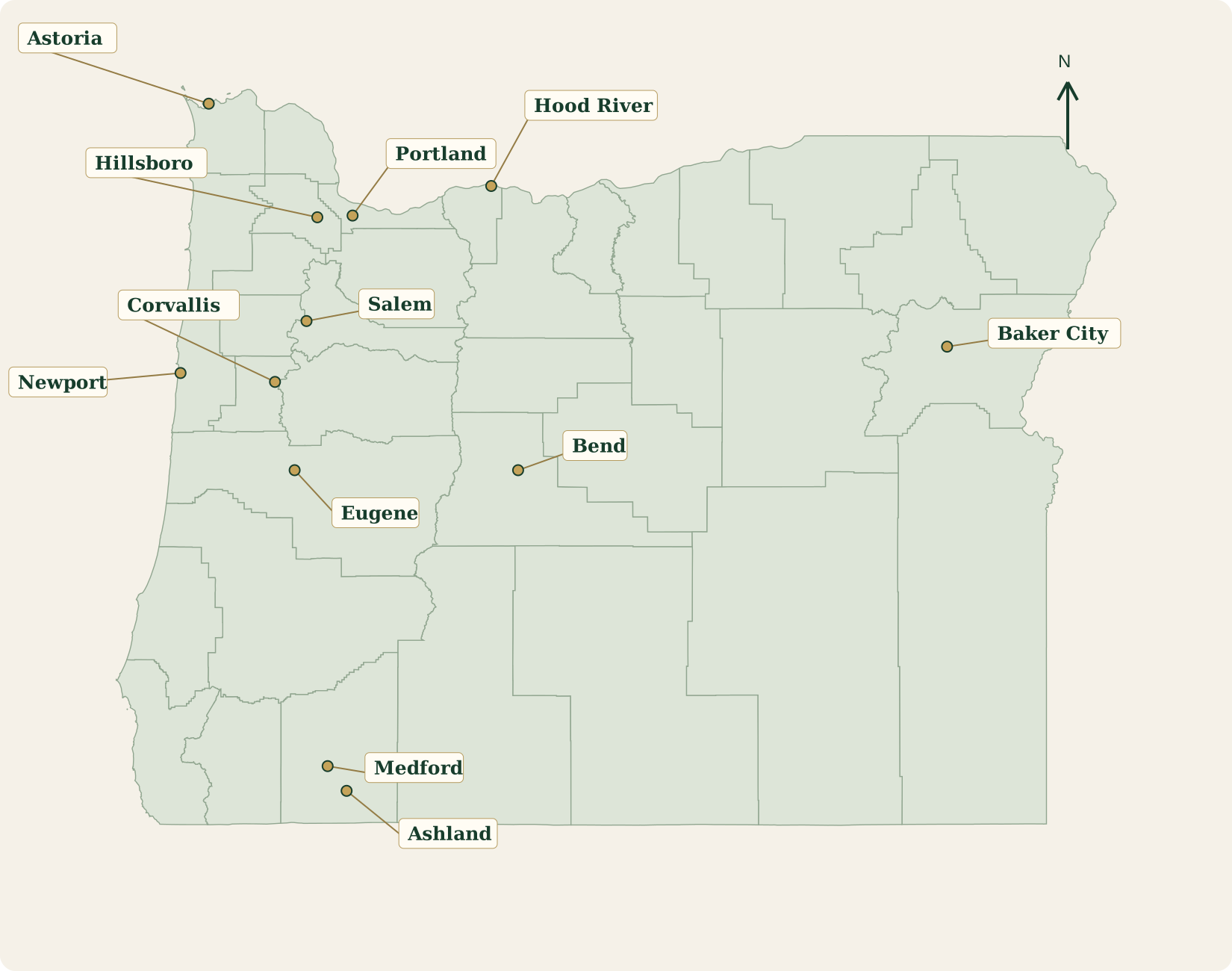
Start with a few places that fit the life you want to build. Portland's urban neighborhoods, the Willamette Valley's university cities, Bend's river and high-desert setting, southern Oregon and the coast offer different possibilities. Use the map and portraits to make a shortlist, then investigate the actual home, everyday destinations and journeys. A memorable visit is a useful introduction; it does not answer every question about living there.

If you already have an address, begin with the household rather than the attraction list. Establish when you must leave, when the new home becomes available, what needs to travel and who can receive it. A compact condominium, an older bungalow and a hillside house can require different work even when the contents are similar.

Sterling Oakbridge plans interstate household moves involving Oregon, subject to review of the route and work. The Oregon-only consumer guidance below describes a separate state process. A guide to the area does not establish a company local office or availability for every local request.

Oregon cities and regions
Explore twelve Oregon communities across the valley, high desert, southern Oregon, coast, Gorge and eastern Oregon. Use the portraits and county profiles to choose where to investigate.

Oregon planning

Compare the valley, high desert, southern Oregon and coast

Portland and the northern valley. Portland offers urban parks, arts, food carts and a river-and-bridge setting. Hillsboro provides another city comparison to the west, with neighborhoods, cultural destinations and a connection to the agricultural Tualatin Valley. Investigate the actual address instead of treating the whole metropolitan region as one city.

The Willamette Valley. Salem combines the state-capital setting with historic downtown streets and public places. Corvallis and Eugene have different university connections and local cultural life. Explore the streets around a possible home as well as the campus, river path or market that first attracts you.

Central, southern and eastern Oregon. Bend's Deschutes River setting differs from Medford and Ashland in the Rogue Valley. Baker City adds an eastern Oregon historic downtown and a gateway to a much wider region. Mountain recreation promoted nearby is not necessarily inside the city.

Coast and Gorge. Astoria's Columbia River waterfront, Newport's marine setting and Hood River's Gorge surroundings answer different interests. Compare the residential neighborhood, local services and seasonal conditions alongside those public destinations.

City portraits

Explore Oregon’s cities

Compare twelve Oregon places through their public life, culture and surroundings. Explore the actual neighborhood and home as well as the destinations that first interest you.

A cyclist rides beside a riverfront railing with Portland city buildings and a steel bridge beyondOR

Portland

Portland offers an urban introduction through its riverfront, bridges, food carts, bookstores and arts. Public parks and forested spaces add a different side to the city from its commercial streets. Explore several neighborhoods and the ordinary journeys from a possible home, rather than treating one visitor district as the whole place. The wider Portland region includes separate communities with their own identities; a nearby destination or a Portland mailing label should not be used as a shortcut for the actual municipality.

Two women pause beside flowers on a Salem garden path with a fountain and civic buildings beyondOR

Salem

Salem combines Oregon's state-capital setting with historic downtown streets, museums and valley surroundings. The State Capitol Mall provides one starting point for exploring its public life; riverfront walks and local cultural places offer others. Look at how a home connects to the destinations your household would actually use. Regional waterfalls and wineries can be attractive outings without being inside the city. Salem itself lies in both Marion and Polk counties, so check the address when identifying the relevant local government.

A shopper holds a ceramic bowl at an outdoor Eugene arts-market stallOR

Eugene

Eugene brings together the University of Oregon, the Willamette River and a strong arts and outdoor identity. The Hult Center, Museum of Natural & Cultural History and 5th Street Public Market offer different introductions. Parks and paths make it useful to explore on more than one kind of visit, then compare a specific neighborhood with your daily needs. The wider Cascades-and-coast region contains separate destinations; a covered-bridge trip or McKenzie River outing should not be mistaken for the setting of every Eugene home.

A riverside path passes ponderosa trees and lawn beside the Deschutes in BendOR

Bend

Bend's Deschutes River is central to its city setting, with trails, the urban whitewater park and cultural and commercial destinations offering several ways to explore. Compare a riverside visit with the actual residential neighborhood and services you would use through the year. Nearby mountain and volcanic landscapes broaden the region's appeal without placing every home beside a ski area or trailhead. Sunriver, Redmond and other surrounding communities remain separate places, even when they appear in the same regional property search.

An older man reads a newspaper on a Medford park bench near downtown shopsOR

Medford

Medford offers a southern Oregon city comparison through its downtown, theaters, parks and food and wine connections. Its Rogue Valley location also opens up regional outdoor exploration, including the Table Rocks and Rogue River surroundings. Keep those outings distinct from the immediate residential setting of a possible home. Compare the neighborhood and ordinary destinations with Ashland, Central Point and the other separate communities nearby. A broad regional description cannot establish the same access, services or daily routine for all of them.

Two women look at framed art outside an Ashland brick storefrontOR

Ashland

Ashland's theaters, galleries, bookstores and Oregon Shakespeare Festival provide a cultural starting point in southern Oregon. Its streets and surrounding foothills add a different residential comparison with nearby Medford. Explore the parts of town you would use outside a performance visit, including the actual neighborhood and regular destinations. Mt. Ashland and other recreation promoted in the wider area are outings rather than features of every city property. Review seasonal travel and the home itself alongside the arts that first draw your attention.

A student secures a bicycle to a rack on a tree-lined Corvallis sidewalkOR

Corvallis

Corvallis combines Oregon State University's presence with tree-lined streets, galleries, museums and outdoor opportunities. Public paths and the valley setting provide ways to explore beyond a campus visit. Look at how a particular neighborhood connects to work, study, shops and the activities that matter to your household. Marys Peak and other regional outings belong in the wider picture, while Philomath, Albany and nearby communities retain their own identities. The useful comparison is between actual homes and routines rather than a general university-town label.

A woman holds carrots at a Hillsboro produce stall beside a busy town-center sidewalkOR

Hillsboro

Hillsboro offers another Portland-region setting, blending neighborhood life with an agricultural history, business activity and cultural destinations. Its rock museum, baseball and local food give several reasons to investigate the city beyond a commuter label. Compare the actual home with the journeys and services you need, while exploring the wider Tualatin Valley separately. The Coast Range and Portland are regional reference points rather than part of every neighborhood. Nearby Cornelius and Forest Grove should not be absorbed into a single Hillsboro address.

A resident collects mail beside wood houses on a sloping Astoria street overlooking the riverOR

Astoria

Astoria's hilly residential streets and Columbia River waterfront give it a distinct northern-coast character. The Riverwalk, maritime museum and older waterfront buildings offer ways to explore its port history, with the Astoria Column providing another cultural destination. Investigate the actual neighborhood and slope as well as the waterside public places. Astoria's river-mouth setting should not be described as an oceanfront beach at every home. Learn the relevant coastal emergency information and keep local property conditions separate from the view that attracts you.

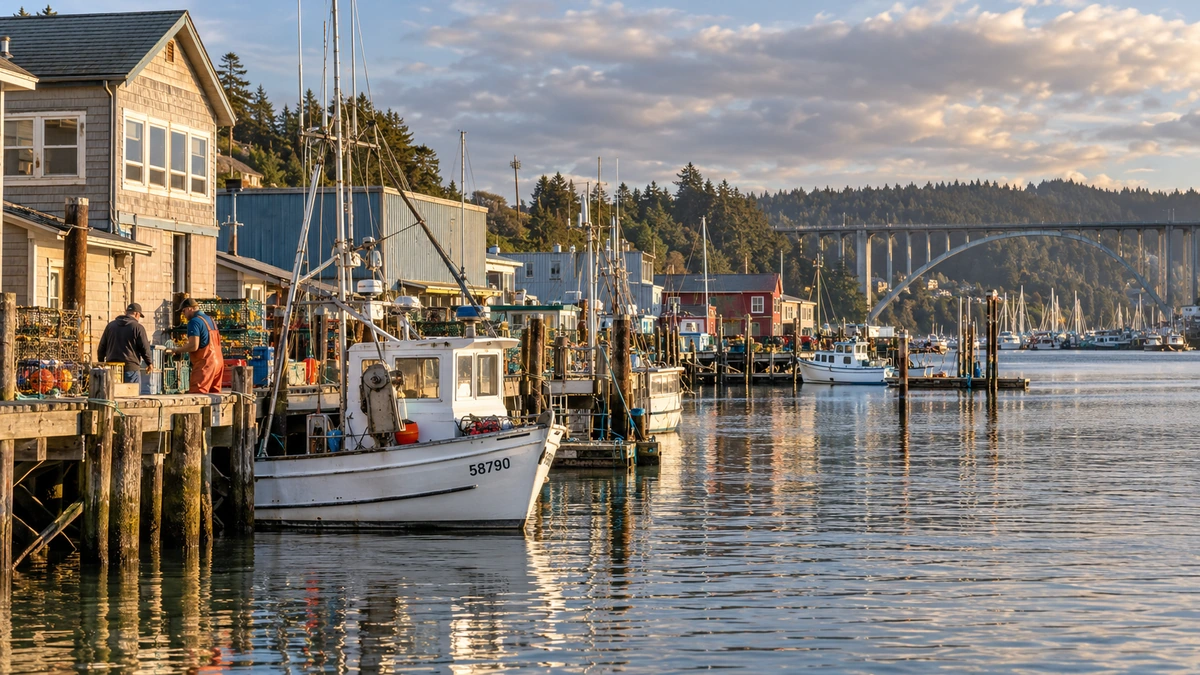
Fishing boats and wooden docks line a Newport bay waterfront beneath a cloudy skyOR

Newport

Newport provides a different coastal comparison through its marine life, lighthouses, beaches and working-waterfront surroundings. The Oregon Coast Aquarium and public outdoor destinations introduce several sides of the city. A particular home may relate very differently to the bay, ocean and commercial streets, so investigate the neighborhood and daily services alongside the attractions. Regional listings and outings can extend beyond the municipal boundary. Check the actual address and coastal preparedness information rather than assuming every Newport property shares one exposure or access pattern.

A woman adjusts a backpack strap on a Hood River waterfront path with sails on the river beyondOR

Hood River

Hood River sits where the Columbia River Gorge and Cascade surroundings meet, with a downtown, food culture and outdoor recreation connected to that landscape. The waterfront offers one introduction; nearby trails, farms and mountain destinations broaden the regional picture. Visit the residential streets and ordinary services that would shape your week as well. Wind and changing travel conditions deserve attention without turning a recreation reputation into a promise about every day or property. Odell, Mosier and other nearby places remain distinct communities.

A shopkeeper arranges potted plants outside a Baker City brick storefrontOR

Baker City

Baker City adds an eastern Oregon comparison through its historic downtown, older commercial buildings and cultural places such as the Geiser Grand. Its role within a much larger county gives access to a broad regional story, including Oregon Trail history and mountain recreation. Those destinations should stay regional rather than being placed within every city neighborhood. Investigate a particular home's everyday services and journeys alongside the historic center. This is a different starting point from the valley, high desert and coast, rather than an interchangeable small-town scene.

Oregon planning

Check the property, jurisdiction and whole shipment

Use the street address to find the relevant city, county and property rules. A mailing name or a search result headed Portland can cover a wider area than the city boundary. County profiles offer useful regional context, but a county and a city do not have identical limits. Salem, for example, lies in both Marion and Polk counties; checking only one county name can leave the wrong agency in the plan.

Decide whether the household journey remains within Oregon or crosses a state line. A short trip to Washington is interstate, while a much longer journey between Oregon communities can remain intrastate. Include any storage, earlier collection or later delivery when explaining the whole arrangement.

Give the coordinator both addresses and the work needed before assuming a service model. Keep the operator's authority, the property's permission to use an entrance and the household's receiving arrangements distinct. Each resolves a different part of making the move possible.

More places to explore

Keep exploring Oregon communities

Looking beyond the featured cities? These communities offer more starting points for your Oregon home search.

Ask about your Oregon move →

Oregon planning

Show how the furniture reaches the home

Photograph the route from a plausible legal stopping place to the final room. Include the pavement, slope, steps, porch, second entrance door and indoor turns. A short street-to-door distance can still contain an awkward landing; a longer level path may present a different task. The useful information is the actual route, not whether an address sounds urban or rural.

For a hillside or coastal property, show the approach and any place where the vehicle must turn or stop. For an apartment, obtain the loading and elevator instructions. Explain gates, shared paths and access hours before collection. A vehicle route that reaches the street does not confirm the last section to the house.

Choose who will obtain property permission and who will make the working route available. Keep people, pets and loose household items out of the handling path. When an opening or slope is uncertain, send measurements and clear views for review while other preparation choices remain available.

Two male movers carry a blanket-wrapped piece of furniture along an Oregon front path
Two movers carry a blanket-wrapped piece of furniture along the path.

The moving process

Your move, step by step

  1. 1

    Describe the household

    Send the two addresses, complete contents, dates and the work you want included.

  2. 2

    Confirm the access

    Show the approach and interior route, and obtain building and loading instructions.

  3. 3

    Agree the written plan

    Review the inventory, price, protection, payment and delivery arrangement together.

  4. 4

    Prepare for collection

    Finish the chosen packing, keep essentials apart and make the working path available.

  5. 5

    Receive the goods

    Have an authorized person ready, direct placement and check the inventory and condition.

Ready when you are

Ready to discuss your move?Tell us where you are moving, what is coming with you and the dates you have in mind.

Oregon planning

Understand an Oregon-only estimate before comparing prices

For a move wholly within Oregon, begin with an ODOT-certified household-goods mover and ask which filed tariff applies. The state's current estimate rule requires a requested estimate to be free, written or electronic, and based on an agreed in-person or virtual inspection. Virtual inspection must let the carrier identify the goods through live or recorded video. A telephone description alone is not the same assessment.

Oregon intrastate estimates are nonbinding; final charges follow the applicable tariff. Additional services need a signed addendum estimate. Confirm the work, rate basis and payment terms before comparing amounts. The state bulletin describes hourly and weight-distance arrangements, including generally local hourly moves within 50 air-miles. This should not be turned into another state's road-distance cutoff or a universal price formula.

These state rules do not replace the confirmed company interstate pricing policy. Establish the journey's category first, then read the proposal that applies to that actual shipment.

County guides

Explore the area around your new home

Explore six counties connected with the featured communities, then use the full directory for the wider county setting. A city, mailing name and county can cover different areas; check the actual address.

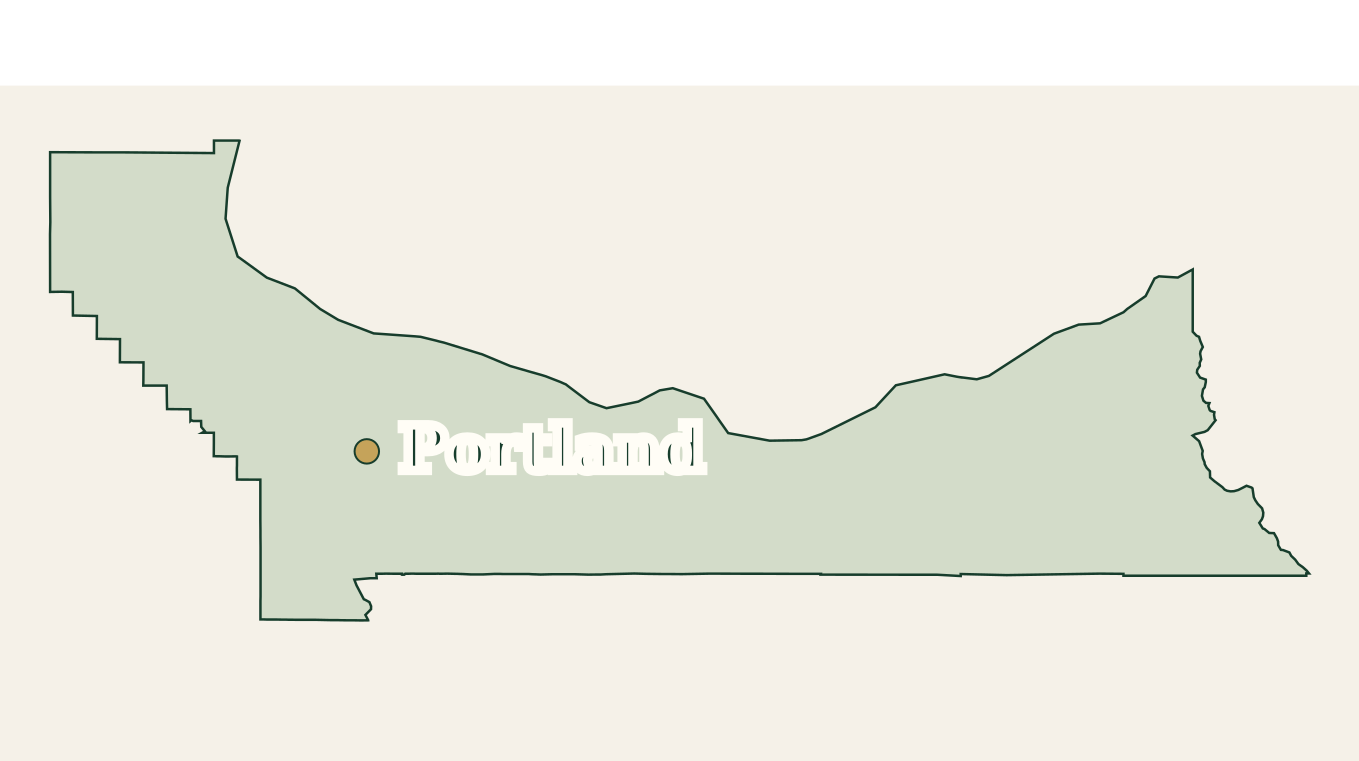
Multnomah County with Portland marked
Portland and the northern urban regionPop. 801,477 · 2024

Multnomah County

Portland’s urban riverfront, arts and neighborhood destinations offer a northern Oregon starting point. Multnomah County is useful regional context rather than a synonym for the whole Portland metropolitan area. Compare the particular home and regular journeys with the public places that matter to the household, then check the actual local government and property arrangements.

Key communities

Portland

Check mover credentials →
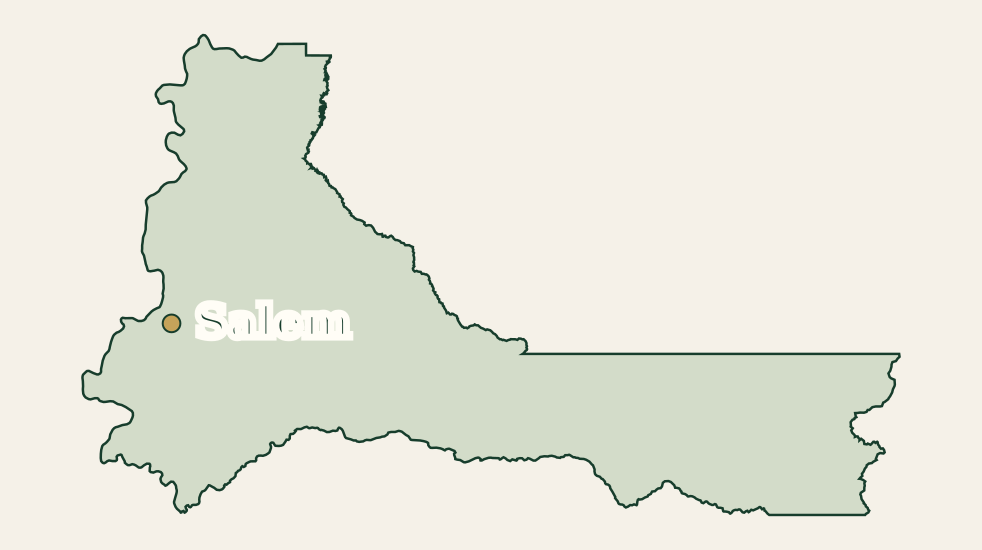
Marion County with Salem marked
Salem and the central Willamette ValleyPop. 349,244 · 2024

Marion County

Salem’s capital-city setting and historic downtown sit within a wider valley landscape of other communities and agriculture. Salem extends into both Marion and Polk counties; a city label does not establish which county governs a particular address. Compare the neighborhood, everyday services and receiving arrangements with the cultural and outdoor places you want to explore.

Key communities

Salem

Check mover credentials →
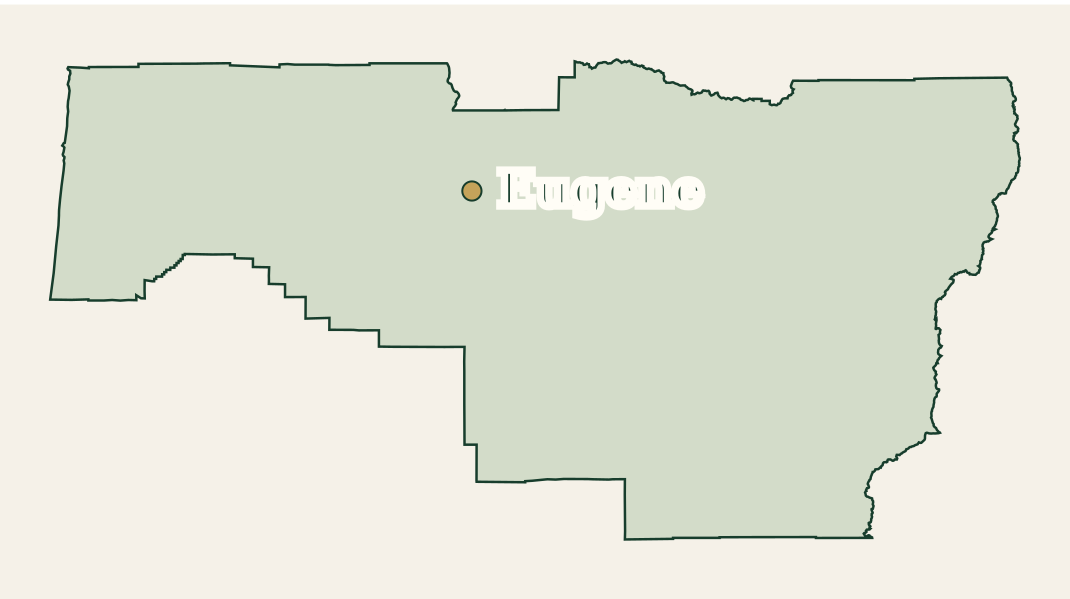
Lane County with Eugene marked
Eugene and the southern valley regionPop. 384,207 · 2024

Lane County

Eugene provides a university-city and Willamette River comparison within a county that also includes very different coast and Cascade surroundings. The wider regional visitor name does not put every destination inside Eugene. Investigate a particular neighborhood and its ordinary journeys, and review the home and receiving plan independently of a recreation itinerary.

Key communities

Eugene

Check mover credentials →
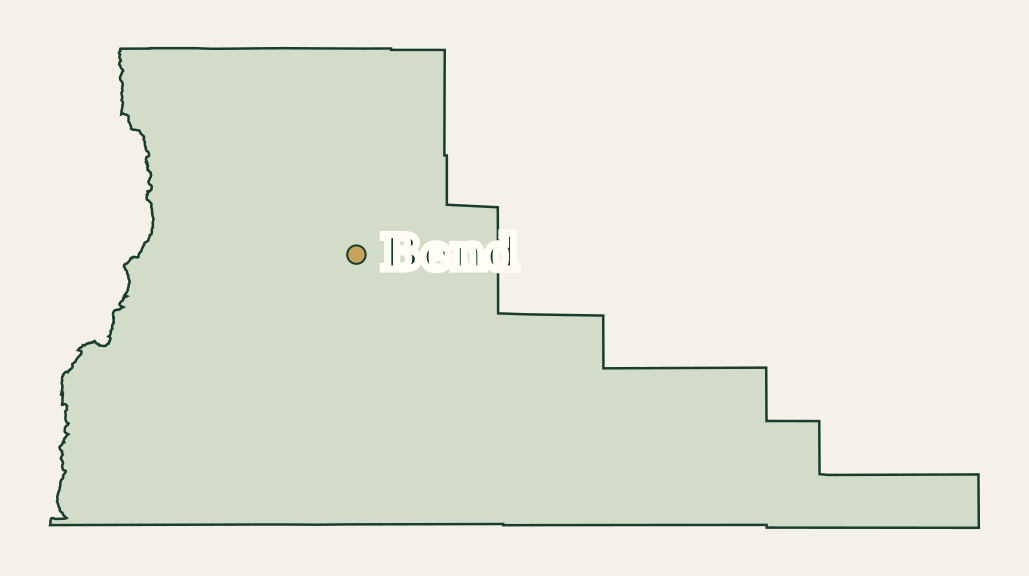
Deschutes County with Bend marked
Bend and central OregonPop. 206,334 · 2024

Deschutes County

Bend’s riverparks and high-desert city setting provide one central Oregon comparison. Deschutes County also contains separate communities and extensive regional recreation; a broad property search may include places outside Bend. Check the actual address, household needs and seasonal route before assuming the same daily setting or receiving conditions everywhere in the county.

Key communities

Bend

Check mover credentials →
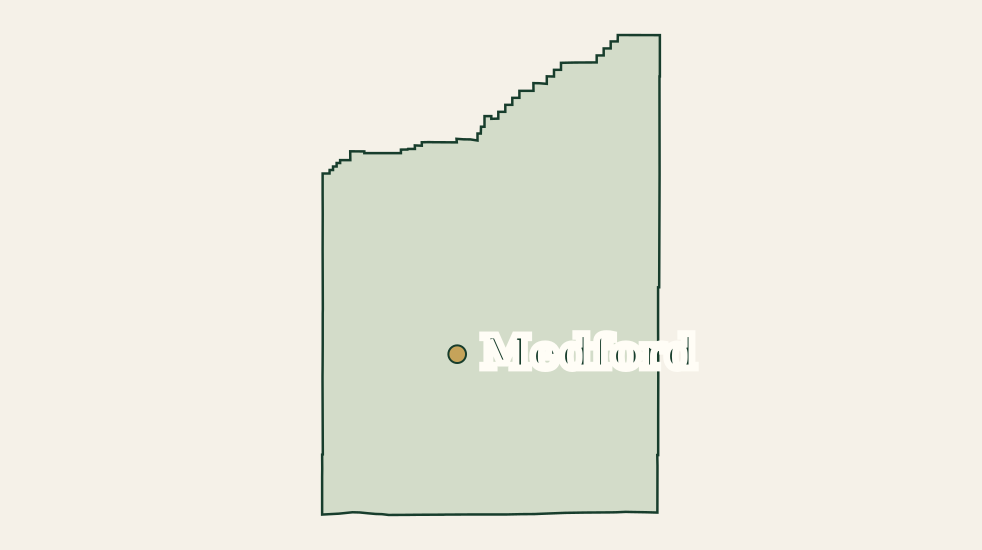
Jackson County with Medford marked
Medford, Ashland and the Rogue ValleyPop. 222,645 · 2024

Jackson County

Medford and Ashland offer different city experiences through parks, downtown life and performing arts. They remain distinct communities within the broader Rogue Valley setting. Regional river and mountain outings do not describe every residential street. Investigate the home, ordinary services and relevant travel conditions alongside the attractions that first draw your attention.

Key communities

Medford · Ashland

Check mover credentials →
Clatsop County with Astoria marked
Astoria and the northern coastal regionPop. 41,363 · 2024

Clatsop County

Astoria’s hilly streets and Columbia River waterfront provide a northern-coast starting point within a county containing other communities and landscapes. A river-mouth city home is not automatically an oceanfront beach address. Check the exact property, approach and relevant coastal emergency information while comparing the public places and services that would shape daily life.

Key communities

Astoria

Check mover credentials →

County population: 2024 ACS five-year estimates, U.S. Census Bureau. These period estimates do not count current movers or available homes. Read the source.

All 36 Oregon counties

Oregon planning

Measure the piece and its tightest turns

For a large sofa, cabinet or table, measure more than the front doorway. Record the piece's dimensions, clear door opening, corridor width, stair turns, landings and elevator opening and cabin where relevant. Show both sides of an uncertain turn. An older house's broad porch does not establish a broad interior route, and a modern apartment can have a compact entrance room.

Point out a storm or screen door separately from the main door. Ask the property owner about permission before assuming a door, railing or window can be removed. Describe unusual joints, fragile surfaces, detachable legs or mechanisms so preparation can be reviewed with the fit.

Decide whether a difficult item should be prepared, taken by another agreed method or left out of the shipment before it arrives at the new home. Keep that decision in the inventory. A room photograph provides context, while dimensions and a complete route help resolve the actual question.

Oregon planning

Keep Oregon delivery payments and claims in their own process

When full or partial payment is due at delivery and an Oregon intrastate charge exceeds the estimate and addenda by more than ten percent, the current rule allows the shipper to request deferment of the excess. Payment of the estimated charges plus ten percent requires release of the shipment. The extension is 15 days excluding Saturdays, Sundays and the holidays specified in the carrier's tariff; it does not erase the remaining tariff charges.

Record specific missing or damaged items and preserve documents and photographs. Oregon's claim rule requires a written claim to the carrier or its agent within three months of delivery. A delivery notation is useful evidence but does not replace that claim. The carrier must acknowledge it within 30 calendar days and pay, decline or make a firm written compromise offer within 120 days. Unresolved claims require written reasons to the shipper and Department, repeated every succeeding 60 days.

Use ODOT's complaint process for the appropriate intrastate issue. These deadlines do not promise an award and do not replace the separate federal interstate process.

Who does what

A little coordination before moving day

You, the moving team and your building contacts each handle a different part of getting the move ready.

01 Moving checklist

The household

Choose what moves, keep the inventory accurate and obtain permission to use both properties.

02 Moving checklist

The moving team

Review the shipment and access, explain the proposed work and identify the coordinating contact.

03 Moving checklist

The building and receiver

Keep the agreed entrance and appointment available and prepare to direct and check delivery.

Oregon planning

Check the actual interstate business and keep usable records

Use FMCSA resources to check the business named in an interstate proposal and whether it acts as the carrier or a broker. Compare the written description with the household's actual contents, packing, access and delivery needs. Clarify incomplete entries before signing; a recognizable trading name does not explain every party's responsibility.

Keep the estimate, bill of lading, inventory, protection selection, payment terms and contacts available during travel. The inventory should identify the goods and relevant existing condition. Have a usable copy rather than relying on paperwork packed inside the shipment or a message thread another receiver cannot access.

Ask how concerns are recorded at pickup and delivery and how a written loss or damage claim is made. A complaint to a regulator and a claim to the carrier serve different purposes. Ordinary furniture protection is practical preparation; it does not by itself establish the financial value or conditions of the applicable liability option.

Oregon planning

Plan for passes, smoke, rain and coastal warnings

Check TripCheck and official local alerts close to travel. A clear valley street does not establish conditions on a mountain pass. Oregon's chain requirements depend on the vehicle and posted conditions; a passenger-car traction-tire allowance does not automatically apply to a loaded moving truck. Conditional closures can impose stricter requirements. Keep the household's travel plan coordinated without expecting a fixed appointment to override a closure.

Wildfire smoke, heat, heavy rain, ice or a coastal emergency can change the receiving plan. Sign up for local alerts and follow the responsible local authorities. Oregon's evacuation levels mean Be Ready, Be Set and Go Now; leave earlier if needed, and do not delay evacuation to finish packing furniture. In coastal areas, learn the official evacuation route and natural tsunami warnings rather than relying solely on a phone alert.

Before a normal delivery, make the home safely usable and the working path clear. Keep medicines, water, communications and travel essentials with you. Ask how changed conditions affect the agreed arrangements and contacts.

A male mover smooths a short protective runner beside a closed Oregon entry door
A mover smooths the protective runner inside the entry.

Oregon planning

Arrange the stopping place separately from the highway route

Ask the property manager and relevant street authority where unloading is allowed, whether a reservation is needed and which hours or loading-bay rules apply. Show the proposed position, carrying distance and any shared access. A building appointment and a street permission can be separate matters, and neither should be assumed from the availability of a space during a visit.

The carrier reviews the actual vehicle, load and road restrictions. ODOT identifies separate permissions for vehicles or loads exceeding legal size or weight; that does not mean every household truck needs an over-dimensional permit. A highway permission does not reserve a curb or authorize blocking an exit.

For a narrow, sloping or restricted approach, send clear views early and ask how it will be handled. Include any alternative stopping place in the assessment instead of promising the vehicle can use a driveway that has not been reviewed. Put the usable arrangement into the household's written plan.

Moving routes

Where are you moving?

Start with the whole household journey, then choose the work and delivery arrangement that both homes can accommodate.

Within Oregon

An Oregon-only household move

Use the state-certified operator and intrastate tariff and estimate process.

Estimate

Ask for the applicable tariff and a written nonbinding estimate after the agreed inspection.

Records

Keep the signed addenda, inventory, payment records and appropriate state claim instructions.

Read Oregon household-goods guidance →

Across a state line

A nearby interstate journey

A short border crossing still needs a complete interstate household plan.

Both homes

Review contents, packing, vehicle approach and the whole interior carrying route.

Receiving

Match the proposed model and window to keys, a receiver and any appointment.

Plan interstate moving →

A longer journey

Cross-country or Canada

Define the transport model and every separate storage or international handover.

Transport

Compare dedicated service with individually agreed Oregon consolidation terms.

Handover

Keep inventory, documents, responsibilities and later receiving clear.

Review the longer move →

Direct service uses a dedicated truck and the same pickup and delivery crew. Suitable smaller consolidated shipments use a wider agreed window; confirm the model in writing.

Oregon planning

Choose the packing help that the contents need

Start with the cupboards and shelves as well as the large furniture. A kitchen can contain more fragile work than its floor area suggests. Decide which rooms or selected pieces the team will pack and which you will finish. Show delicate ceramics, lamps, framed items and unusual objects that need their own preparation rather than assuming one carton type suits everything.

For the agreed company interstate work, packing takes working time and supplied boxes are charged separately. Moving blankets, shrink wrap and tape have no separate basic-material charge. Confirm the selected work and materials in the proposal so a partly packed household is not mistaken for a ready shipment.

Keep valuables, identification, important papers, medicines and travel essentials with the household. Agree specialist handling before collection if an item needs more than ordinary packing. Describe what is already packed and any fragile contents inside, while avoiding an unsupported promise that every unusual object can be accepted as presented.

A male mover folds packing paper around a ceramic bowl on an Oregon dining table
A mover folds packing paper around a ceramic bowl.

Oregon planning

Match disassembly and protection to the actual furniture

Show how a bed, table, shelving unit or reclining chair is built before collection. Photograph unusual fasteners, fragile panels and mechanisms. Decide which pieces need basic disassembly, who will keep the hardware and how the parts will be identified at delivery. A dismantled piece still needs protection and a clear receiving plan.

Included basic disassembly and reassembly in the agreed company interstate work has no separate basic-assembly labor fee, but it takes working time. It should not be described as furniture repair or specialist installation. Unusual construction and pieces that may not withstand another disassembly need individual assessment.

Oregon's consumer guidance specifically asks households to discuss ready-to-assemble furniture and the carrier's handling and valuation terms. Keep that distinction visible when comparing arrangements. Do not infer that ordinary blanket wrapping makes every assembled flat-pack item suitable for transport or changes the contract's protection conditions.

Oregon planning

Use the housing figures to investigate a particular home

The planning table describes Oregon's housing stock using 2024 ACS five-year estimates. About 62.7 percent of housing units are detached single-unit homes, and about 10.7 percent were built in 1939 or earlier. Those figures help explain why a household should compare more than one dwelling type; they do not describe every neighborhood or identify which homes are available now.

Occupied homes have a different denominator. In the same five-year dataset, approximately 63.3 percent are owner-occupied and 36.7 percent renter-occupied. Do not compare those percentages as though vacant units were included in the same group. County population figures are also period estimates, separate from the number of households booking a move.

Use the data to ask practical questions: what kind of property is this, which entrance will be used and what must the household arrange? Confirm the answers at the actual address. A state average cannot determine the condition, price, access or suitability of an individual home.

Oregon planning

Keep previous residence separate from demand for moving services

The 2024 ACS one-year mobility figure reports that 2.8 percent of Oregon residents age one and over lived in another U.S. state one year earlier. It describes a previous-residence category within a particular survey universe. It is not a count of moving trucks, paid shipments or all people who crossed the state line during the year.

The figure does not subtract people who left Oregon, identify their reasons or establish a net migration total. It also does not tell a household which delivery dates are available. The housing figures elsewhere use five-year estimates, so the periods and denominators should remain visible when reading them together.

For your own plan, replace a broad trend with specific information: contents, both addresses, property readiness and an authorized receiver. Use the city portraits to investigate places and the written moving proposal to assess the actual service. Each source can answer its own question without being stretched into a forecast it does not support.

Oregon planning

Review both ends of a nearby interstate move

An Oregon–Washington, Oregon–California, Oregon–Idaho or Oregon–Nevada household journey crosses a state line. Distance alone does not make it a local Oregon move. Explain the full arrangement, including any separate storage leg, so the coordinator can review the service and documents for the actual shipment.

A nearby route can still involve packing, difficult furniture, a restricted entrance and a receiver with limited hours. Send the same complete inventory and access information you would provide for a longer move. Do not infer an arrival promise from a map's passenger-car travel estimate or from a town's location near the border.

Ask which transport model is proposed and how it fits both homes. Same-day or next-day delivery requires specific review and confirmation; it is not established by a short route. Keep the household's travel, essentials and any accommodation workable within the agreed plan instead of relying on a hoped-for schedule.

Oregon planning

Fit delivery around keys and a person who can receive

Write down when the first home must be empty, when the Oregon property becomes available and which days an authorized receiver can attend. Add building hours, elevator bookings and any move-in approval. Raise a fixed appointment before choosing a delivery model; a broad window is useful only if the household can accommodate it.

The company delivery window begins after pickup loading is complete. It does not begin at the first collected item, the booking date or the household's own departure. Have the proposed window and its receiving conditions recorded with the rest of the plan.

Separate a moving estimate from a passenger itinerary. Mountain conditions, a receiving restriction or a border handover can require different arrangements. Ask how updates will reach the household and what to do if keys or access change. If the two homes' dates do not meet, define storage rather than leaving an unexplained gap in the journey.

Oregon planning

Choose between dedicated and suitable consolidated delivery

For the agreed company interstate shipment, dedicated service uses a direct truck and the same moving crew at pickup and delivery. Review that model alongside the household's contents, preparation and ability to receive. The written description should make the transport and included work clear.

Eligible smaller shipments may suit consolidation with a wider delivery window. Oregon terms are agreed individually; California's destination allowance does not carry over to Oregon. Consolidation does not inherit the dedicated same-crew promise and does not provide free storage. Compare its proposed window with the date of possession, building rules and receiver's availability.

A household with a fixed move-in slot needs that constraint addressed before collection. Discuss another transport arrangement or defined storage when the receiving conditions do not fit. The choice is between complete plans for the actual household, rather than an assumed speed or a price detached from what happens at both homes.

Common moving situations

How the plan changes with your needs

These conditional examples explain household planning choices. They are not accounts of customer jobs.

A Portland bungalow and a long sofa

The porch looks generous, but an interstate shipment includes a sofa that must turn into a smaller room.

What to do. Measure the piece and full route, including any second door, and agree preparation before collection.

Why it helps. The written plan can address the actual fit rather than relying on a broad exterior view.

A Bend condominium with a fixed move-in slot

A smaller shipment could suit consolidation, but the building accepts deliveries only in one booked period.

What to do. Compare that slot with the proposed window and review another model or defined storage if needed.

Why it helps. The household chooses an arrangement it can actually receive.

An Astoria home on a sloping street

Keys are ready, but the stopping place and porch approach have not been checked.

What to do. Send the street instructions and complete route photographs and measurements for review.

Why it helps. Street permission, vehicle position and furniture handling become parts of one usable plan.

A Salem move with a gap between homes

The first property must be vacated before the Oregon home is available.

What to do. Agree storage, access, inventory, protection, charges and later delivery while keeping daily essentials apart.

Why it helps. The gap has a defined handover and receiving plan before the shipment leaves.

Oregon planning

Give Canada and separate handovers their own plan

Sterling Oakbridge's confirmed household-moving scope includes the United States and Canada, subject to review of the actual request. For an Oregon–Canada move, identify the goods, route, entry circumstances, dates and receiving arrangements. A booking does not by itself establish the household's customs eligibility or complete its documents.

Use current CBSA guidance for the applicable category, accompanying goods and goods to follow. Keep identity and entry records with you. Check the relevant ownership and use conditions where they apply, and make sure the goods list describes what will travel now and later. Do not treat duty-free relief as an automatic benefit of hiring a mover.

A terminal, another carrier, customer-controlled storage or a noncontiguous destination can introduce a separate handover. Ask what transport is actually offered and define the inventory, condition check, responsibilities, charges and later receiving stage. Do not infer an unsupported destination or scheduled service from a general description.

Oregon planning

Compare the same contents, work and receiving arrangement

Give each proposal the same complete inventory and property information. Include packing, basic furniture preparation, stairs or elevators, carrying distance, storage and any delivery restrictions. An amount that leaves out a room or assumes an unavailable stopping place is difficult to compare with a plan that addresses the actual job.

For the same agreed company interstate scope, the flat rate stays unchanged if the work or journey takes longer. Additional driving or delivery time alone does not increase that agreed price. Changed contents, access or requested services need review, with additional work and charges agreed in writing.

Confirm supplied boxes, packing time, included ordinary protective materials, basic assembly, furniture unwrapping, optional carton unpacking and waste removal. Keep any storage and later delivery explicit. Oregon's nonbinding intrastate tariff process is separate; it should not be used to rewrite a confirmed interstate proposal or invent a public price for an unassessed household.

Oregon planning

Resolve the largest uncertainty while there is still time

Begin with what will move, what will stay and what preparation remains. Include storage areas, garage contents and loose cupboard items in the inventory. Gather both addresses, possible dates and the work you want help with. Identify unusual pieces before deciding that the shipment is routine.

Next, resolve the question most likely to change the plan: an uncertain stair fit, a vehicle approach, keys, a fixed receiving slot or a gap between homes. Obtain property instructions and agree packing and assembly responsibilities. Keep the written proposal, inventory and payment arrangements together so everyone can refer to the same description.

Before collection, update contacts and dates, complete the work assigned to the household and keep essentials apart. At pickup, check the inventory and relevant condition records and retain copies. If something has changed, have it addressed while the team and coordinator can still review it. A useful sequence creates time for decisions instead of pushing them to the doorway.

Oregon planning

Make room for placement, checking and furniture unwrapping

Have an authorized person ready with access, inventory, placement instructions and the coordinator's contact. Confirm that the agreed stopping place, entrance and any elevator appointment are available. Keep the carrying route and exits clear and make the home safely usable before treating it as ready for delivery.

Check specific goods and condition as they arrive. Record concerns clearly with photographs and usable descriptions, retain copies and ask about the applicable claim procedure promptly. A receiver needs authority and time to direct placement, make those checks and sign the relevant records. Leaving a key does not replace that arrangement.

Furniture is unwrapped as part of the agreed company work. Optional carton unpacking takes working time, and packaging-waste removal is separate. Tell a substitute receiver exactly which work is included and which choices remain with the household. This avoids an expectation that every carton will be opened or every room completely arranged before the crew leaves.

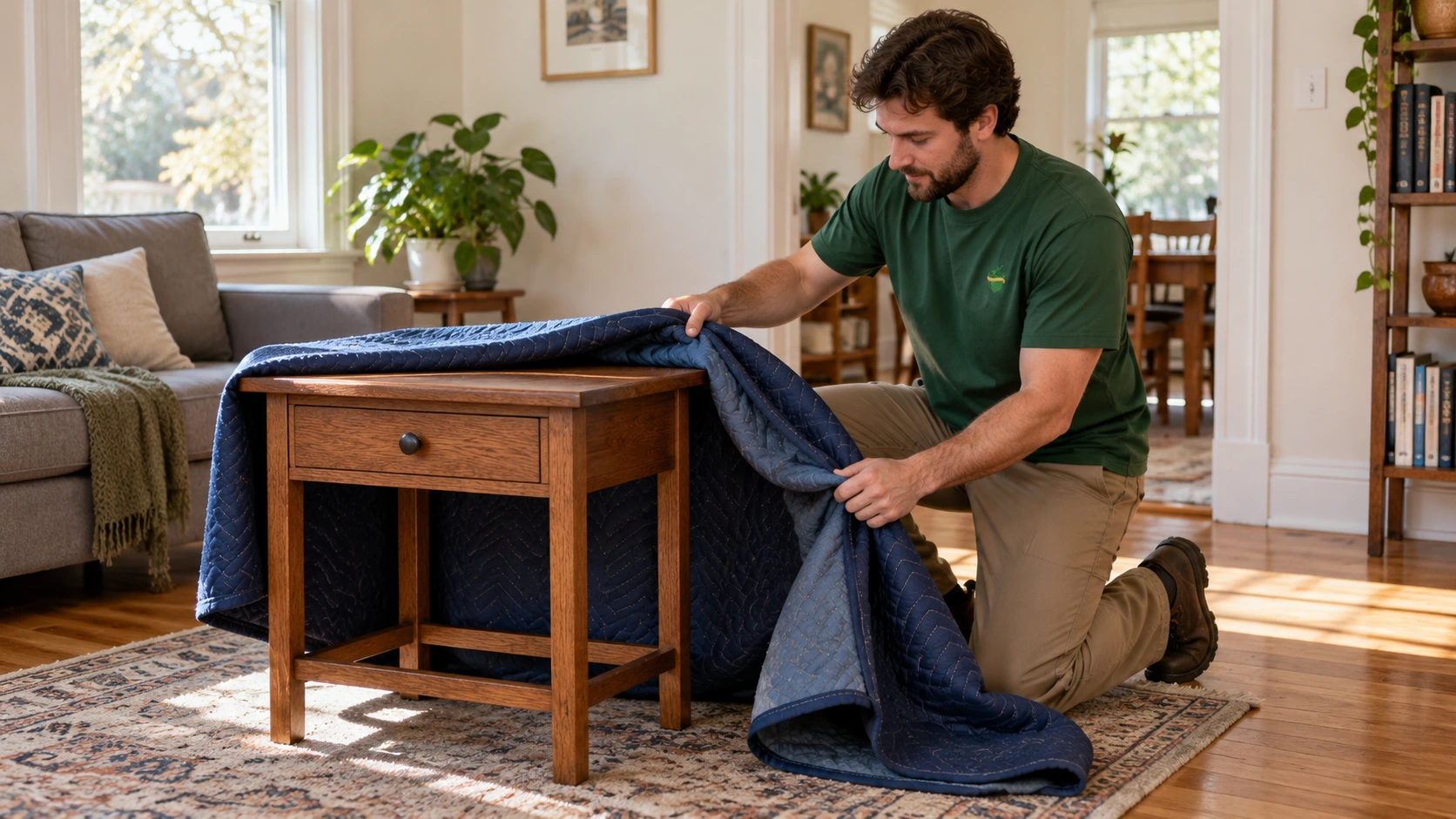
A male mover removes a loose moving blanket from an upright wooden side table in an Oregon home
A mover folds a loose blanket away from the side table.

Oregon planning

Define what happens between leaving and moving in

When the Oregon home is not ready, include storage before collection. Specify the location, inventory, protection, access, charges and how later delivery is booked. Keep enough clothing, medicines, documents and daily equipment with you for the whole gap. An inaccessible shipment is an inconvenient place for something needed tomorrow.

A consolidation window is a transport arrangement, not free storage. Oregon's terms require individual review; do not assume an allowance confirmed for another destination applies here. Ask when the goods can be accessed and what costs or appointments are involved if the household needs something during the gap.

Customer-controlled storage may create separate pickup and delivery stages. Agree who is present, who checks the inventory and condition, and what each signature records. Review the final home's approach now and keep the later receiving plan explicit. A few days between keys should have a defined handover rather than becoming an unexplained wait in transit.

Oregon planning

Make the first rooms usable and start the resident paperwork

Begin with bedding, bathroom supplies, regular medicines, a few kitchen items and work or school essentials. Keep exits and the furniture route clear as the rooms take shape. Hold onto shipment records and keep small parts with their pieces. A workable first night does not require every carton to be open.

Oregon DMV tells ordinary new residents to obtain an Oregon driver license if they will drive, and title and register their vehicle within 30 days. Visitor, military and nonresident-student circumstances can differ. Start with the applicable checklist rather than assuming every temporary stay establishes residency.

For a typical over-18 license application, prepare identity and physical-address proof, provide a Social Security number or electronically certify that you do not have one, and bring the existing credential. Pass the vision test and any other tests required for your case. For an out-of-state vehicle, check title records, a VIN inspection, applicable fees and conditional emissions testing in the Portland or Medford DEQ areas. Contact a lienholder early if it holds the title. Special vehicle and document situations have their own requirements.

A resident puts a mug on an open kitchen shelf beside a carton marked Kitchen
A resident puts mugs on the kitchen shelf.

Oregon planning

Turn the remaining questions into a household brief

Send both addresses, the complete inventory, proposed dates, property readiness and the work you want included. Add photographs and dimensions for an uncertain route or item, loading and building instructions, storage needs and the contact for an authorized receiver. Explain a separate collection or international stage at the start.

Ask the coordinator to describe the proposed transport model, delivery window, price, payment, protection and included preparation and receiving work. Agree what the household will finish and how changes to contents, access or dates are reviewed. Keep the final description with the inventory so the receiver has the same plan.

Use the city portraits to choose where to investigate and the primary sources to check the relevant procedures. The useful result is specific: a home you have assessed, belongings prepared for the agreed work and someone able to receive them. Send the unresolved points for review before treating a preferred date or a broad city name as a completed arrangement.

Verified data

Oregon planning data

Planning factEstimateVintageSource
Total housing units1,857,9922024 ACS 5-yearU.S. Census Bureau
Detached single-unit homes1,164,457 - 62.7% of housing units2024 ACS 5-yearU.S. Census Bureau
Homes built in 1939 or earlier198,252 - 10.7% of housing units2024 ACS 5-yearU.S. Census Bureau
Owner-occupied homes1,087,983 - 63.3% of occupied homes2024 ACS 5-yearU.S. Census Bureau
Renter-occupied homes630,439 - 36.7% of occupied homes2024 ACS 5-yearU.S. Census Bureau
Residents age 1+ from another U.S. state one year earlier2.8% - not net migration or shipments2024 ACS 1-yearU.S. Census Bureau

Planning answers

Oregon moving questions

Straightforward answers about prices, packing, delivery and getting settled.

Ask about your move
Where should I start when comparing places in Oregon?

Choose a few settings from the map and city portraits, then investigate the actual neighborhood, home and everyday journeys. Compare valley cities, Portland-region communities, Bend, southern Oregon, the coast and eastern Oregon according to what your household needs. A visitor attraction can introduce a place without answering every residential question.

Are the county profiles the same as the city boundaries?

No. A county profile gives regional context; city limits, a mailing name and a metropolitan area can describe different places. Salem lies in both Marion and Polk counties. Use the actual address and official local information to identify the right government, property rules and services rather than assigning a whole city to one profile.

Does this guide establish a Sterling Oakbridge local office in Oregon?

No. The guide helps readers compare Oregon places and prepare a household move. The confirmed company scope here is interstate household moving, subject to review of the route and work. Send both addresses, dates and contents for assessment; do not infer an Oregon office or availability for every Oregon-only request.

Is a short journey from Oregon to Washington interstate?

Yes. A household journey crossing a state line is interstate even when short; a longer journey staying in Oregon can remain intrastate. Include storage and any earlier or later transport legs when describing the whole move. The applicable business checks, documents and delivery model follow the actual arrangement rather than distance alone.

How do I check a mover for a journey wholly within Oregon?

Start with ODOT's household-goods resources and certified mover list. Ask for the certificate number and confirm the authority and tariff appropriate to the work. Obtain the written estimate, read the bill of lading and understand the protection and payment choices. Interstate business checks use FMCSA instead of assuming the Oregon intrastate listing answers every question.

Can an Oregon-only mover give a binding estimate over the phone?

No. Oregon's current intrastate rule requires a requested estimate to be nonbinding, free and written or electronic, after an agreed in-person or virtual inspection. A virtual inspection must let the carrier identify the goods through live or recorded video. Final charges follow the filed tariff, and added services need a signed addendum. This differs from the confirmed company interstate flat rate.

What if an Oregon intrastate delivery charge exceeds the estimate?

When payment is due at delivery, the current Oregon intrastate rule allows a request to defer the amount above the estimate and addenda plus ten percent. Paying that estimated total plus ten percent requires release of the goods. The extension is 15 days excluding Saturdays, Sundays and tariff-specified holidays; remaining lawful tariff charges still apply. Keep the records and check ODOT’s process promptly.

How soon must I file an Oregon intrastate damage claim?

File a written claim with the carrier or its agent within three months of delivery. A delivery notation does not replace it. The carrier must acknowledge within 30 calendar days and pay, decline or make a firm written compromise offer within 120 days; unresolved claims require written reasons and subsequent 60-day updates. These are process deadlines, not a promised award or the federal interstate claim rules.

Which interstate moving records should stay with the household?

Keep the written estimate, bill of lading, inventory, protection selection, payment terms, delivery window and contacts available during travel. Check the actual carrier or broker with FMCSA and clarify incomplete entries before signing. Give an authorized receiver usable copies. Paperwork packed inside the shipment cannot help them resolve a question at delivery.

Will a longer journey increase the agreed company flat rate?

For the same agreed company interstate scope, the flat rate remains unchanged if the work or journey takes longer. Extra driving or delivery time alone does not raise it. Changed contents, access or requested services need review, with additional work and charges agreed in writing. Compare proposals using the same complete description.

How do dedicated and consolidated delivery compare?

Dedicated company interstate service uses a direct truck and the same crew for the agreed shipment. Eligible smaller shipments may suit consolidation with a wider window and individually agreed Oregon terms. Consolidation does not inherit the dedicated same-crew promise or provide free storage. Compare the proposed window with keys, building rules and receiver availability.

When does the company delivery window begin?

After pickup loading is complete. It does not start at booking, the first collected item or the household's departure. Have the actual model and window recorded and confirm that the receiver can accommodate them. Raise a fixed building appointment early so it can be compared with the proposed transport arrangement.

How should I prepare for Oregon weather and emergencies?

Check TripCheck and official local alerts near travel. Truck chain rules and passenger-car allowances differ, and conditional closures can be stricter. Prepare for heat, smoke, rain or ice as relevant. Follow local evacuation instructions, learn coastal routes when applicable and keep essentials with you. Do not delay evacuation or ignore a closure to maintain a furniture appointment.

Does permission for a truck route reserve the unloading space?

No. Applicable vehicle or road permissions and a legal stopping place are separate. Ask the property manager and relevant street authority about the curb, loading bay, reservations and hours. Send the actual position and carrying route for review. Over-dimensional permissions depend on vehicle and load limits; they are not a requirement for every household truck.

What should I measure before moving a large cabinet or sofa?

Measure the item and its tightest clear openings, turns, stairs, landings and elevator space. Show the whole path into the final room, including a second screen or storm door. Ask about uncertain fits early. Do not assume permission to remove a door, railing or window, or that a broad porch proves the interior route works.

Can I choose packing for selected fragile items?

Yes. Describe the pieces or rooms needing help and what you will finish yourself. Include cupboard contents, ceramics, lamps and unusual fragile parts rather than showing only furniture. Agree the working time, materials and any specialist preparation. Keep identification, valuables, medicines and travel essentials with the household.

Are supplied boxes included with ordinary protective materials?

No. For the agreed company interstate work, supplied boxes are charged separately. Moving blankets, shrink wrap and tape have no separate basic-material charge, while packing uses working time. Describe unusual items for individual assessment and have the selected work and materials recorded so the proposal reflects the complete household task.

Is basic furniture assembly charged as a separate basic labor fee?

No separate basic-assembly labor fee applies to included basic disassembly and reassembly in the agreed company interstate work. It still takes working time and an accurate description. Show unusual construction and fragile parts beforehand. Basic assembly does not establish furniture repair, specialist installation or suitability of every assembled flat-pack piece.

Does receiving include opening every carton?

No. Furniture is unwrapped as part of the agreed company service. Carton unpacking is optional work charged for time, and packaging-waste removal is separate. Specify the rooms or items you want unpacked and what should happen to the waste. Give a substitute receiver the included-work list so they know what has been agreed.

How should I compare loss or damage protection?

Ask how the actual mover-liability option works, what responsibilities remain with the household and what evidence a claim needs. Keep it distinct from separate household insurance. Preserve inventory and condition records and record specific concerns at delivery. Blankets and wrapping do not establish a financial coverage amount or replace the contract's terms.

What if the Oregon home is not ready for delivery?

Arrange storage before collection, including location, inventory, protection, access, charges and later delivery. Keep essentials for the full gap outside the shipment. A consolidation window is not free storage, and Oregon terms need individual review. For customer-controlled storage, agree who checks and signs at each handover and how the next stage is booked.

Can another person receive my shipment?

Yes, agree an authorized receiver in advance. Provide access, inventory, placement instructions, the included-work list and coordinator contact. They need authority and time to check, record concerns, direct placement and sign. A key left at the property does not carry out those responsibilities or ensure that a building appointment is available.

What should an ordinary new Oregon resident do about a license and vehicle?

Oregon DMV gives new residents 30 days to obtain an Oregon driver license if driving and title and register their vehicle. Check the applicable residency, visitor, military or student circumstances. Prepare the license identity/address/SSN requirements and applicable tests; for the vehicle, check ownership, VIN inspection, lienholder and conditional Portland/Medford DEQ requirements. Use the current checklists for the specific case.

Can Sterling Oakbridge plan an Oregon–Canada household move?

Yes, subject to review of the route, goods, dates and work. Use CBSA guidance for the household's relevant entry category and accompanying-goods and goods-to-follow records. Keep documents with you and include storage or later delivery. Eligibility for duty-free relief depends on the applicable conditions rather than the moving booking alone.

Primary sources

Sources for the decisions in this guide

Official resources for choosing a community in Oregon and preparing the move. Figures retain their stated dates; follow current agency guidance for your own circumstances.

Oregon-only moving documents and consumer protection

5 sources

Interstate records and Canadian arrival

3 sources

Oregon resident and vehicle documents

3 sources
  • New to Oregon: driver and vehicle requirementsOregon Department of Transportation · Driver and Motor Vehicle Services

    Ordinary new-resident 30-day timing, transfer pathways and visitor distinctions.

  • Get a driver license: over 18Oregon Department of Transportation · Driver and Motor Vehicle Services

    Identity, address, Social Security, existing credential, vision and applicable test conditions.

  • Titling and registering your vehicleOregon Department of Transportation · Driver and Motor Vehicle Services

    Ownership records, VIN inspection, lienholder arrangements, conditional emissions requirements and situation-specific documents.

City settings and the relevant local government

14 sources
  • Portland city guideTravel Oregon · Oregon Tourism Commission

    Local character, public places and regional surroundings for the Portland portrait.

  • Salem city guideTravel Oregon · Oregon Tourism Commission

    Local character, public places and regional surroundings for the Salem portrait.

  • Eugene city guideTravel Oregon · Oregon Tourism Commission

    Local character, public places and regional surroundings for the Eugene portrait.

  • Bend city guideTravel Oregon · Oregon Tourism Commission

    Local character, public places and regional surroundings for the Bend portrait.

  • Medford city guideTravel Oregon · Oregon Tourism Commission

    Local character, public places and regional surroundings for the Medford portrait.

  • Ashland city guideTravel Oregon · Oregon Tourism Commission

    Local character, public places and regional surroundings for the Ashland portrait.

  • Corvallis city guideTravel Oregon · Oregon Tourism Commission

    Local character, public places and regional surroundings for the Corvallis portrait.

  • Hillsboro city guideTravel Oregon · Oregon Tourism Commission

    Local character, public places and regional surroundings for the Hillsboro portrait.

  • Astoria city guideTravel Oregon · Oregon Tourism Commission

    Local character, public places and regional surroundings for the Astoria portrait.

  • Newport city guideTravel Oregon · Oregon Tourism Commission

    Local character, public places and regional surroundings for the Newport portrait.

  • Hood River city guideTravel Oregon · Oregon Tourism Commission

    Local character, public places and regional surroundings for the Hood River portrait.

  • Baker City city guideTravel Oregon · Oregon Tourism Commission

    Local character, public places and regional surroundings for the Baker City portrait.

  • Salem community profileCity of Salem

    The city lies in both Marion and Polk counties; dated statistical figures on that page are separate from this guide’s Census dataset.

  • Salem regional government and mapsCity of Salem

    Find the relevant city limits and county for an actual address.

Weather, emergencies and vehicle access

8 sources
  • Oregon road and weather conditionsOregon Department of Transportation · TripCheck

    Check current conditions, cameras and trucking information close to travel.

  • Chains and traction tiresOregon Department of Transportation

    Vehicle-specific requirements, posted conditions, conditional closures and qualified exceptions.

  • Be 2 Weeks ReadyOregon Department of Emergency Management

    A household emergency plan and supplies for at least two weeks following a disaster.

  • Tsunami preparednessOregon Department of Emergency Management

    Coastal natural warnings, earthquake actions and prompt movement inland and uphill.

  • Wildfire evacuation levelsState of Oregon · Wildfire Response and Recovery

    Be Ready, Be Set, Go Now and local emergency instructions.

  • Oregon wildfire informationOregon State Fire Marshal

    Official wildfire information and its map limits; follow local evacuation authorities.

  • State-highway permissionsOregon Department of Transportation · Maintenance and Operations

    Vehicle/load size and weight permissions differ from a local curb reservation or building appointment.

  • Heat safetyNOAA · National Weather Service

    Prepare for heat and keep people and pets safe during household travel.

Dated housing, population and real geography

7 sources

Photographs are original representative illustrations, not customer jobs or identified addresses.

Let’s plan your move

Tell us about your Oregon move.

Tell us where you are moving, what you are taking and your preferred dates. Add any packing, furniture preparation, unpacking or storage help you need.

A Sterling Oakbridge move coordinator in the planning office