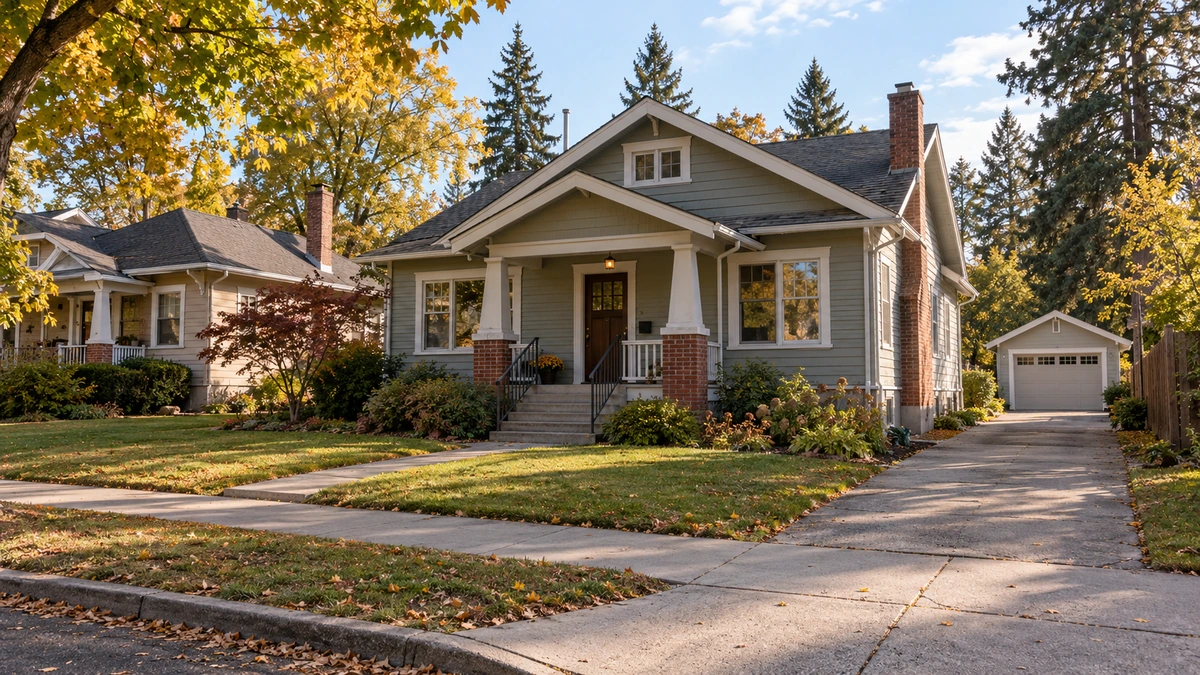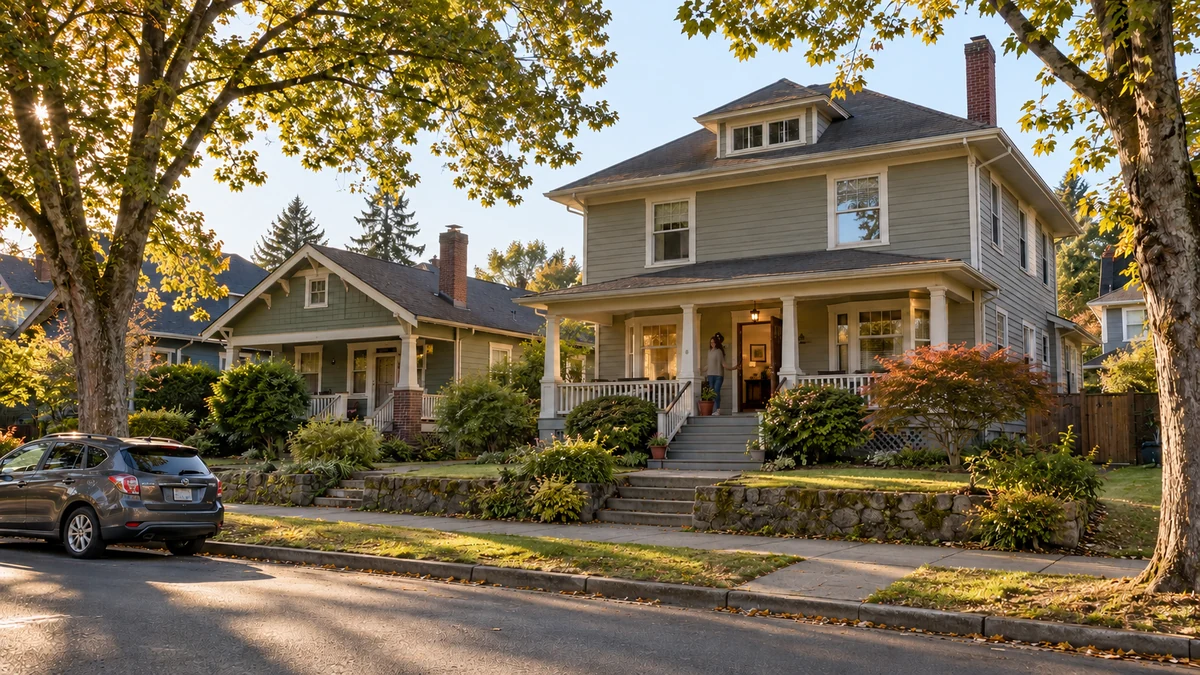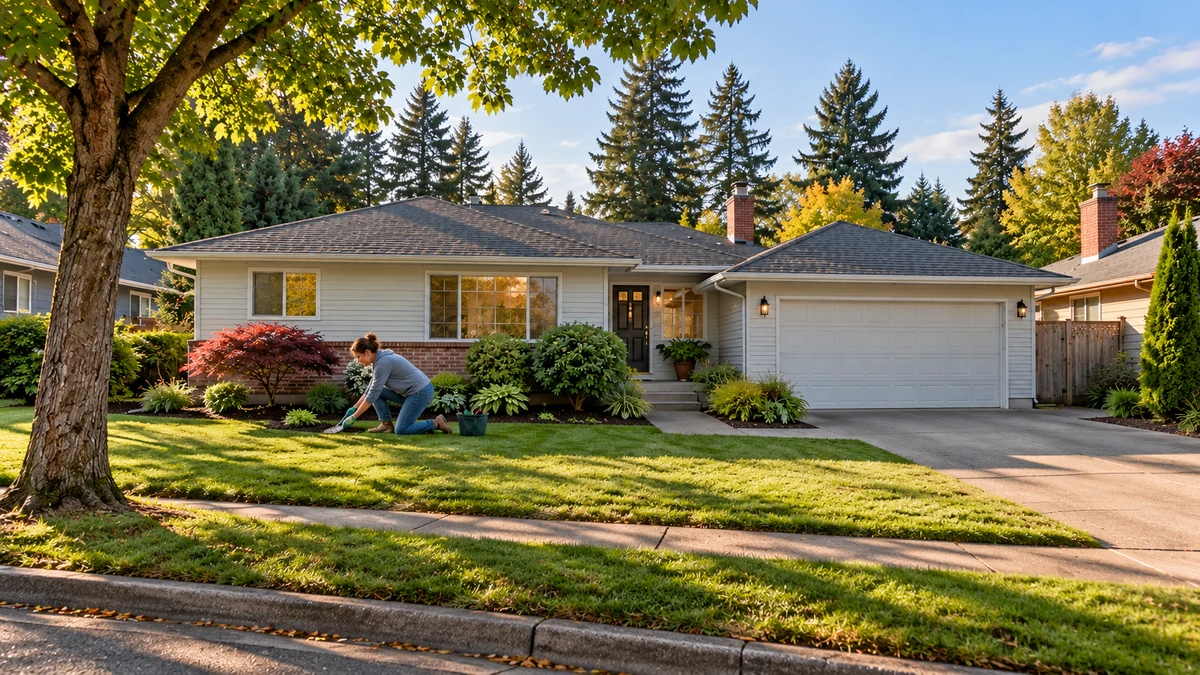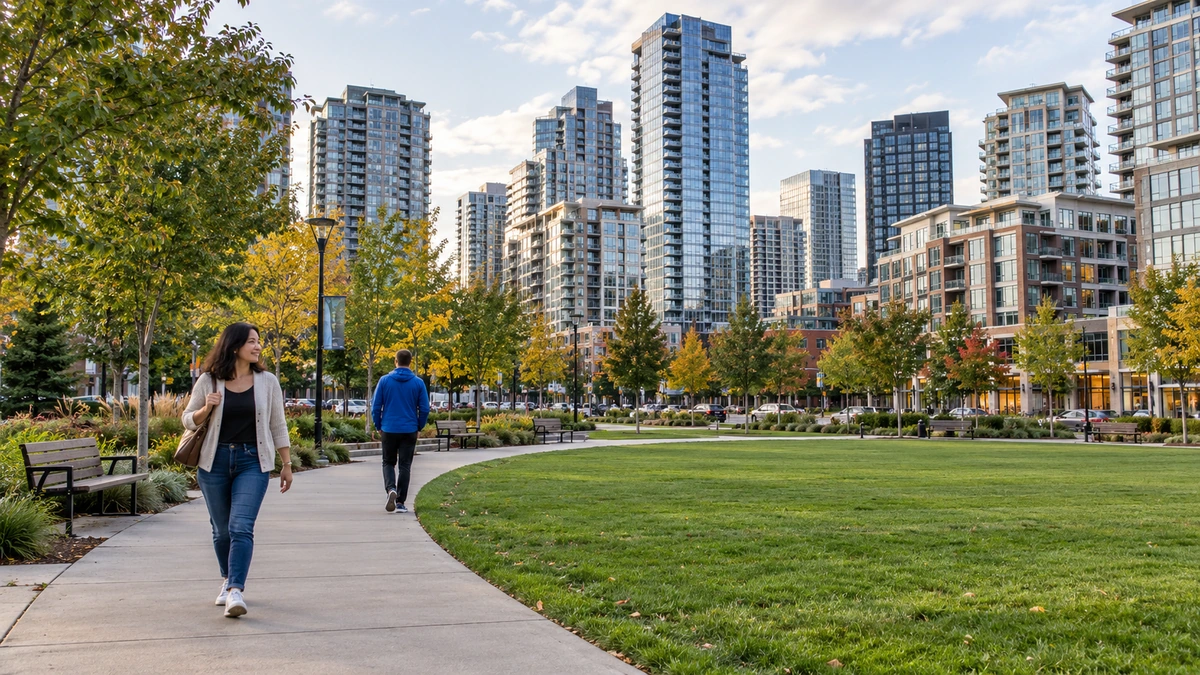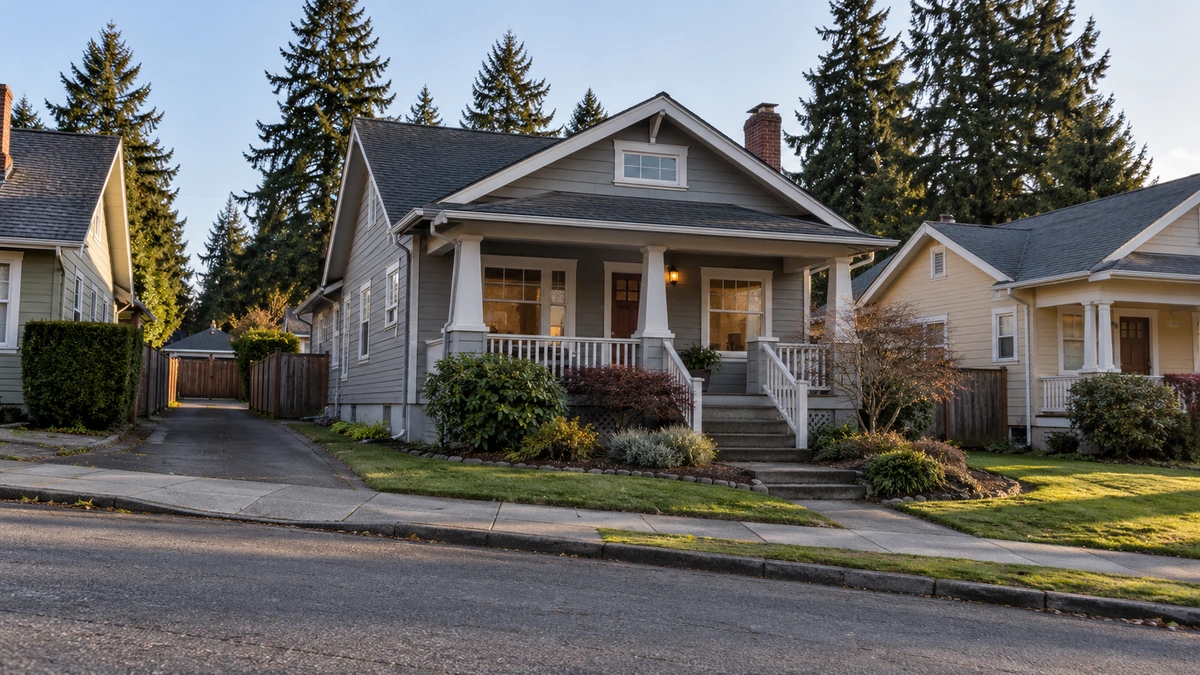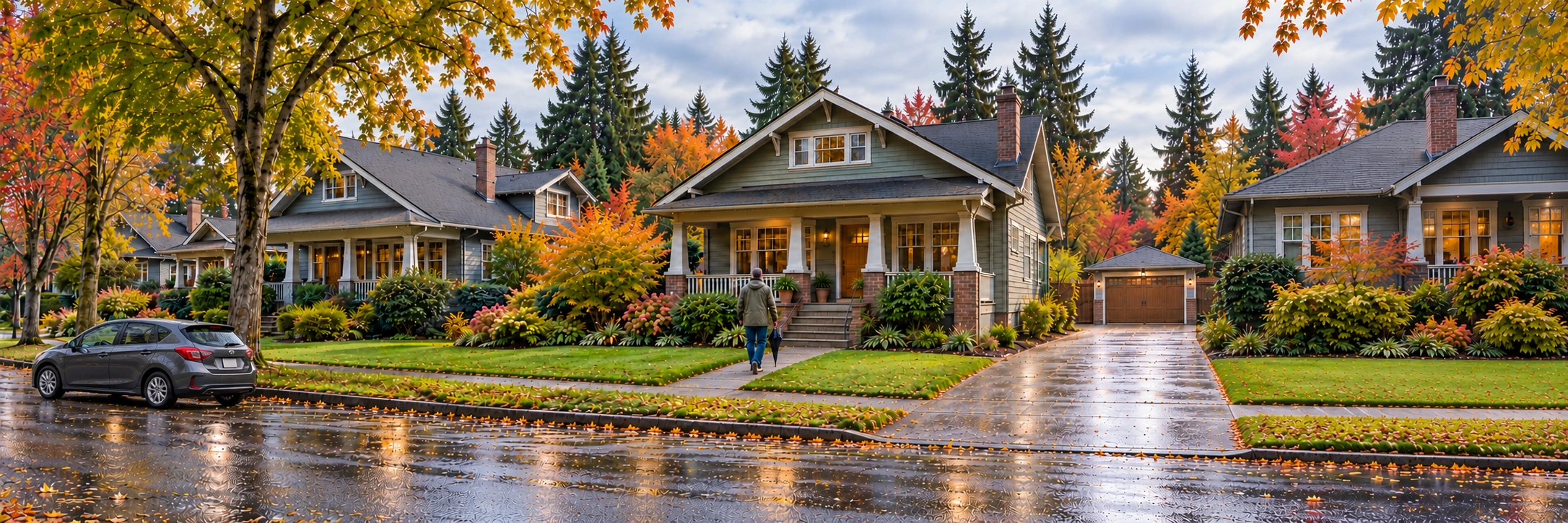
A resident follows a curved front path toward a Craftsman porch on a tree-lined Washington street.

State moving guide

Moving to Washington: A Practical Guide

Find your part of Washington, compare moving options and prepare for a smoother arrival. Explore twelve cities, understand ferry and mountain-road planning, and get practical help with a move to or from the Evergreen State.

Washington planning

Find your place in Washington

Washington offers very different places to call home. Seattle’s city neighborhoods and Bellevue’s parks and downtown apartments contrast with Spokane’s inland setting, the smaller centers around Puget Sound and the valleys east of the Cascades. Use the map and city portraits to find an area that interests you, then compare neighborhoods around your work, schools and everyday destinations.

Already chosen a home? Start with moving costs, direct or consolidated delivery, packing or the arrival checklist. This guide also covers Washington mover checks, wet-weather preparation, mountain roads, ferry connections and gaps between homes. Sterling Oakbridge can help plan an interstate household move to or from Washington; from Seattle, our service is long-distance moving.
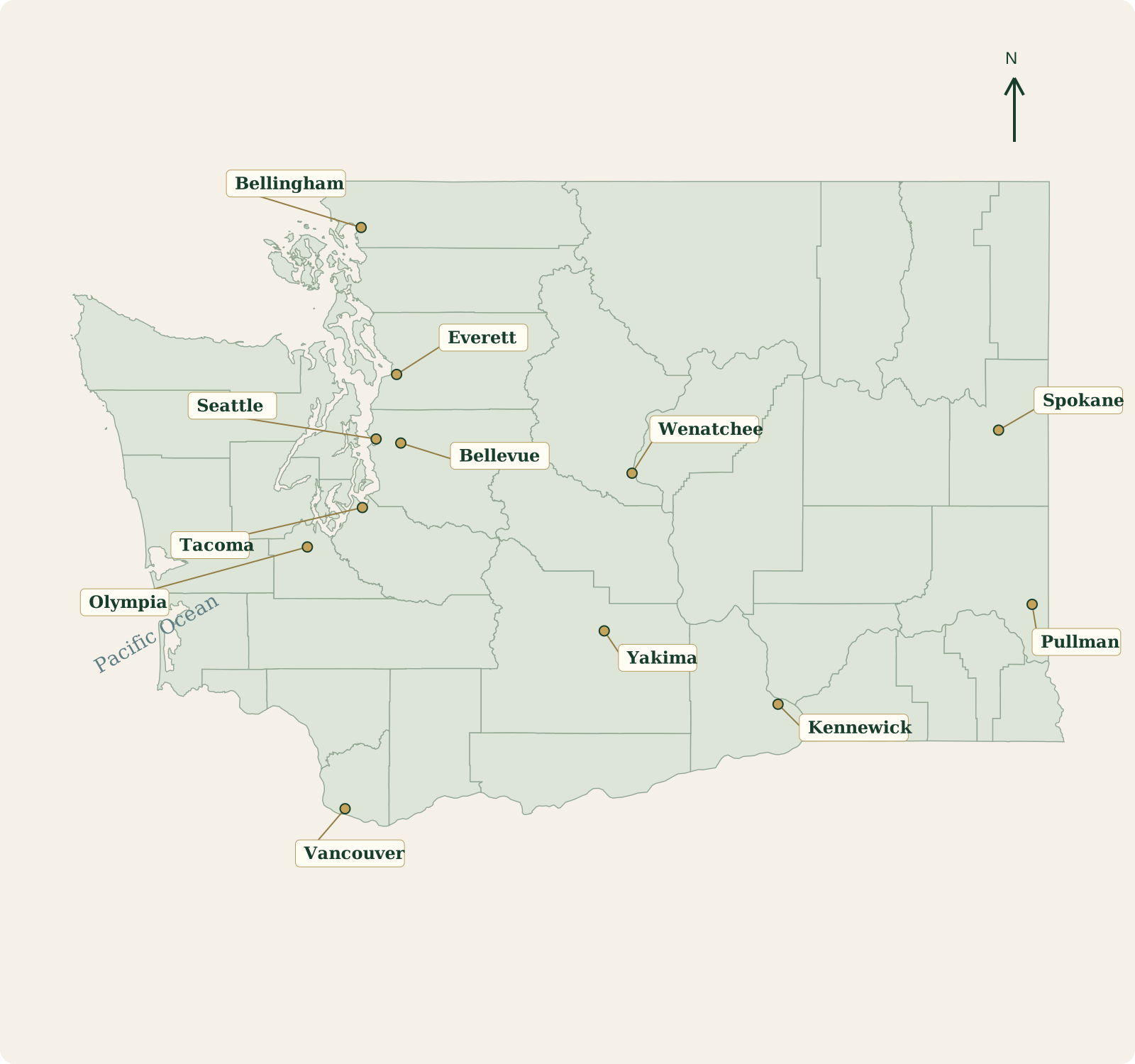

Washington cities and regions
Explore twelve Washington cities, from Puget Sound to the inland valleys and the Palouse. Use the profiles below to find the area that fits your plans.

Washington planning

Which part of Washington fits your plans?

Seattle and the Eastside. Seattle has a mix of historic commercial districts, apartment neighborhoods and quieter residential streets. Bellevue offers a different city setting east of Lake Washington, with downtown parks, shops and established residential areas. Compare your actual daily journeys as well as the home itself.

North and south Puget Sound. Everett and Bellingham offer northern starting points with their own centers and waterfront connections. Tacoma brings museums, older neighborhoods and a working-waterfront heritage. Olympia combines the state capital with independent shops, arts and the South Sound. Treat them as distinct places to explore.

Southwest Washington. Vancouver sits on the Washington side of the Columbia River, across from Portland, Oregon. Its waterfront and older neighborhoods provide different home-search options. Write “Vancouver, Washington” when discussing addresses; Vancouver, British Columbia, involves Canada and a different moving process.

East of the Cascades. Spokane, Yakima, Kennewick, Wenatchee and Pullman offer inland city, valley and university-town settings. Look at the neighborhood and your regular destinations rather than expecting western Washington’s landscape or weather everywhere. For an island, peninsula or more remote home, include the final road or ferry connection in the moving discussion.

Service network

Explore Washington’s cities

Explore twelve different places to make a home, from Seattle’s city neighborhoods to smaller Sound-side centers and inland Washington. Start with the city that interests you, then compare its neighborhoods and your everyday destinations.

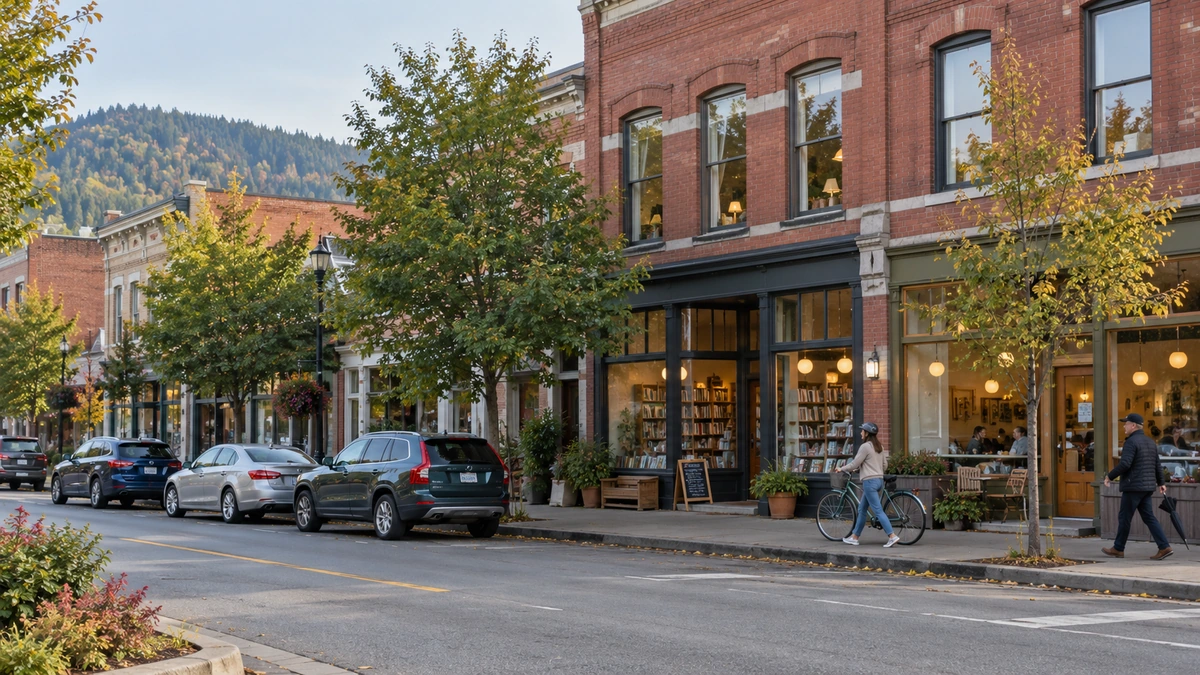
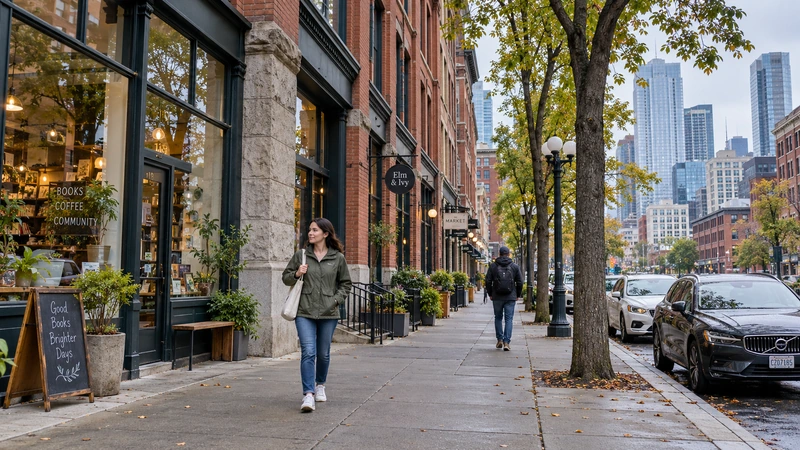
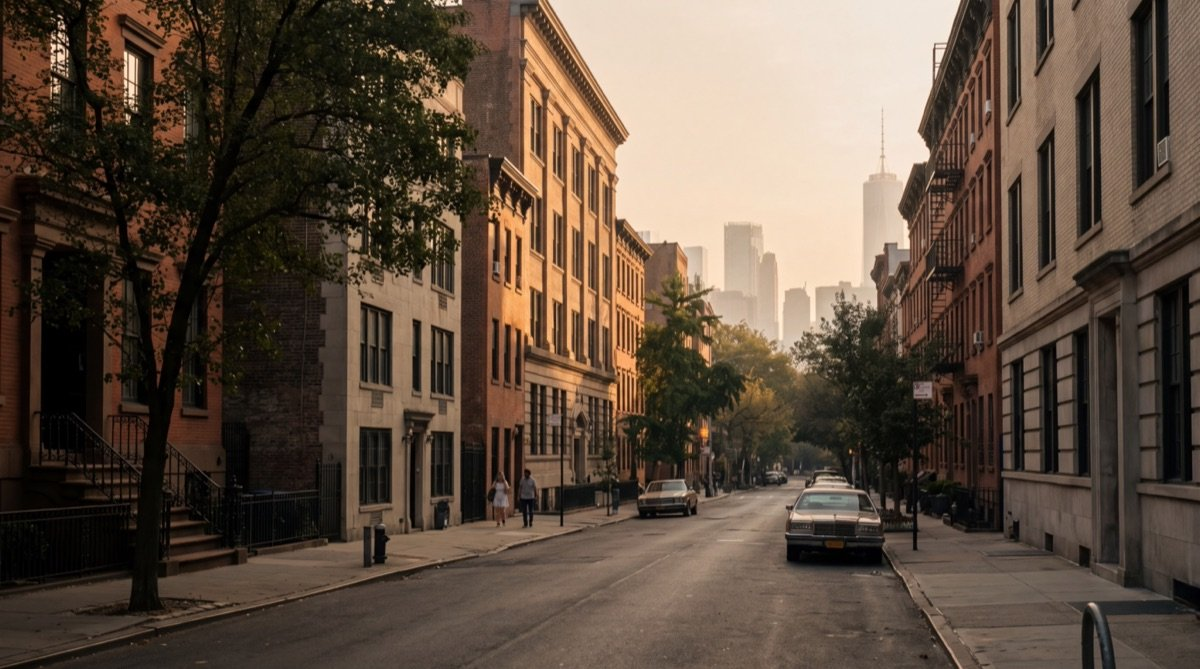
A resident walks past brick storefronts on a Seattle-style city sidewalk.WA

Seattle

Seattle offers a choice of city neighborhoods: historic art and brick streets around Pioneer Square, shops and nightlife on Capitol Hill, maritime roots in Ballard and quieter residential streets elsewhere. Compare the neighborhood with your regular destinations and the kind of home you want. Use the Seattle page for a closer look at planning the move.

Explore Seattle moving →
A raised porch and side driveway lead to a bungalow and detached garage in an inland neighborhood.WA

Spokane

Spokane brings an inland city center together with established residential neighborhoods and the Spokane River. Riverfront Park is a useful place to start exploring, while an older bungalow neighborhood offers a different home setting from a downtown apartment. Compare both the local routine and the house’s actual floors before choosing.

A resident opens the front door from the landing of a two-story porch home.WA

Tacoma

Tacoma combines older neighborhoods with museums, a revitalized downtown and a waterfront shaped by its industrial history. Explore the Museum of Glass area, Ruston Way or the green space around Point Defiance as starting points for local life. Then compare the neighborhood around the home you would use every day.

A resident tends a garden bed beside a single-story house with an attached garage.WA

Vancouver

Vancouver, Washington, sits on the Columbia River across from Portland, Oregon. Its newer waterfront, historic Fort Vancouver and downtown shops offer different ways to explore the city, alongside established residential neighborhoods. Compare daily journeys across the region, and keep the Washington address distinct from Vancouver, British Columbia.

Two residents walk along a curved park path with modern city buildings beyond.WA

Bellevue

Bellevue offers an Eastside city setting with downtown apartments, parks and established residential areas. Downtown Park, Old Bellevue’s Main Street and the Lake Washington waterfront provide useful places to explore before narrowing a home search. Compare your everyday destinations with the particular neighborhood, rather than treating the whole Eastside as one place.

A small porch home has raised front steps and a separate narrow side driveway.WA

Everett

Everett has a downtown, a maritime waterfront and a strong aviation connection, giving it a different setting from central Seattle. Older residential streets and other neighborhoods offer different kinds of homes. Start with the places you will use regularly, then compare the actual journey from each home you are considering.

Two neighbors talk beside a Craftsman porch, one seated and one standing on the front walk.WA

Olympia

Washington’s capital pairs the Capitol campus with a compact downtown of independent shops, galleries and coffee places. Percival Landing and the South Sound waterfront add places to walk and explore. Compare that central setting with residential neighborhoods around your work and everyday destinations.

A resident walks a bicycle along a sidewalk beside redbrick shops in a Bellingham-style town center.WA

Bellingham

Bellingham offers a northern waterfront setting with distinct downtown and residential neighborhoods. Fairhaven’s redbrick buildings, independent shops and galleries make a useful starting point for exploring the city’s character. Compare the home’s neighborhood and regular journeys as well as the scenery; a Canadian destination is a separate border move.

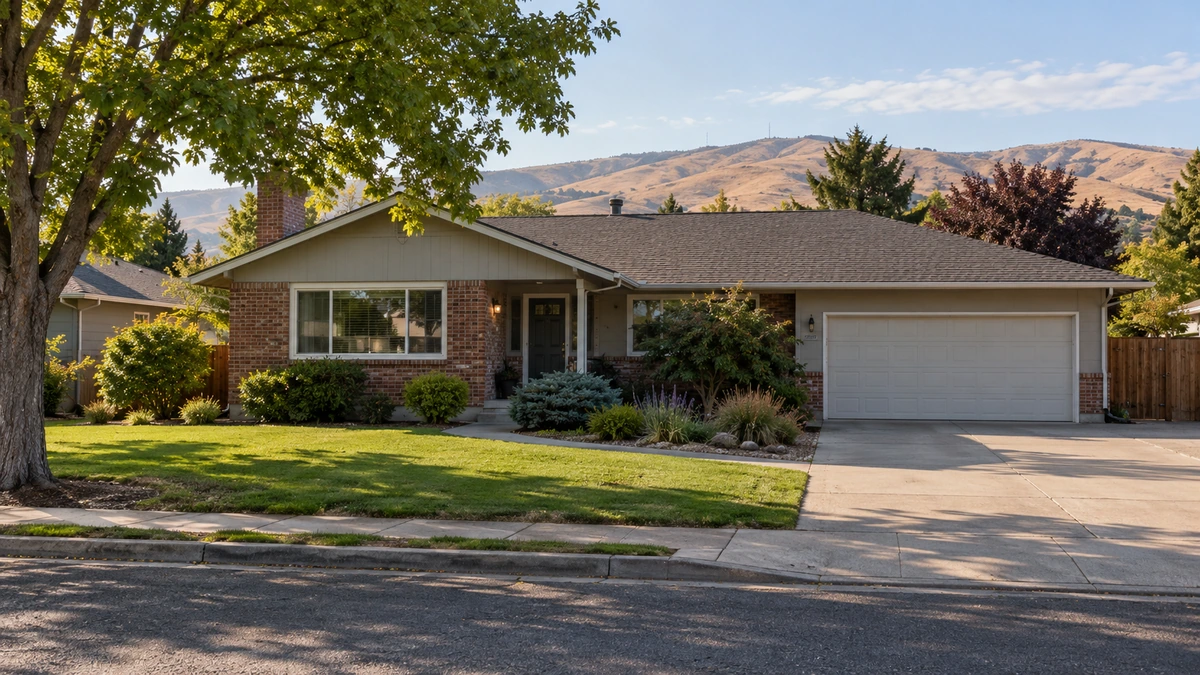
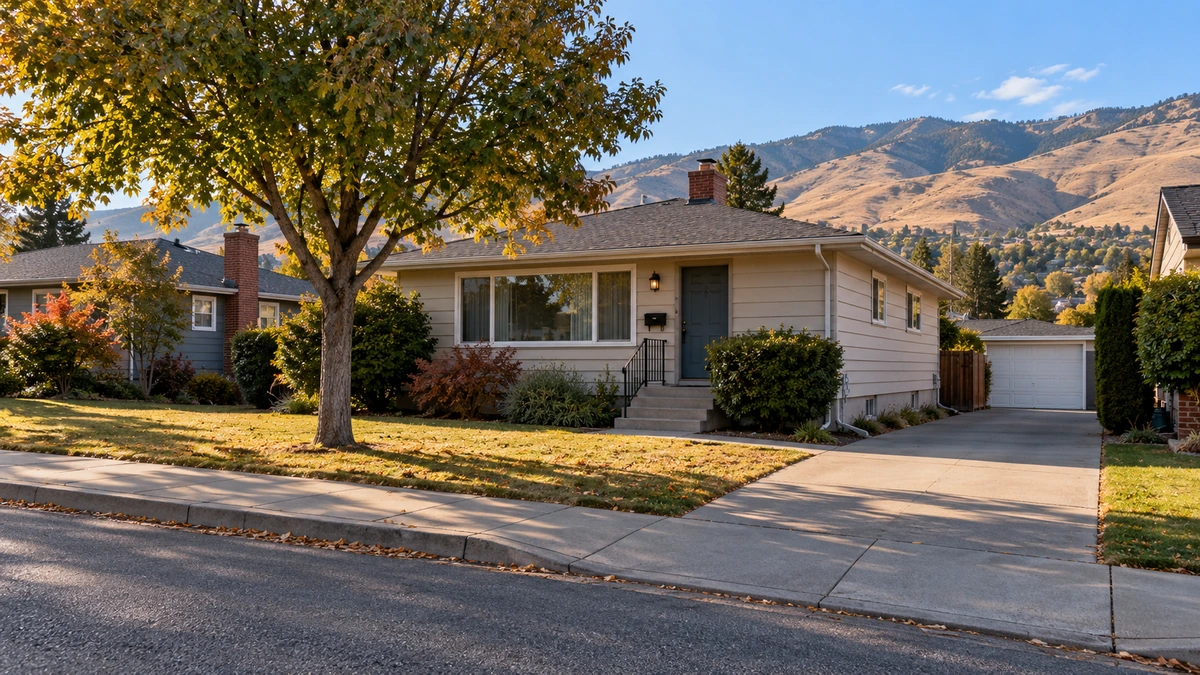
A ranch home stands below dry hills with a connected garage drive and separate front walk.WA

Yakima

Yakima sits among the dry hills and agricultural landscape of the Yakima Valley. Downtown shops, performance venues and local food and drink provide a center to explore, with residential areas beyond it. Compare the neighborhood and your daily destinations with the actual home, rather than expecting the same setting as Puget Sound.

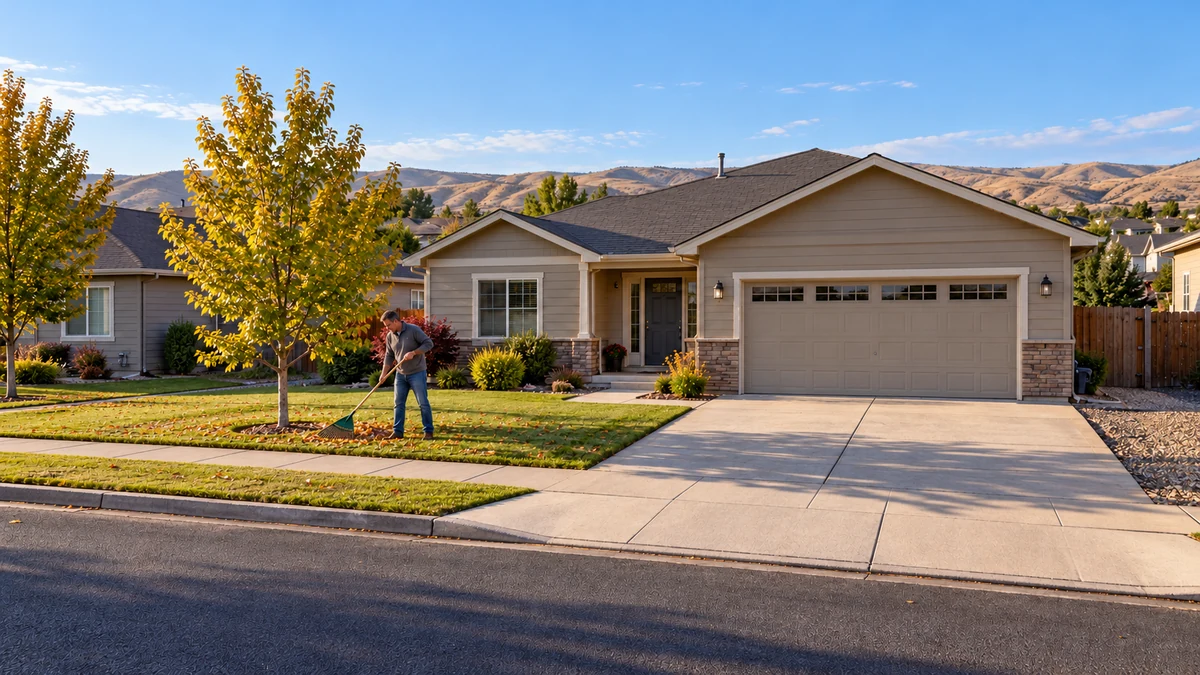
A resident rakes fallen leaves beside a newer ranch house and open garage driveway.WA

Kennewick

Kennewick is one of the Tri-Cities, alongside Pasco and Richland. Columbia Park and the river corridor provide a starting point for exploring local recreation, while established and newer residential areas offer different home choices. Compare the actual city and neighborhood with the places you will visit regularly.

A low house has raised front steps, a side driveway and dry foothills beyond.WA

Wenatchee

Wenatchee combines a Columbia River setting with downtown shops, Pybus Public Market and nearby dry foothills. Explore the riverside parks and local streets to compare everyday life with a home farther from the center. Check current trail and road notices when planning a visit; do not assume a route is open from a general guide.

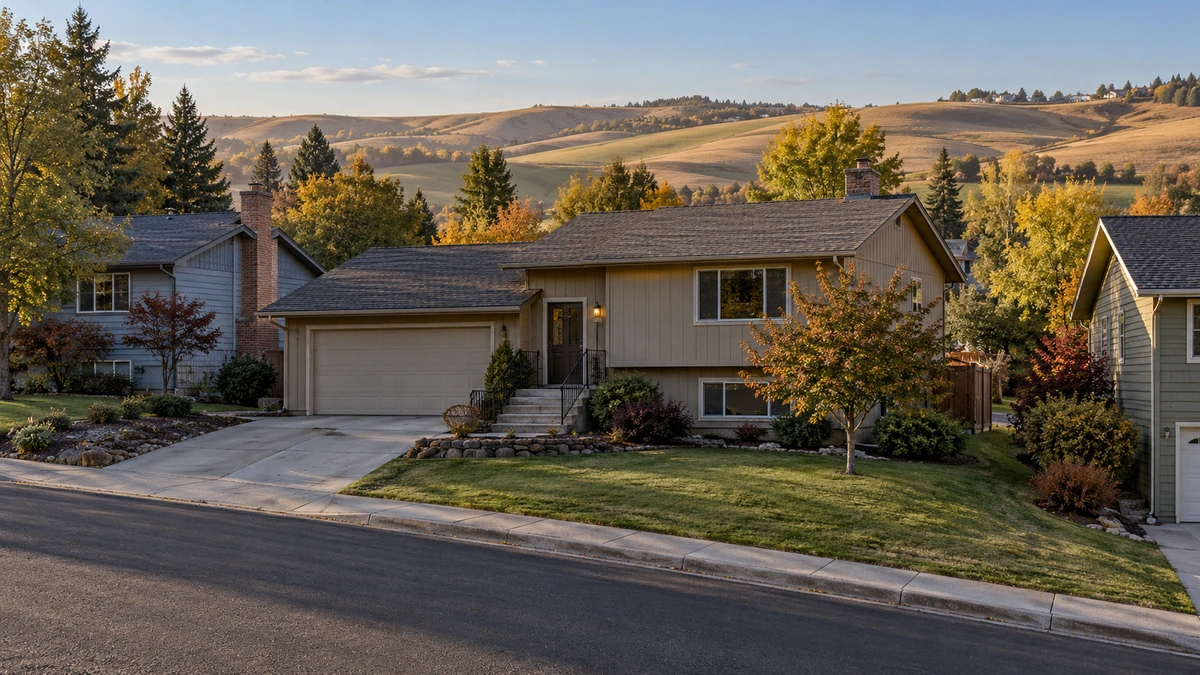
A split-level home follows a sloping neighborhood street below rolling Palouse hills.WA

Pullman

Pullman is a university town in the rolling Palouse landscape, with Washington State University closely connected to local life. Compare the neighborhood and campus or work journey alongside the house or apartment. Hills and split-level layouts can matter after you choose a home, so show the actual floors and final approach when planning the move.

Washington planning

Moving within Washington or between states?

Seattle to Tacoma stays within Washington. Vancouver, Washington, to Portland, Oregon, or Spokane to an Idaho address crosses a state line. The pickup and final delivery addresses determine which moving process applies; distance and the metro name do not.

For a Washington-only move, check the actual carrier through the Utilities and Transportation Commission and review its state estimate and contract. For an interstate move, use FMCSA checks and shipment documents. The Sterling Oakbridge service described here is interstate moving; a place in the directory does not confirm a separate local booking.

List extra pickups, storage and any later delivery in your request. If a separate operator will handle a Washington-only stage, record who receives the goods, the price and the handoff. A Canadian destination also needs the household’s applicable border process and goods documents.

More places to explore

Keep exploring Washington communities

Looking beyond the featured cities? These communities offer more starting points for your Washington home search.

Ask about your Washington move →

Washington planning

Can the truck reach your home?

Show the full road or driveway, the gate and the place where the truck could stop. Include sharp turns, grades, low branches, soft surfaces and room to turn or leave. Identify who can authorize a private-road or shared-drive approach and open any gate.

Follow the route from that stopping place to the actual entrance and rooms. A broad driveway can still lead to porch steps, a side gate or a tight hallway turn. A short video of the whole approach helps explain more than a close-up of the house. Send private access details through the agreed private channel.

Have the carrier review the actual commercial vehicle and current road restrictions. A family-car route does not establish truck access. If a smaller vehicle or another transfer is needed, agree its handling, protection, timing and price before relying on it. Include an island or ferry-dependent connection at the start.

The moving process

Your move, step by step

  1. 1

    Describe the move

    Send both addresses, the belongings, access details and the dates that matter. Include the receiving home even if you are still waiting for keys.

  2. 2

    Choose preparation

    Decide what you will pack and what help you want. Show large or delicate pieces and keep a final-night essentials group with you.

  3. 3

    Agree the delivery plan

    Compare direct and suitable consolidated service with your receiver’s availability. Resolve a storage gap or building appointment before booking.

  4. 4

    Review the written proposal

    Check the inventory, included work, materials, price, protection and accepted timing. Record additions before the affected work.

  5. 5

    Receive and check the goods

    Place large furniture first, check the inventory and condition, then make the priority rooms usable. Arrange optional unpacking or packaging removal separately.

Ready when you are

Ready to discuss your move?Tell us where you are moving, what is coming with you and the dates you have in mind.

Washington planning

Compare Washington moving estimates fairly

For a move staying within Washington, obtain a written binding or nonbinding estimate before the move. Under Washington’s estimate rule, an hourly rate alone is not that estimate. A binding estimate promises a guaranteed cost for its stated work; a nonbinding estimate can lead to a different total under the applicable rules.

Give each operator the same inventory, packing request, stairs, extra stops and storage needs. The rule normally calls for a visual inspection, with a specific alternative for a customer-completed calculation. Read the conditions for the method being used. If circumstances add work and charges, the carrier must obtain an accepted, signed supplemental estimate before doing that additional work.

Check the current UTC tariff and consumer guide for the actual contract. Keep complete signed and dated copies. The company’s interstate flat-rate terms are a separate arrangement; a long trip entirely within Washington does not inherit them because of the mileage.

County guides

Explore the area around your new home

These six counties include several of the featured cities. Use the local communities below as starting points for a closer home search.

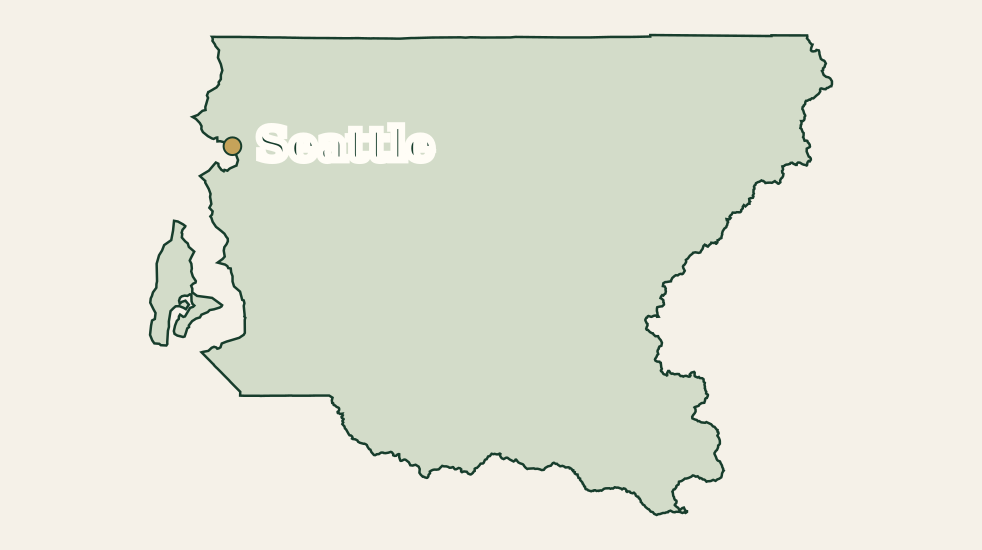
King County with Seattle marked
Central Puget SoundPop. 2,287,171 · 2024

King County

Compare Seattle’s urban neighborhoods with Bellevue and other Eastside communities. A county name covers very different homes and journeys; start with the places you will use every day, then review the chosen building.

Key communities

Seattle · Bellevue · Redmond

Check a Washington mover →
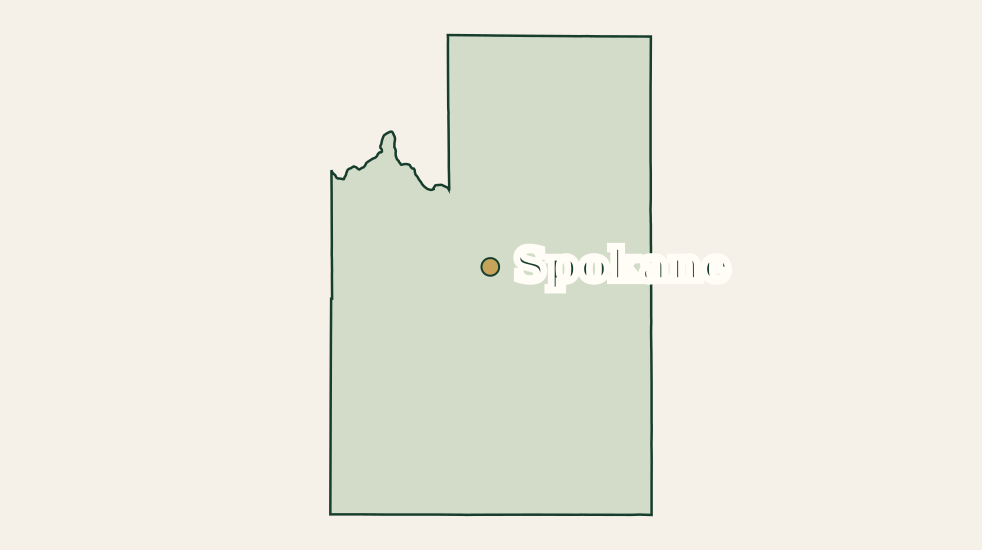
Spokane County with Spokane marked
Inland WashingtonPop. 549,056 · 2024

Spokane County

Explore central Spokane and the other communities around it as separate home-search options. Older houses, apartments and homes beyond the center can have different layouts and approaches.

Key communities

Spokane · Spokane Valley · Cheney

Check a Washington mover →
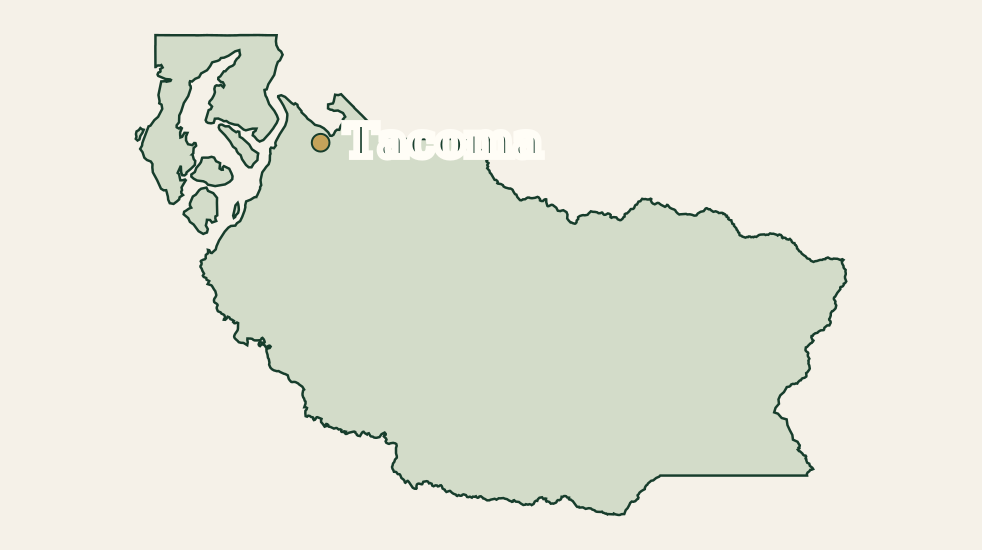
Pierce County with Tacoma marked
South Puget SoundPop. 930,319 · 2024

Pierce County

Tacoma’s older neighborhoods, downtown and waterfront provide starting points for a wider Pierce County search. Compare the actual home and regular destinations before treating nearby communities as interchangeable.

Key communities

Tacoma · Lakewood · Puyallup

Check a Washington mover →
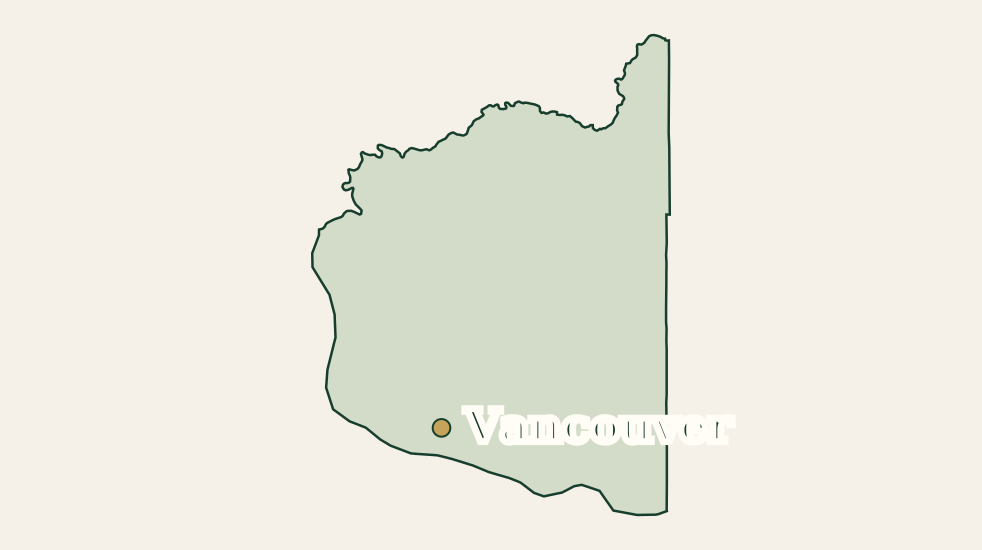
Clark County with Vancouver marked
Southwest WashingtonPop. 516,959 · 2024

Clark County

Compare Vancouver and other Clark County communities for a Washington-side home near the Columbia River. Check the daily journey and the actual property; a move across the river into Oregon is interstate.

Key communities

Vancouver · Camas · Battle Ground

Check a Washington mover →
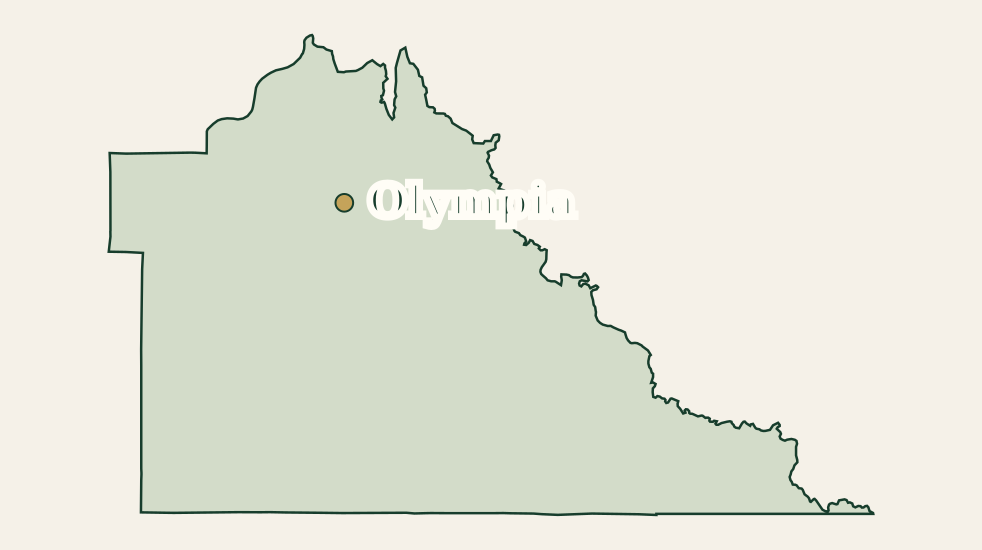
Thurston County with Olympia marked
South SoundPop. 299,067 · 2024

Thurston County

Olympia, Lacey and Tumwater offer different starting points around the South Sound. Compare the home with your work, school and household routines, then review any shared-building or private-road arrangements.

Key communities

Olympia · Lacey · Tumwater

Check a Washington mover →
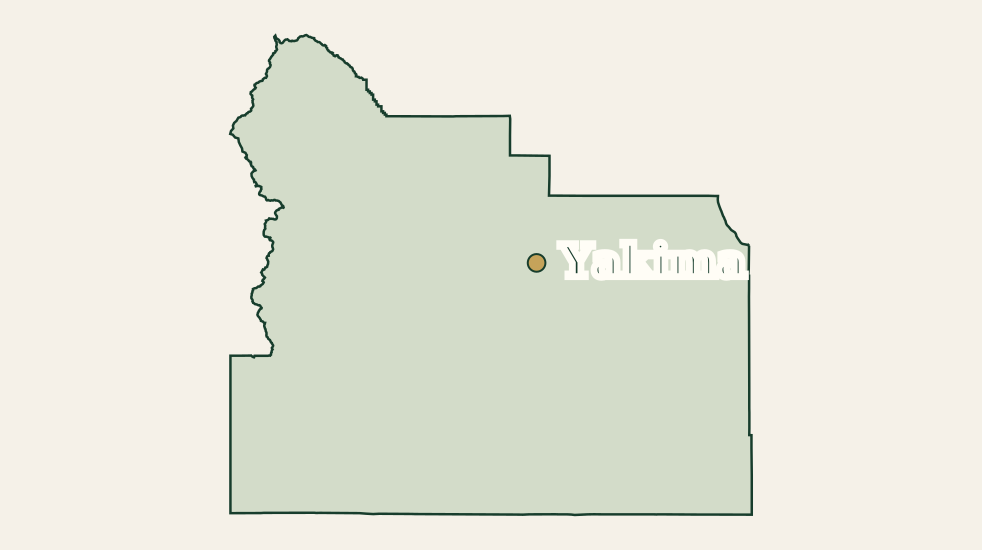
Yakima County with Yakima marked
Yakima ValleyPop. 257,152 · 2024

Yakima County

Explore Yakima and the other valley communities as distinct settings. Look at the neighborhood, home layout and daily destinations; include the final approach if the home search extends outside the urban center.

Key communities

Yakima · Union Gap · Selah

Check a Washington mover →

County population: 2024 ACS five-year estimates, U.S. Census Bureau. These are survey estimates for the stated period, separate from a current-year population count. Read the source.

All 39 Washington counties

Washington planning

Will your furniture fit through the new home?

Measure a problem piece against the narrowest parts of its route: room door, hallway turn, stair landing, elevator door and building entrance. Include handles, projections and the space needed to turn. Photograph the actual restriction from both sides if one view hides the level change or door swing.

For a shared building, get the service entrance, elevator dimensions, move appointment, working hours and any required insurance documents from management. A household garage space or passenger parking bay may have no practical use for a moving truck.

Discuss suitable disassembly, an alternate room or leaving a piece before moving day. Clear the route and choose positions for the largest furniture before cartons occupy the floor. Tell the coordinator about delicate floors, fresh finishes or unfinished rooms so protection and placement can be planned.

Washington planning

Check the mover before you book

Find out who will actually transport your belongings. For a Washington-only job, use the UTC moving resources to check the operating carrier. For interstate work, check the responsible carrier or broker through FMCSA and read the consumer information for that shipment.

Match the business name to the estimate, agreement and company receiving your payment. If an intermediary arranged the move, ask who carries the goods and handles delivery questions. Keep a working contact for before, during and after the move.

Read the protection terms for your belongings separately from a building’s insurance-document request. Keep the inventory, condition photographs and agreed documents available during travel. Resolve blank or unclear terms before signing and record a changed scope before the affected work.

Who does what

A little coordination before moving day

You, the moving team and your building contacts each handle a different part of getting the move ready.

01 Moving checklist

You and your receiver

Provide the inventory, access, household dates and a reachable authorized receiver. Keep essentials and documents available and communicate changes early.

02 Moving checklist

The planning team

Review the shipment and preparation, coordinate the accepted dates and record the work, price and unresolved questions in the proposal. The surveyor is not necessarily the truck crew.

03 Moving checklist

The crew and any separate operator

Perform the agreed moving work. Direct service uses the same pickup and delivery crew; identify who handles any separate storage, later transport or specialist task.

Washington planning

Know what your interstate paperwork covers

Before booking, check that the estimate describes the same belongings, addresses and work you discussed. Include packing, furniture preparation, extra stops, access and receiving help. Confirm the pickup date, delivery window, payment terms and selected protection for your goods.

FMCSA’s consumer-rights guide explains the federal information movers and brokers must provide. Ask for the rights-and-responsibilities material and the mover’s written questions, complaints and claims procedures. Read the terms before signing and keep the agreed version and later changes.

Give your receiving representative the inventory and contact information. At delivery, check the goods and record missing items or visible condition concerns while they can be described clearly. Keep photographs and paperwork for any follow-up.

Washington planning

Plan for rain, winter passes and inland heat

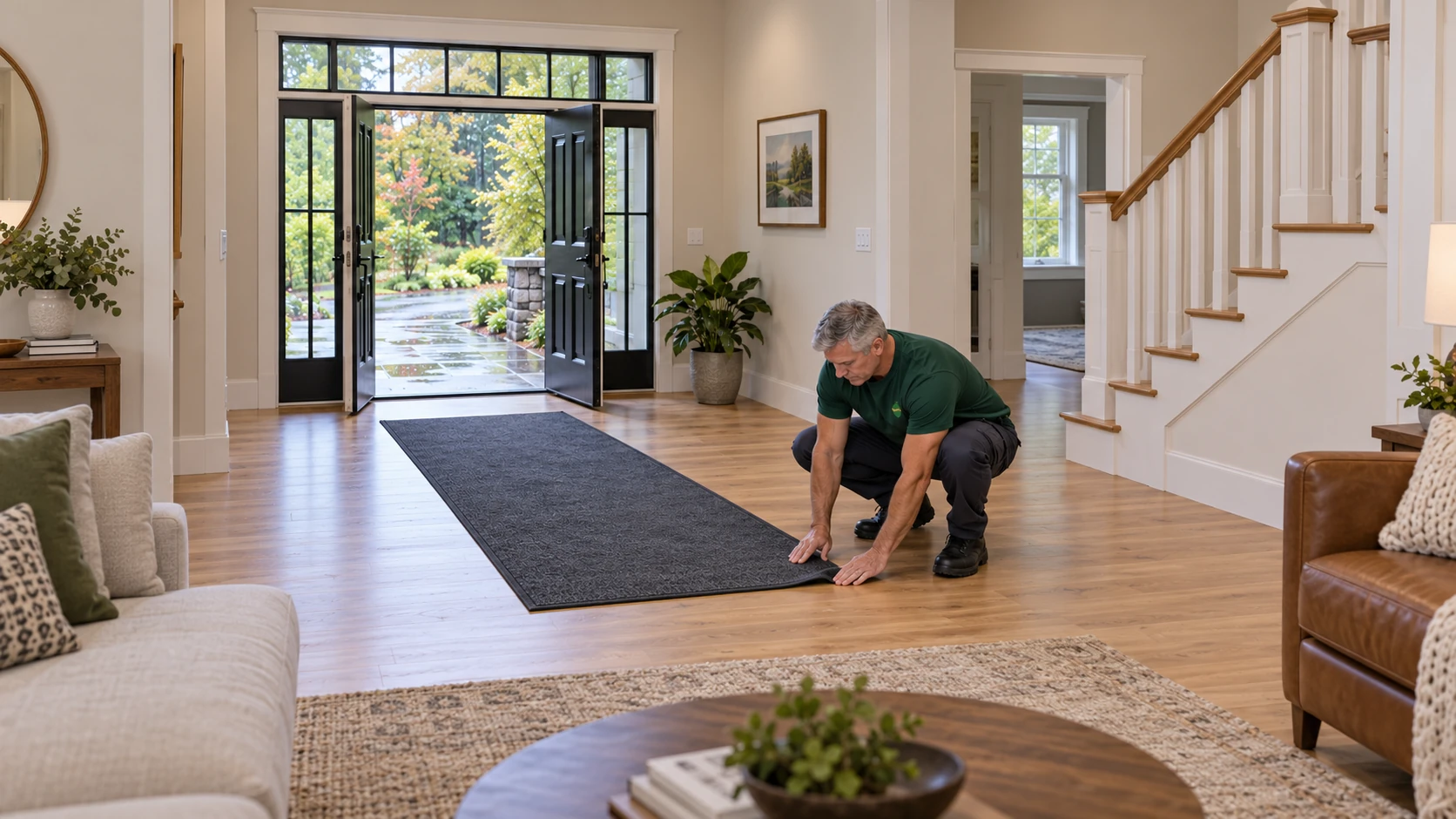
Prepare for the whole journey. Western Washington rain can leave an exposed walk or porch wet, while an inland home or a Cascade crossing can have different heat, snow or ice conditions. Use WSDOT’s current travel information as moving day approaches. Arrange a clear path, suitable flat floor protection and a dry working area where possible.

The moving truck and family car may have different traction requirements. Washington’s traction rule requires vehicles over 10,000 pounds GVWR to carry chains from November 1 to April 1 on its listed routes, with conditions and exceptions. Vehicle configuration and current signs also matter. Have the transport team check the actual truck and route; do not apply a passenger-car all-wheel-drive exception to it automatically.

Tell the coordinator about a narrow building appointment or a receiving address that may be affected by weather. If a road or approach becomes unsafe or closes, agree how you will be contacted, where the goods can safely go and when delivery can resume. Confirm any changed holding, handling or price before relying on that extra stage. Keep people, pets and essential supplies with the household’s own travel plan.

A mover kneels to flatten the corner of a runner along a dry indoor entrance.
Lay floor protection flat along the working route.

Washington planning

Plan parking and ferry connections early

Confirm a lawful, practical place for the actual truck to stop. A city curb, a building’s loading bay and a private driveway can have different rules. Ask the building or responsible local authority for current loading instructions, then share them with the coordinator. Show the carrying route from there through steps, doors, lifts and turns to the rooms.

For a ferry-dependent home, identify the connection before choosing delivery dates. WSDOT’s commercial-vehicle guidance explains why vehicle size, weight, vessel clearance and tides matter. Some vehicles require advance travel permission. A passenger ticket or ordinary car reservation does not settle those questions for a moving truck.

Have the transport team confirm the vehicle and service requirements, then coordinate the sailing plan with keys and the receiving appointment. Reservations are offered only on selected routes, so do not assume every crossing has the same booking process. Any smaller-vehicle transfer, extra handling or holding stage belongs in the written work and price. Recheck the actual service and conditions near the date.

Moving routes

Where are you moving?

Moving to a neighboring state, across the country or to Canada? Compare the journey with the home and person receiving your belongings.

Regional connections

Plan the final connection

A state line or ferry connection can change the plan. Start with the two real homes.

Oregon

Vancouver to Portland crosses a state line. Compare the two homes, belongings and accepted receiving dates.

Idaho

A Spokane-area move still needs the actual Idaho address and an interstate arrangement.

Island and peninsula connections

Identify the final road or ferry connection, actual truck requirements and any separate handling.

Compare interstate options →

Across the country

Plan for the receiving window

Compare transport choices with the household’s actual commitments.

Northeast and Mid-Atlantic

Prepare the receiving apartment, house or storage address as carefully as the Washington home.

Florida and California

Destination-specific consolidated maxima are up to 60 days into Florida and 90 into California after pickup and loading. Confirm the terms for the actual route.

Direct or consolidated

A dedicated direct move keeps the same crew. Suitable smaller consolidation needs a wider window; delivery into Washington is individually agreed.

Choose a delivery arrangement →

Canada and separate stages

Make every handoff clear

Prepare household entry and the goods’ documents alongside transport.

Canada-bound goods

Review CBSA eligibility, accompanying and goods-to-follow lists; retain the first-entry accounting document.

Entering the United States

Use the U.S. instructions for that direction, including item-specific restrictions.

Holding or onward transport

Name who receives, holds, releases and carries the goods, with the inventory and separately priced work recorded.

Plan a receiving gap →

Direct service uses a dedicated truck and the same pickup and delivery crew. Suitable smaller consolidated shipments use a wider agreed window; confirm the model in writing.

Washington planning

Pack for the rooms you want to use first

Decide which rooms or groups you will pack yourself and where you want help. Books, clothing, dishes, electronics and artwork need different preparation. Identify owner-packed cartons and any special item before everything is sealed. Keep keys, passports, medication, personal records and travel essentials with you.

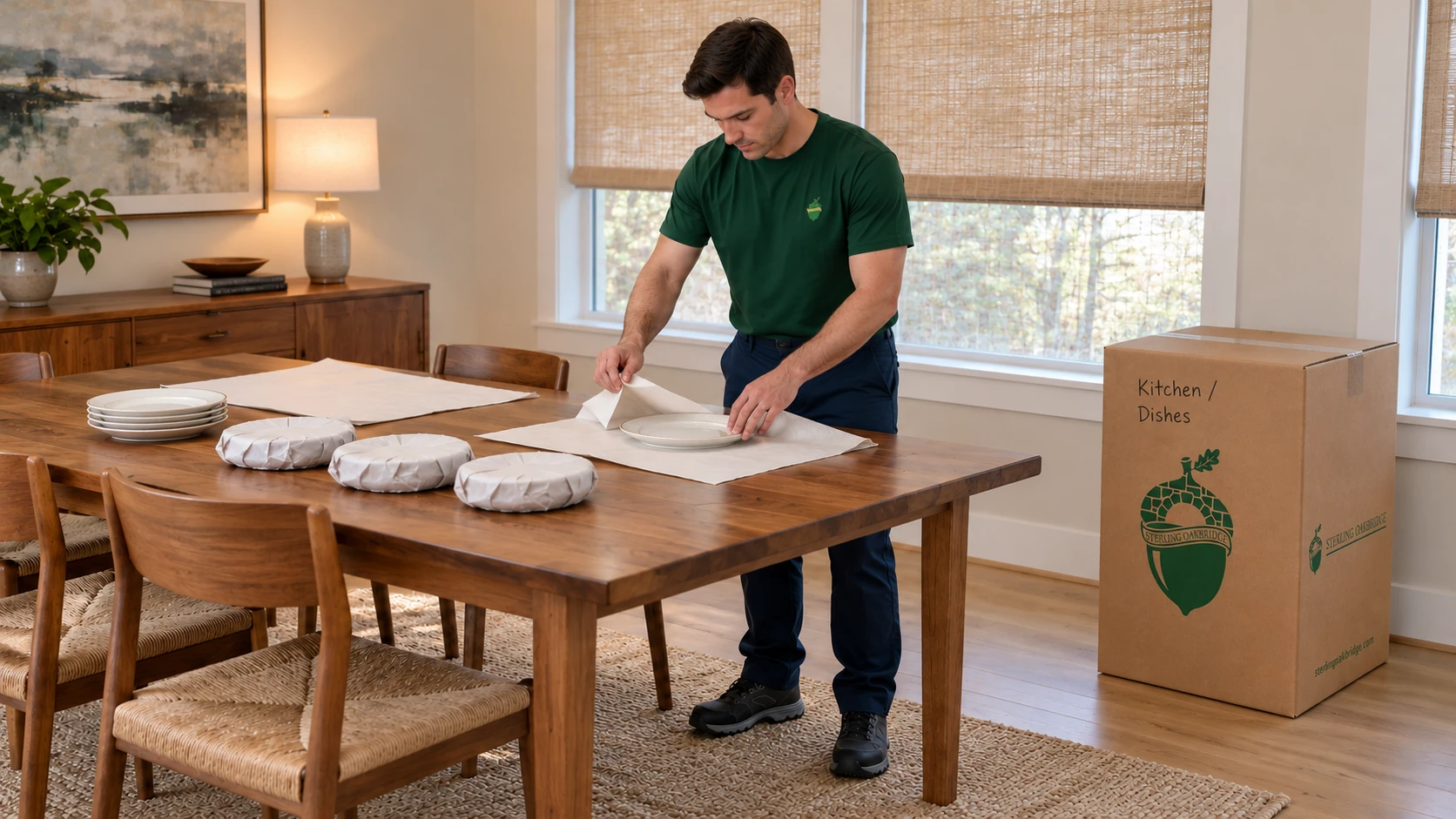
Wrap dishes individually and cushion them in a suitable carton so they cannot move against one another. Use useful destination-room labels, with handling information suited to the actual contents. A fragile sticker cannot protect loose plates. Keep completed packing separate from the pieces still on the table.

Packing uses labor time, and company-provided boxes are charged separately. Basic moving blankets, shrink wrap and tape have no separate material charge; reusable blankets are not promised as customer property. Ask for full or selected packing with the interstate shipment so the proposal covers the work you actually want.

Send photographs, dimensions and material for art, stone, unusually heavy or delicate items. Their preparation and price need individual review. An expensive object does not automatically require a particular crate or establish a separate insurance arrangement. Keep that assessment distinct from the ordinary carton count.

A mover wraps a white plate in paper on a dining table beside a sealed dish carton.
Wrap dishes individually before placing them in a cushioned carton.

Washington planning

Prepare large furniture before moving day

Show the team beds, long tables, tall cabinets, sectional seating and anything with a delicate finish or unusual mechanism. Include the joint, projection or tight turn that needs attention. Agree what can safely come apart and what needs to stay assembled.

Keep matching parts and hardware with the right item. Removable table legs and an integral chair frame need different preparation; do not dismantle one piece to imitate another. Transport coverings should protect vulnerable surfaces, corners and feet, with securing material around the covering.

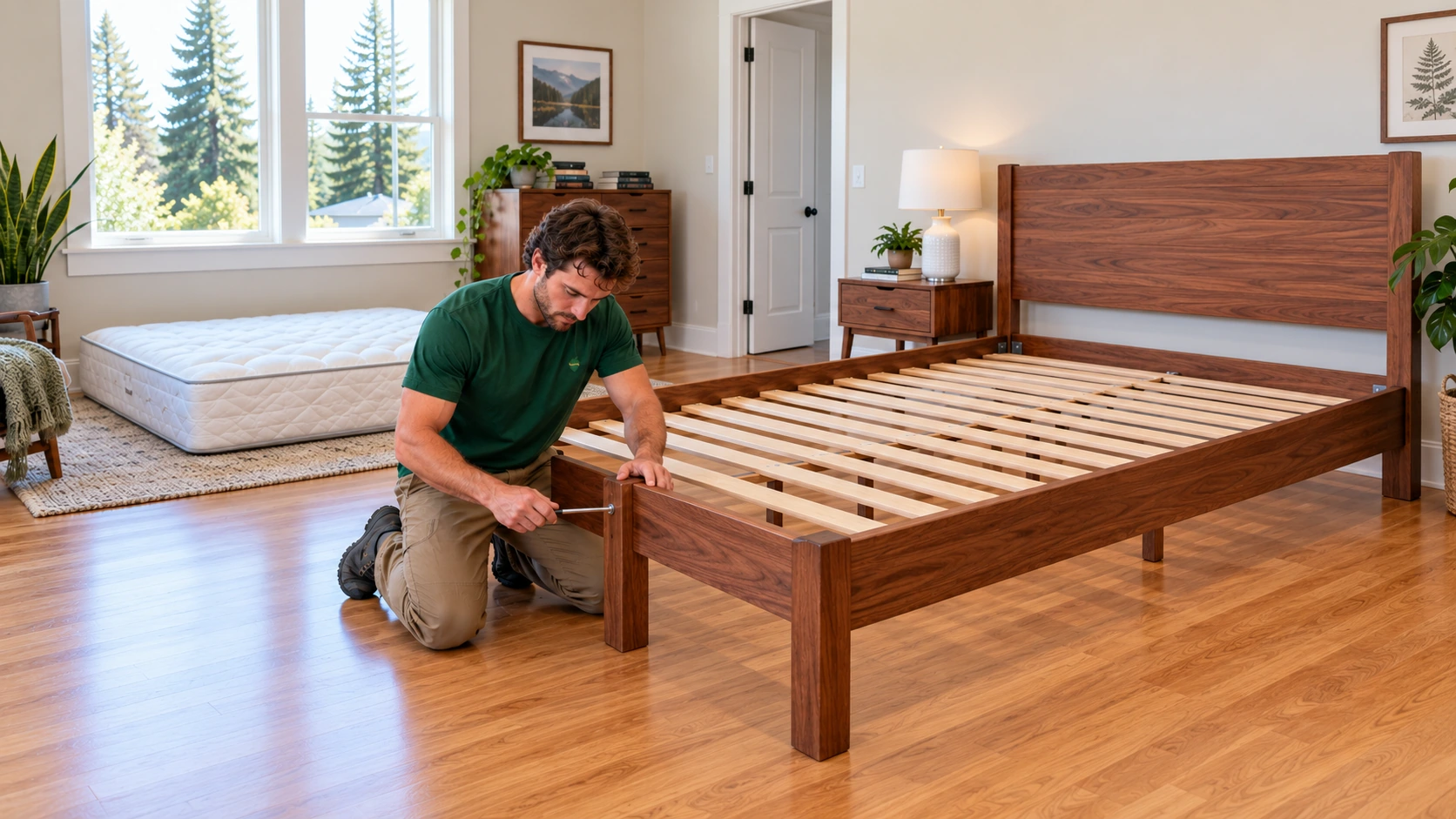
Basic furniture disassembly and reassembly are part of moving labor time, without a separate basic assembly fee. Complex construction and specialist work need individual review. At the destination, place the large pieces before cartons block their footprint, then unwrap them and complete the agreed reassembly.

A mover tightens a corner bolt on a wooden bed frame with a hand tool.
The bed frame is reassembled before the mattress goes on.

Washington planning

What Washington’s housing figures tell you

Washington’s housing stock includes detached houses, apartments, townhomes and older buildings with different layouts. The 2024 ACS five-year estimates count 3,306,620 housing units, including 2,047,311 detached single-unit homes, about 61.9%. An estimated 317,148 units were built in 1939 or earlier, about 9.6%.

The same vintage reports 3,064,820 occupied homes: 1,954,777 owner-occupied and 1,110,043 renter-occupied. Renters account for about 36.2% of occupied homes. Structure and age use all housing units; tenure uses occupied homes. The planning-data table keeps those bases and periods together.

Use the range as a reason to examine your chosen home closely. A bungalow can have a basement or upper rooms, a townhouse can put bedrooms above a garage, and a split-level divides the work around its entrance. Statewide figures cannot tell you whether a particular sofa fits or what your move will cost.

Washington planning

What the migration figure can tell you

The 2024 ACS one-year estimate reports that 2.8% of Washington residents age one and older lived in a different U.S. state one year earlier. It describes people and their previous residence, rather than household shipments.

It does not show net migration, why people moved or which dates have available crews. It also uses a different period from the five-year housing estimates. Choose dates from your household’s commitments and the actual moving proposal; the statewide percentage is not a price or availability forecast.

Washington planning

Moving between Washington and a neighboring state

Washington to Oregon or Idaho is an interstate move even when the two homes are close. Vancouver, Washington, to Portland and Spokane to an Idaho address still need the appropriate interstate arrangement and documents.

Review both homes equally. Include the origin’s rooms and garage, the destination’s stairs or elevator, extra pickups and any storage stop. A short main journey can still finish with a narrow receiving appointment or a difficult final approach.

Have the carrier review the actual truck route and current conditions. Distance alone does not promise same-day delivery. Keep Vancouver, British Columbia, separate from Vancouver, Washington: the Canadian destination adds border documents and the household’s applicable entry process.

Washington planning

Match delivery to your household’s dates

Write down the dates you must leave the old home, receive keys to the new one and attend any building appointment. Mark which are firm and which can move. A lease end, closing, flight and furniture delivery may fall on different days.

Compare direct and suitable consolidated service with the time someone can receive the goods. A narrow elevator booking needs discussion before you choose a wider delivery window. Ferry-dependent access and mountain travel also belong in that conversation; a car’s driving time does not establish the truck’s arrival.

If keys or a building reservation change, tell the coordinator promptly and obtain the revised arrangement in writing. Keep what you need for travel and the first nights outside the shipment. If the new home is not ready, agree a holding location, responsible receiver and later release rather than assuming goods can wait somewhere unarranged.

Washington planning

Direct or consolidated delivery?

Direct delivery uses a dedicated truck and the same crew at pickup and delivery. Compare it when that continuity or a closely coordinated receiving plan matters. The actual inventory, route, preparation and dates still need an agreed proposal.

Consolidated delivery can suit a smaller eligible shipment when the household can accept a wider window. Washington-bound and other distant domestic routes need individual timing terms. Company maxima for other destinations include up to 90 days into California and up to 60 days into Florida or Canada, counted after pickup and loading are complete. Nearby domestic categories can have a 30-day outer term; do not apply that category to a Washington route without reviewing the destination. These are maximum windows, not predicted arrival dates.

Choose the option your receiver can actually use. Keep essentials with you and agree how updates will reach the receiving person. Do not assume consolidation includes the same crew, free storage or an appointment that has not been accepted in writing.

Common moving situations

How the plan changes with your needs

See how a reserved elevator, a flexible small shipment, a full household and delayed keys can change the plan.

A Seattle condominium with a reserved elevator

Suppose the receiving building can accept furniture only through its service entrance during an agreed elevator slot.

What to do. Obtain its instructions first, then compare transport timing that can support the appointment. Name the receiver and confirm the entrance, booking and documents.

Why it helps. The building reservation and delivery plan describe the same usable appointment.

A small Spokane shipment with flexible receiving

A household is sending a modest group of furniture and cartons out of state and can receive within a wider window.

What to do. Compare suitable consolidation with direct service for the same goods, packing and stairs. Keep essentials with the household and accept the actual destination window in writing.

Why it helps. You can compare the total cost with a delivery window the household can actually use.

A full Tacoma household leaving the state

A house move includes several rooms, garage contents and large furniture.

What to do. Include the whole inventory, requested packing and destination access when comparing direct dedicated service. Record any extra pickup or holding stage.

Why it helps. The agreed price covers a complete described household instead of an incomplete room count.

Delayed keys in Vancouver, Washington

The household can leave its old home before keys to the receiving property are available.

What to do. Agree a holding address, intake record, price and later release before directing the goods there. Keep essentials separate and name who can receive when keys arrive.

Why it helps. The shipment has a real receiving arrangement during the gap and a clear next stage.

Washington planning

Prepare separately for Canada and other handoffs

For a move to Canada, prepare the household’s entry and the goods’ arrival together. CBSA guidance explains eligibility, the inventory and the original list of accompanying goods and goods arriving later. Keep the accounting document from first entry accessible for the later shipment. Eligibility and restrictions depend on your situation and belongings.

For goods entering the United States, start with CBP’s household-effects guidance and obtain the document instructions for that direction. Do not reuse a Canadian form as a substitute. Review plants, food, vehicles and other restricted contents before dispatch, and work from the same inventory as the transport coordinator.

If your journey needs a separate road, marine or other transport stage, agree who prepares, releases, carries and receives the goods at each handoff. Include the documents, inventory checks and separately priced work. Settle a missing approval or receiver before the shipment leaves.

Washington planning

What affects the price of your Washington move?

Your moving price should cover your belongings and all the work you want: pickup and delivery, packing, furniture preparation, access, extra stops and any storage or later delivery. List these before comparing estimates. You can save paid work by completing an agreed part of the packing yourself; the proposal should reflect that choice.

For the company’s long-distance flat-rate arrangement, the price stays the same for the same agreed shipment and service scope. Extra transit or delivery time alone does not increase it. Added goods, a changed address or additional handling require a revised written scope and price.

Packing time and supplied boxes are separate costs. Basic disassembly and reassembly are within moving labor time; specialist work needs review. Furniture unwrapping is included at delivery, optional carton unpacking is charged for time, and packaging removal is separately priced. Ask the estimate to distinguish included work from options so you can compare like for like.

Ordinary furniture blankets, shrink wrap and tape have no separate materials charge under the current company terms. An estimate should still identify the actual preparation and paid labor. A minimum or estimated number of hours is not a promise that every additional task fits within it.

Washington planning

A practical timeline for getting ready

Before the survey: list your belongings, extra stops and difficult pieces. Send access photographs and obtain building instructions. Identify the destination’s key handover and who can receive the goods.

Before booking: review the written estimate, pickup date, delivery option and protection terms. Resolve omitted work, storage needs and building appointments. Decide what the household will pack and what should remain available for the final night.

Before pickup: finish the agreed packing, keep essentials and documents with you, clear the working route and confirm the contacts. If you have a shared elevator, check the service-door route and the time the crew can start and finish.

Before delivery: reconfirm keys, access, the receiver and large-furniture positions. If something changes, tell the coordinator early and update related travel or property appointments. An edited transport date does not automatically change a building reservation.

An earlier packing visit can leave bedding, breakfast and school or work essentials available for the final morning. Identify who finishes that small remaining group instead of assuming the earlier visit empties every cupboard.

Washington planning

Make room for the delivery

Choose where the bed, sofa and large cabinets will go before the crew arrives. Clear their footprints and the route through the home. A simple room plan or annotated photographs help your receiving representative give consistent directions.

Place large furniture before small cartons fill the space it needs. Keep doors, landings and essential walking routes open. If a room is unfinished, agree a temporary position in advance and tell the receiver who can approve an alternative.

Once furniture is stable, it can be unwrapped and the agreed basic reassembly completed. Check the inventory and condition, keep any exceptions with photographs, then direct cartons to usable rooms. Decide separately whether you want timed unpacking or packaging removal; do not assume all boxes will be emptied.

A mover lifts a white plate from packing paper on a kitchen counter.
Unwrapped dishes are set aside on the kitchen counter.

Washington planning

What if the new home is not ready?

Agree somewhere for the goods to go before pickup. A usable storage plan names the intake address, belongings, receiver, access hours, holding period and later release conditions. Include additional handling and delivery costs in writing.

Keep medication, work items, clothes and other essentials with you during the gap. Label home-delivery and storage groups consistently, and retain the intake record with the inventory. Accommodation for the family and storage for the goods are separate arrangements.

If keys are delayed after collection, contact the coordinator promptly. Before release, confirm the final home, building appointment, authorized receiver and remaining inventory. A later delivery can need a new vehicle approach or preparation. The moving-between-homes guide has a fuller checklist.

If a later Washington-only journey uses a separate operator, record its work, price and handoff. Confirm who authorizes release and whether the holding arrangement permits the access to belongings you may need.

Washington planning

Make your first days in Washington easier

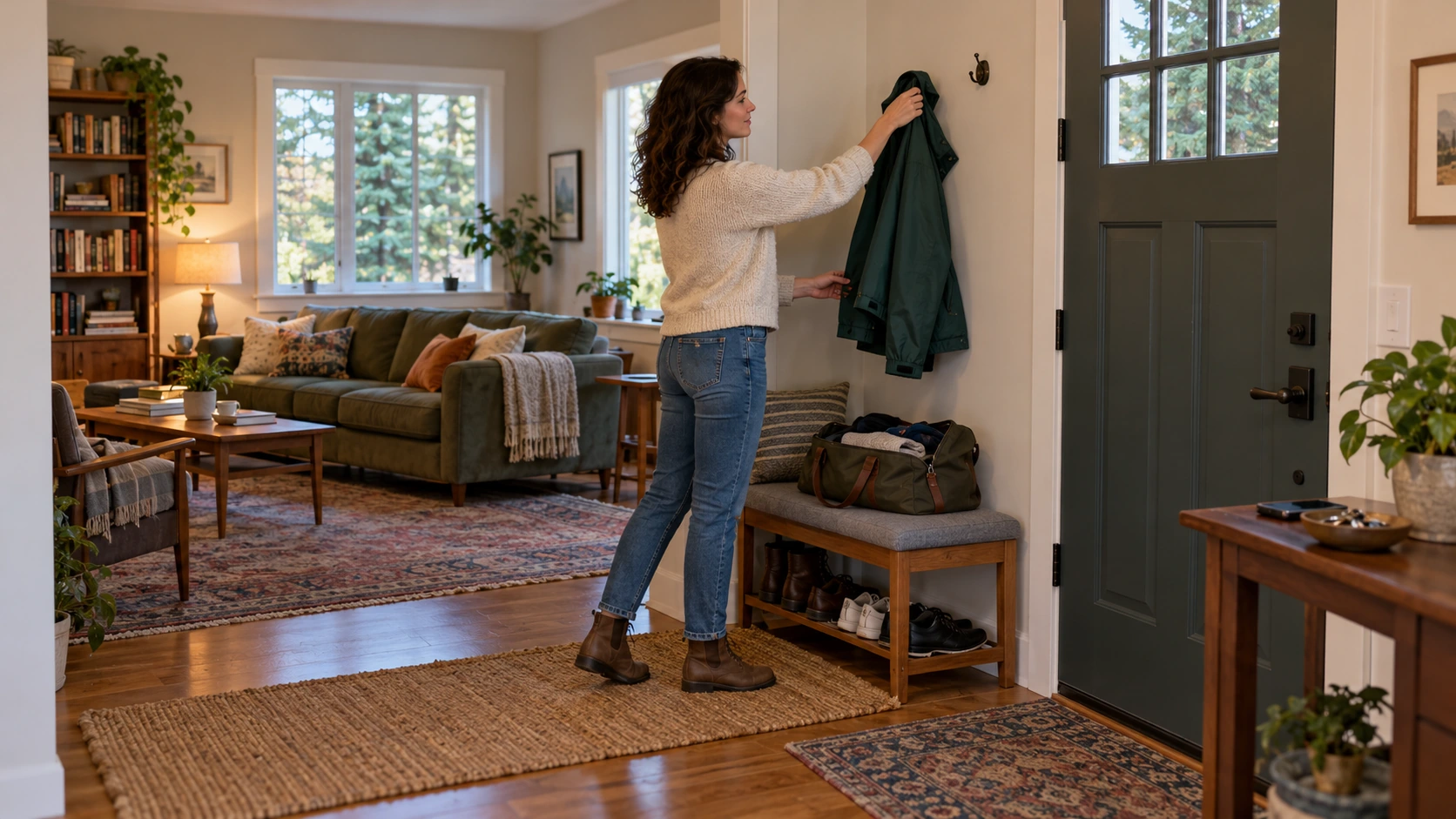
Bring an arrival bag with identification, keys, medication, chargers, clothing, bedding and pet supplies. Keep the property, utility and moving contacts available. Confirm working utilities and somewhere usable to sleep before depending on the furniture shipment. Unpack priority rooms first and keep the main entrance clear.

New residents generally need a Washington driver’s license and vehicle registration within 30 days of becoming residents. The licensing statute and vehicle-registration statute define their respective requirements. Check the current application steps for your situation. The furniture truck’s arrival may be a different date from becoming a resident.

Review plants separately. WSDA’s houseplant guidance covers small amounts of privately owned indoor-grown tropical or subtropical plants in sterile commercial potting mix, not for resale. Plants grown outdoors fall outside that definition. Edible blueberries and grapes need origin-state certification; unhealthy or visibly infested plants should not travel. Check the actual species, growing history and any border restrictions, then confirm carrier acceptance.

Confirm school arrangements with the actual district and household services with their providers. Keep shipment records and condition photographs for any delivery question. Separate furniture hardware from used paper before arranging optional packaging removal.

A resident holds a rainjacket at the wall hooks above a bench with her overnight bag.
Keep your arrival bag and everyday essentials close by.

Washington planning

Ready to plan your Washington move?

Send both addresses, a list of belongings, a date range and the help you want. Include large pieces, packing, extra pickups, unpacking or storage. Add photographs of parking, the entrance and any difficult indoor turn, with dimensions where an actual fit question needs an answer.

Before booking, check the written work, price, pickup and delivery terms, protection choices, payment and receiving contact. Choose direct or suitable consolidated delivery around the household’s actual timing. Keep a simple fallback for delayed keys or an unavailable building appointment.

If something is pending, name it clearly: for example, “loading instructions due from the manager.” Keep that answer with the inventory and agreed changes. The next conversation can then resolve the missing decision without losing what has already been settled.

Verified data

Washington planning data

Planning factEstimateVintageSource
Total housing units3,306,6202024 ACS 5-yearU.S. Census Bureau
Detached single-unit homes2,047,311 · 61.9% of housing units2024 ACS 5-yearU.S. Census Bureau
Homes built in 1939 or earlier317,148 · 9.6% of housing units2024 ACS 5-yearU.S. Census Bureau
Owner-occupied homes1,954,777 · 63.8% of occupied homes2024 ACS 5-yearU.S. Census Bureau
Renter-occupied homes1,110,043 · 36.2% of occupied homes2024 ACS 5-yearU.S. Census Bureau
Residents age 1+ from another U.S. state one year earlier2.8% · not net migration or shipments2024 ACS 1-yearU.S. Census Bureau

Planning answers

Washington moving questions

Straightforward answers about prices, packing, delivery and getting settled.

Ask about your move
Can you help with a move to or from Washington?

Yes. Request an interstate household move with Washington as the origin or destination. From Seattle, request long-distance moving to a U.S. or Canadian destination. Send both addresses, the belongings, access and dates. The team confirms the actual work, preparation and receiving arrangement in the proposal.

Do you offer moves entirely within Washington?

This guide describes interstate moving and does not confirm a separate Washington-only booking or a local office in each city. For a move staying in the state, check an appropriate carrier through the UTC and use its state estimate and contract process. If a separate local stage follows your interstate move, identify its operator, work and price.

Which Vancouver does this page mean?

The city portrait means Vancouver, Washington, on the Columbia River. Vancouver, British Columbia, is in Canada and adds a border process. Give the state or province, country and postal code with the full address. For Canada, explain whether the goods accompany you or follow later and review the applicable customs preparation.

How much will my Washington interstate move cost?

The proposal gives an agreed flat rate for the reviewed belongings, route and work. Include packing, furniture preparation, access, extra pickups and any holding stage. Extra journey or delivery time alone does not increase that agreed price. Added goods or work need written review. Compare proposals covering the same complete move; there is no dependable statewide total from a bedroom count alone.

What is different about direct dedicated service?

Direct service uses a dedicated truck and the same crew at pickup and delivery. Compare it when that continuity or a closely coordinated receiving plan matters. The actual inventory, route, preparation and accepted dates still need review. A dedicated truck by itself does not promise a car’s driving time or an immediate arrival.

When is consolidated delivery useful?

It can suit an eligible smaller shipment when someone can receive within a wider agreed window. Washington-bound timing needs individual agreement. Company maxima for other destinations include up to 90 days into California and 60 days into Florida or Canada after pickup and loading are complete; nearby domestic categories may have 30 days. Confirm the actual destination terms. These are maximum windows, not forecast arrival dates. Keep essentials with you.

When should I book a building elevator?

Get the building’s receiving instructions early, then coordinate the reservation with the accepted transport plan. Confirm the service entrance, receiver, working hours and requested documents. Tell the coordinator if the slot cannot move. A building reservation and a delivery window do not automatically reserve each other.

Do moving trucks need chains throughout Washington all winter?

The rule depends on the vehicle and route. WAC 204-24-050 requires vehicles over 10,000 pounds GVWR to carry chains November 1–April 1 on listed routes, with stated conditions and exceptions; current signs and axle configuration also matter. Have the carrier check its actual truck and itinerary. A passenger-car all-wheel-drive exception does not automatically apply to the moving truck.

Can the truck use a ferry to my island home?

The actual vehicle and connection must be reviewed. Send the full address and identify the ferry-dependent stage. Vehicle dimensions, weight, vessel clearance, tides and advance permission can matter; reservations are offered only on selected routes. A car ticket does not confirm a truck’s acceptance. Agree any extra transfer, holding, handling and cost before relying on the plan.

What should I send for a long or steep driveway?

Send current views of the whole approach, turns, grade, gate and possible stopping position. Mention overhead obstacles, surface conditions, private-road rules and room to turn. Continue through the entrance to the intended rooms. The carrier can then review the vehicle and identify any alternative position or smaller-vehicle transfer, with its work and price agreed.

Does a bungalow or ranch mean there are no stairs?

No. A bungalow may have upper rooms or a basement, and a low house can have a raised entrance or internal level change. List goods by room and floor, including a detached garage or storage area, and show the full route for large pieces. The actual home determines the work rather than its architectural label.

What should a Washington-only estimate include?

Obtain a written binding or nonbinding estimate for the actual goods and work before the move. An hourly rate alone is not the required estimate. WAC 480-15-630 also addresses inspection, the specific customer-calculation alternative and signed supplemental estimates before additional work. Compare the same inventory, packing, access, stops and storage, and check the current UTC tariff for the contract.

Are boxes and protective materials charged the same way?

No. Company-provided boxes are charged separately. Basic moving blankets, shrink wrap and tape have no separate material charge, while packing uses labor time. Reusable blankets are not promised as customer property. Describe the rooms or item groups you want packed so the proposal covers the actual work.

Is furniture assembly included?

Ordinary assembly and disassembly are included in the labor scope without a separate basic assembly surcharge; the work takes time. Send photos of the actual piece and any unusual joinery, repair or access issue. Keep matching parts and hardware together. Technical installations or specialist preparation need individual review.

Will the movers unpack everything and remove the packaging?

Furniture is unwrapped at delivery. Additional unpacking of carton contents is time-based work; organizing and debris removal are separately charged. Request the tasks you want before delivery. Ordinary furniture unwrapping does not include unlimited cupboard arrangement, carton unpacking or automatic removal of all materials.

How should I identify valuable or unusually heavy goods?

Send clear photographs, dimensions, material, known construction or repairs and the requested work. Include both property routes. The preparation and price need individual assessment, and the goods protection choice remains separate. A high value alone does not establish a specific crate, special insurance or availability of an unreviewed lifting method.

What if the destination keys are delayed?

Contact the coordinator before directing goods to an unavailable home. Agree a holding or changed receiving arrangement, its price, access and later release. Name who can authorize the next stage and receive. Keep essentials outside the shipment. Delayed keys do not automatically reserve storage or include extra handling in the original price.

Should my travel follow the truck?

Plan around the accepted shipment terms and your own needs for access and sleeping. You may arrive before or after the goods. Keep keys, documents, medication, chargers and first-night needs with you, and confirm who receives if you are elsewhere. A car journey time does not determine truck collection work, stops, conditions or the delivery appointment.

What do I need for goods going to Canada?

Identify your applicable CBSA category, whether goods accompany you or follow later, and prepare the required detailed lists and entry records. Check restricted items and carrier acceptance separately. Keep inventory and clearance documents for later-arriving goods. A moving booking does not establish admission, duty-free eligibility or a guaranteed clearance time.

Can I bring houseplants into Washington?

Check the plants and their growing history with WSDA first. Its houseplant guidance covers small amounts of privately owned indoor-grown tropical or subtropical plants in sterile commercial potting mix, not for resale. Outdoor-grown plants fall outside that definition; unhealthy or infested plants should not travel. Edible blueberries and grapes require origin-state certification. Check border restrictions and carrier acceptance too.

When do I need Washington licenses and vehicle registration?

New residents generally need a driver’s license and vehicle registration within 30 days of becoming residents, under their respective statutes and conditions. Check RCW 46.20.021, RCW 46.16A.140 and current application steps for your situation. The clock does not automatically start when the furniture truck arrives. Keep these tasks alongside keys and utilities on your arrival list.

Do the housing figures predict moving demand?

No. The five-year ACS figures describe housing stock and occupied-home tenure for their stated period. The one-year mobility figure describes residents age one and older who lived in another state a year earlier. They do not measure net migration, company bookings, available crews or furniture fit. Use them as context, then review the actual home and shipment.

Is cargo valuation the same as a building’s certificate of insurance?

No. A building’s document request and protection for your belongings answer different questions. For interstate moves, Full Value Protection applies unless you choose Released Value through the required written waiver. Released Value is 60 cents per pound per article. Valuation is not separate insurance; review limits, exclusions and high-value disclosures before collection.

What should I check when receiving the shipment?

Have an authorized receiver ready with keys, the inventory and main furniture positions. Keep the route clear, direct goods by room and reconcile arriving items. Record a discrepancy or visible condition concern with the item information and responsible contact. If key rooms or receiving conditions change, contact the coordinator before relying on extra holding or unreviewed rehandling.

Primary sources

Sources for the decisions in this guide

Official resources for choosing a Washington community and preparing the move. Figures retain their stated dates; follow current agency guidance for your own circumstances.

Moving estimates and consumer protection

4 sources
  • Washington mover checksWashington Utilities and Transportation Commission

    Starting point for the actual Washington-only operator, consumer guide and current tariff.

  • Written moving estimatesWashington State Legislature

    Binding/nonbinding estimates, inspection or specific calculation alternative and signed supplements before added work.

  • Interstate consumer rightsFederal Motor Carrier Safety Administration

    Federal shipment documents and carrier/broker responsibilities.

  • Liability and protectionFederal Motor Carrier Safety Administration

    Full Value and Released Value choices, separate from insurance.

Weather and road planning

2 sources

Commercial routes and ferry connections

2 sources

Arrival, plants and border documents

6 sources

Cities, neighborhoods and local life

12 sources
  • Seattle neighborhoodsVisit Seattle

    Historic, urban and residential neighborhood distinctions.

  • Bellevue walking toursVisit Bellevue

    Old Bellevue, Main Street, parks and the lakefront.

  • Bellevue Downtown ParkCity of Bellevue

    Green downtown promenade and city setting.

  • Fairhaven VillageBellingham Whatcom County Tourism

    Historic brick mixed-use district, shops and Bellingham Bay context.

  • Puget Sound communitiesState of Washington Tourism

    Everett maritime/aviation context, Tacoma museums and waterfront, South Sound and capital context.

  • Spokane and the northeastState of Washington Tourism

    Inland city and Riverfront Park context.

  • Southwest WashingtonState of Washington Tourism

    Vancouver waterfront, historic places and Columbia River setting.

  • OlympiaExperience Olympia

    Capital, independent downtown shops, arts and waterfront.

  • YakimaYakima Valley Tourism

    Valley landscape, downtown shops and performance venues.

  • Tri-Cities riverside parksVisit Tri-Cities

    Kennewick and Columbia Park in their correct local context.

  • Wenatchee riverfront and downtownVisit Wenatchee

    Riverfront parks, Pybus and local streets; check the latest trail notices before a visit.

  • Pullman and the PalouseWashington State University

    University-town setting and rolling Palouse landscape.

Geography and dated planning data

5 sources

Photographs are original representative illustrations, not customer jobs or identified addresses.

Let’s plan your move

Tell us about your Washington move.

Tell us where you are moving, what you are taking and your preferred dates. Add any packing, furniture preparation, unpacking or storage help you need.

A Sterling Oakbridge move coordinator in the planning office

Plan a long-distance household move

Compare the actual shipment, access and receiving dates for your city.