
Pennsylvania · Erie service planning
Long-distance movers in Erie PA
A long-distance move from Erie begins with the pickup entrance and ends with a home that can receive the agreed shipment. Porch steps, an upstairs landing or a downtown service elevator can each control that sequence. Sterling Oakbridge reviews the inventory, both buildings and dates before agreeing direct or consolidated household delivery within the United States and Canada.
Connect the actual Erie address with the receiving home
Send the complete inventory alongside photographs of the route from the proposed truck position to each room. At a porch-front house, include the steps, door opening and first turn. At an upper-floor apartment, continue through the landings and the final doorway. For an elevator building, identify the service entrance, car dimensions, working window and person who releases access.
We can review long-distance pickup in Erie and nearby Erie County addresses, including Millcreek Township and Fairview Township. Erie is a City; the two townships are separate municipalities. Confirm the actual address, jurisdiction, inventory, entrance, truck position and dates before using City of Erie procedures. An Erie mailing address alone does not establish City jurisdiction.
Erie is a City in Erie County. Millcreek Township and Fairview Township are separate municipalities in the same county. Confirm the actual property and street authority before applying a City parking or refuse procedure. Postal Erie helps locate an address; the municipality determines which local instructions apply.
Use the Erie moving page for service preparation and the relocation guide for the broader address-based planning. Bring the receiving property into the long-distance order early: possession, key handoff, stairs or elevator, permitted work hours and someone authorized to direct placement. A lease start and the time furniture may enter can be separate milestones.
Match the delivery model to the shipment and dates
Direct delivery provides a dedicated truck for your shipment and the same crew for the agreed pickup and delivery. It suits a household seeking a coordinated receiving plan or moving a larger furniture and carton inventory. Review the vehicle arrangement and the complete work at both addresses before fixing the schedule. Room count alone may omit basement shelves, porch furniture, attic contents or a detached garage.
Consolidated delivery is particularly useful for a smaller shipment with flexible receipt. Around300–400 cubic feet or less is an illustrative smaller-shipment range, not a minimum volume. List the seating, bed components, tables, cartons and customer totes individually. A selected carton group helps identify pieces, while the full inventory still determines the shipment.
The delivery window begins after pickup and loading are complete. A suitable close domestic shipment may be reviewed for same-day or next-day delivery when loading, the route and receiving access support it. Normal direct illustrations allow a practical handoff, and the written moving plan establishes the actual appointment.
For consolidated delivery, a suitable close domestic route may use up to 30 days. Florida and Canada use up to 60 days, with Canada’s policy applying even at a comparatively close distance. California uses up to 90 days. Other distant routes need an individually agreed window. Review crew arrangements and any storage interval as part of that particular shipment.
| Illustrative destination | Direct planning window | Consolidated window |
|---|---|---|
| Olean, New York | 1–2 days | Up to 30 days |
| Aiken, South Carolina | 2–3 days | Window agreed individually |
| Trois-Rivières, Quebec | 1–2 days | Up to 60 days |
| Flagstaff, Arizona | 3–4 days | Window agreed individually |
These city-to-city road references are planning illustrations. The selected truck still needs its actual approach, restrictions, entrances and receiving conditions reviewed. The comparison supplies neither a reserved building slot nor certification of every road for a commercial vehicle. Keep possession and household travel arrangements connected to the confirmed plan.
Arrange the Erie curb and truck route together
For metered space, the Erie Parking Authority FAQ describes meter bags for temporary “No Parking” restrictions and lists $10 per meter per day. Call 814-456-7588 with the exact frontage, meter identifiers, date, hours and truck footprint. Confirm the required spaces, approval, notice, payment, installation, removal and enforcement contact. Ordinary meter payment does not establish an exclusive moving position.
Check the Authority’s current contact page before collecting equipment or visiting the office. Its Friday closing time differs from the older all-week hours still listed in the FAQ. Resolve the actual arrangement directly rather than building the pickup schedule around an assumed counter visit.
The City parking code separates commercial parking from a marked loading zone. Section 521.05 generally limits vehicles with chassis weight above 3,000 pounds to two hours, with an exception during actual nearby working operations. Section 521.07 limits material loading or unloading in a marked loading zone to 30 minutes. Bus stops, seasonal restrictions and other posted rules remain separate considerations.
For an unmetered frontage, unusual obstruction or proposed public-space setup, describe the operation to Traffic Engineering and the Bureau of Engineering. Engineering lists 814-870-1371 and Engineering@erie.pa.us. Include the vehicle, doors or ramp, carrying path and how pedestrians and traffic will pass. Obtain the applicable instructions before scheduling around that position.
The street and sidewalk provisions preserve reasonable transfers while regulating obstructions. Their construction sidewalk-closure process concerns its stated activity; ask about the actual household operation and proposed footprint. Keep an unattended carton pile out of the pedestrian route and confirm private-owner permission for a driveway or court.
Have the driver review Article 511’s commercial-vehicle routes, destination-access provisions and street-specific restrictions. Check current signs and work zones near pickup. A route that works for the household car may need a different truck approach. If the preferred position changes, review carrying distance and additional work before the crew must improvise.
Example 1: Erie to Olean, New York with a close key handoff
Consider a household leaving an upper-floor Erie apartment for a house in Olean. The shipment includes a sofa, two dressers, a bed, a removable-leg table and cartons. The receiving keys are expected the evening before delivery. At pickup, the first stair landing and turn beyond it control whether the large pieces can pass while the hall remains usable.
Photograph the complete apartment route, including the porch or entrance, bottom approach, each landing and final room doorway. Measure the furniture against those turns. Settle the lawful vehicle position and identify who can release the building entrance. Packing should preserve space for the sofa and dressers to move before cartons occupy the landing.
At Olean, confirm when the house may receive belongings, the actual truck position and the rooms for the largest pieces. Name someone who can resolve a key delay and direct placement. If possession is still uncertain, set a decision time and identify a confirmed alternative before the loading date. A proposed closing or key appointment needs that practical receiving confirmation.
The illustrative reference is 97 road miles, with normal direct planning of 1–2 days after pickup and loading. A suitable close domestic shipment can be reviewed for a same-day or next-day handoff when the stages support it. Confirm the actual appointment before organizing an inflexible receiving arrangement around that possibility.
If a smaller selection is moving and receipt is flexible, review consolidated delivery with up to 30 days for this close domestic example. Keep the full furniture and carton list in the estimate. A storage gap, optional unpacking or changed entrance needs its own scope. After arrival, remove furniture protection, complete agreed basic working reassembly and confirm placement before the crew leaves.
Example 2: Erie to Aiken, South Carolina with kitchen packing in the scope
Suppose a household leaves a modest Erie house for Aiken. The inventory includes bedroom and living-room furniture, kitchen contents, a table and customer totes. The household will travel separately and wants selected fragile kitchen pieces packed before the carrying day. The preparation area and the receiving property’s usable entrance are the main dependencies.
Agree which cupboards or selected items the crew will prepare and what the household packs. Identify the fragile pieces and suitable carton formats. An ordinary ceramic bowl needs effective paper protection and cushioning in an appropriate carton. Specialist objects or unusual materials require separate review rather than assuming every fragile item needs a custom crate.
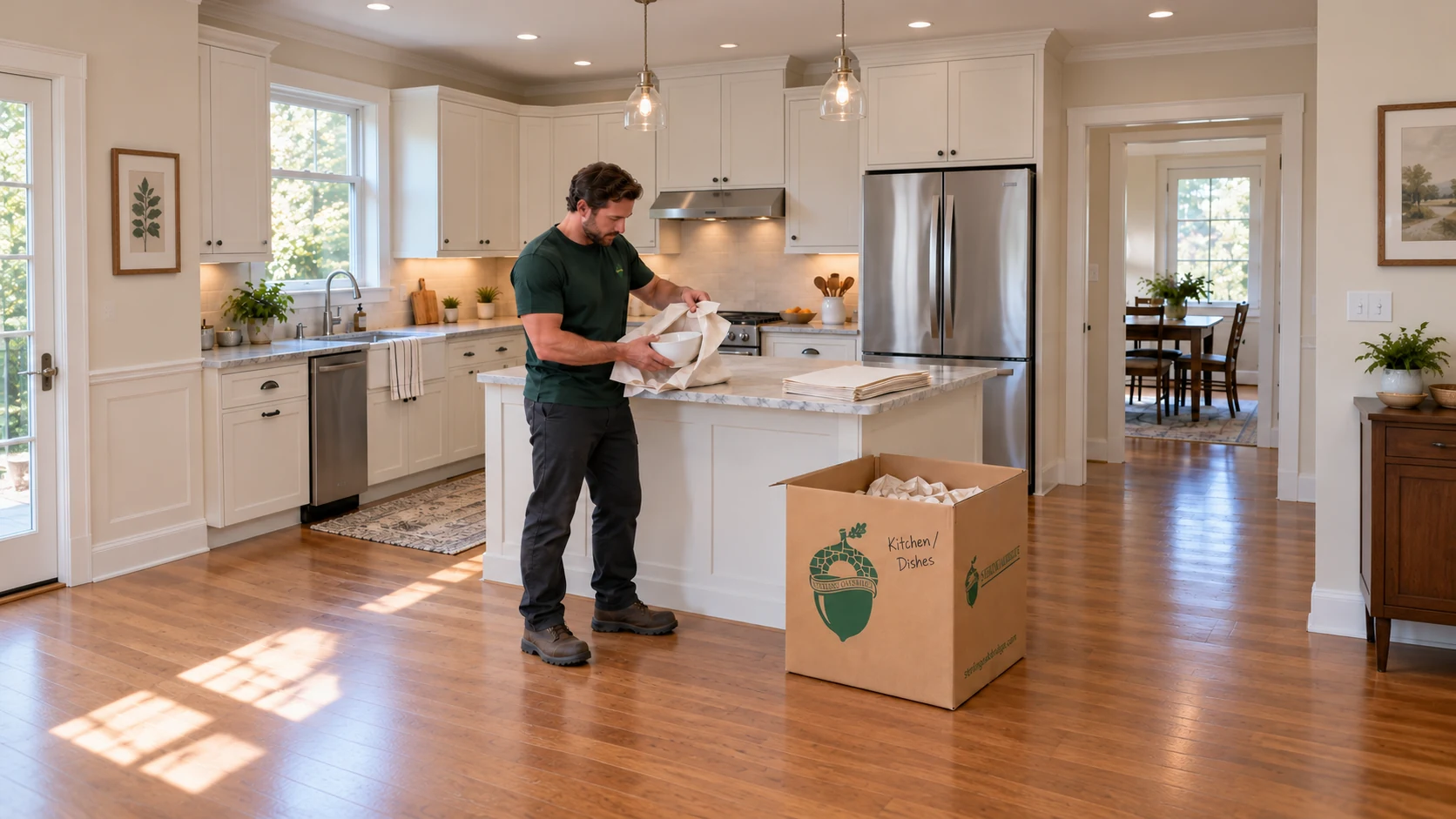
The packing scene shows one item being prepared at a fixed kitchen work surface. It is a partial task within the occupied home. Keep the floor route clear, label cartons by destination room and contents, and leave the household’s keys and records accessible. The full shipment still includes the furniture and every packed container listed in the estimate.
The illustrative reference is 711 road miles, with normal direct planning of 2–3 days after pickup and loading. The actual truck approach and receiving access are reviewed for the job. Aiken is in South Carolina; its consolidated window is agreed individually. Florida’s allowance does not become a blanket schedule for every southern destination.
At the Aiken property, establish the entrance, vehicle arrangement, work hours and authorized receiving contact. If a driveway or private approach is proposed, obtain its controller’s agreement and review the actual surface, turn and overhead clearance. Plan the first rooms to set up and any separately requested carton unpacking. A longer drive or delivery does not raise the agreed flat price for unchanged inventory, access and services.
Example 3: Erie to Trois-Rivières, Quebec with an elevator pickup
Consider a household moving from a downtown Erie apartment to Trois-Rivières, a City in Quebec’s Mauricie region. The shipment includes seating, a dresser, bed components, a table and cartons. The origin building provides a service elevator for a booked window. The household needs the building slot, shipment documents, personal travel and destination access to work in sequence.
Obtain the actual car dimensions, door opening, capacity and route between the service entrance and unit. Ask who installs protection, unlocks the elevator and can resolve a fault. Send the building’s insurance-certificate and access requirements early, with the responsible management contact. Confirm any building charges and the approved time separately from the moving-service scope.
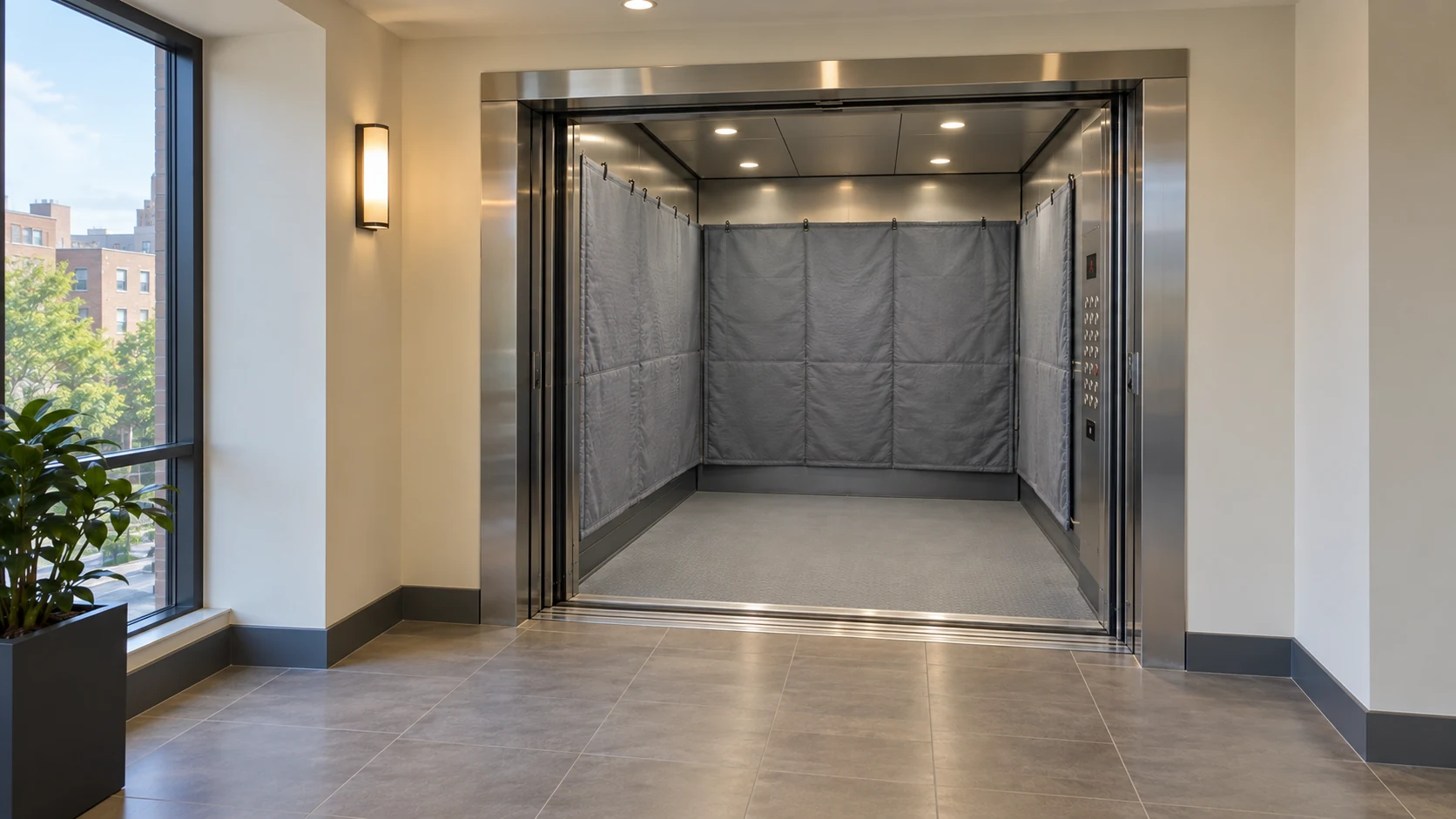
The access view illustrates an open protected car and a clear hallway approach before loading. Confirm those conditions at the actual building. A lift reservation may end while other residents still need access; prepare the inventory and materials so the carrying sequence fits the authorized window. Keep the common passage usable and identify an alternative if the car is unavailable.
The illustrative reference is 559 road miles, with normal direct planning of 1–2 days after pickup and loading. Canada remains a cross-border plan at this distance. For consolidated delivery, this example uses up to 60 days under Canada’s policy. Confirm the relevant shipment and personal documents, inventory and household travel arrangements before booking.
Border processing can affect the practical sequence. Review the actual circumstances and the authorized receiving contact, including who holds the keys and may direct placement. At Trois-Rivières, confirm the property entrance, working hours and truck approach. Book a receiving appointment around the confirmed plan, and resolve a separately agreed storage stage if possession does not align with delivery.
Example 4: Erie to Flagstaff, Arizona with a smaller selected inventory
Suppose a household sends an armchair, a small selection of other agreed pieces and packed belongings from Erie to Flagstaff. The receiving household is flexible but wants a usable living-room corner soon after delivery. The selected container group below shows a Book carton, a medium carton, a customer carton and tote; the written inventory identifies every additional furniture piece.
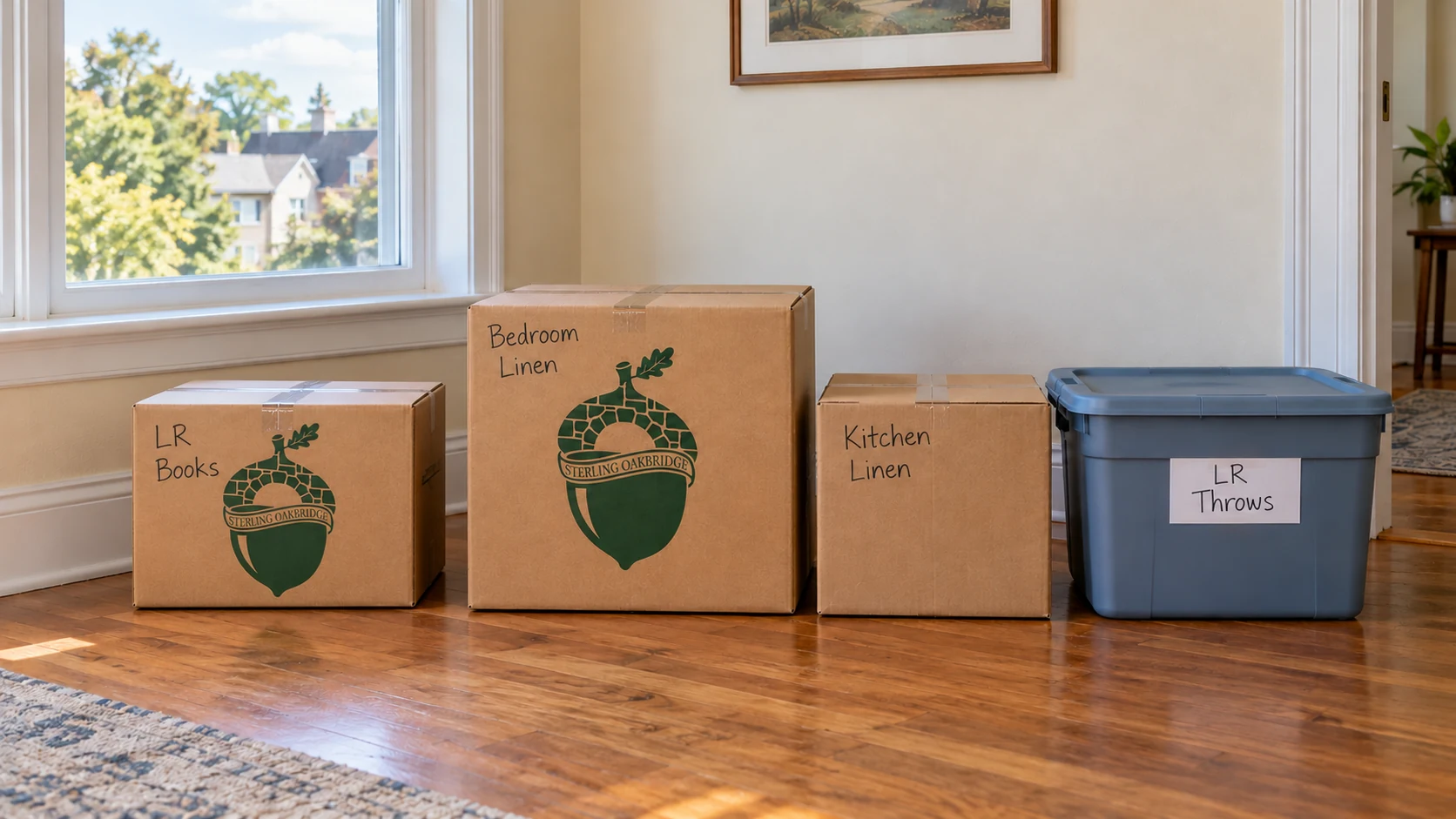
Use short destination-room and contents labels that the receiver can understand. Write them directly on ordinary kraft cartons; a customer tote can use an attached paper label. Dense books belong in a manageable selected format, while linen and throws suit their reviewed containers. Keep the identification connected to the piece count and packing responsibilities rather than replacing the inventory with a photograph.
The illustrative reference is 2015 road miles, with normal direct planning of 3–4 days after pickup and loading. Direct provides the dedicated truck and same crew for the agreed stages. Flagstaff is in Arizona: a consolidated window is agreed individually. California’s up-to-90-day allowance is specific to California, so review this western shipment on its own conditions.
Before arrival, clear the actual footprint and route for the largest piece. Identify the room and lawful truck position, confirm keys and working hours, and name someone authorized to direct placement. Keep arriving cartons at a useful edge while furniture is placed. If the household cannot attend, agree who will receive and report a change in access.
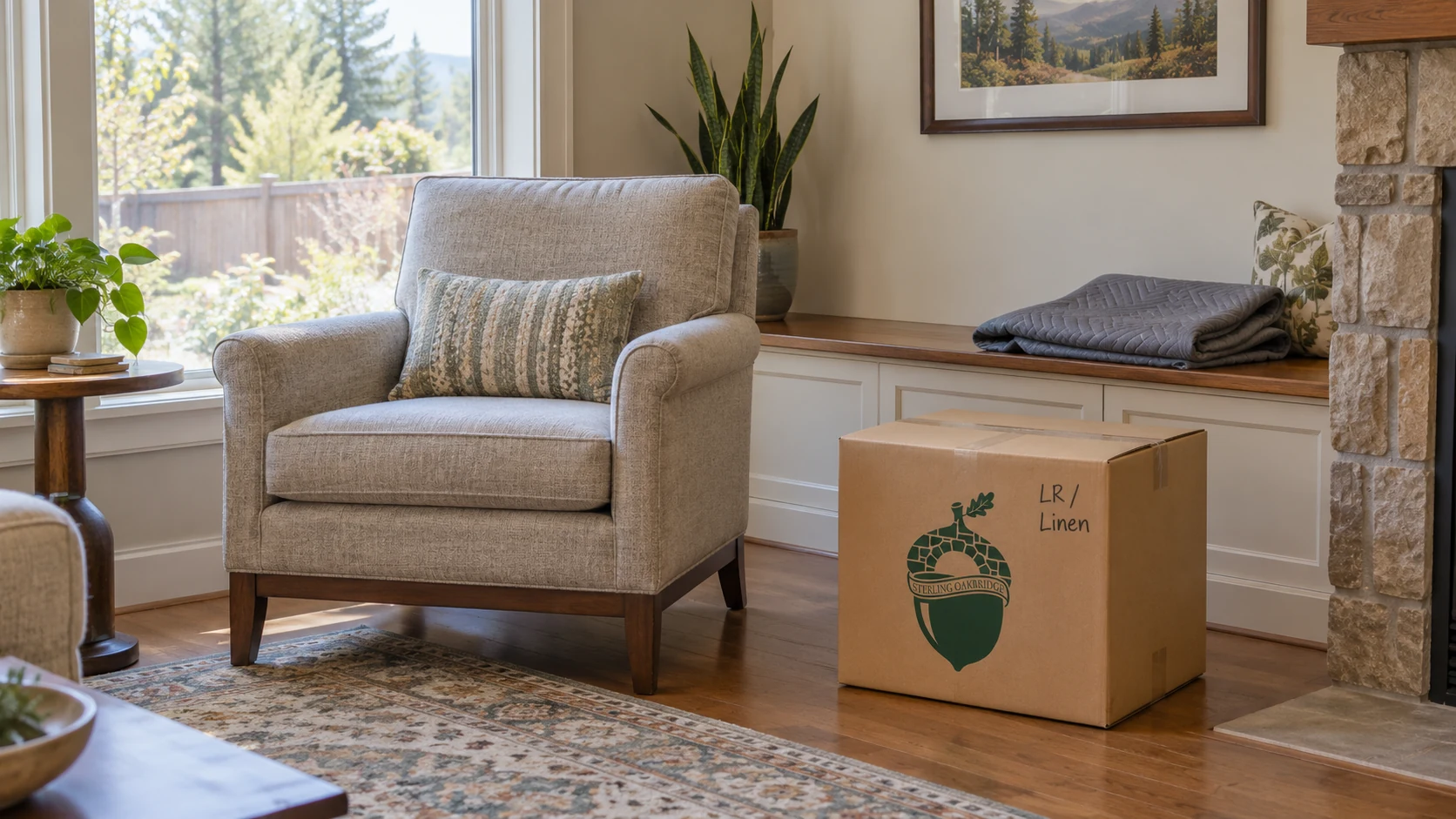
The receiving scene shows selected furniture after placement and removal of protection, with a sealed identified carton still awaiting its next task. Normal exposed supports are appropriate at this completed stage. A fixed chair frame does not require invented destructive leg removal. Review the agreed placement and any basic working reassembly needed for other pieces, then follow the separately agreed carton-unpacking and packaging-removal scope.
Prepare furniture and parts according to their construction
Tell the estimator what can be safely dismantled, including dimensions, make or model where useful and photographs of the joints. Safely detachable long table and desk legs are normally removed before transport. The crew protects the body first while assembled, turns the already protected body upside down on stable padding with joints accessible, then removes the matching legs and protects that complete set together last with its hardware.
Fixed joinery receives its own handling method. The word antique alone does not establish that legs cannot be removed. For a genuinely fixed-leg table being protected as assembled, use two full blankets: one covers its left side and both adjacent legs, the other its right side and both adjacent legs, with useful overlap over the body and secured cloth. Integral chair frames retain their supporting anatomy and effective protection during transport.
Basic blanket protection, wrapping and tape have no separate surcharge; cartons are separate. Basic working furniture disassembly and reassembly also have no separate surcharge. Complex construction, heavy or specialist items receive individual review. Agree who packs loose contents and identify unusual pieces before the estimate is finalized.
The complete inventory sets the vehicle and loading plan. Protected furniture, cartons and unbranded customer totes must be secured as a coherent load, with supplies stowed out of the carrying path. A larger direct household shipment and a smaller consolidated pickup have different footprints. Provide the whole list so the selected illustration and the actual work remain in their proper context.
Keep the agreed price connected to the reviewed work
The agreed long-distance flat rate holds when travel or delivery takes longer, provided the inventory, access and services remain unchanged. Added furniture, extra packing, a changed usable entrance, storage or further unpacking changes the scope and is reviewed and agreed separately in writing. Report those changes while the plan can still be adjusted deliberately.
Send both addresses, furniture and carton quantities, floors, stairs, elevators, walking distances and any separate stop. Include the proposed vehicle position, property requirements, dates and pending access decisions. Identify packing, specialist work and a possible storage interval. Municipal arrangements and building charges should have a clear responsible party alongside the moving estimate.
Furniture protection is removed during delivery and agreed placement and basic working reassembly are completed where required. Carton unpacking, putting contents away and removing carton packaging require their own time and scope. Define those tasks before pickup, including the rooms and containers that need attention, so a finished furniture handoff does not leave the household expecting unagreed work.
Finish the departure route and disposal arrangements
Check current street signs and restrictions close to pickup. Erie’s published seasonal rules apply to affected streets and their posted sides and hours. A declared snow emergency can change the arrangement; use the effective announcement and actual location. Confirm the private entrance, steps and driveway with the property contact even when the street itself is usable.
Under Article 717, sidewalk snow, ice or sleet generally must be cleared within three hours after it ceases to fall or form. Responsibility depends on occupancy and vacant property, with an exception for hardened ice that cannot be removed without damaging the walk. Assign the actual person responsible and prepare the full carrying route. The code separately prohibits depositing snow from private property or driveways into the roadway.
Keep unwanted goods on their own plan. The City refuse procedure requires eligible residential customers to book large-item pickup and receive the six-digit confirmation number and date. Call 814-870-1550; the online request covers up to three bulky items. Availability can be up to two weeks away, so arrange it before the property’s final handoff.
Confirm the particular item, preparation, quantity and placement. The City’s programme excludes large appliances, electronics and other specified materials that need an appropriate separate arrangement. A mattress should be named at booking rather than assuming preparation or ordinary collection. Keep approved items clear of parked vehicles and obstructions, and follow the scheduled evening and no-earlier-than-24-hours rule. Moving-service removal and municipal collection remain separately arranged work.
Long-distance moving questions
Where can I arrange long-distance pickup around Erie?
We can review long-distance pickup in Erie and nearby Erie County addresses, including Millcreek Township and Fairview Township. Erie is a City; the two townships are separate municipalities. Confirm the actual address, jurisdiction, inventory, entrance, truck position and dates before using City of Erie procedures. An Erie mailing address alone does not establish City jurisdiction.
What does direct dedicated delivery include?
Direct delivery uses a dedicated truck for your shipment and the same crew for the agreed pickup and delivery. Review the complete inventory, both building routes, vehicle arrangement and receiving access. Your written moving plan establishes the actual dates and services.
When should I consider consolidated delivery?
It is particularly useful for a smaller shipment with flexible receipt, illustratively around 300–400 cubic feet or less. That is not a minimum volume. Describe all furniture, cartons and customer totes so the actual shipment and receiving window can be reviewed. Crew arrangements and any storage stage need their own confirmation.
When does the delivery window begin?
After pickup and loading are complete. The route comparison provides normal planning illustrations. Confirm the actual appointment around the selected truck, inventory, route and receiving property rather than treating the table as a booked arrival.
Can a close move to Olean arrive the same or next day?
A suitable close domestic shipment can be reviewed for same-day or next-day delivery when loading, the route and receiving access support it. The normal Olean illustration is 1–2 days after pickup and loading. Confirm your appointment before booking a dependent building or key handoff.
Which consolidated windows apply to these four examples?
Olean, New York illustrates a suitable close domestic route with up to 30 days. Trois-Rivières, Quebec uses up to 60 days under Canada’s policy. Aiken, South Carolina and Flagstaff, Arizona need individually agreed consolidated windows. Florida uses up to 60 days and California up to 90; those allowances are specific to their stated destinations.
Will a longer drive or delayed delivery increase the flat price?
No. For unchanged inventory, access and services, the agreed long-distance flat price holds when travel or delivery takes longer. Added belongings, altered access, storage or extra tasks change the scope and are reviewed and agreed separately in writing.
How do I arrange Erie meter bags for the truck?
Contact the Erie Parking Authority at 814-456-7588 about the exact meter locations and working window. Its published meter-bag charge is $10 per meter per day. Confirm approval, the number of spaces, notice, payment, installation, removal and enforcement arrangements. The charge is a municipal arrangement, separate from the moving-service price.
Can I use a loading zone or bus stop for the whole move?
Code §521.07 limits material loading or unloading in a marked loading zone to 30 minutes. A longer operation needs an appropriate arrangement. Section 521.08 separately restricts bus stops and taxicab stands. Confirm the actual frontage and signs with the responsible office before scheduling the truck around it.
Does the commercial parking exception allow unlimited truck storage?
No. Section 521.05 generally limits commercial vehicles with chassis weight above 3,000 pounds to two hours, with an exception during actual nearby working operations. The specific operation and other restrictions still need review. Arrange the lawful position and working period rather than relying on an indefinite stay.
How should the driver review the Erie approach?
Use the actual vehicle and pickup address to review Article 511’s truck routes, destination-access provisions and street-specific restrictions. Check current signs and work zones. A passenger-car navigation result or the four city-to-city road illustrations does not certify the route for a moving truck.
What snow-clearing obligation applies at a City property?
Article 717 generally requires sidewalk snow, ice or sleet removal within three hours after it ceases to fall or form. Responsibility varies with occupancy, ground-floor occupants and vacant property. The code has an exception for hardened ice that cannot be removed without damaging the walk, with treatment and later removal. Assign the actual property responsibility and prepare the full carrying route.
How are safely removable long table and desk legs prepared?
The crew reviews the actual construction. Protect the body first while assembled, keep the joints accessible, turn the protected body upside down on stable padding, then remove the safely detachable legs and protect the matching set together with its hardware. Fixed joinery needs its own method; the word antique alone does not establish that legs cannot be removed.
Are basic protection and working furniture assembly separate fees?
Basic blanket protection, wrapping and tape have no separate surcharge; cartons are separate. Basic working furniture disassembly and reassembly also have no separate surcharge. Complex construction and specialist pieces receive individual review. Agree packing responsibilities and the full service scope before pickup.
Does delivery include putting away every carton’s contents?
Furniture protection is removed during delivery, with agreed placement and basic working reassembly completed where required. Carton unpacking, putting contents away and removing carton packaging are separate tasks requiring their own time and scope. Identify the rooms and cartons for that work before the estimate is finalized.
Which belongings should stay with the household?
Keep keys, necessary personal and shipment records, chargers and first-night essentials accessible to the household. Confirm which belongings are excluded from the truck inventory and who holds them through handoff. Use a closed folio or manageable personal bag so records are not left on furniture being loaded.
Can Sterling plan a move to Trois-Rivières, Quebec?
Yes. Canada is within reviewed household coverage, and Trois-Rivières, Quebec is one illustration. Confirm the inventory, relevant shipment and personal documents, household travel plans, dates and authorized receiving contact before booking. Border processing can affect the practical plan; confirm the requirements for the actual circumstances.
What if possession and receiving dates do not line up?
Identify the gap before pickup. Storage is a separately agreed stage, with the contents, receiving conditions and later delivery planned explicitly. Confirm who holds the keys, whether the building can receive the planned arrival and which authorized alternative is available if access changes.
How do I arrange unwanted furniture in Erie?
Eligible City residential refuse customers must schedule large-item pickup and receive the six-digit confirmation number and date. Call 814-870-1550; the online request covers up to three bulky items. The City warns that availability can be up to two weeks away. Confirm the item, preparation and placement. Large appliances, electronics and several other materials require a separate arrangement; moving-service removal is separately scoped.
Explore long-distance destinations from Erie
These destinations illustrate household shipments from Erie, Pennsylvania, within Sterling’s reviewed United States and Canada coverage. Review the complete inventory, both addresses, access and dates, then agree the actual shipment, services and receiving window.
Northeast and nearby interstate examples
- Olean, New York
- Buffalo, New York
- Jamestown, New York
- Albany, New York
- New York City, New York
- Philadelphia, Pennsylvania
- Pittsburgh, Pennsylvania
- Hartford, Connecticut
- Boston, Massachusetts
Southeast and Florida
- Aiken, South Carolina
- Richmond, Virginia
- Raleigh, North Carolina
- Charlotte, North Carolina
- Savannah, Georgia
- Atlanta, Georgia
- Jacksonville, Florida
- Tampa, Florida
Midwest and Texas
- Columbus, Ohio
- Chicago, Illinois
- Detroit, Michigan
- Dallas, Texas
- Houston, Texas
Mountain West and Southwest
- Flagstaff, Arizona
- Phoenix, Arizona
- Albuquerque, New Mexico
- Denver, Colorado
- Salt Lake City, Utah
- Las Vegas, Nevada
Washington, Oregon and California
- Seattle, Washington
- Spokane, Washington
- Portland, Oregon
- San Francisco, California
- San Diego, California
Canada
- Trois-Rivières, Quebec
- Sherbrooke, Quebec
- Montreal, Quebec
- Ottawa, Ontario
- Toronto, Ontario
- Kingston, Ontario
- Vancouver, British Columbia