
Lancaster, Pennsylvania · Household preparation and receiving
Packing and Unpacking Services in Lancaster, PA
Choose which household contents you want Sterling Oakbridge to prepare in Lancaster, from the fragile cupboards to the full retained shipment.
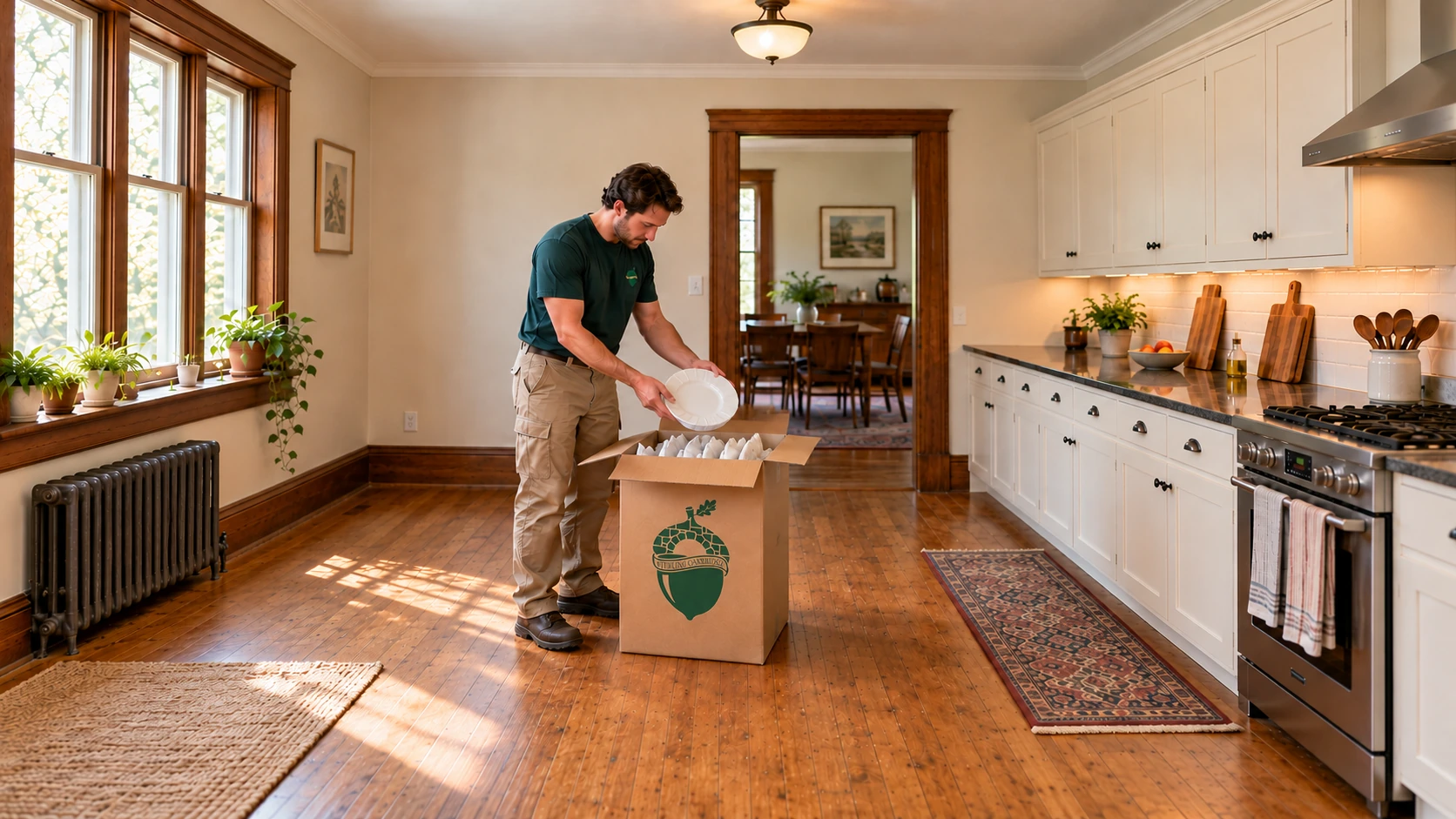
Optional unpacking and customer-directed organizing can help you use the receiving home after delivery.
Explore packing, costs and local examples
Decide what you want packed and what stays in daily use
Begin with the work you want to hand over. Full packing covers the retained contents included in the plan. Partial packing can cover selected rooms, cupboards or collections while you prepare the rest. Fragile-only help needs a named item list: dishware, glass shelves, frames and a display cabinet are different preparation tasks. Mark anything that stays, goes to another person or is approved for removal before it is wrapped.
Packing can occupy evenings as well as moving day. A couple of weeks spent preparing after work is one possible household experience, not a measured average. Compare that effort with the work, rest and household routines you want to preserve. You can do the sorting yourself and ask for protection of the retained contents, or agree a wider preparation visit. The useful decision is the actual boundary between your work and the team’s work.
Request a packing estimate Call (475) 221-2030
Our Lancaster moving-services page covers the broader move and access planning. The Lancaster relocation guide helps with local household arrangements. Here, the plan starts inside the cupboards and ends with the receiving tasks you actually want completed.
Count the contents behind the doors
Show filled kitchen cabinets, bookcases, bathroom storage, wardrobes and loose belongings, including the areas outside the main living rooms. A West Liberty property description includes a third-floor bonus room and full basement. That single example explains why a bedroom count can miss a working room upstairs and years of storage below. It does not establish the contents or layout of your home.
An expectation of twenty cartons might become sixty or a hundred once the retained cupboards are included. Those numbers illustrate a missed inventory; they are not a Lancaster carton calculator. Identify books separately from light linen, and show unusual glass, artwork, lamps and furniture contents. The review determines suitable cartons, protection, working space and handling rather than filling every kind of box with the same material.
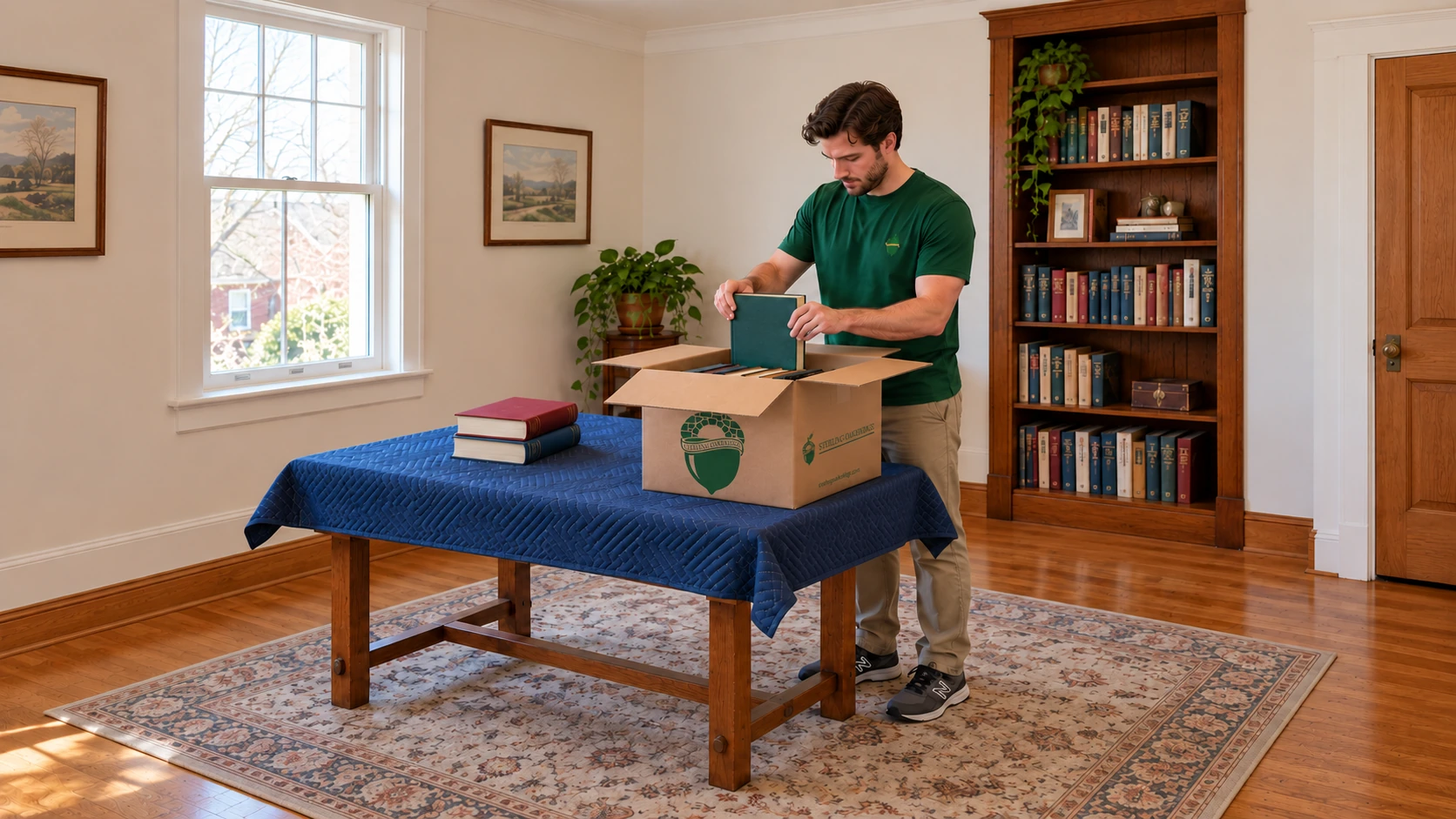
Keep documents, medicines, keys, chargers and work equipment out of the shipping group for as long as they are needed. A room can be packed in stages, but each remaining item needs an owner for the final pass. Include storage units, garden items or another pickup address explicitly. A photograph of the front room does not account for the rest of the shipment.
Connect preparation visits with the final workday
A modest studio or one-bedroom inventory may allow packing and a local move on one day when the contents, access and receiving arrangement fit. A larger retained inventory or limited building hours may justify preparation earlier. The number of bedrooms does not decide this by itself. Review both visits, including entry, parking, carrying routes and what the household needs between them.
A substantial hypothetical plan might use four packers on a preparation day and six movers on the moving day. That illustrates different work at different stages, not standard staffing for a particular house size. It remains possible to pack a larger home yourself. What matters is whether the chosen preparation can be finished within the household’s actual time and access constraints.
Imagine: keep the home office working until the final meeting
Suppose an upper bonus room is used as a home office while books and stored household goods occupy the basement. The office use belongs to this hypothetical example. One person still has a final afternoon meeting before departure. Start with storage and the nonessential book group; leave the working computer, connection equipment, papers and charger available. Identify who shuts down and prepares that last group after the meeting, before loading begins.
Agree a preparation period that keeps the connected stairs and hall usable. Retain bedding, a simple meal setup and the next morning’s essentials. For a City nonmetered position, courtesy signs need at least forty-eight hours’ posting and do not guarantee a cleared space. Review the later loading position separately. The result is a ready shipment with one controlled final step, rather than a packed office that interrupts the household’s remaining work.
Choose protection for the actual fragile contents
Protection has to work through carrying, support inside the carton, stacking, restraint and movement during transport. Photograph dishware, glass furniture panels, shelves, frames and delicate collections clearly. Ordinary household packing and a complex or unusually valuable object may need different methods. Clean working surfaces and handling suited to the object matter; one kind of glove is not appropriate for every material or grip.
Empty ordinary drawers and keep them secured in their protected furniture. Arrange removal of safely removable long table or desk legs before transport: protect the top first and keep the complete matching leg set and hardware identifiable together. Integral supports and complex mechanisms need review before dismantling. Loose shelves, supports and small fittings must stay associated with the correct piece.
Imagine: reserve professional help for the fragile cupboards
Consider an apartment where the customer packs clothing and ordinary books but wants help with the kitchen glassware, framed pieces and removable glass cabinet shelves. The Gallery 118 property description lists elevators and controlled access. Use that as a reminder to obtain the actual building’s entry instructions and preparation period; it does not establish a universal elevator or COI rule.
List the selected cupboards and objects together, including shelves or small parts that remain after they are emptied. Show a suitable work area and the full route out. Confirm which cartons you will finish yourself and how the team will identify them. If the fragile work expands into another room, review that addition before it begins. A precise boundary helps the estimate and avoids leaving a cabinet’s contents unassigned.
Give every retained group a real destination
Use written destination, room, useful contents, carton number and priority. Color can reinforce those words, but should not be the only instruction. Match the labels to one current inventory and receiving plan. Distinguish goods for the new home, agreed storage and a named second recipient; identify household travel bags separately from all of them.
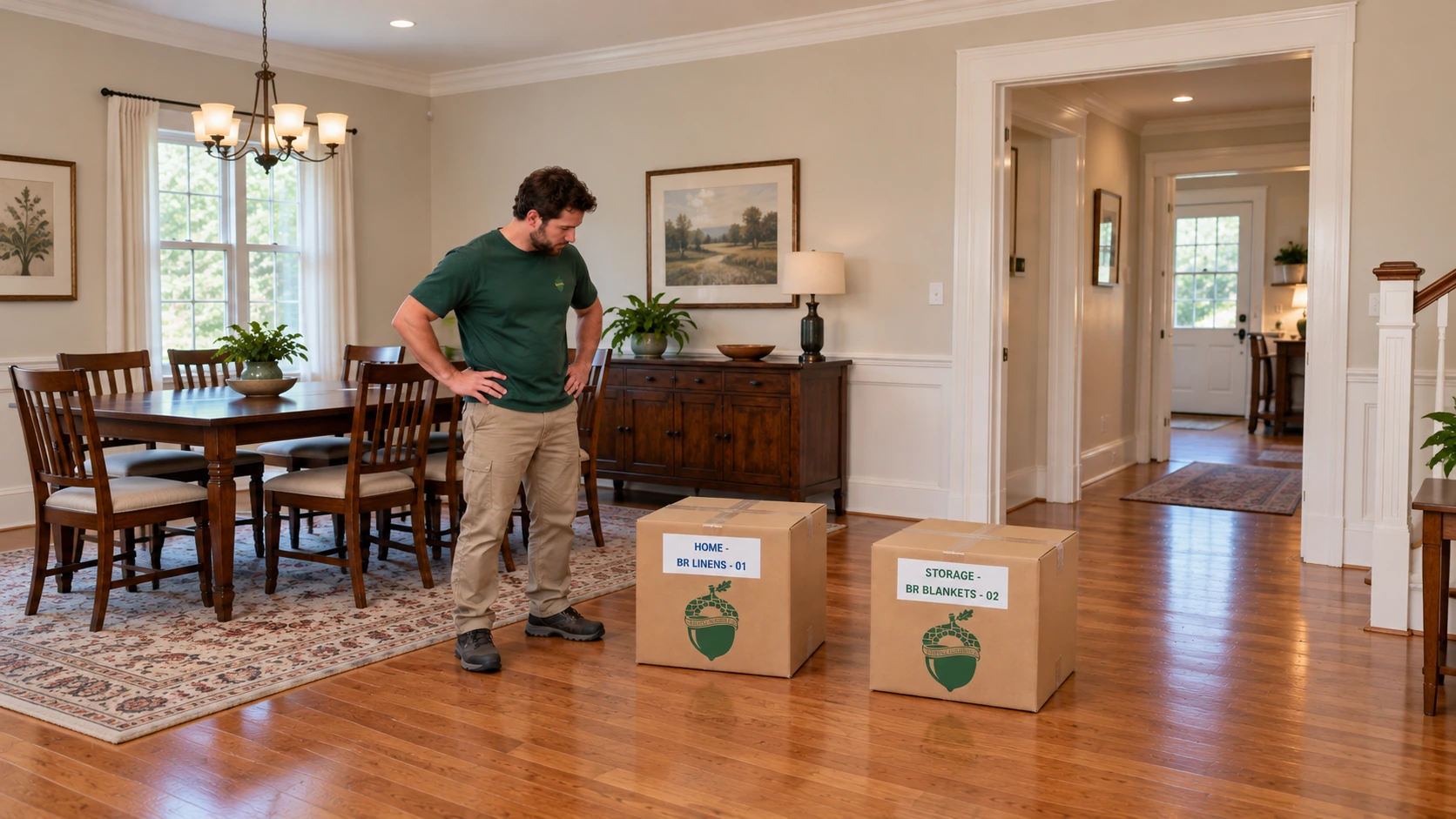
Establish that a recipient will accept an item before paying to pack and send it there. Storage adds its own handling, charges, access arrangements and eventual delivery; it does not automatically make a sealed carton available during a stay away. Keep anything needed before redelivery with the household or arrange the necessary access in advance.
For an outbound shipment, receiving help must follow the written delivery arrangement. The Lancaster long-distance page explains direct and consolidated choices and periods that begin after pickup and loading are complete. A household’s flight or key date does not establish a truck appointment. Confirm the receiving contact, the accepted period and a workable alternative before booking another crew around an assumed arrival.
Open the contents into rooms that can receive them
Basic carton unpacking opens the agreed boxes and places their contents on appropriate available surfaces. Furniture is unwrapped during delivery; opening box contents is optional work charged for working time. Decide which cartons to open first and clear the necessary counter, table or shelf. Opening everything at once can cover the surfaces you need to use the home.

Imagine: settle the ready rooms while other work continues
A West Orange home description includes first-floor bedroom and laundry space. Consider a separate hypothetical receiving plan in which those priority areas are usable while another room remains unreleased after work. Confirm that the ready rooms and their route are safe and available. Open the selected bedding, clothes and daily supplies there; leave the later-room cartons identified and sealed.
The customer marks what should remain on a surface and what should be put away through a separate organizing scope. Assign the later boxes a suitable holding location that preserves access and the household’s daily route. If another visit is wanted once the remaining room is ready, arrange it subject to availability. Packaging collection and any extra trip belong in the quote. The result is an agreed set of usable rooms, without assuming that every room must be opened or finished on arrival day.
Choose final placement and finishing separately
Customer-directed home organizing puts agreed belongings where you want them. Give the person directing the visit a practical list of cupboards, shelves and priorities. A manageable smaller team can be easier to direct than several people asking placement questions at once. Personal records, valuables and private possessions should have instructions for their actual handling.

Basic furniture disassembly and reassembly use moving labor time without a separate basic assembly fee. More complex assembly and handyman finishing need an agreed task, wall or surface, hardware, permissions and appropriate executor. Packing does not automatically include electrical hookup, repairs or restoration. Describe the finished result so preparation, assembly and any technical work are quoted under their real scopes.
A separate new purchase has a different release and pickup plan: furniture delivery and placement handles that journey or the remaining carry after a retailer’s curb or garage drop. Moving furniture that is already at the property belongs to in-home moving. Neither task follows automatically from opening household cartons.
Compare the same belongings and the complete paid scope
Packing is charged for working time, and company-supplied cartons used for the job are charged separately. Moving blankets, shrink wrap and tape have no separate material charge. Optional box unpacking also uses working time. Packaging removal has its own charge; organizing, specialist protection and handyman work need their individual scope and price.
| Stage | What to identify | Cost boundary |
|---|---|---|
| Preparation | Selected contents, protection and work area | Working time; cartons separate |
| Moving and furniture | Inventory, access and assembly needs | Reviewed moving basis and scope |
| Receiving help | Cartons, surfaces and directed placement | Unpacking time; organizing agreed individually |
| Finishing or return | Removal, specialist work and extra visits | Separately agreed work and charges |
On a substantial inventory, packing and moving together may approach twice the budget of moving the same shipment already packed. That is an illustration, not a rate, fixed multiplier or ceiling; the actual comparison can be below or above it. Compare the same contents, access, stages and requested finish. Packing unwanted items or omitting an entire cupboard can distort that comparison.
For a large receiving job, a discussion might include three or four extra unpacking hours on delivery day or a later visit by two people. Those are conditional planning examples. Actual contents, available surfaces, access, decisions and crew availability determine the plan. A local estimated or minimum time is not a promise to complete every task within those hours.
If packing accompanies a move inside Pennsylvania, use the applicable in-state tariff and estimate process. For an interstate long-distance move quoted at an agreed flat rate, a longer journey alone does not raise the price for the same shipment and services. Additions or changed work need a revised written scope and price. Start with the actual job and let the planning team identify the appropriate estimate review.
Separate the empty materials before they close the route
Packaging removal is available when agreed and is charged separately. Name the materials and amount, where they will be gathered, the route out and whether removal is wanted with unpacking or later. Check used paper for small fittings and retained belongings before it leaves. Empty cartons, unwanted furniture and electronics are different removal groups.
The City’s 2026 recycling instructions include corrugated packing boxes and require them flattened. Plastic bags are excluded from the ordinary recycling bin. Keep suitable emptied cartons apart from plastic wrap and mixed cushioning. The City’s Recycling Drop-Off Center at 850 New Holland Avenue lists paper types for separate drop-off; sort that paper before taking it there.
The newsletter describes a commercial opt-in for some household-like waste streams, including some larger residential and mixed-use properties. Establish the actual account and building arrangement. A resident’s collection eligibility does not authorize a crew’s commercial load. The removal service owns the detailed material and accepting-route review; do not assume that all wrapping, foam or unwanted goods share one disposal route.
Send enough information to choose the next step
Send full addresses and units, the actual municipalities, practical dates and the retained contents of each room and storage area. Include useful cupboard photographs, unusual objects and a connected view of the carrying routes. Identify full, partial or fragile-only preparation; the final daily-use group; each destination; and the receiving tasks you want included.
An item list can start a straightforward request. Full packing, unusual contents or restricted access may justify video review or an in-person survey, even in a smaller home. Mark what is approved and what remains a request. We can then review staffing, preparation and receiving visits and a written estimate for the actual work.
Lancaster packing and unpacking questions
Can I choose only part of the packing?
Yes. Agree full packing of the retained inventory, selected rooms or cupboards, or named fragile contents. List the dishware, glass shelves, frames or other objects that need help and identify what you will prepare yourself. Additions should be reviewed before the extra work starts.
What should I show when asking for a packing estimate?
Show filled cupboards, bookcases, wardrobes and storage on every included floor, plus unusual objects and the connected carrying routes. Include both addresses, date constraints, full or selected packing, anything still in daily use, destination groups and the receiving help you want. Bedroom count alone does not establish the contents.
Can packing and a local move happen on one day?
A modest inventory may fit one day when preparation, access, travel and receiving can all be completed within the reviewed arrangement. More contents or restricted building hours can justify packing earlier. The planning team reviews the actual work; a studio or bedroom label does not guarantee same-day completion.
Is a larger home too much to pack myself?
You can prepare a larger home yourself. Compare the retained contents, suitable materials, available time and the routines you want to preserve. You may do the sorting and ordinary packing, then ask for selected fragile work. An example of weeks spent packing after work describes one possible experience, not a rule for every household.
How can I keep working from home until departure?
Keep the necessary computer, connection equipment, papers and charger in a clearly excluded daily-use group. Pack nonessential storage first and assign who prepares the final working group after it is no longer needed and before loading. The actual shutdown or technical task must have an owner rather than being assumed from packing service.
What building and parking details matter for a preparation visit?
Confirm the actual entry contact, permitted work period, elevator or stair route and work area for that visit. Treat later loading as a separate arrangement. City nonmetered courtesy signs cannot guarantee a cleared truck position; metered rental follows LPA’s applicable procedure. Show the actual property instructions and identify who obtains each confirmation.
Which materials are charged separately?
Company-supplied cartons used for the job are charged separately. Moving blankets, shrink wrap and tape have no separate material charge. Packing uses working time, and special protection can require an individual quote. Opening box contents and removing empty packaging are separate choices with their own charging boundaries.
How do I include glass, framed pieces or a collection?
Identify the actual objects, construction, condition and value concerns before quoting. Show removable glass shelves or panels and the route through both properties. Protection must suit carrying, internal support, stacking and transport; ordinary dishware and an unusually delicate object may need different methods. Agree the method and responsibilities for the selected contents.
Should drawers and long furniture legs come out?
Keep ordinary drawers emptied and secured in their protected furniture. Arrange removal of safely removable long table or desk legs before transport, protect the top first and keep the complete matching leg set and hardware identifiable together. Integral supports and complex mechanisms need a different reviewed plan.
What should destination labels include?
Use the destination, room, useful contents, carton number and priority in writing. Color can reinforce those instructions. Keep one current inventory and distinguish the new home, agreed storage, a named recipient and household travel essentials. Confirm that any second recipient will actually accept the goods before they are packed for that address.
Can I keep some goods in storage and receive others first?
Yes, when the storage, loading and receiving arrangements are agreed. Keep separate identified groups and a reviewed sequence. Agree handling, access, charges and later delivery explicitly. Do not put something needed during the interval into storage unless its availability has been arranged. A storage stage does not automatically include free holding or immediate access to a sealed carton.
What does basic box unpacking leave me with?
The team opens the agreed cartons and places contents on appropriate available surfaces. Identify priority boxes and clear the necessary table, counter or shelf first. Putting every item into its final cupboard is customer-directed organizing, which has a separate agreed scope. Furniture unwrapping during delivery does not automatically include opening all boxes.
Is home organizing included with unpacking?
Organizing is available when agreed separately. The customer directs the final placement of the selected belongings, with priorities and a practical decision-maker for the visit. Agree scope and price individually. A smaller manageable team may be easier to direct, and personal or private items need their actual handling instructions.
Can you unpack only ready rooms and return later?
Yes. Review the usable rooms, selected cartons, safe route and appropriate surfaces for the first visit. Keep later-room cartons identified and sealed in a suitable location. A later visit depends on availability and needs its own access, contents, priorities and charges agreed. Do not open goods into an unfinished or unavailable space by default.
Does packing include furniture assembly or handyman work?
Basic furniture disassembly and reassembly use moving labor time without a separate basic assembly fee. Complex assembly, mounting and handyman finishing require an individually agreed scope and price. Confirm the surface, hardware, permissions and executor. Packing does not automatically include electrical hookup, repairs or complete-home restoration.
What if a purchase is left at the curb or furniture is already inside?
Describe the remaining task separately. Furniture delivery can cover an agreed purchase pickup or the carry and placement after a retailer’s curb or garage drop. Furniture already at the property may need an in-home carry between rooms or floors. Both require the actual route and placement reviewed; they do not follow automatically from carton unpacking.
Will packing make the move cost twice as much?
There is no standard doubling rule. A substantial packing-and-moving job may approach twice the budget of moving the same shipment already prepared, but the result can be lower or higher. Compare the same belongings, access and stages, including working time, cartons, receiving help, removal and any extra visit.
Are estimated or minimum hours a completion guarantee?
No. They describe the reviewed time or minimum charging basis, not a promise that every task will finish within it. Inventory, preparation, access, elevators and changed work can alter the time required. Confirm the actual scope and applicable moving basis before using an hourly illustration as a total budget.
Does an agreed long-distance flat rate rise if the journey takes longer?
A longer journey alone does not increase an agreed flat rate for the same interstate shipment and services. Added items, packing, storage or changed access need a revised written scope and price. A move remaining within Pennsylvania uses its applicable in-state tariff and estimate process instead of inheriting every interstate illustration.
How should receiving unpacking be booked for a long-distance move?
Use the actual destination and accepted written delivery arrangement, whose periods start after pickup and loading are complete. Confirm who can receive, which rooms are ready and whether another visit or crew is available. Do not book receiving help around an assumed arrival derived only from the household’s travel or key date.
Can empty cartons and packing paper go out with recycling?
Follow the actual property’s collection setup and the material rules. Lancaster City’s 2026 instructions include flattened corrugated packing boxes and exclude plastic bags from the ordinary recycling bin. Sort other accepted paper types for separate drop-off under the City’s Recycling Drop-Off Center guidance. Check used paper for small fittings and retained belongings, and agree any paid removal with the team.
Does packaging removal include unwanted furniture or electronics?
Empty-packaging removal covers the materials agreed for that task. Unwanted furniture and electronics need a separate approved removal list, condition, route and accepting destination. Batteries and restricted items may need different arrangements. Resident collection eligibility does not establish permission for a crew’s commercial load.
Where can Lancaster packing be arranged?
You can request packing for a Lancaster City, Pennsylvania address. Send the full street and unit address, actual municipality and building contact. A Lancaster mailing name elsewhere in the county needs its own property and service review; it does not establish City parking or collection rules. The location is separate from Lancaster, New Hampshire.
Choose the work you want finished
Tell us which contents to pack, what must stay useful until departure and which receiving rooms should become usable first.