
Pennsylvania · Norristown service planning
Full packing and unpacking in Norristown, PA
Keep your evenings and hand over the household packing you want the crew to do.
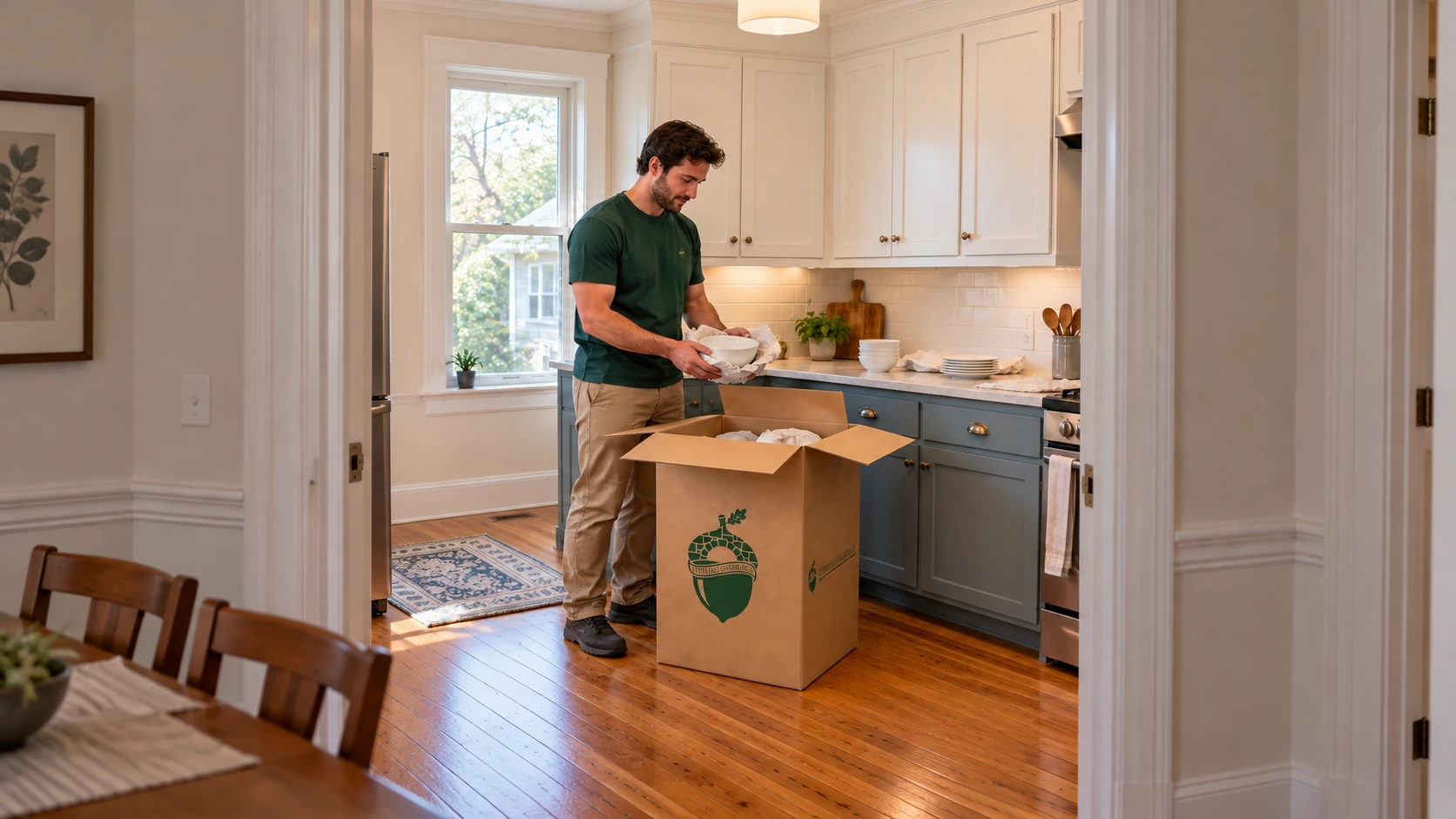
Sterling Oakbridge can prepare all agreed retained contents or selected groups in Norristown, with optional unpacking and separately agreed help placing things in their new home.
Explore packing, costs and local examples
Choose full or selected preparation
Packing after work competes with dinner, a commute, a child's bedtime and the chance to rest. A few evenings can become a couple of weeks when every cupboard requires a decision as well as a carton. You can take over the sorting and let the crew handle the agreed physical preparation, or keep straightforward groups for yourself and hand over the slower ones.
Full packing covers the retained household contents in the reviewed scope. Partial packing selects rooms or categories: kitchen contents and books, for example, while you prepare clothing. Fragile-only preparation concentrates on agreed breakables. Name what the crew will pack, what you will finish and what stays at the property; “everything except a few things” leaves too much room for a misunderstanding.
The household still makes the keep, donate and discard decisions. Set aside undecided belongings before packing starts, and identify valuable or personally sensitive items that remain with you. Emptying a cupboard into cartons is different from deciding whether its contents should enter the new home.
Use the actual Norristown property rather than its mailing address alone. A postal name does not establish municipal collection eligibility or a building's rules. The Norristown moving page covers the carrying route; the moving-to-Norristown guide covers the wider household arrangements.
Count the contents and preserve daily essentials
Show open cupboards, drawers, wardrobes and bookcases, plus retained belongings in the attic, basement or garage where those spaces exist. Include dishes kept for holidays, collections, small appliances, hanging clothes and cartons from an earlier move. A room photograph with closed doors can show the furniture while hiding most of the packing work.
A household expecting 20 cartons might discover a need for 60–100 after all the stored contents are included. This illustrates a possible difference between an initial impression and an actual inventory; it is not a Norristown average, a supply allowance or a promise about your home. Bedroom count and square footage cannot count the things inside. The planning team may use an item list, photographs, video or an in-person survey, including for a smaller home with full packing.
Keep an agreed pack-last group available through the final night and morning. Choose bedding, a simple breakfast set, work and school clothes, toiletries and whatever makes the household's routine possible. Give that group a clear location and packing time. Medicine, identification, keys, valuables, essential documents and journey supplies should remain under your control throughout, rather than becoming another pack-last carton that disappears into the load.
A working room can stay useful while other groups are prepared. Clear one real surface for packing, retain a route to the bed and door, and move completed cartons only to a safe agreed area. Do not fill the vestibule or a shared landing because it seems closest to the exit.

Plan the preparation and receiving visits
A reviewed studio or one-bedroom local move may allow packing and moving on the same day when the inventory, access and permitted work period fit. Denser contents, a two-bedroom household or a larger home can make an earlier preparation visit more useful. Six movers on moving day and four packers on an earlier day are one possible arrangement, not a standard crew or staffing commitment.
Agree entry and work hours for every visit, not only the truck's moving slot. Identify the person who can admit the team, the entrance for material delivery, the packing surface, each stair and landing, any lift arrangements and the area for prepared cartons. An upstairs dwelling with a separate residential door may need a different approach from the shop below it. Actual dimensions and permissions belong to the property.
A Norristown resident parking permit does not reserve a moving-truck position. Settle lawful loading and any required municipal or building arrangements separately. Earlier packing can involve a material drop-off and its own access needs even when the household goods will leave the next day.
For a longer move, preparation does not start the delivery window. The window begins after pickup and loading are complete. Choose receiving help around the accepted delivery arrangement and actual possession of the new home; do not book a rigid unpacking appointment simply because the packing day is fixed. The Norristown long-distance page explains direct and consolidated delivery, conditional windows and the agreed shipment.
Match protection to the contents
Protection must work while an item is carried, supported, stacked, restrained and transported. A neat exterior alone does not stop contents from moving inside a carton. Ordinary dishes need individual wrapping and suitable cushioning in a sound carton; books need a manageable load; hanging clothes need an appropriate wardrobe arrangement and usable loading access. Reused cartons need review for condition, strength, size and closure before they are included.
Show glass doors and shelves, frames, photographs, decorative objects and collections separately. An integral cabinet door is not the same as a removable shelf, and a small framed photograph is not the same task as a valuable large work. Fine art and antiques preparation can address pieces needing a different method. Clean work areas and suitable hand protection should fit the material and grip.
Furniture preparation follows the actual construction and route. Empty ordinary drawers can normally remain secured in their protected piece; safely detachable shelves, glass or long legs may need separate handling. Keep matching small fittings identified with the piece. Do not remove every drawer or support merely because it is visible. A separately purchased item belongs with furniture delivery planning, including its own condition and access review.
Separate destinations before the stair
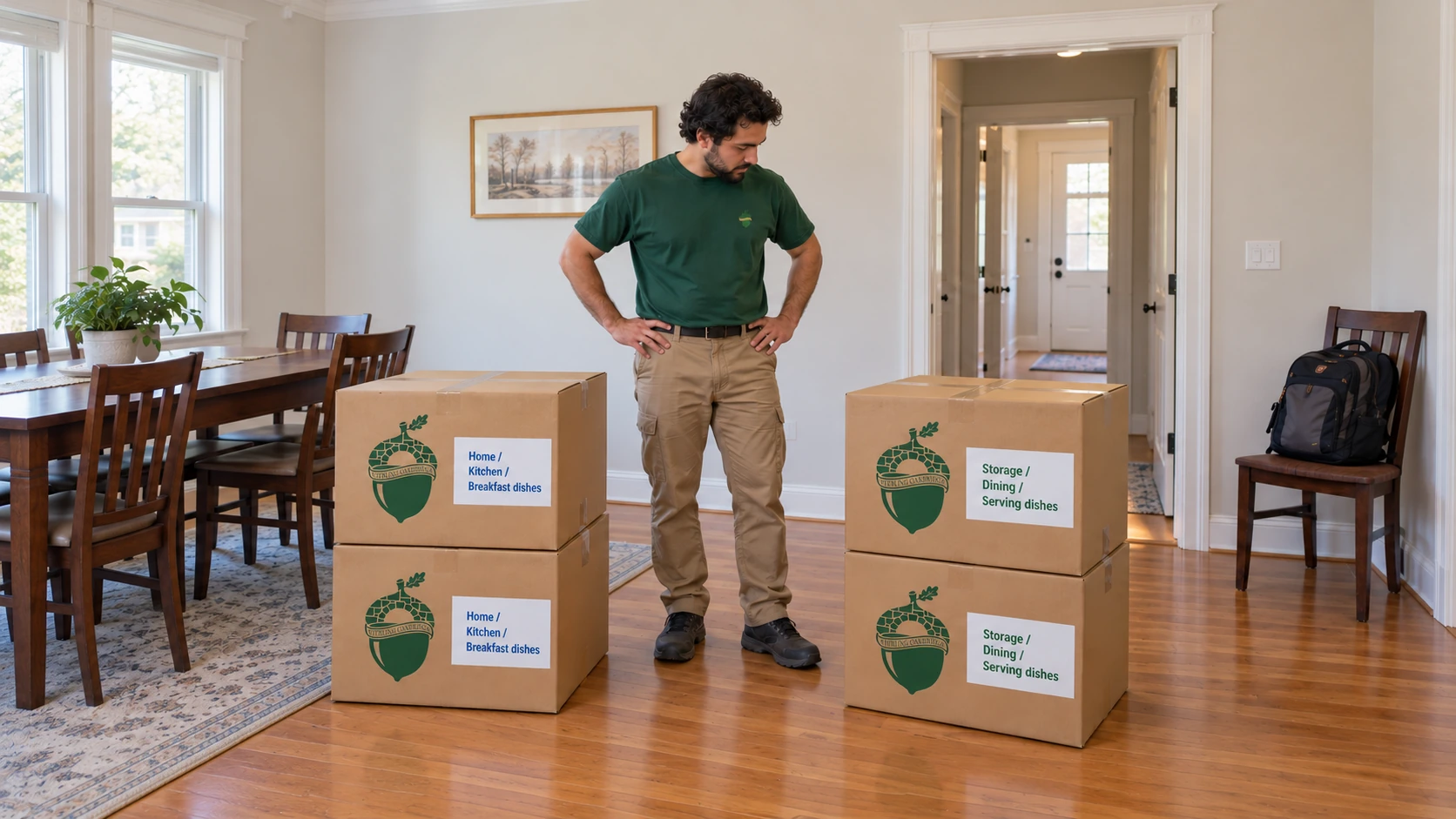
Write the next destination, room and useful contents on each carton. A carton number and opening priority can help match a list; color can reinforce the words but should not replace them. “Home / Kitchen / Breakfast dishes” tells a receiver more than an unexplained colored dot. Mark which cartons must remain closed until a later room is ready.
When a shipment divides between a new apartment and storage, create the groups before carrying begins. Confirm the stop sequence, who receives each group and the accepted storage intake. Later release, access and redelivery need their own arrangement; a green storage label does not reserve them. The storage service covers that next stage.
Keep personal first-night supplies out of both shipment groups. If one room is unfinished, choose an accepted dry holding area and leave a usable route through it. Later repositioning of delivered pieces can be planned through in-home moving. That later handling is a separate task, not an automatic consequence of putting a room name on a carton.
Choose the result of unpacking
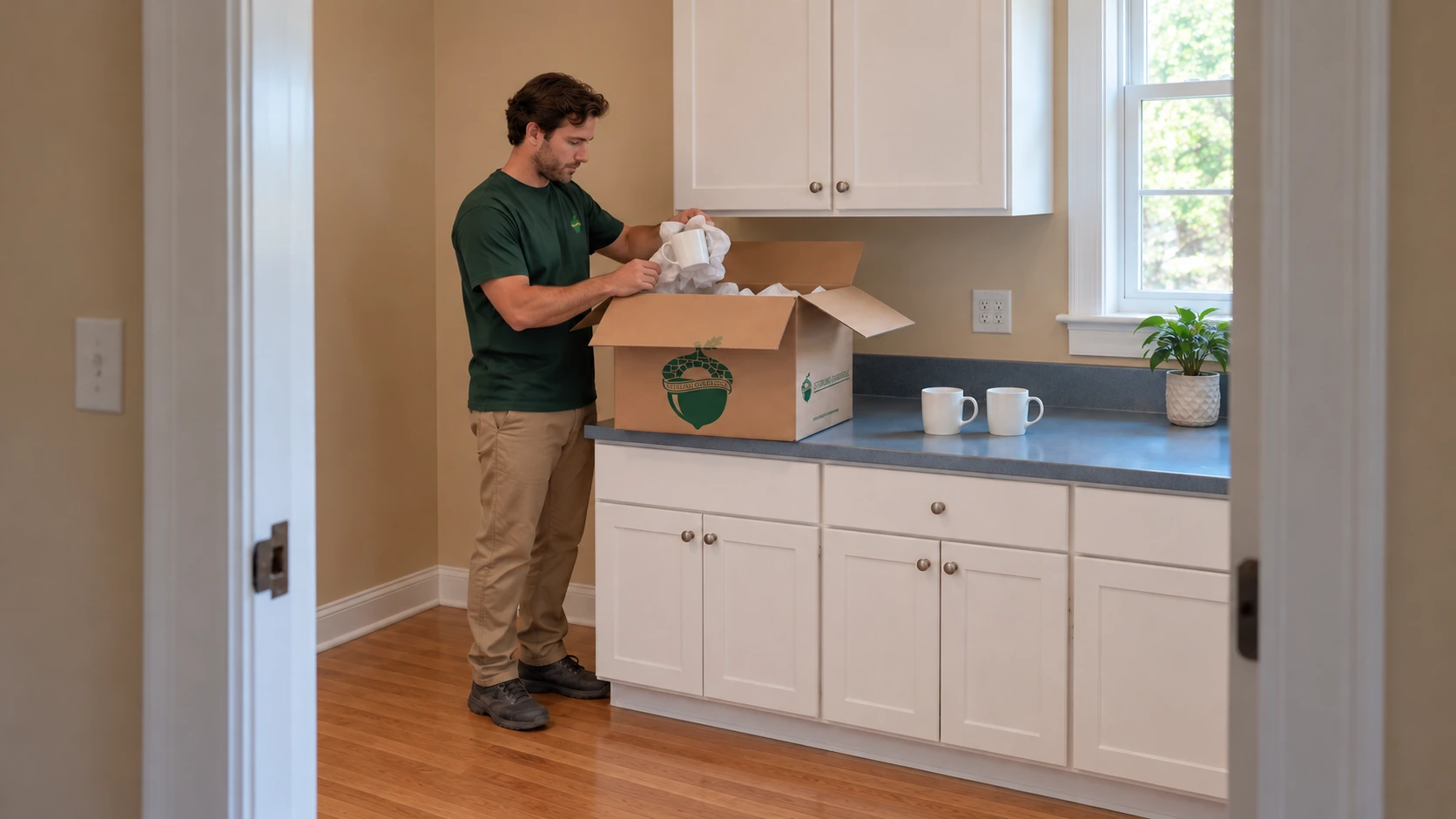
Basic box unpacking opens the agreed cartons and places their contents on suitable surfaces. Choose the first useful result: dishes on a clear counter, books on a stable table or linens on a clean surface. Cabinet doors and routes must remain accessible. The person opening cartons should know what remains unopened and where used paper can gather safely.
Home organizing adds final placement according to your instructions. You choose the cupboard, shelf and arrangement; agree those decisions, the directing person, time and price separately. A smaller team can be easier to direct when every group needs a household decision. Opening cartons onto a counter does not by itself complete the kitchen.
Optional unpacking uses working time. On a larger project, an illustrative extra 3–4 hours may be substantial, and a later visit by two people may be easier to coordinate than keeping the whole moving crew. Neither example predicts the time or confirms a return appointment. A later request can be considered after you have tried unpacking yourself; show the remaining contents, surfaces, priorities and access.
Furniture unwrapping is part of delivery. Basic furniture disassembly and reassembly use moving labor time without a separate basic assembly surcharge. More involved assembly, wall mounting or handyman finishing needs its own reviewed scope, permissions, executor and price. Hanging a picture does not imply electrical work, an appliance hookup or a general repair service.
Four household plans in Norristown
These are imagined planning situations, not accounts of completed jobs. The municipality's 2009 comprehensive plan, page 29, describes downtown dwellings above stores and close-in row houses and twins, with varied residential areas farther out. Those historical patterns help pose useful questions; they do not establish today's layout, condition or permission at an individual home.
A close-in twin keeps the workweek running
Imagine parents who still need one ordinary school and work morning before leaving a twin. The crew can prepare the agreed less-used cupboard contents and books on an earlier visit, while breakfast items, clothes and bedding remain available. The family identifies the few things needed until departure rather than asking every room to remain untouched.
Review the real stair and landing before choosing where completed cartons wait. Keep the breakfast group in its usual usable area, then pack it at the agreed handover. A separate personal bag stays with the household. The result is a workable last morning and a defined final group, not an entirely packed home that cannot be slept in.
A West End household chooses what will fit before packing it
Consider a household moving from a West End home to a smaller property. The retained books and ordinary serving dishes need preparation, but some furniture and duplicate kitchen items will not go. Decide which pieces fit the receiving plan before paying to wrap, carry, store and handle them again.
Selected fragile packing can protect the agreed dishes while the household handles clothing. Books go into suitable manageable cartons, with retained collections identified separately. Unwanted furniture stays outside the shipment and needs an accepted removal route; the municipal bulk limit is not permission for an unlimited move-out pile. This plan saves a second handling stage only when the excluded items genuinely have a different agreed destination.
An apartment above a shop divides the shipment before the stair
Imagine an upstairs apartment whose next home cannot take all the retained belongings immediately. Some cartons go to the apartment and others to accepted storage. Label and physically separate the two groups while they are still in the residence, leaving the actual residential entrance and stair usable. Written room and contents labels let both receivers follow the same plan.
Confirm the property's collection arrangement as well. Under Norristown's recycling code, commercial establishments and multifamily properties with more than four units arrange their own recycling. Do not assume a cart seen behind the shop is available to this household or the crew. The split shipment and its empty packaging each need a defined next destination.
A North End arrival opens useful rooms in order
Consider an arrival where the kitchen and linen cupboard are ready but another room still awaits finishing. Choose clear receiving surfaces, then open priority cartons while the later-room group remains closed in an accepted area. Confirm who decides that a room is ready; the crew cannot infer that from a delivery date.
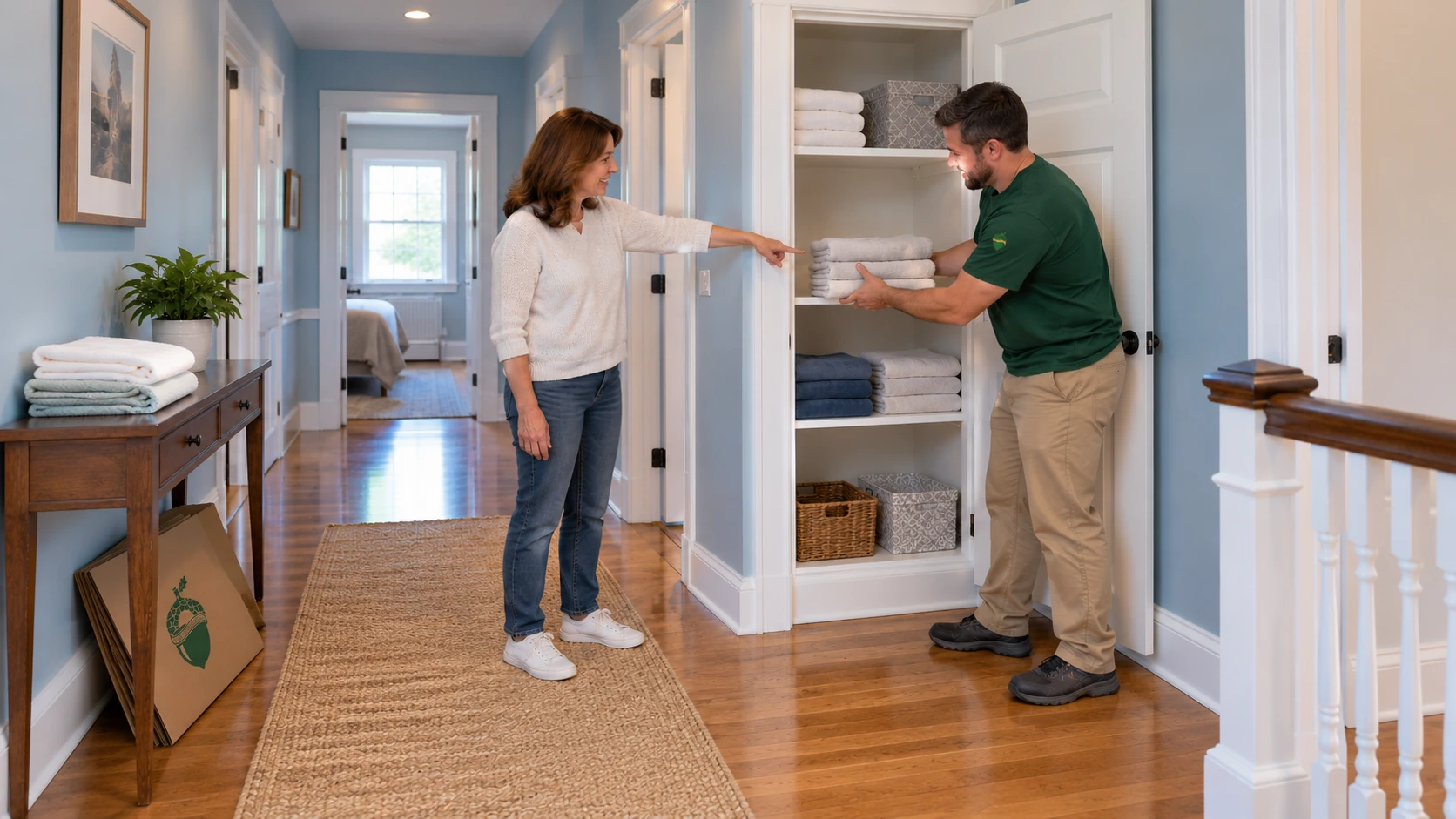
Basic unpacking can make dishes available on the counter. If the household wants towels placed in particular cupboard positions, separately agreed organizing adds that directed step. Keep paper gathering away from the route and check it for small fittings before removal. A later paid visit can deal with the remaining room after its readiness and access are confirmed.
Decide where the empty packaging goes
Separate useful contents from empty material before flattening or gathering anything. Check wrapping paper for fittings, a small lid or another retained part. Keep reusable cartons distinct from outgoing material, and keep film and foam out of a mixed paper group until their accepting route is clear. Removal from the property needs its own agreed scope and price.
Norristown's recycling code requires clean, unstained corrugated cardboard to be broken down to fit loosely in the recycling cart, with its lid closed. The current municipal instructions say recyclables go directly into the brown cart with the blue lid, without plastic bags. Use the property's actual collection arrangement; a large mixed pile beside the cart is not the same instruction.
Under the rules effective April 1, 2026, up to two eligible bulk items may go out with a household's regular residential pickup. Appliances, hazardous materials and construction debris are excluded; excess clean-out waste needs a separate arrangement. That is distinct from hauling empty packing material and does not establish contractor eligibility. For an unwanted piece or a larger clear-out, junk removal and disposal planning can review the item and an accepted route.
Compare the whole paid plan
Packing labor is charged for working time, and company-supplied cartons are separate. Basic moving blankets, shrink wrap and tape have no separate material charge. Include selected unpacking, directed organizing, special protection, handyman work, return visits, storage handling and material removal where you want them; each needs the correct scope and pricing basis.
Compare equivalent retained contents and the complete sequence. A packing-and-moving plan can approach twice the budget of moving an already prepared household in one illustrative scenario; it is not a standard multiplier, quote or guaranteed saving. Weigh the paid work against the evenings retained and the tasks you will still do yourself. Leaving out receiving help or the cost of moving unwanted belongings twice makes the comparison incomplete.
Local estimates of working hours are not a fixed completion cap. For a household-goods move wholly within Pennsylvania, Pennsylvania PUC guidance describes hourly tariff charges at 40 miles or less and weight-and-mileage charges over 40 miles. The state estimate rule requires the estimate at least 48 hours before the move unless you agree in writing to a shorter notice period. An unchanged agreed long-distance shipment and service scope retains its written flat rate; added contents, access changes or extra work require a revised written agreement.
Send the open-cupboard inventory, both addresses, stairs or lifts, proposed dates and work periods. Identify what stays with you, what goes to storage, what must be usable last and which receiving tasks you want. This lets the estimate describe a feasible sequence and the full selected cost.
Norristown packing and unpacking questions
Can I hand over only the kitchen and books?
Yes. Partial packing can cover agreed rooms or categories while you prepare the rest. Identify the retained kitchen contents and book groups, what the crew will handle and what you will finish, including unusual fragile pieces that need their own review.
How do you estimate packing when the cupboards are still full?
Review the contents behind the doors, not just the furniture or bedroom count. Show open cupboards, wardrobes, drawers, collections and retained stored belongings through photographs, video or an in-person survey so the planning team can assess supplies, working time and access.
Can a Norristown home be packed and moved in one day?
A smaller reviewed local job may fit one day when its contents, carrying work and permitted hours allow. Dense cupboards, several floors or restricted work periods can justify an earlier packing visit; the actual inventory and access establish the plan, not a bedroom label.
What should remain available for the final night and morning?
Keep an agreed pack-last group such as bedding, breakfast items, toiletries and work or school clothes usable until its named handover time. Keep medicine, keys, identification, valuables, essential documents and journey supplies under your own control throughout the move.
Does the moving-day booking also approve an earlier packing visit?
No. An earlier visit needs its own accepted entrance, work period, material drop-off and staging area. Confirm the person who can admit the team and keep the actual stair, lift and shared passage usable; a building's moving slot alone does not approve another visit.
Can I use my resident parking permit for the moving truck?
A Norristown resident vehicle permit does not reserve a commercial moving-truck position. Plan the lawful loading location and any municipal or building arrangements separately, including access needed for an earlier delivery of packing materials.
Can you pack ordinary dishes and a retained collection?
Agreed fragile-only preparation can cover ordinary dishes and selected breakables, using suitable individual protection and cushioning. Show the actual collection, glass furniture or unusual artwork separately because its construction, value and handling route may require a different reviewed method.
Can my existing cartons be reused?
They can be reviewed for reuse, replacement or repacking. Strength, damage, size, intended contents, load and complete closure matter; having a supply of empty cartons does not establish that they are suitable for every group.
Do hanging clothes need to be folded into ordinary cartons?
Suitable hanging clothes can be prepared in an appropriate wardrobe arrangement instead. Review the garments and quantity, keep loading access and closet doors usable, and retain the clothes needed through the final morning; one wardrobe carton is not an allowance for every closet.
Should I remove every drawer and furniture leg?
No. Preparation follows the actual furniture construction and route. Empty ordinary drawers can normally stay secured in the protected piece, while safely detachable glass, shelves or long legs may need separate handling; keep matching fittings identified and show difficult turns before choosing the method.
How do I divide cartons between the new home and storage?
Create separate groups and write the destination, room and useful contents on each carton before carrying begins. Confirm both receivers, the stop sequence and accepted storage intake, with any later release or delivery arranged separately; color should reinforce the written instructions.
What does basic box unpacking leave ready?
It opens the agreed cartons and places their contents on suitable surfaces, such as dishes on a clear counter or linens on a clean table. Final cupboard positions, a completely organized room and hauling the empty packaging away are separate choices.
Can someone put the towels and dishes where I want them?
Separately agreed home organizing can add final placement under your instructions. Choose the cupboards, shelves and arrangement, provide a person who can direct the work, and agree its time and price; it is a further step after basic unpacking.
Can I ask for unpacking help after trying it myself?
Yes, a later paid unpacking visit can be requested. Show the remaining cartons, available surfaces, room priorities and access so the team can consider a feasible appointment; a requested return day still needs confirmation.
What if one room is not ready when the shipment arrives?
Open the priority groups for usable rooms and keep the later-room cartons closed in an accepted dry area outside the route. Confirm who decides that the room is ready and agree any later visit or in-home repositioning separately before relying on it.
Are packing labor, cartons and basic materials priced the same way?
Packing labor uses working time, while company-supplied cartons are charged separately. Basic moving blankets, shrink wrap and tape carry no separate material charge; unusual protection and optional receiving or finishing work need their own reviewed scope.
Is furniture unwrapping the same as paid box unpacking?
No. Furniture is unwrapped as part of delivery; optional removal of contents from cartons uses working time. Basic furniture disassembly and reassembly also use moving labor time without a separate basic assembly surcharge, while more involved work needs review.
Can unpacking include hanging a picture or other finishing work?
A mounting or handyman request can be reviewed as separately agreed work. Identify the item, wall, intended position, hardware and permissions to establish the executor and price; the request does not imply electrical work, appliance hookup or general repairs.
Will gathering the paper also book its removal?
No. Gathering empty materials indoors and transporting them away are separate tasks. Check the paper for small fittings, identify reusable cartons and agree the material groups, amount, accepting route and separate removal price before expecting the crew to haul them away.
How should empty moving cartons enter Norristown recycling?
For the eligible municipal household arrangement, clean unstained corrugated cardboard should be broken down to fit loosely in the recycling cart with its lid closed. Recyclables go directly in the brown cart with the blue lid, without plastic bags; use the property's actual instructions and keep film or foam separate until its accepting route is confirmed.
Does an apartment above a shop use the same recycling arrangement?
Do not assume it does. Norristown's code assigns commercial establishments and multifamily properties with more than four units their own recycling arrangements; obtain the actual property's instructions rather than using a cart behind a shop without an accepted arrangement.
Can unwanted furniture go out with all the empty packaging?
Treat the furniture as a separate removal decision. Norristown's April 2026 residential rules allow up to two eligible bulk items on a regular pickup and exclude appliances, hazardous and construction materials; a larger clear-out, contractor load or other excluded item needs a separately accepted route.
Does full packing always double the moving budget?
No. Approaching twice an already packed moving budget is an illustrative scenario, not a standard multiplier or quote. Compare the same retained contents and include packing labor, cartons, transport, selected receiving help, return visits and removal, alongside the household time you keep.
How does packing affect a long-distance delivery and flat rate?
Packing does not begin the delivery window; that starts after pickup and loading are complete. Schedule receiving help around the accepted delivery plan. The written flat rate remains for the same agreed long-distance shipment and service scope, while added contents, changed access or extra work require a revised written agreement; a household-goods move wholly within Pennsylvania uses the applicable hourly tariff at 40 miles or less and weight-and-mileage basis over 40 miles, with an estimate at least 48 hours ahead unless you agree in writing to shorter notice.
Plan your Norristown packing and receiving
Show the retained contents and both properties, with your dates, pack-last essentials and the receiving help you want.