
Pennsylvania · Pittsburgh service planning
Packing and Unpacking Services in Pittsburgh, PA
Keep the household working while the agreed belongings are prepared for the move.

Sterling Oakbridge provides full, partial and fragile-only packing in Pittsburgh, with optional carton unpacking at the receiving home. Choose the contents and visits you want handled, then separate final organizing, finishing work and packaging removal in the estimate.
Explore packing, costs and local examples
Choose the work you want to hand over
Full packing covers the retained household contents included in the agreed inventory. Partial packing assigns particular rooms, cupboards or groups to the crew. Fragile-only packing focuses on selected breakables and the protection they require. You might finish your books and personal papers while asking us to prepare dishes and decorative glass, or hand over most loose contents while keeping a small personal group with you.
The point is to make the division of work clear. Packing can give you evenings back when work, meals and family routines continue through the preparation week. It can also help after the easy rooms are done and the delicate pieces remain. Doing the preparation yourself remains a reasonable choice; compare the time, decisions and paid help for your actual household rather than an assumed package for a certain number of bedrooms.
Start with the actual Pittsburgh address and its municipality. Our Pittsburgh moving page covers the complete carrying route, and the relocation guide explains the City, surrounding postal addresses and settling-in procedures. An upstairs apartment, an older house with porch steps and a managed building can need different preparation arrangements. None gives permission to leave packed cartons on a shared stair or reserve an elevator without the property's agreement.
Show the contents, including the cupboards still in use
Open cupboards, wardrobes, drawers and bookcases in the inventory photographs. Add basement or attic belongings, collections, pantry contents, glass shelves, hanging clothes and anything already at another storage address. Identify which groups travel, which remain and which need a separately agreed receiving destination. A room count tells the planner very little about the number or weight of cartons.
Underestimation often begins with looking at visible furniture while overlooking what is inside it. A household might expect 20 cartons, then discover enough retained contents for 60 or even 100. Those are illustrations of a changed inventory, not a Pittsburgh average or a carton allowance. Books need suitable smaller cartons; a large light-looking carton can become unsuitable when filled with dense contents.
Show any cartons you have packed and the materials you intend to supply. The condition of the walls and bottom, weight, internal support and closure matter during carrying and transport. Some contents may need repacking or a different carton. Agree what you provide, what the company supplies and where materials can wait without blocking doors, household access or the planned carrying route.
Protect the last evening and the morning of departure
A small reviewed inventory may allow packing and a local move on the same day. More contents, delicate work, stair access or a short permitted loading window can make an earlier preparation visit more useful. A studio or one-bedroom label does not establish that everything fits into one day; the contents and access decide whether that sequence is practical.
Keep a usable final-night group with bedding, toiletries, a simple meal set, the next day's clothing and familiar items the household needs. Medicines, keys, valuables, essential documents and travel supplies stay with you. Mark when the remaining breakfast and bed items can be packed. Prepared cartons should have a place that leaves the entrance, internal stairs and ordinary walking route usable.
A separately booked packing visit needs its own access. Confirm the permitted entrance, work hours, materials delivery, any requested insurance documents and the person who will admit the crew. A reservation for loading does not automatically authorize work the day before. Where a vehicle uses public space, coordinate the actual arrangement through the City's procedure described in the guide; the packing appointment itself does not reserve a curb position.
Consider: two work schedules and a house full of cupboards
Imagine a Pittsburgh household that can pack its books but wants the crew to prepare the kitchen and selected decorative pieces. Both adults are working through the week, and the house has an entrance above the sidewalk with an internal stair turn. The useful starting point is a room-by-room contents review and the entire route, not a guess based on the floor area.
Separate ordinary dishes from unusual glass, cabinet components and valuable objects that need individual specialist review. Keep enough plates, cups and cooking equipment for the last meal. The selected breakables can be prepared earlier, with the remaining meal set identified for the final morning. The prepared cartons and work surface must leave space for both the worker and the household to move through the room.
For a substantial project, a planning conversation might compare four packers on a separate preparation day with six movers on the carrying day. That is an illustration of splitting different work, not a promised crew or staffing rule for every house. The useful result is a defined prepared inventory, a habitable last night and a clear list of what remains for the agreed morning.
Prepare objects for the whole transport path
Protection must support the contents through carrying, stacking, restraint and the journey. A fragile mark or a closed lid does not provide that support by itself. Individual wrapping, cushioning, carton size and closure should suit the particular dishes, glassware and ornaments. Keep the working surface clean and identify pieces whose finishes or surfaces need special handling.
Gloves should suit the object, material and safe grip; one kind of cotton glove is not the answer for every load. Glass shelves, glass furniture doors, mirrors, framed pictures and collections also need object-specific preparation. The fine-art and antiques service covers specialist methods, custom crating and sensitive pieces; ordinary kitchen packing should not imply that every valuable object uses the same method.
Basic furniture disassembly and reassembly use moving labor time without a separate basic assembly surcharge. Furniture protection is removed during delivery. Those tasks differ from emptying cartons, arranging their contents and finishing the room. For heavy, complex or unfamiliar furniture, show the item and construction before the crew arrives rather than assume that its loose contents and frame have one standard preparation.

Consider: one person leaving a shared Oakland apartment
Consider a resident leaving an off-campus apartment while another occupant stays. The departing group contains hanging work clothes, books, bedding and a share of the kitchen contents. The first decision is ownership: identify the actual items leaving, what remains in shared cupboards and which belongings must stay accessible to the other resident.
The University of Pittsburgh's moving tips recommend room-by-room labels and keeping keys, documents and essentials handy. Its rental guidance also advises touring the actual apartment and documenting unexpected conditions at move-in. These are useful planning habits, not evidence that a private lease follows the University's residence-hall calendar or that a particular building permits an earlier packing visit.
Prepare the departing clothes in suitable wardrobe cartons while leaving the bed, bathroom and shared path usable. Put the new destination and receiving room on the prepared groups, and keep personal records with the resident. Resolve the private lease, keys and property access separately. The result is one identifiable shipment leaving a still-occupied apartment, rather than the accidental packing of everybody's belongings.
Give every group a next destination
Write the next destination, receiving room and useful contents on each carton. A carton number and opening priority can help connect the label to the inventory. Color is useful when it reinforces those words; a receiver should not have to guess whether blue means a room, an owner or a storage address.
Separate retained belongings for the new home from retained storage goods and anything going to another person. Confirm the receiver, intake, access and later release for each stop. Storage and later delivery have their own handling, time and price. A wider transport window does not automatically include free storage, and an intended donation is not an accepted destination until a recipient has agreed to take the items.
Consider: the bedroom is ready but the guest room is not
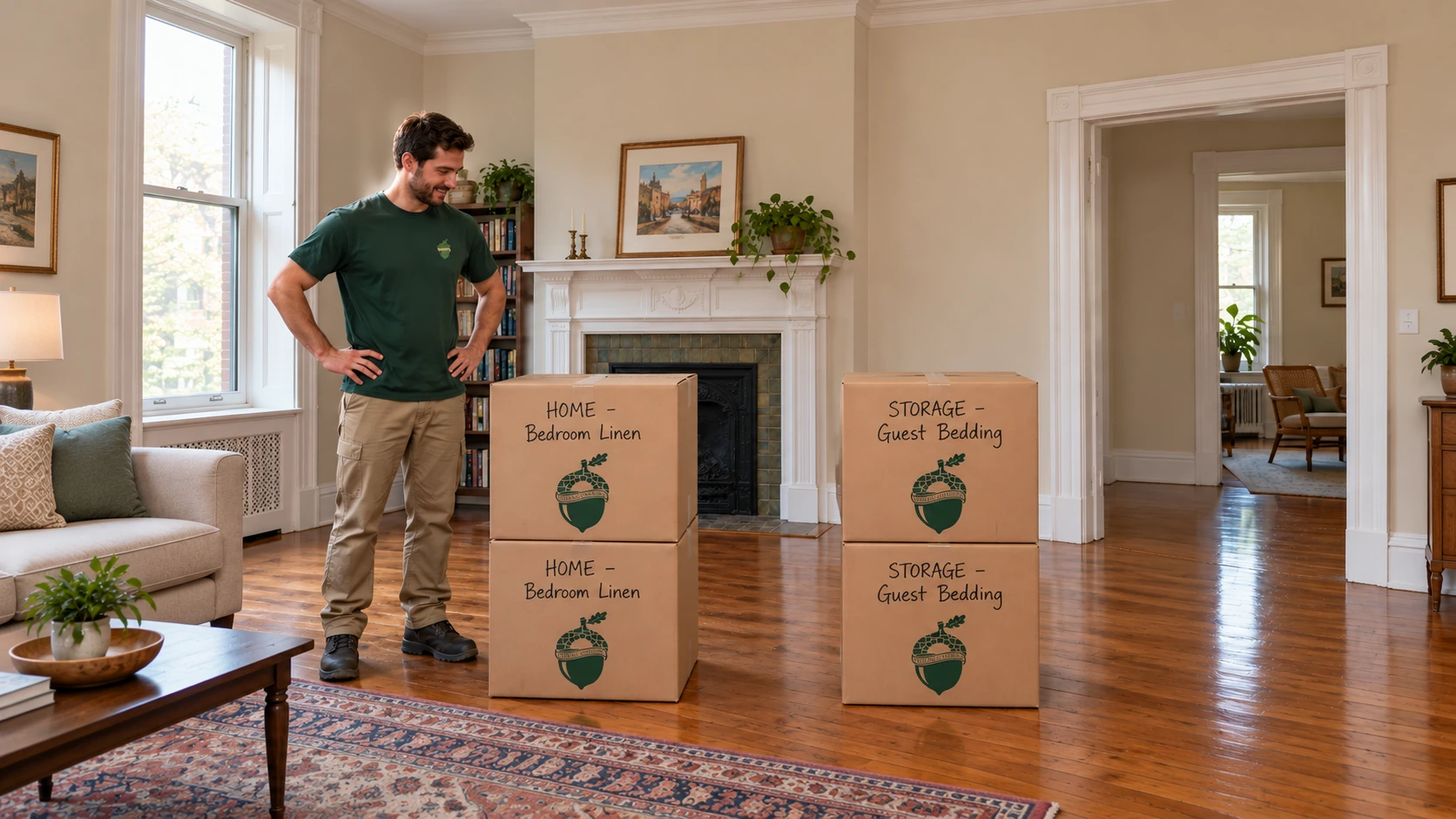
Imagine a smaller receiving apartment where the main bedroom can be used at once, but the guest room is not ready for furniture and linen. The household wants its own bed and bathroom supplies delivered first, with retained guest bedding held at an agreed storage destination. Packing everything as simply "bedroom" would hide the distinction that matters on delivery day.
Choose the two groups before preparation. Mark the home cartons with the actual receiving room and useful contents, and give the storage group a distinct destination. Record who accepts the storage delivery, what must remain accessible there and how the later release will be arranged. Remove any intended disposal from both retained groups before the packing inventory is finalized.
At the receiving apartment, name the room and surface that are ready for unpacking. The written scope should distinguish the first delivery, storage handling and a later visit rather than leave a guest-room promise inside the initial moving allowance. The useful result is a habitable priority room and a known remaining task, with no implied free holding or automatic return appointment.
Decide how far unpacking should go
Basic box unpacking opens the agreed cartons and places their contents on suitable designated surfaces. It can make selected bedding, towels or kitchen contents available without promising that every cupboard and drawer is arranged. Name the priority groups, the surfaces that can be used and anything that should stay closed. Confirm possession, utilities and clean usable rooms before scheduling work that depends on them.
Customer-directed organizing adds final placement according to your instructions. Decide where belongings should go and be available to direct that work. A smaller team can be easier to guide through cupboard, shelf and drawer decisions. Organizing is separately scoped and priced; it is not an automatic full-home result included whenever a carton is opened.
Finishing work also has its own boundary. Describe the item, wall, hardware, permission and result for any requested handyman work. Agree a suitable executor and price; a general finishing request does not establish electrical work, utility connection, repairs or unlimited completion. Use the in-home moving service for furniture rearrangement, and the furniture-delivery service for a separately purchased item arriving later.
Consider: you started unpacking but the priority rooms are still boxed
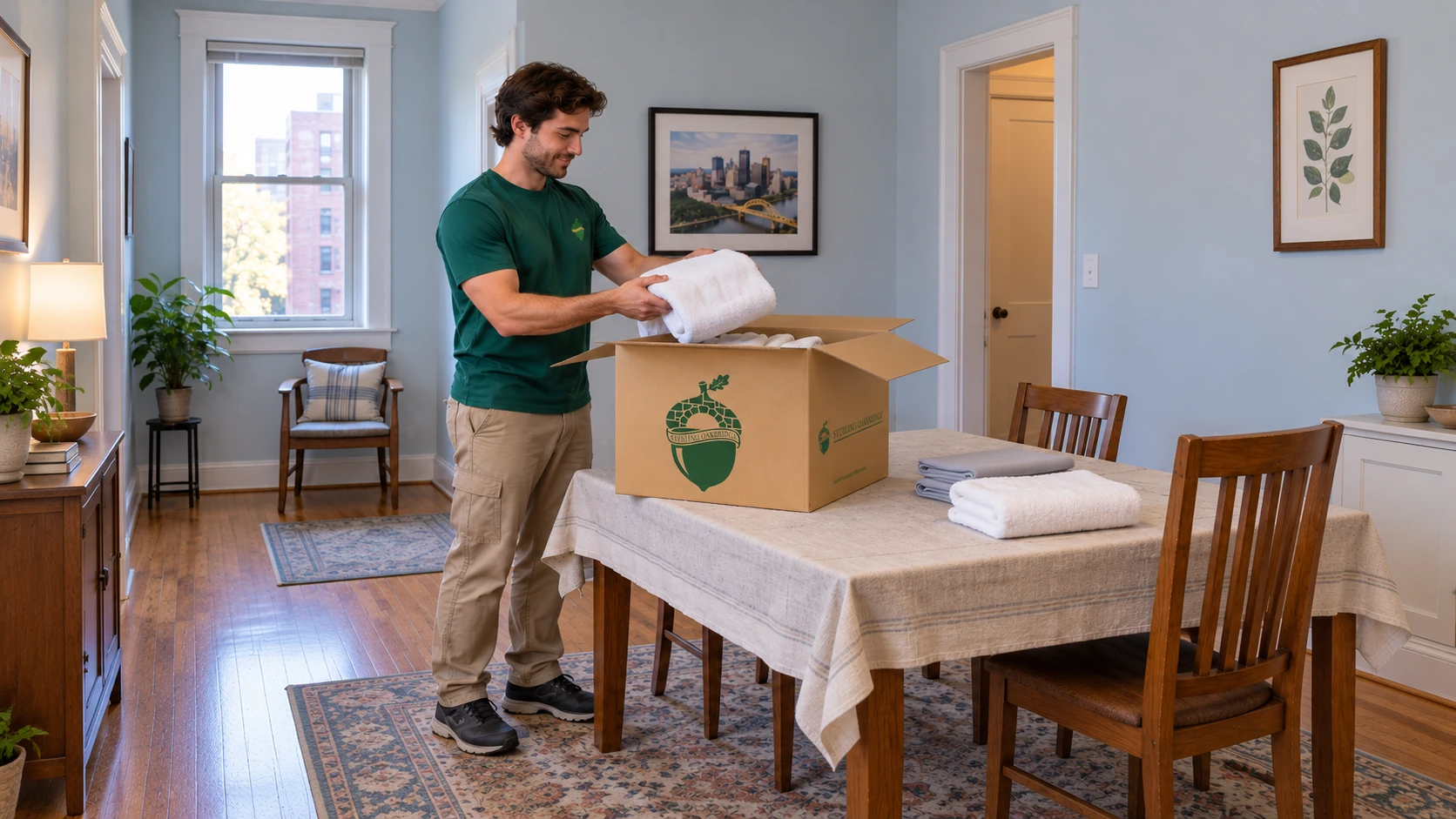
Consider a household already in its Pittsburgh home after two evenings of unpacking. The larger furniture is placed, but sealed cartons and used paper still occupy the room that should supply bedding and towels. A later unpacking request starts from what remains now, not the original bedroom count or the assumption that a delivery team is still reserved.
Show the remaining cartons, usable surface, cupboard decisions and clear working space. Choose a limited first result, such as getting the identified linen and bathroom groups onto a clean table so the household can use them. Leave the group intended for another room closed. If final shelf placement is wanted, include customer-directed organizing and be ready to make those decisions.
For a larger project, the conversation might consider three or four extra delivery-day hours or a later visit by two people. Those are planning examples, not fixed staffing, a guaranteed duration or an immediate appointment. Agree availability, the remaining contents and the paid scope. The result is a useful selected area with its remaining work identified, rather than a promise to finish the entire home in the time discussed.
Keep packaging collection separate from taking it away
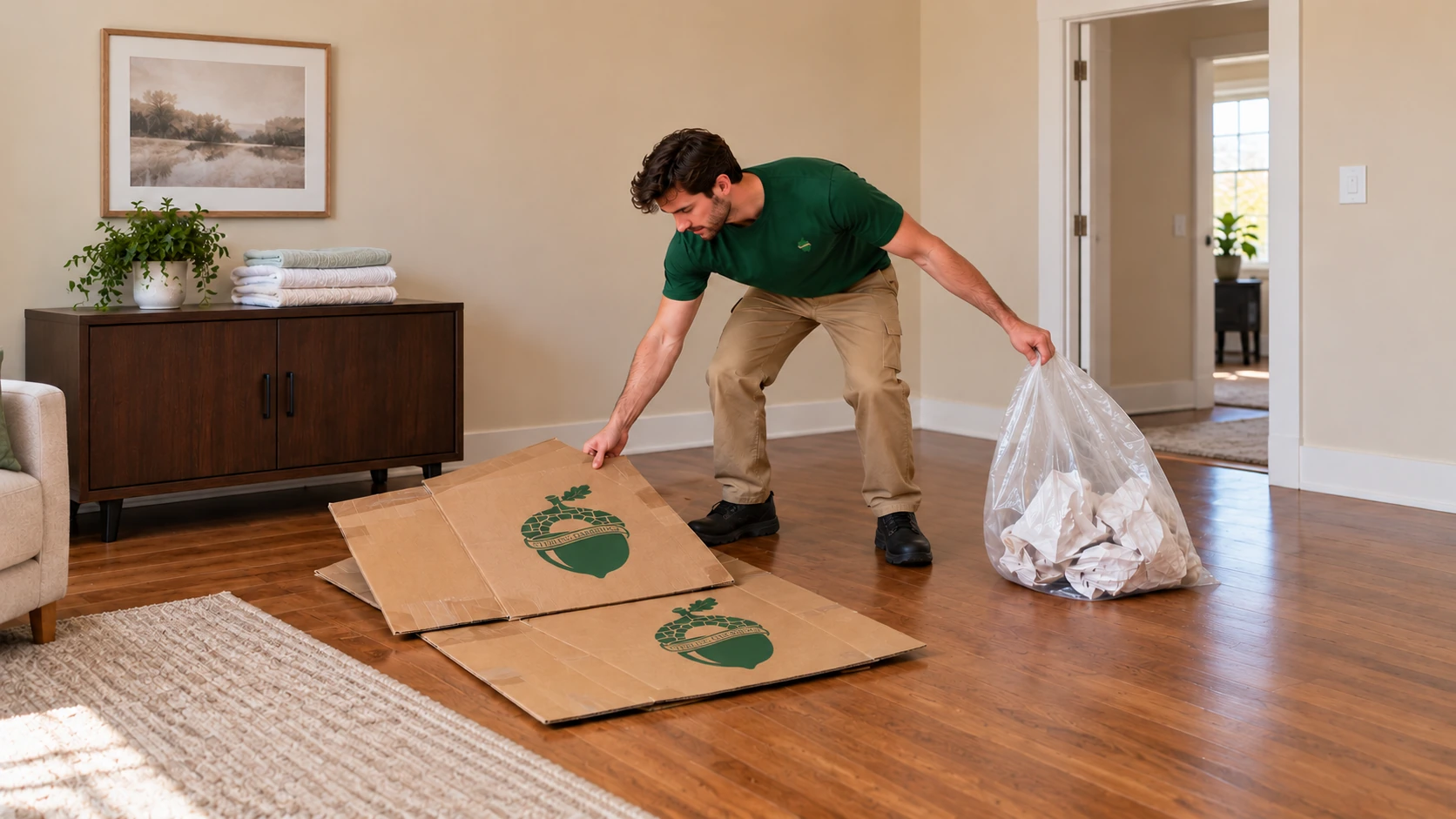
Packaging removal is separately priced and must be ordered. Opening cartons, gathering empty material indoors and transporting it away are different tasks. Check used paper for small fittings and personal belongings before it enters the outgoing group. Keep retained contents and furniture separate from flattened empty cartons, paper and other used material.
The City's recycling guidance calls for cardboard to be flattened and put inside another box or bin. Plastic wrapping, bubble packaging, packing pellets and foam do not belong in that cardboard stream. Its municipal recycling service covers qualifying single-family homes and small apartments with five or fewer units on a biweekly cycle. A larger property's own collection arrangement needs confirmation; a Pittsburgh mailing name does not establish City eligibility.
Use the actual property's schedule and material instructions before putting anything outside. The Pittsburgh guide's waste section explains the local streams; company collection still needs a suitable receiving route and its agreed price. Do not assume a resident's program admits a contractor's load. Unwanted furniture is a separate disposal request, not part of an unspecified packaging-removal promise.
Compare the complete paid scope
Packing labor is charged for working time, and company-supplied cartons are separate. Basic moving blankets, shrink wrap and tape have no separate material charge under the company protection terms. Special protection or unusual items need individual review. Optional carton unpacking uses working time; organizing, separately agreed finishing, return visits and taking packaging away belong in the quoted scope.
For the same substantial inventory, packing plus moving can approach twice the cost of moving an already prepared shipment. That is an illustration of adding significant work, not a standard multiplier, a Pittsburgh price or a spending cap. It can be lower or higher with different contents, preparation, access and selected receiving help. Compare the same items and route with each paid task visible.
For household moves entirely within Pennsylvania, PUC guidance describes an hourly tariff basis at 40 miles or less, and weight plus mileage above 40 miles. The written-estimate rule requires the estimate at least 48 hours before the move unless the shipper agrees in writing to a shorter period, and includes the applicable packing and container charges. These shipment rules do not turn every standalone packing visit into a weight-based service. Agree the applicable scope and written terms; estimated working hours are not a completion cap.
For an eligible interstate shipment quoted at a flat rate, the agreed price holds for unchanged inventory, access and services even when travel takes longer. Added packing, a changed destination, storage or later optional work needs its own written revision. The Pittsburgh long-distance page explains direct and consolidated delivery arrangements. An earlier packing visit does not start the delivery clock; it begins after pickup and loading finish.
Send a request the planner can use
Send both addresses, firm dates and any useful flexibility, the actual contents and what you have already packed. Include inside-cupboard photographs, fragile or unusual items, complete stairs and carrying routes, the property contact and any work window. Identify separate destinations and the person who will receive each group.
Then name the work: full or selected packing, materials, a separate preparation visit, priority unpacking, organizing, finishing and removal. Explain what must remain usable for the final night and what needs to work first after arrival. A list can begin the discussion; substantial contents, full packing or restricted access may justify video review or an in-person survey. The planning team's role is separate from the moving crew's role.
The estimate should leave you knowing what is prepared by whom, which visits are agreed, where the retained groups go and which receiving tasks remain. That is a more useful result than a carton count or a number of hours without the work behind it.
Pittsburgh packing and unpacking questions
Can you pack just the fragile items or one room?
Yes. Identify the selected rooms, cupboards or fragile groups, and what you will prepare yourself. The agreed inventory determines the work, suitable materials and protection. Distinguish ordinary dishes from valuable or unusual glass and artwork needing individual specialist review; a partial-packing arrangement should leave both your work and the crew’s work clear.
What should I send for a Pittsburgh packing estimate?
Send both addresses, dates, photographs inside cupboards and storage spaces, the retained inventory and full carrying routes. Identify what is already packed, who handles each group, separate destinations and the first rooms needed at delivery. Add any requested unpacking, organizing, finishing or packaging removal so the estimate describes the actual visits and work.
Does the number of bedrooms determine how many cartons I need?
No. Cupboard contents, books, collections, hanging clothes and stored belongings determine preparation and suitable carton sizes. Show what is actually inside each room and what remains after sorting. A bedroom count does not establish a carton allowance, staffing, working hours or a limit on the finished job.
Are boxes and packing materials included in labor?
Company-supplied cartons are charged separately from packing working time. Basic moving blankets, shrink wrap and tape have no separate material charge under company protection terms. Review unusual materials and specialist protection individually. Agree the supplies you provide and those the crew brings rather than assume that every type of packing material is included.
Can I pack some contents before the crew comes?
Yes. Identify those cartons and the groups still assigned to the crew. The team needs to review condition, weight, bottom support, internal protection and closure; unsuitable packing may need replacement or repacking. Leave room to prepare the remaining contents and keep personal essentials separate from cartons already ready to leave.
Can packing and moving be completed on the same day?
They may fit together when the reviewed inventory, protection, access and permitted working hours allow it. More contents or delicate preparation can make an earlier packing visit more practical. A studio or one-bedroom label is not a completion promise. Confirm the actual work and property access for every planned visit.
What should stay available for the final night?
Keep bedding, toiletries, a simple meal set, tomorrow’s clothes and important familiar items available until their agreed packing time. Medicines, valuables, keys, essential documents and travel supplies stay with the household. Mark the remaining last-morning group so it is not packed early or mistaken for work somebody else will finish.
Does my loading reservation also cover a packing visit?
No. An earlier visit needs its own property access and permitted work period. Confirm the entrance, materials storage, requested insurance documents and the person who admits the crew. Keep shared stairs and doorways clear. Building permission, a loading reservation and any required City public-space arrangement are separate parts of the plan.
How do you protect ordinary dishes for transport?
The method combines individual wrapping, cushioning, suitable carton size, support and closure for the actual items. Protection must work during carrying, stacking, restraint and travel. A fragile label alone does not protect the contents. Identify valuable pieces, unusual glass and furniture components separately so specialist methods are reviewed before packing.
Can one person’s belongings be packed in a shared apartment?
Yes, with a clear agreed inventory and access. Separate the departing resident’s clothes, books and kitchen contents from belongings staying with other occupants. Keep the shared path usable, name the next destination and receiving room, and resolve the actual lease and keys separately. A university calendar does not establish a private apartment’s moving dates.
What should be written on each carton?
Write the next destination, receiving room and useful contents. A carton number and opening priority can connect it with the inventory. Color can reinforce the words, but should not be the only instruction. Make clear whether a group goes to the new home, storage or another agreed receiver.
Can some retained belongings go to storage?
Yes, when storage intake, access, receiver and later release are agreed. Keep the storage group separate from the first-home group and from items intended for removal. Storage, handling and onward delivery have their own scope and price. An unfinished room or a flexible transport window does not automatically include free holding or a return appointment.
Does unpacking include putting everything into cupboards?
Basic carton unpacking opens the agreed groups and places contents on suitable designated surfaces. Final cupboard, drawer and shelf placement is customer-directed organizing with its own priorities and agreed price. Name the useful rooms and surfaces first, then identify what you want put away and which groups should stay closed.
Can I request unpacking after trying it myself?
Yes. Show the cartons and rooms remaining now, the usable surfaces and the result you want first. A later visit can focus on selected linen or kitchen groups. Timing and availability need agreement; an earlier delivery does not reserve an immediate return crew or guarantee that every room will be finished in one visit.
How should I direct an organizing visit?
Choose the priority rooms and be ready to explain where belongings belong. Agree cupboard, shelf and drawer locations rather than have several people guess. A smaller team can be easier to direct. Confirm scope and price separately; organizing follows your instructions and does not promise a home redesign or every unfinished task.
What if the guest room or another receiving room is not ready?
Unpack only in the suitable rooms you can actually use. Confirm possession, access, utilities and clean surfaces, then identify the groups that should remain closed. If holding elsewhere or returning later is needed, agree the receiving route and paid work. A closing date or an unfinished-room description does not reserve storage or a later visit.
Is basic furniture reassembly part of carton unpacking?
They are different tasks. Basic furniture disassembly and reassembly use moving labor time without a separate basic assembly surcharge, and furniture is unwrapped during delivery. Opening cartons and placing loose contents is optional paid work. Identify complex furniture or finishing separately so the estimate describes the result needed for usable rooms.
Can you include mounting or other finishing work?
Individually scoped handyman work is available with the item, wall, hardware, permissions, suitable executor and price agreed. Explain the requested result before booking. A broad finishing request does not establish electrical work, utility connection, repairs or unlimited home completion, and basic carton unpacking does not automatically include those operations.
Does unpacking include taking the used packaging away?
Taking packaging away is separately priced and must be requested. Opening cartons, gathering empty material indoors and transporting it away are different operations. Check used paper for small fittings, separate retained belongings and describe the outgoing materials. Agree a suitable receiving route before collection; furniture removal is a separate request.
Can I put bubble wrap and foam in the City cardboard recycling?
No. Pittsburgh’s recycling guidance excludes plastic wrapping, bubble packaging, foam and packing pellets. Flatten appropriate cardboard into another box or bin, keep the excluded material separate and use the actual property’s collection instructions. Do not treat all material removed from cartons as one recyclable stream.
Does every Pittsburgh mailing address receive City recycling?
No. The City describes its biweekly recycling for qualifying single-family homes and small apartments with five or fewer units. The actual municipality and property arrangement determine the route. Confirm larger-building collection and do not assume that a resident’s service admits a contractor’s load or permits leaving an entire moving cleanout outside.
How are packing and a move within Pennsylvania priced?
Packing uses working time, with company-supplied cartons separate. For the applicable household shipment within Pennsylvania, PUC guidance uses hourly tariff charges at 40 miles or less and weight plus mileage above 40 miles. The written estimate identifies the relevant packing, container and transport charges. Estimated hours are not a completion cap, and transport rules do not automatically price every standalone packing visit.
How early is the Pennsylvania written moving estimate required?
For the household shipment covered by section 31.122, the carrier supplies the written estimate at least 48 hours before the move unless the shipper agrees in writing to shorter notice. It includes the applicable rates and packing/container charges. Provide the actual inventory and scope early enough for review rather than treat an informal hours discussion as that document.
Does an earlier packing visit start long-distance delivery time?
No. The shipment clock begins after pickup and loading finish. Plan optional unpacking around the actual direct or consolidated receiving arrangement and ready rooms. For an eligible interstate flat-rate shipment, unchanged inventory, access and services retain the agreed price when travel takes longer; added packing, storage or later services need a written scope revision.