
Pennsylvania · Reading service planning
Long Distance Movers in Reading, PA
Send your household from Reading, Pennsylvania, to a destination in the United States or Canada with a delivery model that fits the belongings and the home receiving them. Sterling Oakbridge offers direct service with a dedicated truck and the same moving crew at pickup and delivery, plus consolidated delivery for suitable smaller shipments with a wider agreed receiving window. The written long-distance flat rate covers the reviewed inventory, access and services; taking longer on the road does not by itself increase that price.

Start with what is leaving Reading and where it can arrive
An older Centre Park home can have furniture on several floors and a basement reached by a different stair. An apartment above a central storefront may use a separate residential entrance. A Northeast house can have a different layout again. Put every included room and storage space on the inventory, then photograph the actual route from each space to the proposed truck position. Show the whole stair turn, landing, gate and doorway rather than only the widest front door.
Keep three groups separate: belongings in the moving shipment, personal necessities travelling with the household, and things being sold, donated or collected before departure. A carton left in an attic or a later-added garage group changes the shipment; the floor area of the house cannot stand in for that list.
We arrange long-distance pickup in Reading City, Pennsylvania, with the actual shipment and property access agreed. Include the floors and basement of a Centre Park home, a central apartment entrance, or a Northeast or southeast home’s actual carrying route in the request. For another Berks County municipality or a Reading postal address outside the City, provide the complete street and unit address for review. The postal name does not establish City parking authority, building permission or an accepted truck position.
For the wider choice of services, use the Reading moving page. The Reading relocation guide covers housing, school enrollment, utilities and daily routines. This page brings the outbound shipment, delivery model and receiving arrangements together. The Reading postal name can extend outside Reading City, so send the full municipality and unit address at both ends.
Choose direct or consolidated delivery
Direct delivery gives the shipment a dedicated truck and the same moving crew at pickup and delivery. It can be the better fit when a larger household needs its own journey or a reviewed arrival plan cannot accommodate a broad window. Packing before moving day, storage and optional unpacking remain work to include explicitly in the estimate.
Consolidated delivery can work for a smaller shipment when the household can receive over a wider agreed period. Approximately 300–400 cubic feet is small-shipment guidance, not a minimum order or an automatic size cutoff. The actual inventory, preparation, destination and receiving availability determine whether it fits. The dedicated-truck and same-crew terms belong to direct service.
Count the delivery period after pickup and loading are complete. A morning spent bringing belongings down a Reading staircase, unfinished packing or a separate preparation day comes before that starting point. The table below compares illustrative windows for four reference journeys; it does not book an appointment or approve a particular truck route.
Swipe the table to compare both delivery options.
| Illustrative destination | Direct planning window | Consolidated window |
|---|---|---|
| Washington, DC | 1–2 days | Up to 30 days |
| Tampa, Florida | 2–3 days | Up to 60 days |
| London, Ontario | 1–2 days | Up to 60 days |
| Spokane, Washington | 4–5 days | Window agreed individually |
An eligible shorter domestic consolidated move can have up to 30 days after loading. Florida and Canada have up to 60 days; the Canadian rule still applies when a destination is relatively close. California has up to 90 days. Other long routes need an individually agreed window. Spokane is in Washington, so California's 90-day maximum does not set its consolidated schedule.
Choose a model against the dates you can actually accept, then record the applicable window and appointment arrangements in writing. Consolidation does not imply free storage, a specified discount or the same crew at both ends. Someone authorized to receive must be available for the delivery arrangement made within that window.
Arrange the Reading curb and private carrying route
Reading Parking Authority's temporary no-parking sign procedure requires at least 48 hours and says RPA posts and removes the signs. A request for a specific property or half or whole block needs its completed block diagram. Identify the frontage, cross streets, spaces, dates and hours, and assign who orders and follows up. A submitted request is not an issued arrangement.
A residential parking permit excludes commercial vehicles and does not reserve a moving truck's space. The City daily-permit code covers otherwise legal on-street positions and allows RPA to require a Police special-event permit for four or more signs. Its shorter code minimum does not replace the published 48-hour ordering procedure. Temporary signs are not a street-closure authorization.
Connect the accepted truck position to the complete private route. Include sidewalk clearance, a rear gate's opening, porch steps, headroom, interior turns and any separate basement exit. For an apartment, obtain the permitted entrance and hours, elevator booking and usable size, required certificate-of-insurance wording and submission deadline. We can coordinate permits, COIs, elevator scheduling and moves involving union labor; the plan must identify the approver, who supplies any required building personnel, and applicable charges.
For winter dates, check any current Reading snow emergency and its parking restrictions. Assign clearance of the gate, path, steps and landings before dispatch. A usable curb space cannot compensate for an icy private approach.
The next four examples are hypothetical household plans. Each develops a different choice: a nearby receiving deadline, a gap between homes in Florida, Canadian goods accounting, and furniture placement after a longer trip west.
Example: Reading to Washington, DC — work backward from the receiving slot
Consider a household leaving an older Reading twin for a Washington apartment with an afternoon furniture-delivery slot. The useful question is whether loading, lawful travel and the destination's complete receiving process fit that slot. Establish when the Reading home will be fully packed, how long the actual carrying route is likely to need, when keys are available in Washington and when the receiver and any booked lift can be used.
Direct delivery keeps the shipment on its dedicated truck with the same crew. The ordinary reference is 1–2 days after loading, subject to the reviewed journey and receiving arrangement. A suitable small nearby shipment may support same-day delivery after early loading; other reviewed moves may fit next day. Neither follows from road mileage alone. The work inside the Reading home must finish before the delivery clock starts.
If the afternoon slot leaves too little room, choose an accepted later delivery rather than build the household's first night around an unconfirmed early arrival. Identify the person who can approve a change at the apartment, the deadline for altering the booking and a workable alternative if the first slot is lost. Have any extra handling, storage or delivery stage included in the agreed plan.
Keep essentials available throughout the receiving period
Pack identification, keys, medicines, chargers, clothes and essential work or school items with the people travelling. Include the moving documents, receiver's contact details and Canadian papers where applicable. A box marked Essentials inside the truck cannot serve a first night or an unexpected stay elsewhere.
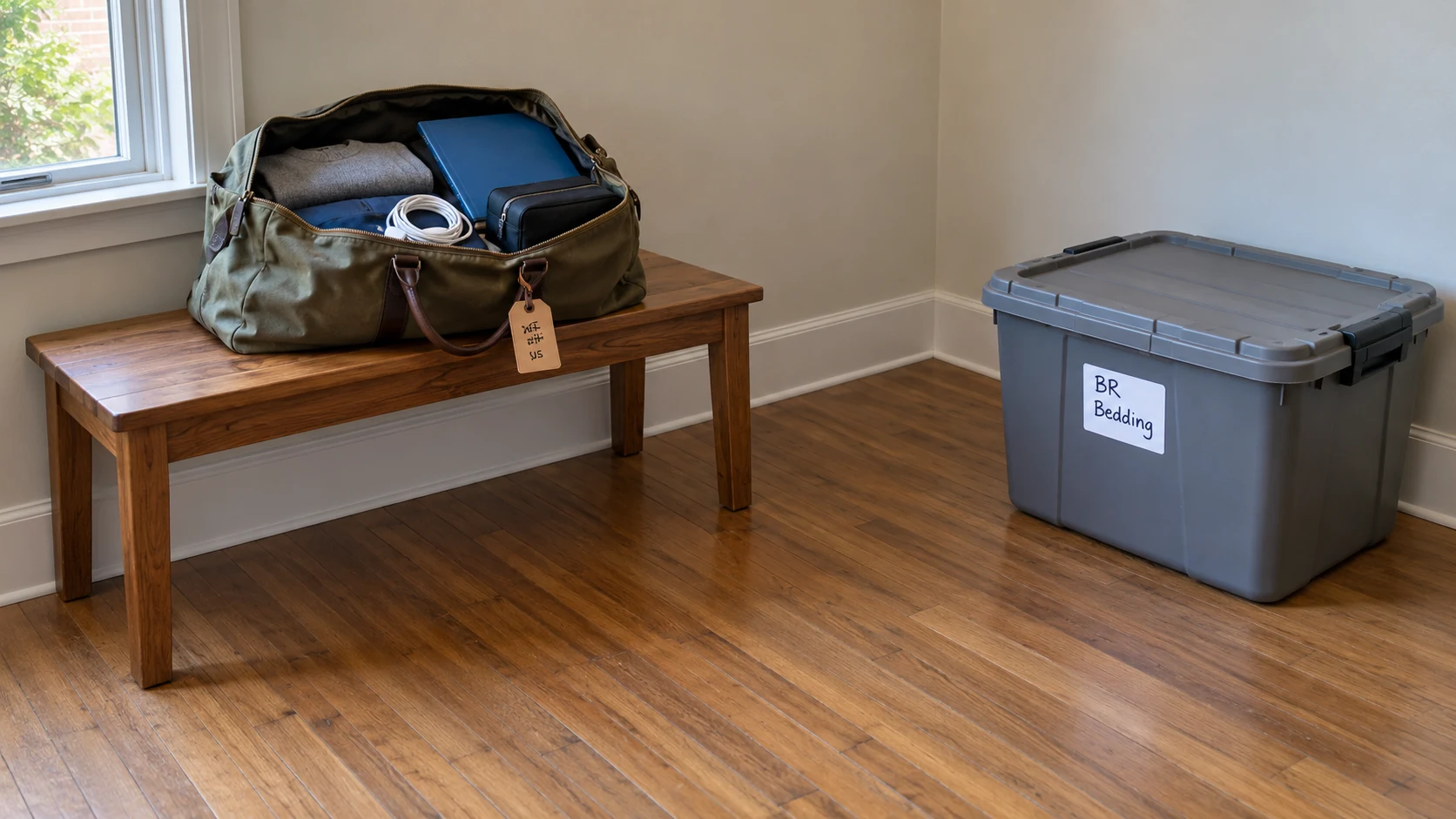
Set the personal bags aside before the inventory check and point them out. Plan where the household will sleep and how it will travel if the goods and keys become available on different dates. Use the agreed receiving period to choose what remains accessible, rather than assume everything will be unpacked the evening after departure.
Example: Reading to Tampa, Florida — bridge a gap between homes
Suppose a Reading lease ends before a Tampa purchase is ready for handover. A direct journey does not solve that gap by itself. Establish the real possession date and a usable delivery entrance first. If the goods need storage between the homes, include where they will be held, the accepted storage period, access to any belongings, redelivery arrangements and charges in the estimate. A phone number for a storage facility is not a reservation.
The direct illustration is 2–3 days after loading. An eligible consolidated Florida shipment can have up to 60 days after loading. Compare those models with the actual inventory and period during which someone can receive. A broad delivery window and a planned storage stage are different arrangements; neither should silently become a free extension of the other.
If closing remains uncertain, set a decision time before dispatch. The authorized household representative and moving planning contact should choose the confirmed alternative while it is still available. Keep the property contacts informed and specify what confirmation allows delivery to resume. The household's interim accommodation and travel need their own plan alongside the belongings.
Prepare furniture for the route and the agreed service
Use whole-piece photographs and dimensions to review furniture that must pass an older home's stair or vestibule. Ordinary drawers are generally emptied and retained secured in their own protected piece. Account for removable shelves and supports. Safely removable long legs on a table or desk need a construction-specific plan: protect the top, group the matching legs and hardware, and make the set identifiable for reassembly. Integral supports should not be treated as detachable parts.
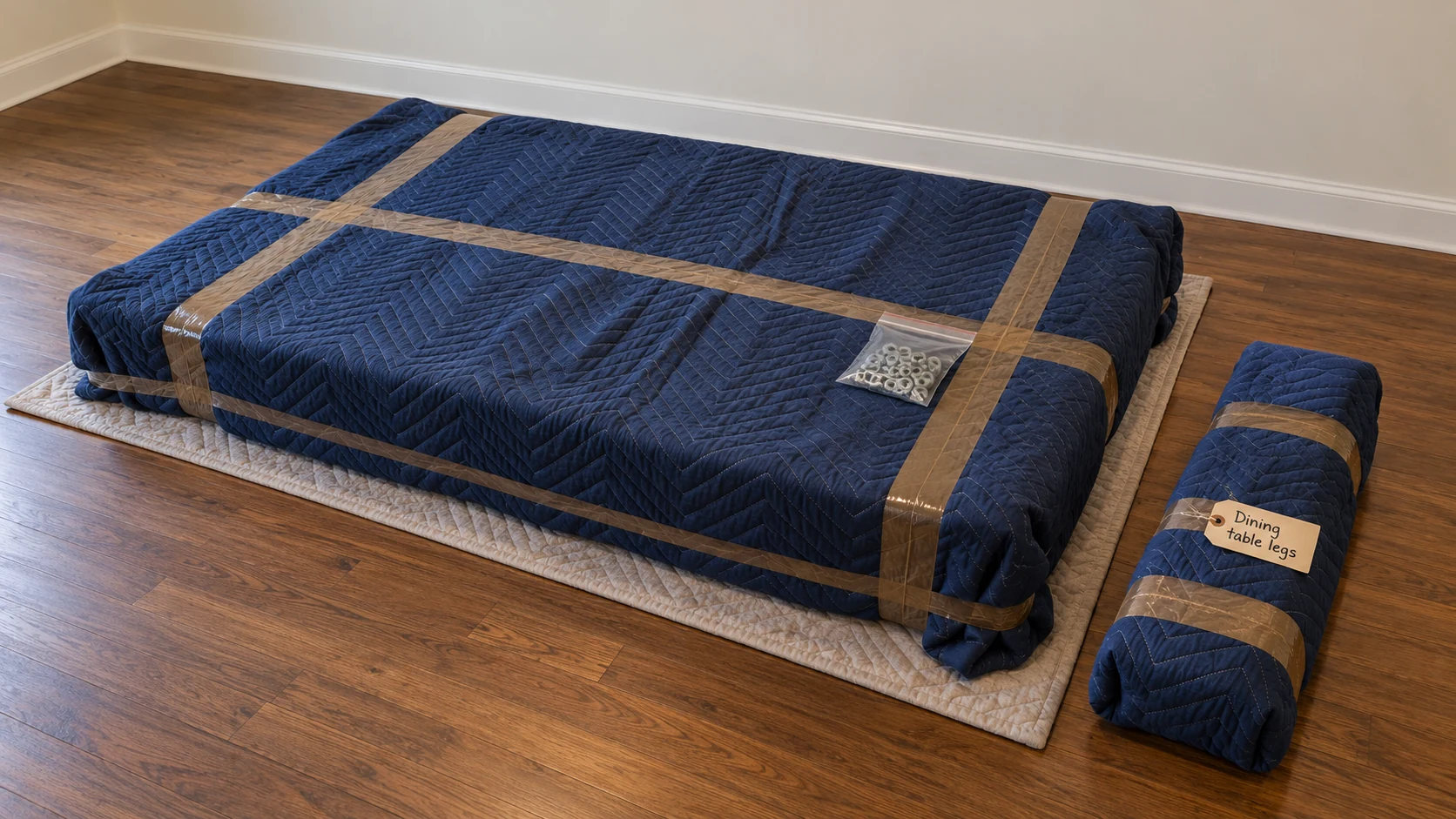
Selected-item or household packing can be included. Specify what you will finish and what the crew will pack, along with fragile contents, cartons and specialist items. Moving blankets, shrink wrap and tape have no separate material charge; boxes are charged separately. Basic furniture disassembly and reassembly use moving labor time without a separate basic assembly fee. Complex furniture and specialist work receive individual quotes. The long-distance estimate should state which preparation is included in its agreed scope.
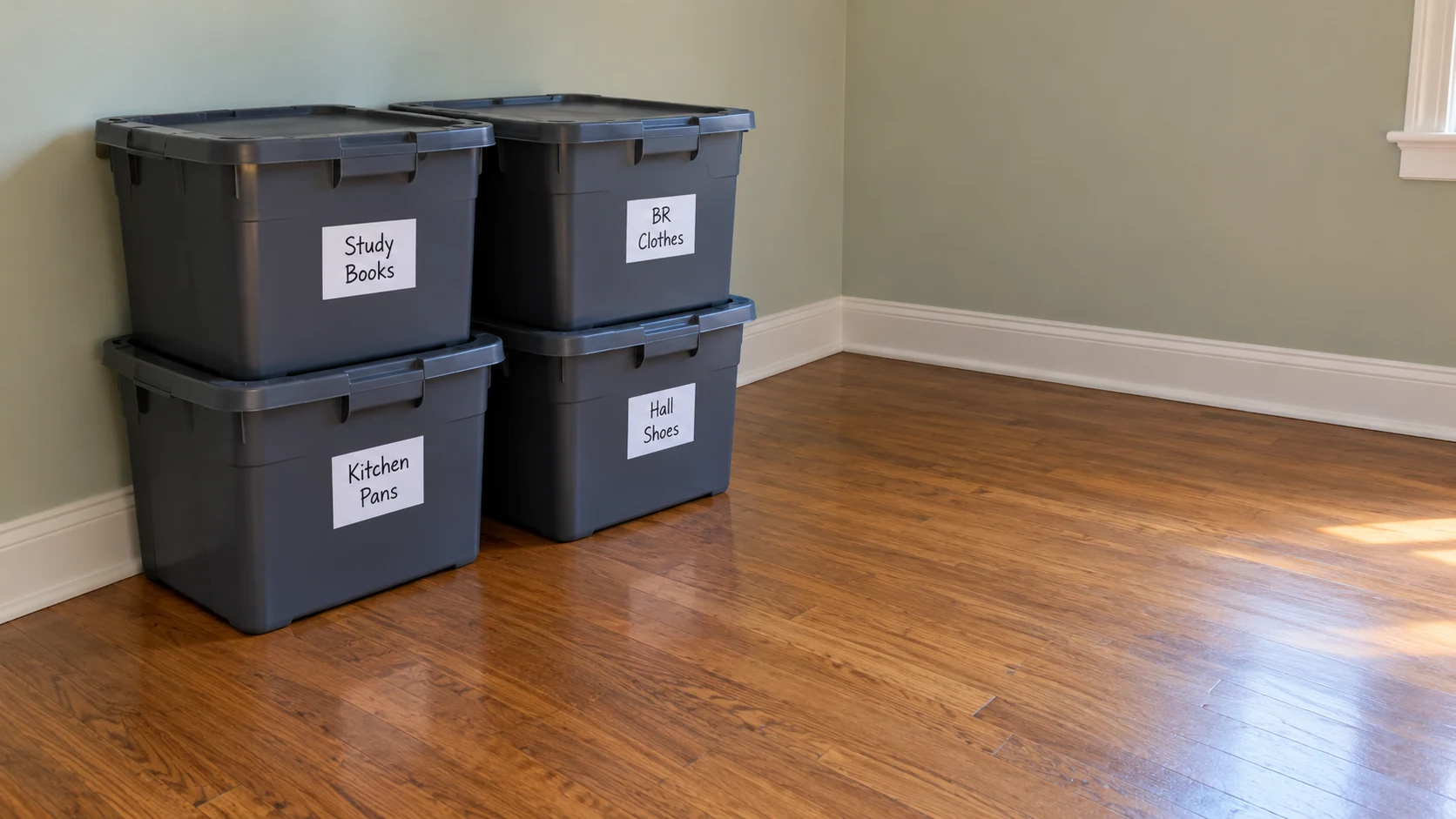
For a smaller consolidated shipment, identify the actual pieces and containers just as carefully. Label room and useful contents, and separate belongings for different delivery addresses or storage stages. The small group below illustrates identification before pickup, rather than a whole-house volume or an eligibility measurement.
Example: Reading to London, Ontario — keep the import list and shipment aligned
Consider a household moving selected belongings to London, Ontario, while some personal items travel with the family. Establish the importer's applicable classification and responsibilities before pickup. The CBSA moving guidance distinguishes people establishing residence from former residents and other situations; a Canadian destination alone does not establish duty-free eligibility.
Prepare two copies of the required goods list, distinguishing belongings accompanying the household from goods arriving later. Use descriptions, values and relevant serial numbers that can be reconciled with the shipment. Present the list at the first point of entry even if no household goods accompany that arrival, and retain the CBSA receipt for the later goods. Review restrictions for the actual contents and assign clearance responsibilities. The BSF186 document records importer classification and the goods accounting; a mover's inventory is not an entitlement decision.
The direct illustration is 1–2 days after loading, with customs readiness, the actual truck route and receiving access reviewed for the order. An eligible Canadian consolidated shipment has up to 60 days, even if a similarly short domestic journey would use another rule. Keep required documents accessible with the household and agree a receiving period that works with the clearance process.
Compare the written scope and the applicable pricing terms
For a long-distance move quoted at an agreed flat rate, the same shipment and agreed work keep the same price even when travel or delivery takes longer. Extra belongings, an omitted basement group, changed access, additional packing or a new storage stage can change the scope. Have additions and their price reviewed separately in writing before the affected work begins. Compare offers against the same two addresses, inventory, packing responsibilities and receiving conditions.
For an interstate household move, FMCSA distinguishes a written estimate from a rate quote. The estimate should describe the goods and all charges and be based on actual or virtual inspection. Read whether it is binding or nonbinding and what work it includes. A clear initial list starts the discussion. The written estimate still needs the complete shipment, preparation and access conditions.
If both addresses are within Pennsylvania, use the applicable in-state process. The Pennsylvania PUC describes an hourly tariff basis for household-goods moves of 40 miles or less and weight and mileage for moves over 40 miles. Section 31.122 requires the written estimate at least 48 hours before the move unless the shipper agrees in writing to shorter notice. Check the mover's PUC authorization and applicable terms; the interstate examples do not set the price of every Pennsylvania move.
Choose protection before moving day. For an interstate household shipment, Full Value Protection applies unless Released Value is selected through the required written waiver. Valuation concerns the mover's liability and differs from a separate insurance policy. Review the selected level, cost, limits and claim procedure, and disclose unusually valuable or fragile items before preparation is agreed.
Example: Reading to Spokane, Washington — place the larger pieces before opening boxes
Imagine a household leaving a multistory Reading home for a Spokane apartment. Measure retained furniture against the destination's entrance, turns and usable rooms before deciding what to send. Identify the person who will receive and can settle placement questions. A room plan with useful labels lets the agreed larger pieces reach their intended positions while the entrance remains clear.
The direct illustration is 4–5 days after loading, using a dedicated truck and the same crew at pickup and delivery. A consolidated shipment to Spokane needs its own agreed window; Washington does not inherit California's up-to-90-day maximum. Keep work equipment and household necessities available for the accepted interval, and arrange building access for the actual appointment.

At delivery, check the inventory and record any issue in the moving documents before signing. Furniture is unwrapped as part of delivery, with the agreed reassembly and placement. Opening the contents of boxes is optional work charged for time; packaging and waste removal are charged separately. Include the help you want in the estimate so the first useful rooms can be set up in order without filling the carrying route with open cartons.
Explore long-distance destinations from Reading
These destination examples organize possible moves throughout the United States and Canada. They do not rank customer demand or establish a delivery appointment. Use the actual two addresses, belongings, preparation and receiving period for the estimate.
Northeast and Mid-Atlantic
- Washington, DC
- New York City, New York
- Boston, Massachusetts
- Baltimore, Maryland
- Philadelphia, Pennsylvania
Southeast and Florida
- Tampa, Florida
- Orlando, Florida
- Charlotte, North Carolina
- Raleigh, North Carolina
- Charleston, South Carolina
Great Lakes and Midwest
- Chicago, Illinois
- Cleveland, Ohio
- Columbus, Ohio
Pacific states
- Spokane, Washington
- Seattle, Washington
- Portland, Oregon
- Sacramento, California
Mountain West and Southwest
- Phoenix, Arizona
- Las Vegas, Nevada
- Salt Lake City, Utah
- Denver, Colorado
Canada
- London, Ontario
- Ottawa, Ontario
- Montreal, Quebec
- Quebec City, Quebec
Long-distance moving questions
Which long-distance delivery choices are available from Reading?
Direct service uses a dedicated truck and the same moving crew at pickup and delivery. Consolidation can suit a smaller shipment when a wider agreed receiving window works. Choose against the actual belongings, preparation, two-ended access and firm dates, then record the selected model and included services in the written estimate.
When does the delivery period begin?
After pickup and loading are complete. Packing on an earlier day, bringing furniture down the Reading stairs and completing the loading process occur before that point. The four route windows are illustrations, not confirmed appointments; the written move plan must establish the actual receiving arrangements.
Can a Reading move to Washington, DC, arrive the same day?
It may be possible for a suitable small nearby move after early loading, with lawful travel and both properties’ access and receiving time confirmed. The ordinary direct illustration is 1–2 days after loading; next-day service may fit other reviewed arrangements. A reference distance alone cannot confirm a same-day appointment.
Is 300–400 cubic feet a minimum shipment?
No. It is approximate guidance for the small shipments that can suit consolidation, not a minimum order or automatic eligibility cutoff. Send the actual furniture and container list, packing needs and destination so suitability and the available receiving period can be reviewed.
What consolidated delivery windows should I compare?
An eligible shorter domestic route can have up to 30 days after loading, Florida and Canada up to 60 days, and California up to 90 days. Canada retains its rule even on a relatively short journey. Other distant destinations need an individually agreed window. Free storage, a particular discount and the same crew at both ends are not included merely by choosing consolidation.
Does Spokane have the California 90-day consolidated window?
No. Spokane is in Washington. Its consolidated window must be agreed individually rather than inherited from California. The direct reference is 4–5 days after loading, subject to review of the actual journey and receiving arrangement.
What if the Tampa home is not ready when the Reading lease ends?
Include an accepted storage and redelivery stage if the dates cannot be joined by the chosen delivery arrangement. Establish the storage period, access to belongings, receiver, redelivery and charges before dispatch. Florida’s consolidated maximum is up to 60 days after loading; it does not automatically provide free storage or solve an uncertain possession date.
What should be ready for a shipment to London, Ontario?
Have the applicable importer classification and CBSA goods accounting ready, including BSF186 documentation, descriptions, Canadian-dollar values and relevant serial numbers for the shipment. Distinguish accompanying goods from goods to follow and keep the required receipt accessible. Assign the clearance steps before pickup; an Ontario address or mover’s inventory does not establish duty-free entitlement. Canada’s consolidated maximum is up to 60 days after loading.
Does a longer journey increase the agreed flat rate?
No, travel or delivery taking longer does not itself increase the agreed long-distance flat rate for unchanged inventory, access and services. Added belongings, different access, extra packing or a new storage stage can change the work and price. Have additions reviewed and agreed separately in writing before the affected work begins.
What changes if both addresses are within Pennsylvania?
Use the applicable Pennsylvania in-state terms. The PUC describes an hourly tariff basis for household-goods moves of 40 miles or less and weight and mileage above 40 miles. The written estimate must be supplied at least 48 hours before the move unless the shipper agrees in writing to shorter notice. Check authorization and the applicable documents rather than applying every interstate term to an in-state move.
How do I arrange temporary space for the truck in Reading?
Use Reading Parking Authority’s temporary-sign ordering procedure with at least 48 hours’ notice. RPA posts and removes the signs; a specific-property or half/whole-block request needs its completed diagram. Provide frontage, cross streets, spaces, dates and hours, assign the request and retain the issued arrangement. The shorter code minimum does not replace the current ordering procedure.
Does my residential parking permit cover a moving truck?
No. RPA’s residential vehicle permit excludes commercial vehicles. Arrange the truck position and any temporary signs separately from your everyday parking and building permission. Daily signs concern otherwise legal on-street spaces; they do not authorize a street closure.
What should I show about an older Reading home?
Show every included floor and the complete route to the accepted truck position: stair turns, landings, headroom, door openings, private steps and any rear gate or basement exit. Include the retained furniture’s dimensions and construction. A large front door or a useful room does not establish that a particular piece can reach it.
Can Sterling Oakbridge coordinate COIs, elevators and required building labor?
Yes. We can coordinate building COIs, moving-truck permit arrangements, elevator scheduling and moves that require union labor. Send the building’s actual wording, management contact and deadlines early. The agreed plan should name the approver, who supplies any required personnel, the accepted work period and applicable charges.
Should I remove all drawers and furniture legs?
No. Ordinary drawers are generally emptied and retained secured in their own protected piece. Removable shelves and supports need to be accounted for. Safely removable long table or desk legs need a construction-specific plan, a protected top and matching legs and hardware kept identifiable; integral supports are different. Send whole-piece photos before dismantling.
Can I include packing, unpacking and packaging removal?
Yes. Specify selected-item or household packing and what you will prepare yourself. Furniture is unwrapped at delivery. Opening box contents is optional work charged for time; packaging and waste removal are charged separately. Boxes are charged separately, while moving blankets, shrink wrap and tape have no separate material charge. Include storage and specialist work explicitly where needed.
What belongs with the household during the journey?
Keep identification, keys, medicines, chargers, clothes, immediate work or school items and needed moving or customs papers with you. Separate those bags from the shipment before the inventory check. Choose enough essentials for the accepted receiving period and the household’s interim accommodation; an inaccessible truck or stored carton cannot supply the first night.
What happens if keys or the receiving route are still unavailable?
Use a confirmed alternative before dispatch or before the current arrangement expires: an accepted later slot, another permitted usable route, or available storage and redelivery. The authorized household representative and moving planning contact should agree the receiver, access, dates, extra charges and the confirmation needed to resume. Arrange where people will stay and keep essentials accessible.
Is valuation the same as separate insurance?
No. Valuation is the mover’s level of liability; separate insurance is a different product. On an interstate household move, Full Value Protection applies unless Released Value is selected through the required written waiver. Review the level, cost, limits and claim procedure in advance and identify unusually valuable or fragile belongings during preparation.
Where can you arrange long-distance pickup around Reading?
We arrange long-distance pickup in Reading City, Pennsylvania, with the actual shipment and property access agreed. Include the floors and basement of a Centre Park home, a central apartment entrance, or a Northeast or southeast home’s actual carrying route in the request. For another Berks County municipality or a Reading postal address outside the City, provide the complete street and unit address for review. The postal name does not establish City parking authority, building permission or an accepted truck position.
What can I send now for a written estimate?
Send both complete addresses, the item list including attic, basement or separate storage contents, useful furniture and route photographs, and the dates that cannot move. Add packing responsibilities, building instructions, proposed truck positions, receiver and any storage or specialist work. For interstate moves the written estimate should reflect actual or virtual inspection of the household goods, rather than only an initial rate quote.