
Pennsylvania · State College service planning
Full Packing & Unpacking in State College, PA
A State College move can be straightforward to describe and demanding to prepare. The sofa, beds and dining table may be easy to count; the books, kitchen cupboards, glass shelves, photographs and years of stored belongings are a different project. Full packing assigns that preparation to a team so your evenings can still include work recovery, family and the decisions only you can make.
Sterling Oakbridge provides full and partial packing, separately arranged box unpacking, home organizing and agreed handyman finishing work. We review the actual retained contents, addresses, access and schedule before estimating the people, materials and visits. A short local journey does not reduce a cupboard full of fragile dishes to a furniture-only move, and a familiar State College mailing address does not settle which municipality or building controls the work.
Why packing can become a second job
Returning from work to another several hours of packing can consume the time you expected to rest. Even a two-person household may spend many evenings preparing its belongings. Finding suitable cartons, wrapping individual pieces, lifting partly filled boxes and deciding what to retain compete with ordinary responsibilities. Children add both belongings and a reason to protect the time you would otherwise spend with them.
There is also the decision work. A cupboard opens into a review of kitchenware; an old album leads to photographs; the wardrobe becomes a series of keep-or-donate choices. Paying for packing can remove the physical preparation while you retain control of those decisions. It is particularly useful when time and energy matter more than minimizing the initial invoice, whether this is your second move or your tenth.
Decide which belongings will travel before their packing group begins. Put private papers, medication, keys and personal travel essentials outside the shipment. Identify the last-night items and the first receiving priorities separately. Professional preparation works best with clear instructions; it cannot determine which family object you want to keep or which document must stay in your own bag.
Choose the contents the team will prepare
Full packing covers the retained household contents included in the reviewed scope. Show the interiors of cupboards, wardrobes, the study, basement and other storage areas, as well as furniture. Mention collections, glass components, framed items and contents that need unusual protection. An accessible room with many individually wrapped objects may require more preparation than a larger room with a few robust pieces.
Partial packing assigns specific rooms or groups to the team. You might prepare clothing and bedding yourself while Sterling handles the kitchen, pictures and fragile cabinet contents. State who packs each group and how much will be ready before loading. If your portion is unfinished, tell the team early so the estimate and sequence can be reviewed rather than relying on an improvised extension of moving day.
An expectation of twenty cartons can become sixty or a hundred when the retained contents are reviewed. Those figures illustrate how easily supplies can be underestimated; they are not State College box quotas. Carton size, protective material and manageable weight matter as much as the count. Dense books need smaller loads, linen needs suitable volume, and individually protected dishes need space for cushioning rather than an oversized mixed box.
Plan preparation around your final night
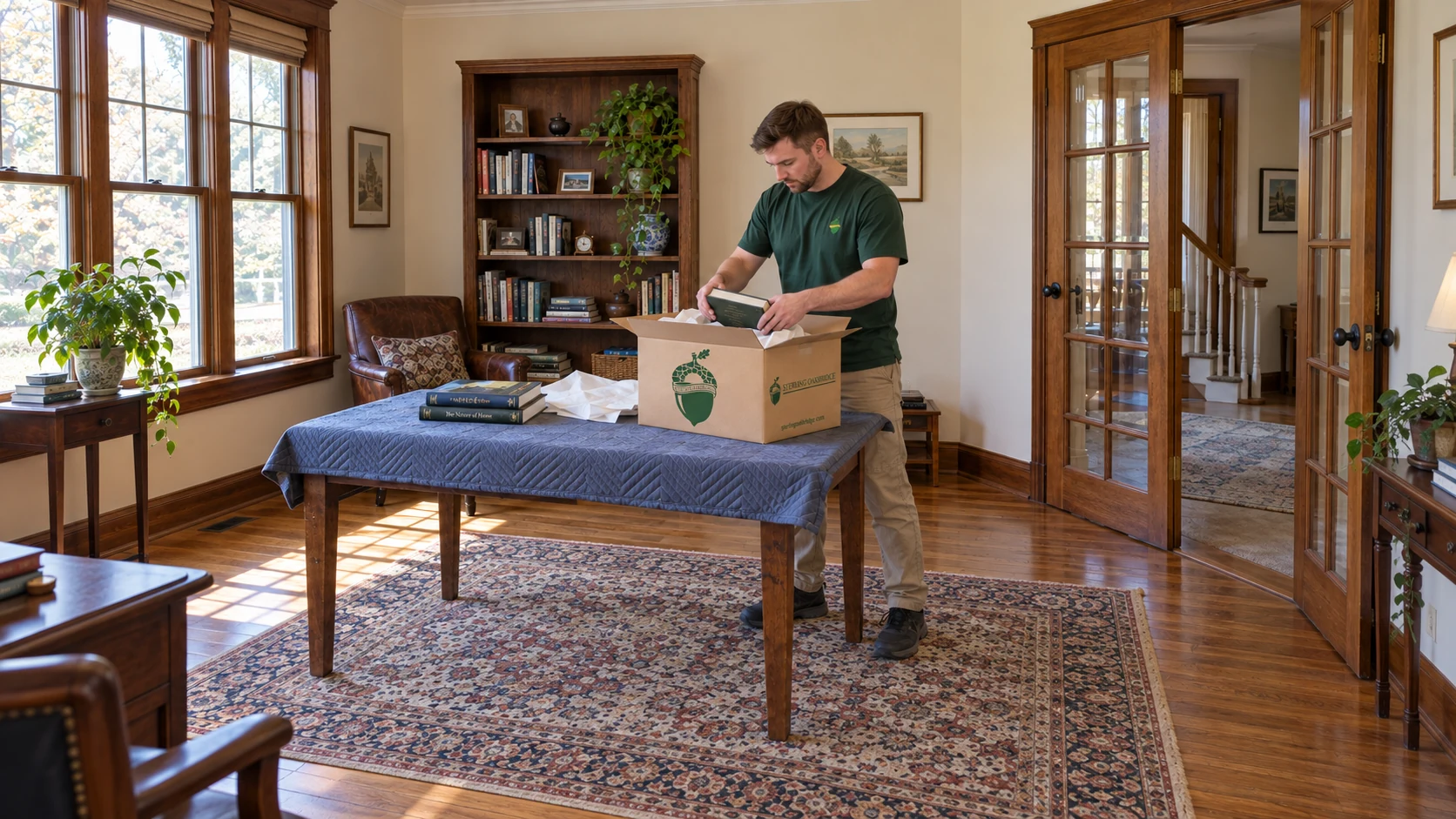
A studio or one-bedroom inventory may allow packing and a local move in one day when access and permitted hours support it. Two-bedroom contents can make that combined day demanding. A substantial three-bedroom home or a large collection often benefits from earlier preparation. Bedroom count helps start the conversation; the reviewed belongings and routes determine whether the day is practical.
The preparation crew may be smaller than the moving crew. During an earlier visit it can pack the groups you will not need before departure, leaving the agreed beds, a simple meal set, toiletries, several outfits and familiar child belongings available. Describe when the remaining group will be finished. Keep personally carried essentials separate from both the earlier cartons and the final shipment.
Review the route from each work area to the door and the space needed for safe preparation. A hallway should not become the storage place for every completed carton. Building permission, loading arrangements and access times belong to the actual property. A house in the Borough, a nearby township address and a Penn State building can need different arrangements even when the everyday description is simply “State College.”
Protect contents for the carrying and truck stages
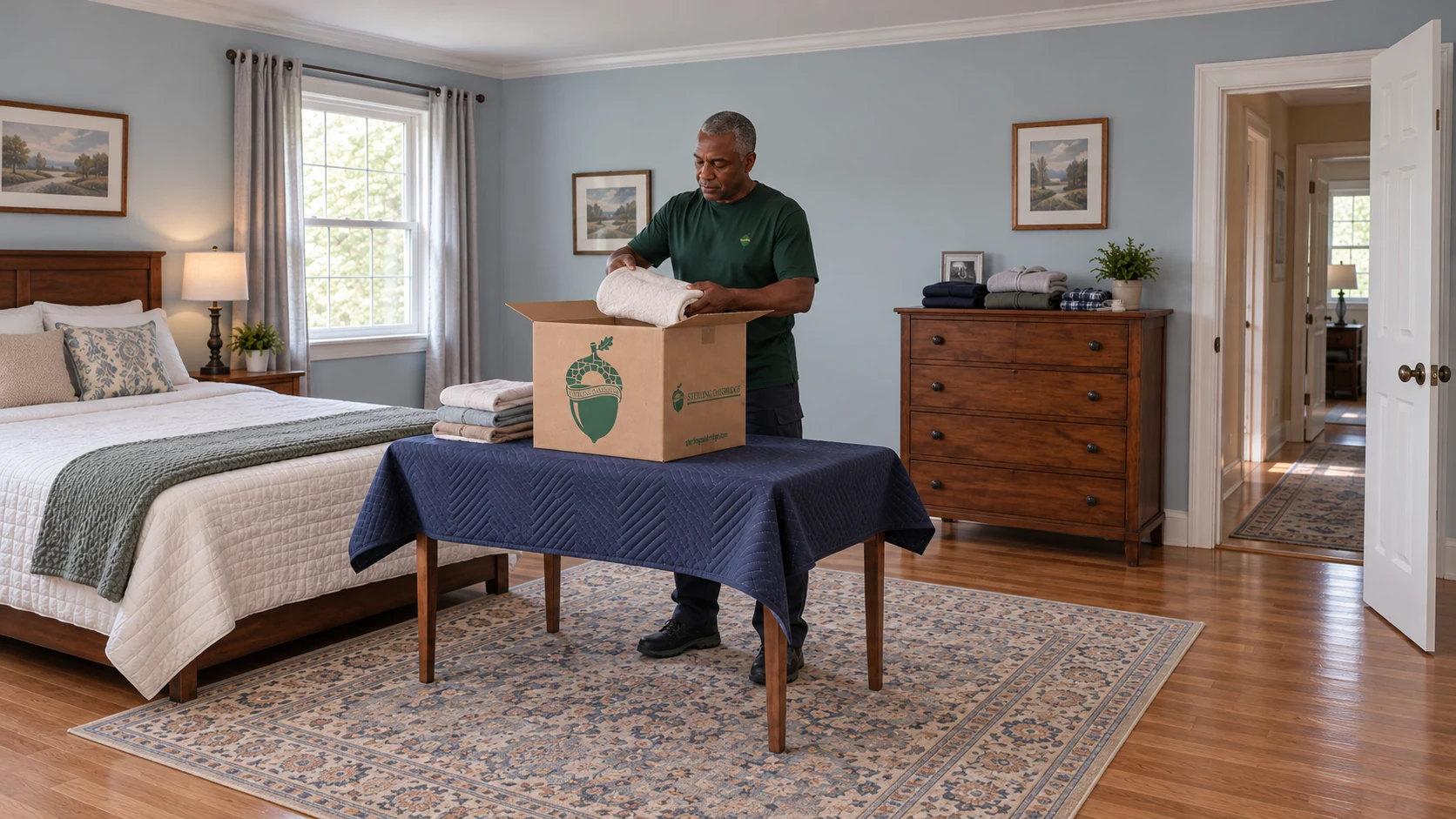
Transport preparation supports carrying, stacking, load restraint and road movement. A plastic bag or casually nested dishes that survived a trip in a personal car do not provide the same preparation for a loaded moving truck. Truck transport involves different vibration and handling conditions. The aim is appropriate protection throughout the actual route, not a guarantee that fragile contents can never be damaged.
Show drinking glasses, ceramic pieces, figurines, small glazed photographs and wall pictures. Identify glass doors and removable shelves inside cabinets rather than treating the furniture exterior as the complete inventory. The team can review removal, individual protection, suitable cartons and how the prepared components will remain identifiable for receiving. Fine art or an unusual valuable piece needs its own agreed handling scope; discuss it through fine-art moving.
Where appropriate, clean gloves and a separate clean work surface help prepare delicate or light-colored contents. The people wrapping these items can work apart from heavier carrying and other dirty work. Handling technique and material choice still matter. Tell the team about a sensitive finish or unusually fragile object before the carton and labor allowance are fixed.
Standard furniture blankets, shrink wrap and tape do not carry an extra basic-material charge in the standard moving scope. Cartons, packing paper and other packing supplies are separate packing materials. Basic furniture disassembly and reassembly use paid labor without a separate basic assembly surcharge; complex work is reviewed individually. Wrapping furniture for transport and preparing all its contents remain distinct tasks.
Labels should explain the next handoff
Each carton needs a written destination, receiving room and useful contents. Add a consistent color system if it helps, but retain readable words so everyone can interpret the instruction. “Kitchen — everyday plates — new home” is more useful than a mark that only one person understands. Identify the first-opening groups without putting sensitive personal information on exposed labels.
Separate stored cartons before loading and make the stop sequence clear. If some belongings go to storage, those groups need the actual storage destination and receiving instructions. A carton mistakenly unloaded at the home may require additional paid handling to retrieve and transport again. Confirm which stored contents will return later, the facility's intake conditions and how they will be identified at release.
Use the same room names at both ends. Provide a simple receiving layout and one person who can answer placement questions. If the room plan changes, communicate that before the affected cartons are carried inside. Labels connect packing to unloading; they do not decide a cupboard arrangement or establish that a proposed storage provider accepts a particular load.
Unpacking returns usable space
Basic unpacking opens the agreed cartons and lays contents on suitable designated flat surfaces. Used protective paper and empty cartons are separated from retained belongings as part of the agreed work. Releasing those materials from the room can make a large difference when stacks have surrounded the furniture and blocked access to the things you need.
Discuss what can be opened safely into the available space. Rugs and larger furniture may need placement first, followed by cartons in their designated rooms. Filling every counter and table at once can leave no place to work. A kitchen priority group, selected linen and the first working-day contents may be more useful than opening every box in an arbitrary order.
Unpacking can follow the move the same day or use a separate later visit. For a substantial three-bedroom example, it might add roughly three or four hours on moving day, or a two-person team might return the next day. These are planning illustrations, not fixed durations or a promise that every home is finished within those hours. Actual carton count, surfaces, access and requested placement change the work.
You can request help several days after arrival if the remaining stacks become too much to manage alongside work. Show which groups are still closed and what space is available. A later request remains subject to crew availability and building arrangements. The preferred date is worth discussing before you rely on it, especially during a busy period.
Organizing and finishing have their own instructions
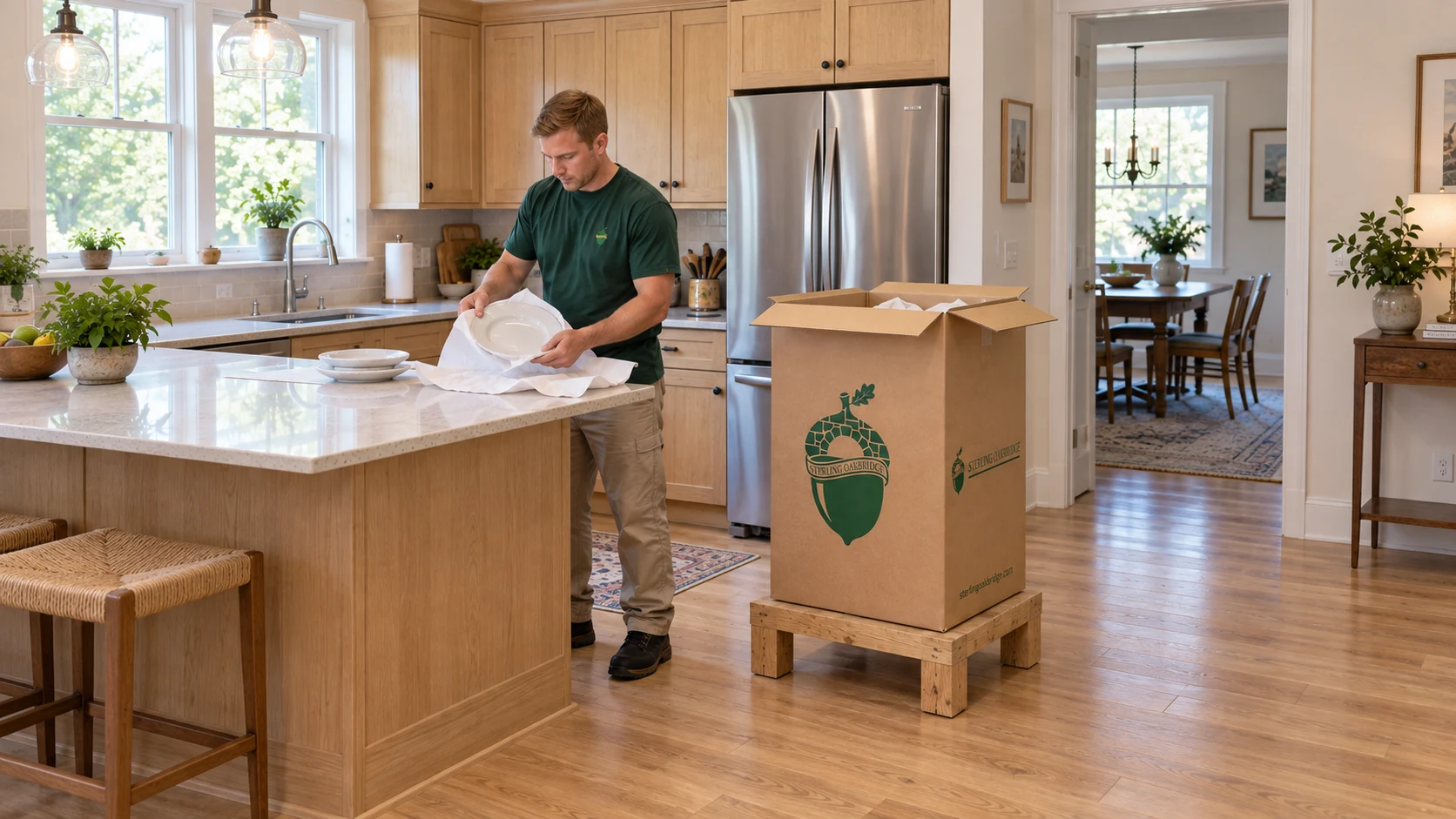
Home organizing adds the final shelf and drawer placement you direct. Only you know where you want everyday glasses, shirts or work supplies in the new home. A smaller team can be easier to guide than a full moving crew all requesting decisions at once. Agree the rooms, priorities, placements and paid time through home organizing.
Sterling's handyman services can also help with agreed finishing tasks such as TV mounting, curtains or suitable light fixtures. Review the task, wall or mounting conditions and sequence before the visit. Electrical or other regulated work requires an appropriate executor and a separately confirmed scope. Supplies, complex installation and additional labor belong in the estimate rather than being assumed inside box unpacking.
Furniture that needs a final position inside the home can be reviewed through State College in-home moving. A separately purchased piece can use State College furniture delivery. Wardrobes or flat-pack work and gym equipment also need their actual assembly requirements identified. These connections help complete the project without treating every finishing task as automatic unpacking.
Plan the used-material route in State College
Packaging preparation and authorized collection have separate scopes and charges. The Borough recycling instructions direct flattened corrugated cartons beside the recycling bins and bagged or bundled mixed paper inside the red bin. Material types and the actual program matter; do not combine all packing leftovers into one assumed accepted load. Check unsuitable, contaminated or unusual materials with the responsible operator.
The Borough refuse and recycling code reserves collectible refuse to municipal collection and restricts unauthorized removal of recyclables already placed in collection locations. It also allows donation or sale of recyclables. Those distinctions require reviewing the intended arrangement; they do not establish that Sterling can independently haul every Borough waste load. Keep permitted moving preparation, the customer's approved recycling arrangement and the authorized collection provider clear.
The County Authority's curbside page gives different collection contacts for Borough residents, listed townships and other municipalities. Confirm the actual address, material, quantity, operator and accepted handoff before planning collection. A postal city name or a public recycling program does not by itself establish a hired carrier's eligibility or a building's capacity.
If a sofa or rug no longer fits after arrival, stop before mixing it with empty packaging. Review retention, donation or the appropriate disposal route as another decision. State College disposal preparation explains the local collection boundary and the information needed for a permitted arrangement. Opening cartons, organizing cupboards and removing an unwanted piece are different paid scopes.
What changes the packing invoice
The added cost comes from packing labor, suitable cartons and protective supplies, and any separate preparation or receiving visits. For a substantial three-bedroom inventory, packing and moving together can approach twice the cost of moving those same belongings already packed. The comparison is an illustration of the added work, not a multiplier that applies to every State College household.
A six-person moving crew for a large, partly prepared home might be accompanied by an earlier packing day with four people. That means another labor stage and materials; unpacking, organizing and installations can add more. A smaller inventory, a clearly defined partial scope or fewer fragile contents can change the relationship. Review the retained contents and visit plan before choosing the service by bedroom count or a headline price.
| Task | What to review |
|---|---|
| Full packing | Agreed retained contents, labor, carton types and protective supplies. |
| Partial packing | Specific team groups, customer groups and readiness before loading. |
| Furniture protection | Standard basic wrapping materials; contents packing is a separate scope. |
| Basic assembly | Paid labor without a separate basic assembly surcharge; complex work individually reviewed. |
| Box unpacking | Agreed carton opening, suitable flat surfaces and used-material preparation. |
| Home organizing | Customer-directed shelf and drawer placement with paid additional time. |
| Handyman finishing | Actual task, suitable executor, mounting conditions, supplies and price. |
| Material collection | Actual municipality, accepted materials and authorized provider; separately arranged. |
Packing and receiving for a longer relocation
Full preparation is useful for a work relocation with a larger household, but long-distance travel does not make every service mode identical. State College long-distance moving distinguishes dedicated same-crew service from consolidated transport. Discuss which mode is proposed, the separate delivery commitments, destination access and whether unpacking or organizing has been arranged there.
The delivery window begins after pickup and loading are complete. A flat moving price does not change merely because the travel time changes; scope changes require a reviewed written update. Extra contents, storage, additional handling or newly requested receiving tasks can affect the agreed work. Keep first-night and work essentials in your own travel plan instead of relying on immediate access to an unspecified shipment group.
Four State College planning examples
These are hypothetical planning examples, not reports of Sterling customers or claims of access to the properties described. The neighborhood sources establish local housing context; each household, inventory, work window and receiving plan below is illustrative. The actual property and municipality still require review.
A College Heights family preserves its last evening and first workday
The Borough's College Heights background describes varied early residential development associated with Penn State's growth, including adapted and architect-designed homes. That history supports reviewing the actual study, closets and other retained groups; it does not tell us how many cartons a present household owns.
In this example, two working parents identify the study books, occasional dishes and spare linen for earlier preparation. They retain a usable bed, a small meal group and their children's familiar final-night items. Work devices and private travel essentials stay with them. The team reviews its protected work surface and finished-carton staging without turning the passage to the bedroom into a stack of boxes.
Receiving priorities are the everyday kitchen group, selected linen and the items needed for the first workday. A smaller additional team can then follow the customer's shelf instructions if organizing is requested. The result is a staged household plan with identifiable essentials and reviewed paid visits, rather than a promise based on an older house's appearance.
A Highlands apartment needs more preparation than its furniture list suggests
The Borough-hosted 2013 Highlands draft description records a range from larger apartment buildings to modest single-family homes. It is historical housing context, not a current count or proof of this apartment's access arrangements.
Here a working couple has relatively little large furniture but extensive kitchen contents and books. They choose partial packing for those groups and prepare ordinary clothing themselves. A proposed single combined day is reviewed against individual wrapping work, the carrying route and the property's permitted hours. If the contents make that day impractical, an earlier packing visit is a real alternative even for a smaller apartment.
The estimate records who prepares the remaining cupboards and when. Small dense book loads and properly cushioned dishes follow separate receiving labels. This case shows why the furniture list, travel distance and bedroom label cannot replace the contents review; it makes no assumption about a campus move-out calendar or a building's elevator reservation.
A Holmes-Foster household divides a collection between home and storage
The Borough-hosted 2013 Holmes-Foster draft description describes older housing and tree-lined streets. The useful consequence is to inspect the actual rooms, preparation areas and retained contents, rather than assume identical layouts or easy access from the neighborhood name.
In this example, a household moving to a smaller home retains its books, family pictures and delicate cabinet contents but sends part of the collection to storage. Before wrapping begins, the customer specifies which pictures will arrive at the home and which protected groups will stay stored. The carton labels carry the next destination, room or storage group and meaningful contents.
The storage intake, stop sequence and later release are reviewed alongside the moving scope. Fragile stored pieces still need appropriate protection; they should not be opened automatically during household unpacking. The result is a divided retained inventory with clear handoffs, reducing the risk of paying again to recover cartons sent to the wrong destination.
A Borough arrival books later unpacking and a specific material handoff
After this illustrative household arrives, returning to work leaves little time to navigate the remaining stacks. The customer requests a later two-person unpacking visit, subject to availability, and identifies clear flat surfaces. Everyday dishes and selected clothing are opened first; final cupboard placement is an additional organizing task that the customer can direct in manageable groups.
The Borough's separate carton and paper instructions influence what happens next: corrugated cartons are flattened, suitable mixed paper is prepared for its distinct red-bin route, and other materials remain separate for review. The code's municipal collection and designated-recyclable rules determine the authorized arrangement. Preparing those materials inside the property does not imply permission for an independent Borough waste haul.
A rug that no longer fits and a proposed TV mount are added to the discussion as separate scopes with the appropriate executor and price. The result is an achievable receiving sequence, more usable floor space and a reviewed collection route. The customer knows which decisions remain theirs and which paid tasks have actually been arranged.
Bring the actual household into the estimate
Send addresses, proposed dates, access details and photographs or an inventory of the retained contents. Identify full or partial packing, fragile groups, what stays available overnight, separate destinations and the first receiving priorities. Add unpacking, organizing, handyman work and the proposed used-material arrangement when you want them reviewed.
Use the State College city page for the service connections and the State College moving guide for broader local planning. The estimate can then connect your actual household to the preparation, moving and receiving stages without assuming that every State College address has the same building or collection rules.
State College packing and unpacking questions
What does full packing include?
It covers the retained contents included in the reviewed scope, with suitable cartons, protective materials and paid preparation labor. Show cupboards, closets, stored groups and fragile components as well as furniture. You decide what to retain and keep private travel essentials outside the shipment.
Can I book packing for selected rooms only?
Yes. Partial packing assigns specific rooms or groups to the team while you prepare others. A kitchen, collection or study can be reviewed separately. Agree who packs each group and report unfinished customer packing early so the estimate and moving-day sequence remain realistic.
How many cartons will my State College home need?
The retained contents matter more than bedroom count. A first expectation of twenty cartons can become sixty or a hundred after cupboards and storage are included; those are illustrations, not local quotas. Carton types, cushioning and manageable loads also affect the supplies.
Can a smaller apartment be packed and moved in one day?
A studio or one-bedroom inventory may fit when the contents, carrying route and permitted hours allow. A cupboard-heavy apartment can still need substantial wrapping work. Review the actual groups before choosing a combined day; two-bedroom or larger contents often make earlier preparation useful.
What stays available on the final night?
Agree beds, toiletries, a simple meal set, several outfits and familiar child belongings, plus when that final group will be packed. Keep medication, identity papers, keys and personal travel essentials separately under your control. Earlier preparation should leave the agreed parts of the home usable.
Does a historic neighborhood tell you the packing route?
No. College Heights, Highlands and Holmes-Foster sources describe varied historical housing context. The actual property determines rooms, stairs, work surfaces, carton staging and access. A neighborhood name cannot establish a current layout, permission, inventory or a fixed packing duration.
Does a State College mailing address establish Borough rules?
No. Review the actual municipality and property. Borough, township and Penn State premises may have different access or collection arrangements. Postal wording alone does not establish which operator, building permission or material handoff applies to your work.
Why do dishes need more than a bag for truck transport?
Prepared contents must tolerate carrying, stacking, load restraint and road movement. A bag or loosely nested dishes that survived a personal-car trip do not provide the same protection in a moving truck. Review cushioning, suitable cartons and individual fragile items; protection is not a damage guarantee.
Should I identify cabinet glass and small pictures?
Yes. Show removable glass shelves, glass doors, small glazed frames, figurines and other fragile components before estimating. Their protection and identification can be reviewed separately from wrapping the furniture exterior. Fine art or unusual valuables need an individually agreed handling scope.
Can clean gloves be used for delicate belongings?
Where appropriate, clean gloves and a separate clean preparation surface can help with delicate or light-colored contents. Discuss sensitive finishes and handling requirements beforehand. Material choice and technique still matter, and clean handling does not turn ordinary packing into a conservation service.
How should cartons going to storage be labeled?
Use a written next destination, receiving room or storage group, and meaningful contents. Colors can reinforce those words. Separate stored cartons before loading and confirm the stop sequence, facility intake and later release. Misplaced groups can require additional paid handling to retrieve and transport again.
What is included in basic box unpacking?
The agreed cartons are opened and contents placed on suitable designated flat surfaces. Used paper and empty cartons are separated as arranged. Final shelf and drawer placement is additional organizing; material collection also needs its own accepted and authorized arrangement.
Can unpacking happen after the moving day?
Yes, subject to crew availability, access and the reviewed scope. A team can return the next day or several days later if work and remaining stacks make unpacking difficult. Identify the still-closed groups, clear surfaces and priorities before relying on a preferred date.
How long should I allow for unpacking a larger home?
For a substantial three-bedroom example, unpacking might add roughly three or four hours on moving day, or a two-person team might return the next day. These are illustrations. Actual cartons, receiving space, access and requested placement determine the work; they are not fixed completion promises.
Can you organize the kitchen and wardrobes?
Yes. Home organizing is available as an additional reviewed service with paid time. You direct where the belongings should go. Agree rooms and priorities; a smaller team may be easier to guide than a full moving crew all needing placement decisions at once.
Can handyman work help complete the arrival?
Yes. Discuss TV mounting, curtains or suitable light fixtures as actual tasks with mounting conditions, supplies, sequence and price. Electrical or other regulated work needs an appropriate executor and confirmed scope. These tasks are not automatically included in basic box unpacking.
How does the Borough prepare cartons and paper for recycling?
The Borough instructions place flattened corrugated cartons beside recycling bins and bagged or bundled mixed paper inside the red bin. Review material type, condition, amount and the actual program. Do not treat all packing leftovers as one accepted load or assume a hired carrier is eligible.
Is independent packaging removal automatically available in the Borough?
No. The Borough code reserves collectible refuse to municipal collection and restricts unauthorized removal of recyclables already placed in collection locations, while allowing donation or sale of recyclables. Review permitted preparation and the actual approved collection arrangement separately; this page does not establish a Sterling Borough hauling authorization.
What if furniture no longer fits after arrival?
Keep the unwanted piece separate from empty packaging and review retention, donation or the appropriate disposal route. The actual municipality, item and authorized operator determine the arrangement. Moving preparation, collection, organizing and carrying another piece have distinct scopes and possible charges.
How much can full packing add to the cost?
For a substantial three-bedroom inventory, packing and moving together can approach twice the cost of moving the same belongings already packed. That illustrates additional labor, supplies and visits, not a fixed multiplier. Partial scope, fragile contents, access and receiving tasks change the comparison.
Are basic furniture wrap and assembly charged separately?
Standard furniture blankets, shrink wrap and tape do not have an extra basic-material charge in the standard moving scope. Packing cartons and protective supplies are separate. Basic disassembly and reassembly use paid labor without a separate basic assembly surcharge; complex work is individually reviewed.
Can packing and unpacking be arranged for a long-distance relocation?
Yes, with each stage reviewed. Dedicated same-crew and consolidated transport have different delivery commitments. The delivery window begins after pickup and loading, and destination unpacking needs its own arrangement. A flat moving price does not change for travel time alone; scope changes require a written update.