
Released inventory
Separate the shipment from the business that stays working.
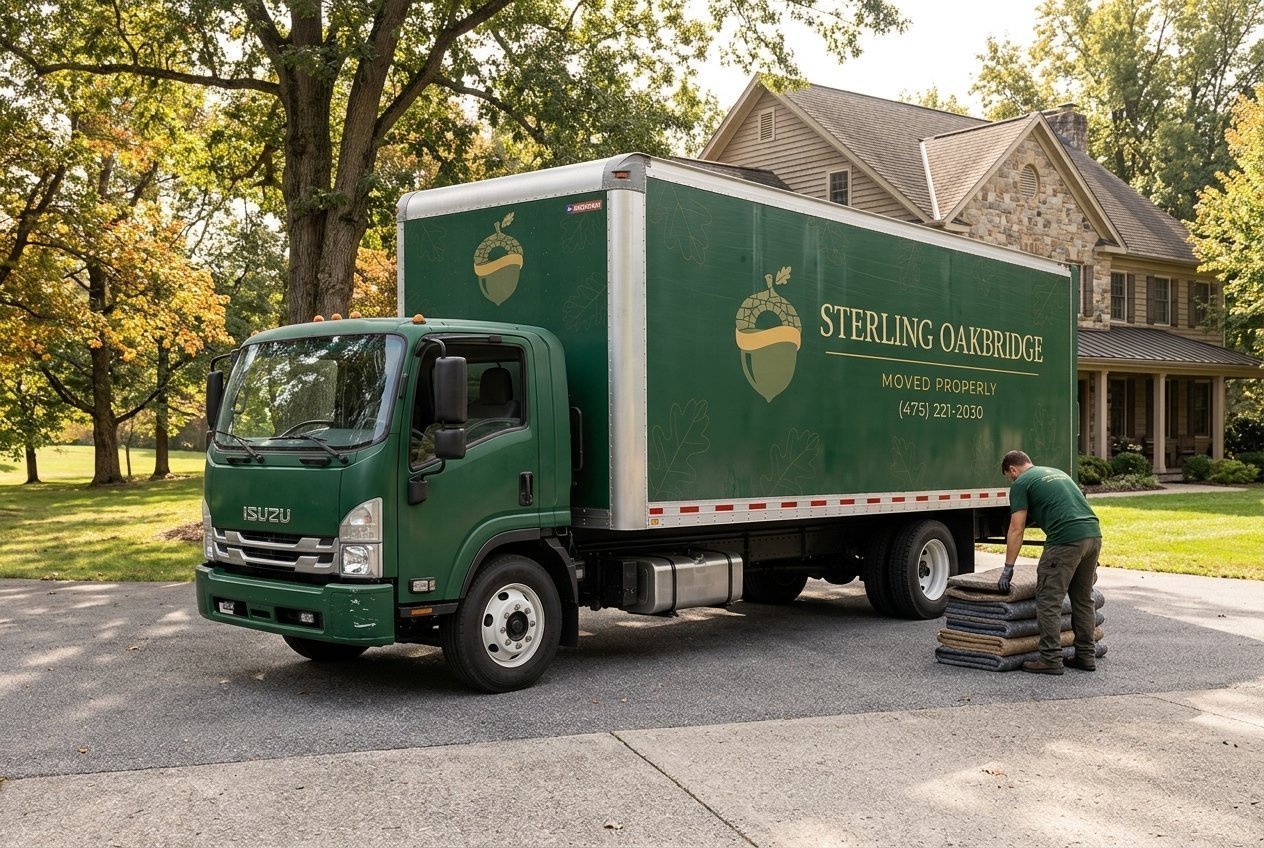
Office & Commercial Moving
Move an office, department, warehouse group or reviewed business equipment with clear release instructions, building access and supplier handoffs. Choose crew handling, phased work or a reviewed truck-and-driver arrangement with customer loading.
Physical transport and agreed disconnection are separate from client IT’s reconnection and startup. Specialist equipment and finishing work are individually reviewed.
Separate the shipment from the business that stays working.
Client, managers, IT, vendors and movers have distinct tasks.
Preparation and receiving periods set workable phases.
Include employee time, waiting, equipment and repeat handling.
Operating periods
We handle offices, departments, selected business inventory and reviewed commercial equipment. The useful result is an agreed receiving layout and a clear handoff between movers, the business, property managers and its technical or other suppliers. A packing date alone does not establish when the new operation can work.
Name the person who can approve the inventory, dates, changes and receiving result. Separate the released shipment from contents that keep the business operating. Photographs, a signed lease or a new address do not release every desk, file or machine in a room.
Record both premises, operating deadlines, permitted working periods, actual loading positions and complete carrying routes. Identify new furniture arrivals, technicians, lessors, designers and contractors whose work depends on the move. A phase needs a workable stopping point if a key supplier or receiving area is late.

Give every handoff an owner
One coordinator can connect the schedule while each supplier keeps its actual responsibility.
| Work | Primary responsibility | Moving-plan connection |
|---|---|---|
| Release and inventory | Authorized business decision-maker | Identify what moves, what stays and who accepts delivery |
| Building access and COI | Sterling coordinator and property managers | Supply each building’s requirements, assign requests and verify management acceptance |
| Employee and shared packing | Business and selected packing crew | Agree desk cartons, common records, equipment and destination identifiers |
| IT preparation and startup | Client IT or its appointed provider | Backups, approved shutdown and technical reconnection/startup remain with IT |
| Physical handling and transport | Sterling for the agreed scope | Protect, carry, load, transport, place and perform selected reviewed furniture work |
| Receiving layout and next supplier | Business, managers and named vendors | Check the receiving area before the next department or vendor proceeds |
Desks and shared preparation
Employees can prepare their own approved desk contents while a named person coordinates shared storage, stationery, files and meeting rooms. Arrange early carton delivery if it helps; identify departments, employees and receiving rooms before boxes accumulate.
Keep peripheral groups together and mark the destination, contents and priority on each carton. A desk carton is not permission to remove confidential files or contents that the working area still needs. The business decides which records remain with authorized staff and how filing order is preserved.
We can pack ordinary agreed files. Certified secure-records handling is not established by ordinary packing. Identify sensitive or regulated records and assign the appropriate security and retention process rather than expect a generic moving scope to provide that certification.

Furniture and fixtures
Review construction, condition and route. Suitable basic dismantling and reassembly use moving labor time; missing hardware, weak construction and wall attachments need advance attention.
Send manufacturer, model, instructions, component counts and the intended layout. Systems furniture, large assemblies and acoustic pods need their own review and quote rather than an allowance based only on employee count.
Mounting, hanging and handyman work are separately selected tasks with wall, hardware and placement requirements. A furniture move does not authorize utility connection, demolition or every finishing operation.
The business and suppliers identify released items, collection and delivery appointments, lease responsibilities and who receives them. Compare reuse, approved disposal and new delivery as complete alternatives.
Technical handoffs
Client IT owns backups, the approved shutdown plan and readiness for handling. Identify the equipment, peripherals and any separately agreed disconnection task. We can perform reviewed disconnection and physical transport; client IT or its appointed provider handles reconnection, testing and system startup.
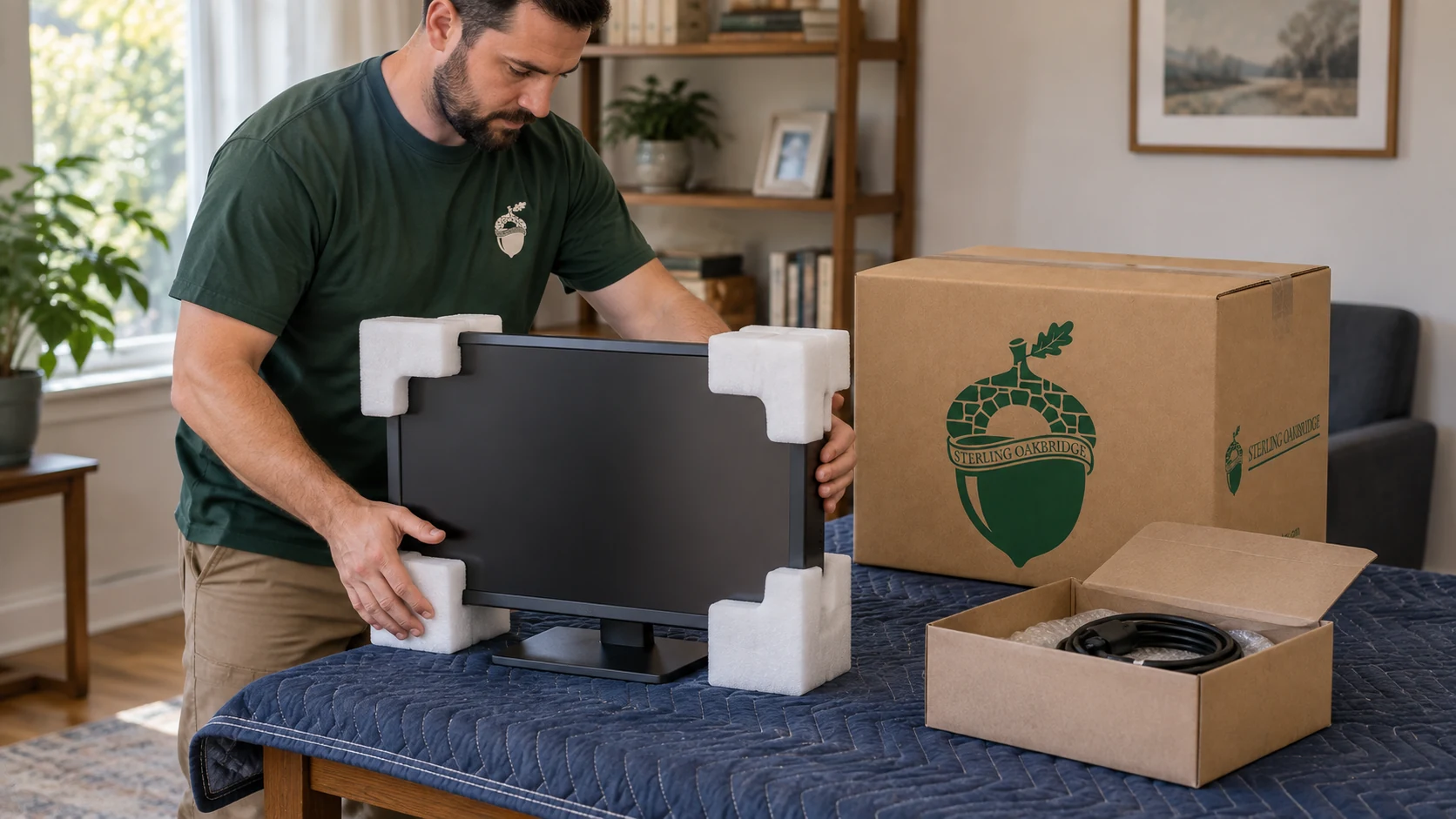
Record equipment identity, condition, handling needs and the receiving position before packing. An external photograph does not prove a system is backed up or released. Protect screens and associated accessories for the actual shipment rather than expect an employee’s desktop box to hold every component.
For restaurant, industrial or other heavy equipment, supply the actual model, dimensions, weight where known and extraction route. Utilities must be made safe by the responsible qualified party. Regulated, hazardous or operationally sensitive contents need their appropriate arrangements; ordinary transport does not establish laboratory, cold-chain or technical restart service.
Loading options
A truck-and-driver arrangement with customer loading and unloading is a confirmed commercial option. The business supplies the agreed loading and receiving labor. Review vehicle capacity, equipment, access, payload, restraint and the driver’s actual responsibilities before choosing it.
Compare it with a crew-handled move using the same inventory and deadlines. Buying less mover labor can shift work to employees and can add equipment hire, waiting, repeated trips or lost operating time. It is useful only when the customer’s plan can prepare, load and receive the goods within the agreed arrangement.
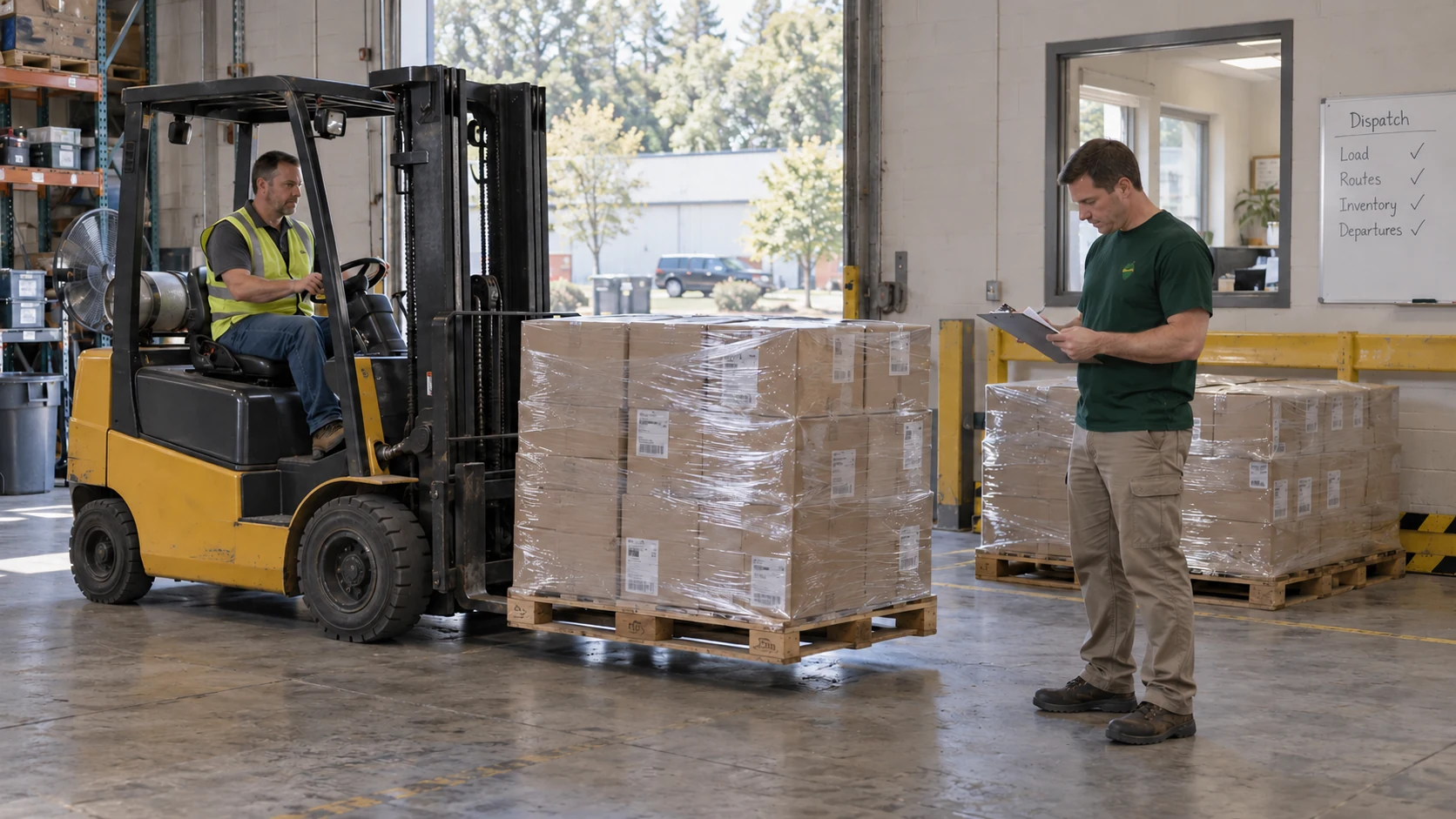
Office and warehouse inventories may need different handling sequences, vehicles or appointments. A wrapped pallet and a boxed office are not interchangeable loads. Identify which goods are released, who handles them at each end and how retained stock stays accessible during the move.
Building permission and work windows
Sterling can coordinate the mover’s certificate from each property’s requirements. Agree who requests the dock or elevator booking, supply insurance wording and dates, and verify management acceptance before the moving appointment.
Tell us the actual property or project requirement. We can organize reviewed work around it; a city name alone does not establish which tasks or vendors the building requires.
Compare preparation, carrying, travel, receiving and next-vendor access in both properties’ permitted windows. There is no universal after-five rule. Choose phases that leave a usable working area and a definite stopping point.
Later construction, a new gate or a different receiving entrance can change a previously workable route. Identify changes before the equipment or department is released so the plan and written terms can be revised.
Equipment routes
A restaurant move can include refrigerators, ovens, counters and other reviewed equipment. The complete route may be narrower than the doorway: counters, turns, stairs, ceilings and the vehicle approach determine extraction. Record the condition and utility preparation before the carrying stage.
The business, landlord and qualified utility or equipment provider identify disconnection, permissions and readiness. The moving quote covers the selected physical work and specialist handling; it does not automatically include replacement installation, code approval or restarting the kitchen.
Retail stock, shop fixtures, contractor deliveries and industrial installations each need their own released inventory and receiving arrangement. Explain any attached components, stored liquids, batteries or unusual load before a vehicle and crew are chosen.

Illustrative situations from our local pages
These are hypothetical planning situations, not reports of completed customer jobs.
Hudson Valley · Poughkeepsie
Imagine a downtown office moving selected departments while keeping a client desk usable. The business approves the destination layout, labels employee and shared contents and identifies which working group stays until the receiving area is ready.
Managers and Sterling connect building documents and elevator arrangements. Client IT completes its preparation, the agreed physical group moves and is placed, then IT performs its technical handoff. The next group proceeds when the business accepts that area, rather than simply because the first cartons left.
Northern New York · Watertown
Consider the downtown firm’s two-department transfer to different premises. Survey the actual floor-to-vehicle routes; the number of stories in a property description does not establish a freight elevator or moving permission.
Identify receiving desks, shared records, new-vendor deliveries and the retained client area. If new furniture or access is late, decide whether that phase can still work or must change. The short road distance does not remove preparation, carrying, supplier waiting and repeated handling from the estimate.
Office and warehouse planning
Imagine a business moving sealed office cartons and released warehouse stock. A truck-and-driver arrangement may reduce purchased crew labor if employees have the appropriate equipment, capacity and approved working route.
Compare employee preparation and loading time, restraint, payload, receiving labor and waiting with the crew-handled alternative. Agree who handles each load and what happens if either end cannot receive. A lower headline transport charge alone does not prove a lower complete cost.
Restaurant and retail planning
Consider a kitchen or shop moving a heavy unit through a route that was usable before counters or partitions were installed. The current dimensions and construction, condition and utility readiness matter more than the memory of its original delivery.
Measure every obstruction and turn before selecting removal and receiving operations. The appropriate specialists own disconnection and installation; the mover’s reviewed carrying stage needs an approved place to receive the unit. The new plan changes before release if the route no longer works.
Temporary and return work
Hotels, weddings, film or photo work, galleries and institutional projects can need temporary clearance, carrying, protection and a later return. Identify retained furnishings, an unused holding room or separate storage stage, installation positions and the person who releases the room afterward.
Realtors, designers, stagers, resellers and contractors can book approved pickups, receiving, placement and return work. They supply the inventory, authority, appointments and intended result. Event organization, rental provision, restoration and art conservation remain separate responsibilities.
For a contractor-ordered household pack-out, the homeowner and contractor approve the contents and restoration readiness, then outward handling, storage and return are planned together. Storage-operator work needs that operator’s access and release permission. Sensitive art retains its own condition, packing and insurance specification.

Compare the whole plan
The estimate identifies the agreed scope; the business can then compare complete alternatives.
| Stage | Include in the comparison | What can change the plan |
|---|---|---|
| Preparation | Employee time, packing crew, cartons and specialist preparation | Unfinished desks, unreleased records, late shutdown |
| Carrying and transport | Crew time, vehicle, restraint, travel and any repeat trips | Routes, shared lifts, payload, supplier waiting |
| Furniture and equipment | Reviewed reassembly, systems work and specialist operations | Models, condition, missing parts, construction changes |
| Holding and phased work | Handling, storage duration, access and redelivery | Readiness of the next room, unit or contractor |
| Receiving and finishing | Placement, selected box unpacking, mounting and packaging collection | Approved layout, receiver, technical provider and building hours |
Local hourly estimates and minimum hours are not fixed totals. Commercial long-distance work needs its own reviewed arrangement; household example windows are not a substitute.
Prepare the project brief
List departments, desks, systems, cartons, shared records and equipment. Distinguish retained contents and name the person who approves release and changes.
Supply actual addresses, floors, loading entrances, dimensions, property contacts and permitted periods. Include COI, approved-vendor or union requirements.
Identify employee packing, chosen professional packing, IT, utility providers, new deliveries, contractors and the receiving layout. State the last and first working periods.
Include holding, return, systems assembly, mounting, unpacking and collection explicitly. Do not rely on the words “full service” to define every stage.
Local plans add property examples, preparation and the access choices relevant to that location.
Plan office and business moves around people, vendors, building access, packing, equipment and operational deadlines.
Plan business preparation, vendor handoffs, building access and the complete moving scope in Wheeling.
Plan business preparation, vendor handoffs, building access and the complete moving scope in Watertown.
Plan business preparation, vendor handoffs, building access and the complete moving scope in Binghamton.
Plan business preparation, vendor handoffs, building access and the complete moving scope in Clarksburg.
Plan business preparation, vendor handoffs, building access and the complete moving scope in Mansfield.
Plan business preparation, vendor handoffs, building access and the complete moving scope in Zanesville.
Plan business preparation, vendor handoffs, building access and the complete moving scope in Elmira.
Plan business preparation, vendor handoffs, building access and the complete moving scope in Morgantown.
Plan business preparation, vendor handoffs, building access and the complete moving scope in State College.
Plan business preparation, vendor handoffs, building access and the complete moving scope in Bangor.
Plan business preparation, vendor handoffs, building access and the complete moving scope in Plattsburgh.
Plan business preparation, vendor handoffs, building access and the complete moving scope in Salisbury.
Plan business preparation, vendor handoffs, building access and the complete moving scope in Dover.
Plan business preparation, vendor handoffs, building access and the complete moving scope in Hagerstown.
Plan business preparation, vendor handoffs, access and the complete moving scope in New York.
Plan business preparation, vendor handoffs, access and the complete moving scope in Middletown.
Plan business preparation, vendor handoffs, access and the complete moving scope in Newark.
Plan business preparation, vendor handoffs, access and the complete moving scope in Rumson.
Plan business preparation, vendor handoffs, access and the complete moving scope in Great Neck.
Plan business preparation, vendor handoffs, access and the complete moving scope in Long Branch.
Plan business preparation, vendor handoffs, access and the complete moving scope in Montclair.
Plan business preparation, vendor handoffs, access and the complete moving scope in Edison.
Plan business preparation, vendor handoffs, access and the complete moving scope in Short Hills.
Plan business preparation, vendor handoffs, access and the complete moving scope in Summit.
Plan business preparation, vendor handoffs, access and the complete moving scope in Bronxville.
Plan business preparation, vendor handoffs, access and the complete moving scope in Alpine.
Plan business preparation, vendor handoffs, access and the complete moving scope in Scarsdale.
Plan business preparation, vendor handoffs, access and the complete moving scope in White Plains.
Plan business preparation, vendor handoffs, access and the complete moving scope in Greenwich.
Before you book
Practical answers about the work, preparation, price and receiving result.
Ask a coordinatorYes. We handle whole offices, selected departments and agreed business inventory. Identify released and retained contents, both routes and the receiving layout so the phase can leave the business with a usable working area.
Yes, within the permitted windows agreed for both premises. Packing, carrying, travel and receiving can use separate stages. Choose a usable stopping point and identify the supplier handoff before the next department proceeds.
Sterling can coordinate the mover’s COI from each property’s requirements. The coordinator, business and property managers agree who requests dock and elevator bookings, then verify management acceptance before the appointment.
Yes, for the contents the business authorizes. Use employee and receiving-room labels, keep peripheral groups together and assign shared rooms and records separately. Early carton delivery can be included as an agreed preparation stage.
No. Client IT or its appointed provider owns backups, approved shutdown, technical reconnection, testing and startup. Separately agreed disconnection and physical transport are available moving tasks; specify the equipment and handoff in the scope.
That certification is not established by ordinary packing. We can pack agreed ordinary files, while the business assigns sensitive or regulated records to its appropriate security and retention process. Identify the record group before preparation.
Yes, as a reviewed commercial arrangement with customer loading and unloading. Agree inventory, payload, equipment, route, restraint and responsibilities at both ends. Compare employee time, waiting and repeat trips with the crew-handled alternative.
Yes, after reviewing the actual manufacturer, model, components, condition, instructions and receiving layout. Suitable basic furniture work uses moving labor time; systems and complex operations are individually quoted.
Yes, with the exact unit and required physical operation reviewed and quoted. Supply dimensions, weight where known, construction and both routes. Utilities must be made safe by the responsible qualified party; installation and technical startup are separate tasks.
No. Local hourly estimates and minimum hours are not fixed totals or promises of completion within those hours. Readiness, shared elevators, route changes and waiting can affect the working time. The written quote identifies labor, materials and selected specialist stages.
Yes. Agree the retained inventory, protected holding position, event access and return layout. If no suitable on-site holding is available, storage or a truck hold adds separate terms. Organization of the event, styling and furniture rental are separate responsibilities.
Send released and retained inventories, both addresses and routes, dates and working windows, building requirements, property contacts and the receiving layout. Name the decision-maker and technical suppliers, then list packing, systems work, holding, return and finishing you want quoted.
A plan for your actual move
Send the item list, photographs, both ends of the handling route and the dates that matter. We will explain the stages and prepare a written estimate.
