
Object first
Condition, construction and shape reviewed.
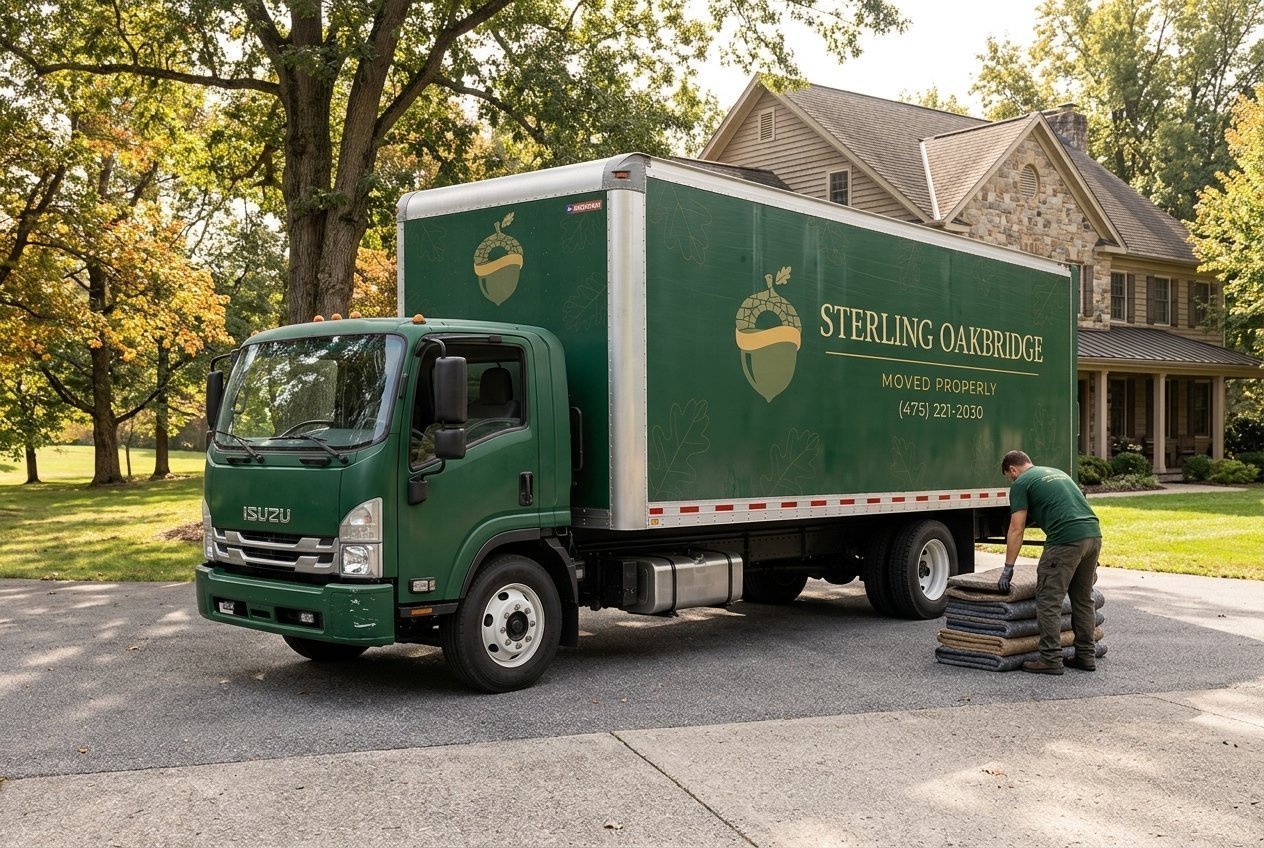
Custom Crating
Give the object a package designed for its shape, condition and journey. Sterling Oakbridge reviews fitted soft protection, custom transport crates and crating to an agreed museum or collection specification, including how the object will be packed, handled and opened.
Object packing, fabrication, transport, approved opening and coverage are distinct reviewed stages.
Condition, construction and shape reviewed.
Lender and insurer requirements supplied.
Packing follows at the client property.
Support, opening and placement agreed.
Plan the work
Provide photographs in the original position, dimensions, weight where known, materials, glazing, projections and known repairs. Record condition before touching, taking down or wrapping; later packing photographs are a different stage. An ordinary moving inventory is not a formal conservation condition report.
Explain the actual journey: local carrying, vehicle transport, temporary holding or an agreed border crossing. Show both routes and the receiving position, including the protected dimensions that must fit. A crate that cannot leave the apartment or enter the destination has not solved the transport problem.
Supply written requirements from the lender, collection or selected insurer before fabrication. The specification needs to identify acceptable contact, supports, cushioning, enclosure, closure and opening. A high declared value or the word museum does not by itself define the package.
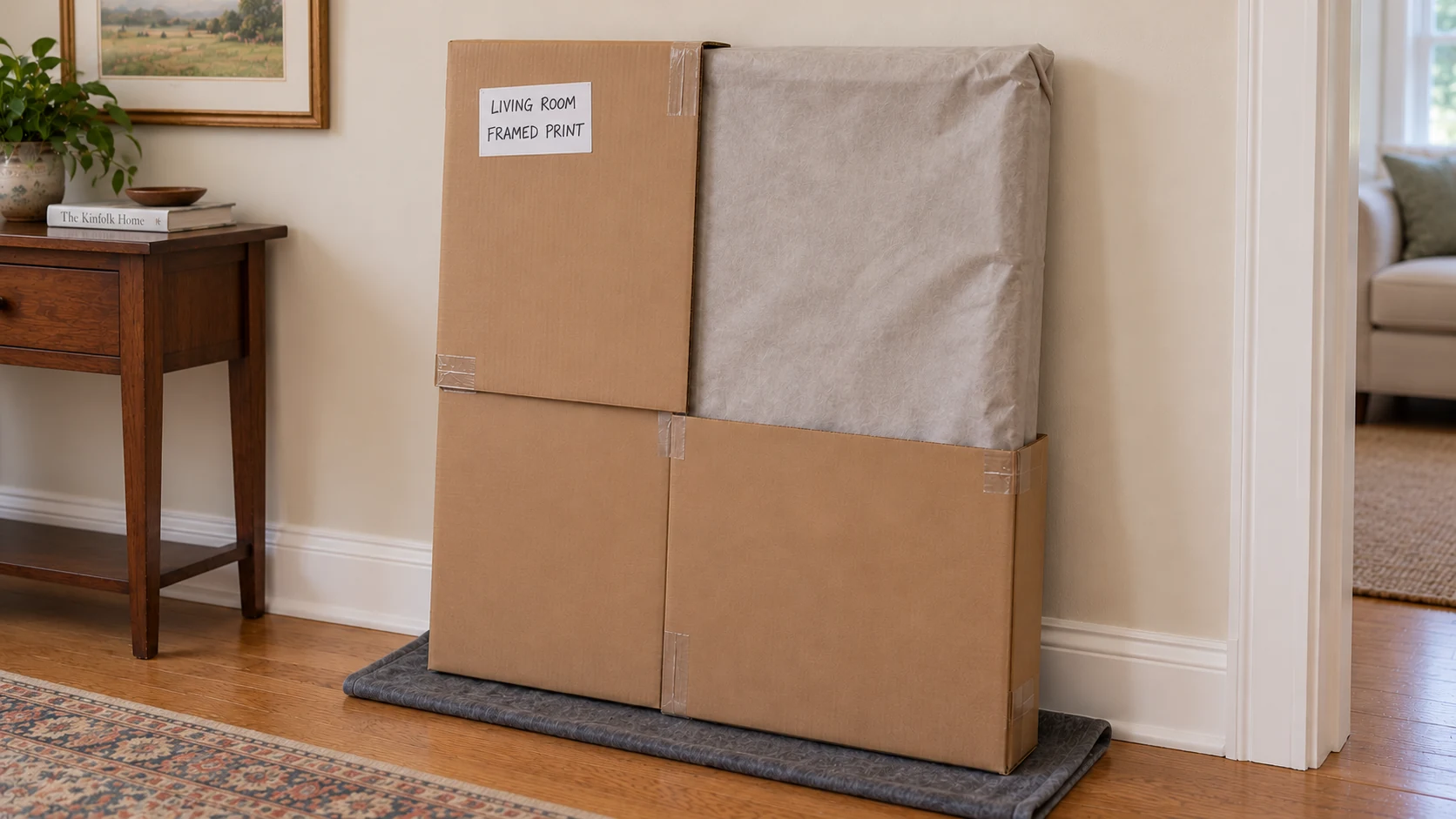
Choose your scope
Compatible inner layers and fitted double-wall corrugated panels can enclose a suitable protected piece. Prevent movement without pressing on vulnerable surfaces. This is not a wooden crate or automatic insurer-approved package.
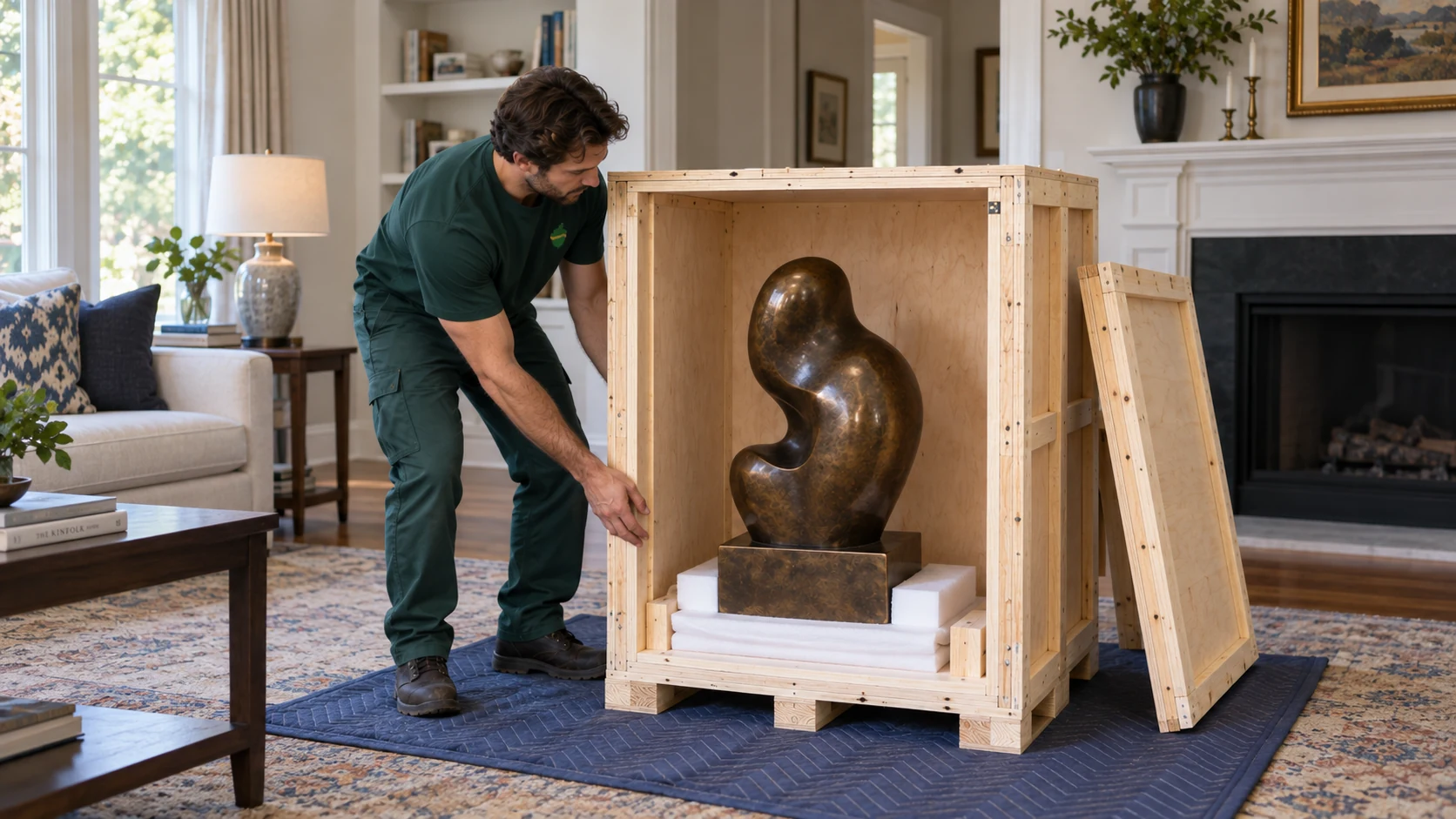
The enclosure, supports, cushioning and clearances are designed together. An open timber framework and a fully enclosed plywood shell protect different parts of the journey; specify the actual result.
Crating can follow an agreed written lender or collection requirement. Materials, supports, insulation where specified, hardware, closure and opening give the request meaning; no universal museum certification is claimed.
Plan the work
Custom crate fabrication and object packing are separate stages. The empty crate is made in the workshop, then brought to the client apartment, house or property for protection and packing. Review the object’s dimensions and route before that fabrication appointment relies on them.
Compatible contact matters as much as the outer shell. Paper, glassine or a moving blanket should not be assumed safe against every painting surface, antique finish or fragile projection. Bubble cushioning belongs outside suitable inner protection, with tape on the exterior package rather than the object.
An exposed or unstable surface may require a stand-off or travel frame, or instructions from an appropriate conservator. CCI’s painting-wrapping guidance explains why a cover may need to stay clear of the paint. Do not replace that object-specific review with thicker wrapping.
Plan the work
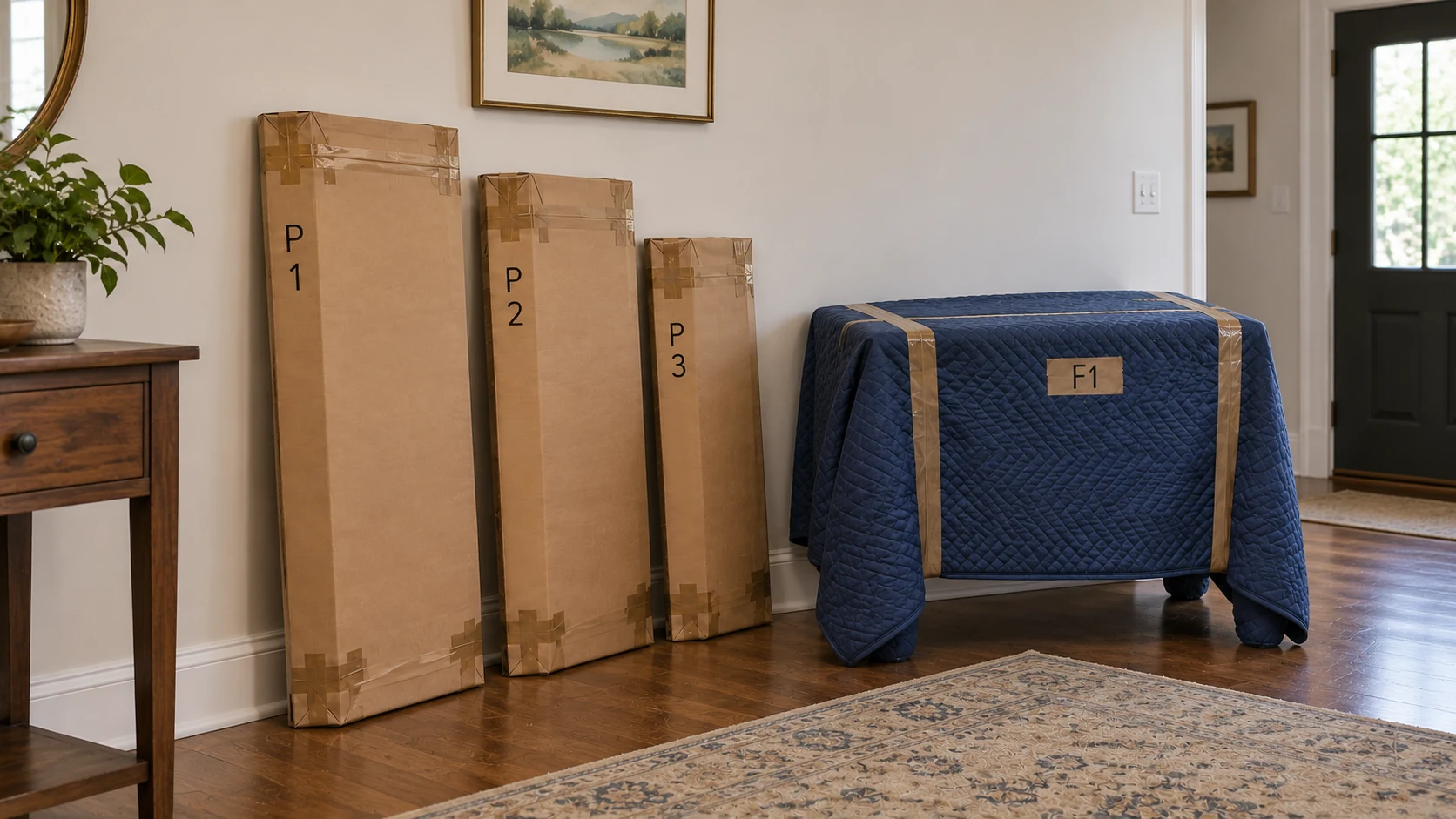
Agree package orientation, lifting and support points, identifiers and how the prepared load will be secured for its vehicle journey. Heavy sculpture, stone, bronze or an anchored object may need individually reviewed specialist responsibilities. Crating does not establish crane service or permission to extract a piece through a window.
At receiving, compare condition with the initial record and follow the approved opening method. Name who opens, places or hangs the piece and who can authorize a decision if there is a concern. Keep packaging required for a claim or return before selecting collection.
For regulated solid-wood packaging crossing a national border, treatment and marking to ISPM 15 may be required. USDA APHIS explains the requirements. Plywood panels do not resolve the status of solid-wood skids, battens or dunnage. Destination requirements and the actual route need review; a crating order is not a worldwide shipping booking.
Compare complete plans
| Stage | What to specify |
|---|---|
| Review and fabrication | Actual object, written packing requirements, protected size and empty-crate manufacture. |
| Client-property packing | Compatible protection, condition record, supports, fit and final closure. |
| Handling and transport | Carrying routes, package orientation, load support, agreed journey and any holding. |
| Receiving and finishing | Approved opening, condition comparison, placement or hanging and separately charged collection. |
| Coverage | Select the relevant valuation or separate policy before packing; provider requirements and exclusions are not universal. |
Illustrative situations from our local pages
These are hypothetical planning situations, not reports of completed customer jobs.
Hudson Valley · Poughkeepsie
The local art plan reviews the piece in its original position, with its projections and carrying route. A preliminary fit check is only a stage before compatible protection and final closure.
The quote connects fabrication, client-property packing, secured transport and the approved receiving method. It does not turn the pictured open crate into a finished shipping package.
These local plans place the reviewed specialist or finishing task in the wider project. Exact work, address and dates are agreed individually.
Plan object-specific packing, custom crating, insurance and suitable holding for art, antiques and heirlooms.
Review object-specific packing, crating, insurance and suitable holding for art, antiques and heirlooms in Watertown.
Before you book
Practical answers about the work, preparation, price and receiving result.
Ask a coordinatorYes. Custom transport crating and crating to agreed museum or collection specifications are available after object, route and packing-requirement review. The empty crate is made in the workshop and brought to the client property for protection and packing.
No. Fitted double-wall corrugated protection and a wooden crate are different methods. Select the support and enclosure for the actual object, journey and any insurer or lender requirements rather than treat the labels as interchangeable.
No universal certification is established. Supply the written collection or lender specification, including supports, lining, closure and opening, so the actual crate can be designed and quoted to that requirement.
Compatible contact depends on the materials, condition and curing state. Vulnerable paint may need a stand-off or travel frame and conservator instructions. Do not assume paper, blankets or bubble wrap can safely touch every artwork.
Only the selected stages in the written scope. Identify fabrication, object packing, handling, transport, any holding, approved opening and final placement. Packaging collection and hanging are separately agreed.
For a border crossing, review the actual packaging and destination rules. Regulated solid-wood skids or battens can require compliant treatment and marking even when panels are plywood. Agree that requirement before fabrication; it is not inferred from a domestic crate order.
No. Select the actual valuation or separate insurance before packing and confirm its requirements for the object and each handling stage. A physically useful crate may still fail a particular policy condition; the approved method and documentation must match that policy.
A plan for your actual move
Send the item list, photographs, both ends of the handling route and the dates that matter. We will explain the stages and prepare a written estimate.
