
Alexandria, Virginia · household preparation
Full Packing and Unpacking in Alexandria, VA
Sterling Oakbridge offers full, partial and fragile-only packing in Alexandria, Virginia, with optional unpacking and placement directed by you.

Choose the contents and stages you want to hand over, keep the final night usable and agree how the receiving rooms and used packaging will be handled.
Send the cupboard contents, both addresses, access, dates and the work you want to retain or delegate. We will review preparation, supplies and receiving priorities for the applicable written estimate.
Explore packing, costs and local examples
Hand over a defined part of the preparation
Packing help can cover the whole reviewed household, selected rooms or named fragile belongings. Full packing covers the contents agreed for the job; it does not decide what the household should keep. Partial packing might cover a library and kitchen while you prepare clothing. Fragile-only work can concentrate on the particular dishes, glass, frames or other pieces you identify. Describe the boundary in writing, including the cupboards and containers that remain your responsibility.
Consider the evenings as well as move day. Sorting a cupboard involves decisions, then suitable supplies, wrapping, labeling and clearing the space. A couple of weeks of evening preparation is a possible household experience, not a measured average or a required allowance. Decide which work fits around your own commitments and which you want the team to perform. Hiring help should produce an explicit result, such as the agreed kitchen contents prepared while your overnight belongings remain accessible.
Keep the choices about personal papers, photographs, collections and unwanted items with the household. Separate retained belongings from donations, another person's property and things awaiting a removal decision before packing. The crew can then work from an approved inventory without sealing an undecided group or making personal choices for you.
Review the contents inside the storage spaces
Show the shelves, cabinet interiors, drawers and closets included in the job. Add the storage cage, attic, shed, garage or other area if its contents travel. Identify books, dishes, glass parts, delicate finishes and unusually valuable or awkward pieces. A photograph of a closed cupboard or a bedroom count leaves the actual preparation unknown. The move-planning team can choose an item-list, video or in-person review appropriate to that inventory and access.
If you expect twenty cartons, opening every storage space may reveal enough retained contents for sixty or a hundred. These figures illustrate how an initial guess can change; they do not predict the contents of an Alexandria condo or establish a packing allowance. Show what is already packed and the sizes and condition of any cartons you plan to supply. Weak or damp boxes can change the preparation rather than simply reducing the supply list.
Use suitable containers for the contents and the handling involved. Dense books should not turn a large linen carton into an impractical heavy package. Fragile belongings need support and separation, not just an empty space in a box. Company-supplied cartons used on the job are charged separately; packing takes working time. Moving blankets, shrink wrap and tape have no separate material charge, while the work needed to apply protection still takes time.
Imagine an apartment library with books still needed for work
A resident leaving an Alexandria condo has several full bookcases, ordinary clothing and a small collection of breakable objects. The resident is happy to pack clothing but needs selected reference books until the final evening. They ask the team to prepare the library and the named fragile collection, with one clearly identified work group reserved for later. This is a partial-packing decision based on contents and use, rather than the apartment's advertised size.
The review distinguishes books traveling immediately, books staying with the resident and any objects needing their own protection. Show the shelves and available working space, then identify the actual building route and whether an advance preparation visit needs management approval. Keep the retained work group outside the completed cartons. The useful result is a prepared shipment with a small, reachable final-use group, instead of a library sealed before the resident has finished using it.
Keep the final night and departure morning usable
Agree when packing happens in relation to carrying and transport. Some modest inventories can support a combined local packing-and-moving day. A full two-bedroom or a larger household may need a separate preparation visit. Neither description decides the schedule on its own: cupboard contents, fragile pieces, stairs, the complete carry and permitted work hours matter. A separate preparation day also needs actual property access and an agreed place for completed cartons.
Before work begins, set aside bedding, toiletries, towels, chargers, medicines, keys, essential papers and clothing for the next day. Include the ordinary kitchen items you still need. Tell the team which items remain out, when they become available and how they will reach the receiving home. The overnight group should be physically distinct from collected freight, with its purpose understood by everyone preparing the rooms.
Completed cartons must leave a safe route to the bed, bathroom and exit. Keep doors usable and explain any room that must stay in everyday use until departure. The team can plan the agreed packing around that requirement; a label reading first night does not help if the box is inaccessible or the bed has been dismantled too early.
Consider a house with a school-morning routine to preserve
Imagine a family leaving an attached Alexandria home. They want the household contents packed, but the children still need their usual bedding and breakfast items on the departure morning. The family lists the items that remain in use and photographs the actual stairs and turns. They discuss an earlier packing visit for the retained inventory, followed by an agreed final-use group and the moving work.
Instead of sealing the entire kitchen and then searching through it again, the family chooses the breakfast items and traveling bags in advance. Completed cartons stand outside the circulation needed that night. The planner reviews the actual inventory and both properties' work windows before confirming the schedule. The result is a practical final evening and a clear finishing point for preparation, without a promise that every house can be packed and moved in one day.
Protect the actual object throughout the handling route
Preparation should remain useful while a parcel is carried, supported, stacked, restrained and transported. A sealed carton can still contain unsupported objects. Ordinary small breakables need suitable individual wrapping, cushioning and separation in an appropriate container. Discuss the actual contents and construction before choosing the method; a familiar description such as glass cabinet does not show how its shelves, doors and fittings are supported.
Photograph loose components, existing damage and delicate finishes. Clean handling and the choice of gloves should fit the material and the grip needed. There is no single glove or wrapping method for every fragile object and heavy parcel. Ordinary dresser drawers generally stay empty, installed and secured within the protected piece; unusual construction or a restricted carry needs review.
Basic furniture disassembly and reassembly use moving labor without a separate basic-disassembly fee. Safely detachable long legs and their hardware need an identifiable complete set where that method fits the furniture. For unusual art, antiques, mirrors or collections, review the item through the art and antiques service. Custom crating and specialist preparation need their own agreed scope; a wooden crate is not automatically necessary for every small household frame.

Identify the destination before the carton is sealed
Write the destination, room, useful contents and any opening priority on the visible carton face. A number can connect the label to the inventory. Color helps distinguish groups, but it should support written words that a receiver can understand. Keep room names consistent with the receiving plan, especially when a study at the old home becomes a guest room at the new one.
If goods go to storage, a second recipient or a later delivery, prepare separate groups and matching instructions. State which group remains sealed and which contents are needed first. Identify the authorized recipient and the actual receiving location for each stage. Labels communicate the agreed plan; they do not include extra transport, storage handling or access to goods during storage.
At the receiving home, reserve the large furniture footprints and a usable carrying route before smaller cartons occupy every open surface. Agree where an unopened later-stage group may stand. A neatly labeled carton still creates unnecessary handling if it blocks the next large piece or must be moved through the same room repeatedly.
Imagine downsizing with a second recipient and storage
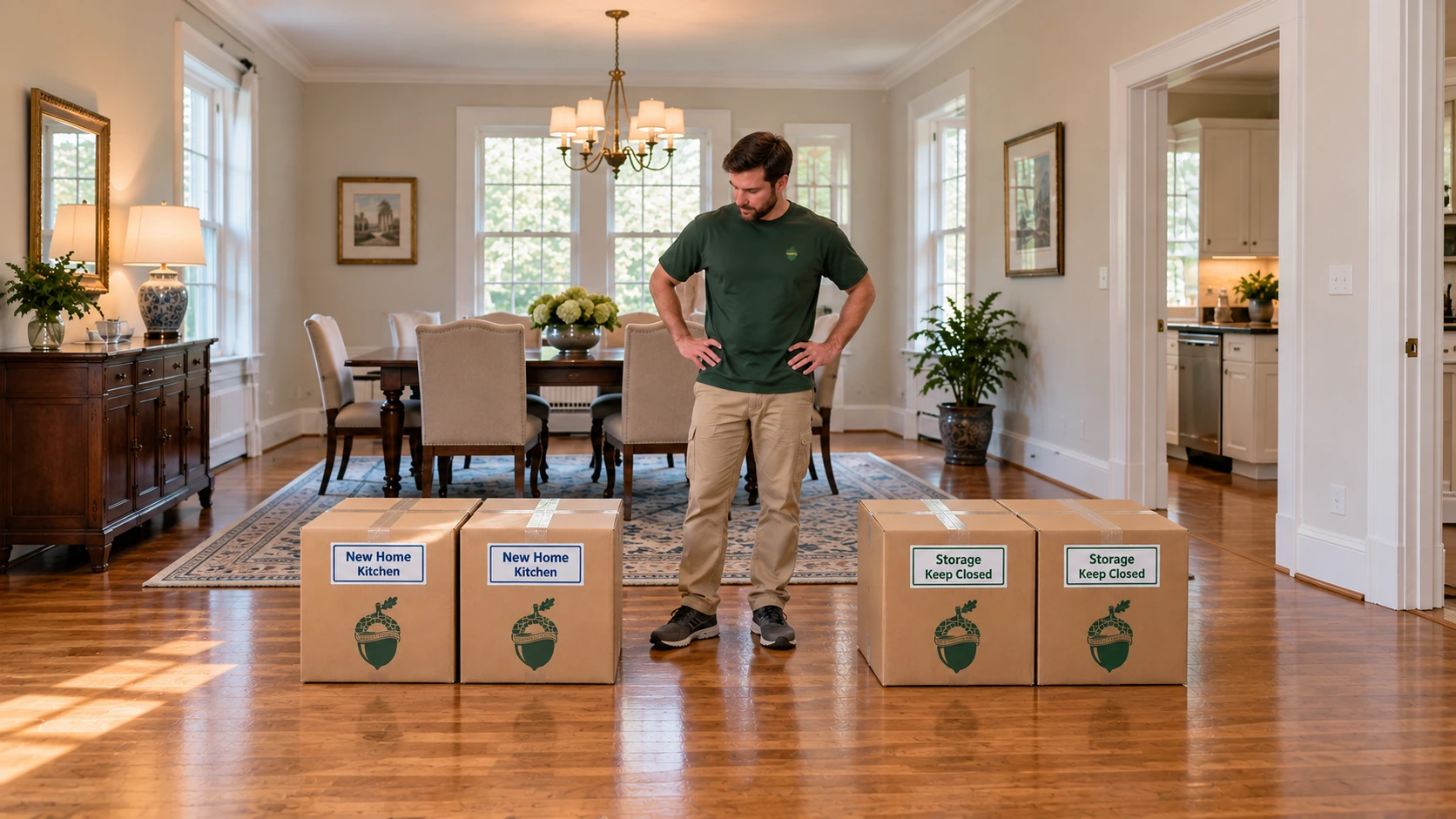
A household leaving an Alexandria house is moving into a smaller apartment. Some books and kitchen contents are retained, a relative will receive a separate group, and other belongings may go into storage. The household first decides what each destination actually accepts. Packers should not prepare every cupboard for the apartment simply because it is the main address on the moving request.
The team reviews the three inventories, the actual entrances and the proposed delivery stages. The household uses written destination labels and keeps the relative's group apart from apartment essentials. Storage access and later delivery are agreed through storage and staged delivery; a label cannot make an inaccessible stored carton reachable. The useful result is a set of prepared, identifiable groups with receiving arrangements, rather than an apartment filled with boxes intended for somewhere else.
Open agreed cartons onto suitable surfaces
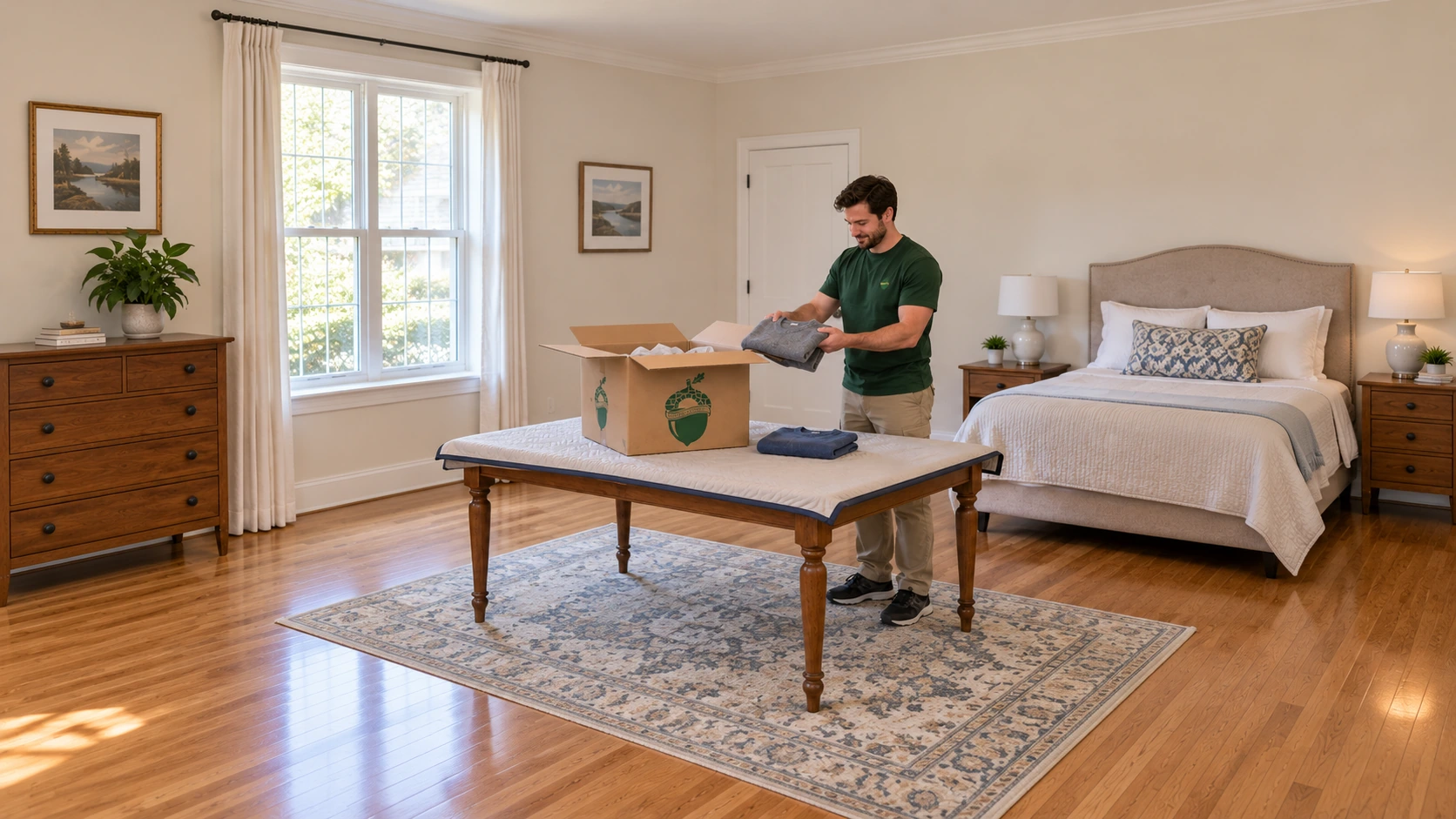
Basic unpacking opens the agreed boxes and places their contents on suitable surfaces. It can bring everyday belongings back into reach so the household can make the next placement decisions. It does not automatically choose every cupboard, organize a whole home or remove all used packaging. Name the priority contents and the surfaces where they may be laid out before the visit.
Photographs of the receiving rooms should show usable counters, a suitable table and any spaces unavailable for work. Furniture or other contractors' materials may occupy the intended surface. Leave not-ready groups sealed until the room can usefully receive them. If the belongings are already delivered and furniture needs another internal carry, review moving within the home rather than assuming that basic carton unpacking covers it.
Unpacking can be arranged even if you packed the boxes yourself. Show their number, contents and current positions, including anything already opened. Review whether work can take place at delivery or needs another visit. A later crew and date require agreement; they are not automatically reserved by the original move.
Consider receiving help before the first day at a new job
A resident moving into an Alexandria apartment wants a usable kitchen and work area before starting a new role. The shipment includes ordinary clothing, books and kitchen belongings, but opening every carton would occupy the available surfaces. The resident selects the items needed first and shows where those contents can be placed without blocking the remaining delivery.
The plan separates basic unpacking onto clear surfaces from any final cupboard or shelf placement. The resident identifies the particular shelves and remains available to direct agreed organizing. Before booking packaging removal, they ask management about the building's collection arrangement and where materials may wait. The City's apartment, condo and HOA recycling guidance directs residents to their property manager for the actual accepted materials and method. This creates a useful receiving priority and a workable packaging handoff, without promising an entire organized apartment or an unconfirmed appointment.
Direct the final placement yourself
Home organizing is a separately agreed service following your placement instructions. After basic unpacking, you can choose the drawer, cabinet or shelf for a particular group. Explain the priorities and clear those receiving spaces. A smaller team may be easier to direct when you want to make decisions as each group becomes visible.
Keep personal papers and undecided belongings under your control. If a shelf choice is not ready, grouped intact contents on a clean surface can be a useful stopping point. Agree whether the crew should continue with another priority or return after you decide. The aim is the placement you requested, not filling every available cupboard before the visit ends.
Agree the finishing tasks before the visit
Furniture reassembly, hanging, mounting and other finishing work need the right scope and information. Ordinary basic furniture assembly uses moving labor, while complex flat-pack pieces, unfamiliar mechanisms and specialist construction require individual review. Supply model details, instructions, photographs and the actual hardware available.
Handyman work is available by individual agreement. The task, wall or surface, hardware, permissions and appropriate person must be reviewed. A general handyman booking does not imply electrical work or every technical connection. Tell the planner about desired finishing before arrival so a carton-opening visit is not unexpectedly asked to become an installation project.
If a new piece is still at a seller or release point, use furniture delivery to review that separate starting position. If it is already in your home, describe where it stands and where it must go. These details let the estimate connect the actual work without inventing an unlimited finishing package.
Give empty packaging its own next step
Check wrapping for belongings, shelf supports, screws and other small parts before discarding it. Set aside packaging needed for unopened groups. Keep empty cartons and paper distinct from plastic and foam, and leave circulation clear while materials wait. Taking packaging away is a separately charged service that must be requested; it does not follow automatically from opening cartons.
For a qualifying City-served home, the City recycling instructions explain eligibility and preparation. Use the actual property's arrangement and leave its City-issued container at that property. Empty and flatten suitable cardboard, remove remaining contents and keep accepted recycling loose. A postal Alexandria address alone does not establish City service.
The City's drop-off instructions distinguish empty flattened cardboard and accepted paper from excluded plastic film, foam and packing peanuts. A resident option does not automatically authorize a commercial crew or every material. Confirm the operator, permission, accepted categories and charges for the agreed next step. Do not leave materials at an unapproved container.
Unwanted furniture is a different removal group. Identify it before work and review removal and disposal separately from used cartons. Keep batteries, electronics and other special items outside ordinary packaging. The household's decision to discard a piece also needs to reach the inventory before that piece is prepared for transport.

Compare the complete paid work
The useful estimate compares the same retained inventory with the work you will do and the work you are handing over. Include packing labor, supplies, moving, optional carton unpacking, directed organizing, finishing, packaging removal and any additional visit. The phrase full service does not settle which of those stages is included.
A substantial reviewed household might use four packers on a preparation day and six movers on move day. This illustrates two different tasks, not staffing guaranteed for a bedroom count. Packing and moving together may approach twice the budget of moving the same shipment already prepared, but the total can differ; there is no standard multiplier. Request the written scope and applicable charging terms for your actual contents and access.
For a larger unpacking project, three or four additional hours at delivery or a separately agreed two-person visit can be useful planning illustrations. They are neither time caps nor available appointments. Decide which contents should reach surfaces, which should be placed under your direction and whether materials should leave the property. That choice determines the work to estimate.
| Stage | Charging distinction | Details for review |
|---|---|---|
| Packing and carton unpacking | Working time. | Retained contents, rooms and priority groups. |
| Company-supplied cartons | Charged separately for boxes used. | Suitable types and usable supplies you already have. |
| Blankets, shrink wrap and tape | No separate material charge; labor time still applies. | Furniture construction and the handling route. |
| Organizing, finishing and removal | Particular work and price agreed separately. | Placement instructions, technical task, accepted material route and any return visit. |
Connect the receiving visit to the actual delivery
For a move over a longer distance, arrange receiving work around the confirmed delivery plan. Direct delivery uses a dedicated truck and the same moving crew at pickup and delivery; suitable consolidated shipments have a wider agreed window. The Alexandria long-distance plan explains those models and receiving conditions. Do not reserve a rigid unpacking appointment from an illustrative driving reference alone.
The agreed long-distance flat rate remains unchanged for the same reviewed inventory, access and services when the journey or delivery takes longer. Added packing, cartons, destination work or a changed access arrangement needs separate written review before the affected work. Local work is generally charged for working time; estimated or minimum hours are not a fixed completion total.
Storage needs a separately accepted inventory, handling, access and redelivery plan. Packing identifies and protects the groups for that plan. It cannot establish a storage entitlement, guarantee that a carton will be reachable later or include an additional delivery merely by marking it storage.
Send a view of the work you want to hand over
Send both actual addresses, the retained contents, preparation choices, dates and the complete access route. Include the inside of storage spaces, any fragile construction, supplies you have and the belongings that remain in use until departure. Show the receiving surfaces and rooms, priority contents and any organizing or finishing requested.
Alexandria is an independent City, while some Alexandria mailing addresses fall in other jurisdictions. The local moving page and relocation guide help identify the appropriate local arrangements. Confirm private permissions for any preparation visit as well as moving access. Tell the planner about added contents, another destination, a closed room or new finishing work before the visit so the written scope stays useful.
Alexandria packing and unpacking questions
What packing and unpacking can you arrange in Alexandria?
We can prepare the reviewed household contents, pack selected rooms or handle named fragile belongings. Optional unpacking opens agreed cartons onto suitable surfaces. Home organizing follows your placement instructions as a separate agreed service. Send the retained contents, both addresses, access, dates and the work you want to hand over so the estimate describes the actual stages.
How do full, partial and fragile-only packing differ?
Full packing covers the household contents agreed for the job. Partial packing names a defined portion, such as the library and kitchen, while you prepare the rest. Fragile-only work concerns the identified breakable belongings. Write down who packs each cupboard and group; the service label alone does not decide that boundary or authorize the crew to choose what you keep.
Can I pack clothing while the team handles books and breakables?
Yes, agree that division from the actual inventory. Show the bookcases and selected fragile pieces, identify the clothing you will prepare and keep final-use work items separate. Review cartons, protection, space and timing together. Tell the planner about unfinished customer packing before move day, because an unlisted group left for the crew changes the work to be reviewed.
What information helps estimate the packing work?
Show the contents inside cabinets, closets and bookcases, plus storage spaces included in the move. Identify fragile construction, collections, already packed groups and supplies you have. Add the addresses, full carrying route, dates and receiving priorities. The planning team can select an item-list, video or in-person review. Bedroom count alone cannot determine the labor, cartons or schedule.
Does an apartment size determine the number of cartons?
No. A twenty-carton expectation might become sixty or a hundred after the retained cupboard contents are reviewed; these are illustrations, not forecasts for an Alexandria property. Books, dishes, collections and storage spaces change the preparation. Show those contents and your usable supplies so the estimate can address suitable containers and the work you still plan to do yourself.
Are cartons and packing materials included in the labor?
Company-supplied cartons used on the job are charged separately, and packing uses working time. Moving blankets, shrink wrap and tape have no separate material charge; applying protection still takes labor. Show the size and condition of your own cartons before work. Specialist packing or custom crating needs its own reviewed scope rather than being assumed from the ordinary material provision.
Can packing and moving happen on the same day?
A modest reviewed inventory may support a combined local day. Fuller cupboards, fragile belongings, stairs, a long carry or restricted building hours may favor an earlier packing visit. A studio or bedroom count does not guarantee either arrangement. Confirm the contents, actual access windows and the final-use group before the schedule is agreed, including permission for any separate preparation visit.
How can the final night remain usable?
Set aside bedding, towels, toiletries, chargers, medicines, keys, essential papers, next-day clothing and the kitchen items still needed. Tell the team when these become available and how they will travel. Keep them physically apart from completed freight. Plan carton positions so the bed, bathroom, doors and exit remain usable; a first-night label cannot make an inaccessible box useful.
Who decides what should be kept, donated or discarded?
The household makes those decisions before the team prepares the inventory. Separate retained belongings, donations, another recipient's property and undecided items. Give the crew an approved group to pack rather than asking it to judge family papers or collections. If furniture becomes unwanted, report that change and review removal separately before it is prepared for transport.
What protection do ordinary dishes and framed objects need?
The method depends on the item, its construction and the handling route. Small breakables may need suitable individual wrapping, cushioning and separation in an appropriate carton. Glass shelves, mirrors, cabinet doors or unusual frames may need another reviewed method. Show the pieces before the estimate; a sealed box or familiar item name does not establish that its contents are adequately supported.
Does every mirror or picture require a wooden crate?
No. Ordinary small framed pieces may fit a suitable protected carton, while a larger or unusually fragile item can require specialist preparation. Share dimensions, construction, condition and the route so the method and price can be reviewed. Custom crating is an assessed service choice, not an automatic rule for every household frame or a promise implied by full packing.
Should dresser drawers be taken out before moving?
For an ordinary dresser, empty the drawers and keep them installed and secured inside the protected piece. Unusual construction or a restricted carry can require another reviewed method. Identify loose parts, safely detachable long legs and their hardware as appropriate to the actual furniture. Show difficult mechanisms and routes before the estimate rather than routinely creating separate stacks of drawers.
What belongs on a useful carton label?
Write the destination, receiving room, useful contents, carton number and any opening priority. Color can reinforce the written information. Keep names consistent with the receiving plan and match important groups to the inventory. A label should help the receiver place or retain the carton correctly; it does not include a second delivery, storage handling or access to goods during storage.
How are belongings for storage or another recipient handled?
Separate the agreed destination groups during packing and keep a matching inventory. Confirm who receives each group, the actual address, access and handling stages. State which cartons remain sealed and which are needed first. Storage, access to stored goods and later delivery require their own arrangement. A destination label helps carry out that arrangement but cannot create it.
What does basic unpacking include?
Basic unpacking opens the agreed cartons and lays their contents on suitable surfaces. Name the priority contents and clear the receiving areas before the visit. Choosing final cupboards, organizing the whole home and taking packaging away are separate decisions. Agree those additions explicitly if required, and keep routes and furniture footprints clear while opened contents and used wrapping are grouped.
Can you unpack boxes that I packed myself?
Yes, show the remaining cartons, their contents and where they stand. Explain what is already open, the surfaces available and the result you want first. The planner can review a delivery-stage visit or later help. A later date and crew need agreement; they are not automatically available because the original move has finished or because you have started unpacking.
How is home organizing different from unpacking?
Unpacking puts agreed contents onto suitable surfaces. Organizing places them in the shelves, cupboards or drawers you select as a separate agreed service. Clear the destination spaces, explain priorities and remain available for decisions. A smaller team may be easier to direct. Undecided belongings can remain grouped safely on a surface rather than being placed in an arbitrary cupboard.
What if a receiving room is still unavailable?
Show the restriction before the visit and identify which rooms and surfaces are actually ready. Leave the other groups sealed until opening them will be useful. Additional handling, storage or another visit needs agreement. If delivered furniture needs an internal carry later, review that task separately. Do not open cartons into a room simply to pack them again for ongoing work.
Does unpacking include assembly and handyman work?
Basic furniture disassembly and reassembly use moving labor without a separate basic fee. Complex construction and individually scoped handyman tasks need their own review. Supply photographs, model details, instructions, hardware and any relevant permissions. Electrical or other technical connections are not implied by a general finishing request, and opening cartons does not promise that every installation can be completed during that visit.
Is taking empty packaging away included?
No. Packaging removal is a separately charged service that must be requested. Check paper and cartons for belongings, screws and fittings before discarding them, and retain material needed for unopened groups. Agree where the empty materials can wait without blocking circulation, then confirm the operator, accepted categories, permission and charges for their next step. Unwanted furniture remains a separate removal group.
Where can an Alexandria apartment resident put used cartons?
Ask the property manager or owner about the building's accepted materials, preparation and permitted collection location. The City's multifamily guidance calls for empty flattened cardboard and loose accepted recycling, with film and foam kept out. Those instructions do not authorize an outside crew to use a resident facility. Agree a separate removal route when the property arrangement does not cover the requested work.
Can I use the City recycling container from my old home?
City-issued recycling containers are assigned to the property and should stay there. Confirm whether the actual address receives City collection, rather than relying on an Alexandria mailing name. Prepare eligible cardboard and other accepted materials for the property's route, or review another permitted option. Private building rules and a separately hired packaging-removal service need their own arrangements.
How should I compare a packing-and-moving budget?
Compare the same retained inventory and include preparation labor, supplied cartons, moving, optional unpacking, organizing, finishing, removal and return visits. Packing plus moving may approach twice the budget for that shipment already prepared, but this is an illustration rather than a standard multiplier. Staffing and extra-hour examples are also provisional; request the actual written scope and applicable terms.
How does long-distance timing affect unpacking?
Arrange receiving work around the actual agreed delivery plan. Direct delivery uses a dedicated truck and the same crew at pickup and delivery; suitable consolidated shipments have a wider window. A longer journey does not raise the same-scope agreed flat rate. Added packing or destination services need written review. Confirm arrival and room readiness before reserving a rigid unpacking appointment.
Plan your Alexandria packing and receiving
Show the retained contents, addresses, dates and priorities. We will review the supplies, preparation, access and receiving work for your estimate.
Request a packing estimate