
Virginia · Fredericksburg service planning
Long Distance Movers in Fredericksburg, VA
Plan your interstate or Canadian household shipment from Fredericksburg around the belongings, the usable departure route and the home that will receive them. Direct delivery provides a dedicated truck and the same moving crew at pickup and delivery. Consolidated delivery can suit a smaller shipment when the receiving household can work with a broader agreed window. The agreed flat rate covers the reviewed inventory, access and services; travel or delivery taking longer does not by itself increase that price.
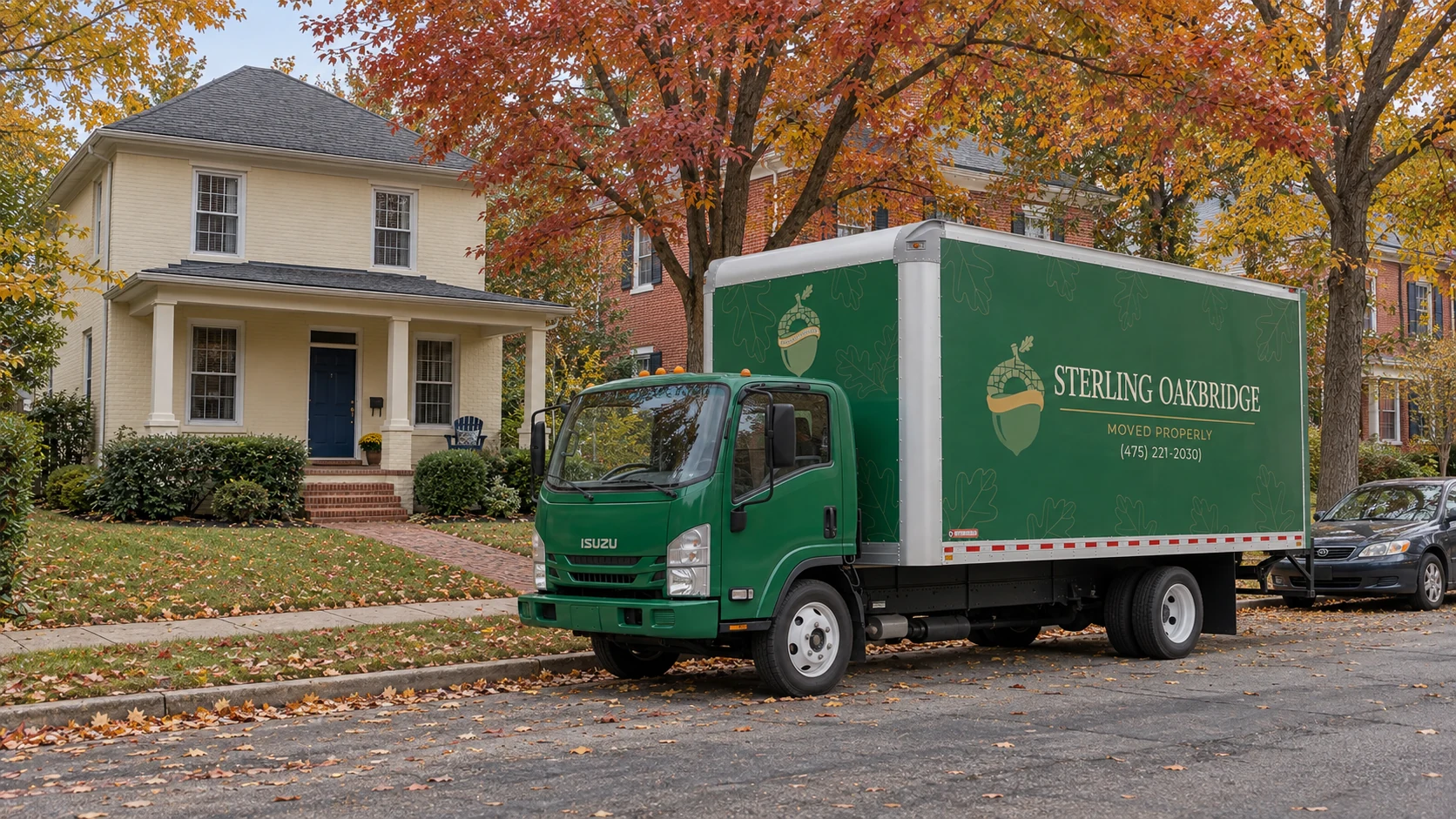
Begin with both complete addresses and the dates that matter. A Downtown upper-floor home, a College Heights house and a managed apartment can have different stairs, loading positions and access hours. Establish the municipality as well: the independent City of Fredericksburg is separate from Stafford and Spotsylvania counties, even when a mailing address uses the same place name.
Make the whole departure and arrival workable
Give us the moving inventory, unit numbers, firm dates and useful photographs of both carrying routes. Include the garage, storage room or separate address holding any moving belongings. Mark what stays behind, what needs preparation and what the household will carry itself. The useful starting point is a shipment with a receiving plan, rather than a city pair alone.
We arrange reviewed interstate and Canadian household pickups from the independent City of Fredericksburg, including Downtown, College Heights, the Fall Hill corridor and Lafayette-area addresses. Give the complete street and unit, moving rooms and any separate storage address. A Fredericksburg mailing name can belong to Stafford or Spotsylvania County; an address outside the City needs its own applicable service and access review. Pickup dates and the requested work are confirmed for the particular shipment.
For an upper-floor apartment, follow the largest furniture through every doorway, stair turn, landing and shared hall to the approved truck position. Ask which entrance is authorized and who can open it. A rear passage shared with a business may need a different working window from the front door. A photograph of the stair from one end rarely shows the turn and landing together; include views from both directions and usable measurements.
For a house, include porch steps, changes of level, gates and the path from each moving room. A driveway needs owner permission and a physical approach review; its presence does not establish that the truck can enter, turn or stand there. For a managed property, obtain the receiving rules, lift booking if applicable, certificate-of-insurance wording and the contact responsible for access. We can coordinate COIs, scheduling and required permit arrangements within the agreed work, while the relevant owner or authority approves the actual access.
Use the Fredericksburg local guide for address selection, schools, utilities and ordinary life. The City moving-services page explains the broader service choices. This page concentrates on a shipment crossing a state or national border; a Virginia-only move needs the terms applicable to that separate route.
Choose the delivery model and the receiving window together
Choose direct delivery when the reviewed shipment needs its own journey, substantial furniture should travel together or the receiving dates allow limited flexibility. A dedicated truck and the same crew keep that shipment's departure and delivery connected. They do not eliminate loading work, lawful travel requirements, building restrictions or Canadian entry formalities.
Consolidation can be useful when a smaller selected shipment and a wider receiving window fit together. Approximately 300–400 cubic feet is small-shipment guidance, not a minimum size or automatic acceptance cutoff. Identify the actual pieces, packing and access before choosing it. The model has its own receiving arrangement; do not assume the direct same-crew provision, free storage or a particular discount.
The illustrative windows below begin after pickup and loading are complete. Packing and carrying through the property happen first. Public driving references checked October 24, 2026 use the Census City's internal reference point and destination-city points. They are comparisons, not truck approvals, traffic forecasts or booked appointments. Actual addresses, lawful travel, border readiness and receiving access remain part of the order review.
Swipe the table to compare both delivery options.
| Illustrative destination | Direct planning window | Consolidated window |
|---|---|---|
| Harrisburg, Pennsylvania | 1–2 days | Up to 30 days |
| Jacksonville, Florida | 1–2 days | Up to 60 days |
| Guelph, Ontario | 1–2 days | Up to 60 days |
| Sacramento, California | 4–5 days | Up to 90 days |
Harrisburg is the nearby interstate example. Jacksonville adds a Florida receiving plan; Guelph adds Canadian import readiness; Sacramento adds a California destination and a long receiving interval. The consolidated maximum is up to 30 days for the suitable nearby domestic comparison, up to 60 for Florida and Canada, and up to 90 for California. Those are different destination rules, with the agreed order window controlling the actual plan.
Example: an upper-floor shipment to Harrisburg, Pennsylvania
Suppose a household is leaving an upper-floor Downtown apartment for a Harrisburg home. The first constraint is the complete departure: furniture must fit the stair turn, the shared passage must remain usable and the truck needs an authorized position. Confirm these before assigning the household's key handover and travel around a short highway journey.
Direct delivery gives this shipment its own reviewed journey and the same moving crew at both ends. The receiving person still needs keys, usable rooms and an acceptable unloading period. A nearby route can sometimes support same-day or next-day work after review, but mileage alone does not make either a booking. Use the ordinary table window until the actual schedule is agreed.
If the shipment is small and a wider window is acceptable, ask about consolidation under the applicable nearby maximum. Decide where the household will sleep and what it needs until delivery. A compact load with a difficult stair can need more preparation than a larger load with simple access; size and the carrying route answer different questions.
Example: a lease gap before receiving in Jacksonville, Florida
Imagine a household leaving a Lafayette-area rental before its Jacksonville lease begins. The useful decision is how to handle the interval when the receiving home is unavailable. Direct transport fits only if the actual journey and an authorized receiving date work together. Arriving in Florida is not the same as having permission to unload at the home.
For a selected smaller shipment, consolidated delivery may fit a household that can accept the broader Florida window. Agree any required storage, intake date, release procedure, receiver and additional transport or handling charges. Consolidation does not itself provide free storage, and a lease gap should not be filled by assuming the truck can wait indefinitely.
Keep the departure date, earliest real intake and final household accommodation in one record. Before the departure booking becomes irreversible, identify the approved alternative if possession slips. A receiving contact with keys and a clear room plan makes the broader window usable; a date range without that person does not.
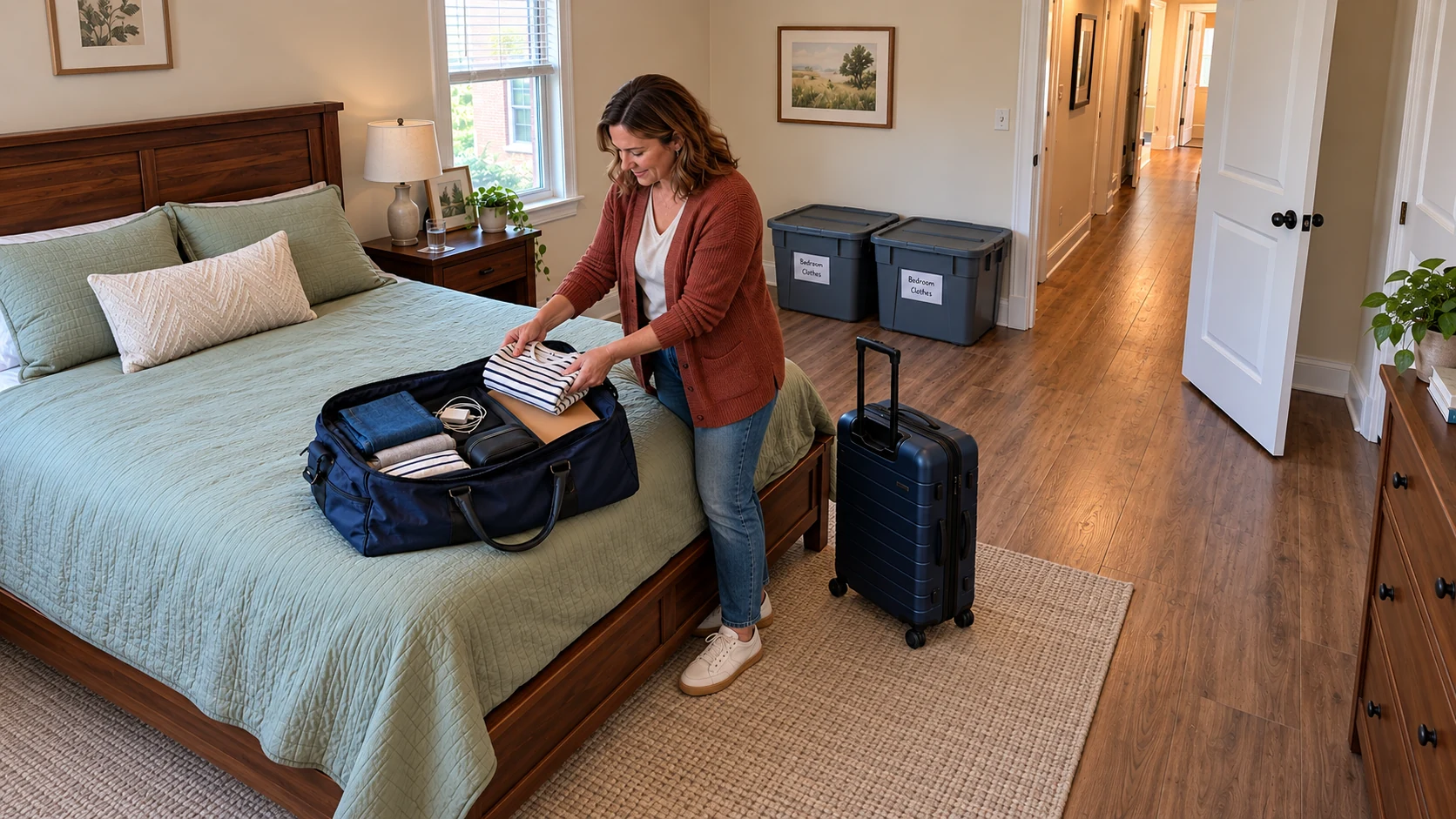
Example: a smaller household shipment to Guelph, Ontario
Suppose a household is keeping a compact group of furniture and packed personal belongings for a Guelph home. Inventory the pieces individually, including anything in a separate storage room. Consolidation may be suitable if its broader Canadian receiving window works; the Canada maximum applies even when a cross-border destination is comparatively close. Direct delivery remains a separate dedicated-truck and same-crew option for an agreed journey.
Prepare the importer process before collection. Under the applicable CBSA moving or returning procedure, prepare two copies of the personal-effects list, distinguishing accompanying goods from goods to follow and adding values and identifying details where applicable. Present the lists at first entry even when no goods accompany you. Include later arrivals on that original goods-to-follow list. Retain the completed personal-effects accounting record for the later goods. A mover's inventory and a residence address do not by themselves establish an import entitlement.
Agree who is responsible for the applicable documents, any clearance or agent arrangements, restrictions and the receiving appointment. If the household travels first, keep the required papers with the responsible person and give the shipment coordinator the information needed for its later stage. The applicable importer status and goods determine eligibility; the clearance time still needs its own allowance.
The receiving home needs its own carrying-route review. Send the entrance, stairs or lift, available unloading position and contact who can be present through the agreed window. Count temporary accommodation and essential items separately from the furniture shipment, so the household can live while the delivery is being arranged.
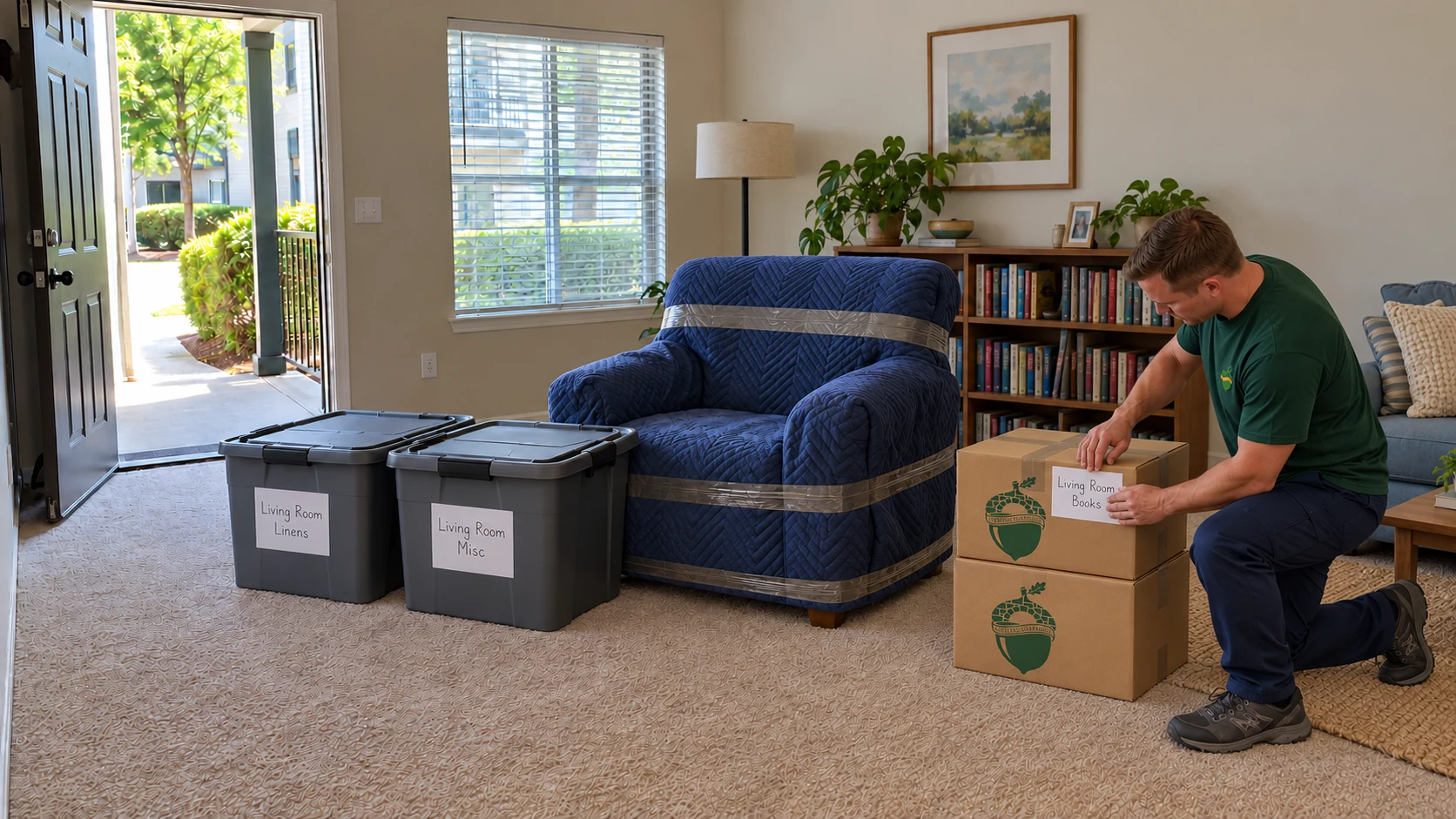
Example: furniture placement after a longer move to Sacramento, California
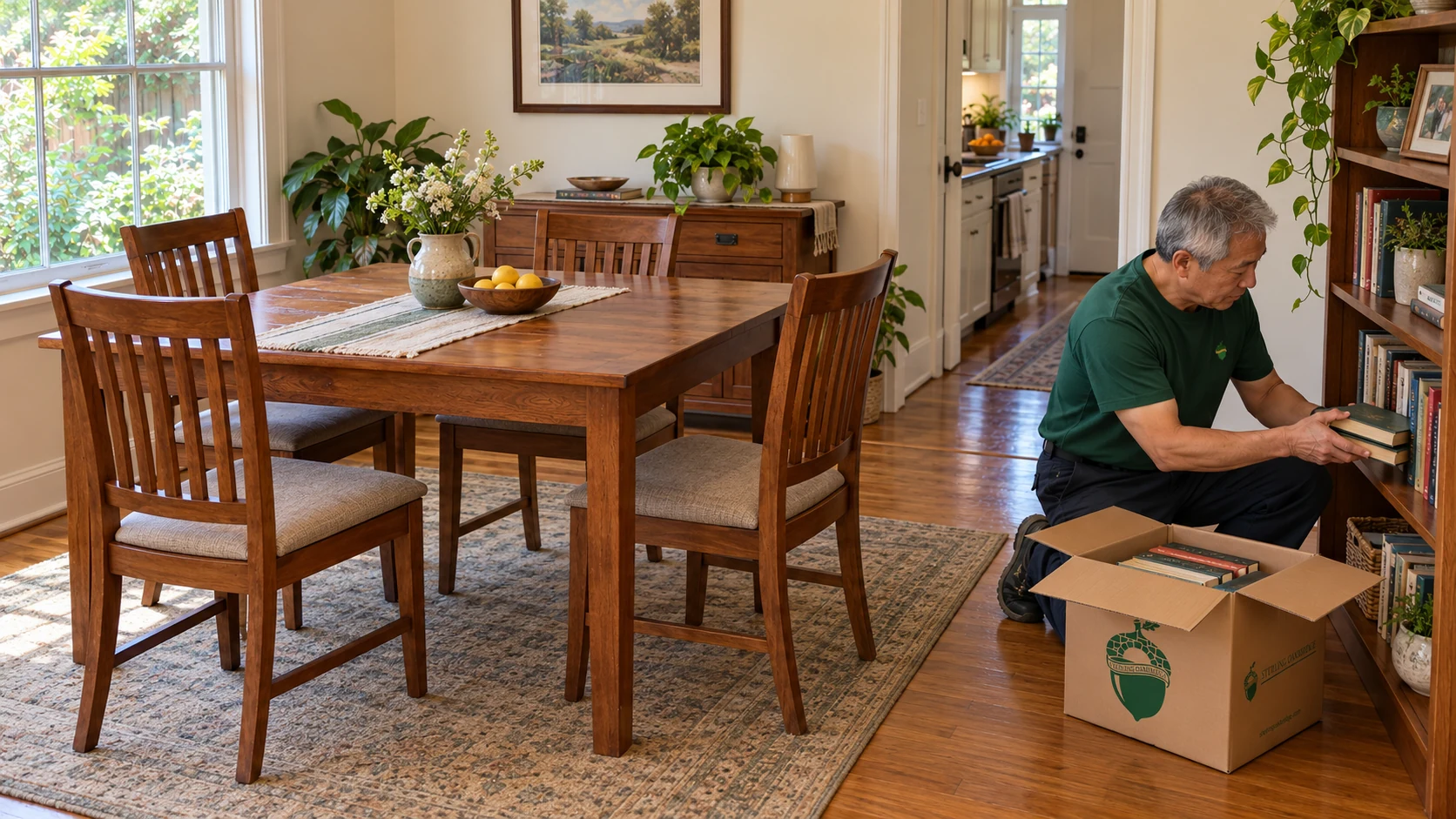
Consider a College Heights household sending a dining table, chairs and other selected furniture to a Sacramento home. The relevant preparation includes the table's construction and the turns at both properties. Record the tabletop dimensions, leg arrangement, narrowest opening and any stair landing. Agree which parts can safely be removed and how the hardware will remain identified with the piece.
Direct delivery provides this shipment's dedicated truck and same crew through its reviewed journey. For a suitable smaller load, California's consolidated maximum is up to 90 days after completed pickup and loading. That broad maximum requires a household plan: confirm the actual agreed receiving window, any storage and release arrangements, and what furniture or accommodation the household needs in the interval.
Prepare the placement footprint before the truck arrives. Reserve the table's final area, keep the entrance route clear and leave smaller containers out of the main furniture positions. Confirm who can authorize changes if the intended room is unfinished or a piece will not fit as described. The agreed receiving order should make the furniture usable rather than simply move every item across the threshold.
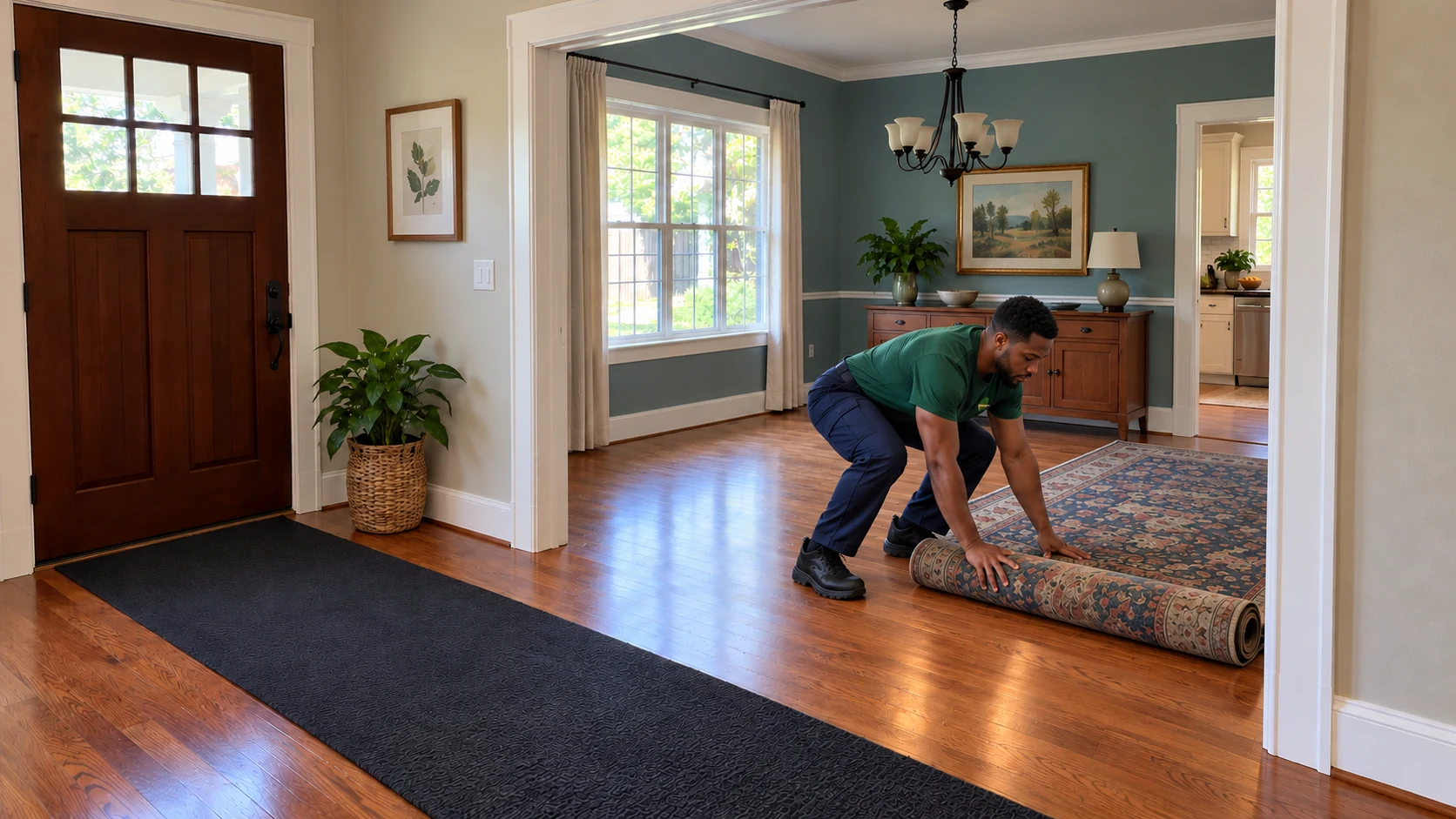
Arrange the Fredericksburg loading position early
For an address inside City limits, Public Works' Temporary No Parking procedure expressly includes moving vans and large deliveries. The City approves the dates, times and number of spaces before its signs are posted. Notify nearby residents or businesses as required and assign someone to collect, post and remove the approved signs. A resident permit does not reserve the shipment's truck position.
The current instructions require posting 24–36 hours before the approved restriction begins, including weekends and holidays in that calculation. This is the posting interval, not a promised application turnaround. The application and posting instructions also require registering the posted signs with Police non-emergency at 540-373-3122, option 2, and retaining the dispatcher event ID. Use the approved time and spaces in the truck plan.
Ask Public Works separately about an operation that would close a sidewalk, occupy the right-of-way or add a ramp or container beyond the approved parking footprint. Temporary parking signs do not authorize every other use of public space. For a county address, use the responsible county or road authority and property rules instead of applying the City's procedure by postal name.
Prepare the pieces and agree the charges
Choose full packing or selected work room by room. Moving blankets, shrink wrap and tape have no separate basic protection-material charge; boxes supplied for the move are charged separately. Packing and optional unpacking of box contents are charged for working time. Furniture unwrapping is part of delivery. Packaging or waste removal, storage and specialist work need their own agreed scope and charges.
Empty drawers before preparation and normally retain secured drawers in the protected whole piece. Identify genuinely removable shelves and loose contents separately. Long legs, complex joins or a tall cabinet may change the method; show the actual construction and carrying route before deciding what to dismantle. Basic furniture disassembly and reassembly form part of moving labor without a separate basic assembly fee. Complex furniture and specialist pieces are quoted after individual review.
For an interstate household shipment, arrange the required survey and written estimate. The current federal estimate rule permits a shipper's separate written survey waiver, signed before loading and retained with the required bill-of-lading records. A small load, photographs or an inventory do not automatically make that election. A survey waiver does not waive the written estimate. Review the estimate type, included work and protection documents before signing.
The unchanged-scope agreed flat rate does not rise merely because travel or delivery takes longer. Added belongings, a different carrying route, extra preparation or a requested storage stage change the work. For an interstate shipment, resolve known changes and any revised written estimate before loading; the original estimate cannot be rewritten after loading begins. If additional services become necessary later, agree the applicable work and charges under the governing terms before they are performed. Report changes early, including an additional stop or a difficult entrance.
Interstate mover valuation is a liability arrangement, separate from an insurance product. Full Value Protection applies unless the shipper makes the applicable written Released Value election. Released Value limits liability to 60 cents per pound per article rather than replacement cost. Describe valuable or unusually fragile belongings during the review and read the actual protection and claims documents.
Keep the household and the fallback ready
Keep medicines, documents, keys, chargers, clothing and first-night essentials with the household. Arrange passenger travel and temporary lodging separately when the shipment's window does not match the household's arrival. Personal essentials should remain identifiable and accessible after the selected shipment is collected.
If access or possession changes, contact the property access controller and moving coordinator by the agreed decision deadline, before departure and before another booking or intake closes. Confirm an available later window or another authorized receiving method. If storage is needed, establish a facility that can accept the load: capacity, receiving hours, protection, handling, price, payer and retrieval or onward-delivery date. Arrange household accommodation and essentials separately. If no destination can receive the goods, revise departure. Resume when possession, the authorized receiver and the complete carrying route are ready, with changed work and charges agreed in writing.
Explore interstate and Canadian destinations from Fredericksburg
These are destination examples for organizing a shipment, not a ranking of requests or customer history. The actual addresses, inventory, access and receiving dates determine the reviewed work.
Nearby interstate comparisons
- Harrisburg, Pennsylvania
- Baltimore, Maryland
- Washington, District of Columbia
- Philadelphia, Pennsylvania
Southeast and Florida
- Jacksonville, Florida
- Charlotte, North Carolina
- Charleston, South Carolina
- Savannah, Georgia
- Orlando, Florida
Great Lakes and interior
- Pittsburgh, Pennsylvania
- Columbus, Ohio
- Cleveland, Ohio
- Chicago, Illinois
- Indianapolis, Indiana
Western destinations
- Sacramento, California
- San Diego, California
- Portland, Oregon
- Seattle, Washington
- Reno, Nevada
- Phoenix, Arizona
Canada
- Guelph, Ontario
- Ottawa, Ontario
- Montréal, Quebec
- Calgary, Alberta
- Vancouver, British Columbia
Long-distance moving questions
Which delivery model should I choose from Fredericksburg?
Choose direct delivery when the reviewed shipment needs a dedicated truck and the same moving crew at pickup and delivery. Consolidation can suit a smaller selected shipment when the household can accept a broader receiving window. Compare the inventory, both carrying routes, firm dates and the person receiving before choosing. A tight building appointment can matter more than the distance between cities.
When does the delivery window start?
After pickup and loading are complete. Packing and carrying through the home to the approved loading position happen first. The table gives illustrations based on public road references, not appointments or truck-route approvals. The actual schedule also needs lawful travel, address access and any Canadian paperwork to work together.
Can a nearby Harrisburg move be completed the same day?
A suitable smaller nearby shipment may support same-day or next-day work after the actual loading, travel and receiving schedule is reviewed. It is not automatic from the city pair. An upper-floor departure, an occupied truck position or a receiving cutoff can change the plan. Use the ordinary illustrative window until the order schedule is agreed.
Is 300–400 cubic feet a minimum shipment size?
No. It is approximate small-shipment guidance for considering consolidation, not a minimum or automatic acceptance cutoff. List the actual furniture and packed belongings, and show the preparation and carrying routes. A smaller volume can still need specialist preparation or difficult access. We review the shipment and receiving flexibility together.
Are all consolidated windows the same?
No. The suitable nearby domestic comparison has an up-to-30-day maximum, Florida and Canada up to 60, and California up to 90, all after completed pickup and loading. Other longer routes need their own agreed window. Canada retains its cross-border rule even when comparatively close. The order must state the actual receiving arrangement.
Does the agreed flat rate rise if travel takes longer?
Extra travel or delivery time alone does not raise the agreed price for the unchanged reviewed inventory, access and services. Added goods, a different route through the property, extra packing or storage change the work. Resolve known changes and any revised interstate written estimate before loading. The original estimate cannot be rewritten after loading begins; later additional services need the applicable agreement and charges before they are performed.
Do the City parking rules cover every Fredericksburg mailing address?
No. The independent City is separate from Stafford and Spotsylvania counties, and a Fredericksburg postal name does not establish the municipality. Confirm the actual street and unit before choosing the public authority or property procedure. For a City move, the Public Works temporary-sign process can support the approved truck position; a county address needs its own applicable process.
How do I arrange City temporary parking signs?
Ask Public Works for the dates, times and number of spaces needed for the moving van. Obtain approval before posting City-provided signs, notify nearby residents or businesses as required, and assign pickup, posting and removal. The current posting interval is 24–36 hours before the restriction, including weekends and holidays. It is not the application turnaround or a guarantee of approval.
What must I do after posting the approved signs?
The City application instructs the applicant to call Police non-emergency at 540-373-3122, option 2, when posting, register the signs and keep the dispatcher event ID. Share that information and the approved time and spaces with the coordinator. Remove the signs and their attachment material when the restriction expires. A resident permit does not replace this moving-access arrangement.
Can parking signs authorize a sidewalk closure or a container?
Parking approval covers its stated dates, times and spaces. Ask Public Works separately about a sidewalk closure, right-of-way occupation, ramp or container beyond that footprint, and follow the property rules as well. Keep the pedestrian route and neighboring entrances usable under the approved plan. If the proposed setup is unavailable, agree an authorized alternative before arrival.
What Canadian documents should stay with the household?
Under the applicable settler or former-resident process, prepare two copies of the detailed personal-effects list, separating accompanying goods from goods to follow and providing values and identifying details where applicable. Present the lists at first entry even when no goods accompany you. Include later arrivals on that original goods-to-follow list. Retain the completed accounting record for those goods. Confirm entitlement, restrictions and clearance responsibility; the mover inventory alone does not establish duty-free eligibility.
Does consolidated delivery include free storage during a lease gap?
No free storage is implied. If the receiving home is unavailable, agree the actual storage intake, release conditions, receiver, dates, handling and transport charges. Keep the household accommodation and personal essentials in the same timing plan. A broad delivery window does not itself create an approved place to hold the goods.
What packing and unpacking charges should I distinguish?
Moving blankets, shrink wrap and tape have no separate basic protection-material charge; supplied boxes are separate. Packing and optional unpacking of box contents are charged for working time. Furniture unwrapping is part of delivery. Basic furniture disassembly and reassembly are moving labor without a separate basic assembly fee; complex furniture, specialist work, packaging removal and storage require their own scope and charges.
Should drawers, shelves and furniture legs all be removed?
Empty drawers and normally retain secured drawers in the protected whole piece. Identify loose shelves and contents separately. Long legs, complex joins or an unusually tall piece need review of their real construction and the route. Agree dismantling, hardware identification and reassembly for the actual item rather than applying one rule to every dresser or table.
What building information is useful before pickup?
Send the authorized entrance, every door and stair turn, lift dimensions and bookings if applicable, carrying distance and usable loading position. Obtain management instructions, COI wording, access hours and the person who can open each door. Include the largest furniture measurements and photographs from both directions at a tight turn. An apartment floor or driveway photograph is not a fit or truck-access approval.
What happens if keys or the receiving room are not ready?
Contact the property access controller and moving coordinator by the agreed decision deadline, before departure and before alternatives expire. Confirm an available later window, another authorized receiving method or storage at a facility that can accept the load. Establish capacity, hours, protection, handling, price, payer and retrieval or onward-delivery date. Arrange household accommodation and essentials separately. If no destination can receive the goods, revise departure. Resume when possession, the receiver and the carrying route are ready, with changed work and charges agreed in writing.
Is interstate valuation the same as separate insurance?
No. Mover valuation is a liability arrangement, while separate insurance is a different product. Full Value Protection applies to an interstate shipment unless the shipper makes the applicable written Released Value election. Released Value limits liability to 60 cents per pound per article rather than replacement cost. Describe valuable or unusually fragile items during review, and read the actual protection and claims documents before signing.
What should I keep out of the shipment?
Keep medicines, important documents, keys, chargers, essential clothing and the items needed before delivery with the household. Clearly separate the personal travel bags from closed shipment containers before pickup. Arrange passenger travel and temporary lodging separately where needed, particularly when the agreed delivery window is broader than the household travel day.
Can I waive the survey by sending a small inventory?
A small load and photographs do not automatically waive the interstate survey. The survey can be waived only through the proper separate written election, signed before loading and retained with the bill-of-lading records. That election does not waive the written estimate. Arrange the applicable survey or election with the actual mover; an inventory starts the review rather than replacing it.
What can I send now to request an estimate?
Send both complete addresses and units, the moving inventory, photographs and large-piece measurements, the full carrying routes and firm dates. Include requested packing, optional unpacking, storage, specialist work or removal, plus building contacts and the receiving person. Establish the municipality and any street-access requirements. These details let the shipment review and written estimate address the work you actually need.
Do these interstate terms also apply to a Virginia-only move?
A move entirely within Virginia requires the terms applicable to that route and work. Give both addresses for the correct service review rather than applying this interstate or Canadian shipment comparison automatically. The Fredericksburg moving-services page explains the broader choices; this page concerns the shipment crossing a state or national border.