
Virginia · Glen Allen service planning
Long Distance Movers in Glen Allen, VA
Sterling Oakbridge arranges interstate and Canadian household moves from Glen Allen, Virginia. Choose direct delivery for a dedicated truck and the same moving crew at pickup and delivery, or suitable consolidated delivery for a smaller shipment with a broader agreed window. We review the inventory, preparation, access at both ends and receiving dates before agreeing the long-distance flat rate and written plan.
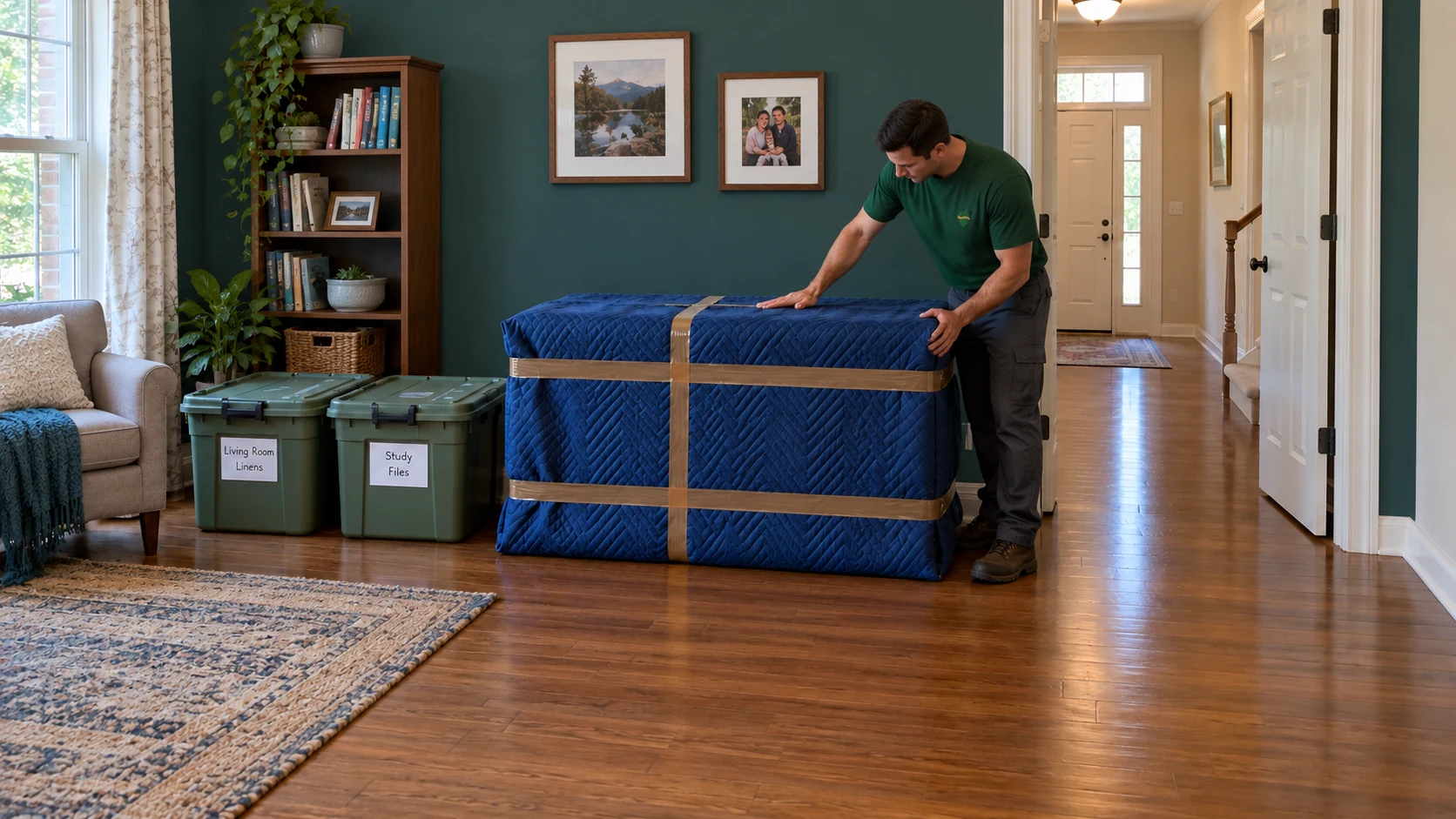
Start with the belongings you are sending and the home that will receive them. An upstairs bed, a short townhouse parking bay and a delivery appointment create different decisions from a few packed pieces going to a flexible receiver. The four situations below show practical ways to resolve those decisions. They are planning examples, not accounts of completed customer jobs.
Start with the actual Glen Allen address and inventory
We arrange reviewed interstate and Canadian household pickups from Glen Allen residential addresses in Henrico County. Include the actual street and unit, every moving room and level, garage or shed, and any separate storage address. The Census-designated place is not an incorporated city or the whole postal area. Actual access, loading position, road ownership and requested date need their own review.
Detached homes, two-level townhomes and managed apartments present different carrying routes. One development's staircase, parking arrangement or loading instructions does not apply to every Glen Allen address. Use photographs from the actual property to show the entrance, and identify the authorized property contact.
Make the item list room by room, including upper floors, garage or shed contents, and any separate storage collection. Distinguish the belongings leaving from furniture that will remain. Identify heavy, fragile and unusually long pieces early. A photograph of a closed room is less useful than a list explaining which cabinet, bed and packed contents are actually going.
Follow each large piece from its present position to the truck. Include both ends of a stair flight, the turning landing, door swing and any intermediate steps. Give the item's dimensions and construction where known, together with the narrowest openings. A clear doorway does not establish the turning space immediately beyond it. Include the equivalent route at delivery before deciding that a piece can travel assembled.
The loading photograph should reach back to the public-road approach and forward to the entrance. Show slope, surface, branches, overhead lines, gates and space to enter and leave. Tell the coordinator who can open a controlled entrance or move a vehicle from the agreed position. Resolve that responsibility before it becomes a delay with the crew waiting outside.
Choose direct or consolidated delivery
Direct delivery gives the shipment a dedicated truck and the same moving crew at both properties. It can suit a substantial household move or a receiving arrangement that needs a more focused plan. The written schedule still accounts for loading, the actual truck route, lawful travel and rest, border requirements where applicable, and the destination's accepted access hours. A dedicated truck does not create an unreviewed appointment.
Consolidated delivery can suit selected furniture and packed contents when the household can receive them within a wider agreed window. Approximately 300–400 cubic feet is small-shipment guidance, not a minimum or an automatic cutoff. Describe the real pieces and their preparation rather than choosing a model from the number of bedrooms alone. Same-crew service belongs to direct delivery; it is not an added consolidated promise.
Delivery windows begin after pickup and loading are complete. Packing, room-to-truck carrying and loading happen before that clock. Suitable short domestic consolidated shipments can have a maximum of 30 days; Florida and Canada up to 60 days; California up to 90 days. Other long routes need their own written window. A wide window does not provide free storage or an automatic place to wait.
Swipe the table to compare both delivery options.
| Illustrative destination | Direct planning window | Consolidated window |
|---|---|---|
| Frederick, Maryland | 1–2 days | Up to 30 days |
| Charleston, South Carolina | 1–2 days | Up to 30 days |
| Kingston, Ontario | 1–2 days | Up to 60 days |
| Olympia, Washington | 5–6 days | Window agreed individually |
These comparisons use public place reference points and driving routes checked October 24, 2026: about 139 road miles to Frederick, 441 to Charleston, 595 to Kingston, Ontario, and 2,901 to Olympia. They are illustrations, not approved truck routes or driving-time predictions. Actual addresses, restrictions, travel and rest, weather, border readiness and the receiving appointment require shipment review. Suitable nearby same-day or next-day service must be specifically confirmed; the mileage alone does not book it.
Example: a Frederick delivery with a difficult upstairs piece
Suppose a household leaves a Glen Allen townhome for a Frederick, Maryland, apartment. A desk and packed kitchen contents have straightforward routes, but the bed's longest part has to turn onto a narrow upper landing. The receiving building also offers a limited loading and elevator window. The first useful decision is whether the actual furniture and both access schedules support one coherent delivery plan.
Send photographs showing the bed's frame, joints and route from both sides of the turn. Explain whether it has storage drawers, adjustable components or a separate foundation. Identify any safely detachable parts before deciding on disassembly; do not remove building rails or alter furniture speculatively. At destination, obtain the accepted entrance, lift dimensions, loading position, hours and any insurance-document instructions from the authorized manager. A lift reservation does not reserve public curb space.
Direct delivery may fit a reviewed shipment that needs its dedicated truck and the same crew at the booked receiving slot. The ordinary illustrative comparison is 1–2 days after completed pickup and loading. For a suitable small nearby job, a reviewed same-day or next-day arrangement may be possible, but the 139-mile reference does not settle loading completion, lawful travel or the building cutoff.
If the receiver can admit the shipment only on one afternoon, a compact inventory is not enough reason to choose consolidation. Its suitable short domestic window can extend up to 30 days. Before dispatch, settle a workable receiving date or an authorized alternative with its actual hours and costs. An unanswered booking request is still an unanswered request.
Example: Charleston possession arrives after the departure date
Consider a household leaving Glen Allen for Charleston, South Carolina, before the next home is ready. The immediate task is to keep both the people and belongings accounted for through the gap. Establish a place for the household to stay and an accepted plan for receiving or holding the shipment. A hoped-for closing time supplies neither.
Keep identification, medicines, keys, chargers, essential clothing and necessary work or school equipment with the household. Set those bags apart before the shipping inventory is packed. Agree which furniture or equipment must remain usable until the last day, and identify who can complete that final handover. A clear shipping group helps the crew avoid loading a bag needed for the family's journey.
For Charleston, the illustrative direct comparison is 1–2 days after pickup and loading finish. A suitable consolidated shipment on this short domestic comparison can have an up-to-30-day maximum. Charleston is in South Carolina; Florida's up-to-60-day condition is not a rule for every southern move. Choose around the real receiving arrangement and the shipment's needs.
If the new home will be unavailable, obtain accepted intake at an agreed storage location or another authorized receiver before releasing the next stage. Record who accepts the goods, intake hours, storage terms, later release and delivery arrangements, and handling or extra-trip charges. If possession changes, contact the coordinator before dispatch or before the alternative intake closes. State what confirmation is needed to resume delivery; a broad window does not make storage free.

Example: a smaller goods-to-follow shipment to Kingston, Ontario
Suppose someone is establishing a home in Kingston, Ontario, and sends a small group of belongings from Glen Allen rather than the whole household. Consolidation may be a useful choice if the receiving arrangement can accommodate its wider window. The smaller volume does not remove the importer's separate responsibilities or turn the moving inventory into a customs entitlement.
For the applicable settler or former-resident process, CBSA directs the person moving to prepare two copies of the personal-effects list. Separate accompanying goods from goods to follow, and include values and identifying details where applicable. Present the list at the first Canadian entry even if no goods accompany you. Keep the original goods-to-follow list, accounting document and completed BSF186 receipt for those subsequent goods. Confirm the applicable status, ownership and use requirements, restrictions and clearance responsibilities with CBSA. Leased or commercial goods should not be assumed to receive the same treatment as qualifying personal effects.
Canada's suitable consolidated maximum is up to 60 days after completed pickup and loading. It takes priority here even though the public driving reference to Kingston is about 595 miles. The 30-day short domestic comparison cannot be transferred across the border. The actual order should identify the receiving address, contact, access hours and arrangement for completing the required release.
The direct table gives an illustrative 1–2-day comparison, subject to the actual route, lawful travel and rest, border readiness and receiving access. It does not predict a clearance time. Decide when the importer will enter and how the necessary records reach the responsible people before relying on a dispatch date. If clearance or possession will not be ready, agree a permitted alternative intake and its costs; the truck's planned arrival is not a substitute for the person's obligations.
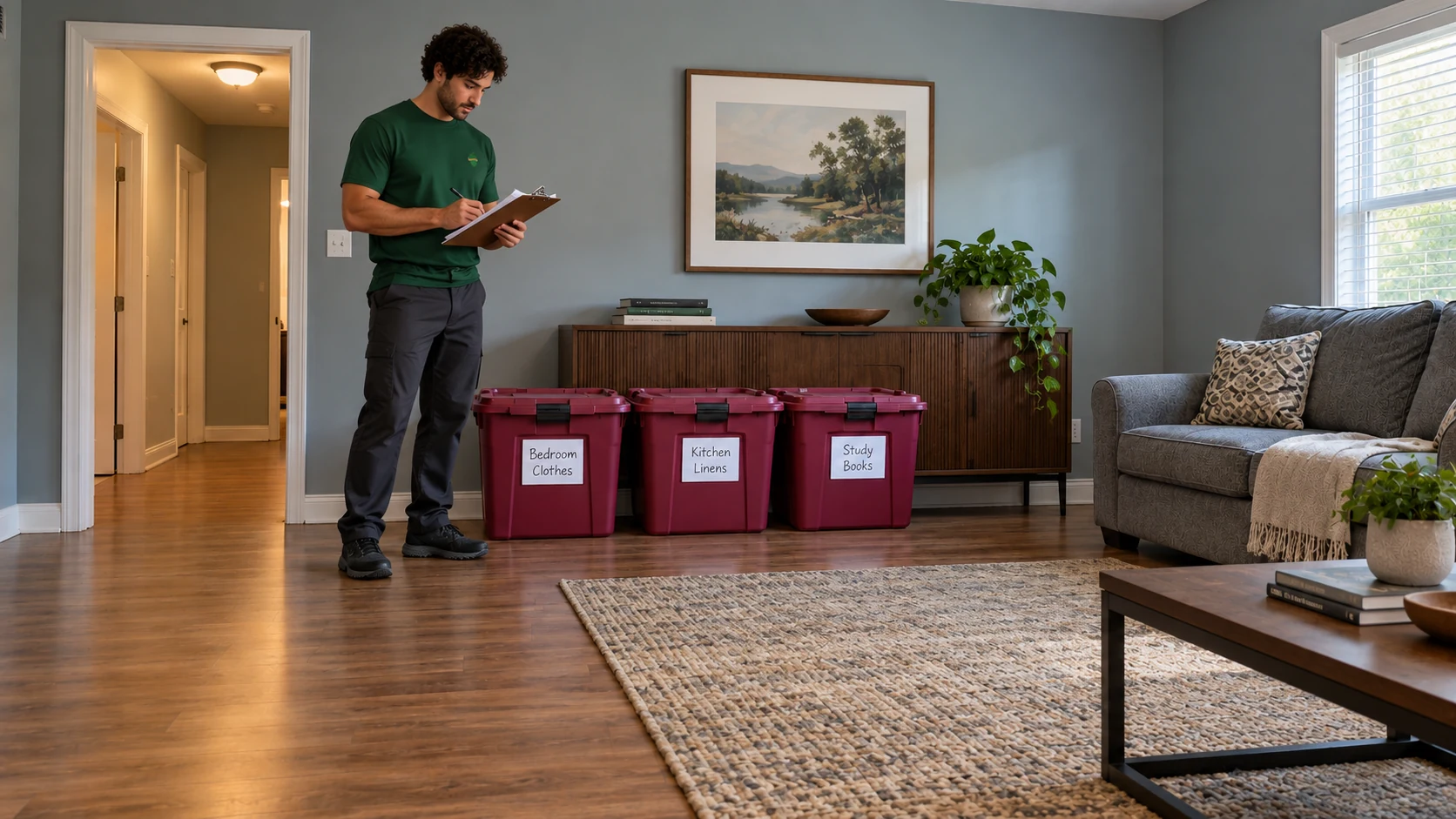
Example: a larger household shipment to Olympia
Now consider a Glen Allen detached-house move to Olympia, Washington. It includes a long dining table, a bed and packed contents from several rooms. At the receiving home, a narrow entrance turn and a room still occupied by contractors could prevent the large pieces from reaching their intended positions. Establish the usable route and room readiness before arranging the final arrival.
Review the table's actual joinery and the bed's components. Long, safely detachable table legs normally travel separately from the protected top, grouped in one protected matched set with the hardware accounted for. Fixed construction needs its own handling assessment. Ordinary emptied dresser drawers normally remain secured in the whole protected piece; they do not need a decorative pile of separate parcels. Basic disassembly and reassembly use moving labor without a separate basic assembly fee; include that work in the agreed flat-rate scope. Unusually complex or specialist work needs its own individual quote.
The receiving person should reserve the entrance, turning area and large-piece footprints before smaller containers spread into them. Send photographs from both sides of the tight turn and show where the table's longest component must go. A large empty dining room does not prove that its entrance is usable. Have the person able to authorize a changed placement available when the crew arrives.
Olympia's roughly 2,901-mile driving comparison gives an illustrative direct window of 5–6 days after completed pickup and loading. Washington consolidated delivery needs an individually agreed window. California's up-to-90-day maximum is not a default for Washington, Oregon, Nevada or Utah. If the receiver or room will not be ready, settle a later date or an authorized storage/receiving plan before the shipment is committed to that stage. Include the actual intake, release and additional handling or transport terms.

Establish the road owner and lawful loading position
Henrico Public Works distinguishes the roads it maintains from interstates, US highways and state primary routes maintained by VDOT. Begin with the exact street and proposed vehicle position, rather than selecting a procedure from the Glen Allen mailing name. A private drive, managed apartment bay or townhome access lane has a separate owner or manager's conditions.
Henrico's residential and agricultural guidance restricts parking of trucks or commercial vehicles exceeding 10,000 pounds gross weight, any commercial trailer and any wrecker to loading, unloading or nearby work, with a farm exception. That conditional allowance does not establish overnight truck parking or permission at every address. The actual vehicle, district, road and proposed position still need review.
For managed property, obtain the accepted date, working hours, loading entrance, vehicle position and contact from the authorized person. Keep necessary neighbor and emergency access available. Public-road occupation or an unusual standing arrangement should be described to the road authority for the applicable answer. A resident's cones, a submitted request or private-property permission does not reserve public space.
The route review must continue to the final approach and departure, including overhead clearance, tree branches, soft edges, reversing and turning space. A passenger-car driving reference does not perform that review. If the proposed position will not work, agree a lawful alternative and any changed handling before depending on the loading schedule.
Agree the work, documents and price before loading
The long-distance flat rate covers the reviewed inventory, access and selected services. Travel or delivery taking longer does not itself increase that agreed price. Additional belongings, changed access, extra packing or a new storage arrangement change the work. Resolve known changes and any revised interstate written estimate before loading. The original estimate cannot be rewritten after loading begins; later additional services need their applicable agreement and charges before they are performed. Do not assume the original price includes newly requested work.
Moving blankets, shrink wrap and tape have no separate basic protection-material charge. Company cartons are charged separately. Packing and optional box-content unpacking use working time. Furniture is unwrapped at delivery; emptying every box or removing unwanted furniture and packaging is separate work to request. Include delicate, unusually heavy and specialist items early so their actual preparation is reviewed.
For an interstate household shipment, obtain the required written estimate and complete the required survey unless you sign the proper separate written survey waiver before loading. Retain that waiver with the bill of lading; waiving the survey does not waive the written estimate. Keep the applicable shipment records and read the estimate's actual basis, services and payment terms. A few photographs help start planning; they do not automatically replace that requirement. Known access charges and requested work belong in that preloading review.
Interstate mover valuation concerns liability for the shipment and differs from separate insurance. Full Value Protection applies unless the shipper makes the applicable written Released Value election. Released Value limits liability to 60 cents per pound per article, rather than replacement cost. Identify valuable items and read the actual protection terms. A building's insurance certificate requirement does not choose household-goods valuation for you. Keep the inventory and shipment documents available at delivery.
Receive the large pieces before filling the room
Choose a receiver who can admit the crew, identify the agreed rooms and check the actual items and containers. Give that person the current contact details, keys, building instructions, appointments and placement plan. Keys at a closed management office are not usable access, even when the shipment is already in the destination area.
Keep the large furniture footprints and turns available while pieces are placed and applicable basic assembly is completed. Smaller cartons can wait at a sensible wall without blocking door swings. Check the inventory as goods arrive, record observed discrepancies through the applicable process and retain the records. A quick count of rooms does not identify a missing container or changed item condition. Report concerns promptly, retain photographs and follow the written claims procedure. For interstate household goods, FMCSA describes nine months after delivery to file a written loss or damage claim. Read any receipt language releasing the mover from liability before signing.

Contact the receiving property’s access controller and moving coordinator by the agreed decision deadline, before departure and before alternatives expire. Confirm an available later receiving period or another accepted receiving location. For storage and redelivery, confirm a facility that can accept the actual load, including capacity, receiving hours, protection, handling, access, price, payer and retrieval or onward-delivery date. Arrange accommodation and accessible essentials for the household separately. If no destination can receive the goods, revise departure. Resume when possession, the authorized receiver, carrying route and any required import arrangements are ready; a pending request is not a confirmed alternative.
This page concerns a shipment crossing a state or national border. A move entirely within Virginia follows the applicable tariff and intrastate estimate terms. The Virginia DMV household-moving guide distinguishes moves of 30 miles or less that may use hourly charges from longer moves requiring the applicable itemized estimate and bill of lading. Review the actual binding or nonbinding terms rather than applying these interstate examples to every in-state job. Use the Glen Allen moving-services page for the broader service choices and the local guide for schools, utilities, everyday journeys and settling in.
Explore interstate and Canadian destinations from Glen Allen
These destination examples help organize a shipment comparison. They are not a ranking of demand or completed customer jobs. Actual addresses, inventory, both carrying routes and receiving arrangements determine the reviewed work. Border or island destinations require their applicable crossing and receiving plan.
Mid-Atlantic and Northeast
- Frederick, Maryland
- Baltimore, Maryland
- Philadelphia, Pennsylvania
- Newark, New Jersey
- Boston, Massachusetts
Southeast and Florida
- Charleston, South Carolina
- Raleigh, North Carolina
- Savannah, Georgia
- Jacksonville, Florida
- Tampa, Florida
Great Lakes and interior
- Columbus, Ohio
- Detroit, Michigan
- Indianapolis, Indiana
- Chicago, Illinois
Western destinations
- Olympia, Washington
- Seattle, Washington
- Portland, Oregon
- San Diego, California
- Las Vegas, Nevada
- Salt Lake City, Utah
Canada
- Kingston, Ontario
- Ottawa, Ontario
- Toronto, Ontario
- Montréal, Quebec
- Vancouver, British Columbia
Long-distance moving questions
What can I arrange for an interstate or Canadian move from Glen Allen?
You can request household collection, agreed packing and furniture preparation, transport and the receiving work you need. Choose a reviewed direct dedicated shipment or suitable consolidated delivery. Send both addresses, the actual items, access photographs and firm dates so the written plan covers the work at both ends.
How do direct and consolidated delivery differ?
Direct delivery gives the shipment a dedicated truck and the same moving crew at pickup and delivery. Consolidation can suit a smaller shipment whose receiver can accept a wider agreed window. Around 300–400 cubic feet is approximate small-shipment guidance, not a minimum or an automatic eligibility cutoff.
Does the same crew deliver a consolidated shipment?
The same-crew commitment applies to direct dedicated delivery. It is not a confirmed promise for consolidated service. Have the written receiving arrangement identify the applicable contact, window and access plan.
When does the delivery window start?
After pickup and loading are complete. Packing and carrying belongings from their rooms to the truck happen before that clock. The written plan must also account for the actual route, lawful travel and rest, border readiness where relevant, and access at the receiving property.
Which consolidated windows apply to the four examples?
Suitable Frederick and Charleston short domestic shipments can have an up-to-30-day maximum after completed pickup and loading. Canada has up to 60 days, even though Kingston has a relatively short driving reference. Olympia needs an individually agreed Washington window; California’s up-to-90-day maximum does not transfer to every western state.
Does a longer journey increase the agreed flat rate?
No. Travel or delivery taking longer does not itself change the agreed long-distance flat rate for the reviewed inventory, access and services. Extra belongings, changed access or additional work change the scope. Resolve known changes and any revised interstate written estimate before loading. The original estimate cannot be rewritten after loading begins; later additional services need their applicable agreement and charges before they are performed.
Does a Glen Allen mailing address establish the loading rules?
No. The Census-designated place is in Henrico County, while the postal name extends farther. Give the complete street and unit to identify the actual property, road owner and loading position. A mailing name or ordinary parking space does not establish permission for the moving operation.
Can the passenger-car route in the comparison approve my moving truck?
No. It is a city-to-city reference. The actual vehicle, legal route, clearances, turning space, final property approach and loading position need driver and shipment review. A nearby interchange or a car fitting on the drive does not establish a usable truck approach.
Who maintains the public road at a Henrico pickup?
Henrico Public Works says VDOT maintains interstates, US highways and state primary routes; the county maintains other public roads. Identify the exact road before choosing a procedure. Private drives, apartment bays and managed access lanes require their applicable owner or manager’s instructions.
Can the truck stay overnight on a residential street?
Do not assume it can. Henrico’s residential and agricultural guidance restricts trucks or commercial vehicles exceeding 10,000 pounds gross weight, any commercial trailer and any wrecker to loading, unloading or nearby work, with a farm exception. That work allowance does not establish overnight permission. The actual vehicle, district, road and position still require review.
What do I need for goods that follow me to Canada?
For the applicable settler or former-resident process, prepare two copies of the personal-effects list, separating accompanying goods from goods to follow. Declare both lists at the first Canadian entry even if no goods accompany you, and retain the original goods-to-follow list, accounting document and completed BSF186 receipt for the later shipment. Confirm status, eligibility, restrictions and clearance with CBSA; the mover’s inventory does not establish duty-free entitlement.
Can I leave Canada paperwork until the truck is near Kingston?
Do not rely on that sequence. CBSA’s applicable process requires the goods-to-follow list at the person’s first entry even when no goods accompany them. Establish the importer’s entry timing, required records and clearance responsibilities before relying on dispatch. A planned truck arrival does not replace the person’s obligations.
Are cartons and box unpacking included in the same way as blankets?
No. Moving blankets, shrink wrap and tape have no separate basic protection-material charge; company cartons are priced separately. Packing and optional unpacking of box contents use working time. Furniture is unwrapped at delivery. Request box unpacking, packaging removal or unwanted-item removal as separate agreed work when needed.
Should I remove every furniture leg and drawer myself?
No. Identify the actual construction and difficult carrying turns for review. Safely detachable long table legs normally travel separately as one protected matched set with their hardware; fixed joints need their own assessment. Ordinary emptied dresser drawers normally remain secured in the whole protected piece. Basic disassembly and reassembly use moving labor without a separate basic assembly fee; include that work in the agreed flat-rate scope; complex or specialist work is quoted individually.
What should I obtain from apartment or townhome management?
Obtain accepted loading and lift arrangements, the approved entrance and position, working hours, dimensions, contact and any insurance-document requirements. Give the planner those details for both properties. A submitted request or a lift reservation alone does not reserve public curb space or establish the entire carrying route.
What if the Charleston home is not ready after I leave?
Contact the receiving property’s access controller and moving coordinator by the agreed decision deadline, before departure and before alternatives expire. Confirm an available later receiving period or another accepted receiving location. For storage and redelivery, confirm a facility that can accept the actual load, including capacity, receiving hours, protection, handling, access, price, payer and retrieval or onward-delivery date. Arrange accommodation and accessible essentials for the household separately. If no destination can receive the goods, revise departure. Resume when possession, the authorized receiver, carrying route and any required import arrangements are ready; a pending request is not a confirmed alternative. Storage and later delivery need their own written agreement; neither is automatically included or free.
Which belongings should travel with the household?
Keep identification, medicines, keys, chargers, essential clothing, necessary work or school equipment and important housing or shipment records with the household. Mark those bags and keep them separate from the shipping group before loading. Review restricted items rather than hiding them among ordinary packed contents.
Is mover valuation the same as separate insurance?
No. Interstate mover valuation concerns the carrier’s liability for the shipment. Full Value Protection applies unless the shipper makes the applicable written Released Value election. Read the actual terms and identify valuable items during review. A building’s insurance-certificate requirement does not choose household-goods protection for you. Released Value limits liability to 60 cents per pound per article rather than replacement cost.
Do my photographs automatically replace the interstate survey?
No. Photographs help start the review. For an interstate household shipment, obtain the required written estimate and complete the required survey unless you sign the proper separate written survey waiver before loading. Retain that waiver with the bill of lading; waiving the survey does not waive the written estimate. Read the actual estimate, agreed scope and payment terms before signing.
Who should receive a longer-distance shipment in Olympia?
Choose a person who can admit the crew, show the agreed rooms and check the actual items and containers. Give them usable keys, contact details, building instructions and the placement plan. Keep turns and large-piece footprints clear before smaller cartons occupy them. If the room or person will not be ready, agree an accepted alternative and the condition for proceeding before committing the next stage.
Do these terms determine a move entirely within Virginia?
No. A Virginia-only move follows its applicable tariff and binding or nonbinding estimate terms. DMV guidance distinguishes moves of 30 miles or less that may use hourly charges from longer moves requiring the applicable itemized estimate and bill of lading. Send both addresses for the correct review; these interstate and cross-border examples do not settle every in-state contract.
Sources for the planning decisions
Local conditions: Henrico public-road maintenance, county commercial-vehicle guidance and the published Glen Allen relocation guide. Exact-address property and road permissions remain separate arrangements.
Shipment documents and protection: 49 CFR 375.401, estimates, FMCSA consumer rights and FMCSA liability and protection. Canadian preparation: CBSA moving or returning to Canada and BSF186 personal-effects accounting document. Comparisons use OpenStreetMap place references and the OSRM driving service, checked October 24, 2026. These references do not certify a truck route or reserve a receiving appointment.