
Virginia · Glen Allen service planning
Packing and Unpacking Services in Glen Allen, VA
Choose the packing you want to hand over and keep the household usable until departure.

Sterling Oakbridge provides full or selected packing in Glen Allen, with optional box unpacking, customer-directed organizing and individually agreed finishing work. Start with the contents, the visits and the rooms you need first.
Explore packing, costs and local examples
Choose full, partial or fragile-only packing
Full packing covers the retained contents included in the agreed inventory. Partial packing assigns particular rooms or groups to the team. Fragile-only packing concentrates on selected breakables and their protection. You can pack books and everyday clothes yourself while asking the crew to prepare the kitchen glassware, for example. Make the remaining customer work just as clear as the crew's work.
Professional packing can give you evenings back while work and ordinary family routines continue. It also helps when the easy cupboards are finished but the last decisions and delicate objects remain. It is reasonable to prepare a household yourself; the useful comparison is the time and help you want, the actual contents and the complete paid scope.
Glen Allen's Census-designated place is in Henrico County; the postal name covers a wider area. Our Glen Allen moving page explains property and carrying access, and the relocation guide covers settling in. Packing adds the preparation and receiving plan for your particular home. An upstairs townhome cupboard, a detached home's collection and a managed apartment's limited work window call for different arrangements, even when the addresses use the same place name.
Show the contents before counting cartons
Open cupboards, drawers and closets in the inventory photographs. Include books, pantry contents, hanging clothes, ornaments, glass shelves, retained garage or attic belongings and anything at a separate storage address. A bedroom count does not reveal how much needs wrapping or how many cartons will be suitable.
Separate decisions about keeping things from the task of packing them. Choose the next-home group, storage group and any belongings going to another person. Put donation and removal in their own agreed plans. An intended donation is still your responsibility until somebody has agreed to receive it; it should not disappear into a moving inventory as an assumed extra stop.
Show cartons you have already packed and any supplies you plan to use. Weak walls, an unsupported bottom, excessive weight or poor internal protection can require repacking. Company-supplied cartons are charged separately from packing labor. Agree the supplies, delivery arrangements and a place to keep them without losing the route through the home.
Schedule preparation without losing the last night
A smaller reviewed inventory may allow packing and local moving on the same day. Full cupboards, substantial fragile work or restricted building hours may make an earlier preparation visit more practical. Separate preparation can reduce moving-day tasks, but it still needs access, a crew booking and enough space for the prepared groups.
Keep a usable final-night group: bedding, toiletries, a simple meal set, tomorrow's clothes and the belongings children or other household members rely on. Medicines, valuables, keys and essential personal documents stay with you. Mark when the remaining bed and breakfast things can be packed, rather than asking the crew to guess which items to leave.
A reservation for loading does not automatically authorize packing the previous day. Confirm management hours, entrance access, any requested insurance certificate, permitted materials storage and the contact who can admit the crew. Share the complete stairs and turns, the route to the vehicle and the room where cartons can wait. A clear hallway remains a carrying route, not spare carton storage.

Consider: a townhome departure between workdays
Imagine a household leaving a two-level Glen Allen townhome with a workday between preparation and moving. Most loose clothes can be prepared earlier, while a small next-day outfit stays with the household. Selected hanging garments go into suitable wardrobe cartons; the bed and bathroom essentials remain usable until the agreed morning.
The upper bedroom and closet door need working room, and prepared clothes must not occupy the stair landing. The household keeps its keys, lease handover details and work essentials separately. The useful result is a quieter final evening and an identified last-morning task list. This is a conditional example, not a claim that every local townhome has the same layout, access rules or packing schedule.
Protect what is inside throughout the move
Packing must support the contents through lifting, carrying, stacking, vehicle restraint and the journey. A closed carton can still contain unsupported gaps or fragile objects pressing against each other. Review suitable carton sizes, individual wrapping, cushioning and closure for the actual inventory. Heavy contents need manageable loads and suitable support rather than simply the largest available box.
Ordinary dishes and glassware need an agreed method. Glass furniture shelves and doors, framed pictures, decorative objects and collections deserve their own object-level review. Some items need specialist preparation beyond ordinary household packing; use the art and antiques service for that discussion. Clean working surfaces and gloves should suit the material and grip, not impose one glove type on every task.
Basic furniture blankets, wrap and tape do not carry a separate material charge under the company's ordinary protection terms. That does not make cartons or every specialist preparation free. Describe the item and the requested work so its labor, materials and any specialist arrangements appear in the estimate.
Consider: selected breakables after the books are packed
Imagine a detached-home household that has already packed its books and most everyday belongings. A dining cupboard still holds serving bowls, glasses and small ornaments. The customer identifies an everyday meal set to keep out, and the crew reviews the selected fragile group, its surfaces and the cartons it needs.
The crew can prepare that group while the rest of the agreed customer work remains separate. Unusual glass, valuable objects and any glass furniture components are identified before the visit, not treated as ordinary dishes because they share a room. The result is a defined protected shipment and a kitchen the household can still use.
Give every retained group a receiving destination
Write the next destination, receiving room and useful contents on each carton. Add a carton number or opening priority where useful. Color can reinforce the written instruction, but the receiving person should not need to guess whether a blue mark means storage, a room or an owner. Align the labels, inventory and loading instructions before work starts.
Use separate staging groups when some belongings go to the next home and others to agreed storage. Confirm who accepts each group, the actual address, access and any intake or release appointment. Later handling, storage and onward transport have their own terms; see storage and later delivery. Relabel and tell the coordinator if a destination changes before loading.
Consider: a smaller home with craft supplies held for later
Imagine a household moving into a smaller home while a room for sewing and craft work will not be ready at arrival. Everyday household items go to the home; retained craft supplies and their storage furniture go to an agreed storage destination. Loose supplies, sharp tools and fragile pieces need appropriate preparation within that retained group.
Check the receiving room and the complete furniture route before assuming that everything will fit once the cartons are opened. Clearly separated HOME and STORAGE groups prevent the craft cartons from filling the only usable dining area. Donation and discarded material remain outside both retained groups. The result depends on an accepted storage arrangement and a real receiving plan, not a free holding period or automatic extra delivery.
Decide what unpacking will leave usable
Basic box unpacking opens the agreed cartons and places their contents on suitable designated surfaces. It can make a selected kitchen, bedroom or work area useful sooner. Tell the team which rooms matter first, where clean surfaces are available and which groups should stay closed. Opening every carton at once can remove the very space needed to finish.
Check paper and packing materials for small parts before gathering them. Keep unpacked contents, remaining cartons and used packaging in distinct areas, with walking routes clear. Unpacking is paid working time. If a delivery-day visit is too short or the rooms are not ready, discuss a later visit and its scope and availability.

Customer-directed organizing adds final placement according to your instructions. Decide which cupboard, drawer or shelf receives each group, and have somebody available to answer placement questions. A smaller organizing team may be easier to direct than the full delivery crew. The home organizing service is a separate discussion about priorities and price; basic unpacking does not promise a fully arranged home.
Consider: receiving after an interstate move
Imagine arriving in Glen Allen before returning to work, with the kitchen and one sleeping room needed first. The customer checks keys, possession, utilities and usable surfaces before arranging receiving help. Henrico's utilities application asks applicants to allow three business days and says same-day requests will not be honored. An application therefore should not be treated as confirmation that the receiving home is ready tonight.
Open the priority kitchen group onto agreed clean surfaces, keep a meal set accessible and leave the unopened lower-priority groups out of the circulation route. If another room is unfinished, agree what can safely wait and what would require a return visit. The useful result is a few functional areas and a clear remaining list, rather than a claim that packing labor establishes utility service or completes the whole home.
Keep finishing work separate and specific
Basic furniture disassembly and reassembly use moving labor time without a separate basic assembly surcharge. Removing transport protection from delivered furniture differs from unpacking carton contents. Let the coordinator know about furniture parts, loose fittings and the assembly needed for the first usable rooms.
Handyman finishing work has an individually agreed scope and price. Hanging a picture, mounting something to a wall, unusual assembly or any technical connection needs the item, surface, permissions and suitable executor reviewed. A general finishing request does not promise electrical work, repairs or every task left in a new home.
For a new purchase arriving separately, discuss furniture delivery. If belongings are already in the property and need repositioning, discuss in-home moving. Describe what has arrived and where it should go so the coordinator can review the later work.

Agree how used packaging will leave
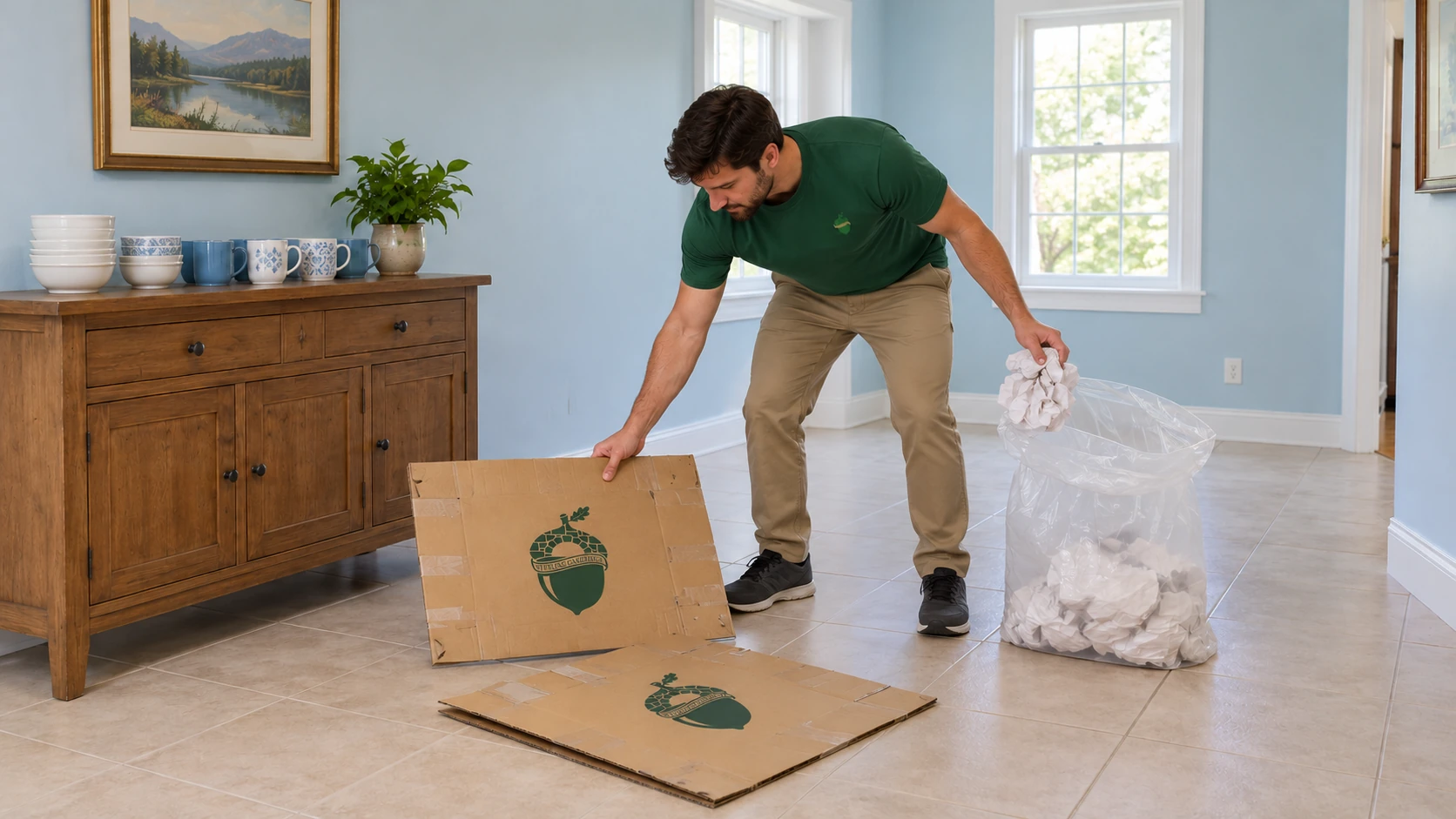
Packaging removal is separately priced and must be ordered. Say whether you want cartons opened and contents placed, used material gathered indoors, or agreed material transported away. These are different amounts of work. Keep retained belongings and small fittings out of the outgoing group before anyone collects it.
Henrico's drop-off recycling rules require cartons to be collapsed and flattened, put in the correct containers and kept off the ground. The centers do not accept Styrofoam, foam packing materials or foam peanuts. Keep those materials separate instead of calling every packing leftover cardboard recycling. Confirm the actual property's collection or management arrangements before building a pile outside.
The County's Public Use Areas are for residential use and prohibit commercial waste, including material from rental properties and businesses. A household's local address does not establish a contractor's right to dispose of a load there. Agreed company removal needs a suitable receiving route and its own price. Detailed unwanted-item and disposal decisions belong with junk removal and disposal.
If unpacking reveals furniture you no longer want, stop and identify that separate removal group. Do not mix it with retained storage cartons or assume a packaging collection includes furniture. Donation availability, facility eligibility and a building's own collection rules require their own confirmation.
Coordinate receiving help with long-distance delivery
Packing preparation and the shipment's delivery clock are different events. The applicable long-distance clock starts after loading, not when an earlier packing visit begins. Direct dedicated and suitable consolidated arrangements have different receiving implications. Use the Glen Allen long-distance page to discuss the actual route, delivery model and receiving window.
Book unpacking around the accepted receiving arrangement and ready rooms. A preferred day, an estimate from an online driving map or an early carton delivery is not a confirmed shipment appointment. If access or possession moves, discuss the consequences before booking work that cannot proceed.
For an agreed flat-rate shipment, a journey delay does not change the agreed price under the company's terms. Additional packing, a changed inventory, a new destination or later optional work are separate scope questions. Keep the written packing and shipment arrangements aligned so that a change in one does not silently become a promise in the other.
Compare the complete cost and send a useful request
Packing labor is charged for working time, with company-supplied cartons separate. Compare the same inventory and access in both options: moving an already packed household, or packing and moving it. Include preparation, supplies, any specialist protection, receiving help, a return visit, directed organizing and separately ordered removal.
For a substantial inventory, packing plus moving can approach twice the cost of moving the same shipment already prepared. That is an illustration, not a standard multiplier, cap or quote. The result may be lower or higher. Likewise, a discussion about three or four extra unpacking hours or a later two-person visit is a planning example whose usefulness depends on contents, access, agreed work and availability.
Send both addresses, firm dates, photographs inside storage spaces, the retained inventory and the complete carrying routes. Name full, partial or fragile-only work; what you will prepare; separate destinations; the last-night group; and the rooms you want usable first. Add the access contact and any requested finishing or removal. A standalone packing visit needs its own agreed paid scope, while a moving shipment also needs the survey, written estimate and terms applicable to its route.
The first decision can be small: identify the cupboards or rooms you want off your list, show their contents and state what must remain usable. That gives the coordinator something concrete to review and leaves you with a clear division of work.
Glen Allen packing and unpacking questions
Can you pack only selected rooms or fragile items?
Yes. Name the rooms, cupboards or groups you want the crew to prepare, and identify what you will pack yourself. Full, partial and fragile-only arrangements use the agreed inventory and protection needs. Ordinary dishes and unusual glass or valuable objects should be distinguished before the visit so that the remaining work, supplies and price are clear.
How do I start a packing estimate for Glen Allen?
Send the actual addresses and dates, photographs inside cupboards and storage spaces, the retained inventory and complete carrying routes. State what you will pack, the groups assigned to the team and any separate destinations. Add the final-night essentials, priority receiving rooms and requested unpacking, organizing, finishing or removal. The coordinator can then review the paid work and access.
Does the number of bedrooms determine my carton allowance?
No. Cupboard contents, books, collections, hanging clothes and retained storage belongings determine the preparation. Show those contents and any cartons already packed. Bedrooms alone do not reveal a carton count, suitable sizes, labor hours or the protection required.
Are cartons and protection materials included in packing labor?
Company-supplied cartons are separate from packing working time. Ordinary furniture blankets, wrap and tape have no separate material charge under the company protection terms. Specialist preparation and unusual materials still need individual review. Confirm the actual supplies and paid scope rather than treating every packing material as included.
Can packing and a local move happen on the same day?
They may when the reviewed inventory, preparation, carrying access and permitted hours allow it. Larger or delicate inventories and short building windows can make an earlier packing visit more useful. Confirm the crew and property access for each visit; a preferred sequence is not an accepted appointment.
What should I keep usable for the final night?
Keep bedding, toiletries, a simple meal set, tomorrow's clothes and important familiar belongings available until their agreed packing time. Keep medicines, keys, valuables and essential documents with the household. Mark the last-morning group and tell the crew when it can be packed so that it is not mixed with ready-to-leave cartons.
Can you work around a townhome bedroom or managed entrance?
Review the particular unit, stairs, door swings and permitted work area. Prepared cartons should not occupy a stair landing or block the route. Management hours, insurance-certificate instructions, entry and materials delivery may need separate arrangements. A Glen Allen postal address or a moving-day booking does not establish access for an earlier packing visit.
Can I supply my own cartons or show cartons already packed?
Yes, identify them during the review. The team needs to consider wall and bottom condition, contents, weight, internal protection and closure. Unsuitable cartons or unsupported contents may need replacement or repacking. Agree what you provide and what the crew supplies before relying on an assumed materials saving.
How are ordinary breakables prepared?
Review individual wrapping, cushioning, carton size, support and closure for the actual contents. The protection must work during carrying, stacking, restraint and travel. Identify unusual glass, valuable pieces, glass furniture components and objects needing specialist art preparation separately; a closed carton or a fragile mark alone does not establish adequate protection.
What should a carton label tell the receiver?
Write the next destination, receiving room and useful contents. A carton number and opening priority can help. Use color to reinforce those words, and keep the labels consistent with inventory and loading instructions. The receiver should not have to guess whether a color refers to an owner, storage group or room.
Can some craft supplies go to storage while the household moves in?
Yes, if the storage destination and its intake are agreed. Identify retained supplies, tools and storage furniture separately from the home group, with suitable preparation and clear written destinations. Confirm the receiver, access, intake and later release. Storage, handling and onward transport have their own terms; donation and removal remain outside both retained groups.
Does basic unpacking put everything into cupboards?
Basic box unpacking opens the agreed cartons and places contents on suitable designated surfaces. Final cupboard, drawer and shelf placement is customer-directed organizing and needs its own priorities and agreed price. Name the rooms to make useful first, available surfaces and groups that should stay closed.
Can I book unpacking after trying it myself?
You can request a later visit for the actual remaining cartons and rooms. Show the space available, the groups to open and the result you want, such as usable kitchen surfaces or a priority bedroom. Timing and availability must be agreed. A previous delivery does not reserve an immediate return team.
How should I direct home organizing?
Choose priority rooms and be ready to explain where belongings should go. Decide cupboard, shelf and drawer locations before asking several people to place things. A smaller team may be easier to direct. Agree the scope and price separately; organizing follows your instructions and does not imply a redesign or every unfinished task in the home.
What if utilities or some receiving rooms are not ready?
Confirm possession, access, utilities and usable surfaces before booking work that depends on them. Henrico's utility application asks for three business days and excludes same-day requests; applying is not confirmation of readiness tonight. Unpack only suitable priority areas and discuss safe holding or a return visit for the rest.
Is furniture reassembly the same as unpacking cartons?
No. Basic furniture disassembly and reassembly use moving labor time without a separate basic assembly surcharge. Removing furniture transport protection differs from paid carton unpacking. Identify the parts and assembly needed for usable rooms, and agree unusual assembly or finishing separately.
Can finishing work include mounting or technical connections?
Describe the item, wall or surface, hardware, permissions and requested result. Handyman work is individually scoped and priced, with a suitable executor agreed. A broad finishing request does not promise electrical work, utility connections, repairs or unlimited completion of a new home.
Does unpacking include taking all used packaging away?
Removal is separately priced and must be requested. Opening cartons, gathering empty material indoors and transporting it away are different tasks. Check paper for small fittings, separate retained belongings and specify the material and receiving route before collection.
Can packing foam go with flattened cardboard in Henrico?
Henrico's drop-off recycling centers do not accept Styrofoam, foam packing materials or foam peanuts. Their guidance requires cartons collapsed and flattened in the correct containers, with nothing left on the ground. Keep different used materials separate and confirm the actual property collection arrangement rather than leaving a mixed pile.
Can a removal contractor use the County Public Use Areas?
Do not assume eligibility. Henrico describes the Public Use Areas as residential and prohibits commercial waste, including material from rental properties and businesses. A household address does not authorize a contractor's load. Separately agreed company removal needs a suitable receiving route and its own price.
What if I decide after unpacking to discard a piece of furniture?
Identify it as a separate unwanted-item group and review collection, access and destination through the disposal service. Keep it out of retained storage cartons and used packaging. A packaging-removal order does not automatically include furniture or guarantee that a donation recipient will accept it.
Does an early packing visit start long-distance delivery time?
No. The applicable shipment clock begins after loading. Confirm the actual direct or consolidated receiving arrangement through the Glen Allen long-distance service, then plan unpacking around ready rooms and accepted receiving access. A preferred date or an online driving estimate is not a shipment appointment.
How much more can packing and unpacking add to a move?
Compare the same inventory and access, with labor, cartons, preparation visits and selected receiving work included. On a substantial inventory, packing plus moving can approach twice moving the shipment already prepared, but that is an illustration rather than a multiplier, quote or cap. Unpacking, organizing, return visits, specialist work and removal depend on their own agreed scope.
Does a journey delay change an agreed flat-rate shipment price?
A journey delay does not change the agreed shipment price under the company's flat-rate terms. New packing work, changed inventory or destinations and later optional services are separate scope questions. Keep the packing and shipment records aligned, and confirm the survey, written estimate and terms applicable to the actual moving route.