
Virginia · Newport News household preparation
Full packing and unpacking in Newport News, VA
Hand over the packing you need while keeping the household usable until departure.

Sterling Oakbridge prepares agreed household contents in Newport News, from selected delicate items to full packing, with optional carton unpacking and separately agreed help putting belongings where you want them.
Explore packing, costs and local examples
Choose full, partial or fragile-only help
Start with the work you want to hand over. Full packing covers the retained contents in the agreed inventory. Partial packing can cover named rooms or groups while you prepare the rest. Fragile-only help needs a specific list of delicate items and the preparation each requires. These choices let the estimate describe a real division of work.
A household may be able to pack its own belongings but prefer to keep evenings for work, meals or time together. Another may enjoy sorting and packing ordinary contents while wanting help with ceramics and glazed pieces. A couple of weeks of evening preparation is one possible household experience, not an average or a deadline every move requires. Choose the boundary around your actual time and contents.
Record what you will finish before the crew arrives and what happens if cupboards remain unpacked. Include materials, access and the time available for the agreed work. The Newport News moving page explains the wider move; the local relocation guide connects the receiving home with the household's daily arrangements.
A Hilton household chooses fragile-only help
Imagine a Hilton household that wants to pack linen, clothing and ordinary kitchen equipment itself, but hand over a retained group of ceramics and glazed items. The Virginia Department of Historic Resources describes Hilton Village's cottage architecture and detached, double and row houses. That is historical housing context; the actual kitchen, work surface and carrying route still need to be shown.
List the delicate group before it disappears into cupboards or customer-packed cartons. Photograph vulnerable edges, removable glass and existing damage. Agree which pieces need individual preparation and which need specialist assessment. A label saying Fragile cannot replace cushioning, support and a suitable carton.
This household can keep control of the ordinary packing without leaving the delicate group as an undefined final task. Keep the small breakfast set and personal essentials outside both packing groups until the agreed time. The result is a clear division of responsibility, rather than a full-house service selected merely because a few difficult items remain.
Count the contents beyond the furnished rooms
Show open cupboards, drawers, wardrobes and shelves during the survey. Include pantry supplies, books, occasional-use belongings and retained contents in a garage or other storage area where present. Furniture photographs describe only part of the preparation. Decide what stays, moves, goes to storage or needs a separate removal arrangement before estimating the packing.
A household expecting twenty cartons might find that its complete inventory needs sixty to one hundred. These are conditional examples of underestimating contents, not a Newport News forecast, box allowance or bedroom-based calculator. The useful evidence is what is inside the cupboards and how it must travel.
A Denbigh inventory includes the spaces beyond the bedrooms
Consider a Denbigh household that has counted bedroom furniture but has not yet included books, pantry contents, seasonal belongings and tools. The City's Denbigh-Warwick planning background describes growth through single-family subdivisions and commercial strips. It does not establish the contents of this particular home or a standard packing crew.
Walk through the retained groups one at a time. Identify the books going directly to the next home, the seasonal group intended for agreed storage and tools the household will keep with it. Separate unwanted objects before anyone packs them. A carton prepared for the wrong destination still consumes time, materials and receiving space.
Photograph the complete groups and their routes, then compare the preparation visits the inventory actually requires. This gives the planner a better basis than adding another bedroom to a form. If an unwanted cabinet needs removal, give that object its own dimensions, route and accepted destination; do not include it in a packing group and hope to decide later.
Keep a usable evening between work periods
A small, reviewed local move may allow packing and moving on the same day. More contents, delicate groups, limited work hours or a longer carrying route can make an earlier preparation visit useful. Two bedrooms can hold very different inventories. A separate packing day changes the sequence and must be included when comparing the total work and cost.
For a substantial inventory, one illustrative plan might use four packers on an earlier day and six movers for the move. Another needs fewer people or a different division of work. Those numbers explain the separate roles; they are not standard staffing for a property size or a promise that all work fits one day.
Name a pack-last group for the final evening and morning: bedding, towels, a small breakfast set, school or work items and the clothing needed before departure. Keep identification, medicine, keys, personal papers and chargers under the household's control. Agree who checks that these groups remain accessible.
A Port Warwick apartment needs two work periods
Imagine a Port Warwick resident who can accept a preparation visit before the building's agreed carrying window. The community's residential description includes houses, townhomes, live-above homes, apartments and condominiums. That range makes the actual entrance and management arrangements more useful than assuming one rule for the neighborhood.
Obtain the instructions for both periods. Identify who approves entry, the available hours, any lift reservation and the required certificate or protection arrangements. Earlier access for packing does not automatically provide loading access on another day. Give the planner the actual contact and unresolved decisions.
Pack less-used contents first and identify a stable place for finished cartons that leaves doors, the bed, the work area and the exit usable. Mark the belongings that become available last. Confirm the receiving arrangements separately, especially when the household travels before the shipment. The preparation visit should reduce unfinished work without turning the last night into a search through sealed cartons.
Match the preparation to the contents
Protection needs to work through carrying, support, stacking, restraint and vehicle movement. Choose it around the material, weight, shape and vulnerable parts of the actual item. A clean exterior does not prove that the contents are cushioned or supported inside.
Ordinary ceramics need individual protection and suitable cushioning. Glazed frames, glass cabinet doors, removable shelves and unusual collections require their own construction and surface review. Identify loose fittings and existing weakness before wrapping hides them. Gloves and the work surface should suit the item and the grip needed; one handling method does not fit every material.
Soft contents also need an agreed boundary. Folded linen can be grouped in a suitable carton without mixing it with tools, liquids or loose fittings. Keep the carton supported while it is filled, close it when preparation is complete and identify its receiving room. Avoid filling a large carton with dense contents merely because unused space remains.
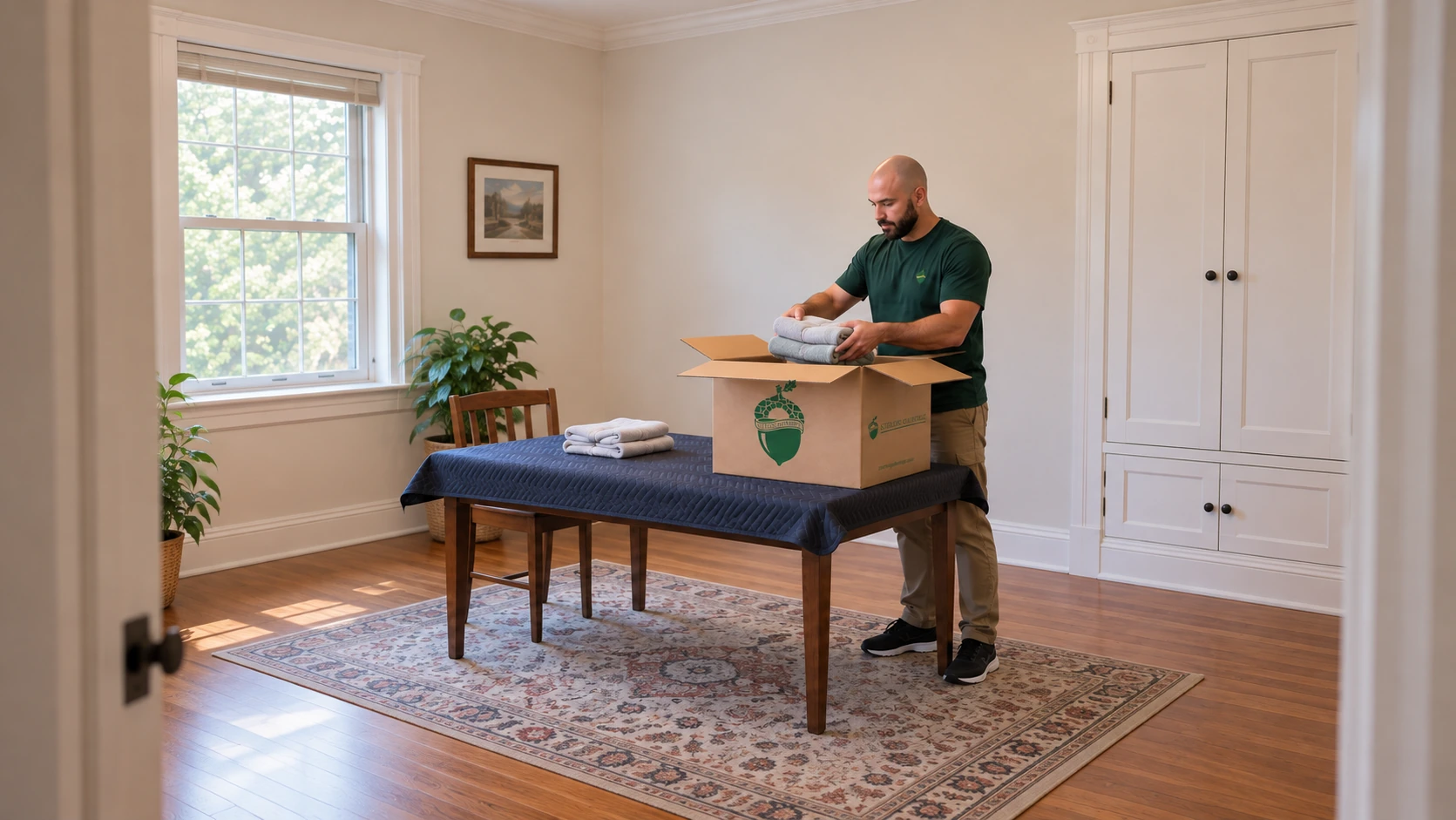
Furniture preparation follows the actual construction and route. Basic disassembly and reassembly use moving labor time without a separate basic assembly surcharge; complex work is individually assessed and quoted. The fine-art service owns specialist protection and crating. A separate purchase from a seller belongs with furniture delivery, while a later transfer of belongings already at the property belongs with in-home moving.
Give each group a readable destination
Write the destination, receiving room and useful contents on each carton. Add an inventory number or priority where it helps the agreed plan. Color can support those words, but another receiver should be able to understand the label without remembering a color scheme.
Keep new-home, storage and other accepted destination groups physically distinct. A carton marked Bedroom is incomplete if two addresses both have a bedroom. Identify anything needed during storage before it is surrounded by other contents. Labels organize an agreed arrangement; they do not reserve storage space or a delivery appointment.

For a shipment leaving the area, use the Newport News long-distance page to choose direct or suitable consolidated delivery. Its delivery clock begins after pickup and loading are complete. Keep preparation, the household's travel essentials and receiving help in the same overall plan. Storage and staged delivery require their own actual dates, access and handling arrangements.
Open the cartons that make a useful area
Basic carton unpacking opens the agreed groups and places their contents on suitable available surfaces. Choose which area should become useful first and provide clear, dry counter or table space. Opening every carton at once can create more loose contents than the room can accommodate.
For a kitchen, identify the dishes and utensils needed first. For clothing or linen, identify the groups needed that evening. Check small fittings and personal items before used paper is collected. Keep the exit and the route to unopened groups clear while work proceeds.
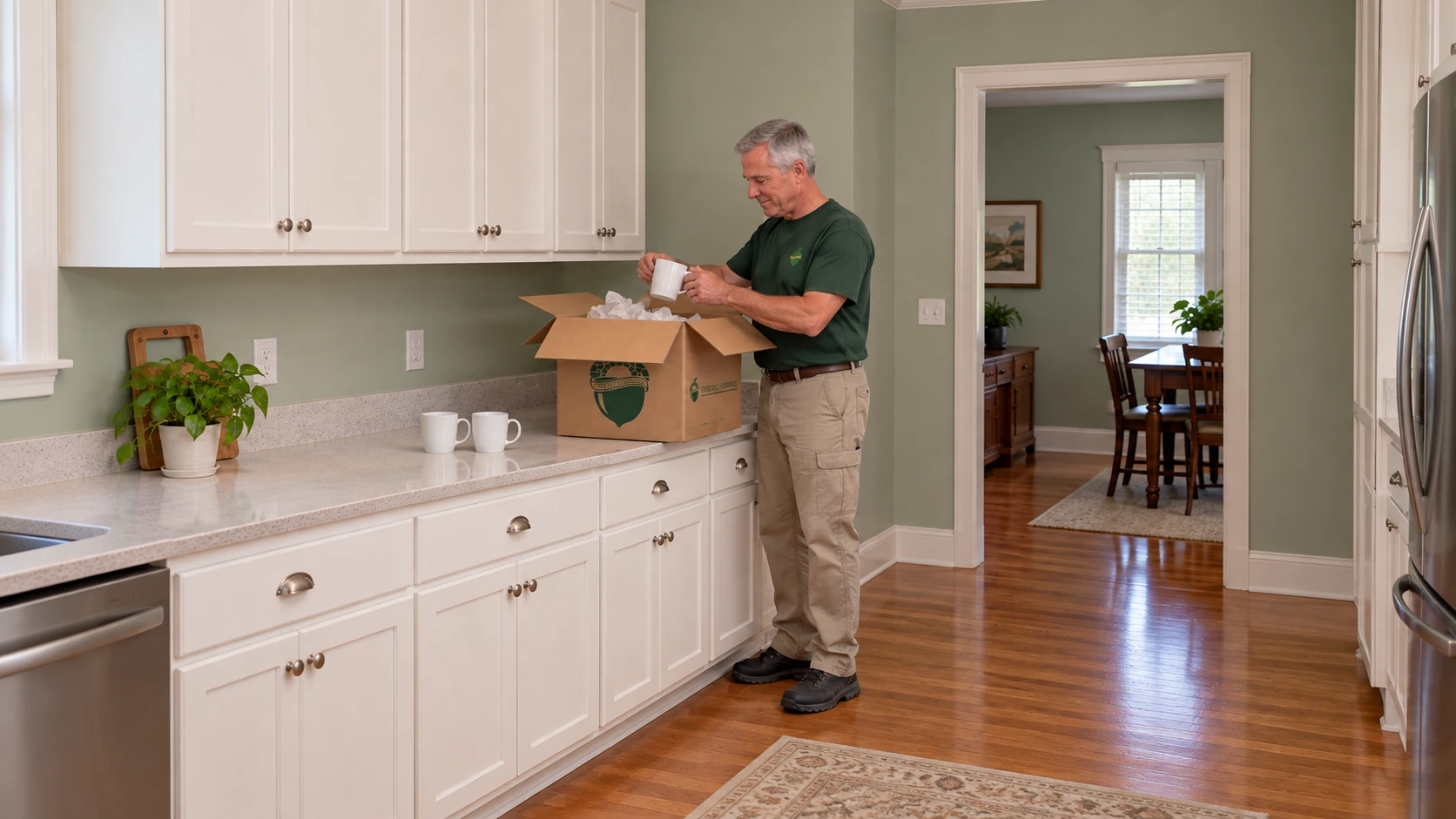
A later unpacking visit restores one useful area
Consider a Port Warwick resident who has already opened some cartons but wants help finishing an agreed kitchen or linen area. A later visit can be discussed around the remaining contents, access and crew availability. The earlier move does not automatically include another visit or establish when a crew will be available.
Choose the result before opening more cartons. Clear the intended surfaces, identify the needed groups and leave less urgent cartons closed. Decide whether the request ends with contents on surfaces or includes customer-directed placement in cupboards and shelves. One finished, usable area can be more valuable to this household than a larger number of opened cartons.
Include the empty materials in the request. Decide which cartons the resident wants to keep, what can enter the property's accepted recycling stream and what needs separately priced removal. The job then has a useful stopping point that the household can recognize.
Choose final placement and finishing separately
Home organizing places belongings according to your instructions. Explain which cupboards, shelves or drawers should receive each group and who can direct those decisions. A smaller team may be easier for one person to guide. The service is distinct from basic unpacking onto available surfaces.
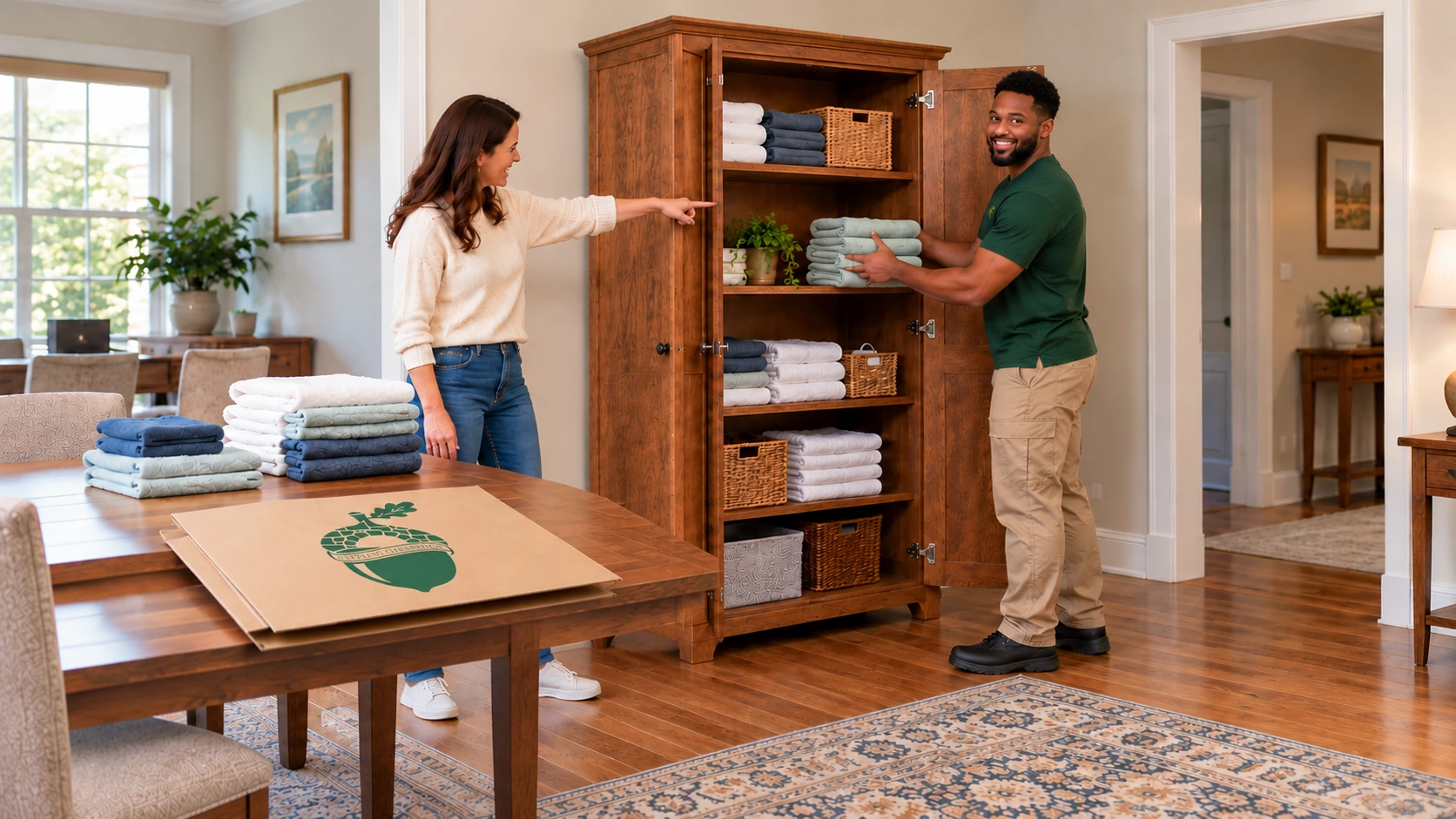
Identify any further finishing work separately. Picture or mirror hanging, hardware and other handyman tasks need an individual scope, with the wall, permissions, fittings and executor reviewed. Do not assume that opening cartons includes installation, electrical connections or complete-home finishing. A room awaiting work needs a safe, agreed arrangement before its contents are spread out.
Plan what happens to the empty materials
Furniture unwrapping is part of delivery. Carton-content unpacking takes time, and requested packaging or waste removal is an additional service. Collecting used paper inside a room and taking it away are different operations. Tell the planner which result you want.
For eligible household recycling, Newport News' residential recycling information requires flattened cardboard no larger than 3 by 3 feet. It excludes plastic bags, Styrofoam packaging and foam peanuts. Keep those materials separate from accepted paper and cardboard.
The City's recycling FAQ says only materials inside the recycling cart are collected; material left beside it stays behind. Its collection instructions call for loose recyclables and a closed lid, with a separate exception for shredded paper. Plan usable cart capacity and the property's actual collection arrangement, rather than leaving a pile outside.
Unwanted furniture, renovation debris and empty packaging need distinct decisions. The Bulk Waste Program has property and resident-generated waste eligibility and excludes commercial and contractor waste. A private removal request needs an accepted route for its actual materials; a residential collection program does not by itself authorize a paid hauler's load.
Compare the complete paid scope
Compare the same retained inventory and both properties. Packing uses working time, and supplied cartons are charged separately. Moving blankets, shrink wrap and tape used for basic protection have no separate material charge. Optional unpacking, organizing, specialist work, return visits and requested material removal need their own agreed scope and applicable charges.
In one illustrative comparison, packing and moving a household may approach twice the cost of moving that same inventory already packed. It can also fall below or above that comparison. This is not a standard multiplier, rate or cap. The preparation you complete, contents, access and additional work determine which alternatives are worth estimating.
A larger unpacking request might add three or four hours to a reviewed job or use a later two-person visit. These examples explain possible arrangements, not promised staffing or completion times. Compare the whole route to a usable home, including the household's time directing placement and any additional visit.
If packing is included in an interstate or cross-border flat-rate move, keep it in the agreed written shipment and service scope. A longer journey alone does not change that agreed price. A Virginia-only move has its own applicable tariff and written estimate terms, as explained on the linked long-distance page. Have any newly requested packing priced in writing before it begins; the time examples above do not set the terms of your estimate.
Send both addresses, the inventory, room and access photographs, firm dates and the work you want to keep yourself. Name the pack-last group, separate destinations and first receiving priorities. The planner can then compare a same-day arrangement, earlier preparation or later unpacking using the actual work.
Newport News packing and unpacking questions
What is the difference between full and partial packing?
Full packing covers the retained household contents in the agreed inventory. Partial packing covers named rooms or groups while you prepare the rest. Choose the boundary around the work you want to hand over, and record what you will finish before the crew arrives. Optional unpacking and final placement need their own agreed scope.
Can I request help only with the delicate items in my Hilton home?
Yes. Identify the retained ceramics, glazed frames, removable glass or other delicate items you want reviewed. Agree their individual preparation and any specialist assessment before packing starts. Keep the ordinary contents you will pack separate from that group. A historic cottage description does not establish the actual kitchen, work surface or carrying route.
Can you estimate the cartons from the number of bedrooms?
No. Bedroom counts do not give a reliable carton allowance. Show open cupboards, drawers, wardrobes, books and retained storage areas. Two homes with the same bedroom count can require different materials and working time. The example of expecting twenty cartons and discovering sixty to one hundred illustrates an incomplete inventory; it is not a prediction or allowance for your Newport News address.
Can I pack some belongings myself?
Yes. Name the rooms or groups you will prepare and what the crew will take over. Agree when the customer-packed contents will be ready and how unfinished cupboards or newly added belongings will be handled. Keep those decisions in the inventory and written scope so the estimate reflects the actual division of work.
How do I keep the last evening and morning usable?
Set aside a named pack-last group, such as bedding, towels, breakfast items and needed school or work equipment. Keep medicine, identification, keys, chargers and personal papers under household control. Leave a route to those belongings and agree who checks that they remain outside the sealed shipment until the intended time.
Can a Port Warwick apartment have an earlier packing visit?
An earlier preparation visit can be reviewed separately from the carrying day. Obtain the actual building entrance, hours, approving contact and any lift or certificate requirements for both periods. Earlier access does not automatically approve later loading access. Choose a place for finished cartons that keeps the bed, work area, doors and exit usable.
Can packing and moving happen on the same day?
A small, reviewed local inventory may allow it. Larger or cupboard-heavy contents, delicate groups, restricted access or limited work hours can make earlier preparation more useful. Compare the whole inventory and both properties before choosing dates and staffing. A bedroom count does not guarantee that the work will fit one day.
How are packing time and materials charged?
Packing uses working time, and supplied cartons are charged separately. Moving blankets, shrink wrap and tape used for basic protection have no separate material charge. Identify the contents, preparation and materials in the estimate. For packing included in a written interstate or cross-border flat-rate scope, follow that agreed quote rather than treating a time illustration as an automatic extra charge.
How should glass, frames and collections be prepared?
Start with the actual item and its construction. Ordinary ceramics need individual protection and suitable cushioning; glazed frames, glass doors, removable shelves and unusual collections need their own surface and handling review. Send photographs before wrapping hides vulnerable parts or existing damage. Specialist packing or crating must be agreed for the items that need it.
How should I label cartons going to the new home and storage?
Write the destination, receiving room and useful contents on each carton. Add the agreed inventory number or priority, and use color as an aid to those words. Keep the destination groups physically distinct. Identify belongings needed during storage before packing surrounds them. The label supports an agreed storage and delivery arrangement; it does not reserve one.
What if the household arrives before a long-distance shipment?
Keep travel essentials and required documents with the household, and arrange receiving help around the actual delivery model. The delivery clock begins after pickup and loading are complete. Direct and consolidated delivery use different arrangements, as explained on the Newport News long-distance page. Any storage, waiting interval or later visit needs an actual agreed scope.
What does basic carton unpacking do?
It opens the agreed cartons and places their contents on suitable available surfaces. Choose the first useful area and provide clear, dry counter or table space. Check small fittings and personal items before used paper is collected. Basic unpacking is separate from final cupboard placement, handyman finishing and taking the empty materials away.
Can you put the unpacked belongings into cupboards and shelves?
Yes, through separately agreed customer-directed home organizing. Explain where each group should go and who can direct those decisions. A smaller team may be easier for one person to guide. Distinguish that final placement from basic unpacking onto surfaces, and agree the scope and price before the work.
Can I request a later unpacking visit after starting myself?
Yes. Describe the contents still closed, the area you want to make useful and the available surfaces. A later visit depends on the reviewed scope, access and crew availability; the previous move does not automatically include it. Choose whether the task ends on surfaces or includes separately agreed customer-directed placement and material removal.
Should every carton be opened at once?
Choose the result the household can use first. Opening more cartons than the available surfaces can hold may obstruct the room and create more sorting decisions. Start with an agreed kitchen, clothing or linen group, keep the exit clear and leave less urgent cartons closed until their receiving area is usable.
Does unpacking include picture hanging or other handyman work?
Handyman finishing is a separate individually agreed scope. Identify the picture, mirror, hardware or other task, the wall and permissions, and the executor needed. Opening cartons does not automatically include installation, electrical connections or complete-home finishing. Agree the particular operation and applicable charge before treating it as part of the visit.
How is furniture assembly treated?
Basic disassembly and reassembly use moving labor time without a separate basic assembly surcharge. Complex assembly or specialist work is individually assessed and quoted. Show the construction, model or instructions where relevant and the actual receiving route. Unpacking a carton does not establish that every boxed item can be assembled within the same scope.
Is taking away the empty packing material included?
Requested packaging or waste removal is an additional service. Furniture unwrapping is part of delivery, while carton-content unpacking takes time and belongs in the agreed scope. Collecting used paper inside the room and removing it from the property are different operations. State which cartons you want to keep and what you want taken away.
Can I leave excess cardboard beside the Newport News recycling cart?
No. The City says only recyclables inside the cart are collected; material beside it is left behind. Flatten cardboard and cut it to no more than 3 by 3 feet. Plan the property’s actual collection arrangement and usable cart capacity, or request separately priced removal through an accepted route. Do not leave a pile as the assumed finishing step.
Can packing foam and plastic bags go in curbside recycling?
Newport News excludes plastic bags, Styrofoam packaging and foam peanuts from its curbside recycling program. Keep them separate from accepted paper and cardboard. The collection instructions call for loose recyclables and a closed lid, with a specific exception for shredded paper. Agree an accepted route for materials outside that stream; a recycling symbol alone does not make them accepted.
What if I decide not to keep some furniture while packing?
Separate unwanted objects from the retained inventory before they are packed. Give removal its own item list, dimensions, route and accepted destination for review and pricing. Municipal bulk collection has property and material eligibility and excludes commercial and contractor waste. Do not assume a paid hauler can use the household’s collection rights or that an agreed flat-rate price automatically decreases.
How should I compare the complete packing budget?
Compare the same inventory, both properties, preparation you will complete, cartons and requested receiving work. Include any earlier or return visit, specialist preparation, optional organizing and removal. The illustration that packing and moving may approach twice the cost of moving the same inventory already packed is not a standard multiplier or cap. Ask for written alternatives covering the actual work.
Will adding packing change an agreed interstate flat rate?
It can, if the added packing is outside the accepted scope. Review the new work and agree its scope and price separately in writing before it begins. If the packing is already included and the reviewed shipment and services stay the same, a longer journey alone does not increase the agreed flat rate. A move entirely within Virginia uses its applicable tariff and written estimate terms; interstate pricing should not be assumed to govern it.
What should I send for a Newport News packing estimate?
Send both addresses, room and access photographs, firm dates and the retained contents, including cupboards and storage areas. Explain what you will pack, what must stay usable, the separate destinations and the first receiving priorities. Identify optional unpacking, final placement, specialist work and removal so the planner can compare complete workable arrangements.