
Virginia · Virginia Beach service planning
Long-distance moving from Virginia Beach, VA
Prepare a Virginia Beach departure around the shipment that will actually be ready and a receiving property that can use it. An Old Beach entrance, elevated coastal home and Town Center apartment can require different carrying routes even when the destination is the same. Send both addresses, the inventory, dates and the work you want included so the estimate reflects the entire move.
Sterling Oakbridge provides direct and consolidated household moving across the United States and Canada. Choose the delivery model with the receiving contact and property conditions in view. Use the Virginia Beach moving page for local preparation and the relocation guide for the address’s school, utility and disposal arrangements.
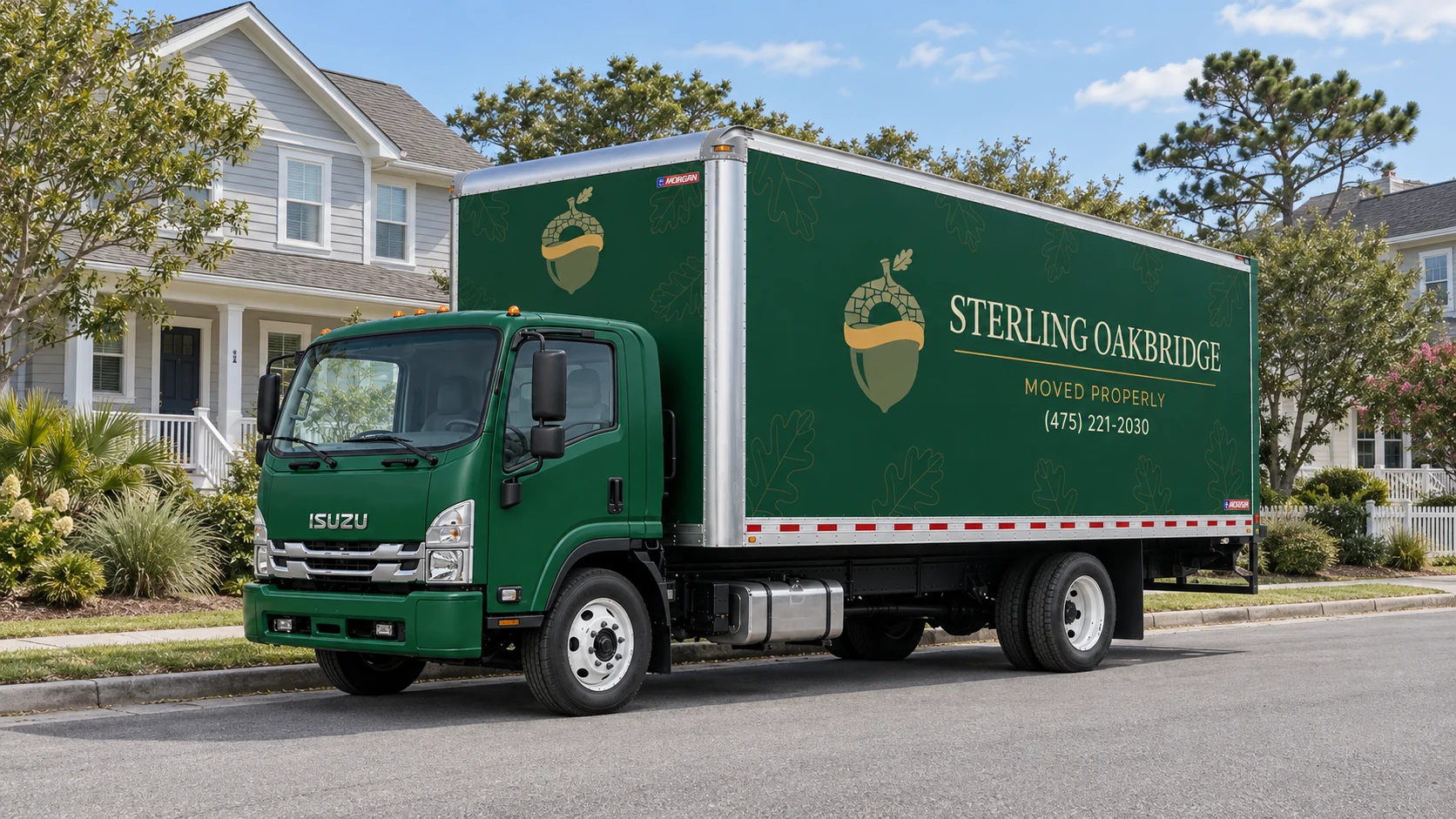
Start with the address, shipment and receiving contact
Confirm the municipality at both ends before applying its parking or collection procedure. Virginia Beach is an independent city; nearby Norfolk, Chesapeake and Portsmouth are separate independent cities. Chesapeake Beach is a neighborhood within Virginia Beach. A regional description or postal name cannot determine who can authorize the frontage.
We can review long-distance pickup in the independent City of Virginia Beach and nearby addresses in Norfolk, Chesapeake and Portsmouth. These are separate independent cities, with their own street and collection authorities. Chesapeake Beach is a Virginia Beach neighborhood, rather than the separate City of Chesapeake. Send the actual address, inventory and complete property route; a postal name does not settle the applicable jurisdiction.
List the furniture, cartons, customer totes and genuine loose components that will travel. Identify items being sold, donated or collected before departure and belongings kept elsewhere. Separate what the household will pack from company preparation, and say whether the job includes storage, optional unpacking or removal. Send changes before they alter the loading or receiving plan.
Photograph the complete route from the proposed lawful standing position to the final rooms. Include gates, surfaces, carrying distance, exterior stairs, landings, doors, vestibules, hallway turns and every change of lift or floor. Photograph furniture construction where disassembly is uncertain. A wide front door cannot settle a narrow turn farther indoors.
Ask the owner or manager which entrance and facilities are authorized, the usable hours and who can resolve an access change. For an apartment, obtain lift dimensions and reservation conditions rather than assume that a passenger elevator or garage will serve the truck. Packing and furniture preparation may need access earlier than the carrying window; establish permission for those stages separately.
Choose the delivery model with the receiving window
Direct dedicated delivery uses a dedicated truck for the reviewed shipment and the same moving crew at pickup and delivery. It can suit a substantial household inventory needed together when the receiving property is ready. The survey and planning team performs a separate role from the crew carrying out the move; the person reviewing the inventory is not necessarily on the truck.
Consolidated delivery can suit a smaller selected shipment with flexible receiving. A selection illustratively around 300–400 cubic feet or less is a useful starting point, rather than a minimum volume. Review the actual pieces, cartons and receiving contact. Agree the window and any storage or additional handling instead of borrowing a direct move’s timetable or same-crew description.
The following windows begin after pickup and loading are complete. They are illustrative planning references, rather than appointments. Packing, material delivery, household travel, possession and building reservations can have different dates. Check how the receiving property’s usable hours fit the window and who will be there to receive.
| Illustrative destination | Direct planning window | Consolidated window |
|---|---|---|
| Greenville, North Carolina | 1–2 days | Up to 30 days |
| St. Petersburg, Florida | 2–3 days | Up to 60 days |
| Cobourg, Ontario | 2–3 days | Up to 60 days |
| Vancouver, Washington | 5–6 days | Window agreed individually |
Suitable early loading and available receiving access can make a shorter nearby schedule possible. The road journey alone does not establish same-day or next-day delivery. Raise any essential narrow appointment before choosing the service and identify dependencies still awaiting confirmation.
For suitable consolidated shipments, a confirmed nearby domestic window can be up to 30 days. Florida and Canada use up to 60 days, and California uses up to 90 days. Canadian policy takes priority over proximity. Other distant states, including Washington, need an individually agreed consolidated window. Storage and extra handling have their own scope and charges.
Confirm the frontage and full working footprint
The City parking jurisdiction page lists Parking Management at 757-385-2900 for identified municipal parking locations. It sends on-street questions in Chick’s Beach, Croatan neighborhoods and Sandbridge to Traffic Engineering at 757-385-4131. Describe the exact frontage rather than assume a nearby municipal lot has the same rules as the street.
For an operation affecting public right-of-way, use the City permit instructions and Permits & Inspections at 757-385-4211. Give the date, hours, actual truck dimensions, rear working area and any ramp, lift or proposed occupation of a sidewalk or lane. Ask which application category applies, the lead time, fees, required plan and approved temporary signs. The material reviewed here does not establish one universal household-moving deadline or price.
The residential commercial-vehicle rule includes normal delivery or service activity among its exceptions. That distinction does not reserve a curb or authorize overnight truck storage. Residential and guest parking privileges do not establish an exclusive loading area. The owner or manager separately controls private loading space and the indoor route.
The City sidewalk and street code restricts packing, unpacking or storing goods in public travel areas. Its narrow oversized-doorway-package exception does not create a general staging area. Keep the authorized pedestrian route, neighboring access and shared exits usable. Household cones cannot create an issued reservation.
Match the street arrangement to the building window. Establish who submits each request, who supplies and places approved signs, any posting interval and what to do if the space is occupied. If another vehicle or a changed condition prevents the planned setup, contact the responsible authority and moving contact. Agree a lawful alternative position, time or equipment before relying on it.
The carrier also needs to review the actual truck and load against VDOT bridge, tunnel and road restrictions. Directional limits and temporary conditions can matter around Hampton Roads. Check current project notices and 511 before travel; a car navigation route or planning reference is not a vehicle-specific approval. A property’s permission cannot settle a highway restriction.
Keep the written price attached to the reviewed scope
For unchanged long-distance inventory, access and services, the agreed flat price stays the same if travel or delivery takes longer. Changes of scope are reviewed and agreed separately in writing. Describe the actual added work: more belongings, different carrying distance, additional stairs, unavailable lift, storage or another requested service. A delayed road journey does not itself change the shipment.
Review the quote against the complete operation, including preparation and receiving. Keep municipal or building charges identifiable and establish who handles them. Company coordination can include building COIs, moving-truck permit arrangements and lift scheduling, but submission is a step in the approval process. Confirm the issued conditions and usable time before carrying begins.
| Part of the plan | Confirm in the written scope |
|---|---|
| Shipment | Actual furniture, cartons, totes and any excluded items. |
| Preparation | Customer packing, company packing, materials and suitable disassembly. |
| Access | Both carrying routes, approved vehicle position and building windows. |
| Receiving | Delivery model, contact, placement and any storage release condition. |
| Additional work | Optional unpacking, removal, specialist tasks and separately agreed charges. |
Prepare furniture and identify the containers
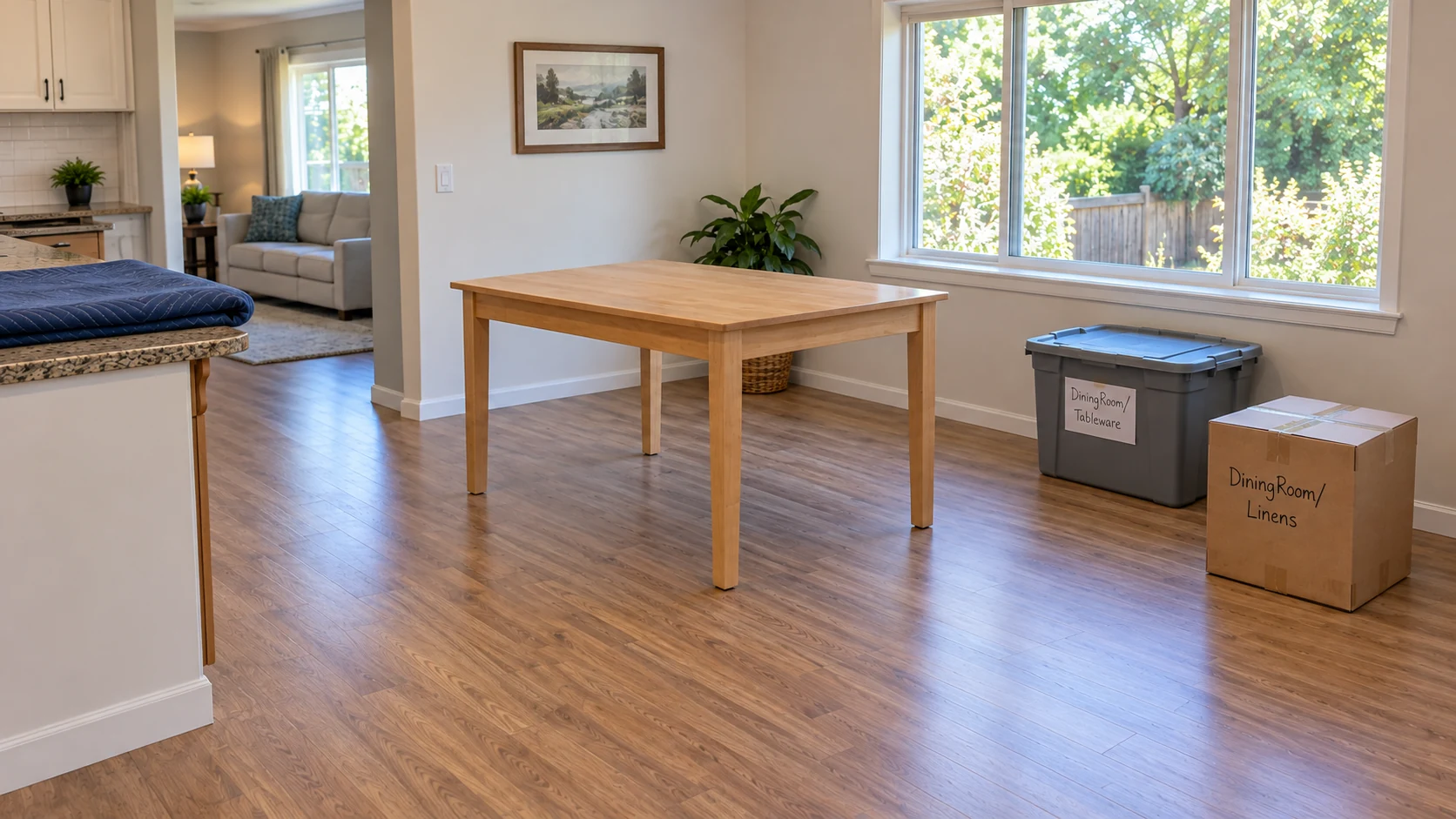
Use ordinary closed cartons and suitable totes with clear destination-room and contents identification. Write natural black felt-tip labels directly on plain kraft cartons and attach a paper label to a customer tote where appropriate. Keep labels useful for sorting without replacing a carton’s factory artwork with an instruction placard. Company cartons and packing materials have their own agreed charges.
Empty ordinary dresser drawers and retain them in the body for the reviewed transport. Protect the furniture body before safely removing long table or desk legs. Keep the complete matching protected set and its hardware together and identified with that body. If a part cannot safely be removed, review the construction and route instead of forcing it; retained vulnerable feet need continuous furniture protection.
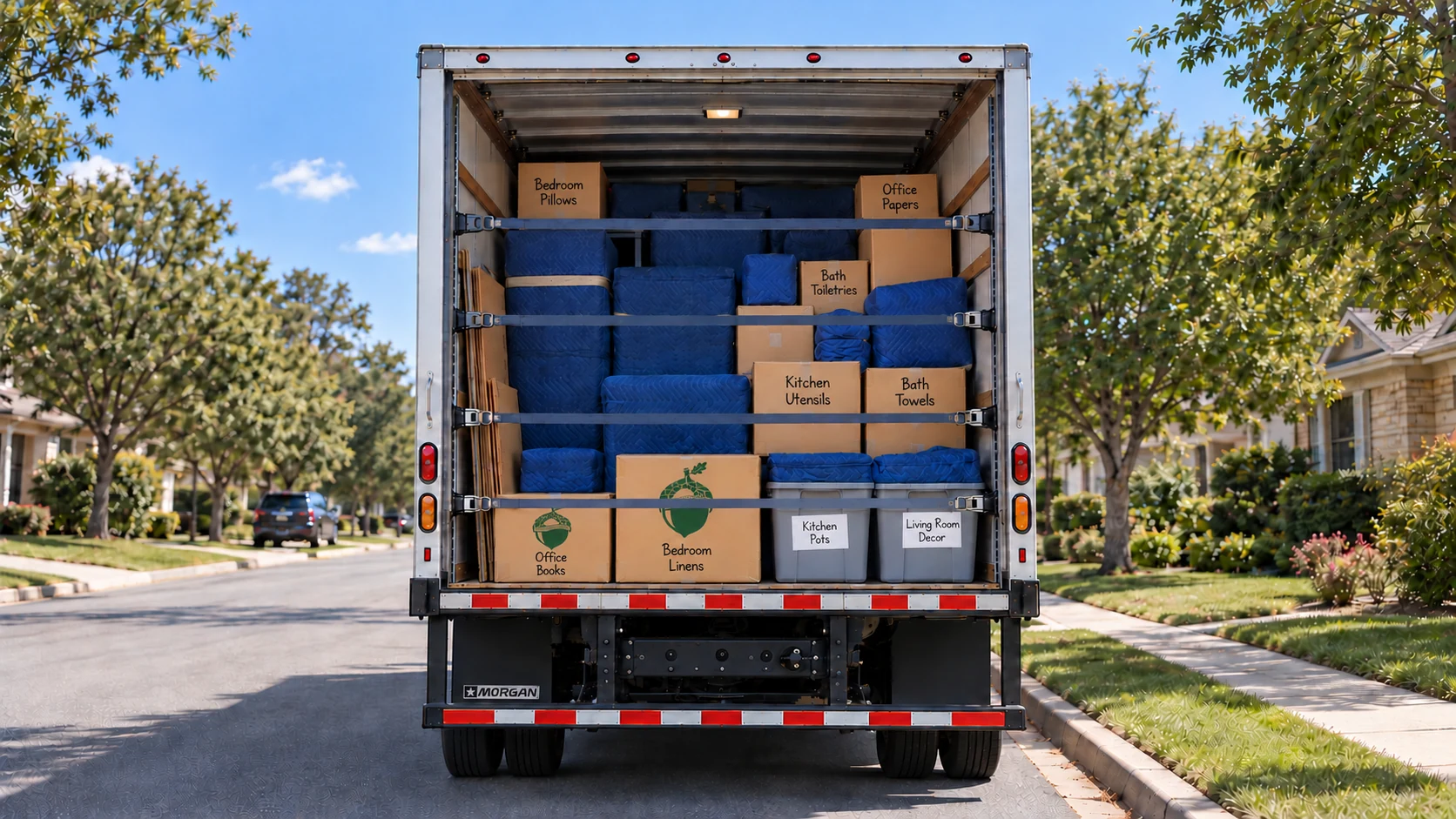
Secure genuine loose shelves and other removable components separately. Furniture protection should cover vulnerable surfaces and edges while allowing stable handling. A substantial direct shipment normally combines varied furniture, cartons and totes in supported tiers, with a stepped end and retained side material. A small selected pickup has a different inventory and should not be presented as a nearly full household truck.
Keep keys, documents, medication, chargers and immediate supplies with the household. Identify what must remain accessible during any storage gap. Furniture unwrapping, placement and basic reassembly differ from opening cartons: optional box unpacking and packaging removal need their own agreed scope.
Example 1: Old Beach to Greenville, North Carolina
Consider a household leaving an Old Beach duplex for a Greenville home. The selected inventory includes a sofa, dresser, beds, a small dining table and customer-packed cartons. This is a hypothetical planning example. The 2005 City design study documents a varied residential mix and narrow lots; it does not establish present truck access through an individual alley.
The household confirms which entrance serves the unit and whether another resident shares the path. Frontage photographs include the proposed standing area, porch approach and interior turn. An alley is considered only if its current use is authorized and suitable for the vehicle. Emptying ordinary dresser drawers and reviewing removable table legs are part of the inventory preparation rather than reasons to leave vulnerable long legs installed under wrapping.
At Greenville, the receiving contact confirms keys, the entrance, room positions and usable hours before departure. The illustrative direct window is 1–2 days after loading; a suitable consolidated shipment can use an agreed window up to 30 days. If early loading and receiving access support a shorter arrangement, confirm that appointment separately. The family carries first-night supplies with it instead of making immediate access depend on the entire shipment.
Example 2: A Sandbridge household moving to St. Petersburg, Florida
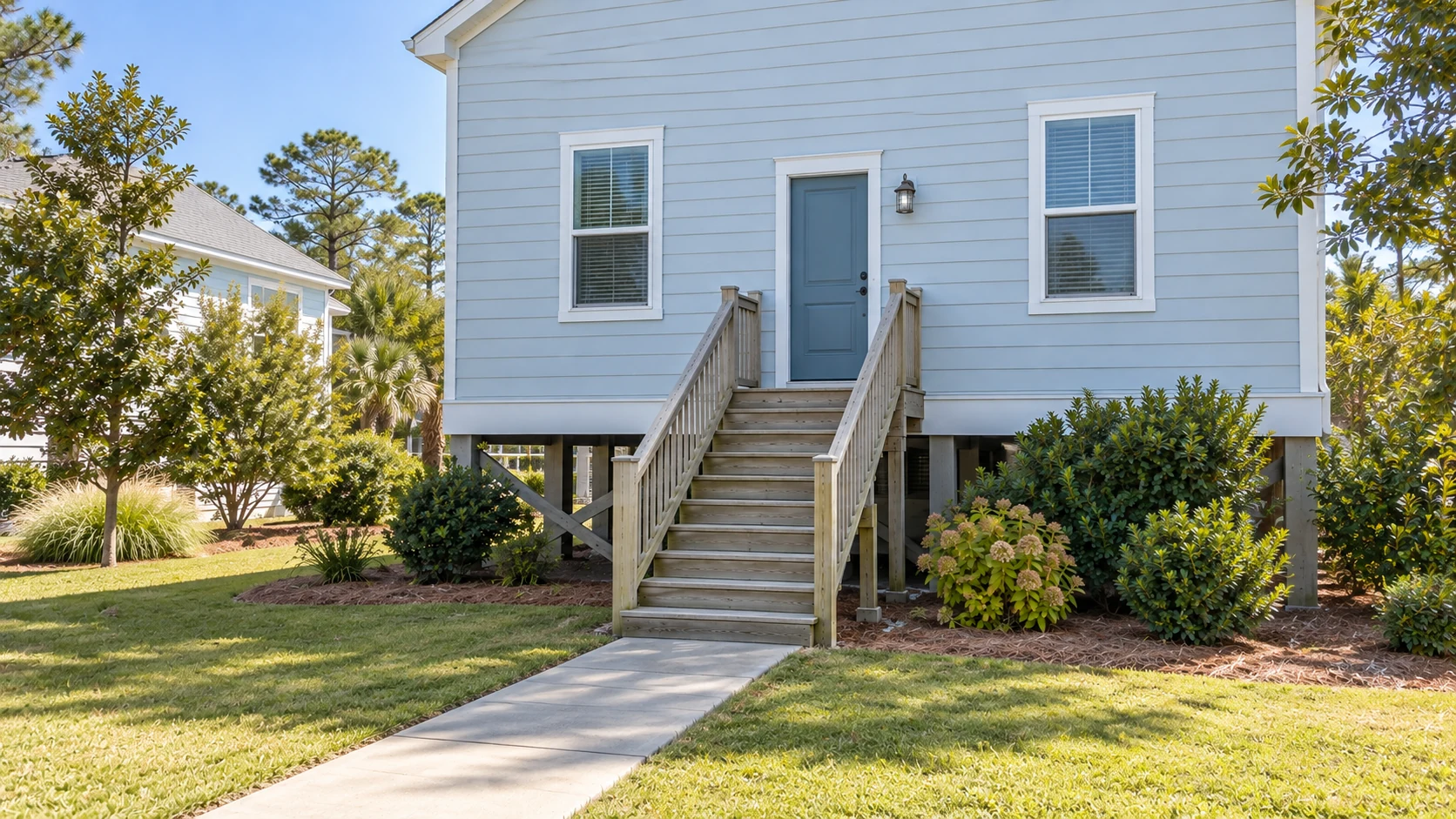
Consider a substantial household shipment from a coastal home with an elevated living floor and exterior stairs. The plan includes fuller packing and a direct dedicated delivery to St. Petersburg. The living-floor elevation, stair route and authorized vehicle position must be checked at the actual property; a neighborhood description or real-estate field cannot establish those conditions.
Before packing, the household sends the whole stair flight, landing, doorway and turns, together with the dimensions and construction of awkward pieces. The owner confirms the driveway’s usable footprint and any different standing alternative. Traffic Engineering and Permits & Inspections review the applicable street or public-space questions. Private consent does not settle any part extending onto a street or sidewalk.
Company preparation and customer packing responsibilities are agreed before the carrying window. The shipment is loaded as a substantial mixed inventory: protected sofas and dressers, identified cartons, customer totes and supported side material. The tiers have stable support and a stepped rear, with restraints contacting the held faces. A row of identical boxes or a sparse wall with a largely empty truck would not describe this direct move.
The St. Petersburg contact checks possession, the receiving entrance and placement plan. The illustrative direct window is 2–3 days after loading; a suitable consolidated alternative uses up to 60 days. The choice affects how the household arranges its first nights and receiving availability. Review any storage or additional handling explicitly rather than assume a later arrival includes those stages.
Example 3: A Kempsville household with a possession gap in Cobourg, Ontario
Consider a household leaving Kempsville before its Cobourg home becomes available. The Canadian destination is the Town of Cobourg in Ontario. The planning problem is the gap between departure and usable receiving access, rather than simply the road journey. This hypothetical household identifies what travels, what stays accessible and who can authorize release from any agreed storage.
The estimate separates pickup, packing, storage and delivery. The household keeps immediate belongings and private documents with it and supplies sensitive identity or customs information through the designated process. The moving contact reviews the actual Canadian inventory and applicable document procedure. A delivery example does not establish admission, document approval or a guaranteed border crossing.
The illustrative direct window is 2–3 days after loading. A suitable consolidated Canadian shipment uses up to 60 days; the Canada policy takes priority over proximity. Neither window resolves a home that has no usable receiving date. Agree the possession condition, contact and available storage or revised receiving before departure, with charges and additional handling identified.
When possession is confirmed, the household supplies the final access photographs and manager or owner instructions. Review the entrance, approved vehicle position and receiving period before releasing the shipment. Keep the decision-maker reachable if a key handoff or border-related change prevents the original plan; a temporary accommodation address does not automatically become another delivery stop.
Example 4: Customer-packed selection from Town Center to Vancouver, Washington
Consider a smaller selected shipment from a Town Center apartment to a one-level Vancouver home in Washington State. This is a United States destination, distinct from Vancouver in British Columbia. The household packs ordinary belongings in plain cartons and a suitable tote, while the mover prepares a removable-leg dining table and the other reviewed furniture.
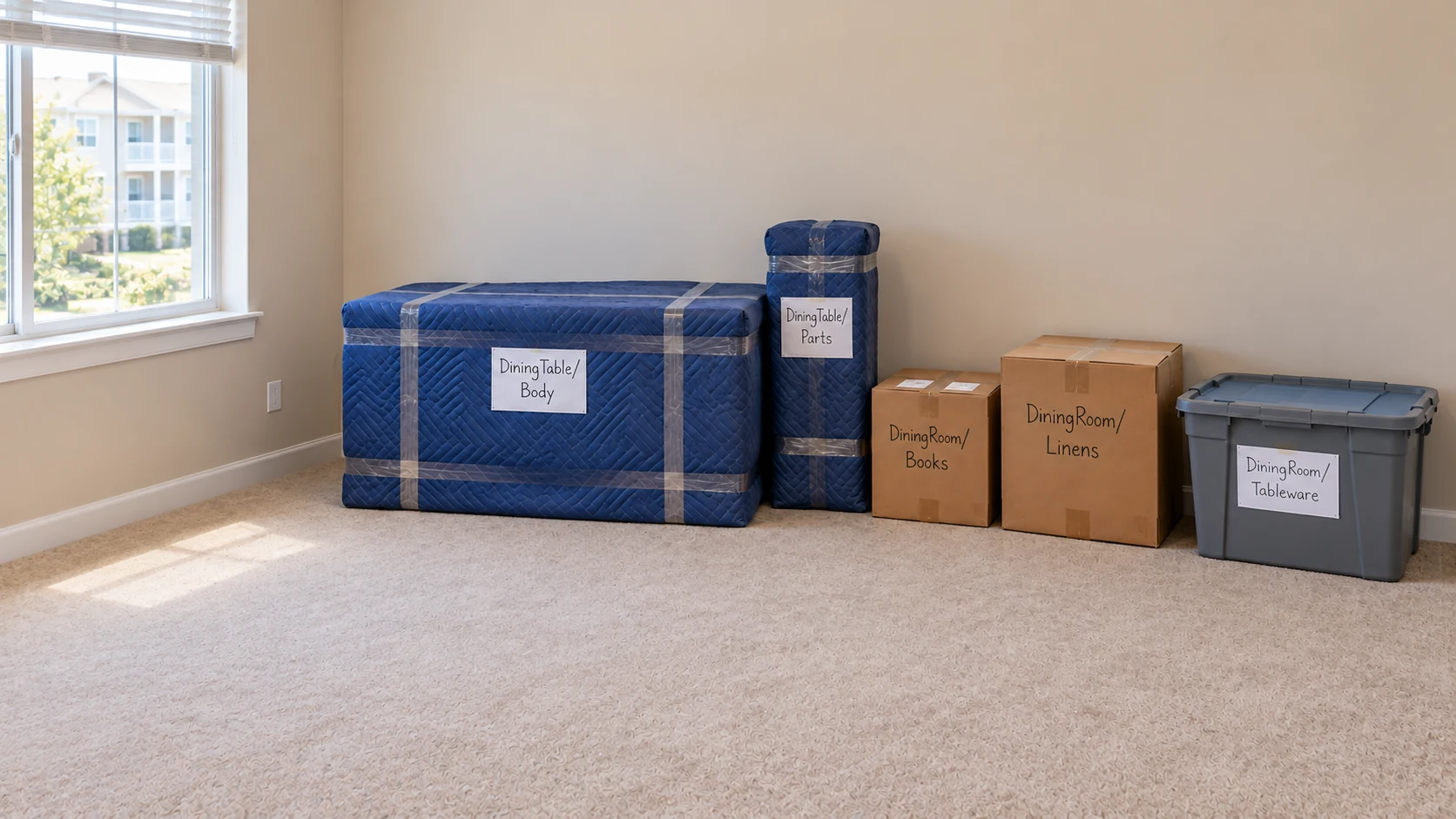
The building manager confirms the service entrance, lift reservation, dimensions and earlier preparation access. The selected containers carry room and contents labels so sorting does not depend on company branding. The quote identifies customer packing separately from company furniture protection and any optional company cartons. Consolidated suitability follows the actual selected shipment and flexible receiving, rather than a minimum-volume rule.
The table body is protected before safely removing its long legs. Matching protected parts and hardware stay together and identified with the body. Keep the prepared piece and containers in a permitted indoor area without blocking the shared route. A static wrapped parcel illustrates preparation; it cannot prove unseen construction or the complete history of the work.
The illustrative direct window is 5–6 days after loading. A consolidated Washington delivery window is agreed individually. The receiving household confirms which dates it can attend and any storage need before selecting the service. A one-level home still needs review of the vehicle position, threshold, doors and turns.
After delivery, inspect the agreed table placement, protection removal and basic reassembly while the crew is present. Ordinary installed long legs are appropriate for the finished piece at this stage. Keep the labelled customer containers accessible for later opening and the adjacent passage clear. Table unwrapping and placement do not mean every carton has been opened or the whole room equipped.
Finish disposal and weather arrangements before key return
Separate unwanted pieces from the travelling inventory before packing. First establish whether the property receives City curbside service or uses a private building collector. The solid-waste code limits the ordinary City collection route for multiple-unit buildings; an apartment or condominium should confirm its actual arrangement with management.
For eligible addresses, the bulky-item detail asks for requests three days or more before the regular collection day, while the waste overview says two weeks or more. Plan two weeks ahead where possible and obtain the available date and item preparation. Keep setout clear of the street, sidewalk and overhead obstructions. Describe mattresses or other unusual pieces explicitly; cardboard cartons have a separate recycling stream.
If the property must be empty sooner, arrange another confirmed lawful removal option. Do not assume the moving truck can serve as a resident disposal fallback: the City facility rules exclude cargo or panel vans and certain commercial configurations even with household waste. Company removal and packaging removal need their own scope and charges.
For winter dates, assign clearing of the private walk, stairs, landing and driveway. City Code section 33-14 uses a six-hour sidewalk snow-and-ice period after removal can first reasonably be effected. Inspect the actual approaches and follow current official conditions before arrival. If weather, possession or a building window changes, agree an available alternative with the responsible contacts before using the old plan.
Long-distance moving questions
Where can I arrange long-distance pickup around Virginia Beach?
We can review long-distance pickup in the independent City of Virginia Beach and nearby addresses in Norfolk, Chesapeake and Portsmouth. These are separate independent cities, with their own street and collection authorities. Chesapeake Beach is a Virginia Beach neighborhood, rather than the separate City of Chesapeake. Send the actual address, inventory and complete property route; a postal name does not settle the applicable jurisdiction.
What does direct dedicated delivery include?
A dedicated truck serves the reviewed shipment, with the same moving crew at pickup and delivery. Agree preparation, both carrying routes and receiving access. The survey and planning team performs a separate role and is not necessarily that crew.
When can consolidated delivery suit my household?
It can suit a smaller selected shipment with flexible receiving, illustratively around 300–400 cubic feet or less. That is not a minimum. Review the actual pieces and cartons, receiving contact, window and any storage or additional handling.
When do the illustrative delivery windows begin?
After pickup and loading are complete. Packing, household travel, possession and building reservations can have different dates. Confirm the receiving arrangement instead of treating a planning window as an appointment.
Can a nearby move arrive the same or next day?
Suitable early loading and available receiving access can make a shorter nearby schedule possible. The road journey alone does not establish same-day or next-day delivery. Discuss the actual appointment before booking.
Does taking longer change the agreed flat price?
For unchanged long-distance inventory, access and services, the agreed flat price stays the same if travel or delivery takes longer. Changes in scope are reviewed and agreed separately in writing.
Can I pack ordinary belongings myself?
Yes. Identify which cartons and totes you prepare and which items need company packing. Close suitable containers and identify the destination room and contents. Company cartons and optional packing work have their own agreed charges.
Are furniture wrapping and basic reassembly included?
Basic furniture protection and suitable basic disassembly and reassembly are included in the reviewed moving scope. Protect the body before safely removing long legs, and keep matching protected parts and hardware together. Specialist construction or unresolved access needs separate review.
Should I leave clothes in dresser drawers?
Empty ordinary dresser drawers and retain them in the body for the reviewed transport. Identify genuine loose components separately; do not confuse removable shelves or parts with fixed structural pieces.
Who handles truck parking in Virginia Beach?
The contact depends on the frontage. Parking Management lists municipal locations and refers named on-street areas to Traffic Engineering. Permits & Inspections classifies applicable public right-of-way impacts. The owner separately controls private loading space.
Does a residential or guest permit reserve a loading space?
It does not establish an exclusive reservation. Describe the truck, dates and working footprint to the responsible authority, then confirm the actual category, signs, posting, fees and response if the space is occupied.
What should I send for a raised house or apartment?
Send the whole route from the lawful vehicle position to the rooms: exterior steps, landings, door openings, turns, lift dimensions and carrying distance. Include the authorized entrance, building window and manager contact.
Can a sidewalk serve as a packing area?
The City code restricts packing, unpacking and storing goods on streets and sidewalks. A narrow oversized-doorway-package exception does not create a general staging area. Keep the authorized pedestrian route and exits usable.
Can I rely on a car navigation route for the truck?
Have the carrier review the actual vehicle and load against posted bridge, tunnel and road restrictions, plus current VDOT notices and 511. A planning reference is not permission for a particular truck or route.
Can you move household belongings to Canada?
Canadian destinations are within the household-moving scope. Review the actual destination, receiving access, inventory and applicable document process. Keep private identity and customs information in the designated process; border completion is not guaranteed by a delivery example.
What if possession is delayed?
Discuss available storage or revised receiving while a workable option remains. Agree access, release conditions, contact, costs and any additional handling. A temporary address does not itself create storage or a second delivery.
Does furniture unwrapping include opening every carton?
Furniture unwrapping, placement and basic reassembly differ from optional box unpacking. Agree which cartons or rooms to unpack and whether packaging removal is included. A placed table does not mean the whole home is unpacked.
Can I leave unwanted furniture for City collection on moving day?
First confirm eligibility, items and the actual collection date. The bulky-item detail says three days or more, while the waste overview says two weeks or more. Plan two weeks ahead where possible and arrange another confirmed option when handover is earlier.
What should I send for a written long-distance estimate?
Send both addresses, dates, inventory, container and packing responsibilities, access photographs, floors, stairs, lifts, carries and receiving contacts. Identify storage, disposal or other requested work and mark unresolved permissions or possession dates.
Explore long-distance destinations from Virginia Beach
These destinations are examples within our United States and Canada household-moving coverage. Send the actual addresses, inventory and receiving conditions, then agree the appropriate shipment and delivery window.
East Coast and nearby interstate examples
- Wilmington, Delaware
- Alexandria, Virginia
- Washington, District of Columbia
- Philadelphia, Pennsylvania
- New York City, New York
- Newark, New Jersey
- Albany, New York
- Greenville, North Carolina
Florida and the Southeast
- St. Petersburg, Florida
- Tampa, Florida
- Sarasota, Florida
- Orlando, Florida
- Jacksonville, Florida
- Raleigh, North Carolina
- Charleston, South Carolina
- Savannah, Georgia
Midwest and Texas
- Cleveland, Ohio
- Columbus, Ohio
- Chicago, Illinois
- Detroit, Michigan
- Dallas, Texas
- Houston, Texas
Mountain West and Southwest
- Phoenix, Arizona
- Las Vegas, Nevada
- Salt Lake City, Utah
- Denver, Colorado
- Albuquerque, New Mexico
Pacific Coast and Washington
- Sacramento, California
- Los Angeles, California
- Portland, Oregon
- Seattle, Washington
- Spokane, Washington
- Vancouver, Washington
Canada
- Cobourg, Ontario
- Ottawa, Ontario
- Toronto, Ontario
- Brockville, Ontario
- Peterborough, Ontario
- Montreal, Quebec
- London, Ontario