

What would you like your next week to feel like?
If you still need to reach an office in Washington several days a week, start with Alexandria and Silver Spring. Frederick deserves a different conversation: a smaller city can be appealing, but the journey back becomes a substantial part of the decision. If your income can move with you, Richmond, the Midwest and the Pacific open much larger changes of routine. The right starting point is the part of life you want to change, together with the people, work and independence you want to keep.
Two households can leave the same DC apartment for different reasons. One needs another bedroom without losing school pickup help or a daily office connection. Another has written permission to work remotely and wants to spend more time outdoors. A shorter housing bill matters to both, but the first household may spend the saving on travel and replacement care. The second may be able to compare entirely different regions, provided the employer's permission covers the actual location.
Write one sentence before you collect addresses: “I want ___ to become easier, while keeping ___.” Use it to choose a first horizon below. You can follow more than one; no questionnaire or registration is needed.
I need to keep reaching DC
Start with Alexandria and Silver Spring; compare Frederick only with the actual train and return you can use.
Compare nearby routines →I want more left each month
Compare the same household costs in Omaha, Baltimore or Richmond, then test actual homes and income.
Build the full budget →I want a different landscape or season
Try the lake, mountain and coastal horizons against the difficult season as well as the attractive one.
Compare the whole year →I can move my work, or want another country
Confirm the permitted location and real working hours, then compare the legal route and ordinary week abroad.
Explore another country →Put the useful parts of Washington on the other side of the comparison
Keep a real DC week as your baseline. It might include Metro, an established doctor, a familiar grocery walk, a nearby relative and an activity you return to every week. Those are things a new home needs to preserve or replace. A smaller rent does not automatically compensate for losing them, and a place with a larger floor plan does not automatically make a school day easier.
For a household that cannot drive, parts of DC already offer a strong combination of walking, rail, buses and everyday services. Dupont Circle, Foggy Bottom and the Eastern Market area provide useful starting comparisons; the particular home, hills, entrances and late return still matter. The Washington local guide examines six residential settings and the actual school, utility and moving arrangements. It also distinguishes civic wards, historic districts and school areas. Keep NW, NE, SW or SE with a DC address.
Make a short “keep” list: the people you see, the work you can reach, essential care, an ordinary shopping trip and an activity that makes the week worthwhile. If a candidate replaces a useful walk with two car journeys, count the extra time and the car. If you cannot drive, budget an available alternative with the hours and accessibility you need; a car rental is useful only with a qualified driver.
Stay, change your DC home, or leave the region?
Try a different DC home first when the main problem is stairs, unused rooms, an awkward layout or a journey to one fixed destination. Keeping a useful neighborhood network can be worth more than another distant room. A move within the District can still change the school route, rent, building access and who helps you, so compare the actual home rather than treating “stay” as no change.
A nearby move is a stronger option when you want a different center while keeping DC connections. Alexandria and Silver Spring retain direct links into the region; Frederick asks you to tolerate a much longer, timetable-dependent link. Leaving DC for Maryland or Virginia changes the jurisdiction for public schools, accounts and the home itself. It also makes a household-goods shipment interstate even when the road trip is short.
A farther move becomes compelling when the work, landscape or daily life you want is genuinely elsewhere. Give that benefit a concrete form: a role you can accept, a lake walk after work, a coast you will actually reach, or a home whose whole monthly cost fits. Keep another DC housing option on the shortlist until the farther choice beats it on the things you value.
Three nearby changes, with different ties back to DC
The nearby circle is not a promise of an easy commute. It compares three ways of changing scale while keeping some regional ties: Frederick's smaller center, Alexandria's old-town and rail connections, and Silver Spring's Red Line center. Compare the front-door-to-destination trip and the return at your own hours.
Three nearby changes around Washington
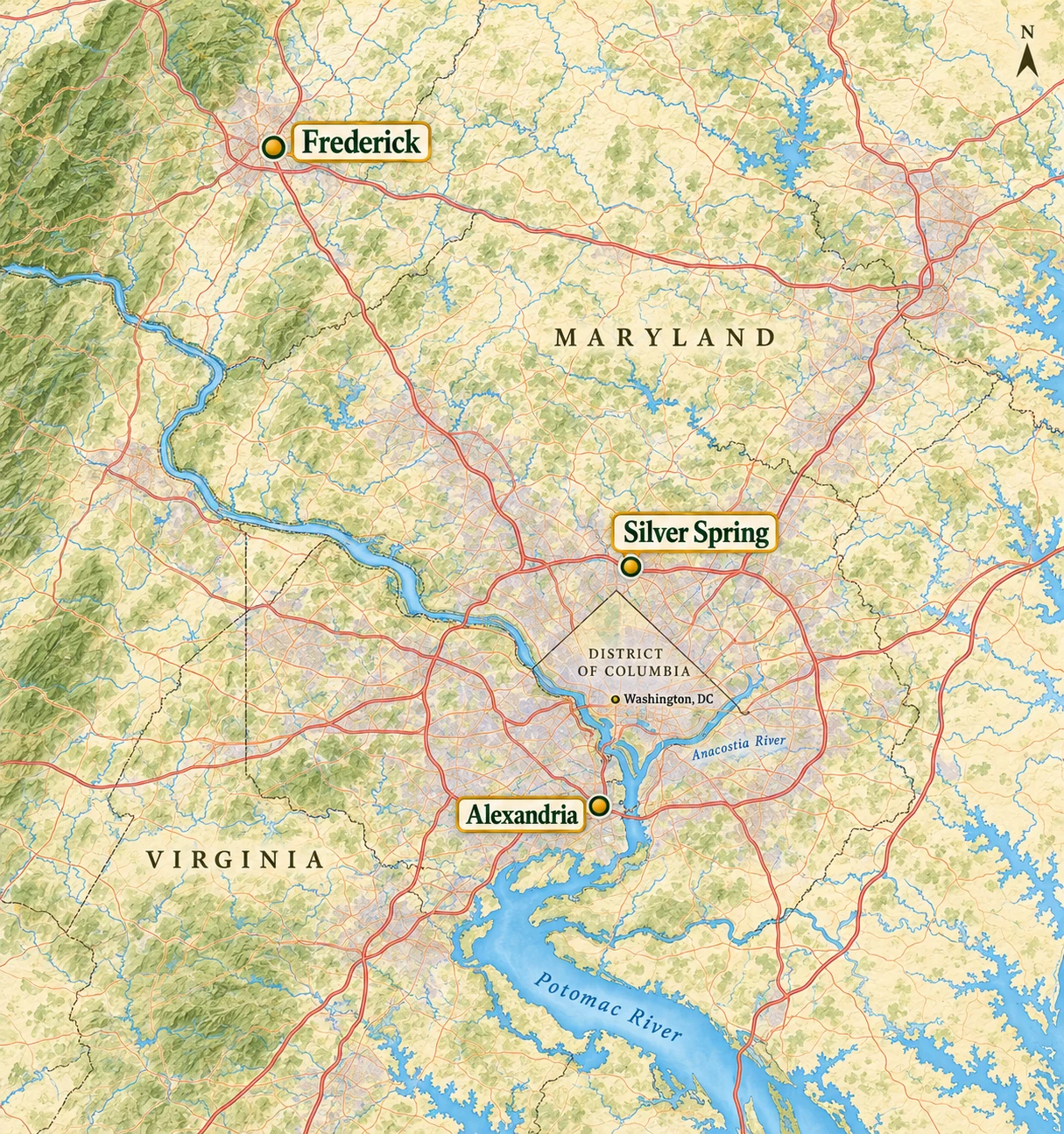
Geographic reference and map use

Frederick, Maryland · a smaller center, a bigger journey
Choose Frederick if a smaller historic center and access toward open country matter more than remaining close to a DC office every day. It can give your evening a more compact circuit while keeping Maryland and DC relationships within regional reach. A downtown visit does not establish that every Frederick home has that routine.
The compromise is the journey back. Frederick's rail connection belongs to MARC's Brunswick service pattern. MTA's September 28, 2026 changes altered individual trains and added a Brunswick–Camden through trip that bypasses Washington Union Station. Use the actual station and train serving your day, including the return; the line alone cannot settle your office schedule.
Spend a weekday in the center and make the work trip at your real hours. If pickup, a late shift or the available return fails, keep Frederick for a household with fewer DC journeys rather than assuming every weekday can absorb the trip.
Local sources: MARC Schedule Change and New Through Service: Brunswick & Camden Lines | Maryland Transit Administration · MARC Station Information | Maryland Transit Administration · The City of Frederick, MD - Official Website | Official Website.
Alexandria, Virginia · keep a capital-region link with a different town routine
Alexandria is a strong first comparison when you want another center without giving up DC work and friendships. An Old Town or station-connected home can combine smaller-scale streets with regional rail access. It is particularly useful to a household whose benefit comes from a better ordinary route, rather than from leaving the region entirely.
The compromise is that the attractive waterfront, the Metro station and an affordable home can be separate places. King Street and Braddock Road are established transit centers, while the city's planning material also identifies future facilities. Do not treat an announced project as an operating connection. The ACS rent point estimate is above DC's; do not begin with an assumed housing saving.
Try two homes: one whose station walk you like and one with more usable space. Follow the entire work and grocery circuit, and compare the actual rent and bills. Alexandria City and a mailing address elsewhere called Alexandria can involve different local authorities; establish the exact property jurisdiction.
Local sources: Transit Planning Program | City of Alexandria, VA · Ride | WMATA.
Silver Spring, Maryland · a Red Line center rather than a complete break
Consider central Silver Spring when you want to remain connected to Washington by Metro while changing the home and neighborhood around the trip. A useful apartment near the Red Line can preserve regional work and social ties with a different everyday shopping and walking circuit. This is a change within the capital region, with less need to rebuild your whole network.
The compromise is the actual distance from the door to transit, and whether the home improves the week enough to justify moving. The Silver Spring Census-designated place is neither all of Montgomery County nor every postal address using the name. Its historical rent estimate is close to DC's, with survey uncertainty; it cannot establish a personal saving.
Walk from two candidate entrances to Silver Spring station, groceries and the stop needed for the last leg. Then make the return after your usual evening. Keep current rail and bus information with the address rather than assuming every announced regional project already operates.
Local sources: Station Arrivals | WMATA Rider Tools · Ride | WMATA.
Look beyond the capital region
These five horizons each change a different part of DC life. Start with one, then keep a second that offers a useful contrast. The cities are editorial comparisons for different households, rather than a ranking of popular destinations or records of customer moves.
Try another eastern city base
Richmond, Baltimore and Philadelphia offer three ways to retain urban routines while making the new region work on its own. A link back to Washington is useful without turning every option into the same daily commute.
Three regional urban bases
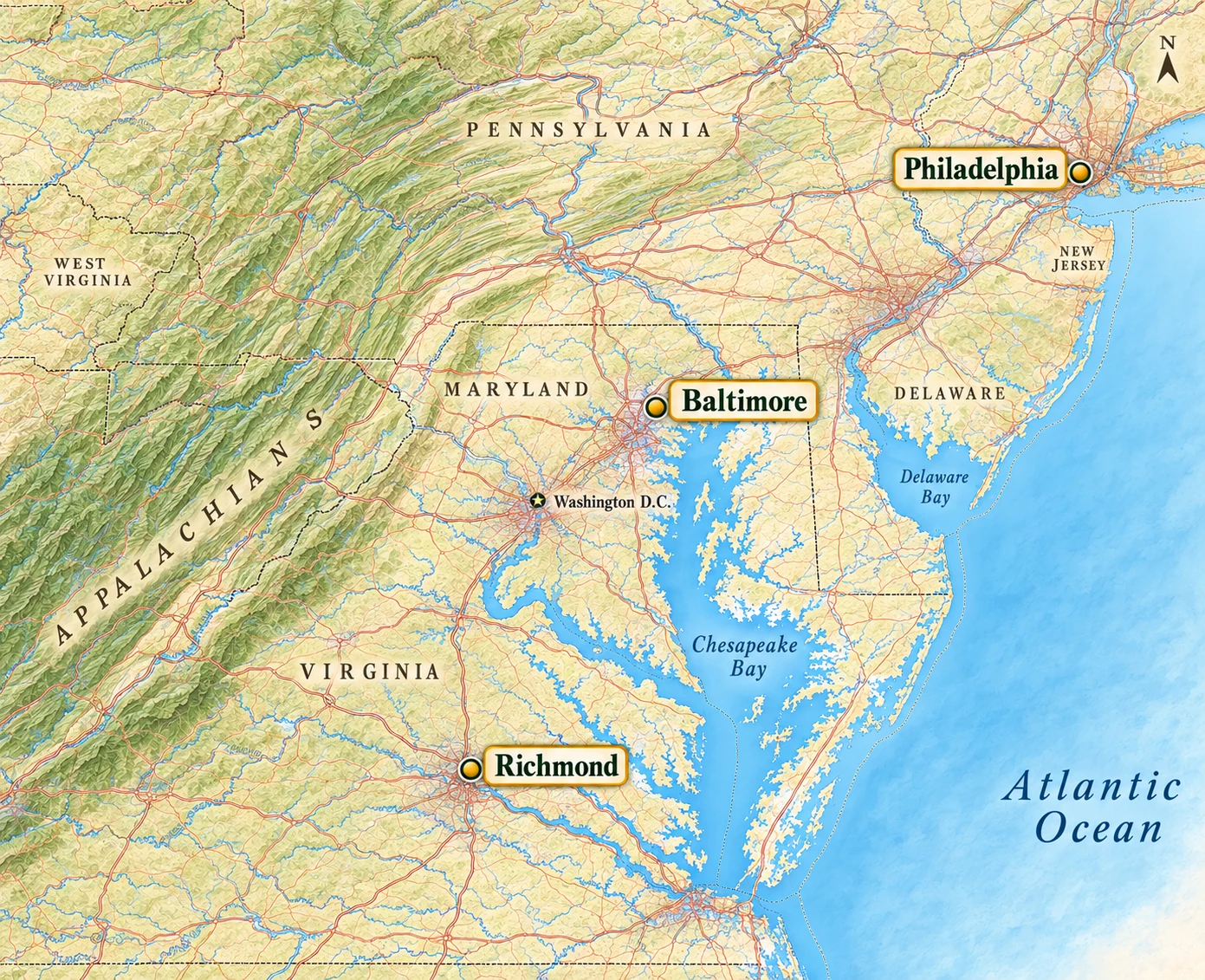
Geographic reference and map use

Richmond, Virginia · build a Virginia week of its own
Richmond is worth a closer look when you want a smaller metropolitan rhythm and a new Virginia base, with DC visits planned as visits. The James River setting can become part of a normal evening rather than a distant weekend idea. It is a better comparison for portable income or a Richmond-area role than for someone whose week still depends on being in DC every morning.
The compromise is rebuilding a local work, care and social circuit. GRTC's Pulse corridor links Willow Lawn and Rocketts Landing, and the wider bus system serves other journeys. A home near one useful corridor does not put every employer, grocery or appointment on it. Use that Pulse corridor as one home-search comparison, then compare a farther home against the extra journeys it adds.
Choose the workplace or actual remote arrangement first, then compare homes whose regular trips work. Spend an ordinary evening on the river-oriented routine you want and price the visits back to your DC people.
Local sources: Home -GRTC.
Baltimore, Maryland · another urban base with a regional rail connection
Baltimore can fit a household that likes city life and wants another urban housing search while keeping a connection to Washington. It is a useful alternative to choosing a smaller town solely for space. The historic rent point estimate is lower than DC's, but neighborhoods, properties and journeys still need their own comparison.
The compromise is that a regional connection can become a long commute when you add both ends. Baltimore Penn and Camden are different stations with different MARC patterns. The September 2026 through-service change is not a promise that every Baltimore train serves Washington Union Station. Separate a Baltimore work-and-home week from a week that still revolves around DC.
Choose a candidate address and identify its useful station or local bus/rail link. Make the actual return at your finishing time, then try groceries and an evening destination. Keep the saving only after current housing and that complete travel plan fit.
Local sources: MARC Schedule Change and New Through Service: Brunswick & Camden Lines | Maryland Transit Administration · MARC Station Information | Maryland Transit Administration · Transit Maps | Maryland Transit Administration.
Philadelphia, Pennsylvania · keep an urban transit habit in another region
Philadelphia is a useful comparison if you enjoy DC's urban routines and want another large-city housing and work search. SEPTA's city and Regional Rail maps let you build around a particular corridor rather than starting with a car for every trip. It changes the city and opportunity while retaining an eastern urban setting.
The compromise is the distance from your existing help and the difference between a city transit trip and a suburban workplace journey. A broad network is not evidence that every affordable home offers a good late return. The city has local Metro routes as well as Regional Rail: the actual workplace determines which part of the network matters to your day.
Take one workplace, program or portable-income plan and two candidate streets. Use current SEPTA maps and alerts for the relevant services, then try groceries, a social trip and the last leg home. Keep the neighborhood that works through the week, not just the one that makes an enjoyable visitor walk.
Local sources: Maps – Southeastern Pennsylvania Transportation Authority.
Choose an inland or coastal Southeast routine
Savannah, Greenville and Wilmington change different things: a warmer coastal-region winter, an inland foothill setting and a river-city base near the coast. Compare the harder summer and the actual household journeys as well.
An inland and coastal Southeast horizon
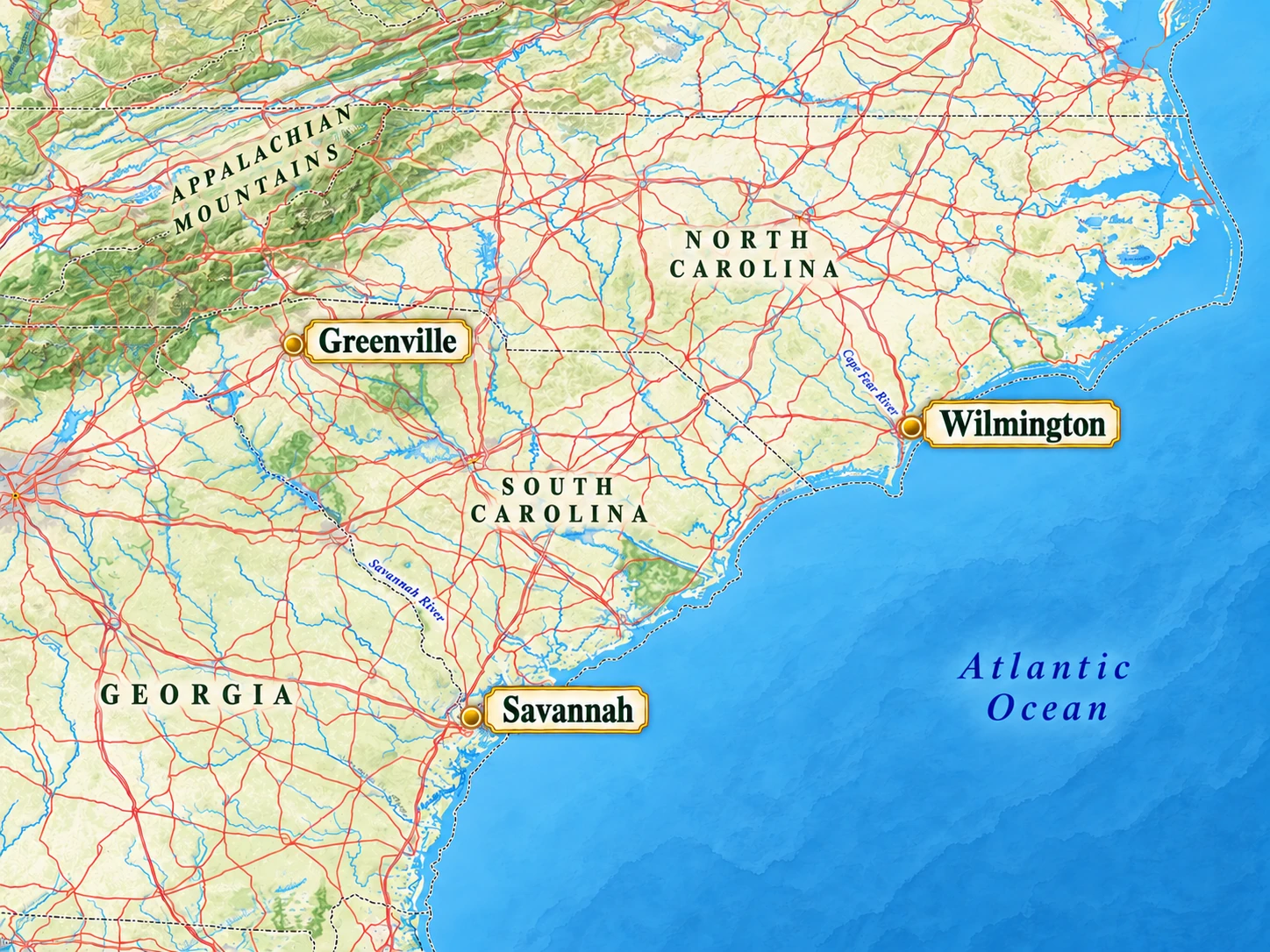
Geographic reference and map use
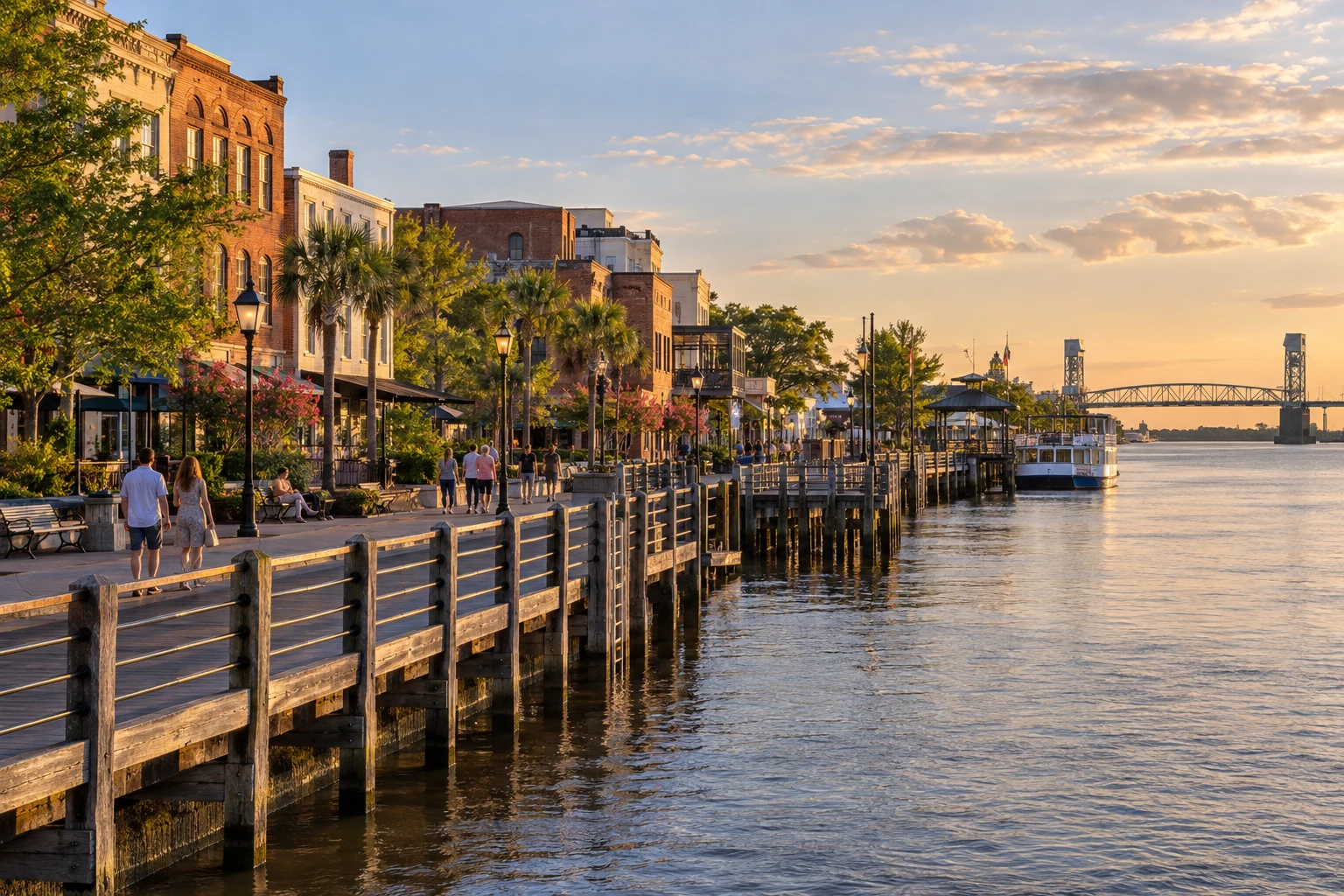
Savannah, Georgia · a coastal-region change with a warmer winter
Savannah is a meaningful comparison if a warmer winter and a different urban scale are central reasons to leave DC. The historic-center setting can support a smaller local circuit, with the wider coastal region available for planned trips. NOAA's airport normals support the warmer-winter comparison; they also show a warm July, so this is a full-year exchange.
The compromise is that a pleasant downtown day does not settle the household's work, care or beach journeys. CAT operates local buses, downtown DOT loops and a passenger ferry across the Savannah River. Those services have particular purposes; they do not make every coastal destination part of a simple daily commute. Coastal and river housing needs its own flood and insurance investigation.
Try the home-to-work circuit in warm weather, include an ordinary grocery trip and price the home you could take. If a beach is part of the reason to move, make that actual journey rather than treating the coast as the front door.
Local sources: Chatham Area Transit (CAT) – Always On The Move!.
Greenville, South Carolina · an inland center toward the foothills
Greenville suits a household attracted to an inland Southern center and access toward the foothills, with a new local role or genuinely portable income. It offers a different landscape and scale from DC without asking you to choose a coastal routine. Make the ordinary home and work circuit the reason for the comparison; scenery can then add to it.
The compromise is the fit between the home, job and the transport available at your hours. Greenlink's route maps and schedules let you test that circuit. A central walk or a bus line near a listing cannot establish the frequency, transfers or late return your household needs. Use the outbound and return timetable before stretching the home search farther from the center.
Compare a central home with a farther property using the same income and full transport budget. Try the recurring outdoor activity you want, then go home and finish the evening tasks. Keep the option where both parts work.
Local sources: Schedules and Routes | Greenville, SC - Official Website.
Wilmington, North Carolina · a river city and a separately planned coast
Wilmington is worth exploring when coastal access is a major benefit you want to add to the week. It gives you a river-city comparison and a different climate from DC, while beach trips remain their own journeys. It is a stronger candidate for portable income or a local offer than for frequent travel back to a Washington workplace.
The compromise is fitting the actual home to work, care, shopping and coastal trips. Wave Transit runs fixed routes and accessible services, but seasonal visitor transport is not a year-round foundation: the Port City Trolley's 2026 season ended September 26. Do not build an October household routine from a summer visitor map. Examine the particular property's flood information and insurance as well.
Try two homes at your actual budget, follow the weekday routes and make the trip to the coast you mean to use. Include transport and visits to DC alongside the lease so the coastal change remains affordable through an ordinary month.
Local sources: Bus, Shuttle & Trolley Transportation - Wave Transit.
Test the interior through a real household budget
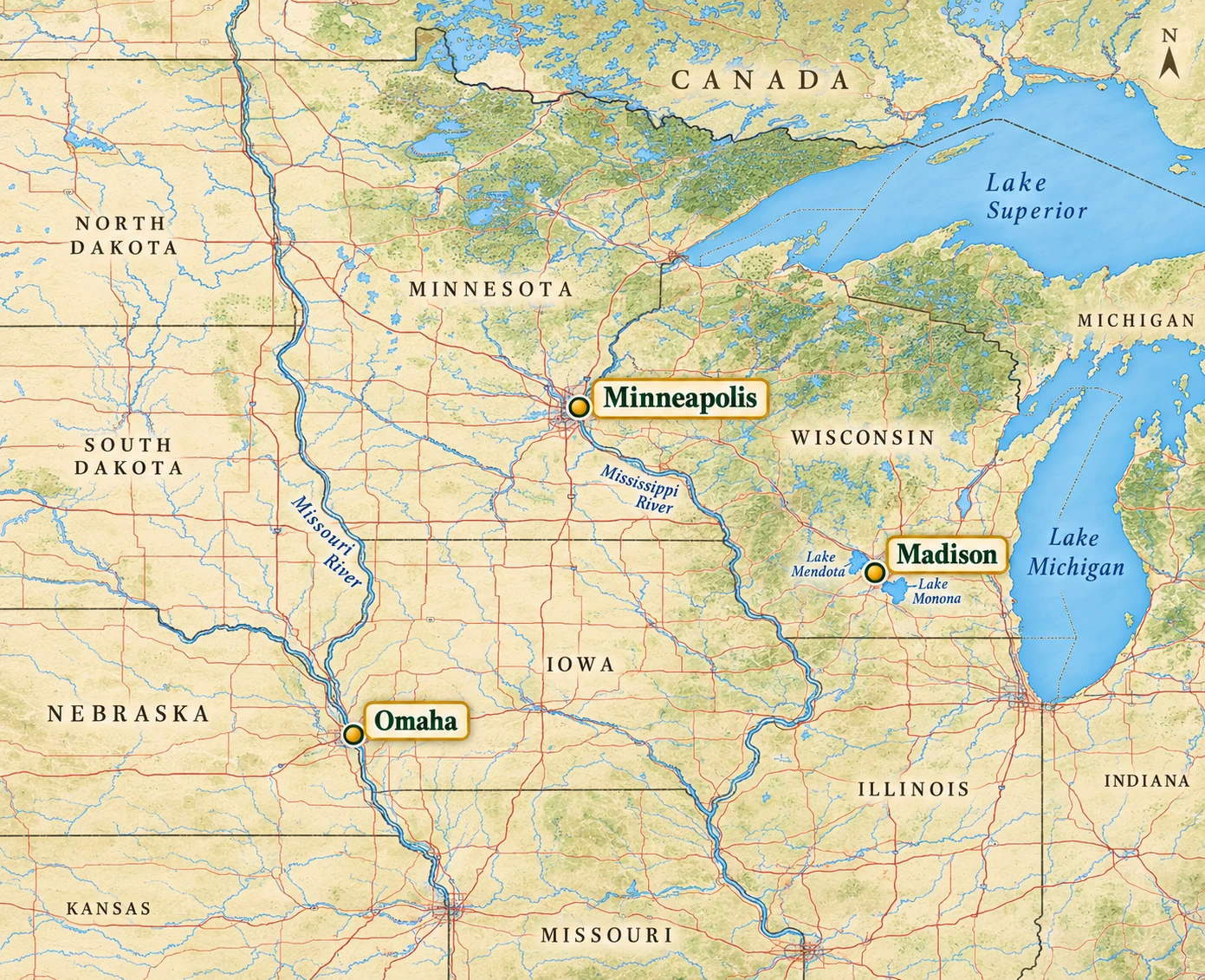
Omaha, Minneapolis and Madison separate a lower housing context, a larger lake-oriented city network and a smaller lake-city circuit. The actual income and full transport plan decide which benefit reaches your month.
Three interior city routines
Geographic reference and map use

Omaha, Nebraska · test how much a lower housing context survives the whole week
Omaha is a useful interior comparison when more room in the monthly budget is a serious priority and your income has a real route there. Its historical rent estimate is well below DC's, which justifies a current housing search. The opportunity is a different household cost structure and city scale, rather than a promised saving on the same salary.
The compromise is rebuilding the daily travel and support network. Metro's ORBT serves the Dodge Street corridor, alongside local buses. That gives you a concrete corridor to compare; it does not make the entire metro equally usable without driving. A larger or cheaper home can require longer shopping, work and social trips.
Compare a home on a useful corridor with the farther house that first attracted you. Put the actual job income, car costs if needed, winter trips and visits to DC into both budgets. Keep Omaha if the remainder and the ordinary day improve together.
Local sources: Home | Metro Transit.
Minneapolis, Minnesota · lakes and an urban week through a colder winter
Minneapolis can fit someone who wants lake-oriented outdoor time while keeping an urban transit and neighborhood routine. It offers a substantial landscape and seasonal change from DC, with city housing to compare against a much more distant suburban plan. Portable income or a suitable local role gives that exploration a practical footing.
The compromise is winter. The Minneapolis–St Paul airport's January normal is 16.2°F, compared with 37.5°F at Reagan Airport. That difference matters for the walk to the stop, footwear, heating and how you use outdoor time. Metro Transit supplies rail and bus connections; future extensions must not be treated as an available journey today.
Choose a home near the destinations you will use and try the stop-to-door walk in difficult weather. Add groceries and an evening activity to the work trip. The lower historical city rent estimate is useful background, while the real lease and full winter routine decide whether this is an improvement.
Local sources: Metro Transit - metrotransit.org · Metro Transit - METRO Network.
Madison, Wisconsin · a smaller lake-city circuit
Madison is a useful alternative when you want a smaller city built around a more compact set of regular destinations, with lakes as part of the setting. It deserves a place on the list when your work or study opportunity is real and you would use that scale every week. Compare it with Minneapolis to separate a smaller circuit from a larger metropolitan network.
The compromise is that a city associated with a university does not supply a job, course place or housing suited to every household. Metro Transit publishes bus routes, BRT information and accessible-service details. The specific route and home determine the usable day. Cold-weather walking and the timing of a school or work year belong beside the rent.
Map the actual workplace or funded program, then compare two homes with grocery and evening trips included. If the smaller city feels right but the job or winter journey does not, keep the reason for liking Madison and look for another place that supplies it.
Local sources: Metro Transit | City of Madison, WI.
Choose a city base for the landscape you want
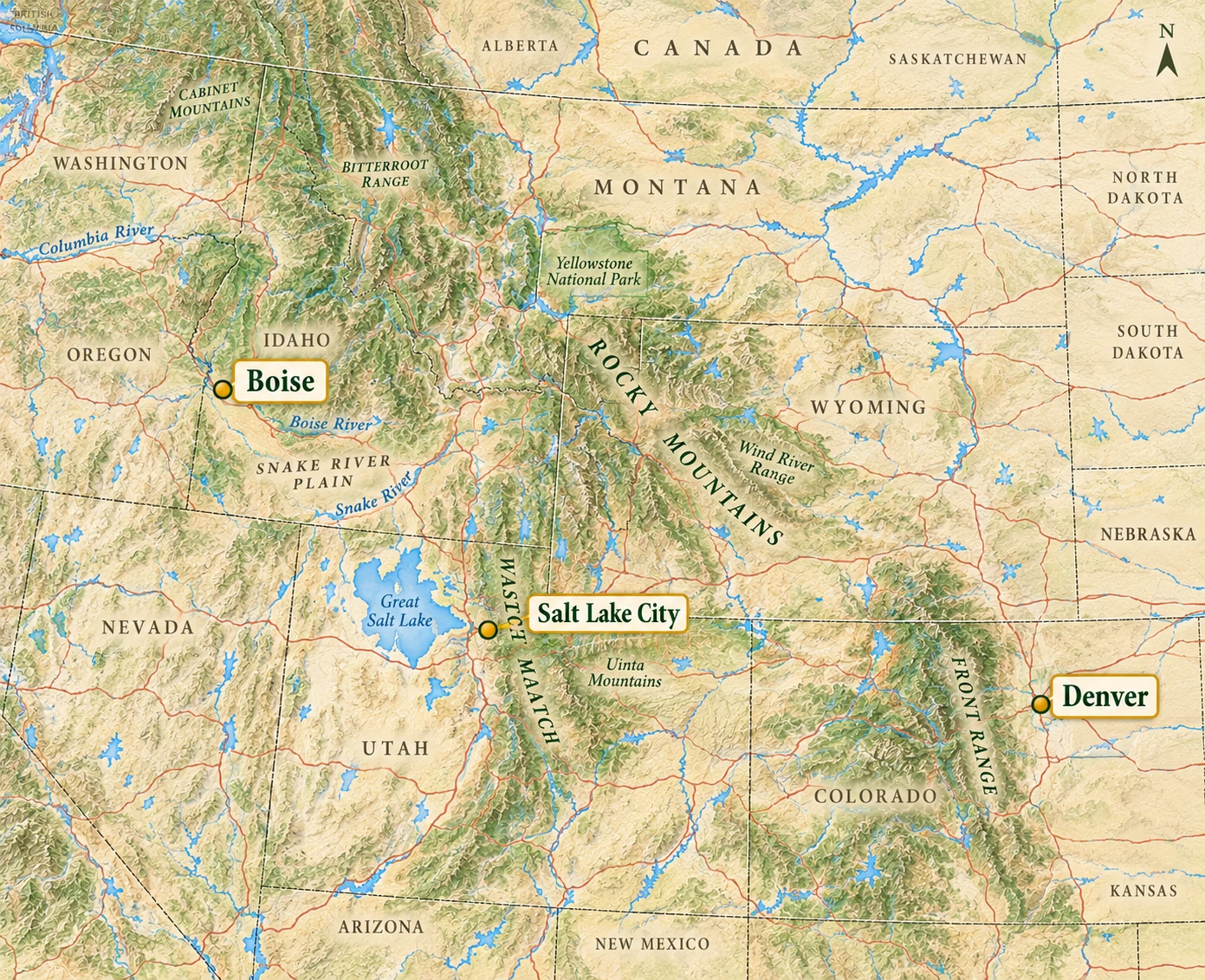
Salt Lake City, Boise and Denver sit in different valleys, plains and foothill relationships. Choose a workable weekday first, then test the mountain or outdoor trip you want to add.
City bases and the mountain landscape
Geographic reference and map use

Salt Lake City, Utah · a valley workday with mountain access
Salt Lake City can fit a household that wants a new valley-based urban routine and access toward the Wasatch landscape. It is a useful mountain-horizon comparison for a confirmed local role or portable income, especially if you want transit to be part of ordinary trips rather than assume every journey requires a car.
The compromise is the difference between living near the mountains and reaching the activity you want at the right time. UTA's TRAX Blue, Red and Green lines and FrontRunner give you different corridors to match to each trip. A valley home, a trailhead and a seasonal mountain service are different locations and arrangements. Choose the corridor around the workday you will actually have.
Try the work and grocery day from two realistic homes, then make the outdoor trip separately. Investigate the relevant weather and air-quality conditions during the difficult season. Keep the home whose ordinary week works even when a mountain outing is postponed.
Local sources: Schedules and Maps.
Boise, Idaho · another city scale beside the foothills
Boise gives a household with portable income or a suitable offer a different city scale and access toward open country. It can be a useful contrast to Denver's larger metropolitan routine. The aim is a manageable home-and-work circuit that leaves time for the outdoor life you want, rather than assuming every Boise address delivers that combination.
The compromise is transport and the exact location of the home and job. Valley Regional Transit supplies the local network, but its October 1, 2026 changes include service reductions elsewhere in the Treasure Valley. Do not borrow a route, frequency or on-demand promise from an older regional description. Boise City is the Census municipality used in the comparison, rather than the whole valley.
Start with the actual work location and two homes whose ordinary trips work. Add the full cost of driving if it is needed, then try a recurring outdoor trip. Main Street Station gives you one central reference for comparing the trips between the actual home and workplace.
Local sources: Treasure Valley Public Transportation - Valley Regional Transit.
Denver, Colorado · an urban base east of the mountains
Denver is worth exploring when you want another metropolitan work-and-home search with mountain trips as an important addition. It gives you a different landscape from DC while keeping the possibility of an urban neighborhood and regional transit. The city is on the plains east of the Front Range; a mountain view is different from living at a trailhead.
The compromise is the separation between work, a home you can afford and the outdoor destinations you intend to use. RTD provides bus and rail routes and the airport A Line, with service varying by line. That is a useful basis for choosing a corridor, not evidence that every job or outing works without driving. The historical city rent point estimate is only moderately below DC's.
Choose a real offer or confirmed remote schedule and compare homes around its daily trips. Make one ordinary grocery and evening circuit, then a separate mountain journey. Count transport, difficult-weather access and visits to familiar people before deciding that the landscape change is affordable.
Local sources: Routes and Services | RTD-Denver.
Imagine a Pacific week at three different scales
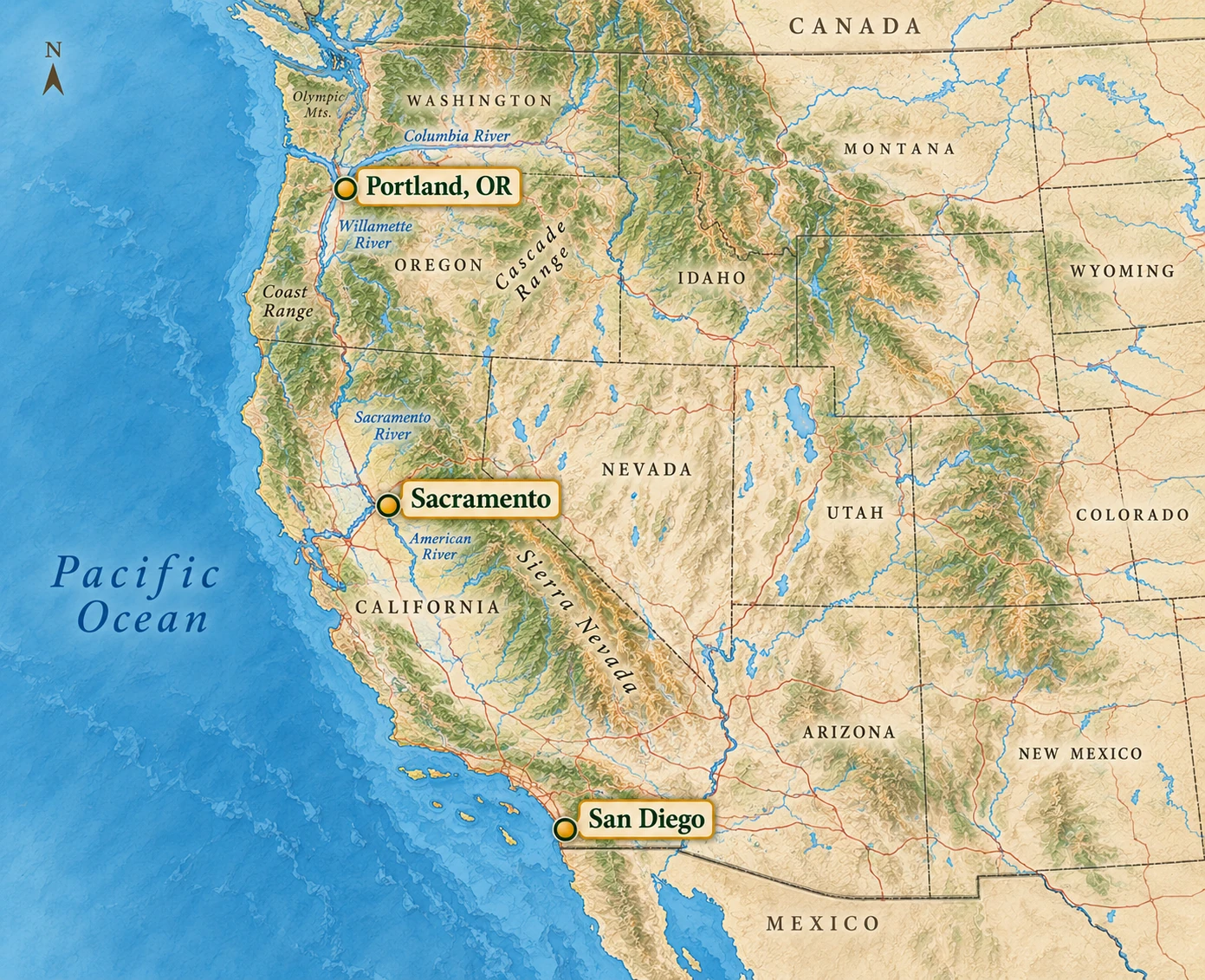
Portland in Oregon, Sacramento and San Diego are separate urban, inland and coastal choices. Keep the three-hour shift from DC, actual housing and the travel to familiar people beside the appealing landscape.
Three different Pacific choices
Geographic reference and map use

Portland, Oregon · keep an urban routine in the Northwest
Portland is a Pacific comparison for someone who wants a different regional setting while retaining neighborhood walks and transit as part of everyday life. It is a more direct urban-routine comparison with DC than choosing a distant home solely for access to open land. Portable income or a local opportunity needs to support the actual housing search.
The compromise includes distance from DC people, the working-hours shift and the trips outside the useful transit corridor. TriMet publishes bus, MAX and WES maps, including a Frequent Service network. A home near an appropriate route can be useful, while coast and mountain outings remain separate journeys. Try the wet, darker part of the year as well as an attractive dry-day visit.
Compare two candidate streets against work hours, groceries and the return after an evening activity. Then make the outdoor trip you want to repeat. For a DC work schedule, try the early first meeting and an ordinary evening trip to see what the new clock leaves for your own life.
Local sources: Maps and Schedules.
Sacramento, California · an inland California week
Sacramento is useful when California interests you but your priority is an inland urban base rather than a home beside the Pacific. It offers a different climate and landscape from DC, with a city and regional transit network around which to compare actual homes. It also gives you a useful contrast with San Diego's coastal aim.
The compromise is that inland California is a different proposition from the coast. A beach, Sierra outing, workplace and home can be separate journeys. Use SacRT's current rail and bus maps for the ordinary travel plan; the operator publishes changes alongside the routes. A hot-season visit and the actual cooling and insurance costs matter beside the lease.
Choose the role or permitted remote arrangement, then compare two homes whose daily trips you would accept. Try the workday and grocery run before the weekend excursion. The historical city rent estimate is below DC's, but it cannot price the specific California home you want.
Local sources: Home - SacRT.
San Diego, California · coast and a different working day
San Diego is a useful Pacific comparison if coastal outdoor time is a major reason to leave DC and your work can survive the three-hour time difference. It offers a much greater change than a Maryland or Virginia move. NOAA's coastal airport normals show a different winter and summer from Reagan Airport; that does not describe every inland home or extreme day.
The compromise is the distance from your DC support network and a housing search that must work on your actual income. The historical city rent estimate is above DC's; do not fund the change with an assumed rent saving. MTS supplies bus and Trolley services, but a home on one corridor cannot settle all of the county's work and coastal trips.
Try a workday with East Coast meeting hours, an ordinary grocery trip and the evening return from two homes you could afford. If your preferred beach requires a separate ride, put that journey into the week rather than imagining it outside the front door.
Local sources: Transit Services | San Diego Metropolitan Transit System.
Compare money left after the month, then fund the transition
A lower housing payment helps only if the rest of the household works. Add utilities, transport, insurance, care, debt payments, visits to familiar people and the essentials you already pay for. Use take-home income that will actually continue. A second adult's reduced hours or a new car can absorb an apparent saving before the first month ends.
The historical ACS comparison below gives a reason to investigate a place; it cannot price the home you will rent. For example, Alexandria's median gross-rent estimate is above DC's, while Silver Spring's is close to it. Those places may improve a route or home arrangement without lowering housing costs. A much lower point estimate in Omaha is a prompt for a current housing search, not a saving that belongs in your budget yet.
Compare historical rent and household-income estimates
2020–2024 ACS five-year estimates, in 2024 US dollars, for the exact Census places shown. Rent covers occupied cash-rent homes and applicable utilities, not current listings. Income is annual before-tax household income, not a job offer. The ± figure is a 90% margin of error. Differences subtract DC point estimates; they are not a significance test or personal savings. Silver Spring is a CDP and Boise uses the official Boise City municipality. On a narrow screen, scroll the table sideways.
| Exact Census area | Monthly gross rent · median | Rent difference from DC | Annual household income · median |
|---|---|---|---|
| Washington city, District of Columbia | $1,954 ± $26 | DC baseline | $109,870 ± $1,937 |
| Frederick city, Maryland | $1,764 ± $39 | −$190 / month | $97,069 ± $4,612 |
| Alexandria city, Virginia | $2,089 ± $32 | +$135 / month | $119,681 ± $2,819 |
| Silver Spring CDP, Maryland | $1,913 ± $42 | −$41 / month | $99,860 ± $7,677 |
| Richmond city, Virginia | $1,372 ± $20 | −$582 / month | $64,587 ± $1,911 |
| Baltimore city, Maryland | $1,331 ± $15 | −$623 / month | $62,177 ± $1,378 |
| Philadelphia city, Pennsylvania | $1,397 ± $14 | −$557 / month | $61,953 ± $919 |
| Savannah city, Georgia | $1,382 ± $32 | −$572 / month | $57,137 ± $1,715 |
| Greenville city, South Carolina | $1,312 ± $43 | −$642 / month | $71,472 ± $2,965 |
| Wilmington city, North Carolina | $1,395 ± $37 | −$559 / month | $66,738 ± $2,914 |
| Omaha city, Nebraska | $1,187 ± $13 | −$767 / month | $73,201 ± $1,372 |
| Minneapolis city, Minnesota | $1,371 ± $20 | −$583 / month | $80,846 ± $1,824 |
| Madison city, Wisconsin | $1,413 ± $20 | −$541 / month | $78,050 ± $2,037 |
| Salt Lake City city, Utah | $1,414 ± $25 | −$540 / month | $75,090 ± $2,663 |
| Boise City city, Idaho | $1,446 ± $29 | −$508 / month | $83,904 ± $2,392 |
| Denver city, Colorado | $1,831 ± $17 | −$123 / month | $94,718 ± $1,644 |
| Portland city, Oregon | $1,655 ± $18 | −$299 / month | $90,919 ± $1,681 |
| Sacramento city, California | $1,779 ± $19 | −$175 / month | $87,321 ± $1,746 |
| San Diego city, California | $2,313 ± $18 | +$359 / month | $108,077 ± $1,463 |
Use the worked examples to see how a household decision changes the remainder. All amounts are hypothetical US-dollar inputs for one month, not local rents, care quotes or moving estimates. Replace them with actual candidate homes and confirmed costs before deciding.
Worked example · hypothetical US dollars per month
| Monthly result | Current home | Candidate home |
|---|---|---|
| Money left each month | $1,500 | $1,650 |
| Take-home income | $6,000 | $6,000 |
| Essential spending | $4,500 | $4,350 |
A $500 housing reduction leaves $150 more after $350 of added transport and visits. At that saving, $6,000 of unrecoverable spending takes 40 months to recover.
See the example inputs
| Expense | Current | Candidate |
|---|---|---|
| Housing | $2,400 | $1,900 |
| Transport and visits | $300 | $650 |
| Other essentials | $1,800 | $1,800 |
Separate one-time unrecoverable transition allowance: $6,000. Refundable deposits and an emergency reserve need their own cash plan.
Worked example · hypothetical US dollars per month
| Monthly result | Current home | Candidate home |
|---|---|---|
| Money left each month | $1,200 | $1,100 |
| Take-home income | $7,800 | $7,800 |
| Essential spending | $6,600 | $6,700 |
Housing falls $600, but travel rises $300 and care rises $400. The family has $100 less left each month; the change needs another benefit it can afford.
See the example inputs
| Expense | Current | Candidate |
|---|---|---|
| Housing | $2,600 | $2,000 |
| Transport and visits | $500 | $800 |
| Childcare and help | $1,700 | $2,100 |
| Other essentials | $1,800 | $1,800 |
Separate one-time unrecoverable transition allowance: $9,000. Refundable deposits and an emergency reserve need their own cash plan.
Worked example · hypothetical US dollars per month
| Monthly result | Current home | Candidate home |
|---|---|---|
| Money left each month | $780 | $850 |
| Take-home income | $3,800 | $3,800 |
| Essential spending | $3,020 | $2,950 |
Lower housing leaves room for more travel and help, with $70 more remaining each month. The smaller home must still preserve access to essential care and everyday independence.
See the example inputs
| Expense | Current | Candidate |
|---|---|---|
| Housing | $1,600 | $1,300 |
| Transport and visits | $220 | $300 |
| Paid help | $200 | $350 |
| Other essentials | $1,000 | $1,000 |
Separate one-time unrecoverable transition allowance: $5,000. Refundable deposits and an emergency reserve need their own cash plan.
Separate three kinds of money. Monthly bills recur. Unrecoverable transition spending includes the services and travel you pay for once. A refundable deposit and an emergency reserve tie up cash but are not an ordinary monthly bill. Avoid counting a deposit as both a permanent expense and money you will immediately get back; the old and new leases can require it at the same time.
If unrecoverable spending totals $6,000 and a move leaves $150 more each month, it takes 40 months to recover that spending. If the move leaves less money, choose it for benefits you can afford rather than calling it a cost saving. Ask for current, comparable housing examples of the same size and usable arrangement; include lease length, deposits, utilities, parking, accessibility and the cost of any overlap.
Let a real job or course lead the work decision
For an on-site DC job, the useful nearby choice is the one whose whole journey fits the hours. A map showing a rail station cannot answer an early start, a late shift or an evening pickup. For work in another region, compare an actual offer with housing near that workplace and the household's second income. A citywide income median describes existing households; it is not a wage offer for your profession.
For remote work, get written confirmation that the employer permits the proposed state or country, how often you must return and which hours you must keep. Put the return travel into the budget. A three-hour shift to the Pacific can turn an ordinary DC meeting into an early morning; a move to Europe can push US working hours into your evening. Try the schedule before you build a social or childcare plan around it.
For study or retraining, compare the named program, entry requirements, funding, timetable and the full academic year. A desirable campus is not a place in a course or permission to work. A regulated profession may require approval from the destination's licensing authority. Keep that step with the job decision, and do not sign a long lease on the assumption that a current credential transfers automatically.

Give the whole household a workable day
For a family anchored to DC care or work, Alexandria and Silver Spring are sensible first comparisons because they can retain regional access. Frederick is more plausible when DC trips are limited and the local week works on its own. A farther job or home needs enough benefit to replace the help you leave. Relatives' willingness to visit is different from dependable Tuesday pickup support.
List both adults' work hours, the actual school or care location, drop-off and pickup, meals and the plan for a sick day. A single parent needs the backup and its availability in the budget from the start. For preschool children, a provider's price is incomplete without a place, start date and usable hours. For schoolchildren, the actual home address and grade govern the appropriate enrollment route; moving out of DC does not carry a DC school assignment into another jurisdiction. Compare the current Maryland report cards or Virginia school profiles with the specific program your child needs, then obtain the local enrollment instructions.
For several generations, begin with who needs a private room, who provides care and who can use stairs. A larger house can become harder to manage if work hours fall and paid help replaces familiar support. Confirm accessible entrances, bathrooms, daily transport, a usable care arrangement and the responsibilities each adult accepts. An attractive neighborhood cannot settle whether the household can safely use that particular home.

Moving alone: choose a week with reasons to return
Living alone can work in a smaller nearby center or a much larger new city. Alexandria and Silver Spring let you retain DC connections while you try a different home routine. Philadelphia, Minneapolis or Portland can offer a more substantial change when work and housing support it. The useful question is which ordinary week you can afford on one income and would want to repeat.
Choose two recurring activities before treating a place as socially easy: a class, a library group, volunteering, a sport or a shared interest. Give each a real journey home, including darkness or winter weather. A lively visitor district can be pleasant without becoming the place you meet the same people every week. Keep some familiar contact during the first months and set aside money for visits if distance changes those relationships.
Use a short visit to try the activity and the evening return, not to decide whether everyone in a city is friendly. Look at an affordable home on the street you could actually use. If it leaves no room for an unexpected bill or the trips that make independent life possible, keep a different housing option in the comparison.
Less home to maintain, with more independence to keep
Downsizing works best when the smaller home reduces work without making daily life harder. Compare a smaller DC home with an address in Alexandria or Silver Spring before assuming that a much farther move is necessary. A new region can be worthwhile for landscape, family or a chosen routine, but it also means rebuilding care and support.
Start with the entrance, bathroom, bedroom, groceries, pharmacy and routine appointments. Include building or community fees, transport, insurance, visits and paid help in the recurring cost. A lower purchase price or smaller floor plan cannot establish that total. Check the actual clinician's availability and accepted coverage; Care Compare is one starting tool, not an appointment or a coverage decision.
Decide what furniture supports the next home after you understand the usable room and entrance dimensions. A favored chair, books and the table you use can matter more than preserving every room's contents. Leave room in the plan for changing mobility and help, as well as the first healthy month. Keep an agreed receiver and first-week support separate from the shipment's delivery date.
Choose the landscape you will use through the whole year
For a smaller nearby city with access toward the foothills, Frederick gives a useful first test. For a coastal change, compare Wilmington or Savannah with San Diego; they are different places and climates, not interchangeable warmer versions of DC. For a colder urban year with lakes, try Minneapolis. Denver, Salt Lake City and Boise change the landscape and the journeys needed to reach it.
The NOAA station comparison makes several exchanges visible. Reagan Airport's January mean is 37.5°F, compared with 16.2°F at Minneapolis–St Paul, 50.7°F at Savannah and 58.4°F at San Diego. In July the same monthly means are 81.0°F, 74.3°F, 83.0°F and 70.7°F. These are 1991–2020 airport-station normals, not today's forecast, neighborhood conditions or a measure of humidity and extremes. A mild monthly mean does not remove heat, cold or flood risk at a particular home.
| Airport station | January monthly mean | July monthly mean |
|---|---|---|
| WASHINGTON REAGAN AP, VA US | 37.5°F | 81.0°F |
| MINNEAPOLIS/ST PAUL AP, MN US | 16.2°F | 74.3°F |
| SAVANNAH INTL AP, GA US | 50.7°F | 83.0°F |
| SAN DIEGO LINDBERGH FLD, CA US | 58.4°F | 70.7°F |
NOAA station data. These stations are references for their settings, not every home or neighborhood.
Visit in the season that could make you reject the move. Try groceries, the bus stop and your preferred outdoor activity when the weather is inconvenient. Coastal and river locations need a separate property-level flood investigation; mountain and western choices need the relevant fire, smoke and access information. Use the actual property and insurer, and the FEMA flood-map service for the applicable US flood information. Keep insurance price and coverage separate from whether a map shows a particular zone.
Four countries, four different ways to begin again
Canada, Mexico, Portugal and the United Kingdom have equal places in this comparison. Each opens more than one city; one profile below gives you a practical starting point. Choose by a lawful household route, usable income and a week you want to live, then compare homes in local currency. The US survey table does not rank these international homes.
Immigration status, the right to earn, an employer's permission, tax reporting and healthcare are separate parts of that decision. A visit can help you choose a place, but it does not grant permission to settle or work. US citizens and resident aliens generally remain subject to US reporting on worldwide income; the IRS explains the basic filing position. Obtain advice for your actual household rather than budget around an assumed tax exemption.
Canada · a Pacific urban life, with a separate right to live and earn
Closer profile: Vancouver. Horizon: Vancouver · Toronto · Ottawa · Calgary.
Vancouver and the western Canadian coast
Geographic reference and map use
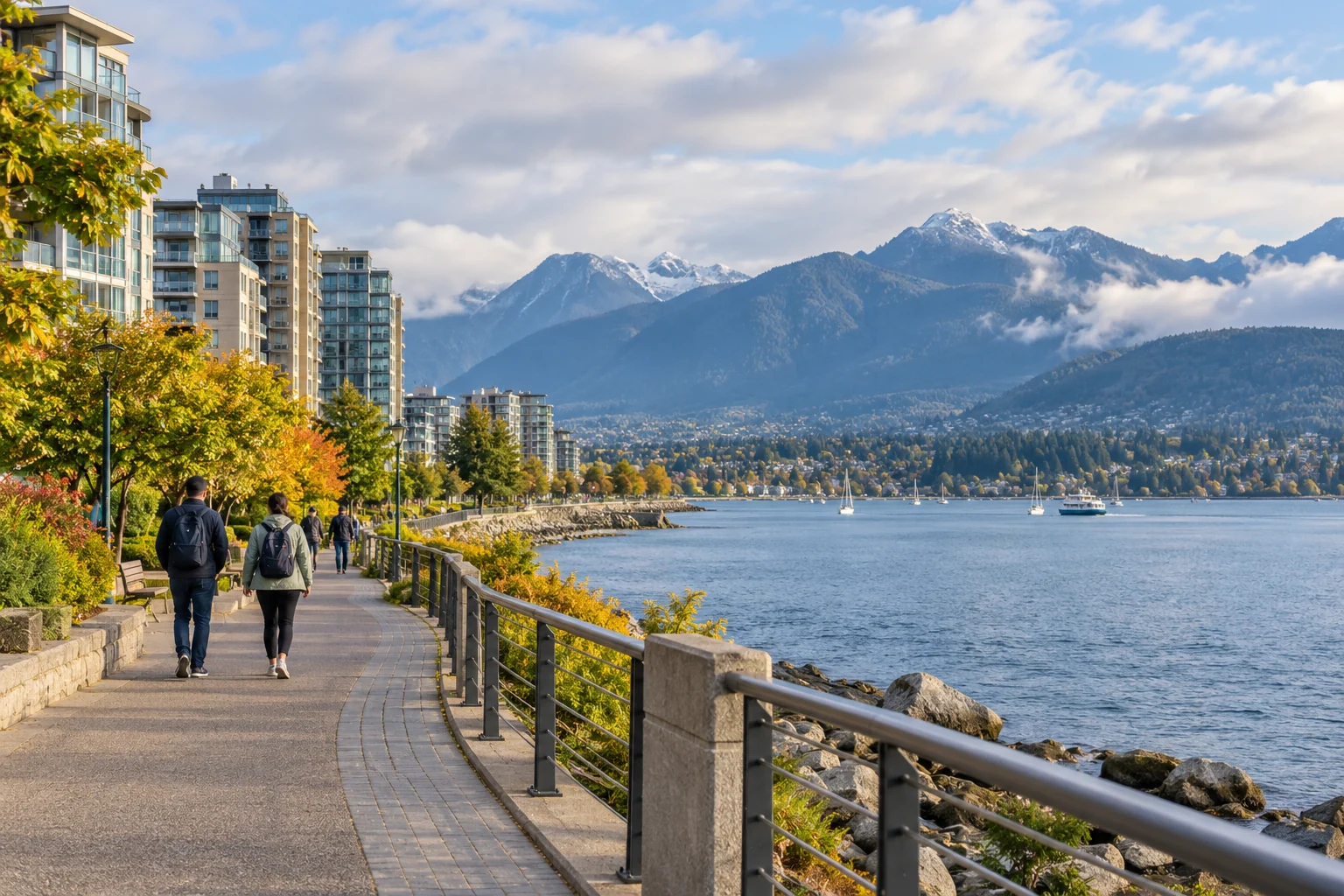
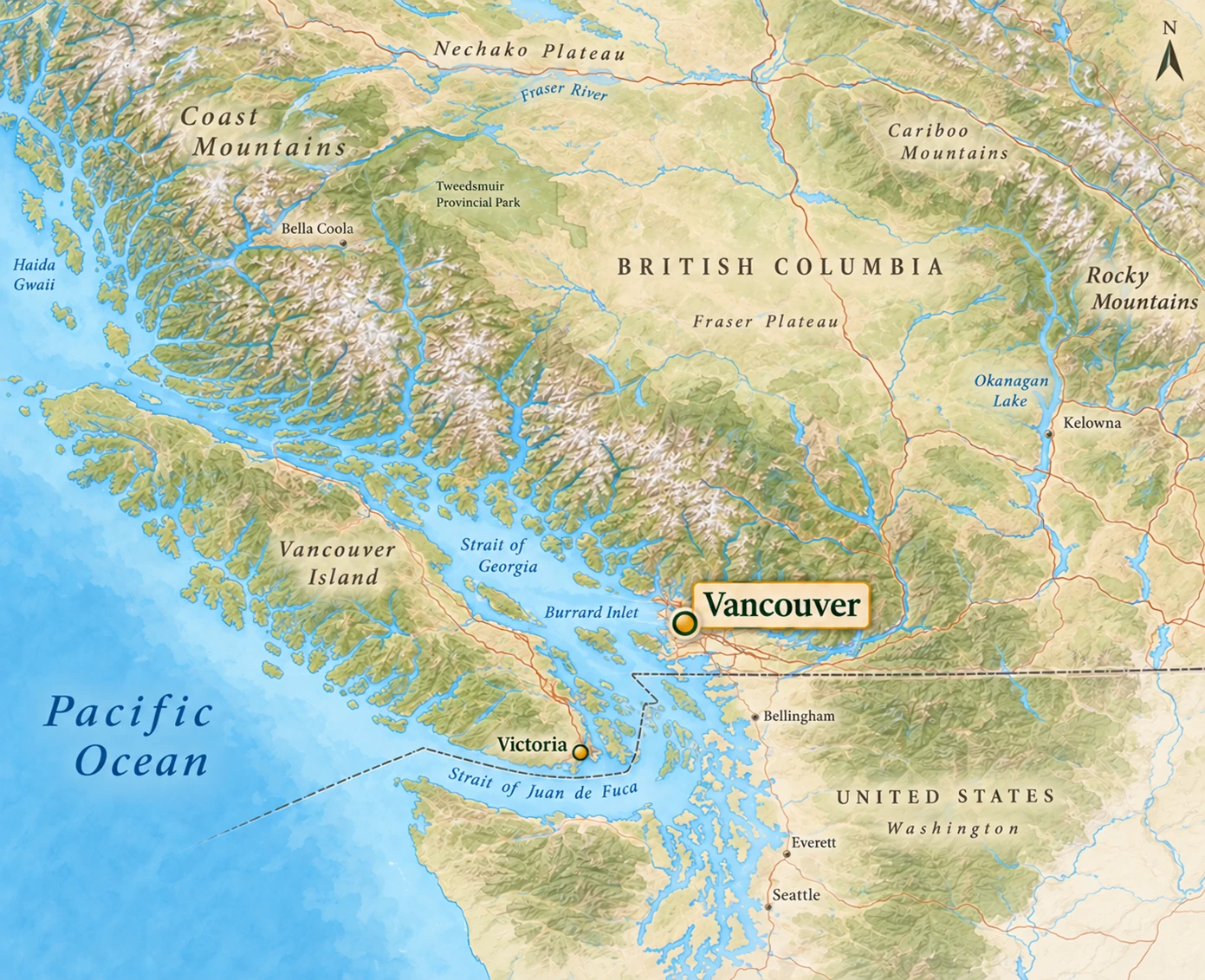
Vancouver, Toronto, Ottawa and Calgary show different Canadian possibilities. Vancouver is the closer profile here for someone who wants a coastal urban routine and access toward mountains, with income and lawful status that can support the move. It is a large change from DC even though Canada is a neighboring country: the preferred city is on the Pacific mainland, not Vancouver Island.
The practical benefit is a home-and-week search around urban transport and the inlet setting. TransLink provides SkyTrain, buses, SeaBus and other regional services. Match the actual home and regular destinations; a coastal photograph cannot establish that the everyday trips or housing cost will suit you. Try a wet weekday, a grocery trip and the return from an activity rather than judging only an attractive waterfront visit.
The first condition is a lawful route for the whole household. IRCC says most foreign nationals need a work permit, with specific exemptions. Permission to enter, permission to live there for the intended period and permission for the work are separate questions. Do not assume a US job or passport settles all three. Check the actual circumstances with IRCC and the employer before signing for a home.
Build the budget in Canadian dollars with actual housing, healthcare arrangements, tax advice, travel back to DC and exchange-rate room. Put a possible visit in the plan before a permanent commitment, and retain a viable US alternative until the essential conditions are confirmed.
Local sources: IRCC: Who can work without a work permit · Schedules and Maps | TransLink.
Mexico · an inland city and a new language routine
Closer profile: Querétaro. Horizon: Querétaro · Mérida · Guadalajara.
Querétaro and an inland Mexican horizon
Geographic reference and map use

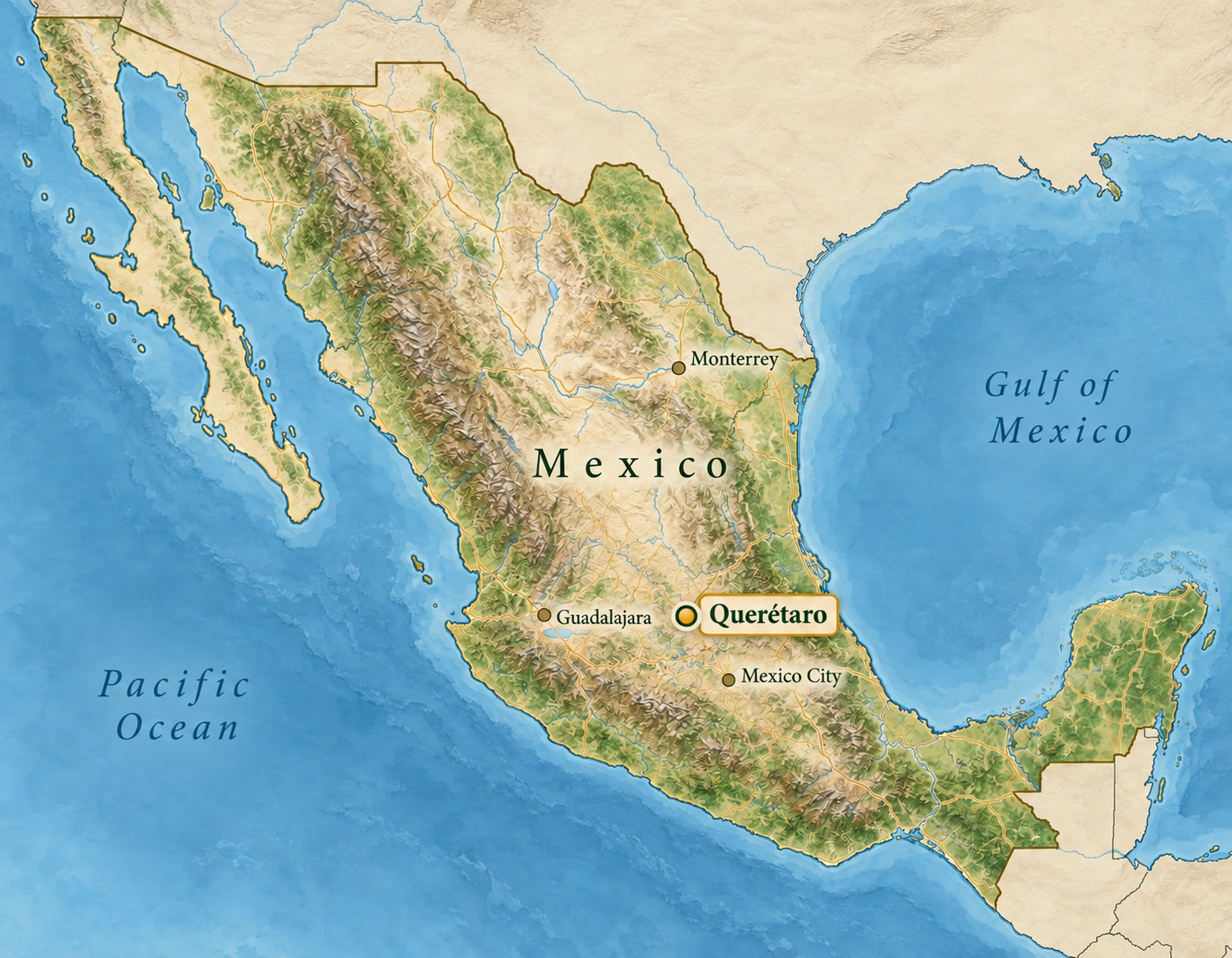
Querétaro, Mérida and Guadalajara open different Mexican city comparisons. Querétaro is the closer profile for a household interested in an inland urban setting, Spanish-language daily life and a new routine supported by a lawful income arrangement. Choose it for the place and life you want, rather than begin with the assumption that every bill will be lower than in DC.
The possible benefit is building a new local circuit around a historic center, ordinary shops and the actual neighborhood where you live. The compromise is that a visitor's central walk does not settle the wider work, school or care journey. Use a realistic home search and spend time beyond the part you first visit. A central apartment and a farther family home can create very different transport and maintenance costs.
Confirm the residence route and the permission relevant to the actual work through the Mexican consular and immigration authorities. A visitor stay, a temporary-residence route and work for a local employer are different arrangements. Use the consulate serving your residence and its current requirements; do not borrow an old financial threshold from another office or assume that being paid abroad settles every condition.
Make the household budget in Mexican pesos, including the actual home, healthcare and coverage, language needs, school or care if relevant, tax advice and DC visits. Try the grocery, appointment and evening journeys during an ordinary week. Keep Querétaro when the lawful arrangement and usable daily life give a reason to move beyond the appeal of the first trip.
Local sources: Mexican Consulate Omaha: Temporary Resident Visa · Municipio de Querétaro.
Portugal · a European routine that must fit the working hours
Closer profile: Porto. Horizon: Porto · Braga · Lisbon.
Porto and the country around it
Geographic reference and map use

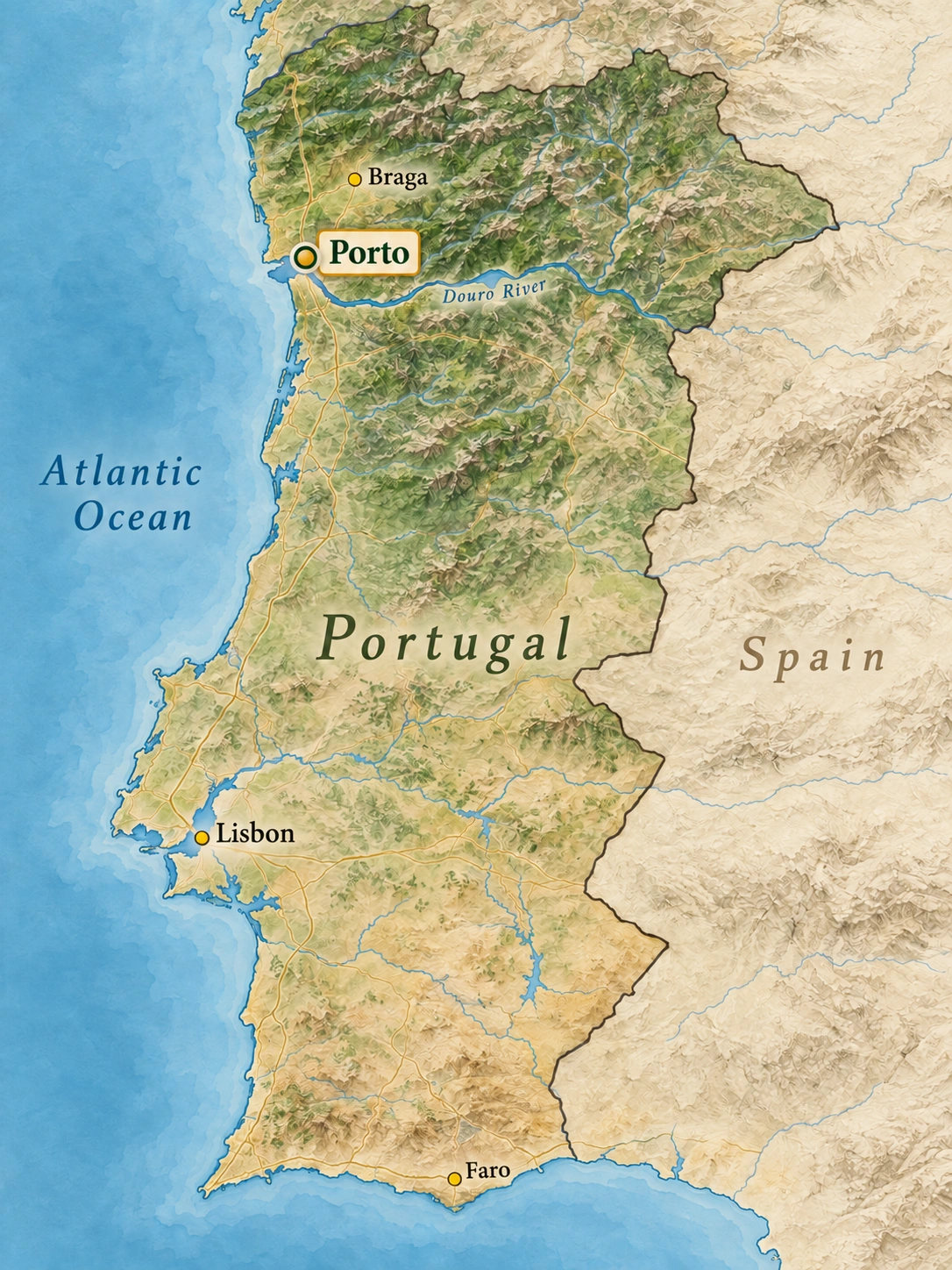
Porto, Braga and Lisbon give a first Portuguese horizon. Porto is the closer profile for someone attracted to a city on the Douro, a different cultural routine and a lawful work or residence route. It can be especially useful to compare with Vancouver: both can appeal to an outdoors-oriented household, but the working hours, language and cross-Atlantic ties are different.
The benefit to investigate is a home whose neighborhood and regular journeys support the life you want. Metro do Porto offers a real network to plan around, while the actual walk and changes of level still matter. A home that looks close on a map can ask more of your daily walking or mobility. Try the route to groceries, the stop and a recurring activity from the particular entrance.
AIMA distinguishes employed, independent and qualifying remote-work residence routes. It also marks some older visa-waiver provisions as revoked for new requests. Start with the current route applying to you; a successful older story is not today's permission. Confirm the employer's country approval, local obligations and the status of each accompanying family member before a housing commitment.
Use euros for housing, utilities, healthcare arrangements, travel and the cash needed to begin. Test a week of actual US meeting hours: the European evening may be part of your working day. Keep Porto if the legal route, household budget and that schedule leave room for the new daily life you hoped to gain.
Local sources: Trabalhar | Working - AIMA · Metro do Porto - A Vida em Movimento.
United Kingdom · an English-language work or study base
Closer profile: Birmingham. Horizon: Birmingham · Manchester · Edinburgh.
Birmingham in the British city landscape
Geographic reference and map use
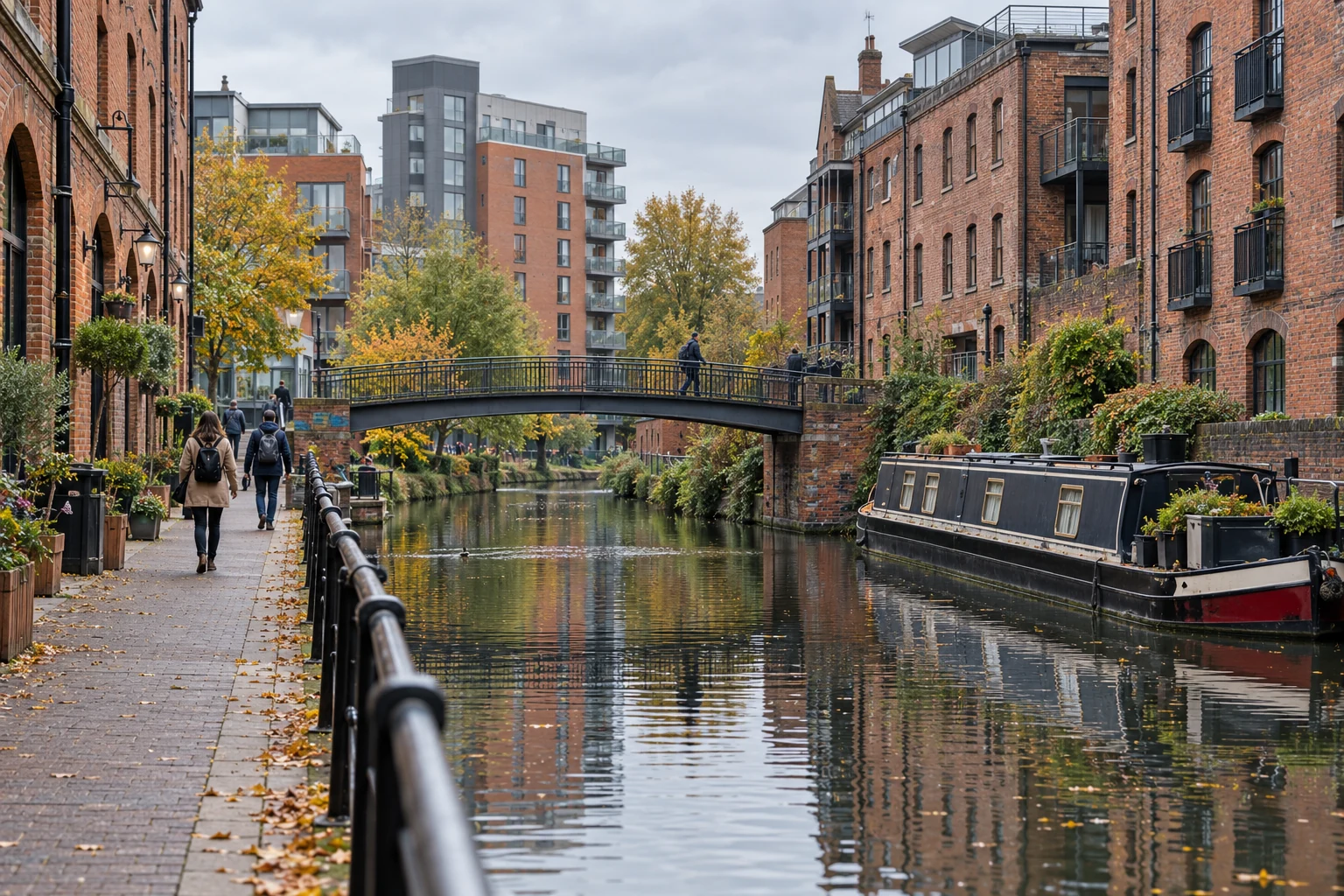
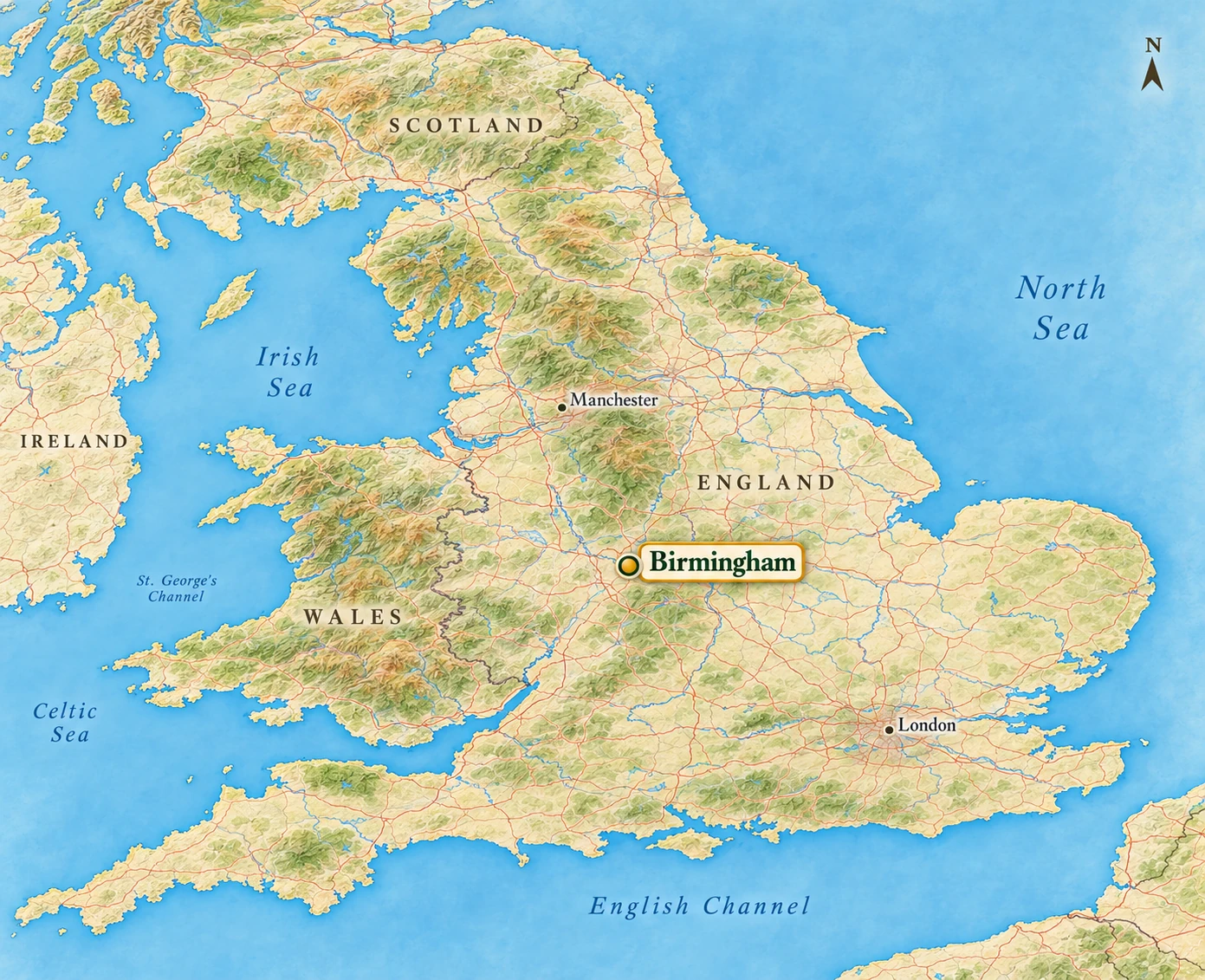
Birmingham, Manchester and Edinburgh offer different UK starting points. Birmingham is the closer profile for a household whose actual job or course is in the West Midlands and who wants an English-language city routine. The reason to choose it is the opportunity and everyday geography, rather than treating all UK cities as substitutes for London.
Transport for West Midlands supplies bus, rail, tram, walking and cycling planning tools. Use them around the actual workplace or campus and homes you can take. The compromise is rebuilding housing, support and care far from DC, alongside a new currency and work pattern. A convenient city-center visit does not establish a usable suburban or late-shift return.
The Skilled Worker route requires an eligible job with an approved employer and a certificate of sponsorship, with the applicable salary and English requirements. It starts from a confirmed offer, and the rules for partners and children need their own review. A Standard Visitor permission is not a general route to settle and take work; use the current UK rules for the actual activities. Another work or study route may apply instead.
Build the budget in pounds sterling with real housing, the costs attached to the chosen immigration route, healthcare arrangements, tax advice and travel to DC. Try the commute and the actual working hours. Retain Birmingham when the confirmed opportunity and complete household week are persuasive enough to justify the distance.
Local sources: Skilled Worker visa: Overview - GOV.UK · Visit the UK as a Standard Visitor: Visit on business - GOV.UK · Journey Planner | Transport for West Midlands.
Try an ordinary week before making the commitment
Keep two to four places with different reasons to remain on your list. For each, identify two plausible homes and one real work, study or care arrangement. Choose a visit that can settle the hardest question: the Frederick return from DC, an Alexandria station-to-door trip, a Minneapolis winter routine, or East Coast work hours from the Pacific.
On the first day, view housing you could actually take and walk to groceries, the stop and the entrance you will use. Ask about the complete move-in cash requirement and bills. On a weekday, follow the work or study schedule, add pickup or an appointment, and make the return after an ordinary evening. Include the trip with shopping bags or the mobility support you normally use.
Then try the life you wanted to add: a lake walk, a coastal visit, a class or an evening in the smaller center. Record what worked and the reason it mattered. A beautiful afternoon belongs in the decision, alongside the difficult season and a missed connection. Before committing, confirm the home, income, essential care, school route where relevant and any legal status; do not turn a hopeful booking into a confirmed fallback.
Keep a short list you can act on
Retain a place when you can name its benefit, live with its main compromise and take a specific next step. “Frederick if I can limit DC office days” is more useful than “somewhere cheaper.” “San Diego if the early working day and real lease fit” is more useful than “somewhere sunny.” If neither beats a smaller DC home, staying is a valid result of the comparison.
Compare two to four places you could call home
Washington, DC origin · date:
What must change?
Three things to keep:
| My comparison | Place 1 | Place 2 | Place 3 | Place 4 |
|---|---|---|---|---|
| Place / actual home | ||||
| What gets better? | ||||
| Hardest compromise | ||||
| Must-haves and support | ||||
| Take-home income / month | ||||
| Essentials / month | ||||
| Money left / month | ||||
| One-time cost / cash reserve | ||||
| What remains uncertain? | ||||
| Next action and date |
Before committing: confirm home, income, essential care, daily routes and any legal status. Keep the fallback and review date with the decision.
When the new home and dates become concrete, use long-distance moving from Washington to compare direct and consolidated shipment arrangements, inventory, access and receiving readiness. Sterling Oakbridge's confirmed long-distance planning covers the United States and Canada, subject to the actual route, dates and agreed work. The Mexico, Portugal and UK profiles are place-selection guidance; they do not establish a company transport service to those countries.
For the first estimate, bring both complete addresses, the belongings you have decided to keep, packing needs, stairs or lifts, building contacts and possession dates. Keep medicines, documents and first-night essentials with the household. Arrange lodging and passenger travel separately if the home or shipment is not ready. A useful relocation decision gives you somewhere to live and a workable beginning, as well as somewhere to send the furniture.
Questions when choosing where to move from DC
Where should I start if I still work in Washington, DC?
Start with Alexandria or Silver Spring when you need regular DC access. Frederick is a more substantial timetable-dependent journey and fits better when office trips are limited. Compare the whole door-to-door return at your real hours, including pickup and evening needs. Keep a different DC home in the comparison if it solves the problem while preserving the useful network.
Will Alexandria or Silver Spring necessarily be cheaper than DC?
No. In the common 2020–2024 ACS release, Alexandria's median gross-rent estimate is higher than DC's, and Silver Spring's is close. A better route or layout can still make a move worthwhile. Current comparable homes, utilities and transport decide the household cost; a citywide historical estimate does not price the property you will take.
Is Frederick a straightforward daily rail commute to DC?
It can work for the right hours, but it is not interchangeable with a home near Metro. Use the current MARC train serving Frederick and the return you can catch. The September 28, 2026 Brunswick–Camden revision changes individual trains and includes through service that bypasses Washington Union Station. Match the entire work and household day before choosing the home.
Which cities are worth comparing for a lower housing budget?
Omaha, Baltimore, Richmond and Minneapolis have lower historical gross-rent point estimates than DC in this guide's common ACS release. That makes them useful current-search candidates, not promised savings. Keep the actual income, comparable home, transport, replacement care and visits in one budget; those can change how much of the housing difference remains.
Which options make sense if I cannot drive?
Keep transit-connected DC homes, Alexandria and Silver Spring on the first list; Philadelphia, Minneapolis and Portland offer farther urban comparisons around suitable corridors. Choose the actual home through work, groceries, care and the evening return. For trips outside the network, use an available accessible alternative at its real cost. A car rental does not solve the journey when no qualified driver is available.
Where can I compare a warmer winter?
Savannah and San Diego provide two measured warmer-winter comparisons with different summers and different coastal routines. The airport January normals shown here are 50.7°F and 58.4°F, against 37.5°F at Reagan Airport. They are 1991–2020 monthly means, not a forecast or a description of every neighborhood. Include the difficult summer, actual property risks and the ordinary week.
Which places could make nature part of everyday life?
Frederick offers a nearby smaller-city and foothill comparison; Minneapolis adds a lake-oriented urban option; Denver, Salt Lake City and Boise change the mountain horizon. Wilmington, Savannah and San Diego offer different coastal-region choices. Keep the activity you will actually repeat, its trip from the home and the season that makes it harder in the decision.
Can I keep a DC job after moving to another state?
Yes, when the employer permits the proposed location and the working arrangement remains usable. Get written location and attendance approval before relying on that income. Include office-return travel, payroll or licensing requirements that apply, and the actual meeting hours. A job described as remote does not by itself authorize every state or country.
How should a family decide between nearby and farther moves?
Compare a nearby home first when DC work, school-day logistics or dependable help anchor the household. A farther home needs enough benefit to replace that support. Build both adults' journeys, the actual care place and hours, pickup and a sick-day fallback into one week. A larger house cannot settle that schedule by itself.
Does moving across the DC line carry over my child's school arrangement?
No. Moving into Maryland or Virginia brings a different local enrollment authority and address-based process. Confirm the actual home jurisdiction, grade and needed program, then obtain the current enrollment instructions. A familiar mailing name, civic boundary or desirable nearby school does not establish the child's assignment or a place in a particular program.
How can moving alone become easier to sustain?
Choose an affordable home and two recurring activities whose evening journeys you can use. A smaller nearby center can preserve DC friendships; a farther city can supply a new routine around real work or portable income. Keep a reserve and planned contact with familiar people. A pleasant visitor district does not establish a repeatable social week.
Should I leave DC to downsize or retire?
Leave when the new home improves the whole routine enough to justify rebuilding care and support. A smaller DC home, Alexandria or Silver Spring can also reduce the amount of home to maintain while preserving regional ties. Compare entrances, bathrooms, groceries, appointments, fees, transport and paid help. A lower purchase price alone does not establish the recurring total or future independence.
Are the rent and income figures current listings or job offers?
No. They are 2020–2024 ACS five-year estimates for the exact Census places shown, in 2024 dollars, with 90% margins of error. Gross rent describes surveyed occupied cash-rent homes and applicable utilities; household income is an annual before-tax measure of residents. Use current comparable properties and an actual work arrangement for a personal decision.
Are the budget examples estimates of what these cities cost?
No. They use visible hypothetical household inputs to show the calculation. Take-home income minus the same categories of essential spending produces the monthly remainder. Moving expenditure is separate from recurring bills, and refundable deposits and money held in reserve are separate cash needs. Replace the examples with actual home and household figures before committing.
How many destinations should I keep?
Keep two to four with different reasons to stay on the list. For each, write the benefit, the hardest compromise and a next action that could change your decision. One nearby option, one farther contrast and a viable DC housing alternative often give a more useful comparison than a long ranking without homes or working arrangements.
Can a visit abroad become a permanent remote-work move?
Only after the applicable residence and work arrangements are settled. Entry permission, a residence route, the right to perform the actual work and the employer's approval are different questions. Canada, Mexico, Portugal and the UK have different routes. Use current official rules for the household and obtain appropriate tax and healthcare advice before a long housing commitment.
What is the first Canadian condition to settle?
Settle the lawful route to live there and perform the actual work. IRCC says most foreign nationals require a work permit, with particular exemptions; a US passport or overseas salary does not establish every permission. After that, compare a real home and usable week in Canadian dollars, including healthcare arrangements, tax advice and trips back to DC.
Why does the guide include Mexico, Portugal and the UK if company delivery is US and Canada?
Choosing a place and booking a shipment are different decisions. These profiles help a reader compare another culture and daily routine. Sterling Oakbridge's confirmed long-distance planning covers the United States and Canada subject to the actual request. The profiles do not establish company transport services to Mexico, Portugal or the UK.
Are the maps suitable for driving or selecting an exact property?
Use them to understand the relative places, water and landscapes. The detailed AI atlas illustrations were checked against geographic references, but they are not street navigation, property boundaries, current closures or approved truck routes. The map viewer lets you enlarge and move around the illustration; use the linked source and actual address for the next practical decision.
What should I bring when I am ready for a moving estimate?
Bring both complete addresses, possession dates, the belongings you will keep, packing needs, entrance and stair or lift details, building contacts and the receiving window. Review direct or consolidated delivery for that shipment with the coordinator. Keep first-night essentials with the household and arrange passenger travel and lodging separately when dates do not line up.
Sources and method
Checked October 20, 2026. Each destination uses its exact geography and the transport owner linked beside the profile. ACS values use the common 2020–2024 five-year release; NOAA values are 1991–2020 station normals. Neither dataset prices a current home or predicts a particular day. Budget inputs are hypothetical household arithmetic.
The city and household scenes are original AI illustrations; the detailed AI atlas maps use checked geographic references. They help picture settings and relative places. Use the actual address and current provider information for a home, journey or service decision.
- Transit Planning Program | City of Alexandria, VA
- Transit Maps | Maryland Transit Administration
- Journey Planner | Transport for West Midlands
- Treasure Valley Public Transportation - Valley Regional Transit
- IRCC: Who can work without a work permit
- Routes and Services | RTD-Denver
- The City of Frederick, MD - Official Website | Official Website
- Schedules and Routes | Greenville, SC - Official Website
- Metro Transit | City of Madison, WI
- MARC Schedule Change and New Through Service: Brunswick & Camden Lines | Maryland Transit Administration
- MARC Station Information | Maryland Transit Administration
- Ride | WMATA
- Mexican Consulate Omaha: Temporary Resident Visa
- Metro Transit - metrotransit.org
- Metro Transit - METRO Network
- Home | Metro Transit
- Maps – Southeastern Pennsylvania Transportation Authority
- Maps and Schedules
- Metro do Porto - A Vida em Movimento
- Trabalhar | Working - AIMA
- Municipio de Querétaro
- Home -GRTC
- Home - SacRT
- Transit Services | San Diego Metropolitan Transit System
- Chatham Area Transit (CAT) – Always On The Move!
- Station Arrivals | WMATA Rider Tools
- Visit the UK as a Standard Visitor: Visit on business - GOV.UK
- Skilled Worker visa: Overview - GOV.UK
- Schedules and Maps
- Schedules and Maps | TransLink
- Bus, Shuttle & Trolley Transportation - Wave Transit
Census ACS methods · 2024 Census Gazetteer · NOAA climate normals
Download the comparison data (CSV) · Download the model inputs (JSON)