
Washington, DC · Packing and receiving
Full Packing and Unpacking in Washington, DC
Choose household packing, selected rooms or fragile contents in Washington, DC, and the unpacking help you want at arrival.
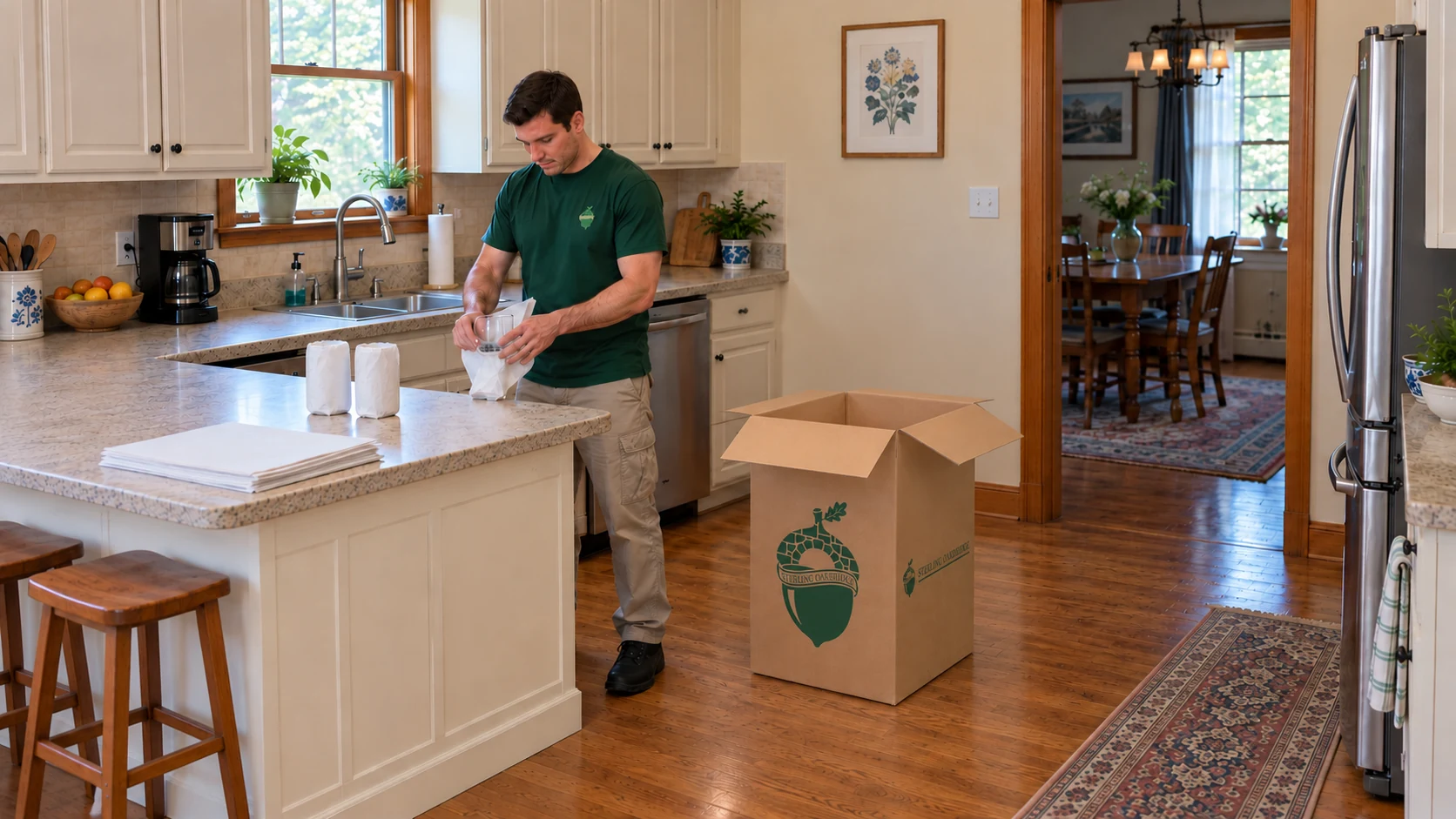
We prepare the agreed belongings while you decide what stays, what travels and what must remain available. Separate preparation visits, materials and receiving work in the estimate.
Start with both complete addresses, including the quadrant and unit, your retained inventory and the dates that are firm. Show open cupboards, storage and the full route through the property. Our planning team will recommend an item-list, video or in-person review suited to the actual work.
Explore packing, costs and local examples
Choose the preparation you want to hand over
Professional packing can give back evenings otherwise spent wrapping dishes and closing cartons. Hand over the whole retained household or a defined part of it: the kitchen, books, fragile collections or rooms you cannot finish. You still make the decisions about ownership, donation, personal belongings and destination.
Full packing covers the agreed contents. Partial packing needs an equally clear boundary: which cupboards or categories the crew handles, what you will prepare and when your group will be ready. Fragile-only work begins with an item list, since a few glasses and a cabinet with removable glass shelves require different protection and working time.
The Washington relocation guide compares rowhouses, converted houses and managed apartments with daily routines and local procedures. For packing, the actual dwelling, contents and permitted working area determine the useful plan. A neighborhood name does not establish the number of rooms or the entrance.
Review open contents before estimating cartons
Open cupboards, drawers and closets during the review. Include books, dishes, hanging clothing, framed work, collections and belongings in a lower level, garage or separate storage. Bedrooms describe part of the home; they do not measure how many objects need wrapping or how much carton space those objects occupy.
A household expecting twenty cartons could discover a much larger group after reviewing every cupboard. An illustrative sixty to one hundred cartons explains why that review matters; it is not a Washington packing allowance or a forecast for one bedroom. Choose the retained belongings before paying to prepare things you intend to leave.
Show fragile projections, repaired joints, heavy contents and anything needing a special container. Explain whether a full bookcase will be emptied by you or the crew. A useful inventory names the work as well as the furniture: preparing a shelf of china differs from carrying an already empty cabinet.
Protect the object through carrying and transport
Protection has to work through lifting, carrying, stacking, restraint and vehicle movement. Glass needs individual wrapping and suitable cushioning inside a sound carton. Dense books need manageable book cartons; larger linen cartons suit light, bulky contents. A closed lid alone does not show that the inside is supported.
Review glass doors, genuinely removable shelves, framed photographs, decorative pieces and collections by their construction and condition. Keep small fittings identified with the correct object. Clean working surfaces and hand protection should suit the material and the required grip. Use fine-art and antiques planning for pieces needing specialist preparation rather than treating every framed object as an ordinary carton group.
Give packing its own access and working period
A small, straightforward local household may fit packing and moving into one day when its inventory, route and available hours allow. More contents, fragile preparation or restricted access can make an earlier visit useful, including in a one-bedroom home. A larger home usually warrants discussing a separate preparation day instead of assuming loading starts as soon as the crew arrives.
Confirm permission for that packing visit: the entrance, security check-in, permitted hours, working surfaces, route protection and indoor area for completed cartons. The later loading curb, elevator or dock has a separate purpose and may have a different window. A packing appointment does not reserve public space or give access beyond the property's instructions.
Keep the complete Washington address and NW, NE, SW or SE with both visits. The guide's truck-space procedure explains the separate DDOT arrangement. Tell us if the preparation vehicle or material delivery needs a particular approved position too; an earlier visit should not depend on using an unconfirmed space.
A shared apartment keeps two work schedules usable
Imagine two people leaving a converted-house apartment. One works at home until late afternoon; the other needs an early kitchen start. They select fragile kitchen packing and books for an earlier visit while each retains work equipment and a small everyday group. They identify which contents are shared and who can authorize their preparation.
The crew uses an agreed surface and stages closed cartons without blocking the common entrance. The household supplies a final handover time for the remaining desk and meal items, with a person available to answer questions. The result is a defined packing job that preserves both routines. The example does not establish that a particular converted house has approved storage or unrestricted shared access.
Keep the final evening and school morning usable
Set aside the bedding, toiletries, simple meal items, clothing and familiar children's belongings needed before departure. Identify when those contents may be packed. Keep medicines, identification, keys, valuables, school paperwork and journey supplies with the household rather than in the shipment.
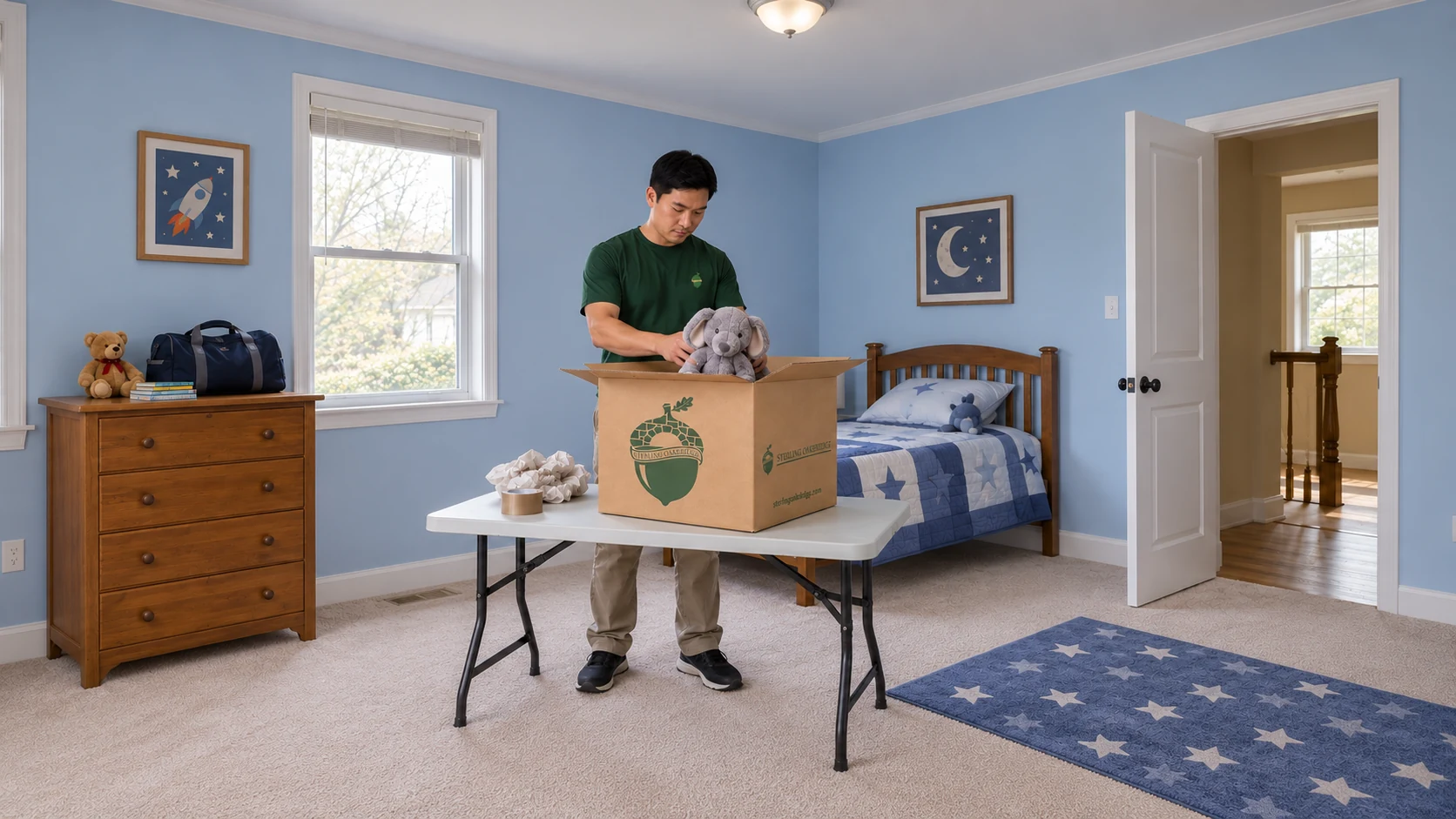
Use a clear physical boundary and explain it to the people packing. A personal bag should not look like another closed carton waiting to load. If the household will travel or wait for possession separately from its belongings, prepare for that gap as well as the first night.
Write the destination before the groups leave the room
Label each carton with its destination, receiving room, useful contents and an identifier connected to the inventory. Add opening priority where needed. Color can help recognize a group, but words still identify the room and contents when a receiver does not know the color plan.

A rowhouse family separates the new home from storage
Consider a family whose Washington rowhouse contains upstairs books, kitchenware and seasonal belongings downstairs. The new home needs school-week clothes, breakfast dishes and selected books first; less-used contents go to agreed storage. The family decides what it will keep before preparation and gives the home and storage groups separate lists.
Keep school-morning supplies and the child's familiar travel group available until departure. Stage prepared groups in permitted areas with the stairs clear, then match the loading and stop order to the two receivers. Storage planning covers intake, holding, retrieval and later delivery. A label identifies a destination; it does not reserve storage or authorize a later visit.
The useful saving is avoiding preparation and repeated handling of belongings already chosen to leave, while finding daily items without opening the storage group. The actual rowhouse's steps, unit boundaries and receiving conditions still need review; these are hypothetical household decisions, not a completed customer job.
Open the cartons that restore daily functions first
Basic unpacking opens the agreed cartons and places contents on suitable surfaces. Breakfast dishes can go on a clear counter and linen on a designated table. Identify which cartons should remain closed, the surfaces that are available and a safe place for used paper. Check that paper for small fittings and personal belongings before gathering it.
A condominium arrival opens one useful group at a time
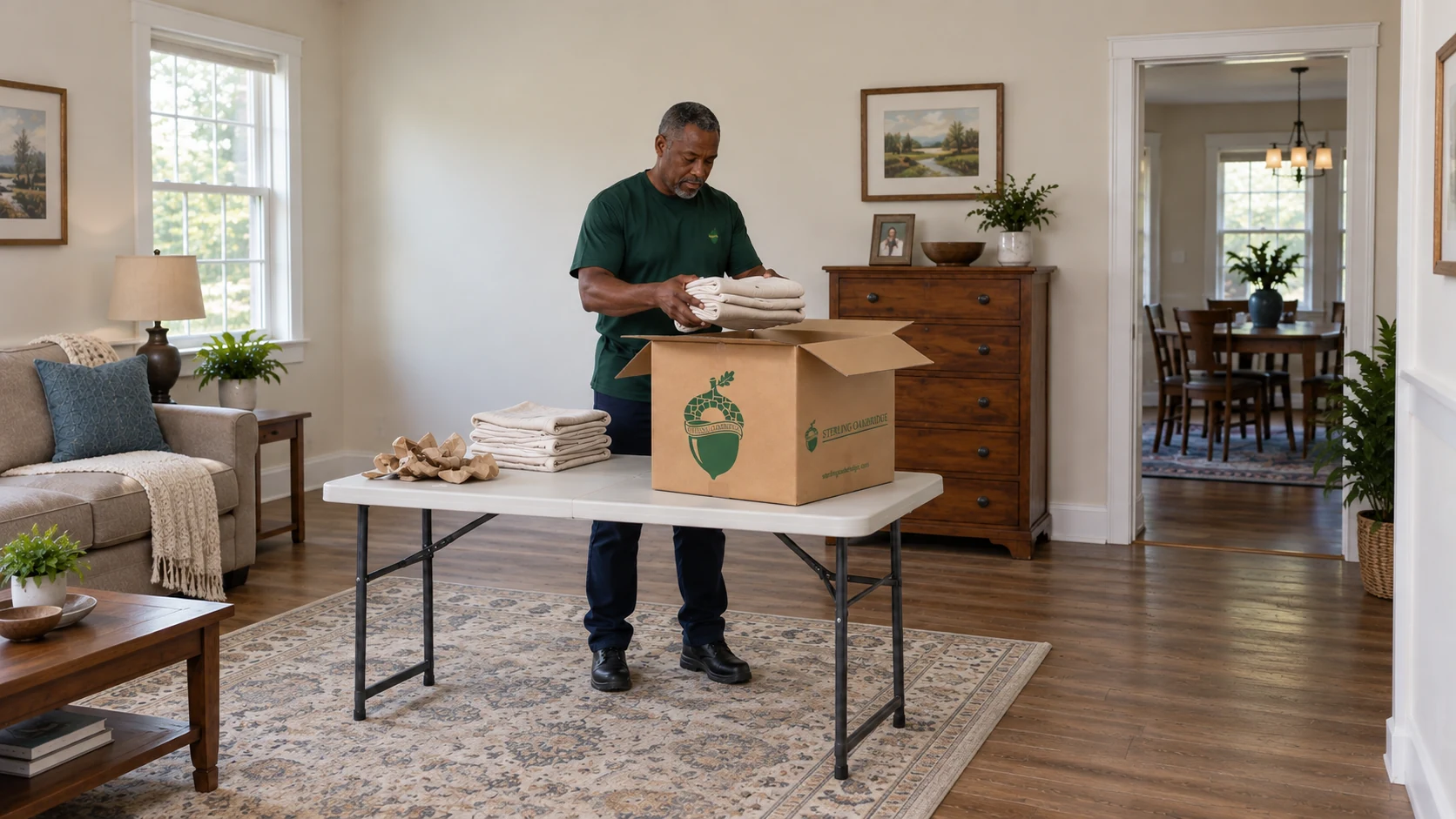
Imagine a household arriving at a Washington condominium after a working day. The kitchen counter is clear, but cabinet positions have not been chosen. They request basic unpacking of breakfast and linen cartons, leaving decorative and less urgent groups closed. The household identifies a person who can direct opening without losing the table to an entire room's contents.
That first visit restores meals and bedding. Final cupboard placement can be agreed later, once the household knows the arrangement it wants. The District's multifamily resources include apartments, condominiums and cooperatives; a building label does not establish its booking or collection rules. Follow the actual manager's arrangement for packaging and common routes.
Arrange final placement under your direction
Home organizing places the agreed contents in cupboards, drawers or on shelves according to your instructions. Choose the layout and name the directing person. Scope the rooms, priorities, working time and price separately from opening cartons onto surfaces. A smaller team can be easier to guide when each group needs a household decision.
On a larger project, for example, three or four extra hours of unpacking can be substantial. A later visit by two people may suit the receiving household better than retaining the whole moving crew. The actual contents, surfaces and desired result determine the work; these examples do not promise a duration or confirm an available return date.
Identify furniture and finishing work individually
Furniture unwrapping is part of delivery. Basic furniture disassembly and reassembly use moving labor time without a separate basic assembly fee. Empty ordinary dresser drawers as agreed and retain them in the furniture body; identify fittings and removable parts with the correct piece. Complex flat-pack furniture and specialist items need review of the actual construction, model, instructions and condition.
Hanging, mounting and other agreed handyman work need their own permissions, wall and hardware review and appropriate executor. Packing or organizing does not establish electrical work or appliance hookup. Describe the result you want instead of assuming every finishing task belongs in one visit.
A new purchase has its own seller release and collection; use furniture delivery planning. Moving already delivered furniture into another room or floor belongs with in-home moving. Either later carry needs an available crew, a usable route and its own agreed scope.
Choose the packaging route for the actual property
Gathering empty packaging indoors and removing it from the property are different stages. Crew packaging removal is charged separately and must be arranged. Identify the quantity, material, access and collection stage. Keep unwanted furniture on a separate approved list for quoted removal, an accepted recipient or the property's appropriate collection route.

DPW recycling serves single-family homes and apartment buildings with three or fewer living units. Buildings with four or more units and mixed-use properties arrange their own service. Prepare clean, empty flattened cardboard; keep foam and plastic film out of that recycling stream. Identify the property's provider and collection point before material fills the shared route.
Zero Waste DC's bag guidance distinguishes municipal curbside recycling from commercial-property arrangements. Empty plastic bags used for indoor gathering before putting materials in a DPW curbside recycling bin. Commercial properties, including larger multifamily buildings, may use clear liners only under their hauler's accepted arrangement; the liner itself is not recyclable. A photograph of indoor gathering does not show a completed collection.
Connect preparation to the receiving date
For a long-distance shipment, the delivery clock starts after pickup and loading are complete. An earlier packing visit does not begin that window. Use the actual direct or consolidated arrangement, possession and receiving help to decide when optional unpacking should happen.
For the same agreed shipment and work, a long-distance flat rate stays the same if travel or delivery takes longer. Added contents, preparation, stops, storage or receiving work need written review. Washington long-distance planning explains the delivery models and windows; keep the packing sequence connected to that accepted arrangement.
Compare the whole job before selecting visits
Packing labor is charged for working time, and company-supplied cartons are separate. Moving blankets, shrink wrap and tape have no separate basic-material charge. Optional box unpacking uses working time; organizing, specialist finishing, storage and packaging removal need their own agreed scope and price.
Compare preparation, supplies, carrying, transport and receiving work together. A full packing-and-moving project can cost substantially more than moving the same contents already prepared; an illustrative total approaching two such moving budgets explains the additional job, not a rate multiplier for this household. Larger work may use a separate preparation team and date, with staffing chosen from the inventory and access.
Send open-storage photographs or video, fragile-item details, both complete addresses, firm dates and the chosen division of work. Add the last-night group, destination lists, property instructions, usable receiving rooms and the person who will direct placement. The Washington moving page explains the separate moving-estimate terms. We will recommend the review needed for a useful written scope.
Washington packing and unpacking questions
Can you pack only the kitchen or fragile belongings?
Yes. Choose a defined room or item group while you prepare the rest. Name the cupboards, glasses, books or collections included, who handles the other contents and when they will be ready. Fragile-only work needs an actual list and suitable protection, rather than a bedroom allowance.
Who decides which belongings leave the home?
You do. Select what to keep, move, give to an accepted recipient or approve for removal before preparation. In a shared home, identify the owner of each group and who may authorize work on shared contents. Packing does not decide ownership or turn an unaccepted donation into a collection.
Can packing and a local move share one day?
They can for a small, straightforward household when the reviewed inventory, route and available hours allow. More cupboards, fragile work or a restricted window can justify earlier preparation even in a one-bedroom home. Review both jobs together before assuming that room count determines the schedule.
Does an earlier packing appointment reserve the elevator or curb?
No. Confirm access for preparation and the later carrying period separately. The manager controls the actual building booking; the public-space arrangement has its own issued conditions. Include the complete address and quadrant, permitted hours, material delivery and the person who can open the property in each visit plan.
How many cartons should we expect?
Review the contents first. Open cupboards, drawers, closets and storage, then identify fragile, dense and bulky groups. An illustrative change from an expected twenty cartons to sixty or more explains why a room count can mislead; it is not an estimate for your Washington home.
Can we use cartons we already own?
Yes, when their size, condition and construction suit the contents. Show them during the review and disclose weak walls, damage or unsuitable closures. Agree which groups you will pack. Company-supplied cartons are charged separately; using your own cartons does not remove the time needed for agreed packing work.
Are packing labor and materials one included fee?
Packing uses working time, and company-supplied cartons are separate. Moving blankets, shrink wrap and tape have no separate basic-material charge. Specialist protection, optional receiving work and packaging removal need their own stated scope. Compare those lines in the estimate instead of assuming a full-packing label includes every stage.
What should remain available until departure?
Keep medicines, identification, keys, valuables, school and travel papers, chargers and journey supplies with the household. Identify the bedding, clothing, simple meal set and familiar belongings needed through the final evening or school morning, then agree when that remaining group can be packed.
How can two people keep working during packing?
Define the work equipment and everyday contents that remain available, with a final handover time for each person. Pack less-used groups first and agree a working surface and permitted carton area. In a shared apartment, keep the common entrance usable and identify who can approve preparation of shared items.
How should cartons for storage be marked?
Write the destination, room, useful contents and inventory identifier, adding opening priority for the home-first group. Keep the lists and staging groups distinct. Color can support those words. Storage intake, release, access and later delivery need separate confirmation; a storage label does not reserve space or transport.
Must ordinary dresser drawers be removed?
Ordinary drawers can usually stay in the furniture body for the reviewed transport, with their loose contents emptied as agreed. Secure and protect the piece appropriately. Genuine removable shelves, vulnerable parts and fittings need identification with the correct object; unusual construction or damage needs an individual method.
Does closing a carton complete fragile protection?
No. Fragile contents need suitable individual protection, cushioning and support inside a sound container. The plan must work through carrying, stacking, restraint and transport. Show glass shelves, repaired joints, frames and projections so the method matches the object, rather than relying on a closed lid or a fragile sticker.
What does basic unpacking include?
It opens the agreed cartons and places contents on suitable surfaces, such as dishes on a clear counter or linen on a designated table. Identify priority groups, cartons that stay closed and usable surfaces. Check used paper for small fittings and belongings before it is gathered.
Is putting everything into cupboards part of basic unpacking?
Final cupboard, drawer and shelf placement is a separate organizing scope under your direction. Choose the arrangement, directing person, priorities, working time and price. Basic unpacking onto surfaces does not decide where every item belongs or make every room ready to receive its entire contents.
Can you return after we have tried unpacking ourselves?
A later visit for selected remaining cartons or directed placement can be arranged when crew and property access are available. List the contents still boxed, the ready rooms and the useful result. A possible smaller return team may be easier to guide, but the date and work need confirmation.
How is furniture reassembly charged?
Basic disassembly and reassembly use moving labor time without a separate basic assembly fee. Complex flat-pack furniture and specialist pieces need individual review of construction, model, instructions, fittings and condition. Furniture unwrapping is part of delivery; opening carton contents is optional work.
Can the visit include hanging, mounting or technical work?
Agreed hanging or mounting needs its own permissions, wall and hardware review and appropriate executor. Describe the exact result in advance. Packing and organizing do not establish electrical work or appliance hookup, and a specialist task is not automatically included because the crew is already at the home.
Will the crew remove the empty packaging?
Packaging removal is separately charged and must be arranged. Name the material, quantity, access and collection stage. Gathering paper and cartons indoors makes the room usable but does not itself take them off the property. Keep unwanted furniture and restricted waste outside that packaging group.
Does every Washington building receive DPW recycling?
No. DPW serves single-family homes and apartment buildings with three or fewer living units. Buildings with four or more units and mixed-use properties arrange their own service. Use the actual property provider and presentation point, rather than assuming that a Washington address establishes municipal collection.
Can used paper go into DPW recycling inside a plastic bag?
No. Empty a plastic bag used for indoor gathering before putting materials in a DPW curbside recycling bin. Keep plastic film and bubble wrap separate from accepted paper. The indoor collection shown in an illustration is a preparation stage, not proof that the final collection format is accepted.
Can a larger apartment building use clear recycling liners?
Its commercial-property arrangement may allow clear liners, but the actual hauler may reject them. The liner itself is not recyclable. Follow that provider and manager; permission for a commercial receptacle does not make a plastic bag acceptable in DPW residential curbside recycling.
How should empty cardboard be prepared?
For the DPW stream, use clean, empty flattened cardboard and separate foam and plastic film. Follow the property collection arrangement. Before flattening, check that the carton no longer holds fittings, documents or belongings; removing used packaging and discarding retained contents are different decisions.
Can unwanted furniture leave with the cartons?
Only under its own approved removal or receiving arrangement. Identify the pieces, owner authorization, route, deadline and accepting destination. Do that before packing retained belongings. A packaging collection is not an automatic furniture-disposal booking, and an offer to donate does not establish acceptance.
Does an earlier packing day start the long-distance delivery window?
No. The delivery clock begins after pickup and loading are complete. Packing, household travel and possession can have different dates. Match optional unpacking to the actual direct or consolidated arrangement and usable receiving rooms instead of booking it from the preparation date.
Can a longer journey change the agreed long-distance price?
For the same agreed shipment and work, the flat rate stays the same if travel or delivery takes longer. Added contents, preparation, stops, storage or receiving services need separate written review. Identify the changed work rather than treating road delay alone as a different shipment.
What should we send for a packing estimate?
Send both complete addresses and quadrants, dates, retained inventory, open-storage photographs or video, fragile details and the division between your work and ours. Include property instructions, access, last-night essentials, separate destinations and usable receiving rooms. Our planning team will recommend the appropriate review and written scope.
Plan your Washington packing and receiving
Send the retained inventory, both addresses, dates and the help you want before and after transport.
Sources and local moving context
- Washington moving services and the relocation guide: complete address, building and receiving context.
- District multifamily resources: building types and property responsibilities.
- DPW recycling collection and Zero Waste DC plastic-bag guidance: material and collection arrangements.