

Washington / Moving services
Movers in Seattle, WA
Arrange a household move from Seattle to another state or Canada, with packing, property access and receiving stages built around your actual shipment.
01 /
Start with the Seattle home and the home that receives it
A long-distance move begins with two properties, not a truck size. At the Seattle end, identify the furniture, cartons and secondary spaces included in the shipment. At the receiving end, establish when you can enter, who will be there and how the goods reach their intended rooms. Those decisions give the survey and written proposal a useful starting point.
Sterling Oakbridge arranges household shipments from Seattle to another state or Canada, with packing and preparation included as agreed. A move staying within Washington needs separate service confirmation. Send both complete addresses so the requested route and work can be reviewed; a city service listing does not identify a neighborhood office.
Seattle is a city within King County; the county name and a mailing label do not identify the authority for every street or building. Housing also changes within a neighborhood. The City's Harvard-Belmont description, for example, distinguishes sloping residential ground, larger houses and more modest homes on west Capitol Hill. It supplies context, not measurements for your entrance. Show the actual approach, including steps between a garage and the main rooms.
02 /
Choose the stages your household needs
You can start with a customer-packed shipment or include help preparing selected belongings or the full household. Put the requested finish into the scope: protected furniture ready to travel, collection and transport, then agreed placement and ordinary reassembly at the destination. Describe any storage stage, additional stop or unusually fragile item separately.
| Stage | Useful result to agree | Information to provide |
|---|---|---|
| Survey and inventory | The belongings and both carrying routes are understood. | Rooms, furniture, cartons, photographs and access instructions. |
| Packing and preparation | Selected contents and furniture are ready for the shipment. | What you will pack, what needs crew help and what stays usable. |
| Transport | An accepted delivery model connects the two properties. | Destination, dates, receiving limits and any intermediate stage. |
| Receiving | The agreed goods reach their intended rooms. | Keys, authorized receiver, vehicle position and priority furniture. |
A request for specialist work needs the actual object and operation. Showing a piano or artwork in an inventory does not settle its handling method, technical work or protection terms. Have those decisions included in the accepted shipment plan before collection.
03 /
Trace every doorway, landing and shared lift
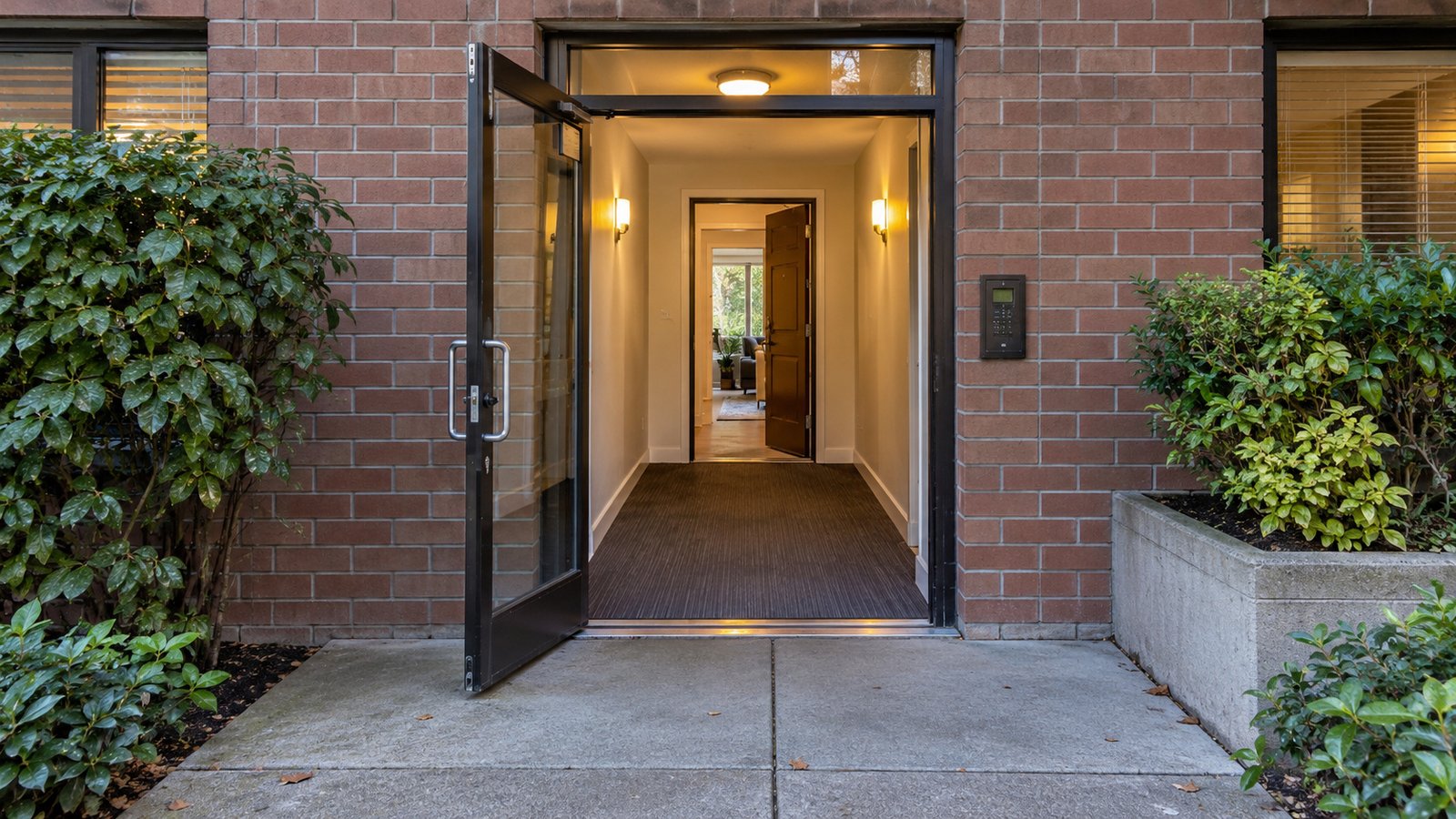
Show the carrying route from the lawful standing position to each room. Include the public approach, private gate, steps and landings, door openings, turns, corridors and every lift used along the way. A garage door may be wide while the stair to the living floor is constrained. A ground-floor lobby may still lead to a second entrance or another lift.
The building contact controls bookings, entry instructions and common-area conditions. The move survey assesses the shipment and its handling. Send management's written instructions, permitted carrying hours, protective measures and any certificate-of-insurance request early. A building document and the shipment's valuation terms serve different purposes; one does not replace the other.
If a condominium gives you a short service-lift window
List both entrances and the complete route to the unit before reserving the work sequence. Ask the manager whether packing or other preparation may take place outside the carrying window, and have the planner include the permitted earlier stage. Name the person who admits the crew and the person who can resolve a failed lift booking. Before dispatch, confirm the booking and an accepted alternative if it fails: a different authorized slot or an assessed route, with its work and charges. Keep the household's overnight needs outside packed rooms if collection must move to another day.
For a large item, photographs of an open door are insufficient. Give the piece's dimensions, construction and safely removable parts together with the tightest turns and clearances. Do not detach a structural part merely to imitate another item's preparation.
04 /
Reserve curb space and check the vehicle route separately
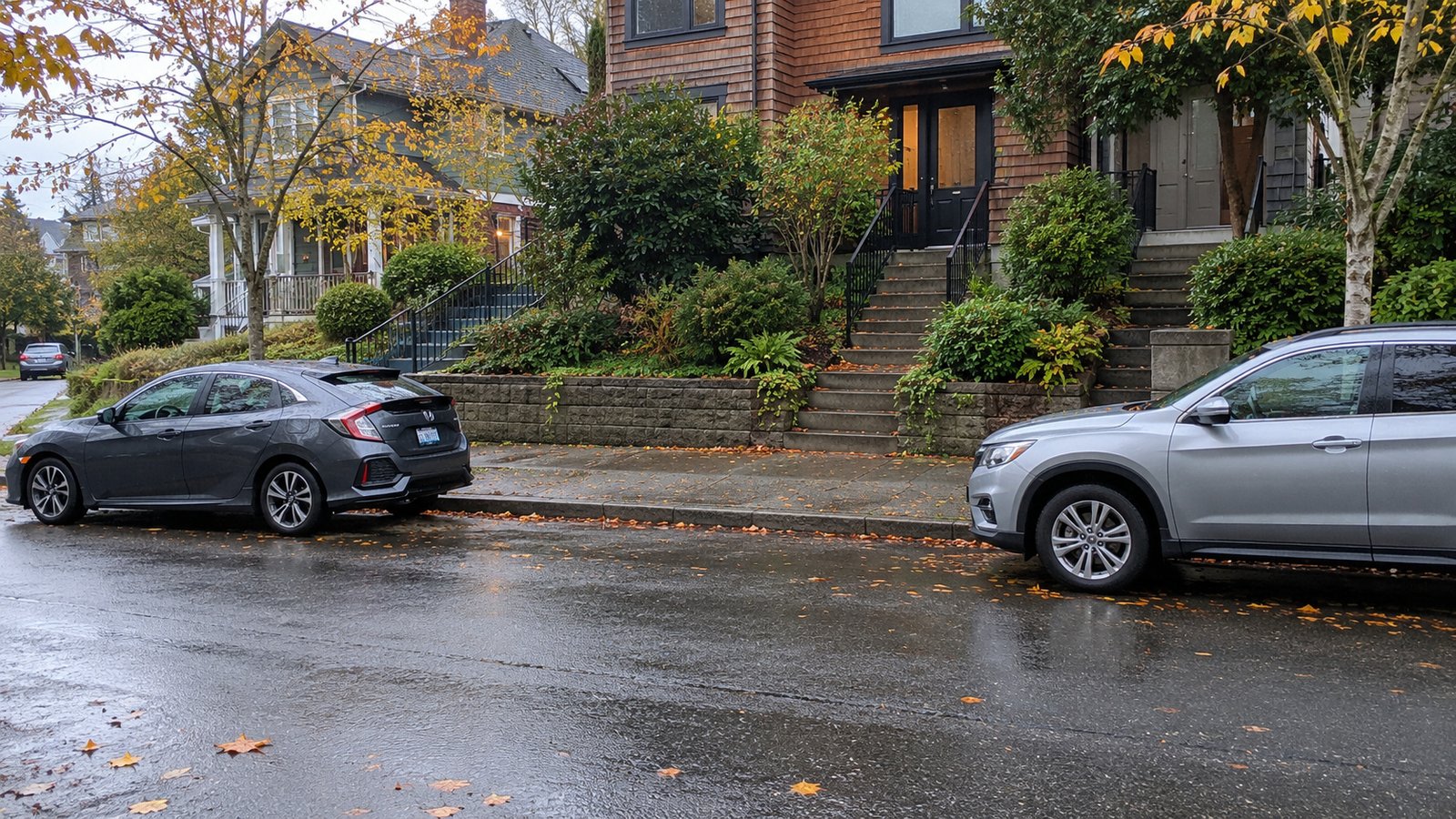
First identify a usable position on private property or the public street. Private access needs the owner's acceptance and an assessment of grade, clearance and turning space. Public curb space follows SDOT's process and posted restrictions. Neither position gives automatic permission to block a sidewalk, driveway, intersection or travel lane.
Seattle's Temporary No Parking reservation procedure distinguishes paid and non-paid spaces. Paid-space applications use curbspace identifiers and the nearest address. For non-paid spaces, arrange the easels, apply through the Seattle Services Portal once the signs are in place, and attach the generated Public Notice to at least two signs per block. The dates and times must be written on the signs. SDOT recommends placing the complete signs and notice 72 hours ahead; its enforcement explanation separately states a 24-hour notice minimum under state law. Plan around the recommended preparation time rather than assuming a late application will produce a usable space.
The separate TNP conditions of use require applications at least 24 hours ahead, including extensions, and a Restricted Area Permit for vehicles occupying the zone. RAP eligibility is for specified trucks and service vans with truck or commercial plates, not personal passenger cars. Peak-hour restrictions still apply. The conditions state that sign installations and removals do not occur on weekends or holidays, and require notification of adjacent properties or retail establishments when paid spaces are used. Assign those steps with the reservation and posting responsibilities. Already restricted spaces, such as passenger loading or other designated loading zones, cannot simply be reserved through the ordinary TNP process.
If your townhouse entry is beside a garage driveway
Send the driveway junction, stair bottom, entry landing and largest pieces together. Decide whether the assessed standing position uses private access or a reservable curb. If the first position proves unsuitable, the customer, property contact and planner must accept another lawful position and handling method before dispatch. Assign the permit, posting and charges before ordering the signs; a smaller vehicle or extra handling is an assessed alternative, not a promised solution.
Long vehicles in the Downtown Traffic Control Zone
A curb reservation does not approve travel through the defined central zone. The Downtown permit page and conditions of use address vehicles 30 feet or longer. On weekdays, the permitted operating window is 9 AM–3 PM; curfews are 6–9 AM and 3–7 PM. The stated nighttime exception is 7 PM–6 AM. Conditions require a permit on Saturday without those curfews, while these restrictions are not in effect Sunday. Over-dimensional vehicles have separate restrictions and permits, including no movement in the zone from 6 AM–7 PM. Have the operator assess the actual vehicle, zone and route, rather than applying this schedule to every Seattle street.
The nighttime movement exception is separate from parking. The City's general parking guidance lists an overnight restriction for vehicles over 80 inches wide on streets and alleys outside Industrial Zones between midnight and 6 AM. Have the operator check the actual position, permit conditions and receiving hours before choosing a nighttime operation.
SDOT's over-legal truck guidance also separates dimensional and weight permits, bridge restrictions and daily route validation where applicable. The vehicle operator needs the relevant route approvals; the household needs an accepted loading appointment that works with them.
05 /
Prepare the goods without packing away the last night
Separate what travels with the truck from what stays with you: medicines, documents, keys, travel clothing, chargers and the first useful supplies at the receiving home. Then identify the packing groups and the person responsible for each. Include cupboard contents, garage shelves and any storage locker; an overlooked room is additional scope, not an empty space on the inventory.
Labor, materials and optional work
| Item or task | How it is charged |
|---|---|
| Basic furniture disassembly and reassembly | Part of your moving labor time, without a separate basic assembly fee |
| Moving blankets, shrink wrap and tape | No separate charge for these basic protection materials |
| Boxes supplied for your move | Charged separately |
| Packing | Charged for working time; boxes are separate |
| Unwrapping furniture | Part of delivery |
| Unpacking the contents of boxes | Optional work, charged for working time |
| Packaging and waste removal | Charged separately |
| Complex furniture and other specialist work | Individually quoted after review |
Tell us which tasks you want completed and which materials you need. Your estimate should distinguish moving labor, boxes, specialist work and removal charges.
Furniture protection should follow the actual construction. Show vulnerable feet, projecting parts, glass, upholstery and existing condition during the survey. Ordinary assembly and safe disassembly are different from specialist technical work. Keep related hardware identified with its item and destination room, and do not assume every large piece can be reduced to flat parts.
If you pack cartons but want help with dining furniture
Identify the table, chair count and any detachable vulnerable parts in the request. Leave enough space to prepare the pieces and keep the route out of the room clear. Have the planner include the furniture work and any selected fragile packing, while recording that you remain responsible for the other cartons. If the dining area must remain usable until the last evening, agree when the furniture can be closed for transport instead of treating the whole home as ready in advance.
For fine art, a piano or another sensitive piece, describe the material, condition, dimensions and requested operation. A suitable method, specialist involvement and applicable terms need their own assessment.

06 /
Include secondary spaces and separate responsibilities
A complete inventory follows the household through its actual spaces. A basement room, detached garage or off-site storage unit can add another entrance, key, vehicle position and appointment. Record the location of each group and whether it is traveling, staying with the property or going to another confirmed recipient.
Identify anything that requires technical disconnection, installation or special handling. Moving an appliance is different from making its gas, water or electrical connection ready for use. Name the qualified provider responsible for those separate tasks where required. Tell the planner if a seller, landlord or another contractor is still using the access route.
For a longer journey, compare long-distance moving arrangements. Use the packing page to identify preparation groups and storage planning to describe a gap between homes. Include these requests with the Seattle shipment so their availability, handoffs and price can be assessed together.
07 /
Compare the same shipment, work and receiving finish
The written price needs a complete inventory and service scope. Bedrooms and mileage alone leave out packing groups, difficult pieces, stairs, carrying distance, extra stops and the receiving plan. Describe both properties and identify any building, municipal or storage charges with their responsible payer.
For a long-distance shipment quoted at a flat rate, the agreed price remains unchanged when the shipment and agreed service scope remain unchanged. Extra journey or delivery time alone does not raise that agreed price. Added contents, additional packing or changed access and receiving requirements can change the work; have the affected inventory, scope and price updated in writing before that work begins.
Compare the same finished result. Furniture placed and ordinarily reassembled is different from cartons emptied, cupboards arranged and packaging removed. State which result you want and which work you will do yourself. A building deposit or parking charge should have a clear owner rather than disappearing into an undefined allowance.
Let the scope determine the survey
A clear item list may be enough for a small, straightforward job. More belongings, full packing, specialist items or restricted access can call for a video review or an in-person visit. Floor area helps describe the property, but the contents and work matter too.
Start by sending what you know. Our move-planning team will recommend the right level of review so the estimate reflects the job. You do not need to choose a survey method or work out every measurement before contacting us.
The survey helps us choose staffing, time and preparation for the actual job. The person reviewing your move is not necessarily part of the moving crew.
Choose protection before the move
Discuss the basic liability option and higher protection available at an additional charge before moving day. Have the selected level, cost, limits and claims process recorded in your moving documents. Tell us about artwork and other high-value items in advance so their declared values and any special requirements can be reviewed.
For interstate household-goods moves, Full Value Protection applies unless you select Released Value through the required written waiver. Valuation is the mover’s level of liability; it is different from a separate insurance policy. Review the FMCSA explanation of liability and protection and the terms for your particular move.
08 /
Match the delivery model to a usable receiving window
Direct and consolidated long-distance moving
Our direct long-distance service uses a dedicated truck and the same moving crew at pickup and delivery. For a suitable small shipment, ask about consolidated delivery with a wider agreed receiving window. We serve destinations throughout the United States and Canada. Confirm pickup, delivery and any storage stages in the written move plan. The planning team performs a separate role from the moving crew.
Compare the actual inventory and latest usable receiving date before choosing a model. Direct delivery can suit a tighter plan; consolidation needs enough flexibility for its agreed window. Fewer rooms alone do not establish eligibility or a saving.
For suitable consolidated shipments, the confirmed maximum window is up to 90 days into California and up to 60 days into Florida or Canada, starting after pickup and loading are complete. Other routes need their own agreed window. These limits are not predicted arrival dates; have the applicable receiving terms recorded for your shipment.
Pickup and delivery appointments need to work in sequence. At the destination, identify an authorized receiver, a lawful vehicle position, building hours and the rooms needed first. Canada adds the household's applicable border documents and admissibility requirements. Put the accepted route and receiving arrangement in writing before collection; personal arrival and the truck's arrival are separate plans.
09 /
Use several workable dates and an accepted fallback
Start with the dates the two properties can actually release and receive the goods. Give the planner several feasible options, along with the lease or closing constraints, building instructions and time needed for public-space arrangements. School holidays, travel or a lease end may fix the week; an earlier packing visit can still be useful if the property permits it. Compare accepted dates and written scope instead of assuming that the middle of the month will cost less.
Rain preparation belongs at the entrances and working surfaces. Keep the walking route dry and clear where practicable, with floor protection chosen for the actual surface. During snow or ice, consult SDOT's snow-plow map and winter travel guidance. The City prioritizes a defined arterial network and states that residential, less-traveled and hilly streets are not plowed or salt-treated. A recently serviced arterial does not establish that the final hill or walkway is usable. Obey closures and have the actual approach reassessed when conditions change.
If the next home's keys are still uncertain
Set a decision deadline with the planner before the shipment is committed toward an unavailable property. Identify the customer who can authorize a change, a confirmed holding or alternative receiving arrangement, its intake and later release contacts, and a place for the household and essential luggage. Record additional handling, storage and later delivery charges. An address or warehouse phone number is insufficient without acceptance and access. Resume the receiving stage only after keys, the vehicle approach and an authorized receiver are confirmed.
10 /
Keep identification and the carrying route useful
Before collection, reconcile the current inventory and identify anything excluded, unusually fragile or still needed by the household. Mark cartons by the receiving room, keep related small parts together and leave the survey documents and essential travel items accessible. The person admitting the crew should know the entry instructions and whom to contact if the planned position or building access has changed.
At delivery, establish the larger furniture positions before loose cartons fill the room. Have the authorized receiver direct the agreed placement and reconcile the arriving goods against the shipment record. Record discrepancies or visible condition concerns with the relevant item information and responsible contact. Furniture unwrapping and agreed ordinary reassembly do not mean every carton has been unpacked or packaging removed.
If a shared lift fails or the lawful position is unavailable, use the agreed decision path before improvising another route. A waiting truck does not authorize a lane closure, blocked exit or unapproved handling method.

11 /
Send one complete request for the two addresses
Include the pickup and destination addresses and unit numbers, preferred dates and alternatives, room-by-room inventory and photographs of large pieces. Show every entrance, stair, lift and turn, plus the proposed vehicle positions and building instructions. Add selected packing, storage, extra stops and specialist questions explicitly.
Identify who can grant access at each end and which receiving constraints are firm. If a permit, closing or lift booking remains unresolved, name the owner and next decision date. You can then compare a written proposal against the actual shipment and see which approvals or separate arrangements still need completion.
12 /
Questions before you move
Can I request a move within Seattle or elsewhere inside Washington?
The confirmed Seattle service is for household shipments to another state or Canada, with agreed related preparation. A Seattle-only or other Washington-only move needs separate confirmation before you plan around it. Include both full addresses in your request so the route, requested work and availability can be reviewed before a price or booking is offered.
What is the difference between a curb reservation and a RAP?
A Temporary No Parking Zone restricts ordinary parking at the stated place and time. A Restricted Area Permit authorizes an eligible truck or commercial-plated service van to occupy that zone under its conditions. They solve different parts of the loading plan; a personal passenger car is not eligible for RAP merely because it belongs to the household. Neither permission approves a truck route or a blocked sidewalk.
How early should non-paid temporary no-parking signs go out?
SDOT recommends placing the easels and printed Public Notice 72 hours ahead. Its procedure also requires visible dates and times and a Public Notice on at least two signs per block; the conditions require applications at least 24 hours ahead. The separate 24-hour enforcement notice explanation is not a guarantee that a late request will produce a usable moving position. Start with the 72-hour preparation plan and confirm a lawful alternative or revised date if it cannot be completed.
Can I reserve a passenger-loading or other restricted zone?
Not through the ordinary reservation process. SDOT excludes already restricted spaces such as passenger loading, truck-only and other designated loading zones. If there are no other options, the Traffic Permit Counter can assess whether a special relocation arrangement is possible, with applicable sign-off and charges. Have an accepted position before dispatch rather than treating a familiar curb as freely available.
Does the Downtown permit schedule apply everywhere in Seattle?
No. It concerns the defined Downtown Traffic Control Zone and vehicles 30 feet or longer. Weekday permitted movement is 9 AM–3 PM, with 6–9 AM and 3–7 PM curfews; the stated nighttime exception is 7 PM–6 AM. The conditions require a permit on Saturday without those curfews and say these restrictions do not apply Sunday. Over-dimensional vehicles have separate rules. The operator must match the actual vehicle and route to the relevant requirements.
Will a reserved lift guarantee that my furniture fits?
No. A reservation supplies a time window, not a measurement or handling approval. Survey the furniture and every opening, cabin, turn, landing and intermediate door along the route. Management must accept the booking and access conditions; the planner must assess the goods and handling. If the lift cannot serve the shipment, agree an assessed alternative and its work before dispatch.
What should I show for a townhouse with a garage below the living rooms?
Show both the garage approach and the route actually used for furniture: public sidewalk or driveway apron, stair bottom, landings, doorways and upper rooms. Include large pieces and their construction. A garage opening does not establish a route into the living floor, and a stair photograph alone does not show the street position. The survey needs the complete connection.
Are basic furniture work and packing materials included?
Basic furniture disassembly and reassembly use your moving labor time without a separate basic assembly fee. Moving blankets, shrink wrap and tape have no separate material charge. Boxes are charged separately. Complex furniture and specialist work receive individual quotes.
Can I pack most cartons and leave selected furniture or fragile groups to the crew?
Yes. Identify the groups you will finish and the pieces needing crew preparation in the inventory. Include quantities, condition and the room where the work happens; leave a usable working area and carrying route. Have the agreed packing visit, materials and furniture work recorded with the shipment. Added rooms or belongings need a scope update before the affected work.
Does a longer journey alone increase my agreed long-distance flat rate?
No. Extra journey or delivery time alone does not increase the agreed flat price for the same shipment and service scope. Added goods, extra packing or changed access and receiving requirements can change the work being priced. Report those changes before the affected work and obtain the updated written scope and price; the original quote does not describe an expanded job.
Can you unpack cartons and remove the packaging?
Furniture is unwrapped as part of delivery. We can also unpack the contents of boxes as optional work charged for time. Packaging and waste removal are charged separately; include the help you want in your request.
Can I choose direct delivery instead of consolidation?
A dedicated truck with the same pickup and delivery crew is a confirmed long-distance option to discuss for the actual shipment. Eligible smaller loads may also be considered for consolidation with its agreed flexibility. Compare both against the same inventory, receiving restrictions and dates. A small home does not by itself establish consolidation eligibility or a lower price.
What if a car is still in the temporary no-parking space?
Use the posted contact and the appropriate City process rather than moving or blocking the vehicle yourself. A reservation and properly posted signs do not make an occupied position physically usable. Tell the planner and building contact immediately; use an already accepted lawful alternative or revise the operation before the crew obstructs another space. Keep the permit, sign details and responsible contacts available.
Does the snow-plow map prove the final residential hill is clear?
No. It identifies planned and recently serviced routes, not the condition of every approach. SDOT states that its critical arterial network receives treatment while residential, less-traveled and hilly streets are not plowed or salt-treated. Check current closures and the actual property route with the operator and property contact. Resume only when the accepted approach can be used safely.
How do I prepare if my destination keys may be delayed?
Agree a fallback before the shipment is directed toward an unavailable home. Name the decision-maker and deadline, a confirmed receiving or storage intake, authorized release, and later delivery plan. Keep the household and essential luggage accommodated separately. Record additional charges and restart conditions; a prospective storage address does not establish an accepted booking.
Is a building certificate of insurance the same as shipment protection?
No. Building access documents address management requirements; shipment valuation or other protection terms address responsibility for goods under the selected arrangement. Give management instructions to the planner early, and review the actual shipment documents, options and high-value disclosures separately. Do not infer a particular insurance policy or unlimited cover from either document.
Can I arrange a Seattle shipment to Canada?
Yes. Canada is within the confirmed long-distance service scope, subject to the actual shipment, route, border requirements and receiving plan being accepted. Supply the destination, inventory, dates and household situation early. The transport arrangement does not establish immigration status, item admissibility or customs entitlement; the applicable documents and any receiving or storage stage need their own review.
What information makes the first estimate request useful?
Send both full addresses and unit numbers, the inventory, preferred dates and alternatives, and photographs of large pieces and the complete carrying routes. Add building instructions, proposed vehicle positions, packing responsibilities, extra stops and any storage or specialist work. Identify the people granting access and any unresolved permit, lift or key decision so the written proposal can describe the same work you intend to book.
Your next step
Tell us about your Seattle move
Send the two addresses, inventory, dates and access instructions to request your Seattle long-distance moving estimate.
Sources & useful local resources
Official procedures and local resources are linked beside the answers above. Reopen the relevant page when arranging a date: fees, schedules and application requirements can change.
Seattle property, curb and vehicle-route decisions
- Harvard-Belmont: hillside residential contextSeattle Department of Neighborhoods
- Temporary No Parking: paid and non-paid reservation procedureSeattle Department of Transportation
- Temporary No Parking conditions and Restricted Area PermitsSeattle Department of Transportation
- Downtown Traffic Control Zone permitsSeattle Department of Transportation
- Downtown zone conditions: vehicle length, weekdays and weekendsSeattle Department of Transportation
- Over-legal trucks: dimensions, weight and route validationSeattle Department of Transportation
- Snow-plow routes and live response mapSeattle Department of Transportation
- Winter travel: arterial network and untreated residential streetsSeattle Department of Transportation
- Parking signs, loading zones and large-vehicle overnight restrictionsSeattle Department of Transportation
Interstate shipment protection
- Interstate valuation and protection choicesFederal Motor Carrier Safety Administration
Plan your Seattle move
Compare the services for your actual inventory, access and dates.
- Long-distance moving
Long-distance household moving from Seattle, Washington, to destinations in the United States and Canada.