
Norwalk, Connecticut · Packing and receiving
Full Packing and Unpacking in Norwalk, CT
Let us pack the dishes, clothing and breakables you choose while keeping tonight's essentials within reach.
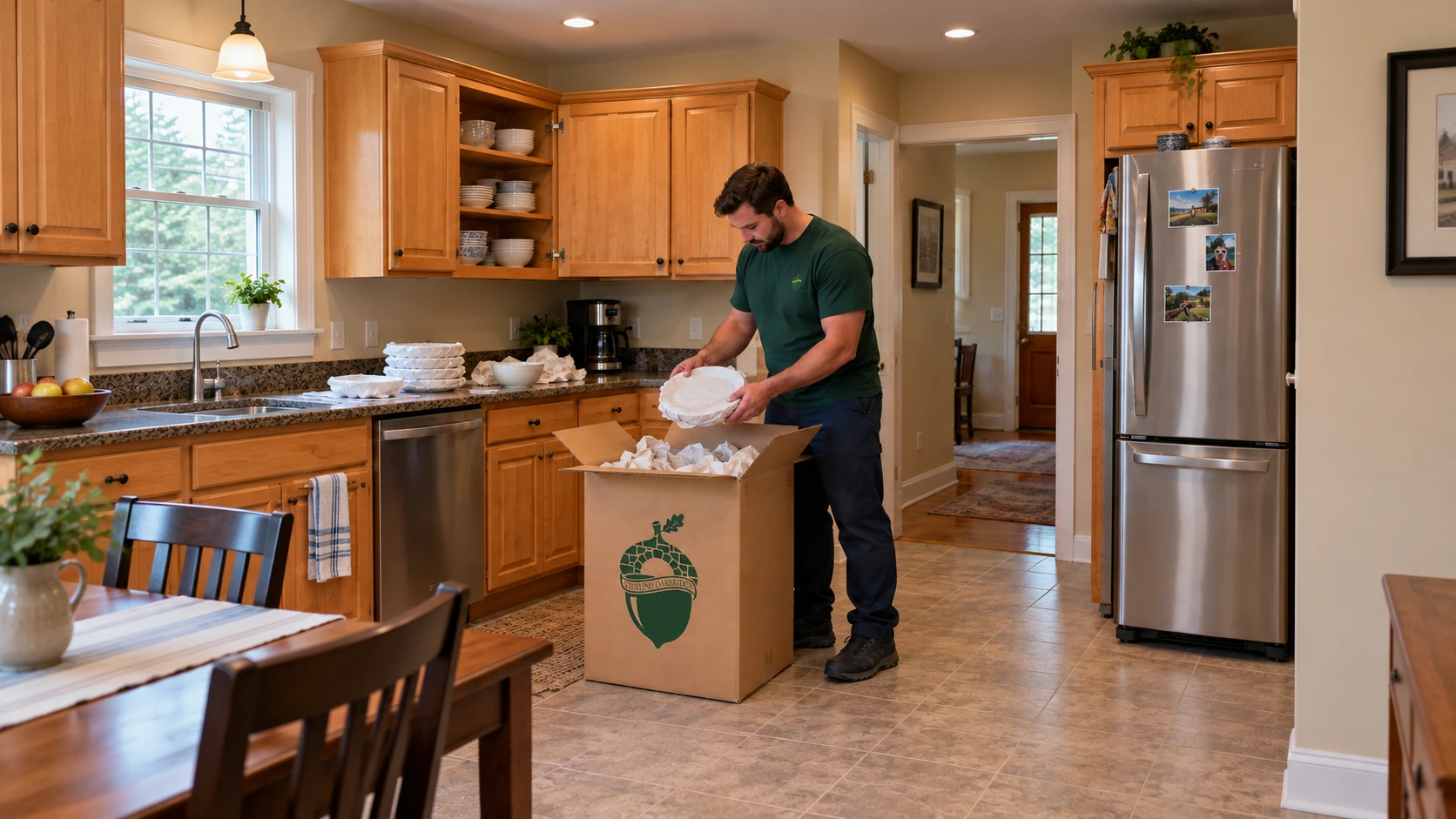
Sterling Oakbridge offers full, partial and fragile-only packing in Norwalk, with optional box unpacking and separately agreed home organizing. We plan the contents, preparation visits and receiving work around your household and the access at each address. Packing and box unpacking use paid working time; supplied cartons and packaging removal have separate charges.
Explore packing, costs and local examples
Choose the work you want to hand over
Start with the evening you would otherwise spend sorting a cupboard, wrapping its contents and finding somewhere to put the finished cartons. Delegating that preparation can leave time for work, children or rest. You still decide what to keep, where it should go and which personal things stay with you. Make those decisions before the packers reach each group.
Full packing covers the retained contents on the agreed inventory. Partial packing assigns selected rooms or groups, such as kitchen cupboards, books or hanging clothes. Fragile-only packing concentrates on the breakables needing the reviewed protection. For a limited order, make a second list of the things you will pack yourself; a room name alone can leave drawers, shelves and loose items between the two lists.
Unpacking is optional. You can order preparation at the old home, help opening selected cartons at the new one, or both. Say whether the receiving goal is accessible contents on tables and counters or belongings put into their final cupboards and drawers. Those are different amounts of work.
Show the contents behind the room count
Open the cupboards and closets during the review. Include books, pantry contents, dishes, lamps, pictures, collections and belongings in a basement, attic or garage. Identify what is already packed, what is staying and anything going to a different address. A small home with full cabinets can need more preparation than a larger home with relatively few possessions.
An expectation of twenty cartons can miss the contents of several closed storage areas. Rather than turn a bedroom count into a box allowance, show those areas by video or during an in-person review when appropriate. The estimate should identify the selected work, likely labor and materials. There is no standard carton count or completion time for a Norwalk apartment.
Norwalk's housing information describes apartments and condominiums alongside townhouses and single-family homes. The practical difference is the actual carrying route and room to work: a shared corridor, a stair turn, a crowded kitchen or a separate storage level. Send photographs from the lawful truck position through each entrance to the contents, and obtain the building's current moving instructions.
Choose one day or a preparation visit without losing the last night
A compact, reviewed shipment may allow packing and moving in one day. Extensive cabinet contents, a collection or a limited carrying appointment can make a separate packing visit more practical. That earlier visit needs its own permission to enter, work and leave prepared cartons inside the home. It is not an automatic way around a building's moving hours.
Choose a clear stopping point for preparation: retained cupboards packed, furniture needing attention identified and the remaining daily-use items listed. Leave a small final-night group outside the shipment: medication, identification, valuables, essential work equipment, chargers, clothing, bedding and the kitchen items you still need. Keep it in an unmistakable place and tell the crew it travels with you. Do not rely on a carton somewhere in the truck being easy to retrieve.
Keep doors, halls and working routes open as cartons accumulate. A bed still in use should not be dismantled during an early visit without agreement. Decide who will prepare the final dishes, toiletries and bedding after the household is finished with them. Report additions or unfinished customer packing before move day so the remaining labor is reviewed.
Match protection to the contents and the whole journey
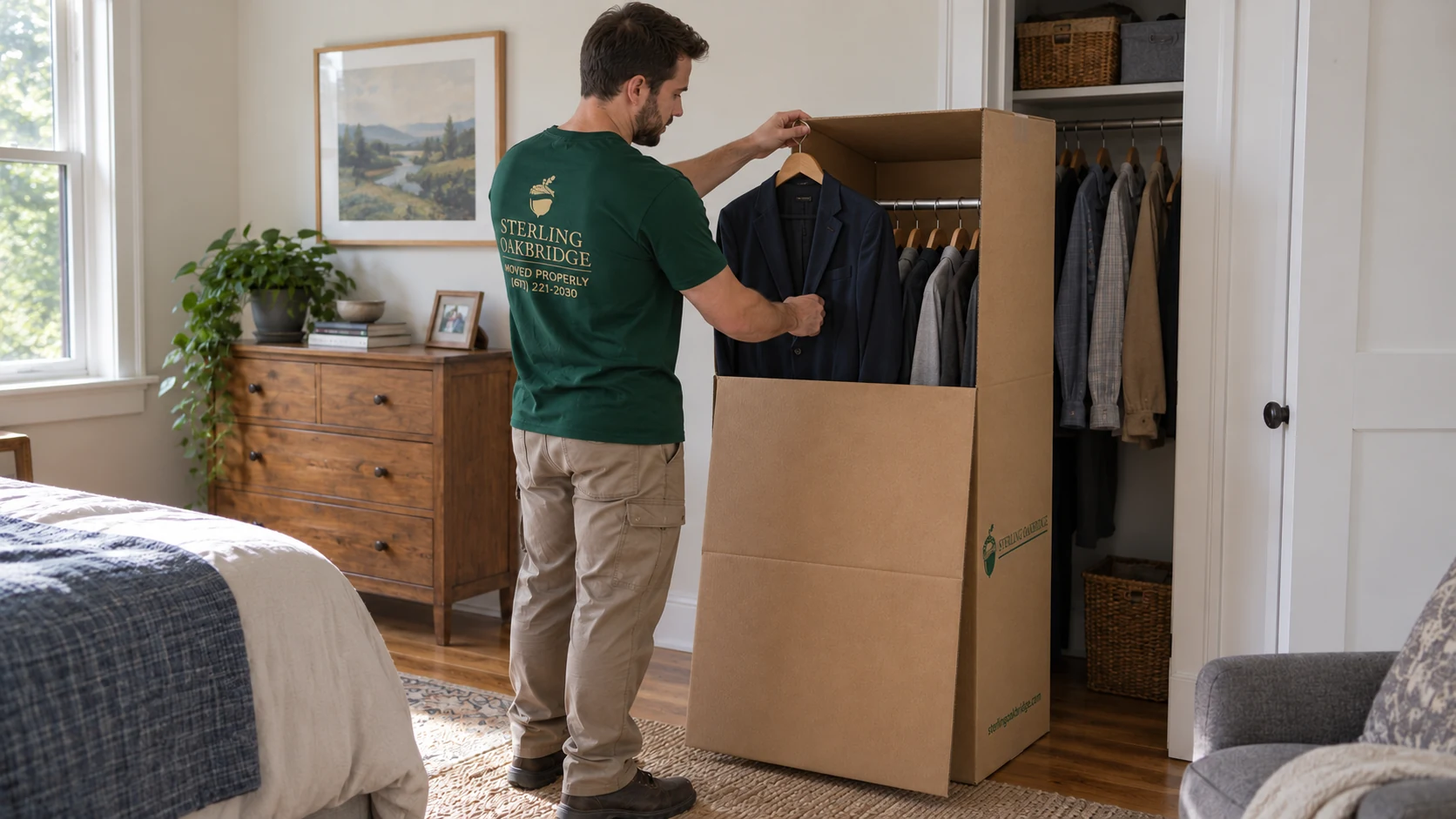
Dishes, books and hanging clothes need different containers and internal support. Breakables need suitable wrapping, cushioning and placement; dense books need manageable loads; clothing needs a wardrobe carton with a supported rail. Carton choice and preparation must allow for lifting, carrying, stacking, restraint and movement in the vehicle, rather than just looking neat in the room.
Show glass doors and removable shelves in cabinets, framed photographs, mirrors, delicate finishes and collections before packing. Identify loose components and keep the agreed hardware with its item. Clean working surfaces and handling materials matter; the appropriate gloves and grip depend on the object. A single wrapping method does not suit every surface or piece of glass.
Basic furniture disassembly and reassembly use moving labor time without a separate basic assembly surcharge. Complex furniture, valuable art or items requiring a custom crate need their own review. For those objects, use the fine-art and specialist packing service to identify the materials, construction and handling required. General household packing does not establish conservation treatment or an appraisal.
Write labels for the person receiving the cartons
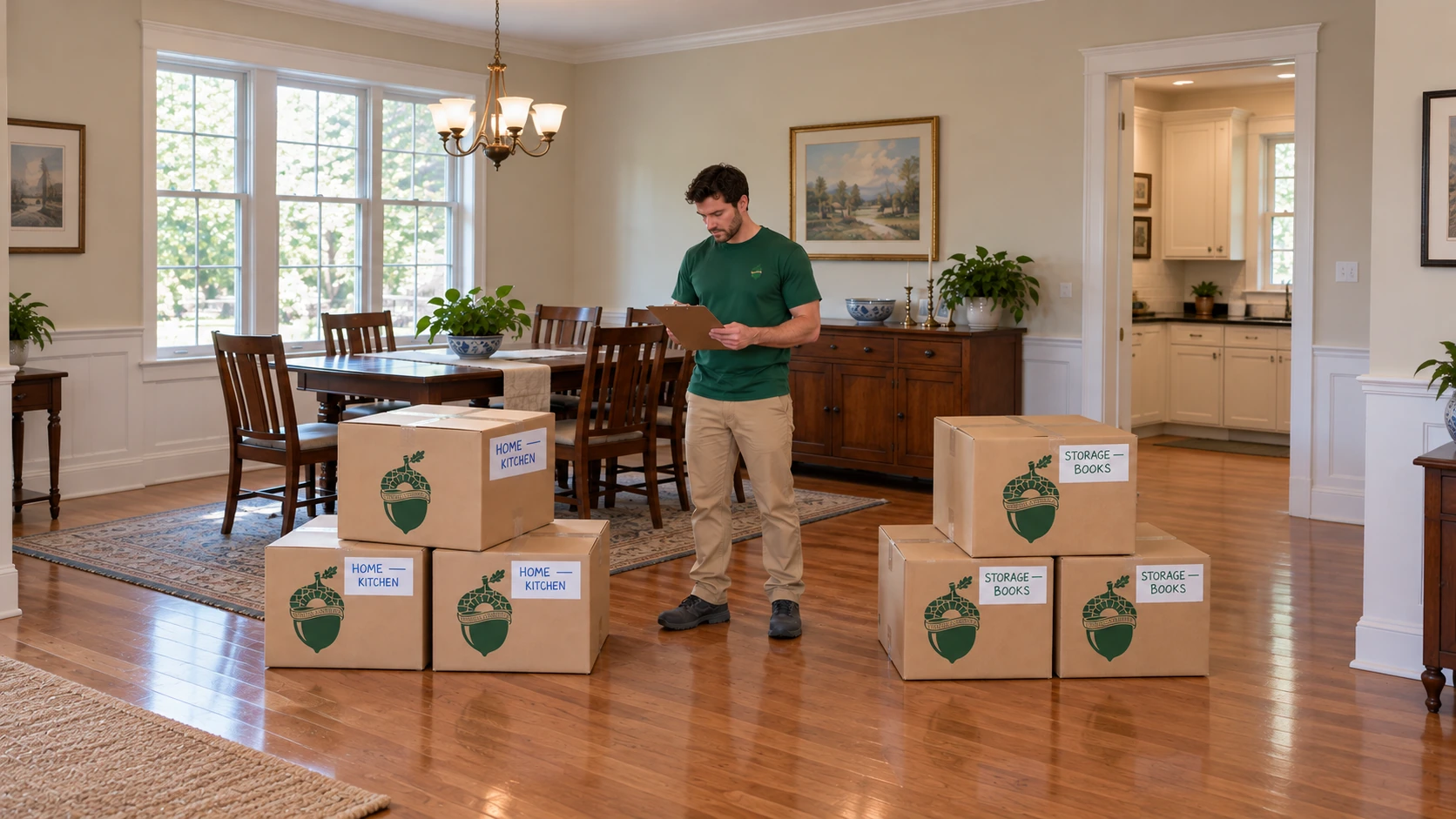
Each carton should identify the next destination, receiving room, useful contents and carton number. Add an opening priority where it helps. A color can reinforce the words; it should not be the only way a recipient knows whether a carton belongs in the kitchen, storage or another home. Keep personal information off outward-facing labels when it is unnecessary for delivery.
For a split shipment, separate the groups before loading and reconcile their labels with the inventory. Mark the cartons that must stay closed in storage and those needed at the new home. Review retrieval, handling and later delivery through the storage service; storage is a separate arrangement, with its own access and charges. Do not pack travel documents, medication or immediate work essentials into the storage group.
Four ways to make the preparation useful
These are imagined planning situations, not accounts of completed Sterling jobs. They illustrate different decisions about household routine, building access, retained belongings and receiving help.
Keep a townhouse kitchen usable until the final evening
Imagine a working parent leaving a Norwalk townhouse with a full kitchen, children's books and hanging clothes. The household wants packing help but still needs dinner, bedtime and the following morning's routine. Start by choosing the dishes, bedding and clothing that stay out, then identify the cupboards and closets the packers can finish earlier.
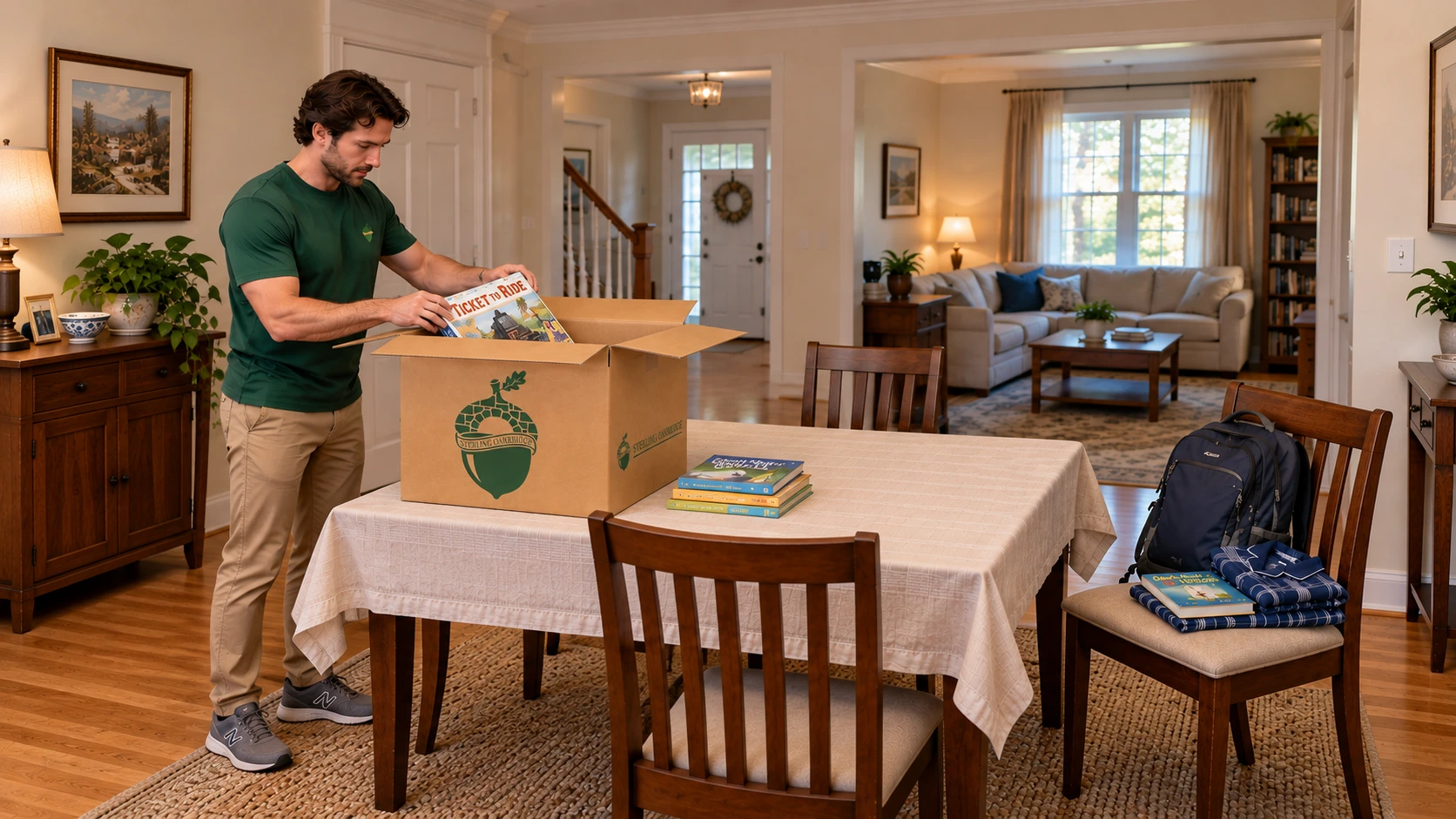
If the reviewed inventory and access justify two visits, the first can prepare the agreed contents while leaving the last-night group untouched. If only one visit works, the plan needs enough time for both the remaining packing and the move; it cannot simply keep the original loading time and add a full kitchen. The useful result is a prepared shipment with a known final task list, rather than a household discovering unopened cupboards while the truck waits.
Fit preparation around the building's carrying appointment
Consider a household moving through a managed condominium. Park Towers' published house rules provide a concrete Norwalk example: ordinary moving is scheduled on weekdays from 9 a.m. to 4 p.m., with management permission needed outside those periods, and goods use the garage entrance rather than the main lobby. The page also assigns residents responsibility for arranging disposal of packing containers. These are that property's published rules, not citywide hours or proof of a particular reservation; obtain current instructions from management for the actual move.
Send the contents list and permitted route before choosing the packing day. An earlier preparation visit is useful only if management permits it and cartons can remain safely inside the unit. Otherwise, compare a smaller packing scope with a different authorized appointment. At the receiving end, agree whether cartons will remain for you to open or whether a separate unpacking visit and paid packaging removal are needed. The aim is to use the carrying appointment for a shipment ready to leave, with the later work already assigned.
Decide what leaves before packing for a smaller home
Imagine leaving a detached Norwalk home for a smaller apartment. The dining cabinet contains dishes worth keeping, but the cabinet itself may not fit; garage contents include a mixture of retained tools and unwanted belongings. Sort those decisions before wrapping starts. Packing everything first adds preparation and handling to possessions that may never enter the new home.
Make separate lists for the new apartment, accepted storage and items leaving by another agreed route. Measure the retained furniture against the receiving route and intended room. Confirm any donation or removal arrangement before depending on it. Norwalk's bulky collection is conditional, excludes cardboard boxes and follows its published calendar; it is not a standing cleanup visit. The result is a smaller, intentional shipment with protection and labels for the belongings actually traveling.
Return to the cartons after a partial move-in
Suppose you have already moved into a Norwalk apartment but work has resumed and the useful kitchen items are still boxed. Some cartons belong in storage, while a room awaiting finishing work should remain unopened. Request a later visit for the identified kitchen and everyday-living cartons, with photographs of the current room and the surfaces available. A later visit is a new scheduling request, not guaranteed immediate availability.
Keep the storage group closed and distinguish it from the cartons to open. Have the person responsible for the unfinished room say when it can receive belongings; unpack only the agreed ready areas. Basic unpacking makes contents accessible on designated surfaces. Add directed organizing if you want approved placement in cupboards and drawers, and arrange packaging removal if the building cannot take the quantity. This visit restores selected routines without pretending the entire home is finished.
Open the useful rooms first, then choose final placement
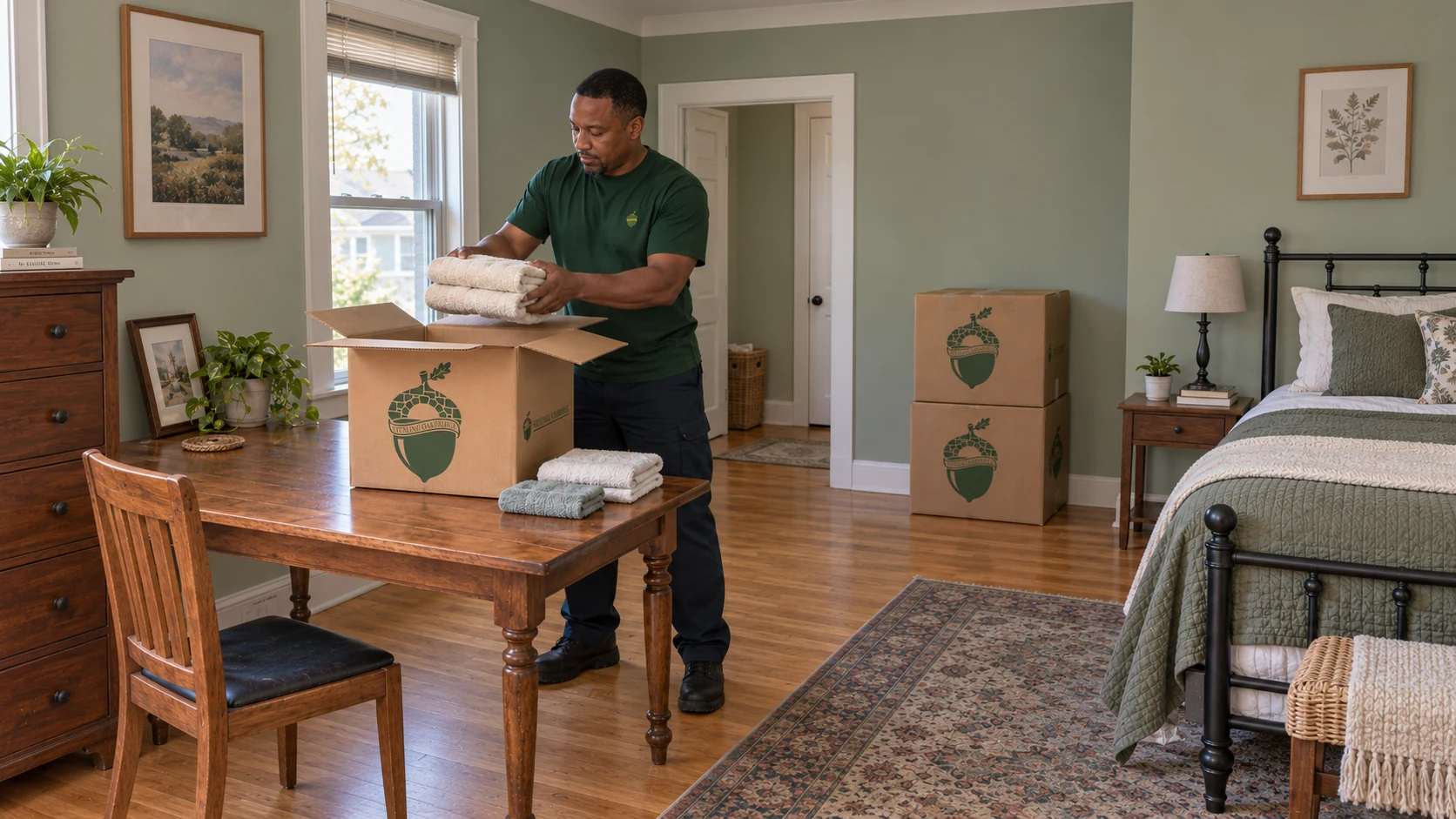
Basic box unpacking opens the selected cartons and places their contents on suitable designated surfaces. Have counters and tables clear before the crew starts. Choose priorities such as everyday kitchen items, clothing, bedding or home-office materials, and leave room to inspect what comes out. Gather used paper and cartons in the agreed area while keeping small fittings and loose parts out of the discard pile.
Home organizing is additional work: belongings go into cupboards, drawers, closets and shelves according to your instructions. Agree the scope and price, and have someone available to decide where things belong. A smaller team can be easier to direct when each cabinet needs a decision. Opening every carton at once is not helpful when there are no clear surfaces or approved places for its contents.
Furniture unwrapping is part of delivery. Box unpacking, final organizing and taking the packaging away are distinct tasks. If you want only a later unpacking visit, show what is already open, what remains sealed and what has changed since delivery; the old shipment inventory may no longer describe the work.
Plan the finishing work as specific tasks
Identify furniture reassembly before delivery and keep the necessary parts and hardware available. First-time construction of complex flat-pack furniture differs from reassembling an existing bed or table. Send the model, instructions and condition for review when the work is substantial or unfamiliar.
Picture hanging, television mounting and other handyman finishing work can be individually reviewed. Name the object, position, wall, fixing information and permissions, then agree the executor, work and price. This does not automatically include electrical work, appliance connection, wall repair or technical setup of your home office. Use the handyman service for the actual finishing request.
If the main task is moving furniture already inside the property, use in-home moving. A separate purchase awaiting collection belongs with furniture delivery. Packing can support either order, but should not blur who arranges release, access and the final location.
Give the used packaging its own exit plan
Collecting wrapping at the work area does not include carrying it away. Packaging removal is separately charged. Agree the materials, approximate quantity, carry and accepting route; list unwanted furniture separately from empty cartons. Before discarding paper, look for shelf supports, screws, small household items and anything deliberately wrapped on its own.
Norwalk's recycling instructions accept cardboard and boxboard that are clean, empty and inside the blue cart. The city's residential collection description covers properties with no more than four dwelling units; confirm the arrangement serving your actual address. Plastic film, bubble wrap, packing peanuts and the listed foam materials do not belong in that cart. Separate accepted paper and cardboard from those materials instead of putting a mixed unpacking bag in recycling.
A larger building may use its own collector and container rules. Have management identify the receiving point and quantity it will accept. A city cart or building bin is not an unlimited destination for a whole move's packaging. Arrange a separate removal order when your agreed unpacking work will leave more than the available route can take.
The 2026 bulky collection program excludes empty or filled cardboard boxes and other single-stream recyclables. It is limited to eligible city-garbage customers in the Fourth Taxing District, with two collections per year and a one-cubic-yard limit under the published conditions. Its listed 2026 sign-up windows ended by September 24; the page does not establish an on-demand October pickup or a 2027 schedule. Arrange a valid route for unwanted items before relying on their departure.
For a proposed drop-off, the transfer station at 61 Crescent Street distinguishes residential access from commercial permits. A customer pass does not establish access for a moving company's vehicle. Confirm the actual vehicle, materials and authorization with the operator. Use the disposal service for separately listed possessions and receiving-route review, rather than adding them silently to packaging removal.
Keep long-distance receiving separate from the packing appointment
For a move beyond the area, plan preparation before pickup and help at the destination as separate stages. Norwalk long-distance moving explains direct and consolidated delivery. A direct shipment uses a dedicated truck and the same moving crew at pickup and delivery. Consolidation has its own agreed delivery window and receiving arrangements; do not book unpacking on the assumption that it means a fixed delivery hour or the same crew.
The delivery period starts after pickup and loading are complete, not when packing begins. Align any receiving visit with the actual delivery plan, keys, permitted working hours and the person who can open the property. A separate unpacking crew or later visit needs confirmed availability and an agreed price. For flat-rate transport, the price applies to the same agreed shipment and service scope; added packing, contents or receiving work must be recorded as a change. A long journey wholly within Connecticut still needs the applicable intrastate terms.
Compare the complete order, including return visits
Packing labor is charged for working time, and company-supplied cartons are charged separately. Moving blankets, shrink wrap and tape have no separate basic protection-material charge for the agreed work. That does not make all packing supplies, custom protection or labor free. Identify specialty materials and construction in the estimate.
Compare the same retained inventory with and without the preparation you want. Include the packing visit, movement between addresses, optional box unpacking, directed organizing, packaging removal, storage and any later visit. Delegating more of the work can meaningfully increase the budget; there is no standard multiplier or citywide price for a full-service home. Compare the time you would spend preparing and receiving with the actual quoted work, rather than assuming a fixed amount of savings.
Estimated hours and any minimum are planning terms, not a promise that the entire order will be finished within them. More contents, inaccessible rooms, unavailable elevators or unreported customer packing can change the work. Report changes promptly and have the scope and charging terms recorded before the affected work begins.
Send a packing list the planning team can use
Provide the Norwalk address and unit, other destinations, preferred dates and any fixed lease or building deadlines. Show the contents of cupboards, closets and storage areas; identify valuables, breakables, specialist objects and what you are preparing yourself. Include the full carrying route, building instructions, permitted working times and the contact who can authorize access.
Say which rooms must work on the final night, which cartons should open first and whether you want contents on surfaces, final organizing or packaging taken away. If some rooms will be unfinished, identify the person confirming their readiness. The planning team can then choose an item-list, video or in-person review appropriate to the order and prepare the scope, stages and estimate.
For the broader moving plan, see Norwalk moving services. For neighborhoods, schools, utilities and settling in, use the Norwalk relocation guide. Those decisions inform the receiving plan without turning a packing visit into a promise to complete every part of relocation.
Norwalk packing and unpacking questions
Can I hire you to pack only the kitchen or fragile items?
Yes. Partial packing can cover selected rooms or groups, and fragile-only packing can cover the breakables needing reviewed protection. List those contents and what you will pack yourself, including drawers and loose items, so the remaining work is assigned. Full packing covers the retained contents on the agreed inventory.
Can you pack and move a Norwalk home on the same day?
A compact, reviewed shipment may fit one day. Extensive cabinet contents, collections or a restricted carrying appointment can make a separate preparation visit more practical. The earlier visit needs permission and safe space for prepared cartons; it does not override building hours. Review the contents and remaining daily-use items before setting the sequence.
What should I keep out for the final night?
Keep medication, identification, valuables, essential work equipment, chargers, clothing, bedding and the kitchen items you still need in a clearly separated group that travels with you. Tell the crew what must remain accessible. Assign the final dishes, toiletries and bedding to someone after their last use, and leave a bed in use assembled unless you agree otherwise.
Can you estimate the cartons from the number of bedrooms?
The contents need review; bedroom count alone does not establish carton quantity or labor. Show cupboards, bookshelves, closets, collections and basement or garage storage, including what is already packed or staying. An item list starts planning, while a video or in-person review may be appropriate for full packing even in a smaller home.
Are boxes, wrapping and packing labor included in the moving price?
Packing uses paid working time and company-supplied cartons are charged separately. Moving blankets, shrink wrap and tape have no separate basic protection-material charge for the agreed work. Specialty protection and custom construction need their own scope. Have the estimate identify the preparation and materials instead of assuming an unlimited supplies allowance.
What if I have already packed some of the contents?
Use a partial order for the groups still needing preparation. Identify your sealed cartons, their contents and any fragile or uncertain packing during the review. Tell the planning team about uncompleted customer packing before move day; adding it at loading can change labor and the schedule. Do not assume an unopened customer carton has been inspected.
How are glass shelves, dishes and framed pictures handled?
Dishes are wrapped and cushioned in suitable cartons; removable shelves and glazed frames need an object-specific plan for their glass, edges and surfaces. Show dimensions, finishes and detachable parts before preparation. Valuable art, complex pieces and custom crates require individual specialist review; ordinary household packing is not conservation treatment or an appraisal.
Do you take furniture apart and put it back together?
Basic furniture disassembly and reassembly use moving labor time without a separate basic assembly surcharge. Complex furniture or first-time flat-pack construction needs review of the model, instructions, condition and work required. Identify the necessary parts and hardware in advance; dismantling does not guarantee an item will fit through the receiving route.
How should I label cartons going to the new home and storage?
Write the next destination, receiving room, useful contents and carton number, with an opening priority where helpful. Use colors as an addition to the words. Separate the groups before loading and match them to the inventory. Keep storage cartons closed until their agreed retrieval, and keep immediate essentials out of that group.
Does unpacking mean putting everything into cupboards?
Basic box unpacking places the agreed contents on suitable designated surfaces. Putting belongings into cupboards, drawers, closets and shelves is additional home organizing, directed by you and agreed separately. Clear the surfaces first and identify the priority cartons. The person making placement decisions should be available for organizing.
Can I book unpacking after I have already moved in?
Yes, later unpacking can be requested for the cartons and rooms still needing help. Send photographs of the current space, what remains sealed and the available working surfaces, then choose the priority groups. It is a separate scheduling request with its own agreed work and price; an immediate crew is not guaranteed.
What if part of the receiving home is still being renovated?
Unpack only the agreed rooms that are ready to receive belongings. Have the person responsible for the work confirm those areas, keep other cartons sealed and label any storage group separately. A later visit or storage and redelivery need their own confirmed arrangements and charges. Do not use a shared hall as temporary carton storage.
Do you remove the paper and empty cartons after unpacking?
Packaging removal is separately charged and must be ordered. Agree the materials, quantity, carry and accepting route. Gathering wrapping at the work area does not include taking it away. Check loose paper for small parts before discarding it, and list unwanted furniture separately from packaging.
Can moving boxes and bubble wrap go in Norwalk's blue cart?
Clean, empty cardboard and boxboard are accepted inside the blue cart under the City's recycling instructions. Plastic film, bubble wrap, packing peanuts and the listed foam materials are excluded. Separate them from accepted paper and cardboard. Confirm the collection arrangement for your address; the City's residential description covers properties with no more than four dwelling units, and a larger building may use its own collector.
Can I use Norwalk bulky pickup for the unpacking boxes?
No. The published 2026 bulky program excludes empty or filled cardboard boxes and single-stream recyclables. It serves eligible city-garbage customers in the Fourth Taxing District under its calendar and quantity limits. The listed sign-up windows ended by September 24, 2026; they do not establish an on-demand October pickup or a 2027 schedule. Use the applicable recycling or separately arranged removal route.
Can a crew use my residential transfer-station pass?
Your residential pass does not establish authorization for a moving company's vehicle. Norwalk's transfer-station page distinguishes residential access from commercial permits. Confirm the actual vehicle, materials and authorization with the operator before relying on drop-off. A separately agreed company removal order needs its own receiving route and charges.
Do all Norwalk buildings have the same moving hours?
No. The property's current instructions control its carrying hours and entrance arrangements. Park Towers publishes weekday 9 a.m.–4 p.m. moving hours, management permission for exceptions and use of the garage entrance; those are examples for that building, not citywide rules or a reservation. Obtain your own building's instructions, elevator arrangements and contact before choosing the packing and move dates.
Can packing happen before my elevator appointment?
An earlier preparation visit can work if the building permits the work and prepared cartons can remain safely inside the unit. Confirm that permission separately from the carrying appointment. If it is unavailable, review a smaller packing scope or another authorized schedule. Keep halls and access routes clear; preparing early does not reserve an elevator.
What should I do with furniture I decide not to take?
Separate it from the retained shipment before packing, then arrange an accepted donation, disposal or other destination. Identify the items, condition, access and timing for that route. Removal is additional work, not included because packaging is being collected. Norwalk's conditional bulky program and its calendar do not guarantee a pickup whenever the decision is made.
Can you hang pictures or mount a television after unpacking?
Those can be reviewed as specific handyman tasks. Supply the object, intended position, wall and fixing information, permissions and any model instructions, then agree the executor, work and price. Box unpacking does not automatically include mounting, electrical work, wall repair, appliance connection or technical setup.
How do I plan unpacking after a long-distance delivery?
Arrange the receiving visit around the agreed delivery model, keys and property access. Direct delivery uses a dedicated truck and the same moving crew at pickup and delivery; consolidation has its own receiving arrangements and delivery window. The delivery period begins after pickup and loading are complete. Confirm any separate unpacking crew or later visit rather than booking against an assumed arrival hour.
Will adding packing change a long-distance flat rate?
It can change the quoted work if it was not included. A flat rate applies to the same agreed shipment and service scope; added contents, packing or receiving help need a recorded scope and price review. State the preparation you want before the estimate is finalized. A long move entirely within Connecticut remains subject to the applicable intrastate terms.
Will a larger unpacking crew finish the whole home faster?
More people can work in parallel when several ready rooms have clear tasks; they do not automatically speed up cupboard-by-cupboard organizing. Opening cartons onto clear surfaces differs from final placement that needs your decisions. A smaller team can be easier to direct for organizing. Agree priorities, readiness, likely labor and any later visit; estimated or minimum hours are not a completion cap.
What do you need for a Norwalk packing estimate?
Send the addresses, unit, contents, preferred dates and fixed building or lease deadlines. Include photographs of cupboards, storage areas and the full carrying route, plus the property's moving instructions. Identify what you will pack, final-night essentials, specialist items, receiving priorities and whether you want organizing or packaging removal. The planning team can then select an appropriate review and estimate the agreed stages and materials.