You may come to Groton for a particular home, more room to work, nearby family or time outdoors. Test those hopes against an ordinary week, then make the practical arrangements that will help the first days go well.
Explore the places you would want to return to during an ordinary week.
01 /
Begin with the right Groton
This guide covers Groton, Massachusetts. When arranging accounts or appointments, use the complete address and state, especially with organizations that work across several areas.
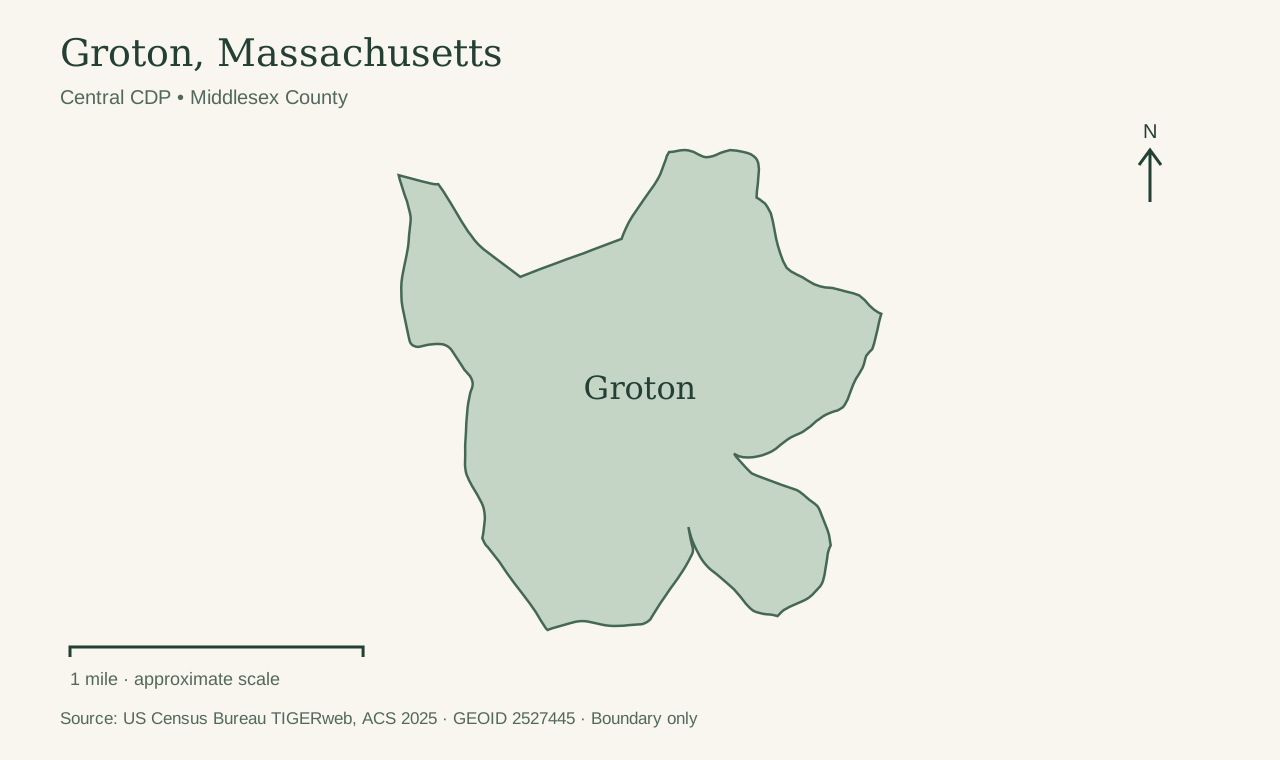
The map shows the Census Bureau’s central Groton CDP boundary. The wider Town of Groton, postal ZIP 01450 and the areas served by individual utilities are different references. The outline helps with orientation; it does not determine a school assignment or confirm a household connection.
The town’s new-resident page provides starting contacts for household services. Keep the property’s actual providers alongside those contacts. An owner, landlord or building manager can help identify which arrangements are already in place.
US Census Bureau outline of the central CDP. The wider town, postal and service boundaries differ. Open full-size map.
02 /
Find the area that fits your routine
Start with the home, then explore the places you would actually use. A convenient trail entrance, a workable journey or the right room layout may matter more to you than a familiar area name.
Groton Center and Court Street
DCR identifies a rail-trail access point at Court Street in Groton Center.
At a nearby home, compare the rooms and storage you need with the space left for everyday circulation.
Daily travel
Walk the actual connection from the property to the trail or your errands; proximity on a map is only a starting point.
Before choosing
Check crossings, the walking surface and your return route before making the trip part of a daily routine.
Old Ayer Road and the Eliades connections
The town identifies Eliades Conservation Land as a connection to the rail trail at Pacer Way, with access also listed from Old Ayer Road and Smith Street.
Ask the owner for the actual utility providers and the systems serving the home.
Daily travel
Try the journeys from the precise address; the village name does not tell you how the week will work.
Before choosing
Confirm the electric account with the address rather than choosing a provider from the ZIP code.
03 /
Try living in the rooms before filling them
Walk through the home in the order of an ordinary day. Where do coats and shoes go? Where would you work, eat or take a quiet call? Check the usable space once the furniture you intend to keep is accounted for.
A spare room may look ideal for a desk until the door swing, radiator and storage are included. Measure the larger pieces and leave room for the chair to move. Try outlets and ask how the internet connection reaches the room you will use.
Look beyond the floor plan. Ask who maintains the drive, grounds and building systems, what storage is included, and which fixtures or furnishings remain. For a shared building, check the arrangements for deliveries, visitors and common areas.
If a step-free route or another specific feature matters to someone in the household, inspect the whole route. An attractive room cannot compensate for an entrance that is difficult to use every day. Put agreed responsibilities and any promised work in the property paperwork.
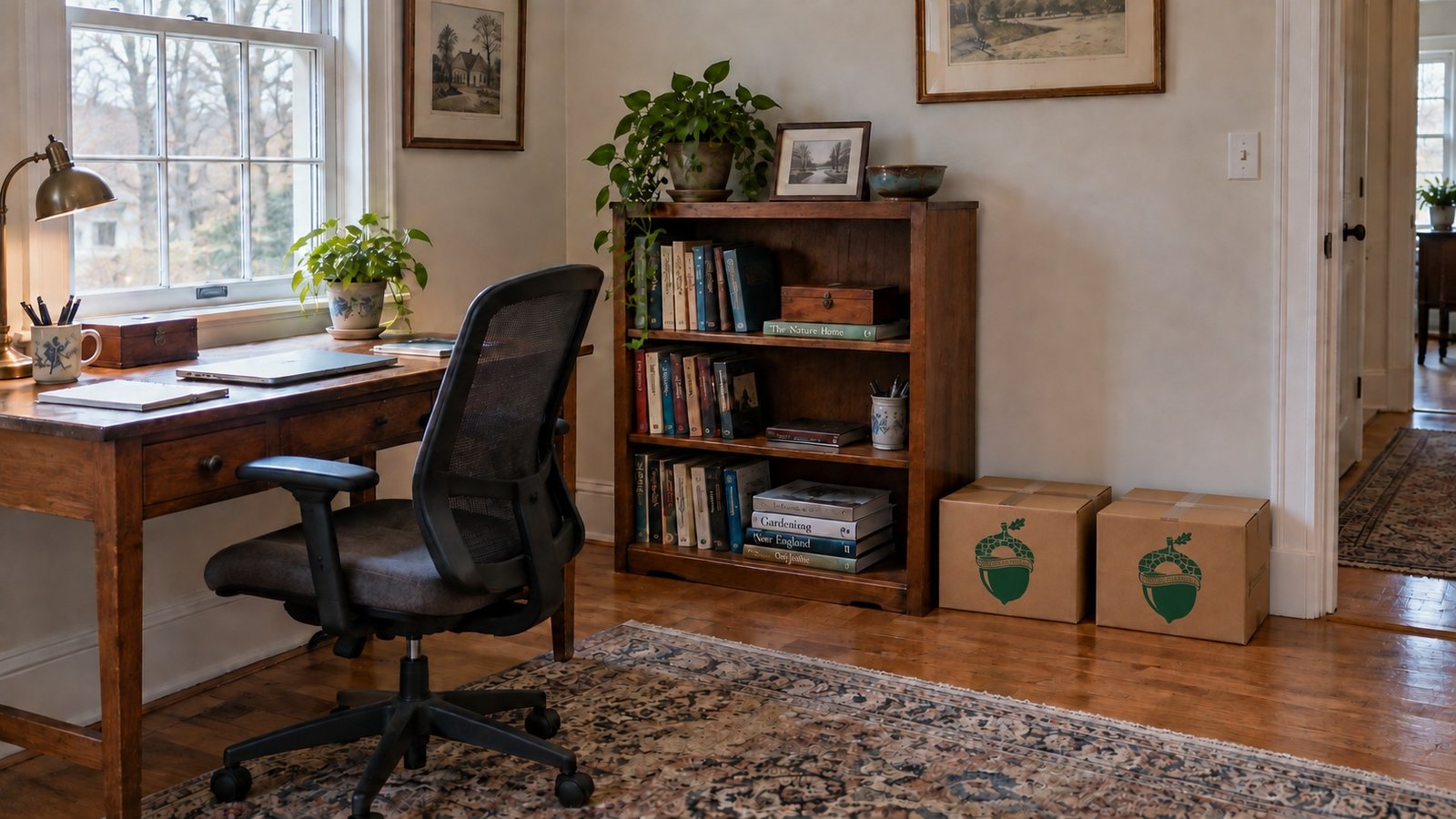
Check the usable room space before deciding where the furniture will go.
04 /
Test the complete journey
Try the trip from the actual home to work, school or a regular appointment at the hours you expect to travel. Include parking, the final walk and the return journey. A route that works at midday may not fit an early shift or evening pickup.
DCR’s Nashua River Rail Trail information identifies Ayer Station on the MBTA Fitchburg commuter-rail line as a rail connection. Ayer is a separate destination to reach from your Groton address. Check the current train timetable, station parking and the connection before building your week around it.
If you expect to cycle, walk or use an arranged ride for part of a journey, try that part too. Think through poor weather, darkness and the last return service that suits you. The existence of a trail does not establish that every road between the house and its entrance is comfortable for your needs.
For a household sharing one car, plan the day when two people need it at once. An extra pickup arrangement may matter more than the difference between two advertised commute distances.
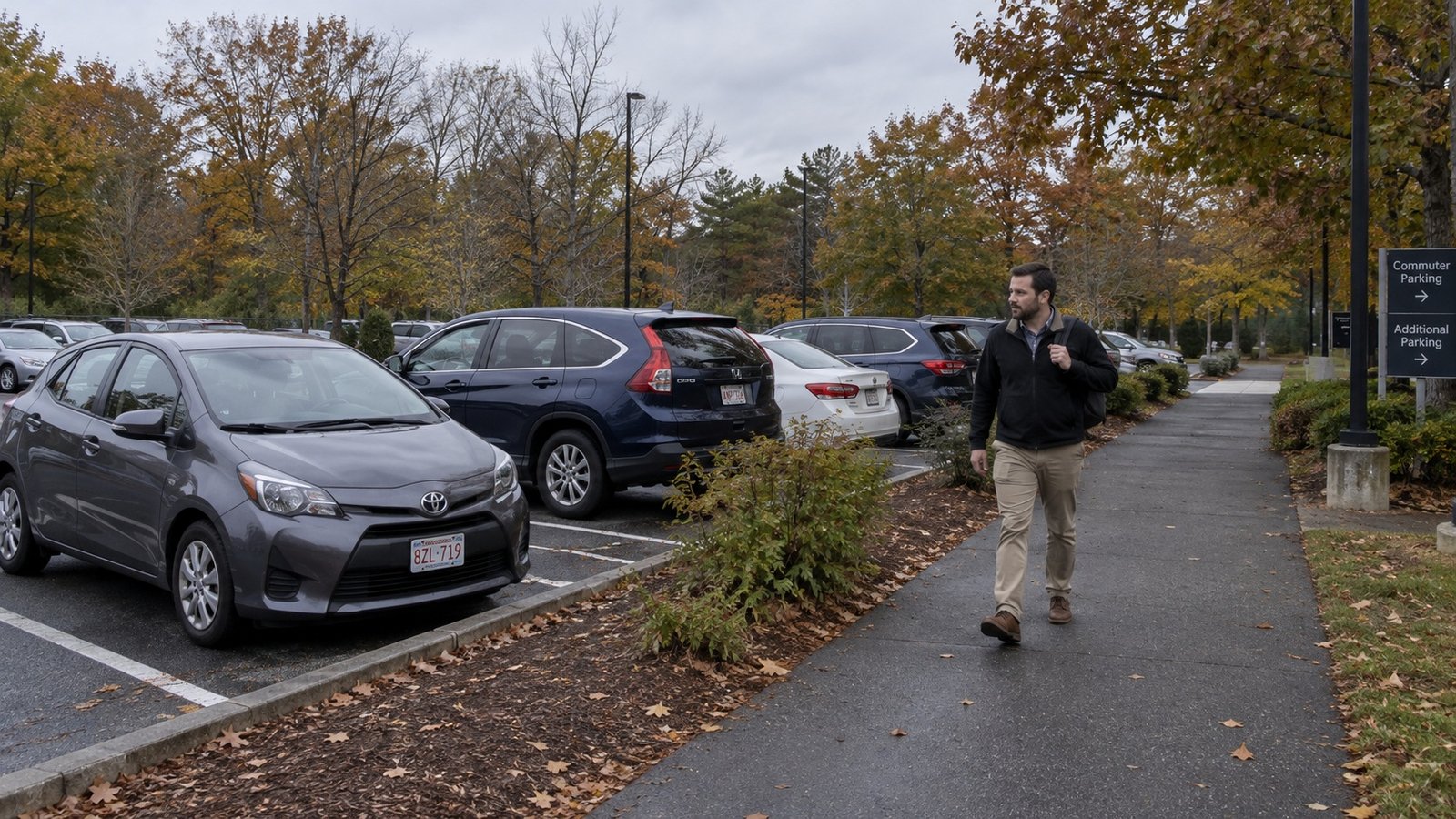
Include parking and the final walk when testing a regular journey.
The district lists identity and age documents, health information, school-record forms, proof of residency and a separate proof of occupancy. Its occupancy list calls for a qualifying bill from the past 45 days showing the guardian and home address. Use the live checklist to assemble the documents rather than treating a lease alone as the whole packet.
If a document is unavailable or a translation is needed, contact registration for the appropriate next step. Confirm the school, intended start and transportation directly. Preschool and kindergarten have additional instructions, including a separate route for current Boutwell students entering kindergarten.
Keep the documents and the essentials for the first school days with the family. They should be accessible even if most of the household is still packed.
06 /
Confirm providers at the address
Ask for the current electric, water, heating and internet arrangements, and establish who opens each account. Include sewer or septic and any systems maintained by the owner or building. An address listing does not show every connection.
The town’s new-resident information identifies Groton Electric and notes that a small part of West Groton uses National Grid. It also lists Groton Water. Confirm the provider for the exact property before starting an account, rather than assuming that the town name or ZIP settles it.
Record handover dates and the service contacts you may need. If the home has equipment that requires inspection or preparation, arrange the relevant provider before arrival. Keep any available system instructions and maintenance records in one place.
For home working, ask for the installation appointment and how the service will reach your workspace. Coverage at an address is useful information; it is not the same as an active connection on your first working morning.
07 /
Set up the routine before unpacking everything
Check whether the property already has private collection through an owner or building, or whether you will arrange it. The town lists commercial curbside haulers and a transfer-station option.
At the Groton Transfer Station, household trash requires a vehicle sticker and special town bags. Recycling has a separate sticker requirement: the town says residents and nonresidents can obtain that sticker at the station at no extra cost, without purchasing a trash permit.
Before taking furniture, electronics or another bulky item, check acceptance and the applicable fee. The station page lists a Swap Shed for reusable items and separate hazardous-waste information. A material accepted for disposal is not automatically eligible for the reuse area.
Keep unwanted belongings apart from the moving load. Decide whether you will self-haul, arrange a collection or include separately quoted removal work. Make that decision before disposal piles block the rooms you need to unpack.
08 /
Plan large deliveries separately from daily parking
Ask the owner or manager where a large delivery vehicle can work and whether an access appointment is needed. Show the entrance, surface and route to the door. Keep a contact available if a parked vehicle or another delivery changes the plan.
For public-road access, check what applies to the specific location and date. Groton’s current snow and ice code includes an overnight street-parking ban from November 15 through April 15 and prohibits on-street parking during a declared snow emergency. Those rules do not themselves reserve a daytime loading space.
The Groton moving page explains how to show the full carrying route. Delivery access is easier to settle before the appointment than when a vehicle is waiting outside.
09 /
Make the entrance work for daily life
Try the entrance with groceries, a stroller or the mobility equipment the household actually uses in mind. Look at the approach, door weight, threshold, steps and landing. Ask who keeps shared routes clear.
Find out how keys, entry codes and deliveries will be handled. If a relative, carer or contractor needs access, agree the arrangement with the responsible person. Keep a working contact number available before internet service is active.
For alterations or a proposed business use, discuss the intended work with the owner and relevant town department before relying on it. A room’s appearance does not establish permission for a new use or the practicality of a building change.
10 /
Include winter access in the home’s responsibilities
Ask who clears the drive, entrance steps and any shared path. Establish where cleared snow can go and who responds if the route needs attention before an appointment. A driveway can be passable for a car while the footpath is still unusable.
For a winter move, have the route checked before the crew arrives and report a changed entrance or surface. Keep tools and other loose items out of the carrying space. Allow the moving team to review the plan if conditions affect access.
For a home left empty between visits, choose someone who holds a key and can deal with a service problem. Arrange building-system care with the appropriate provider. A swept path is only one part of keeping the property ready.
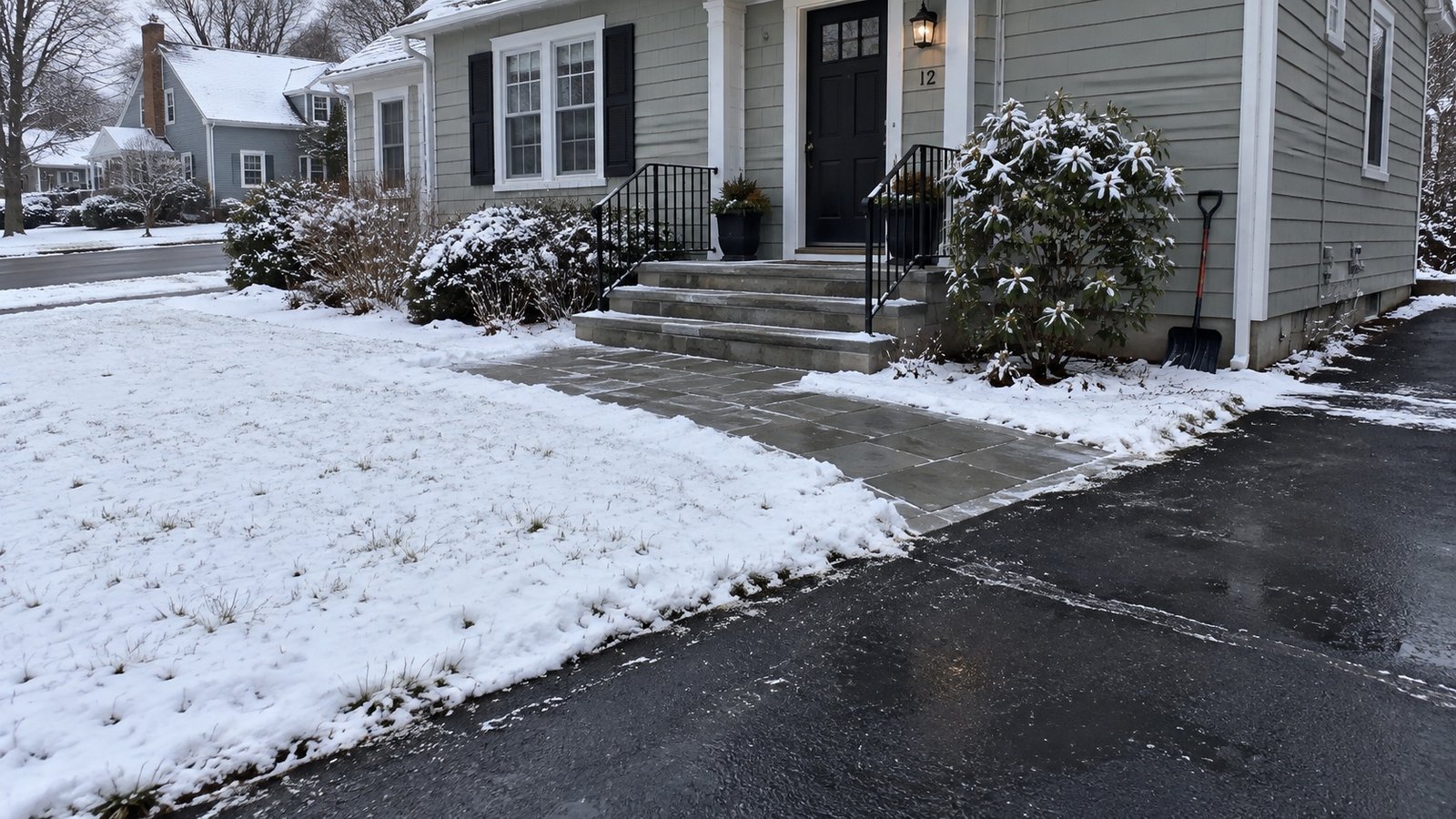
Arrange for the driveway, steps and walking route to be ready before arrival.
11 /
Find the places you would return to
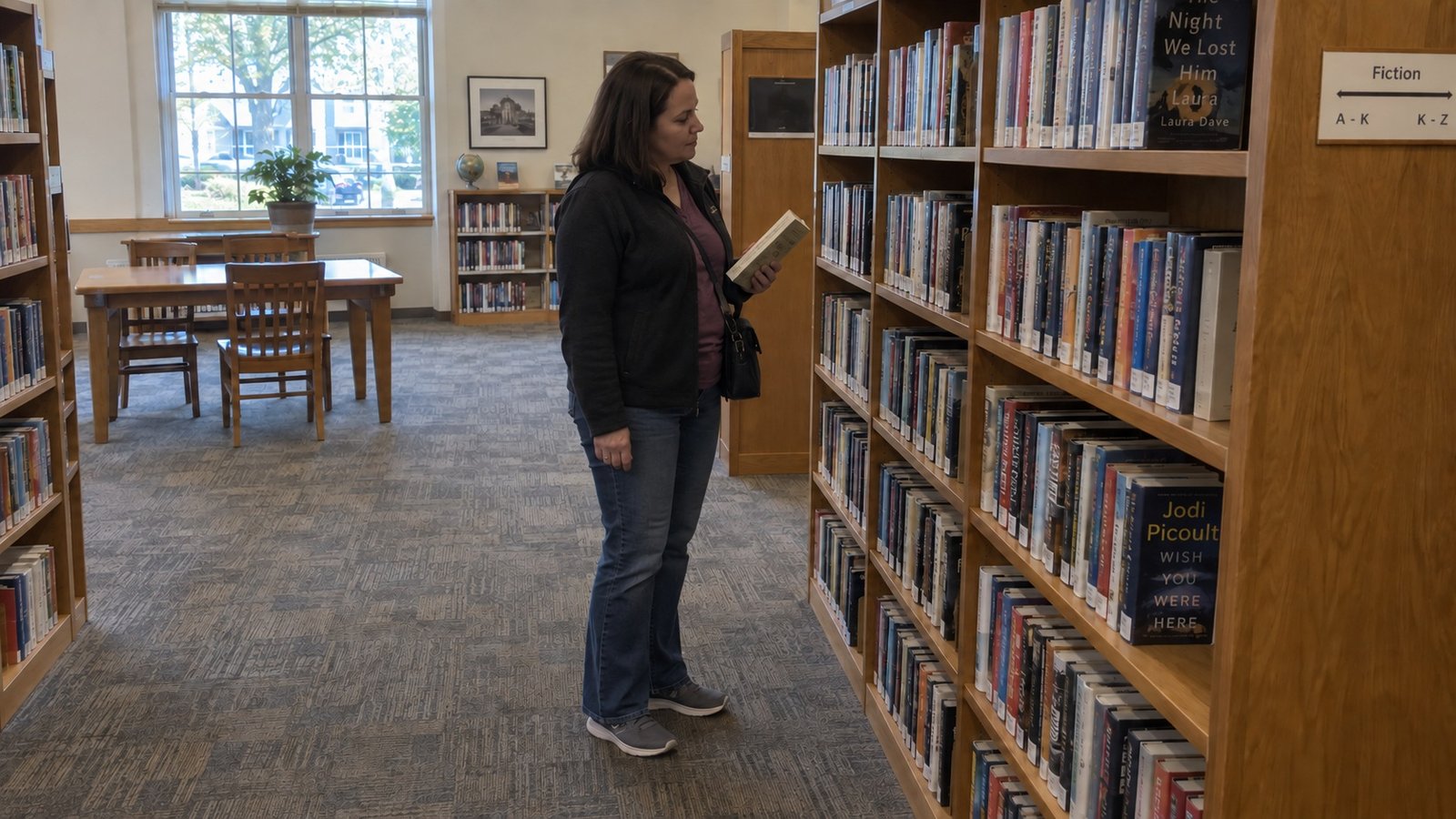
Try one ordinary errand and one activity you would enjoy in a normal week. You may prefer a library visit, a class, a walk or time with nearby friends. Notice the route home as well as the destination.
The town’s recreation directory links to local activities, Prescott Community Center and outdoor resources. Check the operator’s current program and availability for anything that matters to your move.
DCR describes the Nashua River Rail Trail as an 11-mile trail for activities including walking and cycling, with access points in Groton. Choose a public entrance and respect neighboring private property. If a nearby green space is part of a home’s appeal, walk the actual connection before assuming it will become your daily route.
At Eliades Conservation Land, the town lists access from Old Ayer Road, Smith Street, Pacer Way and the rail trail. Its conservation rules require animals to be leashed. Check the rules of the particular place you visit; different sites need not share every condition.
Try an activity you would enjoy making part of your week.
12 /
Leave room for different reasons to move
Write down the few changes that would make this move worthwhile. Being closer to family, gaining a workspace, reducing upkeep and spending more time outdoors are different priorities. Compare homes against your own list.
Plan the first week for people as well as belongings. Confirm any care appointments, childcare, transport or help a relative will need while the home is being set up. If a familiar service matters, check availability before relying on a nearby listing.
For pets, confirm the tenancy rules and arrange a secure place during delivery. Keep their essentials handy. For someone moving from a much larger home, agree what will fit before the remaining space fills with unopened cartons.
13 /
Put the first week in a workable order
Before arrival, confirm entry, the receiving contact and essential service appointments. Keep one current list of the people responsible for the move, property and household arrangements.
On the day, make the essential rooms usable first and confirm where the larger pieces belong. Keep documents, medicines, chargers and a change of clothes within reach. Resolve an access or service problem through its named contact while the right person is available.
During the following days, settle the waste routine, finish address and account changes, and test the journeys you planned. Leave some space to discover what works. You can start feeling at home before the last carton is empty.
14 /
Questions before you arrive
Does the map show the whole Town of Groton?
No. It shows the central Groton Census-designated place. The guide also discusses services and orientation points in the wider town; postal, school and utility boundaries differ.
Is Groton Electric the provider for every Groton address?
No. The town notes a small part of West Groton served by National Grid. Confirm the provider for the exact home.
Should a returning district student create a new registration account?
The district says previously enrolled or registered students should contact its registration team to reactivate their account instead of creating a duplicate.
What if a school document is missing or needs translation?
Contact studentregistration@gdrsd.org for help with the appropriate process. Use the current district checklist and explain the household circumstances.
Can I recycle at the transfer station without a household-trash permit?
The town provides a separate recycling sticker at no extra cost and says a trash permit is not required to obtain it. Check the accepted materials before your trip.
Where should I check a commuter-rail connection?
Start with current MBTA information for Ayer Station on the Fitchburg line, then test the journey between the station and your actual address, including the return trip.
Does the winter rule prohibit all daytime street parking?
The seasonal rule is an overnight ban; a declared snow emergency prohibits on-street parking. Check current notices and any other restrictions for the particular location.
How can I compare two possible homes?
Compare the rooms you will use, the complete daily journeys, service and maintenance responsibilities, and the features important to your household. Check those details at each address.
Continue planning
The other side of your move
Explore the local guide or plan the moving services for this location.
Official procedures and local resources are linked beside the answers above. Reopen the relevant page when arranging a date: fees, schedules and application requirements can change.