
Connecticut / City relocation guide

Moving to Tolland

A home in Tolland needs to work for the ordinary week as well as the day you move in. Start with your routes and the property itself, then arrange the school, household and access details that make arrival easier.

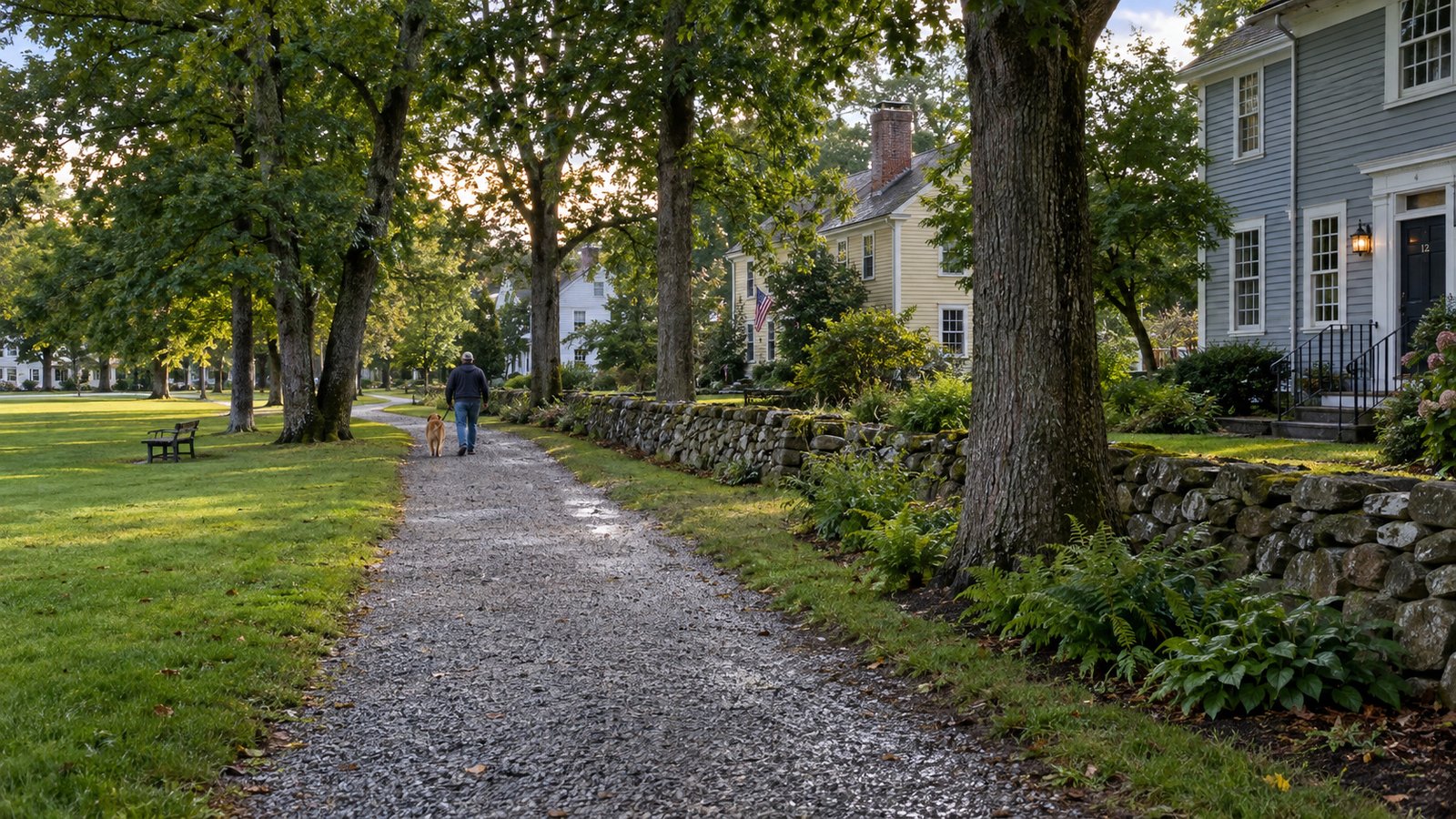
A gravel walking path beside trees, houses and a grassy common
Try an everyday route on foot as well as the drive to work.

01 /

Start with the routines that matter to you

Picture an ordinary Tuesday rather than only the first weekend. Where will you work, shop or study? Who needs the car, who needs a reliable walk or bus connection, and what happens when a meeting or school activity ends later than expected? Two homes with similar space can produce very different daily routines.

Write down a few requirements before comparing addresses. These might be a ground-floor room, space to work quietly, a manageable driveway, storage for tools or a route that works without driving every day. Keep preferences separate from requirements so one attractive feature does not obscure a practical problem.

This guide concerns the town of Tolland, Connecticut. A county name or postal address alone does not settle school eligibility, utility service or the rules for a particular property. Use the exact address for those checks.

02 /

Find your bearings, then test an address

Tolland Green and the Merrow Road / Route 195 approach give you two useful starting points for orientation. The town publishes an official historic-district map for the Green; the regional 2008 Route 195 study documents the corridor and its relationship to I-84. That older study is geographic background, not a current traffic forecast or a statement about today’s shops or zoning.

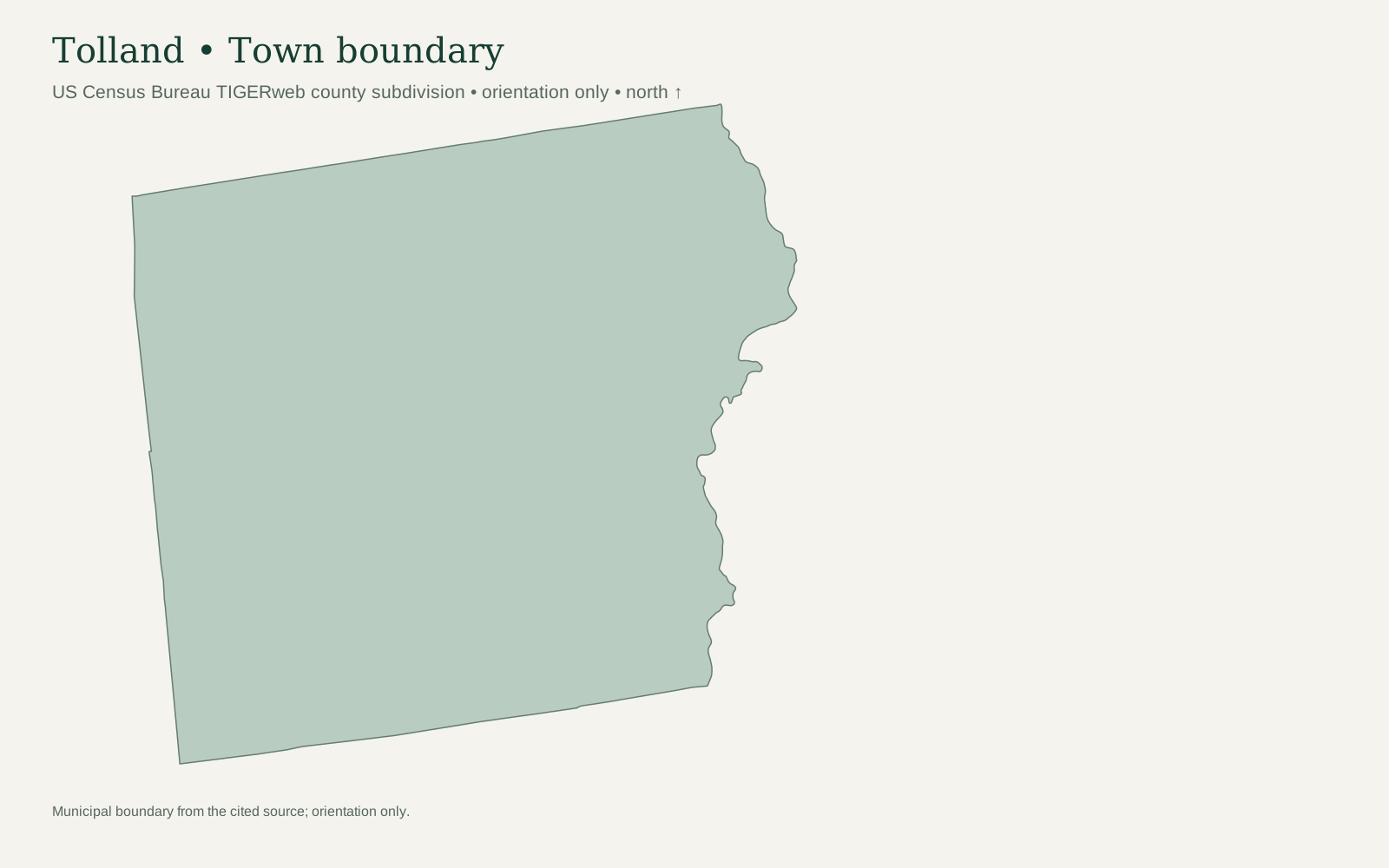
The map below shows the town boundary from US Census Bureau TIGERweb. Use it to locate the town while comparing addresses. School enrollment, property rules and truck access still need to be checked for the home you are considering.

If you are deciding between Tolland and the regional center, our Hartford guide provides a different comparison of housing, everyday travel and arrival arrangements.

Outline of the town of Tolland in Connecticut
US Census Bureau TIGERweb town boundary for orientation; not neighborhood divisions, school assignments or approved truck routes. Open full-size map.

03 /

Find the area that fits your routine

These are two useful places to begin comparing addresses, rather than an exhaustive list of neighborhoods. The boundary map shows the town as a whole; it does not draw boundaries around the areas below.

Tolland Green

The civic and historic center is an orientation point for local errands and the surrounding streets. The town publishes a specific historic-district map.

Historic district regulations and map ↗
Housing & setting
Check an individual home’s layout, maintenance responsibilities and whether the parcel is within the mapped district before planning exterior changes.
Daily travel
Try the actual route from the property to your regular destinations; proximity to the Green alone does not establish a complete walking or transit routine.
Before choosing
Inspect doorways, stairs and the proposed loading position, then consult the district map if exterior work is part of your plans.
Merrow Road / Route 195 approach

The Route 195 corridor and its connection with I-84 are useful geographic reference points south of the Green. A regional study documents this corridor; its 2008 operational data are historical.

Route 195 corridor study — 2008 geographic context ↗
Housing & setting
Compare the actual dwelling and its position on or away from the main road. Ask about access, outdoor responsibilities and household systems at that address.
Daily travel
Rehearse entry and exit at your likely travel times and include the final walk or parking step. Do not substitute an old corridor study for a current journey check.
Before choosing
Look at the driveway entrance, turning space and any shared access. Review present-day rules with the relevant owner or authority.

04 /

Look beyond room count

Walk the house with the furniture and routines you already have in mind. A room under the eaves can be useful for a study and awkward for a tall wardrobe. A finished lower level may offer extra living space while its staircase or exterior threshold controls what can be brought in. Measure the difficult turns, not just the room.

Ask which fixtures, appliances, shelving and outdoor items stay. Find out who maintains the driveway, clears snow, handles leaves and repairs any shared access. For a rented or managed home, get these responsibilities and any moving restrictions in writing.

For an older property around the Green, check whether it falls inside the mapped historic district before planning exterior changes. The Historic District Commission’s map and procedures are a better starting point than assuming the rules apply to every house with an older appearance.

Keep the housing budget practical: fuel or heating arrangement, water and wastewater system, internet installation, outdoor maintenance and any association charges all deserve an address-specific answer. The seller’s or previous tenant’s arrangement is useful background; confirm what you will actually take over.

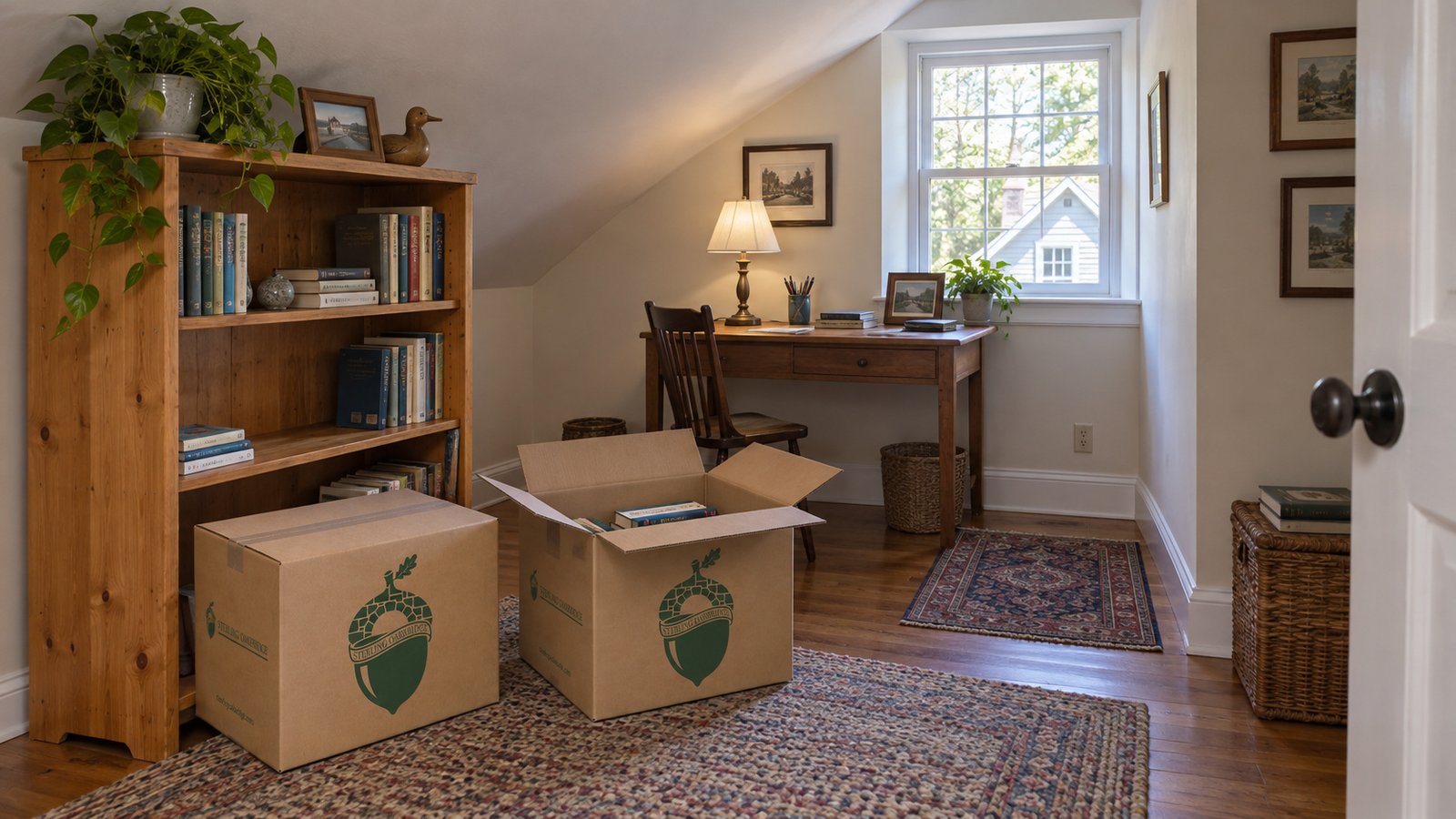
Small home study under sloping eaves with a bookcase and two kraft moving cartons
Measure the room, the doorway and the route before deciding where larger furniture will go.

05 /

Try the full journey, including the way home

Test a likely work, study or school journey at the times you expect to use it. Include the driveway exit, the last part of the route, parking and the walk from the vehicle to the door. A travel estimate to the center of another town leaves out those everyday minutes.

If a bus connection could help, enter the actual origin and destination in the CTtransit trip planner and check the current route and schedule directory. Look at the return trip, weekend travel, transfers and the walk to the stop. Make sure the available trips fit the hours you actually need.

For a household sharing one car, rehearse the day when two people need it at once. Check what an evening pickup, late return or appointment would require. A workable backup is more useful than a promise that every journey will be easy.

Assess the pedestrian route separately: continuous walking space, road crossings, lighting and the return after dark. A short map distance is not a description of the walk.

Commuter waiting at a roadside bus shelter with a separate fenced car park behind it
Include the walk, connection and return journey in your travel check.

06 /

Prepare registration before the move becomes hectic

Start with Tolland Public Schools’ new-student registration instructions using the student’s situation and the new address. The district distinguishes new enrollment, returning students and residency verification for residents attending magnet, technical or Vo-Ag schools. A move within the area does not mean every family follows the same form.

The registration page asks families to read its residency procedures and prepare the required documents before uploading them. Its checklist includes two forms of residency, the child’s birth certificate, health and immunization records, consent paperwork and a request for previous school records. Use the current linked forms and ask the district about anything your family cannot yet supply.

Keep these records accessible rather than packing them deep in the shipment. If a closing or lease date changes, ask how it affects the registration timeline and first attendance date. The district’s registrar is the right person to resolve eligibility or documentation questions.

Work through transport and care arrangements separately. The registration page links school-specific special-transportation forms and, for relevant schools, bus-stop release forms. Confirm the actual school, pickup procedure, start date and any before- or after-school arrangements; do not infer them from the name of a neighborhood.

07 /

Identify the systems serving this particular home

Ask the owner or manager for the providers and systems serving the address: electricity, heating fuel, water, wastewater, internet and any shared equipment. Establish which accounts you open directly, which charges come through a landlord or association and which maintenance obligations become yours.

The Tolland Water Commission provides a local contact and links to water-system documents. Service arrangements can differ between properties. Ask whether the home has a public connection or a private well, and whether wastewater goes to a sewer or an on-site system. Use the seller, landlord and relevant service professional to establish the records and responsibilities.

Before handoverWhat to confirm
Electricity and heatingProvider, start date, fuel arrangement and responsibility for any tank or equipment
Water and wastewaterThe actual system, billing contact and relevant maintenance records
InternetService at the exact address, installation appointment and an interim connection if you work from home
Shared or managed propertyWhich accounts, meters and services are individual and which are shared

On handover day, keep the agreed meter readings, account confirmations and equipment instructions together. Share account details only with the relevant provider or property contact. If keys or occupancy are delayed, update service appointments rather than assuming the original dates still work.

08 /

Leave the carts, book the bulky items

Tolland’s trash and recycling page makes a useful moving-day distinction: the town-owned carts stay with the residence when someone moves. Check that the destination has its carts and learn the collection pattern before generating a room full of empty packaging. Recycling is collected every other week; the town page links the current schedule and street information.

Unwanted furniture and large metal items need a separate plan. The bulky and metal collection procedure requires a reservation and asks for at least four business days’ notice before the regular collection day. Tell the vendor what the items are and confirm payment, acceptance and the date. Do not assume that leaving something beside the cart books a pickup.

Separate metal and bulky items as the town directs, and put them out close to the confirmed collection date. Keep the pavement, driveway and crew’s route clear. If a move date does not align with collection, arrange an alternative rather than leaving the next occupant to resolve it.

For moving-company packaging removal, agree the scope and charge with the move plan. That service and municipal collection are different arrangements.

09 /

Agree the unloading space before arrival

Find out whether the usable space belongs to the property, is shared with neighbors or is on the public street. A garage forecourt may be suitable for a car yet leave too little turning space for the planned vehicle. Send the moving team an uninterrupted view of the approach, stopping place and route to the entrance.

During the winter season, Tolland prohibits overnight parking on public streets and municipal lots from midnight to 6 a.m., November 1 through April 15. The town may also declare additional snow-event restrictions. Review the parking-ban guidance and current notices when setting arrival times.

If public space is needed, ask the responsible authority what is permitted at the proposed place and time. For a managed property, get the manager’s loading instructions. Keep an alternative in the plan if the preferred space is unavailable.

10 /

Make the address usable for the people moving in

Check access for your household as well as the furniture. Count exterior and interior steps, examine handrails and thresholds, and see whether the rooms you need can be reached comfortably. A ground-level entrance does not establish step-free access throughout the home.

For delivery, measure the smallest doorway and turn, check door swings and identify fixed obstacles. Share photos of any sloping approach or alternative entrance with the moving team. Do not remove fixtures or alter a shared building simply to make an unreviewed plan fit.

Arrange keys, codes and a contact who can resolve access problems. If an elevator, loading room or shared drive is involved, confirm the booking and who is responsible for protecting common areas.

11 /

Give yourself a few easy first-week routines

Locate the places you will use repeatedly: food shopping, a pharmacy, a place to walk and somewhere to get online if installation is delayed. Check opening times directly. A short first-week list can make the new home feel workable without trying to discover the whole area at once.

The Tolland Public Library’s card instructions direct residents to the library at 21 Tolland Green, on the lower level of the Town Hall complex, with identification showing a Tolland address. It is a useful first errand once your documents are ready.

For outdoor time, use the Conservation Commission’s area and trail information to choose a suitable route. The commission states that conservation areas are closed from sunset to sunrise and motorized vehicles are prohibited. Check the relevant trail and conditions before deciding it will be your regular walk.

Leave room for your own priorities. A dog’s routine, a quiet workspace, easy visits to family or a manageable school pickup may matter more than a list of attractions. Test the things that will make a difference to your household.

Two people reviewing a household checklist in a kitchen
Keep a short list of essentials for the first evening and the next morning.

12 /

Plan for the home when weather changes

Before a winter arrival, decide who clears the driveway and the route from it to the door. If you are moving into an empty house, arrange this in advance. Confirm where snow can be placed without covering a drain, a needed parking area or the crew’s working space.

Read the town’s winter parking guidance when snow is expected. A daytime storm restriction and the seasonal overnight ban are different checks. The crew needs a usable route at the agreed time, not simply evidence that someone cleared it earlier.

During a wet spell, inspect drainage and soft edges before directing a heavy vehicle off the paved surface. Keep the first-night bag and important paperwork somewhere dry and reachable. Let the moving team know promptly if weather changes the access plan.

Homeowner clearing snow from the path to a side entrance
Arrange snow clearance for the complete carrying route before the crew arrives.

13 /

Put the first day in a workable order

Bring the keys, essential documents, medication, chargers, basic toiletries and a change of clothes with you. Keep the first meals simple and know where the bedding will be. Label the things you need immediately so they do not disappear into a storage room.

  1. Before delivery: confirm possession, functioning essential services and a clear entrance.
  2. At arrival: agree room names, furniture positions and which items need attention first.
  3. Before the crew leaves: review the completed and remaining work and keep the move paperwork.
  4. Over the next few days: complete address-specific school, household and local-service arrangements.

If the handover is delayed, contact the move planner before the original access time passes. Review the new timing and whether waiting, rescheduling or storage is needed; each changes the plan differently. Keep a small independent overnight kit so the household has essentials while the delivery decision is resolved.

For the service scope and estimate, continue to movers in Tolland. For the broader service area, see Sterling Oakbridge in Connecticut.

14 /

Questions before you arrive

Is this guide about Tolland town or all of Tolland County?

It covers the town of Tolland, Connecticut. Use the exact property address to confirm school eligibility, utilities and local rules; the county or postal label alone is not enough.

Where should I start when comparing homes?

Start with the routines and property features you need: a realistic journey, suitable rooms, household services and manageable access. The Green and Route 195 corridor are orientation points, not ratings of where a particular family should live.

Do all Tolland homes have the same water service?

Do not assume so. Ask the seller or landlord which system serves the address, who bills for it and what maintenance applies. The Tolland Water Commission is one relevant local contact.

What should I prepare for school registration?

Follow the district’s current registration checklist and residency procedures. Prepare the required documents, confirm the student’s enrollment situation and arrange transport and any care needs separately.

Should I take the trash carts to the next home?

The town’s instructions say its trash and recycling carts remain with the residence when you move. Check the arrangements at the destination separately.

Can I rely on an old bus timetable I found online?

Check the operator’s current trip planner and schedules for your travel day, including the return journey. Old route documents can remain online after services change.

Do winter parking rules affect a move?

They can. Tolland has a seasonal midnight-to-6-a.m. ban on public streets and municipal lots, plus possible snow-event restrictions. Review the town guidance and current notices when planning arrival.

What if I cannot get the keys when the truck is due?

Tell the move planner as soon as you know. Confirm access and review waiting, rescheduling or storage before assuming delivery can proceed. Keep essentials with you until the revised plan is settled.

Your next step

Bring the plan together

Ready to plan the physical move? The Tolland moving page explains the services, estimate and property details to send.

Sources & useful local resources

Official procedures and local resources are linked beside the answers above. Reopen the relevant page when arranging a date: fees, schedules and application requirements can change.

Local sources and practical contacts