
- What it helps with
- Municipal property, forms and service questions.
- Location or starting point
- 141 Main Street, Townsend; 302-378-8082.
- Confirm before relying on it
- Check the parcel jurisdiction and current procedure.
Delaware / City relocation guide
Moving to Townsend, Delaware
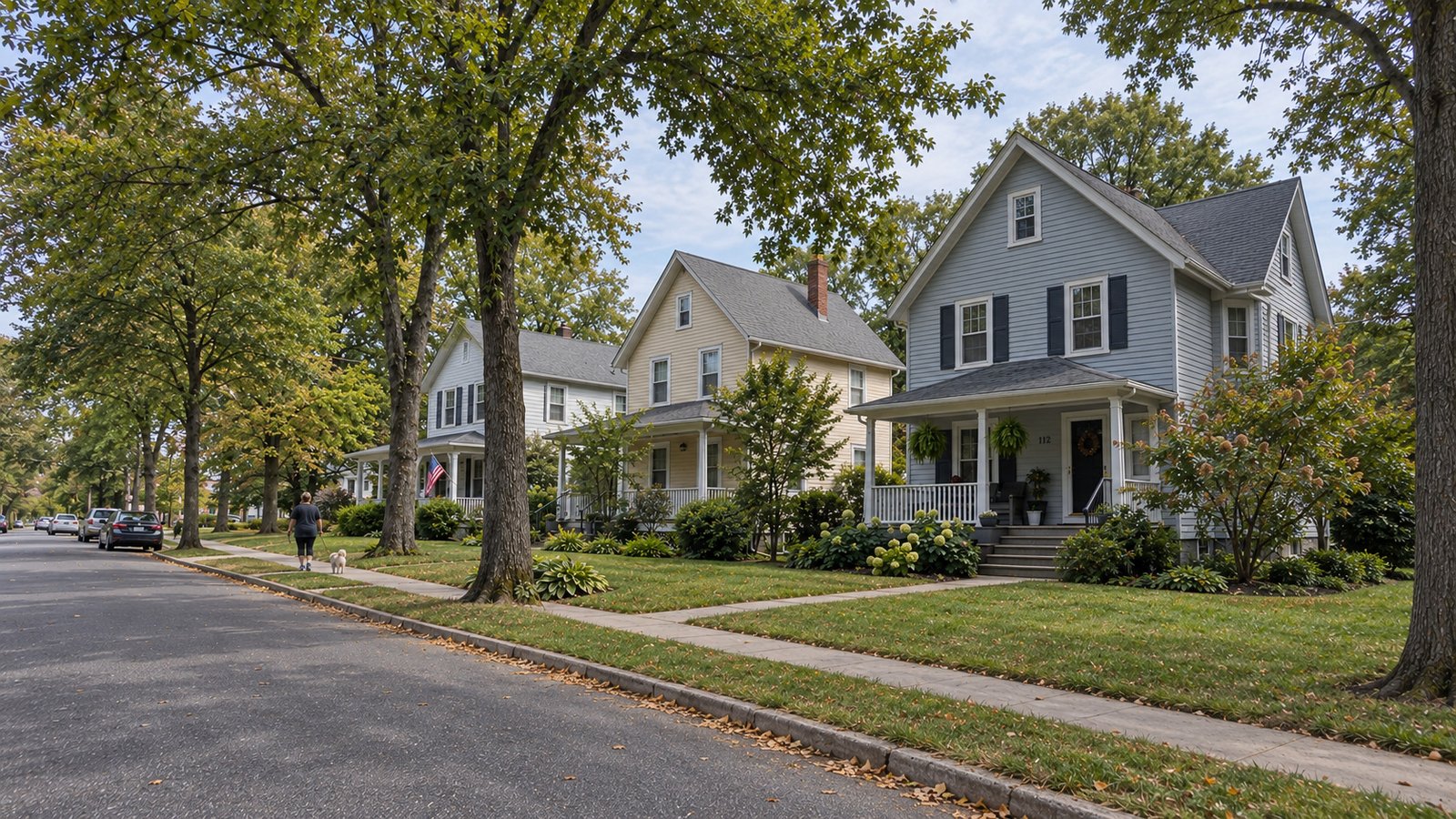
Start with the address you are considering, then follow the responsibilities that make the home usable. Townsend has a small incorporated town boundary, while its mailing area reaches farther; that distinction matters for municipal services and household planning.
01 /
Use the town boundary for the right question
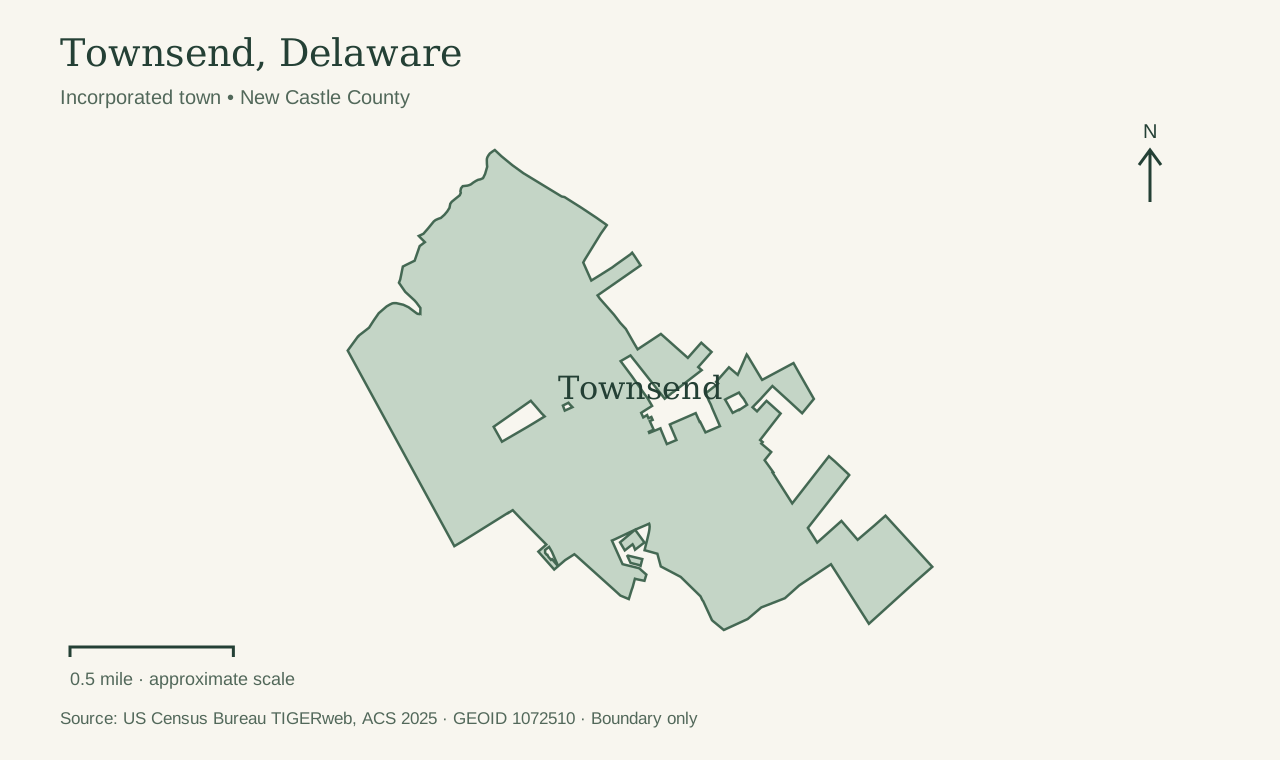
Townsend town, Delaware, GEOID 1072510 is an incorporated place in New Castle County. The Census boundary map below is geographic orientation. It does not show ZIP 19734, school attendance zones, utility territories or an approved truck route.
A Townsend mailing address may be outside the municipality. Middletown is a separate town, and Townsend, Massachusetts is a different community. Before applying a municipal rule, check the parcel and street address with the town or the authority responsible for that property.
Useful nearby resources can sit across a boundary. Record their real locations and eligibility rather than assuming that a shared postal name makes every service local to your home.
02 /
Find the area that fits your routine
These are documented contacts and places for settling in, rather than invented residential districts. A mailing address or nearby service does not establish municipal residency, school assignment or availability at your home.
- What it helps with
- District profile lists grades 1–5.
- Location or starting point
- 126 Main Street; 302-378-5020.
- Confirm before relying on it
- Verify actual-address assignment with the district.
- What it helps with
- Kindergarten contact distinct from elementary school.
- Location or starting point
- 10 Brook Ramble Lane; 302-378-9960.
- Confirm before relying on it
- Confirm address assignment and registration requirements.
- What it helps with
- Documented local outdoor resource.
- Location or starting point
- Edgar Road, Townsend.
- Confirm before relying on it
- Check current access and any reservation agreement.
- What it helps with
- Book reservation and local resident lending.
- Location or starting point
- Within Town Hall, 141 Main Street.
- Confirm before relying on it
- Bring qualifying residency identification; confirm collection arrangements.
03 /
Compare the home against the routine you need
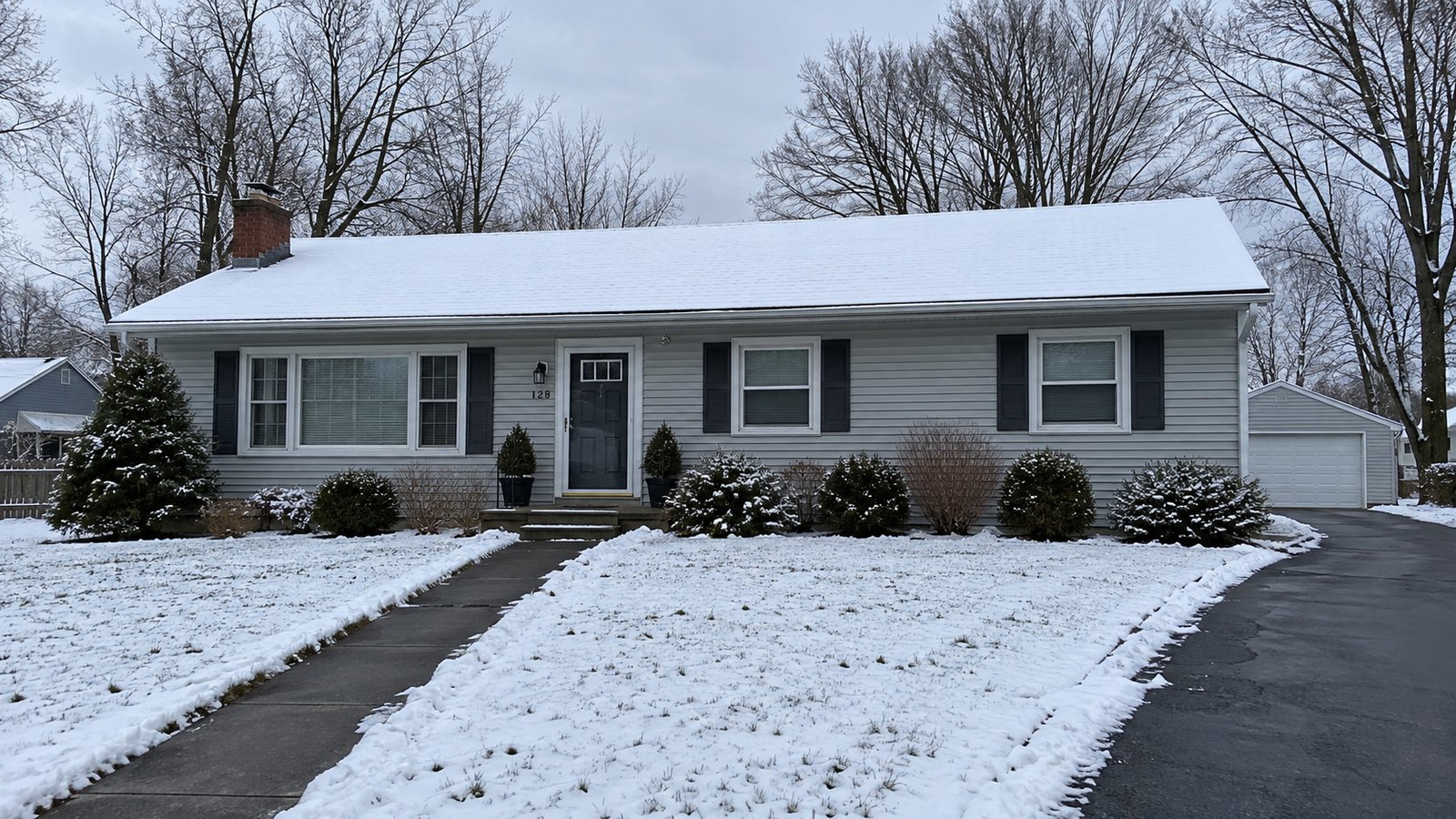
Visit a prospective address with your daily activities in mind. Check the trip from parking to the entrance, steps and lighting, storage, usable room dimensions and the space required by the furniture you intend to keep. A photograph of the exterior will not answer those questions.
For renting, clarify who handles repairs, grounds, refuse bills, service interruptions and any move-in conditions. Obtain the actual lease and property rules before treating an informal description as the agreement. For buying, review condition records and proposed work with the appropriate qualified people.
Ask which rooms must work first: sleeping, work, a child's routine or mobility needs. Compare what is usable on possession day with what depends on a later repair or installation. A larger floor area may still leave an awkward entrance or insufficient circulation.
Keep observations for each address in the same format. That makes an inconvenient drive, a recurring charge or a required alteration visible while you still have a choice.
04 /
Build an address-based household budget
Start with the actual purchase or lease terms, then add recurring charges: property tax where applicable, water, sewer, electricity, heating fuel, internet, refuse arrangements and any association or shared-property dues. Ask which amounts are included in rent and which the household must establish separately.
Request recent bills or documented service information from the owner without treating another household's usage as your guaranteed cost. Consider seasonal heating and cooling, the home's condition and the people who will live there. Obtain quotes for needed repairs or coverage before committing to an assumption.
Add one-time transition costs such as deposits, account setup, inspection, moving preparation, storage if needed and overlaps between addresses. Keep these separate from monthly costs so the first weeks do not look like an ordinary month.
Use current listings and verified terms for the particular address. A town-wide historical median cannot establish today's rent, sale price or available housing, and this guide does not quote a current market price.
05 /
Investigate systems and proposed changes
Ask about heating and cooling equipment, roof and drainage, electrical service, plumbing, water supply and wastewater connection. Have records and observed problems reviewed by the qualified person appropriate to the system. Identify what must be repaired before occupation and who will arrange it.
Townsend's forms and permits page directs people to the building application for projects requiring permits, including HVAC and plumbing, and asks residents to call Town Hall when uncertain. It also identifies rental and business forms. Use the current procedure and fee schedule for the actual proposal rather than assuming a move or a lease approves alterations.
The property information request starts with a parcel number and physical address. Ask what information the town can provide for your question and confirm the current fee before submission. A request is an information step, separate from an inspection or project approval.
For a home outside the town limits, identify its authority first. Keep the owner's consent and required public approvals as separate records.
06 /
Verify the feeder pattern for the actual home
Appoquinimink's feeder-pattern guidance says the residential address determines assignment. Check the current locator and confirm the school with the district before committing to a home; development names and older feeder PDFs can conceal changed assignments.
Townsend Elementary lists grades 1–5 at 126 Main Street, Townsend, 302-378-5020. Townsend Early Childhood Center lists 10 Brook Ramble Lane, 302-378-9960, and describes its kindergarten population. These are separate schools; neither proximity nor a Townsend postal address guarantees assignment.
Confirm kindergarten, elementary, middle and high-school stages for the relevant year. Ask how a change of address affects attendance and transportation. If school choice matters, distinguish an application from an accepted place.
For a midyear move, agree the last day at the old school and the confirmed first day at the new one. Request a named contact for records, student support and any unresolved attendance question.
07 /
Finish the school transition with the registrar
The district's new-student registration instructions provide the 2026–2027 online route and require supporting documents. Prepare the original birth certificate, current health records and qualifying residence evidence; current signed lease documentation and specified utility bills are among the listed options. Include custody, IEP or school records where applicable.
Check the detailed requirements for your circumstances with the assigned building's registration secretary. Submit the documents through the official process and confirm completion, attendance and transport. Starting an online application alone does not establish a child's first school day.
Keep essential records outside the shipment. Ask the receiving school how to handle something that is still being obtained, and make a practical temporary arrangement while the question is resolved. Do not rely on the older school-profile registration summary when the current district instructions differ.
08 /
Book care separately from school enrollment
Use My Child DE to begin a search for licensed child care and family resources. Confirm the provider's location, age range, hours, start date, availability and transport directly. A directory entry does not reserve a place.
Before- and after-school care needs its own registration and capacity check. Ask the school about the relevant operator, then agree collection permissions, closures and the route between school, care and home. A kindergarten or elementary assignment is not a child-care booking.
For moving day, arrange a responsible adult for children away from the carrying route. Consider how the household will manage if care starts after the move or a late delivery changes the day's timing.
09 /
Arrange water service with the actual provider
The town's resident utility contacts identify Artesian Water. Confirm the connection and account responsibility for your home with the owner and provider; the postal name is not an individual service record.
Artesian's start and stop instructions ask for at least seven business days for a new-service application and seven business days before stopping service. Purchased-home and tenant applications require different documentation; the published tenant deposit is $200. If water is off, call 800-332-5114 to schedule a turn-on appointment rather than relying on an online account request.
Record the requested date and actual confirmation, and coordinate the outgoing account separately. Ask the owner to explain shutoffs and any service issue with someone qualified to do so. Do not send private account credentials in a moving inventory.
10 /
Keep sewer billing distinct from the water account
New Castle County's sewer billing guidance covers connected residential properties and annual billing. Confirm the parcel, account, mailing details and responsibilities with the owner and County Treasury at 302-395-5340. Opening a water account does not establish that the sewer record has been resolved.
The county's 2026 sewer FAQ explains that a new parcel owner's first annual bill uses the county average, followed by actual-consumption billing and a prior-year adjustment. Budget for that possible adjustment and ask how it applies to your property; a predecessor's bill is not your settled annual amount.
For a purchase, ask the settlement contact how balances, responsibility dates and future mailing details are handled. For renting, confirm what the lease assigns and who receives the bill. Keep a mailing-address change separate from questions about ownership or unpaid balances.
If the property uses a different wastewater arrangement, obtain its actual records and responsible service contact. A town name does not certify a public sewer connection.
11 /
Confirm electricity, heat and internet before occupation
The town lists Delmarva Power for electricity and Chesapeake Utilities for gas. Confirm providers and the heating system at the address. A listed franchise or general contact does not establish a meter, active account or natural-gas connection in every home.
Use Delmarva's move-service route or its customer service line, 800-375-7117, to discuss stopping and starting service. Confirm the effective date and any requirements directly. An online request is separate from working supply at possession.
Chesapeake's service-request guidance distinguishes activation where gas and a meter already exist from a new installation. Ask about the exact property and appointment before depending on heat. If the home uses another fuel, identify its supplier and equipment responsibilities with the owner.
For internet, check the exact address, available connection and installation date with the provider. If household work depends on connectivity, arrange a usable fallback through the start period and test service when you can access the home.
12 /
Set up the municipal collection routine
The town's 2026 waste guidelines list weekly Monday trash and recycling. Have carts ready the night before or by 7 a.m.; observe the 24-hour placement and removal limits and keep sidewalks clear. Bag trash, leave recycling loose and flatten large cardboard.
Yard waste has a separate biweekly schedule and must be loose in its container. The page mixes older date wording with its 2026 heading, so confirm the collection date for your week instead of applying an old calendar.
Call Casella at 302-378-5400 to arrange bulk or extra collection and confirm eligible material, date and charges. Do this before leaving an unwanted item outside. Older statements about a free weekly bulk pickup should not substitute for the current arrangement.
13 /
Resolve owner and tenant collection responsibilities
The currently linked owner–tenant trash and recycling affidavit provides for a change of billing name or address and states that the property owner remains responsible for unpaid fees. Have Town Hall confirm and process the correct arrangement for the parcel; a tenant's move does not automatically close the owner's account.
The Owner Information Form records property and contact details and asks which residential bins are missing. Confirm that the receiving property has the expected carts and a clear owner for questions before unpacking produces a large amount of packaging.
Separate reuse, recyclable cartons and material needing a booked disposal route. The company's separately quoted removal work, municipal collection and a commercial disposal arrangement are different responsibilities.
14 /
Test the journey from your front door
Make the actual trip to work, school, care and frequent errands at the times you expect to travel. Include access to the main road, parking, the final walk and the return journey. A map distance or a midday drive cannot establish a dependable daily travel time.
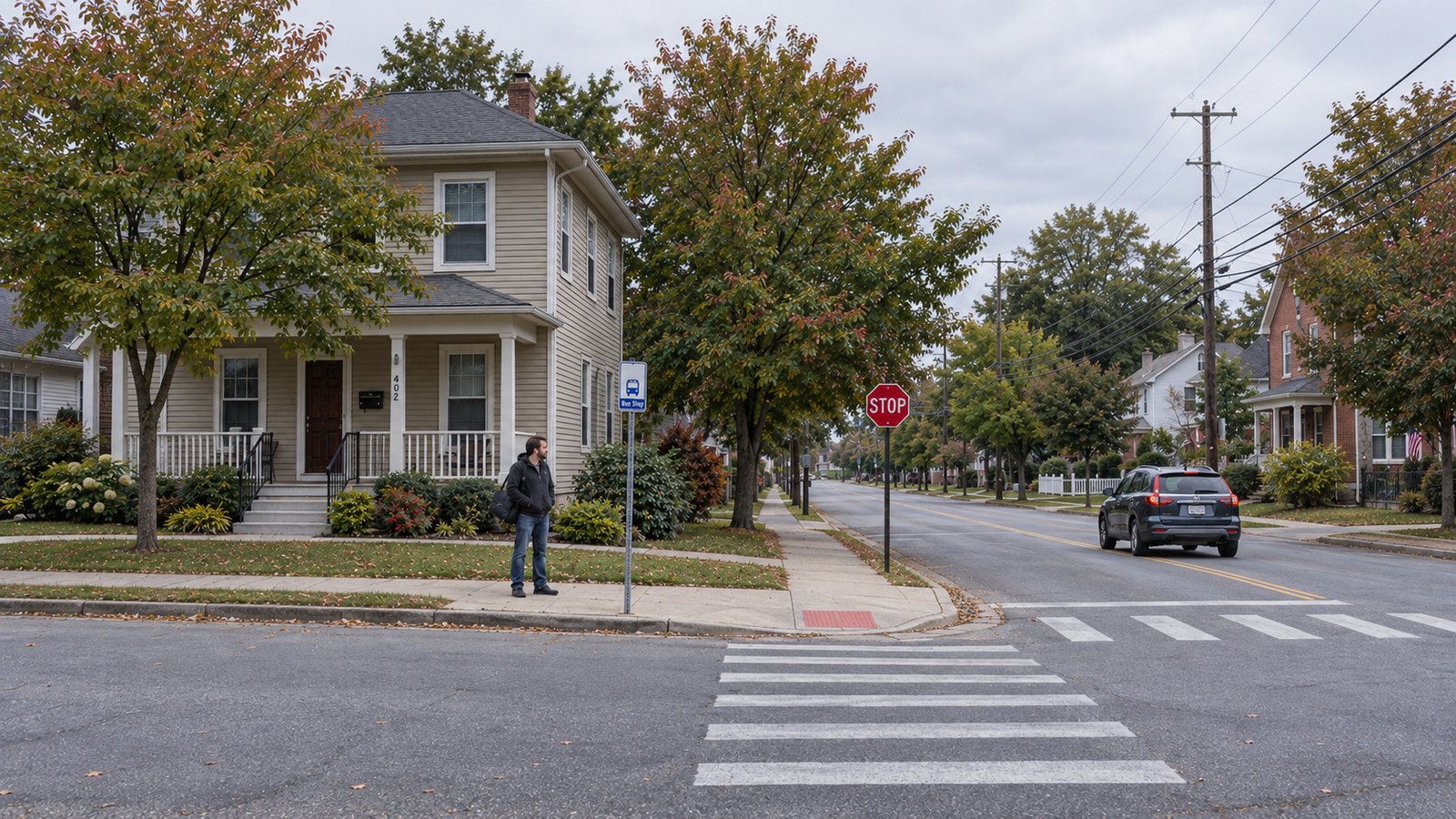
DART's Route 302 information includes the DE71/Summit Bridge Road at Main Street Townsend stop on the Dover–Middletown corridor. Check the operator's current schedule, alerts, direction and stops for the travel date. The linked timetable is a summer page, and this guide does not promise its individual departures for a future day.
For transit, inspect the walking route and crossing to the correct side, including lighting and weather. Plan a return if work or care ends outside the service you have confirmed. A pictured road or stop is not verification of your specific connection.
Use the existing Dover reference page when planning a separate move there; Dover's procedures and travel conditions do not determine a Townsend address.
15 /
Build a routine around real nearby resources
The Townhall Library is at 141 Main Street. Its published instructions require identification confirming Townsend residency at pickup and provide a reservation route through Town Hall. Check the available books and collection arrangements before visiting.
The town lists Townsend Municipal Park on Edgar Road. Visit the route and consult the current town arrangements if you want a reserved facility. A park listing does not reserve a pavilion or establish every activity you might want.
Map the grocery, pharmacy, banking and household-supply trips you actually need. Verify their addresses and opening hours, including the journey back with bags or young children. Nearby Middletown resources have their own locations and schedules.
Choose a few repeatable activities for the first weeks instead of trying to finish every errand during delivery. Keep household essentials available while cartons are still being unpacked.

16 /
Preserve care through the address change
Before moving, check which current clinicians, pharmacies and coverage arrangements remain usable. Request records and appointments through the providers' procedures, and keep medicines and necessary documents with the household. Confirm new-patient availability instead of assuming a nearby facility provides every service.
ChristianaCare's Middletown freestanding emergency department lists 621 Middletown Odessa Road, Middletown, and 24/7 operation. This is a nearby emergency resource outside Townsend, separate from routine primary-care enrollment. For a medical emergency, call 911.
For recurring care or mobility needs, review transport and the home's usable access together. Establish who can help during the first days if delivery, repairs or a new appointment is delayed.
17 /
Check drainage and the approach in changing weather
Inspect the property's drainage, basement condition and route from vehicle to door. Ask about previous water problems and the maintenance of gutters, surfaces and shared drainage features. A dry-day visit or flat-looking street does not certify flood safety.
FEMA's Map Service Center guidance explains address-based flood-map lookup. Review applicable property information with the appropriate qualified professional and insurer; the Census town outline here is not a hazard map.
Agree who clears the driveway, walks and steps in winter and who deals with leaves, ice or standing water before arrival. Keep the moving team informed if a carrying surface cannot be made usable. Have the receiver assess the actual condition rather than promising an all-weather approach.
Prepare a household fallback for interrupted utilities or changed access, including communications and essential supplies outside the shipment.
18 /
Confirm a usable home before the shipment arrives
Before delivery, confirm keys and possession, essential services, the authorized vehicle position and the person receiving. Mark the rooms that need to be usable first and preserve a clear carrying path. Tell the moving team about changes while there is still time to revise the plan.
At handover, record condition with the appropriate person and locate useful controls with someone familiar with the home. Verify that account arrangements have produced working service, not only an application confirmation. Report problems through the owner's or provider's agreed channel.
If the home is not ready by the agreed decision point, use an already confirmed receiving or storage alternative. Keep people, pets, medicines and first-night needs separate from that shipment decision, and confirm the revised charges and delivery conditions.
The separate Townsend moving-services page explains inventory, preparation, transport and optional help.
19 /
Separate household parking from a delivery position
Ask which spaces belong to the household, whether drives are shared and how visitor parking works. A lease or owner's agreement should clarify daily use, while a temporary moving-truck position needs its own review.
Look at the entrance width, surface, overhead clearance and departure route. If street standing is proposed, identify the authority and current restrictions through the town or actual road owner. A clear space is not automatic permission.
Keep a workable authorized alternative if the first position cannot be used. Show the moving team the real relationship between that space and the receiving entrance.
20 /
Confirm shared access and maintenance
Obtain the specific property's instructions for shared entrances, corridors, elevators if present and permitted work periods. Name the person who can open the receiving space and respond to a problem during delivery.
Check the route the household will use afterward as well: lighting, steps, thresholds and the path to parking or bins. Establish who maintains and clears each part. A suitable room does not compensate for an unusable everyday entrance.
Keep confirmations with the household plan and report changes before the move. The separate services page explains carrying-path information and preparation to include in the estimate.
21 /
Close the remaining account and routine questions
Review confirmations and first bills against the correct property, mailing address and responsibility dates. Confirm school attendance, transport and care are working as arranged. Adjust commute and errand plans after trying the real journeys.
For an interstate arrival, review Delaware DMV's new-resident instructions for license and vehicle requirements, documents and appointments. Start early enough to meet the applicable deadlines; changing a mailing address alone does not complete those processes.
Unpack in useful stages and reuse sound cartons or send them through the confirmed collection route. Finish separate bookings for bulky or excluded material. Keep unresolved property questions with a named owner and preserve the response rather than losing it among move-related messages.
A successful first month means functioning essential services, workable daily trips and a clear next action for remaining issues. Return to the relevant official owner when a rule or household circumstance changes.
22 /
Questions before you arrive
Is ZIP 19734 the same as Townsend town?
No. A Townsend mailing address can lie outside the incorporated town boundary. Use the parcel and full street address for municipal, school and provider checks.
Does Townsend Elementary cover kindergarten?
Its district profile lists grades 1–5. Townsend Early Childhood Center describes kindergarten; check the actual address assignment with Appoquinimink.
Does sending school registration establish attendance?
Confirm completed documentation, assigned building, first attendance and transportation with the registrar. An application is a step in the process.
Should I combine water and sewer account questions?
Keep the providers and responsibilities distinct. Artesian publishes water start/stop instructions; New Castle County handles its connected residential sewer billing.
Can recycling go in plastic bags?
The town instructions require loose recyclables and flattened large cardboard, with no bags in or beside the recycling cart.
Is an unwanted sofa part of ordinary collection?
Arrange bulk pickup with Casella and confirm the actual item, date and charges before setting it outside.
Will a transit timetable prove my commute works?
Check the current travel-date schedule and alerts, the correct direction, walking access and the return. A summer timetable alone does not establish a future journey.
Does the town map show a safe truck route?
No. It shows the Census incorporated-place boundary for orientation. Vehicle routing, street standing, service territories and property hazards require separate checks.
Sources & useful local resources
Official procedures and local resources are linked beside the answers above. Reopen the relevant page when arranging a date: fees, schedules and application requirements can change.
Schools and family needs
- Middletown emergency departmentChristianaCare
- Townsend Early Childhood Center profileDelaware Department of Education
- Child care search and family resourcesMy Child DE
- Address-based feeder patternsAppoquinimink School District
- Townsend Elementary school profileAppoquinimink School District
- New student registrationAppoquinimink School District
Utilities and daily travel
- New-resident instructionsDelaware DMV
- Start and stop water serviceArtesian Water
- Gas installation and activation requestsChesapeake Utilities
- Route 302 timetable and planningDART First State
- Move electric serviceDelmarva Power
- Sewer service and billingNew Castle County
- 2026 residential sewer FAQNew Castle County
Geography and protection
- Address-based flood map lookupFEMA
- Incorporated-place geometryUS Census Bureau
Property and town services
- Town Hall contactTown of Townsend
- 2026 municipal waste guidanceTown of Townsend
- Owner–tenant trash and recycling affidavitTown of Townsend
- Owner Information FormTown of Townsend
- Townhall Library lending instructionsTown of Townsend
- Forms and permitsTown of Townsend
- Townsend Municipal Park locationTown of Townsend
- Property information requestsTown of Townsend
- Resident utility contactsTown of Townsend
Your next step
Bring the plan together
Use the city moving page to prepare the inventory, access details and questions for your estimate.