
Maryland · Waldorf service planning
Full packing and unpacking in Waldorf, MD
Keep useful time and usable rooms while your retained belongings are prepared.
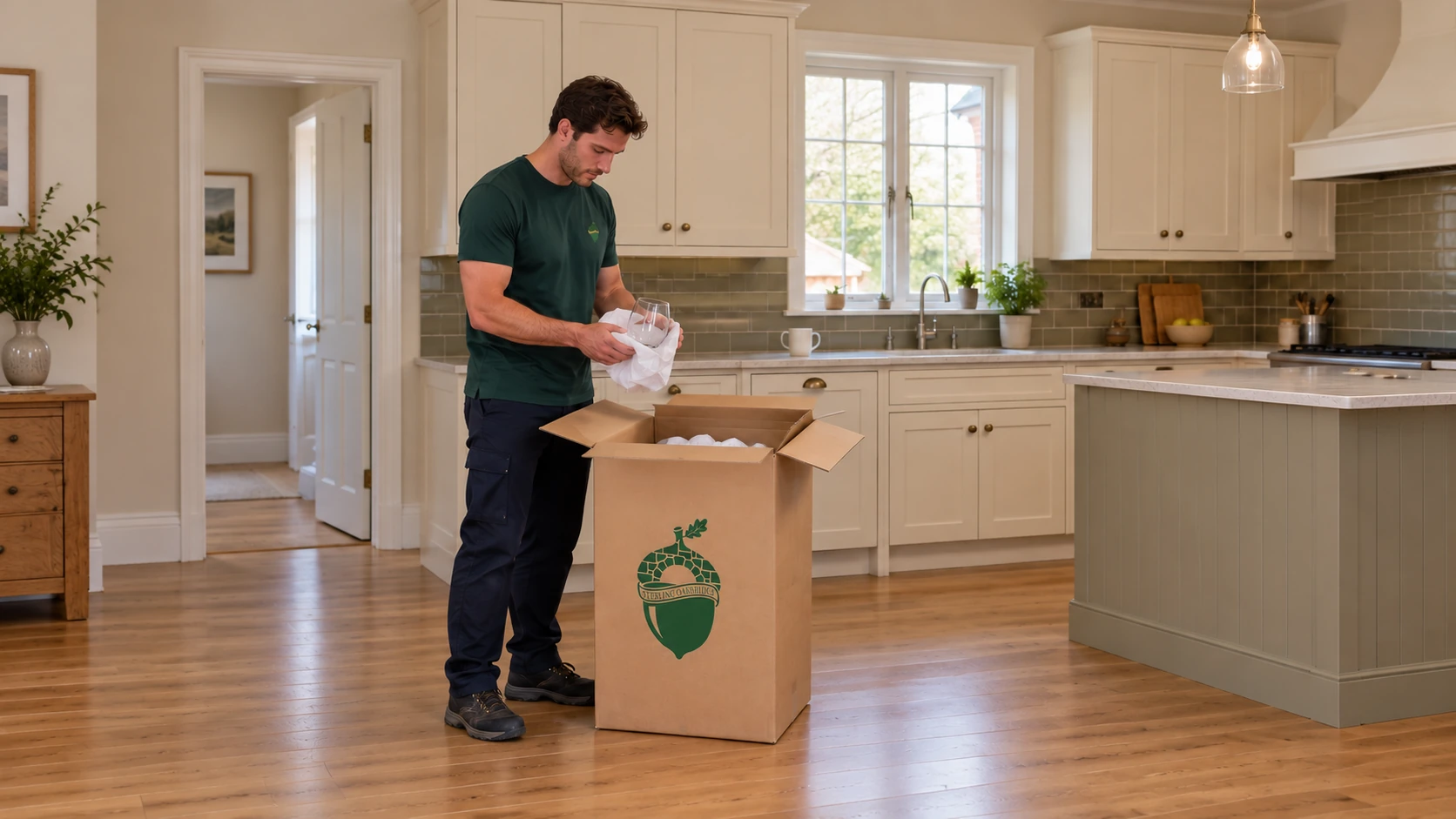
Sterling Oakbridge offers full, partial and fragile-only packing in Waldorf, with optional box unpacking, separately directed organizing and an agreed plan for the empty materials.
Explore packing, costs and local examples
Choose the preparation to hand over
Start with the work you want finished, rather than a number of bedrooms. Full packing covers the retained contents agreed for the job. Partial packing can select particular rooms, cupboards or groups. Fragile-only preparation can cover the specified dishes, glass, frames or other breakables while you finish the ordinary contents. State what you will pack and what the team should leave available.
Consider the decisions as well as the wrapping. Choosing what to keep, finding a destination for unwanted belongings, opening each cupboard and identifying the first useful rooms take time. A couple of weeks of evening preparation is one possible household experience, not a measured average or a deadline for every home. You can hand over the agreed physical preparation while retaining the personal decisions.
The Waldorf moving page connects packing with the complete carrying and moving plan. The local relocation guide compares housing, ordinary travel and arrival. Here, the question is what should be prepared before departure and made usable afterward.
Waldorf is a census-designated place in Charles County. A Waldorf postal address does not establish an association, a building rule or a collection arrangement. Send the full location and the actual property instructions; the place name is not permission to use a shared space.
Show the retained contents behind the room names
Open the cupboards, closets and storage that belong to the job. Include the kitchen drawers, book shelves, hobby materials, linen storage and the contents of any included lower level, garage or shed. Separate things that stay from the retained shipment before estimating preparation. A three-bedroom label cannot show whether the rooms hold a few ordinary items or years of collections.
A household expecting 20 cartons might discover enough retained contents for 60 or 100 after opening its storage. Those are illustrations of underestimation, not a carton calculator. Item quantities, fragility, packing method, access and decisions still outstanding determine the work. Tell the planner about an unreviewed cupboard or newly retained group before the affected scope is agreed.
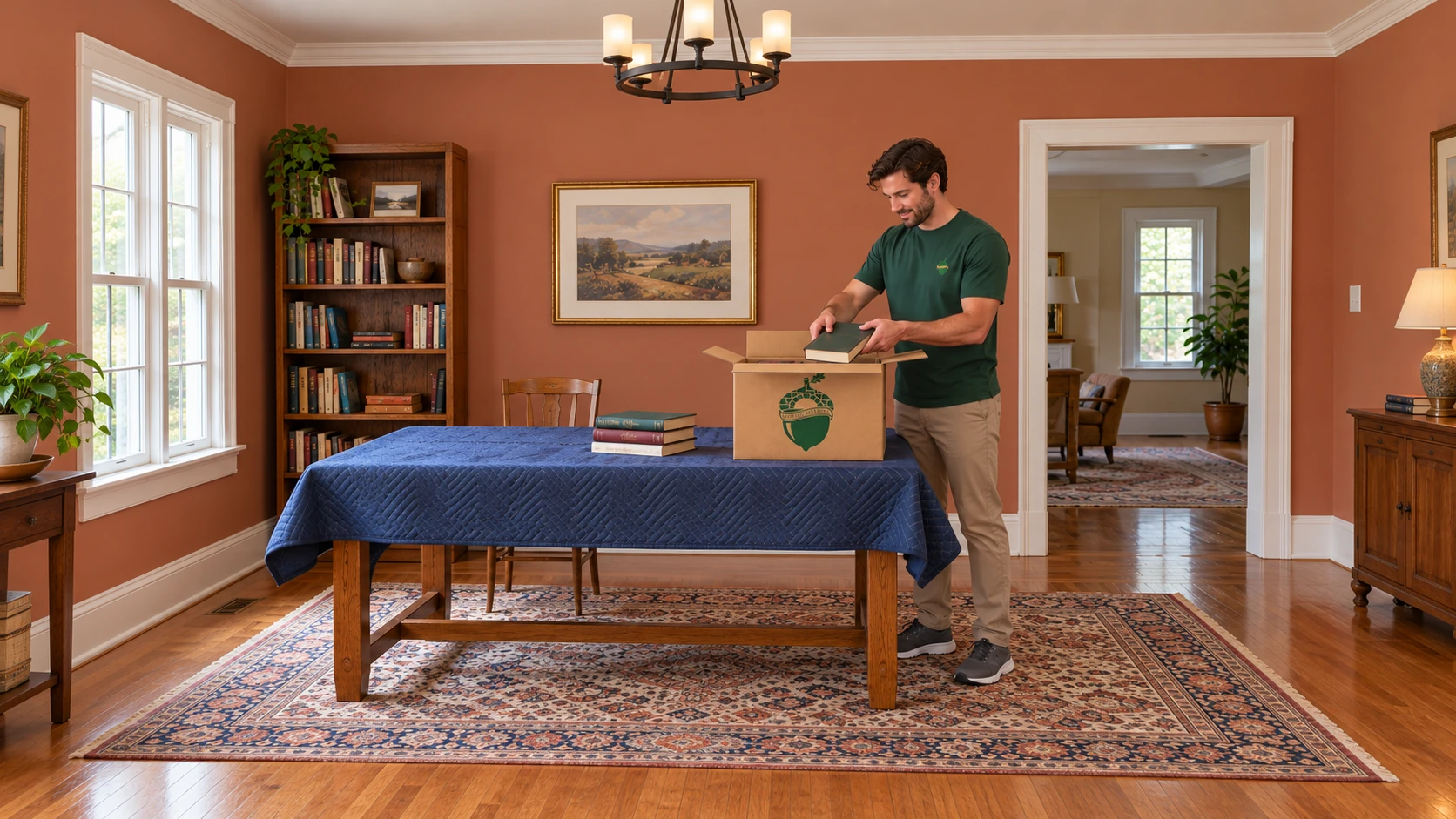
Photograph complete large pieces and their construction before protection hides the joints or fittings. Identify glass doors and shelves, framed work, existing repairs and anything needing specialist handling. Separate original shipping packaging from empty used materials and from ordinary household cartons. A label saying fragile does not explain the item's size, support or method.
Keep the last evening useful
Decide what should remain usable through the final night: bedding, medicine, chargers, essential work equipment, a small meal set, children's immediate supplies and the clothes needed next. Keep keys, identification and travel documents with the household. Name that pack-last group before work starts, so it is not confused with visually similar containers ready to leave.
A suitable studio or one-bedroom local project may fit packing and moving into one day after the actual inventory and access are reviewed. A fuller two-bedroom home can need a different sequence; a larger retained household often calls for discussing an earlier preparation day. These are planning choices, not rules about what a person can pack independently or promises based on bedroom count.
For a substantial inventory, an illustration might use four packers on an earlier day and six movers for the move. That is a staffing conversation for the reviewed work, not a standard crew. Agree the property access for both visits, the rooms worked first and what will still be needed between them. Packing earlier does not authorize cartons or materials to occupy a shared path overnight.
A Hampshire household keeps one working area through the last evening
Imagine a household in a multi-level Hampshire home preparing to leave while one person still needs a working table. Hampshire's association describes houses, townhomes and apartments; the actual levels and rooms still need review. Retained study books and seldom-used glassware can be prepared first while the computer, chargers and a small breakfast group stay available.
Follow the included rooms and stair directions back to the accepted carrying route. Give finished cartons a sensible holding area that preserves the working table, door swing and passage. Confirm who finishes the remaining contents and when the table can be cleared. Disconnecting or reconnecting technical equipment is a separately reviewed responsibility, not an automatic consequence of packing the books beside it.
The useful result is an identified earlier shipment and one named pack-last group, with ordinary work and the last evening still possible. If the contents exceed the original review, revise the preparation visit before it crowds out the later carrying and loading plan.
Choose protection for handling, support and travel
Preparation should account for carrying, support inside the container, stacking, restraint and movement during the journey. Select the ordinary carton or specialist method for the actual object. Individually protect fragile pieces, provide suitable cushioning and avoid relying on the outside label alone. Glass in a cabinet and glass already removed from it need an explicit method and supported route.
Books, linens and small fragile contents create different loads. Keep cartons manageable for the selected contents and handling plan. Ordinary small frames that can be safely prepared in a suitable protected carton do not automatically require a custom crate. For important art, unusual glazing, valuable collections or a genuinely specialist enclosure, use the art and antiques planning service to agree the actual method.
Moving blankets, shrink wrap and tape have no separate material charge. Cartons are charged separately. Basic furniture disassembly and reassembly use moving labor time without a separate basic assembly fee; complex construction and specialist work receive individual review and quotation. These material terms do not make packing labor, every carton or additional finishing work free.
Use a clean suitable working area and handling appropriate to the object, surface and grip. Gloves are selected for the task; identical white cotton gloves are not a universal solution. Empty ordinary drawers and normally retain them within the protected whole furniture body. Identify loose removable shelves and fittings without forcing apart integral construction.
Give each retained group a real destination
Write the destination, room and useful contents on each identified container. Add a carton number or priority when it helps reconcile the agreed inventory. Color can support that system, but written information should still make sense without remembering what a color means. Keep the same destination instructions in the preparation, loading and receiving plan.
Separate the new-home group, storage group and belongings for another recipient before preparation. Keep the groups physically distinguishable without filling the passage. If storage is part of the plan, agree its availability, access to individual items, handling and later release through storage and later delivery. A storage label is not a booking or a promise of free redelivery.
A Dorchester household separates the new bedroom from stored hobby supplies
Consider a household leaving a Dorchester home for a smaller place. Dorchester includes different home types and component properties; use the actual receiving rooms rather than one assumed neighborhood floorplan. Retained bed linens will be needed in the new bedroom. Selected soft craft supplies can wait in separately confirmed storage.
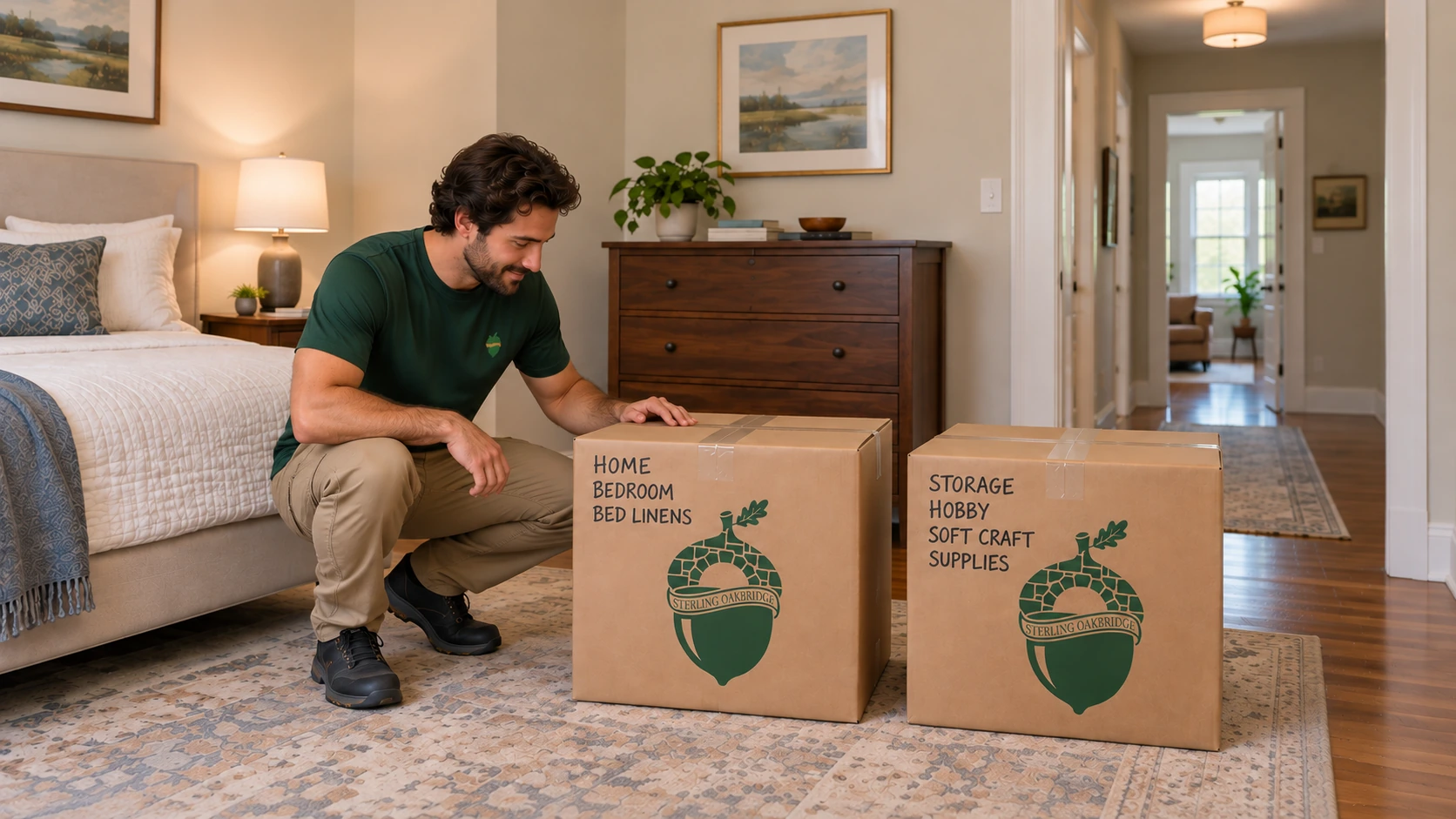
Decide which duplicated or unwanted contents will leave the household before paying to prepare them. Give the two retained groups written destination, room and contents labels. Confirm which group is delivered first and who can receive it. Do not send the storage contents into the bedroom merely because that address is available sooner.
The result is a useful bedroom shipment and a separate retained hobby group. It saves an avoidable decision at unloading, without claiming a measured financial saving. Changed storage dates or an extra address change the work and need a separately agreed plan and price.
Choose what the first unpacking stage should accomplish
Basic box unpacking opens the agreed cartons and places their contents on suitable surfaces. Name the priority rooms or containers, make those surfaces available and keep the carrying route and main furniture footprint clear. Check small items and fittings before used paper is gathered. Opening everything at once can leave fewer useful surfaces than opening a defined group first.
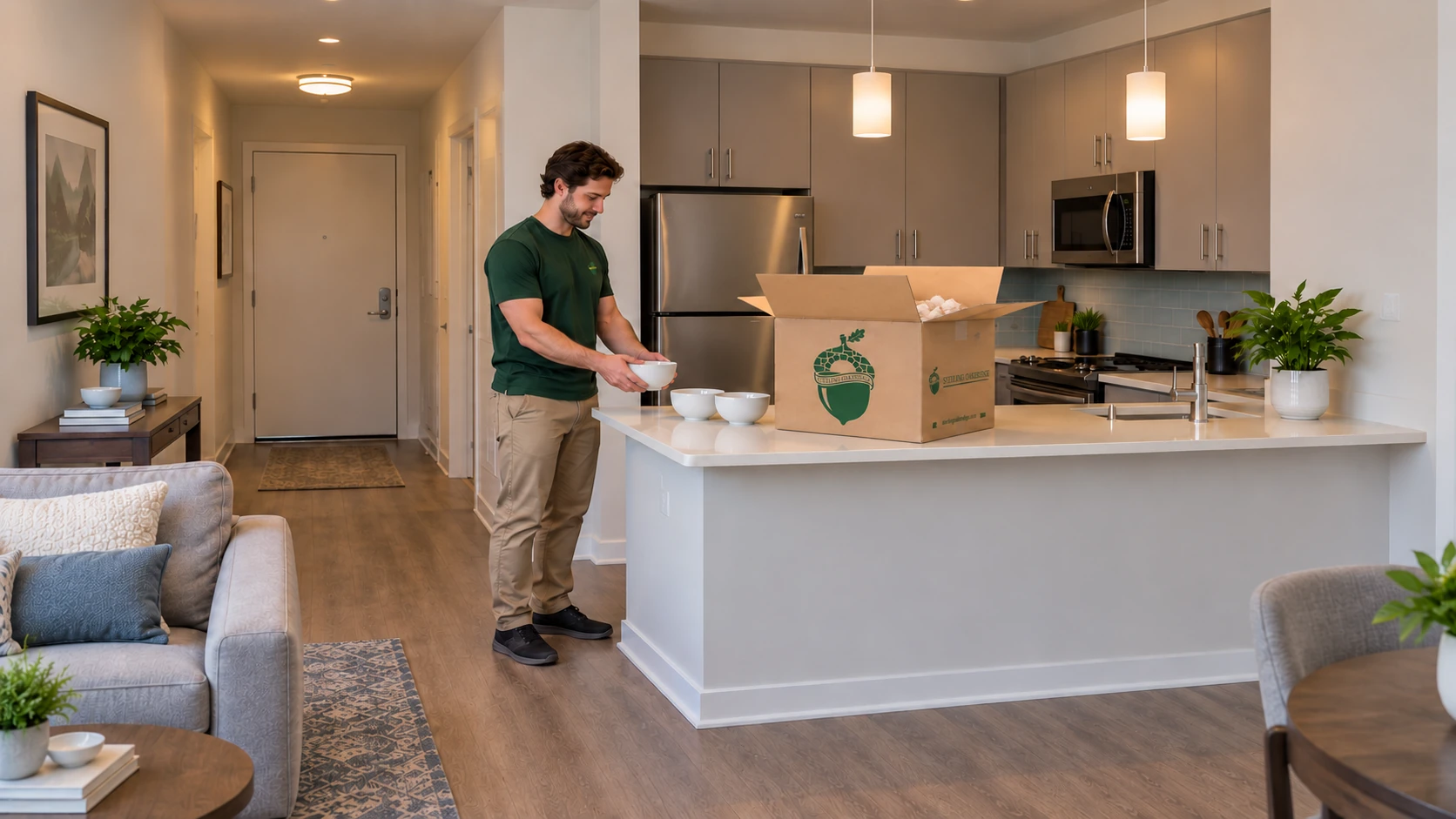
For a large project, unpacking might add three or four working hours to the delivery day, or it might suit a separately arranged later visit by two people. Those are conditional illustrations. Contents, property hours, the rooms released for use and actual availability determine the arrangement. Additional time does not automatically fit inside a building's existing delivery period.
An apartment at Waldorf Station needs useful surfaces before final cupboard placement
Imagine an apartment recipient who needs ordinary kitchen contents available before returning to work. Ironwood at Waldorf Station offers one-, two- and three-bedroom layouts; the example depends on the actual unit, not a replicated floorplan or an invented property rule. Confirm the entrance, each lift or stair transfer and the accepted work period.
Agree the priority kitchen group and a clear receiving counter. Basic unpacking makes the selected contents available on that surface. Final cupboard placement can follow separately under the customer's direction when the room is ready. An unfinished room can stay closed while a usable room receives its own group.
For a household arriving from farther away, reserve receiving help around the actual model in the Waldorf long-distance plan. Its delivery clock starts after pickup and loading are complete. The agreed flat rate for unchanged inventory, access and services does not increase merely because the journey or delivery takes longer. Extra requested work remains separately agreed.
Direct final placement and agree finishing separately
Home organizing places belongings according to the customer's instructions. Decide the shelf, drawer or cupboard destination and the priorities before asking the crew to fill every space. A smaller team may be easier for one person to direct. Basic unpacking onto a counter and final placement inside the cupboards are distinct results; agree the organizing scope and price individually.
Preserve personal, sensitive and undecided belongings for the household. Keep only the agreed groups in the active work area. If a decision needs another person, leave that group identifiable instead of filling an arbitrary shelf just to empty the carton. The aim is a useful arrangement the customer has chosen, not an automatic promise to organize the whole home.
Basic furniture reassembly, complex first-time assembly, hanging and technical connections have different requirements. Individually agree handyman finishing, permission, wall or construction conditions, hardware and the actual executor. An organizing visit does not imply electrical work, appliance hookup or a general repair service.
If a delivered piece needs another internal carry after the first visit, arrange the actual route through in-home moving. For a separate new purchase, furniture delivery starts with the real seller release and pickup arrangement. Neither task is silently included in opening the household cartons.
A later visit can address the remaining defined work
You can ask for help after starting to unpack independently. Send the number and kinds of remaining containers, the contents still inside them, the surfaces now available and the result wanted. A later visit needs an actual booking, access and agreed scope. An earlier moving job does not reserve a future crew automatically.
A Fieldside household resumes unpacking after one room is released
Consider a household that kept one room closed during ordinary decorating. Once the room is ready, identify its retained linen group and the cupboard space the customer wants to use. Check the actual completed conditions before booking work; paint, flooring or other contractors' readiness is not established by a hoped-for date.

Agree the manageable team, useful placement and a separate material handoff. Fieldside requires advance written permission and a time limit for containers or materials on HOA property. Keeping the selected gathering stage indoors does not authorize a later outside pile. Obtain the actual permission before relying on association land.
The result is a released room made useful under the customer's direction, with checked empty materials still distinguishable from belongings. If the room is delayed again, revise the booking and any separately arranged holding or removal stage rather than assume free waiting, unlimited indoor storage or an available return visit.
Choose a destination for empty materials
Check that cartons and wrapping are empty before preparing them for the agreed handoff. Keep useful retained packaging separate from used paper, cardboard, plastic film, foam and any unwanted household items. This indoor separation makes the materials identifiable; it is not a declaration that every group belongs in the same recycling cart.
Maryland's county-program directory lists Charles County separately. Use the actual County and property arrangement for the address, material and quantity. Establish who will accept the load, where it can wait and who moves it there. Do not assume a resident program accepts a contractor's load or that an apartment's shared container accepts every moving material.
Packaging and waste removal are separate paid work and must be requested. Agree whether the visit gathers materials indoors or includes a confirmed removal route, and when the household will have finished checking small items. Keep batteries, liquids, chemicals and uncertain items out of ordinary used packing-paper groups and identify them for separate handling review.
A late decision to remove furniture is another scope decision. Identify the item, access, destination and charge before relying on that stage. Packing preparation does not create unlimited disposal, donation acceptance or free collection. The accepted receiving route matters as much as getting the material out of the room.
Compare the complete paid work
Compare the same retained inventory and receiving result. Packing labor, cartons, specialist protection, moving, optional unpacking, organizing, handyman work, removal and return visits can all affect the scope. Show what the household will complete and what remains undecided, so one estimate is not being compared with a different service.
Packing and moving together can approach twice the budget for moving the same already-packed shipment in an illustrative project. The actual result can be lower or higher; it is not a standard multiplier, rate or cap. Similarly, a small partial-packing visit does not carry the same work as full cupboards, collections and storage spread across several floors.
For an applicable household move wholly within Maryland, Commercial Law §14-3103 provides written-estimate requirements and a voluntary, uncoerced waiver provision. A binding estimate limits the charge for its described services to its stated total. The nonbinding limit is 125%, plus only the narrowly defined applicable excess for necessary services arising from circumstances beyond the mover's control that could not reasonably have been anticipated. Working-time language does not remove those protections.
Send both addresses, the retained contents, date options and the full preparation and receiving routes. Include property instructions, firm work periods, photographs of specialist items and the rooms that must remain usable. The planning team can recommend an item-list, video or in-person review suited to the actual work before the scope and applicable estimate are agreed.
Waldorf packing and unpacking questions
Can I choose full, partial or fragile-only packing?
Yes. Full packing covers the retained contents agreed for the job. Partial packing can select rooms, cupboards or groups, while fragile-only preparation covers specified breakables. Identify what you will pack and what must remain usable. The actual contents and preparation determine the scope.
Where around Waldorf do you arrange packing?
We arrange reviewed packing work in Waldorf, a Census-designated place in Charles County, Maryland. Send the full address and actual property instructions. A Waldorf postal name does not establish an association, building rule, collection arrangement or company office; other addresses need their own review.
Can the team pack only one room or a book collection?
Yes, after reviewing the selected contents and access. Define the cupboards, shelves or items included and what stays. A room label alone misses stored contents and specialist pieces. Identify the usable surfaces and the household preparation that will already be complete.
Can you estimate cartons from the number of bedrooms?
Bedroom count is a starting description, not a carton calculator. Open cupboards, closets, included storage and hobby or collection areas. An imagined 20 cartons becoming 60 or 100 illustrates underestimation; those figures are not a standard count for a particular home size.
Are cartons and packing labor included in moving protection materials?
Packing uses charged working time, and cartons are charged separately. Moving blankets, shrink wrap and tape have no separate material charge. Those protection-material terms do not make every carton, packing visit or specialist method free. Put the selected preparation in the estimate.
How is furniture disassembly and reassembly charged?
Basic disassembly and reassembly use moving labor time without a separate basic assembly fee. Complex furniture, first-time flat-pack assembly and specialist work receive individual review and quotation. Show the model, construction, condition, instructions and actual carrying route before choosing the method.
Can packing and a local move happen in one day?
A suitable studio or one-bedroom project may fit after inventory, access and receiving arrangements are reviewed. A fuller two-bedroom or larger retained household can need another sequence or an earlier preparation day. Bedroom count alone does not establish the crew, duration or a one-day promise.
What should stay available through the last evening?
Identify a pack-last group for bedding, essential clothing, medicine, chargers, immediate work or school needs and a small meal set. Keep keys, identification and travel documents with the household. Agree who finishes the remaining contents and when the final useful room or work table can be cleared.
Do books, dishes and glass shelves use the same packing method?
No. Select the container, cushioning, support and handling for the actual contents. Books, ordinary small breakables and glass within furniture create different loads and access needs. Show important art, unusual glazing or valuable collections so any specialist preparation can be agreed; a fragile label alone is not a method.
How do I separate the new home from storage?
Give each retained group a written destination, room and useful contents description, adding a carton number or priority when helpful. Keep the instructions consistent through packing, loading and receiving. Confirm storage availability, access, handling and later release separately; the label does not reserve capacity or include free redelivery.
Are color labels enough?
Use color as a supporting cue, with readable written destination, room and contents information. A receiver should be able to identify the group without remembering a color code. Keep the same instructions in the agreed inventory and receiving plan, especially when there is more than one address.
What does basic box unpacking do?
It opens the agreed cartons and places their contents on suitable surfaces. Specify the priority rooms or containers and make the surfaces available. Check small items and fittings before paper is gathered. Final placement inside cupboards and removal of the empty materials are separate agreed scopes.
Is home organizing part of basic unpacking?
Home organizing is a separately agreed service directed by the customer. Choose the shelf, drawer or cupboard destination and the priorities; a smaller team may be easier for one person to direct. Agree the exact work and price rather than treating every emptied carton as a fully organized room.
Does an unpacking visit include handyman work or hookups?
Individually agree any handyman finishing, wall or construction conditions, hardware, permission and executor. Basic furniture reassembly and complex first-time assembly have their own terms. Opening cartons or organizing a cupboard does not imply electrical work, appliance hookup or a general repair service.
Can I ask for help after trying to unpack myself?
Yes. Identify the remaining containers, their contents, the now-available surfaces and the result wanted. A later visit needs an actual booking, access and agreed scope. The earlier moving job does not reserve another crew automatically or establish that a proposed return date is available.
Will unpacking take another three or four hours?
That is one possible illustration for a large project, not a standard duration. A later two-person visit is another possible arrangement. Actual contents, work hours, surfaces, room readiness and availability determine the plan. Extra work must also fit the accepted property period.
Can one unfinished room stay closed while another is unpacked?
Yes, when the agreed sequence, storage position and usable routes allow it. Identify which rooms are actually released and which groups remain closed. Confirm the completed conditions before booking later work; a hoped-for decorating date does not establish readiness, free waiting or an available return crew.
Are empty cartons and wrapping removed automatically?
No. Packaging and waste removal are separate paid work and must be requested. Agree whether the visit gathers materials indoors or includes a confirmed removal route. Check that the materials are empty, keep categories identifiable and confirm the actual property and receiving acceptance before relying on collection.
How do I arrange the material handoff at a Waldorf property?
Choose accepted holding space and either a household handoff or separately paid removal. Keep retained packaging, used paper, cardboard, film, foam and unwanted items identifiable. Use the actual County and property arrangement for the address, item and quantity. MDE lists Charles County separately; that directory does not itself establish accepted materials, fees or contractor eligibility.
Can materials wait on Fieldside association property?
Fieldside requires advance written permission and a time limit for containers or materials on HOA property. Retain actual permission before relying on that position. This private condition does not authorize another association, a public-road placement or every material stream; an indoor gathering stage remains a different arrangement.
How do I plan unpacking around long-distance delivery and its price?
Use the actual receiving period in the agreed long-distance plan and confirm the unpacking visit against property hours and availability. The delivery clock starts after pickup and loading are complete. Longer travel alone does not increase the flat rate for unchanged inventory, access and services; extra requested work is agreed separately in writing.
What should I send for a complete packing estimate?
Send both addresses, retained contents, date options, property instructions and complete preparation and receiving routes. Identify pack-last essentials, destinations, specialist items and the rooms to make useful first. Compare packing labor, cartons, moving, optional unpacking, organizing, removal and return work on the same scope; applicable Maryland estimate protections still apply.