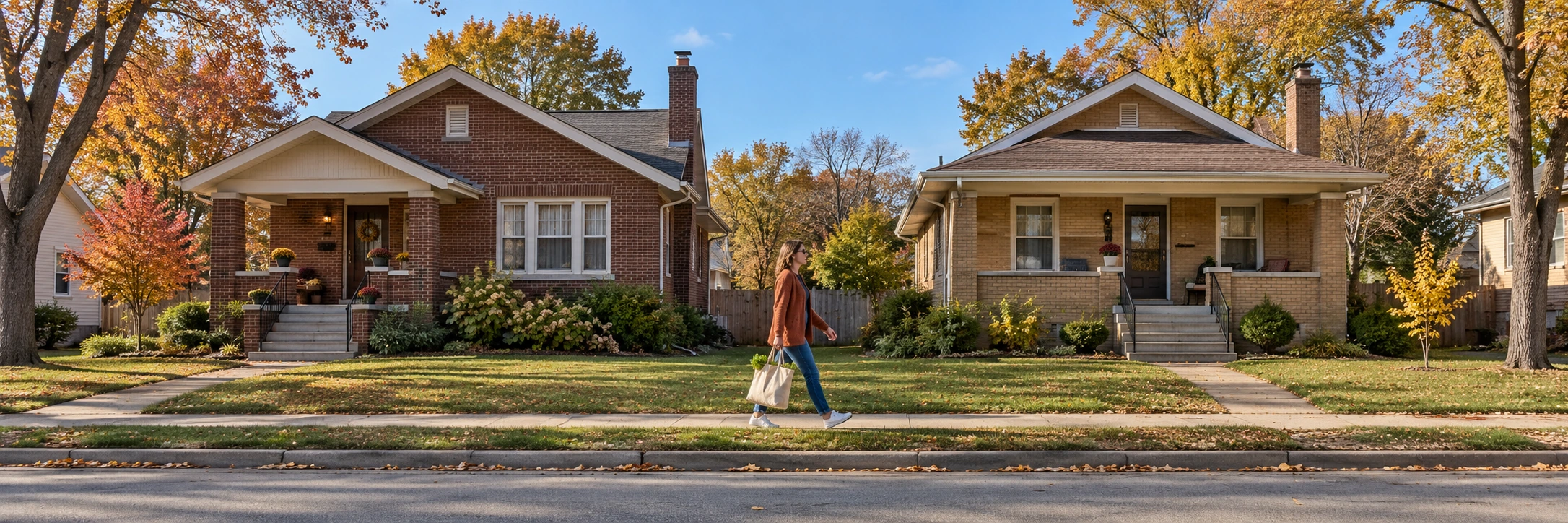
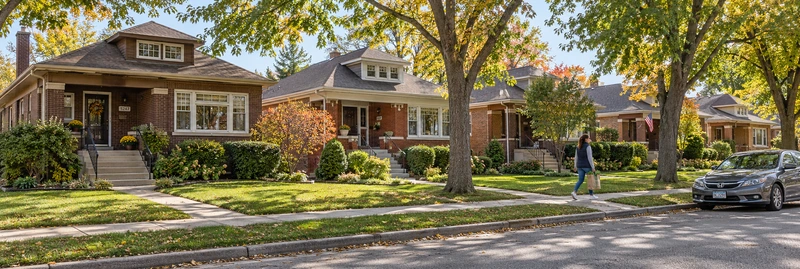
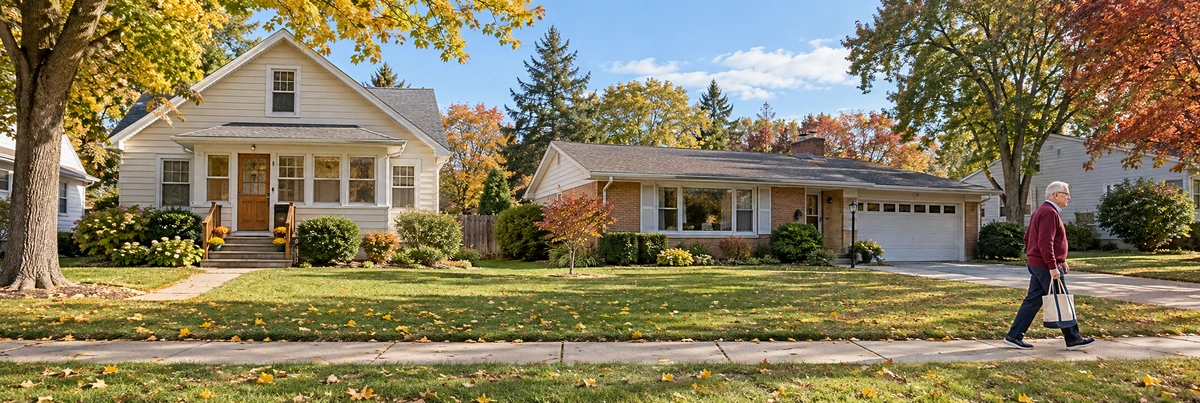
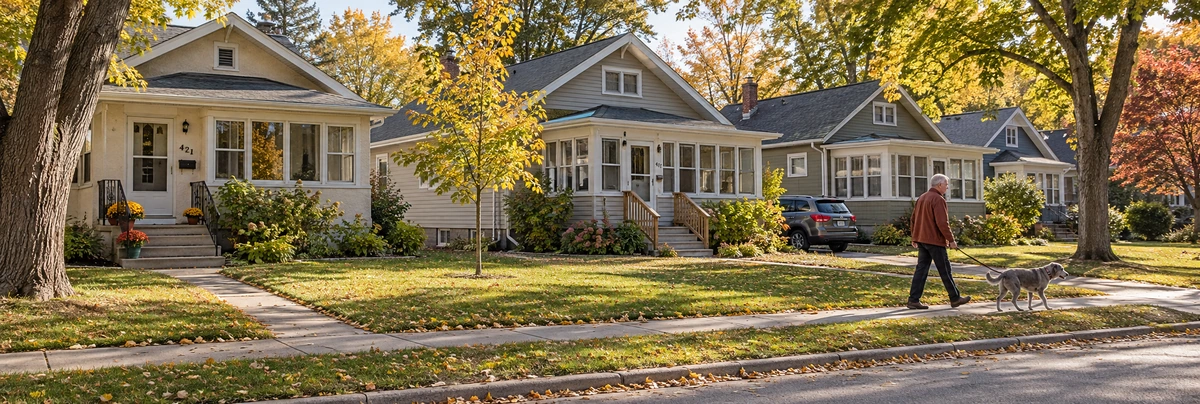
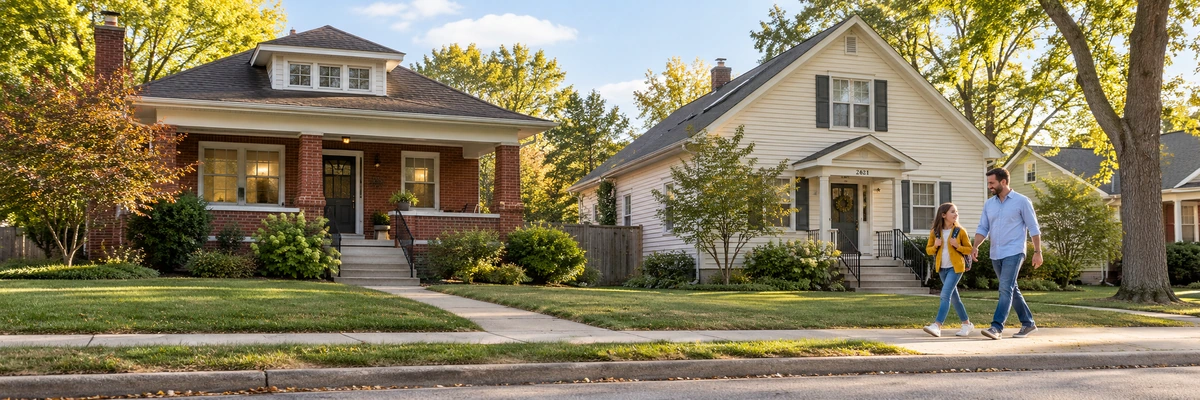
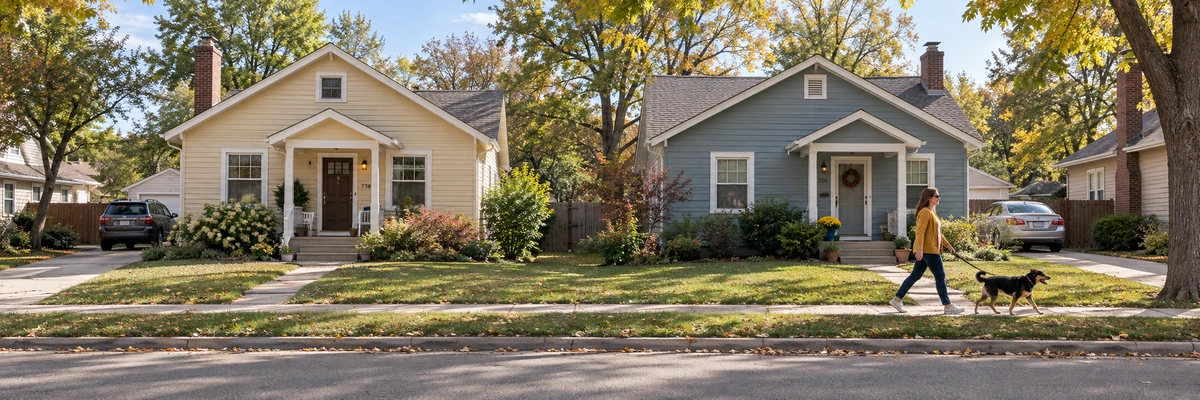
A woman carries a canvas bag past two brick bungalows

State moving guide

Moving to Iowa: Cities, Counties and Household Planning

Compare Iowa’s capital, university cities, river communities and smaller places. Discover the neighborhoods and homes behind your shortlist, then prepare the belongings, documents and receiving arrangements for your interstate move.

Iowa planning

Find the Iowa place you would enjoy coming home to

Start with a few different settings rather than treating Iowa as one residential landscape. Des Moines combines downtown culture, riverfront interests and established neighborhoods. Ames and Iowa City offer different university-city comparisons. Cedar Rapids introduces Czech and Slovak heritage alongside other city interests, while Davenport and Dubuque bring separate Mississippi River settings. Sioux City and Council Bluffs give two western starting points, each with a wider region that reaches across state lines.

Choose something you would return to during an ordinary week: a downtown district, public garden, museum, river walk or neighborhood park. Then compare daily services and regular journeys around the homes you are considering. West Des Moines, Ankeny, Waterloo and Cedar Falls deserve their own comparisons rather than being folded into a nearby city. A memorable outing can begin a shortlist without describing every address or household.

As the search becomes concrete, build a moving brief around both real properties. Record the furniture and boxes, likely dates, chosen packing and the person who can receive. Explain uncertain keys or a gap between homes early. The company information here concerns interstate household work involving Iowa; a city portrait does not establish a local office or an Iowa-only moving appointment. The place helps you choose a home, and the actual household determines the preparation.

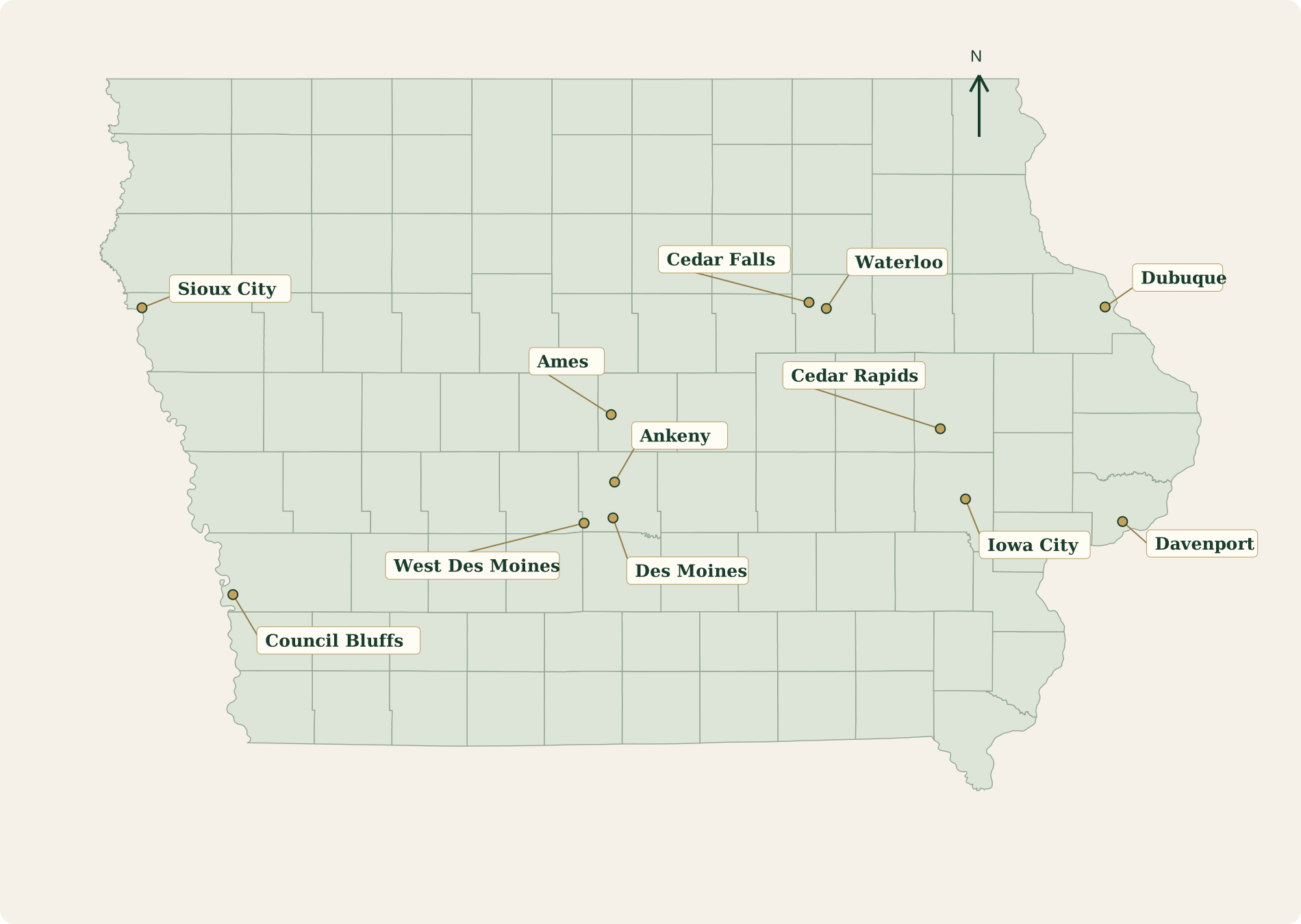
Iowa cities and regions
Explore twelve Iowa cities across central, eastern and western settings, then compare the actual neighborhoods and homes behind your shortlist.

Iowa planning

Use five travel areas to widen your search

Travel Iowa uses five marketing areas: Lakes & Land in the northwest, Loess Hills & Beyond in the southwest, Capital Country in central Iowa, Driftless Area in the northeast, and Storied & Scenic in the southeast. These organize visitor interests. They are not county governments, municipal boundaries or a carrier’s service territory. A marketing area’s name should not be treated as a geological description of every address within it.

Capital Country connects Des Moines and other central-Iowa interests, including Ames, Pella and the wider High Trestle Trail area. Lakes & Land introduces lake communities and northern or western outings. Loess Hills & Beyond provides a southwestern comparison around hills, towns and historic interests. Northeastern comparisons include Dubuque and the wider Cedar Valley, while southeastern interests include Iowa City, Cedar Rapids and Davenport. Keep each actual destination attached to its municipality; the High Trestle Trail Bridge, for example, is not in Ankeny simply because a regional trail reaches Ankeny.

Use this overview to find a second or third community worth examining. Compare its everyday surroundings and housing alongside the first attraction. When the home is chosen, return to the address, county, property contact and actual shipment. A regional map can guide exploration while the furniture, entrance and receiving arrangements guide the move.

City portraits

Explore Iowa’s cities

Discover twelve distinct Iowa cities through public places, cultural interests and everyday surroundings. Compare the home and ordinary week behind each introduction.

A man holds a visitor leaflet beside a city riverIA

Des Moines

Des Moines offers several ways to begin exploring: the riverfront, Historic East Village and Western Gateway’s public-art surroundings. Museums, the central library and downtown dining can form one kind of ordinary outing; established residential streets and neighborhood parks offer another. The city’s identity is broader than a single attraction or a view of the Capitol. Compare the parts you would actually use during a normal week, then look at the homes behind the shortlist. An older house, downtown apartment and larger furnished home can contain very different belongings. West Des Moines and Ankeny remain separate cities within the wider regional search. Keep the chosen address, actual contents and receiving contact with the moving brief rather than letting the metro name stand in for them.

A woman sets a coffee cup on a café tableIA

Cedar Rapids

Cedar Rapids provides a different eastern-Iowa introduction through Czech Village and New Bohemia, the Cedar River and city cultural interests. Czech Village’s shops, murals and National Czech & Slovak Museum & Library connect an ordinary visit with the area’s heritage. That is one district within a larger city, not a description of every residential neighborhood. Compare local services, regular journeys and the surroundings of the actual homes you are considering. Marion is a separate neighboring city, and Iowa City belongs to a wider regional comparison rather than a Cedar Rapids neighborhood. A home search becomes a moving plan when the real rooms and belongings are known. Include the household’s furniture, selected packing and property contact so the proposal follows the chosen residence.

An older woman holds a camera beside a broad riverIA

Davenport

Davenport introduces the Iowa side of the Quad Cities through Mississippi River views, downtown culture and distinct neighborhoods. LeClaire Park and riverfront paths offer outdoor interests, while the Figge Art Museum and Village of East Davenport provide other starting points. Historic residential districts and hilltop streets broaden the comparison beyond the river’s edge. Keep Davenport separate from Bettendorf and from the Illinois communities across the river. A regional visit can cross state lines without making the places one municipality. Compare the ordinary week around a prospective home alongside its first attraction. Then review the actual contents and receiving arrangements. A river view or historic facade introduces a setting; it does not identify the route for furniture into the chosen residence.

A woman reads a paperback on a riverside benchIA

Sioux City

Sioux City offers a western-Iowa city comparison through the Missouri Riverfront, museums, public art and nearby outdoor interests. The city’s own visitor information highlights the Lewis and Clark Interpretive Center, Sioux City Public Museum and Art Center, along with parks and the wider Loess Hills setting. These provide different ways to explore rather than one uniform picture of residential life. Siouxland reaches beyond Iowa. Keep South Sioux City in Nebraska and North Sioux City in South Dakota distinct from Sioux City itself. Compare the actual neighborhood, daily services and household journeys behind the regional introduction. A useful moving brief retains both complete addresses, the furniture and the person who can receive, especially when a short regional journey crosses the state boundary.

A woman carries books through a pedestrian shopping districtIA

Iowa City

Iowa City’s literary culture, the University of Iowa and downtown public life give it a different starting character. The Ped Mall, independent shops and the connection between downtown and the Pentacrest can help you explore an ordinary city outing. Northside provides another neighborhood comparison; the university association does not describe every resident or home. Look at regular journeys and services around the property you are considering. Coralville and North Liberty remain separate communities even when included in the same search. For a furnished rental, confirm what is supplied before deciding what to bring; fitted cabinetry and model-room furniture are not automatically your shipment. Keep the real contents, dates and building contact with the moving plan so the academic-city introduction becomes a practical household brief.

An older man photographs an autumn garden with a phoneIA

Ames

Ames introduces central Iowa through Iowa State University, downtown Main Street and public garden interests. Reiman Gardens gives one starting point, while downtown shops and cultural outings offer a different view of the city. Game-day activity is part of the visitor introduction, but a single event does not describe the ordinary week around every home. Compare campus-related interests with daily services and the particular neighborhood behind the address. Ames remains a separate city from Des Moines and Ankeny. Look inside the residence as well as at its surroundings: a furnished apartment and a house with stored contents can require different preparation. Keep the household inventory, intended entrance and receiving contact together as you choose dates and discuss the move.

Two adults carry reusable shopping bags past storefrontsIA

West Des Moines

West Des Moines has its own downtown character in Historic Valley Junction, with independent shops, galleries and neighborhood events. Raccoon River Park provides another starting interest through its lake and outdoor spaces. These are different ways to discover the city rather than reasons to assume every address has the same surroundings or household pattern. West Des Moines is a distinct municipality, not another name for Des Moines. The city spans parts of multiple counties, so check the actual property jurisdiction when arranging local records or permissions. Compare the ordinary journeys and services around the home, then describe its furniture and contents. An attractive shopping district or spacious driveway cannot replace the property contact and receiving instructions needed for the household’s actual move.

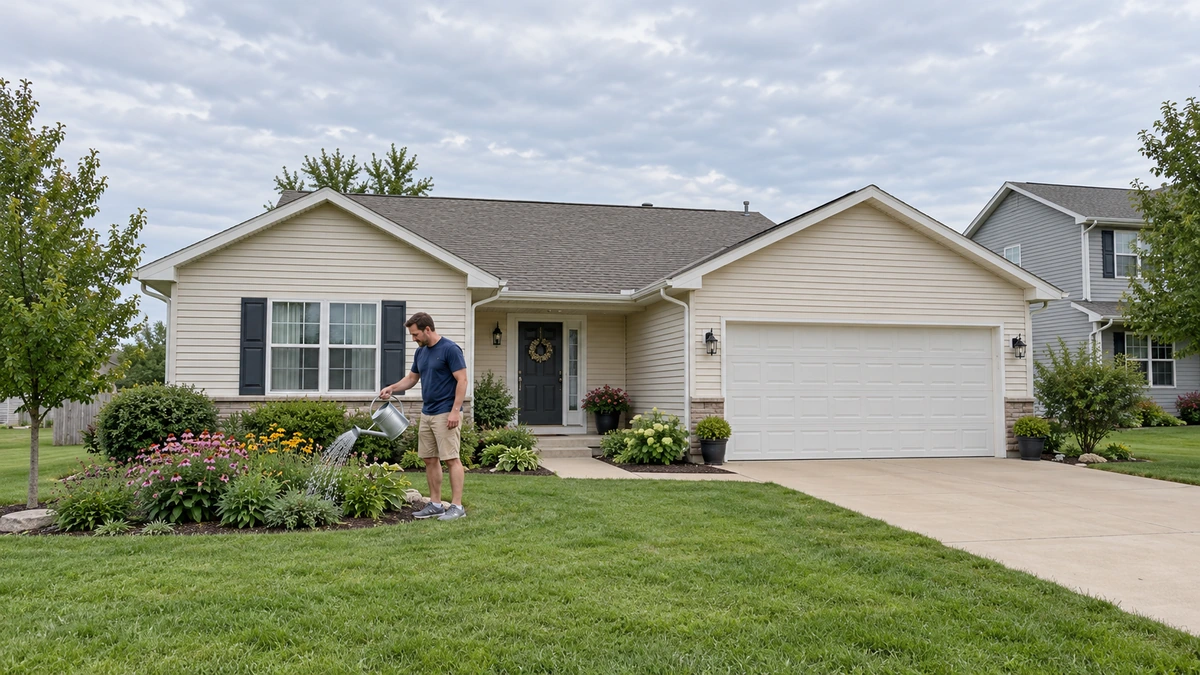
A man waters a garden outside a single-storey homeIA

Ankeny

Ankeny provides a separate central-Iowa comparison through Uptown, neighborhood parks and connected trails. The city’s recreation network links local destinations with wider routes including the High Trestle Trail. Keep the trail’s regional destinations in their actual locations: the famous bridge is near Madrid and Woodward, rather than within Ankeny simply because the trail reaches the city. Compare the neighborhood around each prospective address with the regular journeys and daily services the household needs. A postal Ankeny listing on a large rural parcel should not be assumed to have the same jurisdiction or surroundings as a home inside the city. Confirm the residence, contents and route individually. The next useful step is a complete moving brief tied to the chosen home, dates and authorized receiver.

A woman pauses beside a painted city wallIA

Waterloo

Waterloo introduces northeastern Iowa through downtown interests, the Cedar River and local cultural history. Veterans Way links art and historical places, including the Sullivan Brothers Iowa Veterans Museum and related downtown spaces. River-related trails offer another way to explore, with current conditions and closures checked separately before an outing. Waterloo and Cedar Falls are different cities within the wider Cedar Valley. A shared trail network does not merge their municipal identities or describe every residential neighborhood. Compare the normal week around an actual home alongside the first cultural or outdoor visit. Then review the rooms and belongings that will travel. Preserve the complete address, property instructions and receiving contact so the moving proposal follows the household rather than the regional label.

People use a quiet street outside low brick shopsIA

Cedar Falls

Cedar Falls offers a distinct downtown and trail-oriented comparison in the Cedar Valley. Main Street’s shops and dining provide one starting interest, while public recreation connects with the wider trail network. The South Riverside Trail links the Cedar Falls and Waterloo areas, but changing trail conditions need their own check when planning a visit. Keep Cedar Falls separate from Waterloo and from the other communities named in a regional itinerary. Look at the services and regular journeys around a prospective residence rather than assuming a favorite downtown outing describes every day there. A home or apartment needs its own inventory and receiving plan. Explain the actual furnishings, selected preparation and building contact as the community comparison becomes a concrete move.

A man walks a leashed dog beside a broad riverIA

Dubuque

Dubuque offers a Mississippi River and bluff-side comparison, with the Riverwalk and historic downtown interests providing different starting points. The Fenelon Place Elevator introduces the city’s changing elevation and views over downtown and the river. Its narrow-street visitor instructions are specific to that attraction; they do not establish a route for a household shipment. A broader Dubuque-area itinerary can reach Wisconsin or Illinois, so retain the actual place and state for each home. Compare ordinary services and household journeys alongside the first riverfront outing. Then examine the residence’s current rooms and furnishings rather than using a scenic photograph to infer access. Keep the property contact, complete inventory and receiving arrangement with the real address.

A woman rests with a book on a park benchIA

Council Bluffs

Council Bluffs introduces southwestern Iowa through its own downtown, historic interests and public places. Bayliss Park provides a central starting point with its fountain, plaza, art and gathering spaces. Wider Loess Hills interests offer a different comparison, while the metropolitan relationship with Omaha can broaden the home search across the Missouri River. Keep Council Bluffs in Iowa and Omaha in Nebraska distinct when comparing addresses. The region is connected, but a household journey between the states is still interstate. Explore daily services and regular trips around the particular residence behind the shortlist. Then describe the real contents, chosen packing and the person who can receive. A downtown park helps introduce the city; the actual home determines the practical moving preparations.

Iowa planning

Keep the city, county and state attached to the address

Des Moines and West Des Moines are different cities. Ankeny, Urbandale, Waukee, Johnston and other communities also retain their own identities within a wider metropolitan comparison. A city can extend across county boundaries: West Des Moines’ current city information identifies parts in Polk, Dallas, Warren and Madison counties. Do not choose a county office from a familiar regional name alone. Check the actual residence and the transaction required.

The same distinction matters near Iowa’s borders. Davenport and Bettendorf are in Iowa, while Rock Island and Moline are in Illinois. Council Bluffs is in Iowa and Omaha is in Nebraska. Sioux City is in Iowa; South Sioux City and North Sioux City are separate municipalities in Nebraska and South Dakota. Those regional relationships do not turn a cross-border household journey into an Iowa-only move.

Waterloo and Cedar Falls are separate cities too, even though trails and a wider Cedar Valley identity connect them. Iowa City, Coralville and North Liberty should remain distinct in a home search. Retain the complete origin and destination, including state, actual property contact and permitted entrance. An accurate address resolves questions that a metro label cannot: which building instructions apply, who can authorize access, and whether the shipment crosses a state line.

More places to explore

Keep exploring Iowa communities

Looking beyond the featured cities? These communities offer more starting points for your Iowa home search.

Ask about your Iowa move →

Iowa planning

Plan the route between the vehicle and the room

A short front lawn and a large acreage can present quite different moving days. An established city home may have steps close to the sidewalk, an enclosed porch and successive interior openings. A rural property can have a long approach, turning limits or a surface that changes with weather. An apartment adds the building’s shared circulation and receiving arrangements. Show the complete route rather than inferring easy handling from the size of the lot.

Begin at the place where the actual moving vehicle may lawfully stop. Continue through the approved entrance to the room where each large piece belongs. Include door leaves, hardware, turns, steps and shared spaces. A garage opening is relevant only if the property permits its use and the route from it actually reaches the intended room. A broad approach does not eliminate a tight turn inside.

Photograph the largest pieces and the narrowest parts of the same route. Tell the coordinator which items need preparation and which openings or appointments remain uncertain. The carrier assesses the vehicle and handling; the household and property contact establish permission. Keep those roles connected so a change in the stopping place reaches the person planning the work before collection.

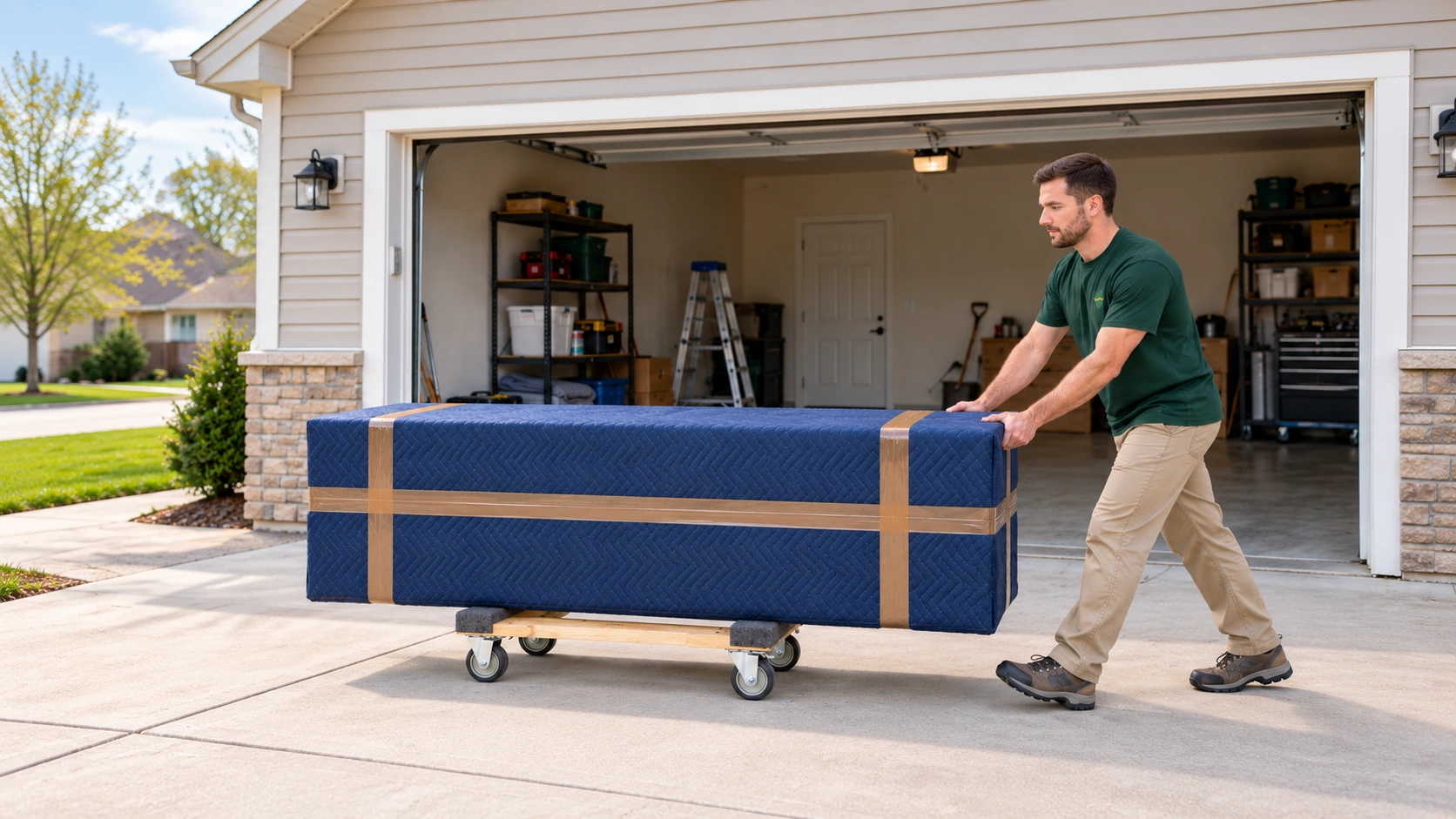
A mover guides a quilt-wrapped cabinet on a furniture dolly
A mover guides a quilt-wrapped cabinet away from an open garage on a compact furniture dolly.

The moving process

Your move, step by step

  1. 1

    Describe the household

    Send the two addresses, complete contents, dates and the work you want included.

  2. 2

    Confirm the access

    Show the approach and interior route, and obtain building and loading instructions.

  3. 3

    Agree the written plan

    Review the inventory, price, protection, payment and delivery arrangement together.

  4. 4

    Prepare for collection

    Finish the chosen packing, keep essentials apart and make the working path available.

  5. 5

    Receive the goods

    Have an authorized person ready, direct placement and check the inventory and condition.

Ready when you are

Ready to discuss your move?Tell us where you are moving, what is coming with you and the dates you have in mind.

Iowa planning

For an Iowa-only move, check the permit and the applicable tariff

For a household move entirely within Iowa, identify the exact business carrying the goods and check its applicable Iowa authority. Iowa Code chapter 325A and the current Department of Transportation rules provide a permit framework for household-goods carriers. The application includes the relevant insurance documentation and a household-goods tariff. A federal number or a familiar trading name alone does not answer whether the actual provider has the appropriate Iowa authority.

Ask for the written estimate, the applicable tariff and the shipment terms. The current tariff rule, 761—524.13, requires rates and charges for services under the permit to remain on file and available for public inspection. Check the carrier name, effective version, services, charge basis and proposed additions together. Ask Iowa DOT’s Motor Vehicle Division when a permit or tariff question needs clarification; do not substitute a commercial directory for an official answer.

Read the estimate beside the inventory, packing responsibilities, property conditions, payment and change procedure. The company’s reviewed interstate flat-rate policy elsewhere on this page is not a replacement for an unrelated Iowa-only carrier’s terms. Older manuals remain available online, but the chapter was replaced effective September 24, 2025. Use the current rule listing rather than relying on an old rule number or notice period.

County guides

Explore the area around your new home

Explore six county profiles connected with featured cities, then use the complete directory of Iowa’s 99 counties. The city, county and actual property remain distinct parts of a home search.

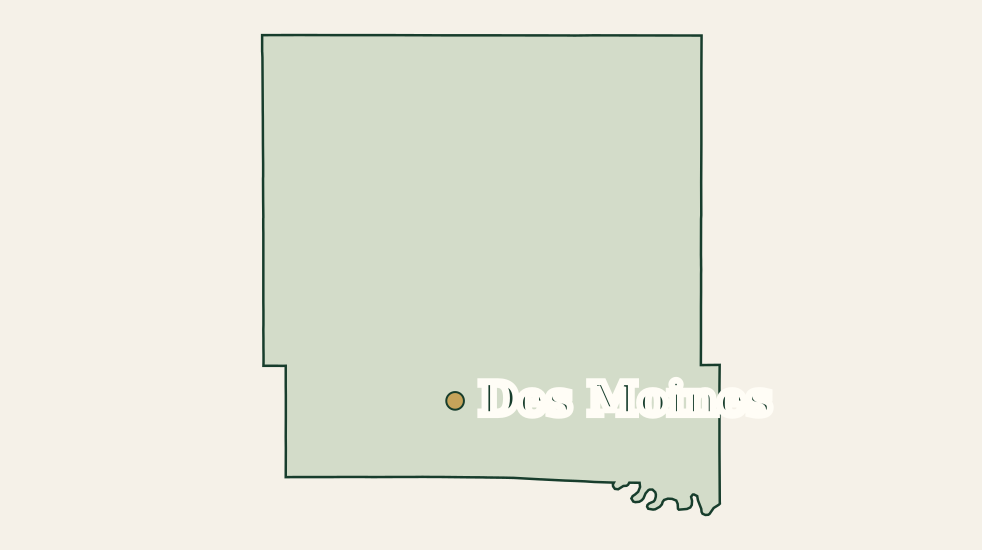
Polk County with Des Moines marked
Des Moines and distinct central-Iowa communitiesPop. 503,175 · 2024

Polk County

Polk County introduces central Iowa through Des Moines and other separate communities. Downtown culture, riverfront interests, established neighborhoods and the wider trail network give different starting points. Ankeny and Altoona should remain their own cities in a regional comparison. West Des Moines spans parts of multiple counties, so its city name alone does not identify the county for a particular property or transaction. Compare the daily services and regular journeys around an actual residence. A compact older house, larger furnished home and apartment can each need a different inventory and receiving plan. The county map marks a selected city for orientation; it does not determine current municipal limits, a vehicle approach or permission to use a private entrance.

Key communities

Des Moines · Ankeny · Altoona · Johnston

Check mover credentials →
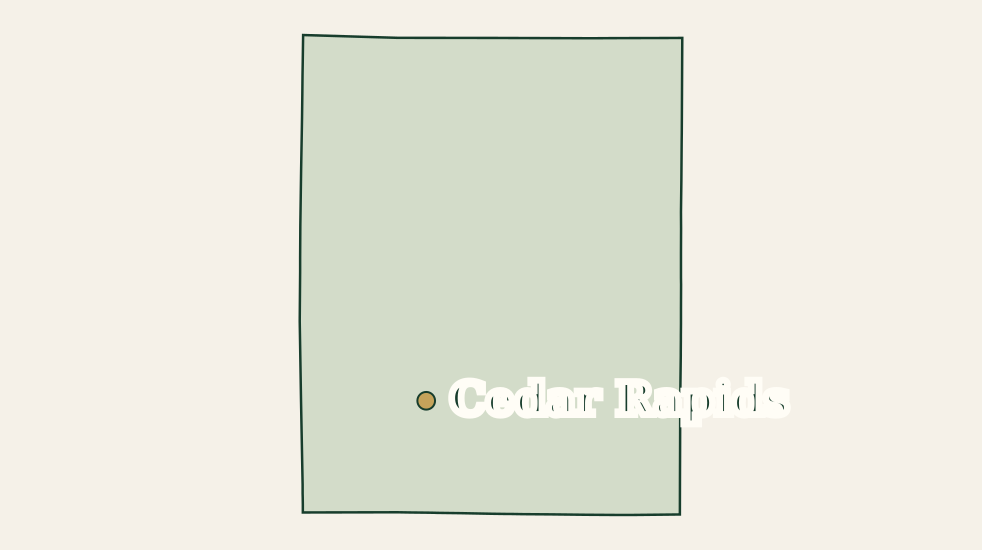
Linn County with Cedar Rapids marked
Cedar Rapids, Marion and eastern-Iowa interestsPop. 230,004 · 2024

Linn County

Linn County provides an eastern-Iowa comparison through Cedar Rapids and separate communities such as Marion. Czech Village and New Bohemia introduce cultural and shopping interests within Cedar Rapids, while the county comparison reaches beyond a single district. Explore the neighborhood and ordinary services behind a prospective home rather than assuming one downtown outing describes the whole area. Keep the actual municipality attached to the address. Then review furnished rooms, stored belongings and any building instructions. A county outline helps locate the home search while the property contact and carrier assess the real receiving route, authorized stopping position and work required for the household’s contents.

Key communities

Cedar Rapids · Marion

Check mover credentials →
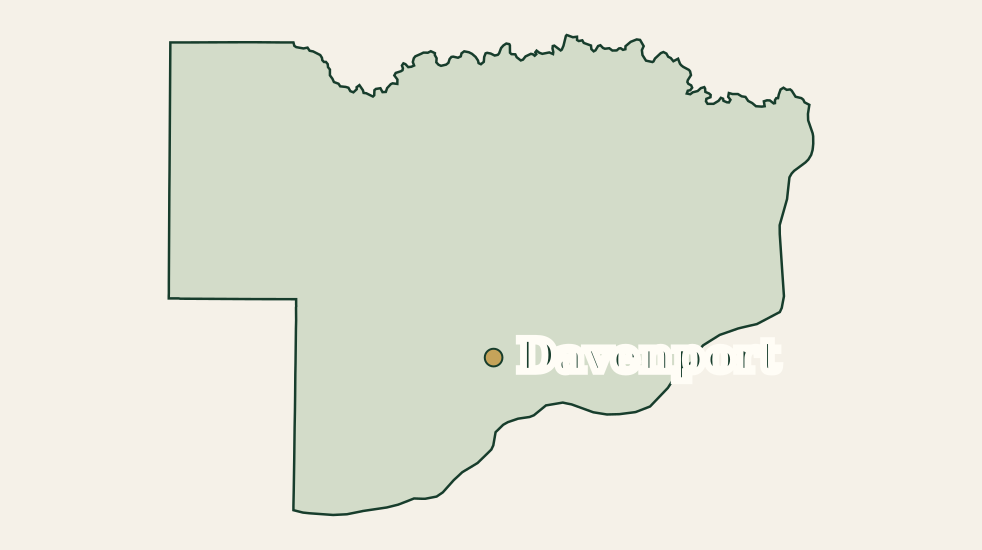
Scott County with Davenport marked
Davenport, Bettendorf and the Iowa side of the Quad CitiesPop. 174,608 · 2024

Scott County

Scott County introduces an Iowa-side Quad Cities comparison through Davenport, Bettendorf and other communities. Mississippi River interests, public parks, museums and different city neighborhoods offer several ways to begin exploring. The wider region also includes Illinois municipalities across the river; regional connections do not merge the states or counties. Keep the true location with both shipment endpoints. Compare ordinary journeys and services around the actual home alongside the first riverfront or cultural outing. Then describe the furniture, selected preparation and receiving contact. The county map offers geographic orientation without promising current road conditions, a private approach or a particular moving appointment.

Key communities

Davenport · Bettendorf

Check mover credentials →
Woodbury County with Sioux City marked
Sioux City and a western Iowa county comparisonPop. 106,247 · 2024

Woodbury County

Woodbury County provides a western-Iowa introduction through Sioux City and a wider county setting. The Missouri Riverfront, museums, public art and nearby outdoor interests give different starting points. Siouxland also reaches into Nebraska and South Dakota, where neighboring cities retain their own jurisdictions. A familiar regional name should not replace the actual state, county or municipality. Compare the surroundings and regular household journeys behind the chosen residence, then review the current contents and intended entrance. A city home and a property with a longer approach can present different work. The map marks Sioux City for orientation; vehicle assessment, access permission and receiving arrangements remain questions for the actual property and shipment.

Key communities

Sioux City

Check mover credentials →
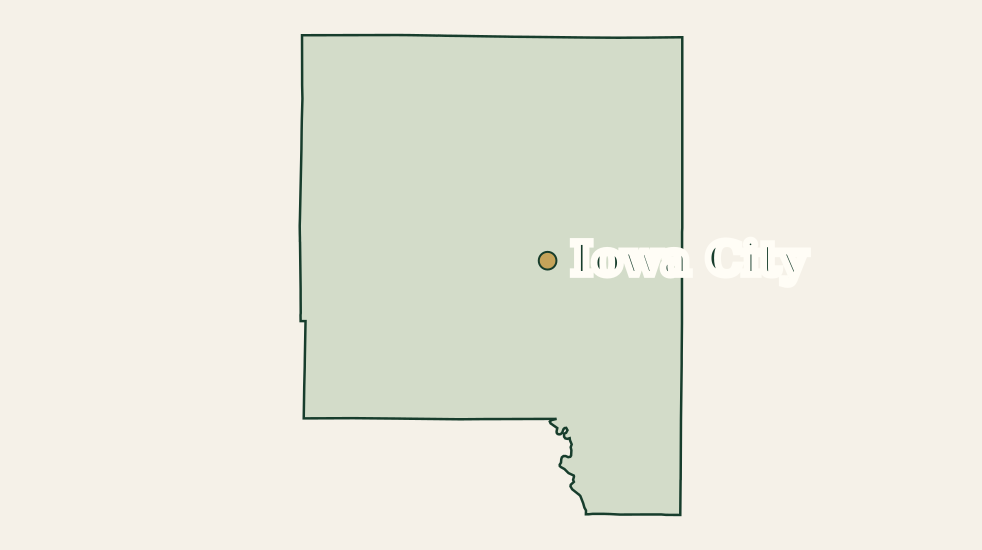
Johnson County with Iowa City marked
Iowa City and separate neighboring communitiesPop. 156,639 · 2024

Johnson County

Johnson County introduces a university-city and wider community comparison through Iowa City, Coralville and North Liberty. Downtown literary interests, the Ped Mall and the connection with the University of Iowa provide one starting point; other neighborhoods and nearby communities need their own examination. A university association does not describe every resident or household. Compare daily services and regular journeys around the actual address. In a furnished rental, establish what is already supplied and what belongs to the household before preparing the inventory. The county outline provides orientation, while the real building contact, approved entrance and authorized receiver determine the practical moving brief.

Key communities

Iowa City · Coralville · North Liberty

Check mover credentials →
Pottawattamie County with Council Bluffs marked
Council Bluffs and a southwestern Iowa comparisonPop. 93,424 · 2024

Pottawattamie County

Pottawattamie County introduces southwestern Iowa through Council Bluffs and a broader county setting. Bayliss Park and the city’s historic interests provide one beginning; wider Loess Hills outings offer another. Omaha remains a separate city in Nebraska even when included in the same regional home search. Keep that state boundary clear in both shipment addresses. Compare the ordinary week and neighborhood behind a residence rather than inferring daily life from a park or scenic view. Furnished rooms, household contents and the permitted approach still need individual review. The map marks Council Bluffs for orientation and leaves vehicle, private access and receiving questions attached to the actual home.

Key communities

Council Bluffs

Check mover credentials →

County population: 2024 ACS five-year estimates, U.S. Census Bureau. Geographic background, separate from the one-year mobility measure. Read the source.

All 99 Iowa counties

Iowa planning

Look inside the home before deciding what needs to move

An Iowa home comparison can include a compact older house, a newer house with an attached garage, a home on a large parcel, or a furnished apartment. Each raises different inventory questions. A porch or attractive facade does not reveal what is behind the front door. A listing’s broad room photograph can also conceal the narrowest turn between rooms.

Look at furnished spaces as well as empty rooms. Sofas, dining groups, books, lamps and stored belongings help make the moving conversation concrete. Distinguish freestanding furniture from fitted cabinetry or fixtures that belong to the property. In a furnished rental, confirm what is already provided and what you actually own and intend to bring. Do not count a marketing model’s entire room as your shipment.

Listing photographs can be historical or staged; adjacent furnished and empty views may show different arrangements of the same room. Use them to ask better questions, then confirm the current contents and route at the real home. Measure relevant openings and large pieces, obtain property permission, and identify any preparation needed. Update the coordinator when the home or contents change rather than assuming the first listing images remain a complete moving brief.

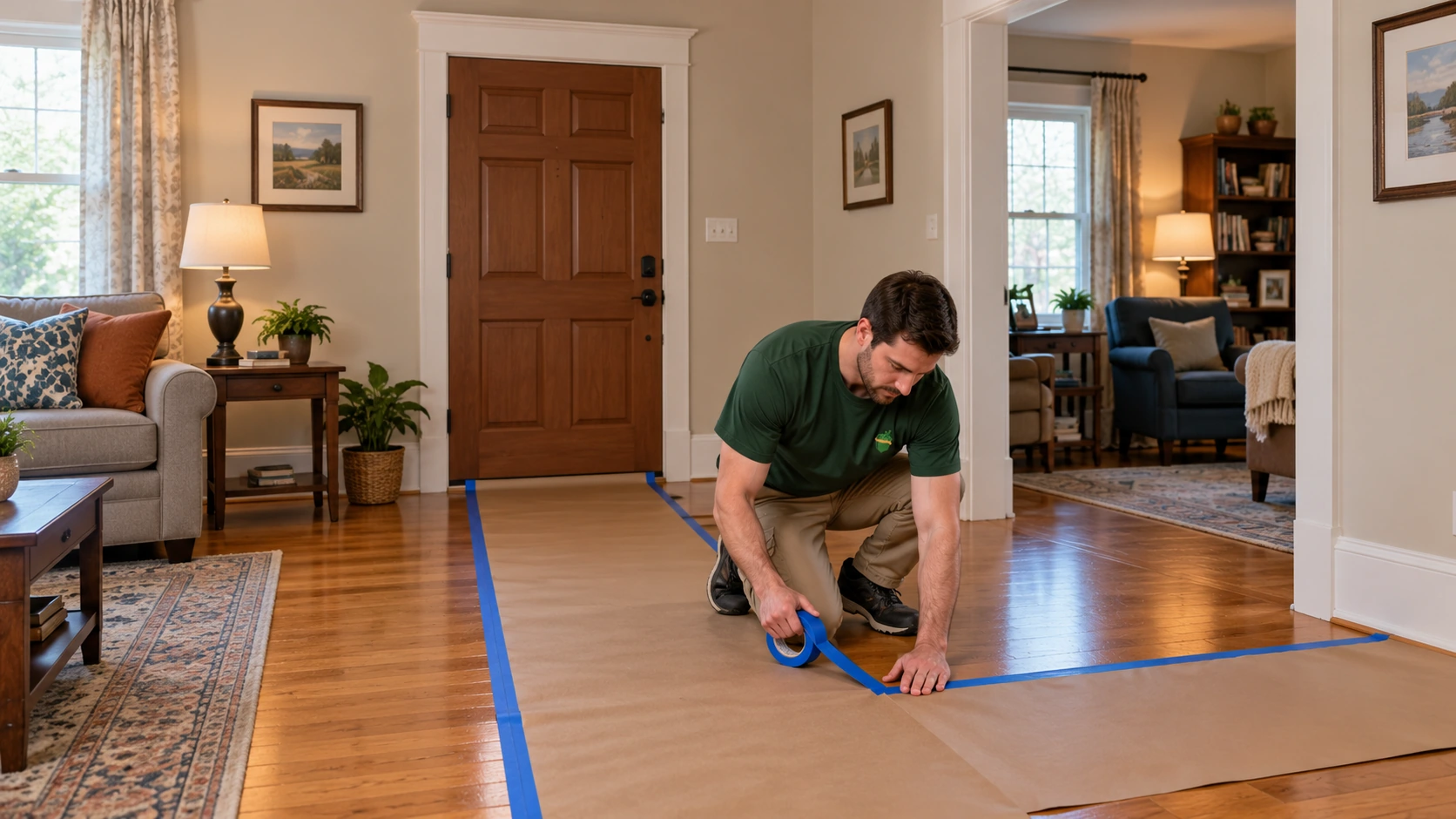
A mover presses blue tape along heavy floor-protection paper
A mover presses blue tape along the edge of joined floor-protection paper.

Iowa planning

Separate the carrier claim from the complaint route

Ask an Iowa-only provider to explain responsibility for loss or damage, available protection, exclusions and the process for reporting a concern before moving day. Keep the actual estimate, inventory, condition photographs and protection selection. Carrier valuation and a separate insurance policy answer different questions; do not assume federal interstate choices govern an Iowa-only shipment unchanged.

If something goes wrong, notify the carrier promptly in writing. Retain shipment records, invoices, photographs, packaging and correspondence, and follow the agreement’s inspection and claim requirements. Keep a disputed charge separate from an unsupported assumption that filing a complaint removes a payment obligation. Record what happened and the resolution requested so the same facts can be followed through the process.

Iowa DOT accepts written complaints concerning its motor-carrier authority rules. The Iowa Attorney General provides a separate consumer complaint route for marketplace concerns. The Attorney General represents the public interest and cannot act as your private attorney; filing does not guarantee investigation or recovery. Follow the relevant official instructions, send copies where requested, and keep the carrier claim moving alongside any agency complaint. A licensing complaint is not the carrier’s own loss-and-damage claim procedure.

Who does what

A little coordination before moving day

You, the moving team and your building contacts each handle a different part of getting the move ready.

01 Moving checklist

The household

Choose what moves, keep the inventory accurate and obtain permission to use both properties.

02 Moving checklist

The moving team

Review the shipment and access, explain the proposed work and identify the coordinating contact.

03 Moving checklist

The building and receiver

Keep the agreed entrance and appointment available and prepare to direct and check delivery.

Iowa planning

Check the business arranging the interstate shipment

For a household move crossing a state line, use FMCSA’s mover search to review the actual business. Match its name and identifying information with the proposal, and distinguish a carrier from a broker arranging transportation. A number printed in an advertisement is a starting point for checking the record, not a complete answer about the business’s role or current authority.

Read the estimate, inventory, shipment documents and protection choices before signing. FMCSA explains the consumer information that interstate movers and brokers must provide, including rights-and-responsibilities resources and complaint-handling information. Ask who will carry the goods, who coordinates the move and how changes will be recorded. Keep copies accessible to the household and the person receiving.

For the company’s agreed interstate work, confirm the flat rate, same-scope conditions and delivery arrangement in writing. The person preparing the estimate and the moving crew perform separate roles. At collection and delivery, use the inventory to identify what travels and record condition concerns. Preserve the carrier’s claim instructions and report a problem promptly; an agency complaint follows its own process and should not replace the shipment records or required claim steps.

Iowa planning

Check current roads and the condition of the receiving home

Use Iowa DOT’s travel tools and Iowa 511 as the date approaches. They provide changing road conditions, construction, closures, traffic and commercial-vehicle restrictions. Review the actual journey with the coordinator rather than treating a broad state route as a vehicle-specific clearance or permission to use a private approach.

Iowa’s winter preparation resources address snow, ice, reduced visibility and safe travel around snowplows. Road clearing does not establish that a private drive, porch or shared entrance is ready for delivery. Check those parts with the property contact. In other seasons, use current official weather, emergency and local road information as well; a familiar riverfront or rural setting does not tell you today’s conditions.

If a road, entrance or receiving appointment becomes unavailable, notify the coordinator and agree the next arrangement. That may require a revised handover, later delivery or storage stage. Keep the inventory and authorized receiving contact with the updated plan. Follow official closure and emergency instructions. A moving appointment cannot override them, and a descriptive guide should not be mistaken for a live road report.

Iowa planning

Confirm where the vehicle can stop and how the goods will travel

Ask the property contact which vehicle stopping or loading positions are permitted, what appointment is required and who can authorize changes. A visitor parking space, garden path or shared drive is not automatically available for a moving vehicle. Keep building instructions and the current address with the proposal, including any receiving window.

Show the route from that position through the intended entrance. A long level path, short stair transfer and shared apartment landing are different handling situations. Let the carrier assess suitable equipment and preparation for the real pieces. A photograph of a broad lawn or a garage does not establish the usable width, turning space or permission to enter. Include the part of the route inside the home, where the largest turn may occur.

If the expected position changes, explain the new route before the crew arrives where possible. More distance, steps or a different entrance can alter the work. Review the change with the coordinator and property contact rather than substituting a different arrangement on the day without agreement. The useful outcome is one continuous permitted route connected to the actual household and vehicle.

Moving routes

Where are you moving?

Describe the whole shipment, then match the agreement, preparation and receiving arrangements to the actual journey.

Within Iowa

An Iowa-only move

Check the actual carrier’s Iowa authority, applicable tariff and written shipment terms.

Provider and charges

Match the permit, carrier name, effective tariff and proposed work.

Protection and concerns

Review claim terms; DOT authority and consumer complaints have separate roles.

Read Iowa carrier rules →
Across a state line

A nearby interstate journey

Give both properties equal attention even when the journey looks short.

Preparation

Keep the same contents, selected packing, furniture work and property conditions in the proposal.

Receiving

Confirm the delivery model, keys, appointments and authorized person at the destination.

Plan interstate moving →

A longer journey

Cross-country or Canada

Review transport and the household’s arrangements for the interval between homes.

Delivery model

Choose dedicated direct service or suitable consolidation with the actual destination window agreed.

Handover

Define any border, storage or provider stage through inventory, records, charges and a named receiver.

Review the full journey →

Direct service uses a dedicated truck and the same pickup and delivery crew. Suitable smaller consolidated shipments use a wider agreed window; confirm the model in writing.

Iowa planning

Choose packing help from the belongings in each room

A small house can contain a substantial amount of packing. Open cupboards, bookshelves and storage areas when preparing the inventory; do not describe only the large furniture visible in a listing photograph. Decide which rooms or selected items you will prepare and which need the team’s packing work. Explain fragile tableware, framed pieces, collections and unusual shapes early.

For the company’s agreed interstate service, packing is charged for working time and company-supplied boxes are charged separately. Moving blankets, shrink wrap and tape have no separate basic-material charge. Keep the selected work and materials in the proposal so the household and crew know what will be ready and what still needs preparation.

Use suitable containers and clear identification, and keep the inventory consistent with what is packed. Mark destinations in a way the receiving person can use. Retain personal documents, keys, medicines and immediate essentials separately. Do not close packing discussions around a room count alone: stored contents and special pieces can change the work. Ask before including unusual or restricted goods so the plan reflects what the carrier can actually accept.

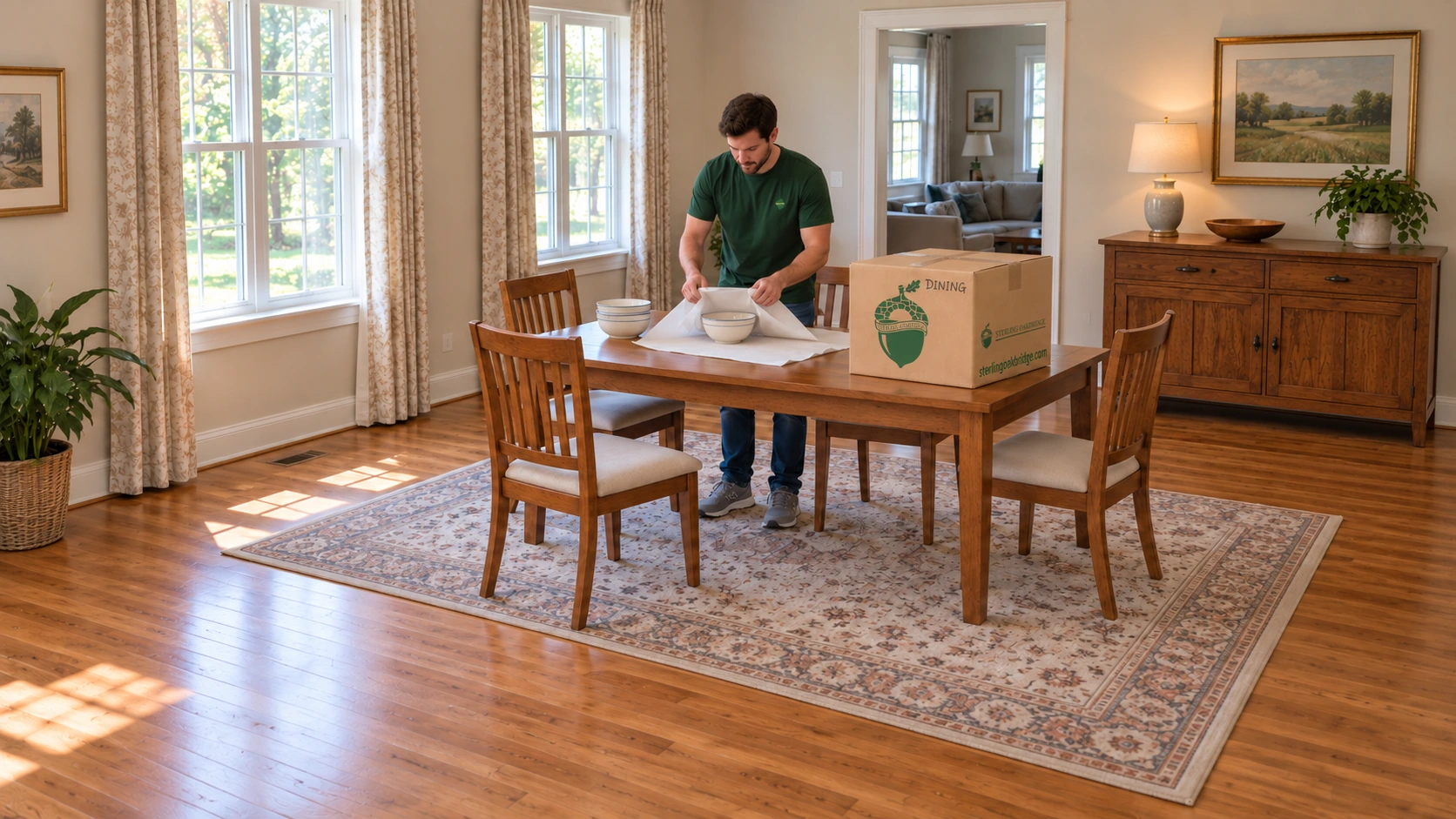
A packer folds paper around a bowl at a dining table
A packer folds paper around a ceramic bowl on a dining table.

Iowa planning

Connect furniture protection with the whole route

Review the furniture’s construction and the route at both homes before deciding how it should travel. Some pieces need basic disassembly; others need separate specialist assessment or a particular supported position. Identify removable parts and keep relevant reassembly instructions and hardware together. A familiar furniture name does not establish that every variant needs the same work.

For the company’s confirmed interstate work, basic furniture disassembly and reassembly use moving labor time without a separate basic fee. Moving blankets, shrink wrap and tape carry no separate basic-material charge. These terms do not automatically include every specialist operation. Explain the actual piece, access and preparation so the agreed scope can be written clearly.

Protection should follow the piece through handling and transport until its intended placement permits unwrapping. A long approach is also an equipment question, not a reason to describe every heavy object as a hand carry. At the receiving home, keep the route and destination room ready. The useful plan describes what happens to the actual furniture from collection through placement and reassembly, including any step requiring further review.

Iowa planning

Use dated housing figures as background for a better inventory

The 2024 American Community Survey five-year estimates report 1,437,699 housing units in Iowa. Detached single-unit homes account for 1,038,172 of them, about 72.2 percent. Homes built in 1939 or earlier account for 338,420 units, about 23.5 percent. These are dated estimates of the housing stock; they do not describe the construction, contents or doorway of a particular residence.

Tenure uses a different denominator. Of 1,315,707 occupied homes in the same five-year estimates, 943,396 are owner-occupied and 372,311 are renter-occupied, about 71.7 and 28.3 percent respectively. All housing units and occupied homes are not interchangeable groups. A rented home and an owned apartment can each need their own property permission, furniture preparation and receiving plan.

Use the figures to frame questions, then describe the actual home. Which rooms and stored contents are included? What is fitted to the property, and what belongs to the household? Where does the largest piece turn? County population estimates provide another dated geographic comparison, separate from a forecast of moves. The inventory and access information remain the practical basis for an estimate.

Iowa planning

Keep population mobility separate from paid household moves

The 2024 ACS one-year mobility measure reports that 1.9 percent of Iowa residents age one and older lived in another U.S. state one year earlier. This is a person-based previous-residence measure with its own period and population. It is not net migration, a count of households booking movers, or a forecast of work available to a company.

People may move for work, study, family or other reasons, but the percentage does not establish the reason for an individual journey. A university-city setting, riverfront or appealing neighborhood can introduce a place without proving why a household arrived. Keep those distinctions when comparing mobility with the separate five-year housing and county estimates.

For a moving proposal, replace broad assumptions with the real contents and endpoints. One household may need direct delivery for a complete furnished home; another may have a smaller suitable shipment and greater arrival flexibility. The inventory, selected work and receiving arrangements determine the discussion. Preserve uncertainty about dates or storage early rather than translating a statewide statistic into a promised service, price or employment outcome.

Iowa planning

Prepare both ends of an Iowa border crossing

A journey between Iowa and Illinois, Wisconsin, Minnesota, South Dakota, Nebraska or Missouri crosses a state boundary. The household may experience it as a local regional move, especially around the Quad Cities, Siouxland or Council Bluffs and Omaha. Keep the complete origin and destination in the proposal rather than substituting the regional name for the actual states.

Give both homes equal attention. Confirm collection access, packing responsibilities, the authorized stopping position and receiving contact. Public travel information does not decide whether a private entrance or shared driveway may be used. A property change at either end can affect the route and preparation even when the wider region is unchanged.

The related guides below lead to published pages for other states. They help organize the other end of a household journey without confirming a vehicle route, date or office. Once the home search reaches a real address, send the complete contents, likely dates and unresolved property questions to the coordinator. The actual shipment and endpoints determine the appropriate agreement.

Iowa planning

Match delivery to keys and a person who can receive

Choose dates around the times both properties can actually be used. Confirm when the origin must be cleared, when the destination is available, and whether a building appointment applies. Keep uncertain keys, closing dates, tenancy starts or shared entrance arrangements visible in the brief. A preferred arrival day alone does not provide an authorized person to meet and direct the team.

The company’s interstate delivery window begins after pickup and loading are complete. Direct delivery and suitable consolidation have different receiving implications. Agree the delivery model and actual destination terms before arranging the household’s interval between homes. Do not turn a familiar driving distance into a guaranteed delivery appointment.

If access or timing changes, contact the coordinator promptly. Review whether the revised plan requires storage, a separate handover or later delivery, and keep the inventory with it. Tell the receiver which items belong where and how condition concerns should be recorded. The aim is to connect the cleared origin with a destination that can receive the agreed shipment, rather than treating transport time as the only scheduling question.

Iowa planning

Choose direct or consolidated delivery before fixing the household schedule

For a longer interstate journey, discuss how the shipment will travel and how the household will manage the receiving interval. Direct company delivery uses a dedicated truck and the same moving crew at pickup and drop-off. Consolidated service can suit a smaller shipment with a wider agreed delivery window. Explain the actual inventory and arrival flexibility so the option fits the household.

Keep destination-specific terms attached to the destination. Company consolidated limits include up to 60 days for Florida or Canada and up to 90 days for California, beginning after pickup and loading are complete. Other longer routes require an individual agreement. Iowa does not inherit another destination’s window because it appears in the same guide or lies on a broad route across the country.

For the same agreed interstate shipment and service scope, the flat rate stays the same even if the journey or delivery takes longer. Added goods, changed work or revised services require separate review and written agreement. Keep essentials with the household and check that the receiver can work with the chosen arrangement. A suitable delivery model connects cost, transport and life between the two homes.

Common moving situations

How the plan changes with your needs

These are conditional planning situations, not reports of customer jobs. Each connects a property or timing issue with a decision to settle before collection.

An established house with porch steps

A large piece must pass a front landing and successive room openings.

What to do. Show the complete permitted route and discuss suitable preparation for that exact piece.

Why it helps. The plan follows the furniture into its intended room.

A furnished apartment

Some furniture is supplied by the property, while personal belongings still need transport.

What to do. Confirm what belongs to the household, what remains in the apartment and the approved receiving arrangements.

Why it helps. The inventory describes the real shipment rather than the marketing model.

A regional search crosses the state line

The household compares Council Bluffs with Omaha or both sides of the Quad Cities.

What to do. Retain the actual state and property instructions with both full addresses.

Why it helps. The proposal follows the interstate journey rather than a regional nickname.

A long rural approach

The receiving home has a long driveway whose surface or turning conditions need checking.

What to do. Send current approach information and agree the vehicle position and onward route.

Why it helps. The carrier can review equipment and receiving arrangements before the day.

Iowa planning

Give a Canadian arrival or another handover its own records

For an Iowa–Canada household move, explain the complete origin, destination, contents and receiving dates before requesting a proposal. Consult CBSA’s guidance for the actual arrival category and circumstances. The transport agreement does not establish a person’s immigration status or automatically determine the import treatment of every item.

CBSA distinguishes goods arriving with you from goods to follow and describes the records needed when entering Canada. Ownership, possession and use conditions differ by category, and some goods have separate restrictions. Prepare the relevant lists and retain the documents the household needs to present. Confirm the actual case rather than assuming every personal possession qualifies in the same way.

If the journey includes storage or another provider, identify the receiving party and define the handover. Agree the inventory, condition records, charges, access and next delivery responsibility. Keep each stage traceable through the same goods and records. This guide helps organize that conversation; a separate transport mode, noncontiguous destination or unusual item still needs its own review before it becomes part of an agreed service.

Iowa planning

Compare prices for the same contents, access and work

Prepare one useful household brief before comparing proposals. Include both complete addresses, the actual furniture and boxes, photographs of difficult pieces, the largest openings and the intended route. Floor area gives context but does not tell the coordinator how many books, dishes, stored belongings or unusual items will travel. Two homes of similar size can require different preparation and labor.

For the company’s confirmed interstate work, the price is an agreed flat rate for the defined shipment and services. A longer journey or delivery interval does not change the price for the same scope. Added contents, selected packing or other changes require separate review and a revised written agreement. Keep the latest inventory and property information with the version you are comparing.

Check individual service terms as well. Packing and basic furniture preparation use working time; company-supplied boxes are separate. Blankets, shrink wrap and tape have no separate basic-material charge. Optional carton unpacking and packaging-waste removal are distinct choices. Ask what is included, what needs review and how payment is arranged. An actual proposal can answer those questions without publishing a generic price that ignores the household.

Iowa planning

Resolve the largest uncertainty before the last week

Begin with the issue most likely to change the plan: uncertain keys, a large piece, a difficult approach, incomplete packing or a fixed receiving appointment. Send enough information for the team to review it while alternatives remain possible. Confirm the inventory, selected work, delivery arrangement and written proposal together rather than treating them as separate conversations.

As collection approaches, finish the chosen packing and separate essentials that travel with the household. Reconfirm entrance instructions, room labels, hardware and the person who can receive. Show the coordinator the current home and contents; an earlier listing photograph may not reflect what is there now. A short update about changed access can prevent a plan from relying on an obsolete entrance or appointment.

At collection, use the inventory and retain copies of the shipment records. Before delivery, prepare the intended rooms, working path and authorized receiver. Keep the next agreed stage clear if the destination is not ready. The timeline should connect decisions to a practical result: protected belongings, a traceable shipment and a home that can actually receive it.

Iowa planning

Prepare placement and checking before the goods arrive

Decide where the larger pieces belong and make those rooms available. Check that the agreed entrance, any shared appointment, placement instructions and receiving contact are ready. Someone who can unlock the door may still need the authority and information to direct the team and check the shipment on behalf of the household.

As goods arrive, compare them with the inventory and record condition concerns. Keep photographs and paperwork so an item and a concern can be identified clearly. Ask how to report a problem and follow the carrier’s applicable claim procedure promptly. An agency complaint is a separate process and should not replace the shipment’s own records or requirements.

Furniture unwrapping is part of the company’s agreed delivery service. Opening cartons and removing their contents is optional work charged for time; packaging-waste removal is separate. Explain which tasks the household wants and make sure the receiver understands that scope. Receiving is complete enough to be useful when the household knows what arrived, where it belongs and what still needs to be addressed.

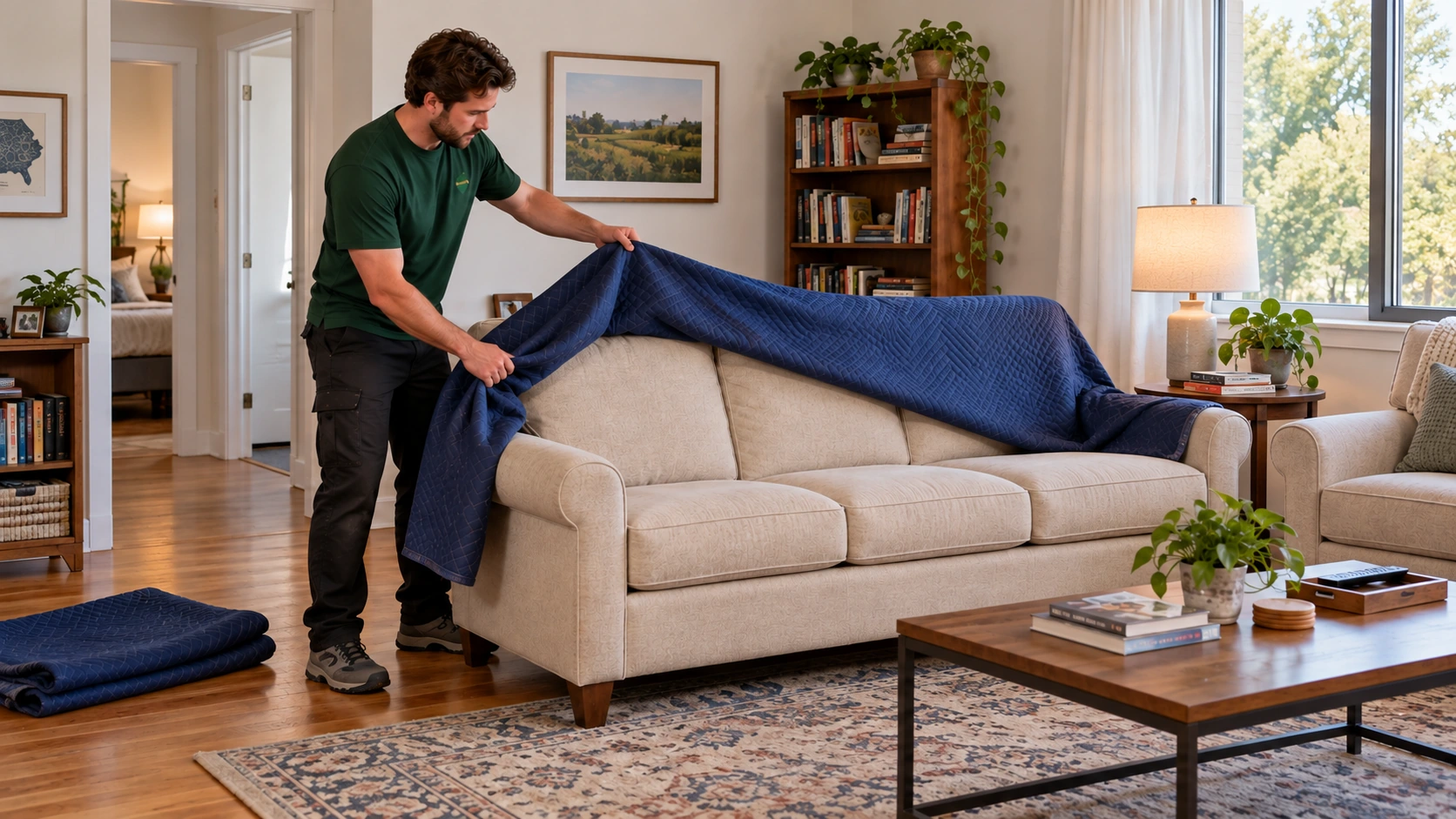
A mover lifts a loose quilt away from a sofa
A mover lifts a loose moving quilt from a sofa that is already standing on the floor.

Iowa planning

Agree storage and the later delivery before collection

If keys or the new home’s condition remain uncertain, discuss the gap while the shipment can still be planned coherently. Identify where the goods will go, who receives them and who is responsible for the later delivery. Storage has its own period, access arrangements and charges. It is a distinct stage of the household journey rather than an unnamed pause in transport.

Ask what happens if the expected release date changes. Define who can authorize collection from storage, what appointment is needed and what work is included in the next stage. Keep the inventory and condition records with the goods. A later destination or different receiving route can require a fresh review of the onward work.

A consolidated delivery window is not a promise of free storage. Keep daily essentials with the household so personal life does not depend on access to an unavailable shipment. If the final residence becomes available sooner or later, communicate the change rather than treating it as an automatic alteration to the agreement. The useful result is a defined location and an identifiable next receiving step.

Iowa planning

Keep essentials close and handle Iowa records as separate tasks

Set aside medicines, personal records, chargers, basic clothing and first-night essentials before collection. At the new home, identify places for cartons and furniture without blocking doors or circulation. Open what is needed first, and record a shipment concern through the relevant procedure rather than losing it among everyday unpacking.

Arrange Iowa driver licensing as you establish residency unless a specific exemption applies. Iowa law distinguishes the resident licensing requirement from the exemption for qualifying nonresident drivers. Continuous presence beyond 30 days is one residency presumption; employment and other listed circumstances can matter too. Do not confuse that trigger with a universal extra driving allowance or the time a processed card takes to arrive. Iowa DOT asks for proof of date of birth, identity and lawful status or presence, a Social Security number if you have one, and two documents showing current Iowa residence. Check the applicant’s tests and appointment arrangements; qualifying students and military members have specific exceptions.

Vehicle title and registration are separate. Iowa DOT says to title and register within 30 days of establishing residency, even with valid out-of-state plates. Check ownership documents, all owners’ signatures and any lien information with the county treasurer. Current guidance allows the initial transaction at any county treasurer’s office, while renewals belong in the county of residence. Contact the relevant office before visiting so the right task and documents are ready.

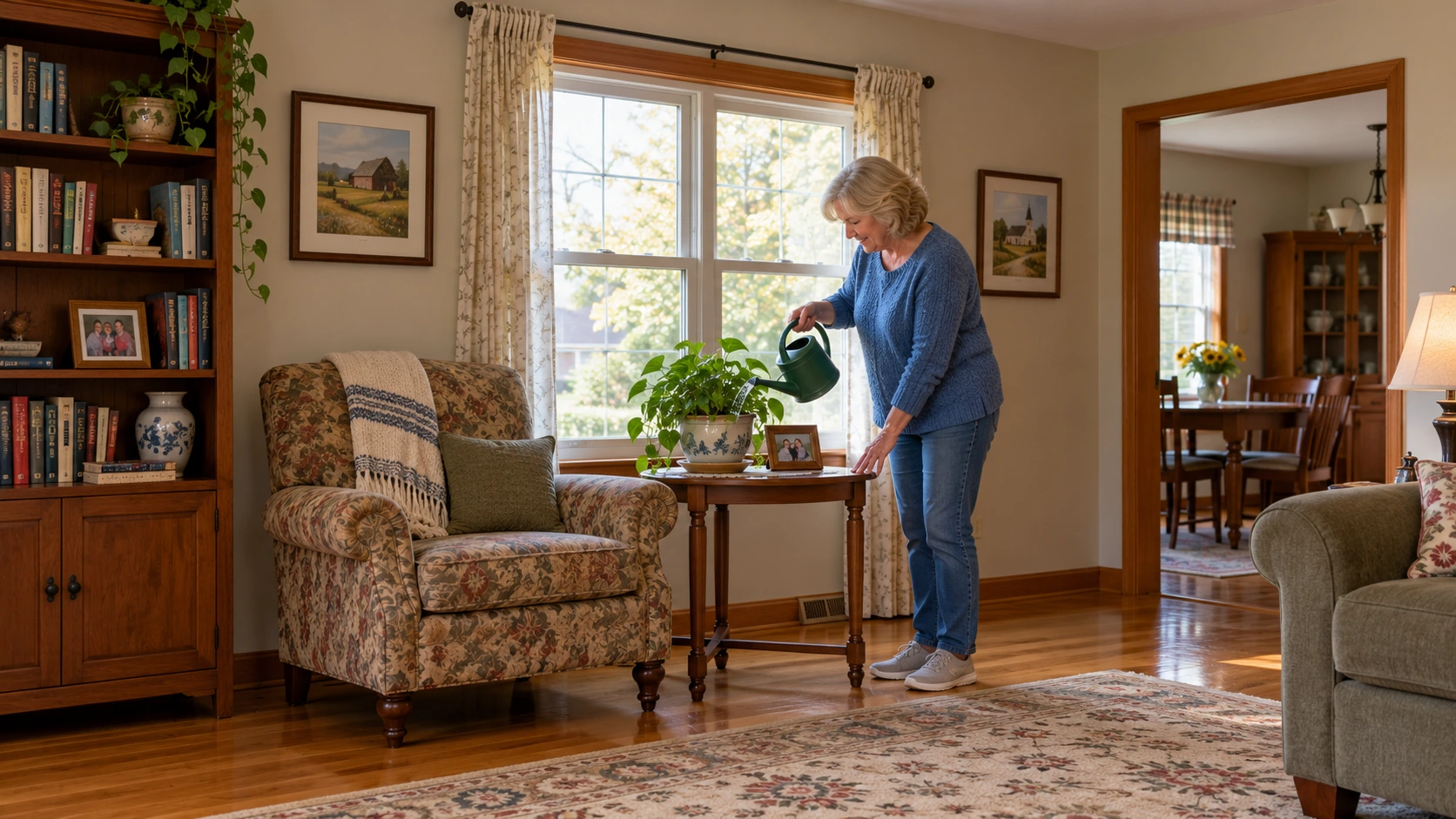
A woman waters a plant beside a living-room window
A woman waters a houseplant on a side table beside a window.

Iowa planning

Turn the Iowa shortlist into a usable moving brief

Begin with the city or region that interests you, then connect it to a particular home and household. Use the city portraits, geographic map and county profiles to compare places without merging separate municipalities or neighboring states. Keep the rooms behind the first impression in view. An established porch home, furnished rental and acreage introduce different practical questions.

Prepare both full addresses, the current inventory, likely dates and selected work. Explain packing responsibilities, unusual pieces, furniture preparation, property permission and the person who can receive. Ask whether direct delivery or a suitable consolidated option fits the shipment. Record any storage gap or later handover separately so the proposal describes the agreed stages before collection.

Use the planning data as dated background and the photographs as original representative illustrations. Consult the official sources for the procedure that applies, and confirm current roads and property conditions as the date approaches. A finished brief identifies what moves, how preparation is divided, where the goods will be received and which decisions remain open. Send that information to the coordinator so the next conversation can address the actual Iowa journey.

Verified data

Iowa planning data

Planning factEstimateVintageSource
Total housing units1,437,6992024 ACS 5-yearU.S. Census Bureau
Detached single-unit homes1,038,172 · 72.2% of housing units2024 ACS 5-yearU.S. Census Bureau
Homes built in 1939 or earlier338,420 · 23.5% of housing units2024 ACS 5-yearU.S. Census Bureau
Owner-occupied homes943,396 · 71.7% of occupied homes2024 ACS 5-yearU.S. Census Bureau
Renter-occupied homes372,311 · 28.3% of occupied homes2024 ACS 5-yearU.S. Census Bureau
Residents age 1+ from another U.S. state one year earlier1.9% · not net migration or shipments2024 ACS 1-yearU.S. Census Bureau

Planning answers

Iowa moving questions

Straightforward answers about prices, packing, delivery and getting settled.

Ask about your move
How should I start comparing Iowa communities?

Choose a few contrasting settings: Des Moines and central-Iowa cities, Ames or Iowa City, eastern river communities, or western places such as Sioux City and Council Bluffs. Begin with a public place or cultural interest, then compare the ordinary week and the actual home. Keep the complete address, furniture, dates and receiving arrangements with the moving brief.

Does this guide establish a local company office in every city?

No. It introduces places and household planning for interstate work involving Iowa. A city card or county map does not establish a local office, an Iowa-only appointment or permission to use a particular property. Confirm the actual addresses, shipment, selected work and dates with the coordinator.

Are Des Moines, West Des Moines and Ankeny the same city?

No. They are separate municipalities within a wider metropolitan comparison. A city can also span several counties; West Des Moines’ city information identifies parts in Polk, Dallas, Warren and Madison counties. Check the actual residence and required transaction rather than choosing an office or property contact from a broad regional name.

Which Iowa regions can help organize a search?

Travel Iowa uses five marketing areas: Lakes & Land, Loess Hills & Beyond, Capital Country, Driftless Area, and Storied & Scenic. They organize visitor interests rather than county boundaries or moving-service territory. Use them to find communities worth comparing, then keep the actual municipality, county and state with the home.

What information is most useful for a moving proposal?

Send both complete addresses, the current furniture and box inventory, likely dates and the work you want included. Show unusual pieces, the permitted approach and the route to the intended rooms. Include building appointments, packing responsibilities, uncertain keys, any storage gap and the person who can receive. Update the brief when those details change.

How do I check an Iowa-only household-goods carrier?

Identify the exact business and review its applicable Iowa permit, written estimate, tariff, protection and shipment terms. Iowa Code chapter 325A and current Iowa DOT rules provide the authority framework. Match the carrier name and tariff version with the work proposed, and ask Iowa DOT’s Motor Vehicle Division if authority or tariff information needs clarification. A federal number alone is not a complete Iowa-only review.

Can I read the tariff for an Iowa-only household move?

The current Iowa rule 761—524.13 requires household-goods tariffs and supplements to be kept available for public inspection. Ask the actual carrier for the effective tariff and compare its name, territory, charge basis and services with the proposal. Older manuals may cite a superseded rule number. The company’s interstate flat-rate policy is a separate matter from an unrelated Iowa-only provider’s tariff.

Does a large lot or attached garage guarantee easy moving access?

No. The approved stopping position, approach surface, door openings, steps and internal turns still need review. A garage is useful only when the property permits its use and the route reaches the intended room. Show the largest pieces and the continuous route, and let the carrier assess suitable preparation and equipment for the actual home.

Where should I raise a concern about an Iowa-only move?

Notify the carrier promptly in writing, keep the estimate, shipment records, invoice, photographs and correspondence, and follow the agreement’s claim procedure. Iowa DOT accepts written complaints concerning its motor-carrier authority rules; the Iowa Attorney General has a separate consumer complaint route. Those processes do not replace a carrier claim or guarantee recovery. The Attorney General cannot act as your private attorney.

Is carrier valuation the same as insurance?

No. Valuation describes the carrier’s liability for the shipment; separate insurance is a different product. For federal interstate household-goods work, Full Value Protection applies unless Released Value is selected through the required written waiver. Read the actual written options, limitations and claim instructions before collection, and identify valuable or unusual pieces. Iowa-only terms require their own review.

How do I check an interstate mover or broker?

Use FMCSA’s mover search to match the actual business name, identifying number, registration status and role with the proposal. A carrier transports goods; a broker arranges transportation. Read the estimate, inventory, consumer-rights information and complaint-handling instructions, and confirm who will carry the shipment. A trading name or number printed in an advertisement is only a starting point.

How does direct delivery differ from consolidation?

The company’s direct interstate service uses a dedicated truck and the same moving crew at pickup and drop-off. Consolidation can suit a smaller shipment with greater arrival flexibility and an agreed wider window. Explain the contents and receiving needs before choosing. The estimator and moving crew have separate roles, and the actual destination terms belong in the agreement.

Does every longer Iowa journey have the same consolidated window?

No. Company consolidated terms are destination-specific: up to 60 days for Florida or Canada and up to 90 days for California, beginning after pickup and loading are complete. Other longer routes need an individual agreement. Do not assign another state’s window to Iowa or assume consolidation includes free storage. Confirm the actual destination and receiving arrangement.

Will the interstate price rise if delivery takes longer?

For the company’s agreed interstate flat-rate work, the price stays the same for the same shipment and service scope even if the journey or delivery takes longer. Added goods, changed packing or other revised work need separate review and written agreement. Keep the latest inventory, selected services and access information with the proposal you rely on.

Are packing work, boxes and basic protection included on the same basis?

No. For the company’s agreed interstate service, packing is charged for working time, and company-supplied boxes are charged separately. Moving blankets, shrink wrap and tape have no separate basic-material charge. Decide which contents you will prepare and which need the team’s work, then keep those choices and materials in the written proposal.

How is basic furniture disassembly handled?

For the company’s confirmed interstate work, basic furniture disassembly and reassembly use moving labor time without a separate basic fee. Explain the actual piece and access before collection; unusual construction or specialist work needs its own assessment. Keep hardware and instructions with the relevant furniture, and prepare the receiving route and intended room.

What if the expected vehicle position becomes unavailable?

Tell the coordinator and property contact as soon as possible. Show the revised approach, carrying distance, steps and entrance, and agree whether the work or appointment needs to change. A nearby visitor space or private driveway is not an automatic substitute. Keep the inventory and authorized receiving person attached to the updated arrangement.

Do students and military members have special Iowa motor-vehicle rules?

They can. Iowa Code 321.1A excludes qualifying college or university students with an out-of-state domicile and valid home-state license from its resident definition, and identifies a specific exception for military members stationed in Iowa with vehicles properly registered in their state of residency. Iowa DOT also explains student licensing circumstances. Check the actual qualifications; do not assume every student, family member or temporary arrival has the same exception.

Does delivery include opening every carton and taking away packaging?

Furniture unwrapping is part of the company’s agreed delivery service. Removing contents from cartons is optional work charged for time, while packaging-waste removal is separate. Confirm the selected tasks before collection and make sure the receiving person understands them. Placement, carton unpacking and waste removal should not be treated as one undefined promise.

Can someone else receive the shipment for me?

Yes, if an authorized person is arranged and has the property access, appointment information and instructions needed to direct and check delivery. Share the inventory and intended room placement, and explain how condition concerns should be recorded. Someone who merely has a key may still lack the information or authority required for the agreed receiving task.

What if the Iowa home is not ready for delivery?

Discuss the gap before collection where possible. Identify an agreed storage location or revised handover, who receives the goods, the relevant inventory and condition records, charges, access and later delivery responsibility. A consolidated window is not free storage. Keep essentials with the household and communicate changed keys or readiness promptly.

How should I prepare for snow or changing road conditions?

Review Iowa DOT’s travel tools and Iowa 511 for current road conditions, closures, construction and commercial-vehicle restrictions. Check the private approach and entrance with the property contact too. Follow official emergency instructions, notify the coordinator if the route or receiver becomes unavailable, and agree the next arrangement. A guide or moving appointment does not override a closure.

When should new residents handle Iowa licenses and vehicle registration?

Treat them as separate tasks. Iowa DOT says to title and register a vehicle within 30 days of establishing residency, even with valid out-of-state plates. Arrange Iowa driver licensing as you establish residency unless a specific exemption applies; an out-of-state license does not itself establish an Iowa-resident exemption. Continuous presence beyond 30 days is one statutory residency presumption, rather than a universal extra driving allowance. The mailing time after a card is processed is not a licensing deadline. Prepare identity and residency records, check tests and exceptions with Iowa DOT, and confirm the vehicle documents with a county treasurer before visiting.

How should I begin an Iowa–Canada household move?

Explain the full endpoints, contents and dates, then consult CBSA guidance for the actual arrival category. Prepare the relevant personal-effects records, including goods arriving with you and goods to follow, and check ownership/use conditions and restrictions. The mover’s transport agreement does not establish immigration status or automatic duty-free treatment. Define any storage or other-provider handover in writing.

Primary sources

Sources for the decisions in this guide

Official resources for choosing a community in Iowa and preparing the move. Figures retain their stated dates; follow current agency guidance for your own circumstances.

Iowa-only carriers, tariffs and consumer concerns

7 sources

Interstate transport and Canadian arrival

5 sources
  • Search for a registered moverFederal Motor Carrier Safety Administration

    Current business identity, role, registration, safety and complaint information.

  • Movers and brokersFederal Motor Carrier Safety Administration

    Separate carrier and arranging-broker roles and registration requirements.

  • Consumer rights and required informationFederal Motor Carrier Safety Administration

    Federal household-goods records, required consumer information and rights resources.

  • Valuation and protectionFederal Motor Carrier Safety Administration

    Federal interstate liability choices are distinct from insurance and intrastate tariff arrangements.

  • Moving or returning to CanadaCanada Border Services Agency

    Arrival category, ownership/use requirements and accompanying goods versus goods to follow; transport does not establish immigration eligibility.

New-resident driver and vehicle tasks

6 sources
  • New to IowaIowa Department of Transportation

    Current identity/residency documents, applicant-specific tests and appointments, student circumstances and processed-card delivery information.

  • Driver manual · chapter 1Iowa Department of Transportation

    Licensing eligibility, residency circumstances, documents and tests; use the current new-resident guidance for transfer arrangements.

  • Motor-vehicle residency · Iowa Code §321.1AIowa Legislature

    2026 rebuttable residency presumptions and qualifying student/military exclusions, specific to the motor-vehicle chapter.

  • Driver licensing · Iowa Code §321.174Iowa Legislature

    2026 driver licensing framework and cross-referenced exemptions, separate from registration.

  • Driver licensing exemptions · Iowa Code §321.176Iowa Legislature

    Qualifying nonresident drivers and other specific exemptions, read with the resident licensing and residency provisions.

  • Register a vehicleIowa Department of Transportation

    Initial title/registration within 30 days of residency, ownership records, all owners’ signatures, liens and county-treasurer arrangements; renewals differ.

Cities, travel areas and public interests

18 sources
  • Five Iowa travel areasIowa Tourism Office · Travel Iowa

    Five areas established for marketing; not jurisdictions or a geological description of every location.

  • Iowa visitor questionsIowa Tourism Office · Travel Iowa

    Regional and city interests, including the High Trestle Trail Bridge near Madrid and Woodward.

  • Downtown Des MoinesCatch Des Moines

    Distinct downtown districts, public culture and river-related interests; no current event or business-hour promise.

  • Greater Des Moines parks and gardensCatch Des Moines

    Des Moines public interests and the separately located Raccoon River Park in West Des Moines.

  • Czech VillageCzech Village

    Cedar Rapids neighborhood, Czech and Slovak heritage, shops, murals and museum interests.

  • DavenportVisit Quad Cities

    Iowa-side city, riverfront, Figge Art Museum and distinct neighborhood introductions.

  • Sioux City attractionsCity of Sioux City

    Museums, art, Missouri Riverfront and wider outdoor interests; regional destinations keep their actual locations.

  • Iowa City Downtown DistrictIowa City Downtown District

    Downtown and Northside, the university relationship, literary culture and the Ped Mall.

  • Discover AmesDiscover Ames

    Downtown, Iowa State University and Reiman Gardens interests; events checked separately.

  • Historic Valley JunctionHistoric Valley Junction Foundation

    West Des Moines’ historic downtown, independent shops and cultural interests.

  • West Des Moines city and county informationCity of West Des Moines

    Official city statement identifies parts in Polk, Dallas, Warren and Madison counties; actual residence must be checked for each transaction.

  • Ankeny parks and recreationCity of Ankeny

    Uptown, neighborhood parks and regional trail connections; distant trail destinations remain separately located.

  • Veterans WayExperience Waterloo

    Downtown art/history walk, Sullivan Brothers museum and related public interests.

  • Cedar Falls recreational trailsCedar Falls Downtown District · Community Main Street

    Downtown and wider Cedar Valley trail comparison, without merging separate cities.

  • South Riverside TrailCedar Valley Trails Partnership

    Trail connection between Cedar Falls and Waterloo; check current conditions and closures before visiting.

  • Mississippi RiverwalkCity of Dubuque

    Riverfront walking, seating and public interests; seasonal river and visiting conditions are separate questions.

  • Fenelon Place ElevatorFenelon Place Elevator Company

    Dubuque’s historic funicular and bluff-side setting; attraction-specific access instructions are not a moving-vehicle route.

  • Bayliss ParkCity of Council Bluffs

    Downtown park, fountain, plaza and public art; no current water-feature or event availability promised.

Current travel and weather resources

3 sources
  • Iowa travel toolsIowa Department of Transportation

    Iowa 511 road conditions, construction, closures, traffic and commercial-vehicle restrictions; not private-access permission.

  • Winter driving preparednessIowa Department of Transportation

    Current traveler-resource owner and preparation information; private approaches need their own review.

  • Winter weatherIowa Homeland Security and Emergency Management · Ready Iowa

    Official changing-weather preparation and emergency guidance, not a current statewide weather report.

Dated housing, population and geographic evidence

7 sources

Photographs are original representative illustrations, not customer jobs or identified addresses.

Let’s plan your move

Tell us about your Iowa move.

Tell us where you are moving, what you are taking and your preferred dates. Add any packing, furniture preparation, unpacking or storage help you need.

A Sterling Oakbridge move coordinator in the planning office